
Shohochor: Reimagining Urban Waterbodies as Living Companions
28 April, 2026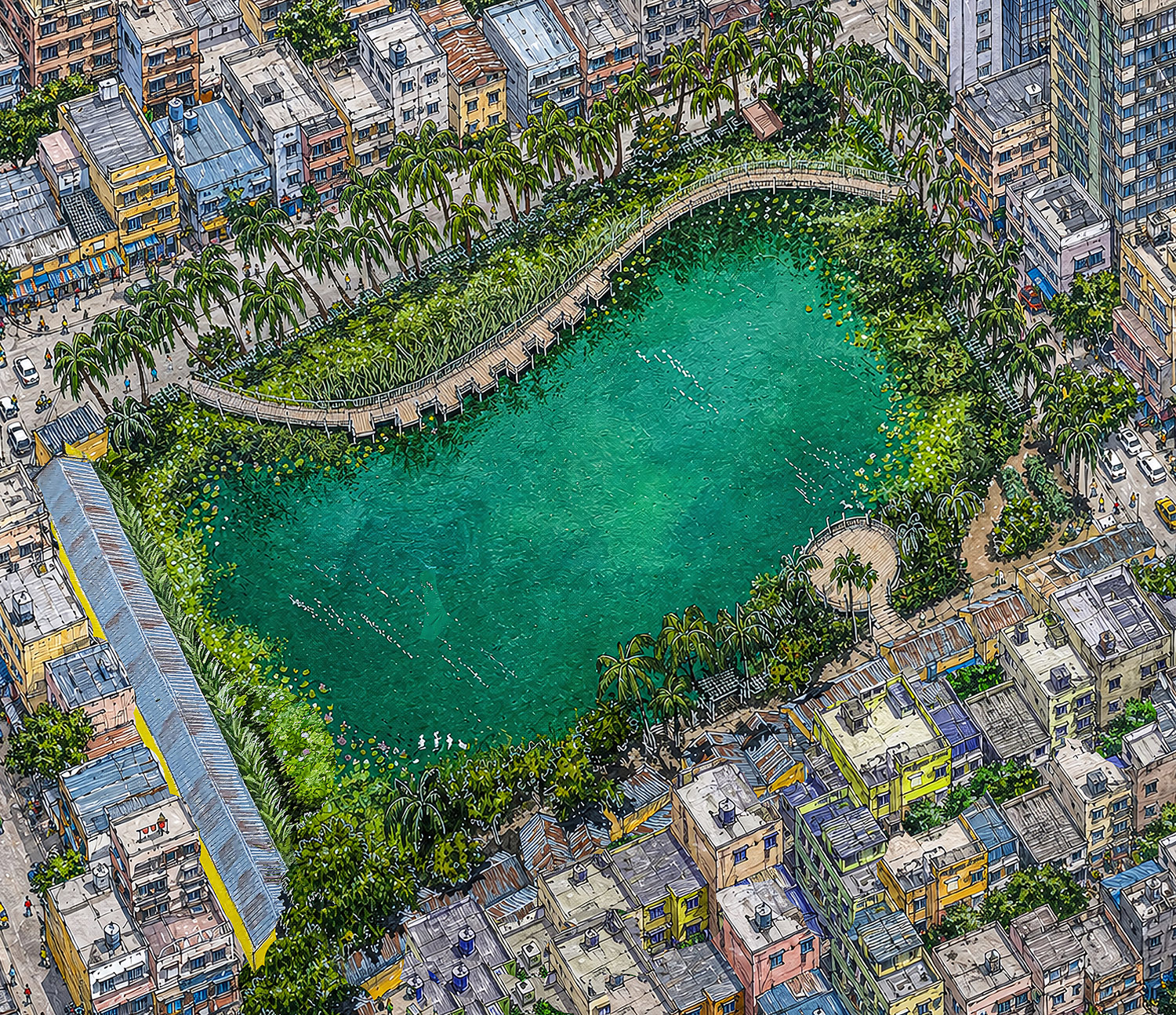
The project “Shohochor” by ONA (Office of Native Architects) received an Honorable Mention in the design competition organized by WaterAid Bangladesh in 2025. The competition theme was Reviving Urban Waterbodies through Ecological and Social Engagement. Developed as a comprehensive, research-driven proposal, the project addresses ecological restoration, community engagement, and the redefinition of identity in neglected urban waterbodies. Through a design-led approach, “Shohochor” contributes to broader conversations on sustainable and context-responsive urban interventions, offering a replicable model for transforming forgotten landscapes into living companions within the city.
Any space becomes abandoned when it loses its purpose and abused when it loses its identity. In the quiet corner of Mohakhali, where the IPH pond lies, both had slowly faded. What was once a living waterbody had gradually slipped into the background of everyday urban life, reduced to little more than scenery, seen but not noticed, present yet forgotten. Yet water embodies the essence of life. Beneath the murky surface of the IPH pond, small signs of resilience remained. Fish still rippled through the water, bubbles rose from the depths, kingfishers perched along the edges, and cormorants dived in search of prey. Even in neglect, the ecosystem whispered that it was not gone, only waiting.
The project Shohochor, meaning “companion,” emerged from this quiet persistence and the idea of coexistence between nature and people. Rather than simply cleaning the pond, the proposal sought to renew its purpose and identity. A landscape survives when it becomes part of the lives that surround it; for the IPH pond to endure, it needed to rediscover both its ecological vitality and its social presence.
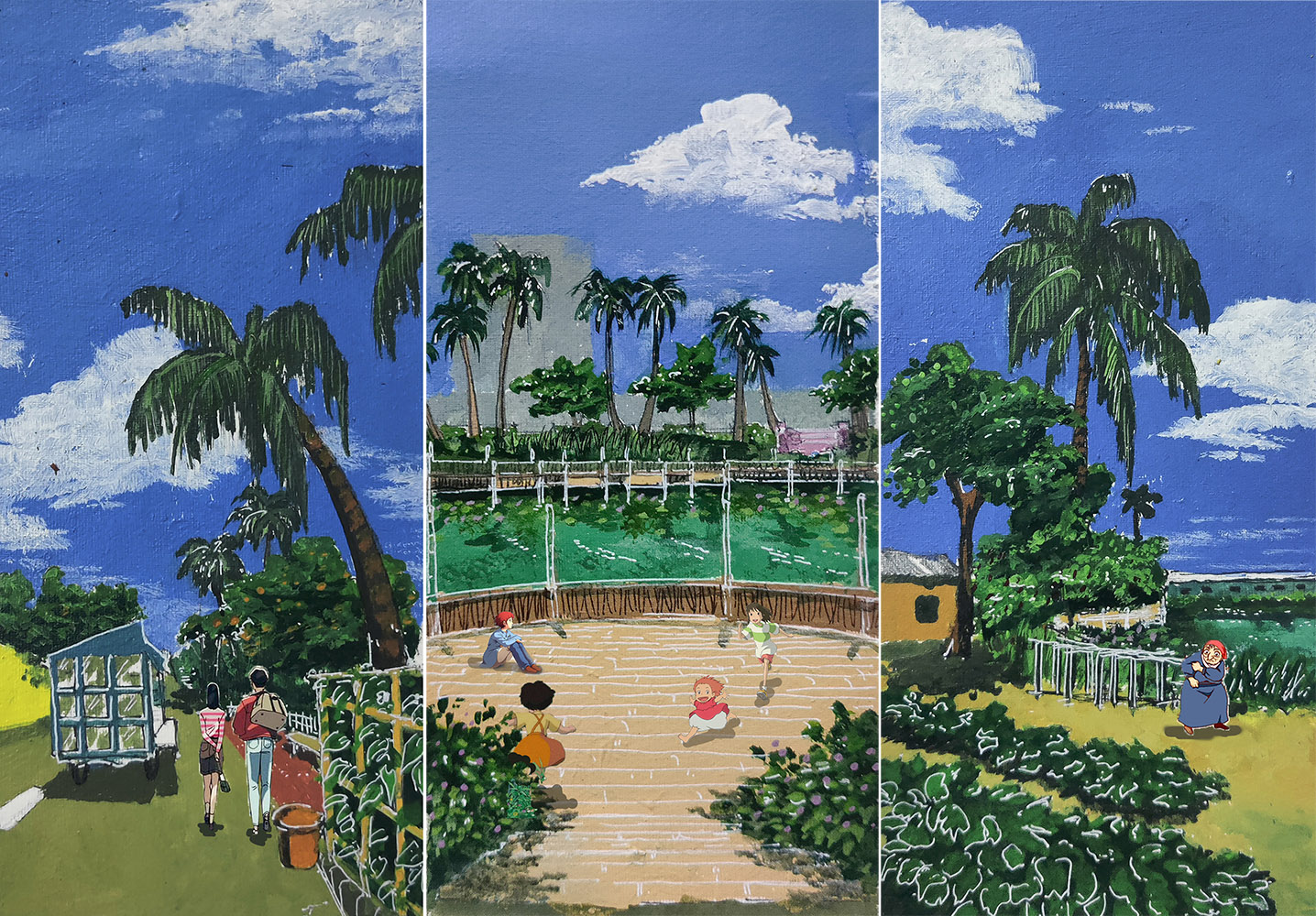
Situated within a complex urban fabric, the pond was bordered by roads linking Mohakhali Bazar to the ICDDRB campus. A low-income community of twelve families lived along one edge, each maintaining small garden spaces, while another edge was defined by a partially submerged mess hall with no clear boundary to the water. Daily life unfolded around the pond; residents fished, and children lingered, but the relationship remained fragile. Waste accumulated along the banks, responsibility remained contested, and the edges were often misused as dumping grounds or public latrines. Ecological infrastructure was almost absent; wetlands and natural filtration systems had disappeared, leaving the pond environmentally degraded yet still alive.
Through site visits, the project team studied spatial rhythms, user behavior, and ecological patterns. These observations were combined with insights from environmental experts and aquaculture specialists. Instead of relying on heavy technological interventions, the proposal explored low-cost, nature-based solutions to restore water quality and biodiversity.
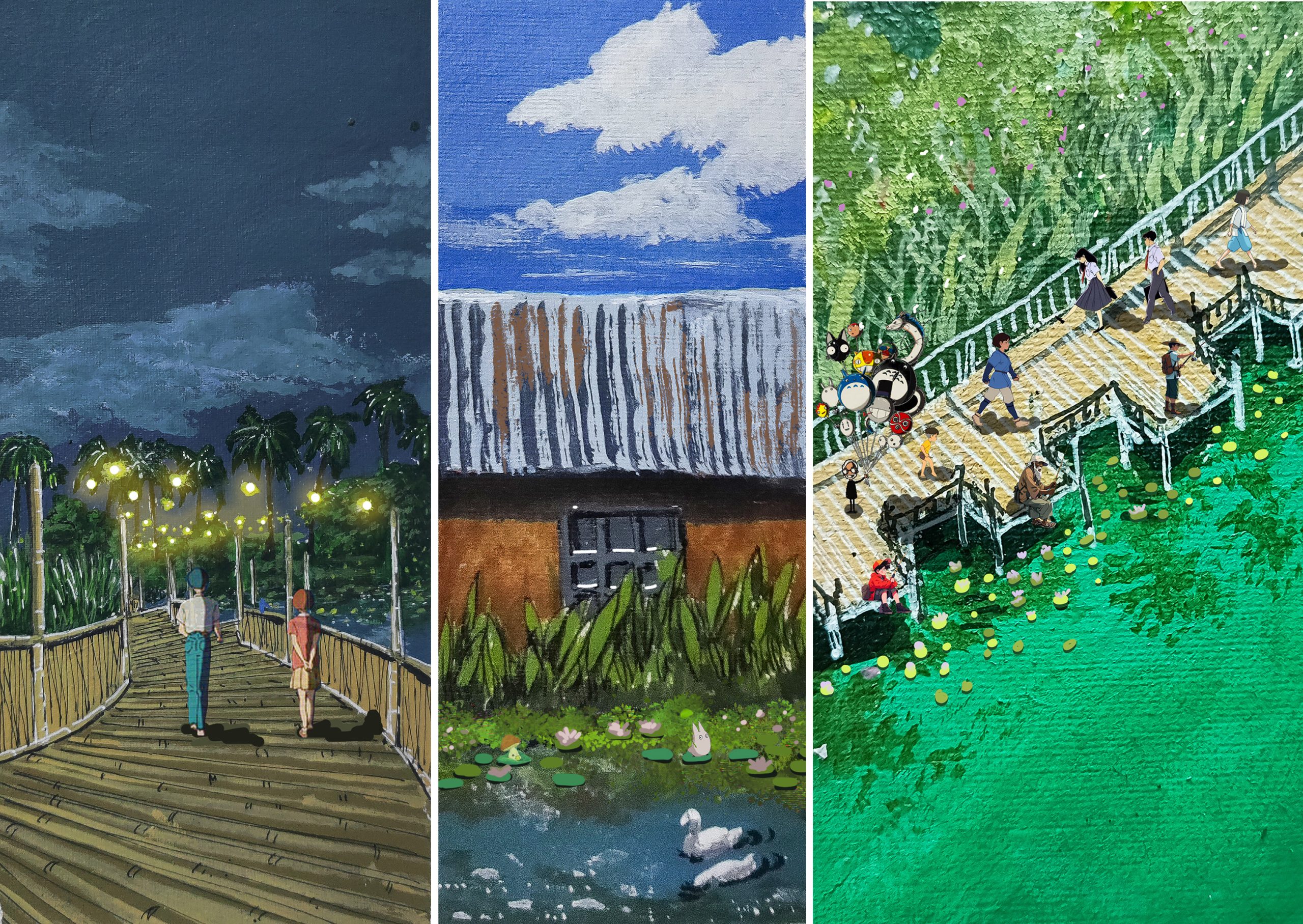
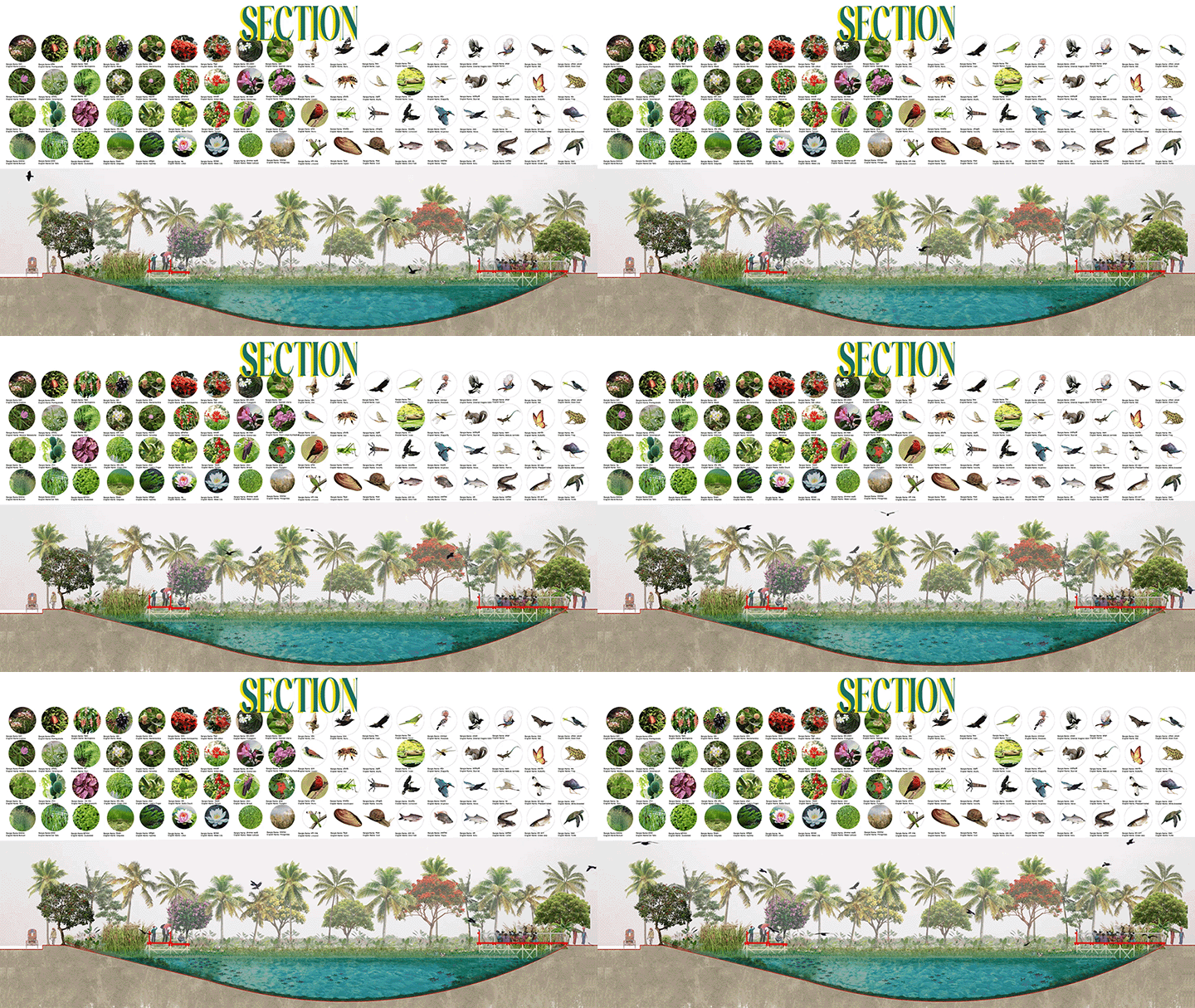
At its core, the project approached the pond as a living landscape supporting both ecological systems and human activity. The transformation was envisioned as a phased process, beginning with collaboration between the landowner, managing institutions, and residents. Community participation formed a key strategy through cleaning drives, planting initiatives, and awareness building—fostering a sense of ownership and belonging. Ecological restoration was paired with social activation: wetlands and aquatic vegetation enhanced biodiversity, while bamboo walkways, seating, and landscape elements created spaces for gathering, recreation, and learning, inspired by the traditional “Machang” culture.
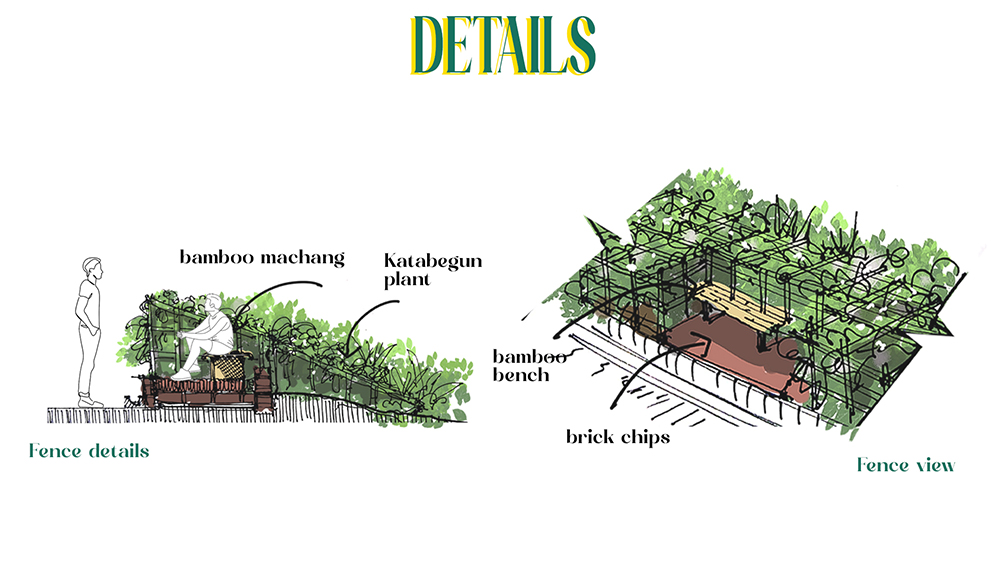
To ensure long-term sustainability, the proposal introduced small-scale economic opportunities, including a community-managed sport fishing club and local vending activities. These interventions not only activated the space but also contributed to its maintenance and viability.
Developed as part of a WaterAid design competition by ONA (Office of Native Architects), Shohochor extended beyond a single site. By framing restoration as a relationship rather than a purely technical intervention, the project highlighted the importance of reconnecting people with their landscapes. When communities participate in, care for, and benefit from these spaces, water bodies regain both purpose and identity, becoming living companions within the city: a “shohochor.”
PEOPLE ALSO VIEW
Printed Publications

NEXT 50: Collective Futures

ASPIRATIONS AND IDEAS: Designing with Context