
The Indigo Museum: Reinterpreting Colonial Legacy of Charlie’s Kuthi
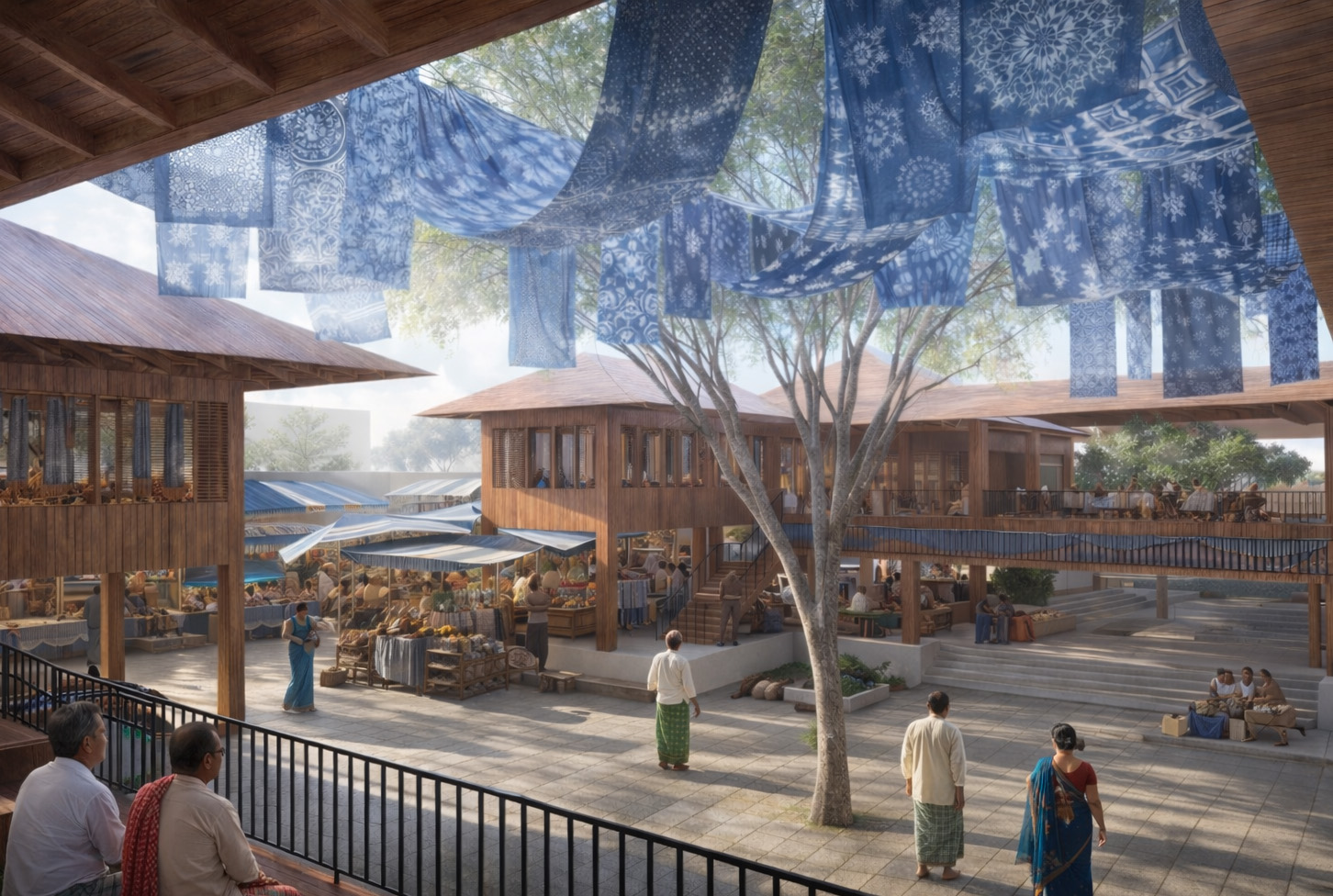
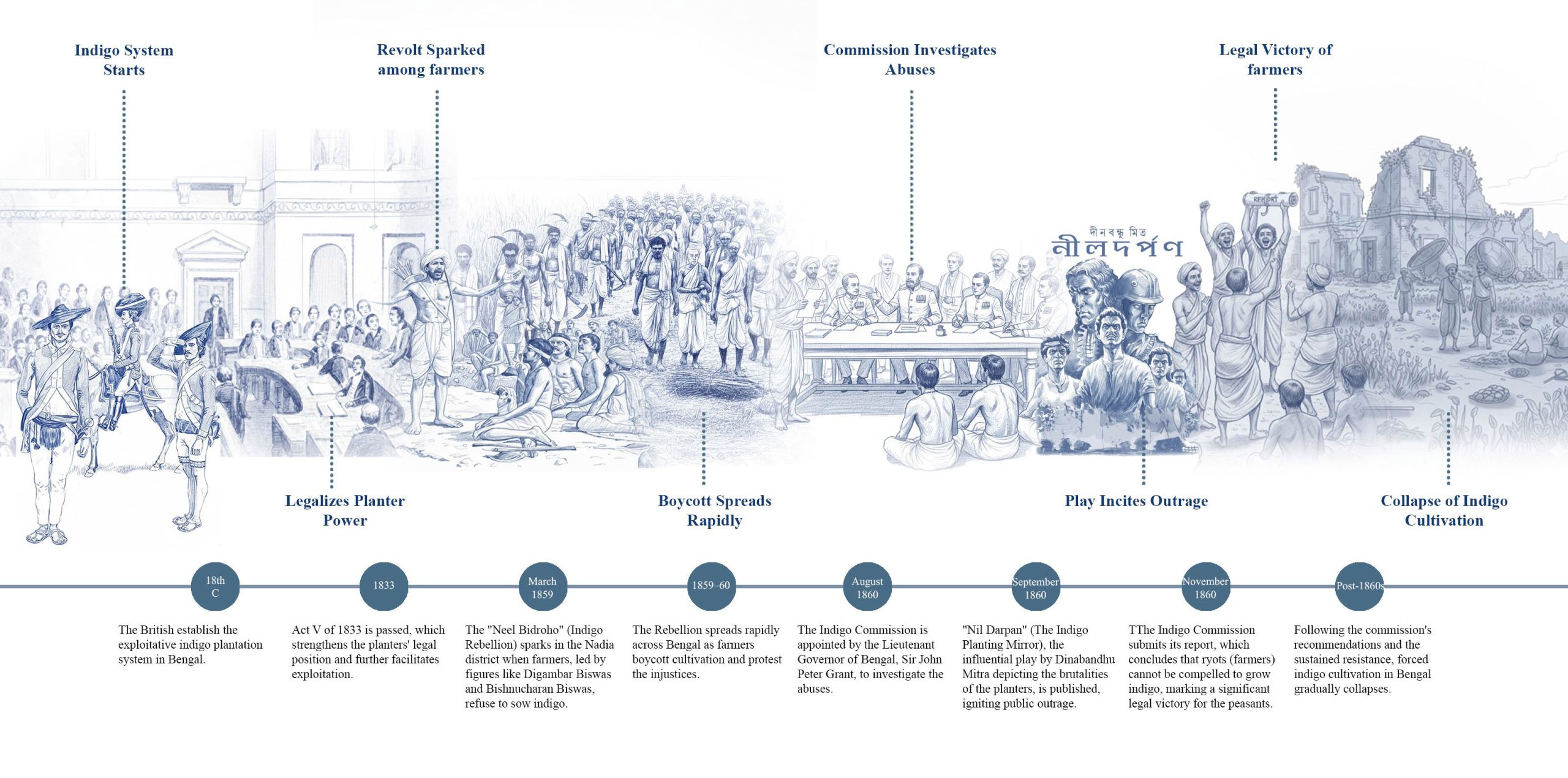
Once known as “blue gold,” indigo fueled immense wealth for colonial powers and untold suffering for the people of Bengal. Over time, this fraught history has faded from public memory. This project seeks to reconnect the community with its roots, resurrecting a past where the deep blue dye shaped both the landscape and the lives within it.
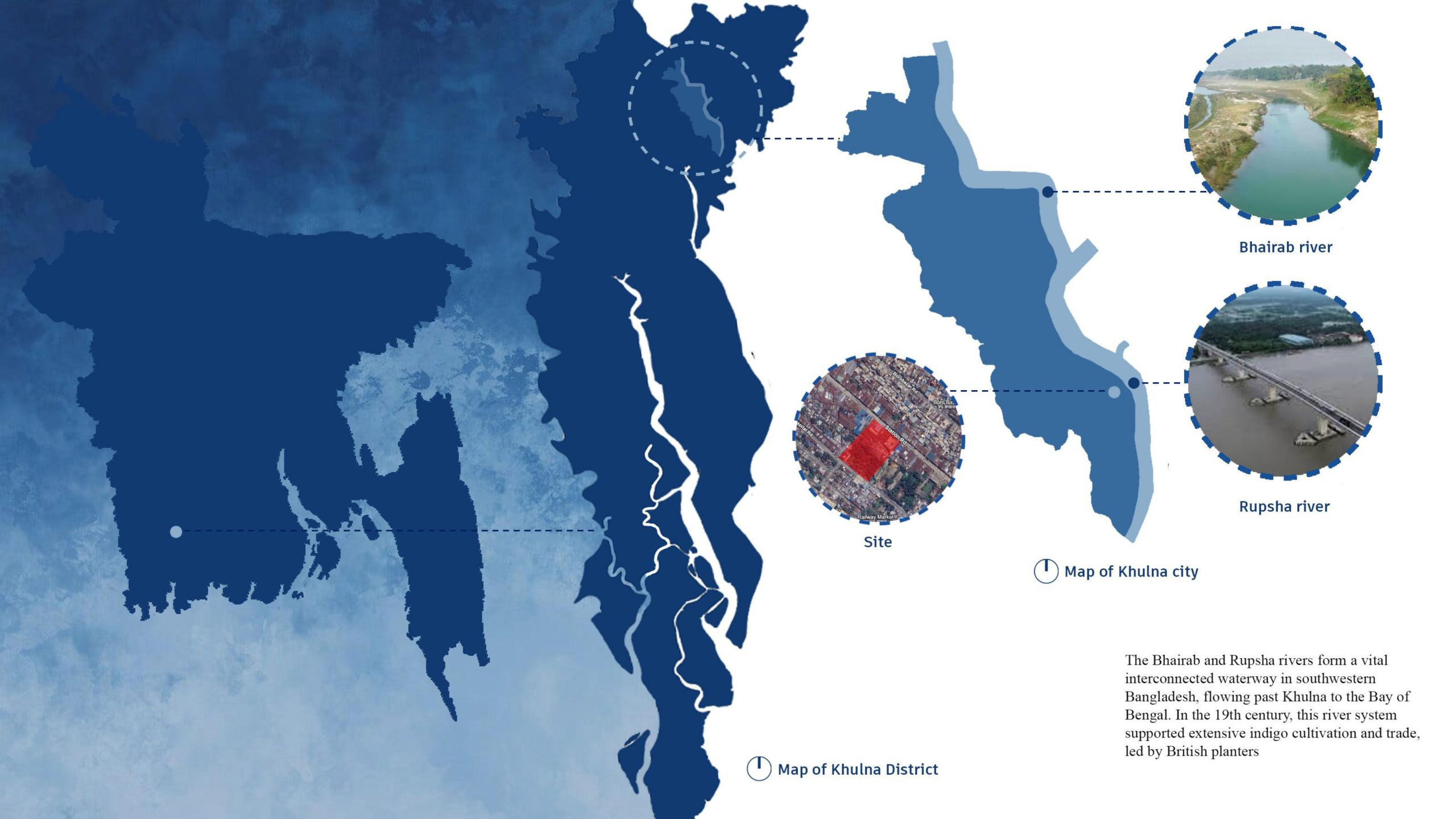
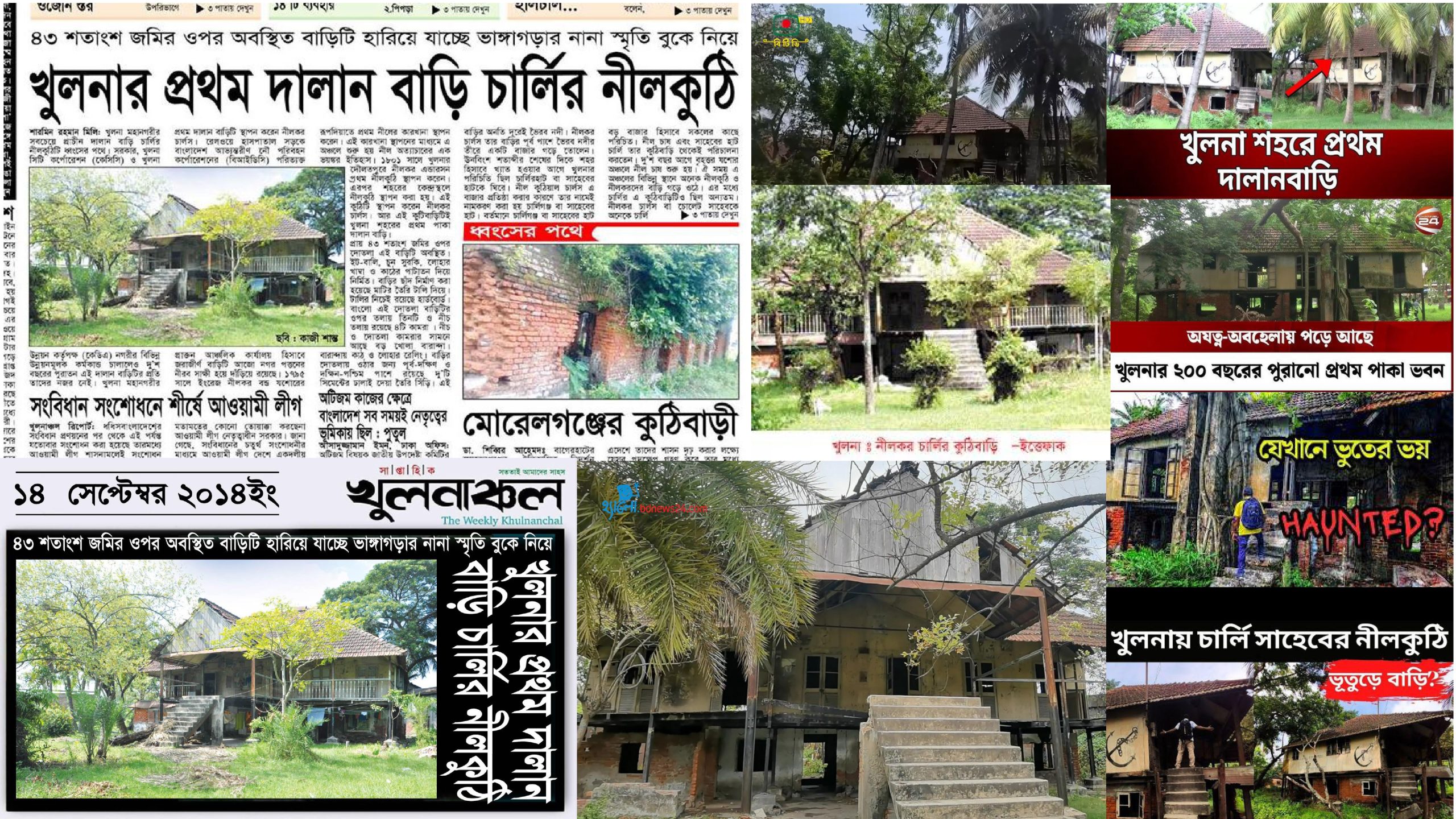
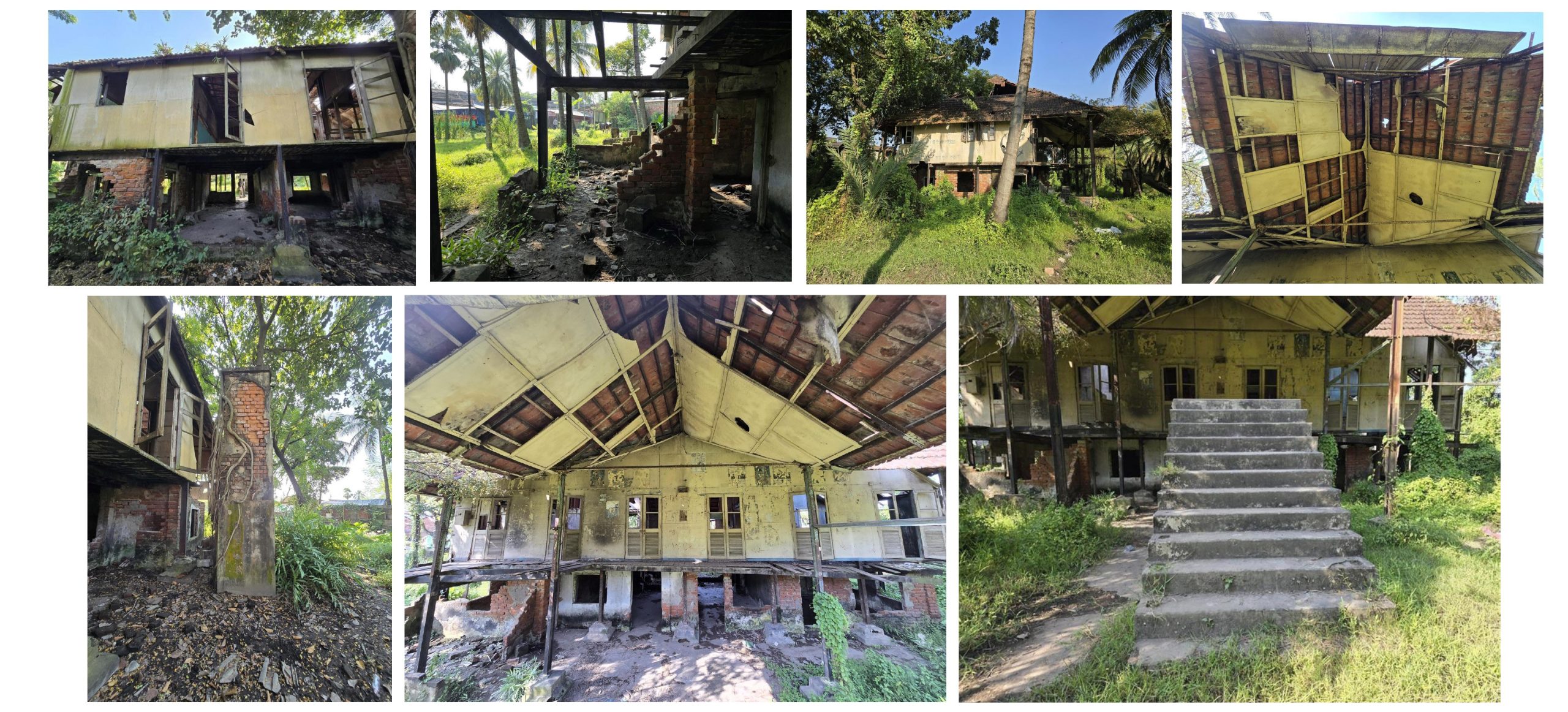
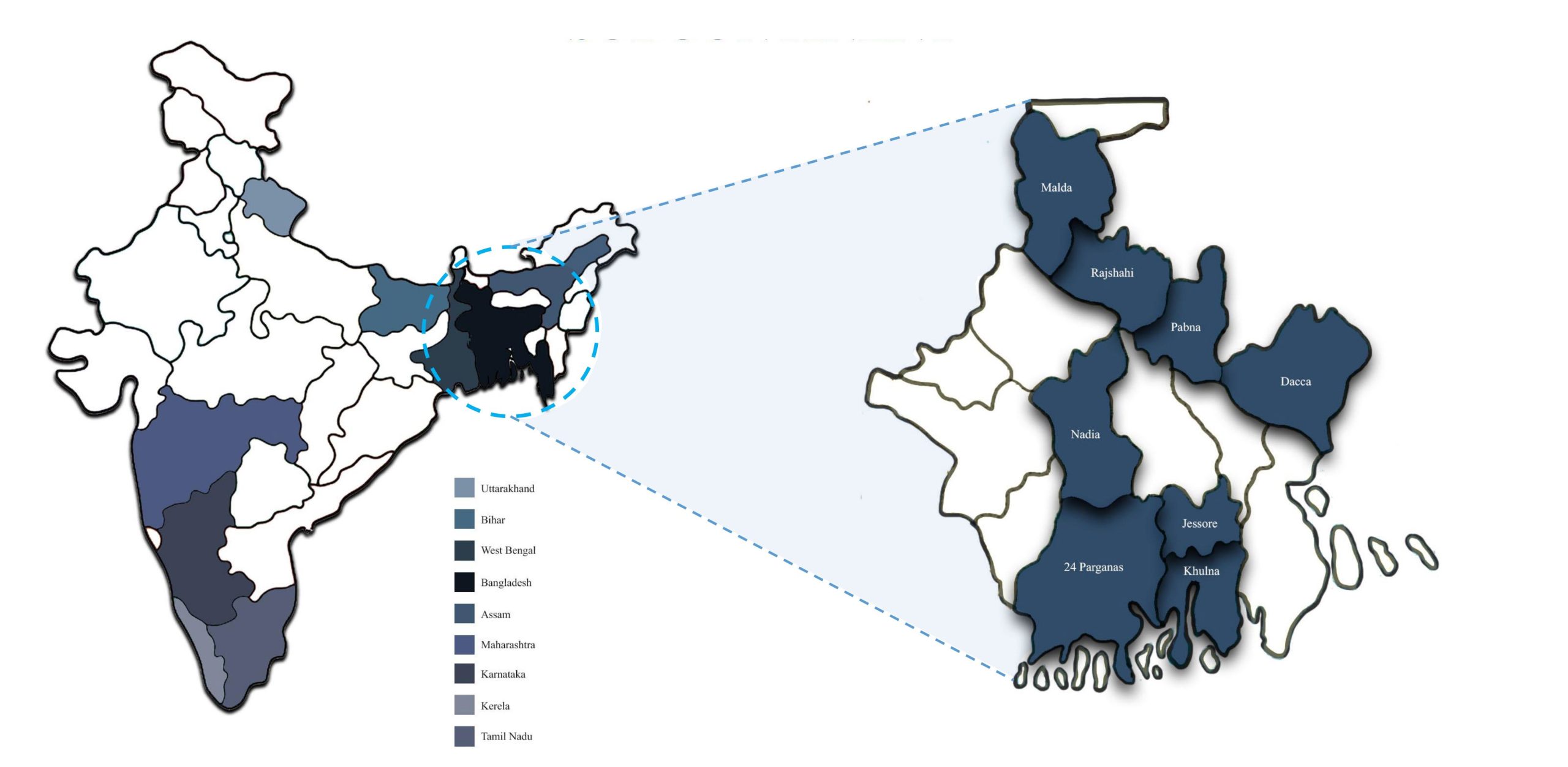
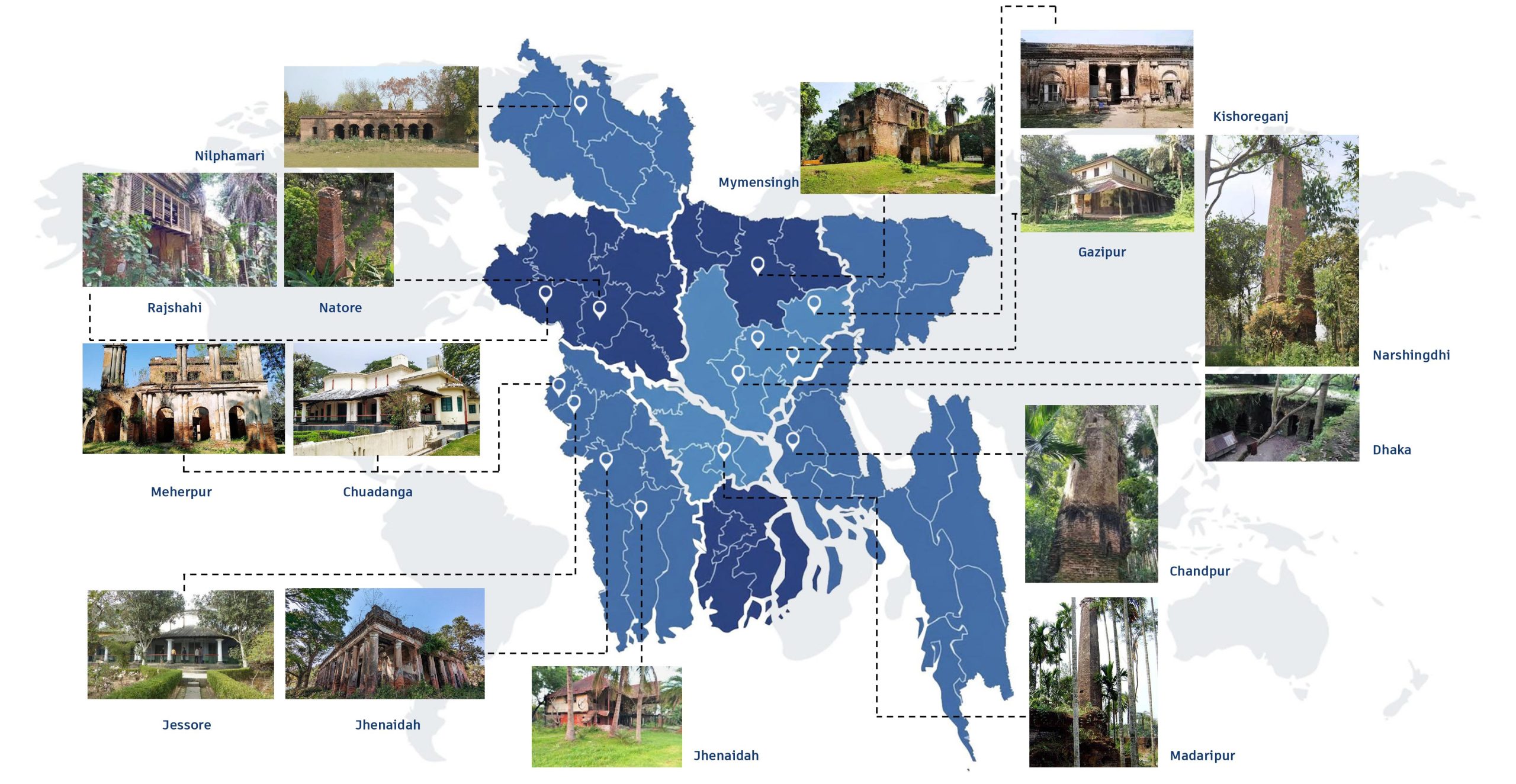
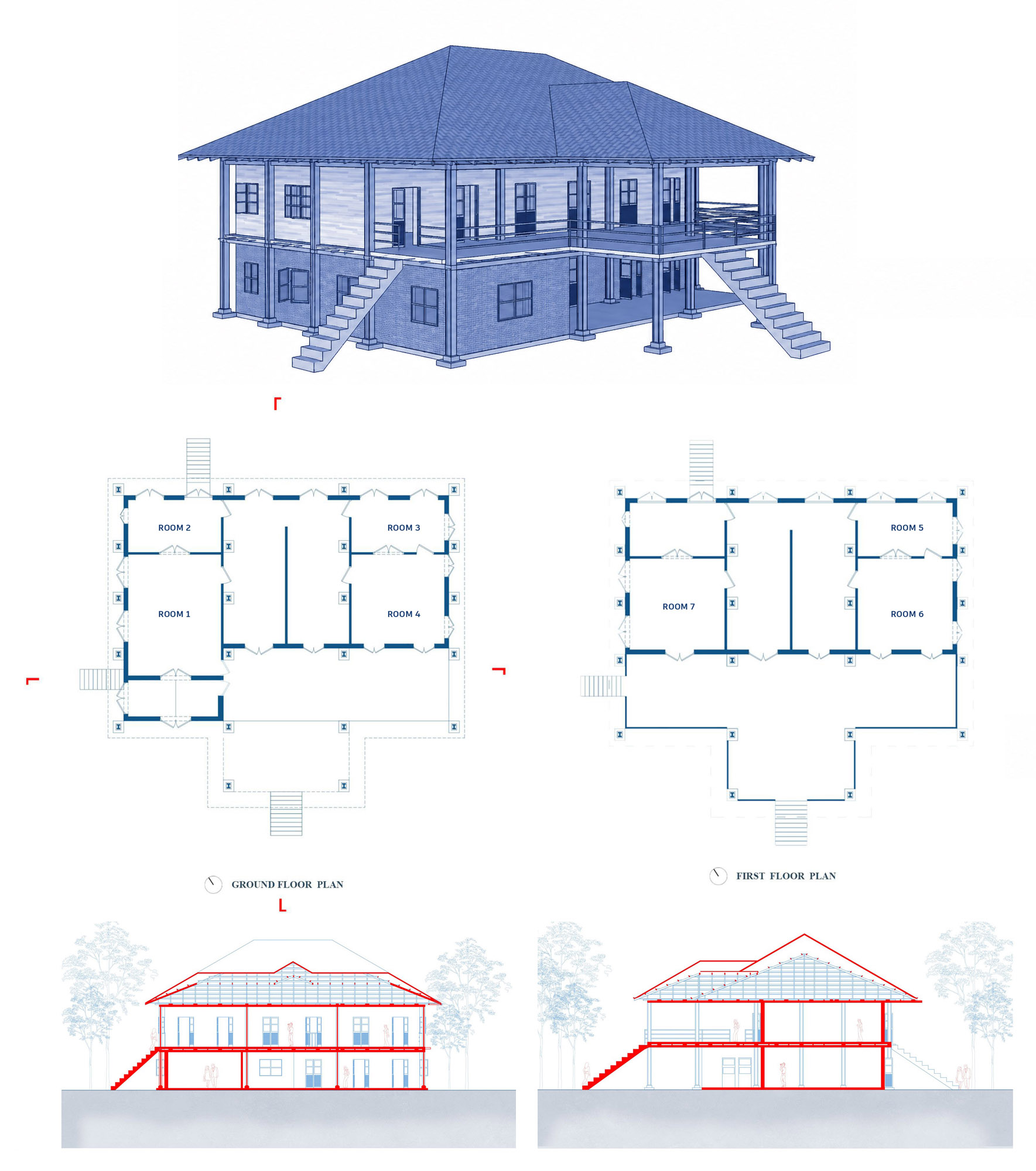
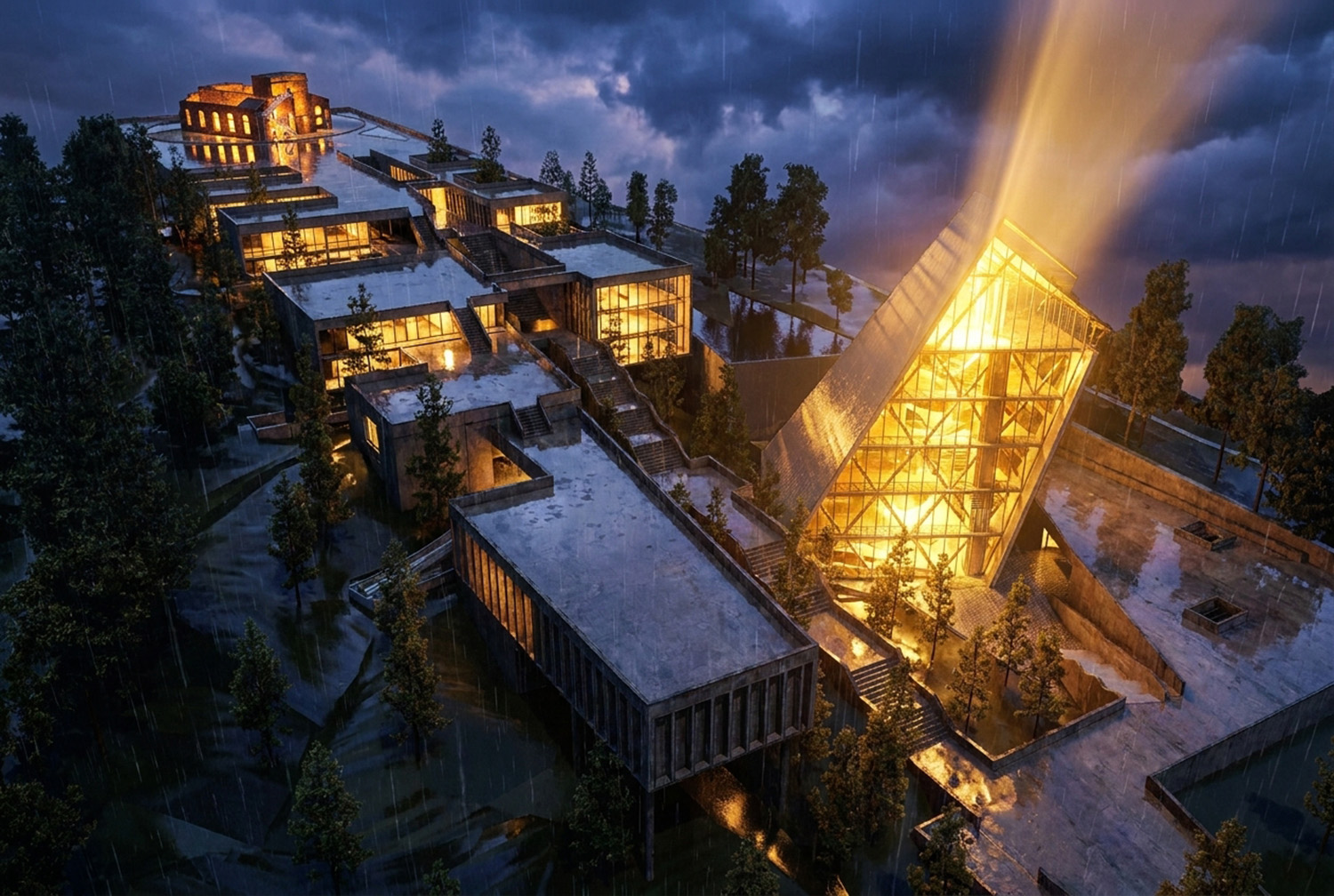
The site is centered around an existing Neelkuthi in Khulna’s Nixon Market, dating back to 1808 AD. Recognized as the first modern infrastructure built in the city, it stands as a significant but fading remnant of the colonial indigo industry. This project proposes its preservation and adaptive reuse, transforming it into a museum, bazaar, and ghat. The tripartite intervention revives the structure’s historical identity while reactivating the site socially, culturally, and economically.
Concept
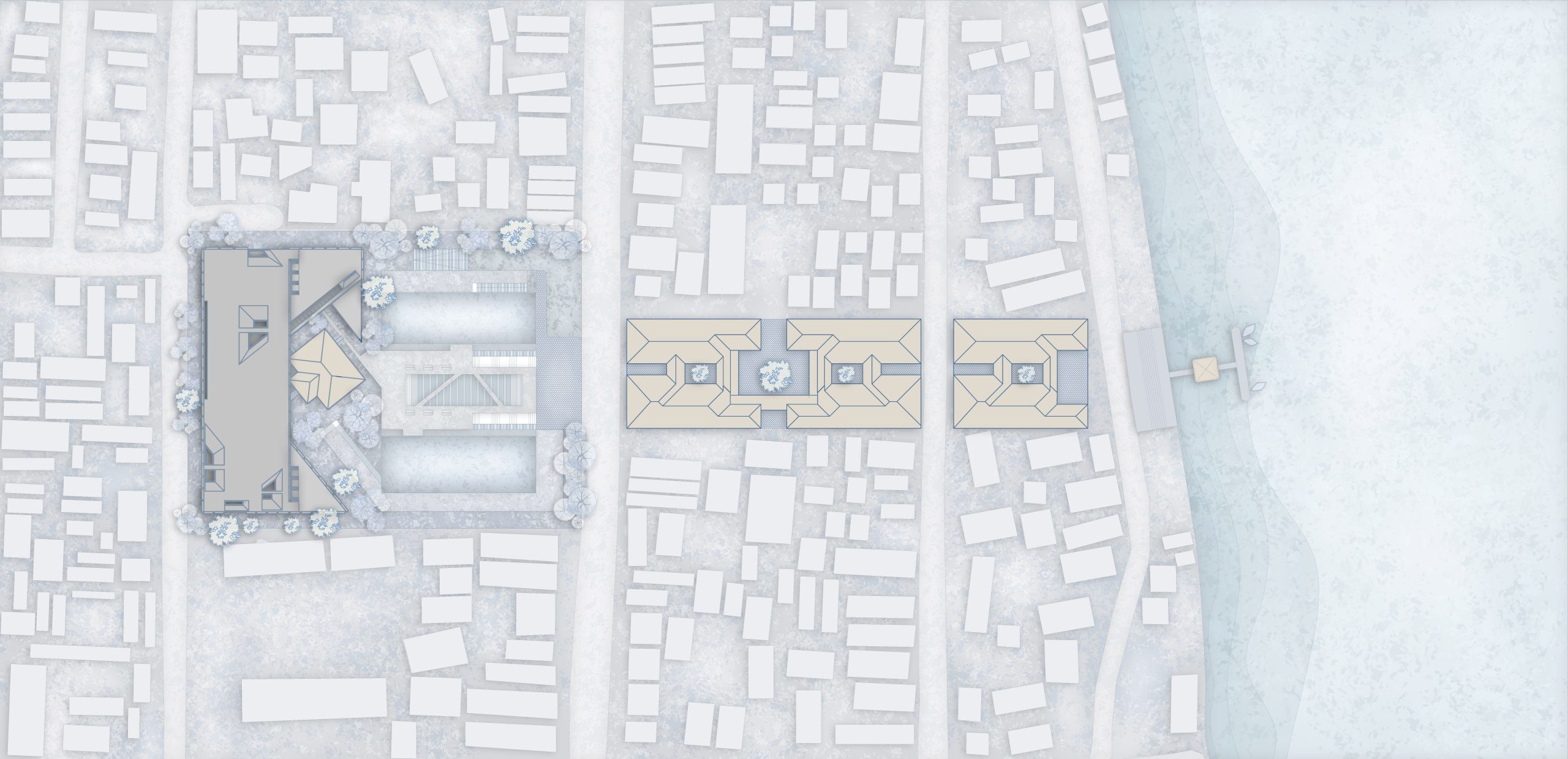
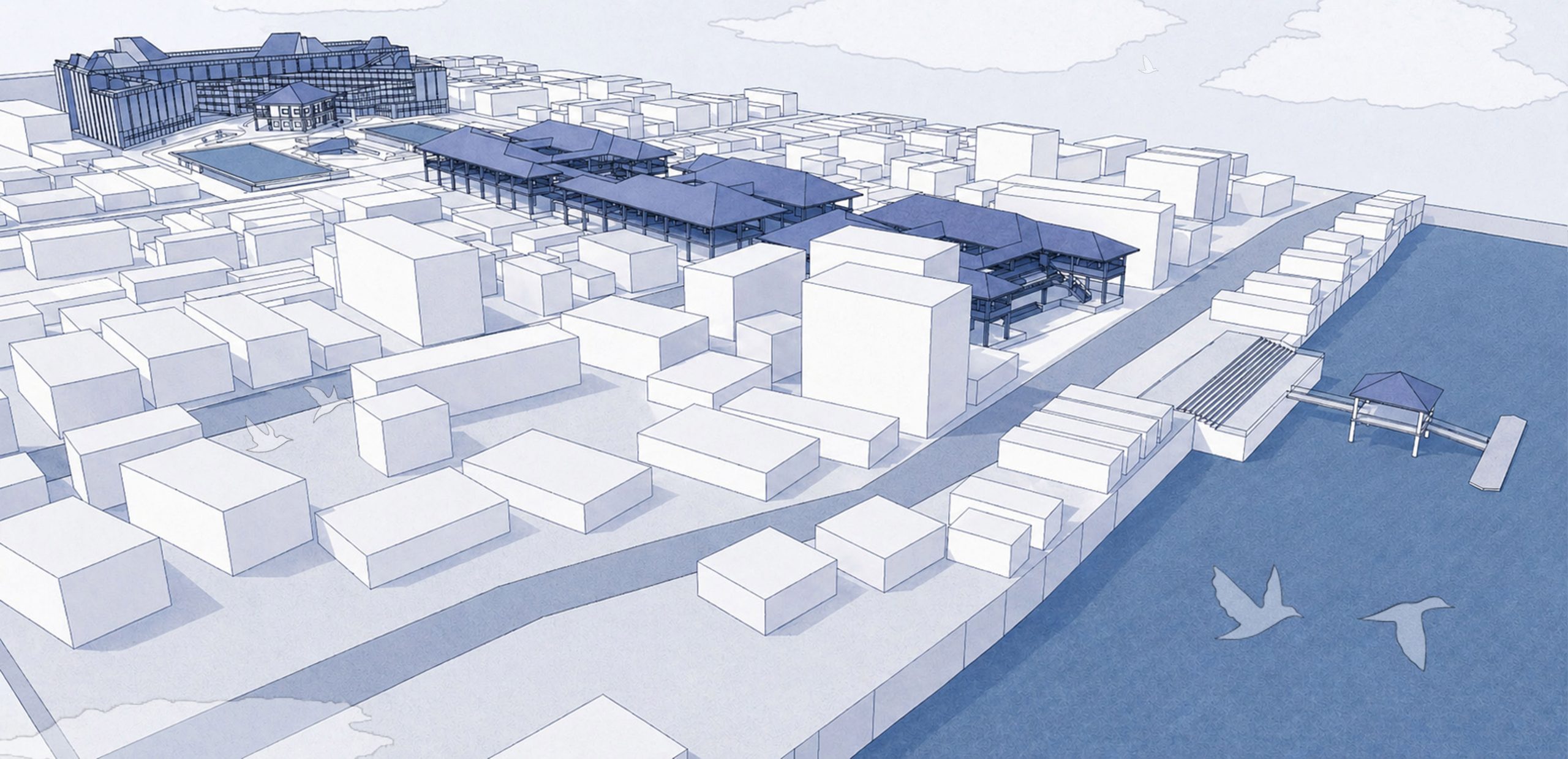
The project proposes a heritage corridor that re-stitches the fragmented memory of Khulna’s colonial, cultural, and trade history. It forges a continuous, experiential journey through time, connecting the proposed museum, the existing Neelkuthi, Boro Bazar, and the banks of the Rupsha River.
Museum
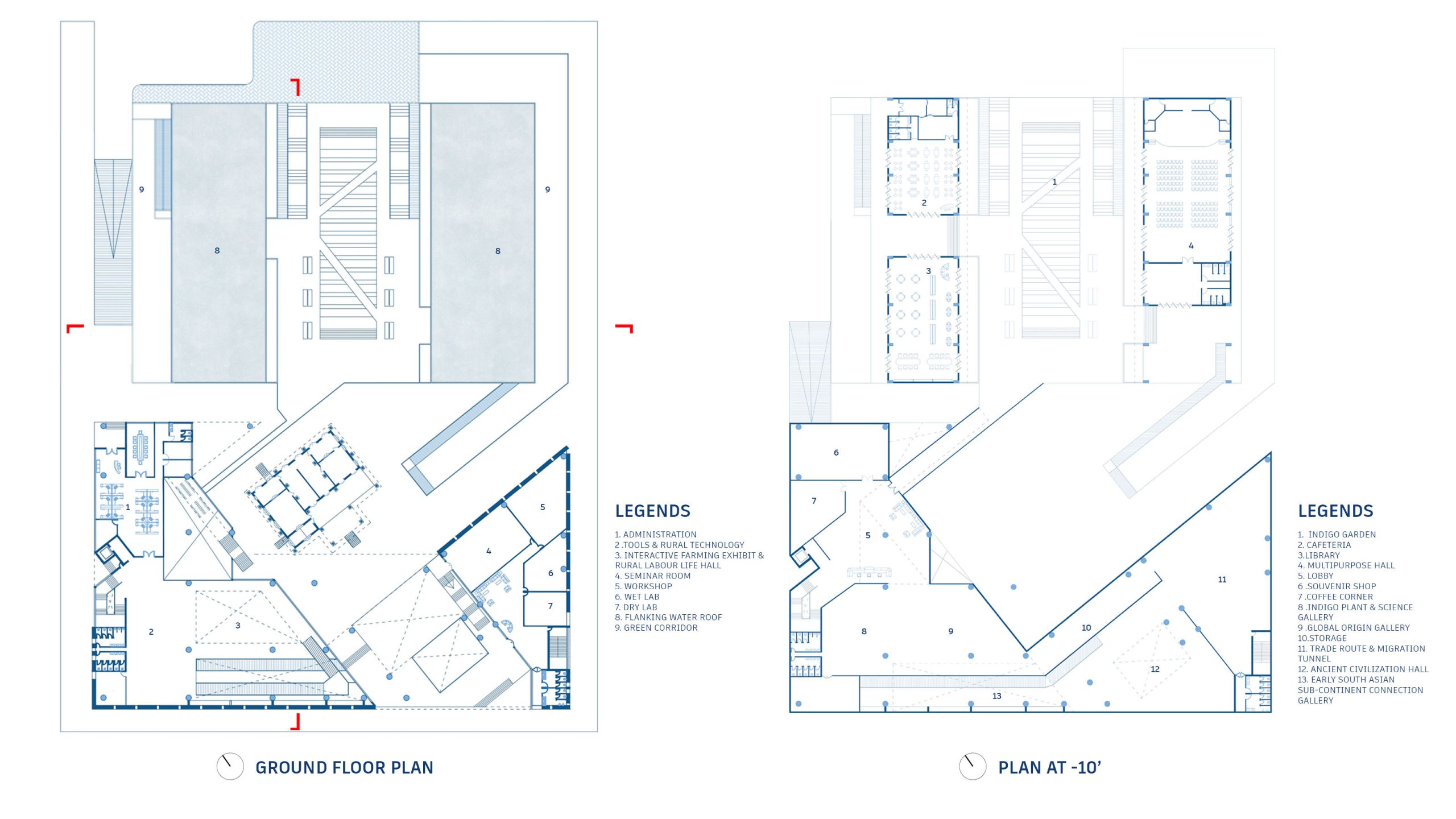
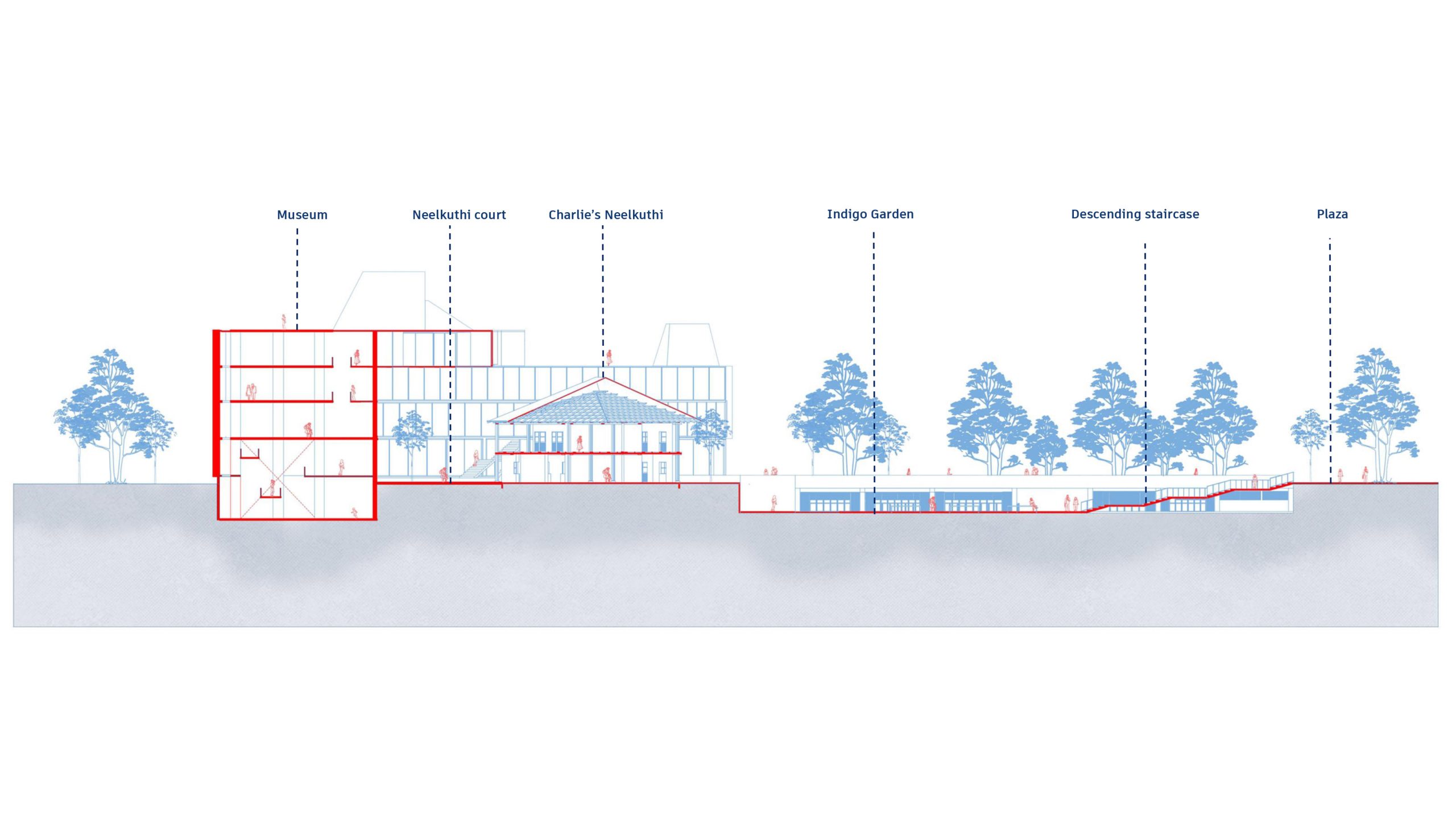
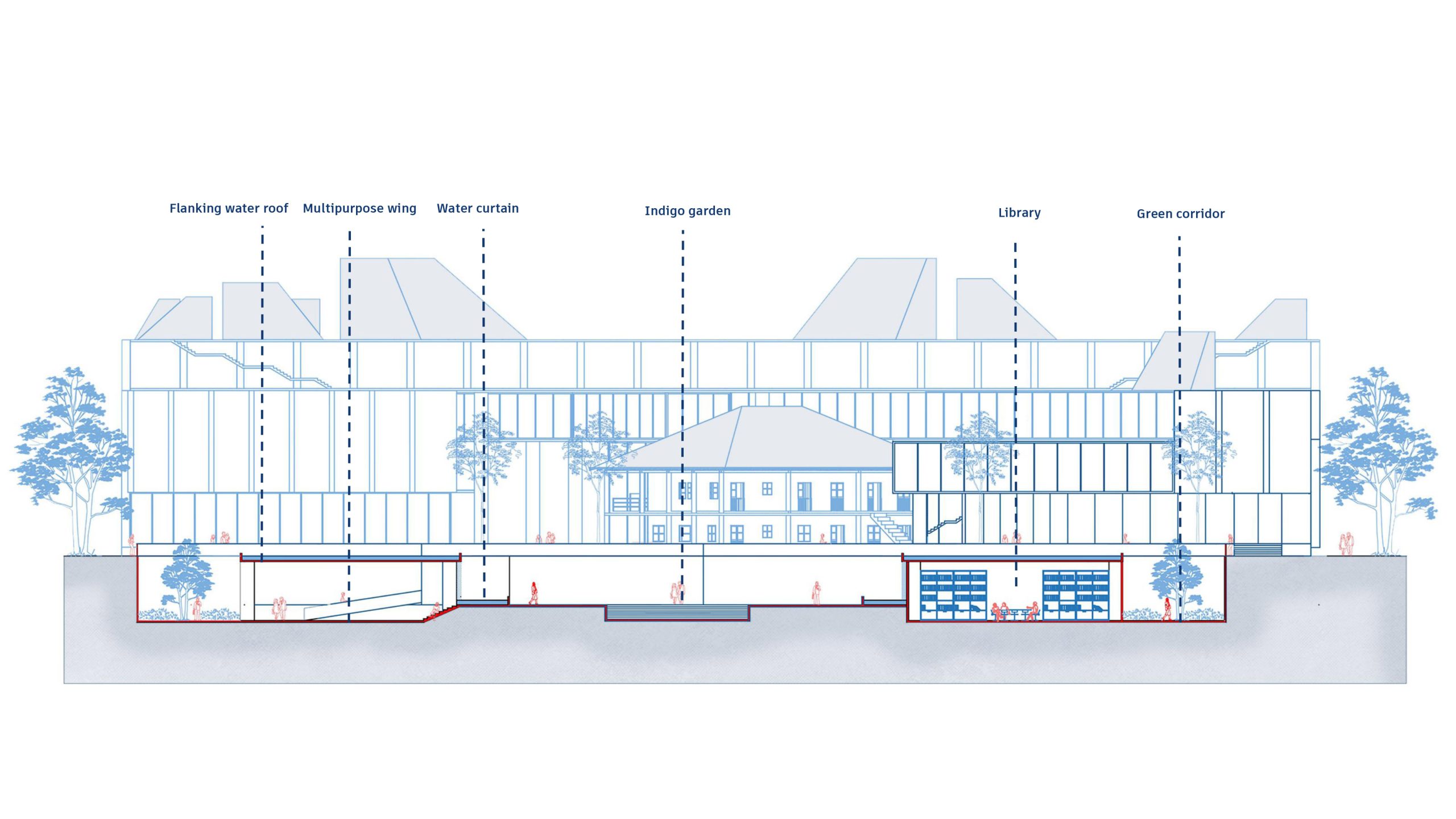
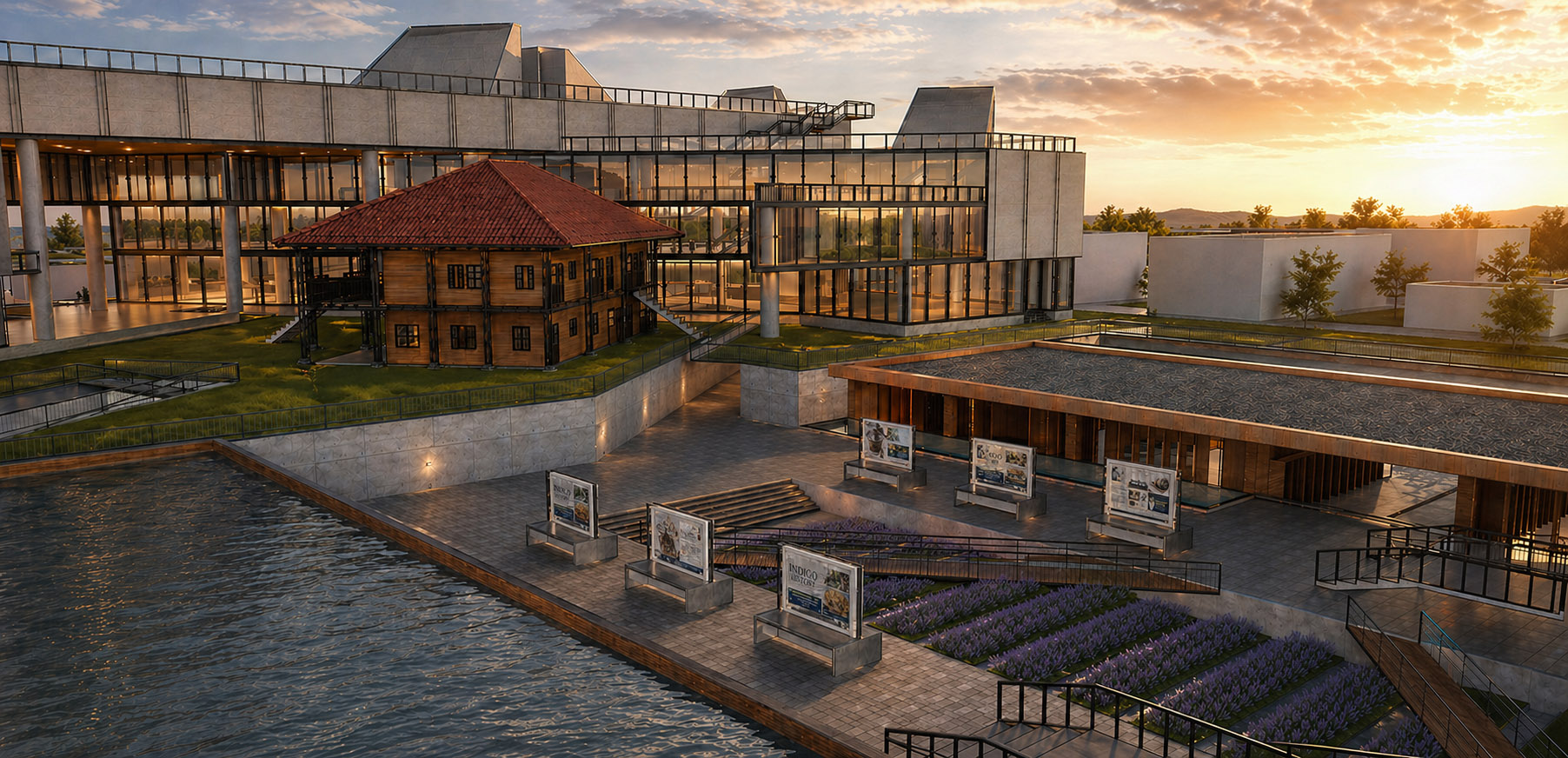
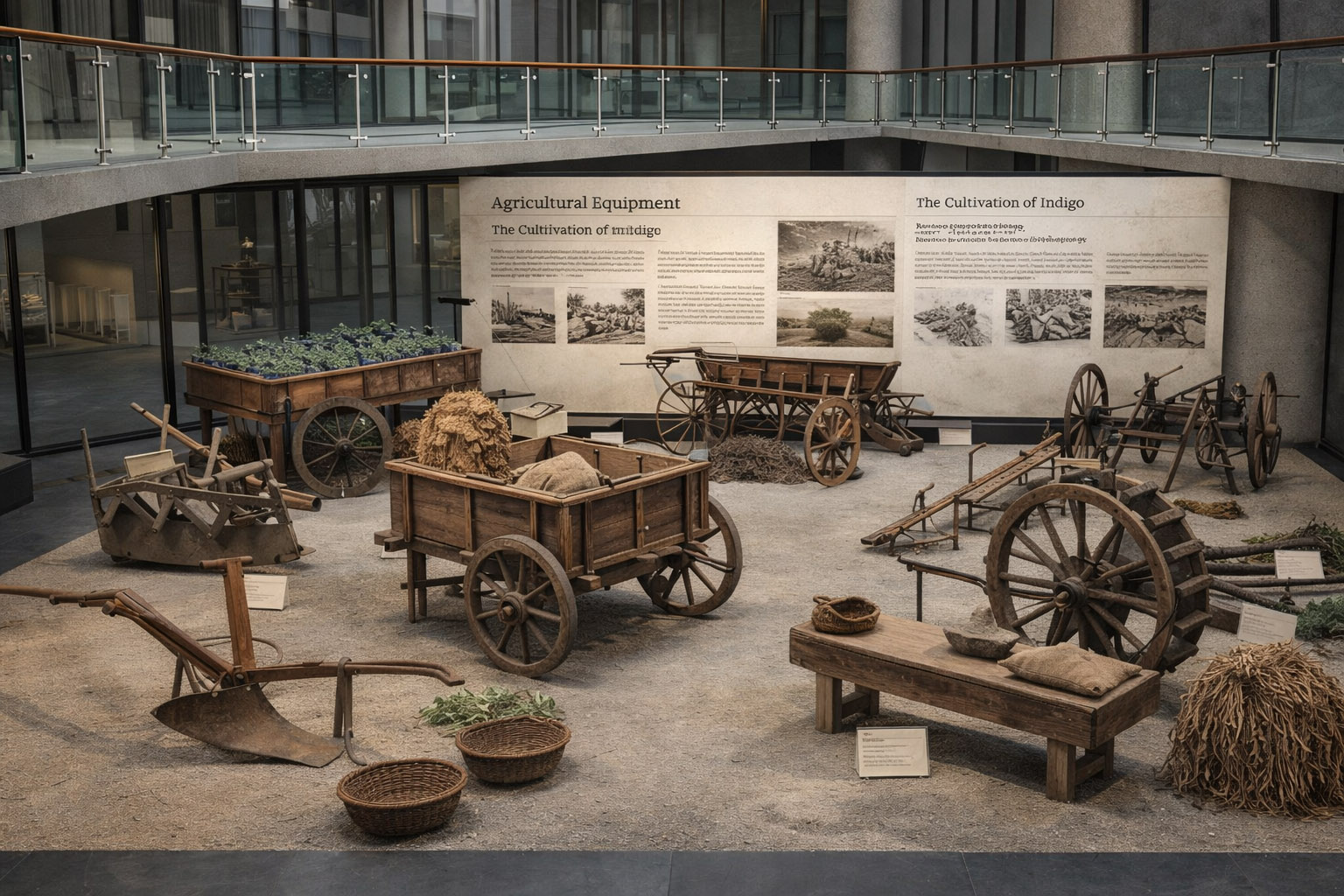
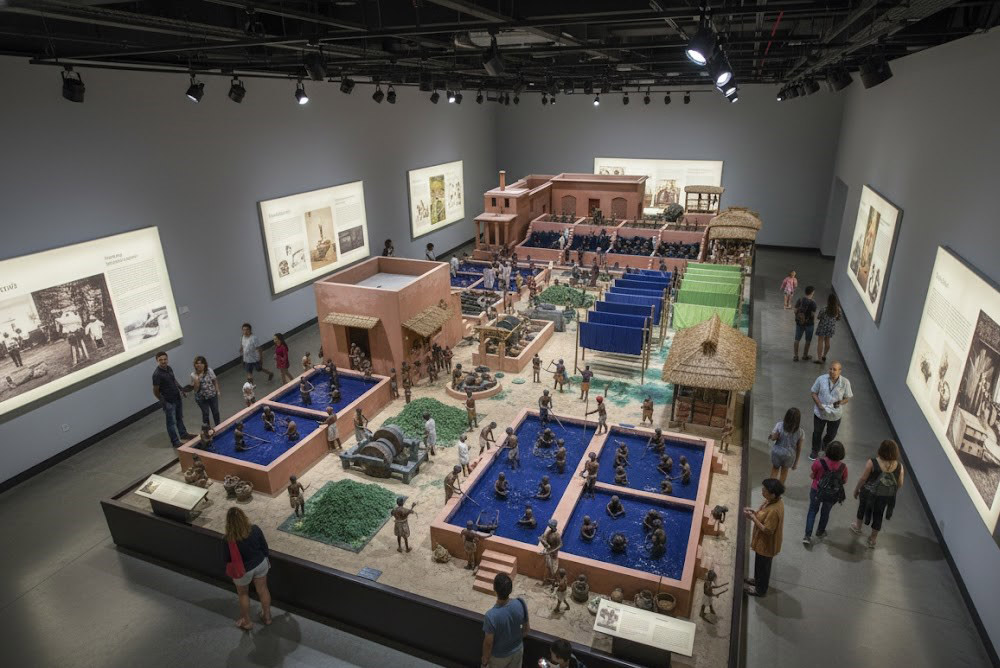
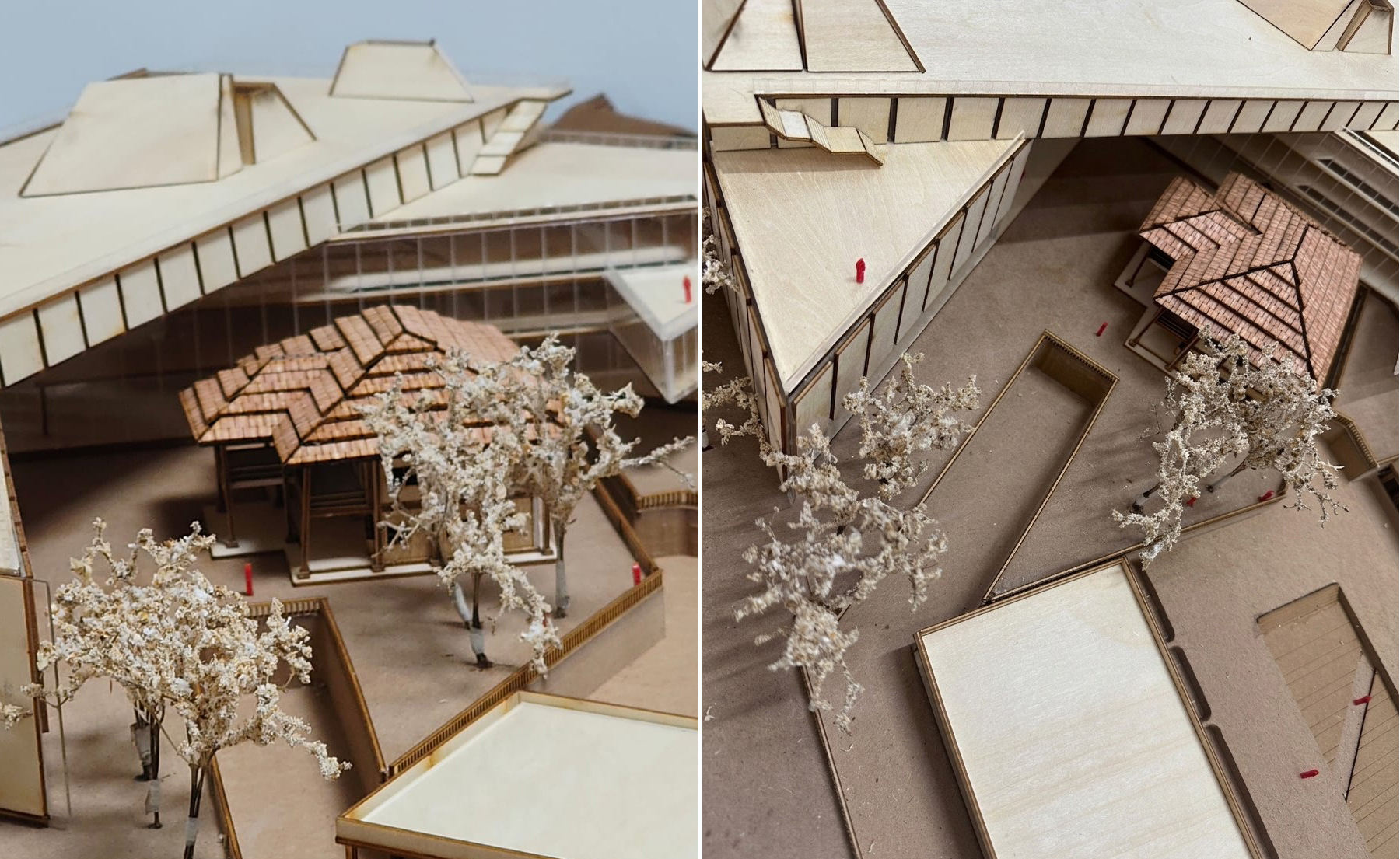
Conceived as the backdrop to the existing Neelkuthi, the proposed museum is a descent into the soil, a formal and symbolic return to Bengal’s agrarian life before colonial intervention. Its two wings, flanking the central block, are covered with water, evoking the river networks that once enabled both indigo cultivation and colonial control. The journey begins with an indigo garden, then compresses through a transitional tunnel—a spatial and emotional shift from harmony to oppression. From this threshold, the museum rises through five levels, narrating a chronological history: origin, cultivation, production, exploitation, and resistance. The experience culminates at its historic heart: Charlie’s Neelkuthi.
Neelkuthi
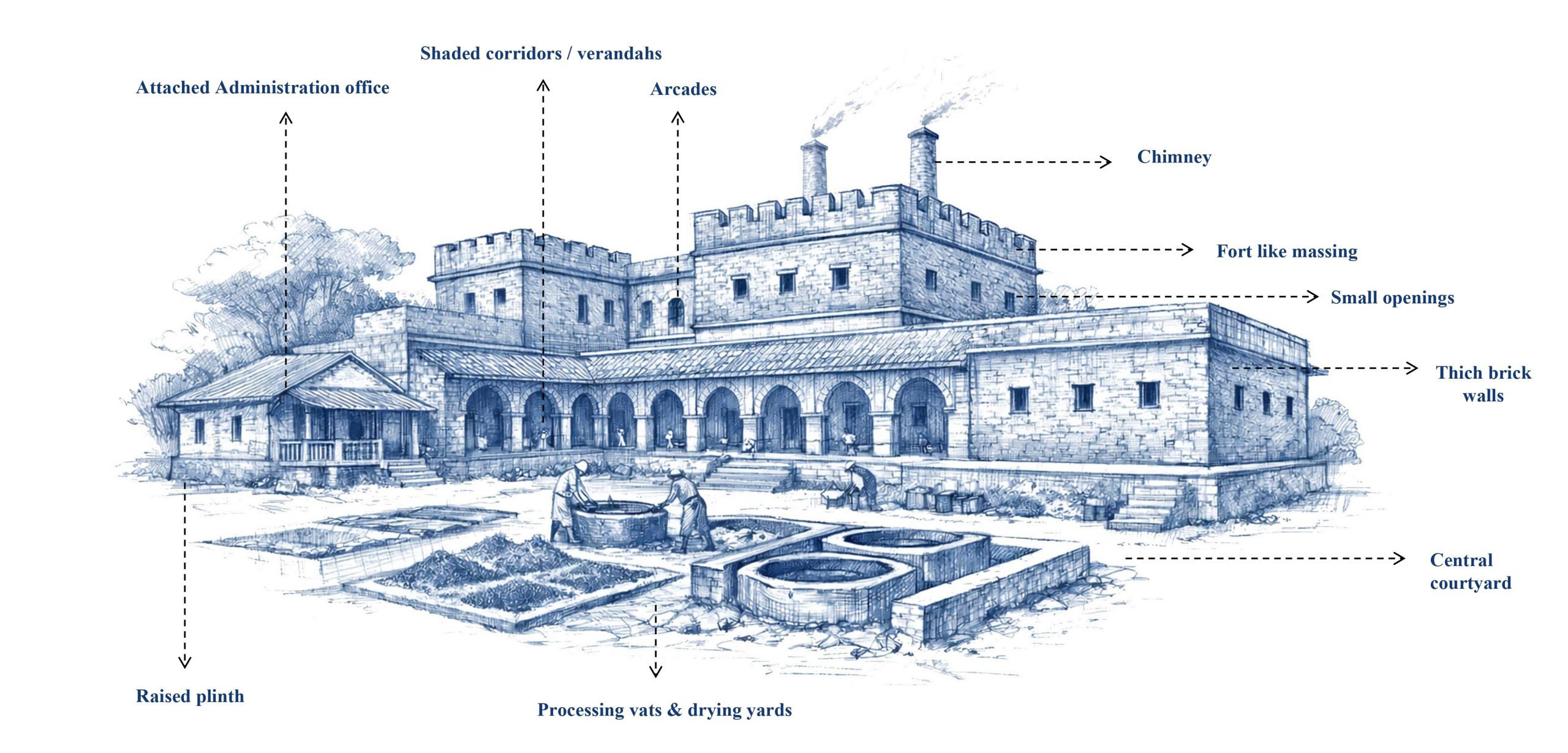
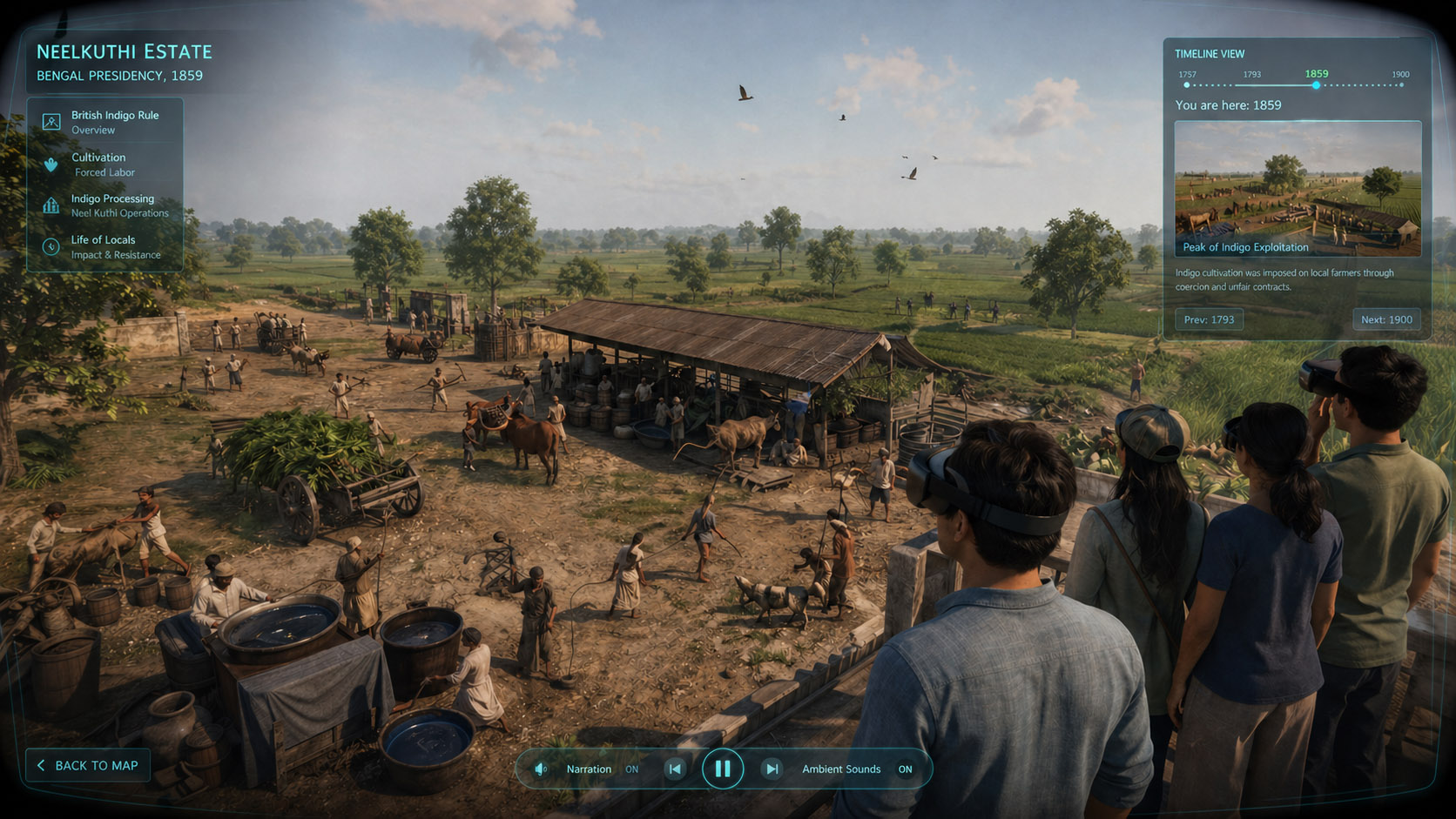
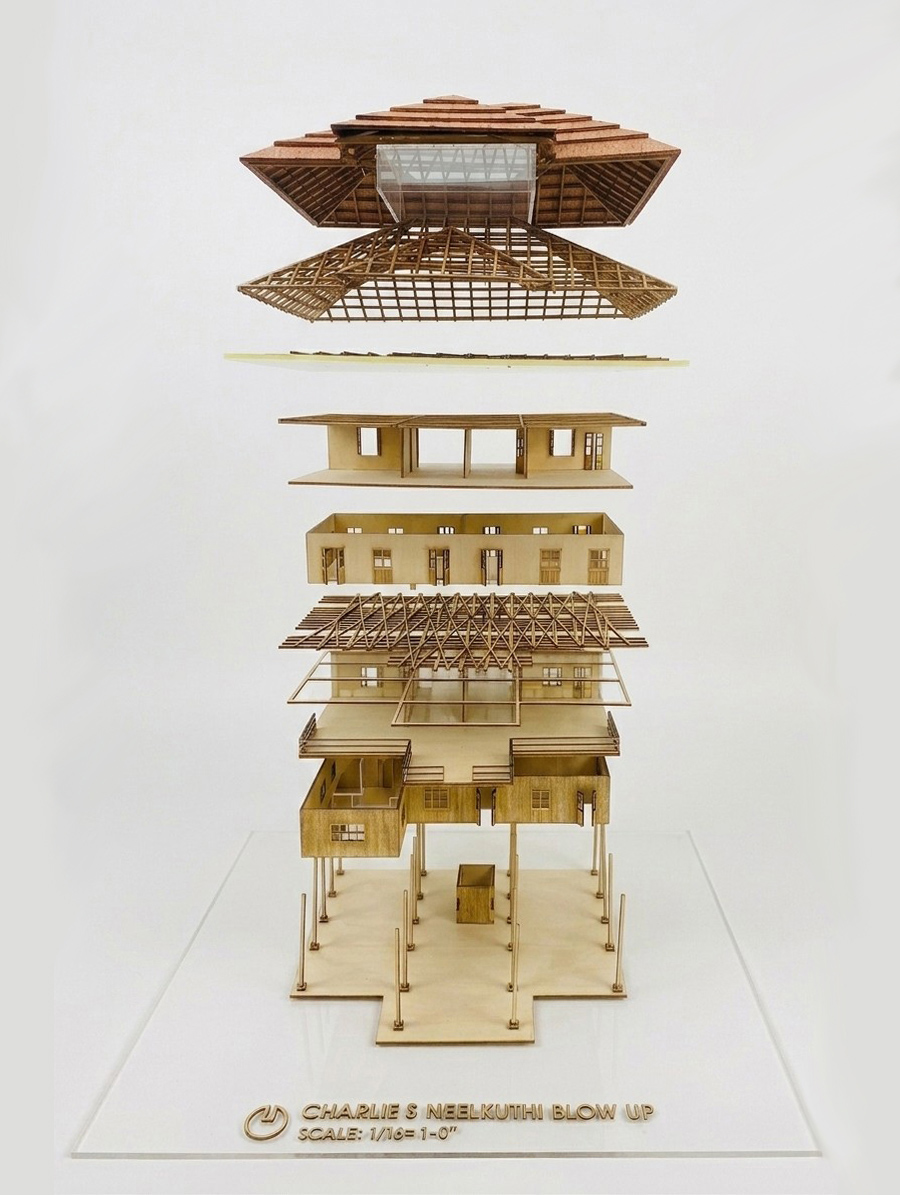
Built by Charlie, the existing Neelkuthi served as a processing hub and seat of administrative control. It was a place for detention and punishment for the resisting farmers. From such centers, indigo dye was stored and shipped to Europe. In this proposal, the Kuthi is reinterpreted from a place of fear into a space of truth, reflection, and learning. It portrays the history and lifetime activities of Charlie. Here, visitors engage with immersive storytelling through VR experiences, allowing them to visualize the past layered onto the present revealing histories of indigo, resistance, and eventual resilience.
Bazaar
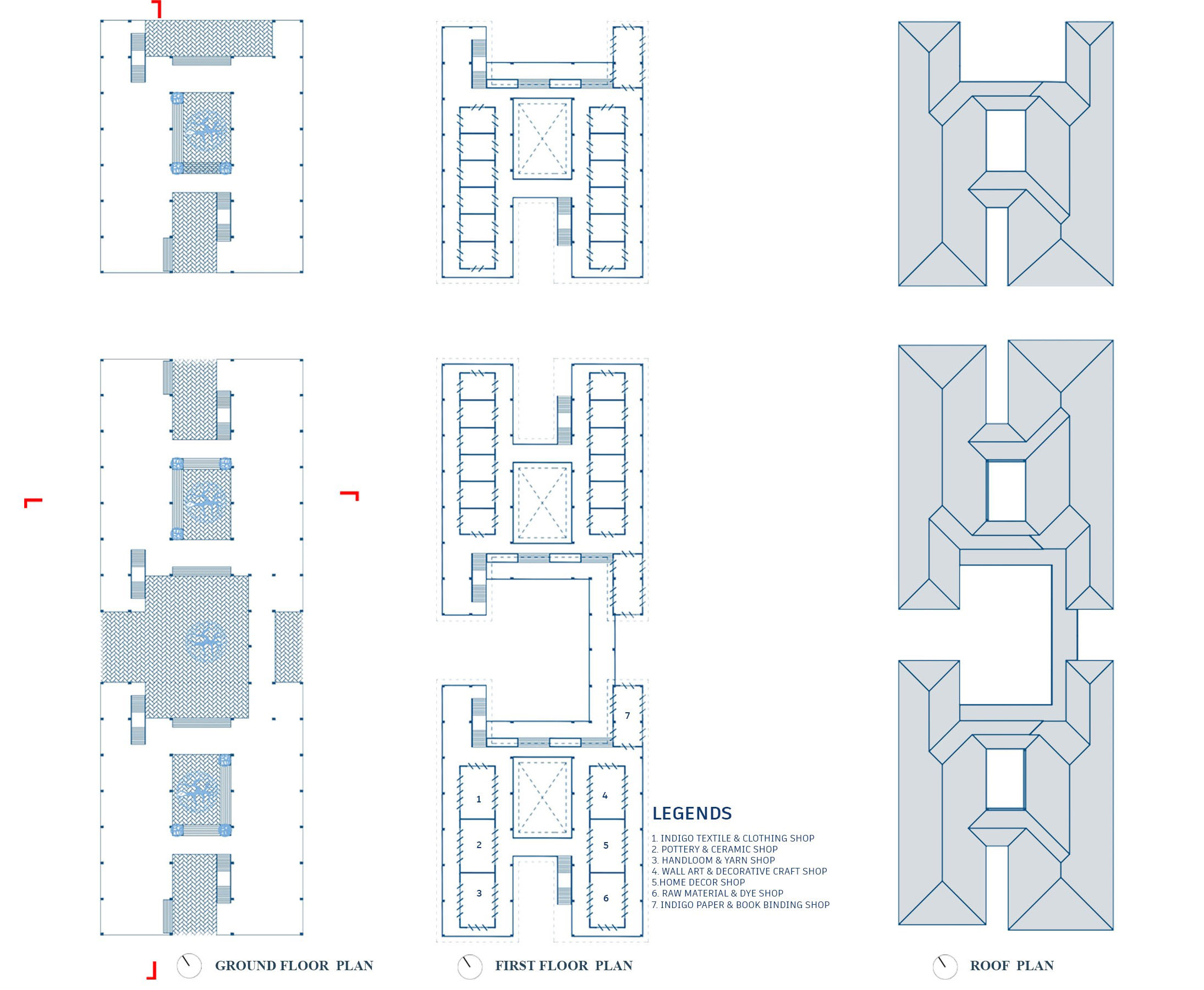
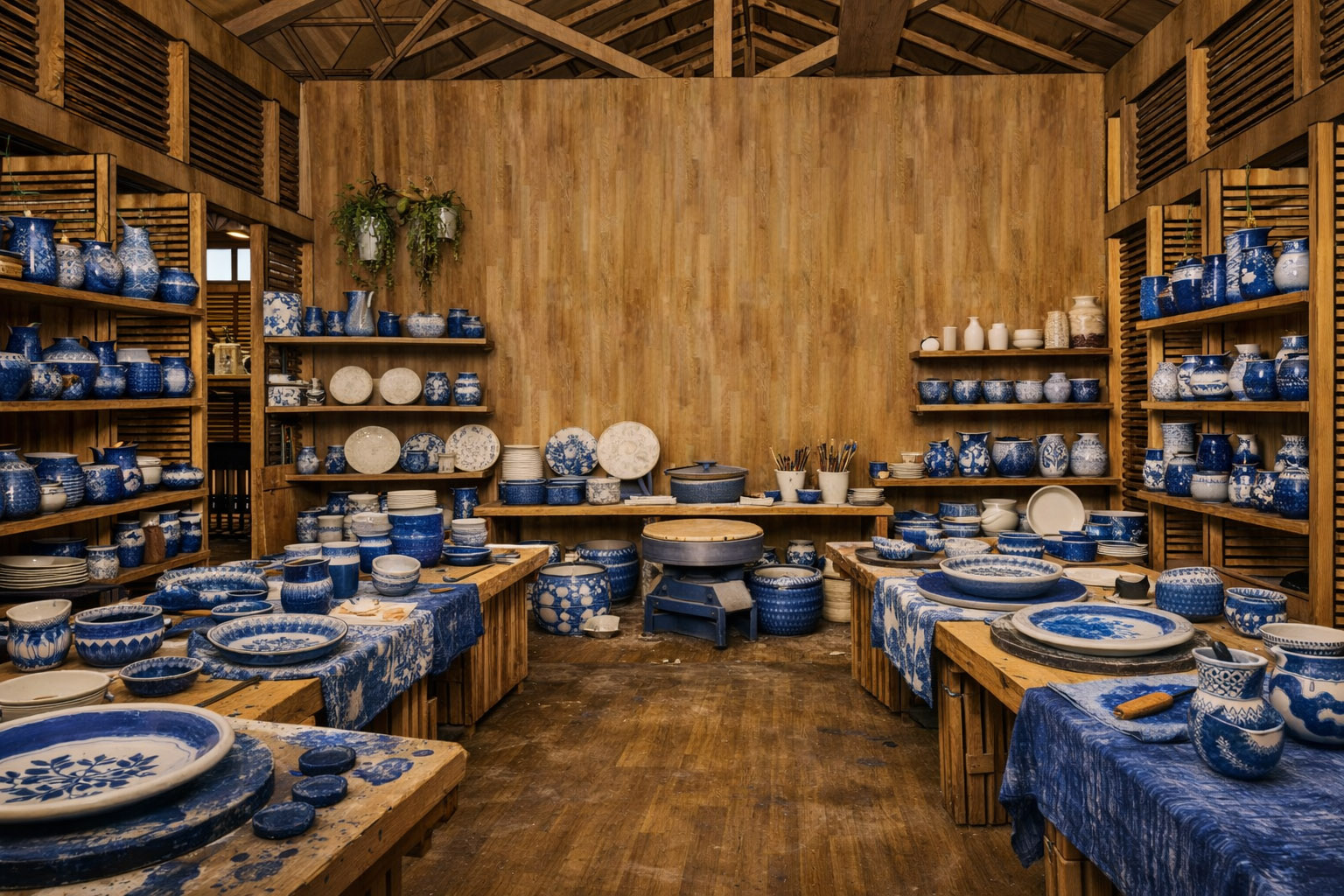
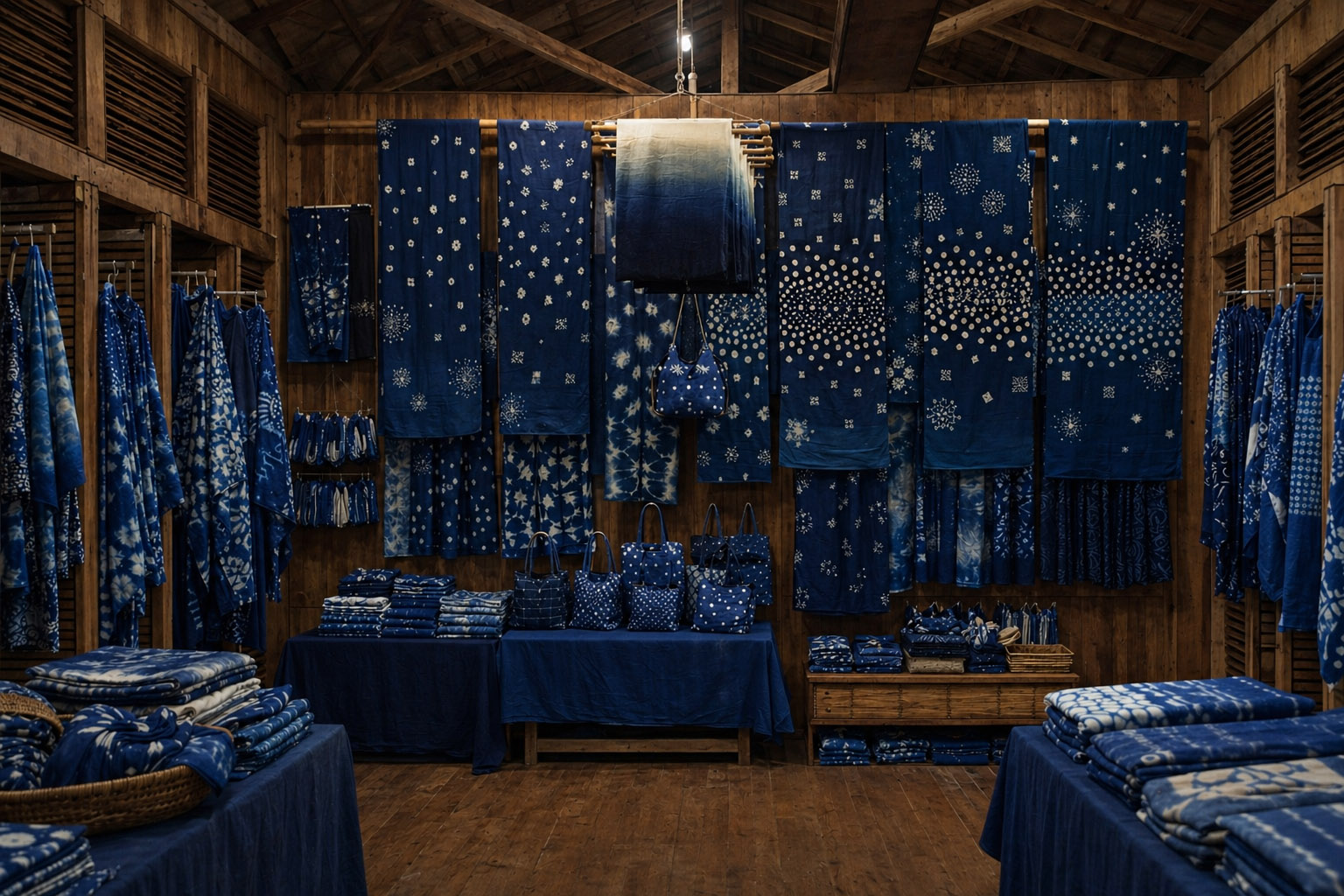
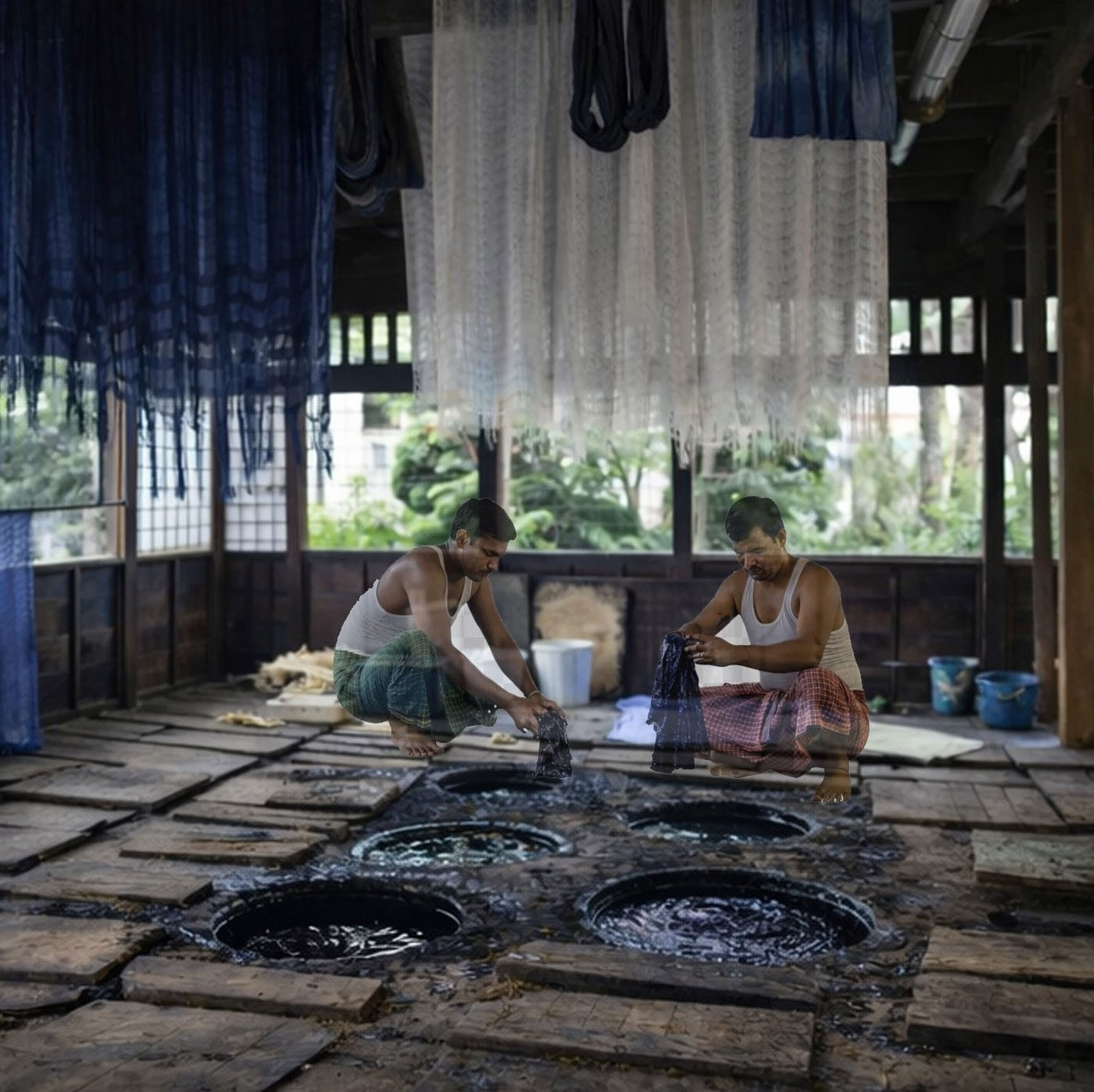
Khulna’s historic Boro Bazar was once known as Charlie’s Haat, a major hub of indigo trade established under colonial rule. Today, it is a dense and chaotic marketplace. The proposal re-imagines a portion of the bazaar by keeping the ground level open and flexible, accommodating indigo processing and craft-based activities. Selected shops are dedicated to indigo and indigo-based products, reviving its historical identity. A network of courtyards, terraces, and open spaces is introduced to create active zones for interaction, exhibitions, workshops, and cultural fairs, enabling visitors to experience and engage with indigo heritage.


Ghat
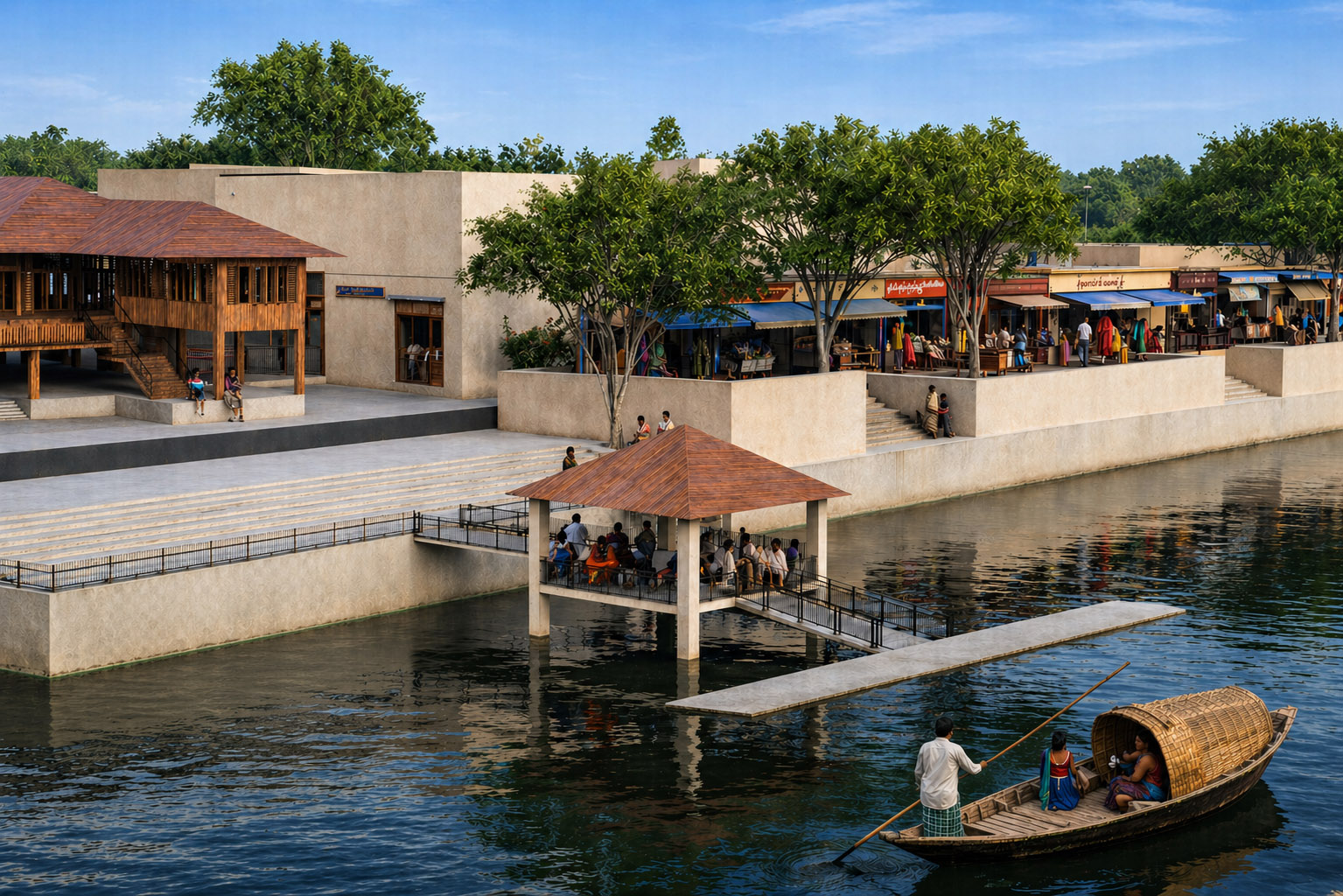
The ghat, once a riverbank staging point for forced trade and exploitation, is reimagined as a public recreational and cultural space. The design reclaims a site of oppression as a place of gathering, reflection, and community connection, reknitting the people’s relationship with the Rupsha River and its layered history.
Through adaptive reuse and deliberate spatial narrative, the project does more than preserve a colonial structure—it reinterprets its very meaning. Shifting the narrative from one of power and control to one of awareness, reflection, and cultural revival, the project ultimately creates a platform where history is not just remembered, but experienced, questioned, and reclaimed by the community.
Note on Title
The original academic title of this final year academic project is Charlie’s Kuthi and the Indigo Legacy: A Museum of History, Craft, and Memory. It has been edited for web presentation. The content, scope, and intent remain unchanged.
PEOPLE ALSO VIEW
Printed Publications

NEXT 50: Collective Futures

ASPIRATIONS AND IDEAS: Designing with Context