
City Centre at Farmgate: An Urban Hub for Live, Work, and Visit
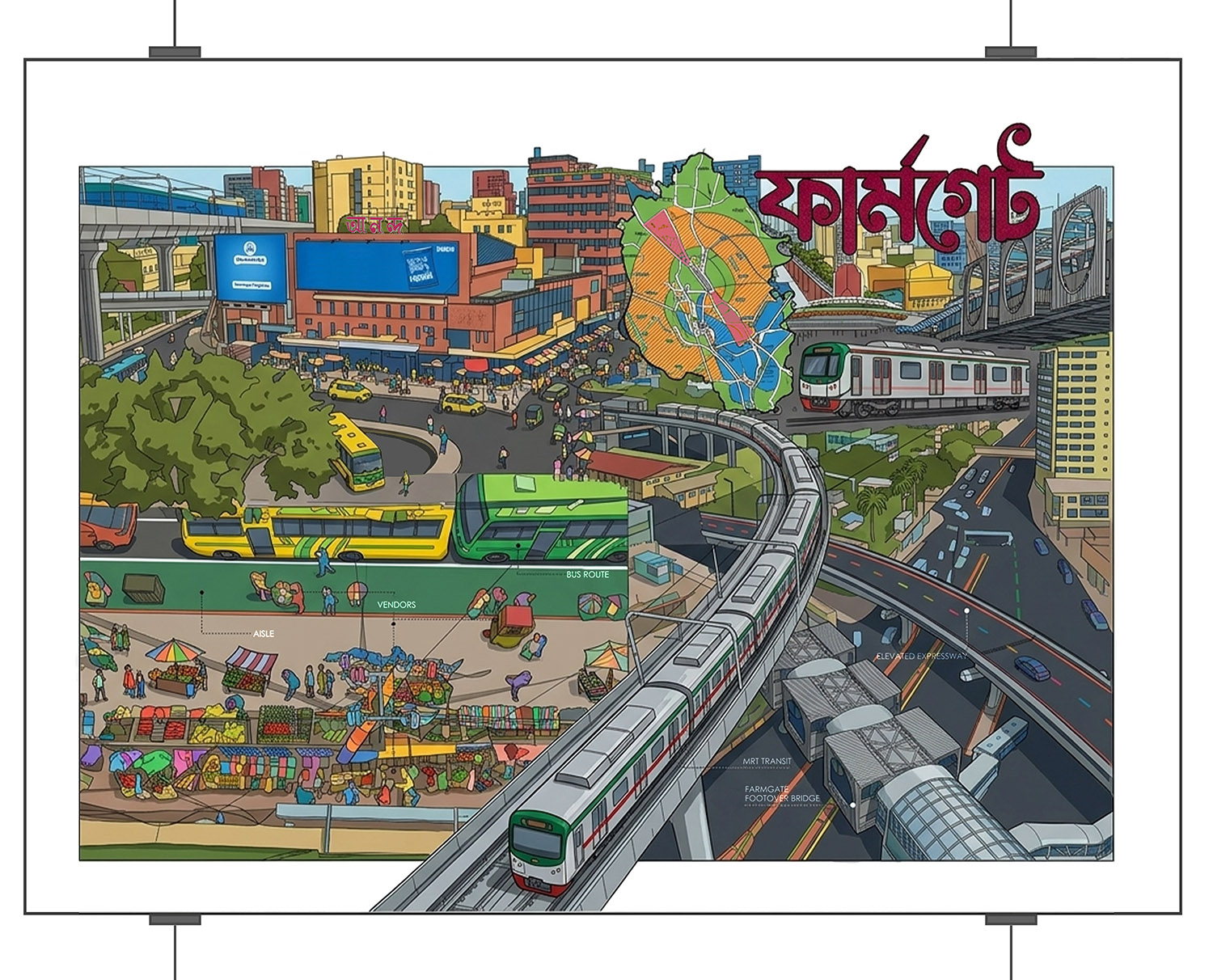
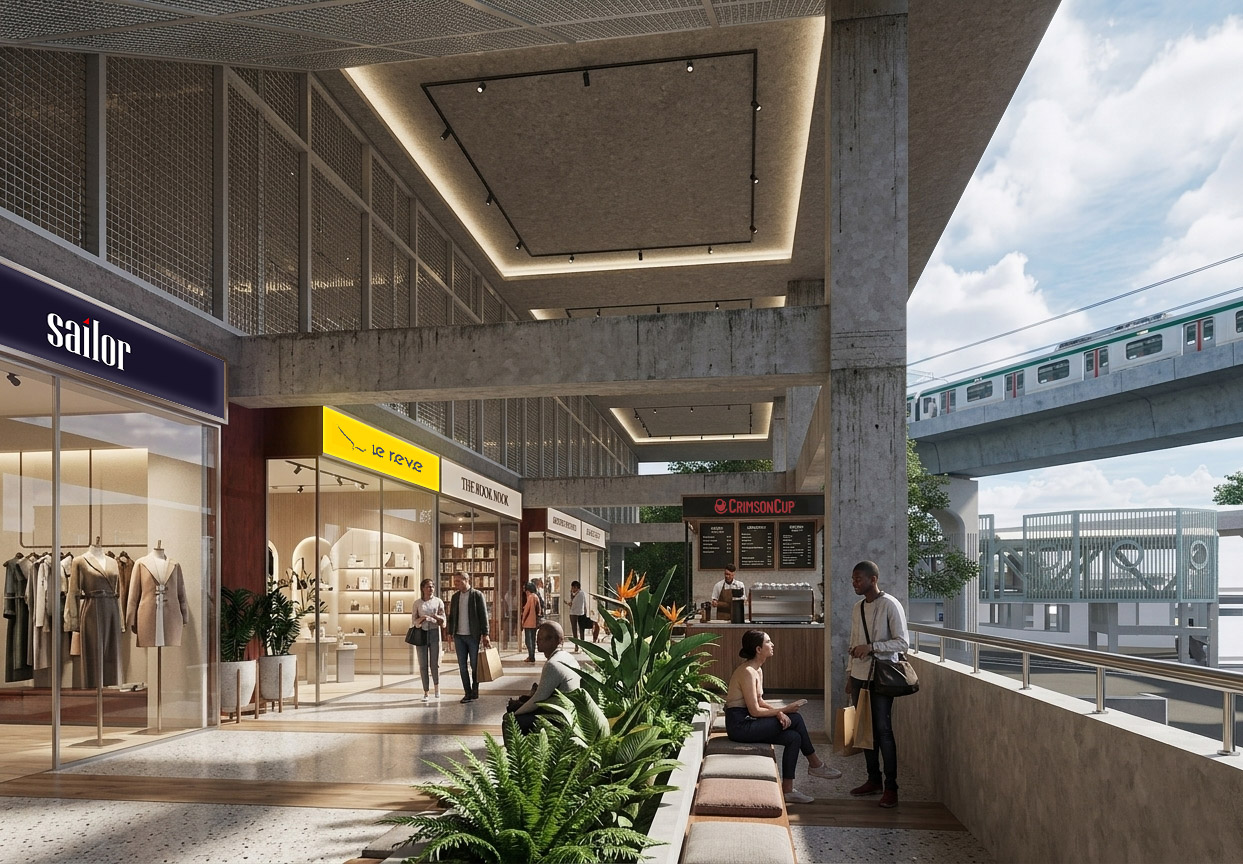
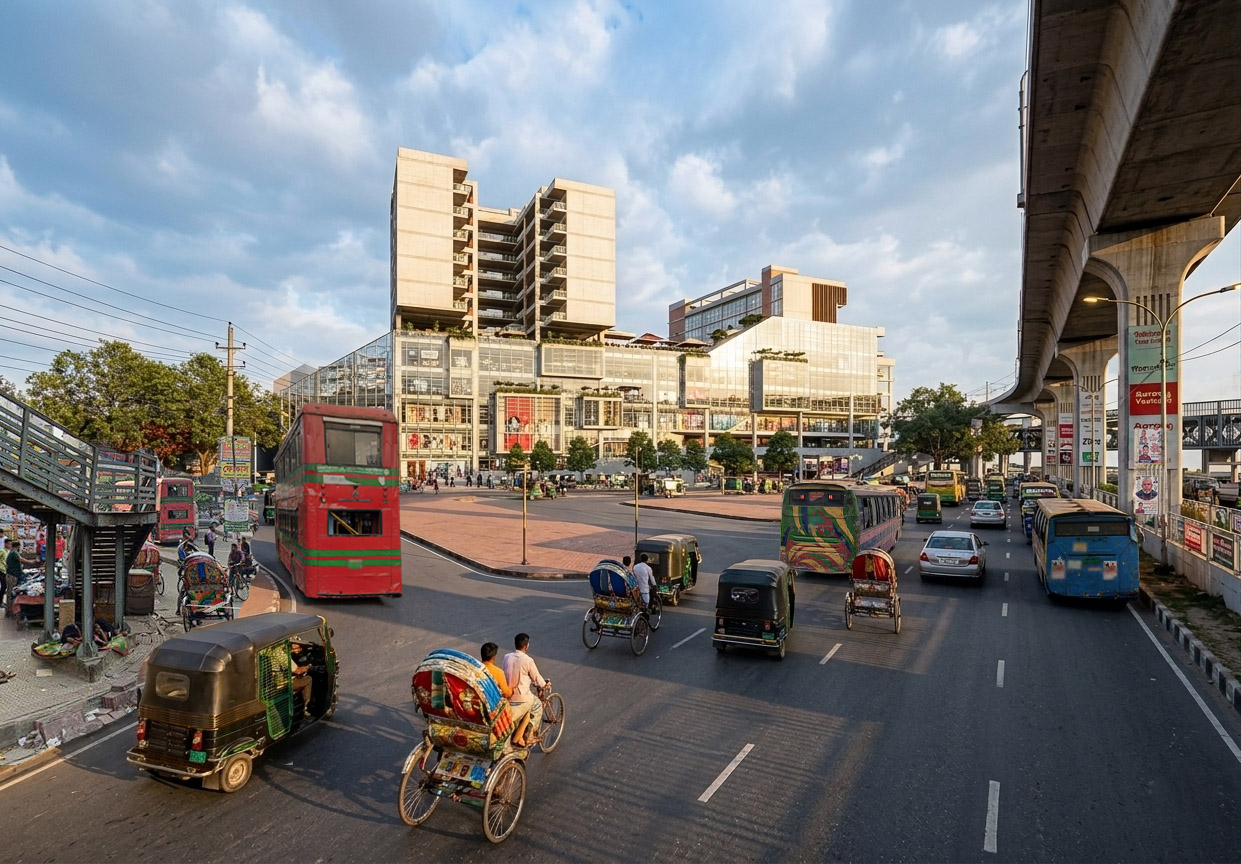
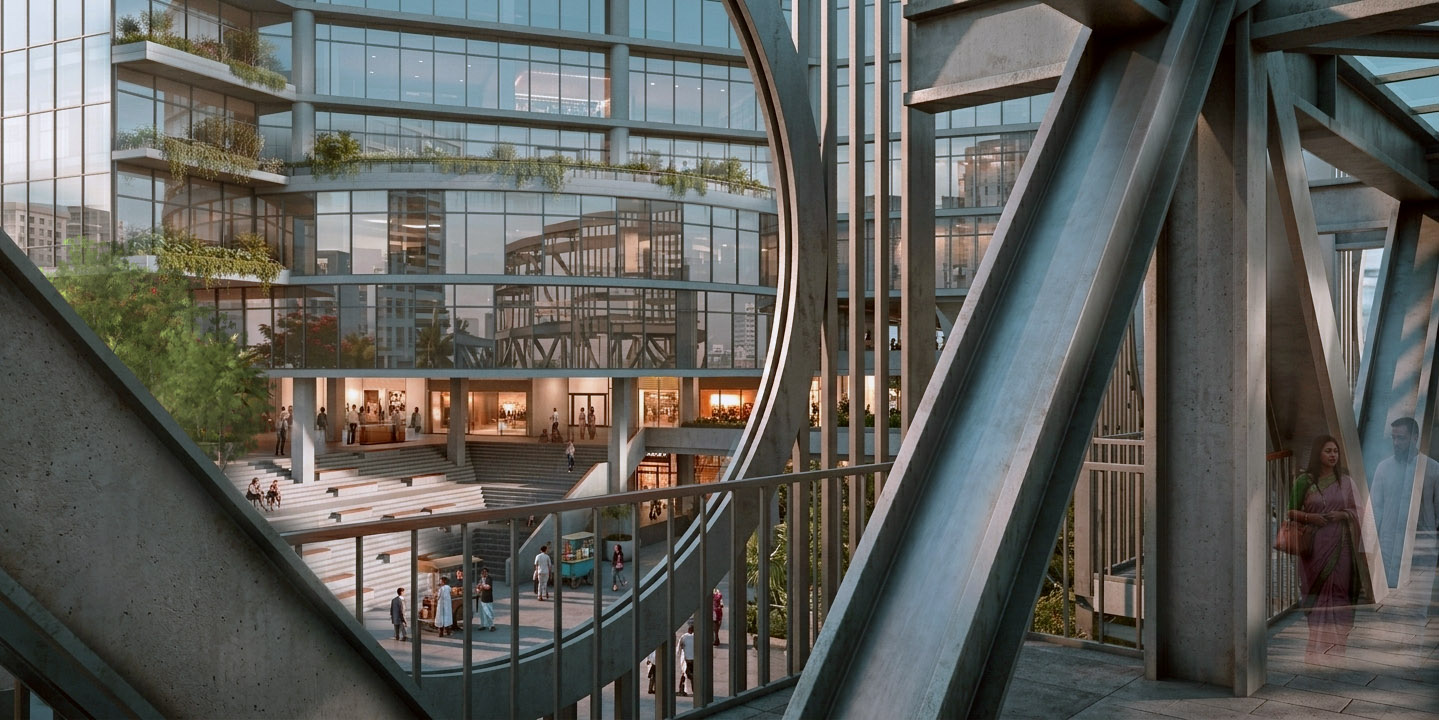
The City Center at Farmgate intersection is envisioned as a public-oriented urban hub that prioritizes pedestrian experience and accessibility. The design emphasizes multi-layered pedestrian networks—integrating ground-level plazas, elevated walkways, and underground concourses—to create seamless and safe connections across the site. By enhancing programmatic legibility, the project establishes a clear spatial hierarchy where commercial, cultural, and civic functions are intuitively organized for maximum engagement.
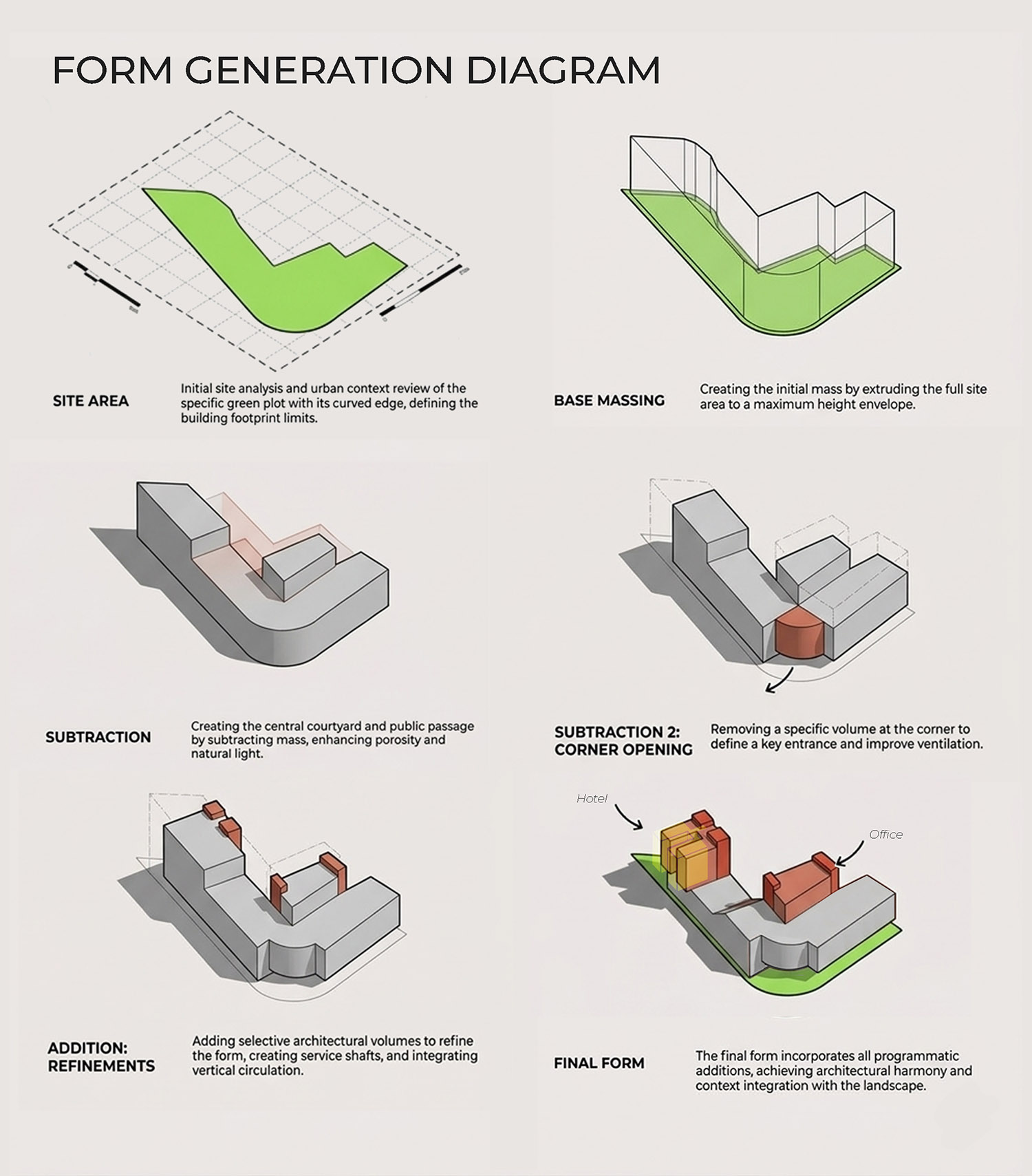
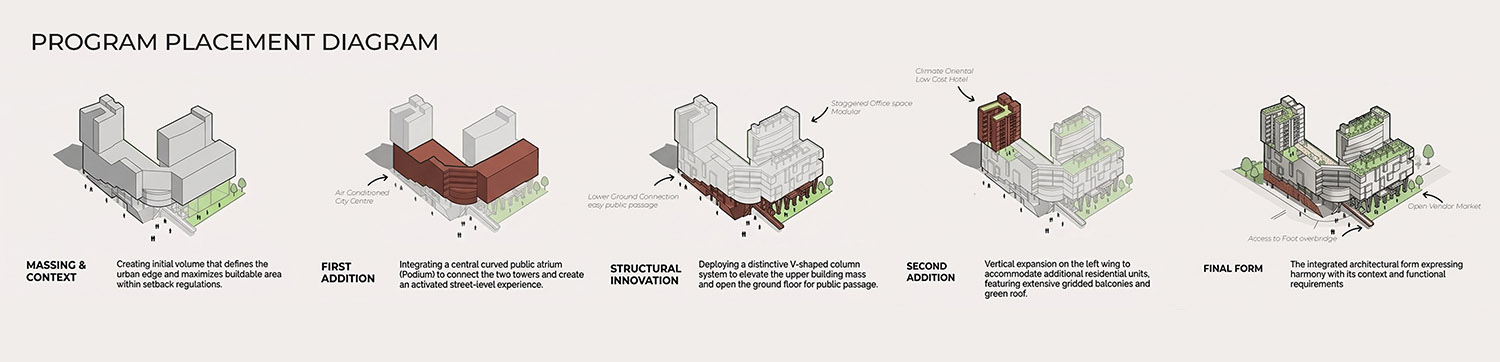
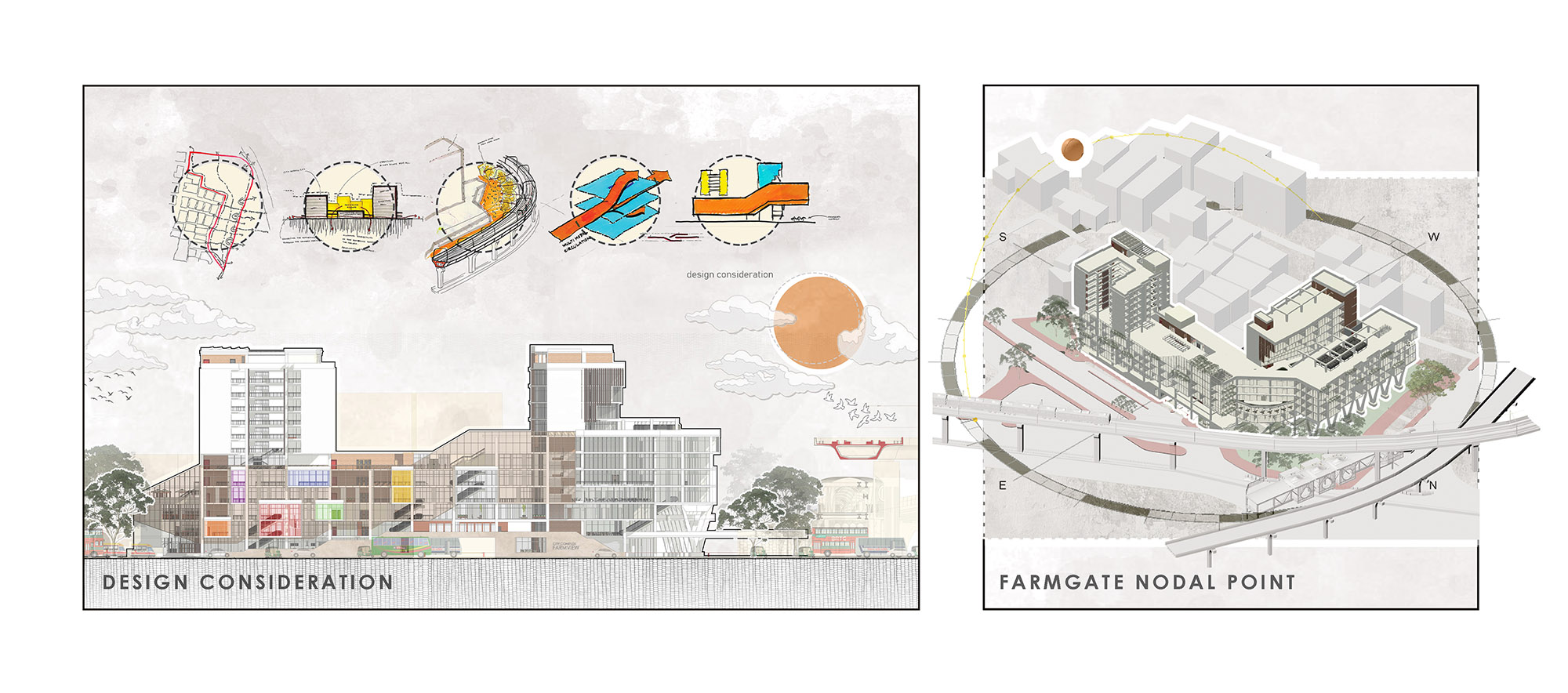
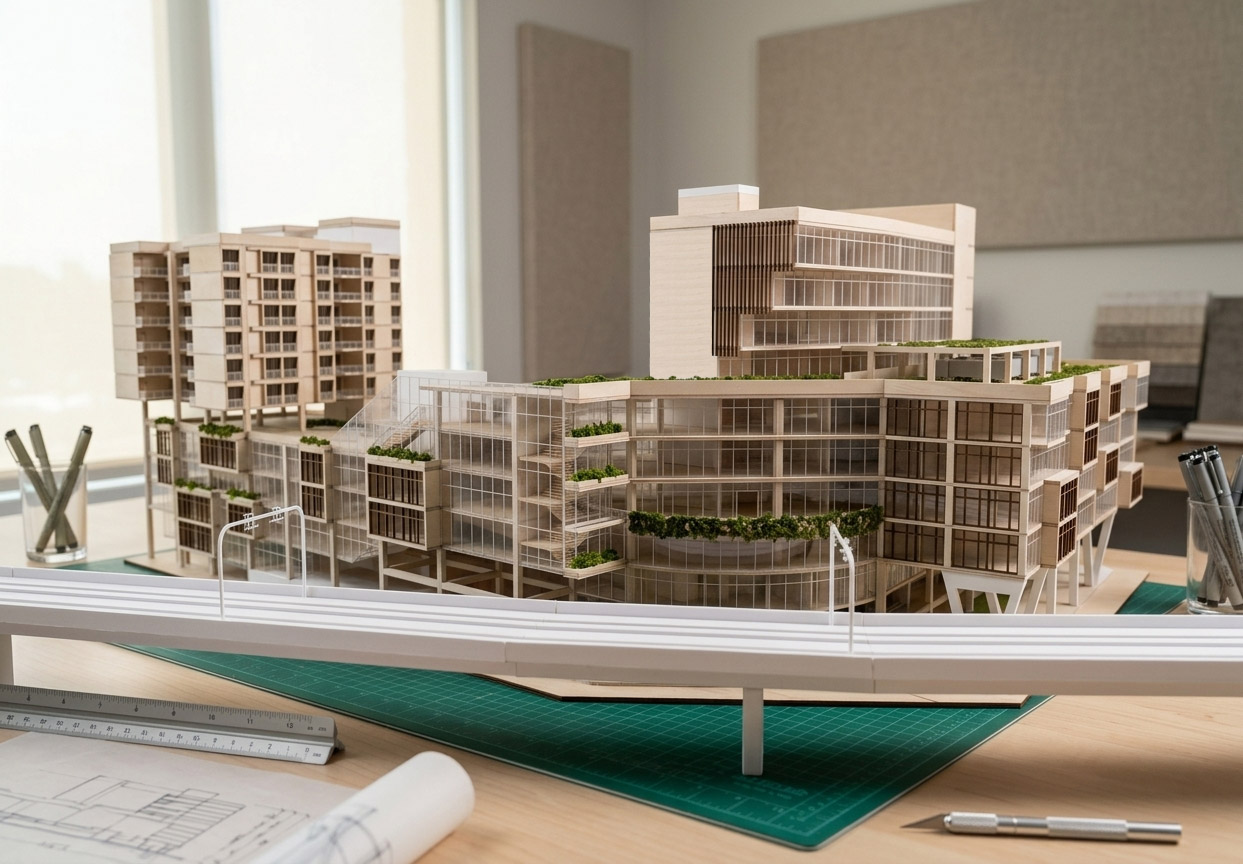
The proposed City Center is divided into three prominent programs – a shopping hub, office space, and low-cost hotel. While zoning the given site, these programs were placed according to the highest demand. Farmgate has a huge gathering of people as it is also a prominent nodal point where people from various areas gather. This also supports the growth of a shopping hub in the area. Flea markets are often set up along the pedestrian paths of Farmgate, attracting a huge number of passersby. Most of the hawkers are selling clothing and footwear.
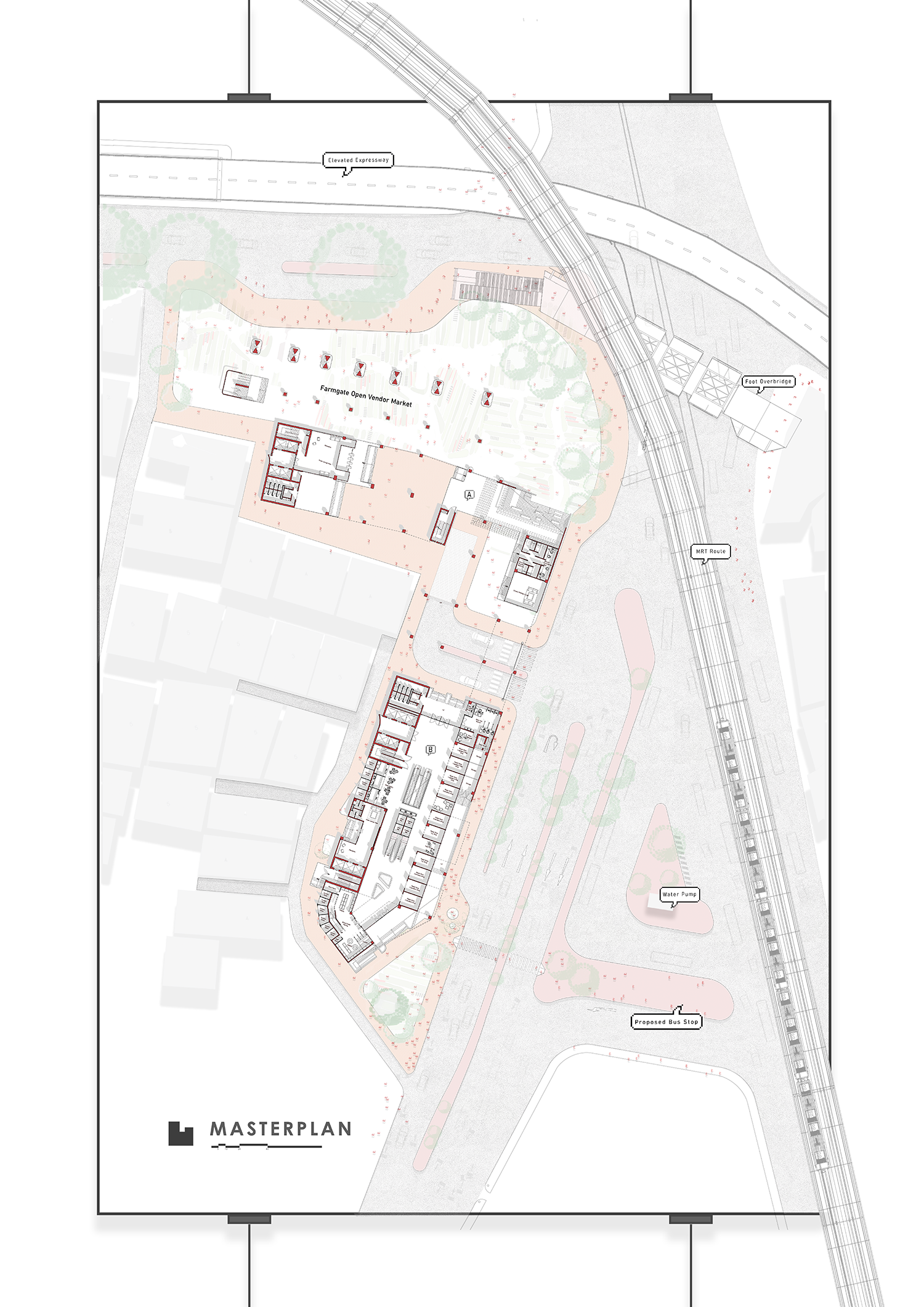
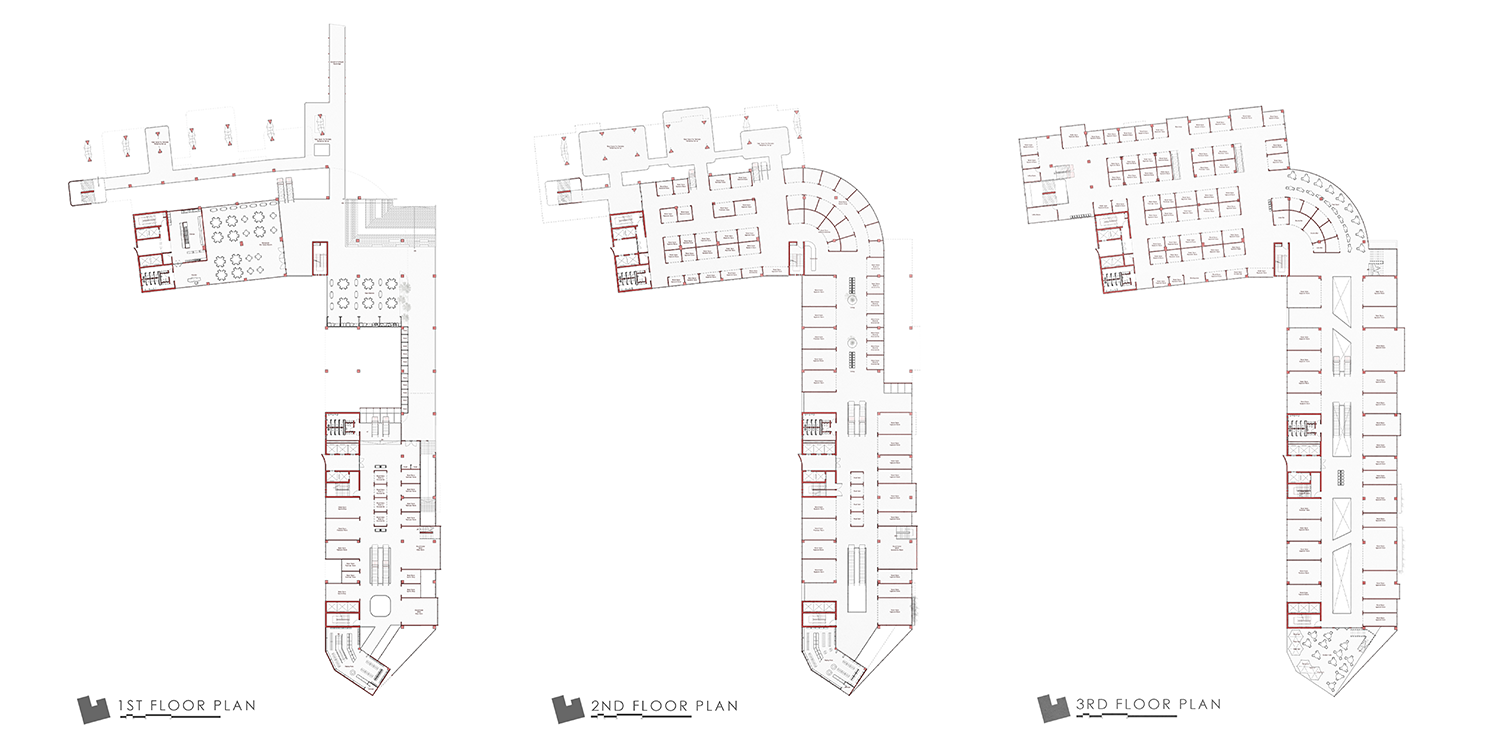
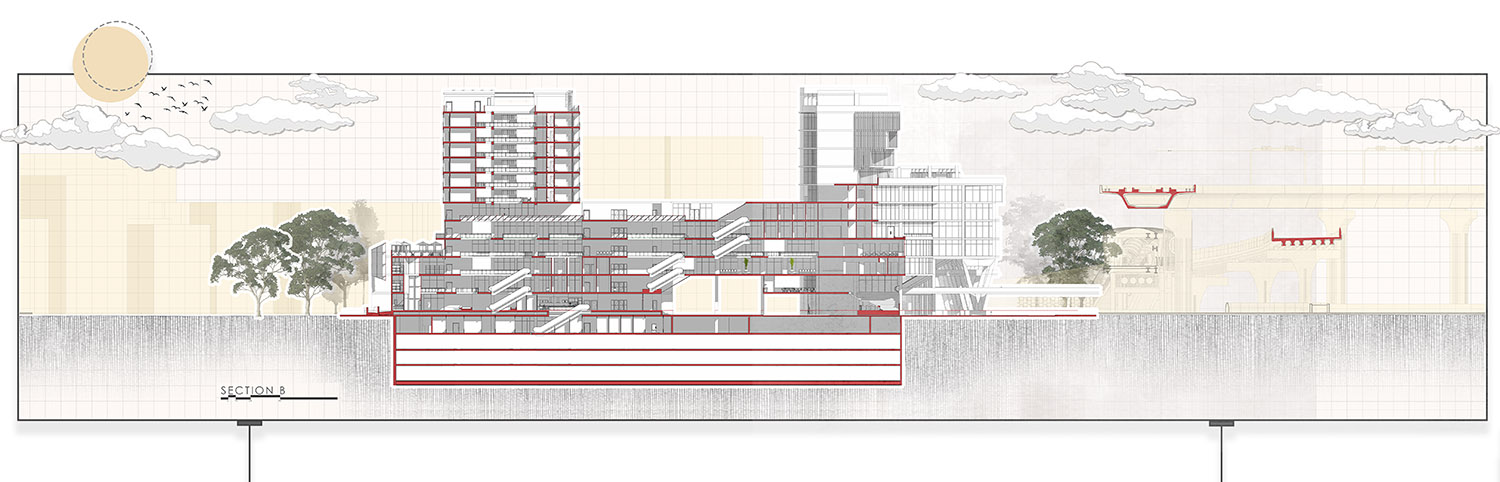
The ground area is primarily serving as a shopping area, with both air-conditioned spaces and outdoor spaces, following the current demand of buyers. The plan is proposed as a pedestrian-dominant complex, enhancing programmatic legibility and clear circulation. As Farmgate lacks green space and is overcrowded, the built area is reduced to create well-connected breathing spaces at the node. These spaces allow for community gatherings, open vendor markets, or melas.
The design priorities focus on creating a highly accessible, community-centric, and sustainable architectural intervention. At its core, the project establishes a grand stair as a central point to ensure seamless public access throughout the site, complemented by a network of horizontal and vertical circulation paths that facilitate easy movement between floors. To manage site logistics, a new vehicular entry utilizes a roundabout system to streamline traffic flow and enhance safety.
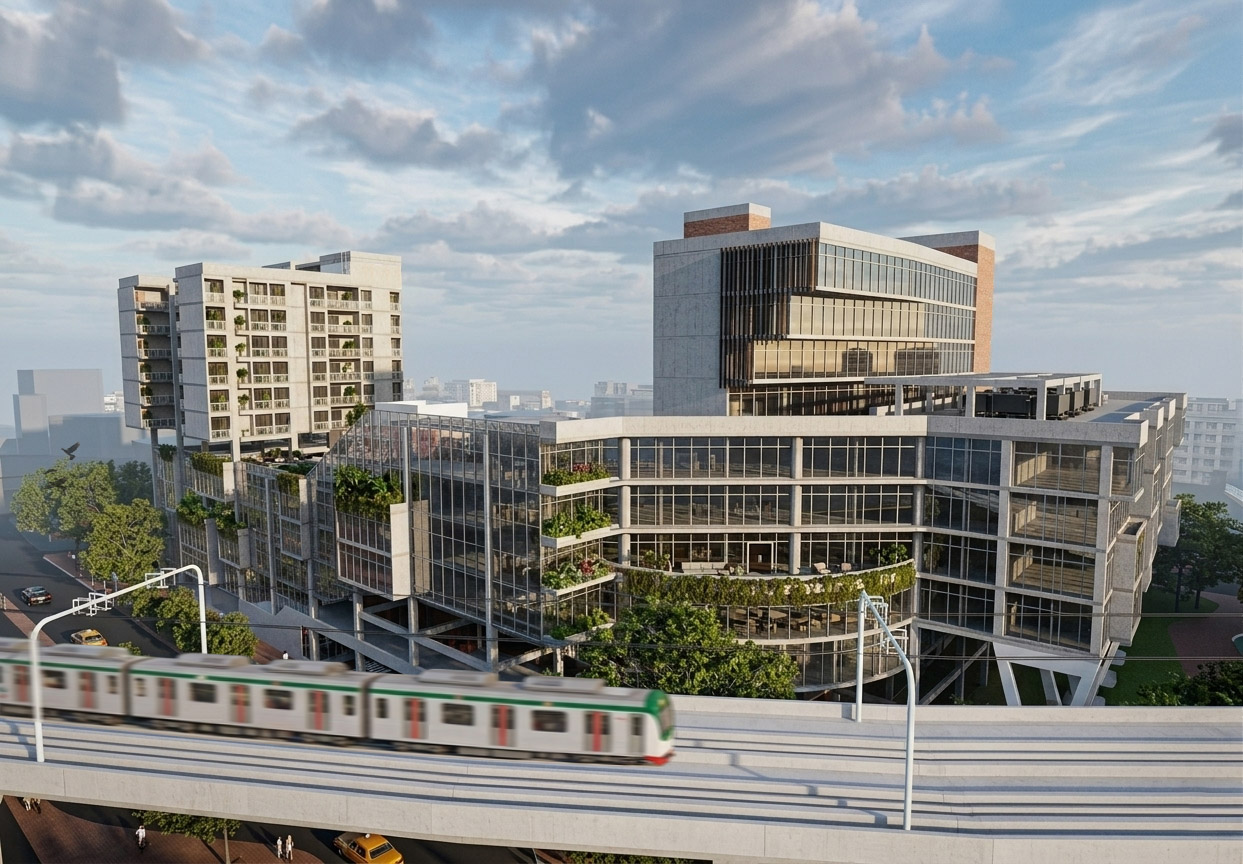
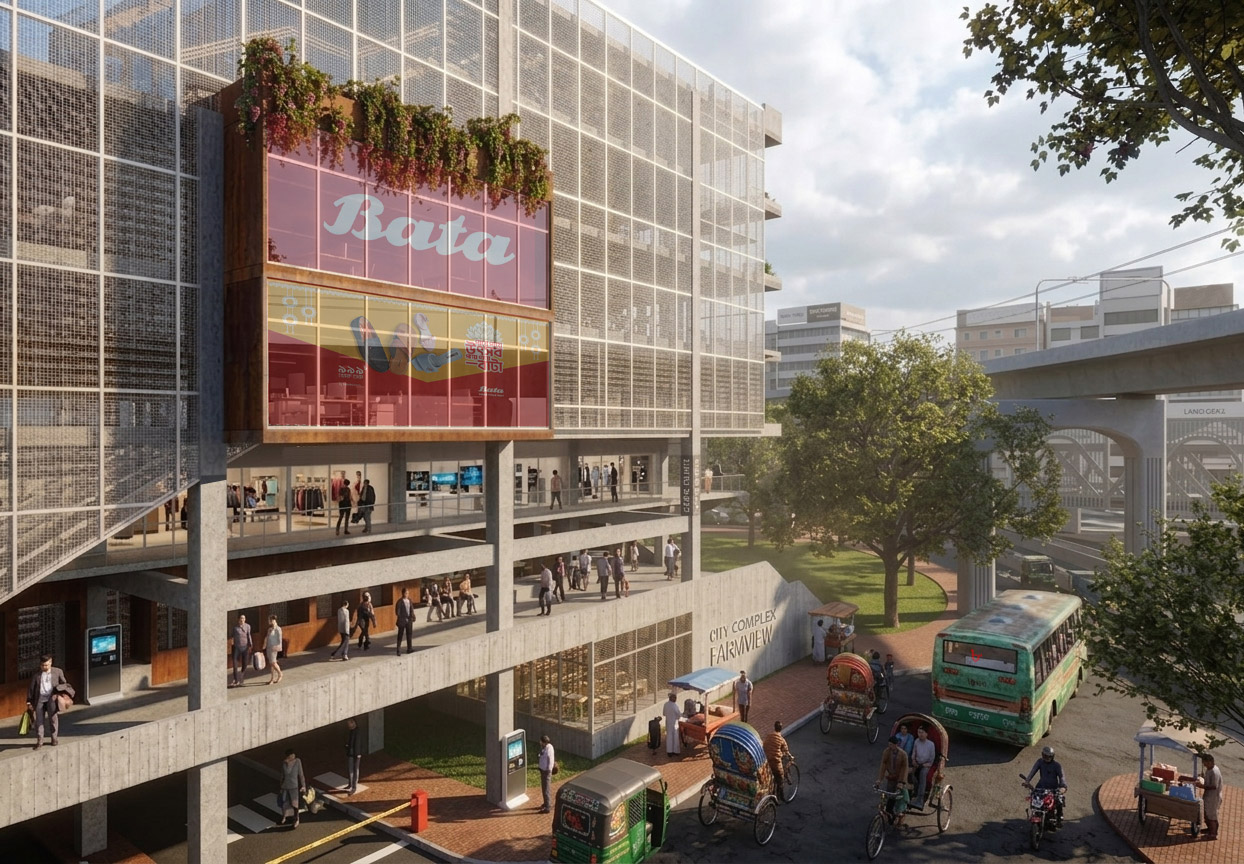
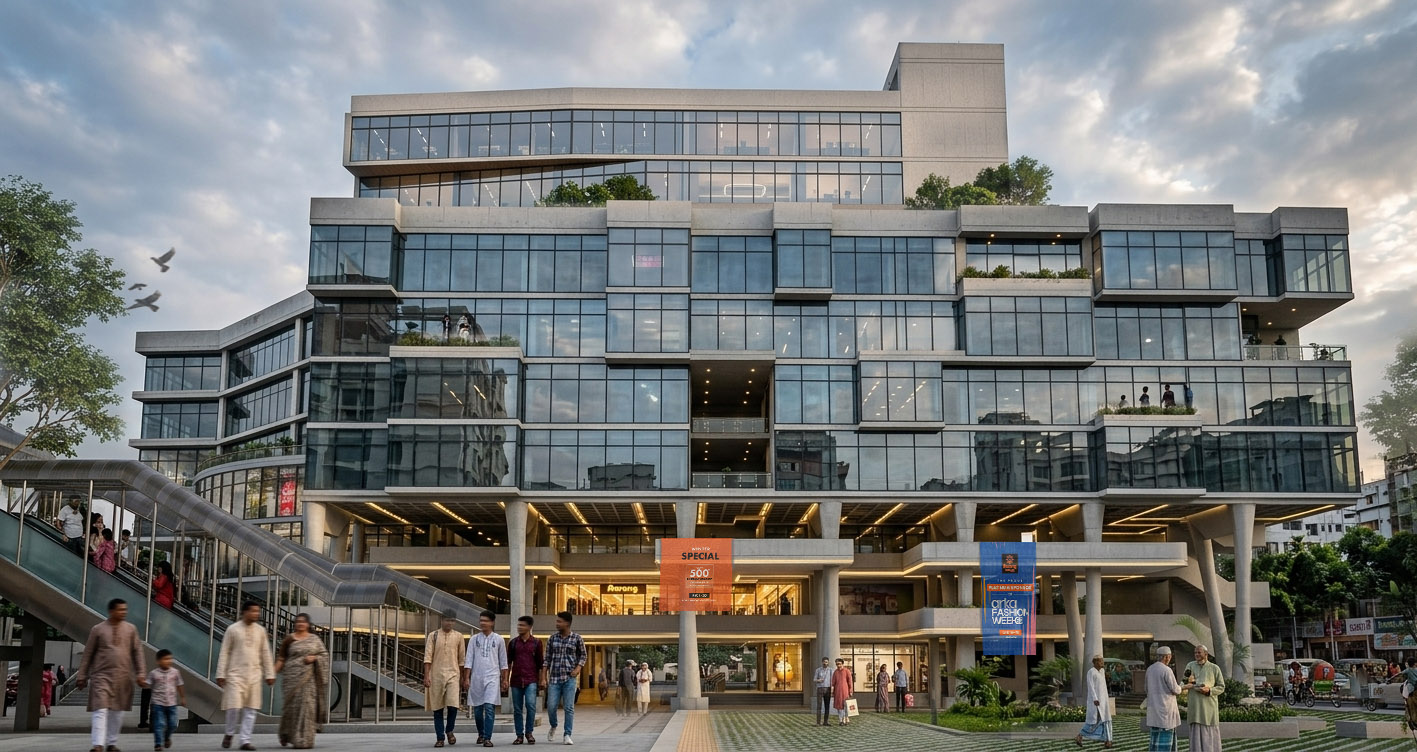
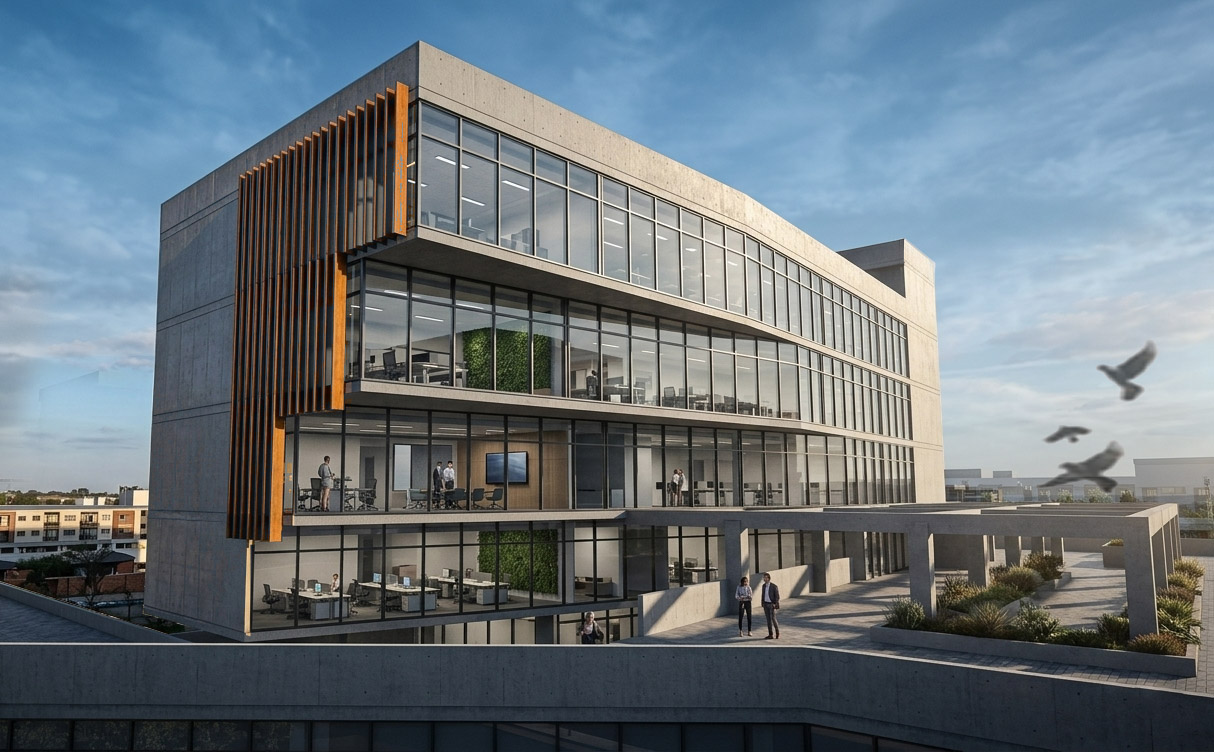
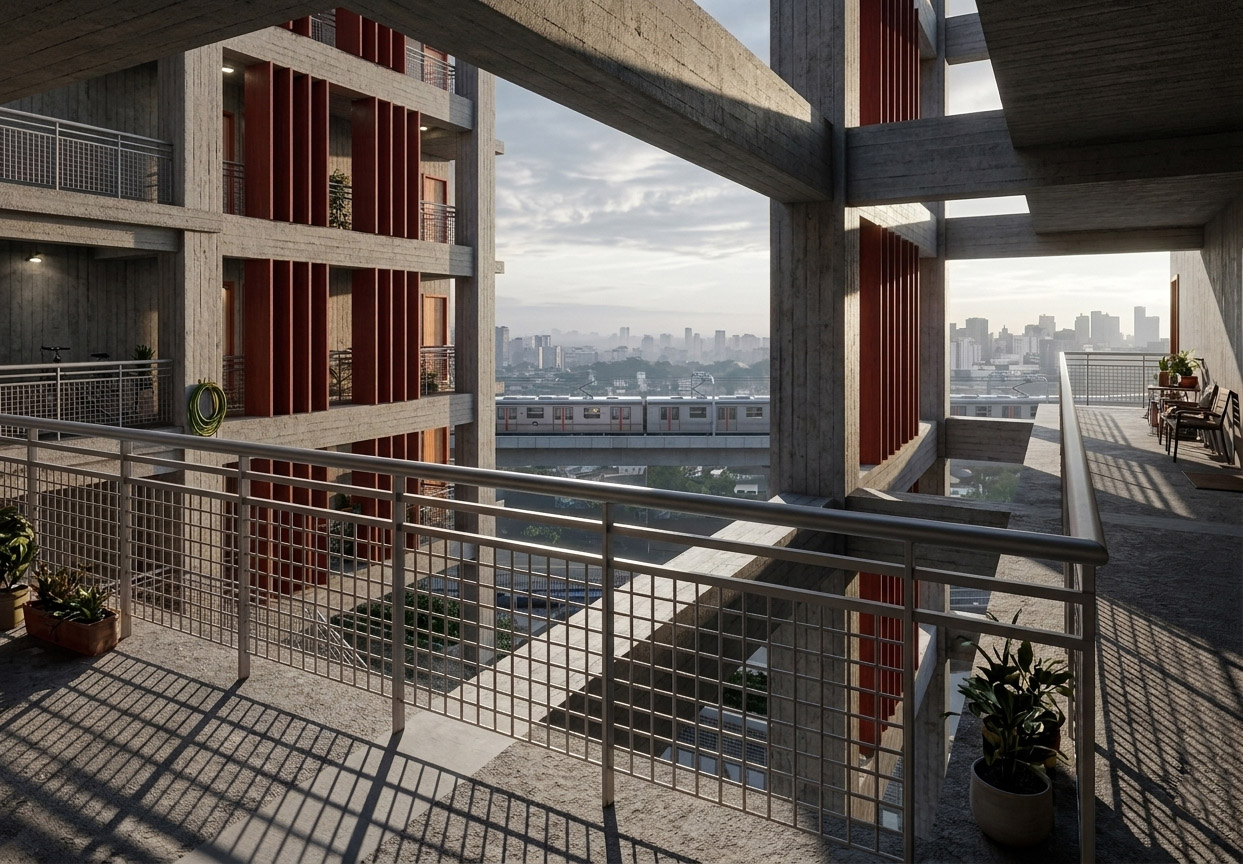
Environmental sustainability is addressed by integrating photovoltaic systems directly into the building’s skin, which serves as functional screens to harvest energy from the site’s high solar exposure. Social equity is addressed through the inclusion of a low-budget hotel, specifically designed to be accessible to the local low-income community, fostering inclusivity rather than isolation.
Finally, the design culminates in a rooftop urban gathering space, providing a communal destination that serves both the building’s residents and the broader public, effectively extending the urban fabric upward.
Note on Title:
The original title of the project is Farmview City Centre: Shopping, Hotel & Office Hub at Farmgate. The title has been edited for web presentation. The content, scope, and intent remain unchanged.
PEOPLE ALSO VIEW
Printed Publications

NEXT 50: Collective Futures

ASPIRATIONS AND IDEAS: Designing with Context