
Urban [Re]Stitch
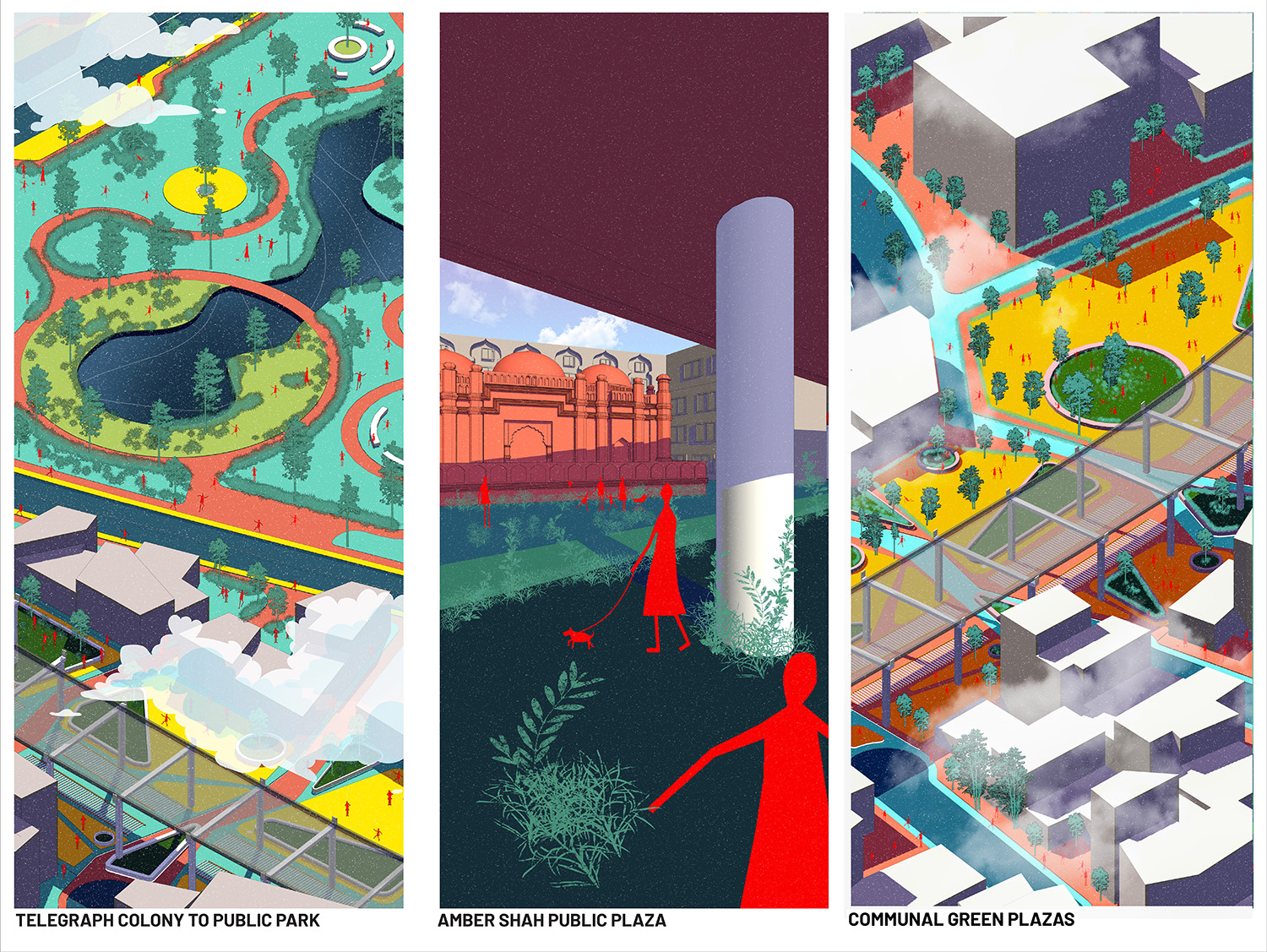
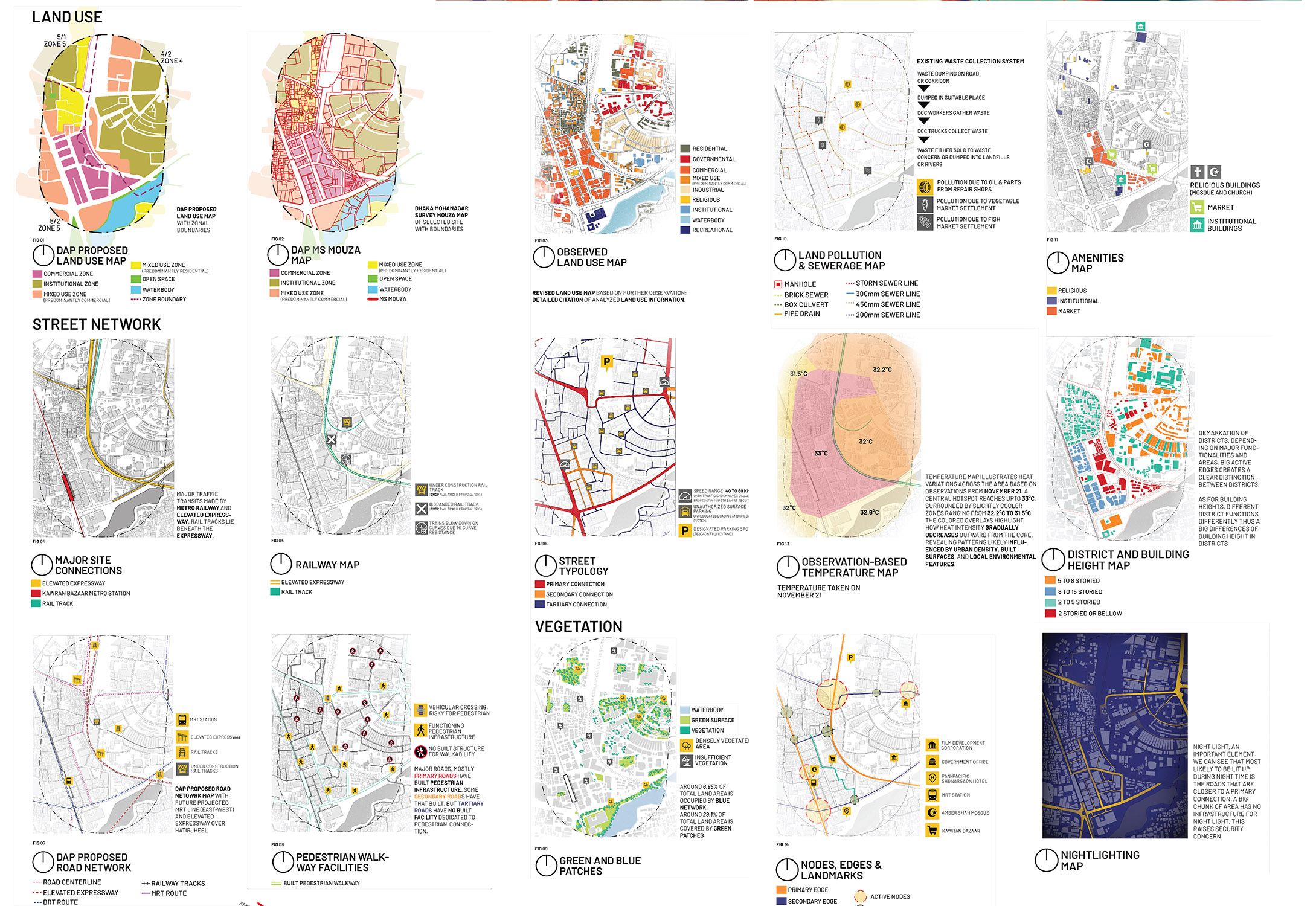
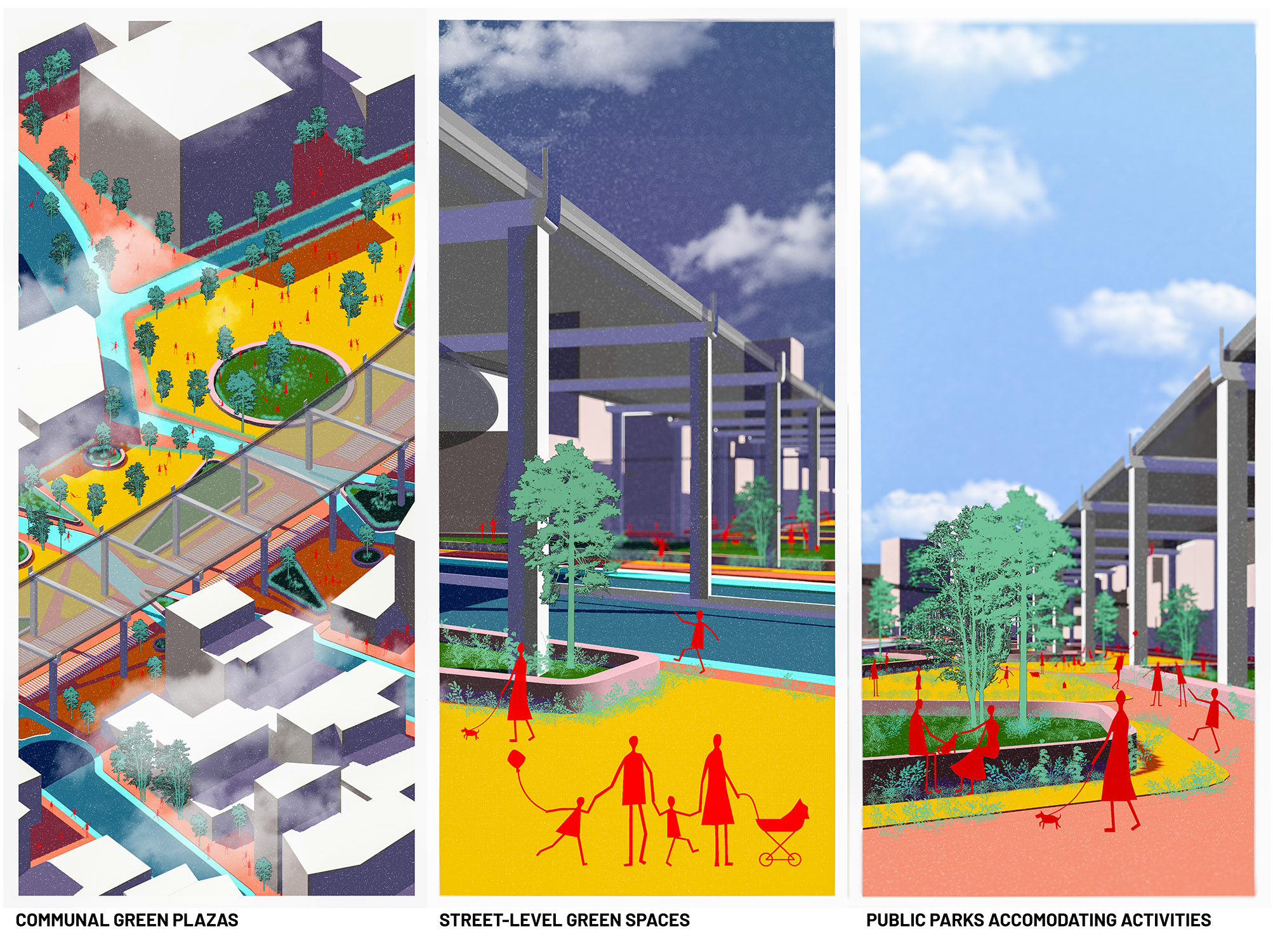
The project site is the Tejgaon-Kawran Bazaar railway edge, a critical seam within one of Dhaka’s key business districts. This high-density environment is defined by a diverse mix of industrial, institutional, residential, and commercial land uses, presenting three core challenges. First, physical division, where the railway and an elevated expressway act as barriers, isolating neighboring districts. Second, a severe vegetation deficit, with figure-ground studies showing less than 10% green cover in most areas. And third, thermal stress, with temperature maps revealing significant heat hotspots in built-up areas.
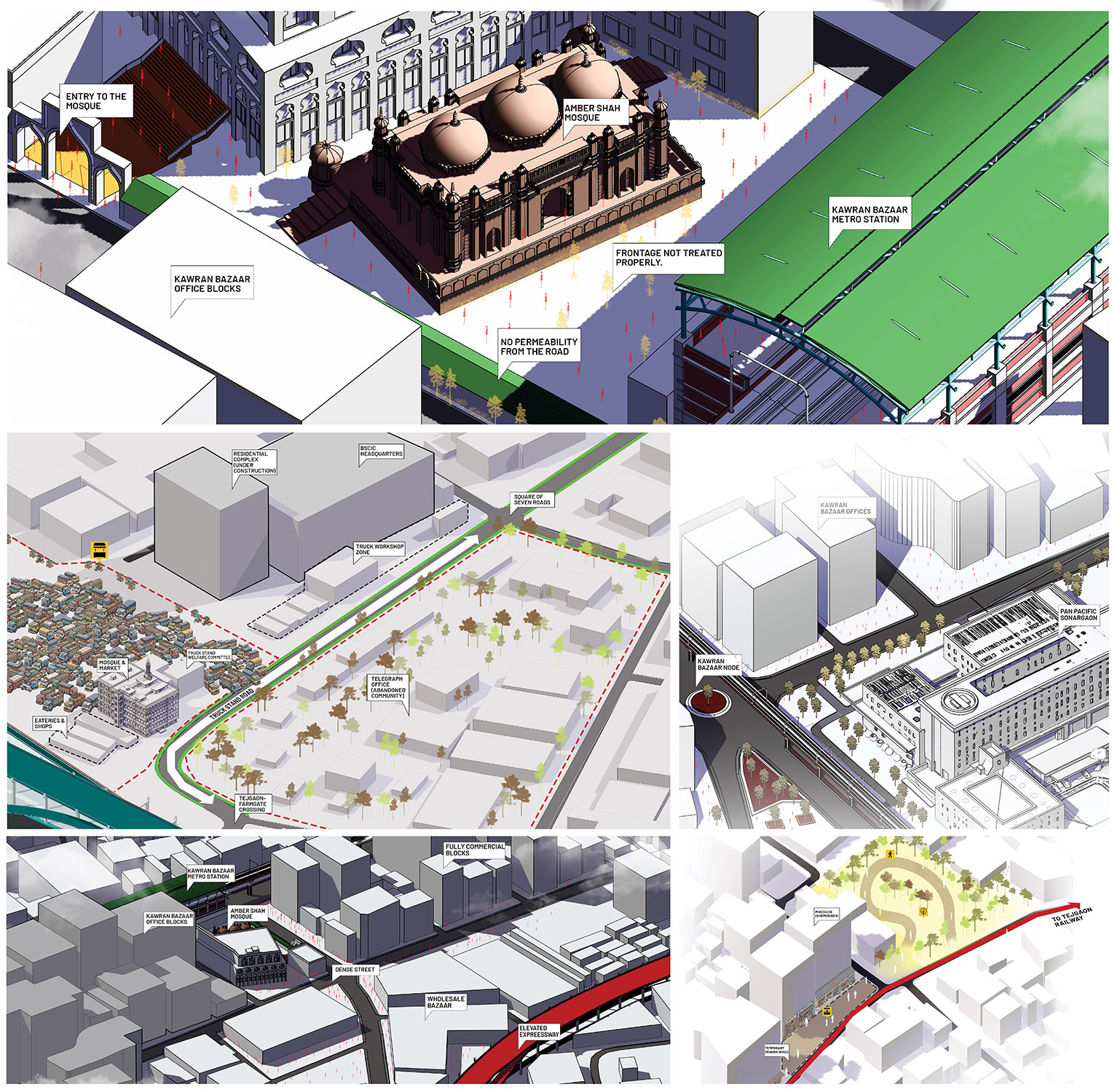
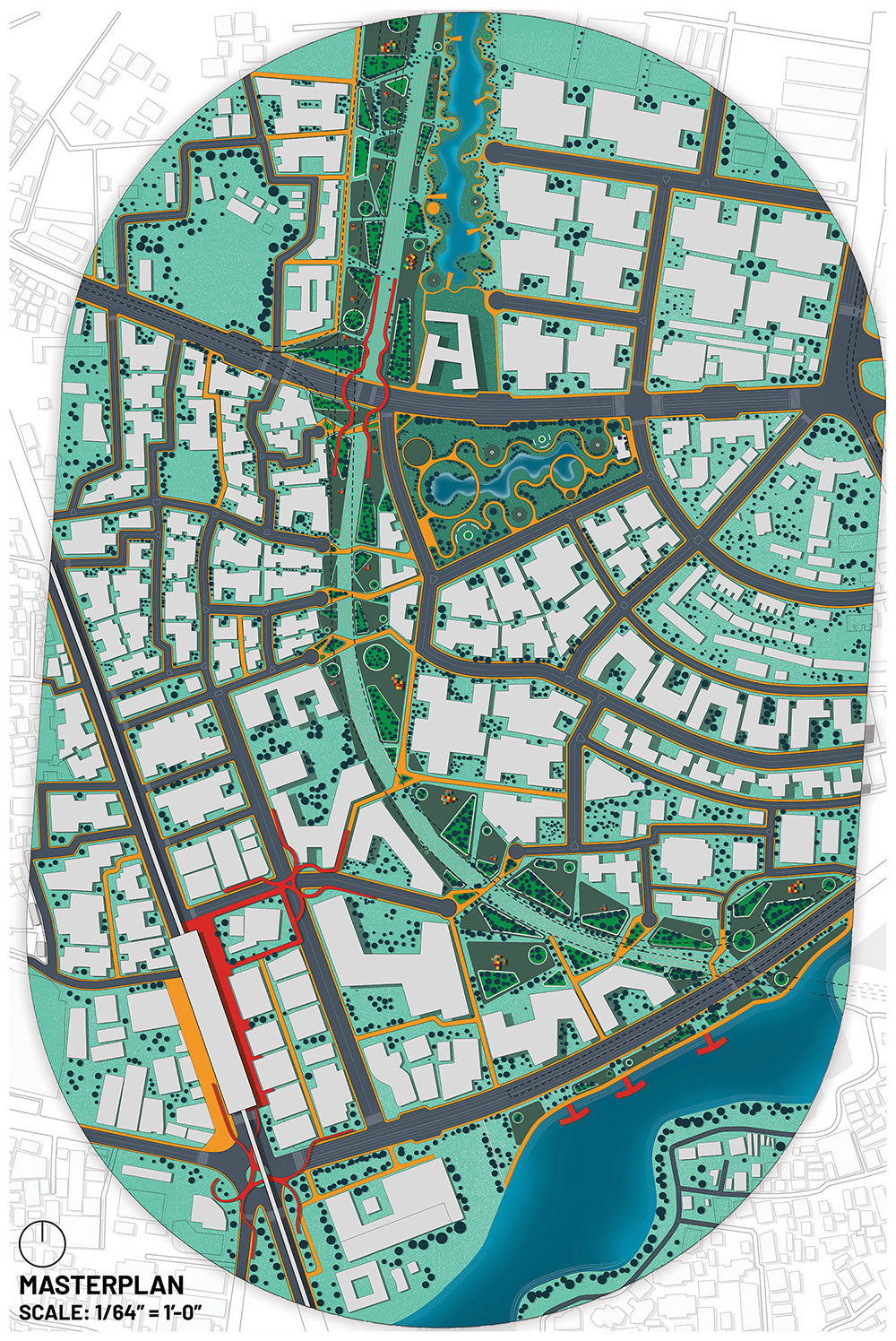
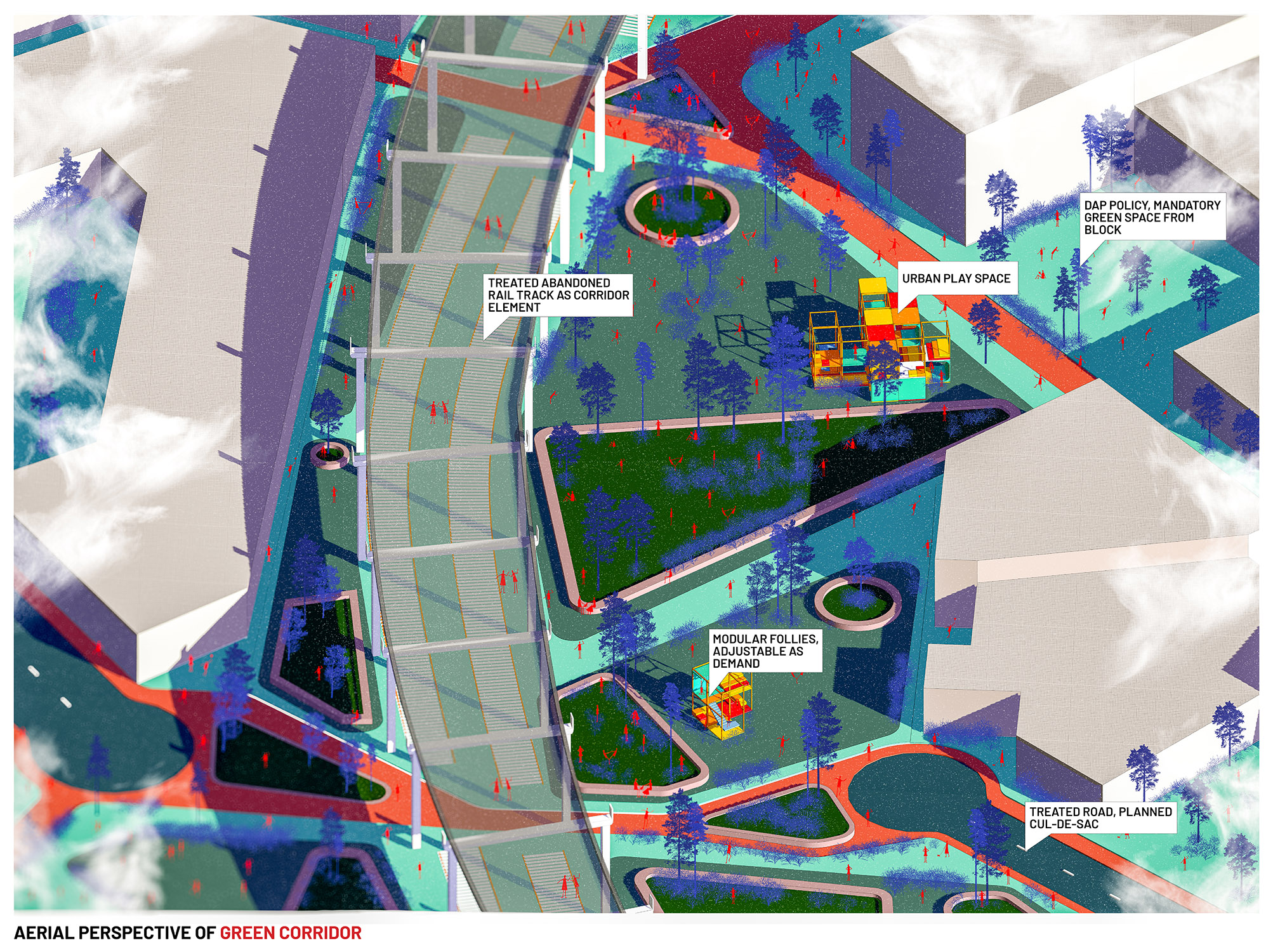
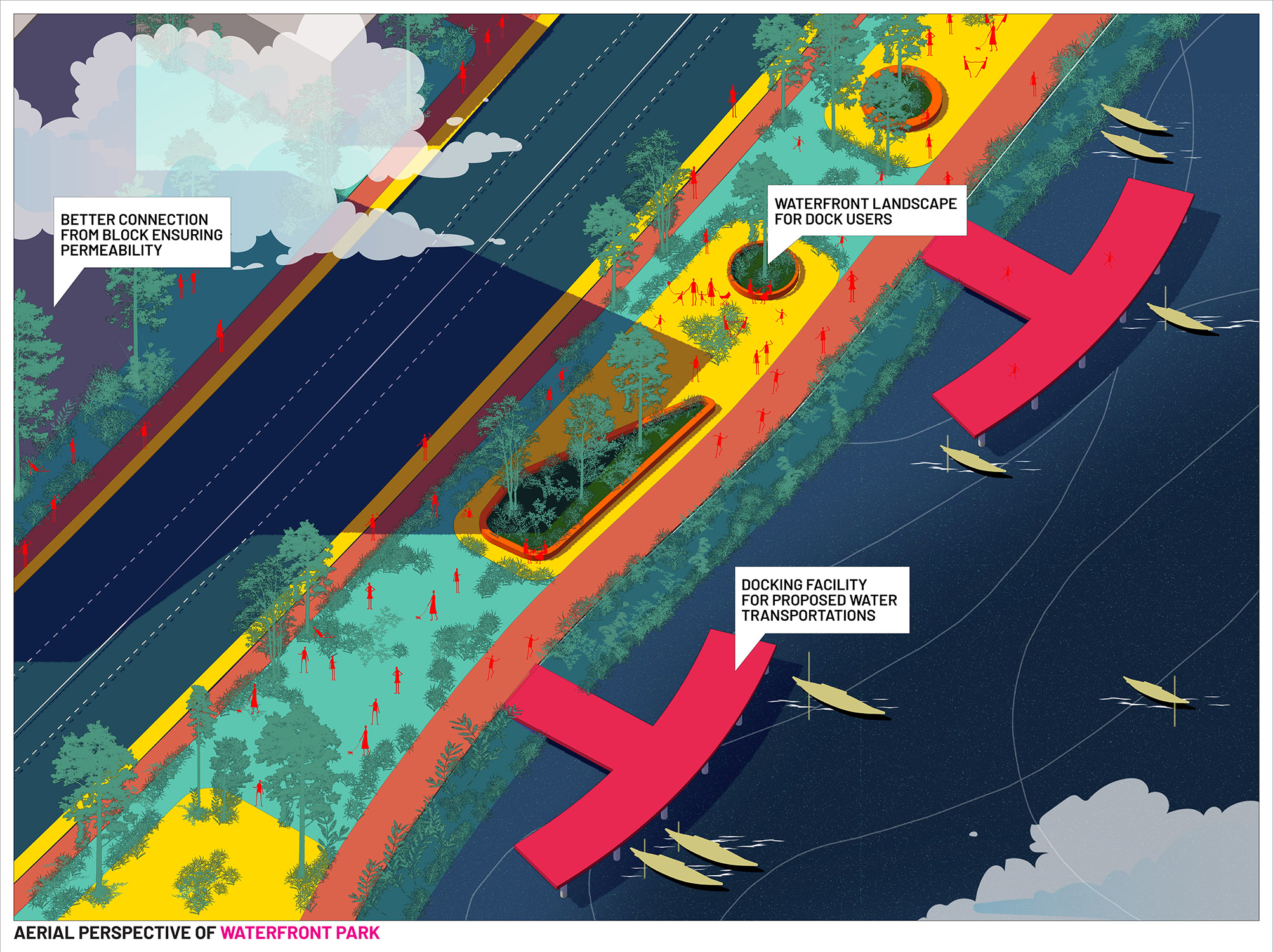
The project’s central vision is to “stitch” together the disconnected neighborhoods of Tejgaon and Kawran Bazaar by converting this underused infrastructural barrier into a vibrant civic space. It pursues three primary objectives: ecological connectivity, establishing a continuous green and blue network to combat urban heat island effects and strengthen local biodiversity; mobility integration, prioritizing non-motorized transport and pedestrians through a sinuous spine that parallels the rigid railway and road lines; and adaptive urbanism, deploying modular architectural “follies” to activate public spaces beneath and around the elevated structures.
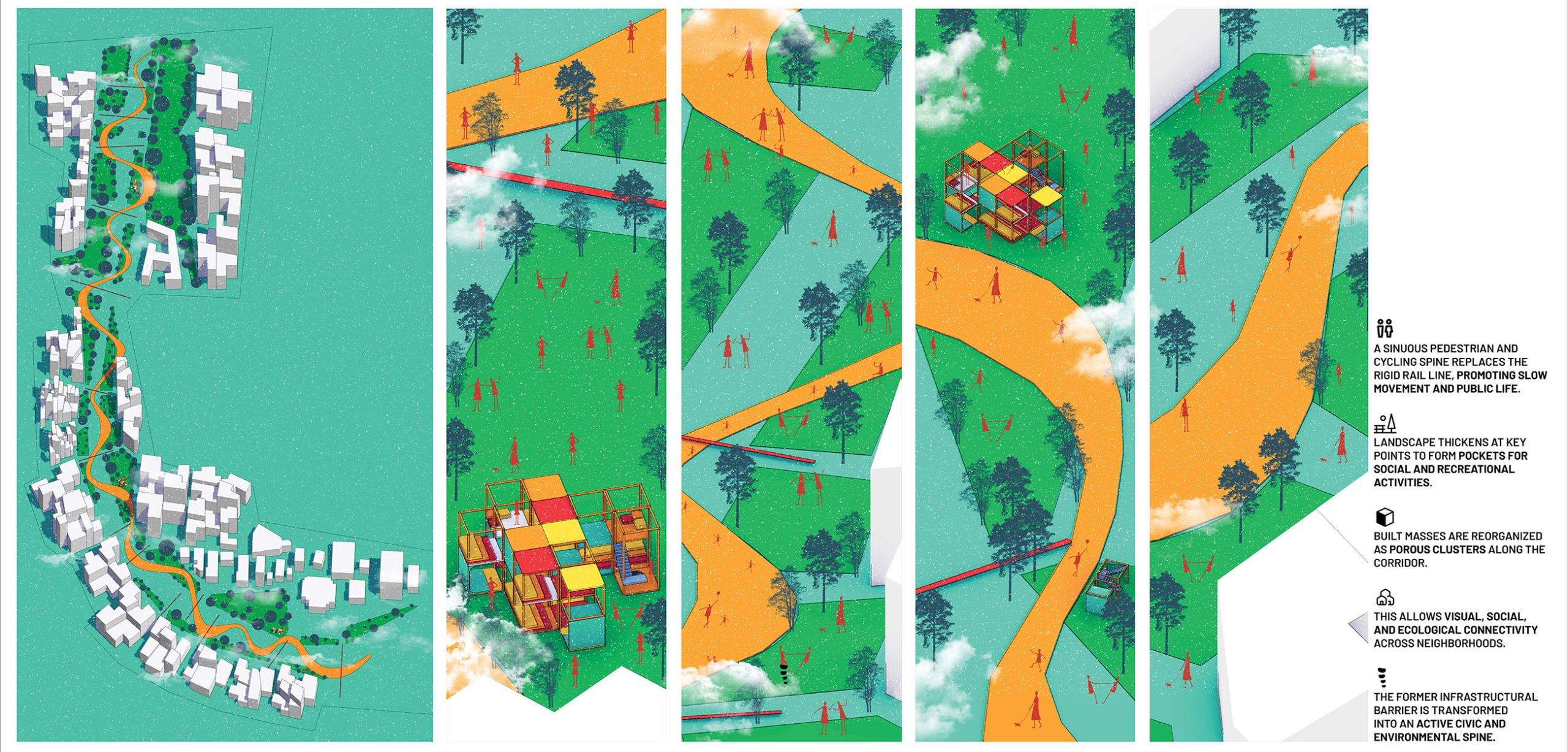
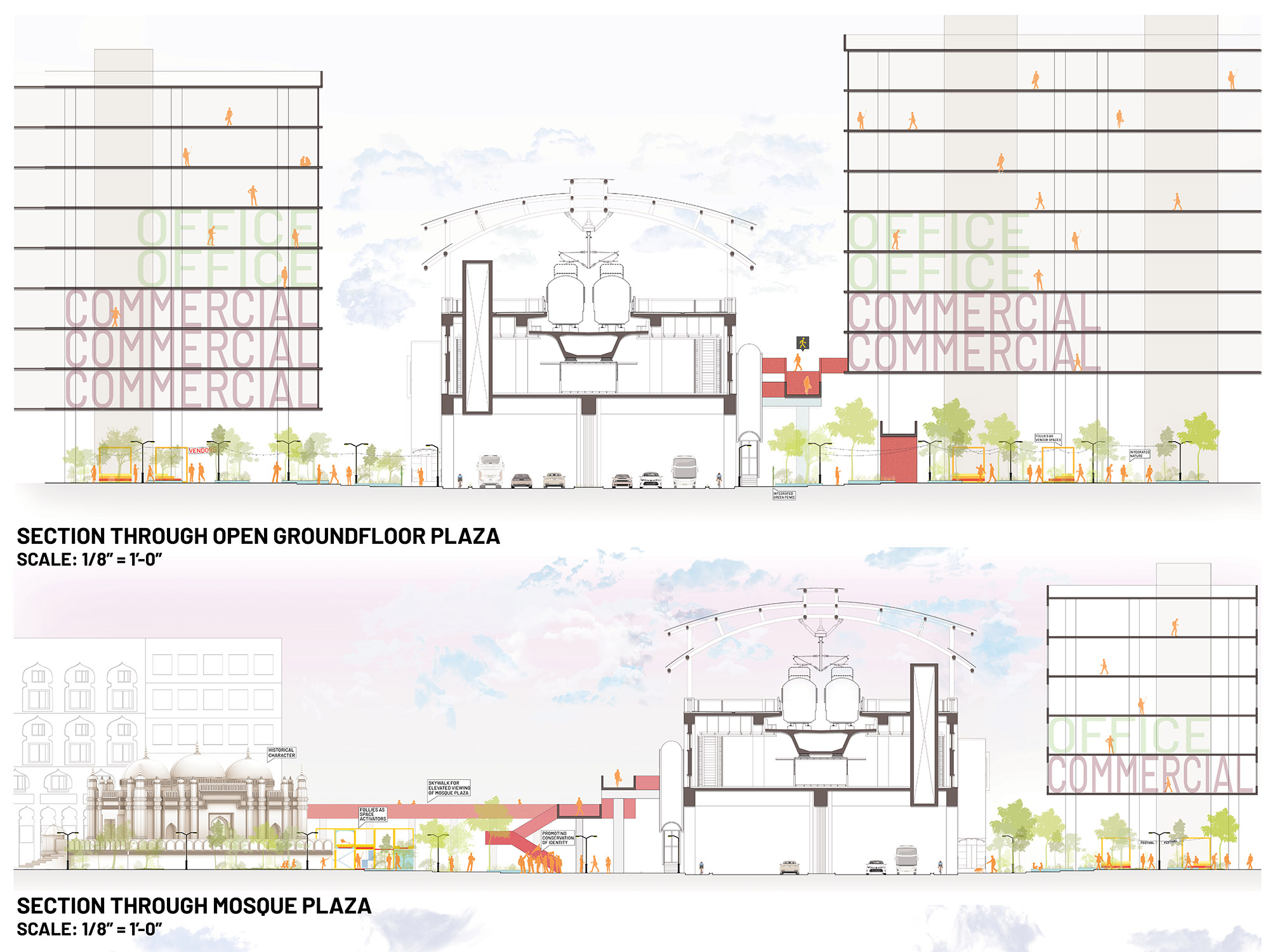
Key design elements, such as the sinuous spine-a fluid path for pedestrians and cyclists that breaks the rigidity of the existing grid-create “pockets” for social interaction. Urban follies are introduced as modular structures categorized by intensity (compact, moderate, expansive) that serve as activators for rest, play, interaction, and movement. Plaza typologies involve transitioning from open ground-floor plazas in commercial zones to specialized “mosque plazas” and “truck stand road” reconfigurations, ensuring the design respects existing cultural and functional landmarks.
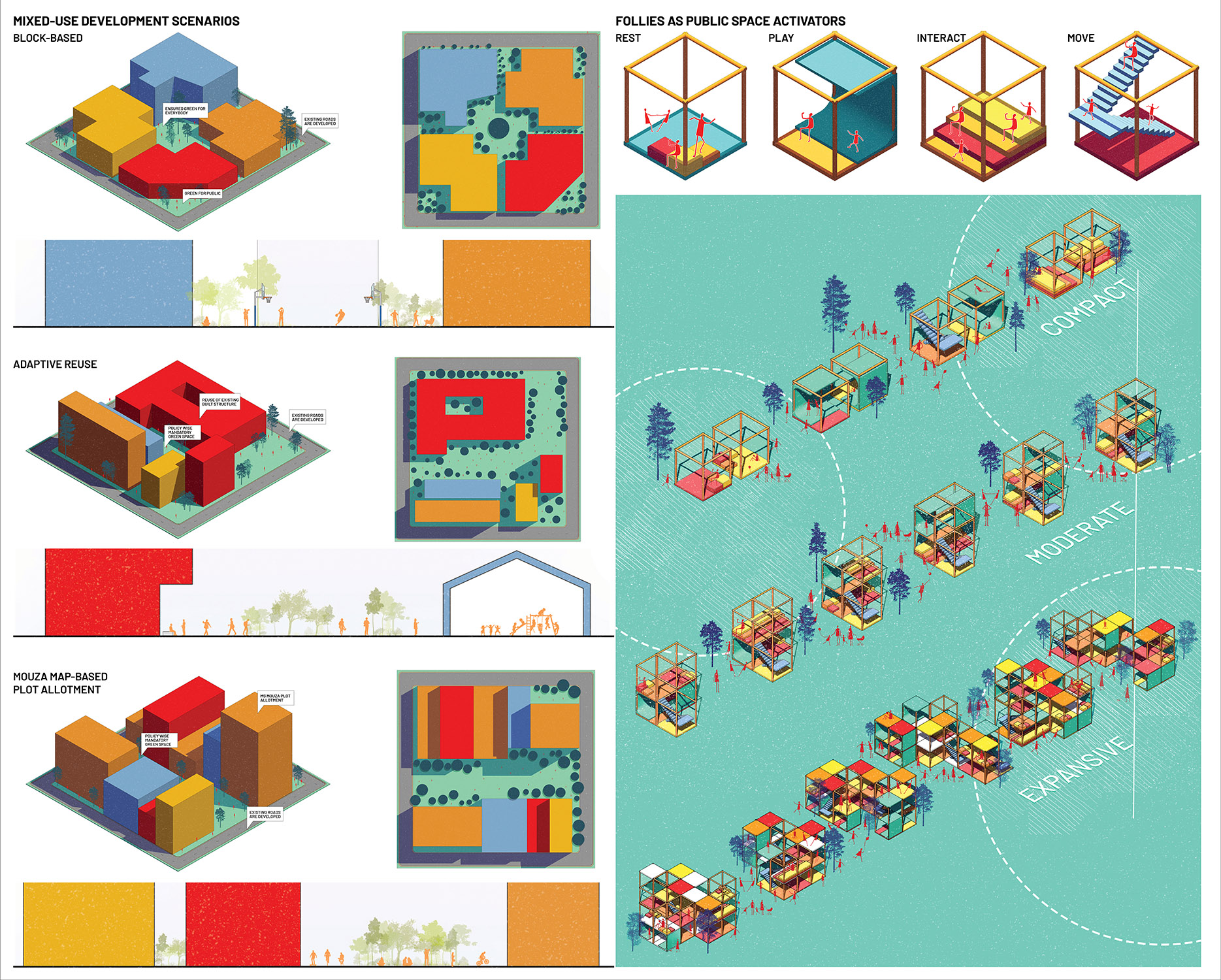
Far & block development strategies propose a radical shift in how building mass is distributed. Instead of the current trend of “filling the plot,” the DAP guidelines are recalibrated to trade vertical height for ground-level public space. Industrial blocks transform from “solid industrial” (high coverage, low permeability) to “fragmented industrial” massing. By increasing the allowable far but mandating a smaller footprint, the ground is “released” to become part of the green thread. Mixed-use scenarios (adaptive reuse) hollow out existing abandoned blocks to create internal courtyards, maintaining the industrial heritage while improving ventilation, light, and experience. Mouza-map-based plot allotment for smaller, irregular residential plots allows neighbors to pool land to create a shared “inner-block”. The green lung receives a higher buildable height in return.
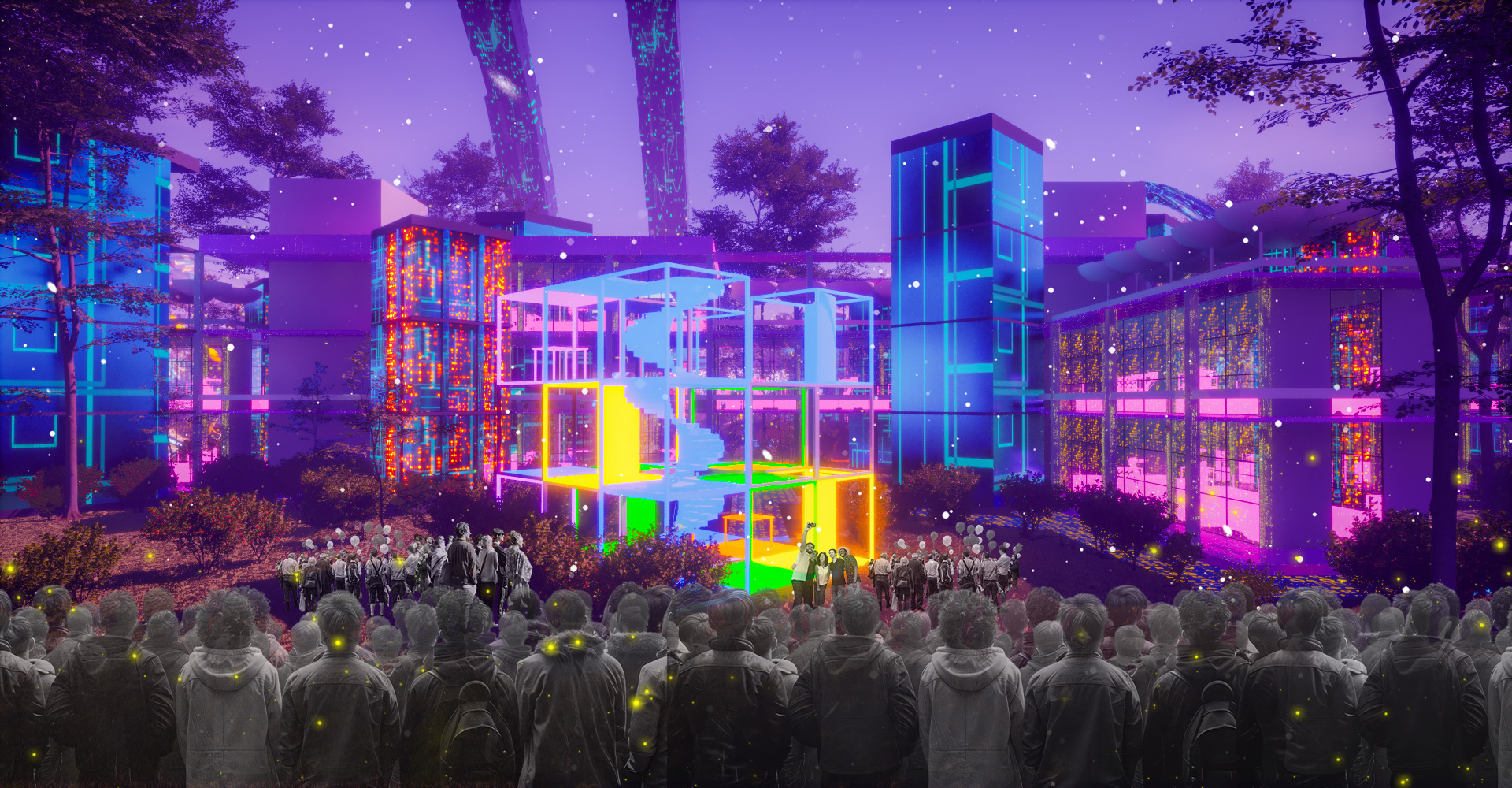
Folly typologies are public space activators designed as 3d structural grids that can be “plugged into” the green corridor. Rather than permanent, static buildings, these act as flexible infrastructure that can evolve with the community’s needs. Compact follies (rest & move) are minimal footprint structures, often located in narrow transit points or dense intersections. They focus on vertical movement (stairs/ramps) and small shaded resting platforms. Moderate follies (play & interact) are situated in mid-sized urban pockets, which include tiered seating, small performance stages, or “urban playgrounds.” They bridge the gap between the fast-paced street and the quiet green zones. Expansive follies (ecological & social hubs) are large-scale compositions used where the corridor widens. They allow for “climbing” vegetation, community gardening, and multi-level public plazas that overlook the new water bodies or restored rail lines.
PEOPLE ALSO VIEW
Printed Publications

NEXT 50: Collective Futures

ASPIRATIONS AND IDEAS: Designing with Context