
The Second Voyage: A Unified Marketplace for Bhatiary’s Shipwreck Industry
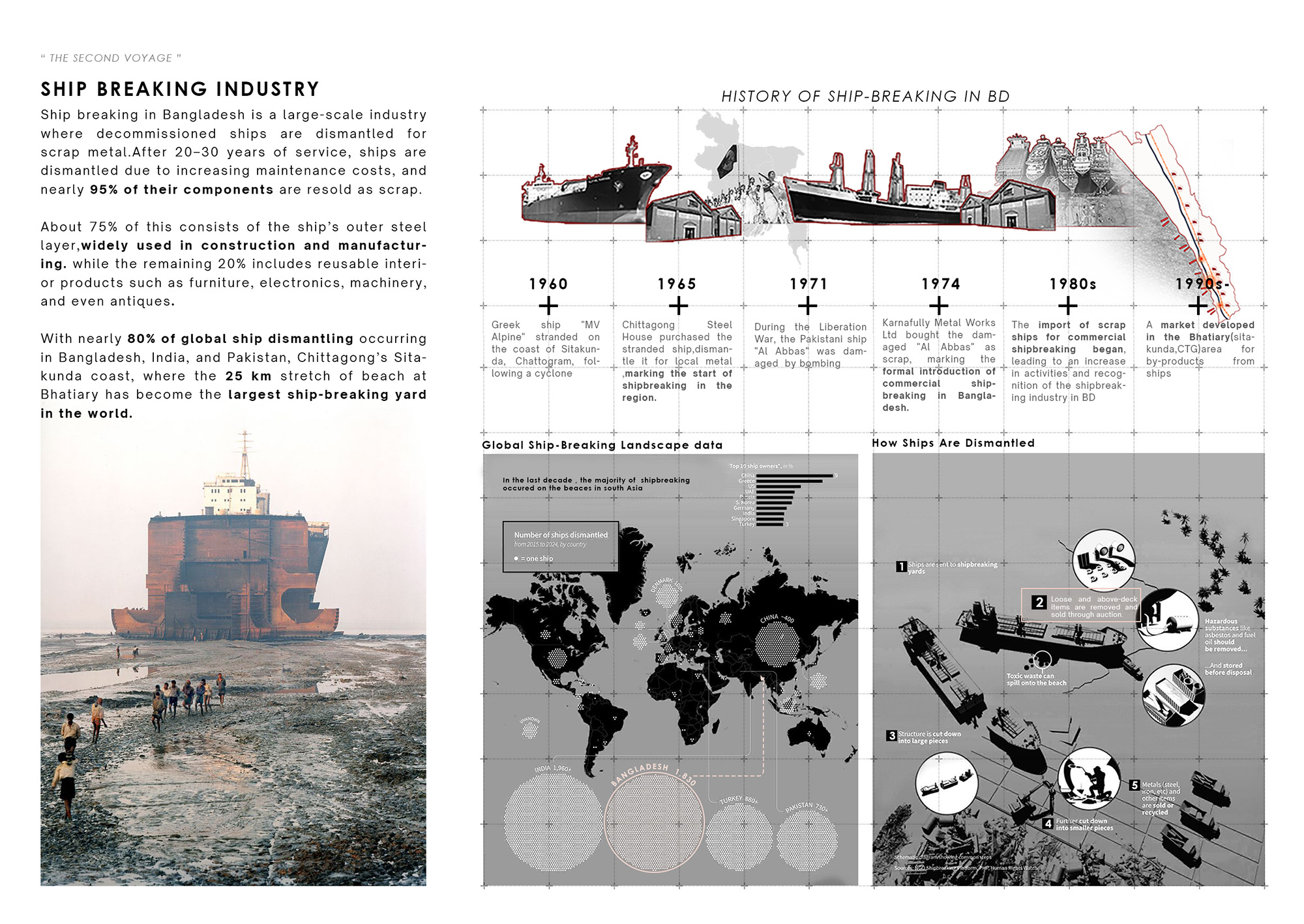
This proposal reorganizes the Bhatiary Ship-Breaking Material Market into a Unified Market Complex, designed to enhance the commercial value of salvaged materials while integrating civic and cultural programs into the industrial landscape. Bhatiary Union, located in Sitakunda Upazila of Chittagong Division, Bangladesh, has evolved into one of the most distinctive marketplaces shaped directly by the global ship-breaking industry. With nearly 80% of global ship dismantling occurring in Bangladesh, India, and Pakistan, Chittagong’s Sitakunda coast—particularly the 25 km stretch of beach at Bhatiary—has become the largest ship-breaking yard in the world.
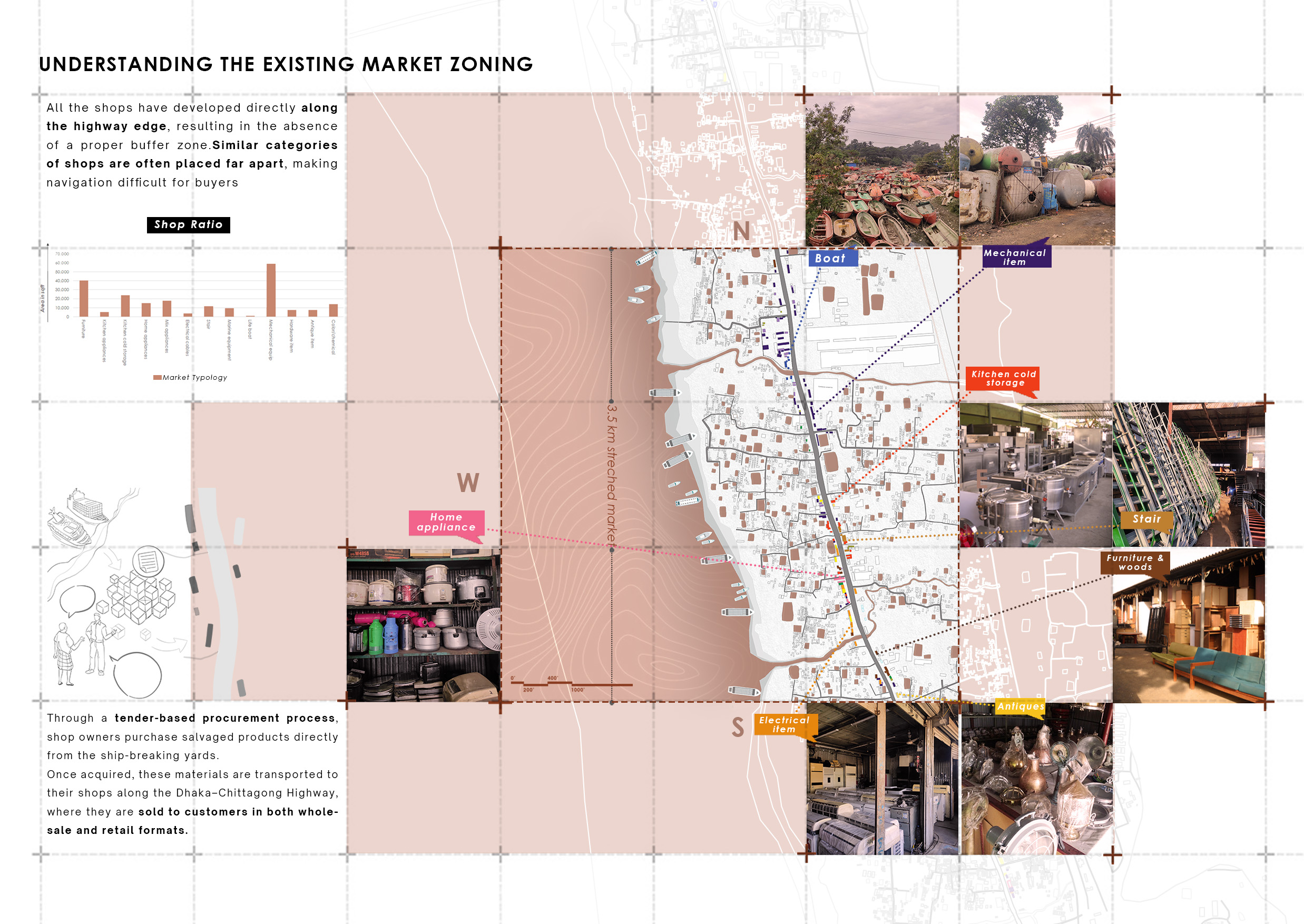
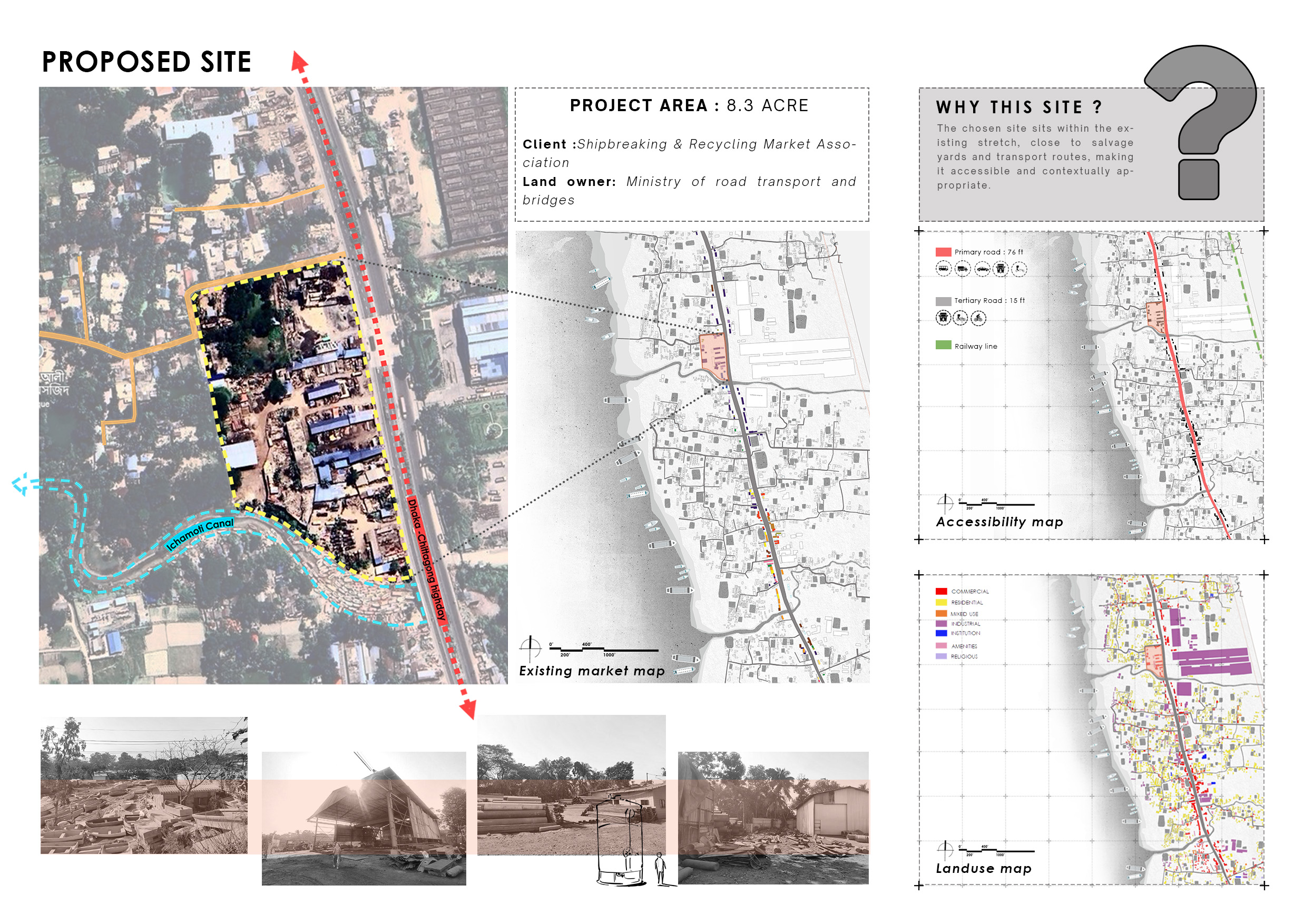
Parallel to this industry, along a 3.5 km stretch of the Dhaka–Chittagong National Highway, an organically grown, informal yet vibrant ship recycling industry market has emerged. Here, salvaged ship products—from the smallest screw to large-scale machinery, furniture, electronics—are bought and sold. The strip accommodates around 300 shops, supporting the livelihoods of over 1,000 traders and workers. Its informal growth reflects the immense economic value of the ship-breaking sector.
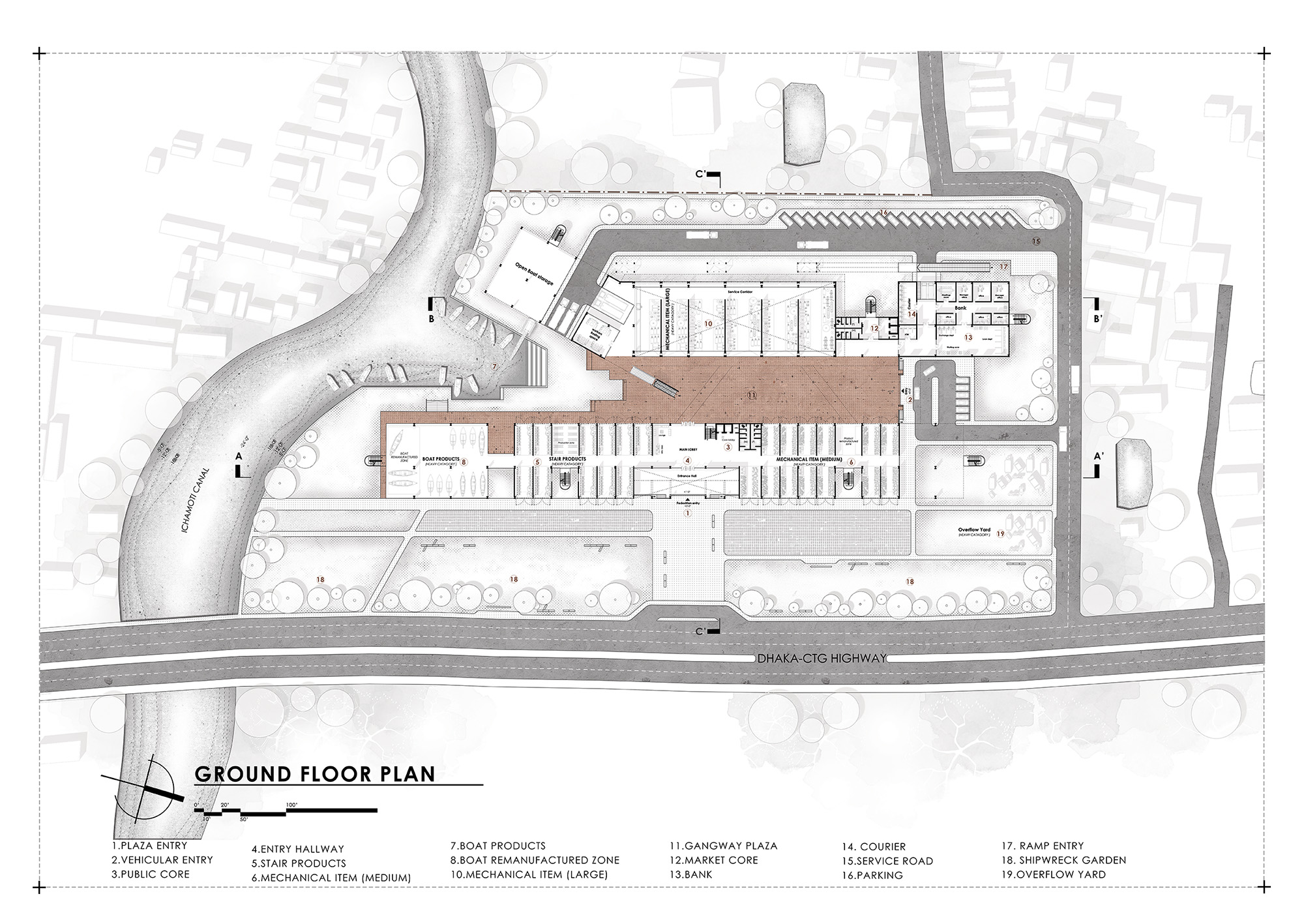
Despite its vibrancy, the market remains fragmented and scattered. Similar types of shops are scattered, making navigation difficult for buyers. Its fragmented layout scatters similar shops, confusing navigation and impeding efficient commerce. There are no dedicated parking or loading zones, circulation is chaotic, and the absence of a safety buffer from the adjacent highway presents a constant physical risk. Furthermore, the market fails to cultivate a reliable customer base, suffers from lost sales due to poor accessibility and safety concerns, and operates far below its economic potential.
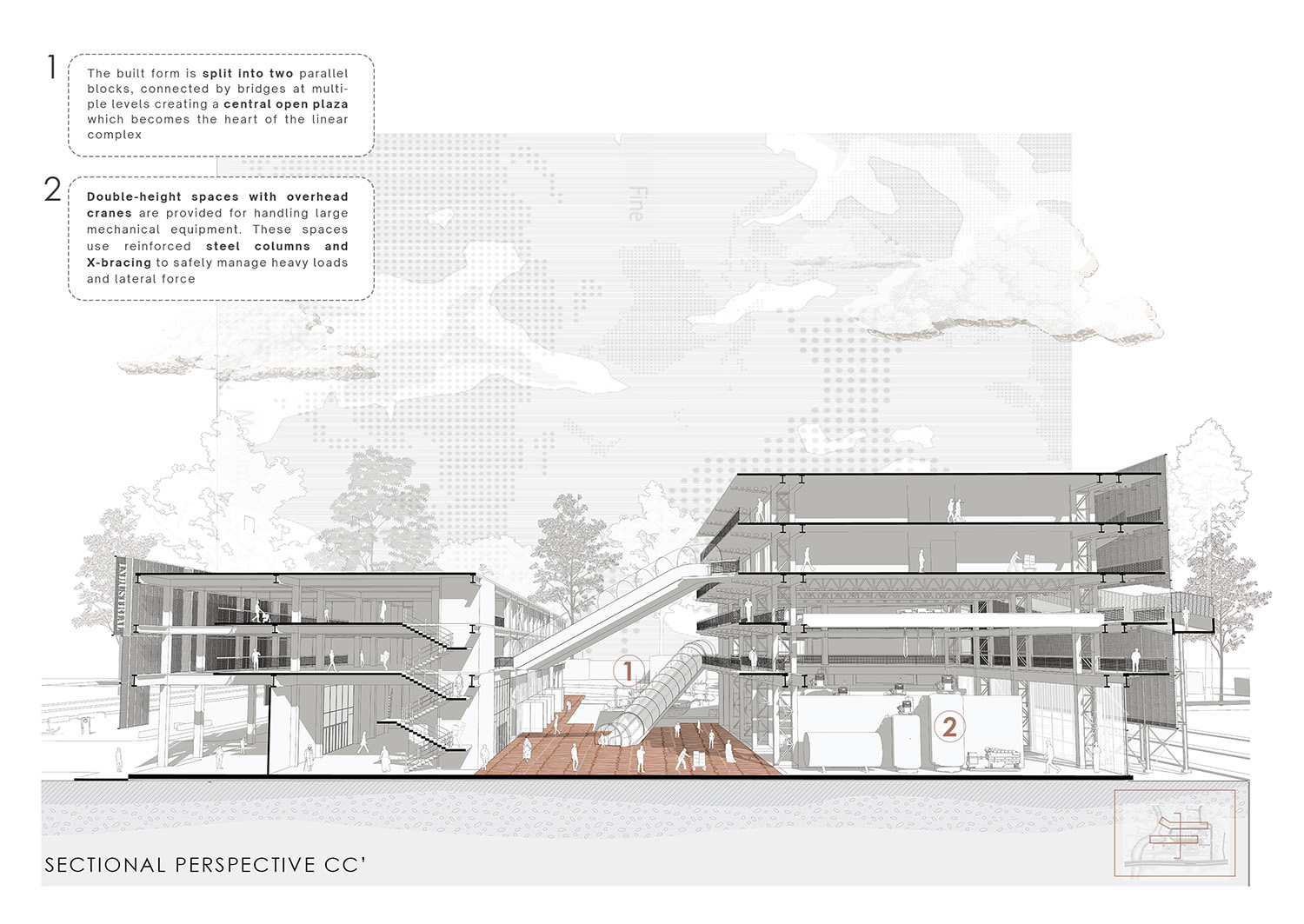
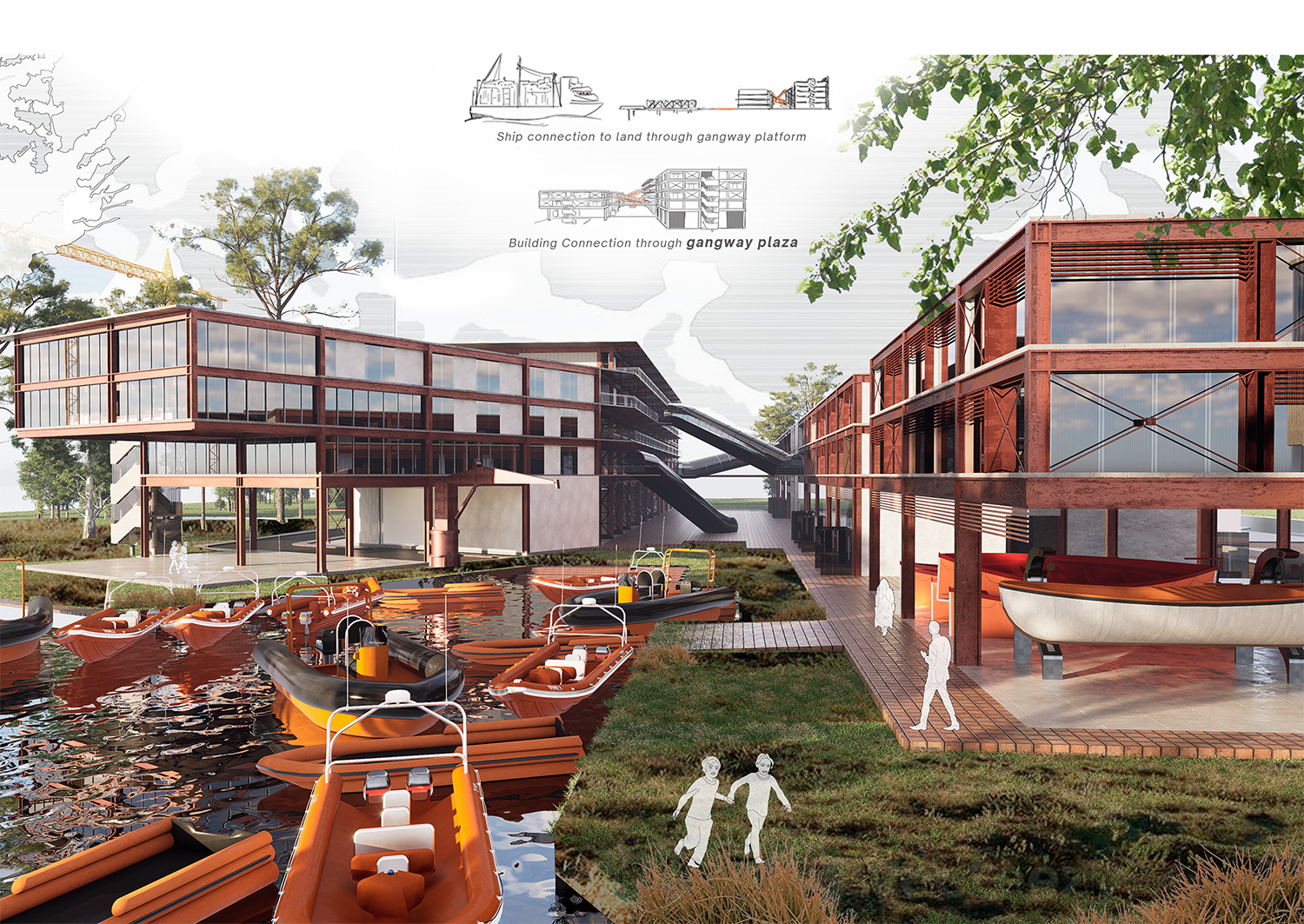
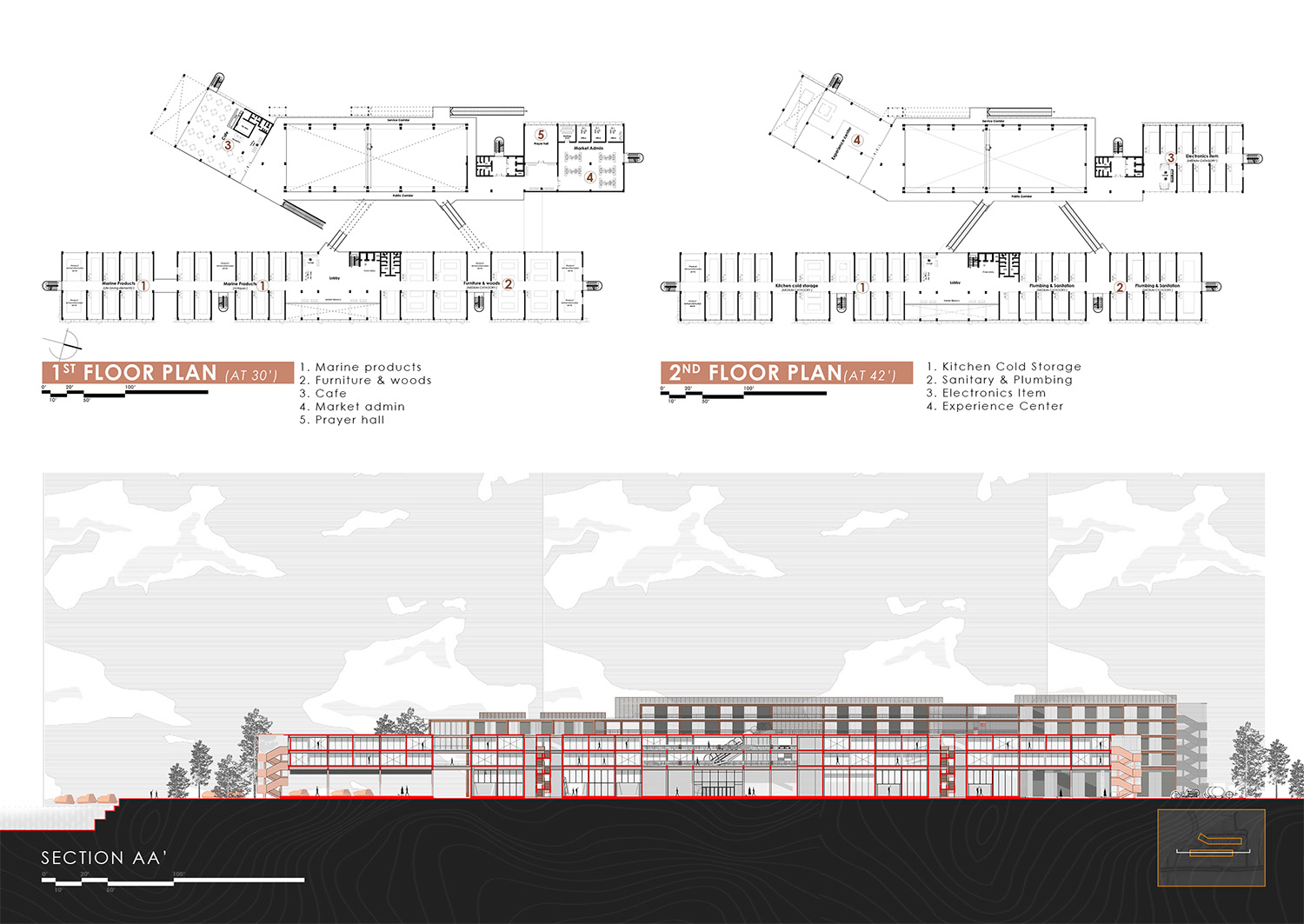
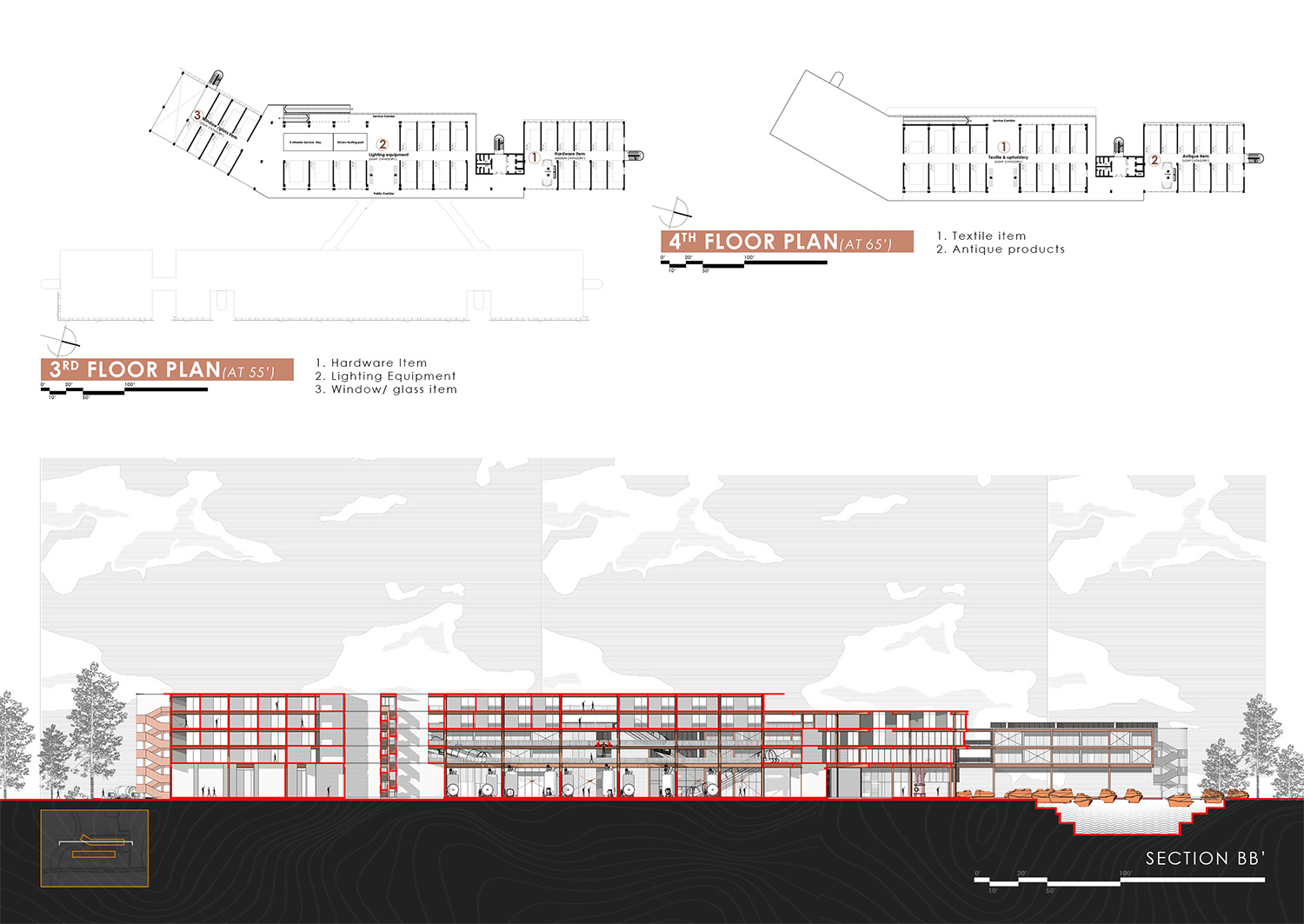
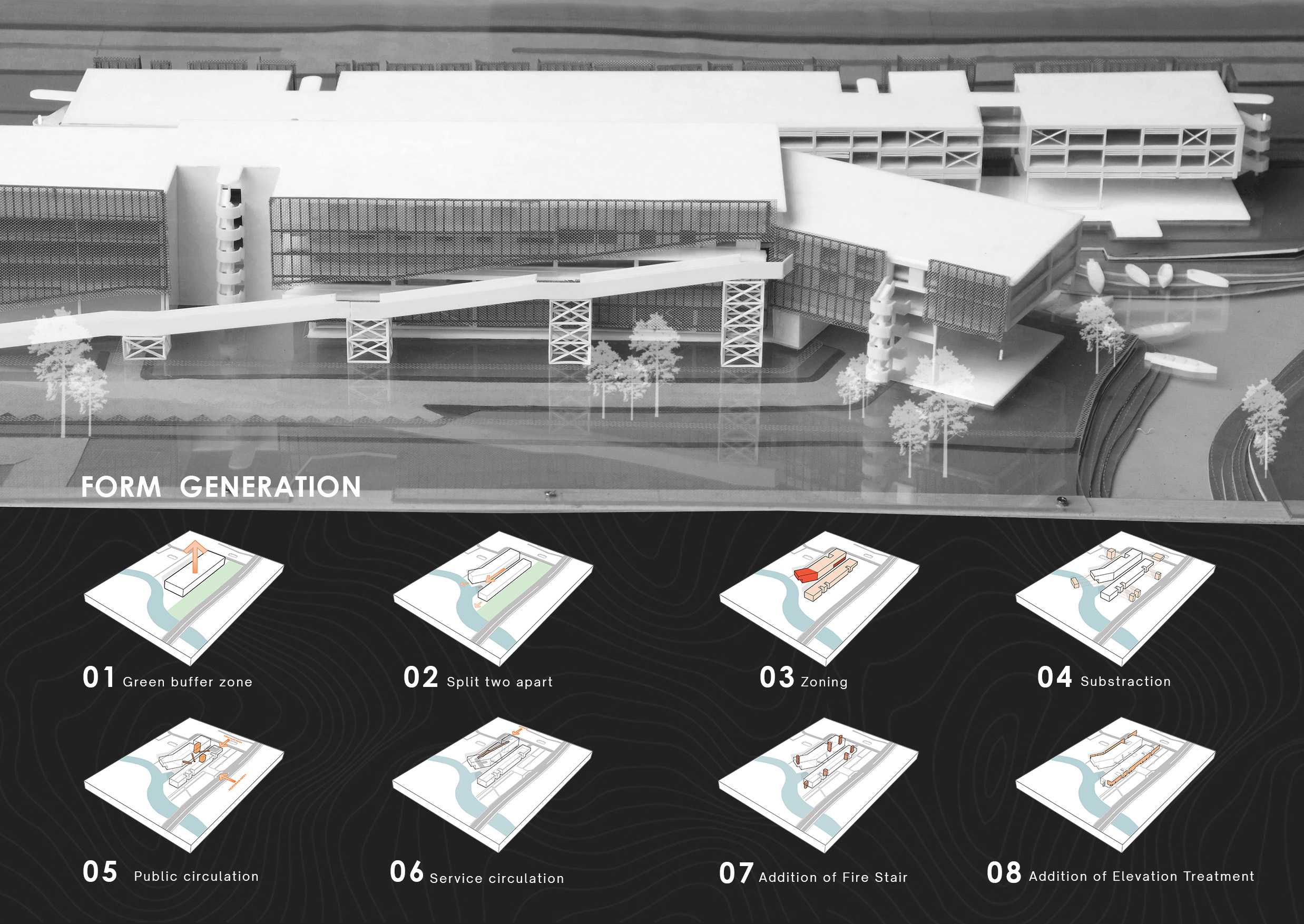
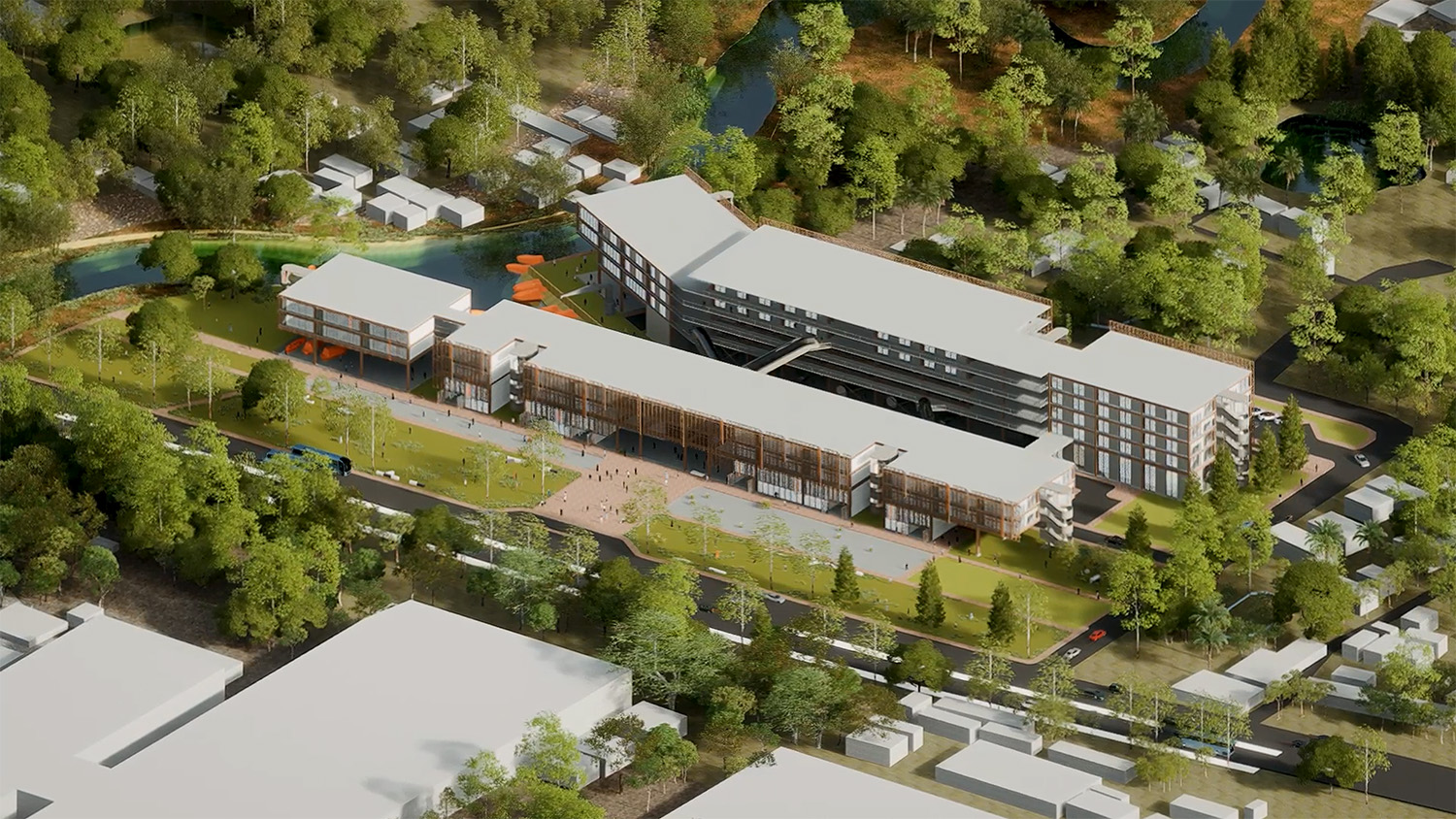
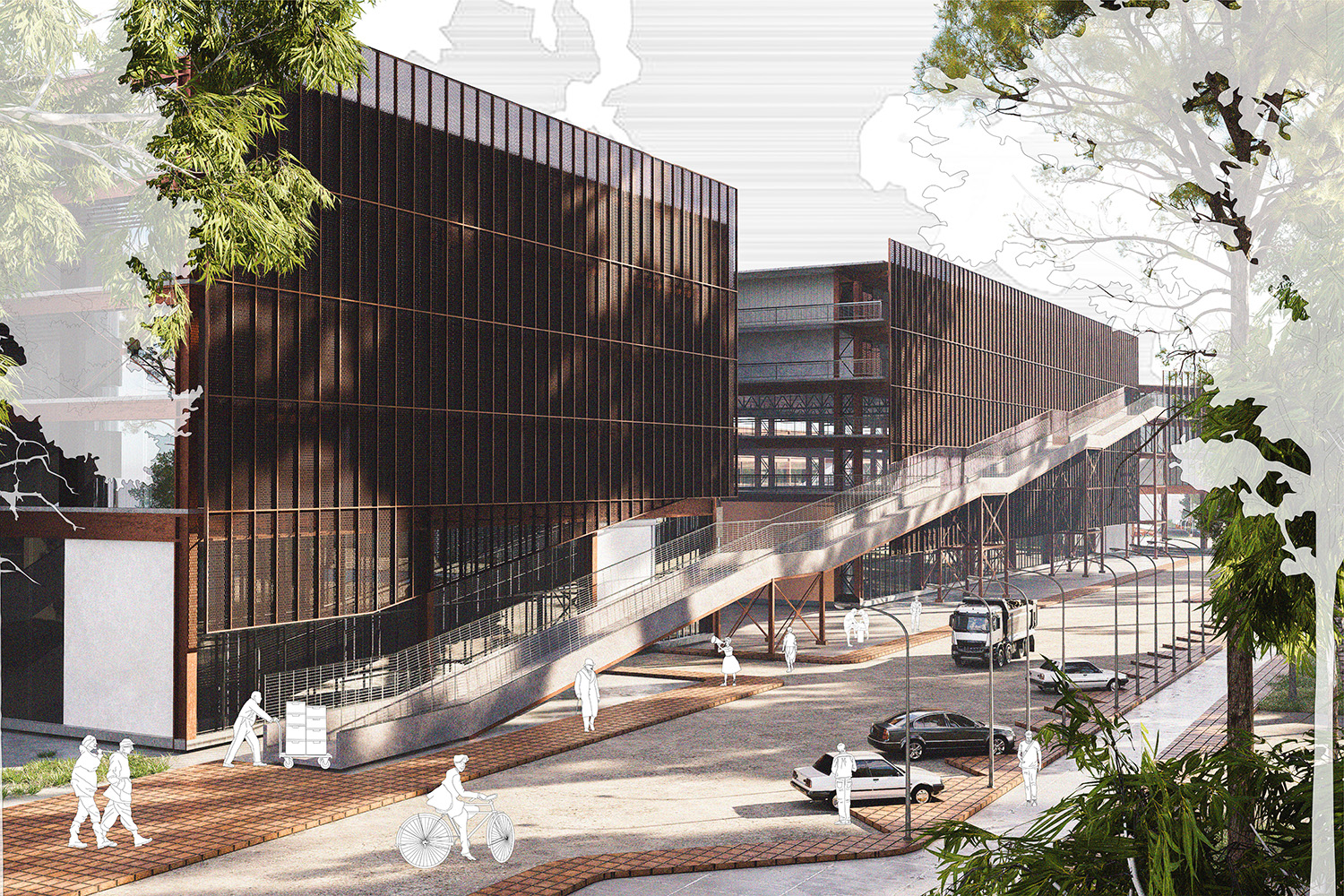
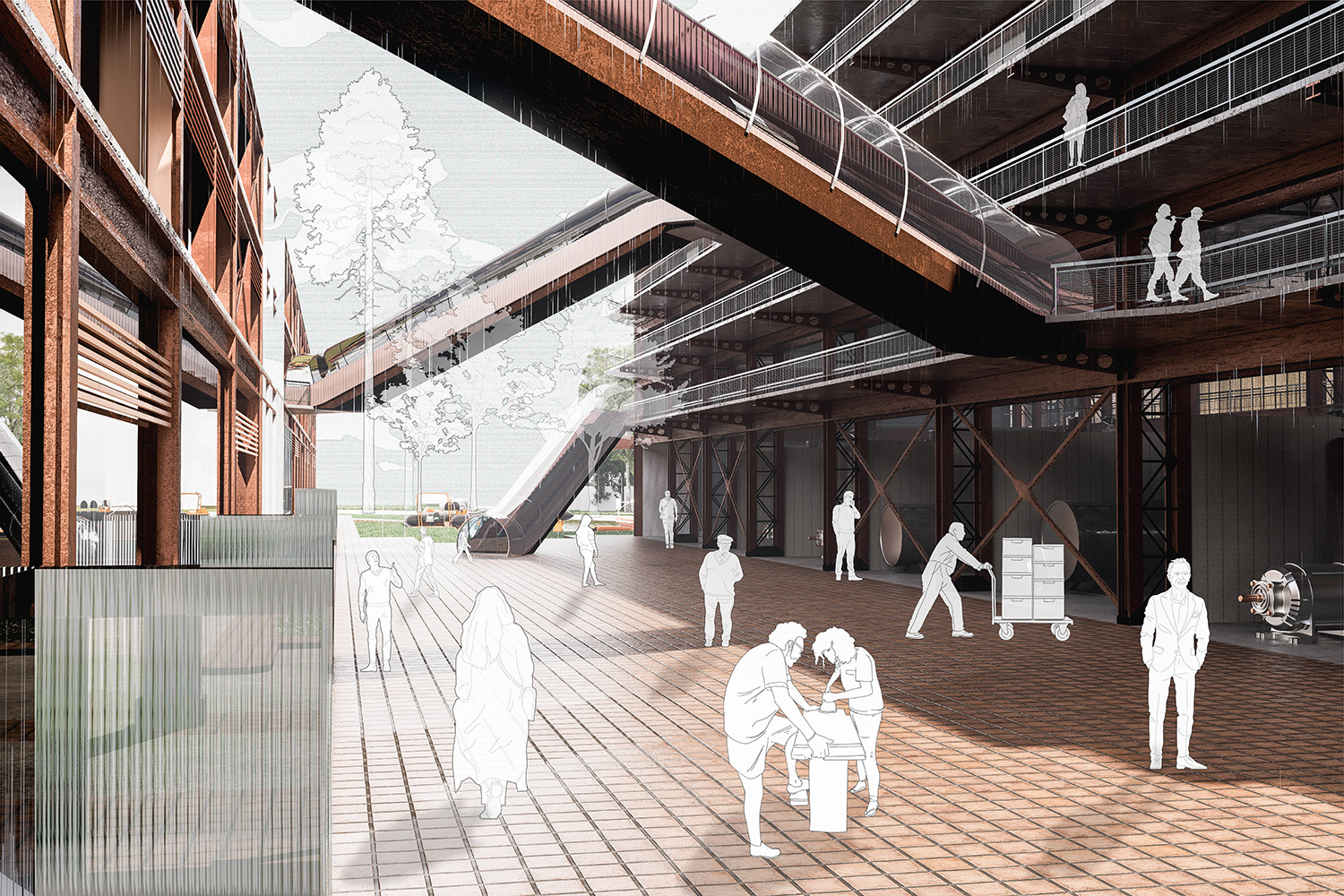
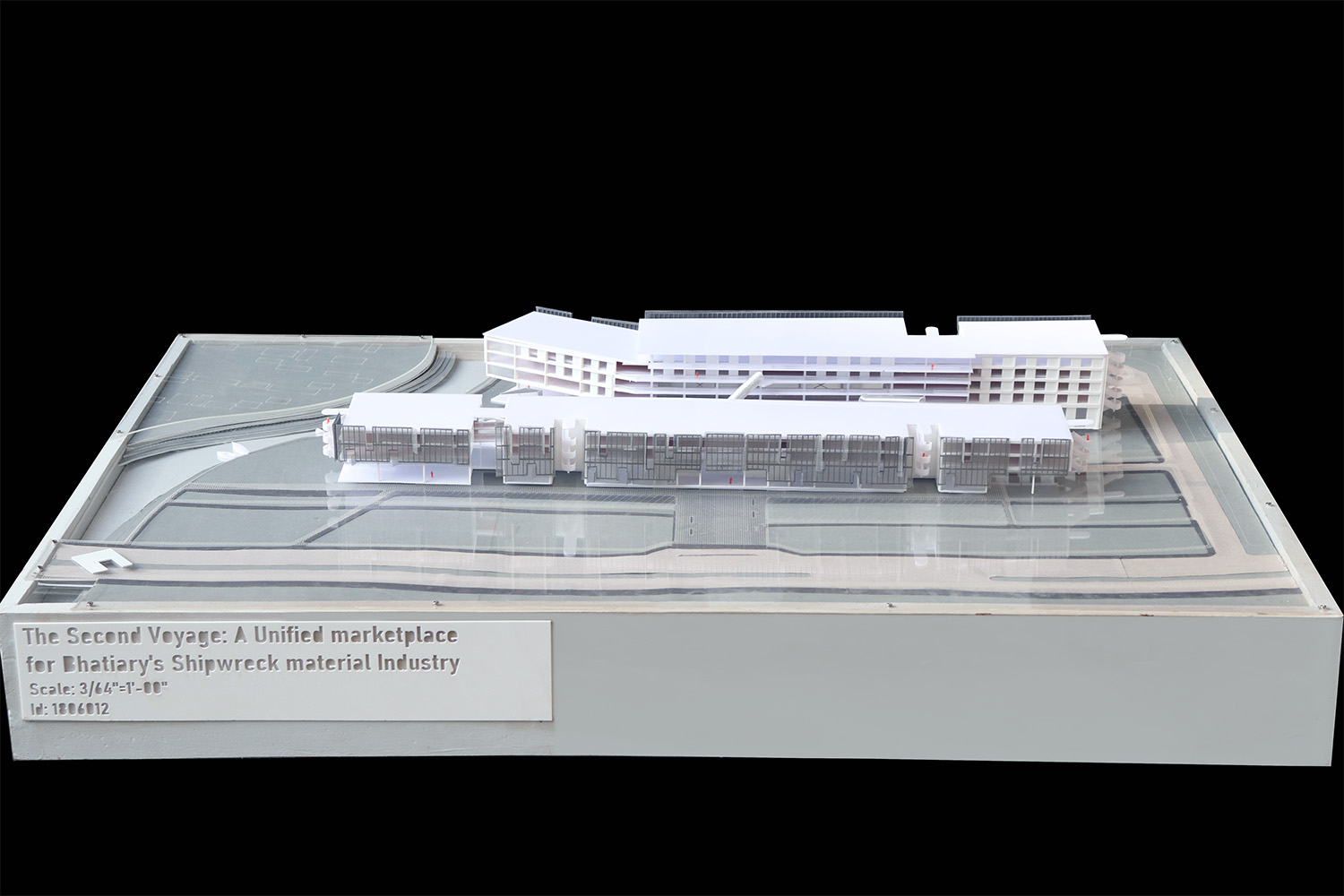
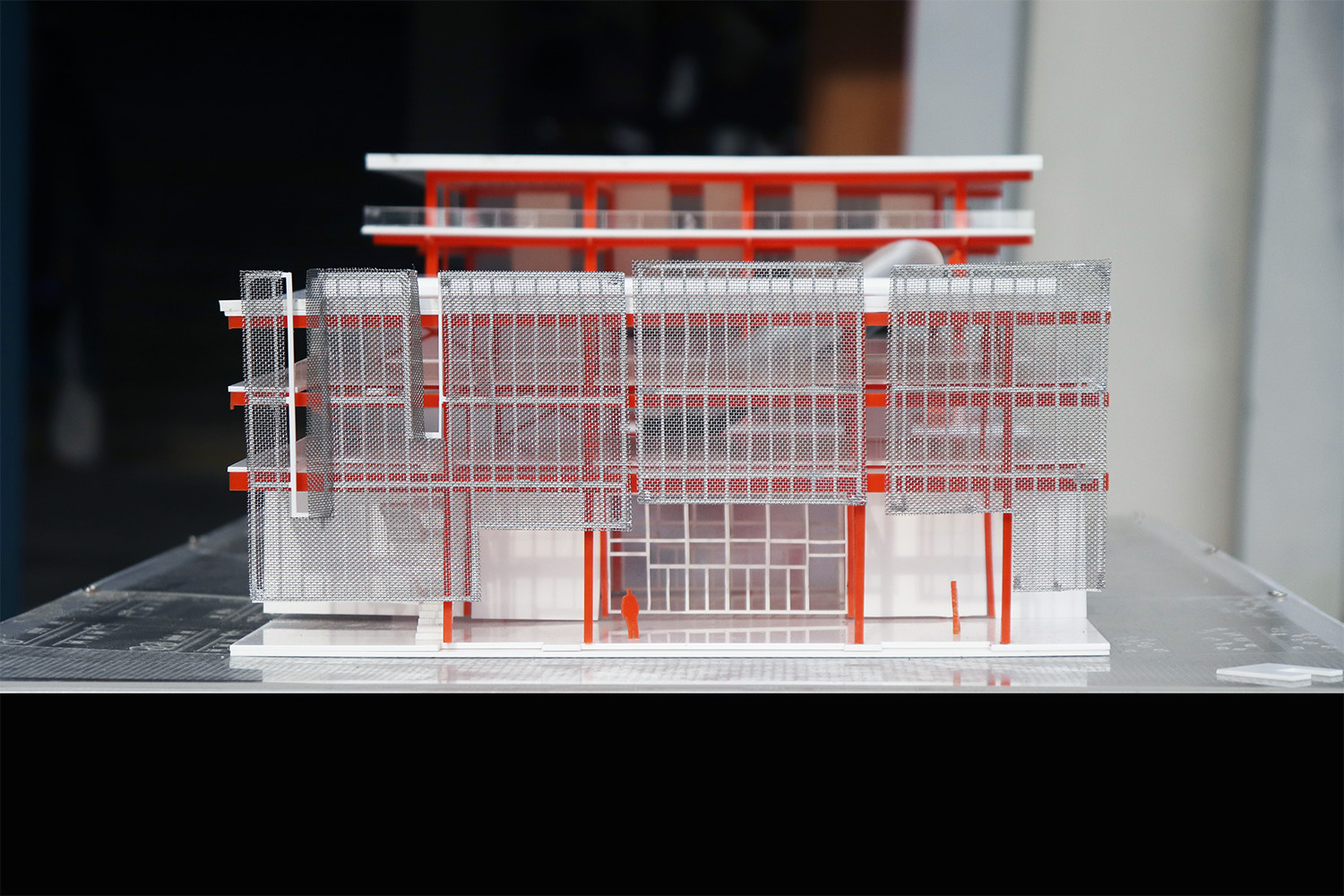
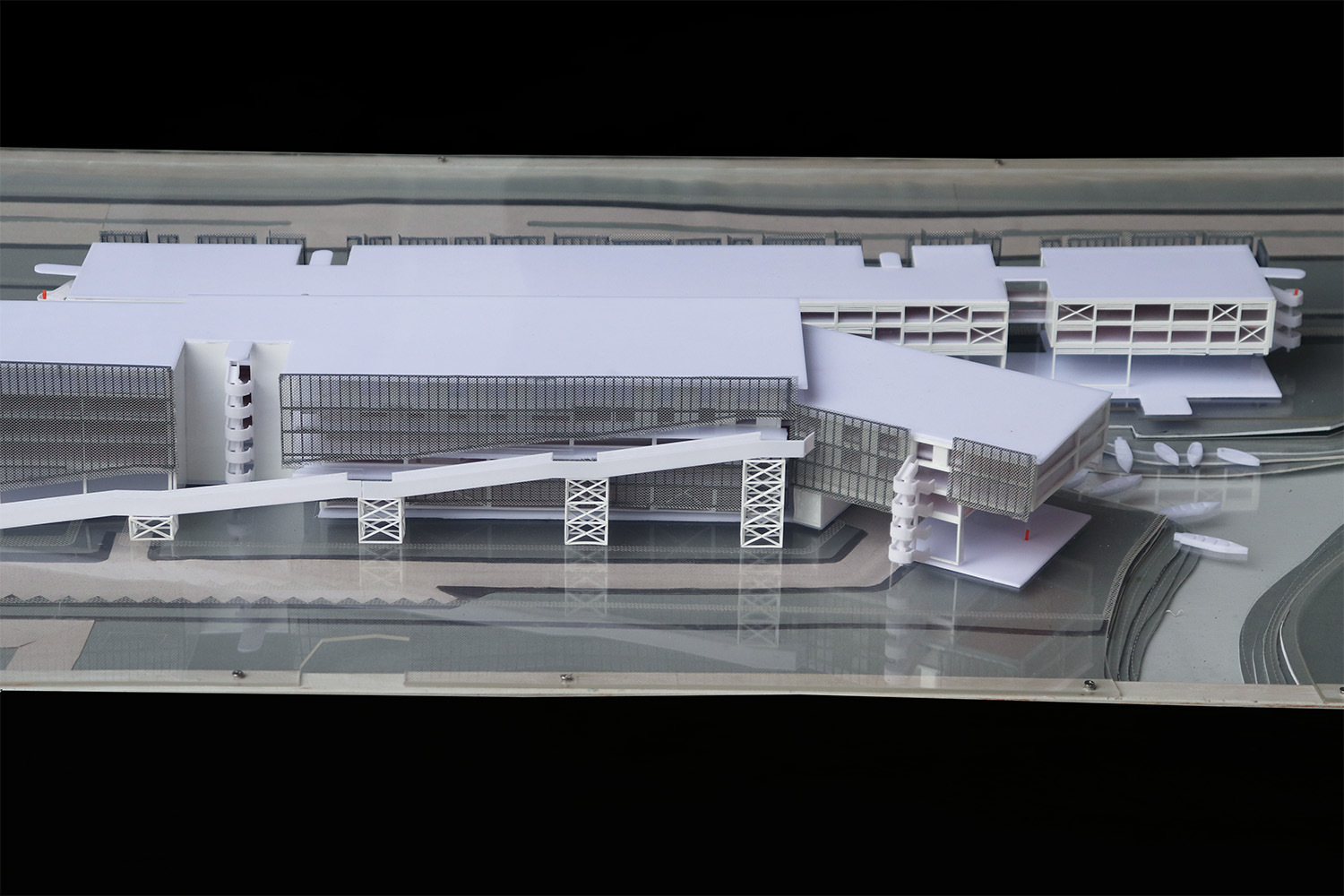
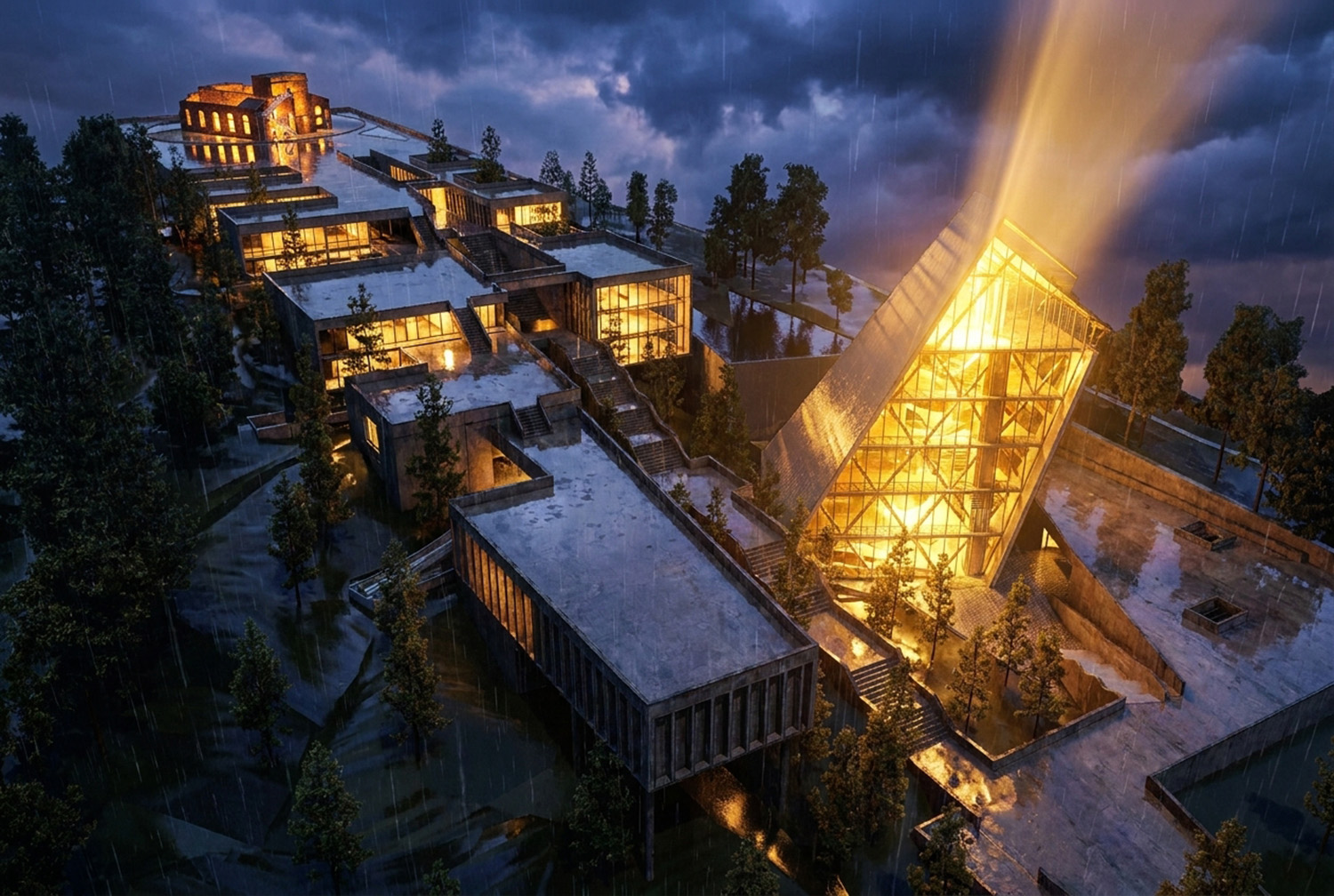
The master plan integrates the marketplace with its surrounding landscape to create a cohesive and inviting environment. The front landscape enhances the customer experience by providing outdoor spaces for relaxation, recreation, and public gatherings. The architectural strategy adopts a linear, rectangular form that extends and mirrors the existing strip development. It employs a vertical zoning system, anchoring heavier materials at the ground level and ascending to lighter products and ancillary functions above. The built form is conceived as two parallel blocks, strategically connected by a series of bridges across multiple levels. This split volume promotes circulation and visual connectivity. At the heart of the complex, a central open plaza dissolves the rigidity of the industrial precinct, creating a space for pause, public interaction, and cultural activation.
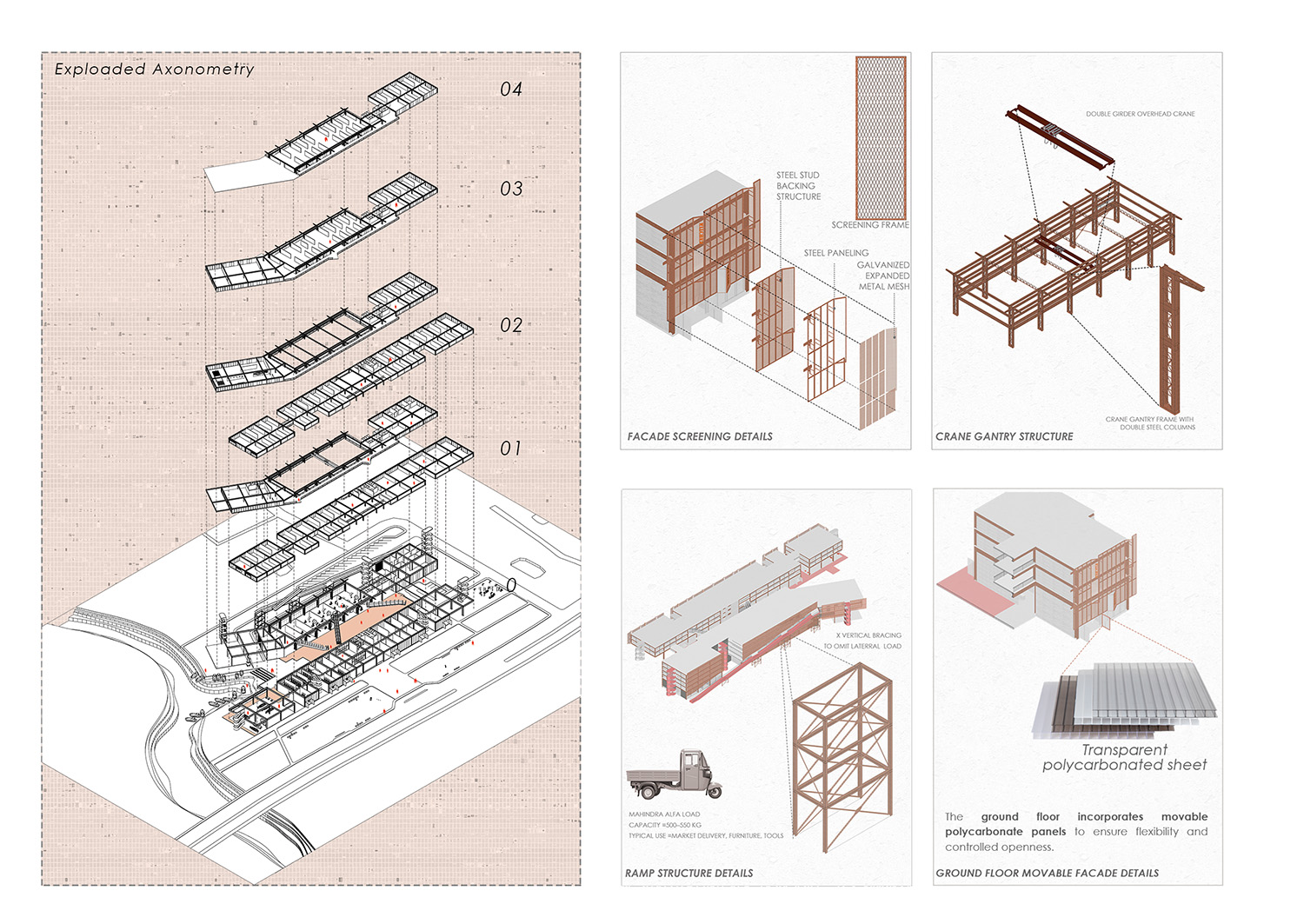
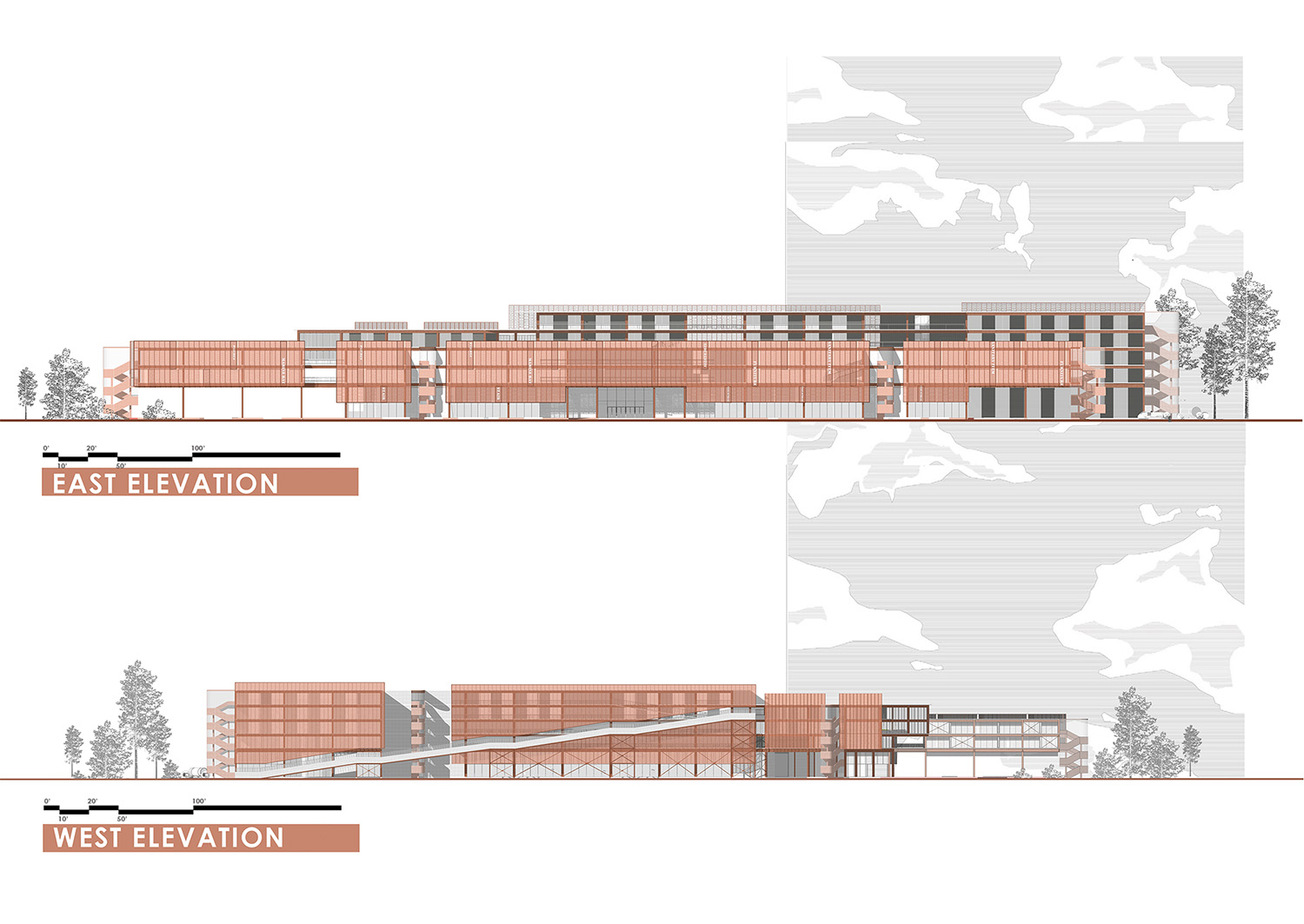
The design prioritizes urban permeability through incorporating separate entries for customers, administration, and service areas, ensuring efficient circulation and access. Special provisions are made for large mechanical equipment such as boilers, compressors, and generators, which require greater spatial capacity. These zones are designed with double-height spaces and equipped with overhead crane systems for safe handling, supported by double steel columns and X-bracing to resist lateral loads. On the east and west façades, repurposed ship metal mesh is applied, reflecting the site’s industrial character while promoting sustainability through the reuse of materials.
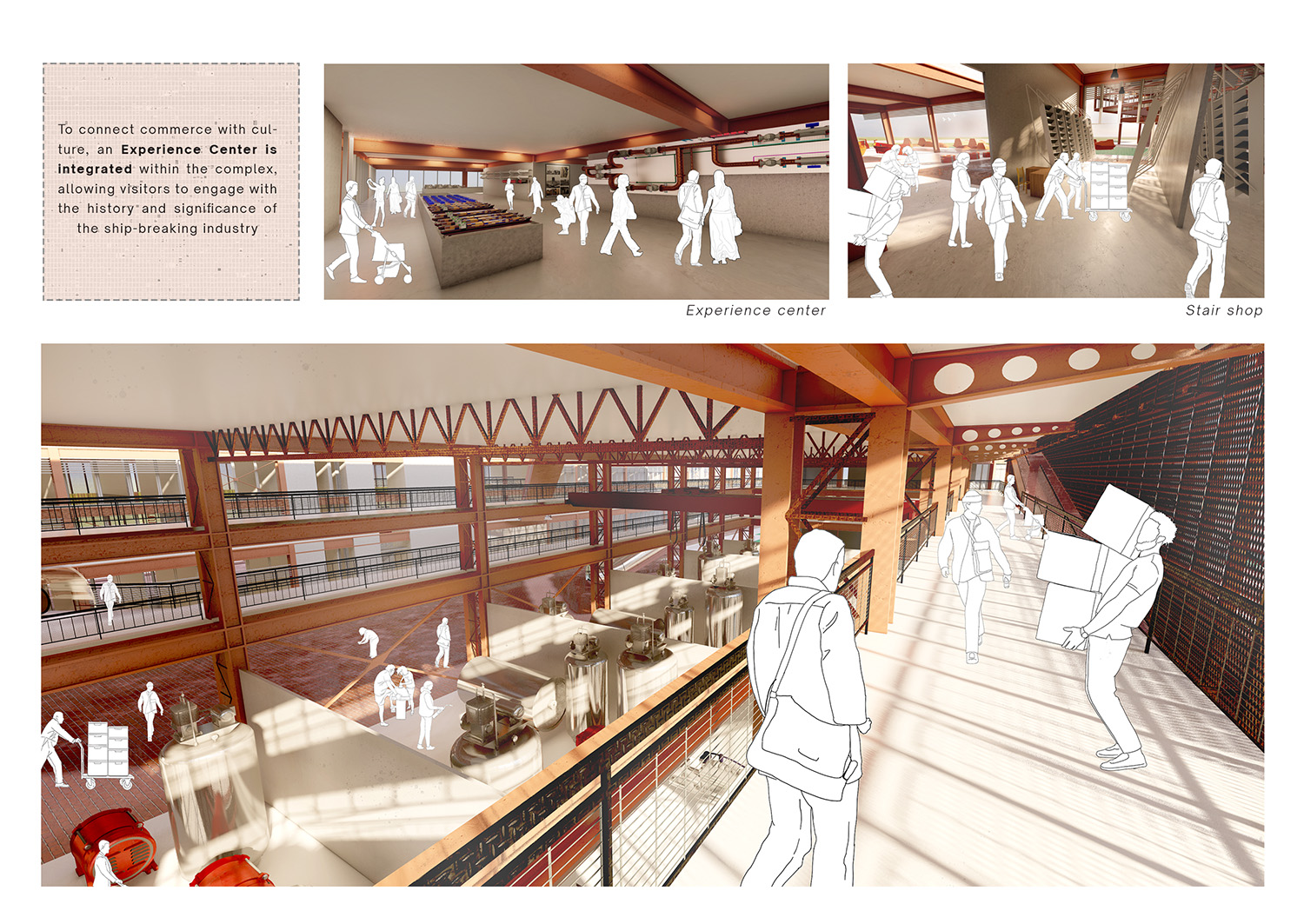
To connect commerce with culture, an Experience Center is integrated within the complex, offering visitors insights into the history and significance of the ship-breaking industry. Ultimately, the project aspires to transform Bhatiary into a civic and cultural destination—strengthening livelihoods, improving user experience, and establishing Bhatiary as a vital node in the global ship-recycling economy.
PEOPLE ALSO VIEW
Printed Publications

NEXT 50: Collective Futures

ASPIRATIONS AND IDEAS: Designing with Context