
Paddles of the Past: Repurposing the ‘Rocket’ Steamer into a River Life Museum

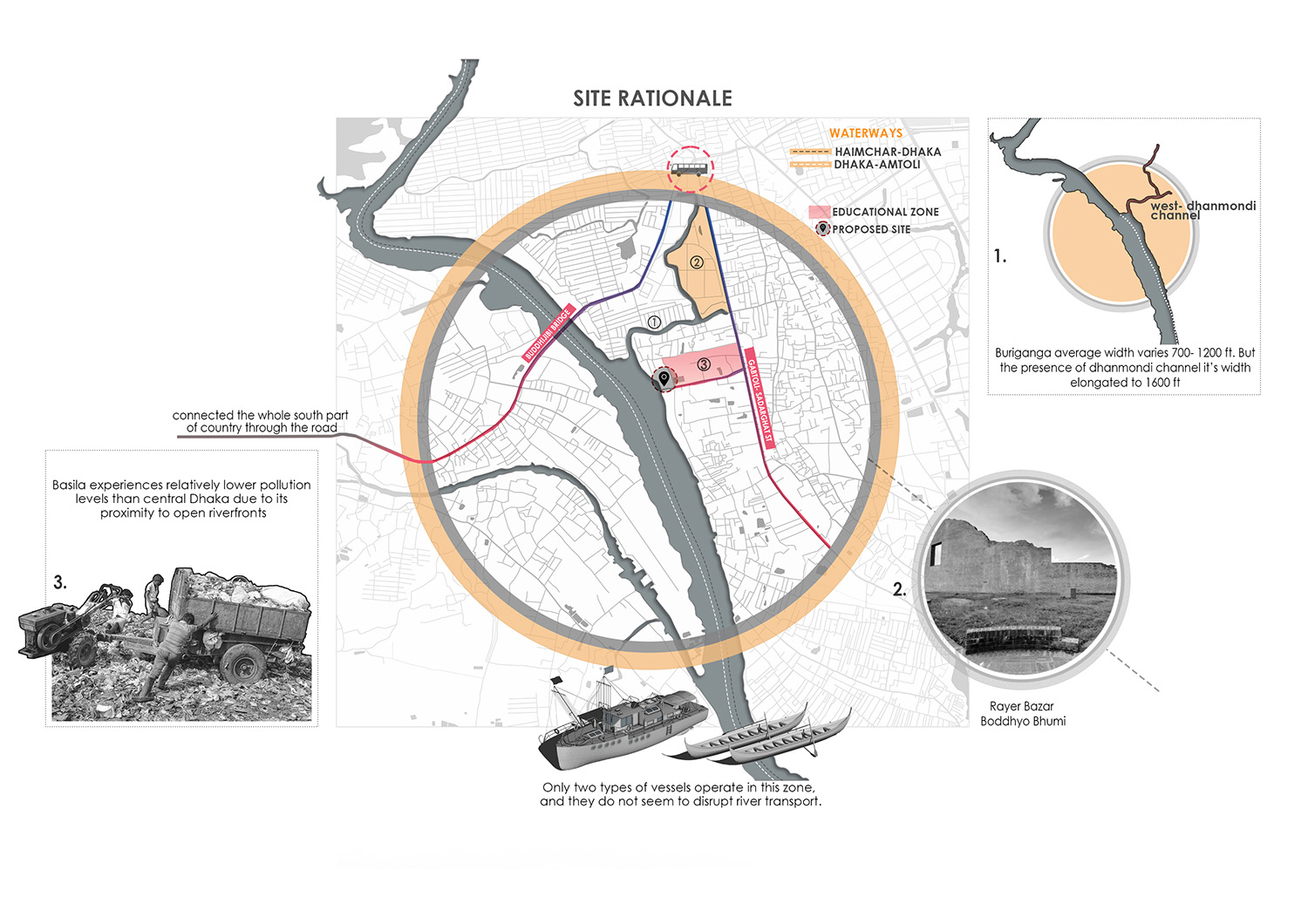
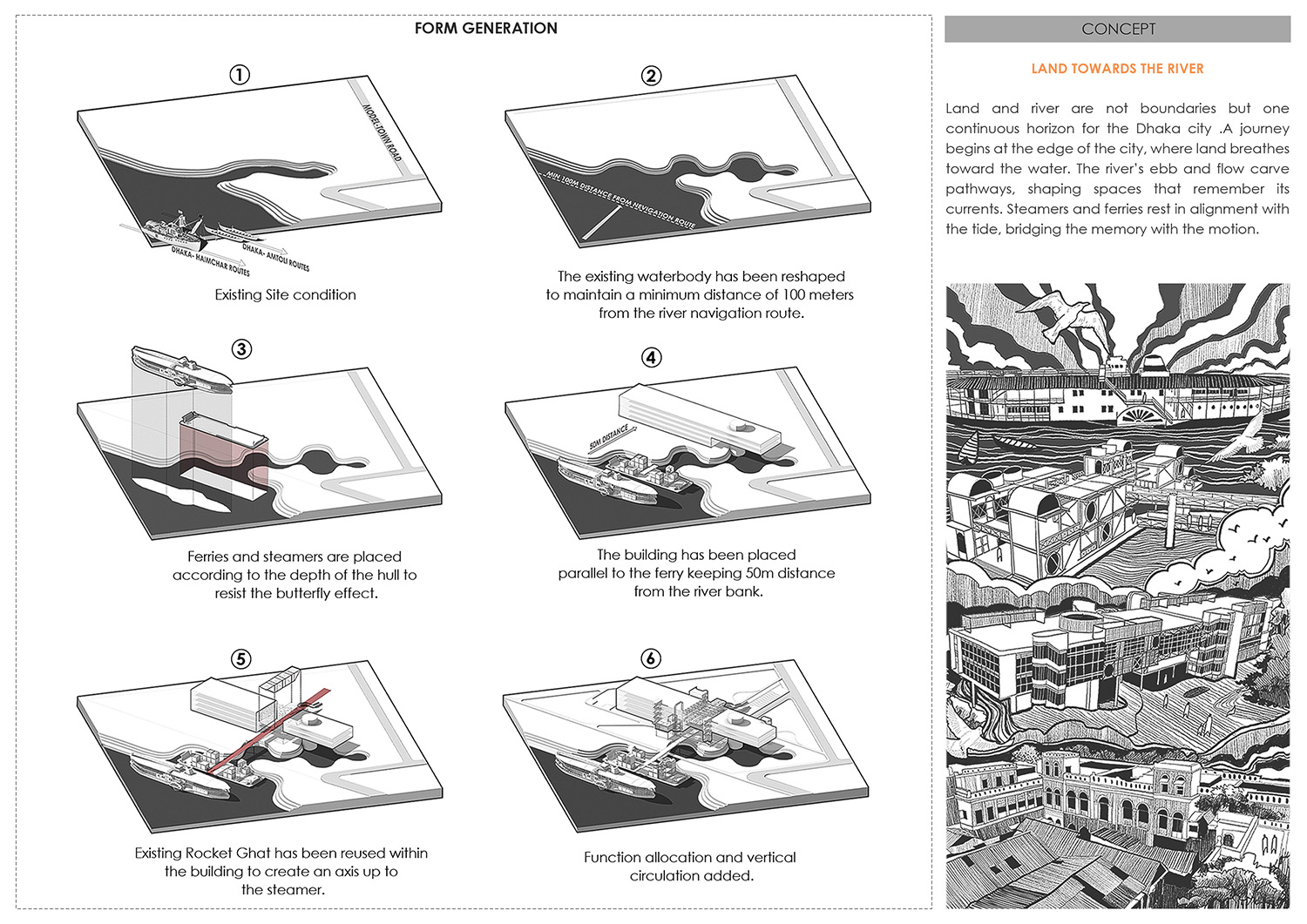
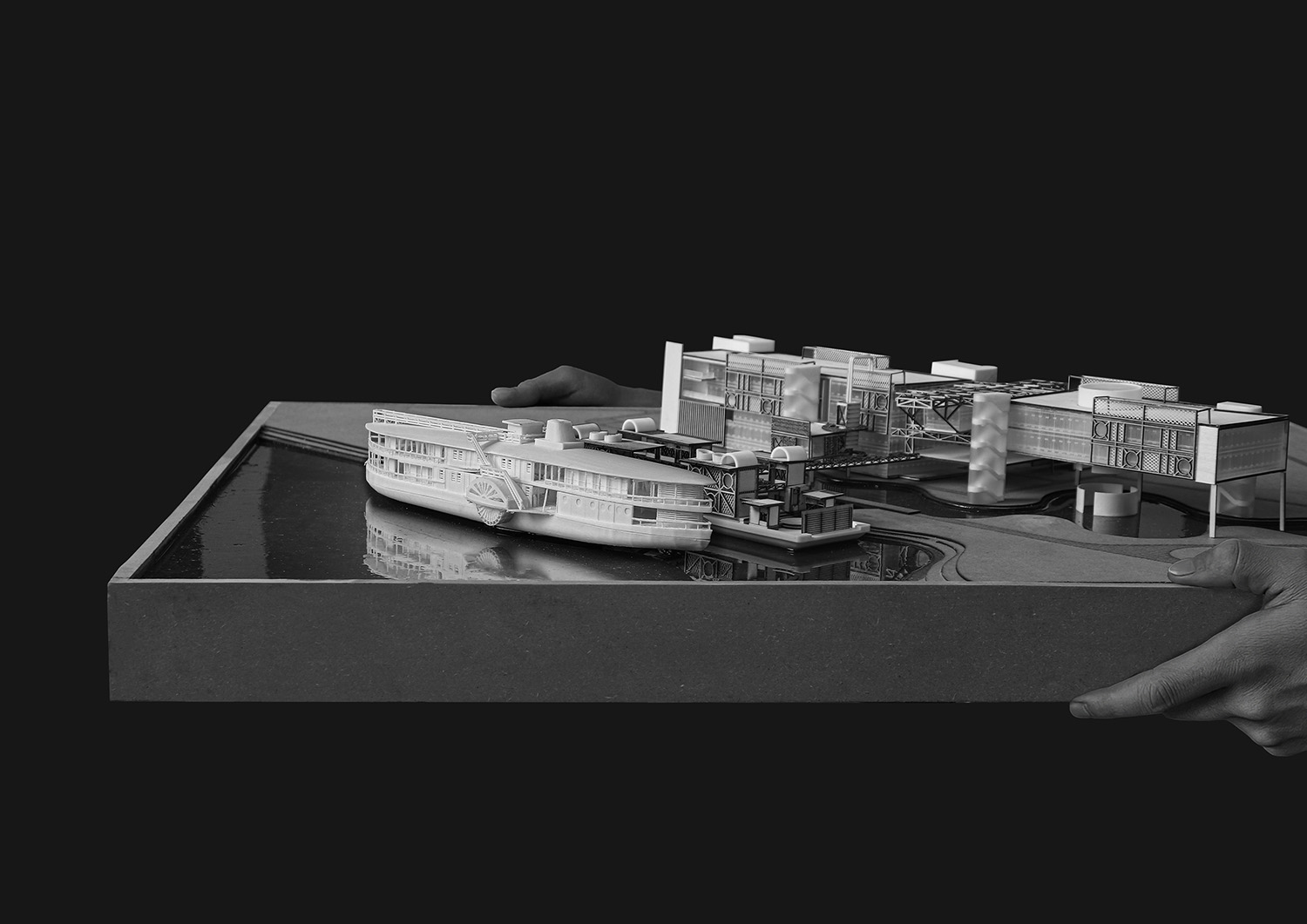
This student proposal re-imagines the Buriganga Riverfront by establishing a distinct architectural landmark that transforms the Buckland Embankment into a vital cultural destination. The project centers on the adaptive reuse of the historic BIWTC paddle steamer, popularly known as ‘Rocket Steamer’, into the Buriganga River Life Museum, creating a dynamic public space along the water’s edge. Surrounding this iconic vessel, a fleet of decommissioned ferries is repurposed through a modular design language, forming a unique floating complex of workshops and markets. Together, this ensemble forges a cohesive architectural identity—bridging the river’s industrial past with its ecological future—and acts as a catalyst for both cultural and urban renewal. -Editor
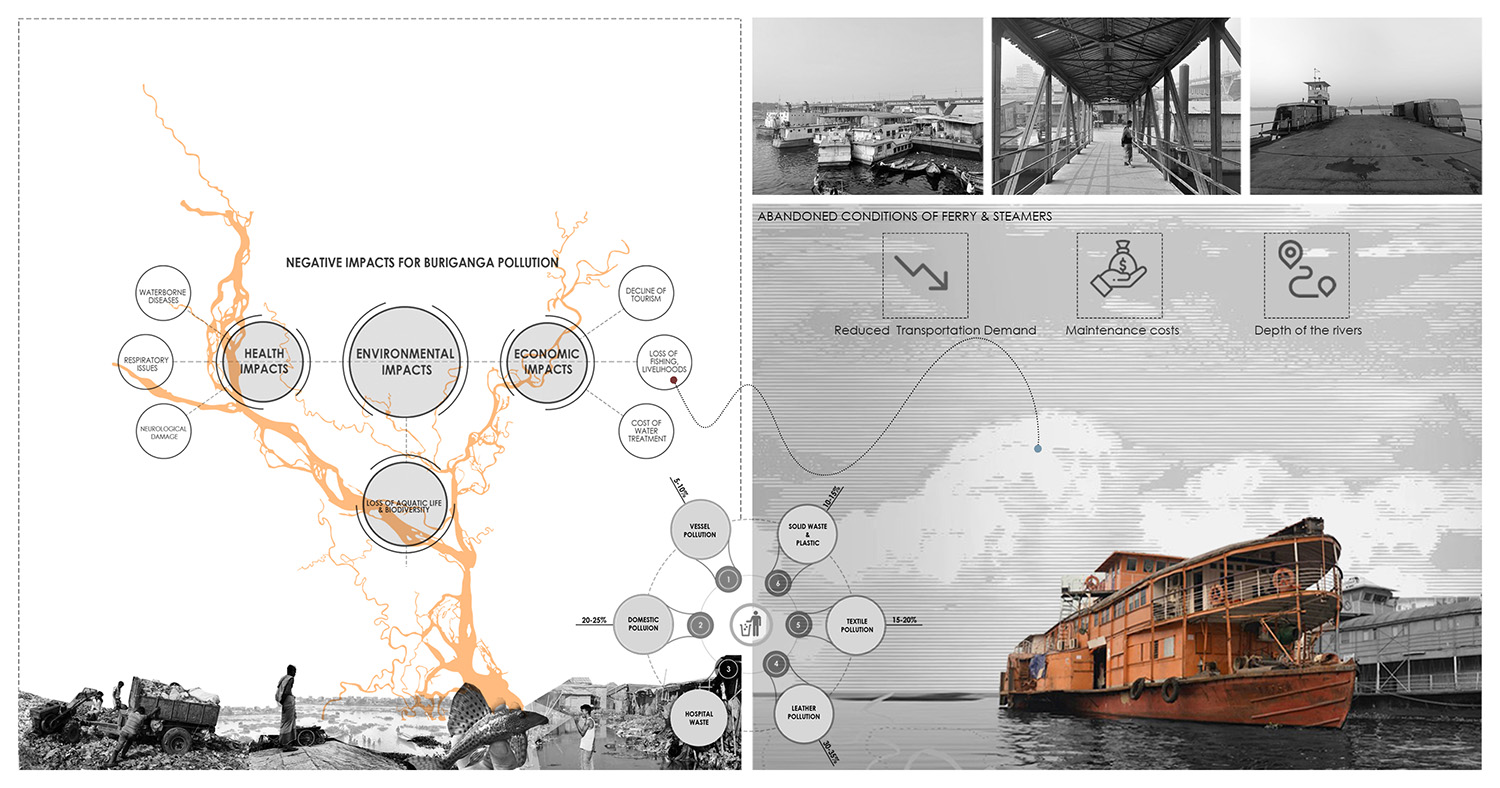
From the submission | Once the vibrant heart of Dhaka, the Buriganga River now stands as a symbol of ecological and cultural neglect—its waters choked with pollution, its historic vessels abandoned, and its riverine communities burdened by industrial contamination. “Paddles of the Past” responds to this crisis through an integrated architectural vision that reawakens the river’s dormant heritage and redefines its civic potential.

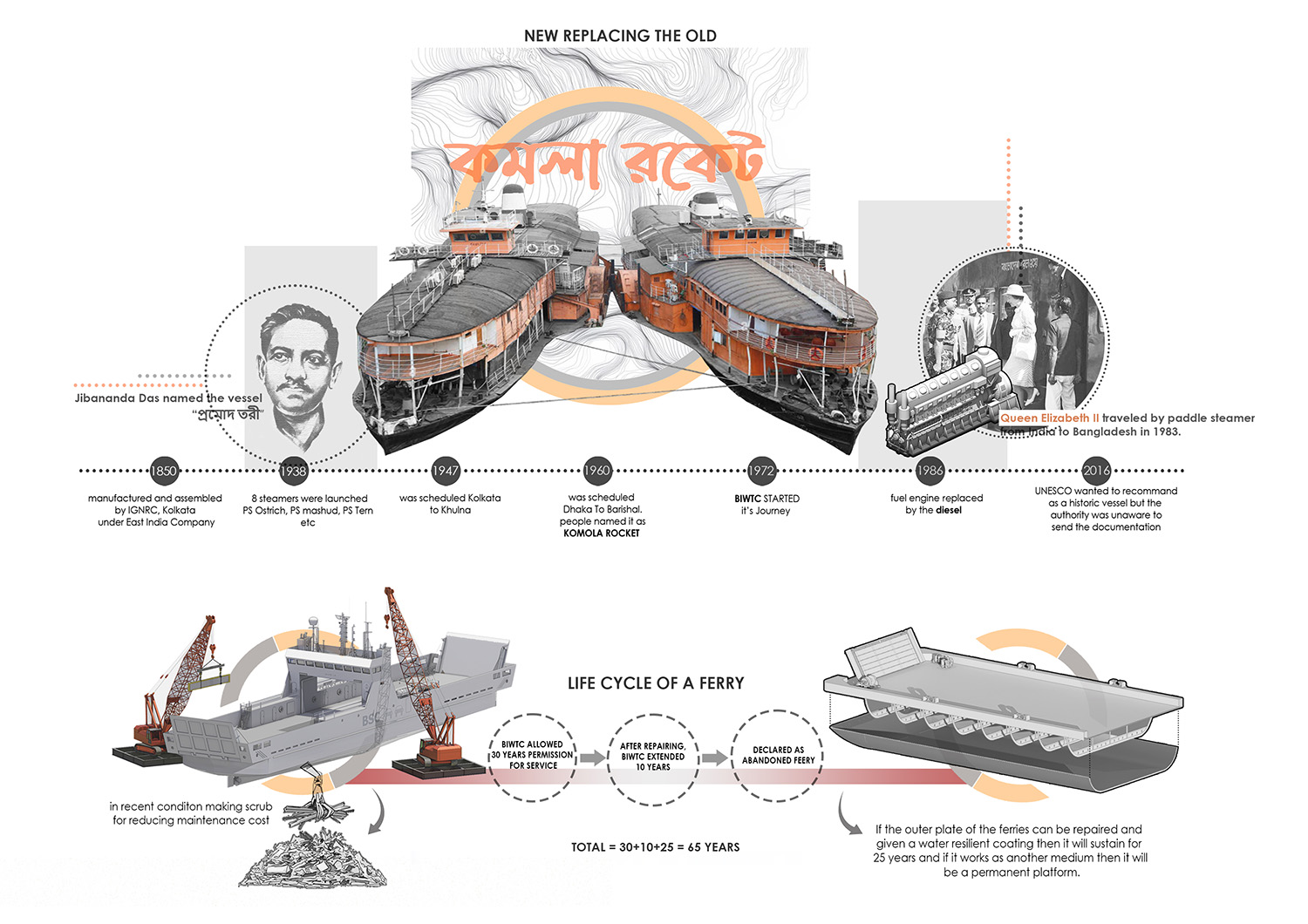
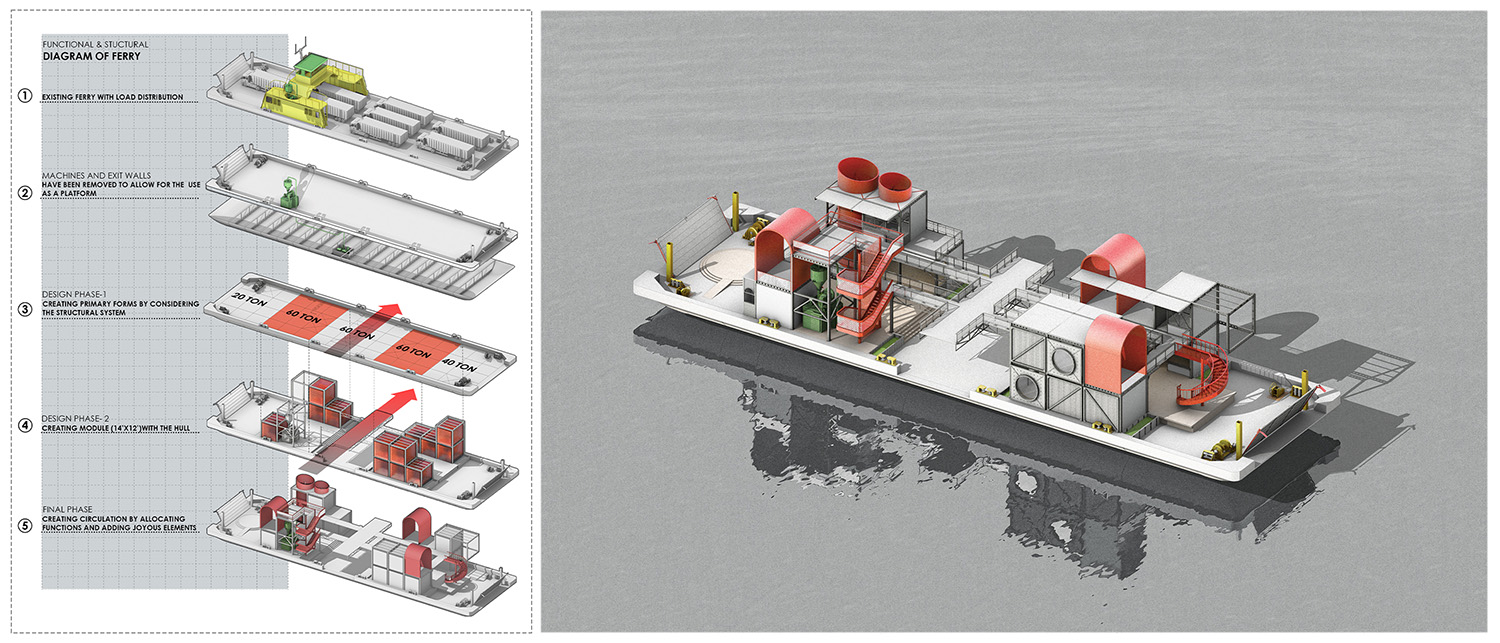
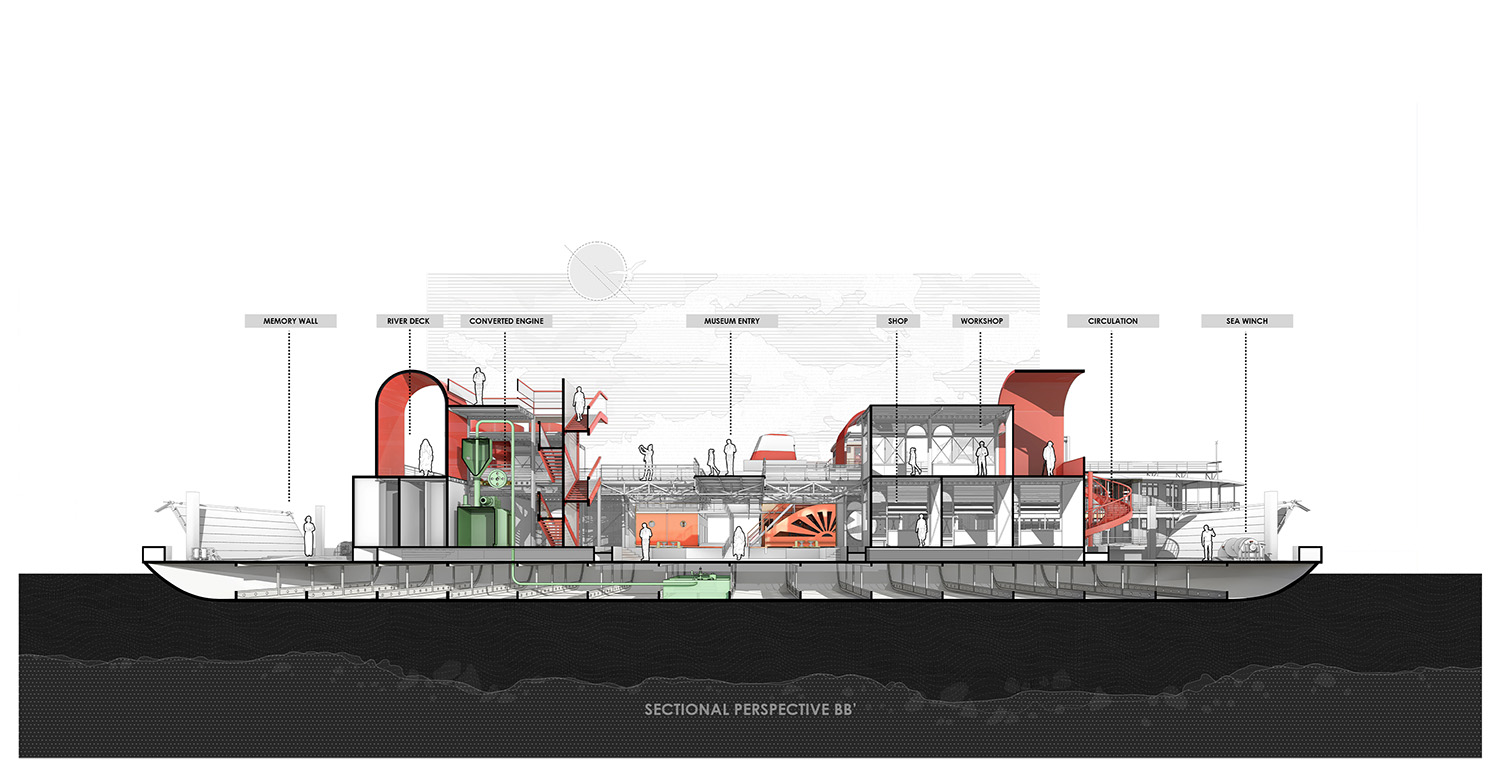
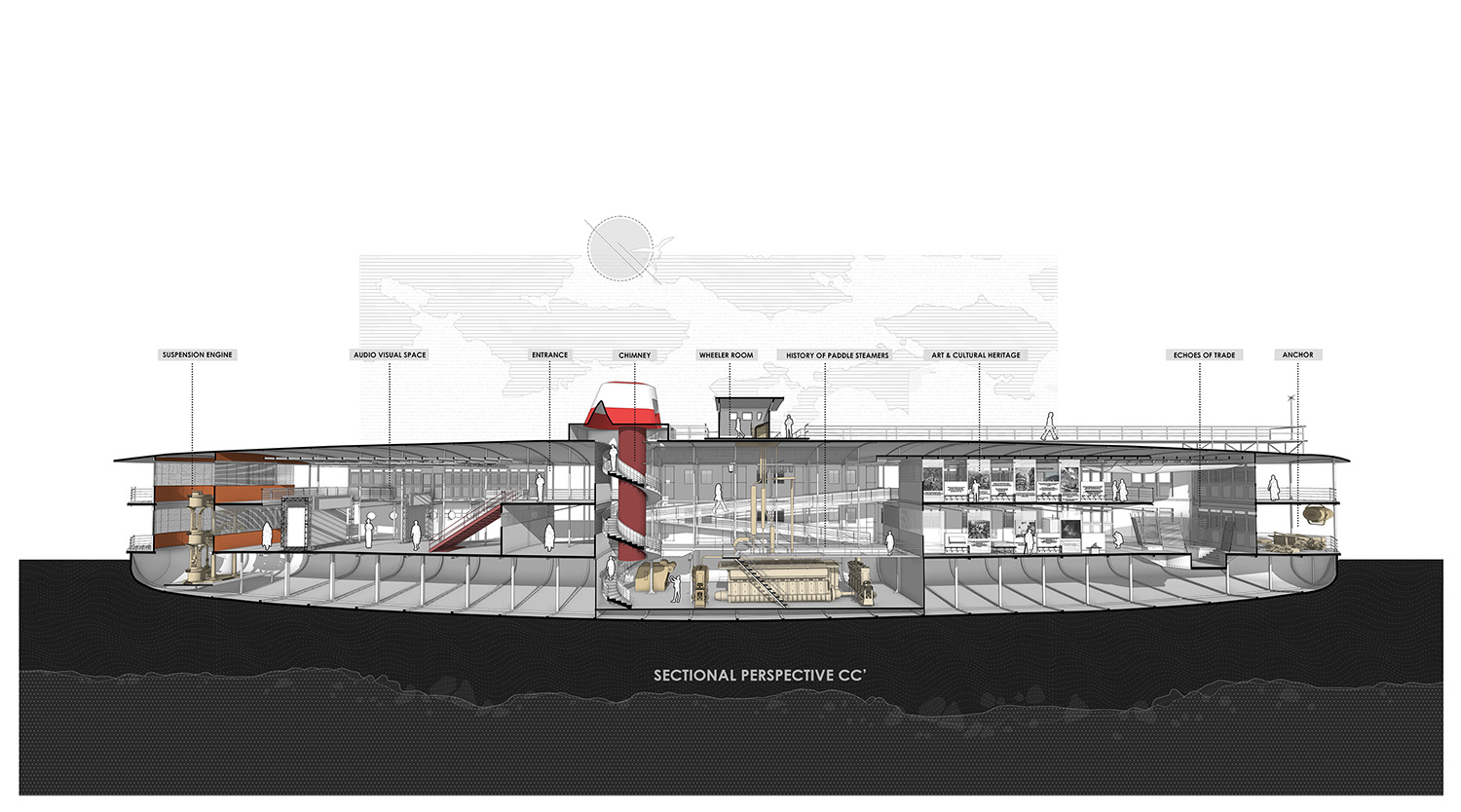
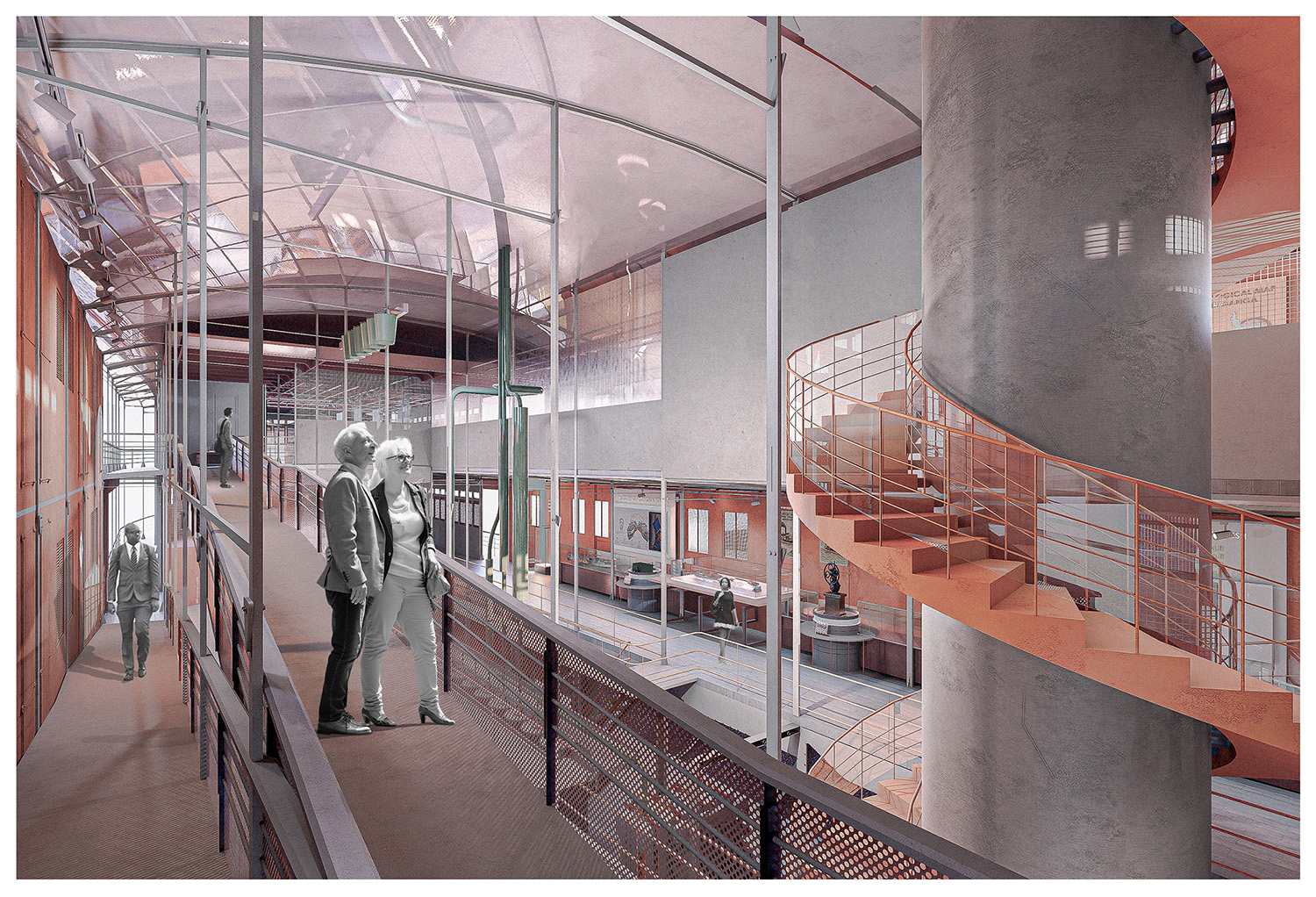
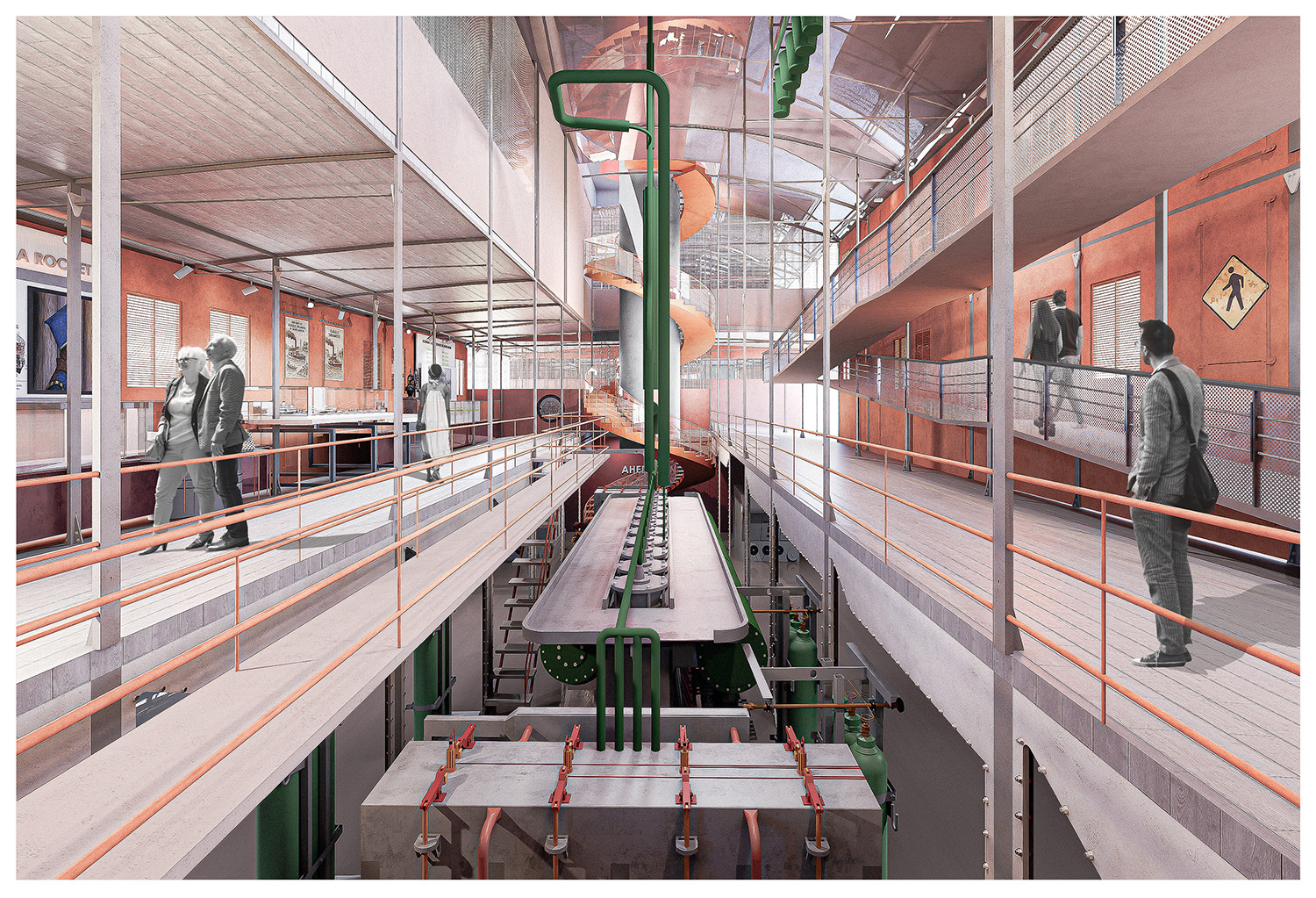
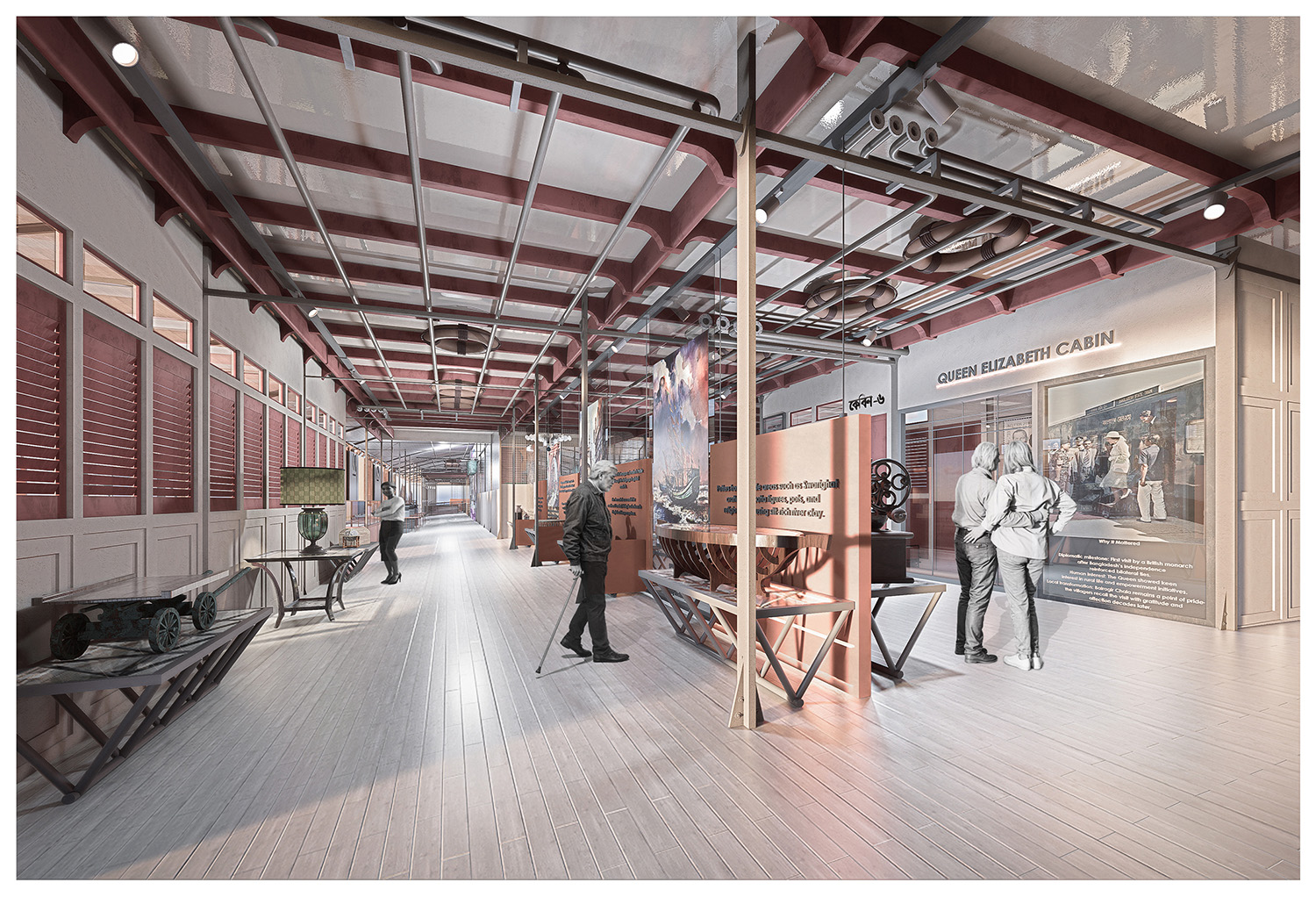
At its core, the project adaptively reuses the century-old paddle steamer PS Masud as the Buriganga River Life Museum—a living archive celebrating the maritime legacy of the city. Immersive exhibits and interactive storytelling transform the vessel into a floating chronicle of Dhaka’s river culture, inviting visitors to rediscover the narratives once carried by its waters.
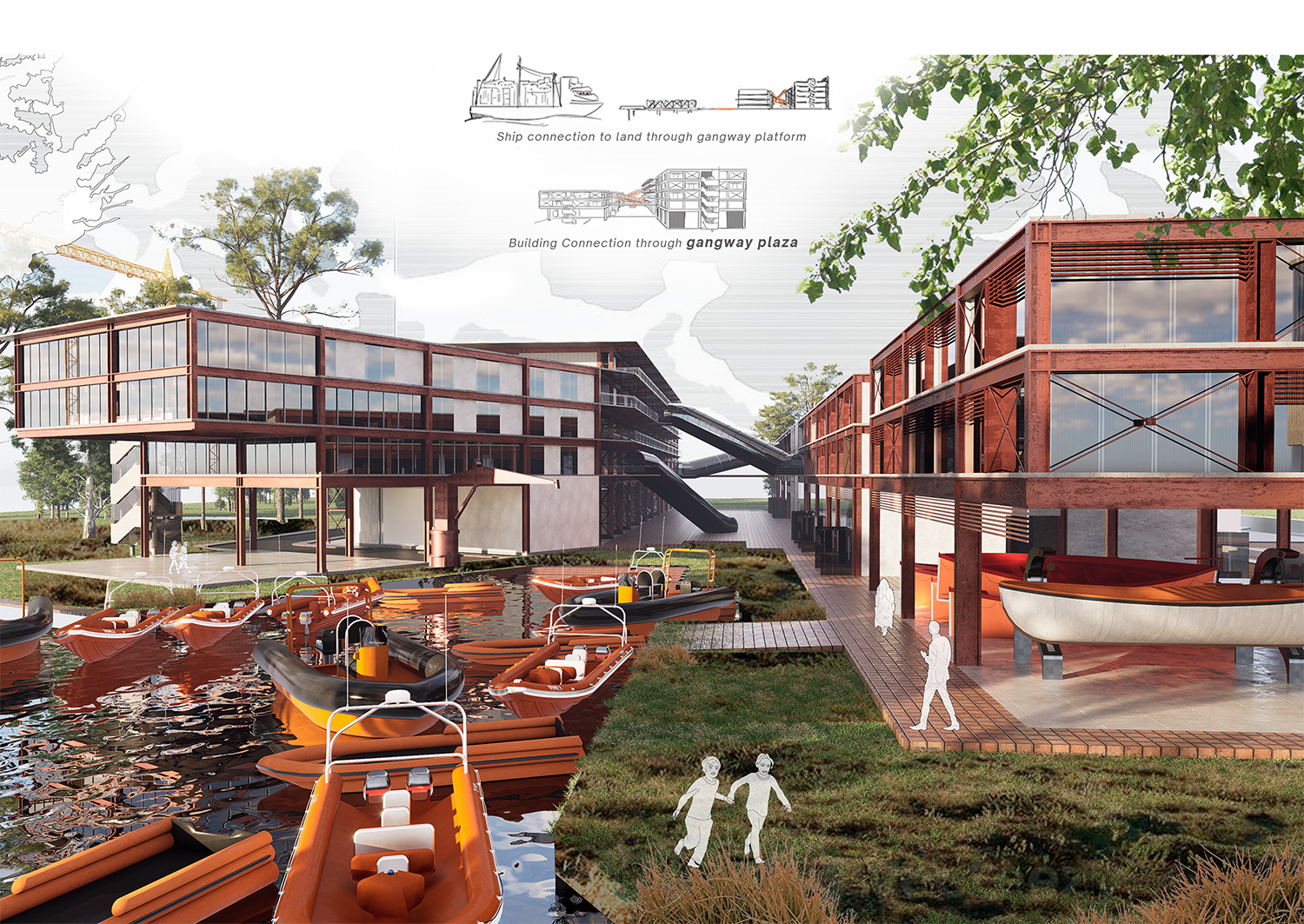
Surrounding this centerpiece, a fleet of decommissioned ferries is reimagined through modular design into floating souvenir shop, workshops, and educational hubs. These platforms extend the museum’s influence beyond preservation, acting as active community resources that nurture environmental awareness, craft revival, and local stewardship.
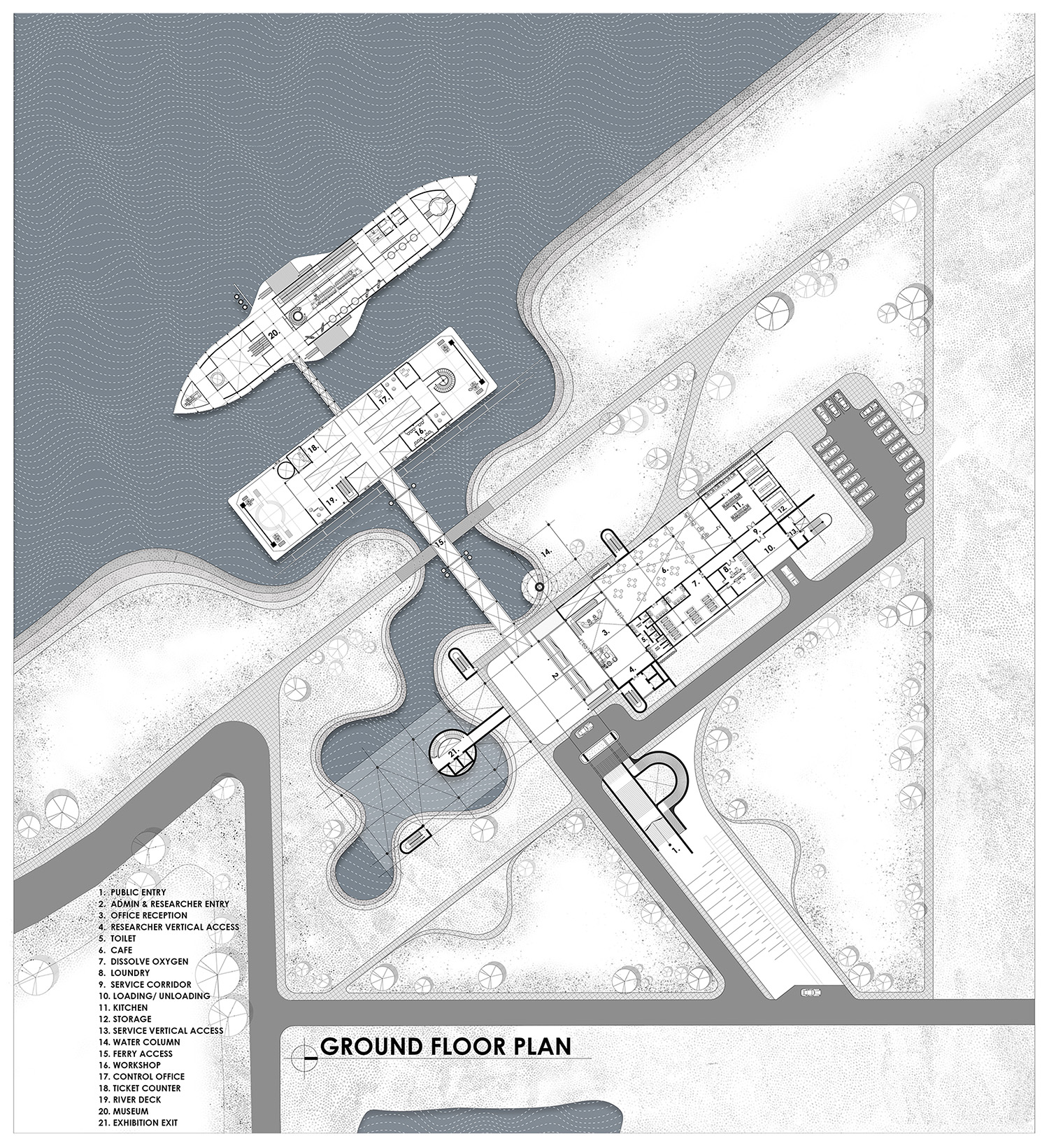
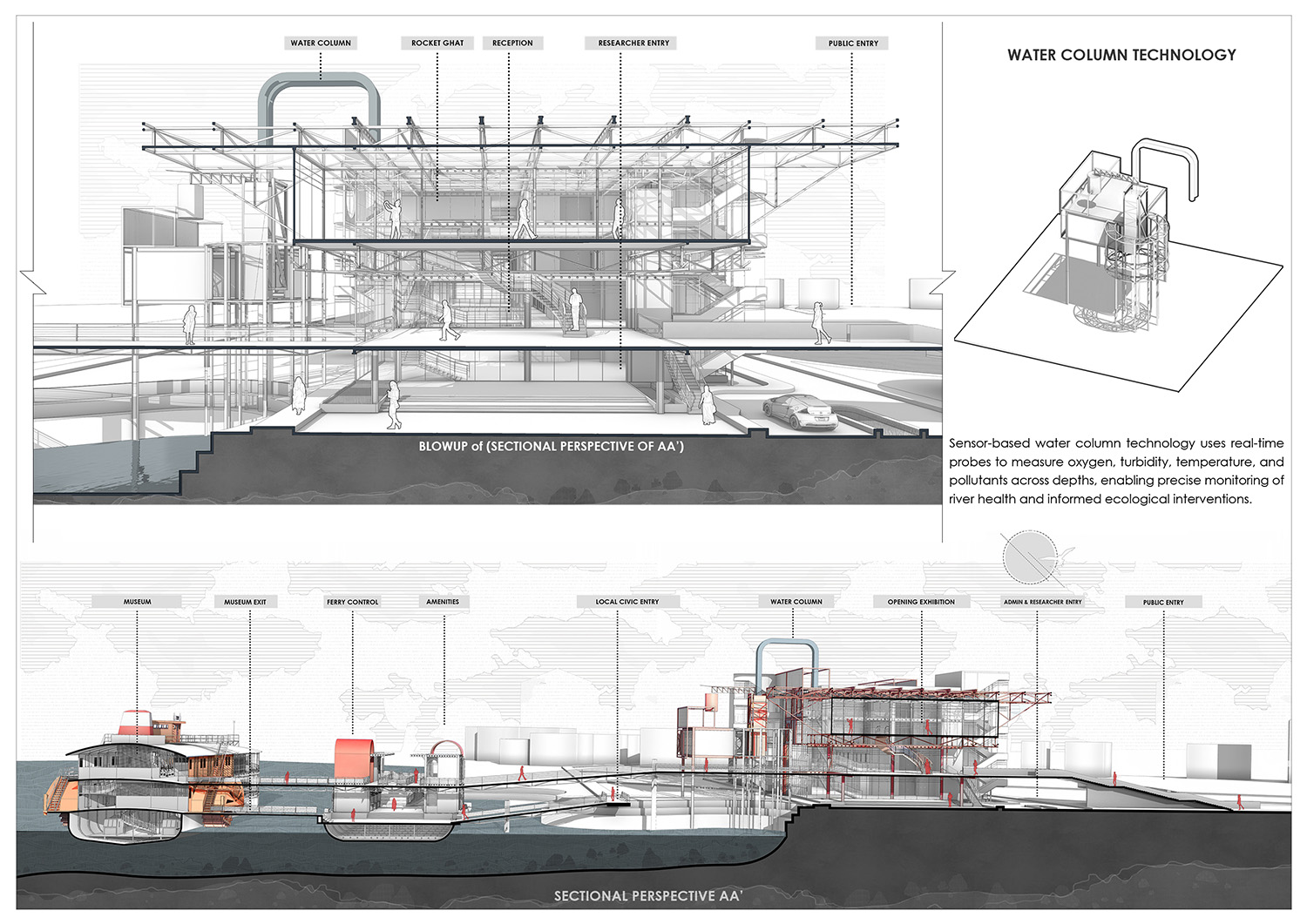
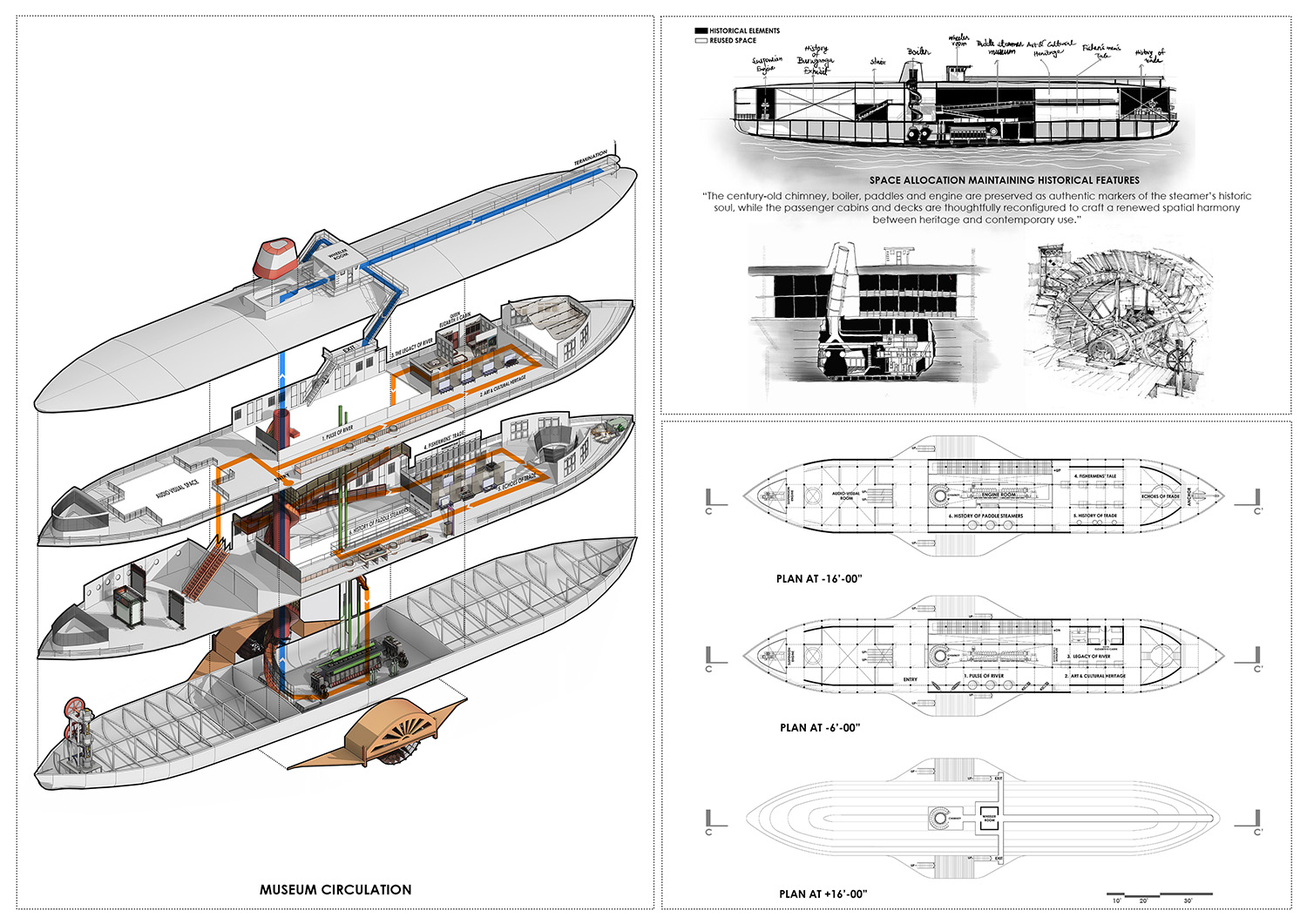
An onshore Water Research Centre anchors the intervention, integrating real-time water quality monitoring with ecological restoration research. Through data-driven analysis, experimental analysis, and phytoremediation strategies, the centre ensures that cultural revival is paired with measurable environmental impact.
By weaving together heritage preservation, environmental innovation, and social engagement, “Paddles of the Past” envisions a new paradigm for riverfront regeneration—where it becomes a medium of healing, and the Buriganga once again flows as a living artery of culture and ecology.

PEOPLE ALSO VIEW


Printed Publications

NEXT 50: Collective Futures

ASPIRATIONS AND IDEAS: Designing with Context