
The Atghar-kuriana Floating Market | AIUB
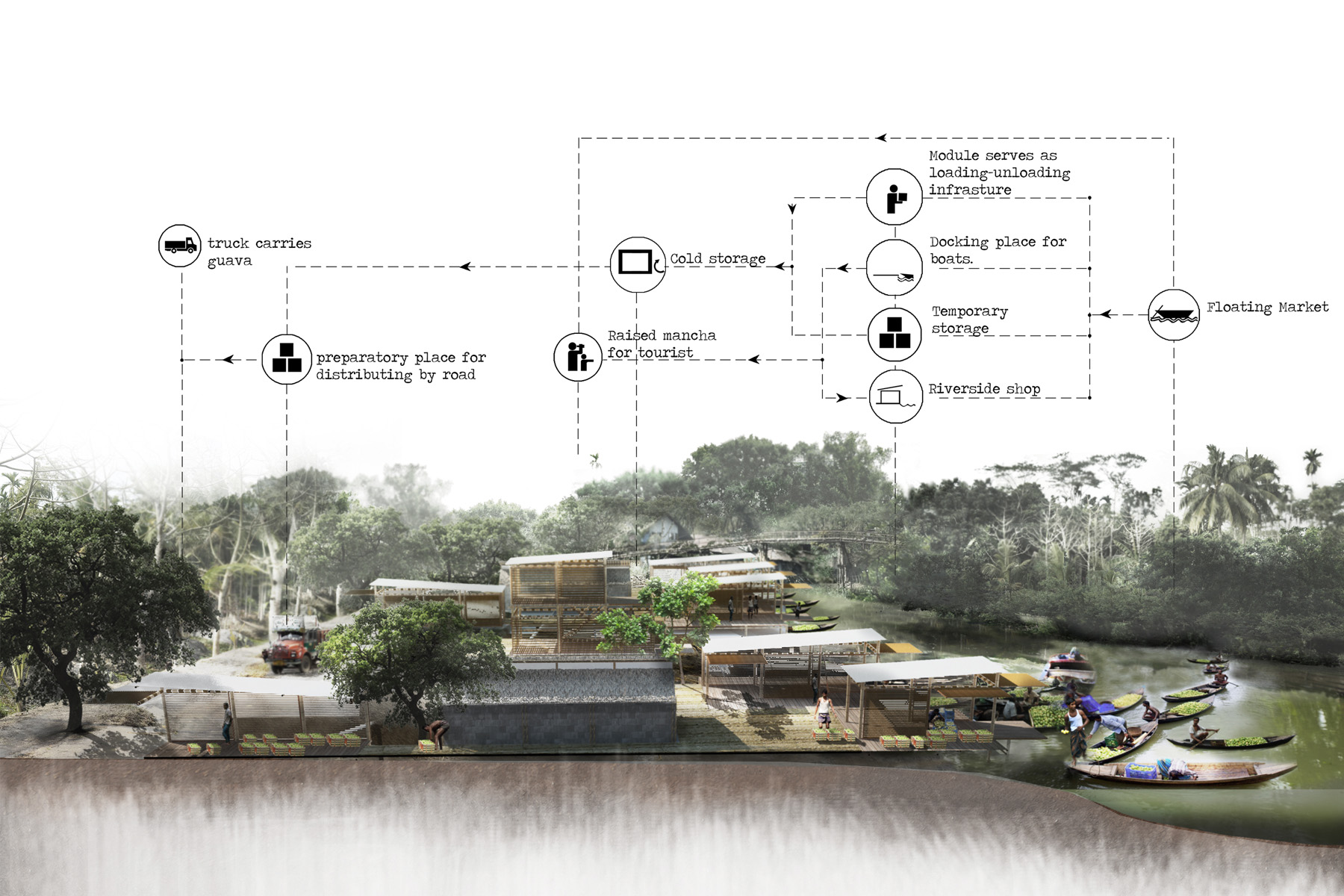
The southern region of Bangladesh is beautifully adorned with numerous rivers, canals and boats. Pirojpur and Jhalokathi these two districts from the southern part are also blessed with the mercy of endless water-site.
Due to the low land topography of these areas, cultivation of guava is very common and popular phenomenon there. Atghar-kuriana from Swarupkathi thana is an important site, among the few important guava cultivation point of that area. For quick and feasible transport, boat is a principle medium for collecting and selling guava in a whole sell scale. That is why this place is well known for the floating market of guava. Local people named it “Noukarhaat”. Native people of this area highly rely on this occupation along with occupations such as fishing, business, and boatmanship. The challenges that farmers facing here are it lacks proper communication and infrastructure including pontoon/dock , cold storage facilities to serve this guava business which results in only poor market price.

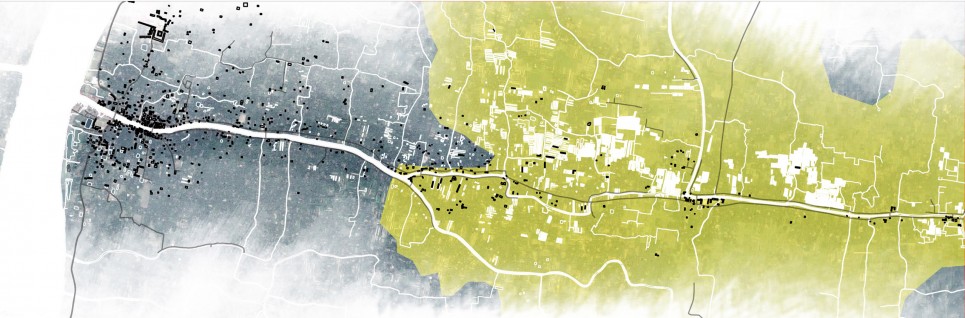


Since there is lack of infrastructure to facilitate the floating market, it has to solely depend on existing small scales temporary structures which play multiple functions during different seasons. In dry period these structures are mostly used as shops, gathering place for native people; during monsoon it eventually converted into temporary market places for guavas.
After thorough study of the site and the cycle of local economy, the project aims to preserve the existing symbiotic and humble relationship between man and nature while doing minimum intervention. An infrastructure module is conceptualized with added pontoon to facilitate boat docking and space for the traders to stand on. The core section of the module may act as a temporary shed for Guava storage and the built “Mancha” may serve as a spot for tourists to stand and enjoy the view. Such structural modules are conceived to work well in both directions: during monsoon, it becomes riverfront and during the dry season it becomes roadfront. These modules, connected by a common platform, can be articulated in various ways to create diverse spaces of varied qualities to serve various functions even on various sites.

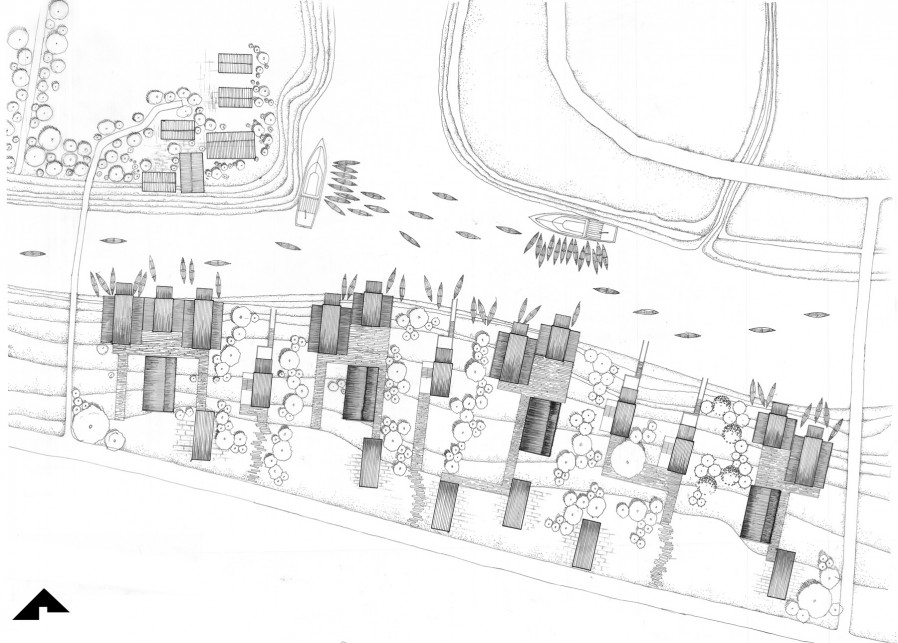
The proposed module, neither too solid, nor too open, is a flexible and multifunctional unit designed with local materials in order to merge with the innate surroundings. Each module composed of a collection deck, docking place for boats, sorting and temporary storing unit and distribution platform with loading and unloading facility. For every cluster, a natural cold storage facility is proposed for long term storage of surplus Guava.

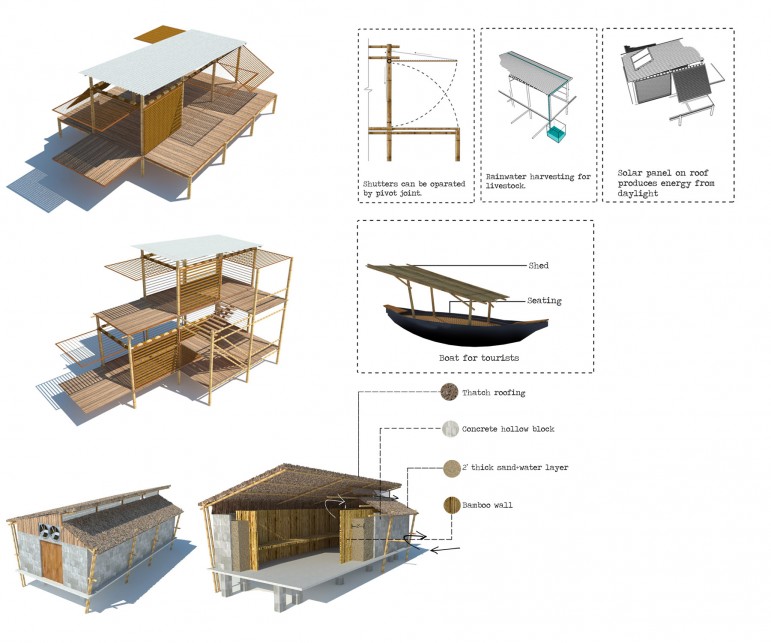
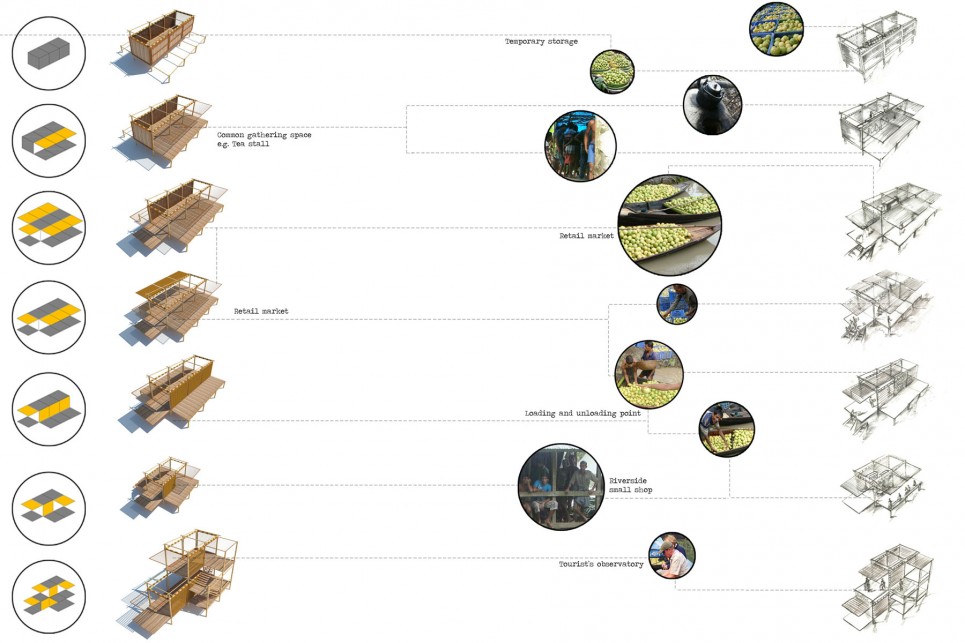
The module is adaptive to season: during monsoon the flexible shutter remains open and serves the purpose of shade over the deck facing the river; whereas in dry period, when the water is not navigable at all, the shutter remains close and serves the purpose of temporary storage and shops. Raised “mancha” over the module can serve the tourist purpose. With these structures a self-sufficient compound can be established. By repeating this cluster at any point of the canal bank a system is formed which can directly help the floating market.


PEOPLE ALSO VIEW


Printed Publications

NEXT 50: Collective Futures

ASPIRATIONS AND IDEAS: Designing with Context