
Crisis to Conservation: A Water Research & Awareness Centre
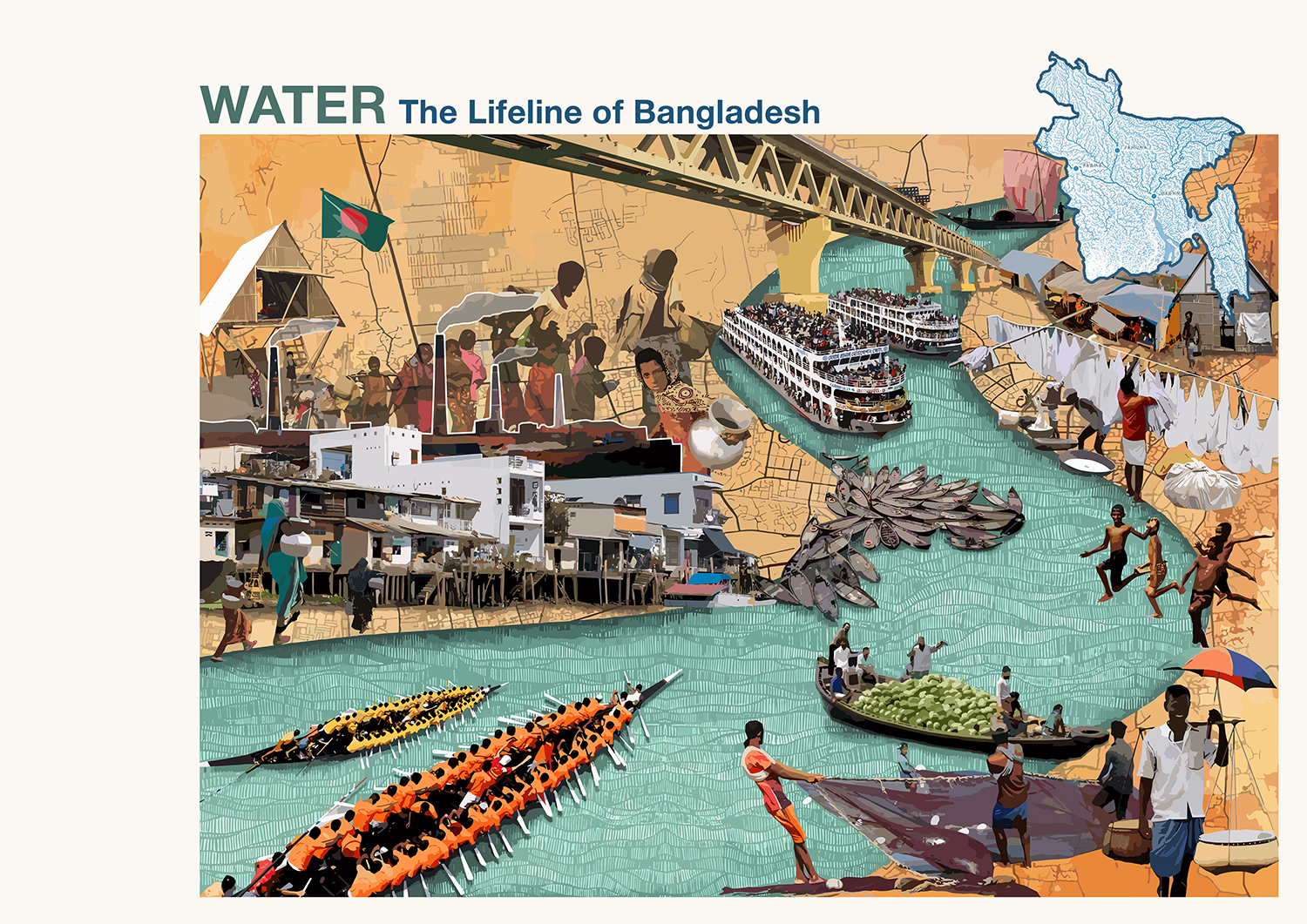
Water has always shaped the geography, culture, and identity of Bangladesh. Yet, despite being a riverine nation, the country faces an escalating water crisis. The problem lies not simply in scarcity, but in fragmented management, unequal distribution, and the disconnect between scientific research, policy implementation, and public awareness. This project explores how architecture can become an active medium for addressing these challenges.
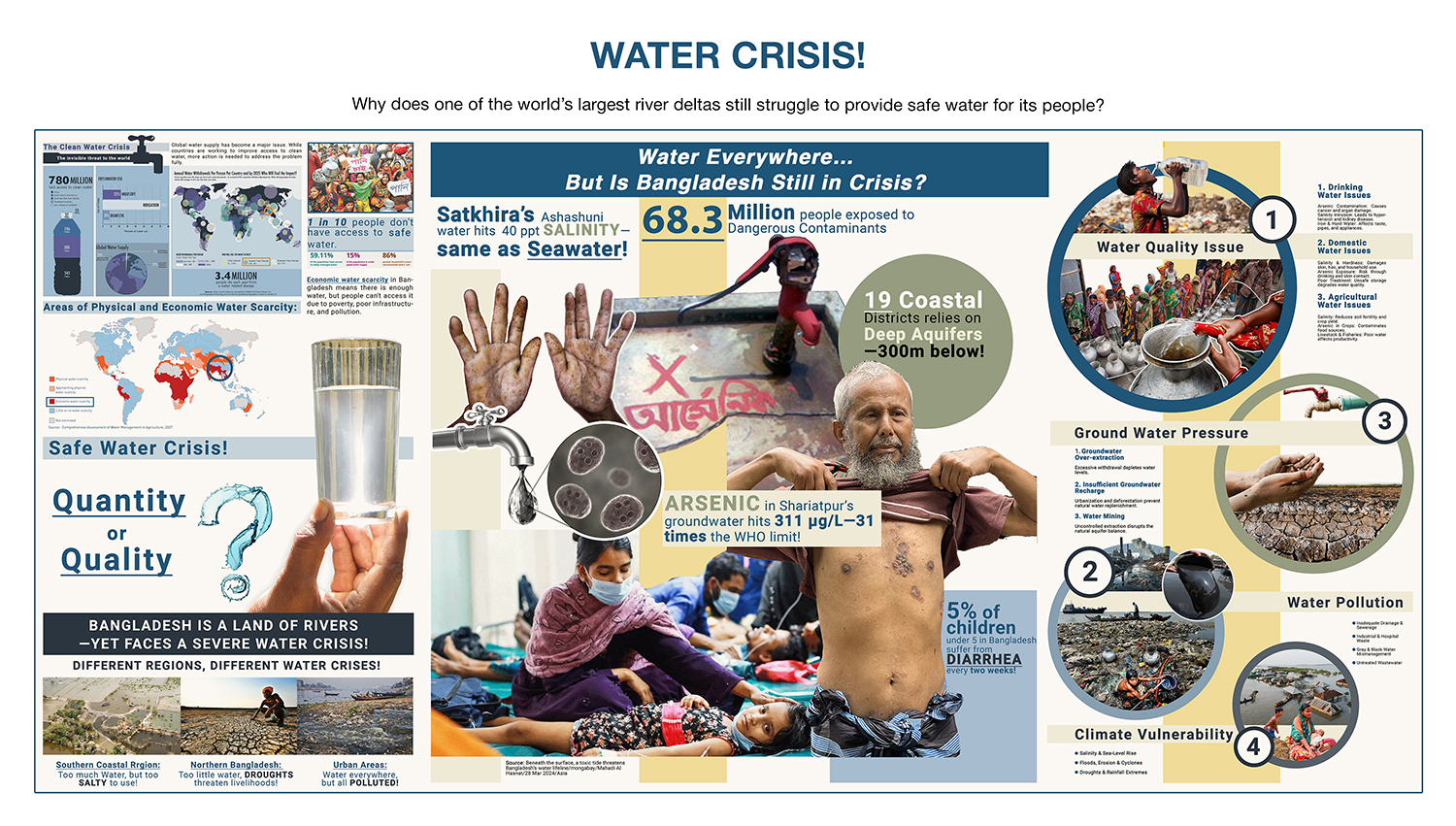
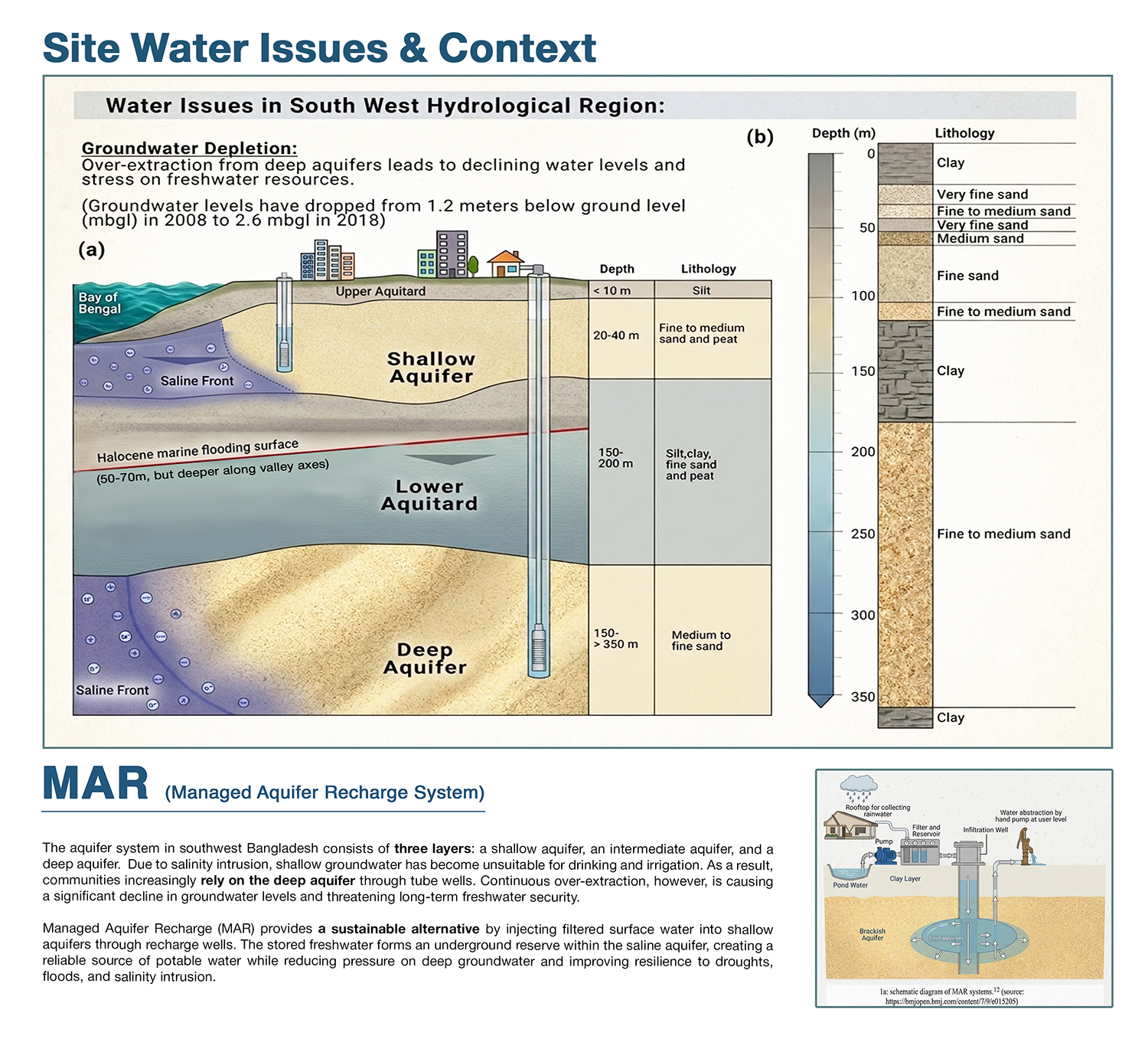
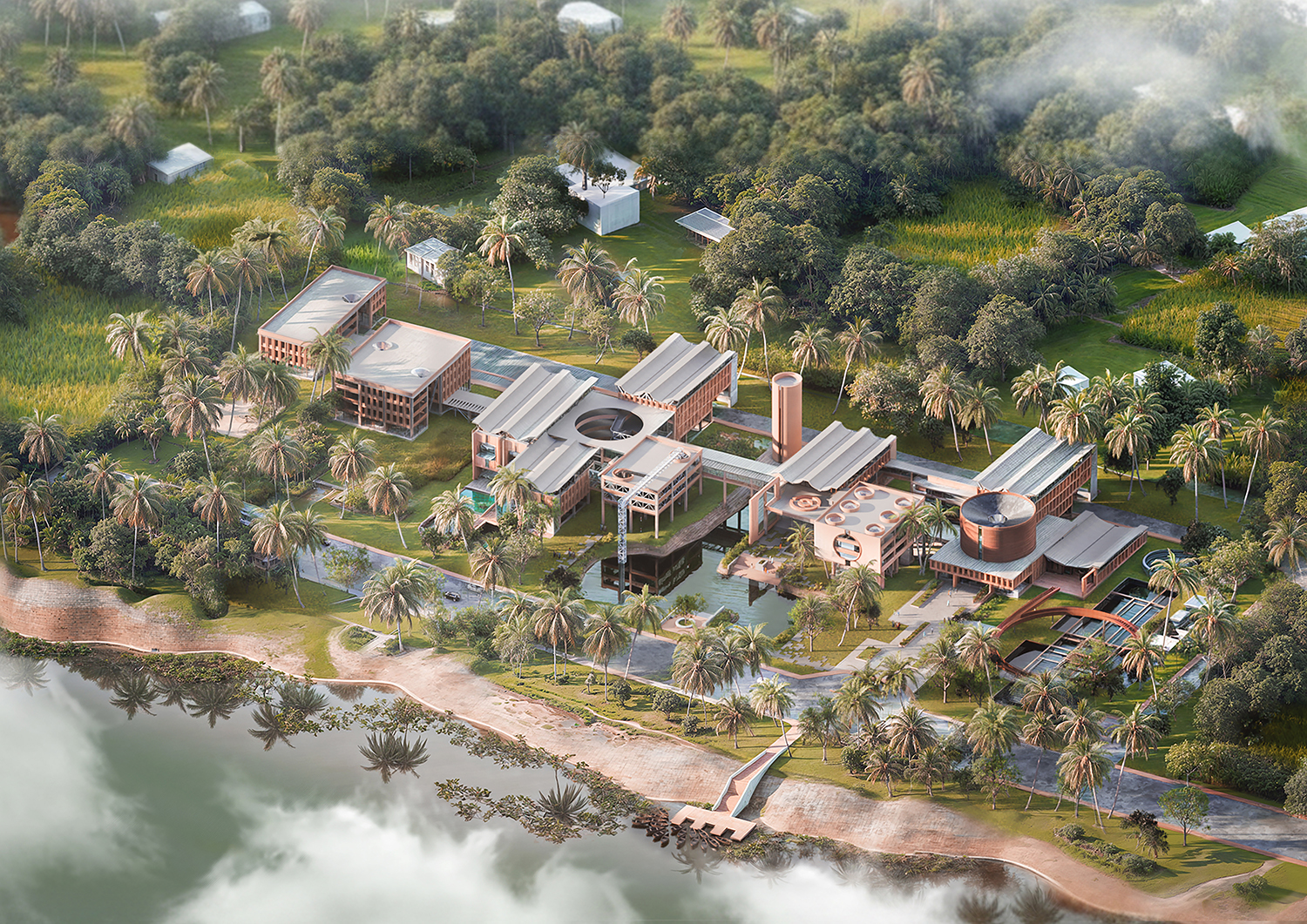
The proposal envisions a Water Research and Awareness Centre for the southwest hydrological region of Bangladesh, introducing a decentralized framework of eight interconnected research centers across the country’s eight hydrological regions. Each centre responds to its region’s specific ecological conditions while sharing research, environmental data, and adaptation strategies. The southwest coastal region was selected as the prototype due to its increasing vulnerability to salinity intrusion, groundwater depletion, sea-level rise, and climate change.
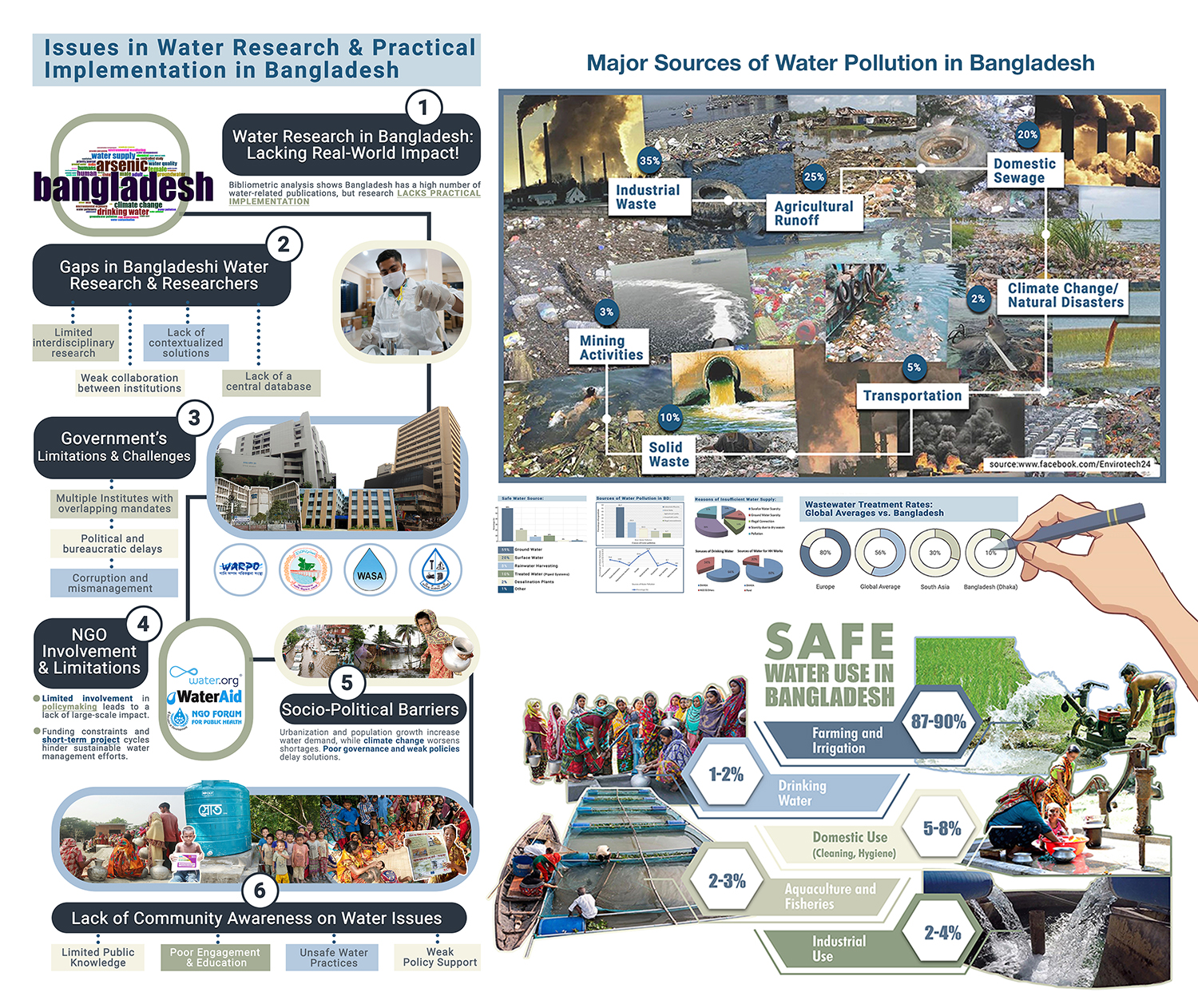
Through research, field investigations, and consultations with relevant experts and institutions, the project identified a significant gap between water-related knowledge and its practical application. Although Bangladesh has developed extensive policies and technical strategies for water management, communities experiencing water insecurity often remain disconnected from decision-making and knowledge-sharing processes. The project therefore challenges conventional approaches by integrating scientific research, public education, ecological restoration, and sustainable infrastructure within a unified architectural framework.
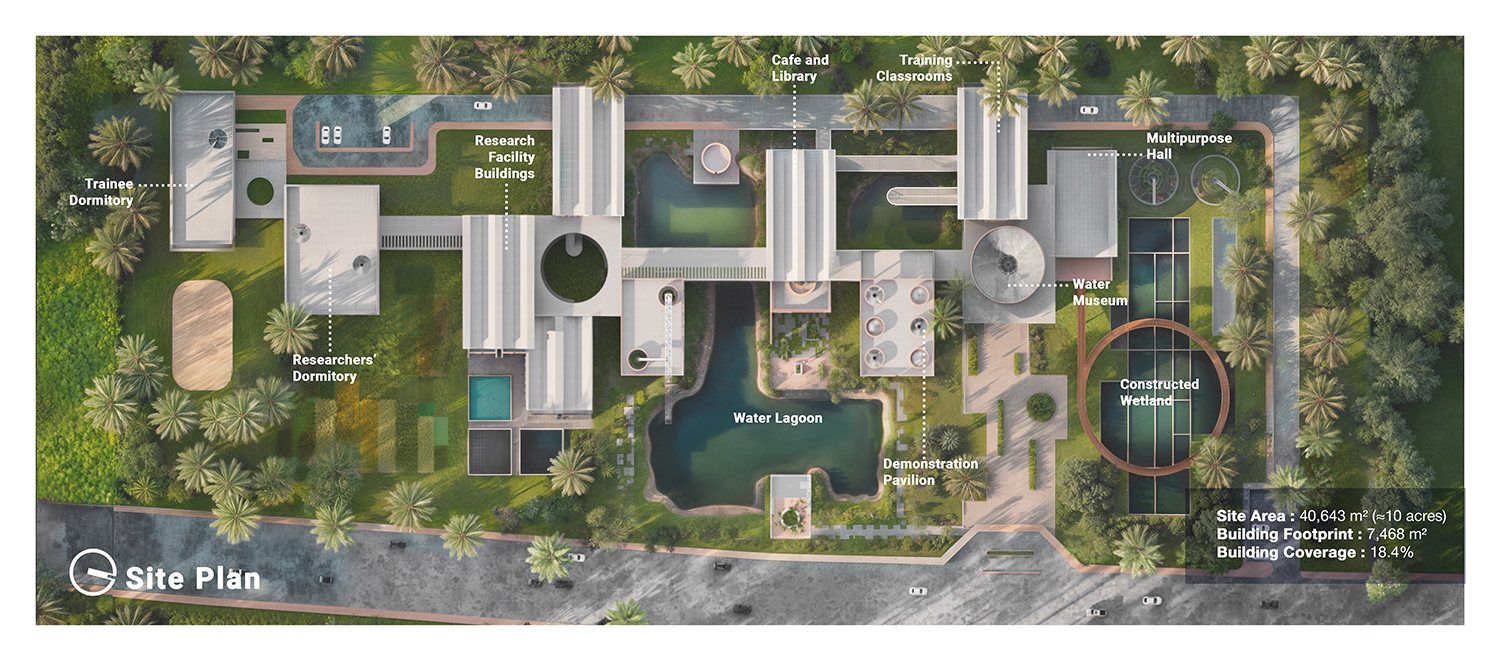
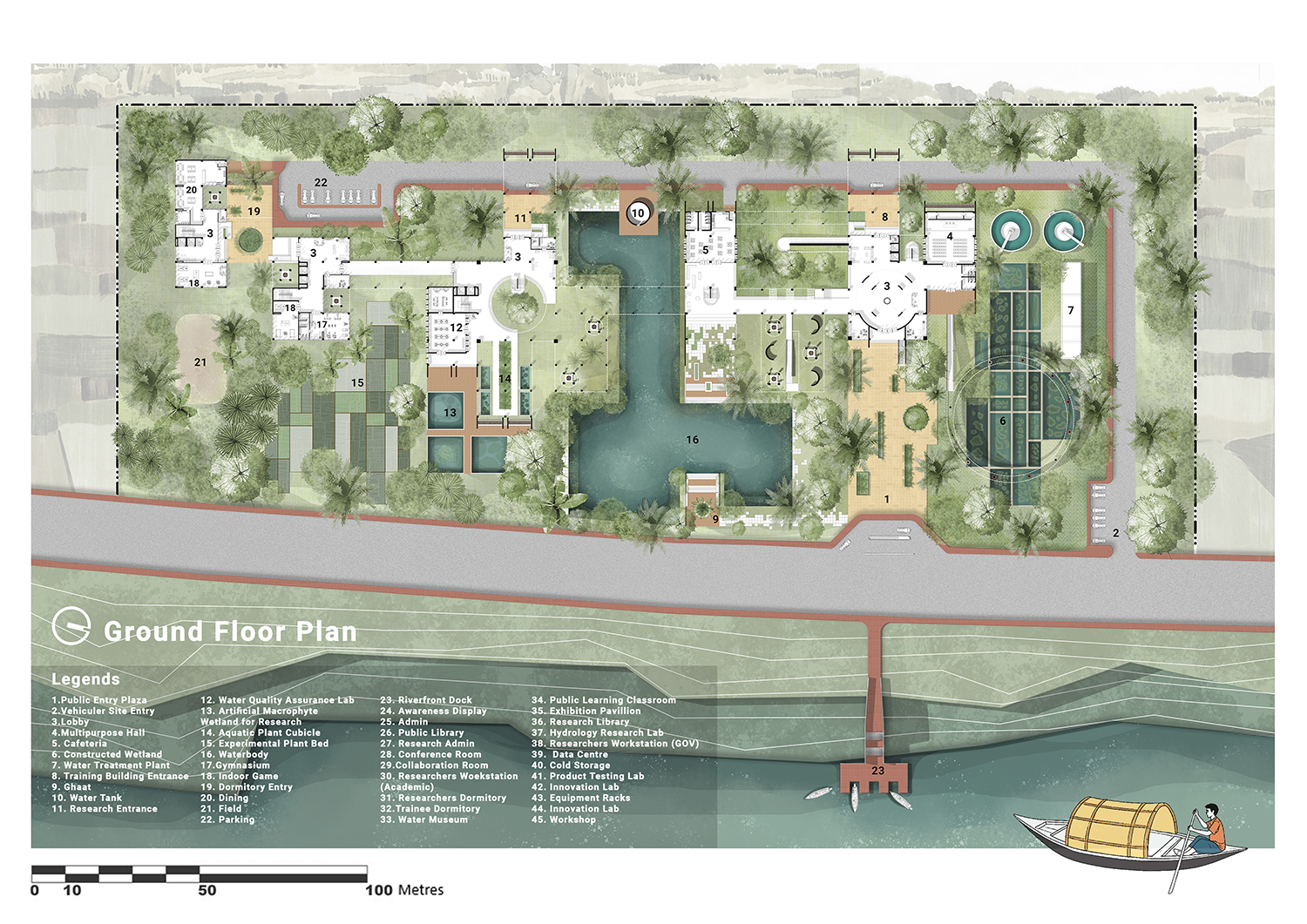
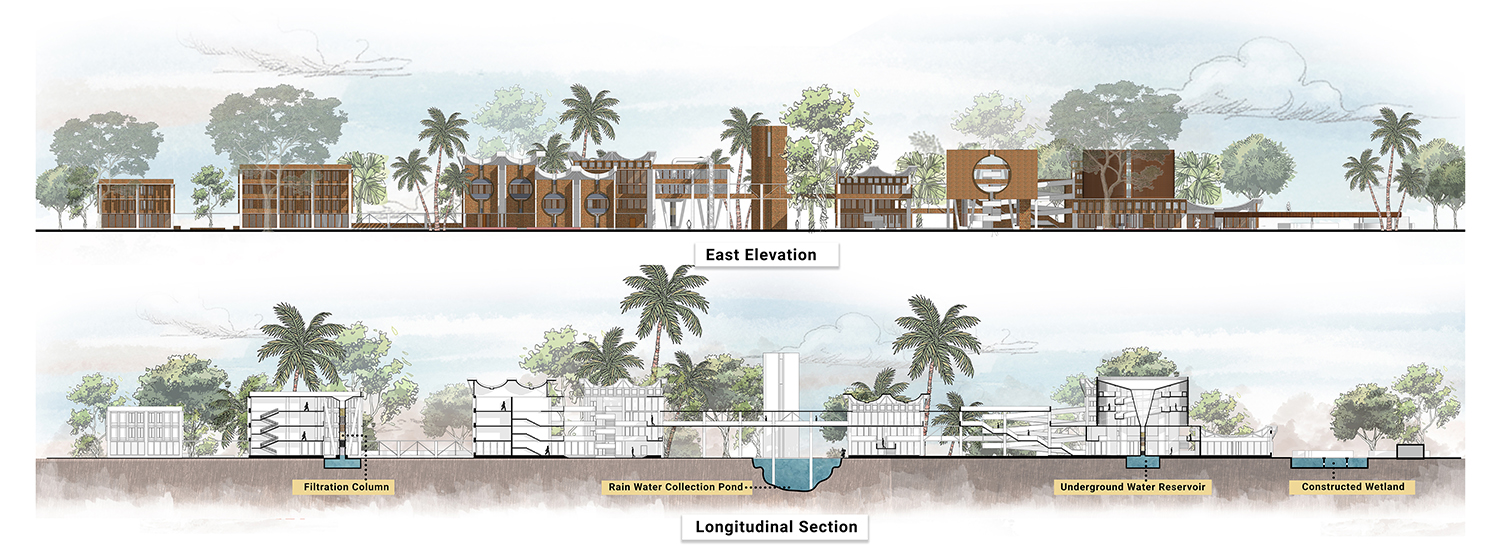
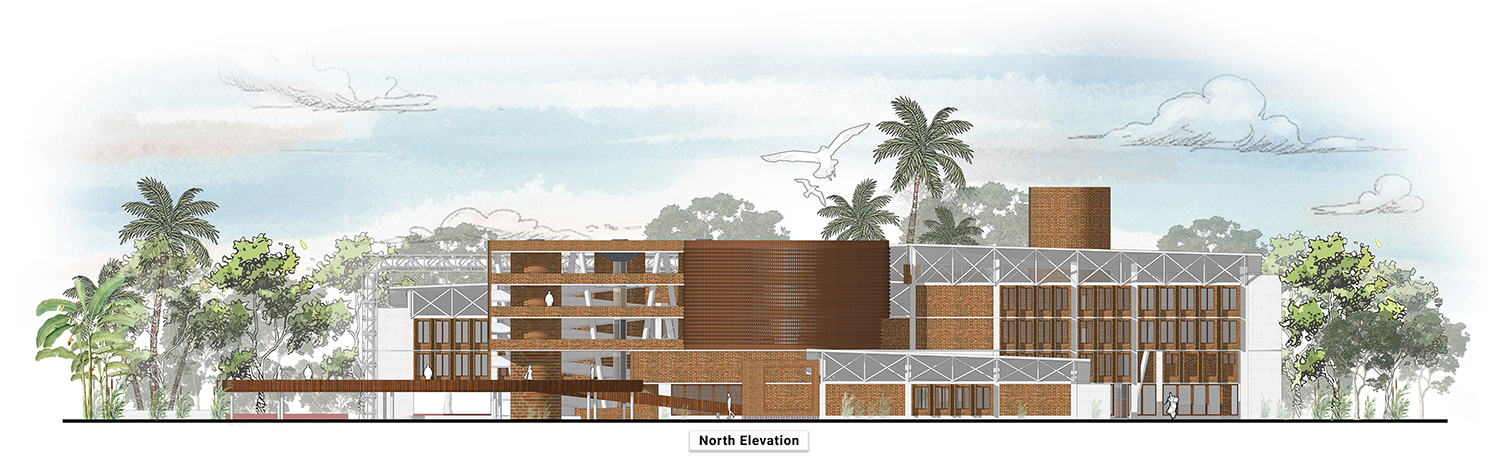
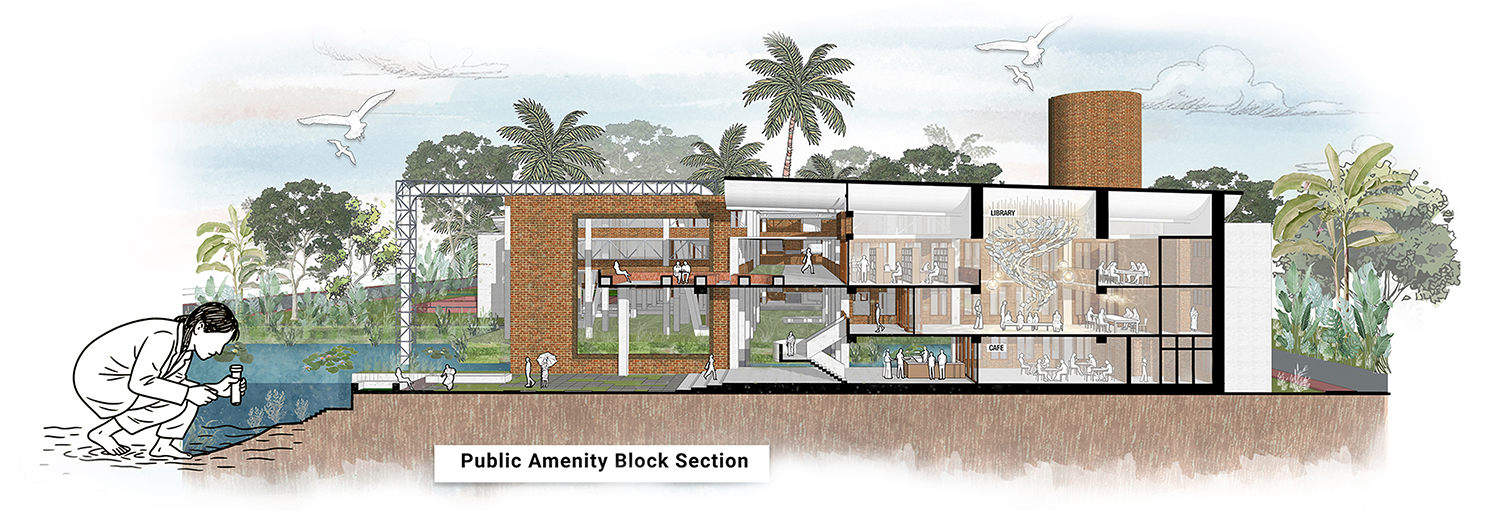
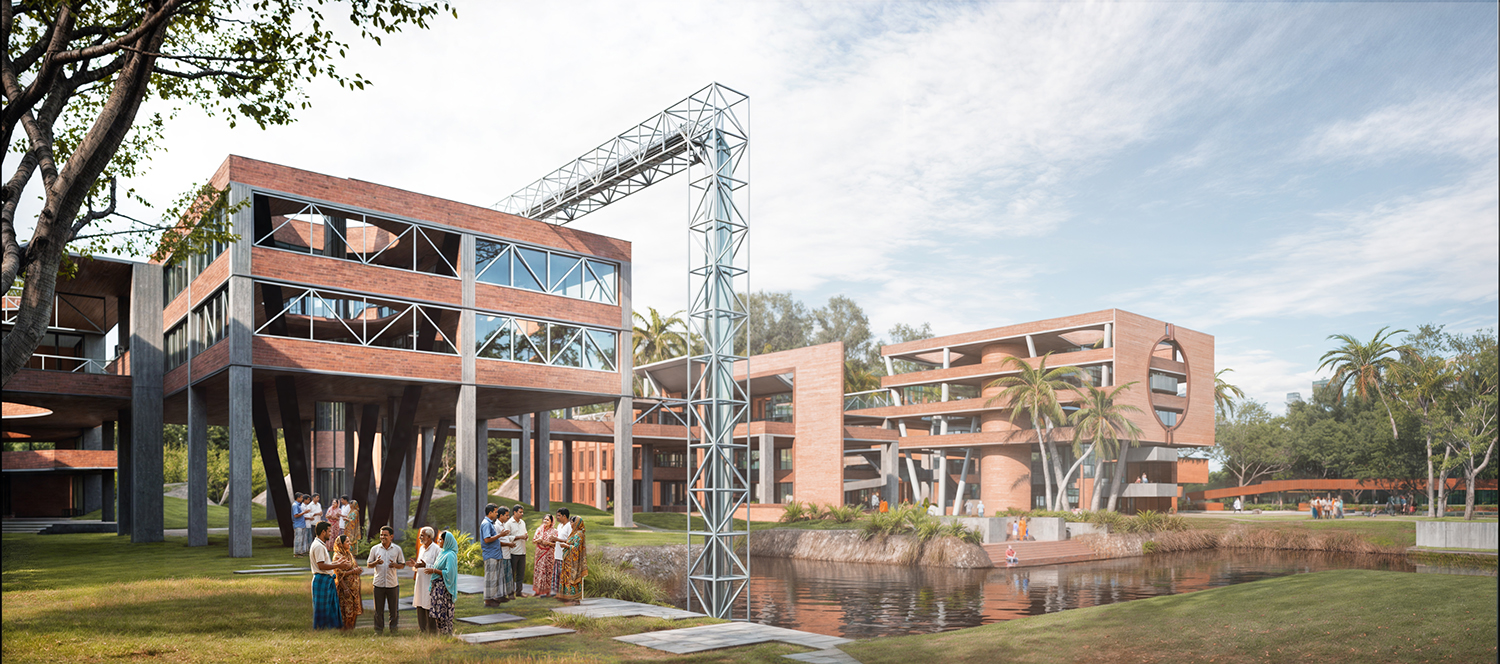
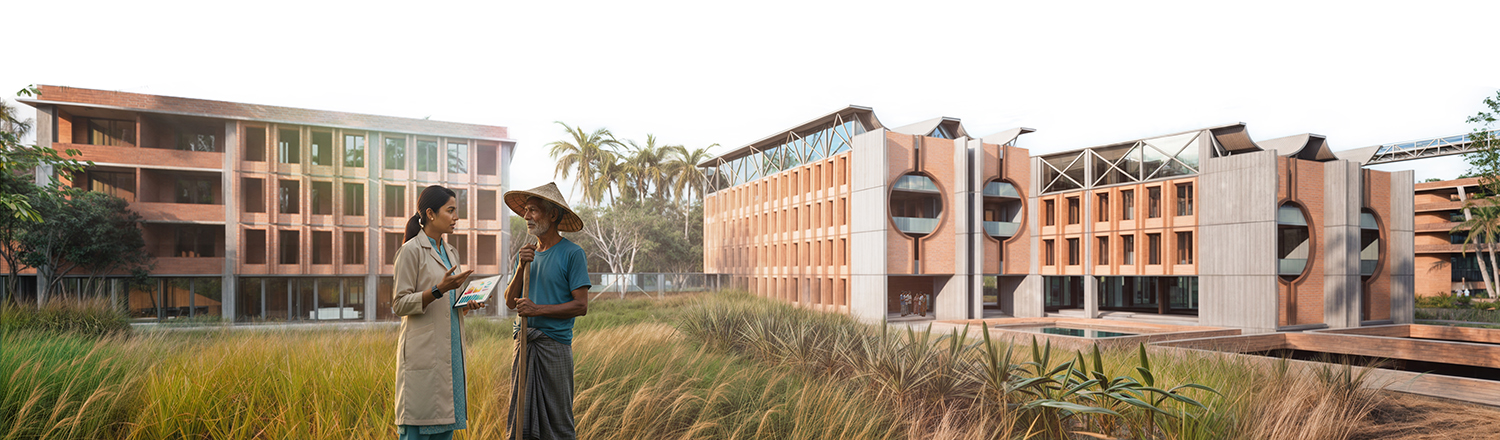
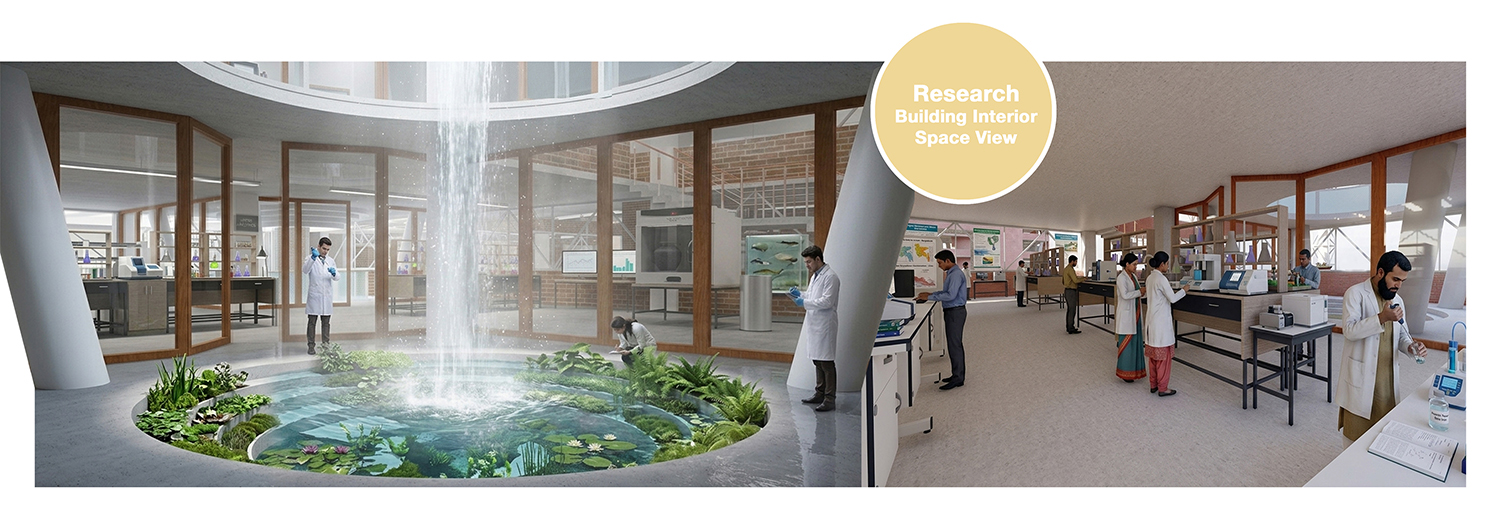
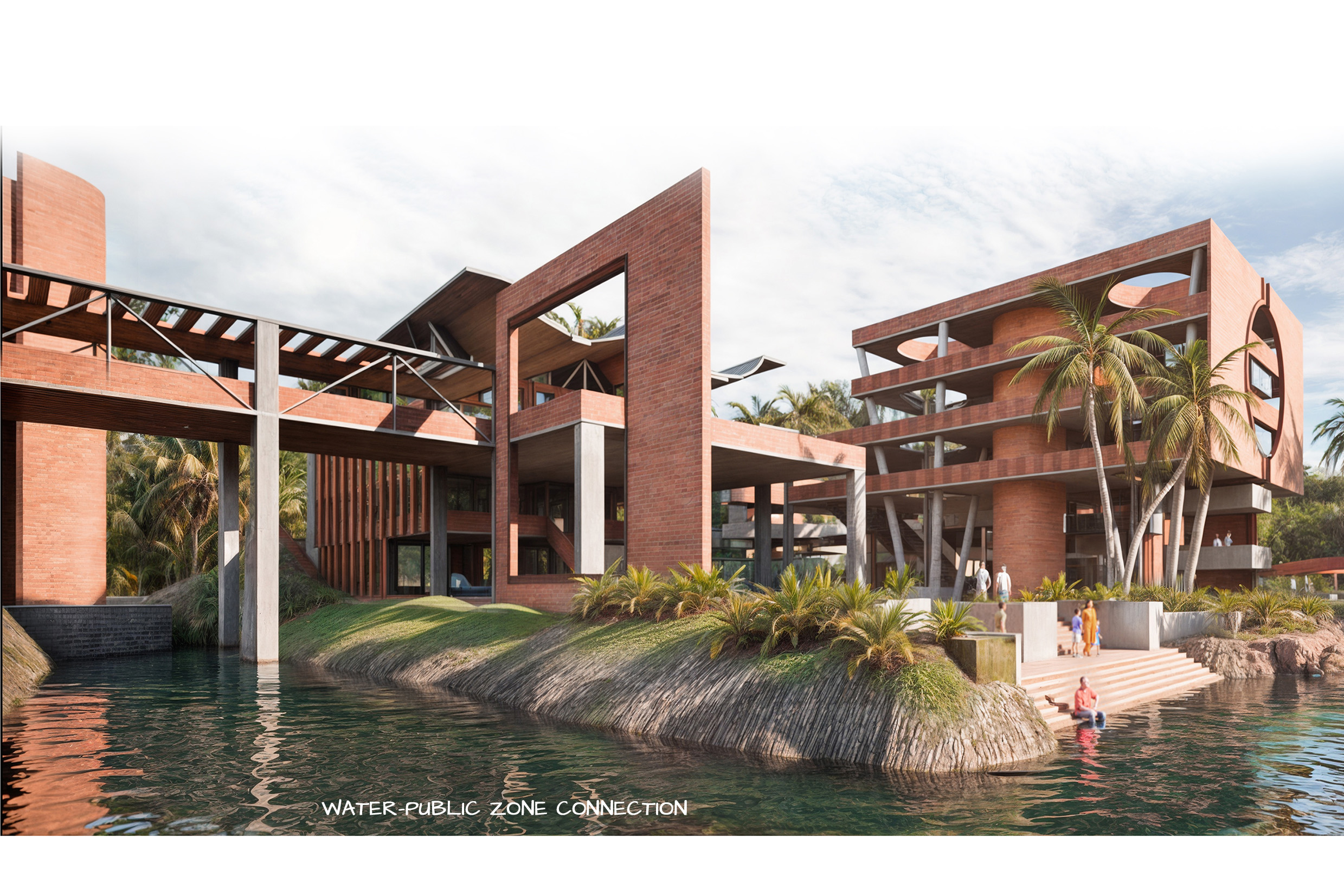
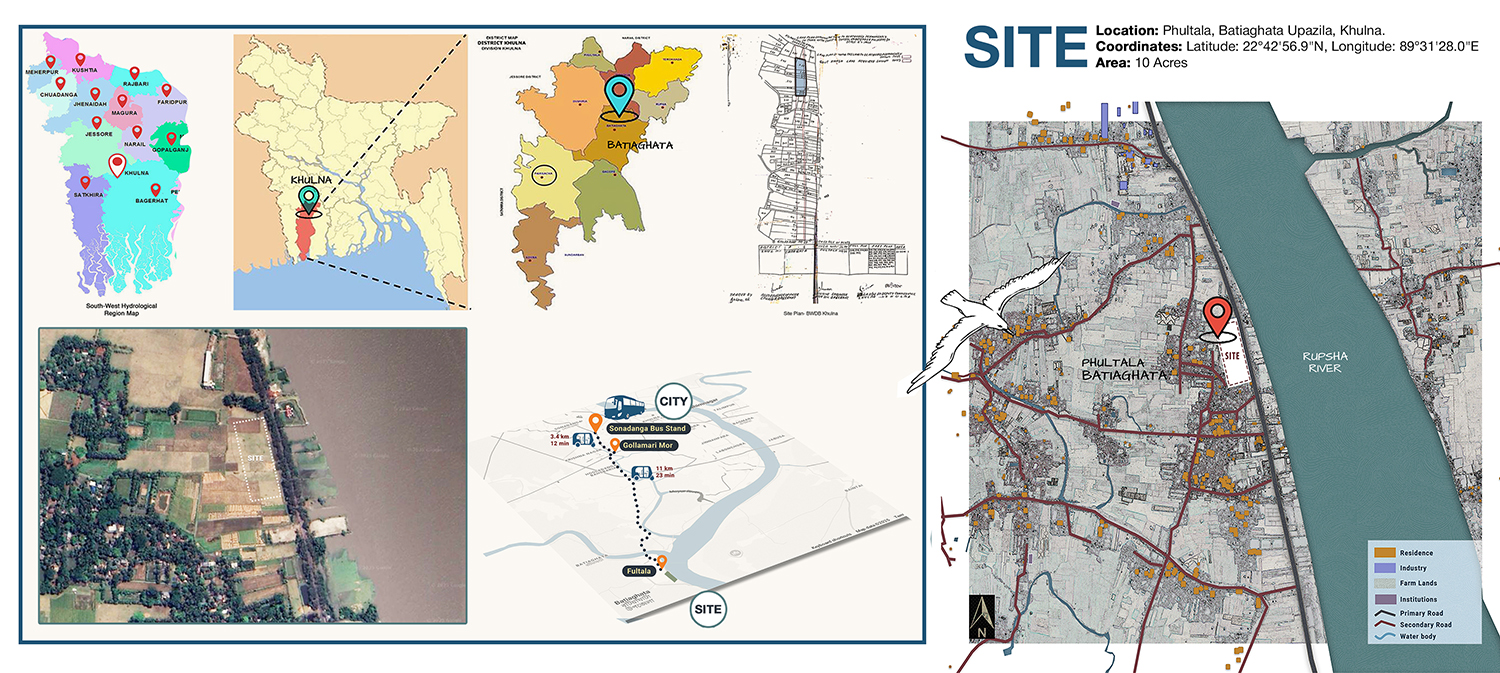
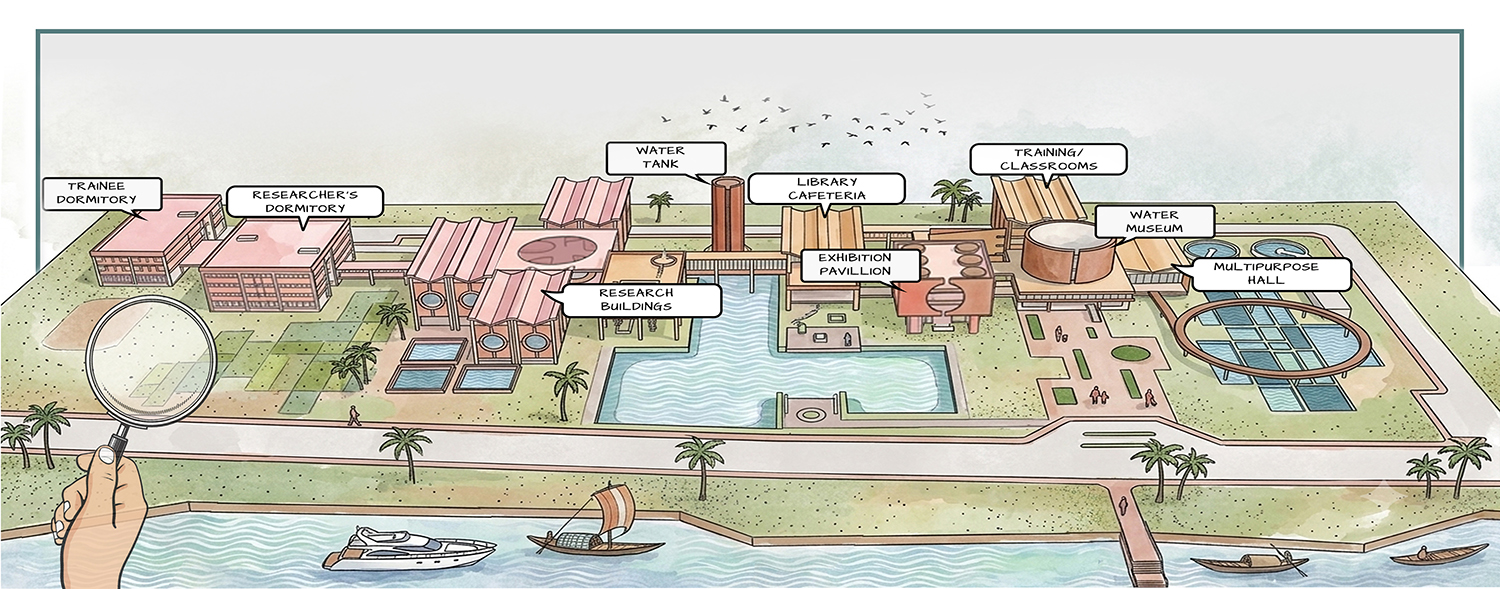
Located in Phultala, Batiaghata, Khulna, the approximately 10-acre campus functions as a research institution, educational platform, and living demonstration of sustainable water management. Instead of concealing technical infrastructure, the design transforms water systems into visible architectural and landscape elements. Rainwater harvesting, filtration systems, wastewater recycling, constructed wetlands, and Managed Aquifer Recharge (MAR) are integrated into everyday spatial experiences, allowing visitors to understand the processes behind water conservation.
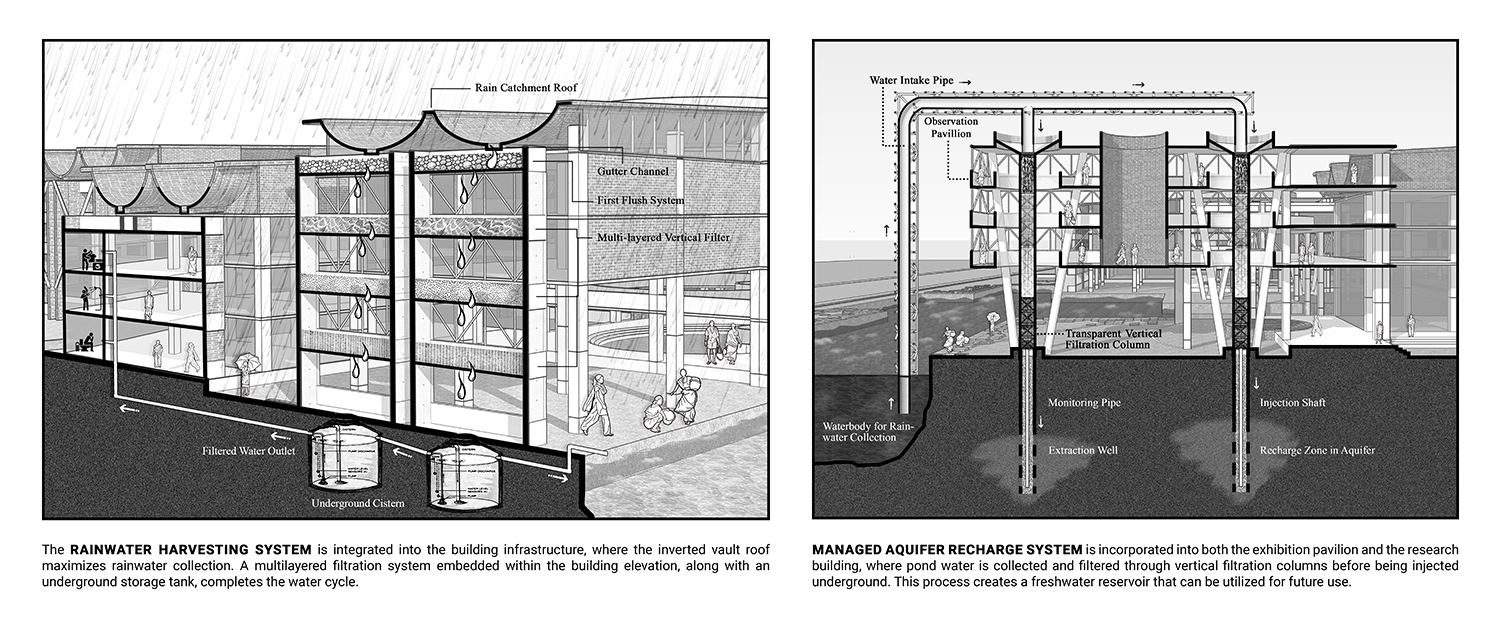
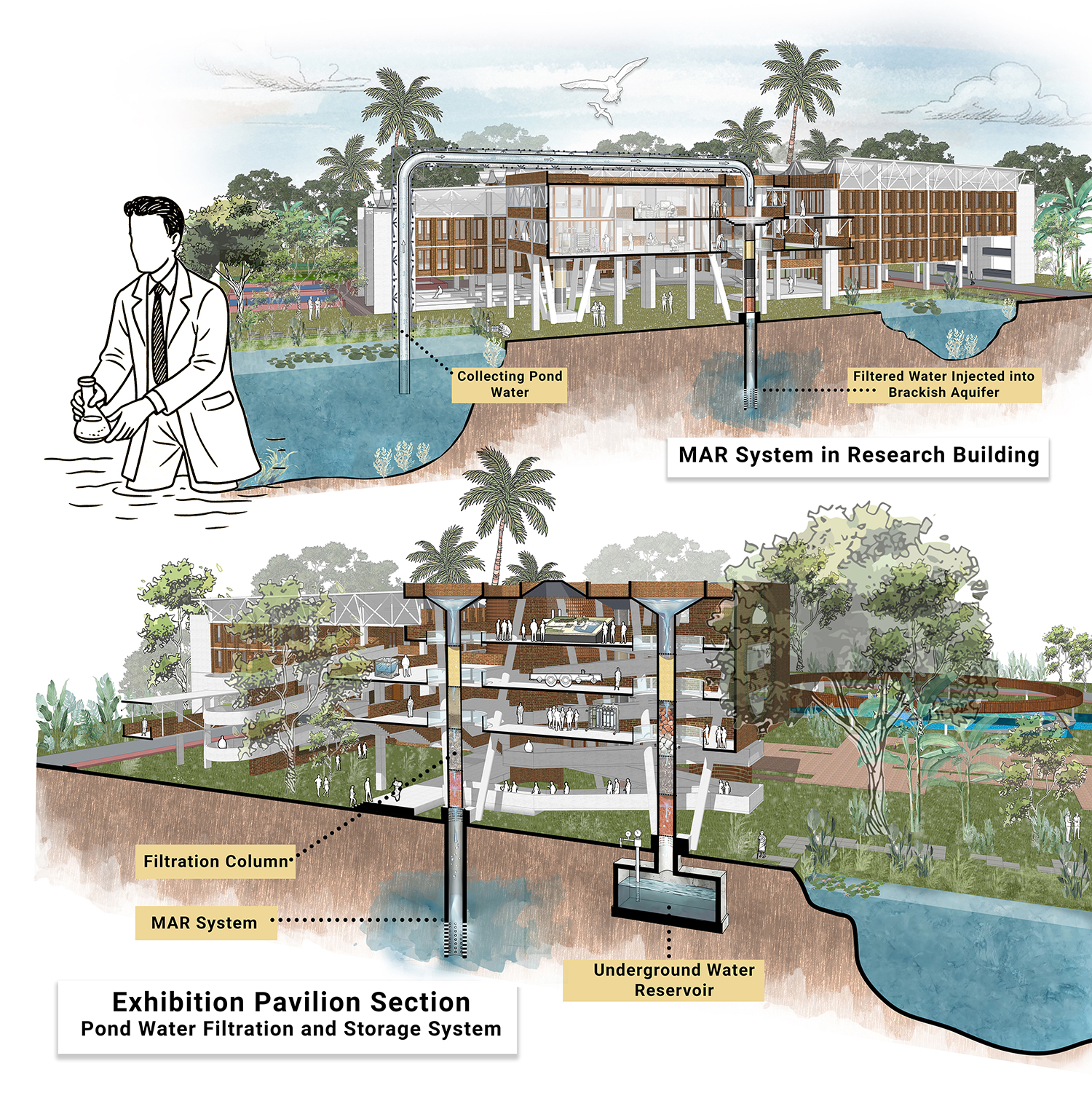
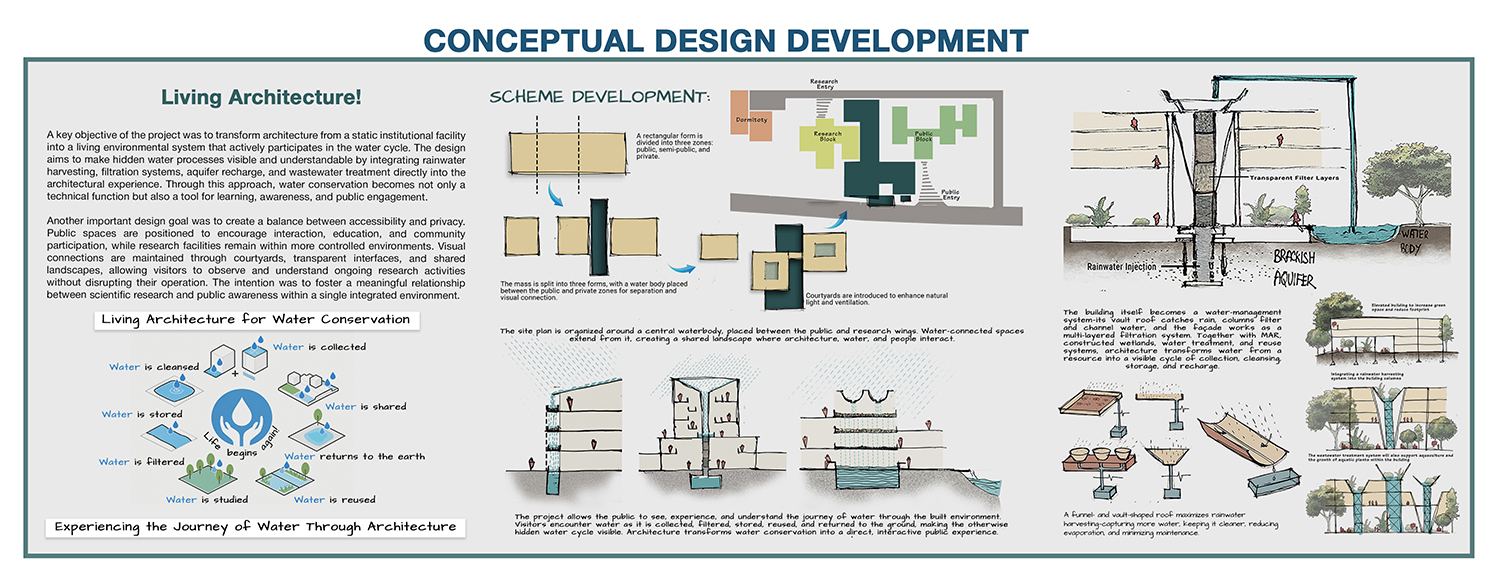
Climate-responsive design principles shape the building’s form and orientation. Fragmented building masses encourage natural ventilation, while south- and southeast-oriented blocks capture prevailing winds. Water bodies, vegetation, and interconnected landscapes strengthen the relationship between architecture, ecology, and the coastal climate.
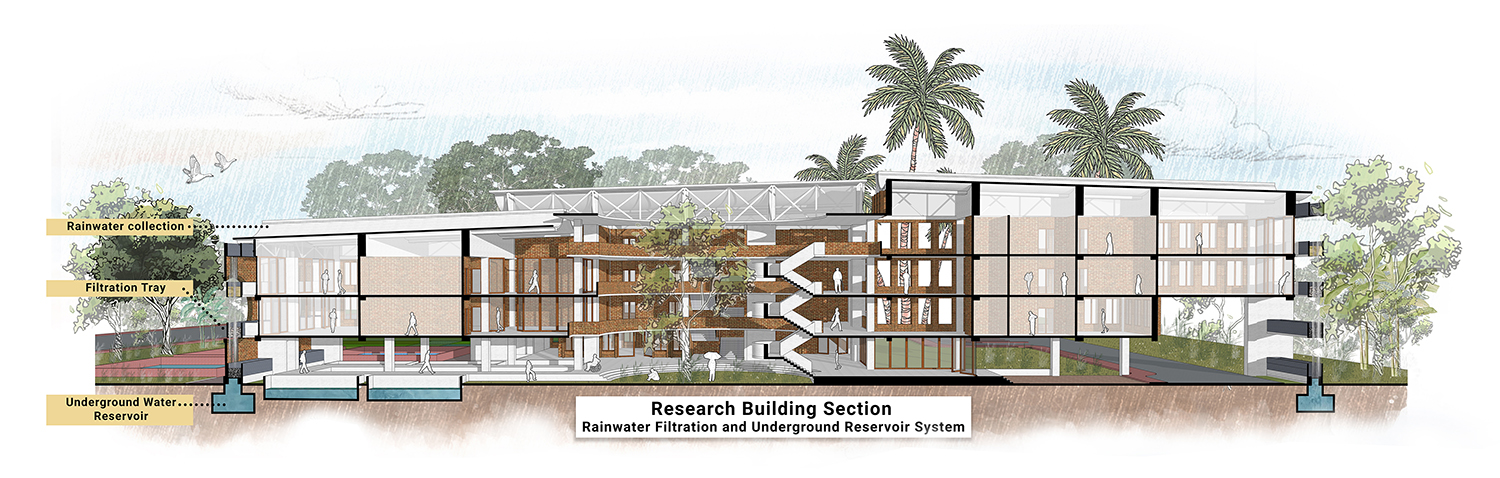
The architectural elements actively participate in the water cycle. Vault-shaped roofs collect monsoon rainfall and channel it through exposed filtration trays integrated into building elevations. Multi-layer filtration columns demonstrate water purification and support MAR systems, which recharge shallow brackish aquifers with filtered freshwater. These visible systems transform otherwise hidden infrastructure into educational experiences while improving accessibility for maintenance.
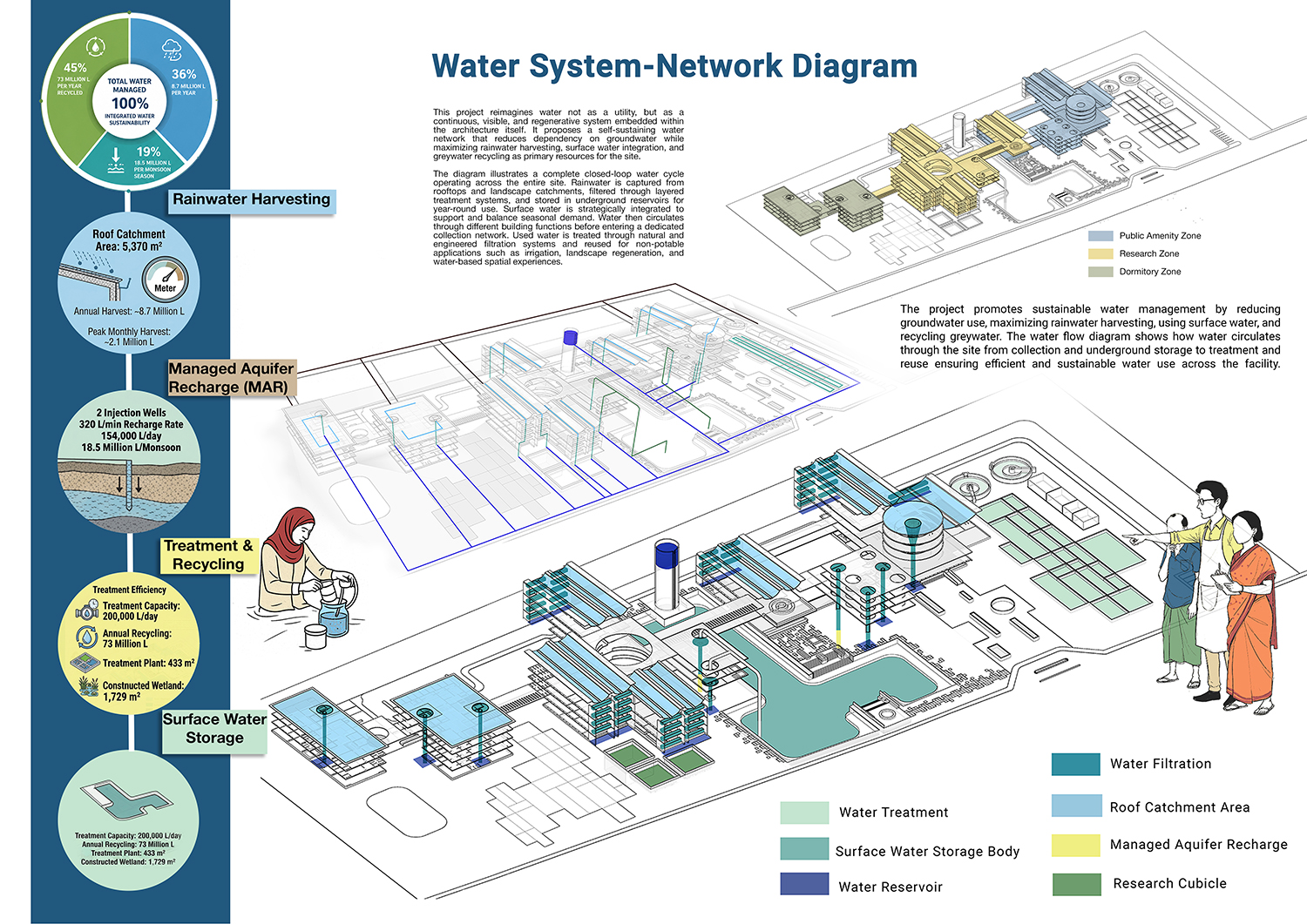
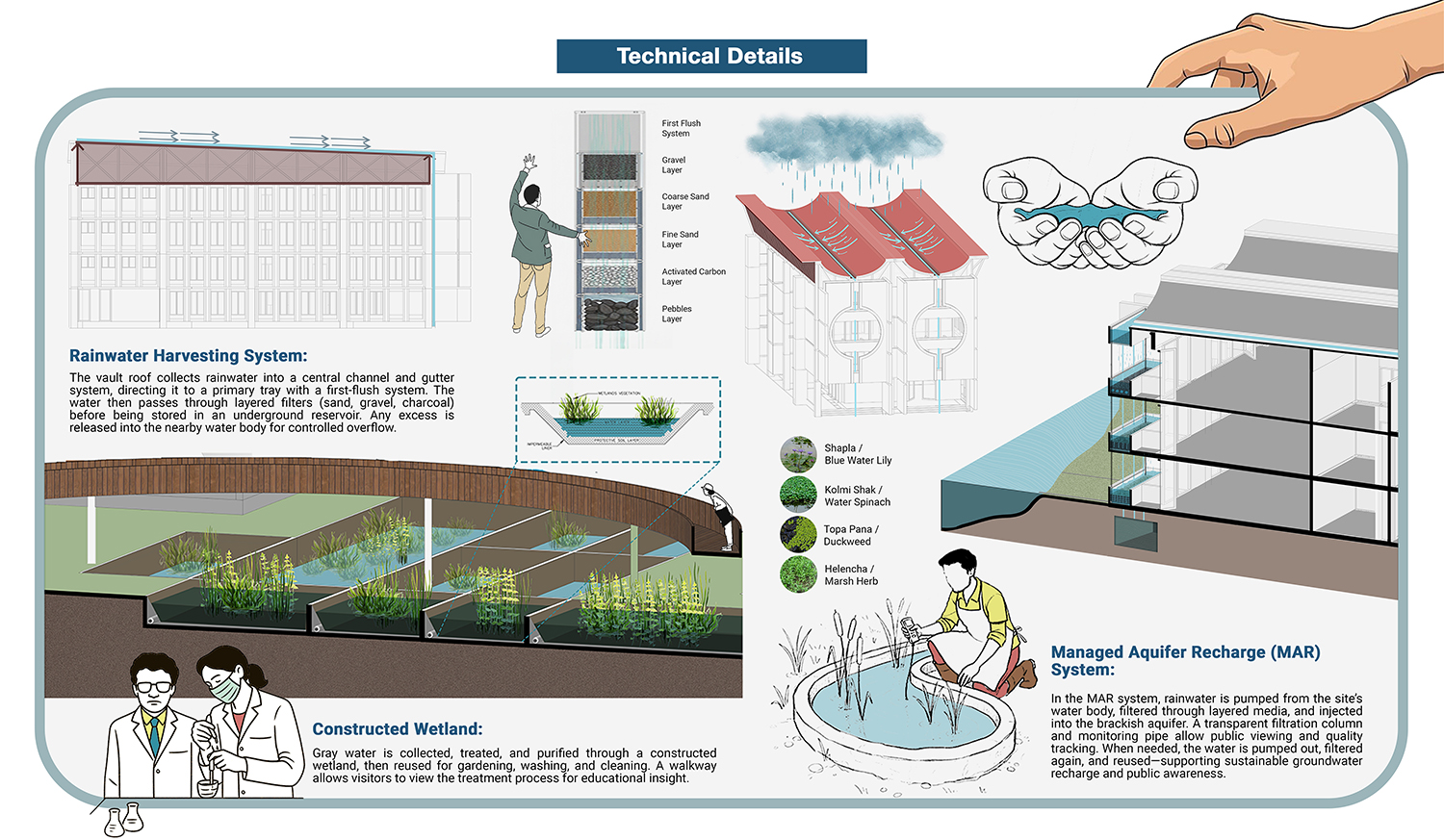
The campus operates through an integrated water management strategy. Approximately 45% of annual water demand is supplied through recycled greywater, 36% through rainwater harvesting, and 19% through seasonal monsoon storage. Collected rainwater passes through gravel, sand, activated carbon, and charcoal filtration before entering underground reservoirs. Wastewater is treated through an on-site treatment plant and constructed wetland, with recycled water reused for irrigation, cleaning, and ecological regeneration. Two recharge wells further support groundwater replenishment through the MAR system.
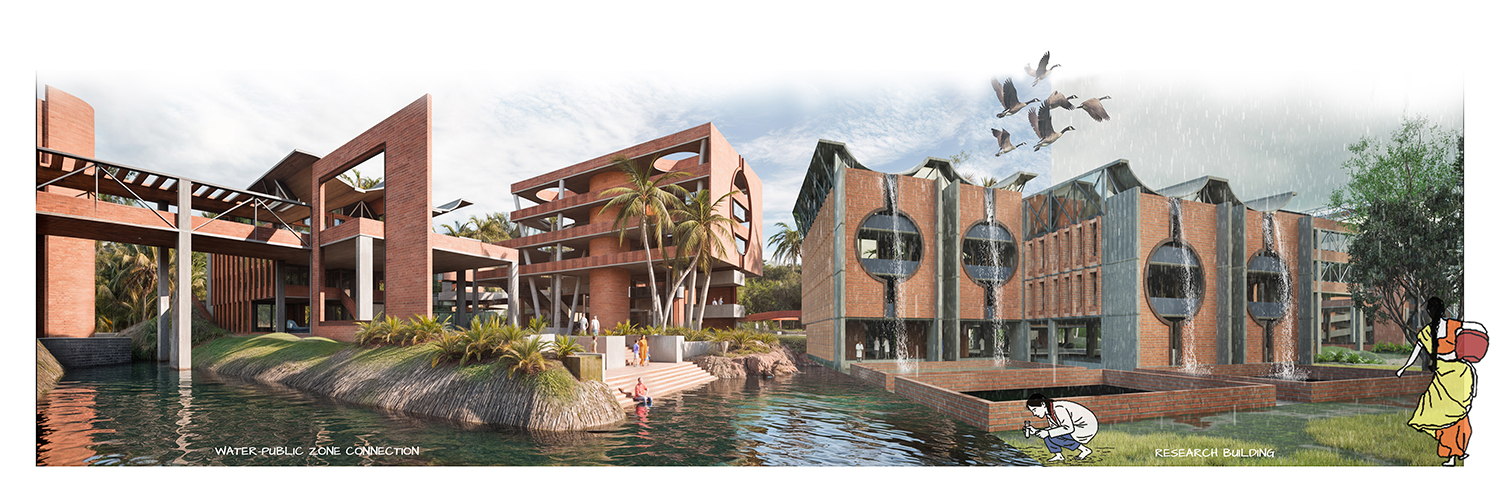
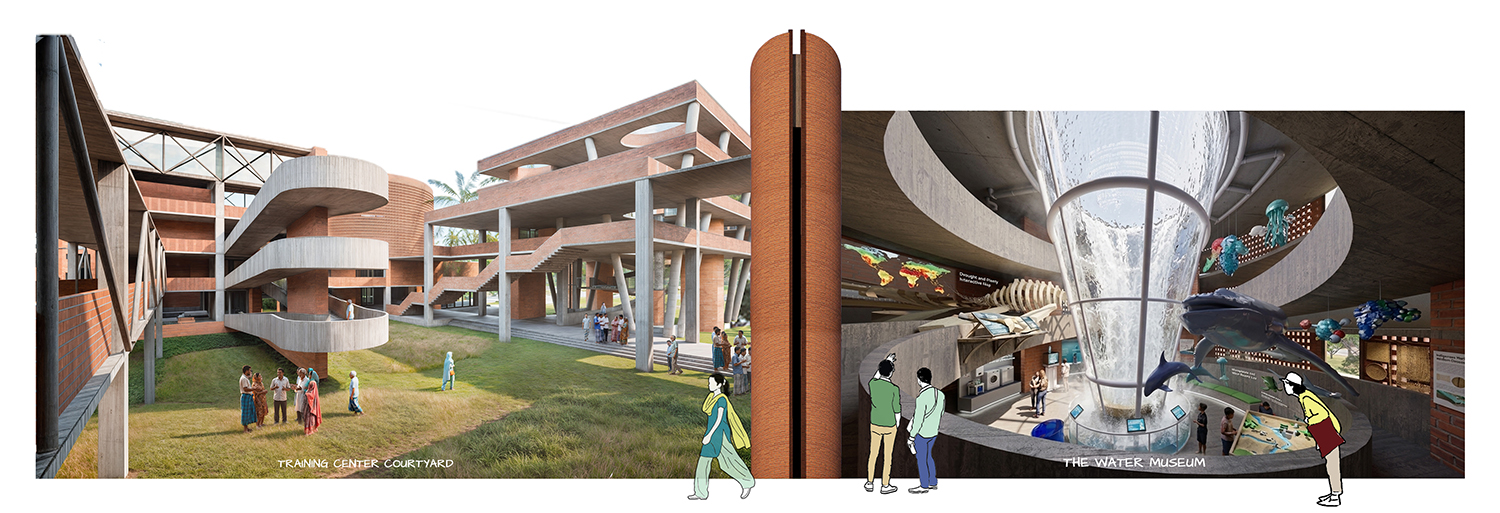
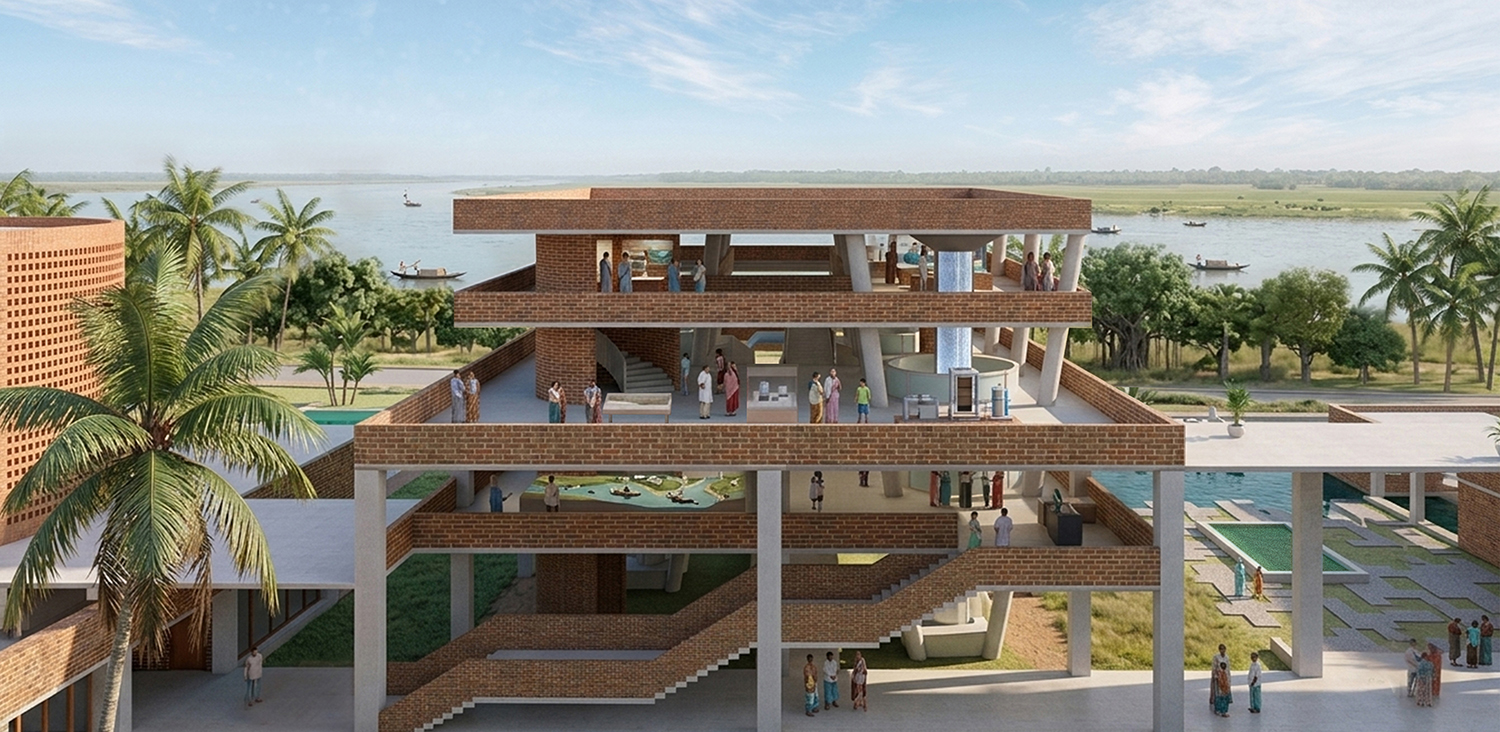
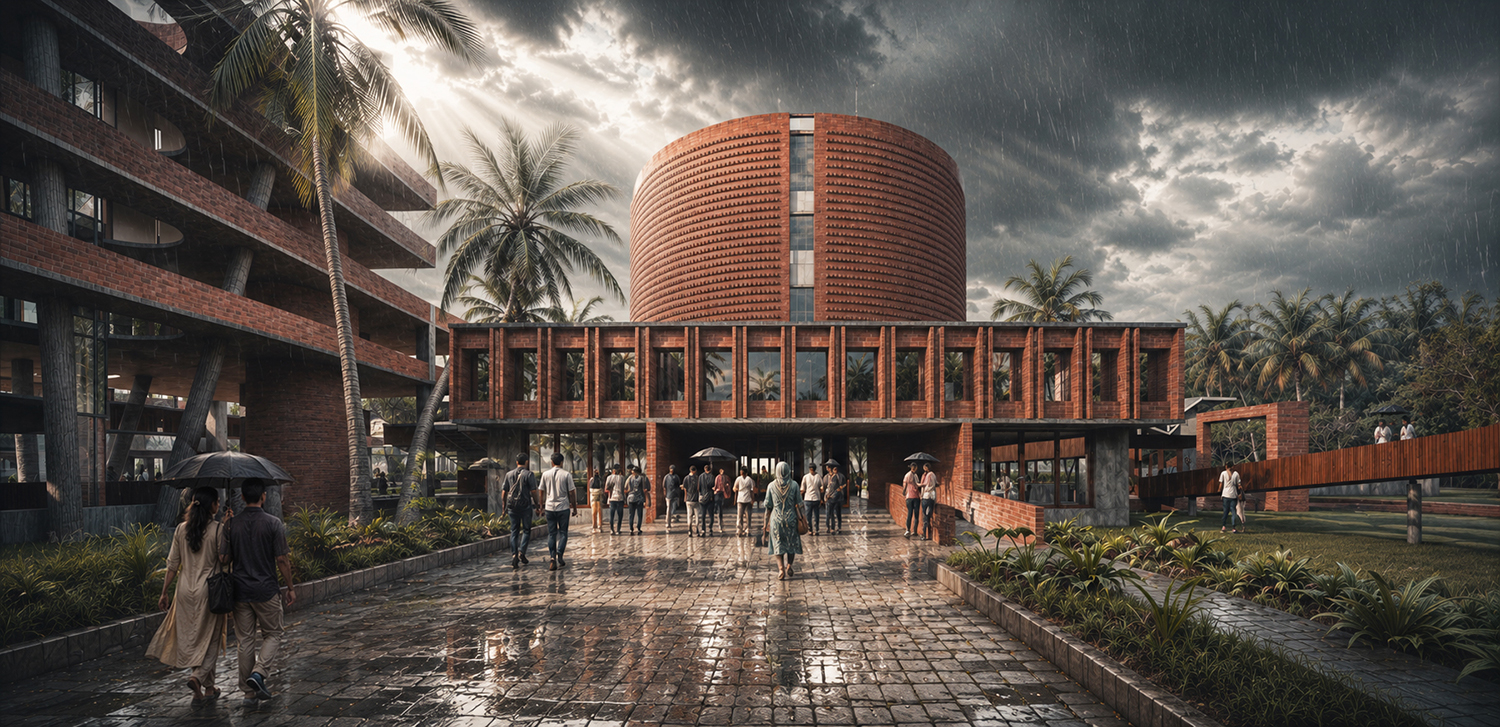
Ultimately, the project proposes architecture as an environmental framework that connects people, knowledge, technology, and nature. By making water infrastructure visible and experiential, it aims to encourage public awareness, strengthen regional collaboration, and promote climate resilience. Contributing to SDGs 6, 11, and 13, the proposal offers a region-responsive model of sustainable water management with potential for adaptation across diverse hydrological contexts.
PEOPLE ALSO VIEW
Printed Publications

NEXT 50: Collective Futures

ASPIRATIONS AND IDEAS: Designing with Context