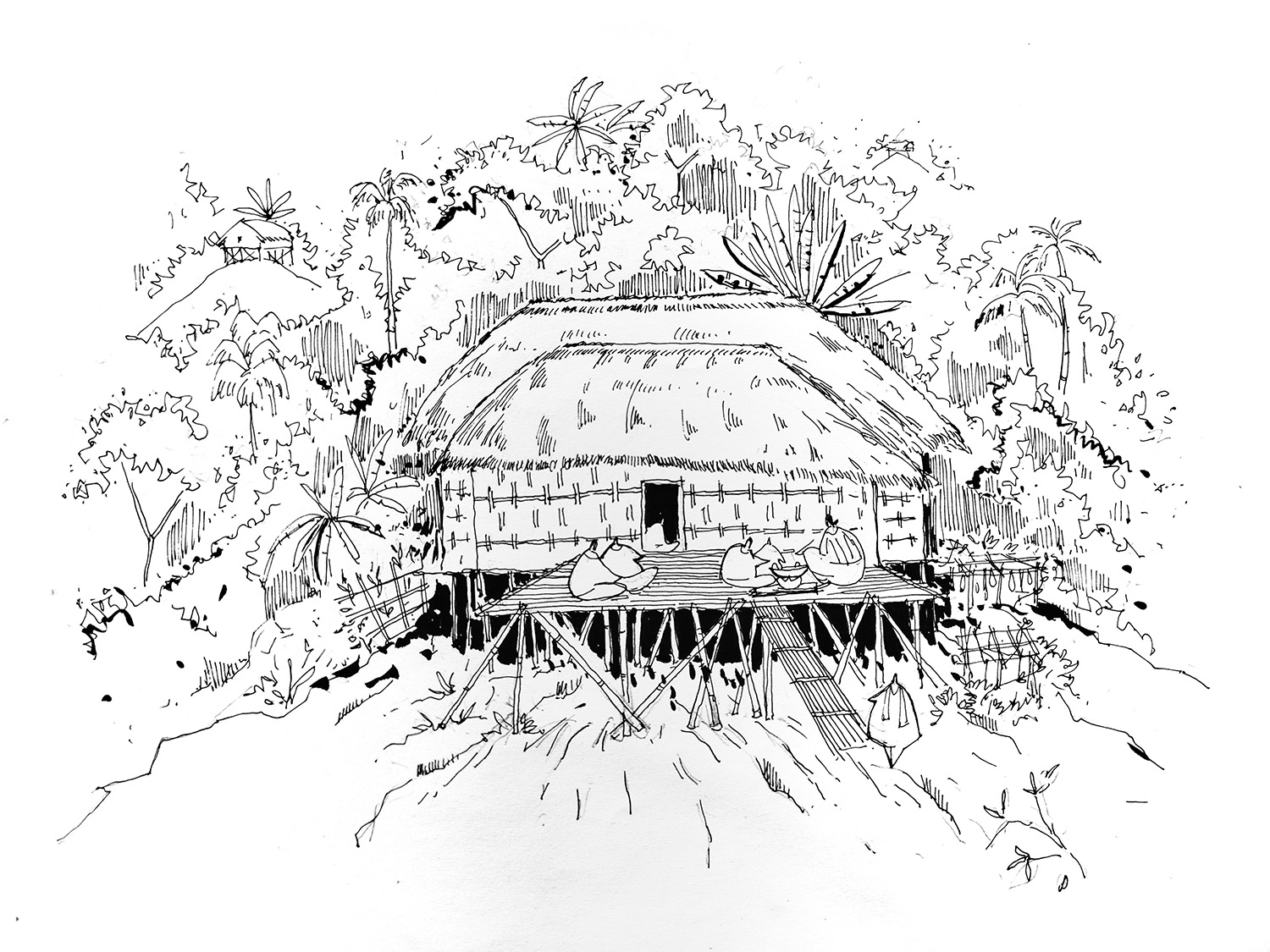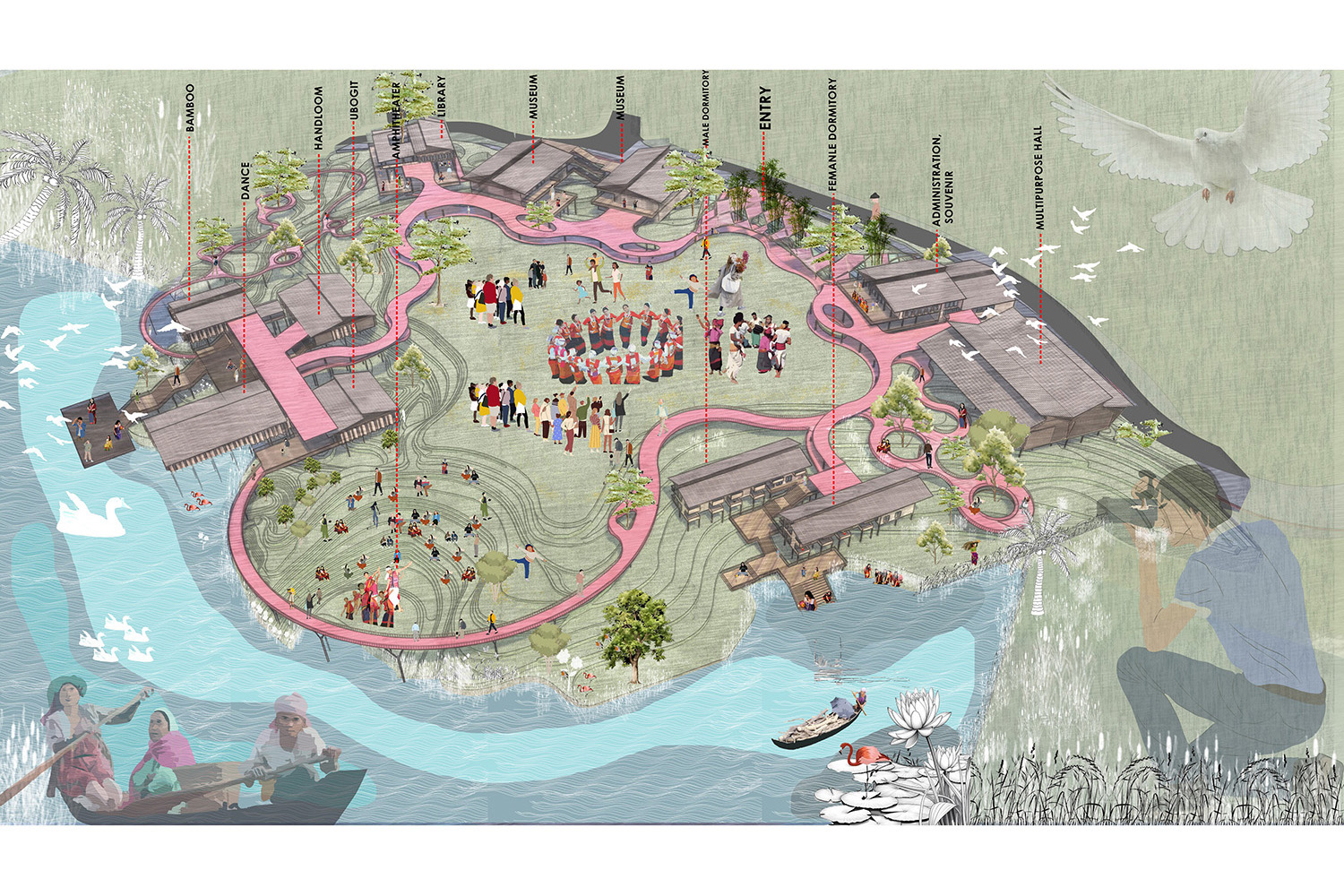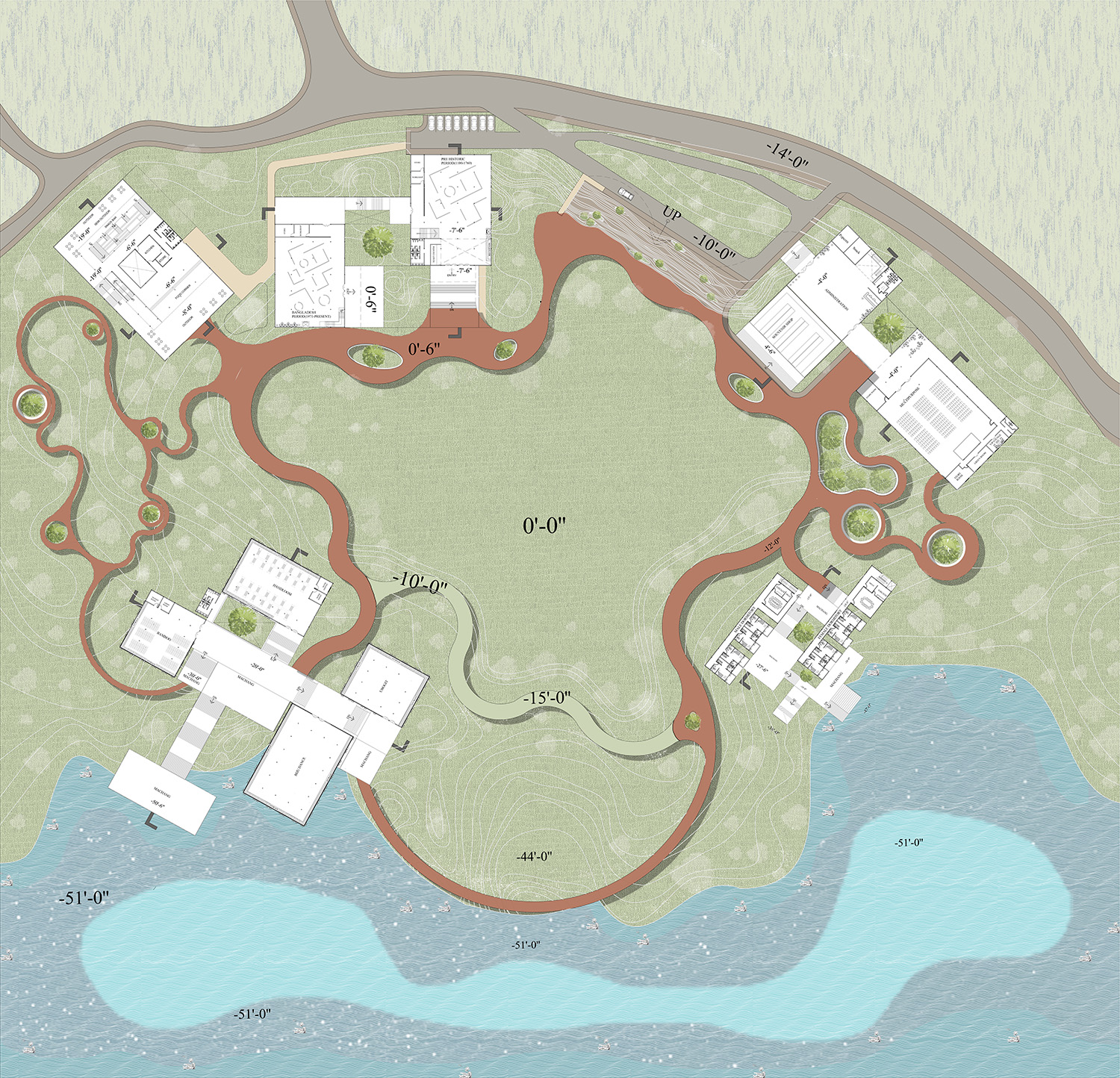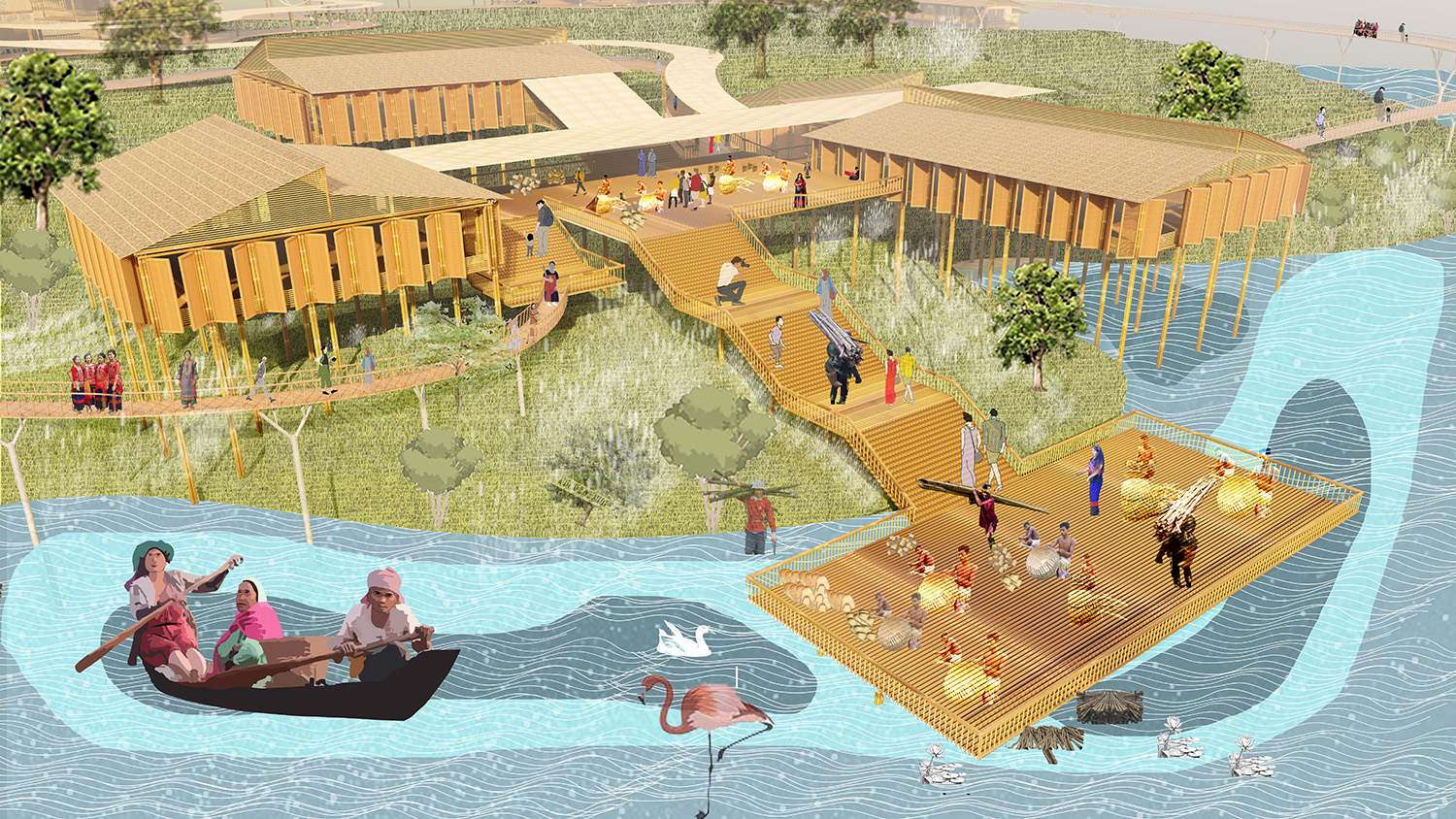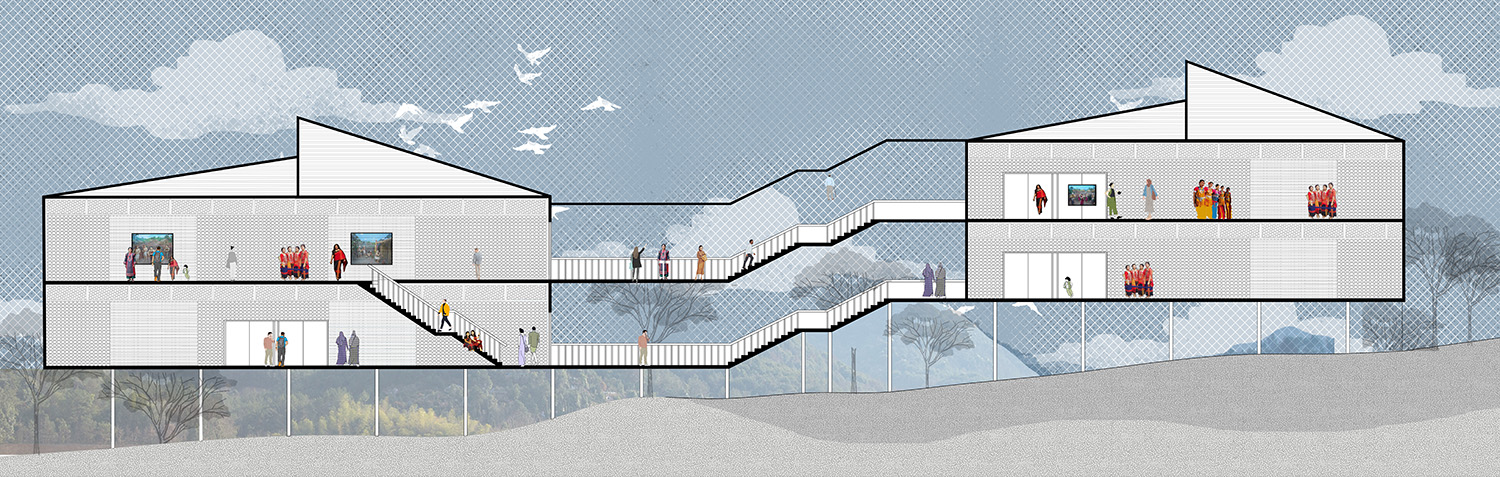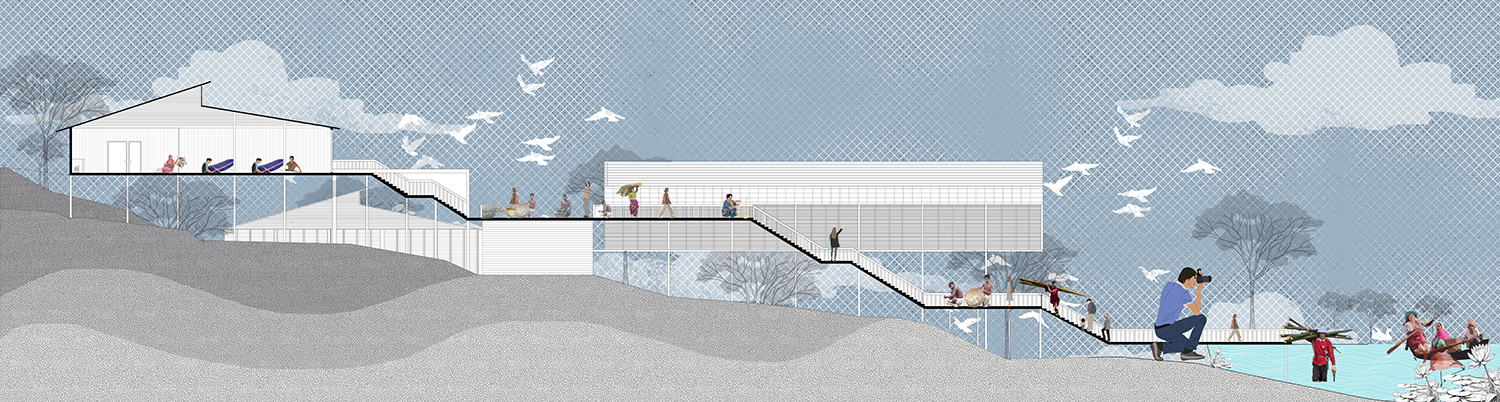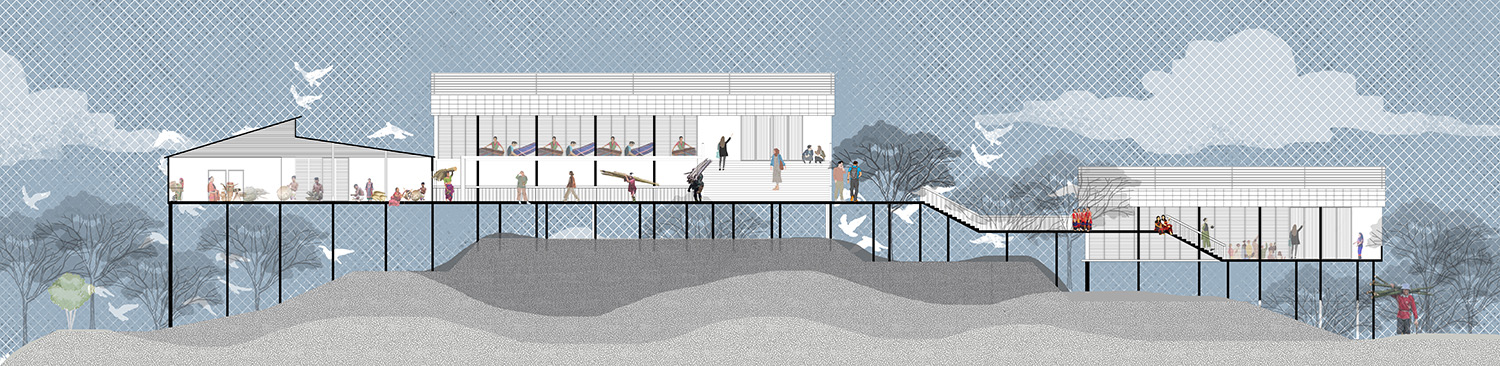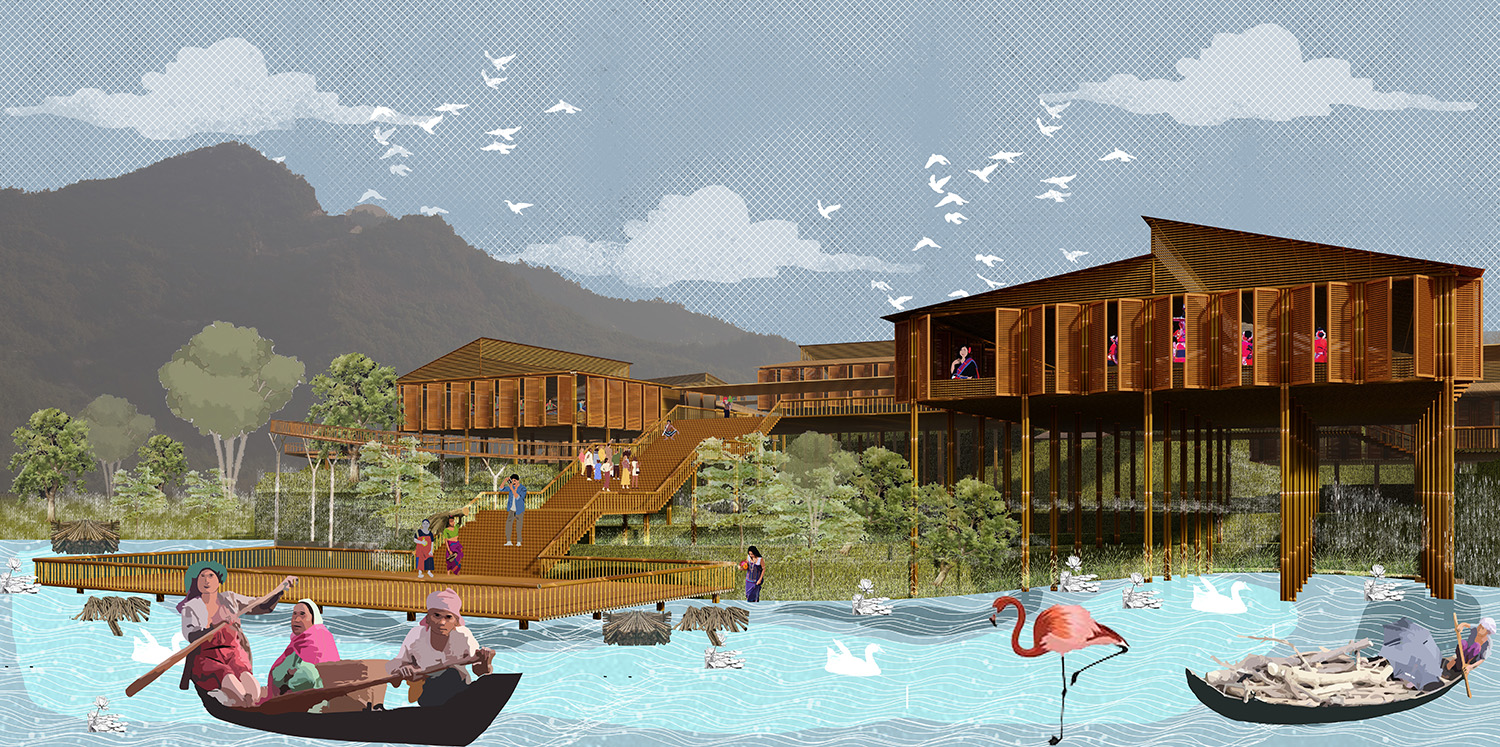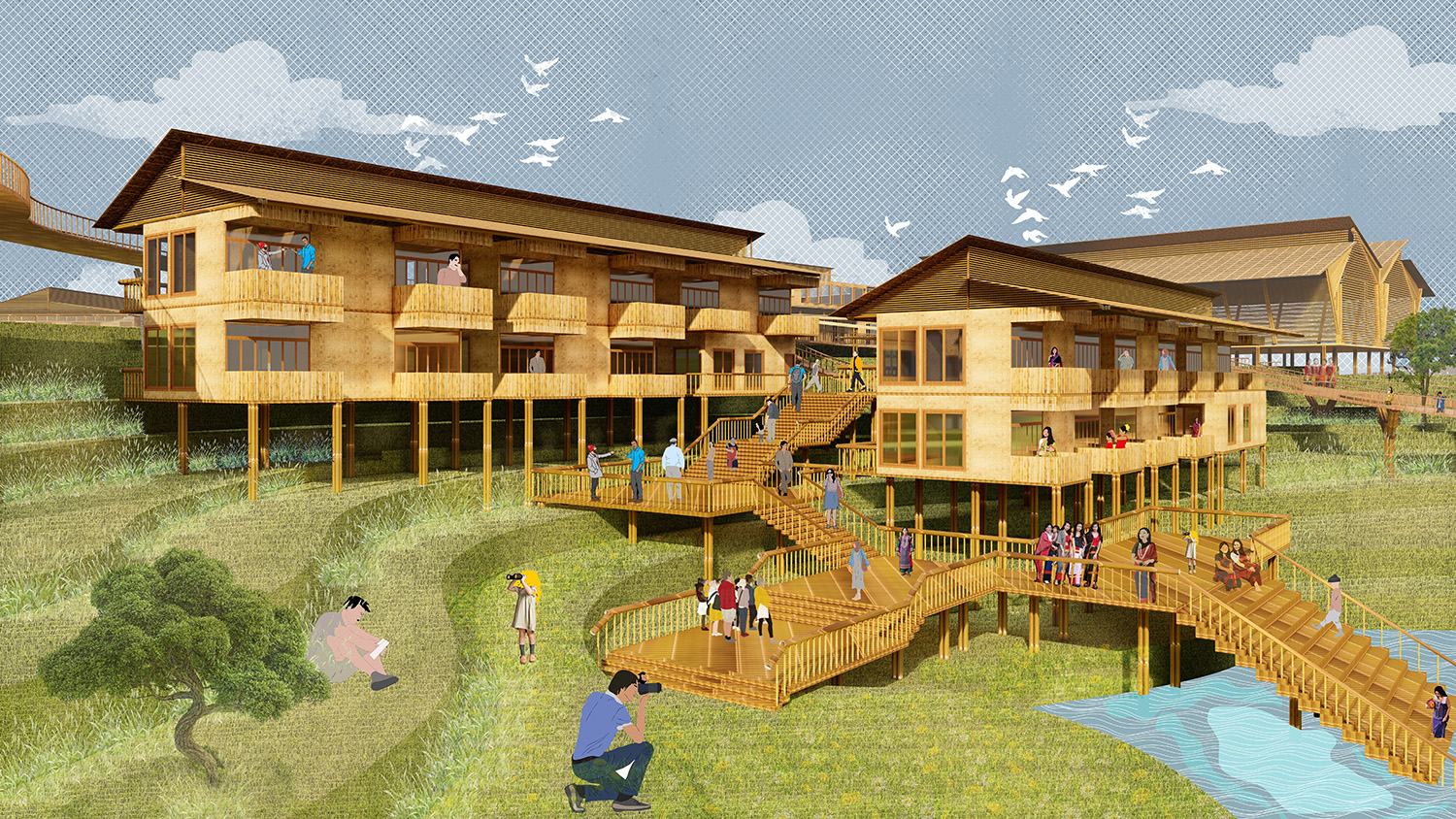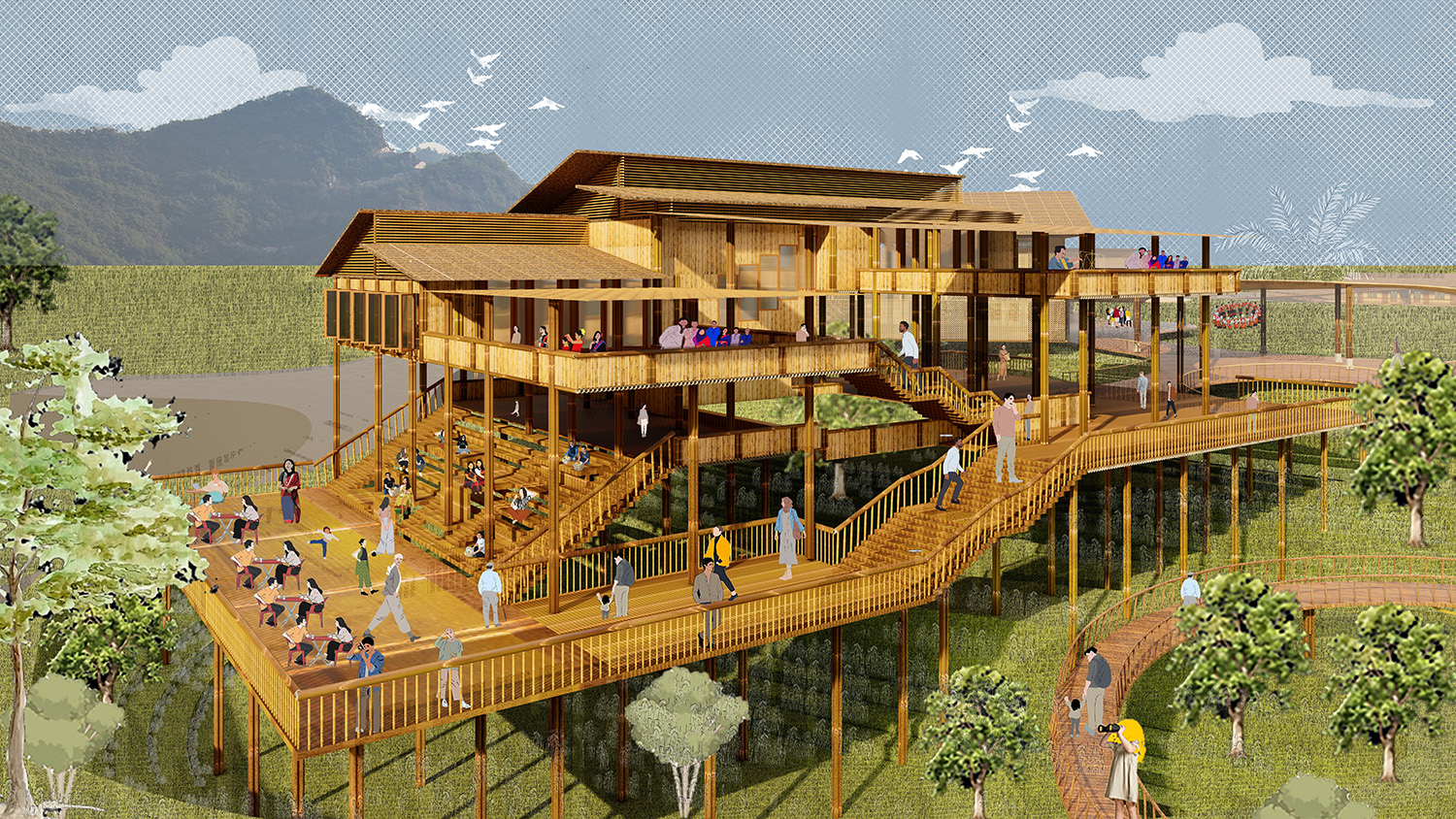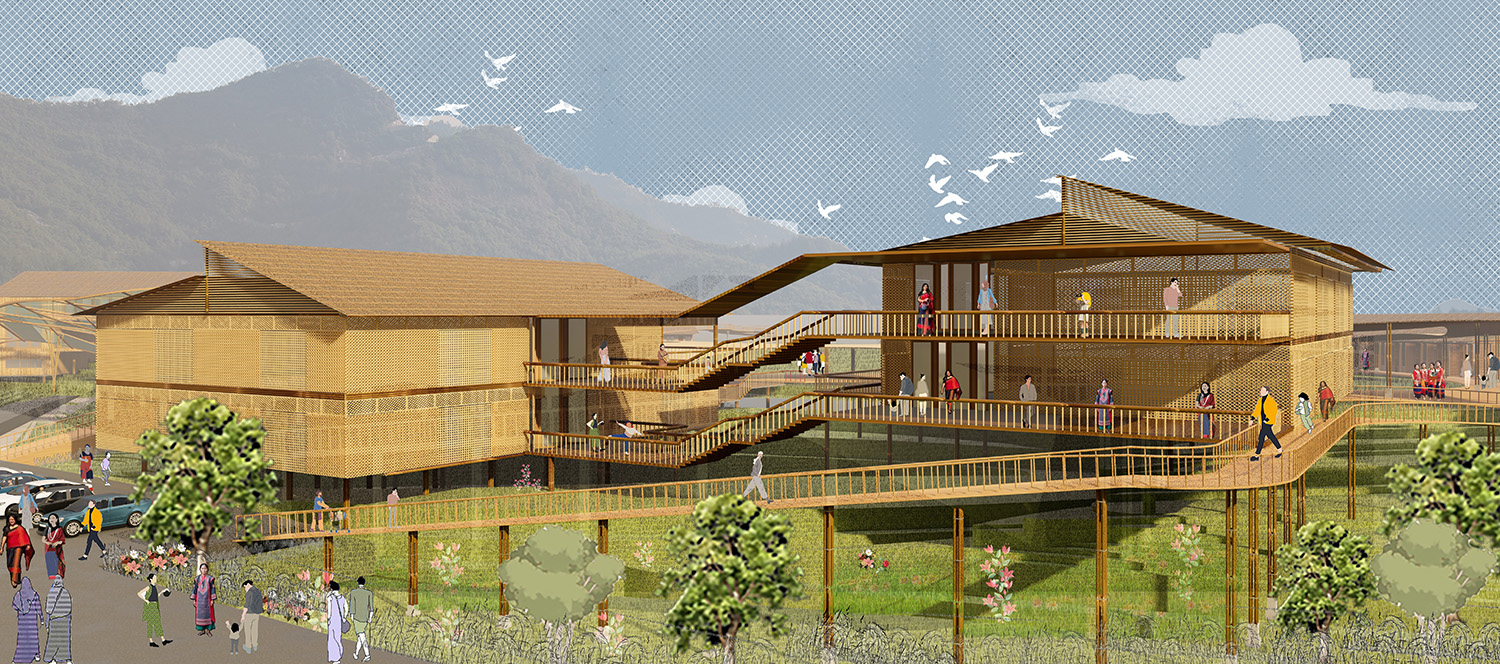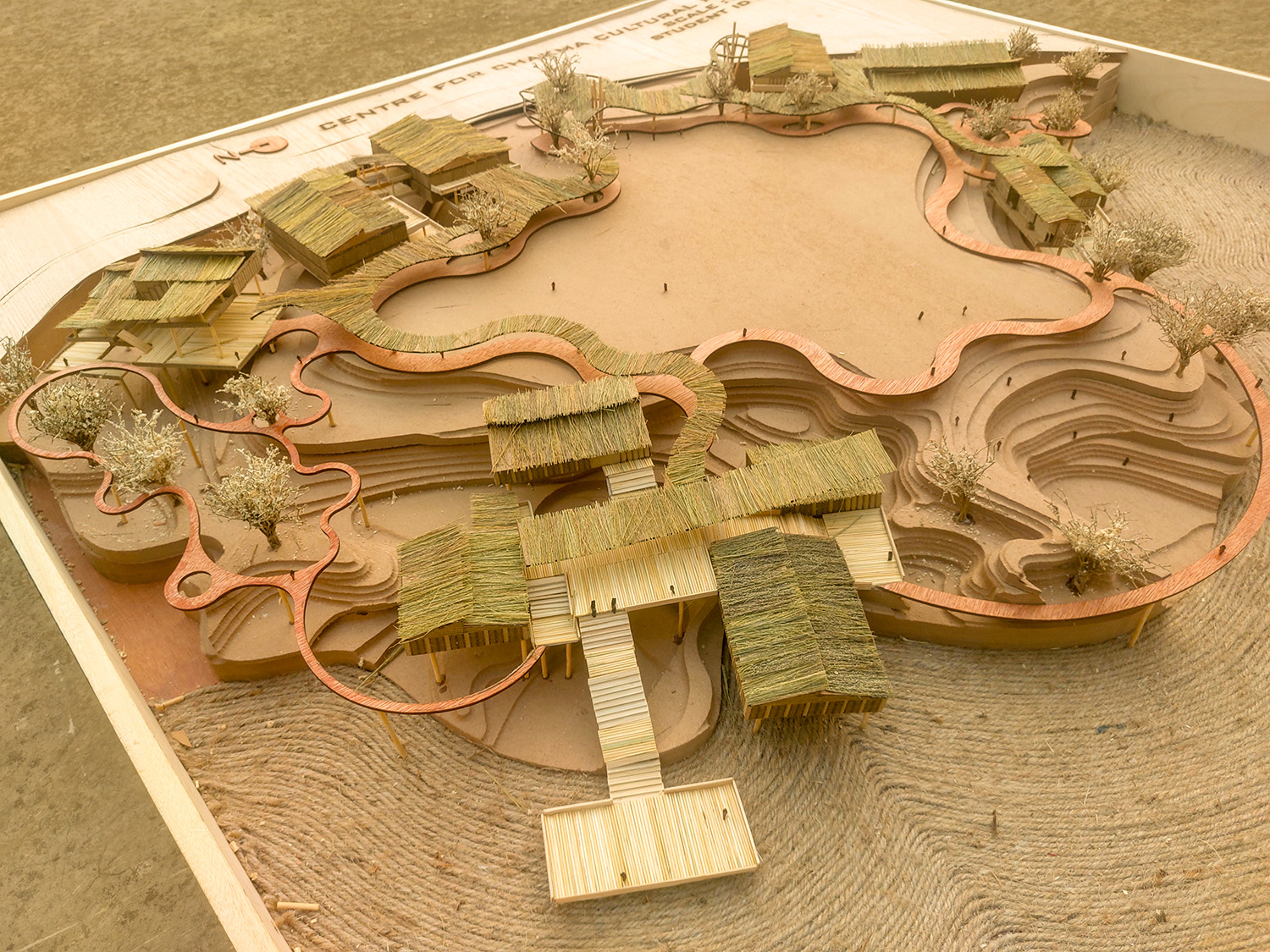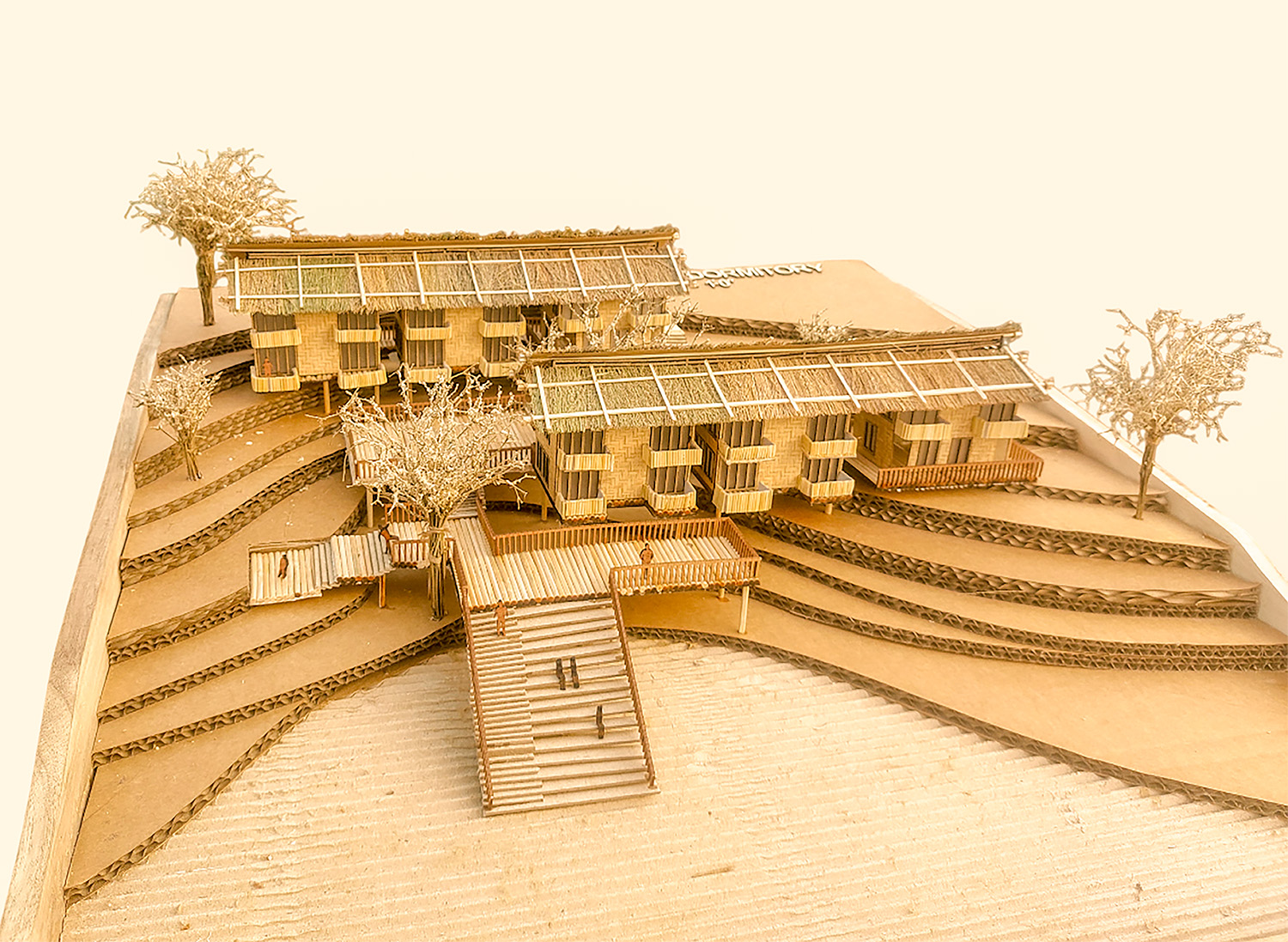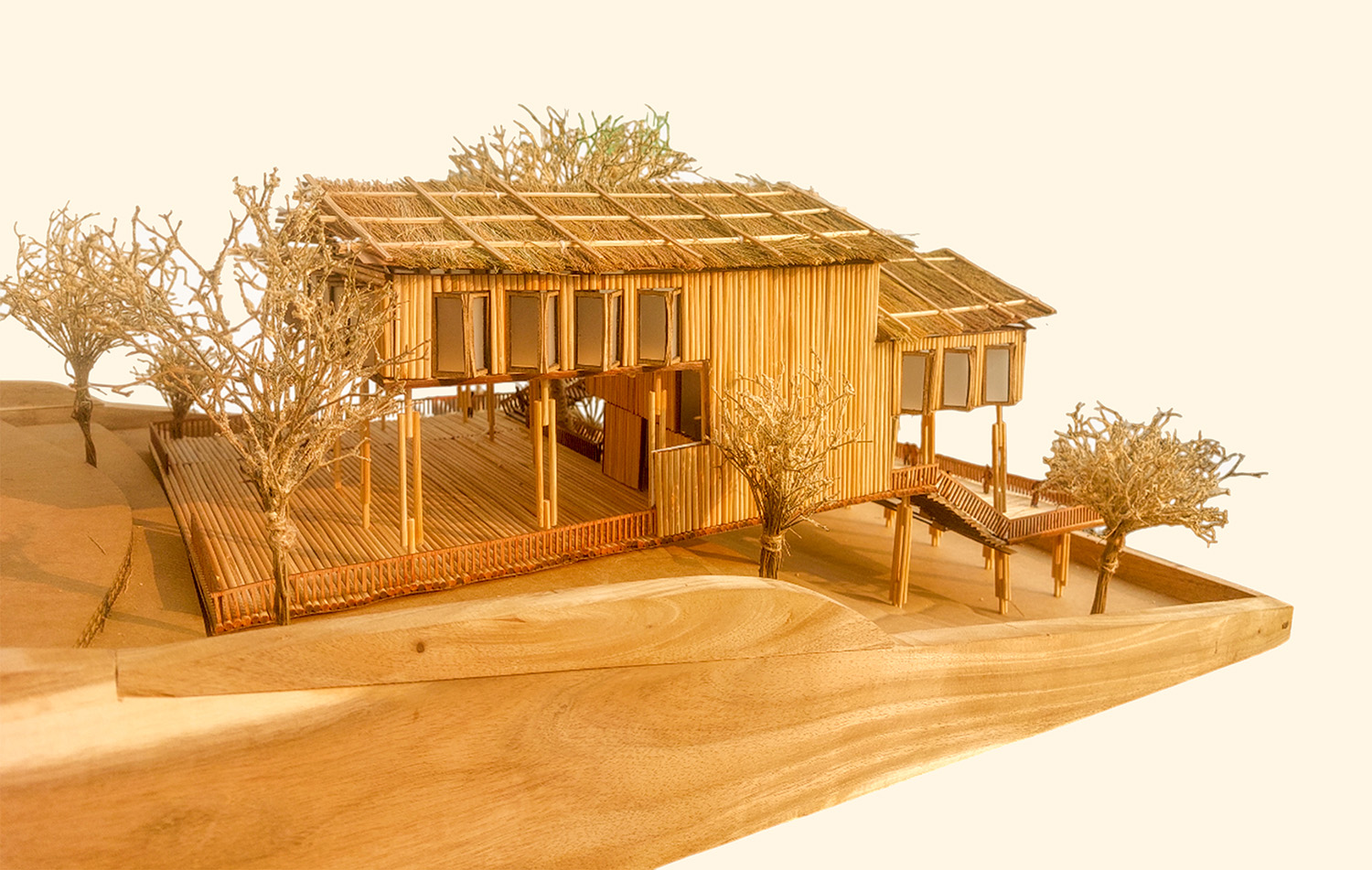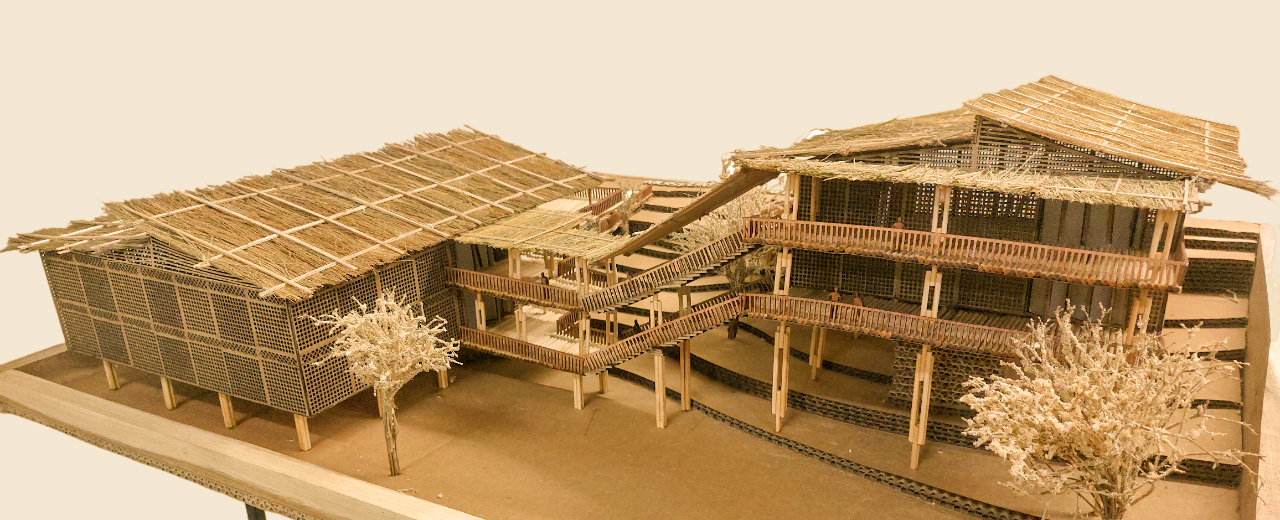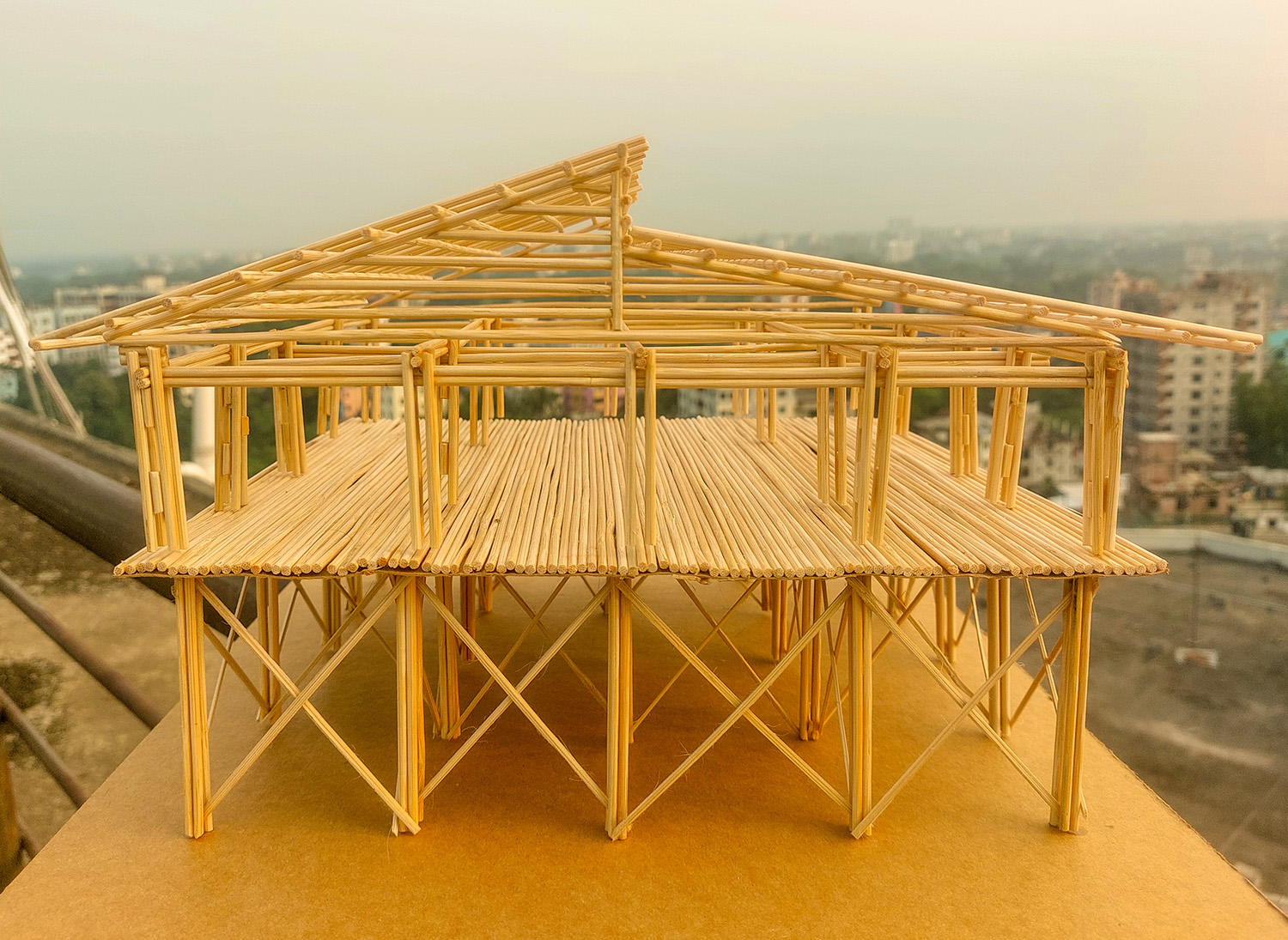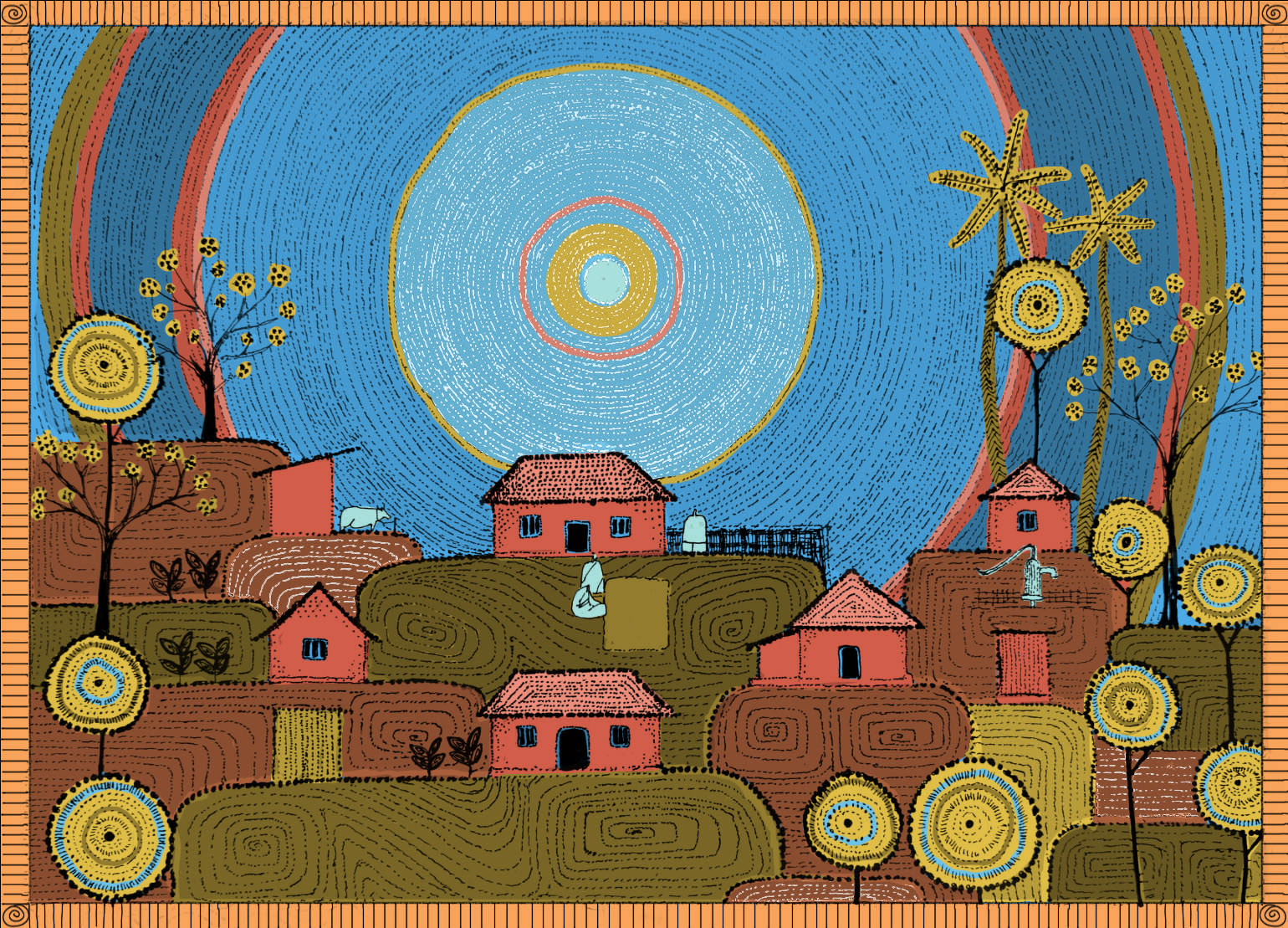
Rangamati is located in the Chittagong Division of Bangladesh. It is a unique district, as it is the only one in the country to share international borders with two nations: India to the north and east, and Myanmar to the east. Rangamati is defined by its undulating hill tracts, extensive riverine networks, and dense forest cover.
This region has been home to various minority ethnic groups since ancient times. Each community maintains its own distinct language, literature, customs, and social traditions. Rangamati itself is home to twelve such communities. During the site visits and conversations with people from all communities, a clear consensus emerged: a single, common cultural center for all groups would not effectively address their specific needs. The existing “Minority Ethnic Cultural Institute” has seen limited success, as participation is low, and it tends to prioritize only the communities in its immediate vicinity.
The proposed Centre for Chakma Cultural Harmony responds to this need for a focused initiative. It will be dedicated to the Chakma community, which resides at the heart of Rangamati. The centre’s mission is to act as a living bridge between the past and the present by preserving, promoting, and celebrating the rich and unique Chakma cultural heritage.
The design and program are built upon three core pillars: Preserve, Promote, and Celebrate. It will function as a dynamic hub for cultural education, research, exhibitions, and performances. In the proposal, spaces are designed to encourage dialogue, creativity, and intergenerational learning. The centre integrates exhibition areas, craft workshops, performance zones, and learning spaces not only to safeguard traditions but also to create educational and economic opportunities for the community.
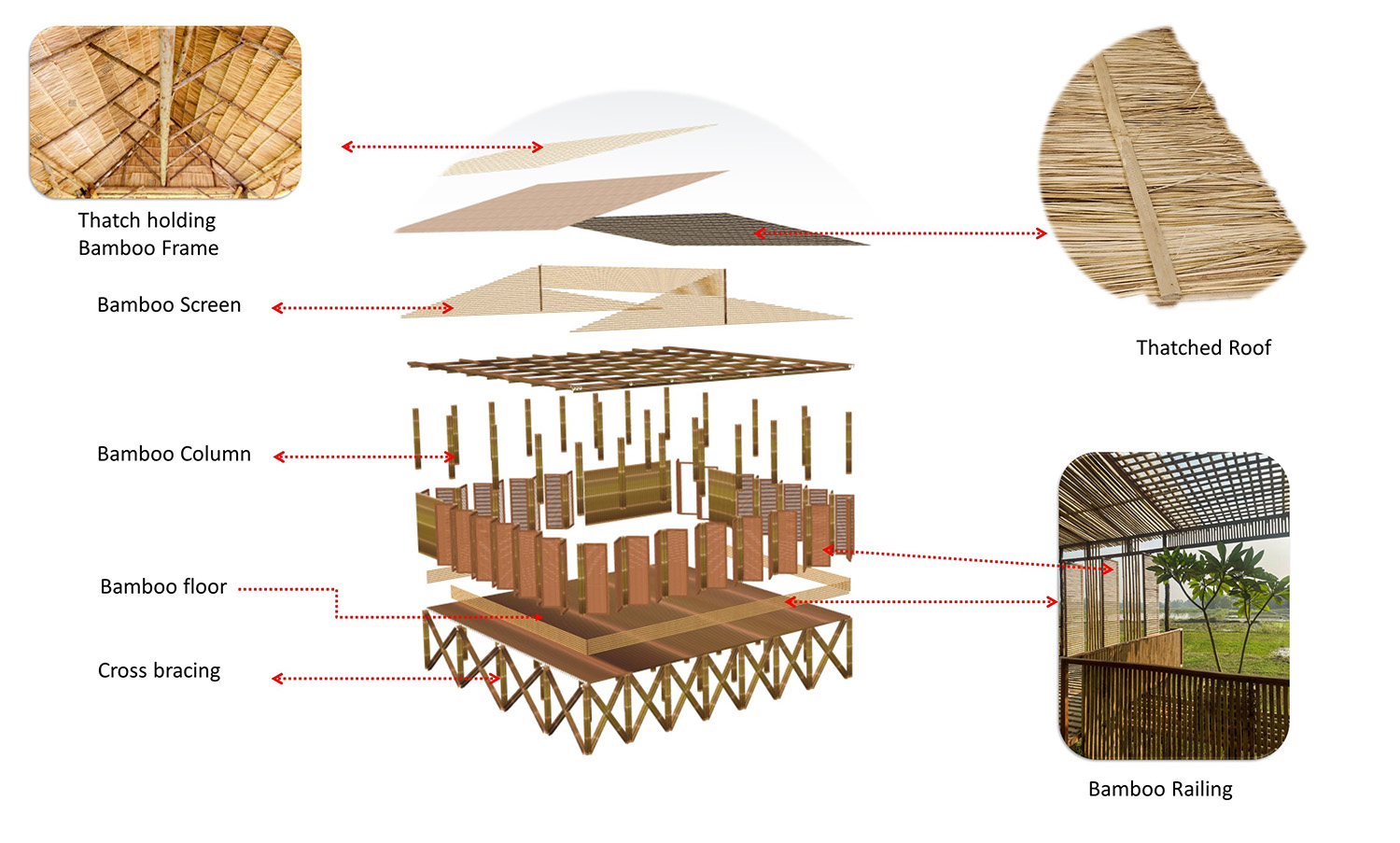
In its construction, the centre prioritizes local materials such as bamboo, wood, and thatch, and employ traditional building techniques and craftsmen. This approach ensures sustainability, honors cultural significance, and utilizes ancestral knowledge passed down through generations. Ultimately, the Centre for Chakma Cultural Harmony aims to be an active and sustainable hub where heritage is not just stored but actively lived, celebrated, and expanded as a source of inspiration for the future.
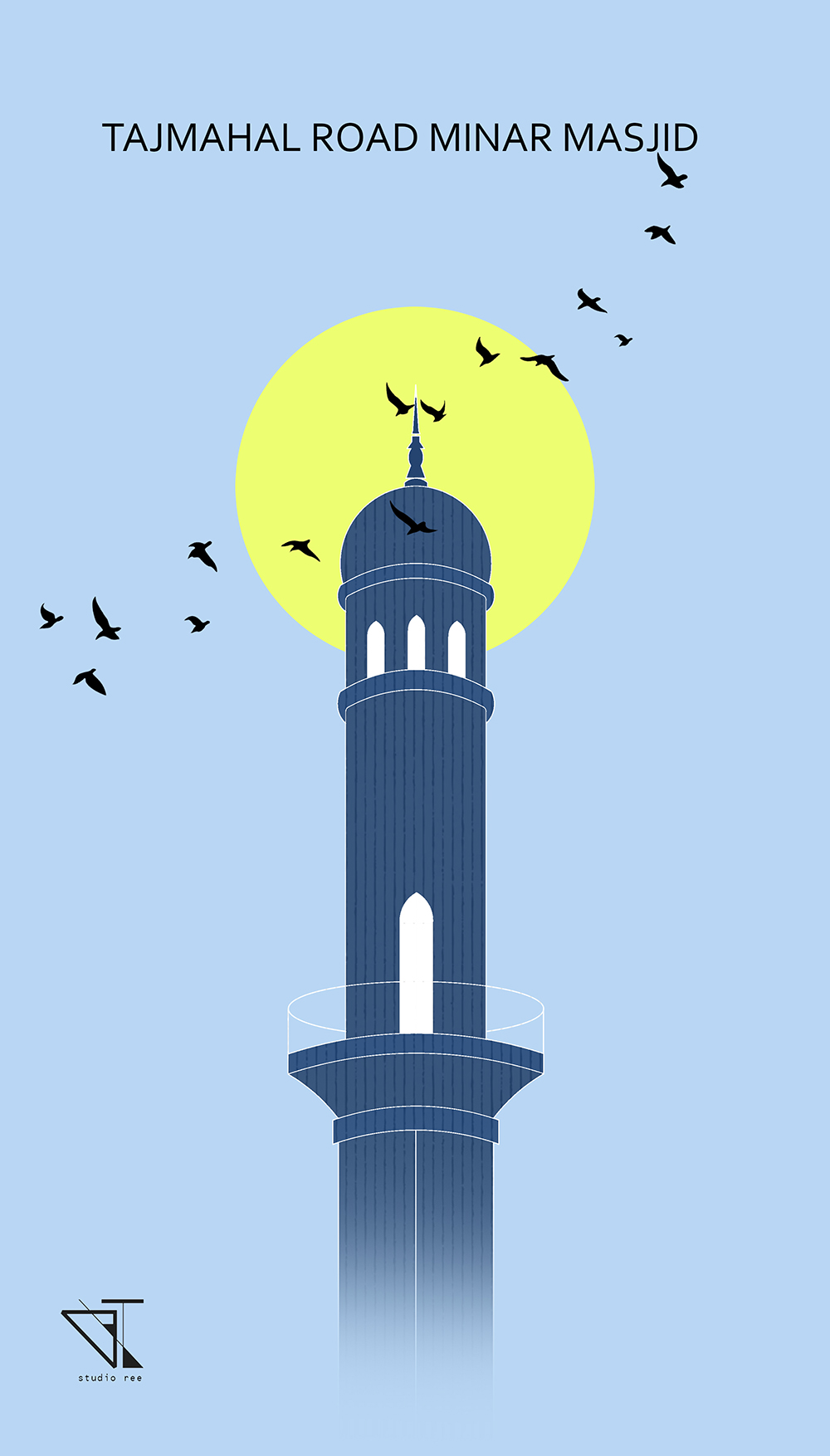
The minaret, a defining architectural element of classical Islamic architecture, serves both functional and symbolic purposes, yet it is becoming less common in contemporary mosque design. Rising above the surrounding structures, minarets historically provided a high point from which muezzin could call the Adhan for prayer. This height ensured that Adhan reached the surrounding communities (Bloom, 1989). Beyond practicality, the minaret or minar holds deep cultural as well as artistic significance, expressing the craftsmanship and grandeur of Islamic architecture while acting as a landmark within the urban landscape (Grabar, 1992). Its verticality also symbolizes a link between earth and the divine (Petersen, 2002).
During the Prophet Muhammad’s (PBUH) time, the call to prayer was made from a rooftop, suited to a small community (Creswell, 1989). As cities expanded under the Umayyads, taller structures became necessary, leading to the minaret’s introduction (Bloom, 1989). Over centuries, distinct regional styles emerged, with historical examples in Bangladesh dating from the 15th to the 19th centuries (Alam & Noble, 2021).
However, today, minimalist architectural trends often avoid the minaret as technology like microphones and speakers has replaced the need for tall towers. Yet the minar remains a vital tool for visual clarity and wayfinding. In the past, when cities were more open and buildings were lower, the tall silhouette of a minaret helped people quickly identify the location of a mosque. Even today, in dense urban areas with high-rise buildings and tightly packed neighborhoods, when multiple mosques recite the Adhan simultaneously, the minar helps to distinguish which mosque is nearest. While technology aids projection, it cannot replace the cultural, visual, and symbolic resonance of the minar. Without it, we risk losing a key element of Islamic architectural identity.
Bloom, J. (1989). Minaret: Symbol of Islam. Oxford University Press.
Grabar, O. (1992). The Formation of Islamic Art. Yale University Press.
Goodwin, G. (1997). A History of Ottoman Architecture. Thames & Hudson.
Petersen, A. (2002). Dictionary of Islamic Architecture. Routledge.
Creswell, K. A. C. (1989). A Short Account of Early Muslim Architecture. Penguin.
Alam, M. S., & Noble, A. G. (2021). Mosque architecture in Bangladesh: The archetype and its changing morphology.Scribd.
About the Authors:
Md. Ibrahim Badhan completed his Bachelor of Architecture at North South University (NSU) and Master of Architecture at the Bangladesh University of Engineering and Technology (BUET). He is currently pursuing PhD at BUET.
Rubaiet Sharmeen Sornali completed her Bachelor of Architecture at North South University (NSU) and is currently pursuing her Master of Architecture at the Bangladesh University of Engineering and Technology (BUET).
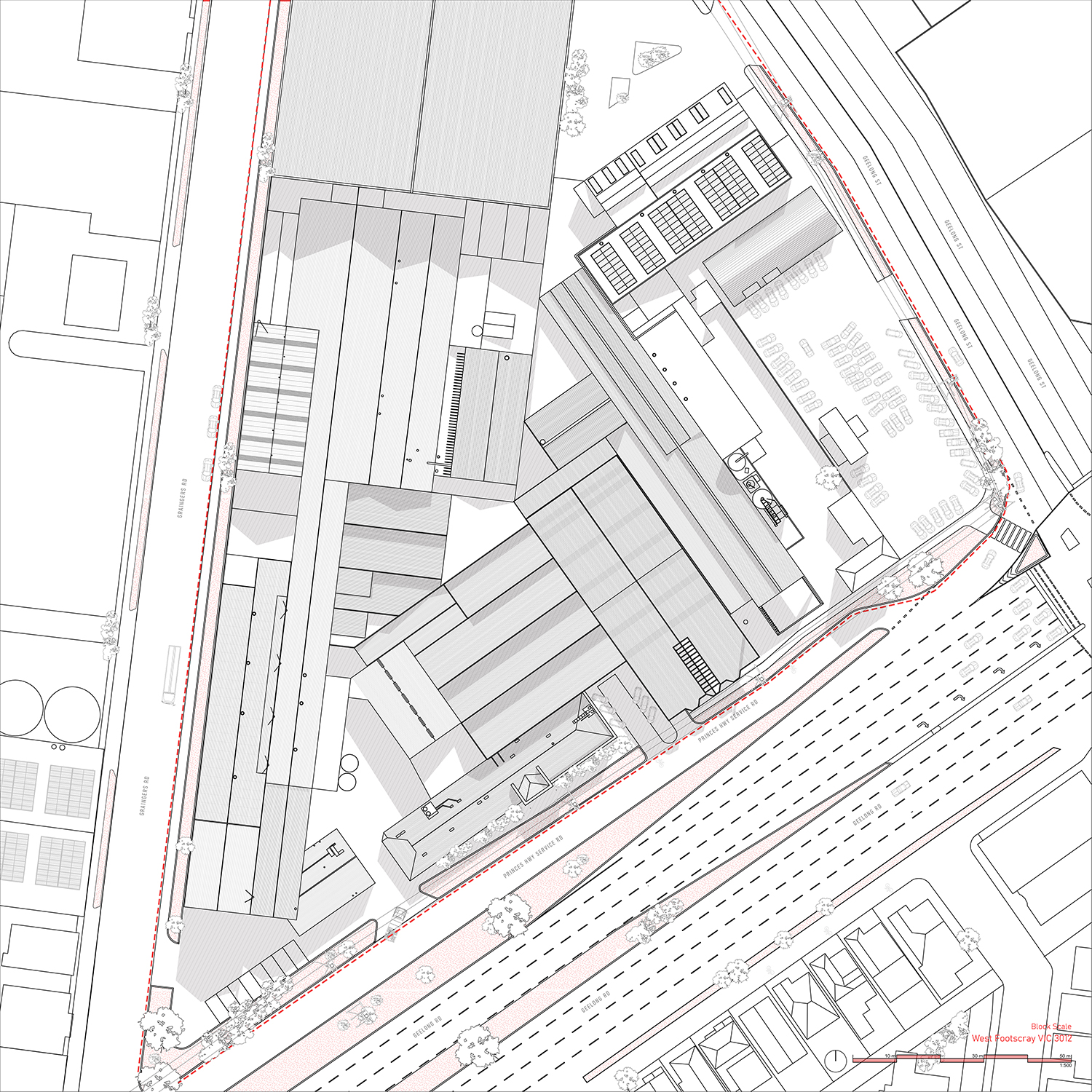
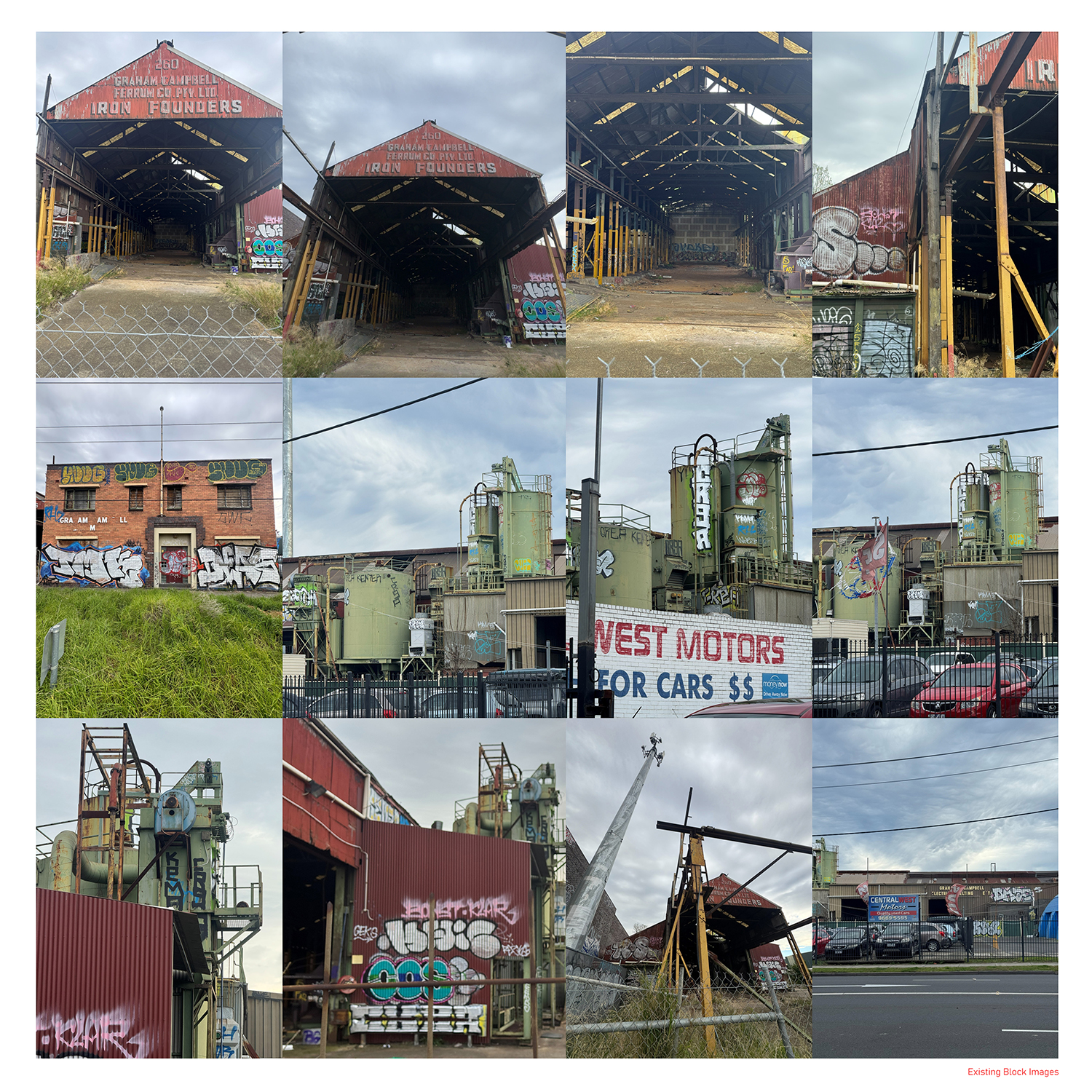
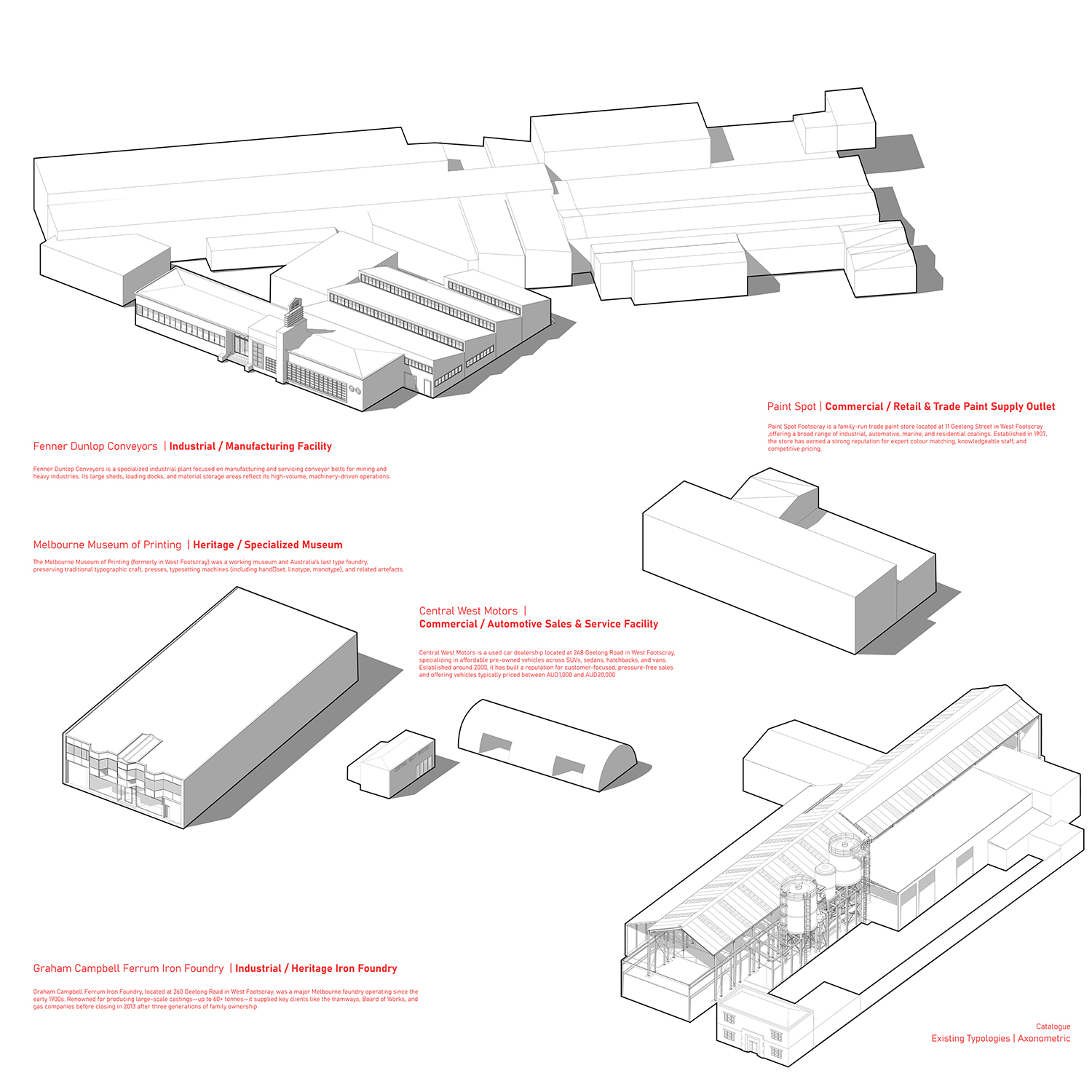
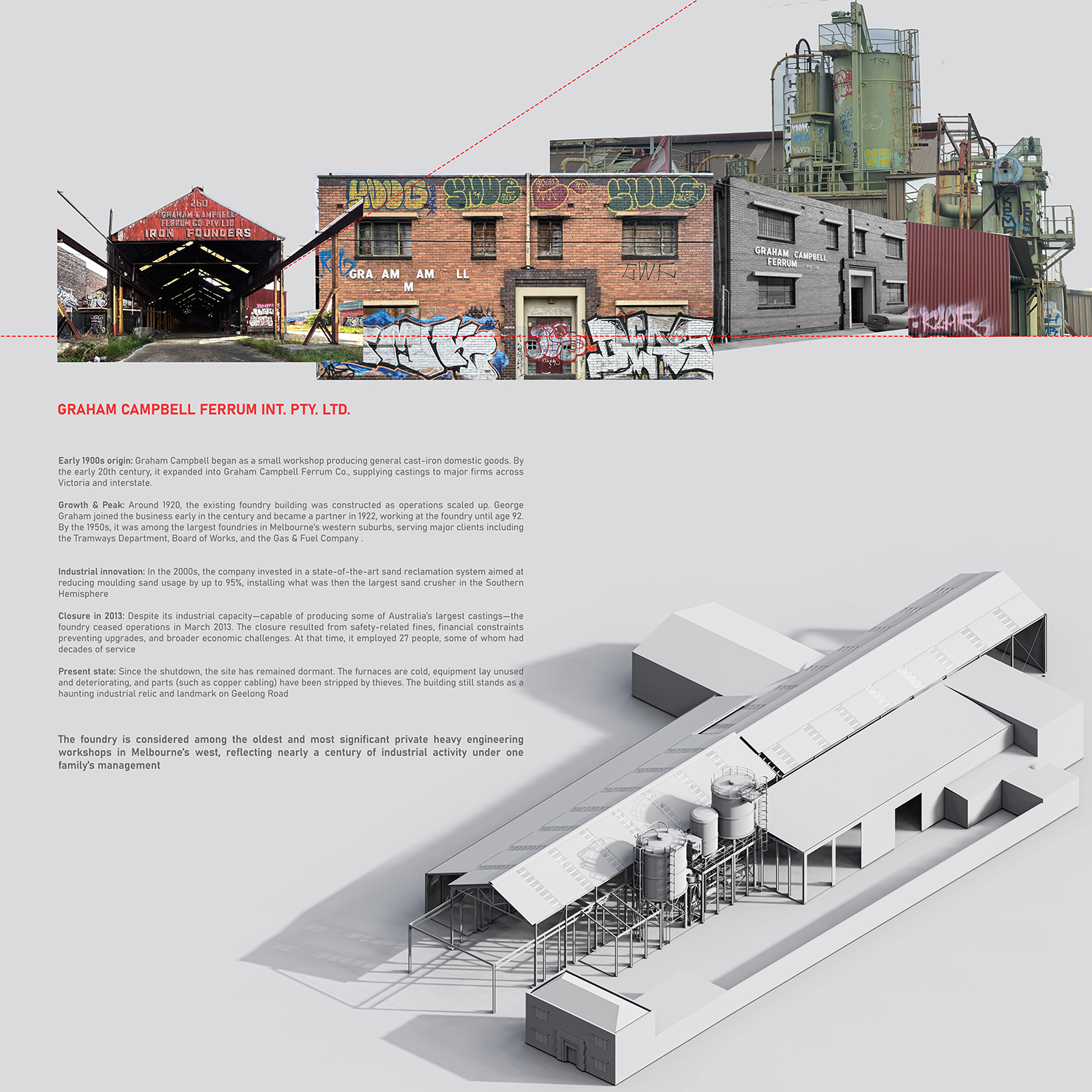
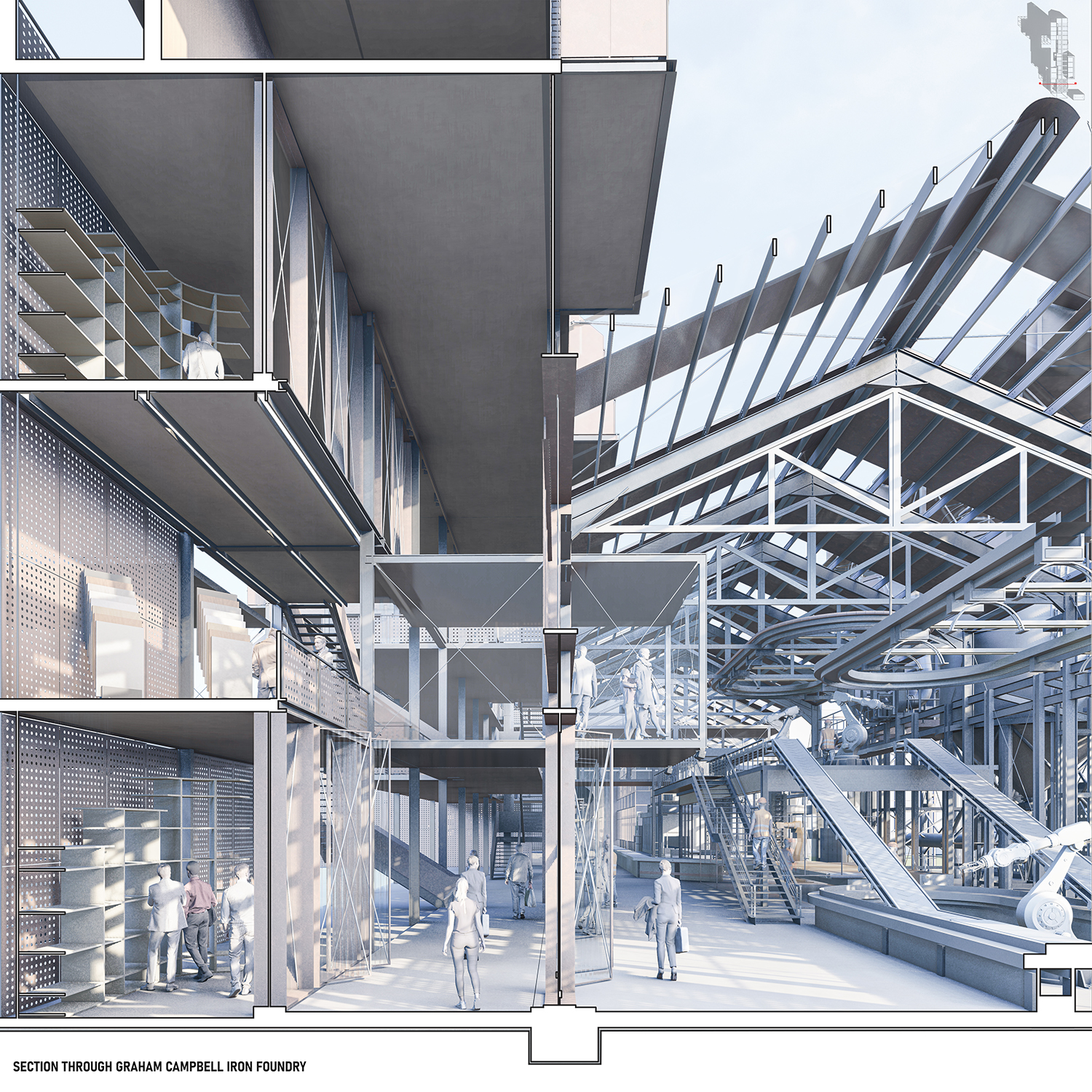
Tessellate Assembly proposes an urban block where the functions of living, working, and visiting interweave through memory, making, and spatial adaptability. Set within the industrial fabric of West Footscray, the project revitalizes two abandoned heritage sites -the Graham Campbell Iron Foundry and the closed Melbourne Museum of Printing, not as isolated architectural relics, but as productive civic anchors within a newly assembled block.
The strategy centers on tessellation, a logic of interlocking responsive parts. Each building in the block supports at least two distinct program types, and all are interconnected via transitional zones, shared pockets, and open circulation. Rather than imposing rigid zoning, the project introduces programmatic gradients, where housing overlooks workshops, galleries blur into fabrication spaces, and industrial production becomes part of the public life of the city.
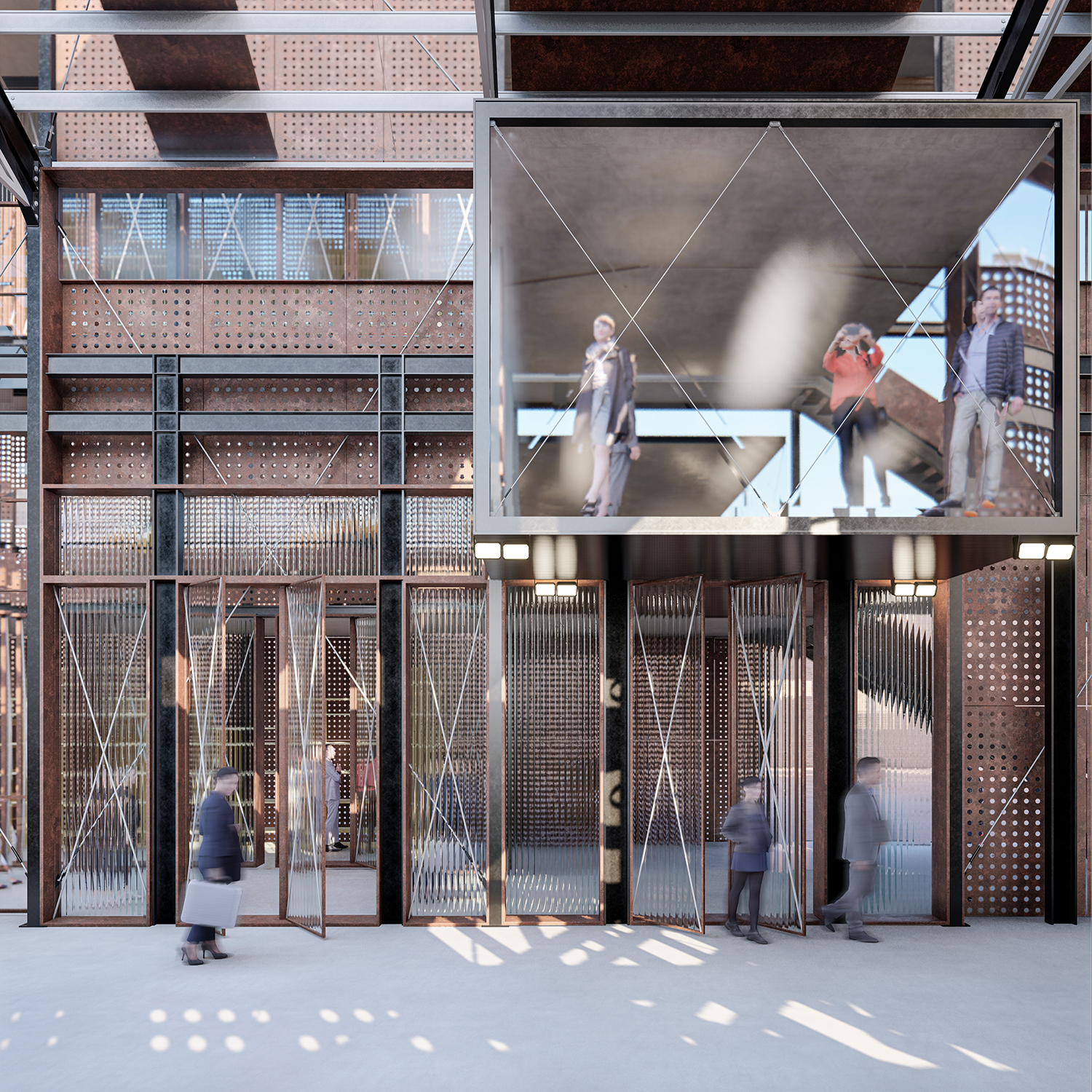
The foundry is transformed into a recycled materials hub, while the museum becomes a contemporary education and printmaking center. In doing so, the project doesn’t merely preserve the old, it activates it. Traditional printing presses are juxtaposed with CNC mills; movable typefaces with digital laser etching. The new Manufacturing Core showcases a hybrid printing culture where visitors can witness both the process and evolution of printing, bridging analog heritage with digital fabrication.
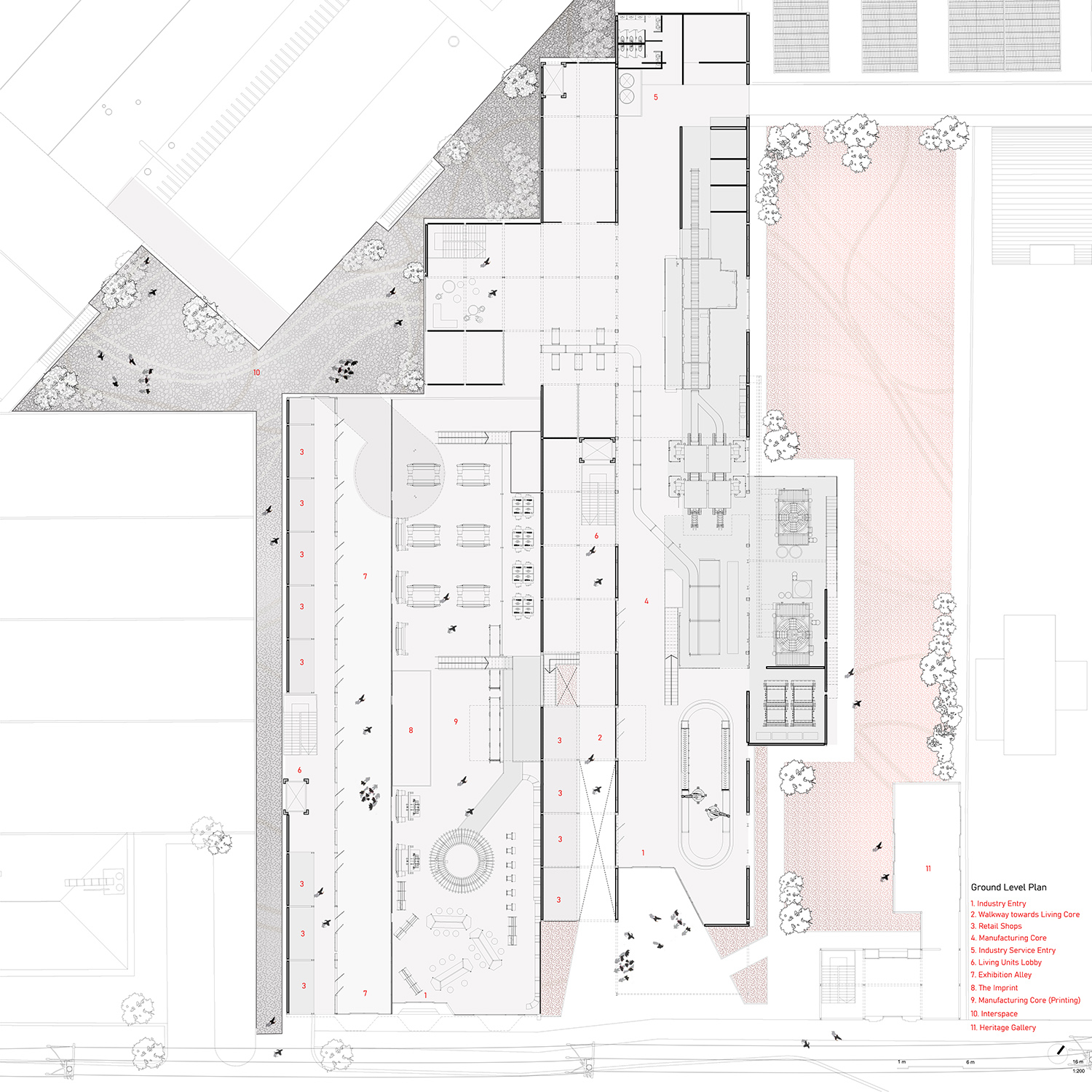
A key architectural gesture is the gridded structural frame, a productive scaffold that both extends and echoes the site’s former industrial tectonics. It supports new volumes, hanging gardens, and open courtyards that foster collaboration between artisans, educators, residents, and visitors. The Living Strip, running above, integrates housing with urban farming via rooftop greenhouses, allowing makers to live and grow within the same environment they work in.
At the heart of the block lies a collective landscape that is publicly accessible from all sides. It functions as both ecological condenser and social gathering ground, acting as a soft edge between buildings and programs. The landscape is not ornamental but it is productive, edible, and performative.
Tessellate Assembly draws from the logic of assemblage theory and rejects fixed masterplanning. Instead, it imagines a civic framework that is adaptable over time. Architecture becomes not an object, but a field condition, an interwoven network of transitions, overlaps, and potentialities.
In this speculative future, production is not hidden behind walls but made visible. Heritage is not isolated in museums, but lives on through craft, engagement, and education. And architecture becomes the stitching ground where memory, labor, and dwelling are braided together, enabling new forms of civic life.
Two projects from Bangladesh—Machan: Korail Community Platform in Dhaka and the Floating Schools program in the Pabna District—have been named among the 26 global recipients of the 2025 Ammodo Architecture Award. The award celebrates exemplary contributions to socially and ecologically responsible architecture.
Selected from 168 entries across 60 countries, the winning projects were recognized for their powerful social engagement and innovative responses to local challenges.
Built collaboratively with residents of Korail, the Machan project transformed a former dumping ground into a vibrant , flexible public space for art, learning, and community dialogue. The award committee praised its “powerful simplicity,” noting that it intervenes architecturally only where truly needed. Built collaboratively with local residents, the project was described as “playground architecture”—open, adaptable, and deeply rooted in everyday life.
“The result feels like ‘playground architecture’ – open, adaptable and deeply rooted in everyday life,” stated the committee. “With minimal means, it brings culture to the forefront of community building, challenging elitist assumptions about who produces culture and how.”
A female teacher conducts a class for the students of grade one at a boat school at Chatmohor, Pabna. Photo: Abir Abdullah, Shidhulai Swanirvar Sangstha
The Floating Schools initiative, run by Shidhulai Swanirvar Sangstha, uses boat-based schools to support community resilience along the Gumani River. The design was lauded for its adaptive approach to climate change, “embracing water” rather than resisting it.
“Built with local materials and traditional knowledge, the floating structures bring learning, care and opportunity to remote communities – bringing the school to the people, instead of the people to the school,” the committee noted. They highlighted the project’s “cultural sensitivity, ecological intelligence, and flexibility.”
Each award recipient receives a grant to further develop their work. The complete list of 2025 awardees can be viewed on the Ammodo Architecture Award website.
The Korail settlement, home to over 80,000 people, sits beside Dhaka’s affluent neighbourhoods of Banani and Gulshan-Baridhara. While its residents primarily work in waste recycling, street vending or domestic labour for the surrounding city, Korail’s vibrant contribution to Dhaka’s cultural life remains largely unrecognised.
The project Machan, developed by the Dhaka-based collective Paraa, challenges this oversight by placing creativity, learning and care at the centre of civic life. The project is a key part of the wider Korail: City of Culture initiative, which grew from long-term collaboration with residents, youth groups and community leaders to promote art and participation as tools for community building.
The name – Machan, meaning ‘platform’ in Bangla – captures its essence: a structure that supports and connects. It stands at Ershad Maidan, one of Korail’s few open spaces, long used for dumping waste. Paraa worked with local volunteers, students and collaborators including Floating University Berlin to transform the site into a shared stage for expression. Over 60 workshops and residencies shaped the design, bringing together residents and young designers through storytelling, model-making and hands-on construction.
Architecturally, the project reinterprets the traditional Bengali pavilion as a light, permanent structure – robust yet porous, civic yet playful. A simple concrete frame supports two levels designed for openness and flexibility. On the ground floor, two semi-enclosed rooms host workshops, exhibitions and meetings. Large folding doors merge them into one shaded space facing the playground. A wide stair doubles as seating, turning circulation into an amphitheatre for performances and assemblies. The brick-paved ground absorbs heat and is easy to maintain.
The upper level breaks the symmetry, creating varied pockets for use: large steps for sitting, perforated brick enclosures for private activities such as women-led gatherings and open terraces overlooking the field. Light and air flow freely through ventilated brick façades that blur the boundary between inside and outside, turning the building into a mediator between climate and community.
Machan’s restraint is deliberate. There are no enclosed rooms or decorative finishes, only what is essential for durability and comfort. The extended upper plate shades the ground floor, reducing heat gain. Built from locally produced concrete and porous brick, the structure allows natural ventilation throughout the year. Planters and pockets of soil bring greenery, letting residents grow plants and soften the concrete texture. Its simplicity makes it easy to maintain and adaptable for new activities.
The Floating Schools initiative in Pabna District, Bangladesh, addresses the recurring challenge of education and healthcare access in flood-prone riverine regions. Developed by architect Mohammed Rezwan, the project combines architectural design, cultural continuity and climate adaptation through a fleet of five solar-powered floating structures, including two schools, a library, a training centre and a health clinic. These boats serve flood-prone communities along the Gumani River in the Faridpur and Bhangura subdistricts of Pabna. The initiative began as early as 2002, evolving over two decades into a mature system that became fully operational in 2021 along an 8-km stretch of the river.
The idea grew from a simple yet urgent problem: children could not reach school when floodwaters cut off their villages. Instead of building on land that was constantly submerged, Rezwan turned to the rivers themselves for solutions. Working closely with local communities, he transformed the boat – an everyday tool of survival – into a vehicle for education, empowerment and resilience. The boats are designed in-house and built by local boat builders, drawing on generations of traditional craftsmanship. Many members of the project team, including programme managers, boatyard supervisors and educators, come from the same communities the boats serve. Some former students have even returned as teachers, a living testament to the project’s long-term social impact.
A female teacher conducts a class for the students of grade one at a boat school at Chatmohor, Pabna. Photo: Abir Abdullah, Shidhulai Swanirvar SangsthaBoth male and female students read books at the boat library run by Shidhulai Swanirvar Sangstha, at Borda Nagar Uttor Para, Chatmohor, Pabna. Photo: Abir Abdullah, Shidhulai Swanirvar SangsthaYeasmin Ara teaches in sewing training course for the village women and girls at a boat at Kukragari, Chatmohor, Pabna. Photo: Abir Abdullah, Shidhulai Swanirvar SangsthaA village student practices typing using a laptop at the boat library run by Shidhulai Swanirvar Sangstha, at Borda Nagar Uttor Para, Chatmohor, Pabna. Photo: Abir Abdullah, Shidhulai Swanirvar Sangstha
Each boat is carefully designed to respond to both environmental conditions and community needs. The fleet includes classroom boats for children, libraries with open shelving, training boats for sustainable farming and sewing, and mobile clinics providing primary healthcare. Every vessel is built in riverside yards using locally available, low-impact materials such as sal wood, bamboo and recycled tin sheets. Iron beams support column-free interiors, while curved, layered roofs are shaped to deflect monsoon rains and maintain balance. Flat-bottomed hulls allow the boats to navigate shallow waters during the monsoon season. Solar panels provide energy for lighting, learning equipment and medical tools, while old kerosene lanterns have been repurposed as solar light casings – combining cultural familiarity with renewable energy innovation.
Located along the bank of the Rai River in Koyra, Khulna, adjacent to the Sundarbans ─ the world’s largest contiguous mangrove forest ─ this project explores how architecture can act as a catalyst for ecological conservation, resilience and community integration within a climate-vulnerable deltaic context such as Bangladesh. The project envisions an adaptive framework that supports mangrove research, education, and conservation as well as functioning as a disaster-resilient refuge for surrounding communities.
The design narrative is grounded on a deeper understanding of mangrove ecosystems and their social and environmental interdependence. It focuses on the critical disaster vulnerabilities of the site. In-depth climatic and hydrological studies provide a foundational understanding that translates a site’s environmental conditions into core architectural principles. The proposed regional route from Khulna city opens a gateway to immersive mangrove-based ecotourism.
The spatial arrangement is articulated in three layers, combining research and adaptation facilities, educational spaces, and accommodation facilities into a cohesive design. The lower level allows movement and tidal overflow, while the upper-level houses laboratories, classrooms, and accommodations. This flexible layout enables the project to serve as a temporary shelter while maintaining its core research and educational functionalities.
The elevated, aerodynamic form, developed using CFD simulations, reduces wind pressure and enables regulated tidal overflow at the ground level. The lightweight structure is strong enough to endure cyclonic forces, ensuring safety without compromising its permeable quality. The large roofs capture rainwater, offering an alternative source of drinking water. The material choice and construction techniques are guided by the principles of environmental awareness, longevity and sustainable efficiency. Glulam, from certified wood, and compressed earth blocks were chosen for their low carbon emissions, structural stability, and thermal efficiency. Local materials, such as golpata thatch, are integrated within this structure, blending traditional styles with vernacular architecture.
Landscape design strategy is a crucial component of this project. It includes defensive mangrove belts and regenerative mangrove zones to restore biodiversity and provide natural defenses against tidal surges. Interactive trails and curated nurseries encourage people to connect with mangroves, transforming the site into an active ecological learning space that promotes public participation and initiatives.
The design development from analyses to zoning, form generation, and detailed drawings demonstrates a thoughtful process that merges research-driven strategies with an approach to solve the prevailing challenges. The project illustrates how architecture, guided by ecological understanding, technology, and community needs, can transform into an adaptable structural framework that fosters knowledge and protects the environment. Also, this project aligns with Sustainable Development Goals by the United Nations.
Ultimately, this project presents a replicable model for coastal resilience in Bangladesh. It embodies a harmonious relationship between the built and natural environments, and between knowledge and community—emphasizing adaptation and ecological conservation within the evolving landscape of the Sundarbans.
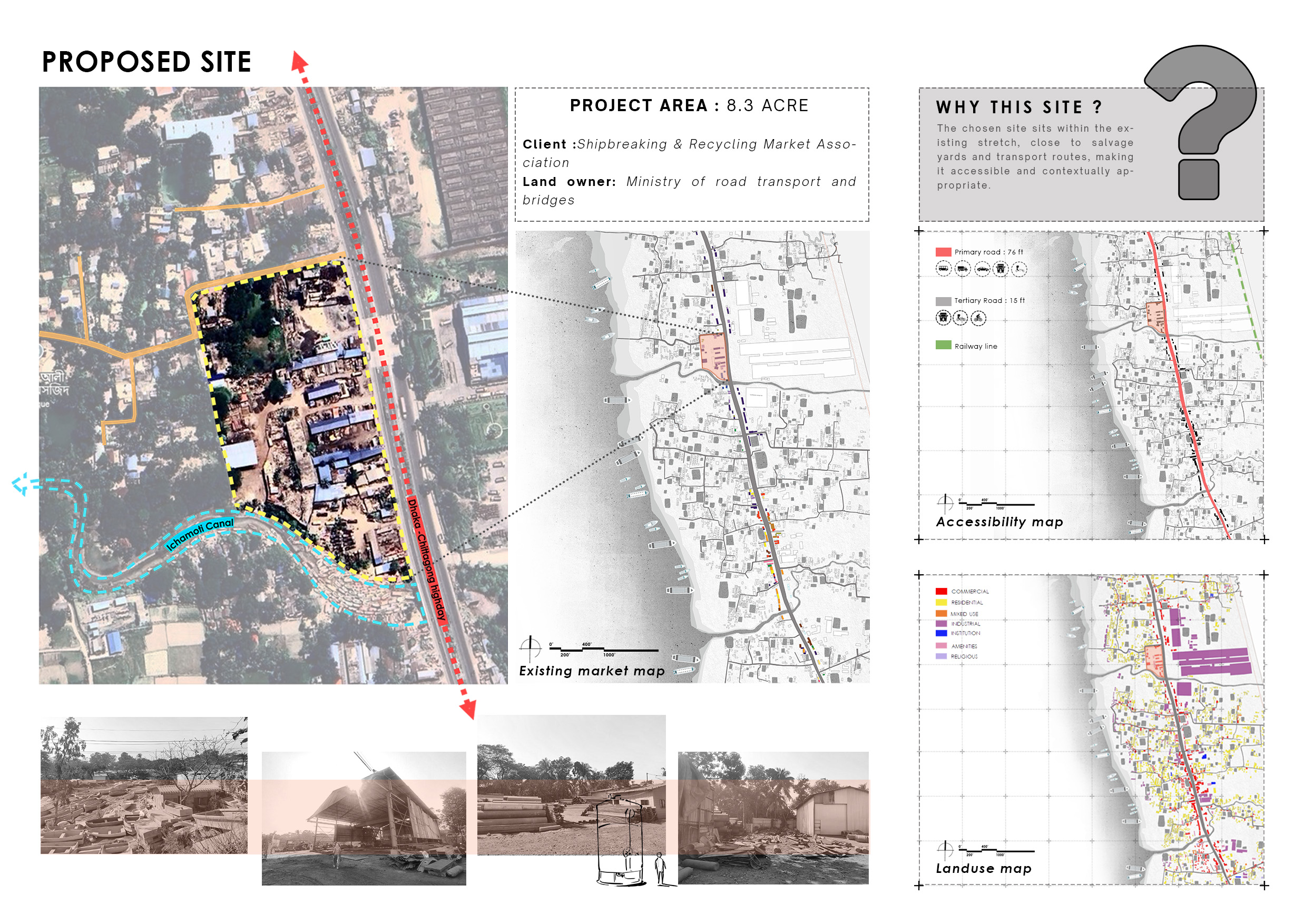
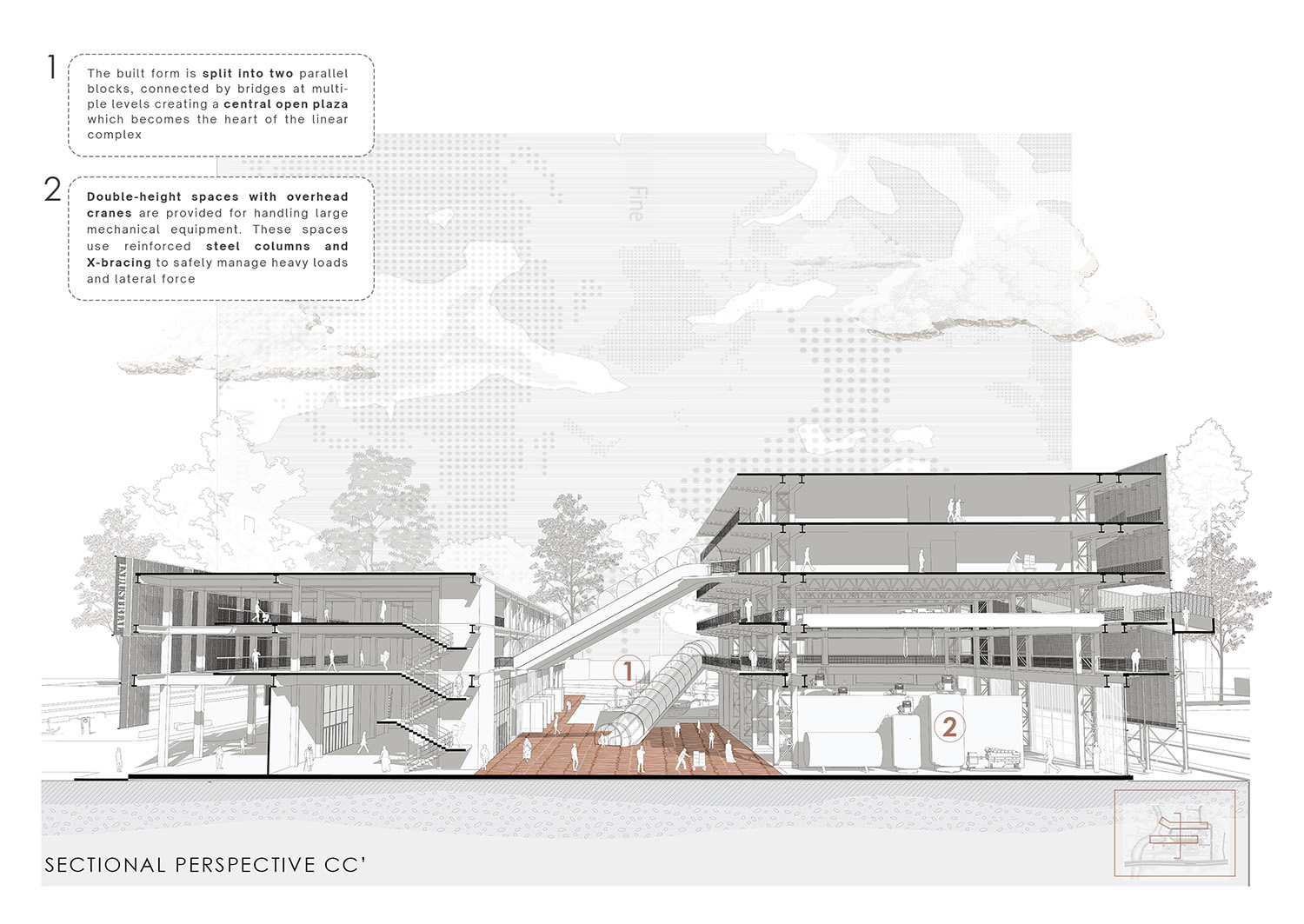
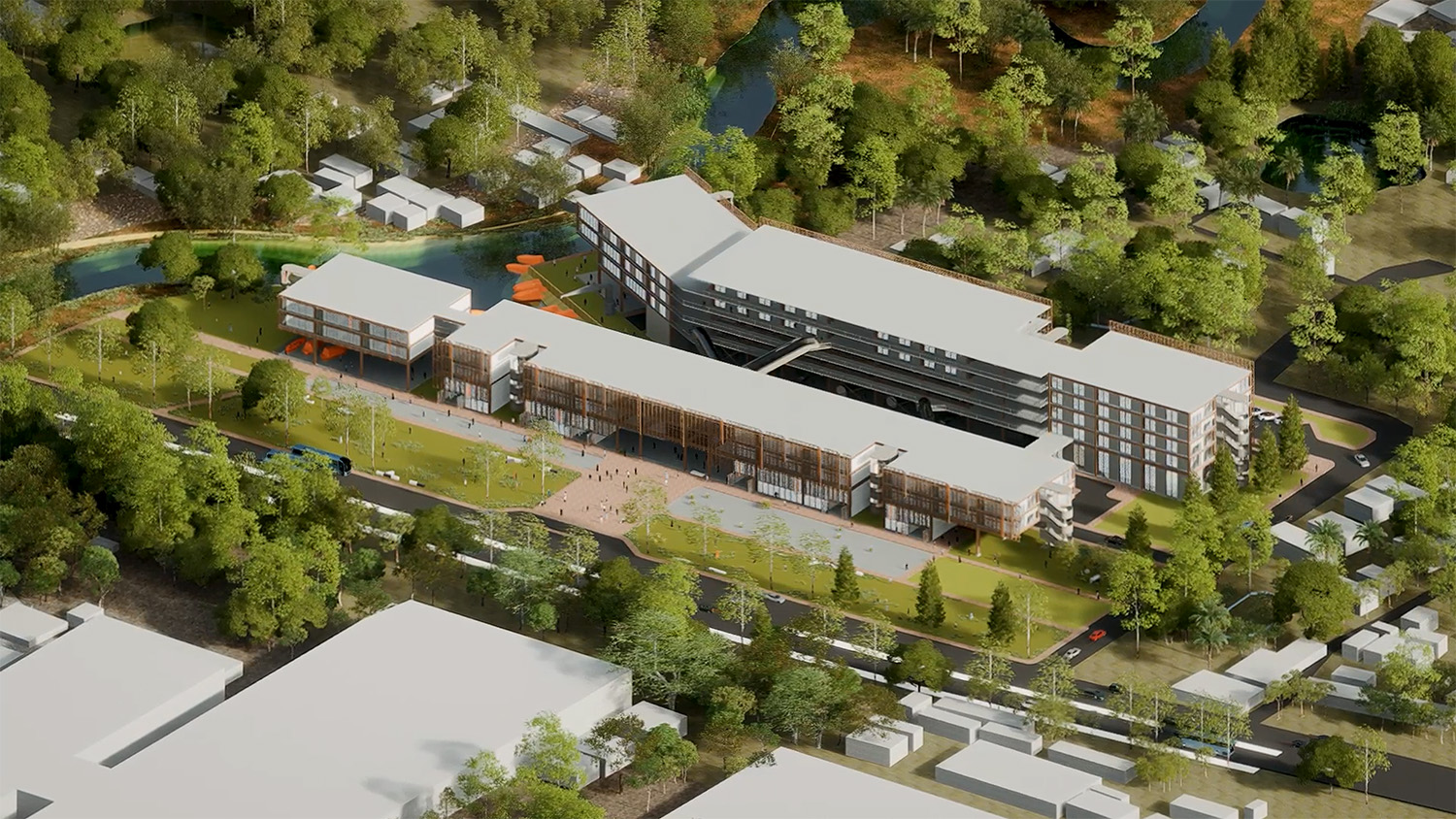
Situated along the southern edge of Dhaka, Zinzira represents one of Bangladesh’s most concentrated clusters of light engineering workshops, playing a vital yet under-recognized role in the national economy. Despite its economic significance, the area is characterized by spatial fragmentation, inadequate infrastructure, congested circulation, poor environmental conditions, and a lack of coherent urban integration.
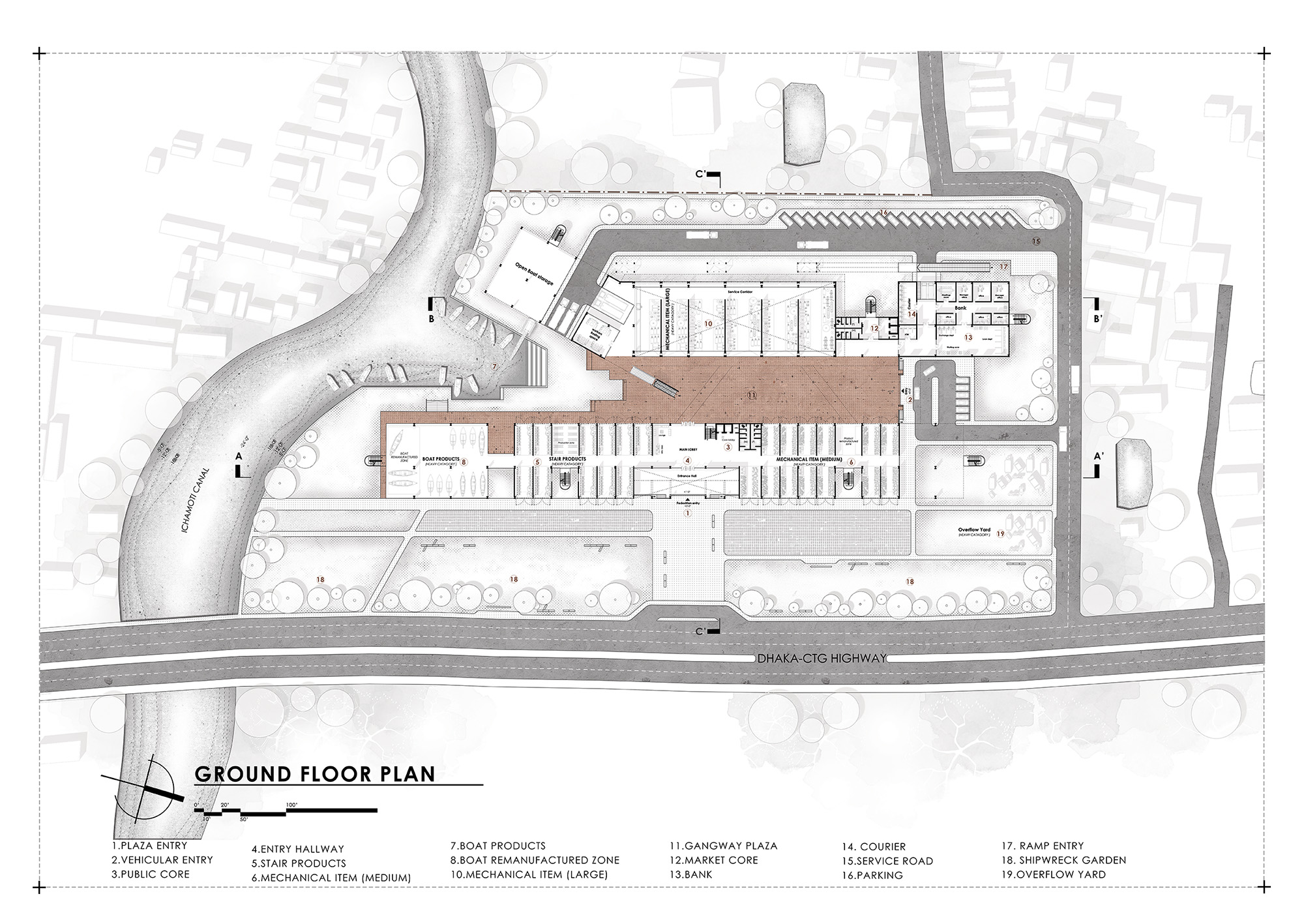
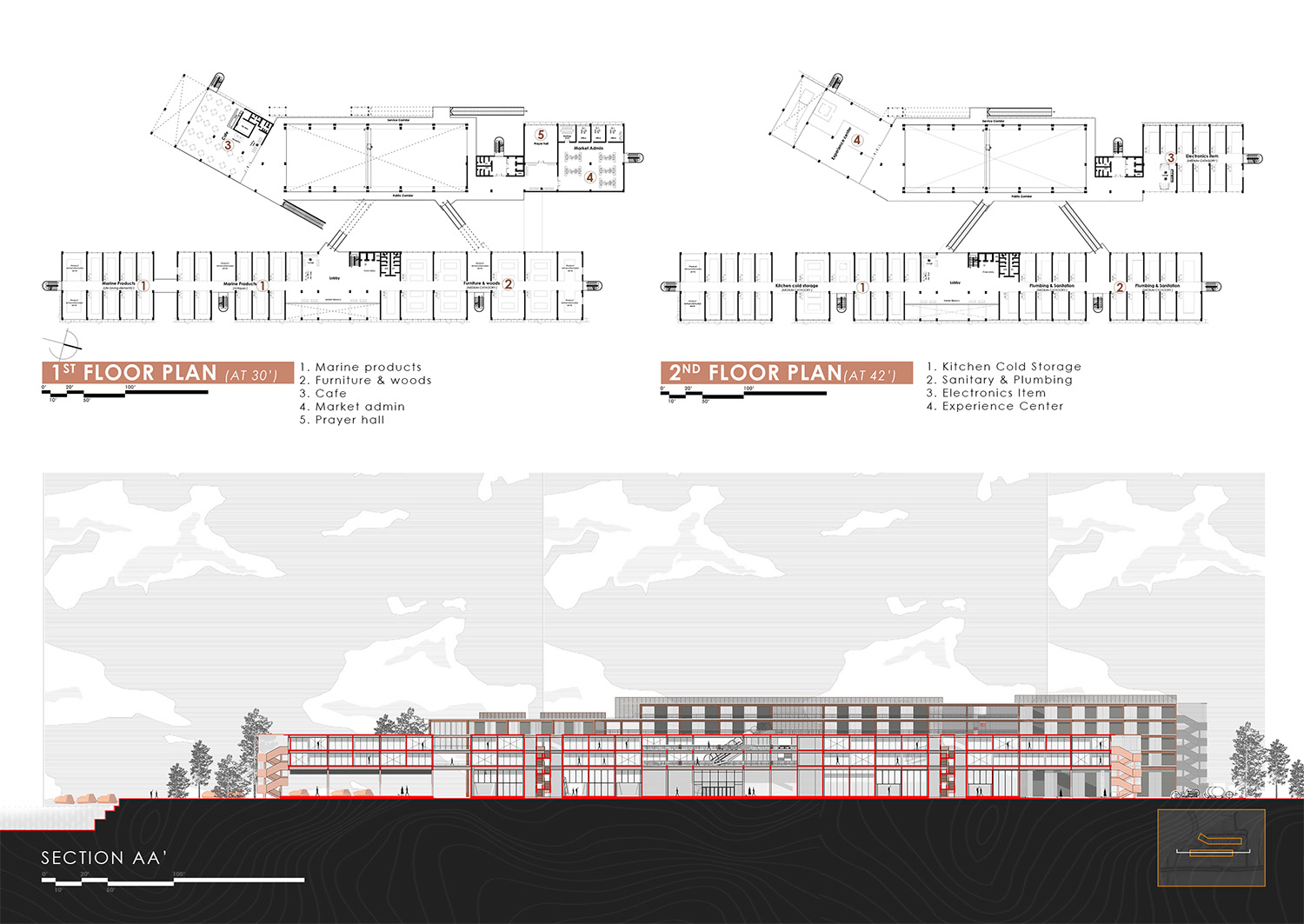
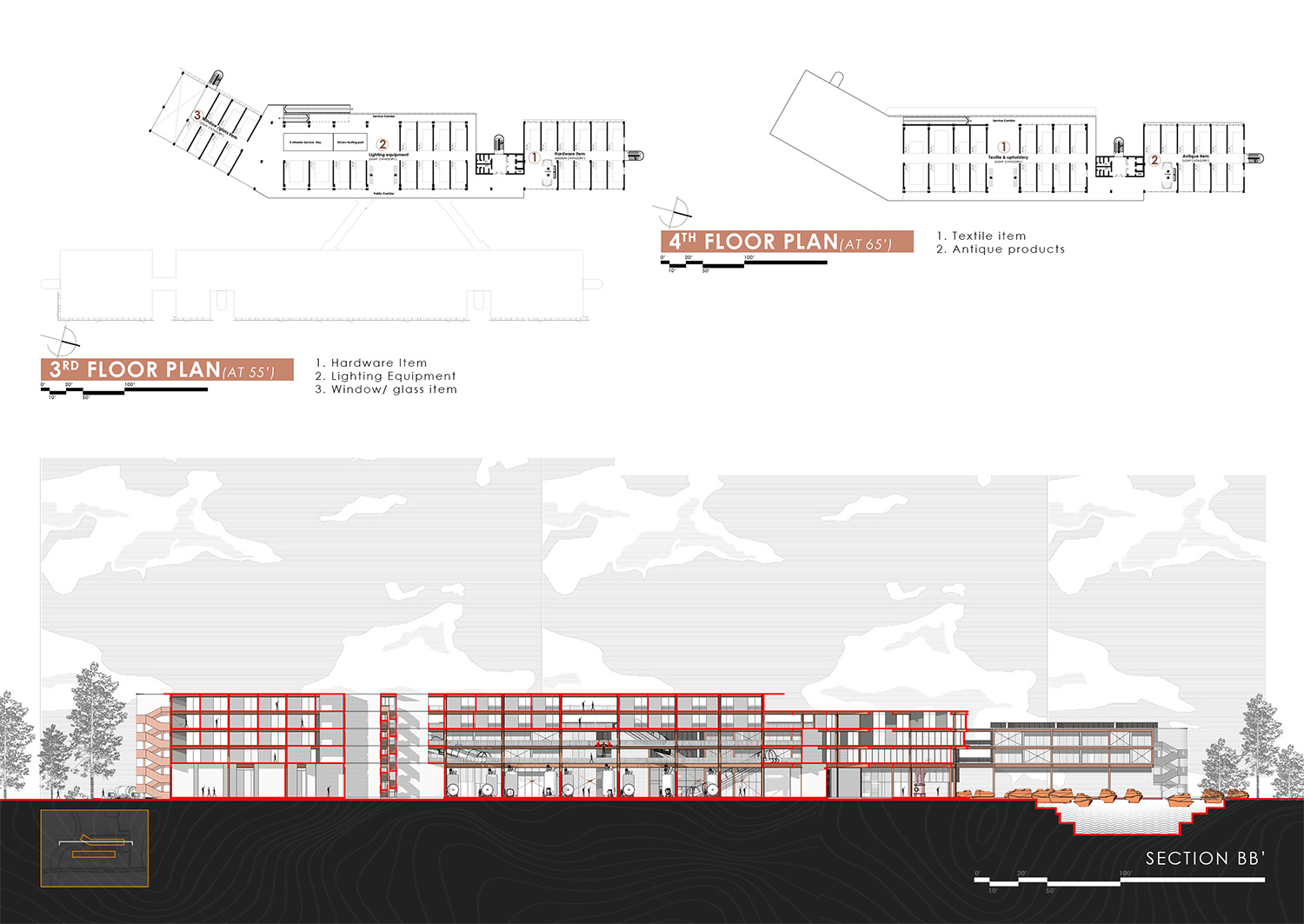
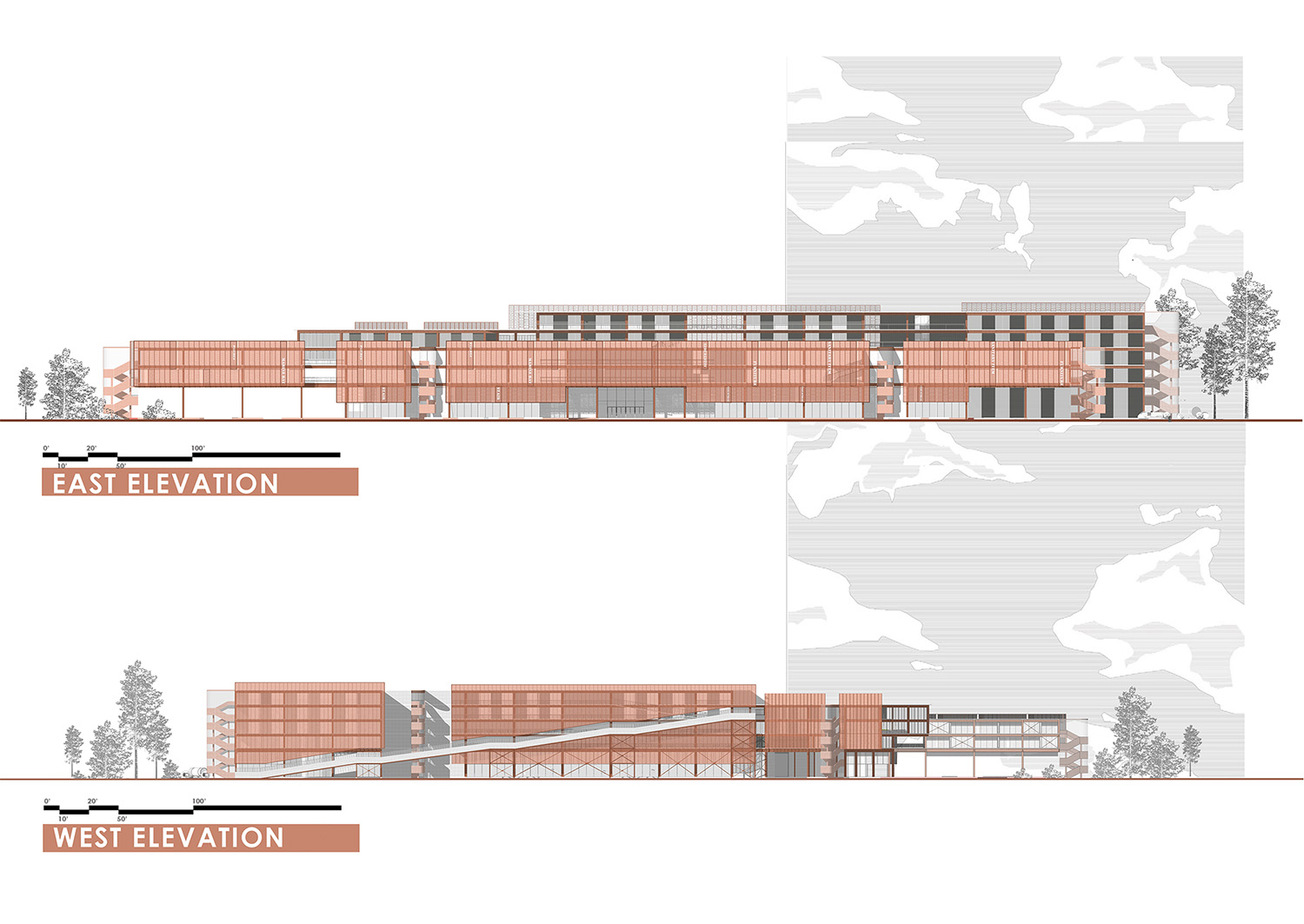
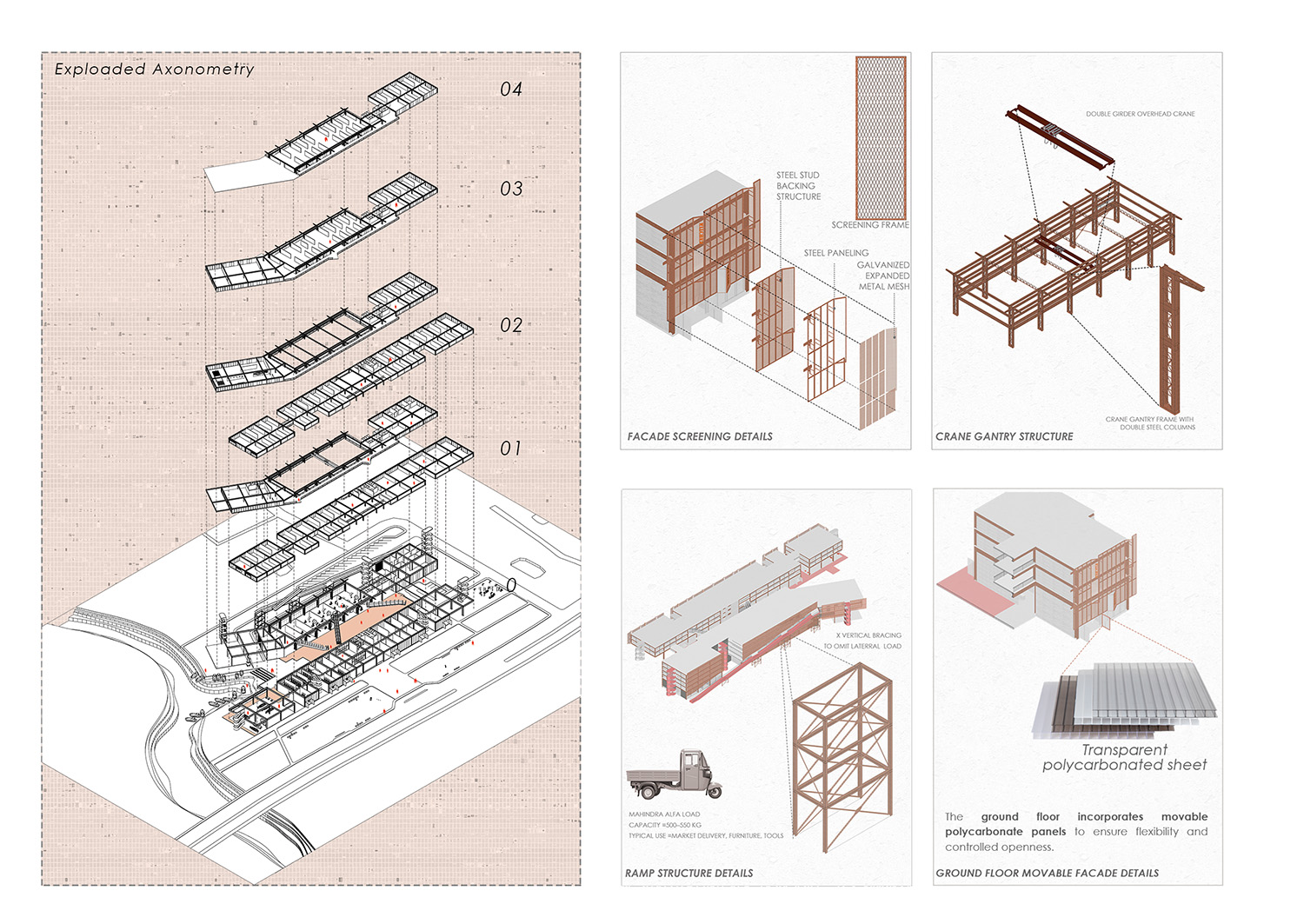
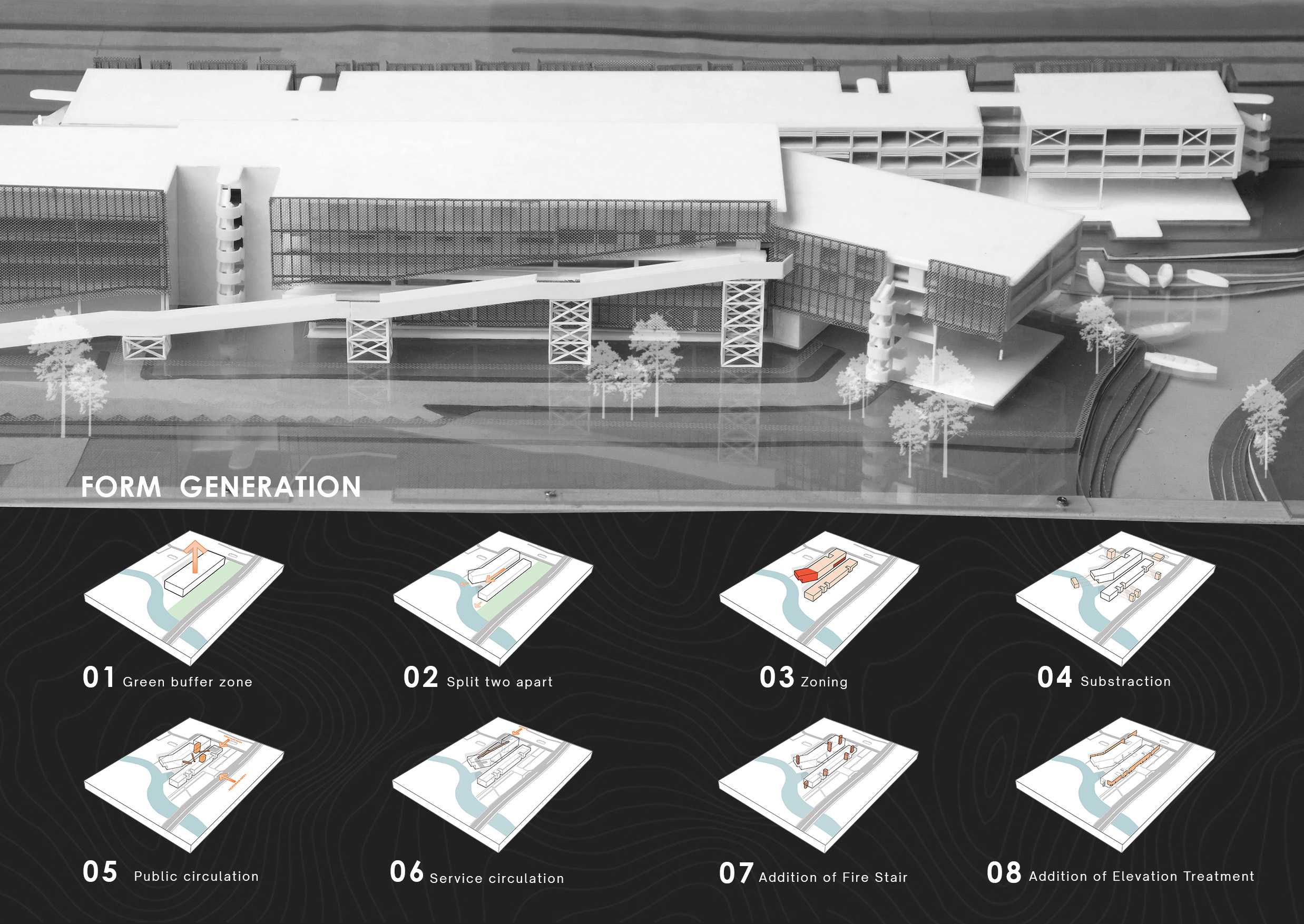
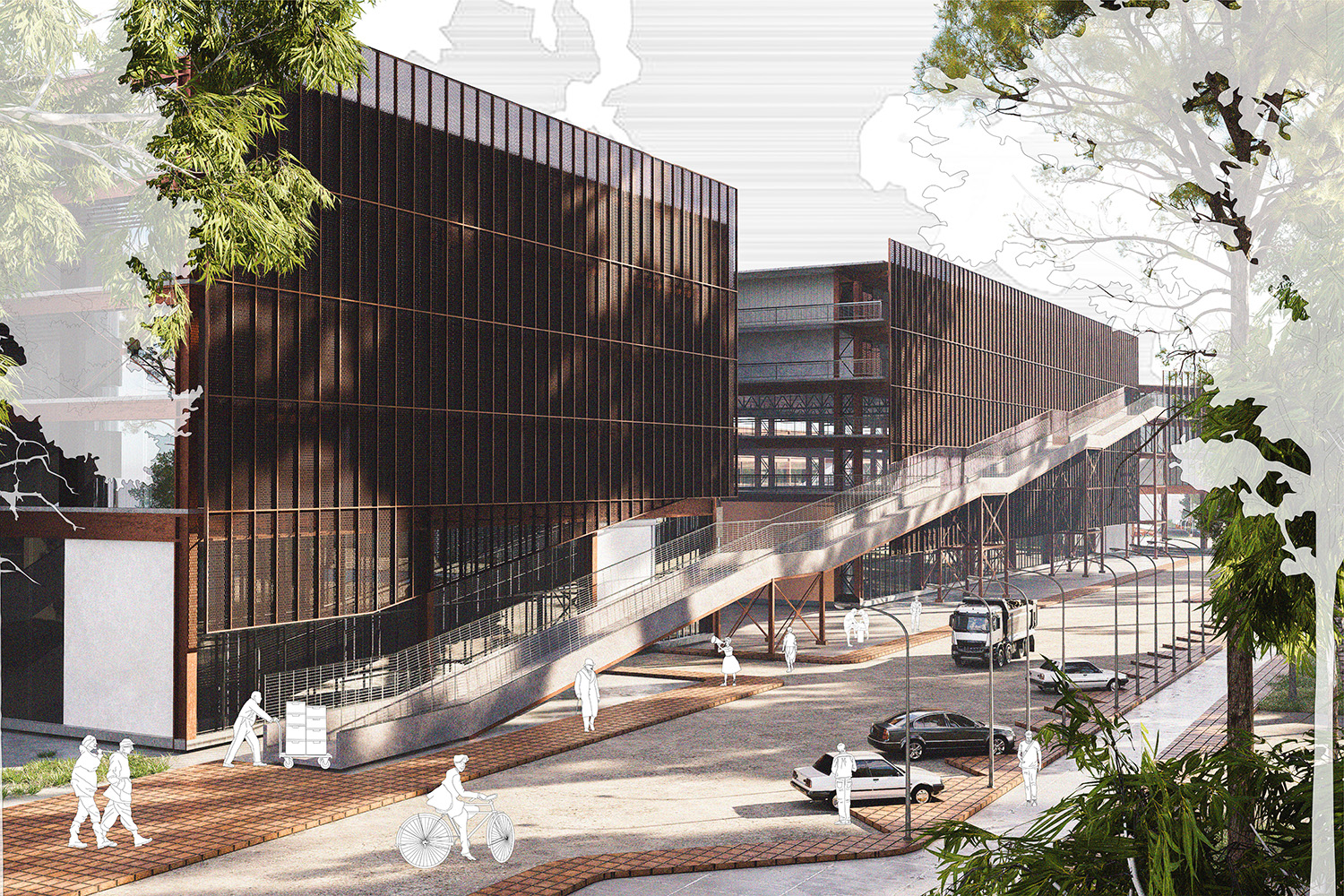
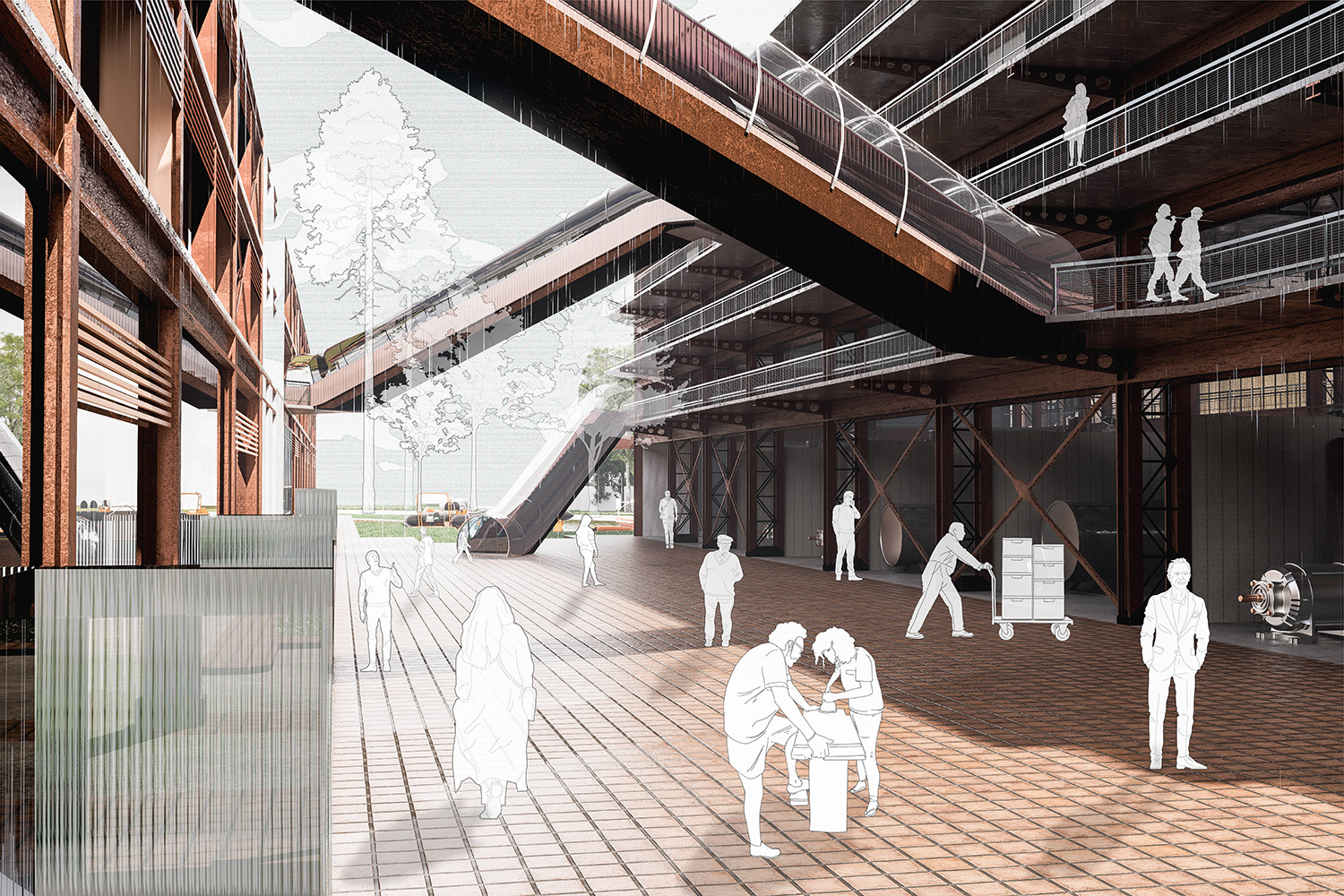
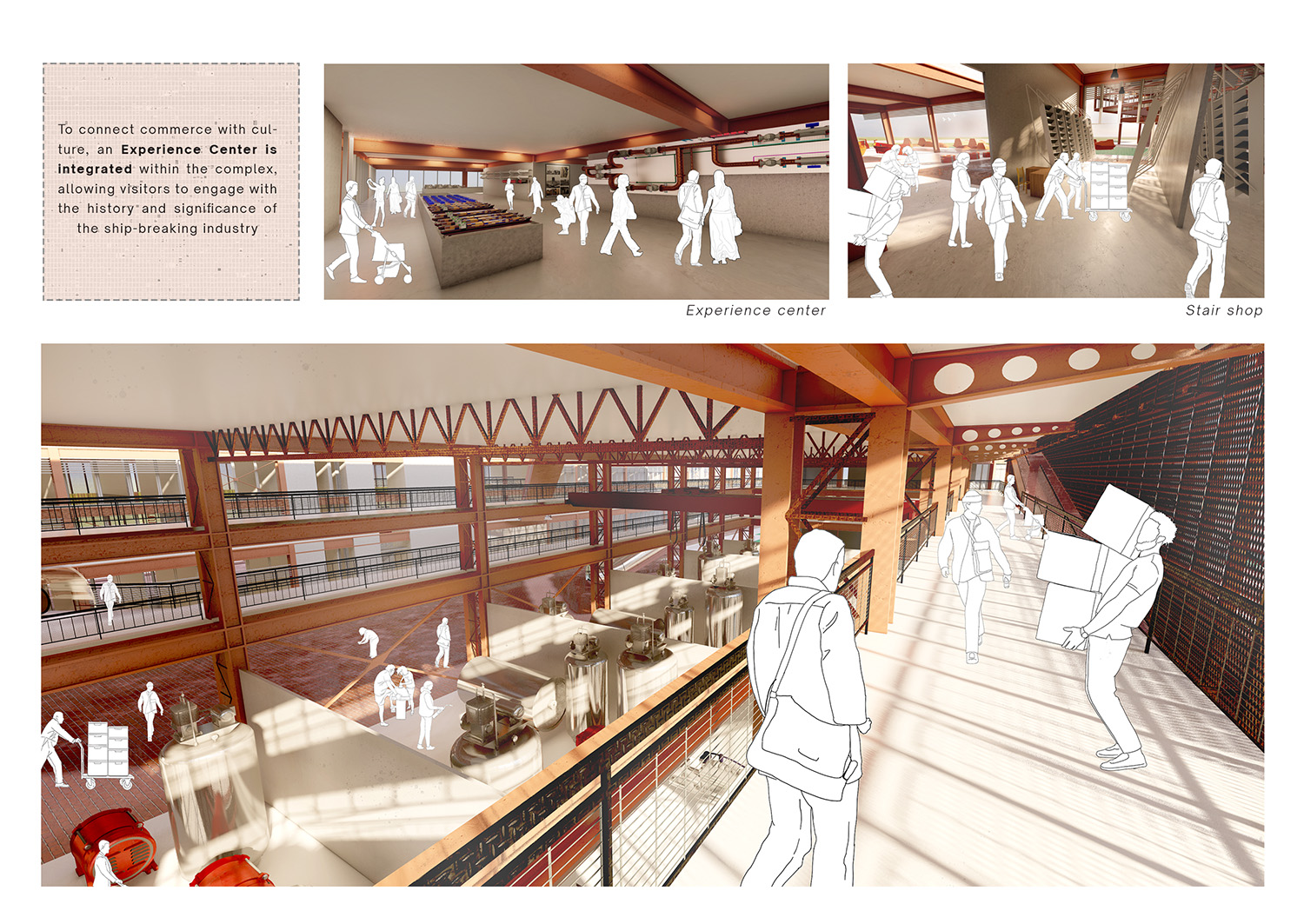
This project, “Rethinking Micro Metal Industries, Zinzira,” is positioned within the discourse of industrial urbanism, which frames industry not as an isolated enclave but as an active and integrated component of the urban continuum. It seeks to reconceptualize this industrial landscape of Zinzira by proposing a framework that unites production, commerce, and community within a cohesive urban order. Central to this proposal is the introduction of modular, flexible, and adaptive workshop typologies. These units are designed to enable spatial reconfiguration in response to evolving technological and market demands. Complementing these production spaces are integrated commercial interfaces and marketplaces, envisioned not merely as transactional areas but as vital loci of exchange, visibility, and identity formation for the local industry.
Furthermore, the riverfront is rearticulated as a hybrid ecological and infrastructural edge. This strategy aims to simultaneously accommodate essential industrial logistics and vibrant public life, while also reinforcing resilience against ongoing environmental degradation. Through this integration, the project aspires to establish a reciprocal and sustainable relationship between industry and its broader socio-ecological context. Ultimately, the thesis positions Zinzira as a prototype for reimagining micro-industrial clusters in rapidly urbanizing territories. By synthesizing principles of modularity, inclusivity, and ecological responsiveness, it articulates a new paradigm of industrial urbanism that seeks to reconcile economic vitality with social and environmental sustainability.
This project merits recognition because it addresses an often-overlooked yet economically indispensable sector of Bangladesh—the micro metal workshops of Zinzira—through a design framework that is both socially inclusive and future-oriented. Rather than treating industry as a peripheral or polluting element, the project reframes it through the lens of industrial urbanism, where production, commerce, and community coexist within a sustainable urban ecosystem.
Its primary strength lies in proposing a scalable and replicable model. The modular and adaptable workshop typologies are designed to respond to evolving industrial demands while simultaneously improving worker safety, ergonomics, and productivity. The integration of a dedicated marketplace bridges the gap between informal production and formal commerce, empowering local craftsmen with greater visibility and economic resilience. Concurrently, the regeneration of the riverfront transforms an environmentally degraded edge into a multifunctional urban corridor that balances essential ecological restoration with industrial logistics and community life.
Beyond its design innovation, the project is deeply rooted in socio-economic justice. It aims to dignify the lives of workers, elevate their craft, and preserve cultural heritage, all while aligning with global discourses on sustainability, resilience, and inclusive growth. In doing so, it transcends conventional architectural responses and positions itself as a prototype for rethinking informal industrial settlements in developing contexts. By reimagining Zinzira not merely as an industrial cluster but as a dynamic urban organism, this project demonstrates how architecture can act as a catalyst for economic transformation, environmental stewardship, and social equity. It is this holistic and integrated vision that makes the project both timely and worthy of recognition.
Altogether, the design redefines Zinzira as more than an industrial cluster—it becomes a model for inclusive industrial urbanism. By balancing production with ecology, commerce with community, and tradition with modernization, the thesis envisions Zinzira as a prototype for rethinking similar informal industrial zones across Bangladesh. It demonstrates how architectural and urban strategies can preserve craft heritage while enabling sustainable, equitable growth for decades to come.
Airports are more than just points of transit; they are strategic Key Point Installations (KPIs) and the gateway to a city. For Sylhet, a city of immense natural beauty and global diaspora, the upgrade of Osmani International Airport is not merely an expansion but a critical infrastructure project designed to propel it into its future as a regional international hub. This new terminal directly addresses the pressing needs of growing air traffic while establishing a powerful architectural identity that is intrinsically and innovatively rooted in the essence of Sylhet itself.
Located 15 kilometers north of the city center, the new Osmani International Airport terminal is positioned within a rapidly developing commercial corridor. This upgrade is essential to accommodate increasing passenger volumes, support economic expansion, and solidify Sylhet’s status as a key international connection point. The project transcends mere functionality; it is conceived as a catalyst, designed to handle future growth while stimulating the local economy through its integrated public spaces, retail, and hospitality offerings.
Moving beyond conventional, monolithic airport design, the terminal introduces a profoundly innovative approach by architecturally reviving the site’s lost natural character. The design rationale is restorative, seeking to harmonize a massive infrastructural volume with the region’s iconic topography of undulating hillocks, or ‘tilas’, and its world-renowned tea gardens. The terminal’s layout demonstrates an intuitive, passenger-centric circulation, organized across multiple levels that seamlessly integrate the landscape into the travel experience.
The most striking feature is the vast, undulating super-roof. Clad in standing seam metal, it mimics the organic rise and fall of the Sylheti landscape. This is not just an aesthetic gesture; it creates a cohesive and memorable identity, making the building itself a landmark that speaks of its place. The building’s structural system is defined by tree-like columns. This innovative design move is directly inspired by Sylhet’s rich heritage of tea cultivation, merging powerful symbolism with critical structural functionality. These columns transform the interior into a metaphorical plantation, blurring the lines between the built environment and the natural world.
The journey begins on the first floor in a multi-tiered arrival hall that overlooks interior tea gardens and zen gardens, immediately immersing travelers in a serene, uniquely Sylheti ambiance. The basement level, which is carved through an artificial hillock, houses the immigration and customs hall. Passengers then emerge into a stunning sunken courtyard—the official meet-and-greet area. This innovative space, bathed in natural light and open to the sky, functions as a vibrant public square with retail and amenities, fostering social interaction and transforming the arrival sequence into a destination in itself.
The departure hall on the second floor is designed for clarity and efficiency. It is directly connected to the site entrance via a pedestrian skywalk, enhancing public accessibility and integrating the terminal with the city’s fabric. From here, passengers ascend to the third-floor immigration level, traversing one of two aerial bridges that offer dramatic views over the central “tea garden spine.” This carefully choreographed ascent builds a sense of occasion, connecting the landside to the airside through a landscape-inspired core.
In conclusion, the proposed terminal building for Osmani International Airport is a landmark project of profound significance. It is designed to meet future demands and establish Sylhet as a regional hub. Its true innovation, however, lies in its design rationale—a holistic approach where architecture, landscape, and cultural identity are fused into a single, cohesive experience. This is not an airport imposed upon the city, but one that grows from it. It demonstrates that a high-functioning international gateway can also be a deeply contextual, accessible, and inspiring public space that truly caters to its most important audience: the people of Sylhet and its visitors from around the world.
This project represents a thoughtful and timely endeavour to create a modern architectural space that honors the profound historical legacy of Mahasthangarh. The design’s aspiration to blend traditional regional architecture with contemporary ideas, a common approach to museum design, provides a clear conceptual framework. By organizing exhibition spaces according to distinct archaeological periods, the student has crafted a straightforward narrative for visitors, allowing them to journey through history. The integration of social spaces, such as cafes and walking paths, demonstrates an awareness of the museum’s role as a community asset, not merely a repository of artifacts. However, the project appears to lack a deep-rootedness in the broader context of Mahasthan or Bengal, presenting a formal challenge that the design must more profoundly address to truly resonate with its cultural setting. Additionally, while the brief mentions distinct architectural styles and plans with cardinal directions and central courtyards, it presents a challenge by not fully articulating how these elements move beyond formal inspiration to capture the deep-rooted, broader contextual essence of the region. The document is strong on what the project will include, but less explicit on how these design decisions will be imbued with a profound sense of place that aligns with the context of Mahasthan or Bengal. ─ Editor
From the submission:
Bangladesh has a rich and diverse history dating back thousands of years. The region has been inhabited since prehistoric times, with evidence of ancient human settlements and vibrant civilizations. Archaeological sites across Bangladesh provide valuable insights into early urbanization, trade networks, cultural practices, and technological advancements. For example, Mahasthangarh, one of the country’s earliest urban archaeological sites, holds significant historical importance. It was a thriving city by the 3rd century BCE, and its remnants—including ancient fortifications, temples, stupas, and other structures—offer a window into the region’s early urban life.
This studio project aims to design an archaeology museum for Mahasthangarh that effectively documents the site’s rich history. The museum will display regional artifacts and relics, providing an immersive and educational experience. By achieving a harmony between old and new, the design combines traditional architectural principles with modern technology and futuristic ideas. Additionally, it prioritizes the museum’s impact on the local community, integrating social spaces and facilities that benefit both visitors and residents.
The distinctive architectural style of Mahasthangarh’s ancient structures has inspired the museum’s design. Key plans from the site, such as those of Porshuramer Bari, Gokul Medh, Vasu Bihar, and Bihar Dhap, are organized along two axes on the four cardinal directions. Following the example of the Bihara and Porshuramer palace, which feature a central courtyard, the museum design incorporates a large courtyard to serve as an outdoor exhibition area, as requested by the current museum authorities. A watchtower is included to provide aerial views of the surrounding archaeological sites, helping visitors understand the museum’s context. Facilities like a library, café, souvenir shop, and walking paths are designed to increase public engagement with the museum and the history of Mahasthangarh.
The exhibition spaces are organized according to the different archaeological periods found in the region. Each period is designed to be visually distinct, reflecting its unique design philosophy and aesthetics. This is achieved through the use of era-specific colors, materials, lighting, and spatial arrangements to evoke the essence of each time period, allowing visitors to journey through history.
In summary, this museum is designed to be a gateway to the past, preserving Mahasthangarh’s legacy and offering visitors a deeper appreciation of the ancient cultures that flourished in the region.
Contributing Editor: Mohammad Habib Reza is an architectural and urban design theorist, historian and heritage expert, and an Associate Professor at the School of Architecture and Design, BRAC University, Dhaka.