Two projects from Bangladesh—Machan: Korail Community Platform in Dhaka and the Floating Schools program in the Pabna District—have been named among the 26 global recipients of the 2025 Ammodo Architecture Award. The award celebrates exemplary contributions to socially and ecologically responsible architecture.
Selected from 168 entries across 60 countries, the winning projects were recognized for their powerful social engagement and innovative responses to local challenges.
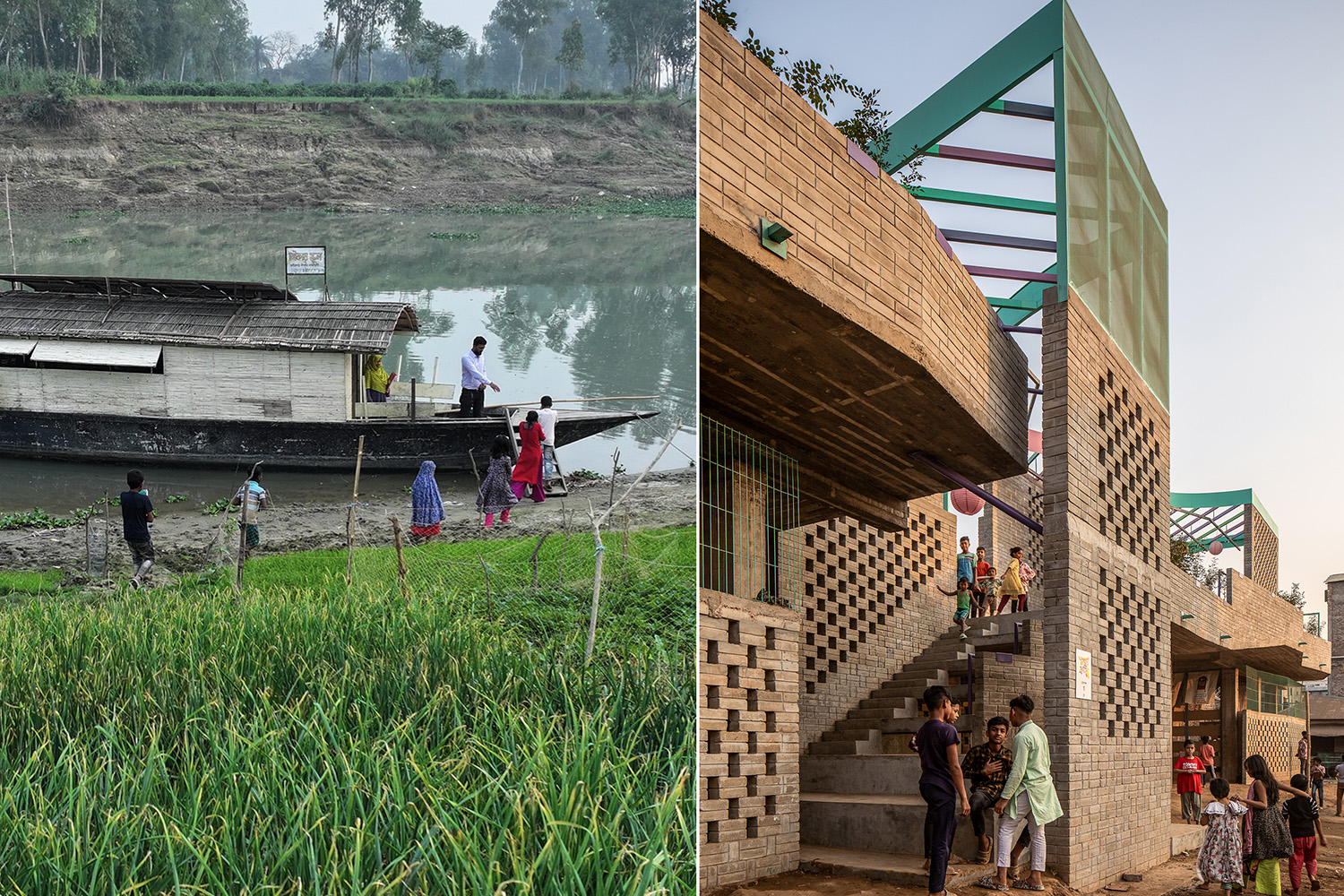
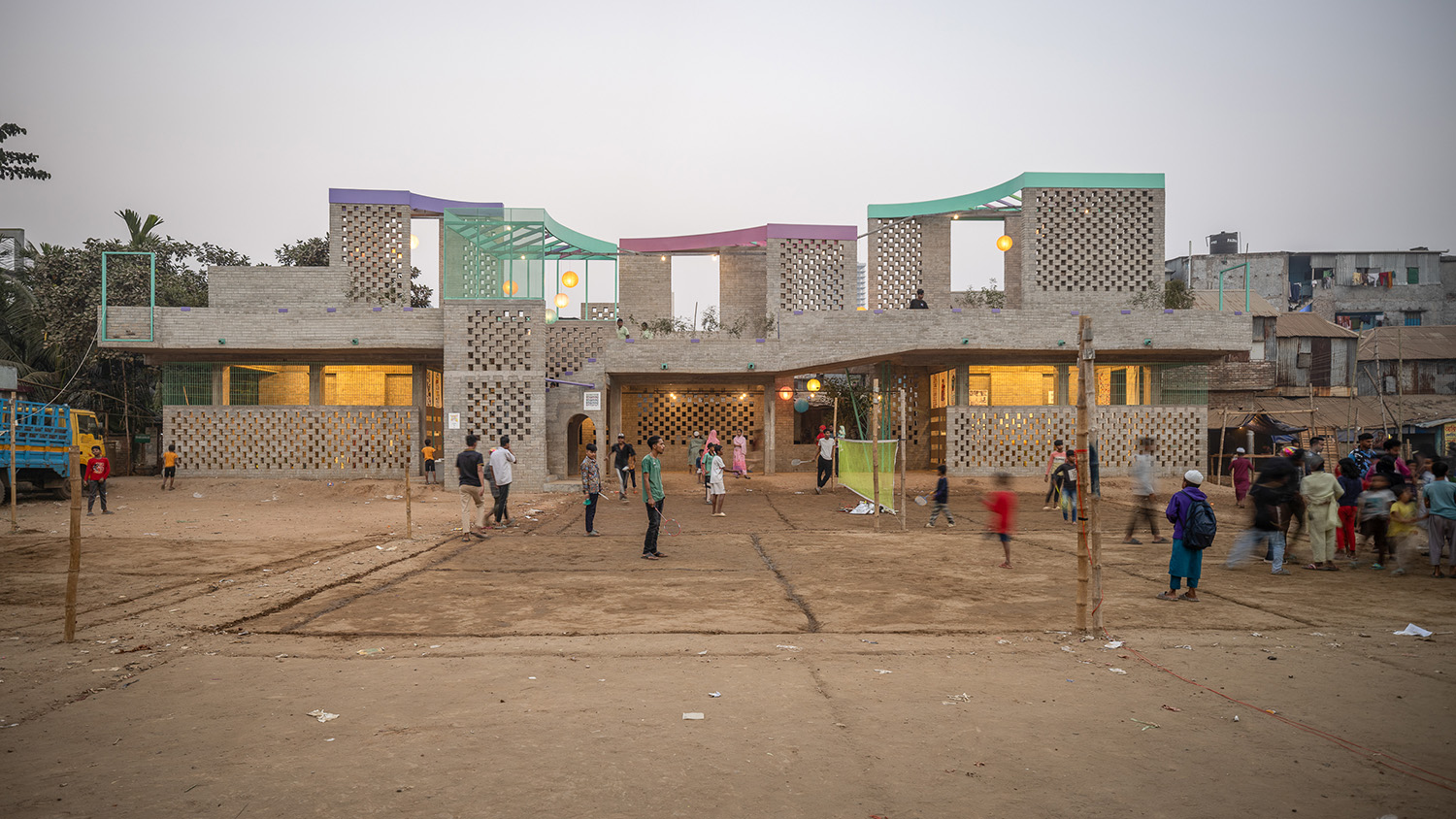
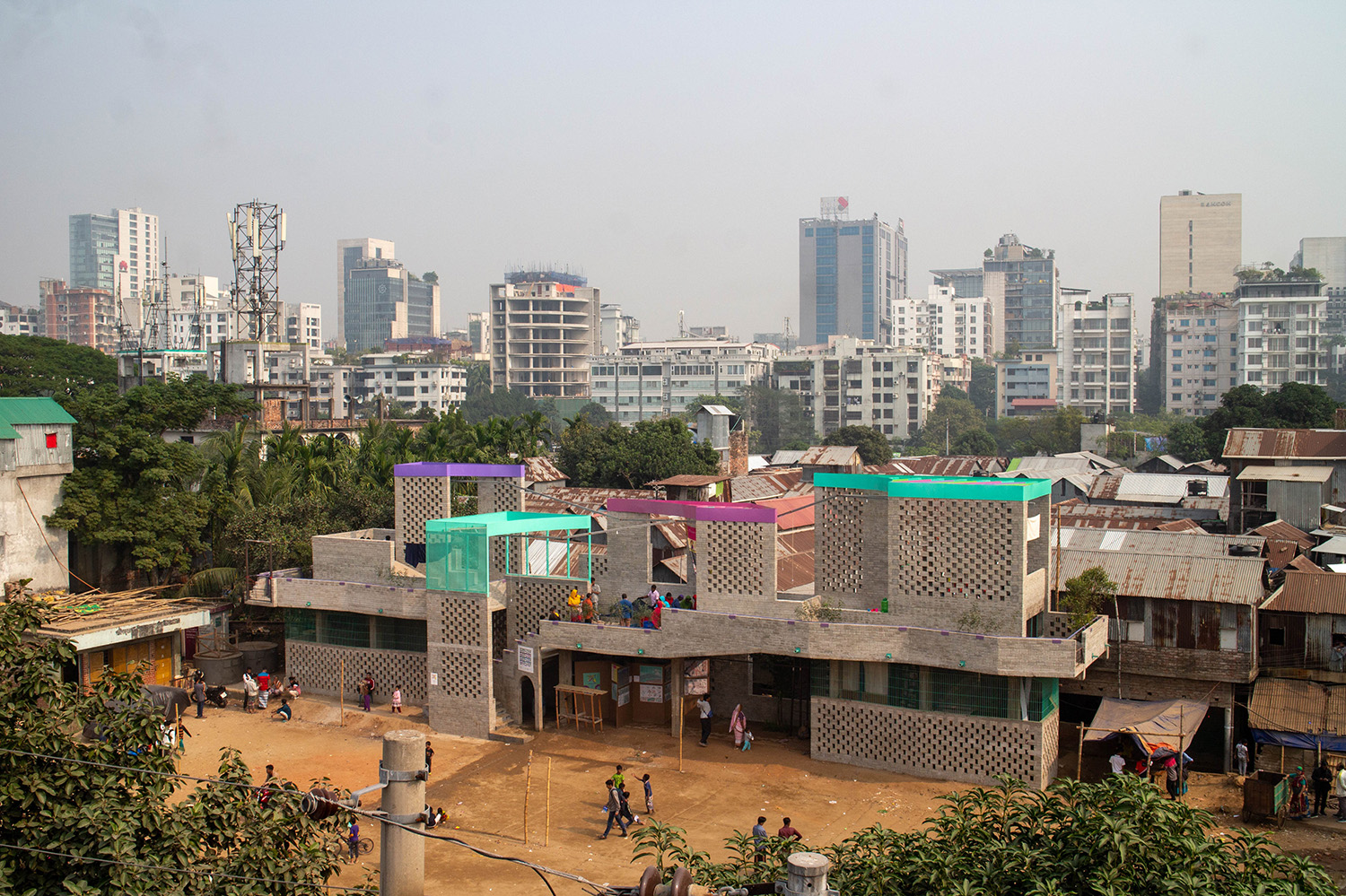
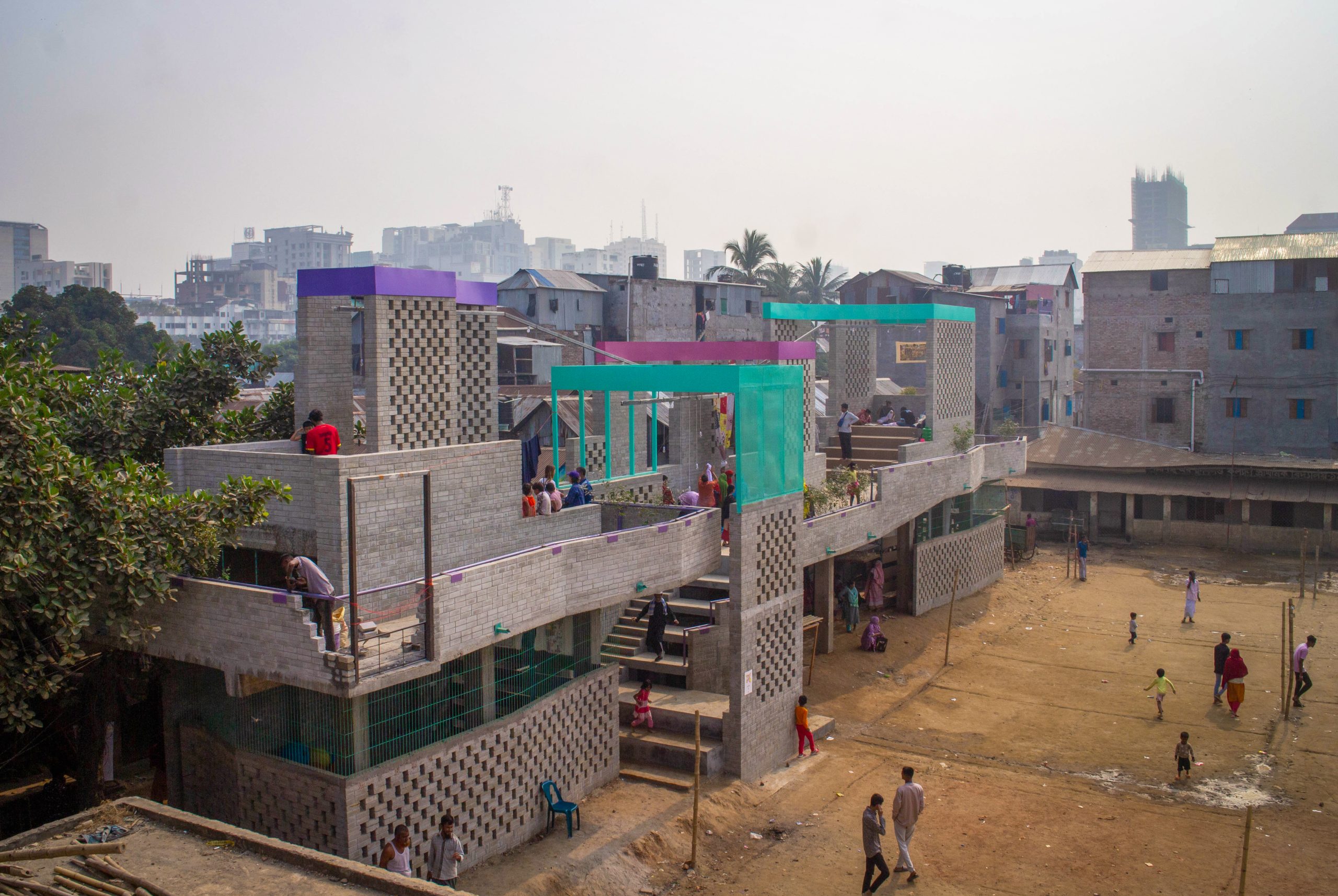
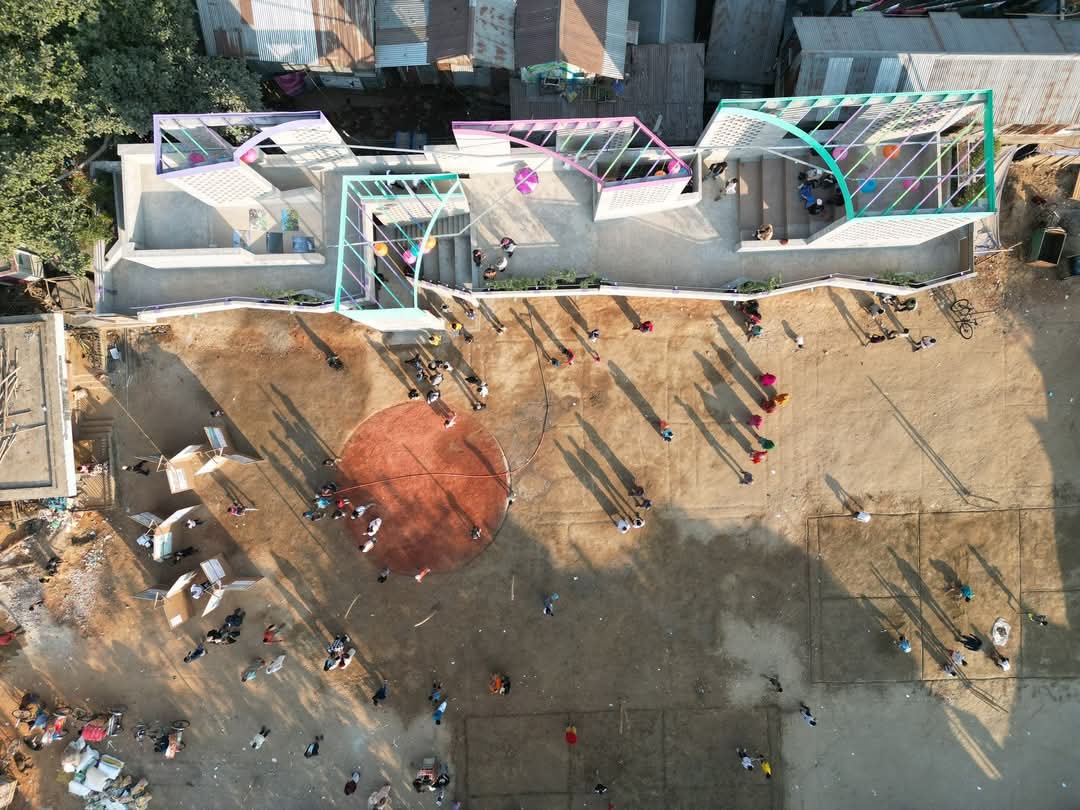
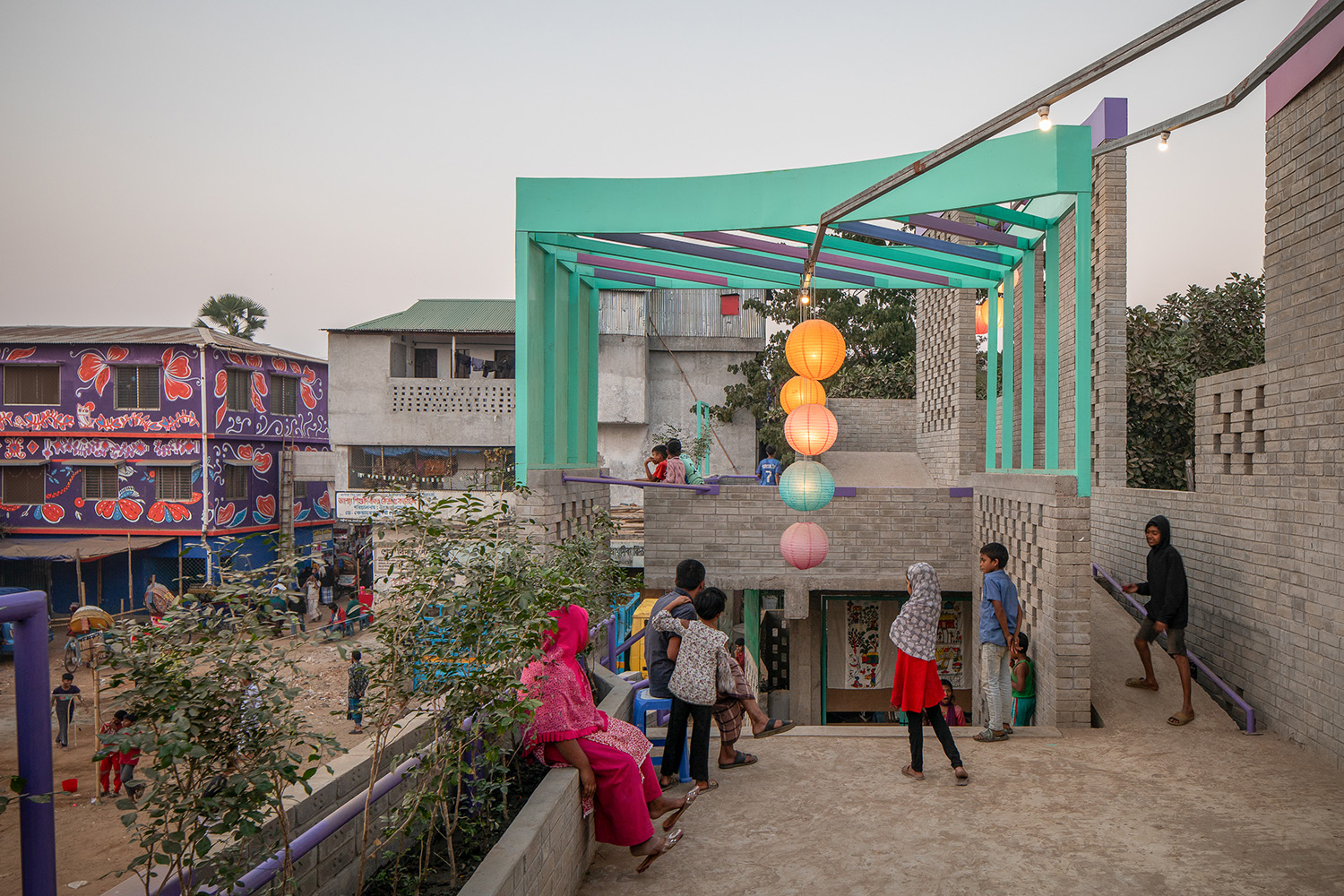
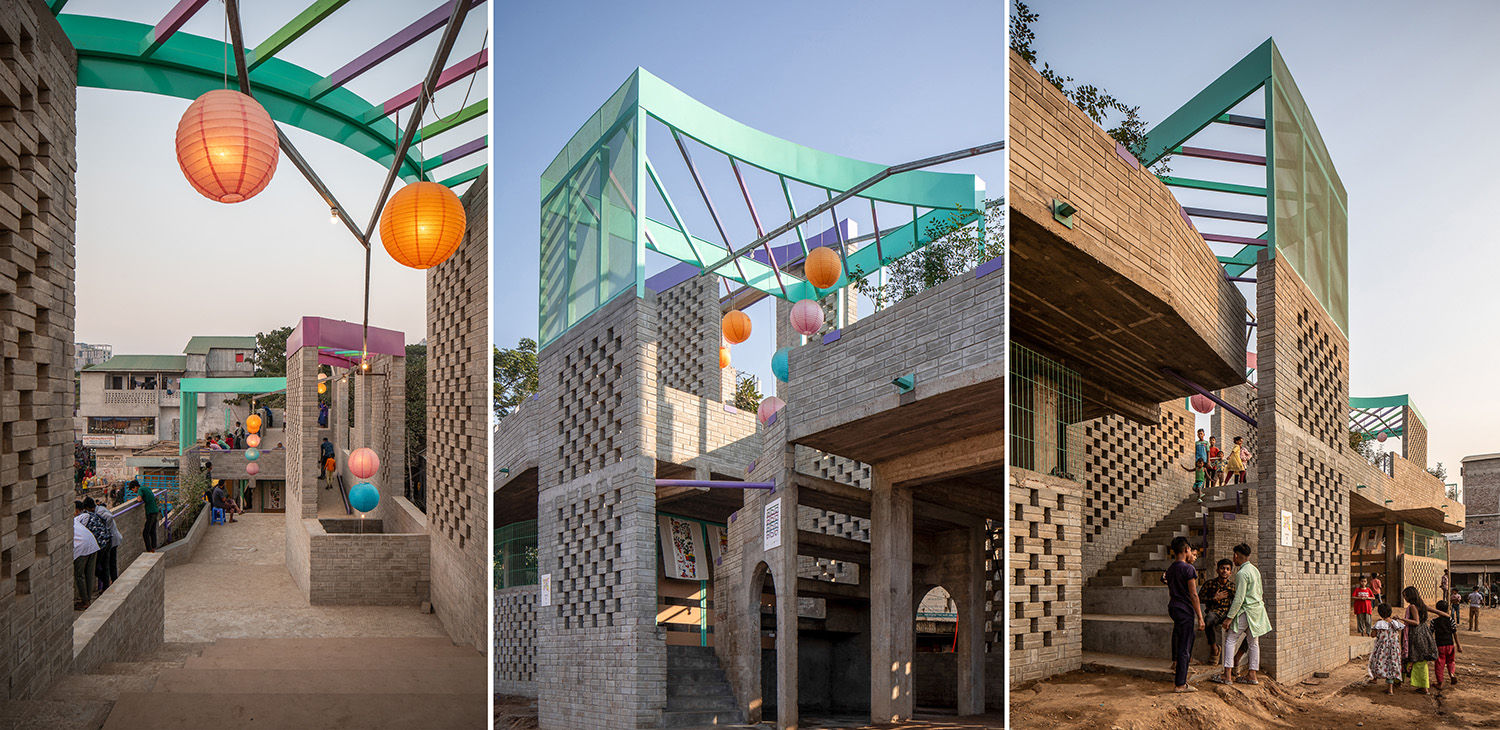
Built collaboratively with residents of Korail, the Machan project transformed a former dumping ground into a vibrant , flexible public space for art, learning, and community dialogue. The award committee praised its “powerful simplicity,” noting that it intervenes architecturally only where truly needed. Built collaboratively with local residents, the project was described as “playground architecture”—open, adaptable, and deeply rooted in everyday life.
“The result feels like ‘playground architecture’ – open, adaptable and deeply rooted in everyday life,” stated the committee. “With minimal means, it brings culture to the forefront of community building, challenging elitist assumptions about who produces culture and how.”
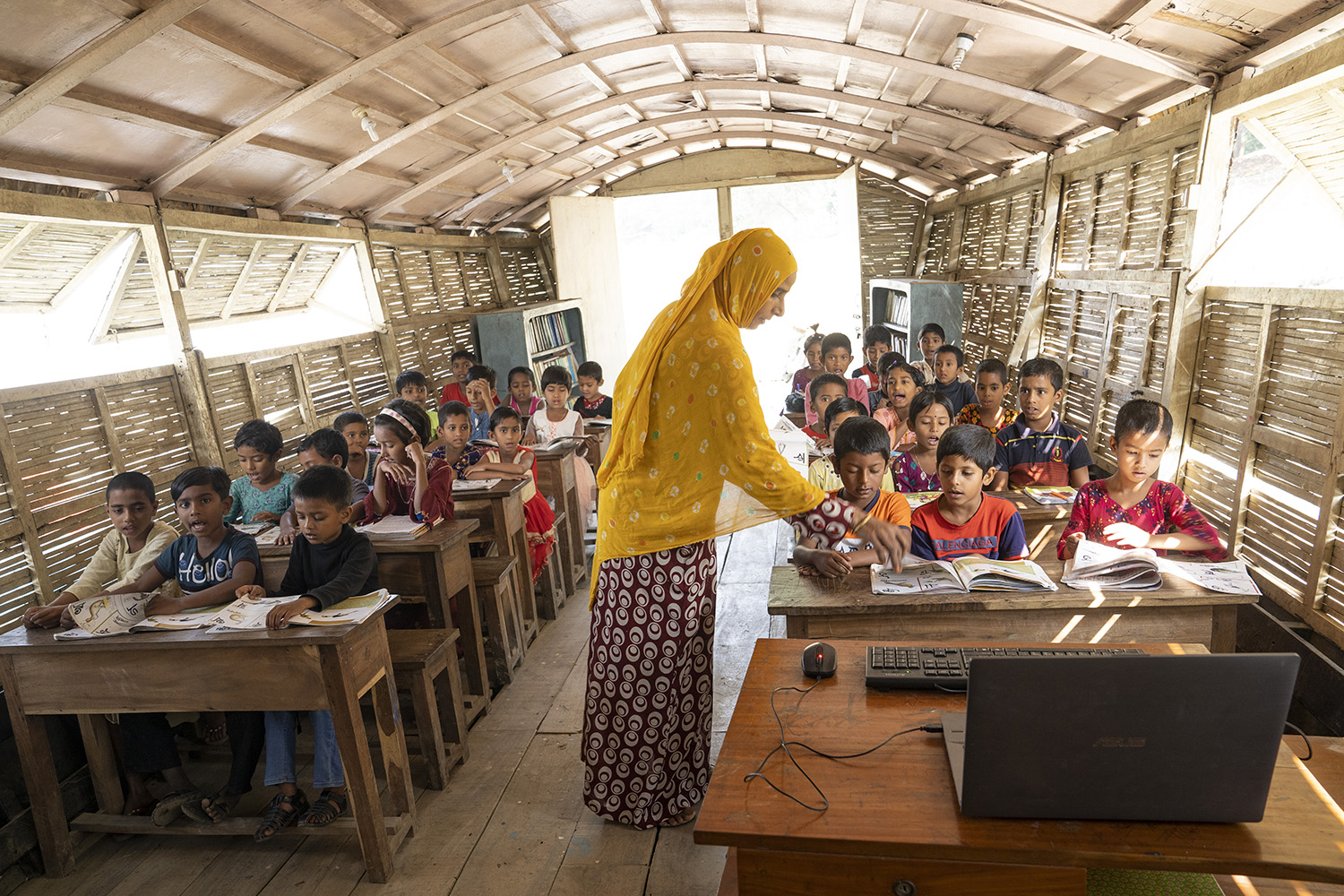
A female teacher conducts a class for the students of grade one at a boat school at Chatmohor, Pabna. Photo: Abir Abdullah, Shidhulai Swanirvar Sangstha
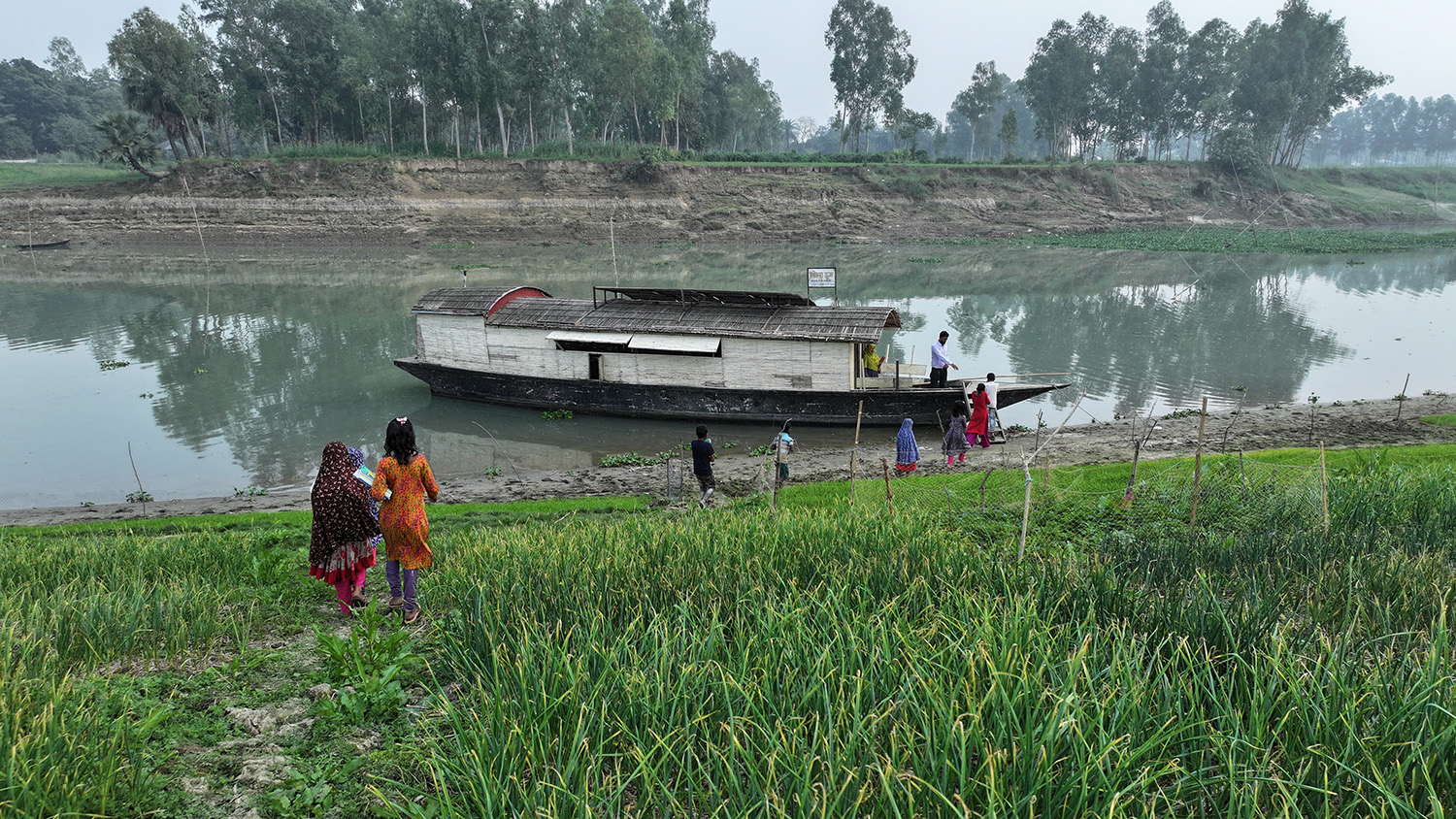
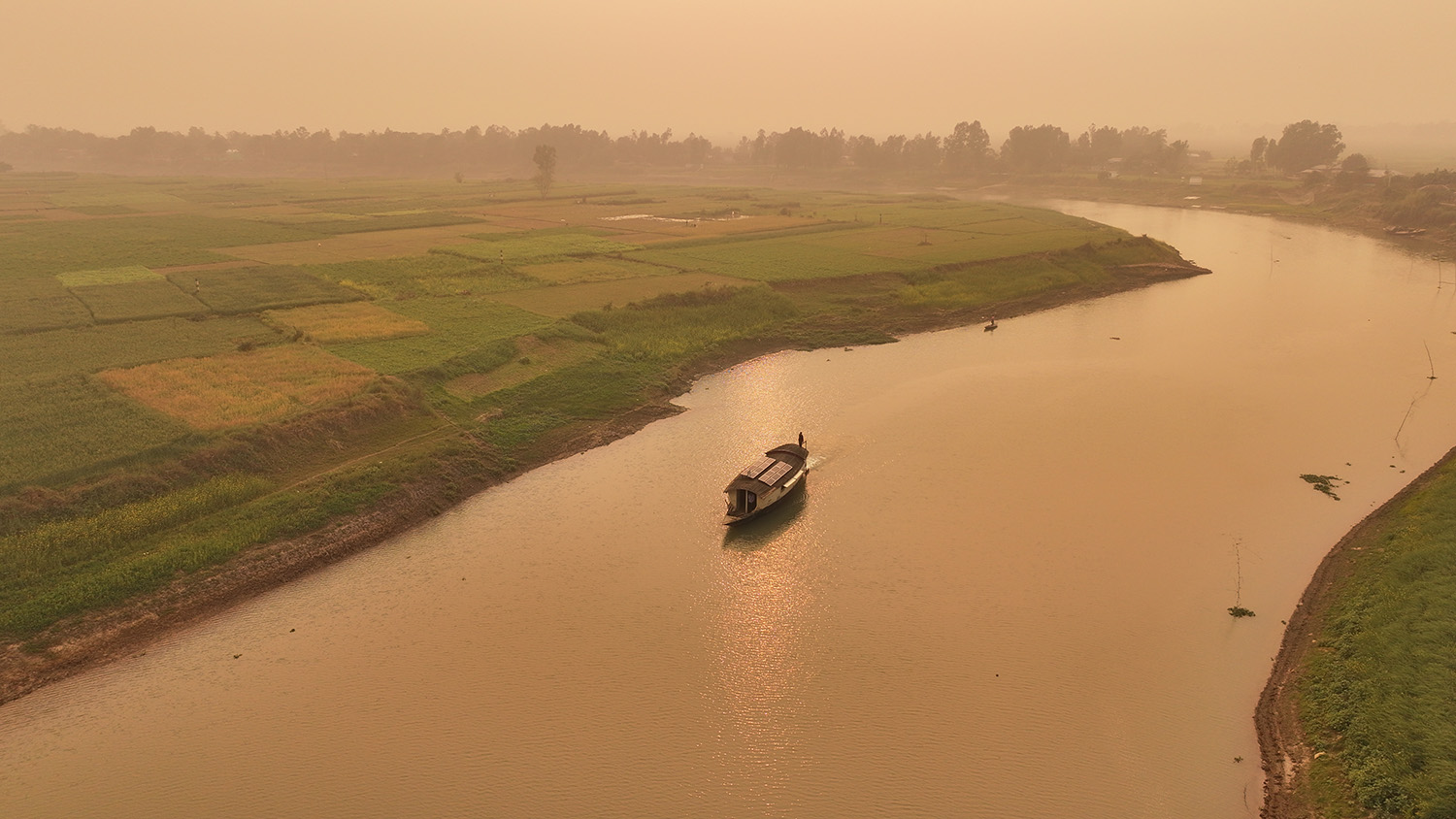
The Floating Schools initiative, run by Shidhulai Swanirvar Sangstha, uses boat-based schools to support community resilience along the Gumani River. The design was lauded for its adaptive approach to climate change, “embracing water” rather than resisting it.
“Built with local materials and traditional knowledge, the floating structures bring learning, care and opportunity to remote communities – bringing the school to the people, instead of the people to the school,” the committee noted. They highlighted the project’s “cultural sensitivity, ecological intelligence, and flexibility.”
Each award recipient receives a grant to further develop their work. The complete list of 2025 awardees can be viewed on the Ammodo Architecture Award website.
The Korail settlement, home to over 80,000 people, sits beside Dhaka’s affluent neighbourhoods of Banani and Gulshan-Baridhara. While its residents primarily work in waste recycling, street vending or domestic labour for the surrounding city, Korail’s vibrant contribution to Dhaka’s cultural life remains largely unrecognised.
The project Machan, developed by the Dhaka-based collective Paraa, challenges this oversight by placing creativity, learning and care at the centre of civic life. The project is a key part of the wider Korail: City of Culture initiative, which grew from long-term collaboration with residents, youth groups and community leaders to promote art and participation as tools for community building.
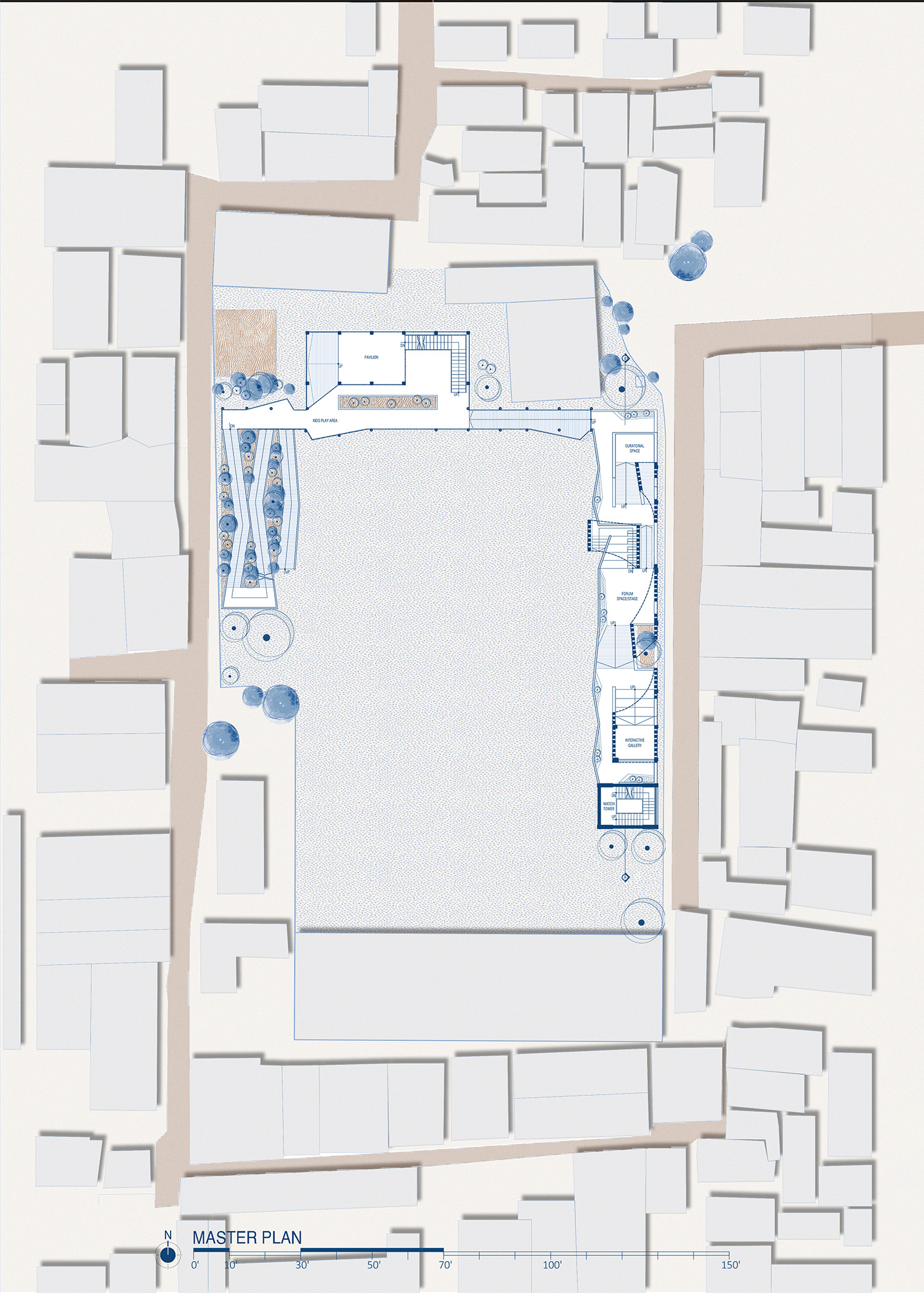
The name – Machan, meaning ‘platform’ in Bangla – captures its essence: a structure that supports and connects. It stands at Ershad Maidan, one of Korail’s few open spaces, long used for dumping waste. Paraa worked with local volunteers, students and collaborators including Floating University Berlin to transform the site into a shared stage for expression. Over 60 workshops and residencies shaped the design, bringing together residents and young designers through storytelling, model-making and hands-on construction.
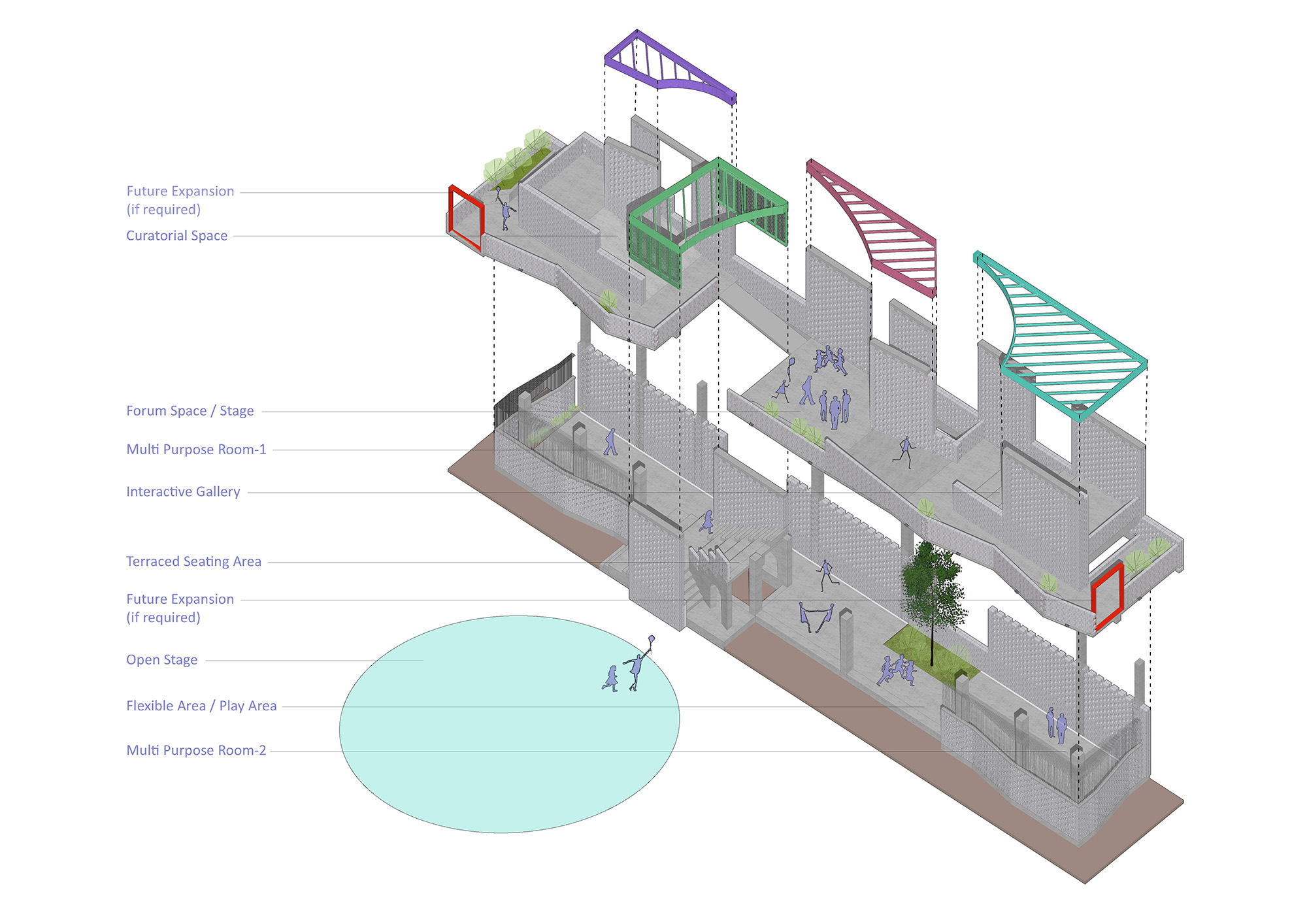
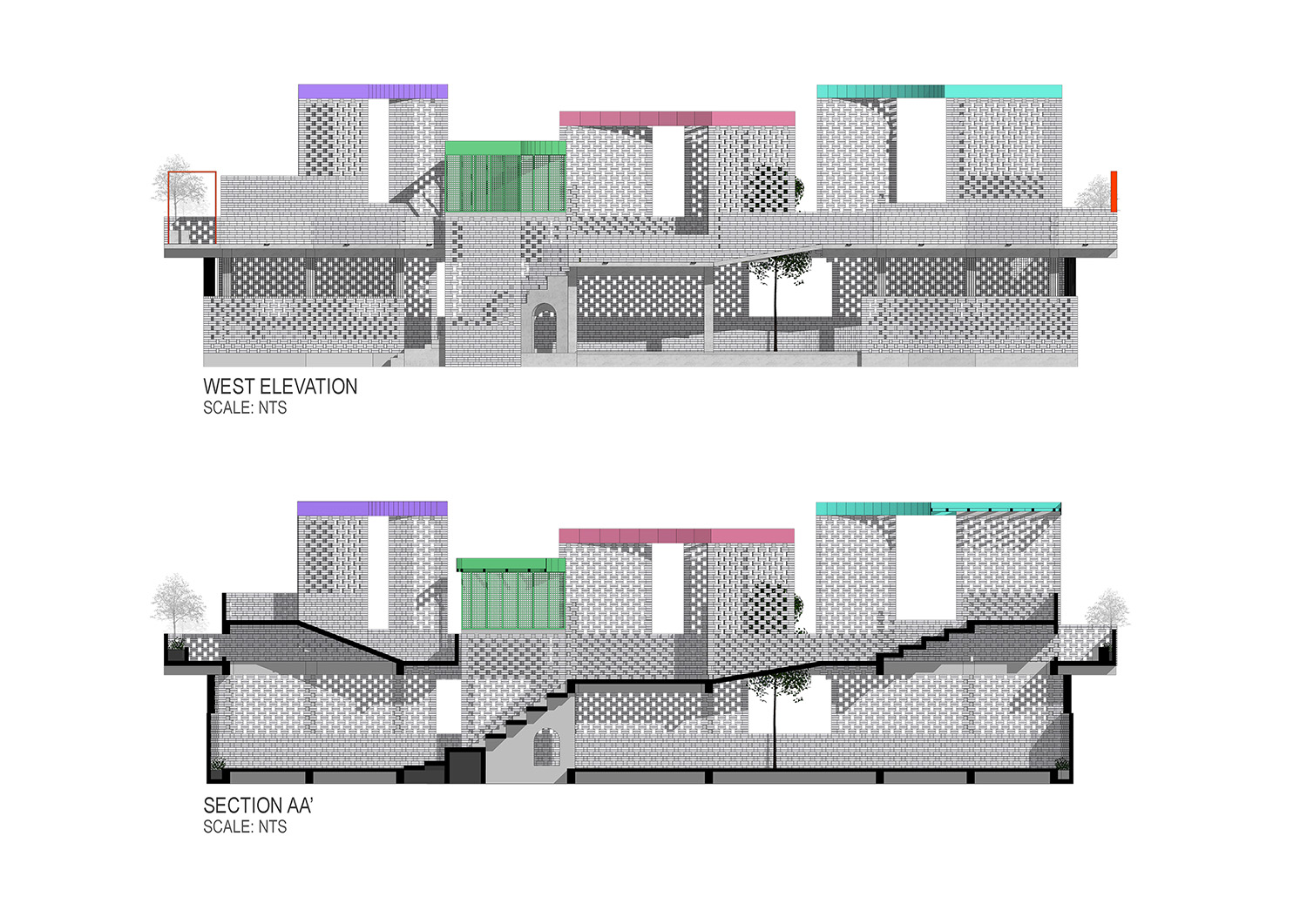
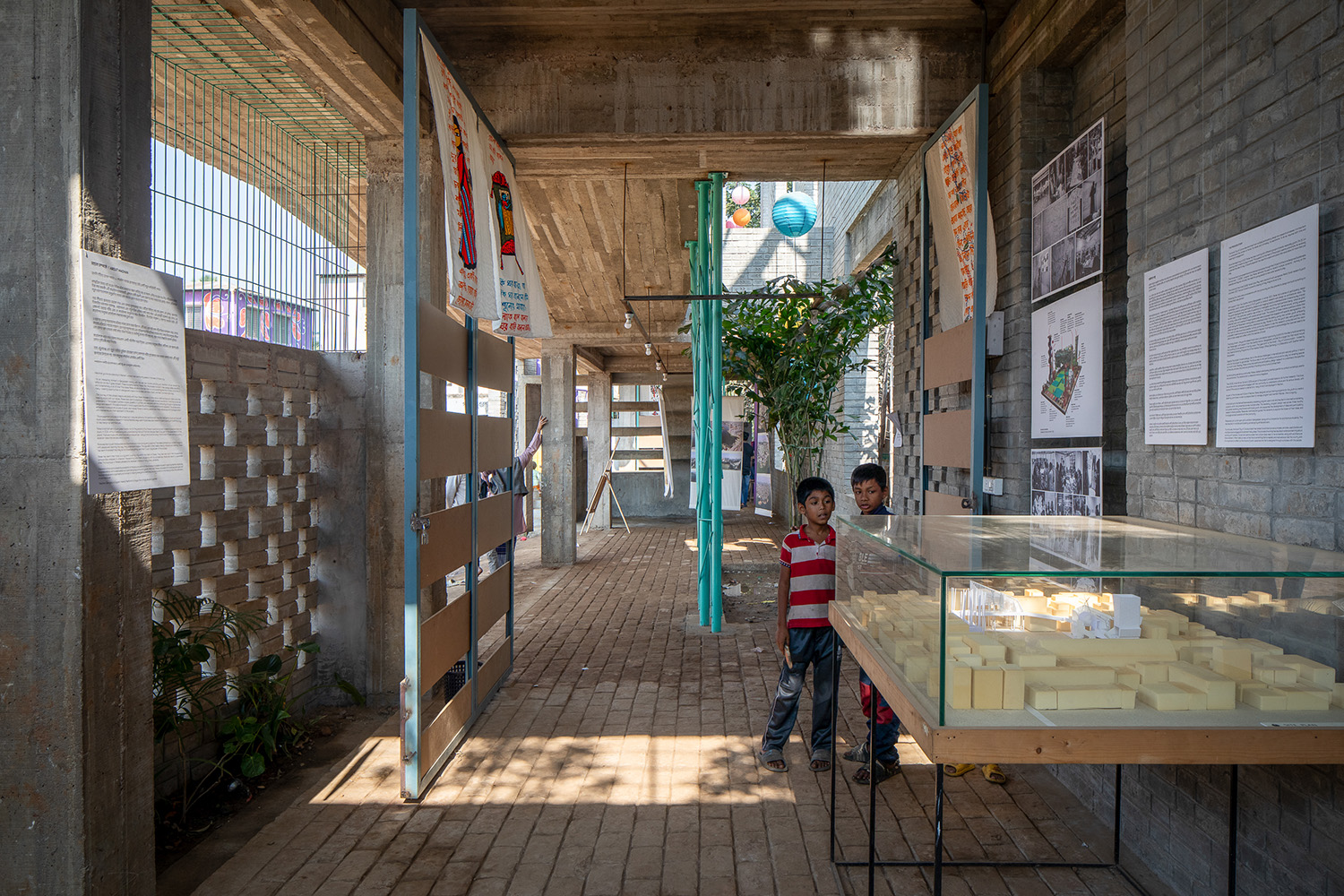
Architecturally, the project reinterprets the traditional Bengali pavilion as a light, permanent structure – robust yet porous, civic yet playful. A simple concrete frame supports two levels designed for openness and flexibility. On the ground floor, two semi-enclosed rooms host workshops, exhibitions and meetings. Large folding doors merge them into one shaded space facing the playground. A wide stair doubles as seating, turning circulation into an amphitheatre for performances and assemblies. The brick-paved ground absorbs heat and is easy to maintain.
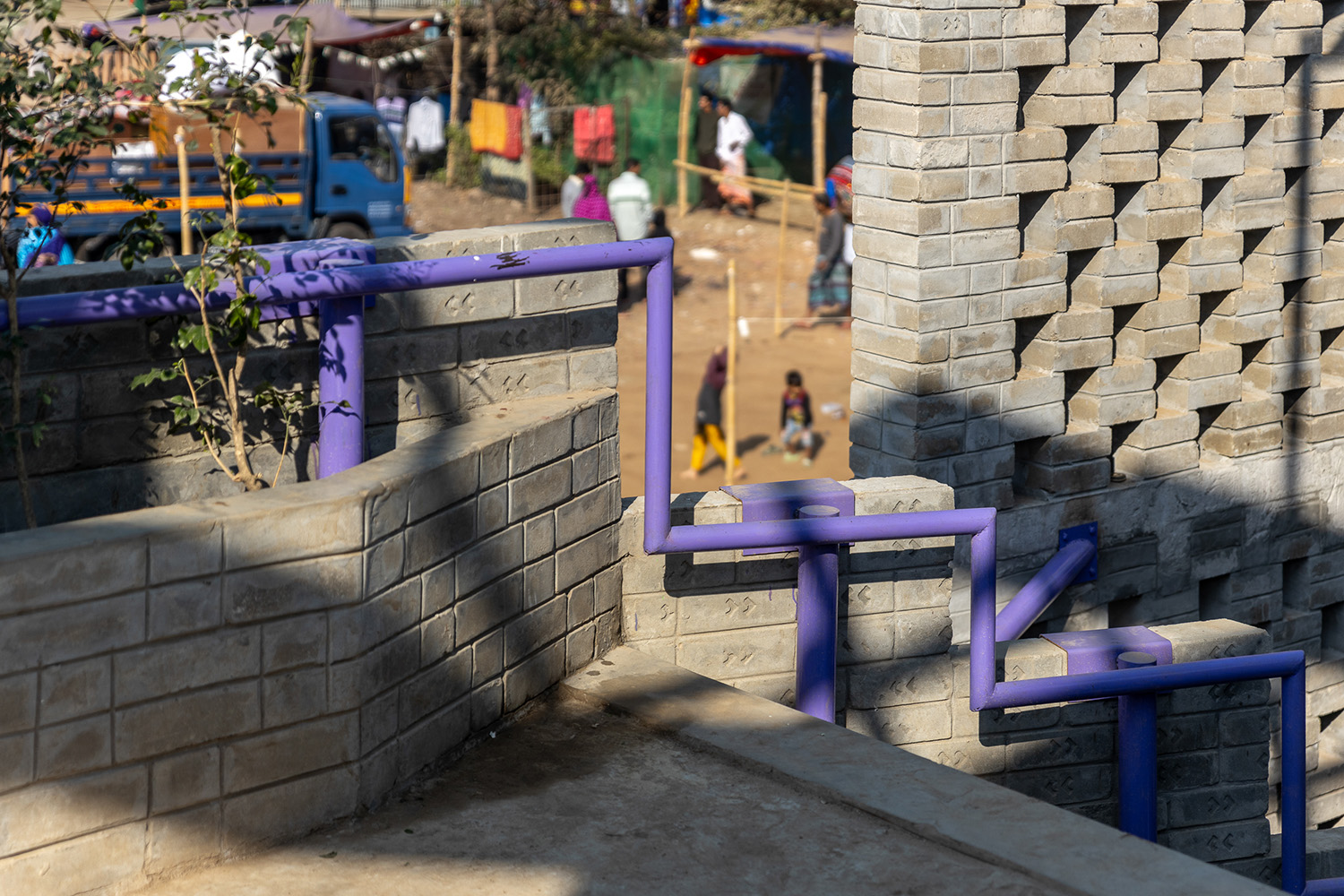
The upper level breaks the symmetry, creating varied pockets for use: large steps for sitting, perforated brick enclosures for private activities such as women-led gatherings and open terraces overlooking the field. Light and air flow freely through ventilated brick façades that blur the boundary between inside and outside, turning the building into a mediator between climate and community.
Machan’s restraint is deliberate. There are no enclosed rooms or decorative finishes, only what is essential for durability and comfort. The extended upper plate shades the ground floor, reducing heat gain. Built from locally produced concrete and porous brick, the structure allows natural ventilation throughout the year. Planters and pockets of soil bring greenery, letting residents grow plants and soften the concrete texture. Its simplicity makes it easy to maintain and adaptable for new activities.
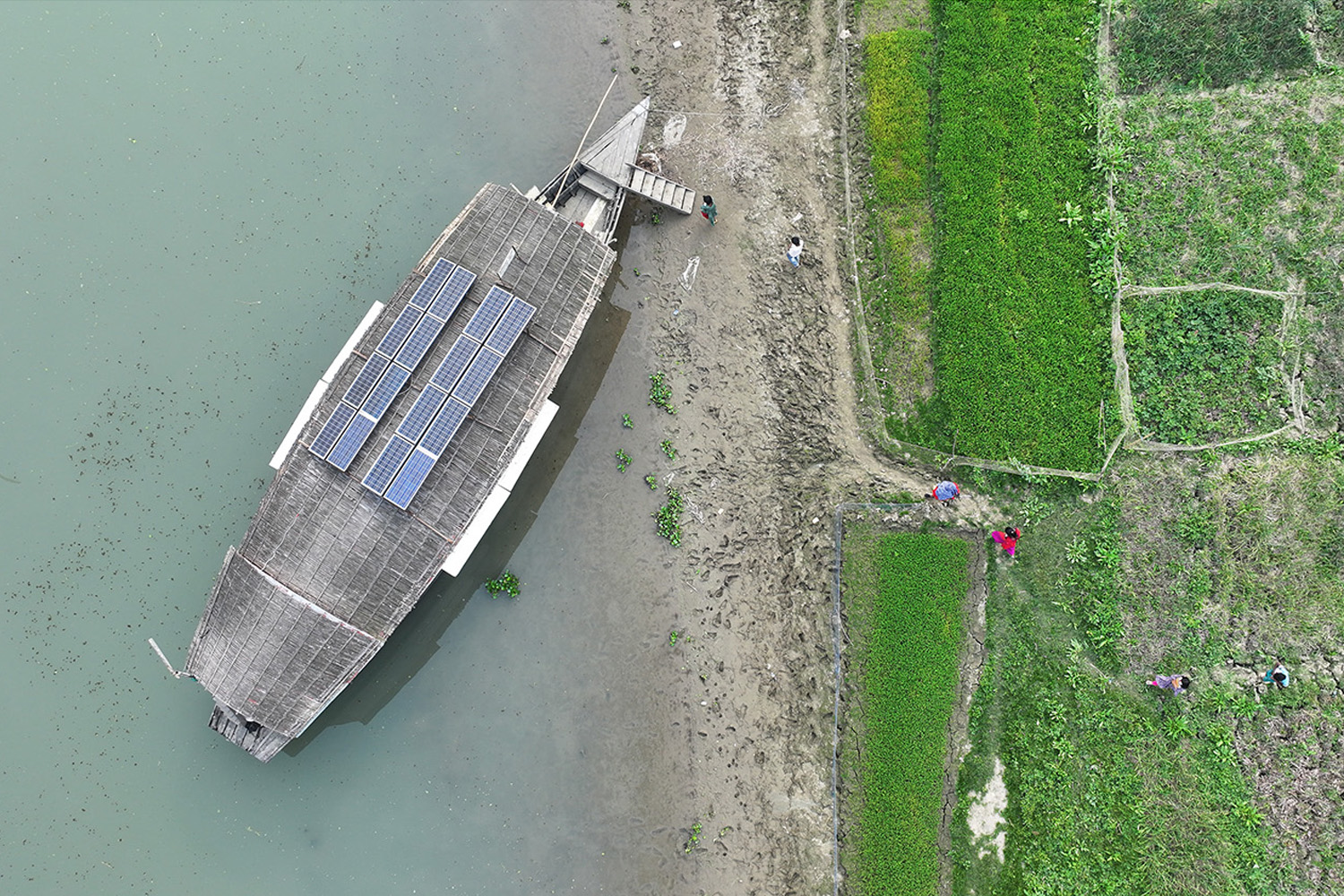
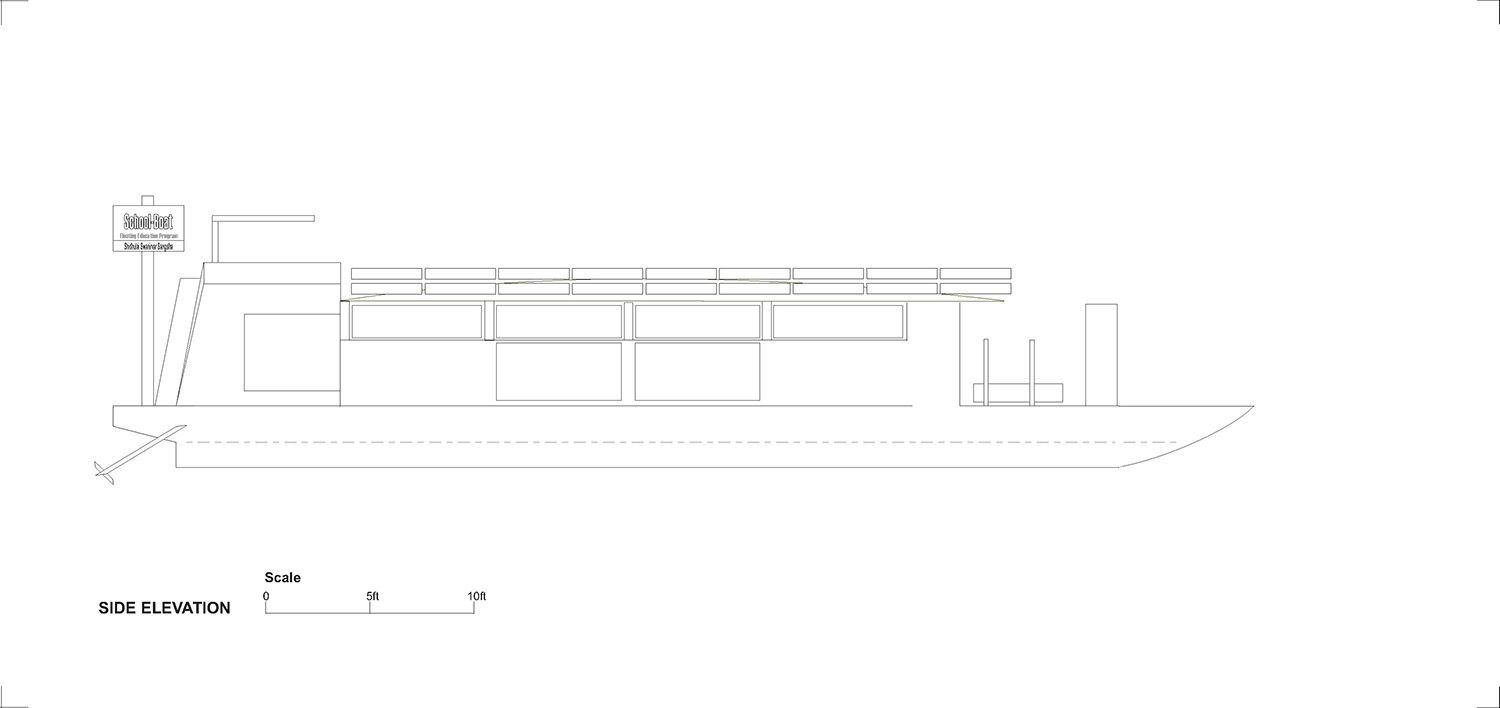
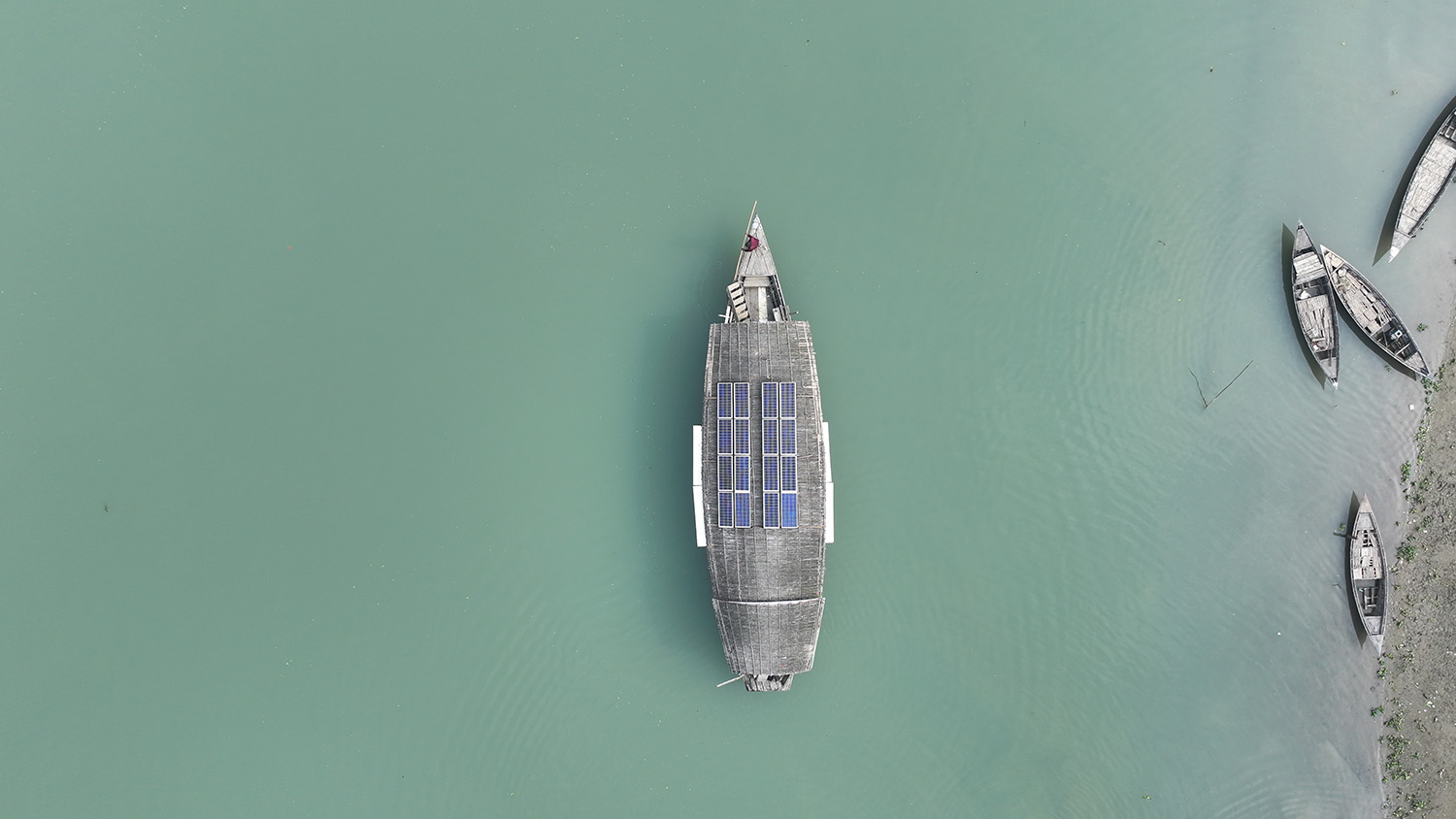
The Floating Schools initiative in Pabna District, Bangladesh, addresses the recurring challenge of education and healthcare access in flood-prone riverine regions. Developed by architect Mohammed Rezwan, the project combines architectural design, cultural continuity and climate adaptation through a fleet of five solar-powered floating structures, including two schools, a library, a training centre and a health clinic. These boats serve flood-prone communities along the Gumani River in the Faridpur and Bhangura subdistricts of Pabna. The initiative began as early as 2002, evolving over two decades into a mature system that became fully operational in 2021 along an 8-km stretch of the river.
The idea grew from a simple yet urgent problem: children could not reach school when floodwaters cut off their villages. Instead of building on land that was constantly submerged, Rezwan turned to the rivers themselves for solutions. Working closely with local communities, he transformed the boat – an everyday tool of survival – into a vehicle for education, empowerment and resilience. The boats are designed in-house and built by local boat builders, drawing on generations of traditional craftsmanship. Many members of the project team, including programme managers, boatyard supervisors and educators, come from the same communities the boats serve. Some former students have even returned as teachers, a living testament to the project’s long-term social impact.
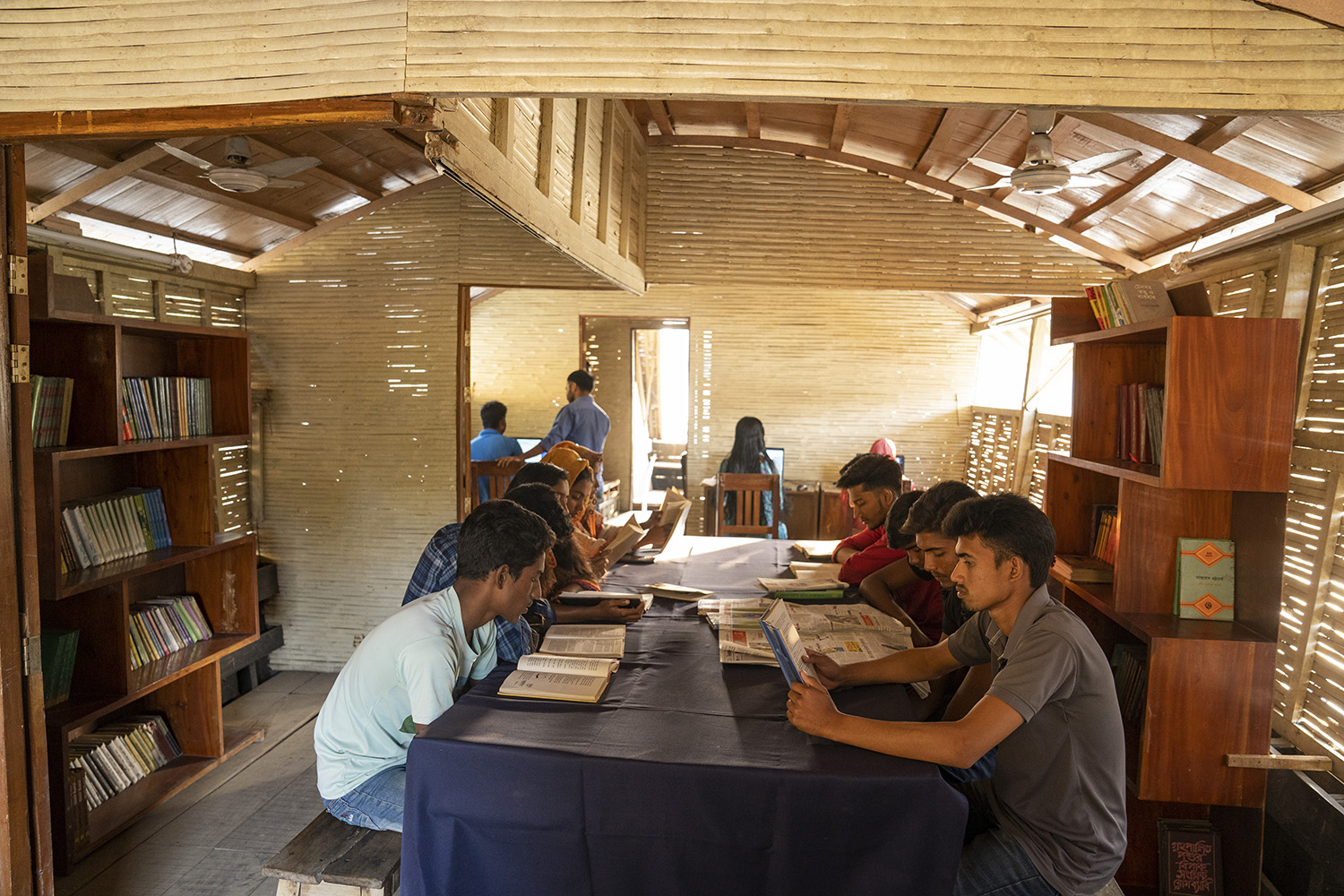
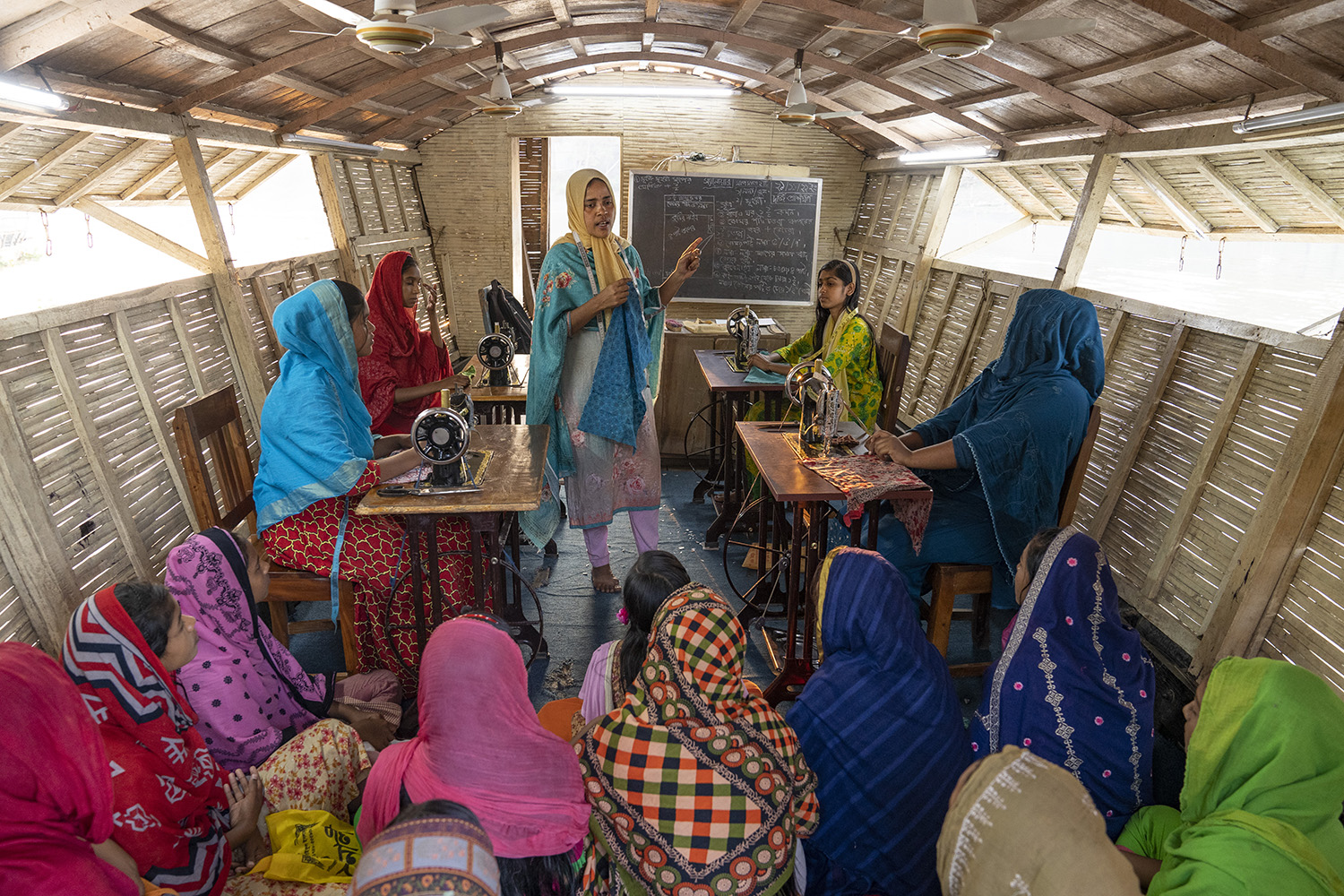
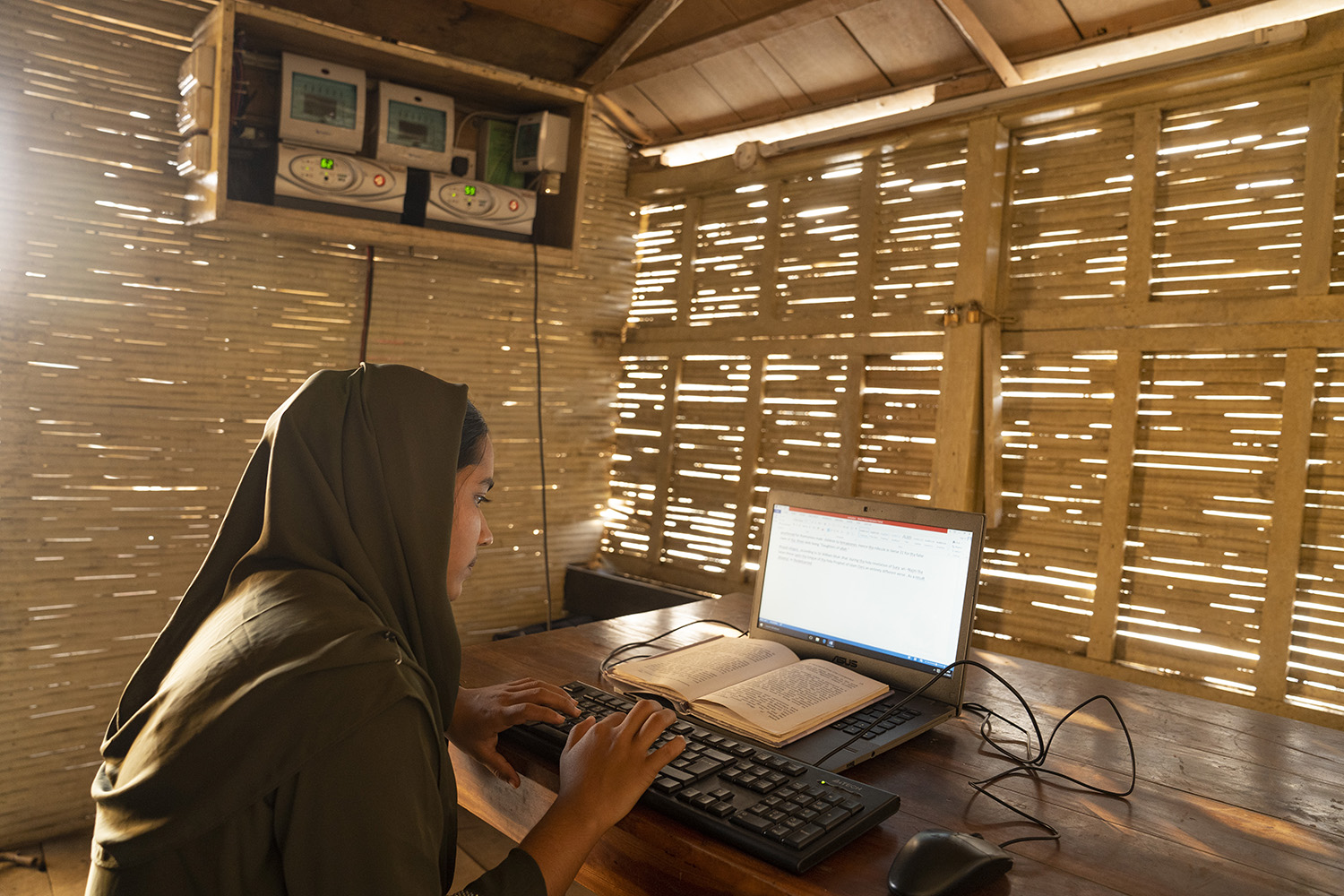
A female teacher conducts a class for the students of grade one at a boat school at Pabna. Photo: Abir Abdullah, Shidhulai Swanirvar SangsthaBoth male and female students read books at the boat library run by Shidhulai Swanirvar Sangstha, at Pabna. Photo: Abir Abdullah, Shidhulai Swanirvar SangsthaYeasmin Ara teaches in sewing training course for the village women and girls at a boat at Pabna. Photo: Abir Abdullah, Shidhulai Swanirvar SangsthaA village student practices typing using a laptop at the boat library run by Shidhulai Swanirvar Sangstha, at Pabna. Photo: Abir Abdullah, Shidhulai Swanirvar Sangstha
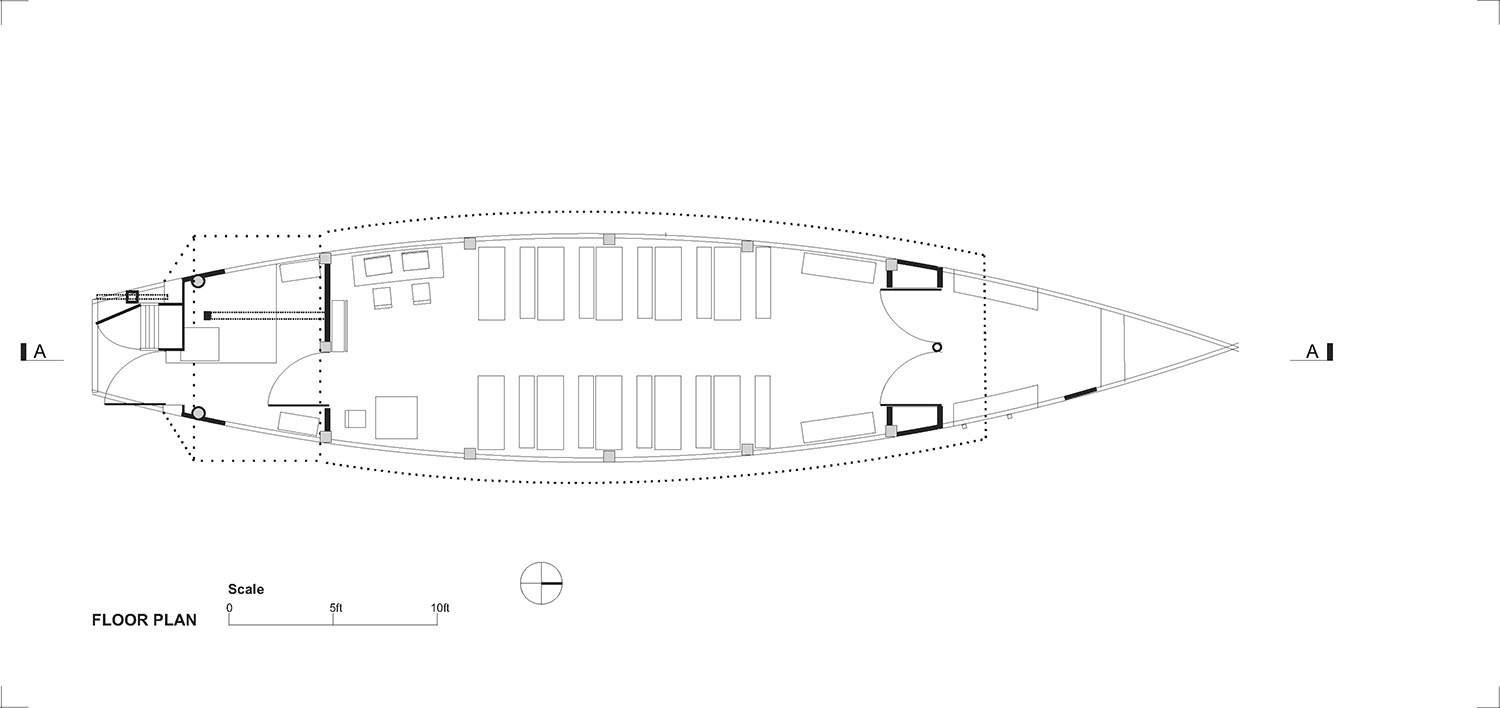
Each boat is carefully designed to respond to both environmental conditions and community needs. The fleet includes classroom boats for children, libraries with open shelving, training boats for sustainable farming and sewing, and mobile clinics providing primary healthcare. Every vessel is built in riverside yards using locally available, low-impact materials such as sal wood, bamboo and recycled tin sheets. Iron beams support column-free interiors, while curved, layered roofs are shaped to deflect monsoon rains and maintain balance. Flat-bottomed hulls allow the boats to navigate shallow waters during the monsoon season. Solar panels provide energy for lighting, learning equipment and medical tools, while old kerosene lanterns have been repurposed as solar light casings – combining cultural familiarity with renewable energy innovation.
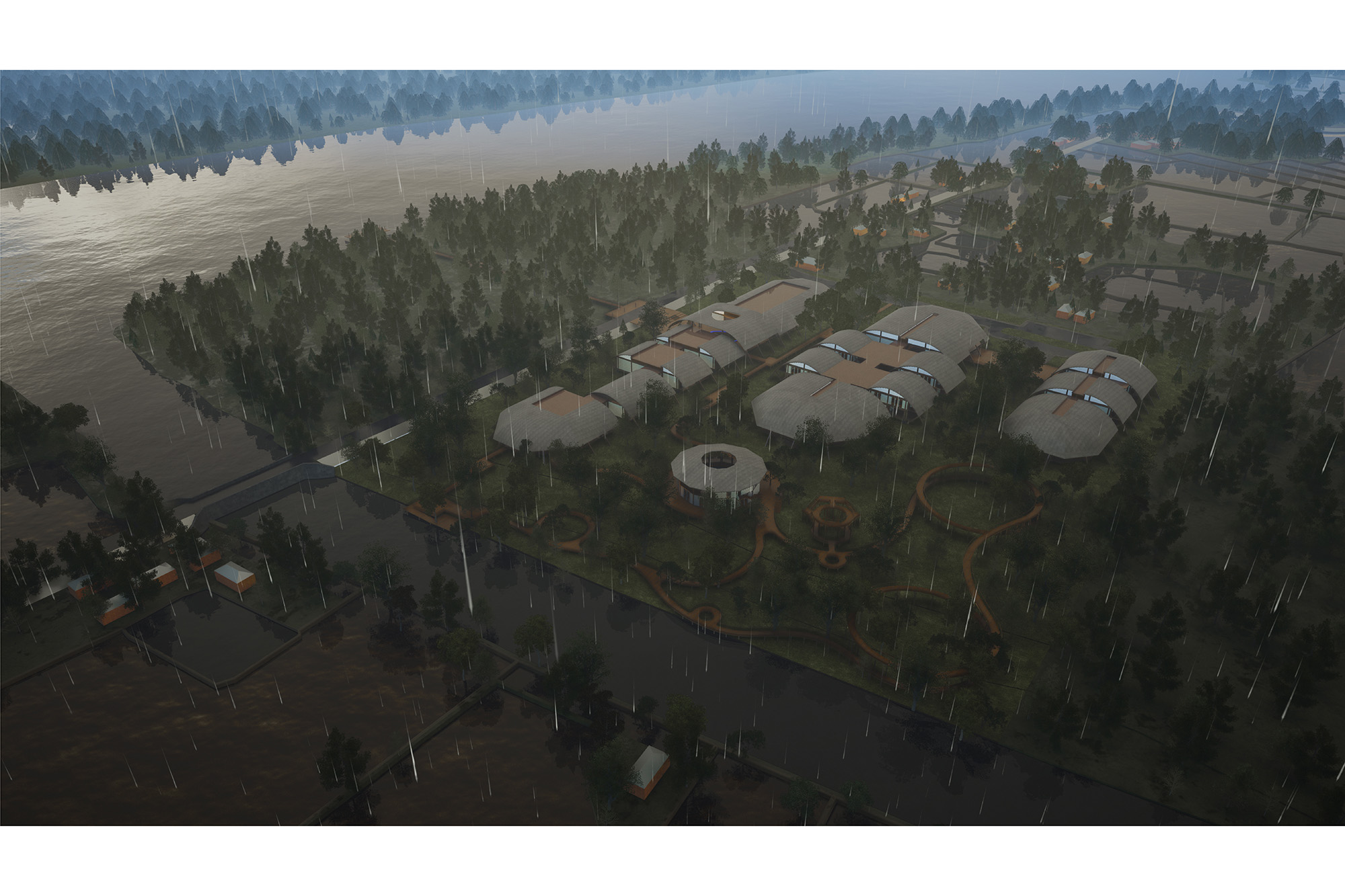
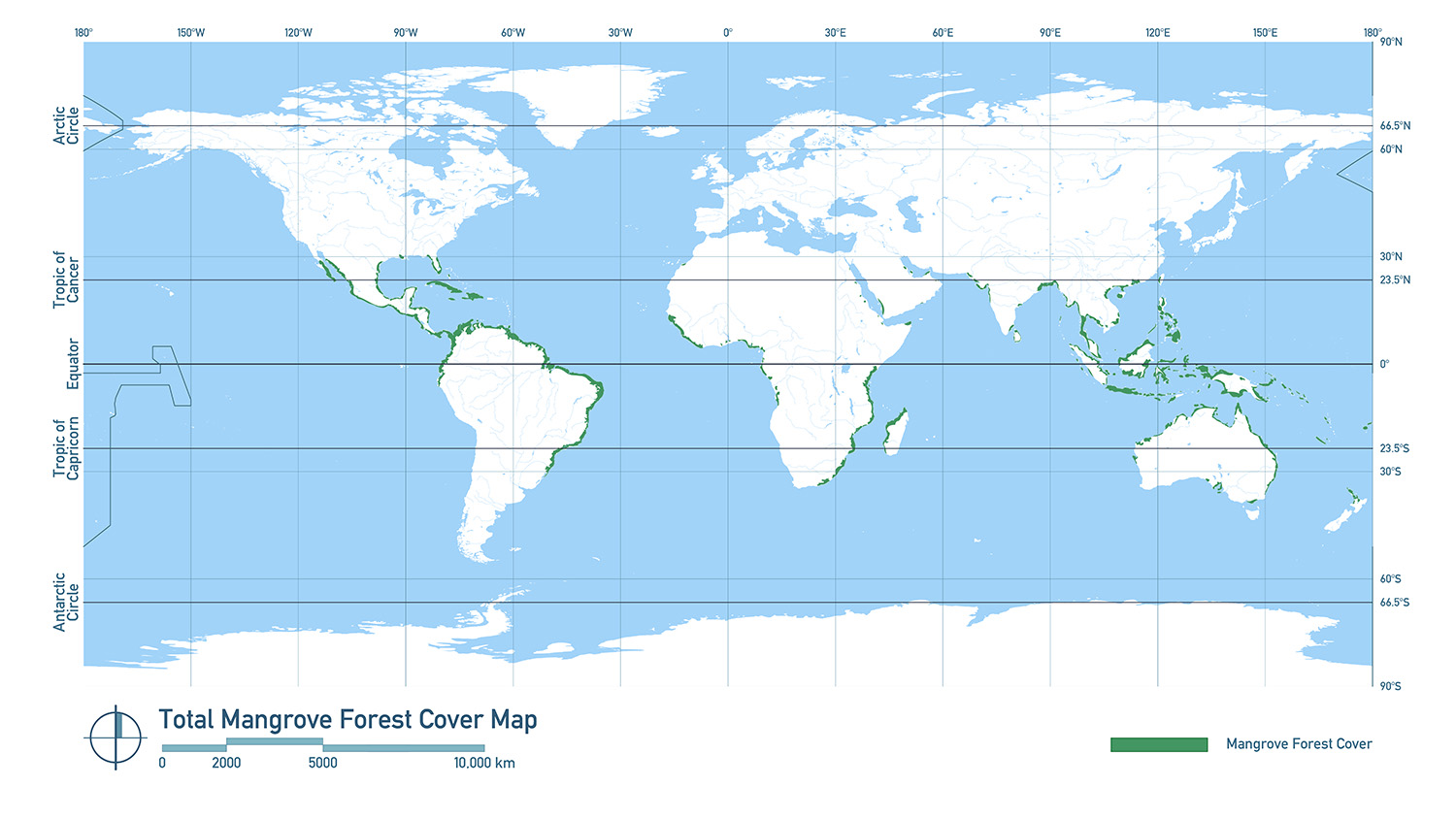
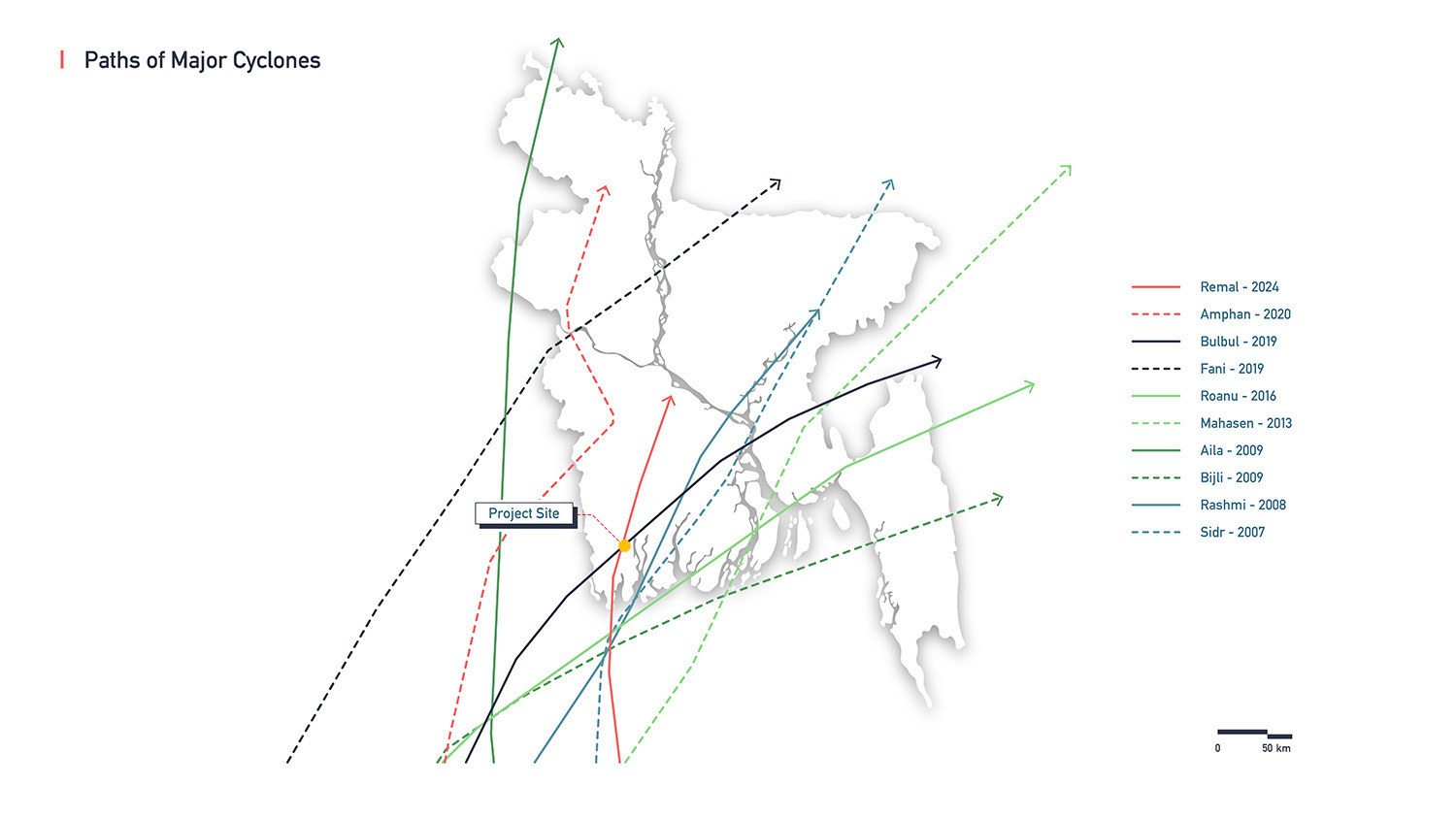
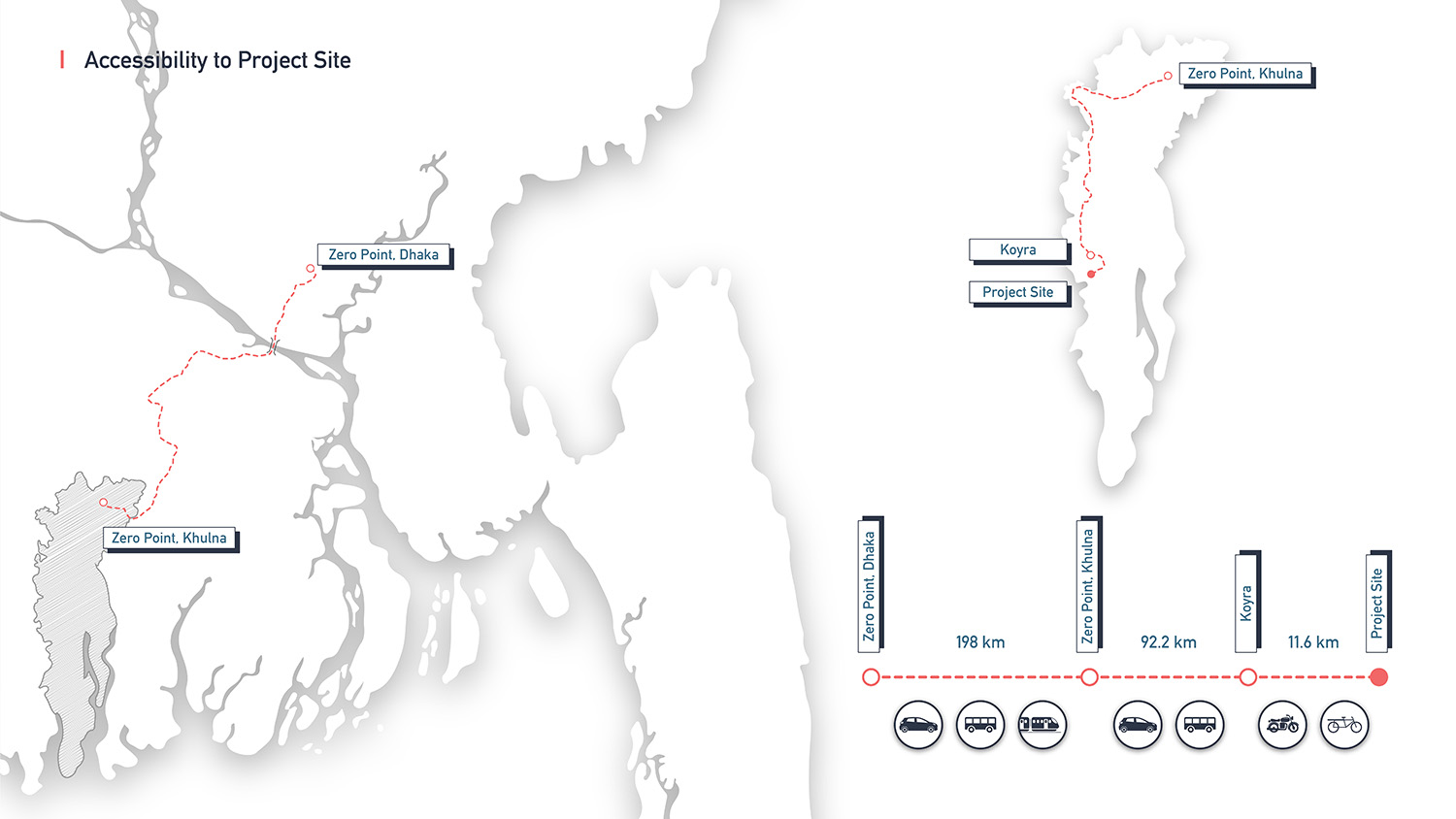
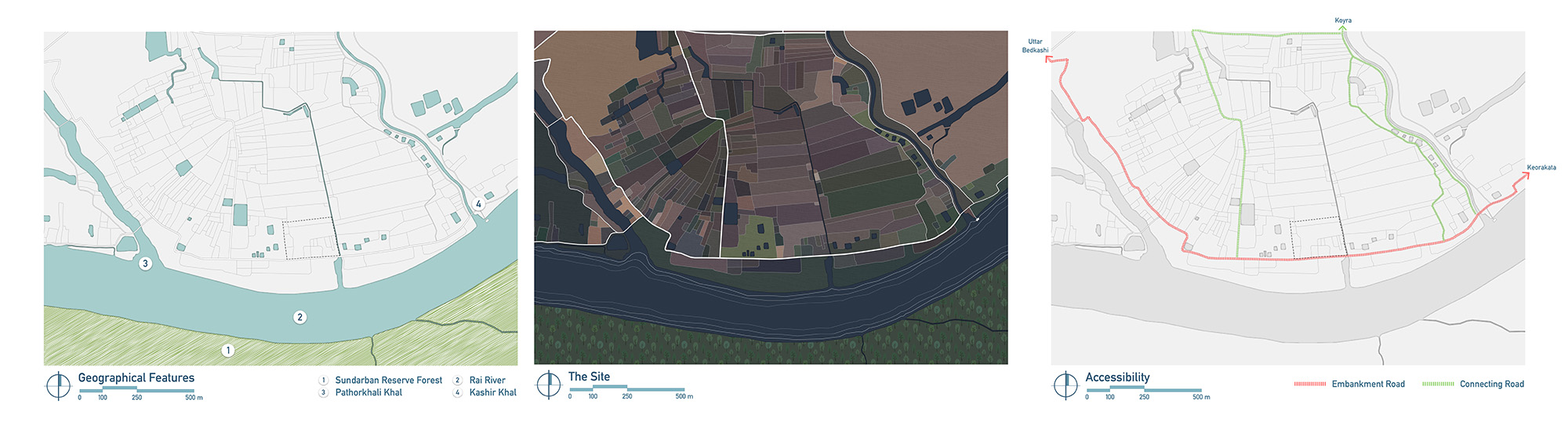
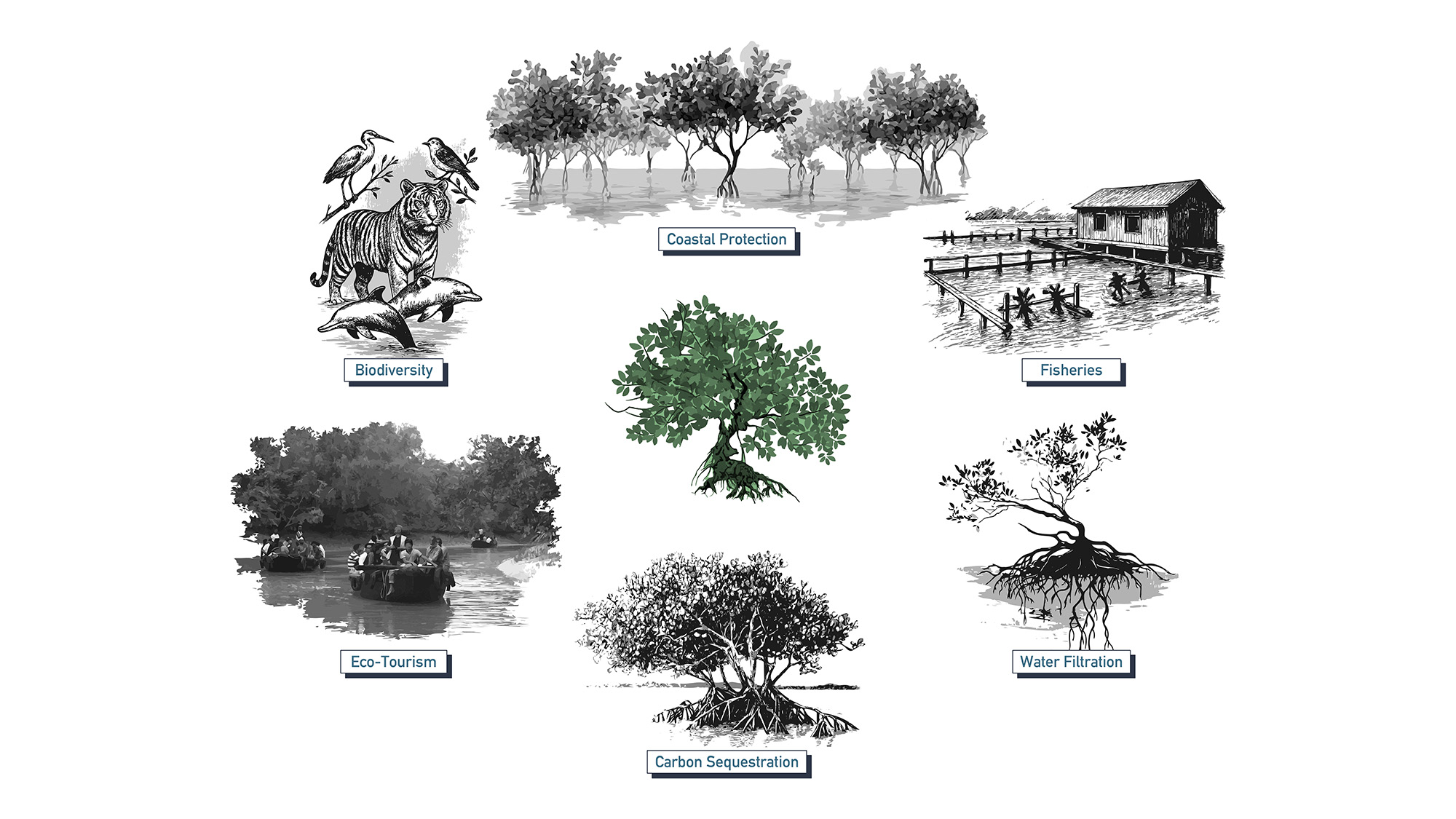
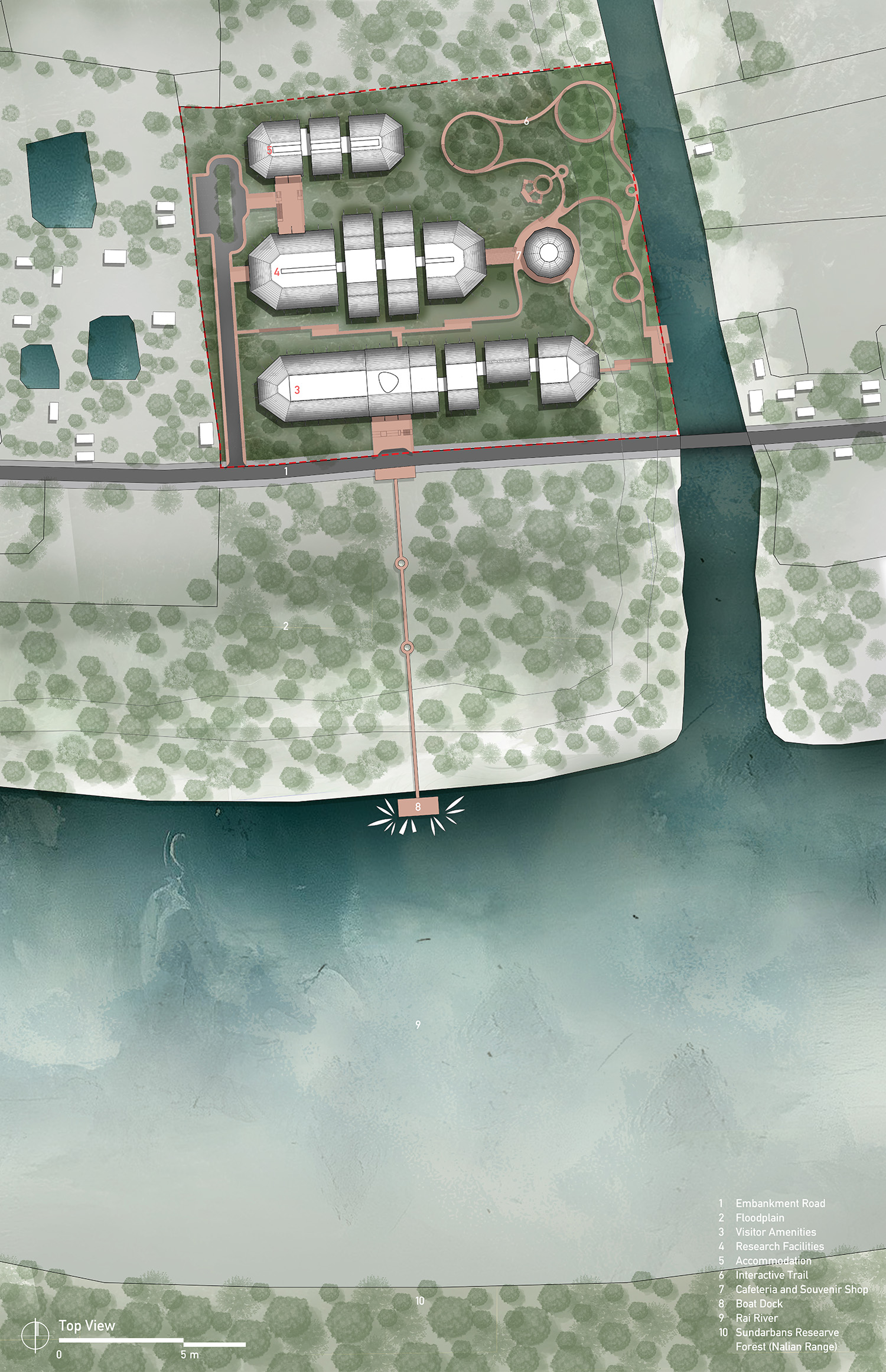
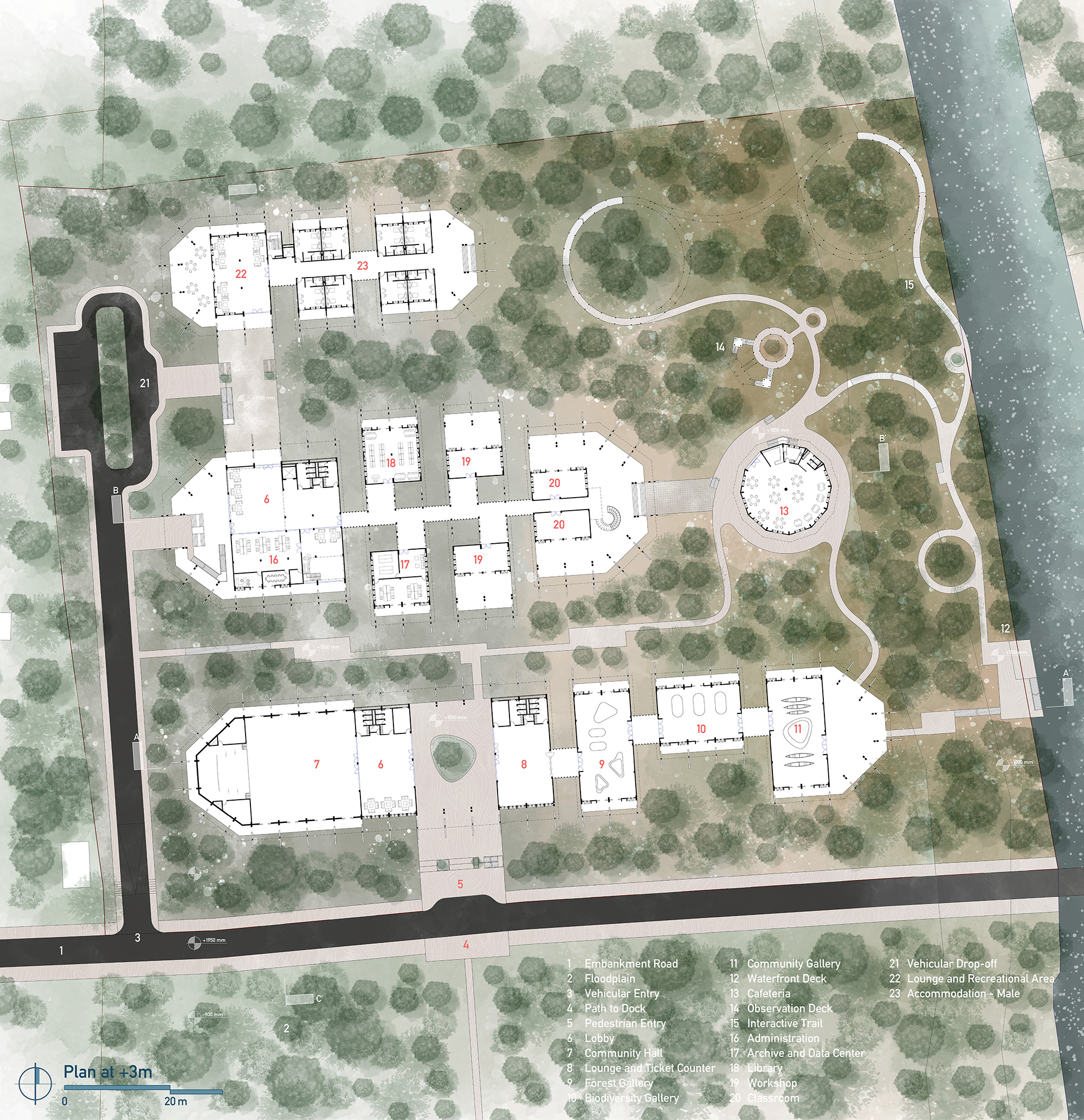
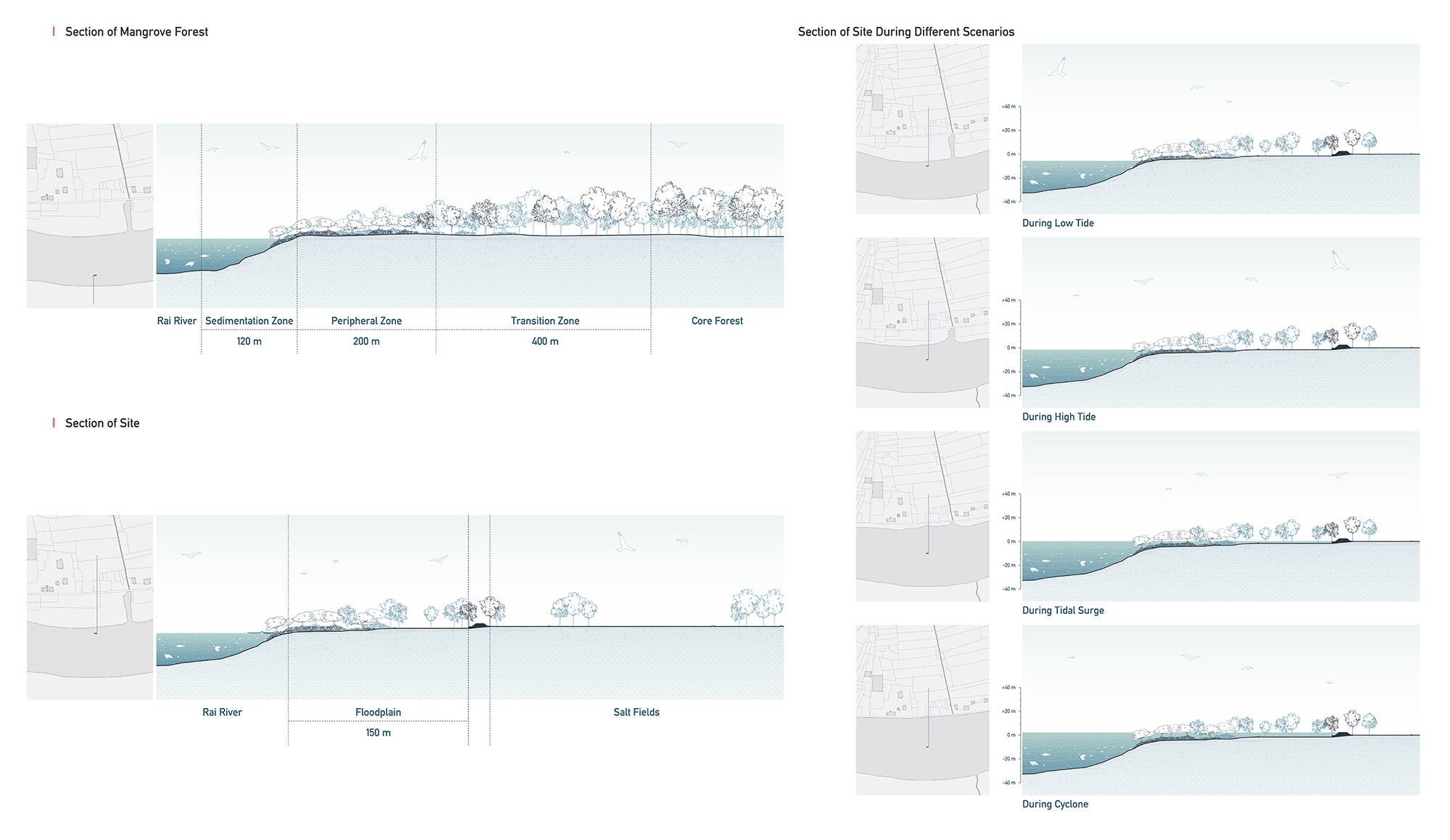
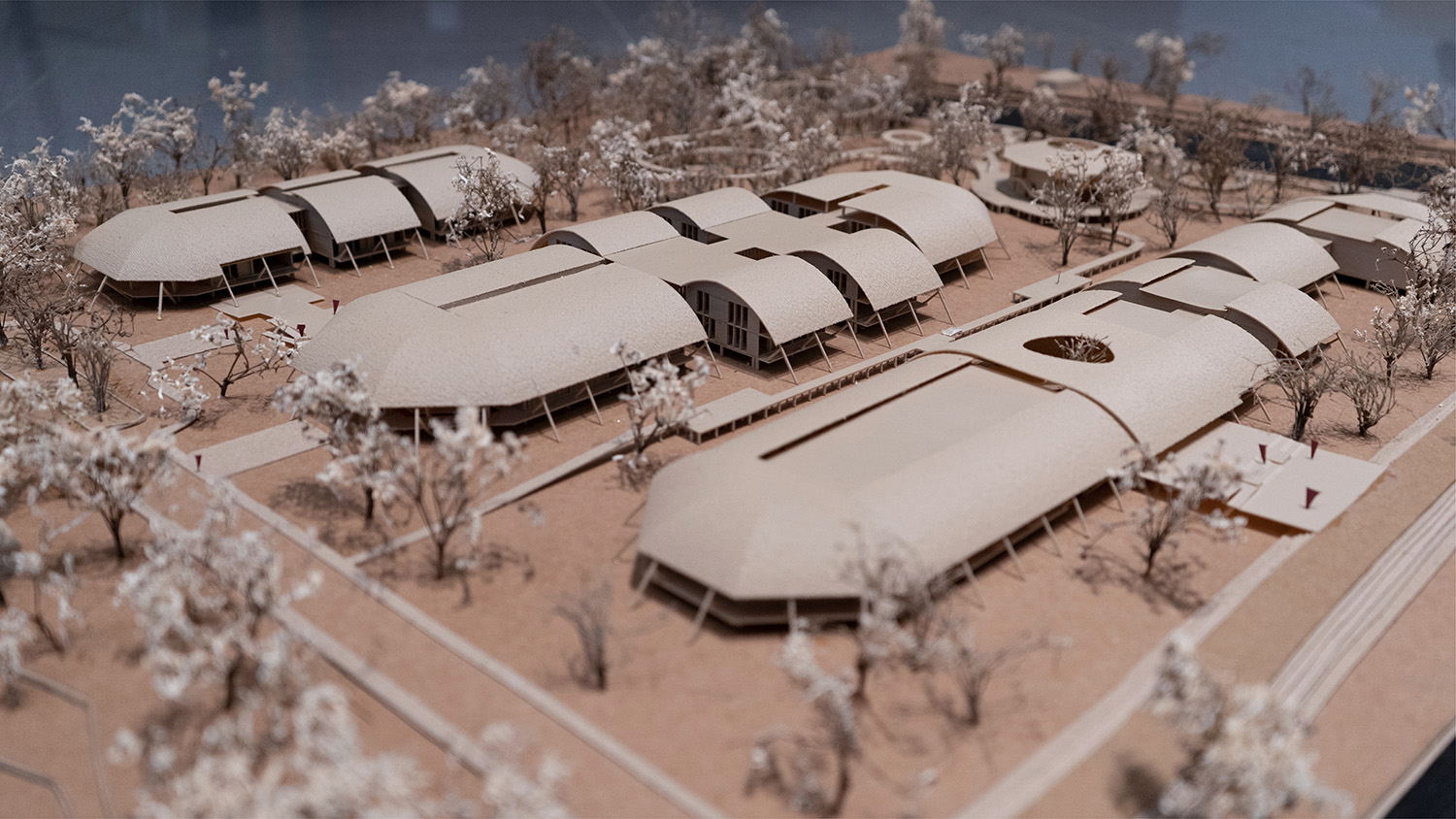
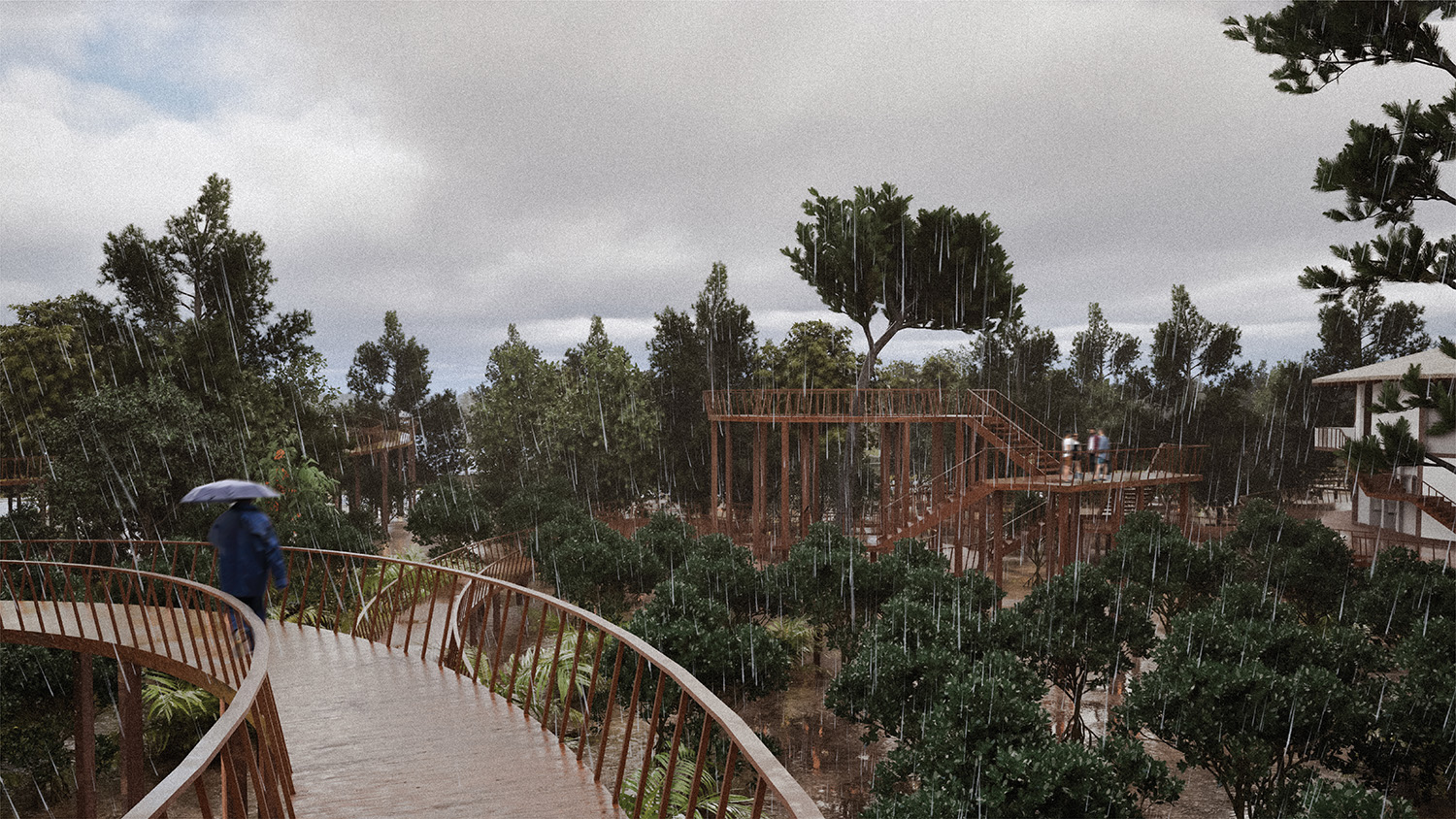
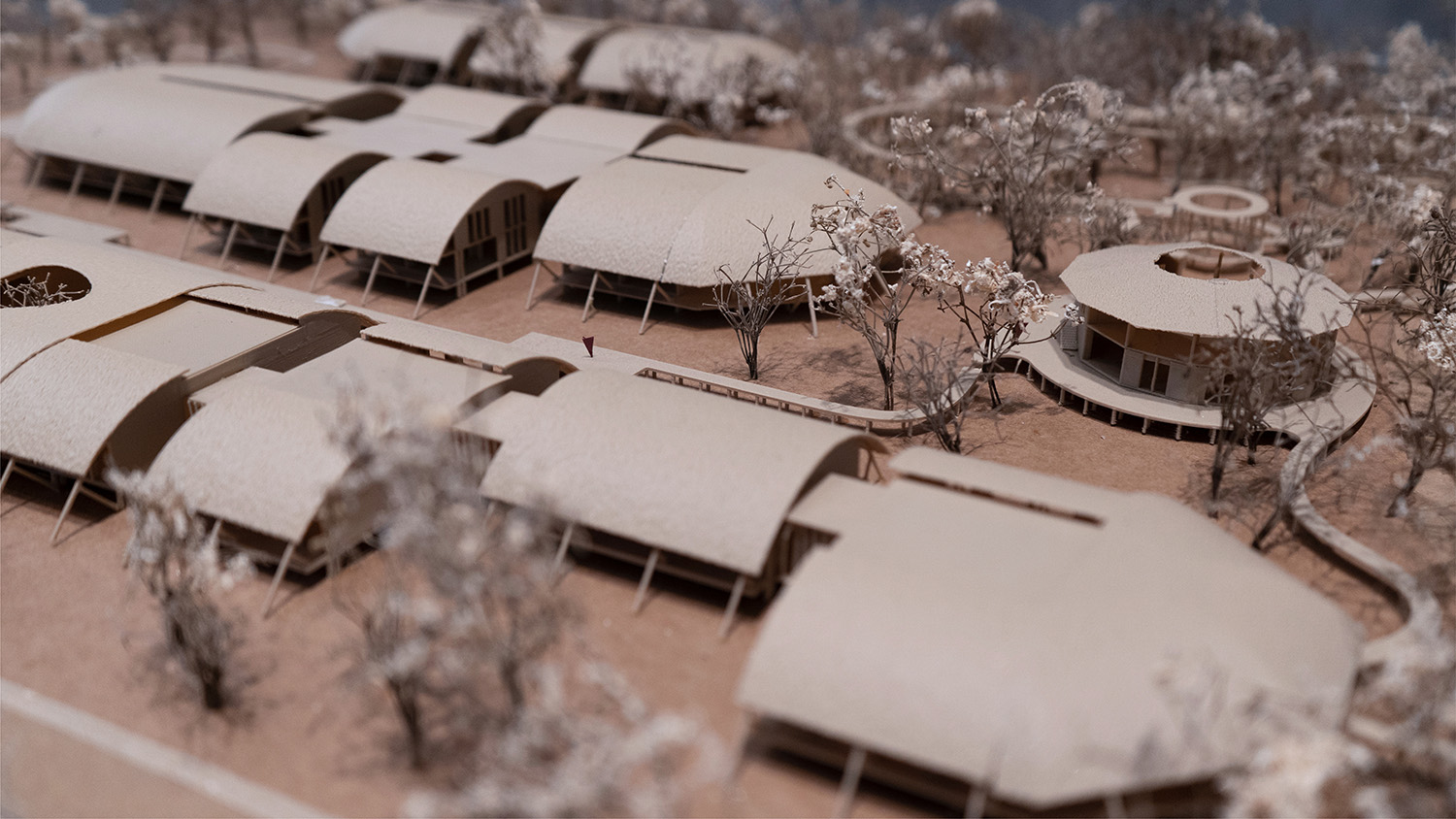
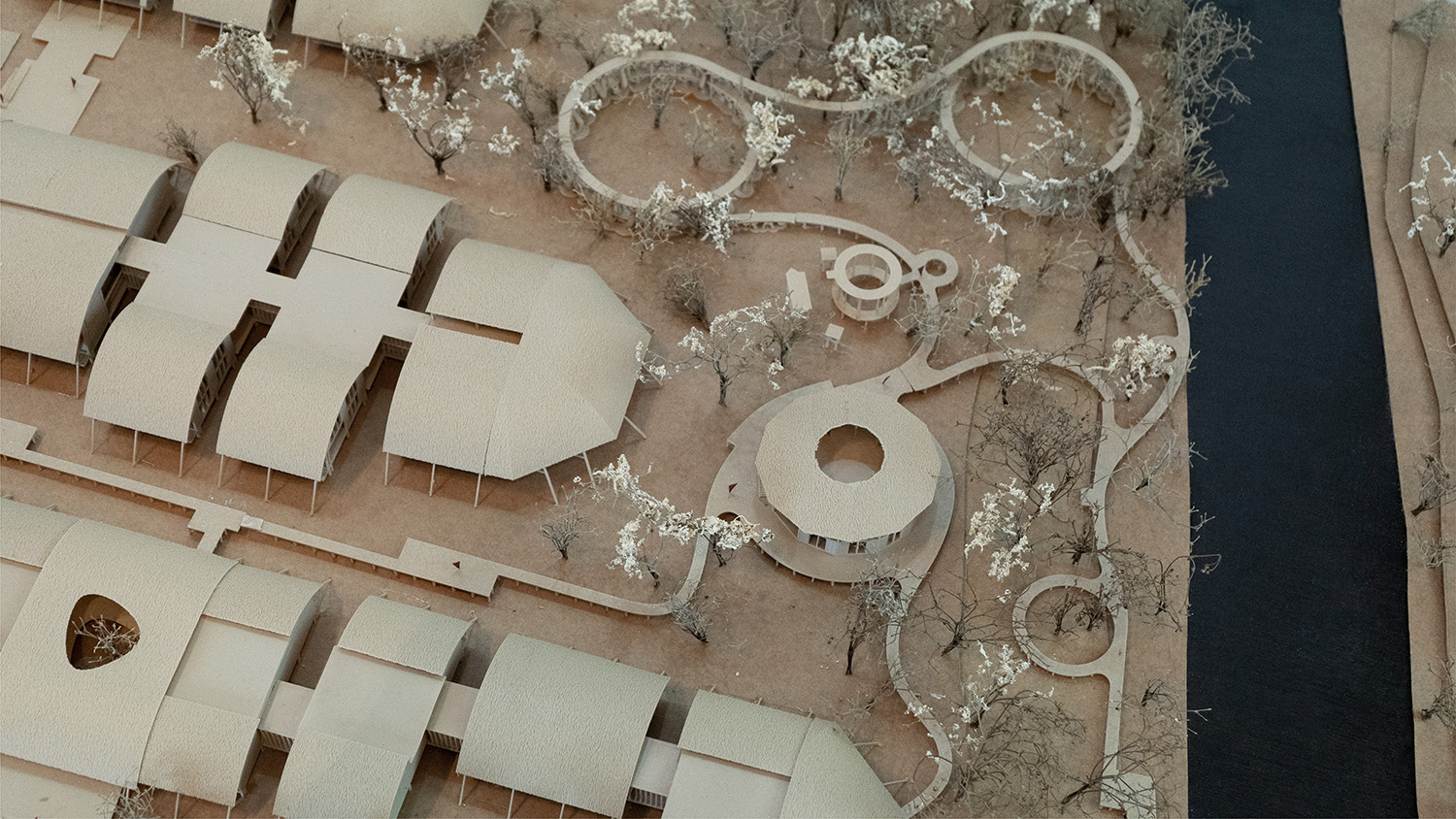
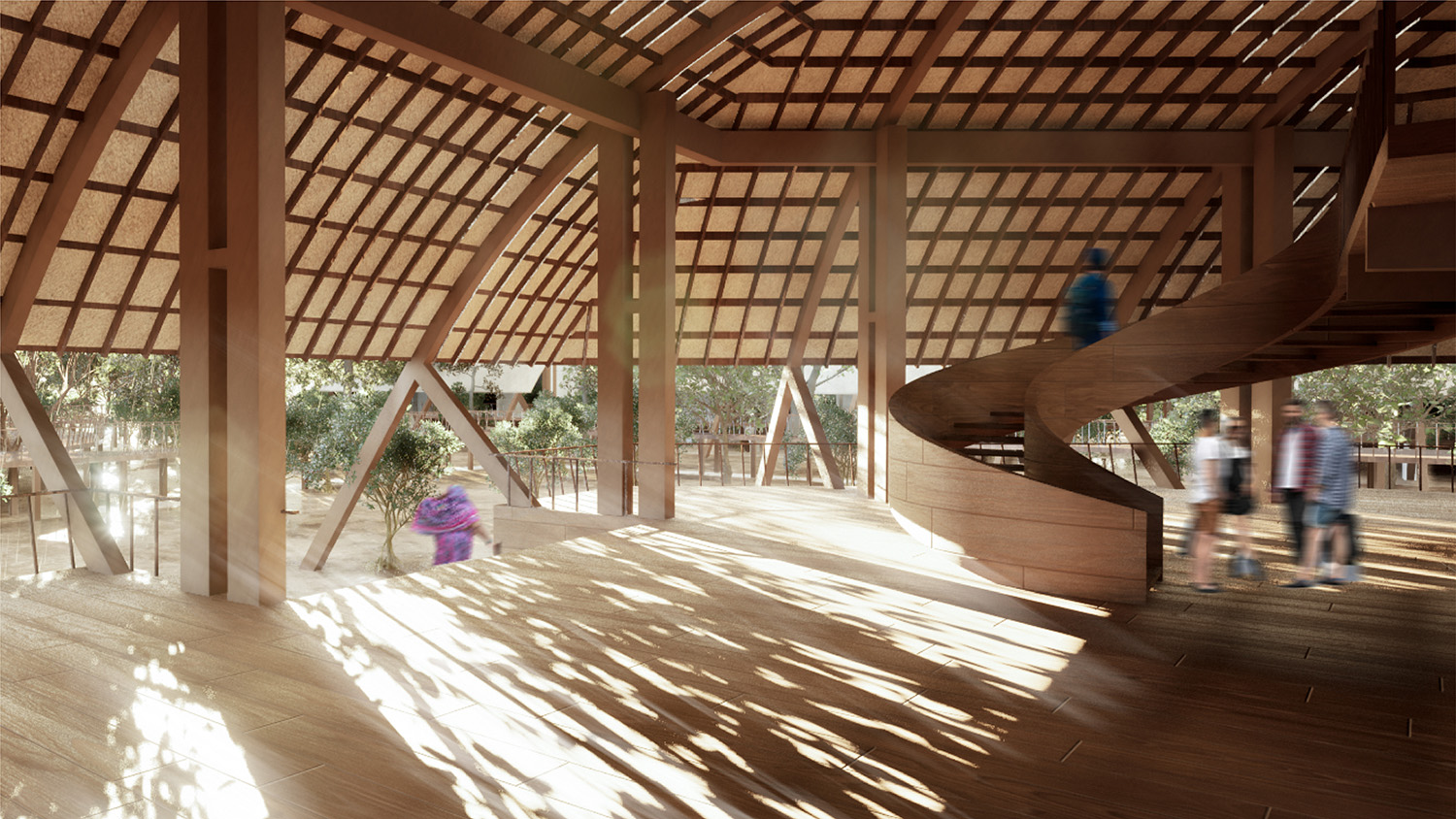
Located along the bank of the Rai River in Koyra, Khulna, adjacent to the Sundarbans ─ the world’s largest contiguous mangrove forest ─ this project explores how architecture can act as a catalyst for ecological conservation, resilience and community integration within a climate-vulnerable deltaic context such as Bangladesh. The project envisions an adaptive framework that supports mangrove research, education, and conservation as well as functioning as a disaster-resilient refuge for surrounding communities.
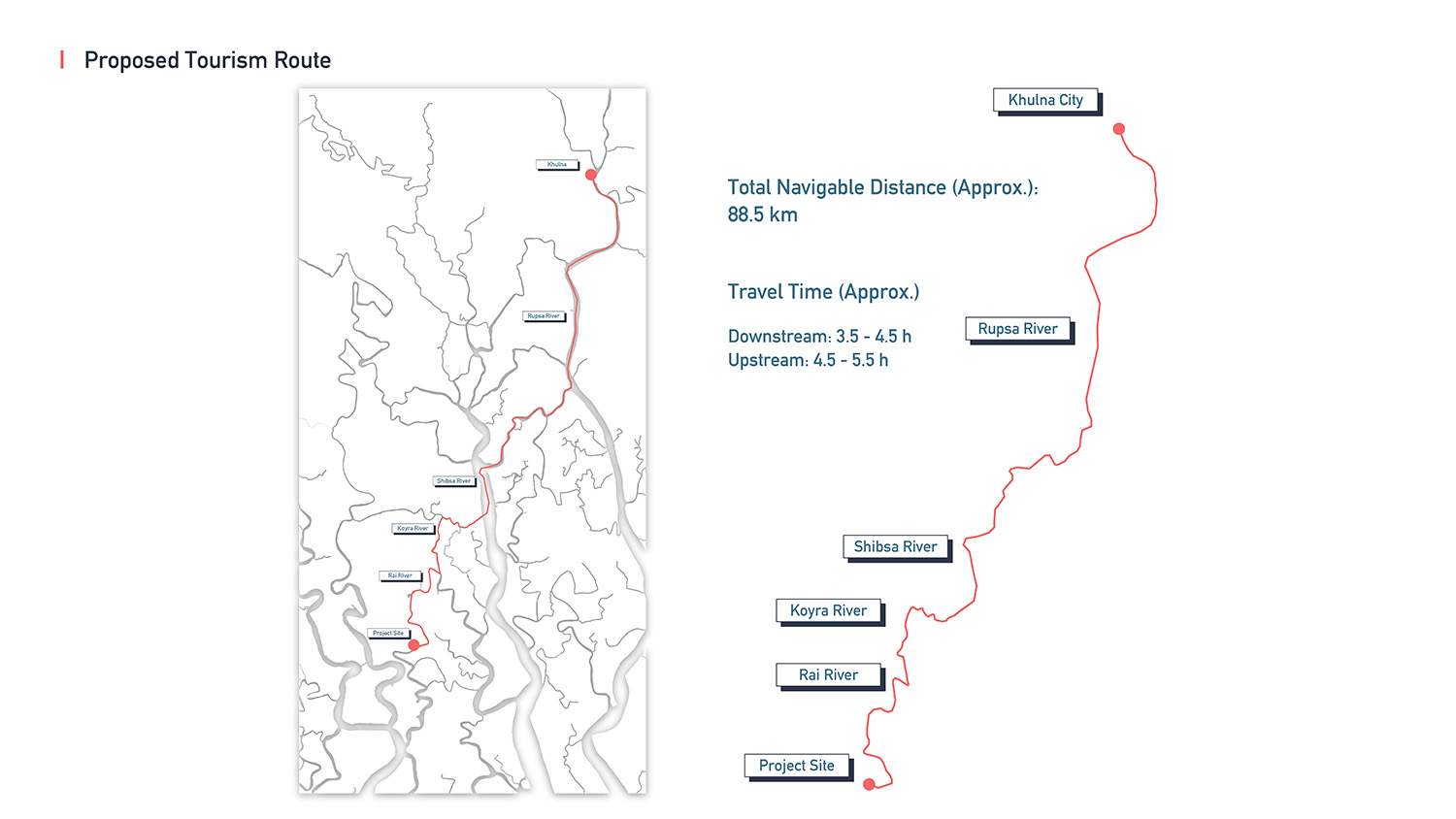
The design narrative is grounded on a deeper understanding of mangrove ecosystems and their social and environmental interdependence. It focuses on the critical disaster vulnerabilities of the site. In-depth climatic and hydrological studies provide a foundational understanding that translates a site’s environmental conditions into core architectural principles. The proposed regional route from Khulna city opens a gateway to immersive mangrove-based ecotourism.
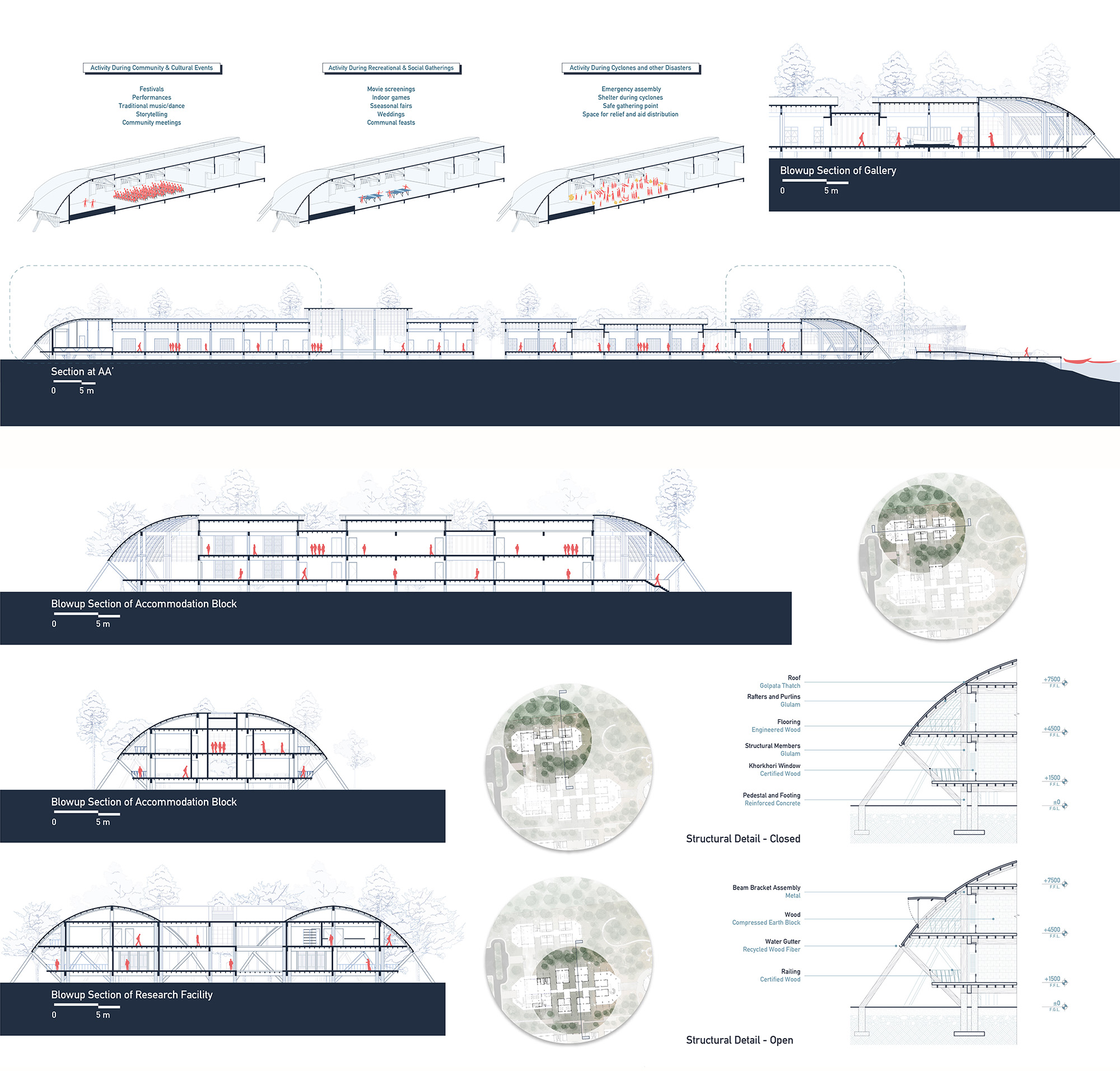
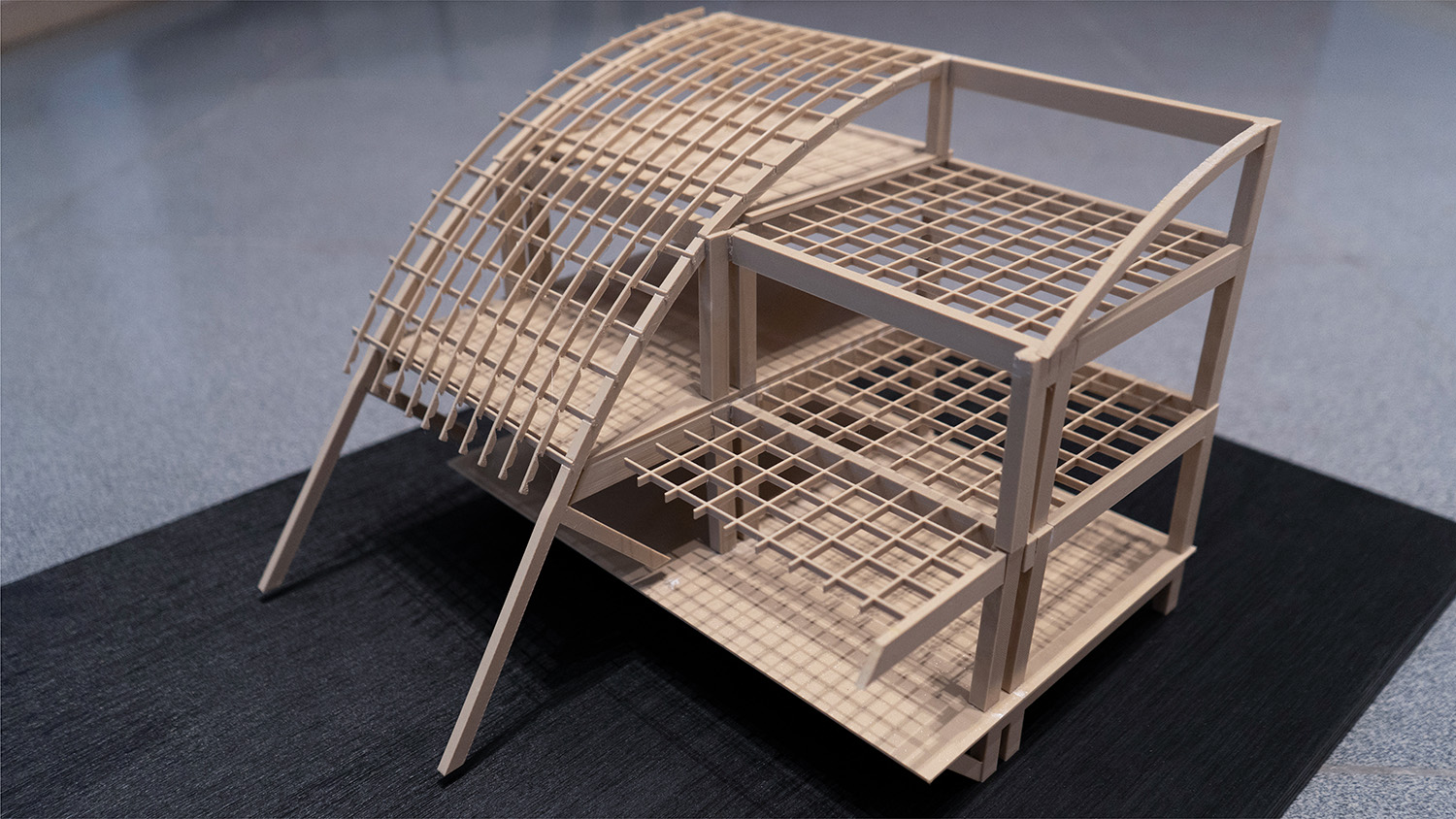
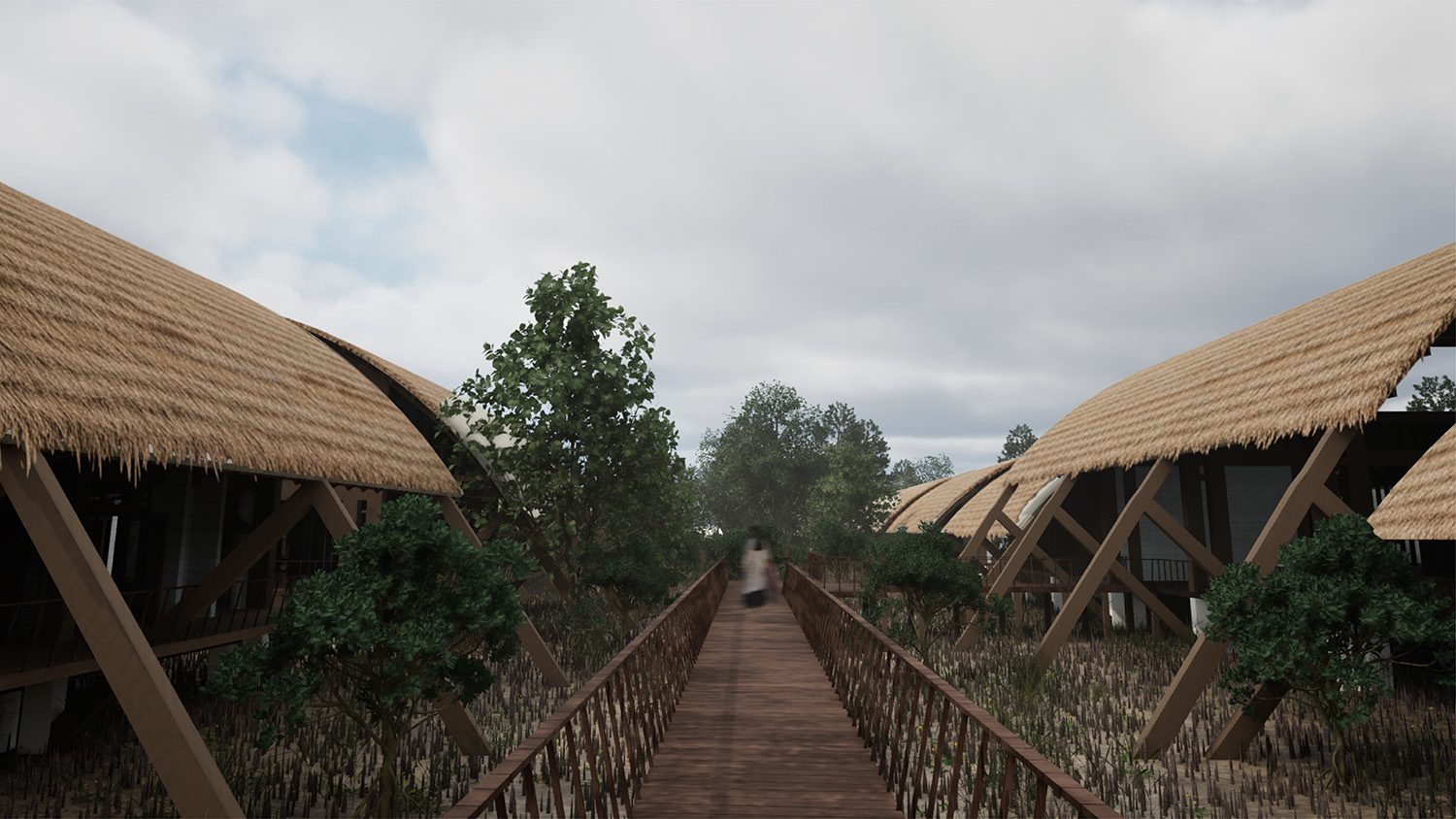
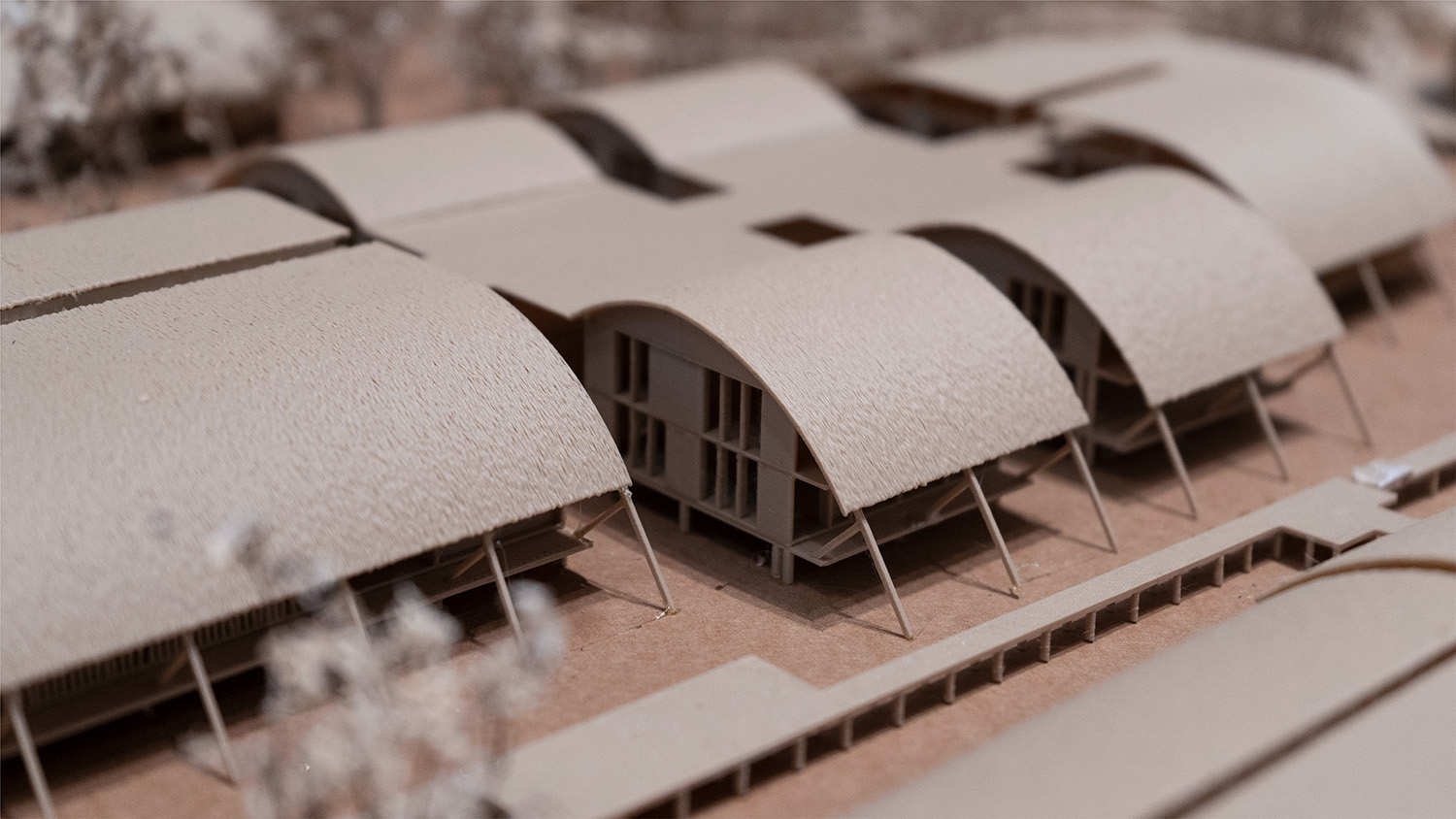
The spatial arrangement is articulated in three layers, combining research and adaptation facilities, educational spaces, and accommodation facilities into a cohesive design. The lower level allows movement and tidal overflow, while the upper-level houses laboratories, classrooms, and accommodations. This flexible layout enables the project to serve as a temporary shelter while maintaining its core research and educational functionalities.
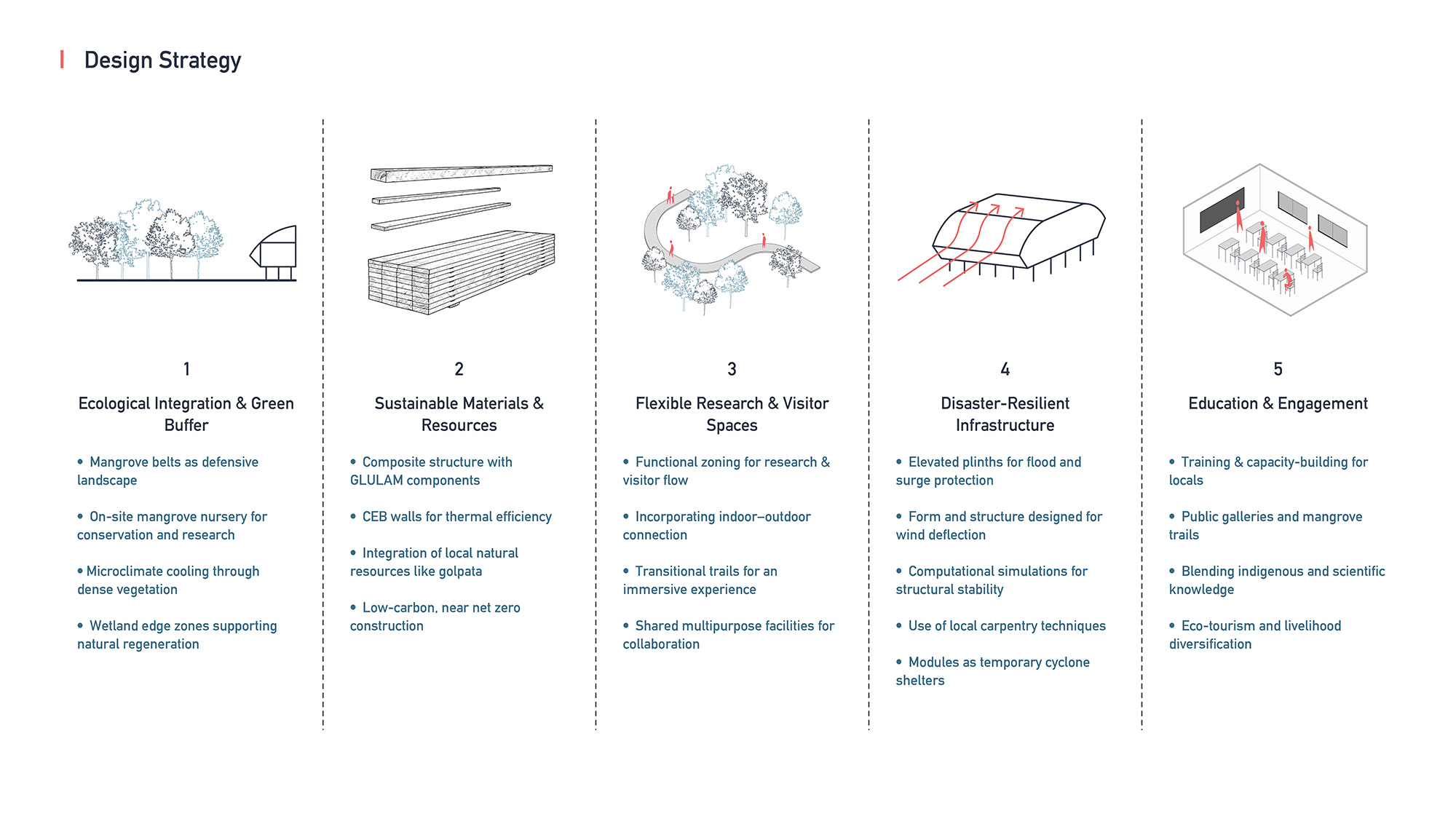
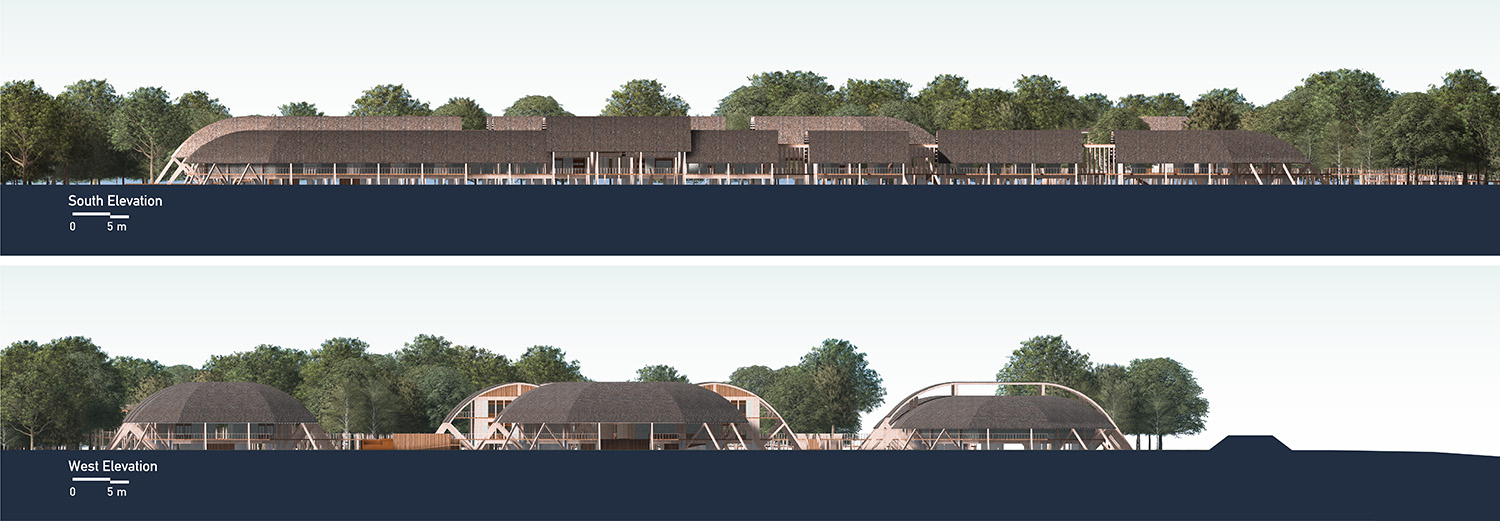
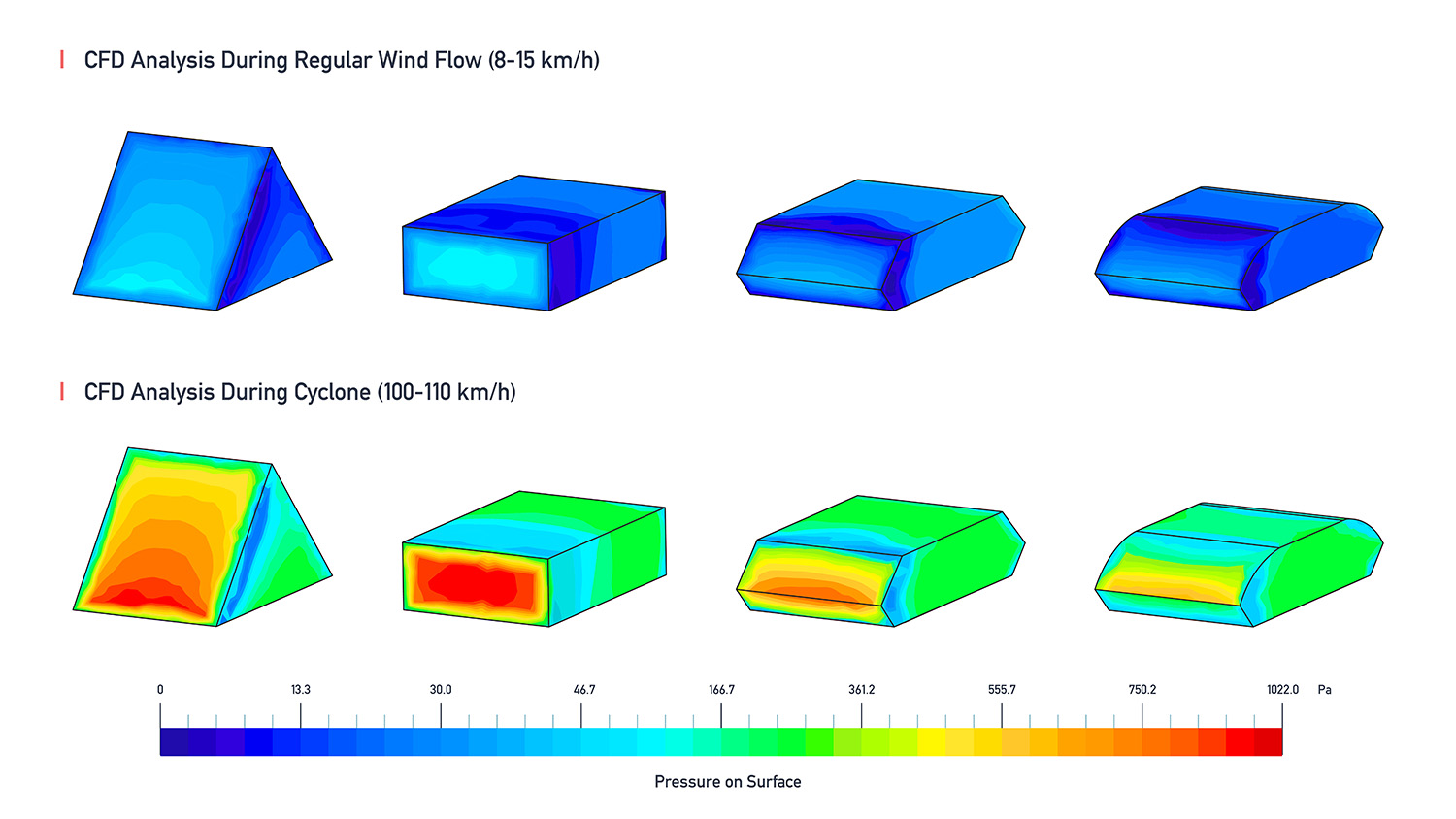
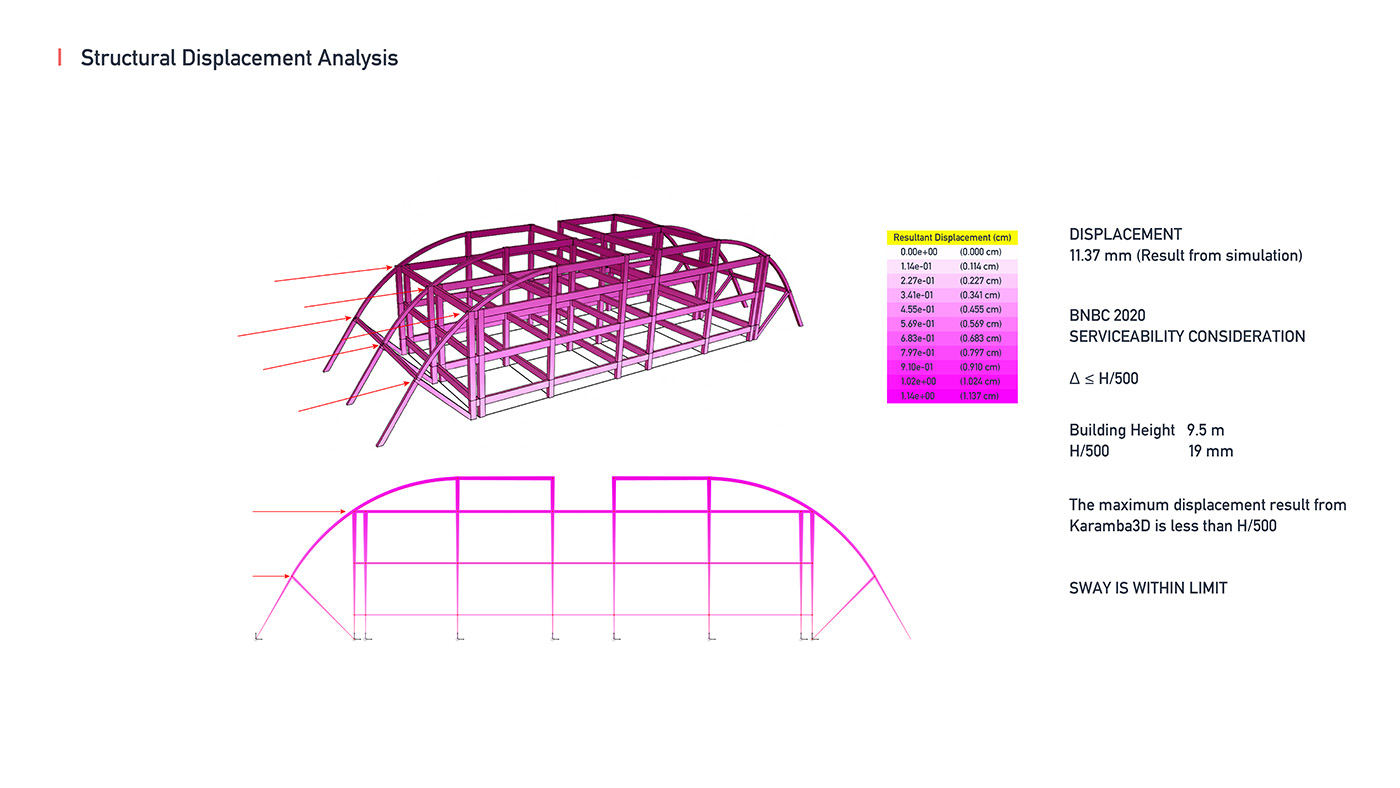
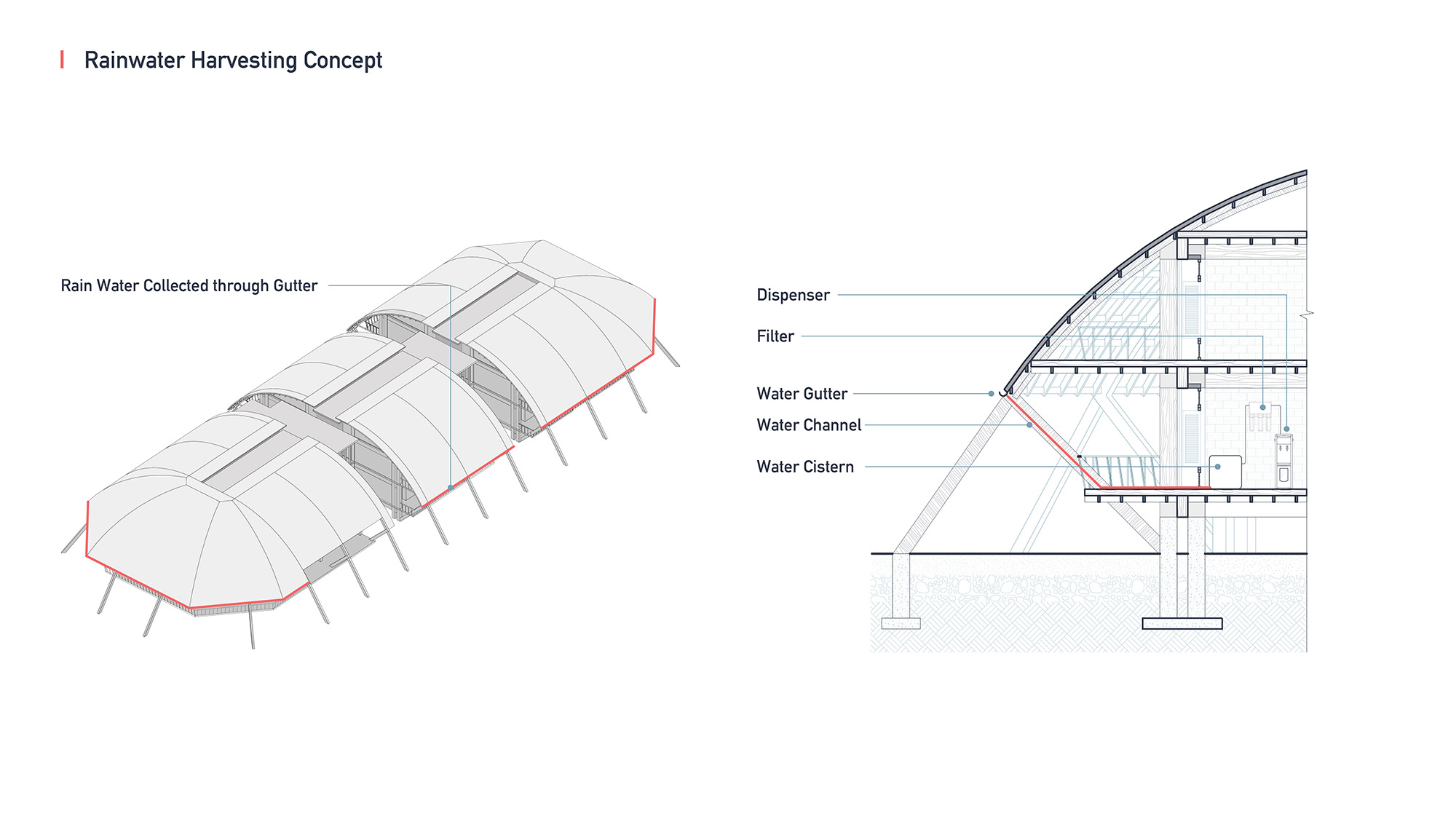
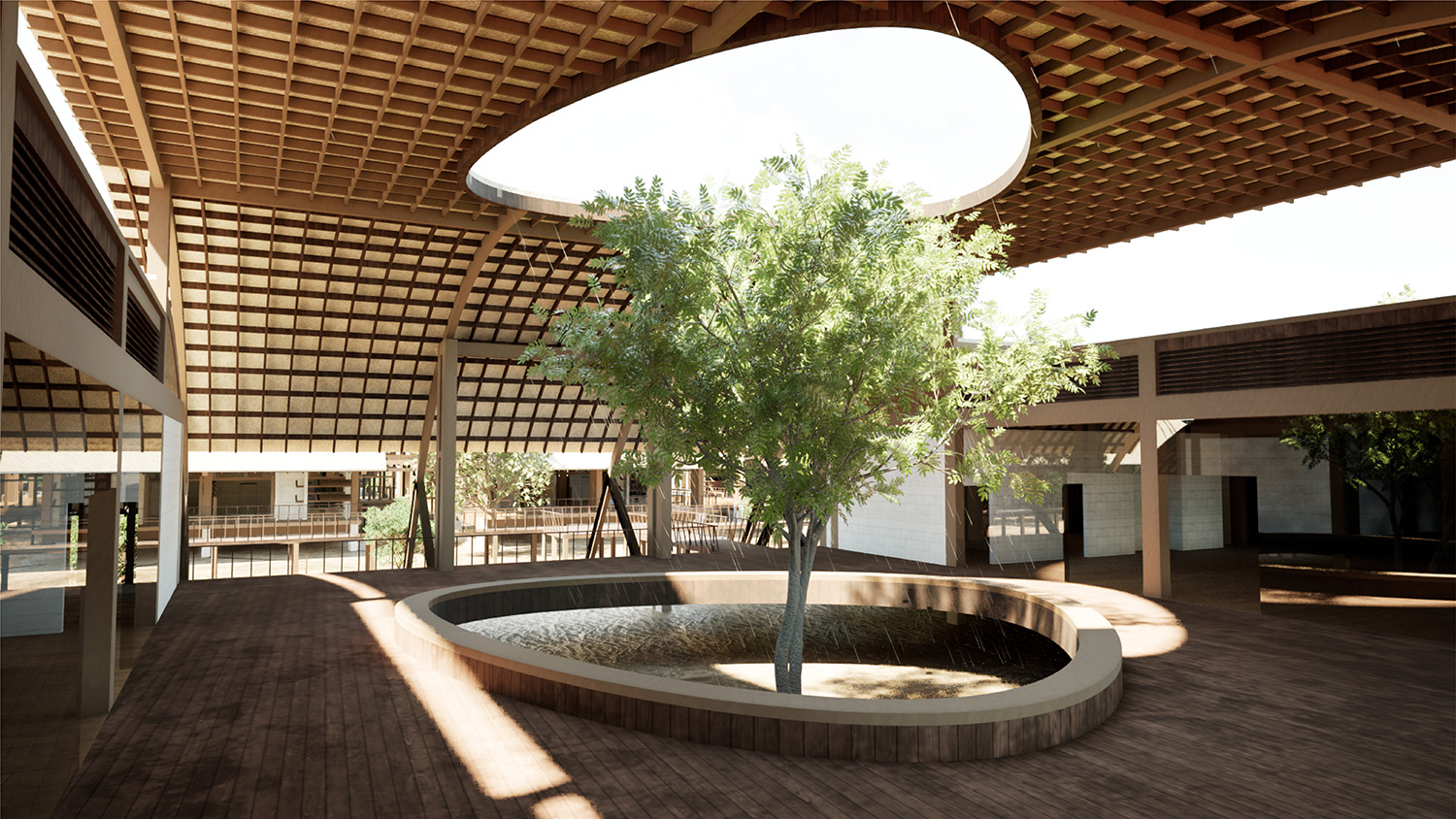
The elevated, aerodynamic form, developed using CFD simulations, reduces wind pressure and enables regulated tidal overflow at the ground level. The lightweight structure is strong enough to endure cyclonic forces, ensuring safety without compromising its permeable quality. The large roofs capture rainwater, offering an alternative source of drinking water. The material choice and construction techniques are guided by the principles of environmental awareness, longevity and sustainable efficiency. Glulam, from certified wood, and compressed earth blocks were chosen for their low carbon emissions, structural stability, and thermal efficiency. Local materials, such as golpata thatch, are integrated within this structure, blending traditional styles with vernacular architecture.
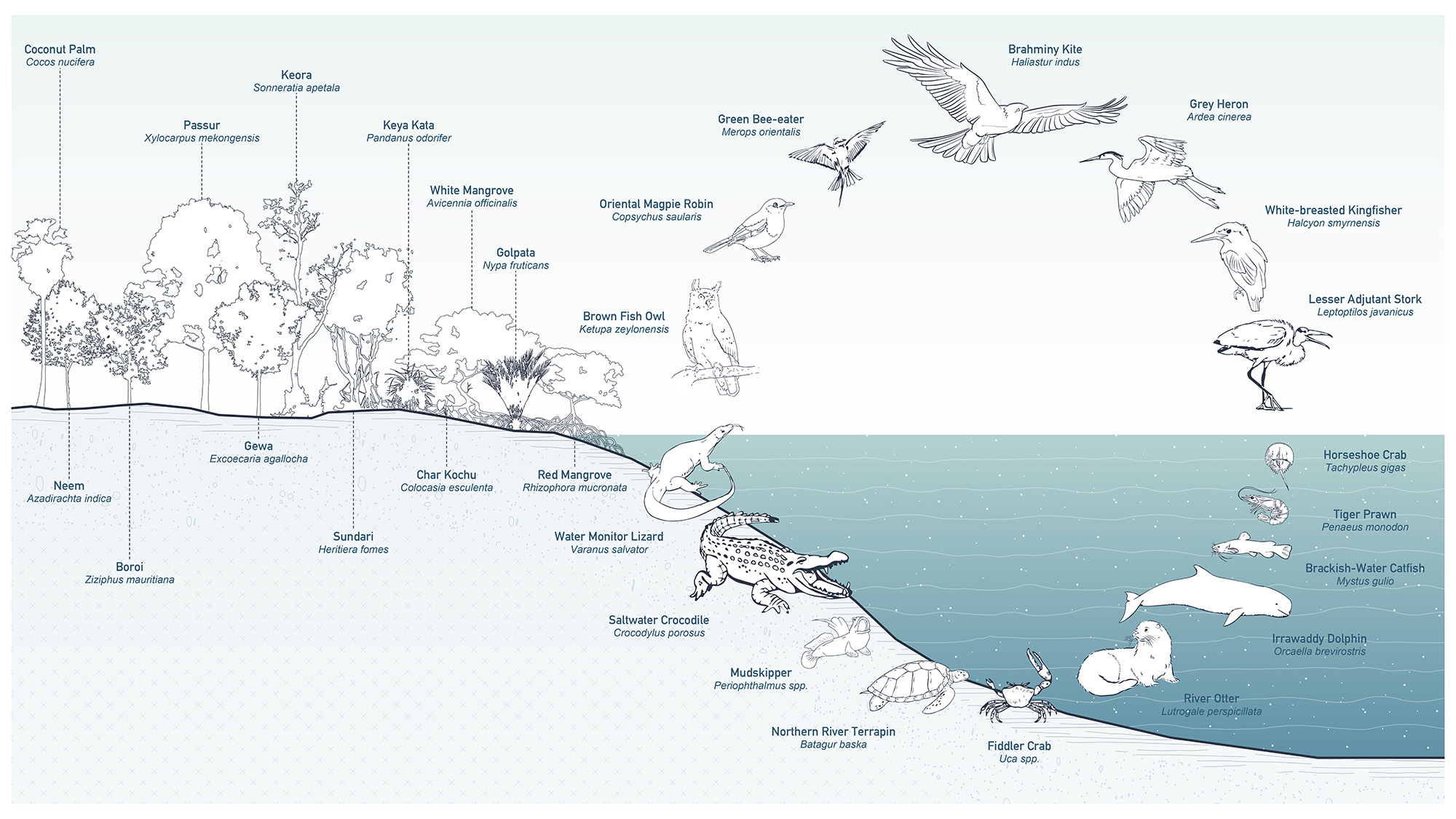
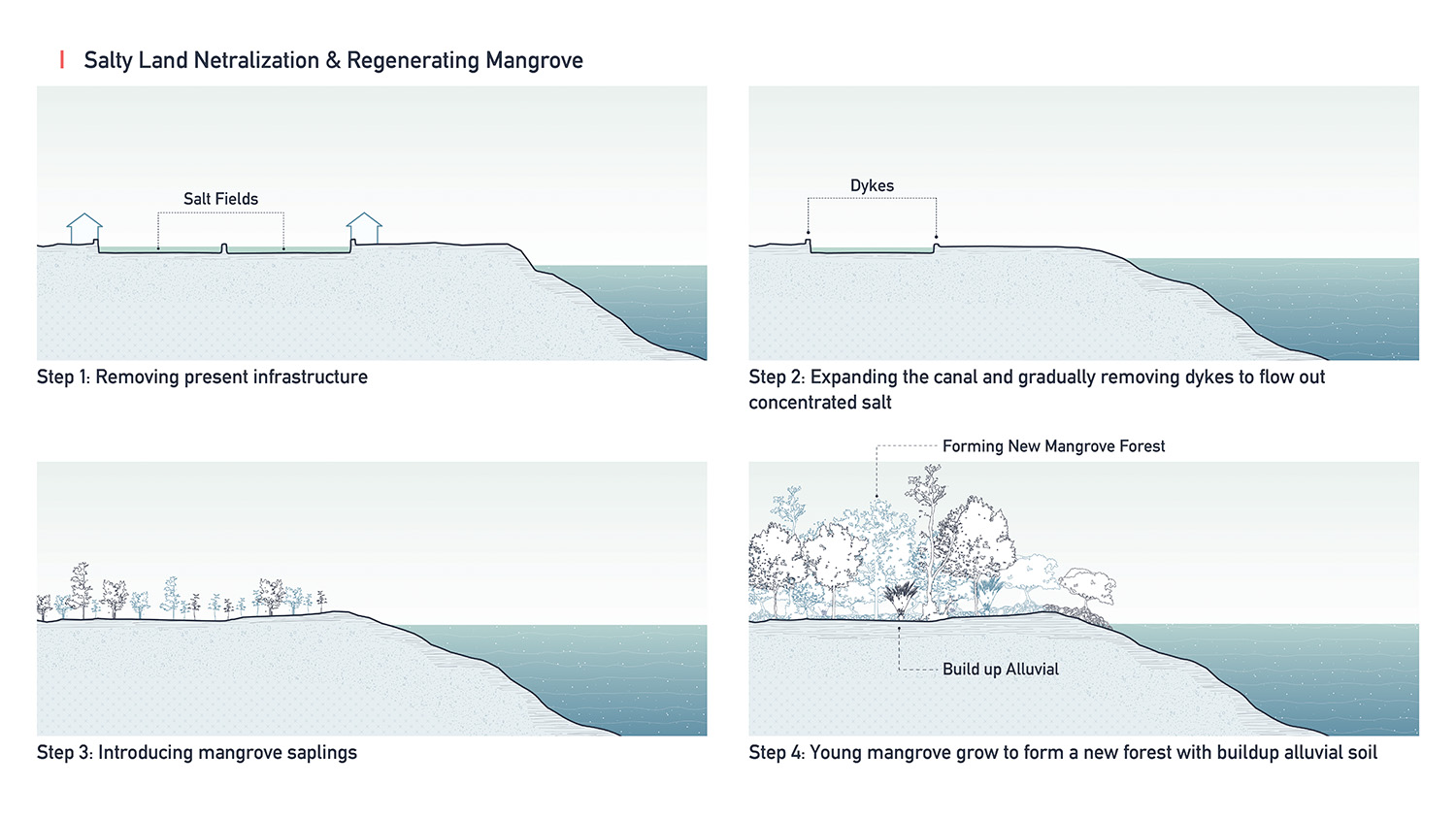
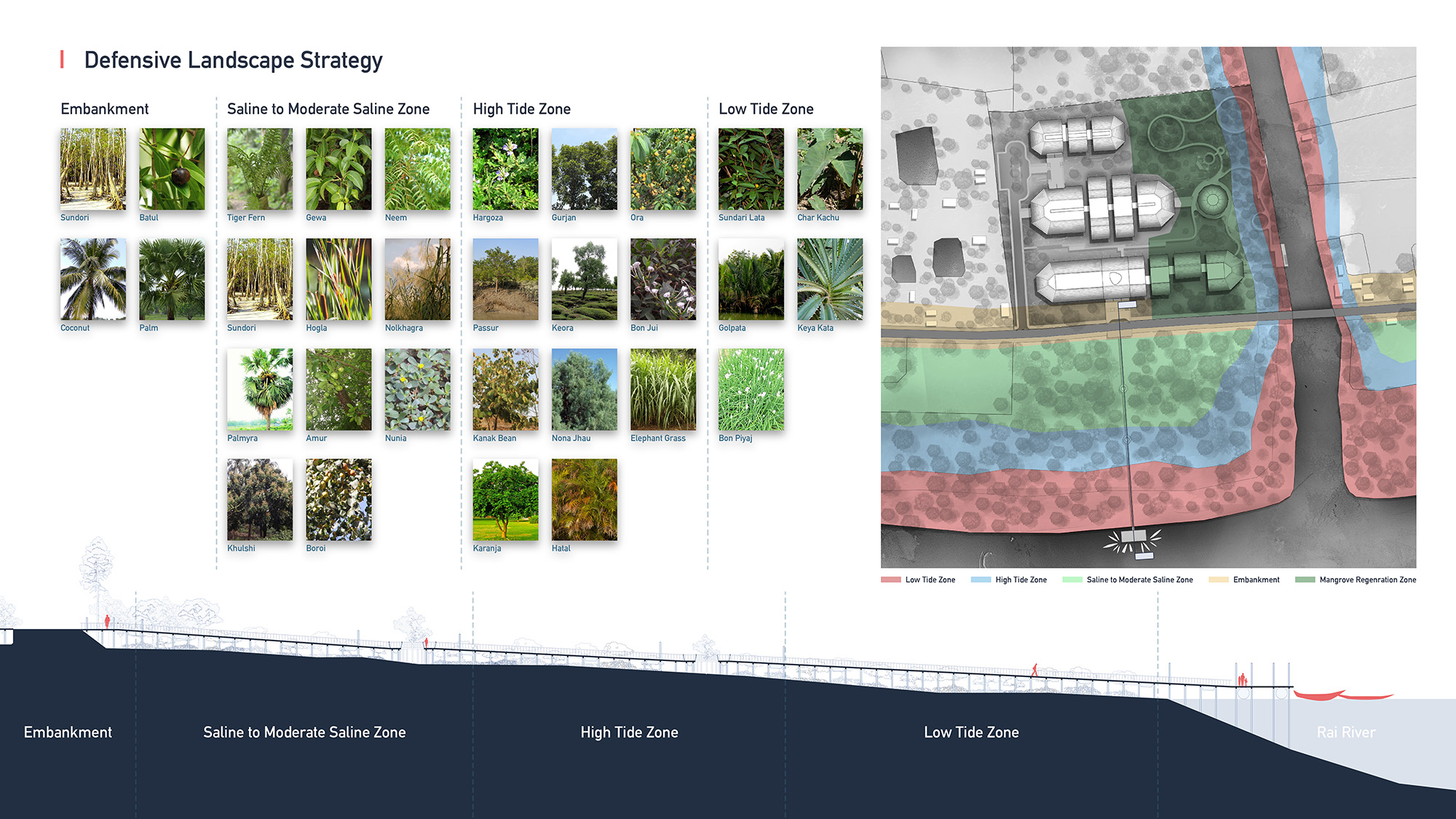
Landscape design strategy is a crucial component of this project. It includes defensive mangrove belts and regenerative mangrove zones to restore biodiversity and provide natural defenses against tidal surges. Interactive trails and curated nurseries encourage people to connect with mangroves, transforming the site into an active ecological learning space that promotes public participation and initiatives.
The design development from analyses to zoning, form generation, and detailed drawings demonstrates a thoughtful process that merges research-driven strategies with an approach to solve the prevailing challenges. The project illustrates how architecture, guided by ecological understanding, technology, and community needs, can transform into an adaptable structural framework that fosters knowledge and protects the environment. Also, this project aligns with Sustainable Development Goals by the United Nations.
Ultimately, this project presents a replicable model for coastal resilience in Bangladesh. It embodies a harmonious relationship between the built and natural environments, and between knowledge and community—emphasizing adaptation and ecological conservation within the evolving landscape of the Sundarbans.
Situated along the southern edge of Dhaka, Zinzira represents one of Bangladesh’s most concentrated clusters of light engineering workshops, playing a vital yet under-recognized role in the national economy. Despite its economic significance, the area is characterized by spatial fragmentation, inadequate infrastructure, congested circulation, poor environmental conditions, and a lack of coherent urban integration.
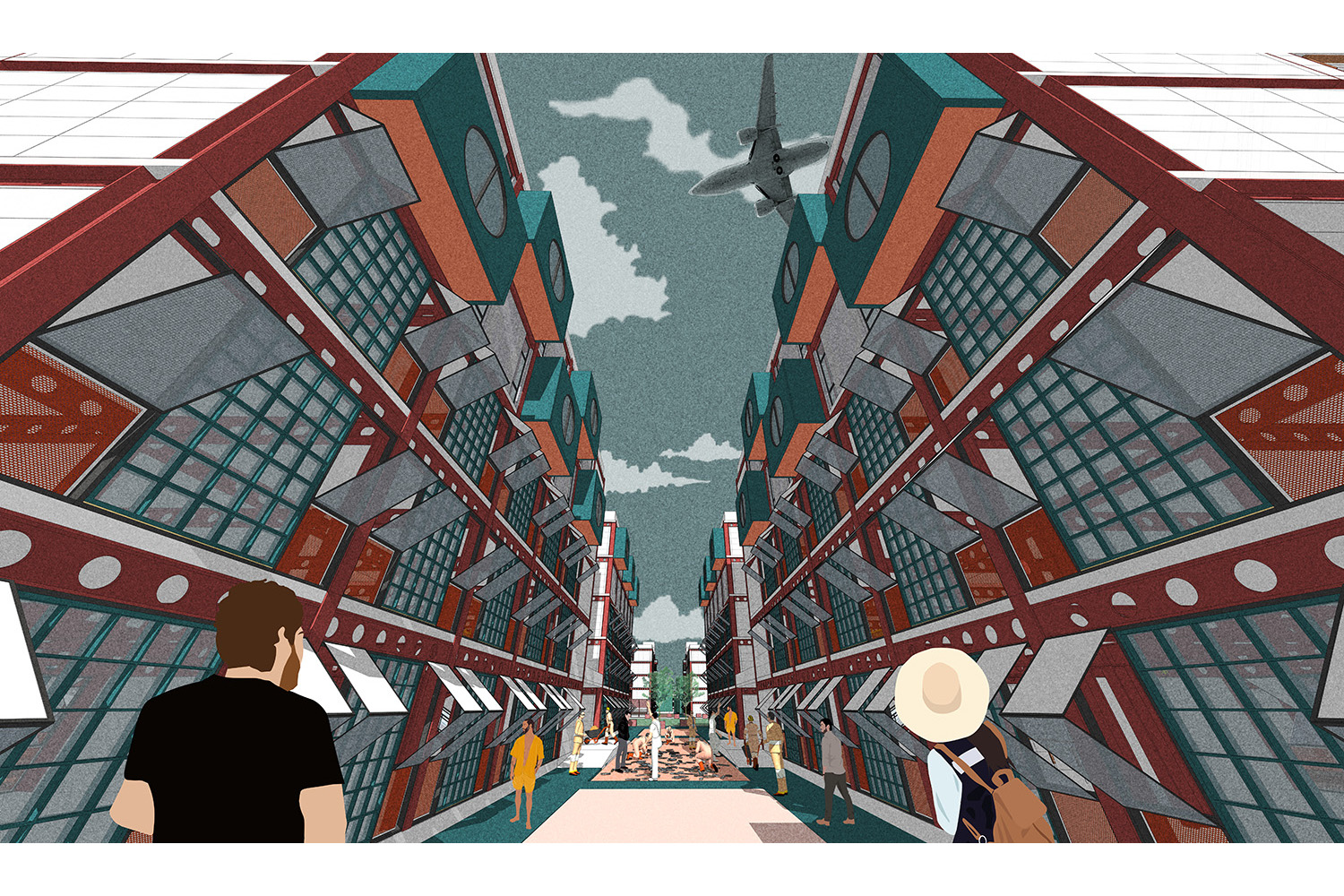
This project, “Rethinking Micro Metal Industries, Zinzira,” is positioned within the discourse of industrial urbanism, which frames industry not as an isolated enclave but as an active and integrated component of the urban continuum. It seeks to reconceptualize this industrial landscape of Zinzira by proposing a framework that unites production, commerce, and community within a cohesive urban order. Central to this proposal is the introduction of modular, flexible, and adaptive workshop typologies. These units are designed to enable spatial reconfiguration in response to evolving technological and market demands. Complementing these production spaces are integrated commercial interfaces and marketplaces, envisioned not merely as transactional areas but as vital loci of exchange, visibility, and identity formation for the local industry.
Furthermore, the riverfront is rearticulated as a hybrid ecological and infrastructural edge. This strategy aims to simultaneously accommodate essential industrial logistics and vibrant public life, while also reinforcing resilience against ongoing environmental degradation. Through this integration, the project aspires to establish a reciprocal and sustainable relationship between industry and its broader socio-ecological context. Ultimately, the thesis positions Zinzira as a prototype for reimagining micro-industrial clusters in rapidly urbanizing territories. By synthesizing principles of modularity, inclusivity, and ecological responsiveness, it articulates a new paradigm of industrial urbanism that seeks to reconcile economic vitality with social and environmental sustainability.
This project merits recognition because it addresses an often-overlooked yet economically indispensable sector of Bangladesh—the micro metal workshops of Zinzira—through a design framework that is both socially inclusive and future-oriented. Rather than treating industry as a peripheral or polluting element, the project reframes it through the lens of industrial urbanism, where production, commerce, and community coexist within a sustainable urban ecosystem.
Its primary strength lies in proposing a scalable and replicable model. The modular and adaptable workshop typologies are designed to respond to evolving industrial demands while simultaneously improving worker safety, ergonomics, and productivity. The integration of a dedicated marketplace bridges the gap between informal production and formal commerce, empowering local craftsmen with greater visibility and economic resilience. Concurrently, the regeneration of the riverfront transforms an environmentally degraded edge into a multifunctional urban corridor that balances essential ecological restoration with industrial logistics and community life.
Beyond its design innovation, the project is deeply rooted in socio-economic justice. It aims to dignify the lives of workers, elevate their craft, and preserve cultural heritage, all while aligning with global discourses on sustainability, resilience, and inclusive growth. In doing so, it transcends conventional architectural responses and positions itself as a prototype for rethinking informal industrial settlements in developing contexts. By reimagining Zinzira not merely as an industrial cluster but as a dynamic urban organism, this project demonstrates how architecture can act as a catalyst for economic transformation, environmental stewardship, and social equity. It is this holistic and integrated vision that makes the project both timely and worthy of recognition.
Altogether, the design redefines Zinzira as more than an industrial cluster—it becomes a model for inclusive industrial urbanism. By balancing production with ecology, commerce with community, and tradition with modernization, the thesis envisions Zinzira as a prototype for rethinking similar informal industrial zones across Bangladesh. It demonstrates how architectural and urban strategies can preserve craft heritage while enabling sustainable, equitable growth for decades to come.
Airports are more than just points of transit; they are strategic Key Point Installations (KPIs) and the gateway to a city. For Sylhet, a city of immense natural beauty and global diaspora, the upgrade of Osmani International Airport is not merely an expansion but a critical infrastructure project designed to propel it into its future as a regional international hub. This new terminal directly addresses the pressing needs of growing air traffic while establishing a powerful architectural identity that is intrinsically and innovatively rooted in the essence of Sylhet itself.
Located 15 kilometers north of the city center, the new Osmani International Airport terminal is positioned within a rapidly developing commercial corridor. This upgrade is essential to accommodate increasing passenger volumes, support economic expansion, and solidify Sylhet’s status as a key international connection point. The project transcends mere functionality; it is conceived as a catalyst, designed to handle future growth while stimulating the local economy through its integrated public spaces, retail, and hospitality offerings.
Moving beyond conventional, monolithic airport design, the terminal introduces a profoundly innovative approach by architecturally reviving the site’s lost natural character. The design rationale is restorative, seeking to harmonize a massive infrastructural volume with the region’s iconic topography of undulating hillocks, or ‘tilas’, and its world-renowned tea gardens. The terminal’s layout demonstrates an intuitive, passenger-centric circulation, organized across multiple levels that seamlessly integrate the landscape into the travel experience.
The most striking feature is the vast, undulating super-roof. Clad in standing seam metal, it mimics the organic rise and fall of the Sylheti landscape. This is not just an aesthetic gesture; it creates a cohesive and memorable identity, making the building itself a landmark that speaks of its place. The building’s structural system is defined by tree-like columns. This innovative design move is directly inspired by Sylhet’s rich heritage of tea cultivation, merging powerful symbolism with critical structural functionality. These columns transform the interior into a metaphorical plantation, blurring the lines between the built environment and the natural world.
The journey begins on the first floor in a multi-tiered arrival hall that overlooks interior tea gardens and zen gardens, immediately immersing travelers in a serene, uniquely Sylheti ambiance. The basement level, which is carved through an artificial hillock, houses the immigration and customs hall. Passengers then emerge into a stunning sunken courtyard—the official meet-and-greet area. This innovative space, bathed in natural light and open to the sky, functions as a vibrant public square with retail and amenities, fostering social interaction and transforming the arrival sequence into a destination in itself.
The departure hall on the second floor is designed for clarity and efficiency. It is directly connected to the site entrance via a pedestrian skywalk, enhancing public accessibility and integrating the terminal with the city’s fabric. From here, passengers ascend to the third-floor immigration level, traversing one of two aerial bridges that offer dramatic views over the central “tea garden spine.” This carefully choreographed ascent builds a sense of occasion, connecting the landside to the airside through a landscape-inspired core.
In conclusion, the proposed terminal building for Osmani International Airport is a landmark project of profound significance. It is designed to meet future demands and establish Sylhet as a regional hub. Its true innovation, however, lies in its design rationale—a holistic approach where architecture, landscape, and cultural identity are fused into a single, cohesive experience. This is not an airport imposed upon the city, but one that grows from it. It demonstrates that a high-functioning international gateway can also be a deeply contextual, accessible, and inspiring public space that truly caters to its most important audience: the people of Sylhet and its visitors from around the world.
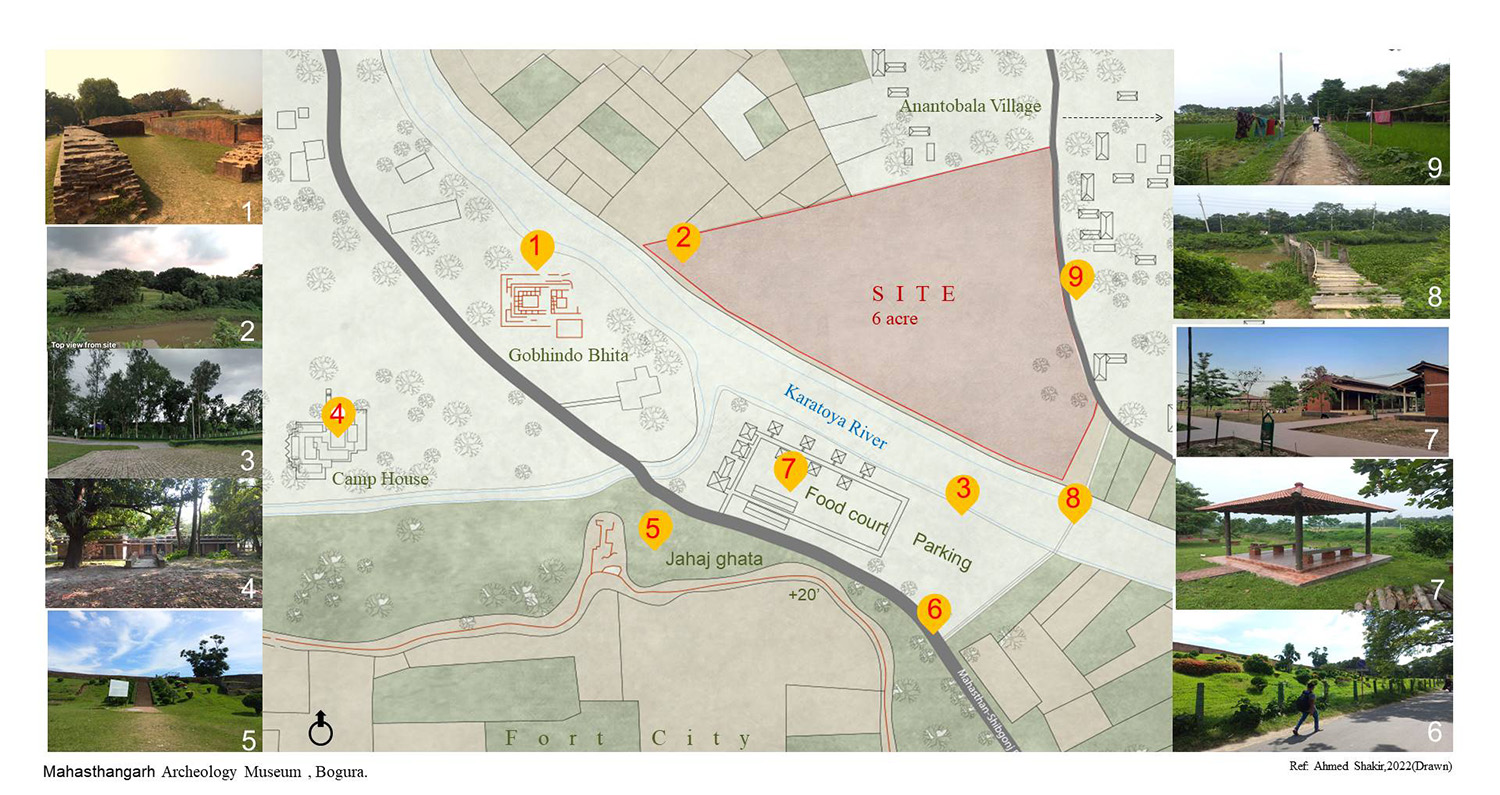
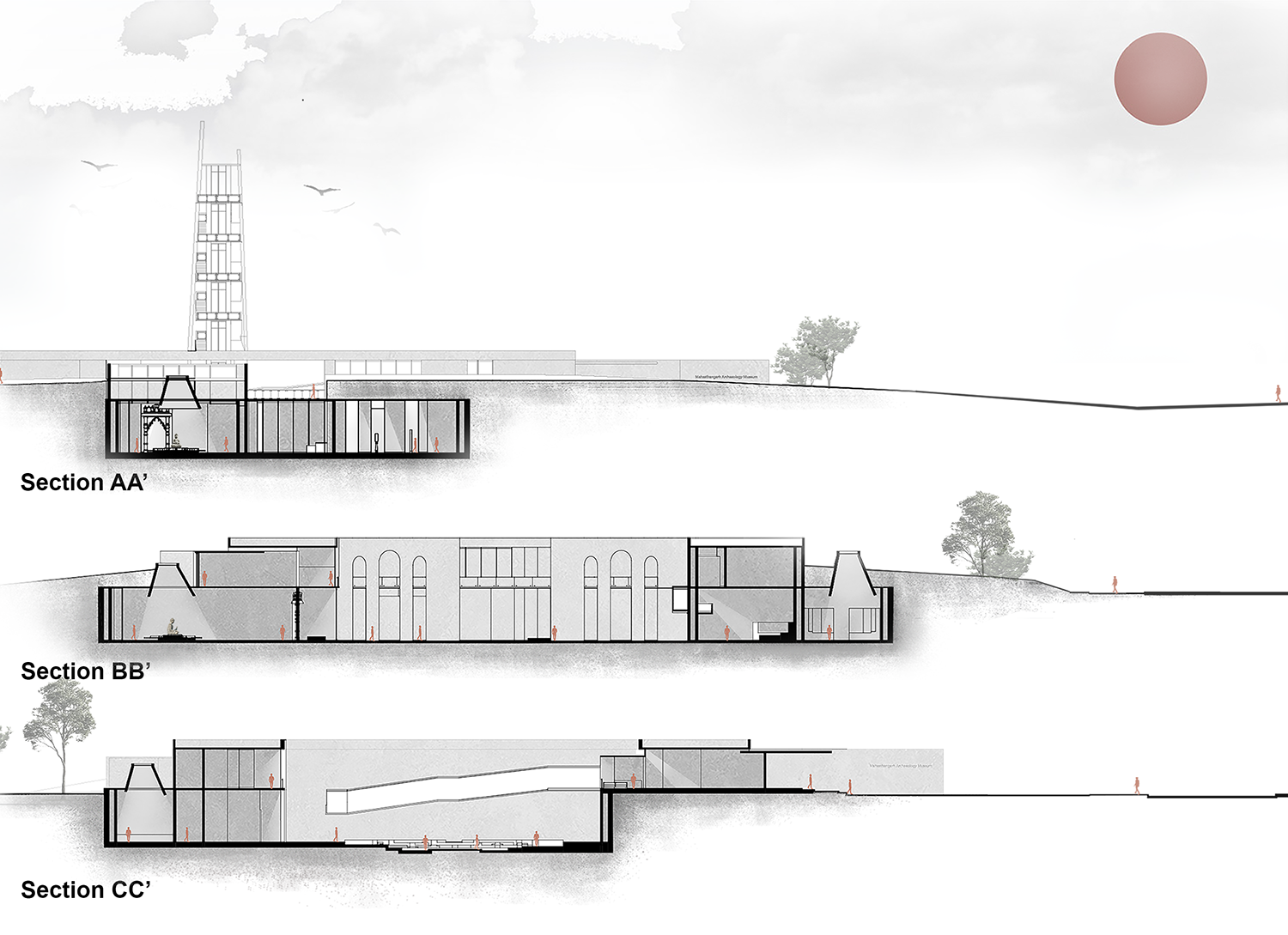
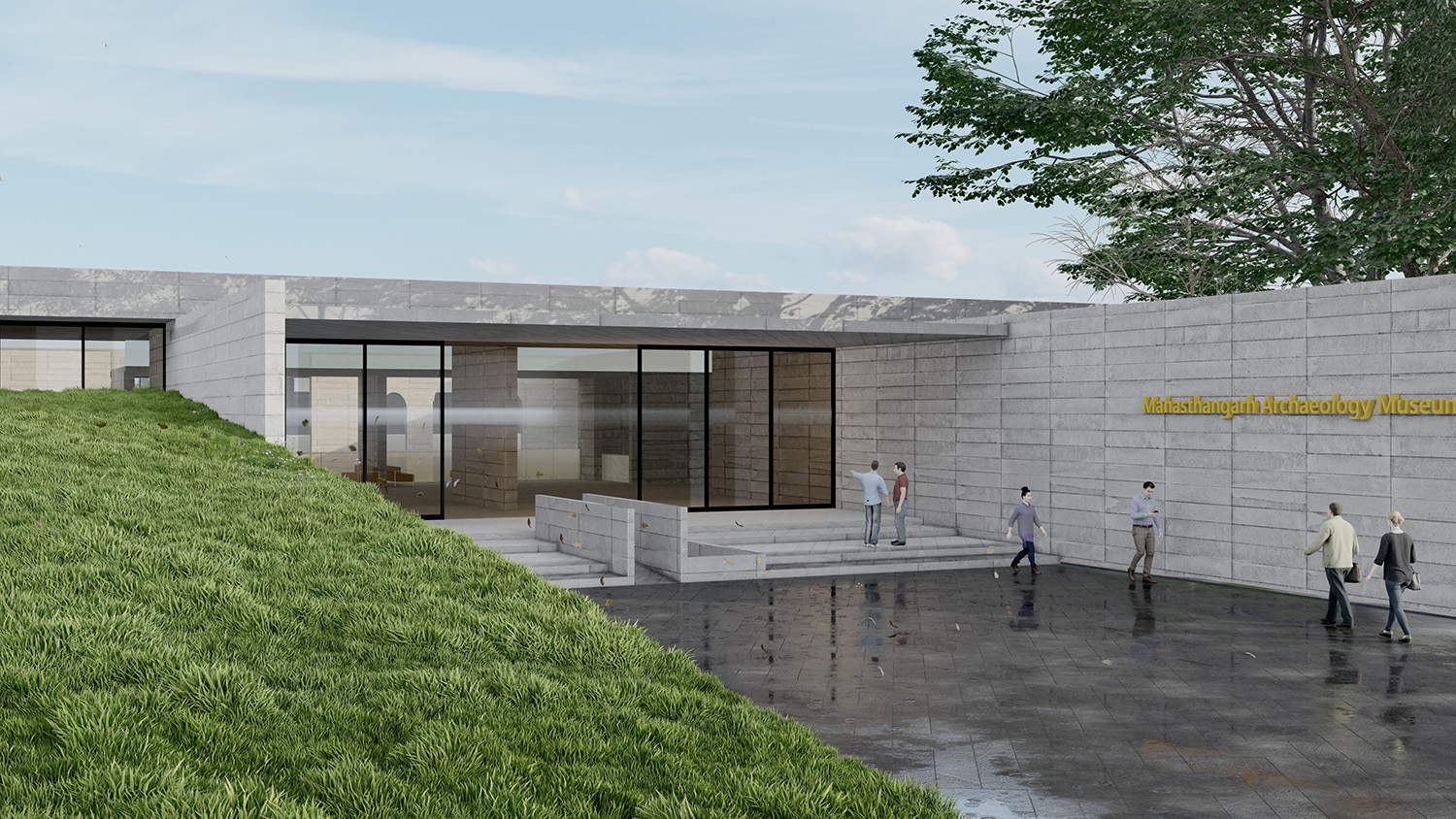
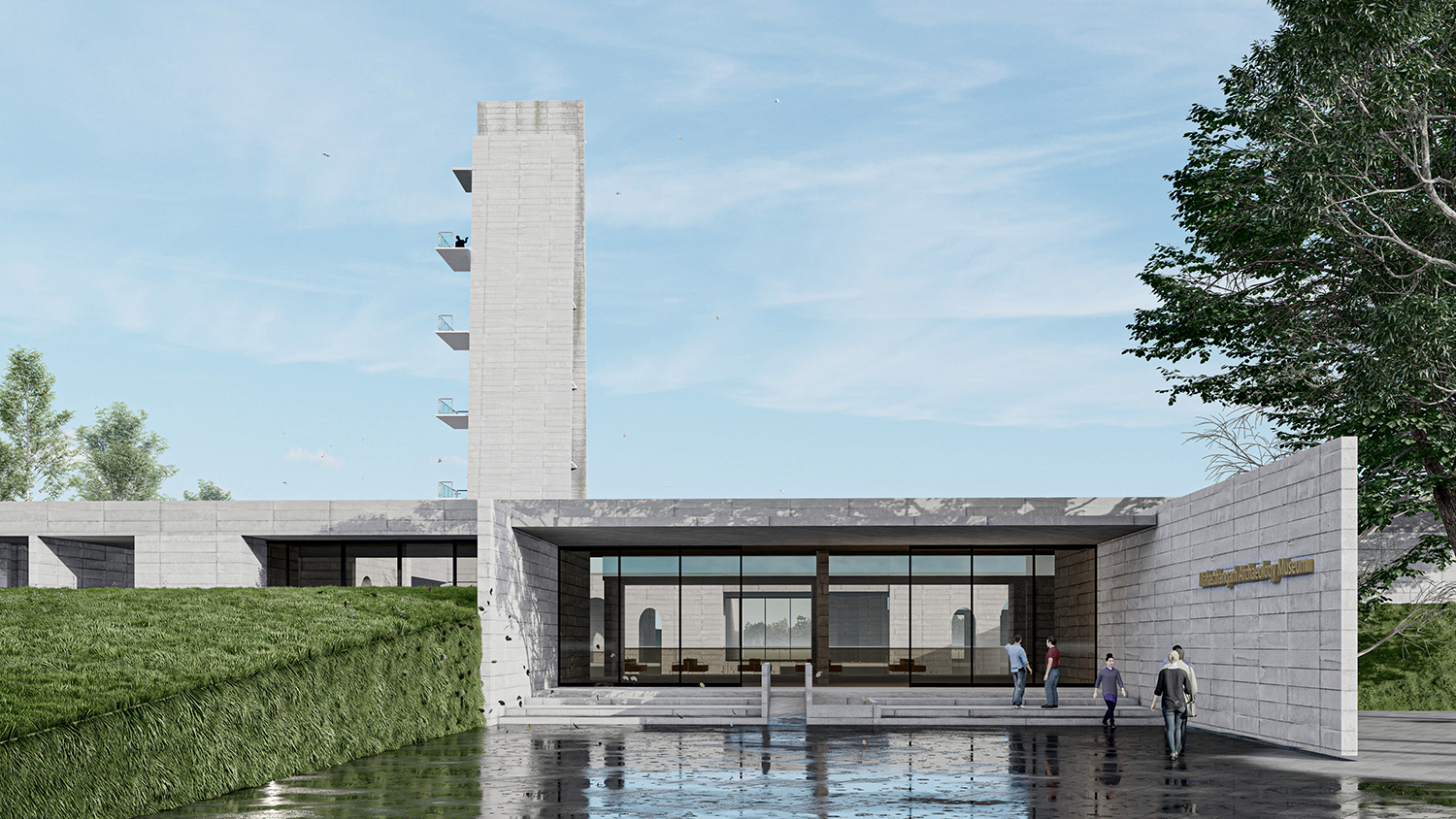
This project represents a thoughtful and timely endeavour to create a modern architectural space that honors the profound historical legacy of Mahasthangarh. The design’s aspiration to blend traditional regional architecture with contemporary ideas, a common approach to museum design, provides a clear conceptual framework. By organizing exhibition spaces according to distinct archaeological periods, the student has crafted a straightforward narrative for visitors, allowing them to journey through history. The integration of social spaces, such as cafes and walking paths, demonstrates an awareness of the museum’s role as a community asset, not merely a repository of artifacts. However, the project appears to lack a deep-rootedness in the broader context of Mahasthan or Bengal, presenting a formal challenge that the design must more profoundly address to truly resonate with its cultural setting. Additionally, while the brief mentions distinct architectural styles and plans with cardinal directions and central courtyards, it presents a challenge by not fully articulating how these elements move beyond formal inspiration to capture the deep-rooted, broader contextual essence of the region. The document is strong on what the project will include, but less explicit on how these design decisions will be imbued with a profound sense of place that aligns with the context of Mahasthan or Bengal. ─ Editor
From the submission:
Bangladesh has a rich and diverse history dating back thousands of years. The region has been inhabited since prehistoric times, with evidence of ancient human settlements and vibrant civilizations. Archaeological sites across Bangladesh provide valuable insights into early urbanization, trade networks, cultural practices, and technological advancements. For example, Mahasthangarh, one of the country’s earliest urban archaeological sites, holds significant historical importance. It was a thriving city by the 3rd century BCE, and its remnants—including ancient fortifications, temples, stupas, and other structures—offer a window into the region’s early urban life.
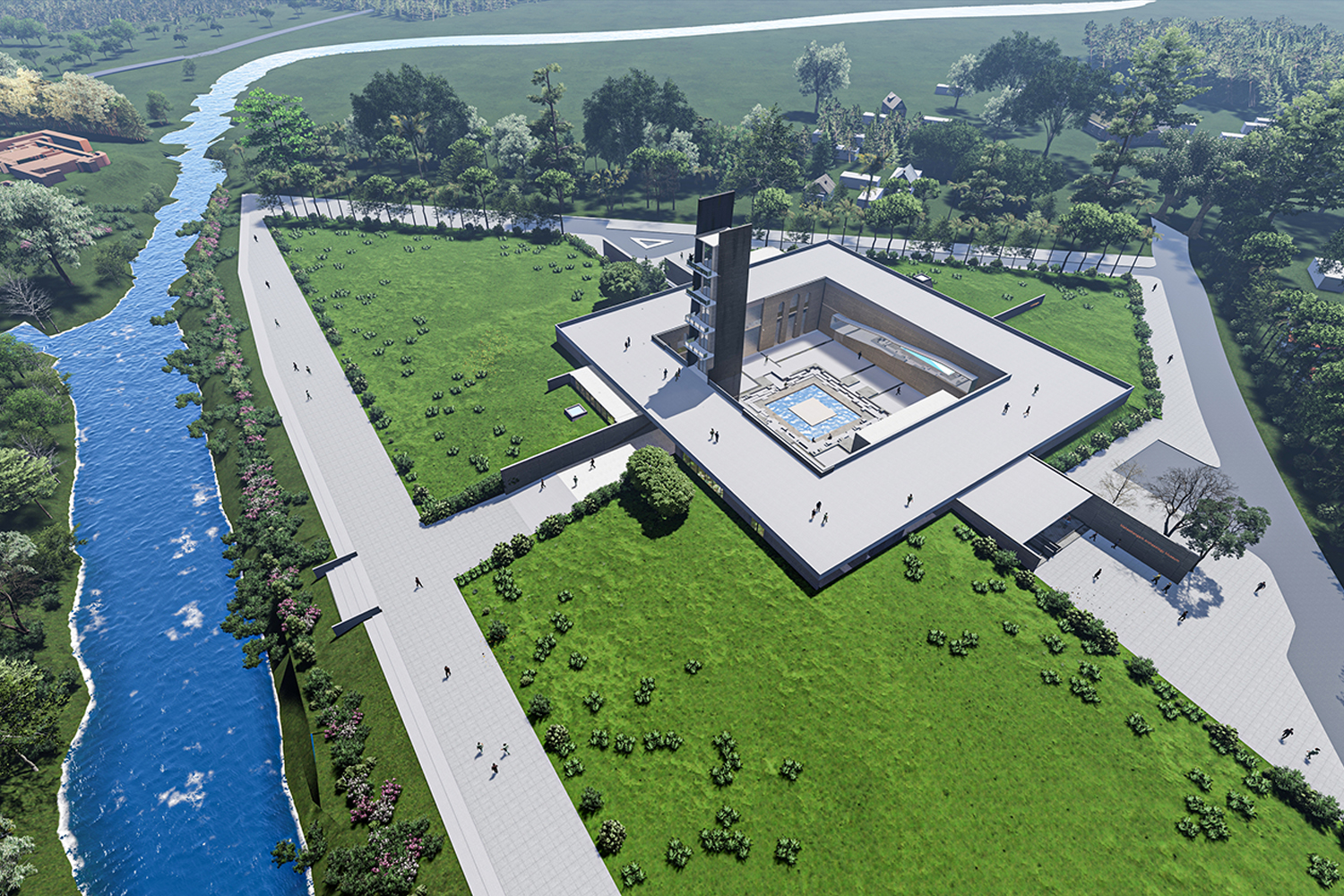
This studio project aims to design an archaeology museum for Mahasthangarh that effectively documents the site’s rich history. The museum will display regional artifacts and relics, providing an immersive and educational experience. By achieving a harmony between old and new, the design combines traditional architectural principles with modern technology and futuristic ideas. Additionally, it prioritizes the museum’s impact on the local community, integrating social spaces and facilities that benefit both visitors and residents.
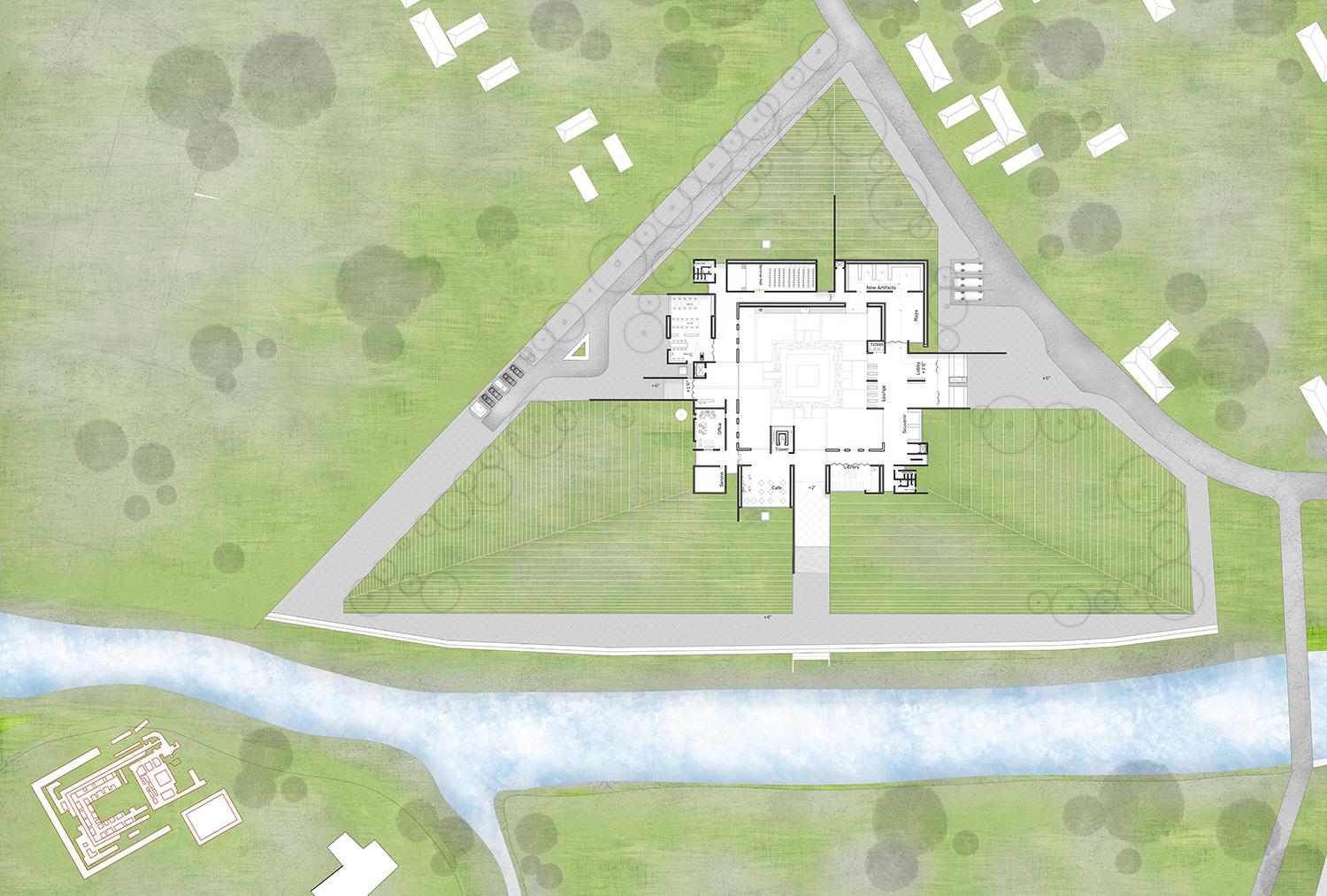
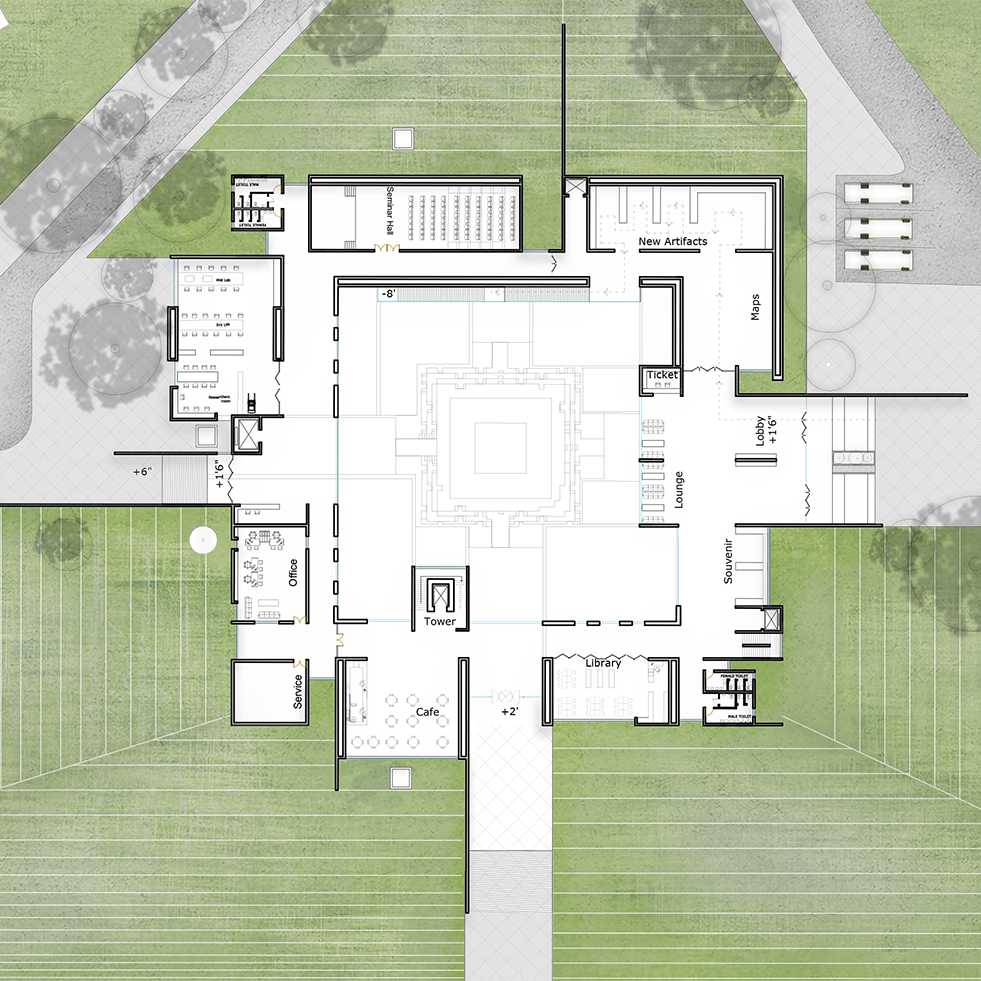
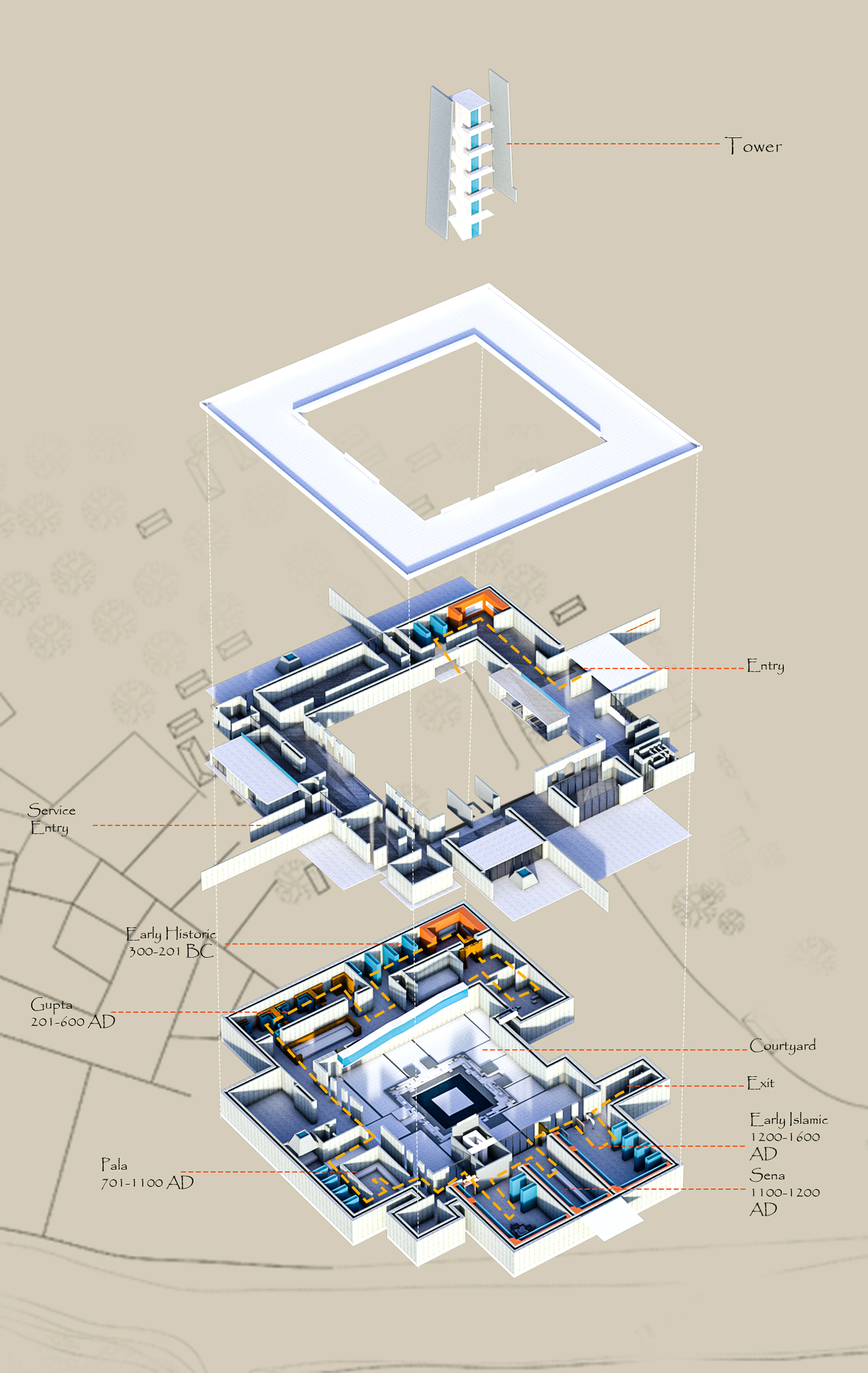
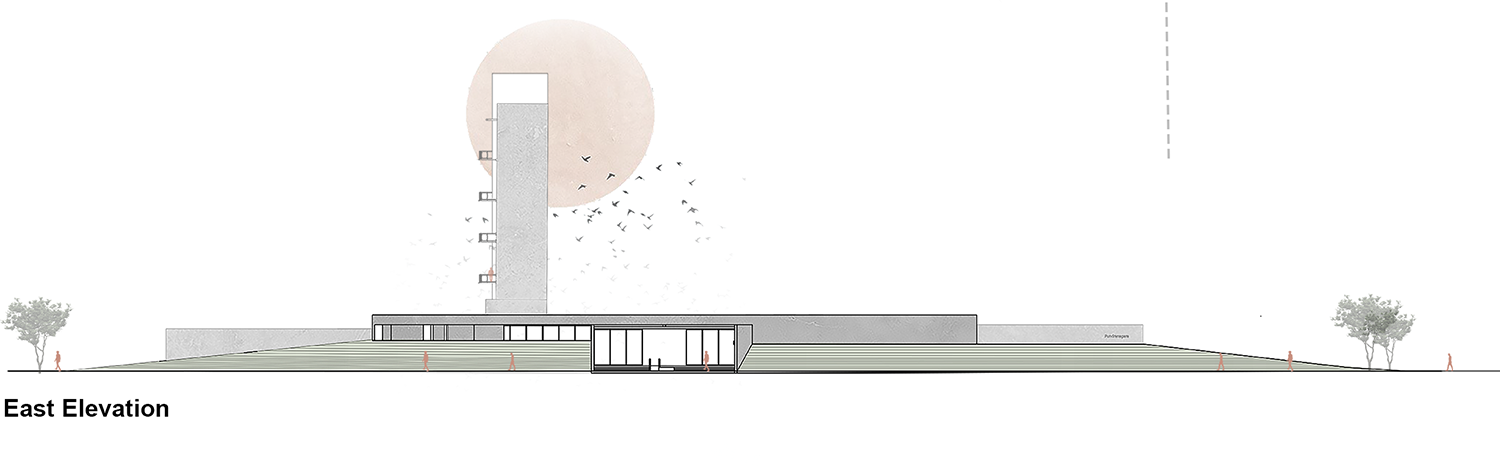
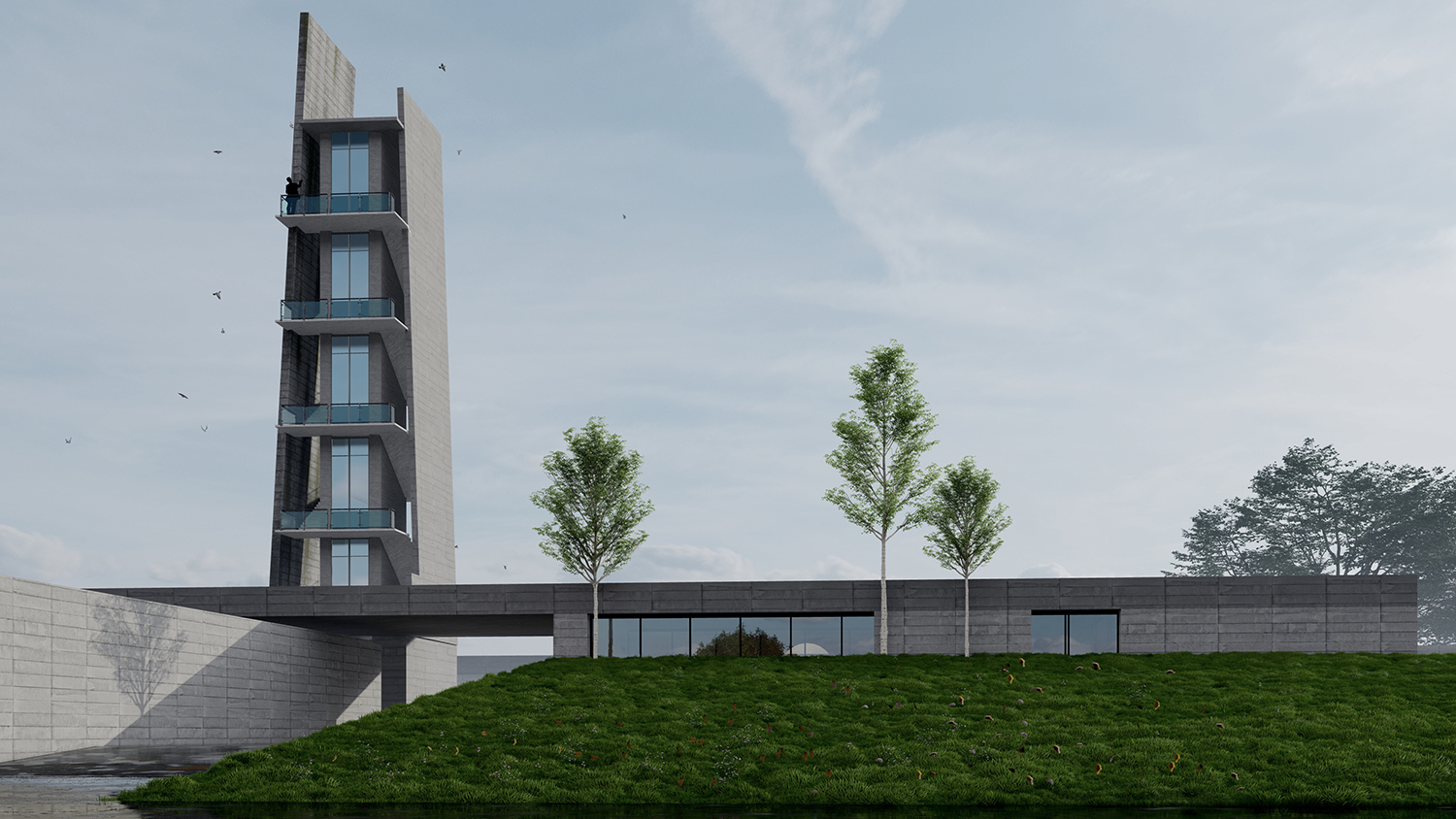
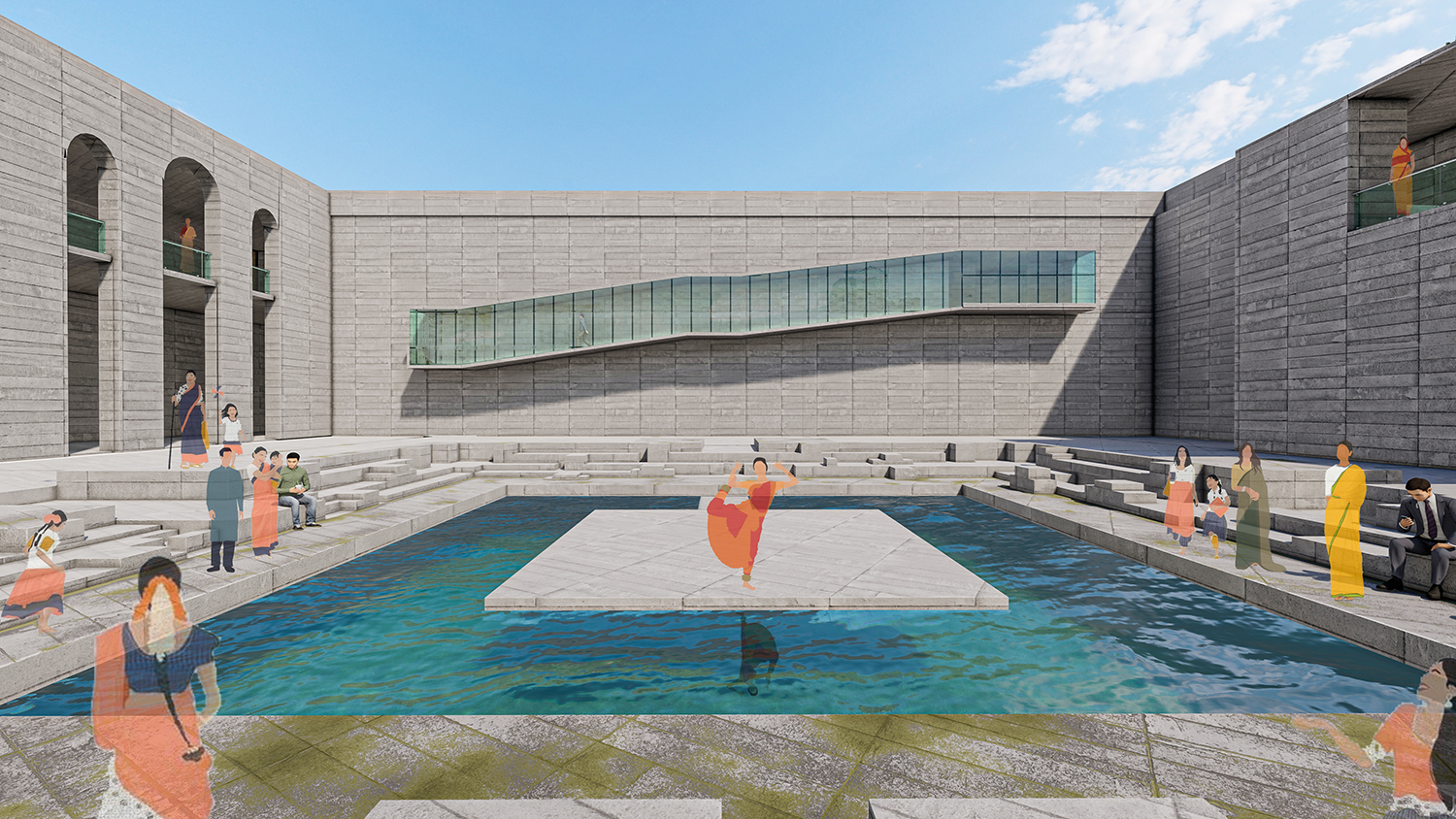
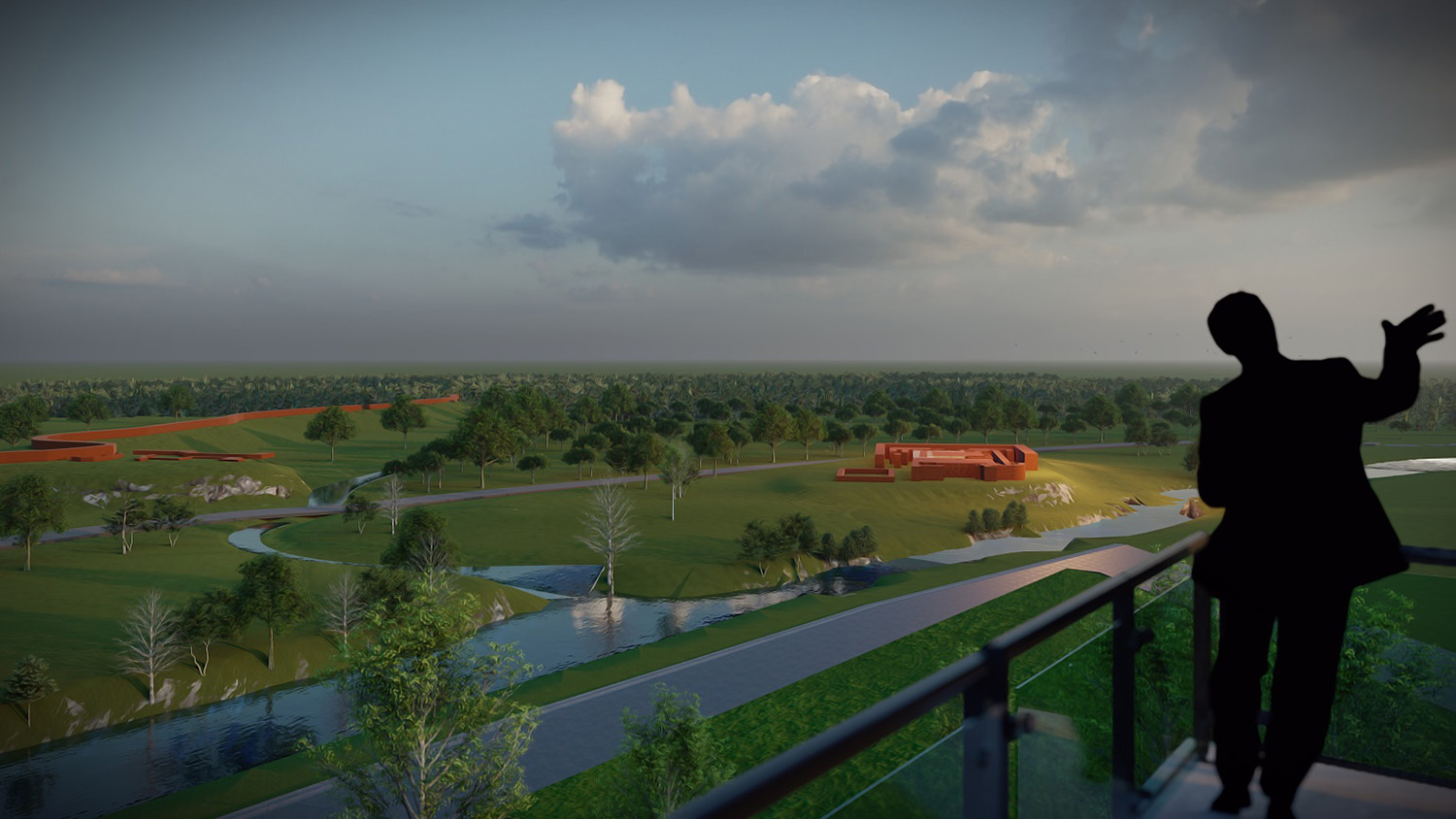
The distinctive architectural style of Mahasthangarh’s ancient structures has inspired the museum’s design. Key plans from the site, such as those of Porshuramer Bari, Gokul Medh, Vasu Bihar, and Bihar Dhap, are organized along two axes on the four cardinal directions. Following the example of the Bihara and Porshuramer palace, which feature a central courtyard, the museum design incorporates a large courtyard to serve as an outdoor exhibition area, as requested by the current museum authorities. A watchtower is included to provide aerial views of the surrounding archaeological sites, helping visitors understand the museum’s context. Facilities like a library, café, souvenir shop, and walking paths are designed to increase public engagement with the museum and the history of Mahasthangarh.
The exhibition spaces are organized according to the different archaeological periods found in the region. Each period is designed to be visually distinct, reflecting its unique design philosophy and aesthetics. This is achieved through the use of era-specific colors, materials, lighting, and spatial arrangements to evoke the essence of each time period, allowing visitors to journey through history.
In summary, this museum is designed to be a gateway to the past, preserving Mahasthangarh’s legacy and offering visitors a deeper appreciation of the ancient cultures that flourished in the region.
Contributing Editor: Mohammad Habib Reza is an architectural and urban design theorist, historian and heritage expert, and an Associate Professor at the School of Architecture and Design, BRAC University, Dhaka.
Like an archaeologist, the artist Zareen Tasnima reaches back into the spiritual soil of our rich past, not to reconstruct it with academic detachment, but to reawaken it through presence, texture, and form. In the 4th century, the kingdom of Samatata entered into recorded history through Samudragupta’s Allahabad Inscription. By the 7th century, Chinese monk Hiuen Tsang described it as a thriving Buddhist centre with 30 Viharas and a network of great learning that foreshadowed today’s residential universities. These lands gave rise to Shalban Vihara, Ananda Vihara, and others sanctuaries for contemplation and artistic expression. Zareen’s charcoal works resonate with the visual vocabulary of this lost world: stillness, sacred form, spiritual proximity. Her choice of charcoal raw, immediate, elemental is a quiet homage to what archaeology leaves behind when colour fades, brick and stone erode. With each stroke and shaded detail, we are reminded of the terracotta plaques, the sculpted Avalokitesvara, and the ornate Vajrasattva that adorned these monastic compounds now dispersed, taken, or hushed by time.
– Sufi Mostafizur Rahman, Professor of Archaeology, Jahangirnagar University.
This drawing is inspired by a rare black stone sculpture of Rishabhanatha, discovered in Surohor, Rajshahi—one of the earliest known Jain images in Bangladesh. As the first Tirthankara, Rishabhanatha is depicted seated in deep meditation, surrounded by rows of miniature Jinas, symbolizing enlightenment and spiritual liberation. The artwork reflects the early flourishing of Jainism in North Bengal, even before the rise of Buddhism, and offers a glimpse into a sacred tradition deeply rooted in the subcontinent’s cultural memory.
Vairochana from Mahakali, Munshiganj
This artwork is based on a finely carved black stone sculpture of Vairochana (or Amitabha) from Mahakali, Vikrampur—now housed in the Bangladesh National Museum. The figure sits in serene meditation on a lotus pedestal, framed by a richly decorated stele that reveals the ornate architectural language of the later Pala period. Despite damage to the top of the slab, the elongated form and intricate detailing highlight the cosmic and transcendent aspects of the Buddha. This image reflects the aesthetic refinement and symbolic depth of Buddhist art in Bengal.
This drawing is inspired by an extraordinary sculpture of the river goddess Ganga, found in Deopara, Godagari, Rajshahi and preserved in the Varendra Research Museum. Dated to the Sena period, this figure stands out for its sensual elegance, exquisite detailing, and remarkable three-dimensional modeling. The goddess is adorned with rich ornaments and jewelry, yet the graceful softness of her body is delicately expressed through the sculptor’s refined craftsmanship. This work exemplifies a harmonious balance between divine ornamentation and the poetic realism of the human form.
Ardha-Narisvara from Purapara, Munshiganj
This drawing is based on a rare and refined black stone sculpture of Ardha-Narisvara, preserved in the Varendra Research Museum and originating from Purapara, Munshiganj. Sculpted in the round, the figure harmoniously unites the masculine features of Shiva and the graceful traits of Uma, symbolizing divine duality. The sculpture’s balanced symmetry, serene expression, and subtle detailing reflect the artistic finesse of the Bengal school. It stands as a powerful representation of cosmic unity in form and spirit.
This drawing is based on a magnificent 13th-century black stone sculpture of Uma, preserved in the Khulna Museum. The goddess stands on a double lotus, surrounded by six female attendants, within a richly carved temple-like frame. Despite the loss of three hands, her elegance is highlighted by the delicacy of her sari, conical crown, and ornate jewelry. Above her, the prabhavali frames a linga and miniature Brahmanical figures, reflecting both divine symbolism and narrative detail. The composition celebrates the grandeur of late Pala-Sena artistry, echoing sacred stillness and sculptural opulence.
Ambika from Morotail, Bogra
This drawing is inspired by a captivating black stone sculpture of the goddess Ambika, discovered in Morotail, Bogra and housed in the Mahasthangarh Museum. Attributed to the Sena period, the seated figure of Ambika is rendered with serene dignity as she holds a child on her lap—a powerful emblem of maternal grace and fertility. The composition is marked by soft yet disciplined modeling, expressive detailing, and a deep sense of intimacy. Despite minor losses, the sculpture reflects a rich sculptural tradition where divine femininity and human warmth converge in quiet harmony.
This drawing is based on a striking black stone sculpture of Avalokitesvara, discovered in Namuja, Bogra and now housed in the Mahasthangarh Museum. Carved with six arms and an elongated body, the figure displays the serene majesty and compassionate presence typical of Mahayana Buddhist iconography. Despite slight damage to the face and hands, the sculpture radiates spiritual calm and technical finesse. Its rarity and refined execution mark it as a significant work within Bengal’s sculptural heritage.
Parashurama from Ramkali Dewal, Rajshahi
This drawing is inspired by a black stone image of Parashurama, preserved in the Bangladesh National Museum and originally from Ramkali Dewal, Rajshahi. The sculpture shows the axe-wielding sage in a calm yet powerful stance, his four arms holding symbolic attributes. Carved with clarity and balance, the figure reflects the early Pala style’s focus on order and idealized divinity. The smooth modeling and upright form reveal the sculptor’s disciplined vision of divine wrath and restraint.
This drawing is inspired by a remarkable black stone sculpture of the three-faced goddess Marichi, discovered in Pior, Chandina, Comilla and preserved in the Mainamati Museum. Despite slight damage, the figure displays exquisite miniature carvings and powerful iconography typical of Tantrika Buddhist tradition. The goddess is portrayed in a dynamic posture, richly adorned, exuding divine energy and spiritual potency. It is considered one of the finest representations of Marichi found in Bangladesh.
Tara from Suaganj, Comilla
This drawing is based on a delicate black stone image of Tara discovered in Suaganj, Comilla, now preserved in the Mainamati Museum. Though small in scale, the sculpture is remarkable for its bronze-like composition and richly perforated back-slab, echoing early traditions. Tara is seated gracefully on a lotus pedestal, her body adorned with fine ornaments and a serene expression of divine compassion. The composition blends stylistic elegance with spiritual intimacy, making it a unique representation in Bengal’s Buddhist art.
This drawing is based on a fine sandstone sculpture of Balarama from the Central Temple of Paharpur, now preserved in the Paharpur Museum. Shown under a seven-hooded serpent canopy, the four-armed deity stands with strength and grace, holding a pestle and ploughshare—his signature attributes. The serene yet slightly intoxicated expression and the presence of wine-bearing attendants echo Puranic tales of divine indulgence.
Apitakuca from Kasippur, Mymensingh
This drawing is based on a rare black stone sculpture of Apitakuca, discovered in Kasippur, Mymensingh and now preserved in the Bangladesh National Museum. This unique composite form, blending divine and symbolic imagery, reflects the complex spiritual expressions of 12th-century Bengal. The goddess, carved with poised elegance and minute ornamentation, embraces a linga rising from a lotus base—representing union and cosmic balance. Its architectural precision and sculptural depth mark it as a standout of later Pala artistry.
This drawing is inspired by a finely carved black stone image of Gaja-Lakshmi from Jora Deul, now housed in the Bangladesh National Museum. The goddess stands gracefully in the center, flanked by elephants pouring water over her from vessels—a traditional symbol of prosperity and purity. Despite minor damage, the sculpture reveals the early Pala style’s elegance in posture, ornamentation, and serene expression. The composition is both symbolic and sensuous, capturing the divine aura of Lakshmi in her most auspicious form.
Surya Deva from Mainamati, Cumilla
This drawing is inspired by a striking black stone image of Surya, the Sun God, discovered in Mainamati and now preserved in the Mainamati Museum. Standing tall with radiant symmetry, the deity holds lotus stalks in both hands—symbols of cosmic light and fertility. Flanked by celestial attendants and adorned in regal attire, the figure radiates divine authority and luminous grace. The sculpture reflects the Pala period’s mastery in blending spiritual symbolism with ornamental finesse.
This drawing is inspired by a beautifully composed black stone sculpture of a reclining mother with child, discovered in Joypurdanga-para, Natore, and now housed in the Mahasthangarh Museum. Rich in domestic warmth, the figure of the mother rests on a cushioned couch, attended by maids and divine symbols above. Unlike standard iconography, the composition reflects a royal lady’s opulent life rather than strict religious imagery. The scene is delicately modeled, offering a glimpse into the tender intimacy and worldly grace of maternal affection in early medieval Bengal.
About the Artist
Zareen Tasnima is a recent graduate in architecture from North South University, with a deep-rooted passion for heritage, sculpture, and storytelling through art. Her works explore the spiritual and cultural layers of Bangladesh’s archaeological relics, translated into expressive charcoal sketches. “মাটি, মূর্তি ও মানস — Earth, Idol & Mind” is her debut solo exhibition, where memory, history, and artistic instinct converge in tribute to the country’s timeless icons.
When we talk about architecture or space, have you ever wondered why some places feel like they belong, while others seem strangely alien? How can a street or a courtyard gather people, while another pushes them apart?
Let’s look back to a time when we were kids. Coming home from school with friends, playing in the neighborhood alleys is where we made the best memories that felt eternal. But one day, construction trucks rolled in, claiming this was no longer our place. We witnessed those spaces change, buried under high towers of glass and concrete where people hesitated to enter. When we lost our own ‘Abahani’ field, we also lost a piece of our origin and belonging. These memory lanes live on in our hearts and minds, but not in our built environment. And it makes us wonder: where do today’s children gather?
My question is, why do we allow the places where we truly belong to disappear? Or could we design spaces that honor the past while embracing the future?
The Cracks in the City We Inherited
Walking through any contemporary city, the tension between ambition and alienation can be sensed. The streets of Dhaka, Delhi, São Paulo, or even Los Angeles raises the questions of contradictions where a high-rise luxury condominium proudly stands beside a crumbling settlement; a highway cutting through what was once a neighborhood; the once-lively waterfront now reduced to sewage and concrete embankments. These are not isolated issues. They reveal multiple overlapping crises in the urban built environment.
Ecological fragility is a reality we encounter and are affected by. It is evident that cities are engines of climate change but also its frontline victims. Paved-over wetlands increase flooding; urban heat islands intensify rising temperatures; carbon-heavy construction accelerates global warming. While the rapid urbanization offers the trade-off between sensitivity or business, architecture too often treats the environment as a backdrop rather than a lifeblood for the benefit. For example, we can see how Jakarta is sinking under the weight of uncontrolled development. At the same time, Dhaka is losing Buriganga and canals to encroachment─ choking both cities as ecology is ignored.
Secondly, social fragmentation is an aftermath of urban sprawl and urbanization. Gentrification pushes communities away from the very places they helped shape, while high-rises isolate and public spaces are privatized or policed leaving fewer places for genuine encounters. To relate, in many Indian metros, “gated communities” flourish while informal settlements are demolished, producing parallel cities for the rich and the poor. This phenomenon is broadly seen in the Global South,
Moreover, global cities increasingly look the same with glass towers, shopping malls, and flyovers. Cities lose memory, rootedness, and uniqueness when local materials, traditions, and narratives are sidelined. While international modernity was meant to unify, it has flattened identity. From ornamentation to Modernist minimalism and today’s contemporary styles, architectural trends have spread like global fashions, leading to cultural homogenization. Comparing a skyline in Dubai, Shanghai, or Dhaka’s Gulshan, it’s often hard to tell them apart. The “anywhere city” erases belonging.
Contemporary practice thus often falls short. Standardized solutions and globalized aesthetics erase local character, leaving cities that feel indistinguishable. Sustainability, though widely discussed, remains inconsistently applied, with construction still consuming 40% of global energy and producing a third of greenhouse gas emissions. Social dimensions are also neglected, leaving sterile environments instead of vibrant, human-centered spaces.
These crises reveal that architecture and urbanism have not kept pace with the needs of time. In a world where too many buildings could be anywhere and thus belong nowhere, we need an approach that offers a way to create places rooted in culture, yet open to change.
A Compass Is Needed
Any philosophy is a framework that navigates direction, coherence, ethical grounding and critical lens. Too often, planners, urban designers, and even city authorities operate without clear guidance. Thus, briefs remain vague, decisions pile up incoherently, and when trade-offs become difficult, ethics are overlooked. Therefore, a structured advanced framework is necessary where choices can align around values caring for people, place, and planet that goes beyond style-chasing.
However, this does not mean that the philosophies of the last century are irrelevant. Instead, the changing realities of the built environment demand that we revisit, adapt, and reinvent them. While past movements offered powerful insights, they did not fully address today’s intertwined challenges of ecology, equity, and belonging. What we need now are approaches that treat buildings not as isolated objects, but as catalysts for community, well-being, and resilience.
The Missing Link after Modernism, Postmodernism, and Placemaking
There have been numerous philosophies from the last century that shaped the built environment we inhabit today. Each movement has inspired how we build, yet each has also left important gaps.
From Modernism, with its minimalist and monumental ambitions seen in works such as Frank Lloyd Wright’s Fallingwater, Le Corbusier’s Villa Savoye, and the Sydney Opera House, to the more recent Placemaking approach exemplified by Pioneer Courthouse Square, the world has witnessed its footprints.
Modernism promised progress, efficiency, and universality, but often reduced human life to functional boxes, erasing cultural continuity. Postmodernism reacted by reintroducing symbolism, play, and historical references, yet at times became superficial like a collage without grounding, treating context as an afterthought. In turn, placemaking brought people back into the conversation but it remained limited to small-scale interventions, unable to address systemic issues of infrastructure, climate, or equity. These philosophies taught us much, but none have fully equipped us to deal with today’s intertwined crises of climate, social inequity, and belonging.
Do We Need Another “Ism”?
For much of the 20th century, architects believed they were building for the world, not the neighborhood. But as cities filled with generic skylines, a quiet rebellion began.
First, “Contextualism” in architecture as it is generally understood: 1960s–70s- Classic Contextualism arose as a corrective to modernist universalism. It urged architects to respect the “context” of a site by echoing the scale of neighboring buildings, aligning rooflines, and matching materials. The guiding principle was simple: do not stand out, blend in. And for a while, it worked and made it a valuable design ethic. But the movement often stopped at the surface. Facade treatments, skyline harmony, and material mimicry took precedence, while deeper layers of culture, ecology, and history were left untouched.
Second, the other “new contextualisms” that appeared before: 2010s- From the late 20th century onwards, several architects and theorists attempted to expand “Contextualism” to include cultural memory, identity, or even political narratives. These experiments enriched individual projects, but most remained practice-specific, tied to particular aesthetics or personal philosophies. They did not cohere into a systematic framework that could anticipate change or guide resilience. At their weakest, they risked collapsing into stylistic gestures of sensitivity rather than a method for resilience.
Third, the emerging shift: 2020s–Present- Today, a new generation is pushing for something more ambitious: a sensible contextual theory that actively builds resilience. What has been missing is an ability to work across multiple layers of reality simultaneously. Thus, a holistic, integrative framework that recognizes that every site is at once ecological, social, cultural, political, economic, and temporal is evident. This is where “New Contextualism” steps in. The “new” lies not in style but in approach: a replicable, layered framework capable of operating across time (past, present, future), scope (from ecology to culture), and scale (repeatable framework building to city).
What’s new about New Contextualism? – Introducing the philosophy
What makes it new is its method. New Contextualism is a design philosophy that positions itself to ensure buildings are not isolated objects but catalysts for belonging, well-being, and resilience.It is structured and scalable, anticipating needs and stresses, ensuring designs remain relevant as the “future” arrives.
Although it is not an isolated theory, it draws ideas from existing models like Modernism, Postmodernism, and Critical Regionalism in a more nurtured and advanced manner. It inherits the spirit of resisting placelessness but is process-based rather than style-based, incorporating systems thinking, regenerative ethics, and participatory design. For example, a Heritage Eco Resort at Bagura, a developing city with rich Buddhist heritage of Bangladesh, could apply community co-creation, unlike typical Critical Regionalism, which rarely includes participatory economic planning.
Architects like Bjarke Ingels, Shigeru Ban, and Alejandro Aravena demonstrate how contextual, sustainable, and socially conscious principles can be effectively applied in contemporary projects. Works such as Toronto’s Royal Ontario Museum extension, New York’s High Line, and coastal office developments that integrate ecology illustrate New Contextualism’s ethos: design that is locally rooted, globally aware, and future-ready.
It is globally relevant as it proposes a holistic context-agnostic framework where design engages principles and ten intertwined layers; only the answers change with place. This approach does not treat context as a backdrop or a single reference point, but as a living, layered, and evolving fabric. By weaving together these layers, New Contextualism fills the gap left by previous movements, offering a compass that is as attentive to justice and ecology as it is to memory and form. The idea can be summed up simply as:
Sense of place and identity, honoring culture and memory while embracing contemporary design.
Sustainability minimizes energy, carbon, and waste while adapting to the local climate.
Social engagement creates inclusive, life-giving spaces that encourage interaction and well-being.
Five Guiding Principles: Designing with Time, Data, and Justice
New Contextualism reconciles the shortcomings of Modernism and Postmodernism by offering a framework that is both timeless and timely. Its principles emphasize flexibility, responsibility, and cultural depth.
Forward-thinking design Architecture and urban design is for the future, not the present, because by the time a building opens, the present has already passed. Architects must anticipate the needs of future generations and recognize the long lifespan and impact of their work.
Informed by prediction Big data and AI provide tools to model scenarios, forecast stresses, and anticipate needs. Used responsibly, they allow design to remain relevant over time, grounded in past patterns but oriented toward emerging futures.
Learning from the past Every site carries historical and cultural layers that shape identity. Understanding and respecting these patterns ensures that design is not imposed but grows from the
A broad sense of context Context spans more than form or style. It operates across scales from micro to macro, local to global, and across ten overlapping layers: social, economic, political, historical, ecological, scientific, geographical, cultural, architectural, and urban. Together, these layers guide a fuller understanding of place.
Equity and justice Every building becomes part of the existing fabric of community and nature. Design must protect the “right to the city,” ensuring that no project strips away people’s access to space, belonging, or shared resources. Architecture should be inclusive, equitable, and responsive to diverse needs.
The 10 Layer Lens: How We “Do” Context
Every project begins with three phases: Read, Plan, and Process. New Contextualism gives particular weight to the first, reading the site. Before form or function, it is necessary to understand the context. The 10-layer lens: Social, Economic, Spiritual, Historical, Ecological, Scientific/Technological, Geographical, Cultural, Architectural, and Urban, offers a framework for that reading. Not every layer carries equal weight each time, but together they ensure a fuller picture—the result: architecture that feels inevitable in its place yet legible to the broader world.
“Reimagined Jamuna Future Park as a Civic Space”- undergraduate thesis project by Nuzhat Shama, reimagines Jamuna Future Park beyond its role as a commercial complex, transforming it into a civic hub that integrates public life, culture, and community engagement. By opening its vast spaces to pedestrian networks, green corridors, and social programs, the design envisions the mall as an inclusive urban platform embodying the principles of New Contextualism.
For example, the undergraduate thesis “The Flowing Sanctity: From Myth to Matter” (2023), where context was not decorative but rather was the design generator. The project reimagined Panatirtha, a spiritual pilgrimage site in Sunamganj, Bangladesh, where Advaita Acharya’s temple stands. Traditionally visited only once a year for ritual bathing, the site risked slipping into obscurity. Through contextual reading, the thesis proposed a new dimension: a space alive in daily life as well as in ritual moments.
The Flowing Sanctity: From Myth To Matter”- undergraduate thesis project by Upama Das Nitu aims to restoring the sacred relationship between water and people through memory lanes, public spaces, green buffers, and cultural nodes, the project transforms the river edge into a civic landscape rooted in the principles of New Contextualism. It envisions jadukata riverfront development of Sunamgonj that intertwines culture, spirituality, and community life bonded with economy.
Social & cultural layers revealed how pilgrimage and tourism could sustain the economy of the permanent community. Design interventions, therefore, sought to strengthen both local livelihood and artistic vitality. Historical & spatial layers traced community paths across paddy fields and mapped memory routes connecting temple and settlement. These became the skeleton of new circulation networks, ensuring the space did not feel alien but grounded in familiar movement. Spiritual & cultural concepts, especially Advaita, or Non-dualism, shaped the spatial form. Courts for culture and for ritual were not divided but interwoven, open to all identities, reinforcing the message: “All is one.”
Through this approach, the space was reinvented as open for all, more enriched, respecting the rich-rooted culture of Sunaamgonj, and keeping the sense of belongingness of the place with people intact. Although among the ten layers, spiritual, history, culture, and social identities were highlighted, the economy, urban, and other layers were accounted for, not all layers were weighed equally.
“The Flowing Sanctity: From Myth to Matter” project activates the spiritual complex through year-round cultural festivals, community hubs, and local markets, fostering social interaction, economic vitality, and tourism while celebrating local heritage. By weaving these layers together, the design embodies New Contextualism, preserving identity and creating a vibrant, people-centered urban space.
Another thesis, Rejuvenating Kallyanpur Khal by Oindriza Reza Nodi, addressed a neglected urban canal in Dhaka where ecological, political, and urban layers carried greater weight. The project framed the canal not as leftover infrastructure but as a civic spine, combining flood management with community access. Despite repeated efforts by authorities to dredge and remove encroachments, recovery has remained unsuccessful. For lasting results, however, a holistic relationship between the canal system and its neighborhoods must be established, as demonstrated by cities that have successfully revived their waterways.
The study explored the potential of reintroducing navigability through boating services within a Transit-Oriented Development (TOD) and devised a strategic plan that could be replicated for canal revival elsewhere. At the neighborhood scale, a transit station was designed as the first point of interaction with the canal during daily commutes. At the same time, edge treatments were proposed to encourage frequent community engagement. By prioritizing ecological, social, political, and urban layers, the project demonstrated how the tenfold reading adapts: one thesis may begin with spiritual and cultural roots, another with ecology, urban, and governance, yet both arrive at a design that belongs.
“Rejuvenating Kallyanpur Canal” project by Oindriza Reza focused on revitalizing the canal as an ecological, social, and urban asset, integrating water management, public access, and green corridors to reconnect the community with the waterbody while addressing environmental and urban challenges.
Why It Matters Today
Architecture today confronts urgent headwinds, such as climate strain, urban sprawl, cultural flattening, and energy-hungry construction. Too often, generic solutions erase identity and neglect local realities. New Contextualism offers a counterpoint: design that is specific, contextual, and socially purposeful. It leverages history without nostalgia, embraces innovation as service, and aligns form-making with cultural and ecological continuity.
When the ten-layer lens works in concert with the five principles, we produce buildings and spaces that are lower-carbon, more inclusive, and genuinely loved. That is resilience, relevance, and responsibility by design. Think of context as melody, and design as harmony. Together, they can make spaces that honor memory, welcome life, and truly belong.
References
Frampton, K. (1983). Towards a critical regionalism: Six points for an architecture of resistance. In H. Foster (Ed.), The anti-aesthetic: Essays on postmodern culture (pp. 16–30). Bay Press.
Gehl, J. (2010). Cities for people. Island Press.
Jacobs, J. (1961). The death and life of great American cities. Random House.
Lynch, K. (1960). The image of the city. MIT Press.
Mohammad Habib Reza is an architectural and urban design theorist, historian and heritage expert, and an Associate Professor at the School of Architecture and Design, BRAC University, Dhaka.
Upama Das Nitu graduated with High Distinction in Architecture from BRAC University, where she now serves as a Lecturer in the Department of Architecture. Beyond academia, she is also an artist and founder of “Pencillic,” a creative platform merging art, architecture, and entrepreneurship.
Khudi Bari, a modular, scalable bamboo structure designed by Marina Tabassum Architects (MTA) to address climate displacement in Bangladesh, has been named a winner of the esteemed 2023-2025 Cycle Aga Khan Award for Architecture. The award jury recognized the project for its deep ecological and social commitment, specifically highlighting its contribution to the global advancement of bamboo as a material.
Conceived as a solution to the increasing frequency of climate-driven disasters, the Khudi Bari is an affordable, lightweight, and mobile structural system. Its simple space frame, constructed from bamboo and steel connectors, can be rapidly assembled, disassembled, and relocated by just three people using basic tools.
Despite its simplicity, the design exhibits some robustness. The rigid frame is engineered to withstand high lateral wind and water pressure, while its lightweight nature means it requires only a shallow foundation. A corrugated metal sheet roof ensures ease of transport and maintenance, and the façades can be filled with any locally sourced materials, allowing the design to echo vernacular architectural styles.
The structure is designed on two levels: a lower floor for social and private living spaces, and an upper level for sleeping that doubles as a safe flood shelter.
Initially developed as potential housing for landless communities living on the shifting sand beds of the Meghna River, the Khudi Bari has been successfully deployed across various climatically challenged regions of Bangladesh to provide shelter during floods.
Beyond immediate disaster relief, MTA has scaled up the design’s impact by working directly with communities to share construction knowledge. The system has been adapted to build aggregation centers for women farmers and community centers for women in Rohingya refugee camps, demonstrating its versatility as a tool for social and economic empowerment.
The Aga Khan Award for Architecture is given every three years to projects that set a new standard of excellence in architecture, planning, and community development while addressing the needs and aspirations of societies in which Muslims have a significant presence.