Echoes of the Estuary: A Tourism Center at Hatiya Dwip

World Environment Day 2026

Urban [Re]Stitch

Puthia Temple Complex: Heritage as Cultural Condenser | BUET

What makes Heritage buildings so special? Their history, colour, texture or their construction technique? Are we ruining the original beauty of our heritage buildings by conserving it in a very wrong way? Most of the archaeological conservation of our country ends up with an imaginative plastering detail and fake pink coloured walls (Chun Shurki) without considering the proper conservation technique. End of the day, it becomes a functionless tourist spot which has no involvement with the local community. The aim of the project was to re-consider the heritage conservation process of our country. Can we conserve heritage buildings without ruining its inherent value?

Puthia doodle © Shimanto Goswami | BUET
Proposed area masterplan © Shimanto Goswami | BUET
Historical evolution of Puthia Complex © Shimanto Goswami | BUET


The site is in Puthia UpazilaRajshahi, Bangladesh which is consists of a cluster of notable old Hindu Temples located 23 km to the east of Rajshahi city, and it has the largest number of historic temples in Bangladesh. There is also a surrounding waterbody covering the whole temple complex but it is getting encroached by local people in many places. Without proper conservation, the beauty of this distinctive heritage complex is fading away.

The main idea of the project was – i) Reconsidering the paradigm of heritage conservation; ii) Heritage as a cultural condenser, integrating the local community by addressing the local needs; and iii) Reviving the natural heritage of Puthia.

Proposed Masterplan for Puthia complex © Shimanto Goswami | BUET
Proposed waterbody section © Shimanto Goswami | BUET


The masterplan is generated by reviving the natural waterbody which has a historical proportion of 5:6, the proportion is also seen in Angokar Watt Cambodia, The Forbidden City China. The original proportion of the heritage has been restored in the design. A walkway surrounding the waterbody has been designed to create a public domain and to prevent further encroachment of the waterbody. The vehicular road is bypassed outside the main Temple Complex to create a pedestrian-friendly area inside. A heritage loop connecting all the heritage of the complex is designed considering convenience and vista. A heritage van (rickshaw van)has been proposed to make a vehicular connection between the main Temple Complex and Hawakhana Complex so that the visitors can easily explore the site.
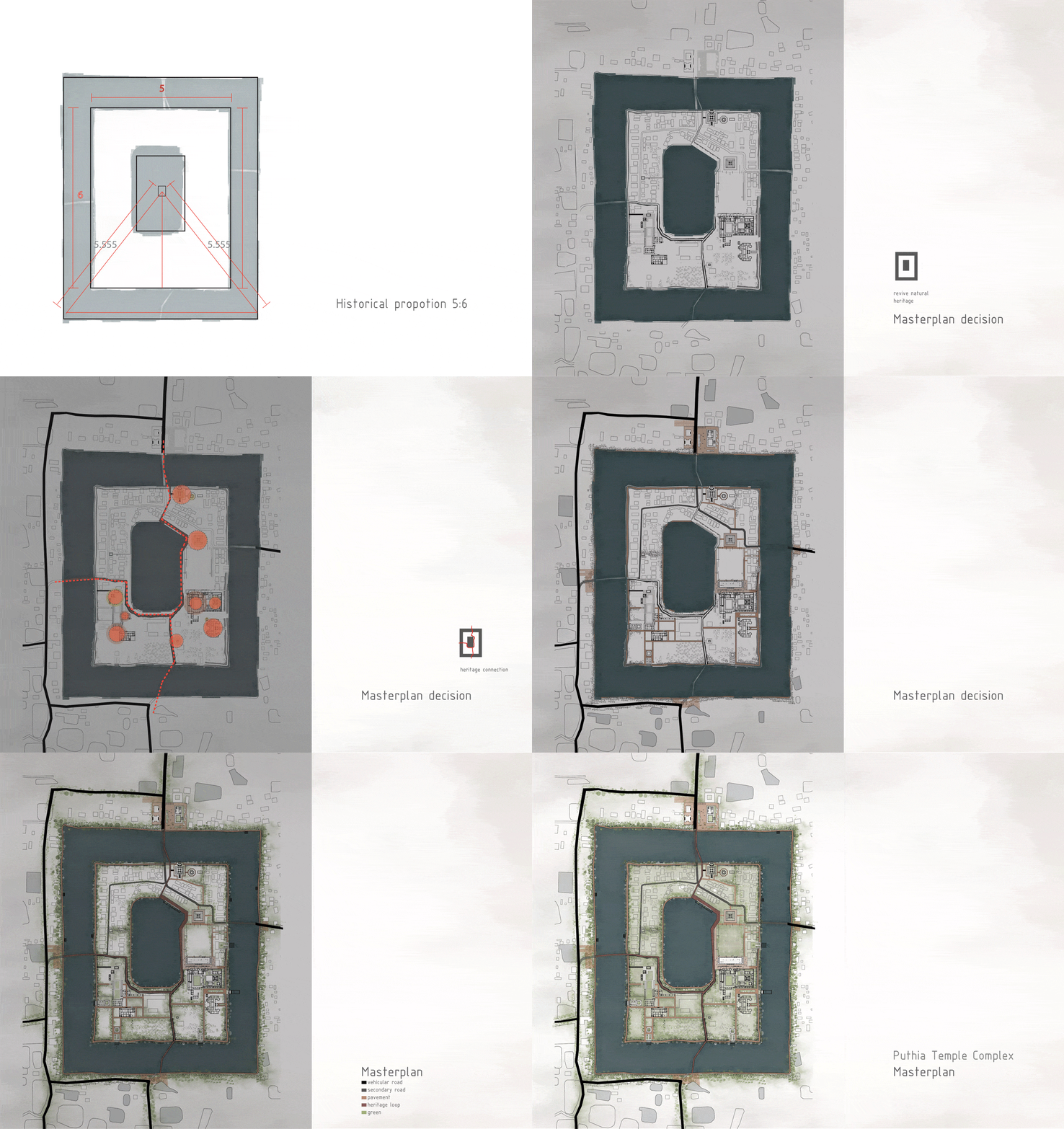
Masterplan formation © Shimanto Goswami | BUET
Heritage conservation concept © Shimanto Goswami | BUET


The conservation technique is inspired by the Chinese potteries in which they rebuild broken pot with a different material to create the original shape and embraces the change by highlighting its damage. Many heritage buildings and paintings are now conserved in this technique in many European countries. The concept behind the project was to merge the old with new interventions by creating a contrast and making heritage buildings more interactive and vibrant.

Rajbari Museum section AA © Shimanto Goswami | BUET
Rajbari Museum Section BB © Shimanto Goswami | BUET
Rajbari Complex model © Shimanto Goswami | BUET
© Shimanto Goswami | BUET


The whole masterplan is designed into six zones:  Entry zone, Mandir complex, Rajbari Museum Complex, Char-Ani Rajbari, Homestay facilities for tourist and Hawakhana Complex. All the heritage buildings are connected through a heritage loop which will guide the tourists.

The entry zone includes an information center, a watch tower, souvenir shops and necessary parking facilities. The bridge at the entrance works as a threshold and creates a vista for the next destination, the Mandir Complex. The existing ghat of the Mandir Complex in the north is redesigned and a new ghat is proposed in the south to accommodate religious activities. The next heritage is the Rajbari complex. The challenging part of the Rajbari complex was locating a new museum building for displaying the artifacts of the Barendra region. The existing underground tunnel, which is mostly unused and ruined has beenrevived and a connection has been created between the proposed museum and the existing Rajbari through the tunnel. The museum is designed in the underground so that there is no visual obstacle in the heritage site. The roof of the museum is designed as a public plaza where people can enjoy the Rajbari and get an idea of the underground museum.

Govinda Mandir © Shimanto Goswami | BUET
Govinda Mandir model © Shimanto Goswami | BUET


The Govinda Mandir, adjacent to Rajbari Complex is surrounded by ruined structures and different religious activities like Aroti, Anjali, Puja, Vog cooking etc are still performed on the premise. The design idea for this Mandir was to revive the old ruined form with a lightweight structure, like steel and glass by creating a contrast between the old and the new so that it can complement the heritage. Supporting Mandir facilities like kitchen for cooking vog and Prashad, Mandir shop and priest accommodation are provided in the refurbished structure.

CharAni Rajbari © Shimanto Goswami | BUET
Char-Ani Rajbari Model © Shimanto Goswami | BUET


The existing Char-Ani Rajbari Complex was ruined and encroached by local people. So the concept was to stop the encroachment by increasing visual connection. The Char-Ani Rajbari is kept as it is and some structures are designed at strategic locations to frame the old through the new. Lightweight materials are used to minimize the effect of the interventions. Plaza, ghat, pathway and others facilities are also designed so that visitorscan explore the whole complex.

Hawakhana © Shimanto Goswami | BUET

15 Hawakhana

Heritage celebration at Hawakhana © Shimanto Goswami | BUET


The heritage journey ends up in Hawakhana Complex, which is a small heritage but surrounded by a large 80-acre waterbody. The design idea for this complex was to create frame structures at strategic locations to create an experiential journey of the Hawakhana Temple. Supportive facilities like information center, food court, and toilet are also designed to facilitate the visitors.

History gives us identity and makes us aware of why we are here and who we are. Valuing our heritage and history through local community engagement can ensure proper conservation. The current puthia temple complex depicts our journey through history, its coexistence reflects the change and growth through time. We must preserve it in a way so that our future generation can know about the struggle and victory we have been through and also be a part of it.

| Image Gallery | 

  • 20 Rajbari Complex model
  • 19 Rajbari Complex model
  • 21 Govinda Mandir model
  • 22 Char-Ani Rajbari
  • 18 Masterplan model
  • 23 Hawakhana
  • Feature_govinda mandir
  • 17 Heritage celebration
  • 16 Hawakhana
  • 15 Hawakhana
  • 13 View from Ghat
  • 14 Hawakhana
  • 11 charani rajbari
  • 10 CharAni Rajbari
  • 12 Exhibition
  • 09 Govinda Mandir (2)
  • 08 Rajbari Museum Section BB_
  • 07 Rajbari Museum section AA_
  • 06 Proposed waterbody  section
  • Model
  • 03 historical evalution of puthia
  • 02 Proposed area masterplan
  • 01 Puthia doodle
  • 09 Heritage conservation concept

Dipping into Fiction and Fantasy | Illustrations by Ziaur Rahman

| From the submission |

It all started in the childhood. All I can remember that over time I had the chance to meet amazing souls, witnessed great incidents, small and big things whatever they were, I loved to make my own stories with them, in my thoughts, with my own terms. But I felt it was not enough, to add more weight to those ideas, I began drawing. If you ask me what was the first picture you drew? I remember it clearly, it was a Transport Ship. I remember spending several days to draw one Ship after another until it became perfect to my eyes. I was obsessed with perfection.

My school was the place where I honed myself. During the classes I used to draw at the back of my notebook. I remember my friends’ comments about the level of detail I used to put behind each artwork. I loved detailing, I thought it made the artwork more alive and appealing. Detailing cost me time. I had to put a lot of time behind one single artwork. Obviously patience was the key, I think I have this because I’ve only drawn for myself. And that’s why during class eight I was able to put this much output with watercolor:

Harry Potter | media: water colour © Ovi


My favorite media was ball point pen as they were cheap and easily carriage able in school. It was like gambling, make one mistake and the entire piece of artwork is undone. I often felt nervous before starting to draw, I feared I might mess up in the middle of it. The ball point media helped me there.  Unfortunately most of my artworks were either lost or moldered as they were drawn at the back pages of my notebooks. Luckily I managed to store this one:

Dreadlord | media: ball point pen © Ovi


During that time we didn’t have smart phones or internet. Source of Good artworks were often the Eid Cards we received during Eid-Ul-Fitre. I tried to draw them, even though they were drawn in digital media, I tried them with water color. Same blending and tone were very challenging. But I kept practicing.

Sacrifice |media: water colour © Ovi

I tried different media as well, I saw many amazing artists from Bangladesh using color pencil with intense skills. So I was inspired and tried my own:

Mom is Gone |media: colour pencil © Ovi


After the SSC examination, I was introduced to digital painting. And this is where I want to see myself in the future. The challenges I faced over years with different media and tools made me ready for this step. If you are a new artist and eagerly want to start painting in digital media, I will strongly discourage you. Learn the basics first, Try different media, face the challenges they throw at you, otherwise you will mess up badly in here. My first work on digital media was something like this (this image was drawn with mouse only)

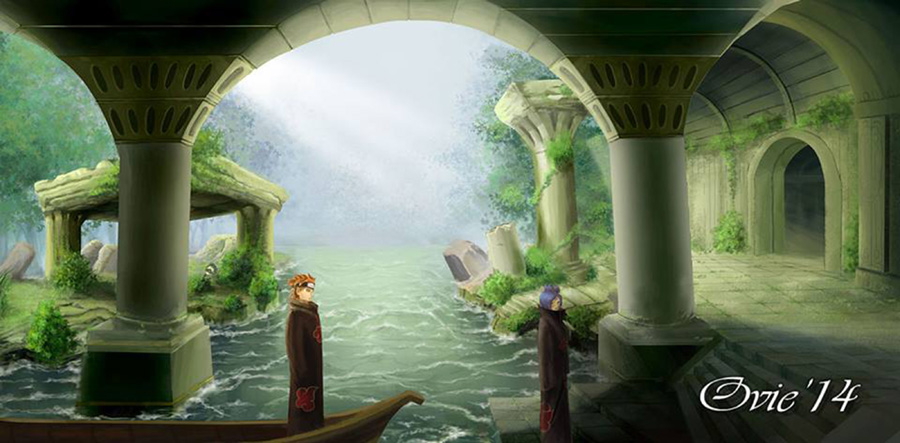
Ruins of the Ancient | digital illustration © Ovi


I think it is necessary for learners to spend more time behind one artwork rather than producing dozens at once. It allows our consciousness about the nature of different subjects, their shapes, their nature in all sort of lighting environment, so when we are going to use the same subject in another artwork we don’t have to face difficulties about their tone, color, gesture and about their position in the suitable spaces. Specifically I want to mention this original work of mine (It was also drawn with mouse only):

The Awakening |digital illustration © Ovi


Drawing cloth’s fold was once a very challenging obstacle for me, but after spending hours and hours behind this work I was able to understand the nature of the cloths folding, their unique shapes at different human gestures. And this is why I take relatively less time and almost no reference to draw cloths in my artworks.

In 2015, I had the chance to get admitted into the Institute of Fine Arts of the University of Dhaka, and that was the turning place for me. DU was the place where I had the chance to meet so many amazing, talented persons. I had the chance to learn many things that I would otherwise couldn’t learn on my own,DU changed my outlookand founded my very own thoughts about art. I still remember that one thing my Honorable teacher said during our first day at class:

Where is your credit copying another artist’s creation? You did nothing, you only copied it. I can only give you credit for your amazing copying skill.”

And that’s when I realized I was doing till then was wrong. I must never copy artworks. Not even a photograph. He also said,

…But to reach that level where you can create your own unique artworks, you must first practice copying. Draw the objects before you, draw anything you like, copy it, and draw it as accurately as possible, not from a photograph not from a smartphone screen, not from another artwork but a live subject, with your own eyes.

The Shaman Architect | digital illustration © Ovi
Despair of an Unfulfilled Scream | digital illustration © Ovi


Since then I sought creativity. However, I am still learning. There are still many challenges and obstacle I haven’t been able to overcome yet. And I am working very hard for those. I feel privileged that, I had so many small and big experiences over these years. Each and every lessons I learned over time brought me here today, made me ready for my big journey ahead.


Ziaur Rahman Ovi is an undergraduate student in the Dept. of Architecture, Shahjalal University of Science and Technology (SUST)


CONTEXT contributor: Mohaimin Ali Khan , student, Dept. of Architecture, SUST.

Robotically Fabricated Wood Chip Barn | AA School of Architecture

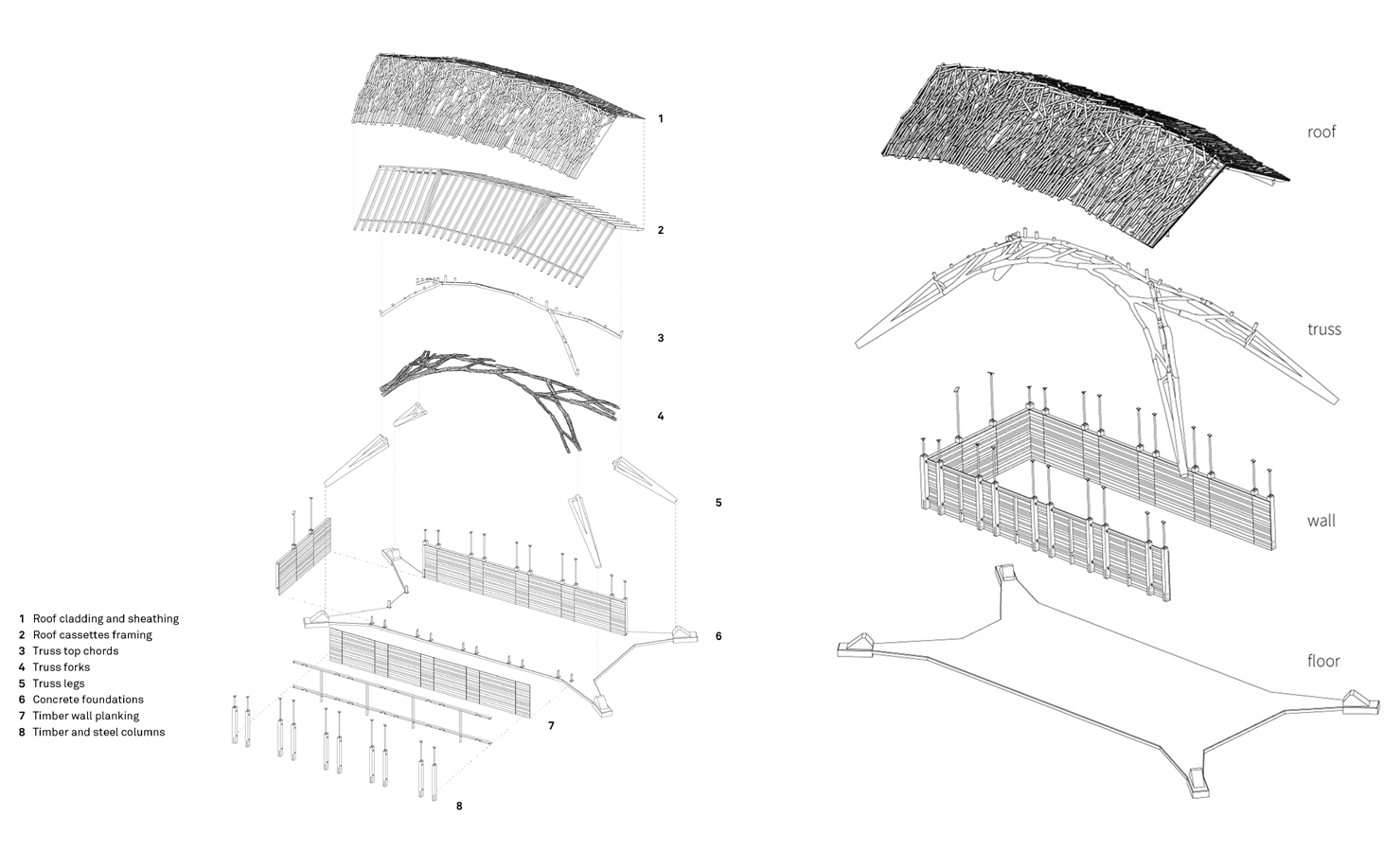
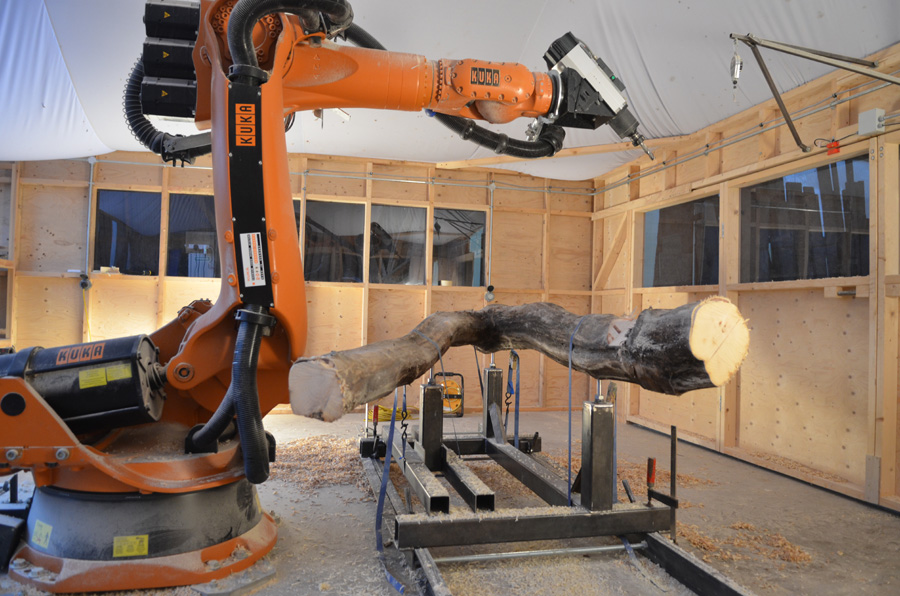
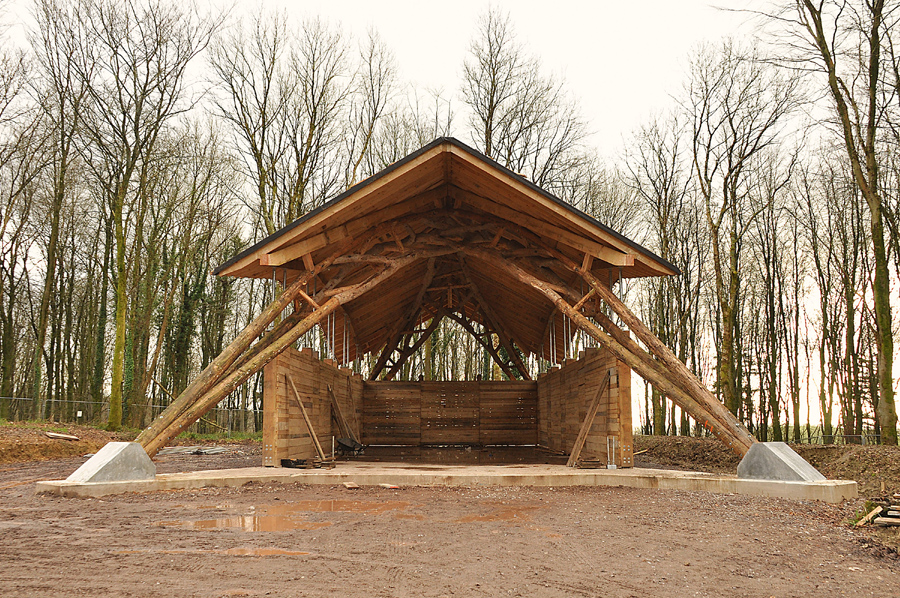
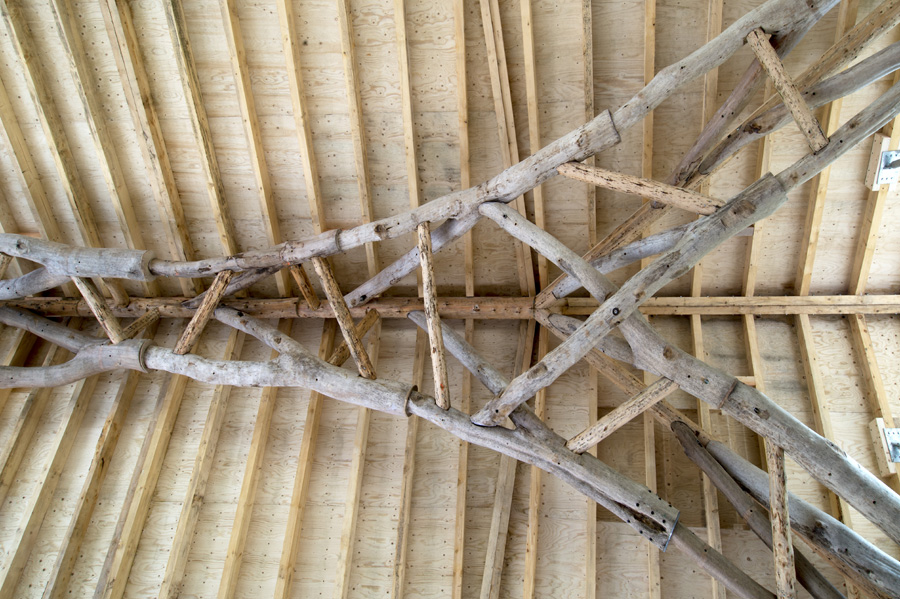
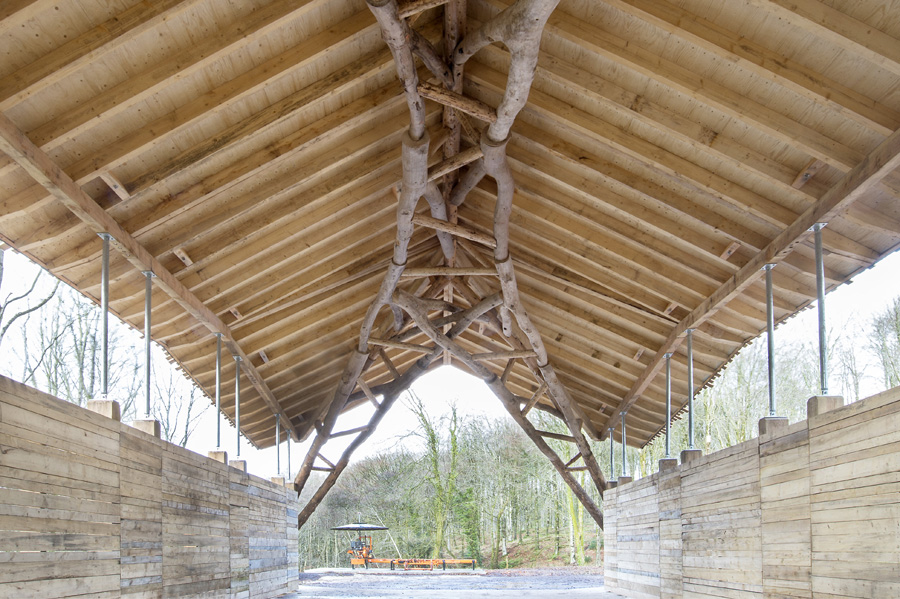
Five students of AA Design & Make MArch programme designed and built a robotically fabricated Barn in the woodland at Dorset, England. The students used ‘prototyping’ as ‘vehicles’ for design research, developing modes of experimental architectural design that integrated full-scale making. The ambition of the design was to use found natural junctions/forks in trees – structurally, using 3D scanning as a feedback for the robot-arm to fabricate the structure. The final arching structure of the barn is thus formed from forked beech tree components directly sourced from the surrounding woodland.

Illustration by : Zachary Mollica
Photo credit: Zachary Mollica
Illustration by : Zachary Mollica


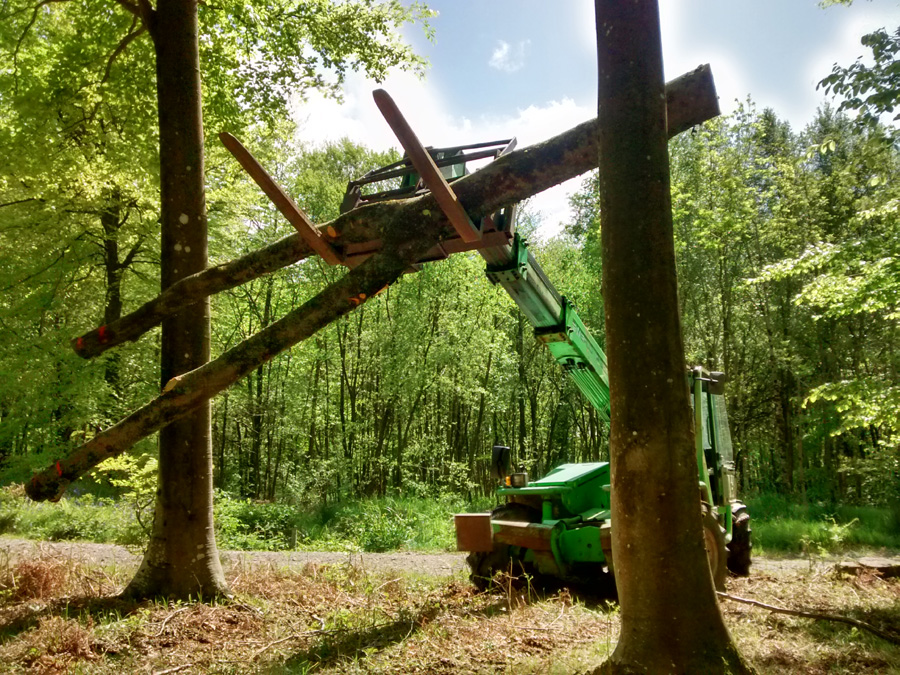
The initial responsibility was to survey Hooke Park’s beech compartments in teams, to help in preparing a database of potential forked components, from which the structural concept was developed. Based on the criteria of that concept, 25 forks were harvested from the forest, brought back to the campus, and scanned in 3D. An organization script was used to generate a final arrangement of forks in collaboration with engineers from Arup. This digital model was then translated into fabrication information with which Hooke Park’s new robotic arm transformed each fork into a finished component.

Illustration by : Zachary Mollica
Photo credit: Sahil Shah
Photo credit: Mohaimeen Islam
Illustration by : Mohaimeen Islam


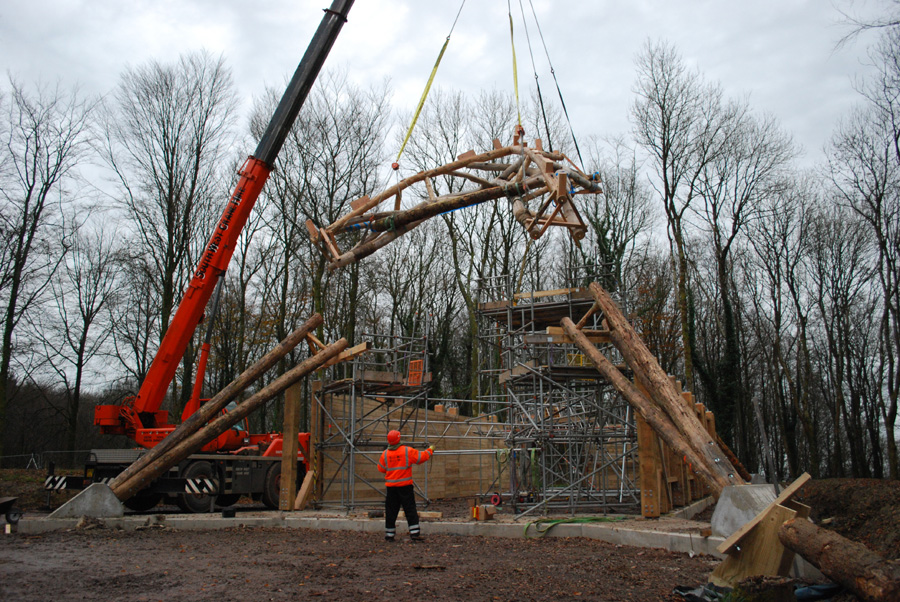
The super structure of the barn consists of a wooden roof, suspended from that arching vierendeel truss composed of twenty beech tree-forks and spanning across 25 m x 10 m to cover 180 sqm area. The truss, after being preassembled in Hooke Park’s Big Shed and all other components, in the yard, were then erected on site under the guidance of Dorset craftsman Jack Draper who coordinated the fabrication and site operations. To aid a productive workflow upto construction stage, the building task was divided in four components: Floor & Wall, Roof, Truss, and Truss legs – each one/two of the students with responsibility of designing and testing these FOUR PARTS to finally combine them onsite into a whole building.

Photo credit: Swetha Vegesana
Illustration by : Mohaimeen Islam
Photo credit: Sahil Shah
Photo credit: Valerie Bennett


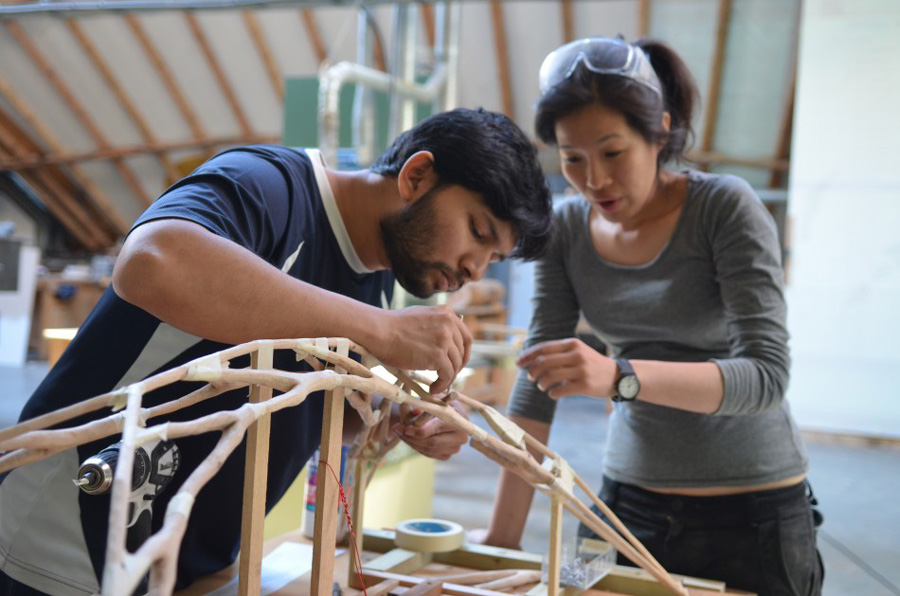
Ar. Mohaimeen from Bangladesh was involved in preparing complete drawing sets and also fabricating components for the floor, wall, roof and making 1:20 model of the actual truss structure. However, his core responsibility at this stage included designing and testing options for the Floor and the Push-wall by making scale models and mock-ups. To test its visual, tactile, and structural integrity, a series of models at 1:20 scale and a mock-up at 1:2 scale, were made to get feedback from the physical objects. At this point, a plan was made to fabricate the various components of the wall which were then to be assembled on site.

Photo credit: Valerie Bennett


Such experiments provoked a critical understanding of the need and scope for experimentation for realizing how digital design and fabrication technique can re-invent traditional methods of ‘making’ to create an architecture that is evidence-based, innovative, yet appropriate to context. Developing the precedent set by Hooke Park’s three twentieth-century buildings by architects and engineers including Frei Otto, the Wood Chip Barn explores an alternative vision of ‘digital age’ wooden building. 3d scanning and robotic technologies has allowed forks from the Hooke Park forest to be harvested to create a structure with minimal processing and without the use of custom fabricated steel components. With the integration of 3d scanning, robotic-fabrication, and form-finding techniques combined with traditional knowledge, the Wood Chip Barn is an experiment of non-standard architectural production.


Project coordination and site management: Jack Draper

Engineers: ARUP (Francis Archer, Naotaka Minami, Coco van Egeraat)

Workshop manager: Charlie Corry Wright

Robotics developer: Pradeep Devadass

Forester: Christopher Sadd

Estate Manager: Jez Ralph

Workshop technician: Edward Coe

Erection team: Timothy Hallbery, James Vooght, Aurimas Bukauskas, Summerbuild Volunteers


| Image gallery | 

  • Architectural Association School Life 2015-2016
  • Architectural Association School Life 2015-2016
  • 002_wood burn_AA
  • Architectural Association School Life 2015-2016
  • 192_wood burn_AA
  • 071_wood burn_AA
  • 003_wood burn_AA
  • 052_wood burn_AA
  • 048_wood burn_AA
  • 082_wood burn_AA
  • 070_wood burn_AA
  • 182_wood burn_AA
  • 150_wood burn_AA
  • whole campus & site 02 (bw)
  • 075_wood burn_AA
  • Overall Axonometric skeleton
  • 067_wood burn_AA
  • 066_wood burn_AA


ছাঁচ নগরী (Mold Town): Revival of Metal Craft in Dhamrai | BRACU

Culture is what defines a civilization. It helps shape the way of life, affects our outlook on daily life and most importantly creates a sense of one’s identity. It is almost always determined and developed with the help of a certain group’s surroundings.

One of the primary elements that shaped the culture of the Indian Subcontinent and specifically Bengal, is Metal. Crafts using metal have been shaping the lives of the people of Bengal from as early as 3000BC to recent past. From mere utensils to the creation of almighty deities, metal has been used to serve almost all purposes for centuries. Modern life is possible because of the fact that metals exist and we have figured out the ways of using it.

Evolution of metal through time © Doito Bonotulshi | BRACU

The brass ware industry in Bangladesh is considered as a cottage industry and artisans with high workmanship make brass crafts by hand. Though once a matter representing our golden age of civilization, pride and social identity, unfortunately in the course of time such a cultural heritage with its highly rich aesthetic and creative value, has fallen on the verge of extinction. As a matter of fact only a few in our society, nowadays, are aware of the fact that one of the main centers of such metal crafts of the sub-continent had been on this ground where only a few artisans still have been working to their most to revive this age-old art form.

Dhamrai has been a stable ground for various kinds of handicrafts by incorporating rich cultural values and traditions into the lives of people. It is a home to some of most exquisite talents of Bangladesh who are gifted with immense creativity and knowledge on one of the oldest crafts in the world. However, it’s unfortunate that the city is gradually losing its identity as the creativity and traditions are being drained out and getting replaced by the mechanical ways of life.

The aim of this project is to focus on the present scenario of the metal crafts sector of our country and its constant degradation. It is to offer an interactive platform to connect the universal artists, artisans and art enthusiasts in one thread. It will provide an opportunity to understand not only the craft but also the life of the artisans.

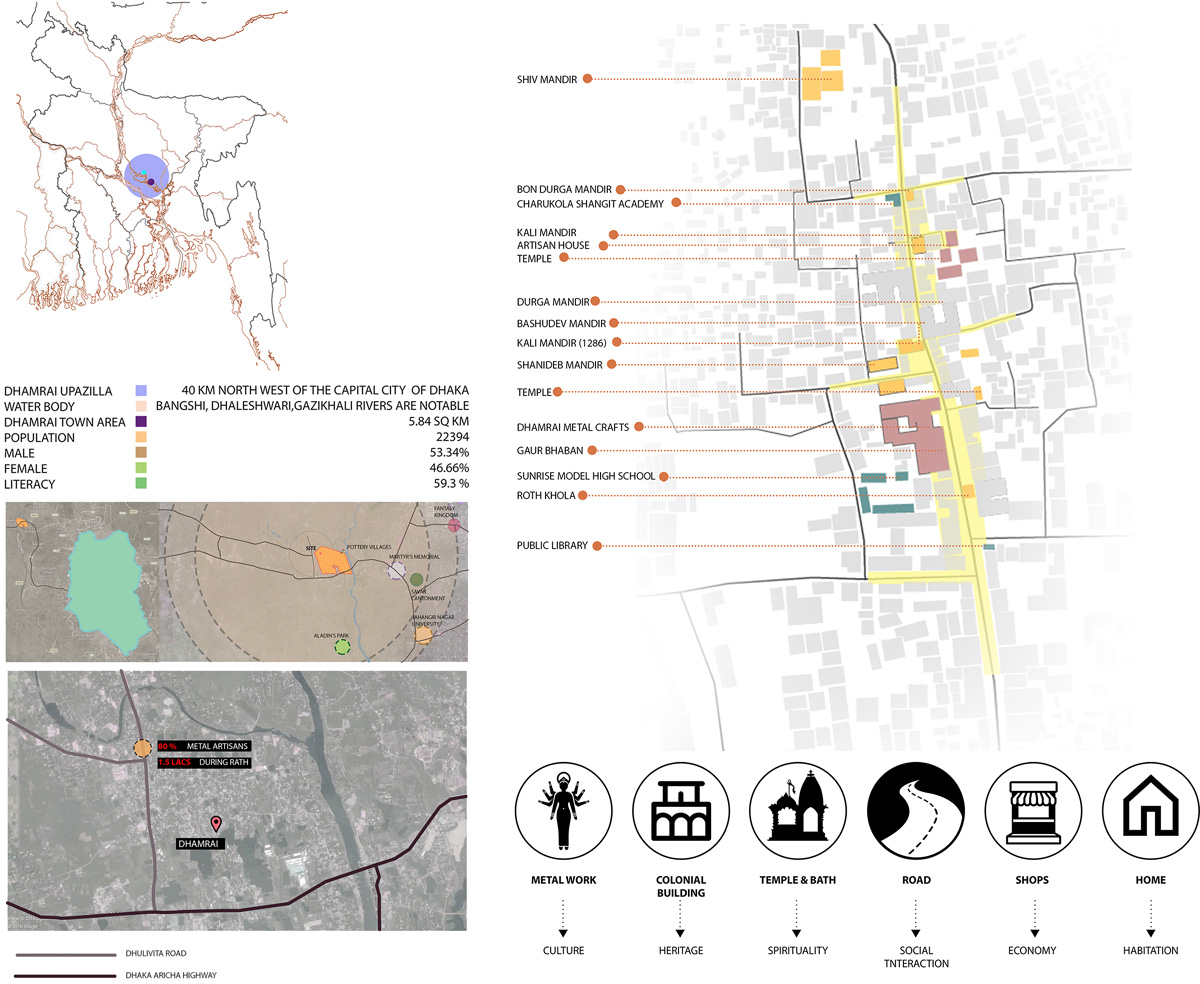
Landmarks Analysis of Dhulivita, Dhamrai © Doito Bonotulshi | BRACU
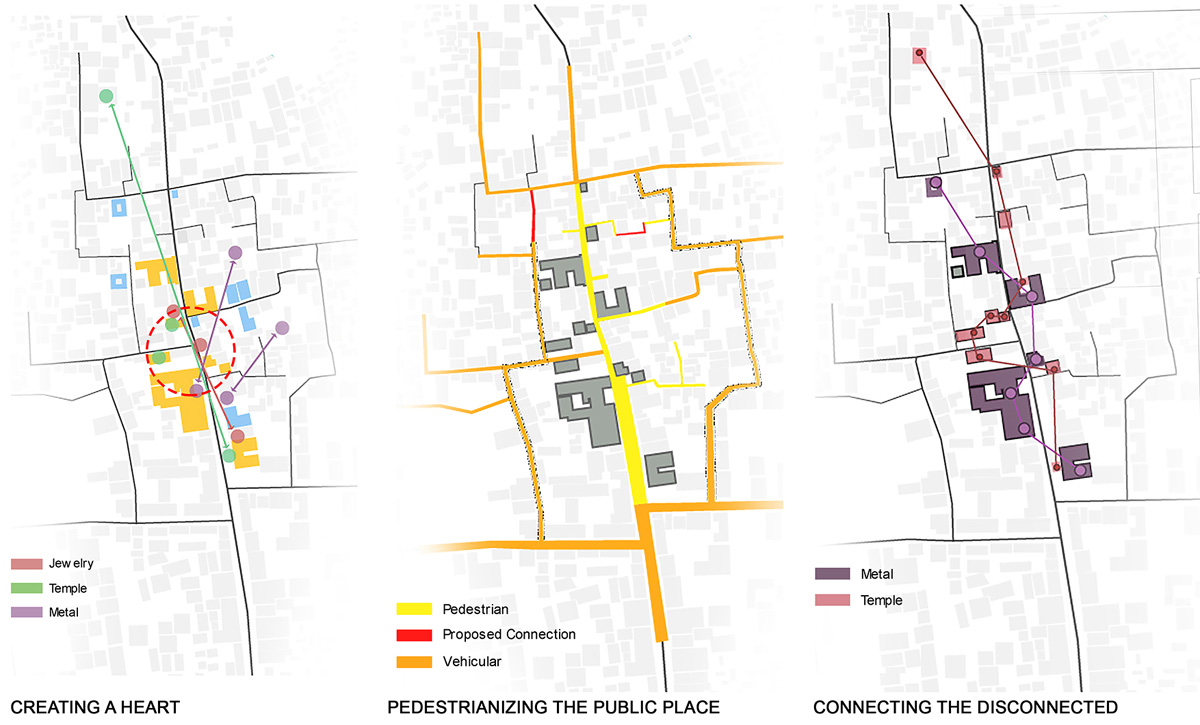
Conceptual intervention © Doito Bonotulshi | BRACU


The site is situated at the bank of Bangshi River in Dhamrai. Dhamrai is located about 40 kilometers north west of the capital city of Dhaka; it is located within the coordinates of 90.02 – 90.14E and 23.50 – 24.02E. Dhulivita is the principal distributor road that connect Upazila to the Dhaka-Aricha national highway and which carries a lot of importance for Dhamrai Pourashava. However, during the annual Jagannath Roth Jatra, traffic is prohibited to enter this road due to huge pedestrian and the vehicles are rerouted to the Dhamrai-Kalampur road.

In order to derive program the main focus that was taken into consideration was to figure out the steps that can be taken to promote tourism. The project is theorized to create a bridge between the artisans and art enthusiasts. The idea is not only to uphold the history and traditional culture but also to improve the situation of the people who have been involved with these crafts for generations.

Proposed redevelopment plan © Doito Bonotulshi | BRACU
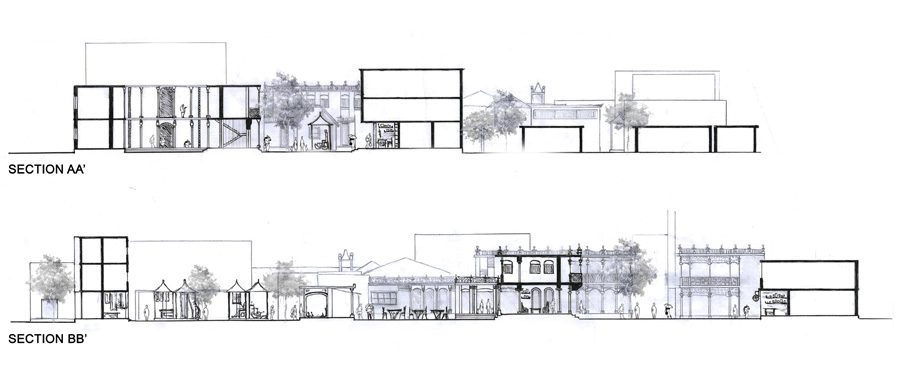
Sections © Doito Bonotulshi | BRACU
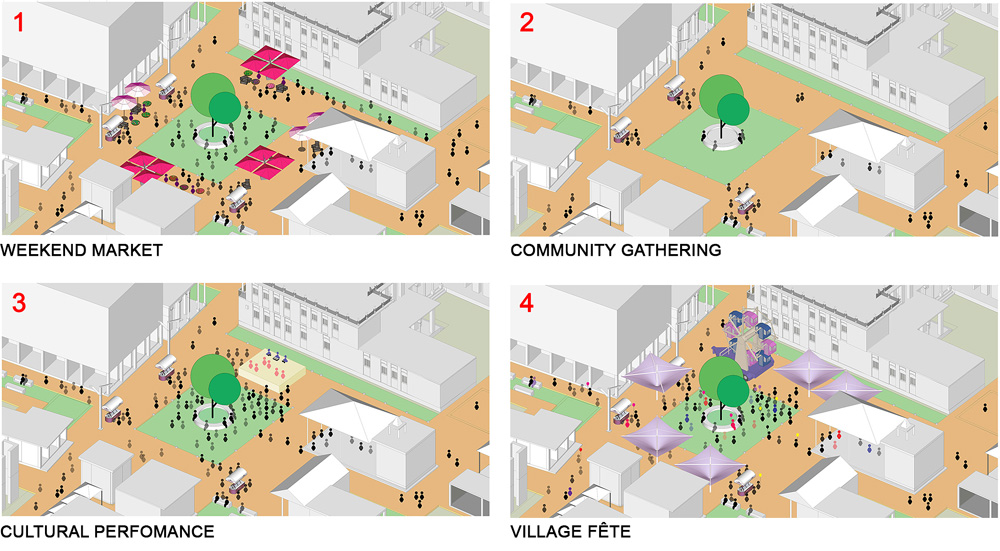
Possible activities in the center © Doito Bonotulshi | BRACU


Taking inspiration from the metal casting technique that put Dhamrai in the map, Lost Wax method (Replacement of wax by metal in a mold to create the statue), and the primary goal is to retain the exterior as it is while improving the interior to achieve the best result. The idea is to intervene as little as possible to retain the integrity of the site. This is done by uprooting 3 one-storied commercial blocks while introducing the new function to the area. Along with that it is made sure that the commercial blocks are replaced with more shops to ensure a balance.

Macro interventions and Micro interventions: (1) Ground floors or partial ground floors have to be rented out for public accessibility; (2) In cases where there are single-storied commercial blocks, they can be housed in the ground floors of residential buildings.

© Doito Bonotulshi | BRACU


Prominent architect Charles Correa had once said, ‘Architecture should always be simultaneously both old and new for it comes into being in the intersection of 3 major forces. The first represents the technology & economics; the second, culture and history and third, the aspiration of people’. Keeping that in mind the author tried to learn as much as possible from what the site and its rich history had to offer and then tried to implement those in the design accordingly.

mold town 02

© Doito Bonotulshi | BRACU


This resulted a project where the main goal was to do minimum intervention to get the maximum result. In a micro scale this was achieved by using adaptive reuse of the colonial buildings and accommodating the additional functions in them. In a broader scale, this was done by protecting the integrity of the urban morphology and making use of the grey spaces and new zoning principles. All of these aimed towards attracting a larger tourist base to Dhulivita while offering a better quality of life for the inhabitants. Like the lost Wax method of metal casting, the exterior remained as it is while the interior was changed for a better outcome.

Thus, the small part of Dhulivita became more than just a home to the remaining metal artisans. It turned into a Mold Town: a town where the past is the future.

| Image gallery | 

  • mold town G05
  • mold town G07
  • mold town G04
  • mold town G03
  • mold town 03
  • mold town 04
  • mold town G01
  • mold town 08
  • mold town G02
  • mold town 07
  • mold town 06
  • mold town 09
  • mold town 02
  • mold town 10


CONTEXT Contributor: Farasha Zaman | Architect and faculty member at BRAC University

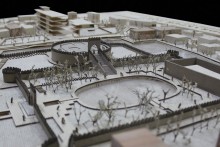
Repurposing Idrakpur Fort: Transforming Archaeological Infrastructure into Civic Place

The story of Idrakpur fort goes back to the era of  mighty Mughal empire. It was emperor Akbar who decided to build a layer of defense around Dhaka city – a shield against the Portuguese and Mogh pirates. Mir Jumla II, the Subhadar of Bengal was given this great responsibility by the emperor himself. Thus started the glorifying journey of the Idrakpur fort.

During Mughal period Three forts ( Idrakpur fort, Sonakanda fort and Hajiganj fort ) were built along the old river course to defend Dhaka and Narayanganj from pirates.
© Rafi, Shadman Sharar


To protect Lalbagh fort, 3 forts were built – the Idrakpur fort, Sonakanda fort and Hajiganj fort. The constructions were completed during 1650-1660 AD. Back then the river had a different course and the forts were situated on the bank of  the river. The Idrakpur fort was originally built at a strategic point on the junction of the river Ichhamat and the Meghna. It wasn’t a king-queen dwelling happy peasant land rather a military defense line. One could imagine it like soldiers marching towards war, canons booming loud, horses neighing and clashes of swords. However, the river Ichhamati has now dried up and leaving the fort fending on a silted up area. At present, it is hardly possible to apprehend that the fort was once beside the River Ichamati, as it is now located some way from the river, which flows about 1.6 km to the north. This once river fort is also under pressure of eventual urbanization.

This Mughal fort was built with brick. The fort was quadrangular in size runs from north to south comprising a wider open area surrounded by wall with bastions at the angles. The most unique feature of the fort is the circular drum – a raised platform used for mounting the canon.

Idrakpurfort, Munshiganj | constructed by Mughal Subeder Mir Jumla II between 1650-1660 AD

Idrakpurfort_aiub_15

Existing ruins of the circular drum , Idrakpurfort, Munshiganj
Surrounding urban settlement


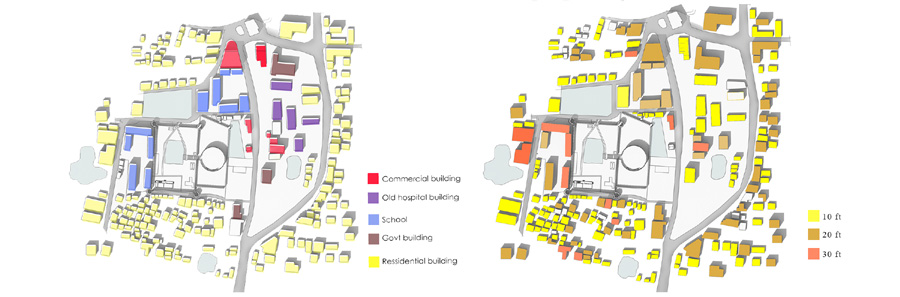
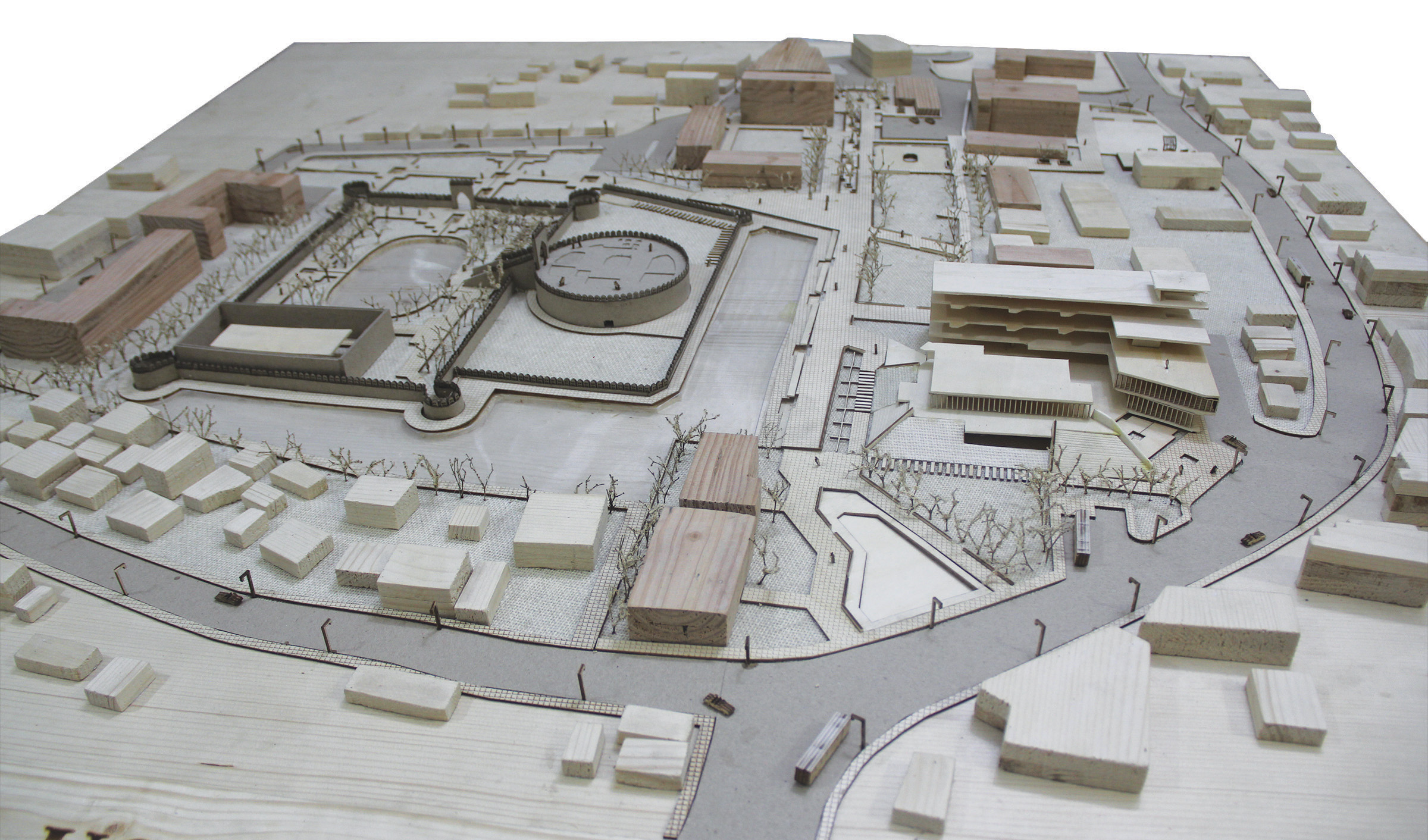
So, that was the history. Let’s come to the current scenario. The Idrakpur fort was declared a protected monument under the A.M.P. Act (Act VII of 1904) in 1909. But a number of Govt. buildings including the Munshiganj central jail, NSI office and staff quarter were built inside the fort premise . Even if it sounds ridiculous, but the residence of Munshiganj’s District Commissioner was built on top of the fort. However, recently the site has been handed over to the Dept. of Archaeology, GoB for its conservation purpose.  All the later built structures have  been removed by the archaeology dept. as soon as they got their authority. They have also discovered some astonishing factoids about the fort construction after preliminary excavation. Along with the preservation of the structure,  the dept is also planning to make a museum on the site. But there are urban challenges too. The fort is the center point of the crowd and chaos of the Munshiganj town. In course of time urban growth of Munshiganj town has occurred surrounding this fort area. Many public buildings, administrative offices and informal settlement surrounding the fort  area have  jammed the whole flow and the once magnificent Mughal fort has lost its appeal. The maps and images of the existing  situation shows, there is also pressing threat from adjacent informal settlements along the southern side of the fort . The existing approach road next to it basically being misused. Local hawkers, rent a car service,  rickshaw garage etc have taken over it.  The problems are therefore clearly visible. It needs a clean-up.

Redevelopment proposal for Idrakpur Fort and surrounding urban area

Idrakpurfort_aiub_03

Idrakpurfort_aiub_09

Idrakpurfort_aiub_02

Idrakpurfort_aiub_06

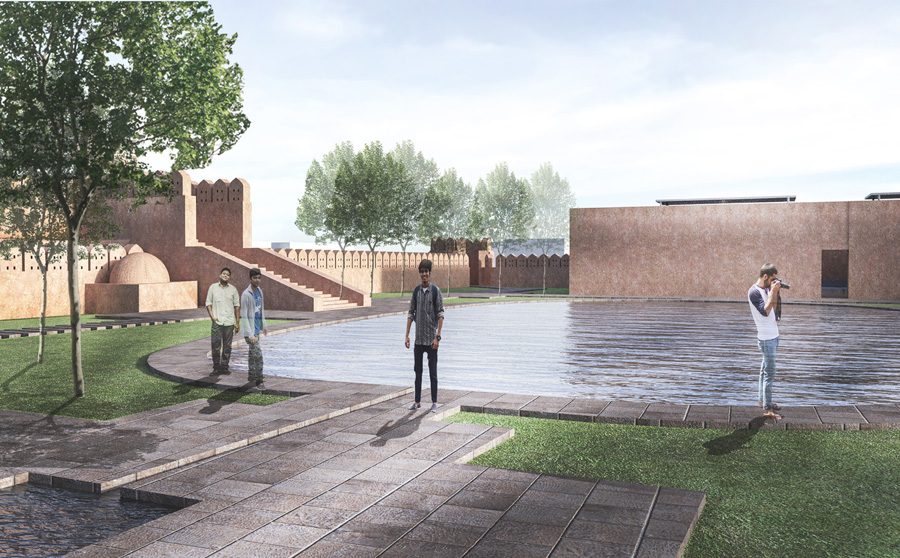
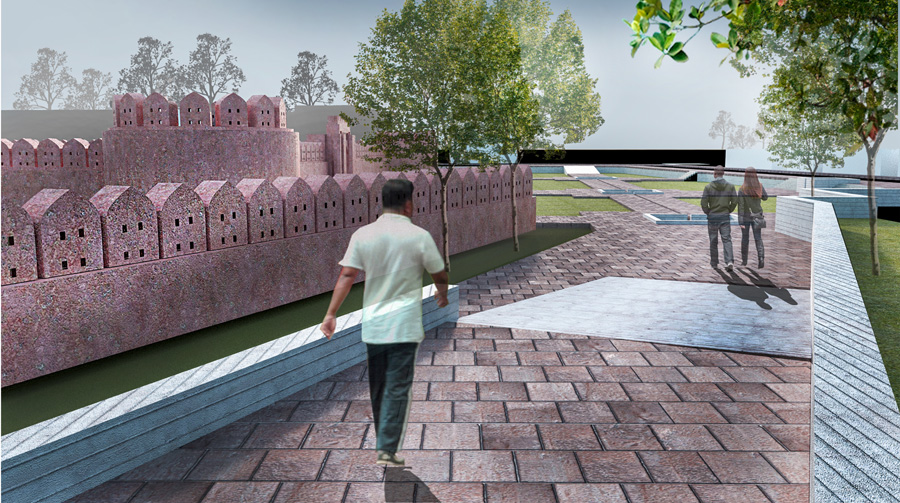
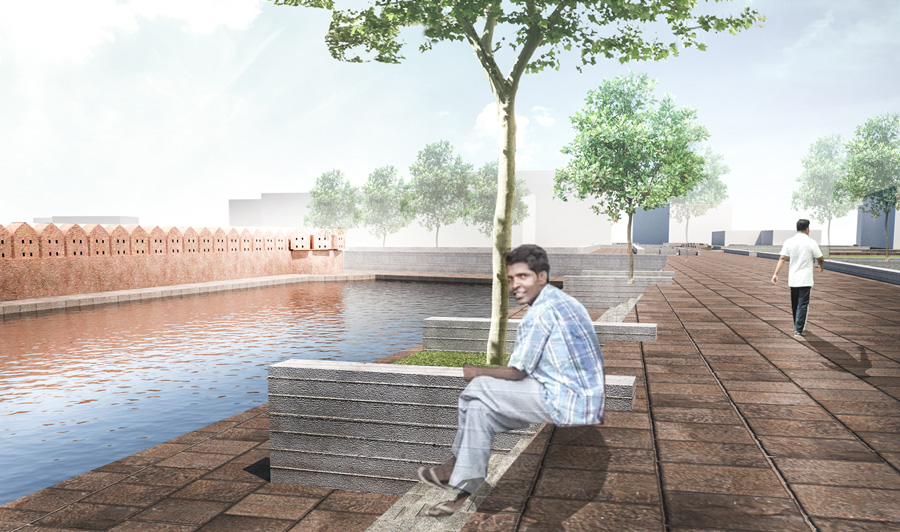
As a strategy, a peripheral road has been proposed . It will free up the existing approach road  to be designed as pedestrian plaza connecting all the public and civic facilities in the area. The remaining watershed on the east side of the fort are extended upto south to recreate a moat , a common feature of a fort. The adjacent school functions on the north and east side of the fort premise are reorganized  to open up the visual and physical obstruction created by them.

The redevelopment proposal has two goals  – firstly, conservation of the archaeological value of Idrakpur fort and secondly, redevelopment of surrounding urban areas as a civic place for the Munshiganj town. In addition to that a visitor center has been proposed to facilitate the local and international tourist.

Idrakpurfort_aiub_20

© Rafi, Shadman Sharar

Idrakpurfort_aiub_04

Idrakpurfort_aiub_05

© Rafi, Shadman Sharar


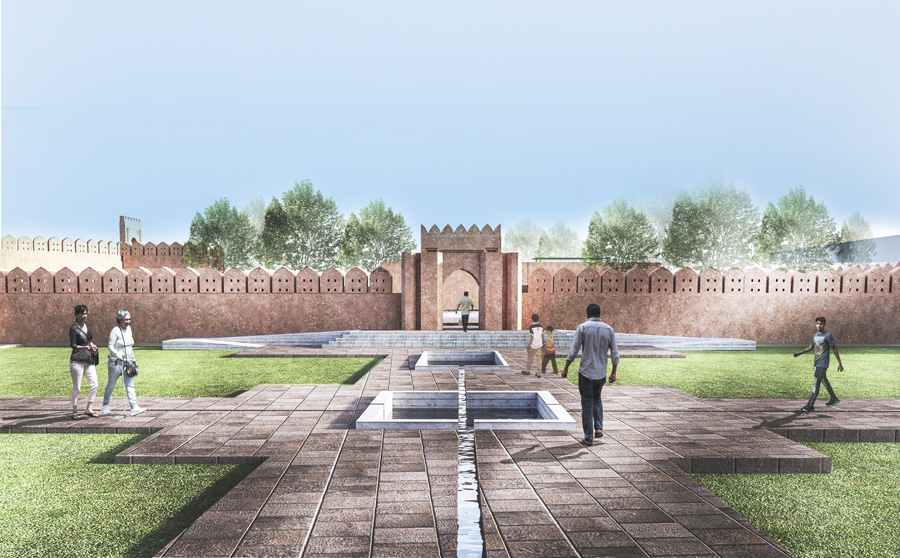
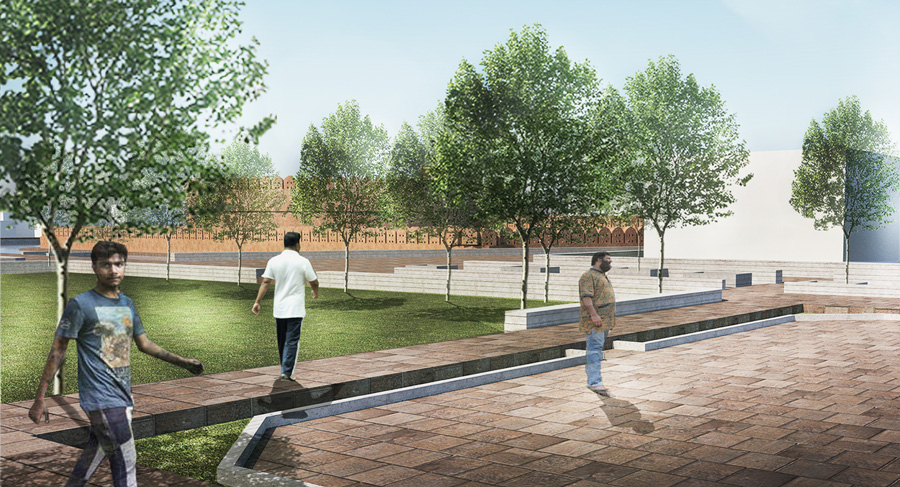
In the proposed design there are  several access points – all leads to the fort. To enhance the panoramic experience of this historic edifice, pathways are designed around this structure. The pedestrian spine along the north south axis is the central one connecting the fort with (at the same time buffering from) the adjacent urban functions and open areas . This plaza is made accessible for all and designed with green spaces, sitting areas and gradually stepped down along the edge of the water to offer the magnificent view of the fort . Inside the fort, Mugul landscapes are restored which leads to the circular drum and  a small museum. The museum is a new proposal to be constructed inside the high wall of the jail area for indoor display of archaeological ruins discovered from the site . On top of the drum, there will be an open display of the excavated site. The journey ends at the hidden chamber located underneath the drum.

Proposed visitor center |© Rafi, Shadman Sharar


The proposal for the visitor center includes information center, seminar hall, accommodation and food court areas. This visitor center is proposed to be located at the southeast corner of the area close to the intercity bus stops.

The whole purpose of the project is to make a better place that bears the rich history and  modern civic facilities for the people of Munshiganj. Conservation of the Idrakpur fort through adaptive reuse  remains in the center of all these activities. What will be the outcome? Like Bilbao, it has the potential to boost the socio-economic life of Munshiganj. The possibility of the project in this regard is quite unimaginable.

| Image gallery | 


  • Idrakpurfort_aiub_16
  • Idrakpurfort_aiub_31
  • Idrakpurfort_aiub_12
  • Idrakpurfort_aiub_11
  • Idrakpurfort_aiub_24
  • Idrakpurfort_aiub_01
  • Idrakpurfort_aiub_20
  • Idrakpurfort_aiub_30
  • Idrakpurfort_aiub_29
  • Idrakpurfort_aiub_22
  • Idrakpurfort_aiub_07
  • Idrakpurfort_aiub_08
  • Idrakpurfort_aiub_05
  • Idrakpurfort_aiub_04
  • Idrakpurfort_aiub_06
  • Idrakpurfort_aiub_03
  • Idrakpurfort_aiub_02
  • Idrakpurfort_aiub_09

Sylhet International Cricket Stadium | Bashat Architects Engineers Ltd.

| From the Architect | 

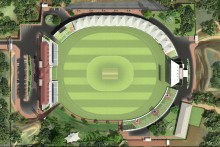
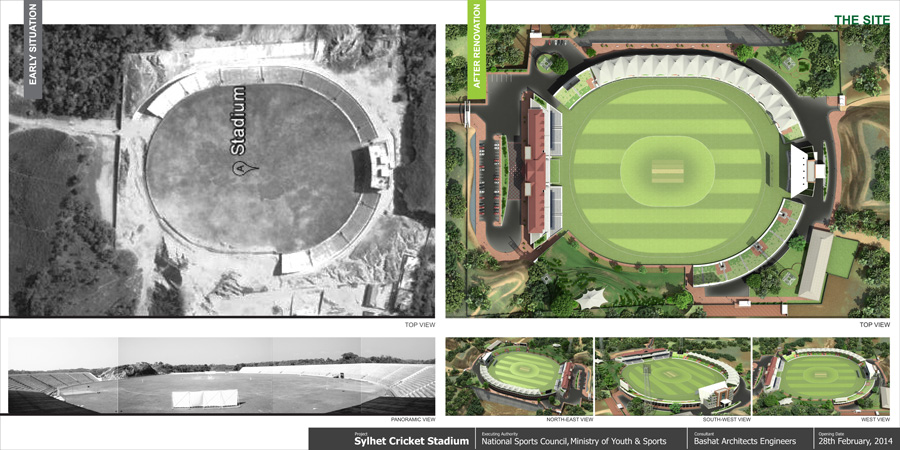
The site for Sylhet divisional stadium was selected at Lakatura hilly region which is not far away from Sylhet town. We took the project just six month prior to the ICC T-20 world cup 2014 Bangladesh. Our target was to prepare the stadium as a full-fledged ICC standard venue for International cricket. At the time of our visit we found that the site contains  a playable field, a unfinished gallery, a typical pavilion building with a dressing room.

study sketches of proposed stadium| © Bashat Architects Engineers Ltd.
Master plan for the Stadium | © Bashat Architects Engineers Ltd.
Newly built RCC Gallery, Gallery Shade tensile fabric | © Bashat Architects Engineers Ltd.


After visiting the Lakatura hilly site, we fixed some designing criteria which includes conservation of the nature by keeping the existing hillock less disturbed while making it more attractive to the visitors. Also to develop an architectural vision for the stadium that reflects Sylhet’s culture and hold all ICC standard modern facilities.

For achieving those goals some other steps were taken, they were: a. Field preparation with modern drainage system; b. Construction of a new Grand stand building with four  dressing rooms for playing teams. (As the building site was allocated at the wicket end of north for a new construction, so there was a flexibilty to design from the scratch . And we considered local culture and cricket in designing this structure); c. Players and match official’s facilities; d. Different hospitality boxes; e. An open gallery for VIP spectator’s; f. A complete international standard Media center (IT was needed to be situated at the wicket end as per ICC rules. So we decided to convert the existing pavilion building into a full-fledged Media center. So a drastic re design was needed for this structure)

Two storied gallery for general spectators

Existing one storied gallery was considered to be expanded into two storied to increase the spectator capacity and related facilities. Tensile structure was designed over the gallery area to increase its functionality and modern look. The gallery chairs were installed and colored following the scheme of our National Flag for branding our nationality.

Newly built RCC Gallery, Gallery Shade tensile fabric | © Bashat Architects Engineers Ltd.
Section of Spectator Gallery and Grand Stand building | © Bashat Architects Engineers Ltd.


Green gallery

At the west, unbuilt part of the existing stadium, a portion of the hillock was taken under design consideration. It was considered to be covered with a special types of green covers to function as open natural gallery. Some tent structure was also introduced in the design for food outlets. At the foothill, toilet facilities for the spectator were also designed. This green gallery gives the spectators a glimpse of the hillock landscape of Sylhet.

Old adjacent hillock converted into a designed Green Gallery-a special attraction of the venue | © Bashat Architects Engineers Ltd.
© Bashat Architects Engineers Ltd.


Other facilities

To create a modern stadium with required facilities all necessary steps were taken. For example flood lights, camera stands, venue gate with turnstile, ticket booths, giant video screen, electric score board, CCTV, PA system and tri-vision light screen etc were decided to be installed. Moreover, the connecting road was taken under consideration to light up and putting up appropriate signage.

© Bashat Architects Engineers Ltd.

Untitled-1

Alternation & addition of the project at a glance | © Bashat Architects Engineers Ltd.


PROJECT DETAILS

Design Team(Architectural consultant):               

Team Leader And Principal Architect : Ar. Masudur Rahman Khan,

Associates: Ar. ArifAnowar, Ar. Shubra Das, Ar. Johirul Islam jhony

Other Consultants          

Structural consultant: En. Dr. M. Shamim Z. Bosunia (Civil), En. A.H.M Mahbubur Rahman (Civil), En Ratan Kumar Shikdar

Electrical consultant: En. Iqbal Hossain

Sanitary &Plumbing : En. AshrarAfridi Khan

Project budget:  101 crore(Approx)

| Image gallery |

  • Sylhet Intl Cric Stadium 12
  • Sylhet Intl Cric Stadium 13
  • Sylhet Intl Cric Stadium 10
  • Sylhet Intl Cric Stadium 05
  • Sylhet Intl Cric Stadium 06
  • Sylhet Intl Cric Stadium 04
  • Sylhet Intl Cric Stadium 03
  • Sylhet Intl Cric Stadium 02
  • Sylhet Intl Cric Stadium 01
  • Sylhet Intl Cric Stadium 08
  • Sylhet Intl Cric Stadium 07
  • Sylhet Intl Cric Stadium 09
  • Untitled-1
  • Untitled-1

CONTEXT Contributor :  Shahid Hasan | Architect , Local Government Engineering Department ( LGED)

Atmosphere | An Apartment with Opulent Appeal

“If I can create a space that people haven’t experienced before and if it stays with them or gives them a dream for the future, that’s the kind of structure I seek to create.”–TADAO ANDO

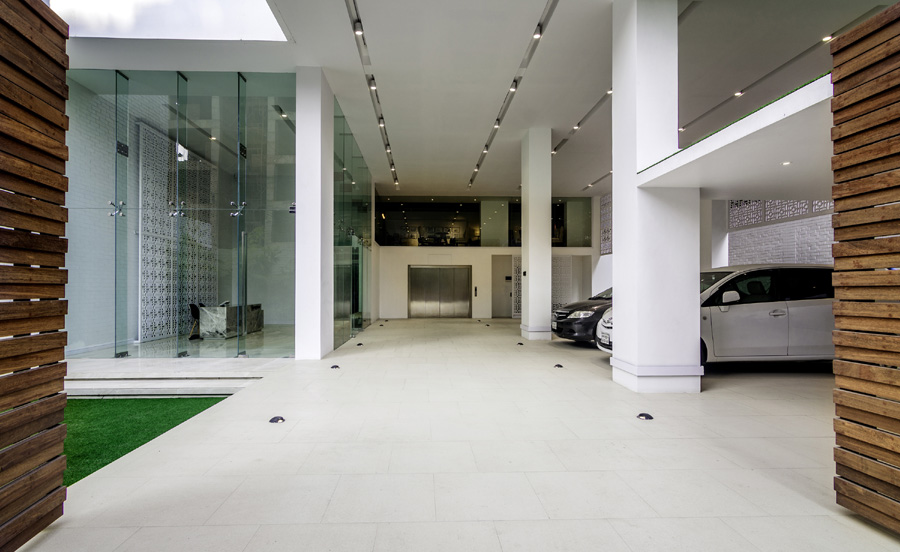
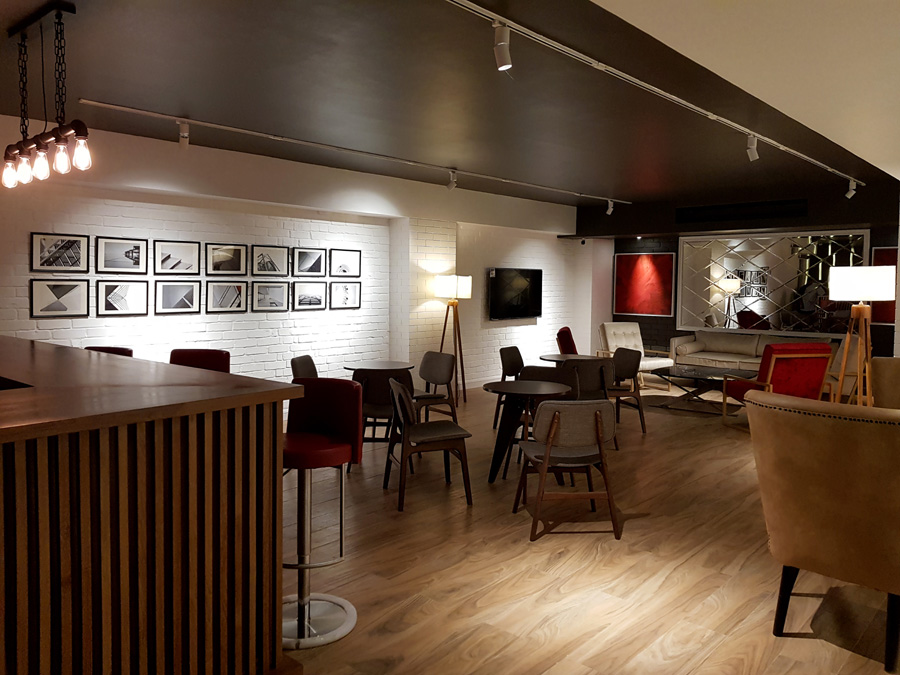
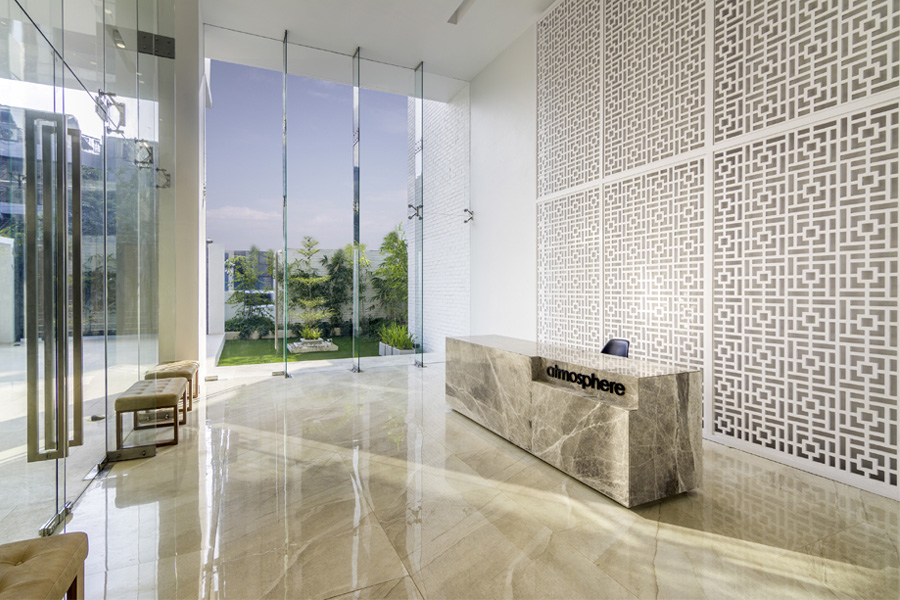
Designed to surpass traditional expectations, atmosphere emulates an urban contemporary feel. The double height entry from the road immediately gives a sense of majesty. The in-house lounge, located at the building’s mezzanine, allows residents a unique opportunity to expand their lifestyle and entertain guests with its coffee bar and cozy café type seating arrangement. The exclusive rooftop houses a gym, barbeque area and a 42 feet long swimming pool, all to create a sanctuary for the residents of atmosphere.

The lofty entrance with a double heighted reception, a mezzanine lounge and a green roof canopy | Photo credit : Meer Sadi
The grand reception | Photo credit : Meer Sadi
The warmth of the mezzanine lounge allows the residents to relax and entertain their guests in a room full of jazz and coziness | Photo credit : Meer Sadi


CONCEPT

The idea was simple-create a residential apartment that indulges in style, sophistication, luxury and also responds to the inadequacy of open green spaces,  limited daylight and ventilation that conventional multi-storied apartment buildings face. The concept of the project was the resultant of the context, Atmosphere and Luxury. To manifest an idea as such, two important features were considered: Massing of the building and single tenant for each floor.

This allowed each floor to have an open floor plan creating a grandeur space. The facade of floor to ceiling height windows on the south gives this space a panoramic view of the outdoor while inviting ample daylight and clean air circulation. Terraces in the south area reflection of our traditional courtyards interms of function. The green terraces in various levels are kept big allowing abundant light, lush landscape and thorough cross ventilation for the formal living, family living and dining space.

Adequate bends are made to the building mass to ensure an integration of indoor-outdoor. The massing was deliberate to allow daylight and clean air flood every room of each apartment-again under lining the ideology of the project.

Photo credit : Durdana Karim
Typical floor plan
Typical floor plan
Paintings were hand-picked to give that extra depth to the foyer of each apartment | Photo credit : Meer Sadi
The clear glazed panel window affords ample natural light and panoramic view of the cityscape | Photo credit : Meer Sadi


ARCHITECTURE

The building was pushed back, as far as it was feasible, towards the north to allow a large south lawn and gate way to the building. This was done taking into account the sub-tropical atmosphere of Dhaka with its winter slanted sun on the south and summer wind flow spill out of the south-east.

PROJECT TECHNOLOGY

To attain the best possible output some decisions were made through several trial and errors for example the texture of the wall, color of the doors and sustainability of the bricks etc. But the magic lies in the 10’ cantilevered terraces in the south which is a significant aspect in the design of atmosphere. This differentiates the terraces from other stereotypical terraces of residential apartments around. The residence is an earthquake resistant structure that will persist the test of time and nature.

With the Dhaka skyline as a view, the roof-top lounge is the perfect place to have a bbq party with loved ones | Photo credit : Meer Sadi
A private place to dive into relaxation, the rooftop swimming pool and bbq lounge offer a balanced blend of entertainment and outdoor enjoyment | Photo credit : Meer Sadi


MATERIALS

To complement the theme of luxury, special care was taken for the choice of materials used in atmosphere. The brick walls are thermally insulated to help with heat reduction and creates a place of peace for the residents. Windows were double-glazed to allow sumptuous amount of light, but to also deflect heat. Natural wood polished Italian marble provides a stage for modern living. The lounge- furnished with designer décor. Paintings, from local painters were given platforms to exhibit their creativity therefore adding a dash of color and warmth to public spaces and common areas within the apartments.

PROJECT DETAILS

SiteArea: 490sq.m

Total built-up area of the Project: 3712 sq.m

Year of Commencement: April, 2014

Year of Completion: November, 2017

PROJECT TEAM

Design and Concept: Mr. Sajid Karim

Architect[s]: Ar. Gazi Md. Fazle RahimShaon,  Ar.Wahid Ahmed, Ar.Durdana Karim

Structure: Md. Sayeed Hossain

Electrical: Eng. Zakir Hossain

Interior Design: Rancon Developments-Design Studio

Landscape Design: Rancon Developments-Design Studio


| Image Gallery | 

  • Atmosphere_12
  • Atmosphere_06
  • Atmosphere_07
  • Atmosphere_09
  • Atmosphere_10
  • Atmosphere_08
  • Atmosphere_13
  • Atmosphere_05
  • Atmosphere_01
  • Atmosphere_feature
  • Atmosphere_03
  • Atmosphere_04


CONTEXT Contributor: Farasha Zaman | Architect and faculty member at BRAC University

An International Hub for Indo-Pacific Corridor : BIMSTEC Center

| From the submission |

The Bay of Bengal Initiative for Multi-Sectoral Technical and Economic Cooperation (BIMSTEC) is an international organization involving seven member countries, from South Asia – Bangladesh, Bhutan, India, Nepal, and Sri Lanka – and from South East Asia –Thailand and Myanmar. BIMSTEC has a potential to increase the trade among member countries by taking advantage of their geographical location in the region of the Bay of Bengal and the Eastern coast of the Indian Ocean.

BIMSTEC Center © Kazi Fahriba Mustafa

BIMSTEC Center © Kazi Fahriba Mustafa


It has identified fourteen areas of cooperation, in such priority areas as trade, tourism, investment, poverty alleviation, infrastructural development, energy cooperation, connectivity, climate change and disaster management, people to people contacts etc.  The establishment of the BIMSTEC permanent secretariat in Dhaka is indeed inspirational as the country will get more prominence as the hub of Indo-Pacific corridor. In such context, an International Hub for Indo-Pacific Corridor: BIMSTEC Center,” was proposed to be sited at Purbachal, Dhaka.

BIMSTEC Center © Kazi Fahriba Mustafa


BIMSTEC Center © Kazi Fahriba Mustafa


BIMSTEC center is seen as a platform to interpret the scope of a regional alliance of the seven nations through architectural language. The built volume is realized as highly contemporary yet reflecting the essence of the nations united under one roof. BIMSTEC Center will allow a mass population of our country to experience and appreciate the cultural diversities of the seven countries that the designed complex should represent. The public participation can be seen as an opportunity to enhance people to people contact through cultural exchanges and shared experience and thereby promoting tourism for the seven countries.

.

BIMSTEC Center © Kazi Fahriba Mustafa


The Secretariat is just not a building but an amalgamation of the nations, their culture, their people, their dreams- a dialogism of time and space. The necessity of functional clarity was as important as the aesthetic quality of the project. The main challenge was to incorporate an urban courtyard inside the complex allowing free public accessibility while also maintaining proper security for the high official zone. The rear side of the building was reserved for official entry and car parking and the front side was designed to allow for pedestrian inflow.

.

BIMSTEC Center © Kazi Fahriba Mustafa


BIMSTEC Center © Kazi Fahriba Mustafa


The programme comprised of office blocks, auditorium, seminar hall, library, exhibition spaces, cafeteria and other ancillary functions. These functional volumes were clustered and arranged in 4 building masses which were articulated as a peripheral pattern that gave an opportunity to realize an urban courtyard in the heart of the complex. While connecting the blocks together the sloping nature of the built volumes welcomed a thoughtful and harmonic dynamism into the design.

.

BIMSTEC Center © Kazi Fahriba Mustafa


BIMSTEC Center © Kazi Fahriba Mustafa


The lifted front of the building gives an inviting aperture for urban dwellers to enter and participate in the vibrant cultural hub. Also, the LED panels on the facades would allow stimuli amongst the youth by showing multilingual shows and events during the evening hours. In a way, such an establishment has the capacity to act as a neo-urban platform not only by connecting neighboring nations but also acting as an inspirational platform to make the youth aware about the city, trade, and economics.

.

BIMSTEC Center © Kazi Fahriba Mustafa


| Image Gallery |

  • BIMSTEC Center  Kazi Fahriba Mustafa _ Cover Image
  • BIMSTEC Center © Kazi Fahriba Mustafa (24)
  • BIMSTEC Center © Kazi Fahriba Mustafa (23)
  • BIMSTEC Center © Kazi Fahriba Mustafa (3)
  • BIMSTEC Center © Kazi Fahriba Mustafa (2)
  • BIMSTEC Center © Kazi Fahriba Mustafa (5)
  • BIMSTEC Center © Kazi Fahriba Mustafa (4)
  • BIMSTEC Center © Kazi Fahriba Mustafa (9)
  • BIMSTEC Center © Kazi Fahriba Mustafa (27)
  • BIMSTEC Center © Kazi Fahriba Mustafa (6)
  • BIMSTEC Center © Kazi Fahriba Mustafa (8)
  • BIMSTEC Center © Kazi Fahriba Mustafa (7)
  • BIMSTEC Center © Kazi Fahriba Mustafa (25)
  • BIMSTEC Center © Kazi Fahriba Mustafa (26)
  • BIMSTEC Center © Kazi Fahriba Mustafa (21)
  • BIMSTEC Center © Kazi Fahriba Mustafa (20)
  • BIMSTEC Center © Kazi Fahriba Mustafa (19)
  • BIMSTEC Center © Kazi Fahriba Mustafa (18)
  • BIMSTEC Center © Kazi Fahriba Mustafa (17)
  • BIMSTEC Center © Kazi Fahriba Mustafa (16)
  • BIMSTEC Center © Kazi Fahriba Mustafa (15)
  • BIMSTEC Center © Kazi Fahriba Mustafa (14)
  • BIMSTEC Center © Kazi Fahriba Mustafa (12)
  • BIMSTEC Center © Kazi Fahriba Mustafa (11)
  • BIMSTEC Center © Kazi Fahriba Mustafa (10)
  • BIMSTEC Center © Kazi Fahriba Mustafa (22)

Akij Building Material Pavilion in DITF-2018 | Volumezero Ltd

| From the Architect |

Dhaka International Trade Fair, DITF is a popular platform for Local and International Manufacturers to showcase and promote their products, and also one of the most nationally participated events of the country. AKIJ has been around in the Building Material Manufacturing Industry for quite a while and intended to be a part of DITF 2018 with a pavilion of its own.

Akij Pavilion © Volumezero Ltd | Photo credit: F. M. Faruque Abdullah Shawon
Akij Pavilion © Volumezero Ltd | Photo credit : F. M. Faruque Abdullah Shawon


A 50 ft x 50 ft square lot was allocated by the DITF authority for a premium pavilion for AKIJ with a height limit of about 33 feet. As is customary for pavilions at DITF, the structure demanded installation within the shortest possible time.While the client envisioned reuse at a different location upon completion of DITF 2018,the use of AKIJ’s wide range of building materials was requested by the client to make the whole construction process cost effective and sustainable. The idea was to envision a pavilion that itself became an exhibit.

Akij Pavilion © Volumezero Ltd | illustration: Mohaimeen Islam
Akij Pavilion_Floor plans © Volumezero Ltd | illustration : Lamia Wali Upama
Akij Pavilion © Volumezero Ltd | illustration: Lamia Wali Upama


The design form is a cube which essentially would symbolize the notion of maximum space utilization. The use of clear-glass and steel structure embodies industrial aesthetics of the contemporary period which invariably iconizes the progressive mindset of AKIJ Group. With careful articulation of the volume inside, the form was gently chiseled diagonally to create a plaza at the forecourt. This subtraction also provided a canopied entry which is both inviting and dynamic by nature.When seen in plan the square is comprised of four smaller quadrants, one of which is a triple heighted space containing a spacious L shaped stair connecting the three floors vertically. The triple height atrium allows acknowledgement of the aesthetic simplicity of the internal spaces.

Akij Pavilion © Volumezero Ltd | Photo credit : M. Faruque Abdullah Shawon
Akij Pavilion © Volumezero Ltd | Photo credit : Mohaimeen Islam
Akij Pavilion © Volumezero Ltd | Photo credit : F. M. Faruque Abdullah Shawon
Akij Pavilion © Volumezero Ltd | Photo credit : Syeda Mushda Ali
Akij Pavilion © Volumezero Ltd | Photo credit : F. M. Faruque Abdullah Shawon
Akij Pavilion © Volumezero Ltd | | Photo credit : F. M. Faruque Abdullah Shawon


The interior backdrop is a neutral palette against which AKIJ building materials are showcased. At the exterior, water-proof board-louvers on the curtain-glasses are installed in such a way that they fragment the loud reflections of the surroundings while allowing a textural variant. At its simplest AKIJ pavilion at the DITF 2018 was a purist response. After DITF this pavilion will be moved to Chittagong International trade fair, Polo Garden, Chittagong.

Akij Pavilion © Volumezero Ltd | Photo credit : F. M. Faruque Abdullah Shawon


PROJECT CREDIT

Lead Architect: Mohammad Foyez Ullah

Project Architects: Bashirul Mughni, Mohaimeen Islam Badhon, A.K.M. Saleh Ahmed Anik

Associates: Masud Karim, Mohammad Ali, Apurbo Hussain, NazmulIslam Babu

Photographs: Syeda Mushda Ali & F. M. Faruque Abdullah Shawon


| Image galley |

  • Akiz Pavilion_location map
  • Akiz Pavilion_form derivation
  • Akij-Pavilion_FLOOR-PLAN-2
  • Akiz Pavilion_axono
  • Akiz Pavilion_structural frame
  • Akiz Pavilion_exterior05
  • Akiz Pavilion_exterior02
  • Akiz Pavilion_exterior03
  • Akiz Pavilion_exterior01
  • Akiz Pavilion_exterior04
  • Akiz Pavilion_volumezero
  • Akiz Pavilion_interior06
  • Akiz Pavilion_interior13
  • Akiz Pavilion_staircase2
  • Akiz Pavilion_interior04
  • Akiz Pavilion_interior12
  • Akiz Pavilion_staircase
  • Akiz Pavilion_interior05
  • Akiz Pavilion_interior03
  • Akiz Pavilion_interior10
  • Akiz Pavilion_interior01
  • Akiz Pavilion_interior15
  • Akiz Pavilion_interior17
  • Akiz Pavilion_interior02
  • Akiz Pavilion_interior07
  • Akiz Pavilion_interior16
  • Akiz Pavilion_interior11
  • Akiz Pavilion_interior14
  • Akiz Pavilion_interior09
  • Akiz Pavilion_interior08