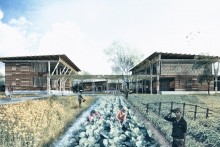
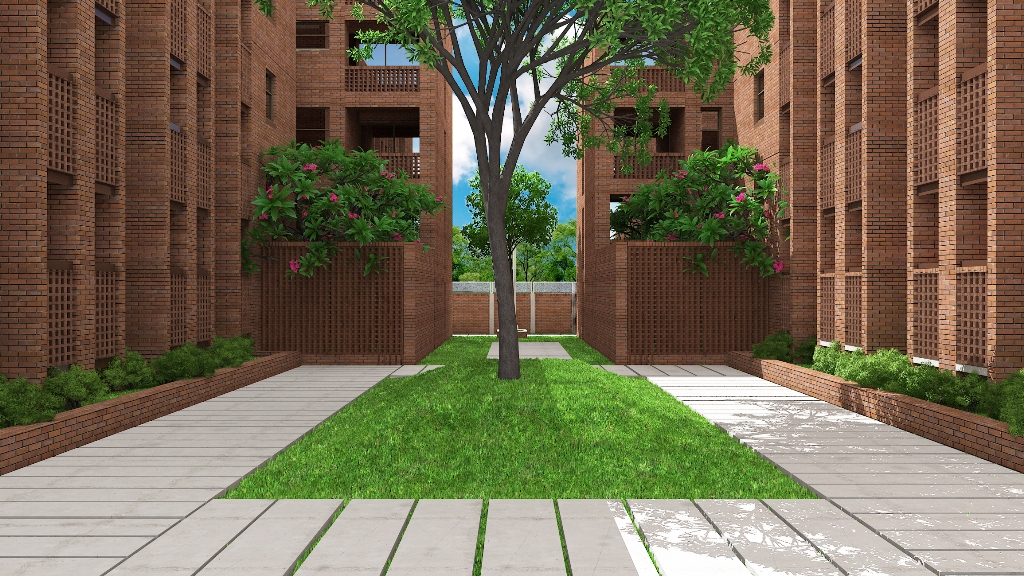
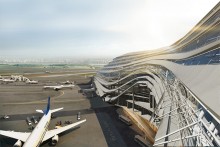
Echoes of the Estuary: A Tourism Center at Hatiya Dwip

World Environment Day 2026

Urban [Re]Stitch

Cultural Center in Senegal, Africa | International Competition


Cultural Center in Senegal, Africa © KAIRA LOORO International Architecture Competition


COMPETITION BRIEF

Cultural Center in Senegal, Africa | KAIRA LOORO International Architecture Competition

Hundred-years old cultures give birth to Communities, being transmitted through rhymes of those who are narrating it and interpreting the past through wisdom.  One’s accomplishments result from rituals and metamorphosis, bonding the human being to its own roots through dance, history, music, colors, flavors, materials and landscapes.  Space and Matter relate themselves to the power of rituals, drawing together the lines of an architecture encharged of passing and preserving History.

THEME

The intervention area represents a breeding ground of centuries-old cultures, rich in rituals and experiences coming from father to son, and telling stories about Africa. Cultures here are mixing together in harmony, within an environment full of experiences. Some of those ethnic groups are deeply rooted in history, and, since they never had any archives or written works, they passed those stories only thanks to words coming from the Elders. Globalization effects are reflecting today on communities, putting ancient rituals and the preservation of cultural identities down the risk.
The town of Sedhiou, one amongst the less well fixed, has no places to let its own community spread its culture and habits, where to have the chance for everyone to relate and express themselves through arts those art the region is rich in. Here it comes the need to design a meeting place, promoting culture and witness of a location put in discussion during regional conflicts occurred between 1980 and 2005.

PROGRAM

The planning of a Cultural Center for the city of Sedhiou aims to renovate the identity of the area, trying to reach the goal of creating a location where local cultures may have the chance to be told, passed on and preserved. This challenge sees the planning of an architectural structure as a witness of the peaceful relation occurring among local ethnic groups and promoting, at the same time, preservation of local habits. The competitor will show his theme through a surprising and integrated design at once, developing a structure destined to be an Icon for the entire country, without weighing on the surrounding environment. The Architectural structure will require:

  • Maximum surfaces: 550 m2 for the indoor area, 400 m2 for the open space area. Maximum height of 8 mt;
  • Three main designed areas for Education, Exhibitions, and Performances. Furthermore, Bureau and Restrooms must be included;
  • A call to economic intervention and sustainability;
  • The need of dealing with subjects such as timing or relative problems linked to the structure development, to be set within an area where no specialized workforce exists. For the same reason, projects displaying care about developing time, self-construction and implementation aspects, will be encouraged;
  • The preference of local and natural materials, being provided from surrounding areas and occasionally re-usage of waste products;
  • Optimization and preservation of water supplying ;
  • Flexible open spaces;

Available on site materials or findable nearby consist in Bamboo, Clay Bricks (usual size: 20x30x15cm), Cement Bricks (20x30x15cm), metal plates, straw, laterite stones, shells, sand, wooden beams and boards, Clay, Palm tree leaves.   Unmentioned materials may be imported from abroad or surrounding main cities, including increasing developing costs.

All necessary documentation about project development is available to free download on a dedicated section of the website.  Materials and images are protected by Copyright and must be exclusively used within the context of this competition.

JURY

Jury © Kaira looro competition


SCHEDULE

Cultural Center in Senegal, Africa

Location | Africa, Senegal, Sedhiou

Intervention | New Construction

Destination | Cultural Center

Requirement | 1 Under 35 Member Each Team At Least

Target | Architects – Designers – Students

Awards | 2.500€ – Internship At Kengo Kuma Office In Tokyo

Registration Opens | 15 Jan 2018 – 4 Apr 2018

Submission Deadline | 25 Apr 2018

.

REGISTRATION FEES

Early registration –  60€/team

Normal registration –  90€/team

Late registration –  120€/team

.

AWARDS
1st PRIZE

_ € 2,500

_ Internship at Kengo Kuma Associates, Tokyo

_ Award plaque

_ Possible realization of the project

_ Publication on websites and architectural format

_ Exposure to architectural events

2nd PRIZE

_ € 1,000

_ Award plaque

_ Publication on websites and architectural format

_ Exposure to architectural events

3rd PRIZE

_ 500 €

_ Award plaque

_ Publication on websites and architectural format

_ Exposure to architectural events

2 HONORABLE MENTIONS

_ 150€

_ Digital Certificate

_ Publication on websites and architectural format

_ Exposure to architectural events

5 MENTIONS

_ Digital Certificate

_ Publication on websites and architectural format

_ Exposure to architectural events

15 FINALISTS

_ Digital Certificate

_ Publication on websites and architectural format

_ Exposure to architectural events

All the awarded proposals will be published in the official book of competition.
All the awarded proposals will be transmitted to architectural magazines and websites, will be hosted in international exhibitions.
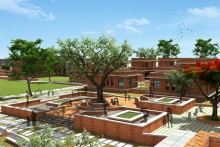
DETAIL (+)


Care Home for Brothel Children | Bangladesh University

© Iftekharul Alam Shazal | BU


Attuned to the awareness that brothel children have the right to be treated equally without discrimination, the following student project has developed a vision for a facility where children of sex workers of Doulatdia brothel will be brought up with good care and proper education in a healthy and playful environment. Hence the proposed project will create opportunities for these socially deprived children to be grown up as good citizen of the country while ensuring their basic human rights and inclusion into the mainstream society.

.

Master Plan © Iftekharul Alam Shazal | BU


In Bangladesh, normally the ‘sex trade’ is not legal except in fifteen government approved brothels across the country. Daulodia brothel is the most recent one within the country and, after the closing down of the Tanbazar brothel in 1999, it became the largest one in Bangladesh. However, the children of the brothel are excluded from mainstream society and denied even their most basic human rights such as housing, health, and education due to a number of complex factors such as their position in a ‘legal vacuum’, a lack of political commitment and most significantly the conservative society in Bangladesh. Even though every child has the right to be educated, but for brothel children, there is a very little scope of them getting access to education. Further to that, children of the sex workers in Bangladesh are not in a safe environment, and there is a lack of focus on their personal development with an increased risk of them becoming victims of the dangerous racket of the sex trade and exploitation.

.

© Iftekharul Alam Shazal | BU


© Iftekharul Alam Shazal | BU


© Iftekharul Alam Shazal | BU


To break the vicious cycle of exploitation, the target of this project is, therefore, to design a safe home for the children of brothel along with an education facility. The proposed facility will bring the children of sex workers and the children from mainstream society under one roof. Among other facilities, vocational and technical education is also offered to enable them to earn and support their family. Hence, the center will promote well-being by teaching them about good health practices, active citizenship through developing skills for life and a sustainable future. It will provide the stepping-stone to self-development for those who are disadvantaged by creating choices, and builds self-confidence and self-reliance for individuals.

.

© Iftekharul Alam Shazal | BU


© Iftekharul Alam Shazal | BU


© Iftekharul Alam Shazal | BU


The project site is located at Goalando Ghat, near the existing Doulatdia brothel. On a site area of 11.31 acres, the center is designed with all basic facilities including safe home for 3 to 17years old, (conditional), boys dormitory for 8 to 17years, health clinic (existing), school (class I to class VIII), Vocational education and training facility (5 trade courses), extraordinary curriculum school (for creative children), multipurpose hall (counseling, cultural program etc ), library (to served the whole community) etc. To ensure interaction with ‘Biological Mother’ and children a space called ‘Matri-chaya’ is proposed. In addition to that, the center comprises outdoor spaces of various sizes and uses to ensure the psychomotor development of these socially deprived children.

.

South Elevation © Iftekharul Alam Shazal | BU
South Elevation


East Elevation © Iftekharul Alam Shazal | BU
East Elevation


Section A © Iftekharul Alam Shazal | BU
Section AA


Section B © Iftekharul Alam Shazal | BU
Section BB


Model © Iftekharul Alam Shazal | BU


| Image gallery |


  • Care Home for Brothel Children © Iftekharul Alam Shazal _15
  • Care Home for Brothel Children © Iftekharul Alam Shazal _27
  • Care Home for Brothel Children © Iftekharul Alam Shazal _16
  • Care Home for Brothel Children © Iftekharul Alam Shazal _01
  • Care Home for Brothel Children © Iftekharul Alam Shazal _24
  • Care Home for Brothel Children © Iftekharul Alam Shazal _29
  • Care Home for Brothel Children © Iftekharul Alam Shazal _19
  • Care Home for Brothel Children © Iftekharul Alam Shazal _09
  • Care Home for Brothel Children © Iftekharul Alam Shazal _10
  • Care Home for Brothel Children © Iftekharul Alam Shazal _06
  • Care Home for Brothel Children © Iftekharul Alam Shazal _25
  • Care Home for Brothel Children © Iftekharul Alam Shazal _12
  • Care Home for Brothel Children © Iftekharul Alam Shazal _17
  • Care Home for Brothel Children © Iftekharul Alam Shazal _18
  • Care Home for Brothel Children © Iftekharul Alam Shazal _26
  • Care Home for Brothel Children © Iftekharul Alam Shazal _01
  • Care Home for Brothel Children © Iftekharul Alam Shazal _20
  • Care Home for Brothel Children © Iftekharul Alam Shazal _04
  • Care Home for Brothel Children © Iftekharul Alam Shazal _05
  • Care Home for Brothel Children © Iftekharul Alam Shazal _14

CONTEXT Contributor: Nahian Zobaid is an Architect and Assistant Professor at Bangladesh University, Dhaka

Institute for Small and Marginal Farmers | SUB

The project won silver in Young Asian Design Award (AYDA) 2017. The key aim of the project is to equip our farmers with modern effective skill, create consciousness to the society, reduce unemployment and ensure better community life.


Bangladesh is one the most densely populated countries in the world. Agriculture remains the most important sector of its economy, contributing 19.6% of national GDP and providing employment for 63% of the population (Source: Ministry of Agriculture, GoB). More than 70% people of Bangladesh and 77% of its workforce live in rural areas. 87% of rural households rely on Agriculture for at least part of their income. Above 30% of our farmers use handmade tools and equipment for cultivation. Most of our labor force is illiterate practicing traditional agricultural pattern. With the rapid growth of population, food demand is increasing, which impacts on irrigation by decreasing farm land for shelter construction.

Despite of having fertile land and ever enthusiastic population, why should we be left behind? It is probably the time to develop innovative yet sustainable farming techniques for our land along with farmers’ skill.

© Md. Matiur Rahman
© Md. Matiur Rahman
© Md. Matiur Rahman
© Md. Matiur Rahman
© Md. Matiur Rahman
© Md. Matiur Rahman

The project is a proposal for an institution fostering agriculture for a local community. Main component of the concept is our large labor force. Aim is that the local community will learn by non-formal education and have the scope to work at situ. This way a number of farmers will get an income for their work while benefiting the institution as well.

The program will be structured in courses of 7 days to 6 months duration. After that they will have the scope to work in existing project to acquire more skill or they can apply their learning in own farm lands producing better output. 25% of locally grown crops will be sold at the adjacent farmer’s market while the rest will be delivered to urban retailers, so that the  local community gets the benefit of fresh organic crops at an affordable price.

Site and context © Md. Matiur Rahman
© Md. Matiur Rahman
© Md. Matiur Rahman
© Md. Matiur Rahman
© Md. Matiur Rahman


The project is also aimed as a zero carbon entity and run by energy produced in site. The power will be produced from a bio-gas plant and a rainwater harvesting system will also be installed. The accumulated water will be used for irrigation in summer time. The new farm will use sustainable irrigation techniques that require little or no electricity to pump and filter water used in the field. The immature plants and residue of crops will be used as organic compost and animal feed. The cattle waste will also be utilized as fertilizer.

© Md. Matiur Rahman
© Md. Matiur Rahman
© Md. Matiur Rahman
© Md. Matiur Rahman
Proposed closed loop water ecology | © Md. Matiur Rahman
Proposed closed loop water cycle | © Md. Matiur Rahman


The project draws from the traditional composition of courtyard dominated rural built forms surrounding a tree which generates life being a place for interaction. The built forms are responsive to tropical climate. Both waterbodies in the site are used for pisciculture. Materials used for structures are mud, bamboo woven screen walls reinforced with wooden poles, corrugated sheet and Ferro cement slabs.

View from entry | © Md. Matiur Rahman
View from courtyard | © Md. Matiur Rahman
© Md. Matiur Rahman
© Md. Matiur Rahman


| Image gallery |

  • Inst for marginal farmer_site plan
  • Model
  • Inst for marginal farmer_water harvesting
  • Inst for marginal farmer_exploded
  • Inst for marginal farmer_bamboo details
  • _MBN1102

BREAKING WORK | Open Competition by Unfuse

© Unfuse
© Unfuse


COMPETITION BRIEF

Work has always been changing when we think in terms of productivity, efficiency or just the ambiance. Looking back, we’ve come really far of how we used to earn a living.Considering this dynamic outlook at work, along new revolutions in technologies come in to picture, things become more unpredictable.  And this is where we see opportunity. As the creator, you have the power to decide how work would look like tomorrow. And when work changes; challenges around work also change. This problem will take a new level of issues into consideration, from physical planning to virtual privacy, operational policies to individual aspirations, evolving workforces to what robots could be.

Evolution of work | Source: Unfuse


DESIGN CONSIDERATIONS/EVALUATION CRITERIA

This competition gives due importance to a good architectural outcome along with a great idea how this workhub would be, because what you create here is a lifestyle that people should want to adopt. You are free to devise/conceptualize technology or use building automation, however we advise you to avoid a very complex pitch. Remember- Simpler the pitch, the better it is. The task here is much more than an office building. It’s focused more towards creating an environment that can be a benchmark of how work could be in the coming years. The design can be purely architectural / or lean more towards how the office system works / or how the 24 hours in this facility is envisioned, and there can be many more ways to look at this design problem.

Source: Unfuse
Source: Unfuse

ELIGIBILITY

The competition are open to anyone (Students & Professionals) who is at least 18 years old till the last date of registration. Anyone who is less than 18 years old may still participate in the competition but must be a part of a team whose leader/at least one member is an 18 year or older.

Student category is eligible for enrolled scholars who are in any bachelors programme around the world. (Also students may be asked to provide enrollment proof during competition registration and further submission stages) Professionals, Masters Students, Postgraduates, Research scholars, and all others beyond bachelor’s degree are eligible for professional category participation.  

AWARD

1st Prize (Open for both) Reward of 2000$, trophy + certificate and bragging rights of UNFUSE ‘BREAKING WORK’ CHAMPION at UNconference ‘18.

Runner Up (Student) Reward of 1000$, trophy + certificate.

Runner Up (Professional) Reward of 1000$, trophy + certificate.

People’s Choice (Students) Reward of 500$, trophy + certificate.

People’s Choice (Professionals) Reward of 500$, trophy + certificate.

10 Honorable Mentions each honorable mention gets a medal + certificate and our biannual digest of

SCHEDULE

Feb 25, 2018_ Early Registrations Closes | Professional (25$ + Taxes) / Students (15$ + Taxes)

Mar 30, 218_Standard Registrations Closes | Professional (35$ + Taxes) / Students (25$ + Taxes)

May 05, 2018_Late Registrations Closes | Professional (60$ + Taxes) / Students (40$ + Taxes)

May 15, 2018 [00:00 GMT ] _ Last Date of Submission

June 22, 2018 [00:00 GMT ]_ Result Declaration

SUBMISSION CRITERIA

Submission are expected in maximum of 10 – A3 presentation boards in digital format. (JPEG – RGB – 120ppi). Hand rendered (Scanned in 120ppi – JPEG)as well as use of digital mediums are allowed. If abstractions are a part in contributing to the design they are expected to be laid clearly in the process, with the help of visual or verbal medium. For more information visit http://unfuse.xyz/assets/breaking-work.pdf.

INQUIRES

If you have any further questions regarding the award, competition and submission process please send an email to contact@unfuse.xyz.

DETAIL (+)


CONTEXT Contributor: Tabassum Rahman Chowdhury , Architect & LEED Green Associate, West Virginia

Laminated Artifacts | Imran Hasan

I have always felt the urge to draw whatever I envisioned in my head. I suppose that’s how my journey as an artist began.

I consider myself to be very fortunate because I happen to be someone who always received full encouragement from my family for my art. In fact, my parents were so supportive that no one thought about stopping me when I ditched pencil and paper, and straight up started drawing on walls!

Perhaps one of my quirks that help me draw is the ability to look at things differently. In nursery, when we were asked to draw an egg, I remember being the only one in class to draw a two-dimensional poached egg! Obviously, I didn’t get the expected reaction from my teacher, but later he made me realize that I should value this quality of mine of seeing things in a way others do not.

I am not sure whether I get distracted easily or take an interest in whatever appears before me.

Connecting the dots is something I consider when I am drawing. I always look at things from a certain distance that helps me to find the pattern, which is why it amazes me when I find similar pattern in different elements. Sometimes, I gather random thoughts from my distant memory and try to reconnect everything to find a pattern.

As I am a self-taught artist, I got to learn from many of my mistakes I have made so far. I try not to put too much emphasis on skills but rather on the comprehensive outcome. My art has made me aware of how much I have grown and the range of my skills as well. I wish to explore my art further and in the process, I hope to understand myself in a better way as well.


© Imran Hasan
© Imran Hasan


© Imran Hasan
© Imran Hasan
© Imran Hasan
© Imran Hasan
© Imran Hasan
© Imran Hasan
© Imran Hasan
© Imran Hasan
© Imran Hasan
© Imran Hasan


© Imran Hasan
© Imran Hasan


© Imran Hasan
© Imran Hasan
© Imran Hasan
© Imran Hasan


About the Artist:

Graduated from American International University Bangladesh in 2016, Imran is currently working as an architect at Cubeinside Design Ltd. His graduation thesis was on the Atghar Kuriana Floating Market, concerning the well known floating guava market in Pirojpur, in southern region of Bangladesh.

Aga Khan Academy, Dhaka | SHATOTTO and FCB Studios

| From the Architect |

The Chinese pilgrim Hiuen Tsang, who visited Bengal in the 7th Century, mentions some 30 Mahaviharas or Universities in the region. The proposed Academy could be imagined to have been one of these many archeological sites and be developed as a landscape with the essence of archeology. Paharpur or Maynamati, as examples of these institutions, were an effort to create an educational environment surrounded by student’s cells. The Aga Khan Academy is also trying to create a Sanctuary for Education.

© SHATOTTO and FCB Studios

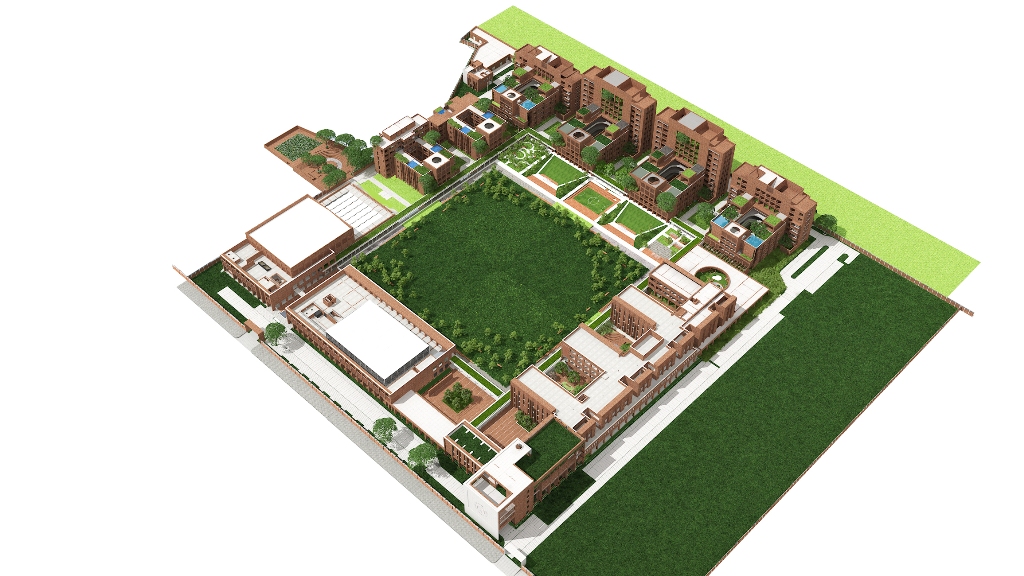
The classical Master plan layout is derived from our studies of the original Buddhist universities of the region. The character of the Academy is defined by the massing and materiality of brick buildings situated on a sculpted and heavily planted landscape base, on all four sides of the calm, central Maidan (open field). This is the spiritual, recreational and social heart of the school.

© SHATOTTO and FCB Studios

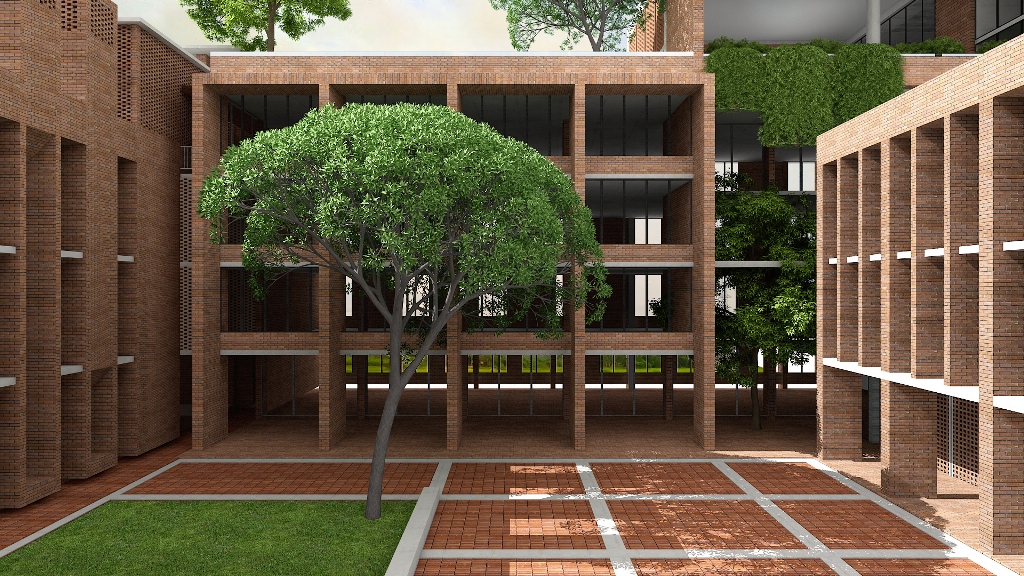
A cohesive campus is achieved by creating a hierarchy of special spaces and features within a strong brickwork language developed from local Bangladeshi brick traditions, using appropriate local technologies wherever possible. A language of brick patterning and artistry has been developed here by learning from local precedents and expertise.

© SHATOTTO and FCB Studios


| Image gallery | 

  • WFaward_AKA
  • AKA11
  • AKA03
  • AKA07
  • AKA12
  • AKA09
  • AKA13
  • AKA05
  • AKA01
  • AKA02
  • AKA06
  • AKA04

DWELL Mumbai Mixed Housing | Open Idea Competition

© arch out loud
© arch out loud

Arch out loud challenges competition entrants to design a mixed dwelling development on one of the last undeveloped sections of Mumbai’s coastline. Entrants will design for both the indigenous fishing community that has occupied the site for hundreds of years -as well as a new demographic drawn to the affluent neighborhood that now encompasses the site. Proposals should identify architectural and planning solutions that support integration between these socio-economically distinct communities. Additionally, entrants are asked to confront complex realities by addressing one or more site specific and city-wide challenges:

_Shortage of public open space

_Threats to the historic and urban fabric

_Annual monsoon flooding and rising sea level.


COMPETITION SITE 

Source: arch out loud


EVALUATION CRITERIA

The jury will evaluate projects based on the participants’ interpretation for the program and ability to meet the competition objectives. arch out loud encourages creativity, innovation, and risk taking. Winning projects should inspire with great ideas and compel with memorable visuals. The jury reserves the right to add additional criteria that they deem critical to the topic and site. Additionally, the jury reserves the right to select projects that do not meet all of the briefs criteria as long as they justify their selection.


JURY

Daniel Libeskind – Founding Principal, Studio Libeskind

Norman Foster – Founder & Executive Chairman, Foster + Partners

Sheila Sri Prakash – Founding Principal, Shilpa Architects

Dominique Perrault – Founding Principal, Dominique Perrault Architecture

Vishaan Chakrabarti – Founding Principal, PAU

Sanjay Puri – Founding Principal, Sanjay Puri Architects

Sameep Padora – Founding Principal, sP+A

Romi Khosla – Founding Principal, Romi Khosla Design Studio

Grace Kim – Founding Principal, Schemata Workshop

Geeta Mehta – Founding President, Asia Initiatives | Professor, Columbia University

Shefali Balwani – Founding Principal, Architecture BRIO

Eric Bunge – Co-founding Principal, nArchitects

Yosuke Hayano-Partner Principal,  MAD


SCHEDULE

DEC 11, 2017 _Advanced registration opens
FEB 1, 2018_ 
Advanced ($55) registration closes

FEB 2, 2018 _ Early registration opens
MAR 29, 2018 _ Early ($75) registration closes
MAR 30, 2018 _  Regular registration opens
AP
R 30, 2018 _ Registration ($95) deadline
MAY 1, 2018  _  Submission deadline
MAY 28, 2018 _ Winners Announced


SUBMISSION CRITERIA

Each team is required to submit one (1) ARCH D size board (24in x 36in or 610mm x 914mm) oriented landscape orportrait. T earns must place their given order number in a corner of their board in Arial 18 pt font. The content of the board is left open to each team to decide what best communicates its concepts and solutions to the jury. Designers will also be asked to include a100-word max explanation of the project, for publishing purposes, in a text field on the submission page. For more submission detail please visit   HERE


INQUIRIES

For any further questions send e-mail to www.archoutloud.com/dwell.fag


DETAIL (+)


CONTEXT Contributor: Tabassum Rahman Chowdhury , Architect & LEED Green Associate, West Virginia 


Khulna International Airport: A Gateway for Growth | BRACU

Airports are catalyst of economic growth.  An Airport serves as the regional and international gateway to the city in which it exists, hence fuel regional economy by facilitating local trades and tourism. The 20th century, like 18th and 19th centuries, was largely hit by massive development in transport technology.  From the canal age we moved towards railway and eventually we reached to the age of motor cars and planes. By the beginning of the 21st century the airport terminal had become strategically the most significant structure in the world. An international airport has become more of a symbol of progress, freedom, trade and aspiration of it’s host country on the global stage. From the very first flight of the Wright Brother’s we have passed a century of architecture in developing a perfect airport.

© Ali Adnan
© Ali Adnan

The site of this airport is in Vanga, Khulna near Mongla port. The distance between the site and  Khulna city is 20 kilometers and from the site, Mongla port is also 20 kilometers on the south. The location of this site makes this airport far more important for the local industries as well as  the tourism since Sundarbans, the world’s largest mangrove forest, is near this location.

The region has unique geomorphic pattern of delta where land is crisscrossed by numerous water lines. These delta lines are the perfect example of free flowing lines.  Taking reference from this deltaic landscape, the proposed  terminal bears the attributes of continuous, free flowing form and spaces which provides flexibility in spatial articulation of complex terminal functions.

© Ali Adnan
© Ali Adnan

As per design standard, a typical ‘Airport Master Plan’ should develop on the basis of at least 20 years forecast of aviation demand (1). This projection is used to determine the extent of safeguarding required for future new or expanded facilities  (terminal and airfield related); hence  critically  important for airport planning and design. That’s why the key consideration  was to derive a design solution for  the terminal building flexible enough to expand or grow on need basis. In doing so, the main air concourse is designed in a modular system, so that, new extensions can be added in line to balance the future demand.

© Ali Adnan
© Ali Adnan
© Ali Adnan
© Ali Adnan

The skin is designed in a way that it works as a passive mechanism to provide climate control. In that area during day time heat is quite intense. It is preferred to protect the structure from the direct solar gain and also use the defused light during day time to light up the whole building. For such a large infrastructure like airport, full utilization of filtered daylight can significantly minimize the cost of artificial lighting  and can save energy.

© Ali Adnan
© Ali Adnan

The structural system is combined with two main truss systems. One is the main steel frame which hold the vertical load and to counter the load a mesh structure has been designed. By combining both the frames together the main structural system is designed.
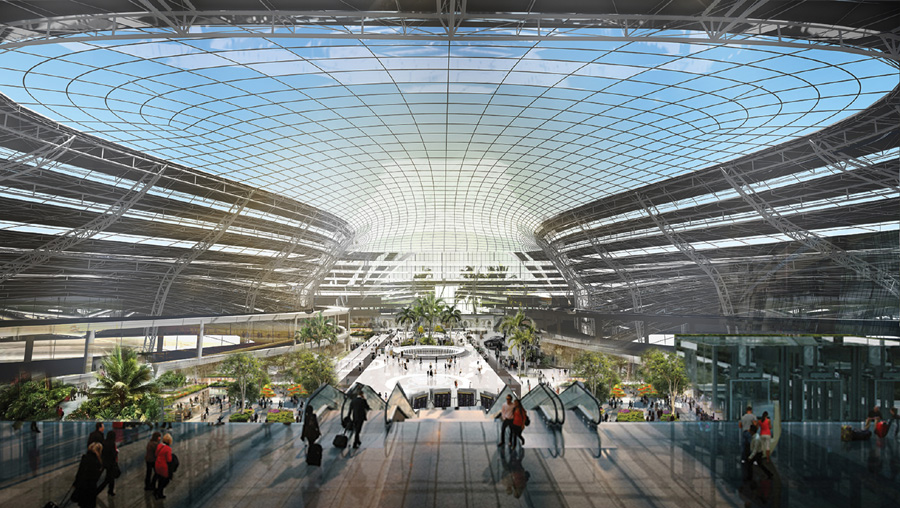
Functionally, the departure and arrival traffic are separated vertically in two different  levels. In addition a mezzanine layer is added in between- a distinct feature commonly seen  in modern airports.

© Ali Adnan
© Ali Adnan

Finally,  an international airport  in this location will not only increase the industrial growth of the south-western region but also  potentially contribute to the national GDP by connecting the region with the world.


1. Landrum & Brown, 2010. Airport Passenger Terminal Planning and Design: Guidebook(Vol. 25). Transportation Research Board, USA.

| Image gallery |


  • khulna intl airport _region
  • khulna intl airport _site
  • qwqw
  • Khulna airport_site
  • Structural-system
  • Khulna intl airport_05
  • Khulna intl airport_04
  • Khulna intl airport_03
  • Khulna intl airport_02
  • Khulna airport_feature