Echoes of the Estuary: A Tourism Center at Hatiya Dwip

World Environment Day 2026

Urban [Re]Stitch

ALTERNATIVE LAYOUT DESIGN IN STANDARD HOUSING _ Open International Competition

© Russian Ministry of Construction Industry, Housing and Utilities Sector


_ FOCUS OF THE COMPETITION

The development of architectural concepts for standard residential buildings in accordance with the Principles of Complex Territory Development. The document is currently being developed by JSC DOM.RF together with LLC Strelka KB with the support of Ministry of Construction Industry, Housing and Utilities Sector.

Participants develop concept designs of three residential buildings in accordance with the typology provided in the Brief. Detailed solutions for planning layouts of all apartment types are required in two sizing options: with aerial sequence of 25 and 30 sq. m.

.

_ PURPOSE OF THE COMPETITION

The purpose of the Competition is to expand the typologies of apartment layouts of medium and large size, which comply with modern requirements for providing for the comfort and security of the living environment, and which will be completed with the use of advanced construction technologies. Competition participants have the task of creating optimal planning solutions that will be easily adapted to the needs of various users groups and climate conditions in Russia, as well as to the changes introduced during the project implementation phase.

 .

_ PARTICIPATION IN THE COMPETITION

The Competition is by open call and will be held in two stages. Russian and international architects are invited to participate in the Competition. Participants shall submit the application form on the Competition website. Participation expenses will not be covered at this stage. Registration of participants as legal entities or individual entrepreneurs is not required for the First Stage of the Competition. Competition will provide equal opportunity for participation by both experienced and young architects.

To participate in the Second Stage of the Competition finalists must have the status of legal entities or foreign legal entities in consortium with a Russian company.

.

_ CONCEPT COPYRIGHTS

The participants shall retain all rights to Сompetition concepts. Сompetition organizers have the right to publish the concepts.

.

_ PRIZE

First Stage

_ Each of the 20 finalists of the First Stage will receive a reward of 1 m roubles (about €14,600).

Second Stage

At the end of the Second Stage the Prize Fund will be allocated the following way:

_ up to five First Place Winners will receive 2 m roubles each (about €29,200),

_ up to five Second Place Winners will receive 1.5 m roubles each (about €21,900),

_ up to ten Third Place Winners will receive 1m Russian roubles each (about €14,600).

In all cases figures include VAT, personal income tax and any other applicable taxes and fees associated with exchanging roubles into foreign currency. All figures in € are subject to change due to currency fluctuation.

 .

_ SCHEDULE

Competition announcement   |  18 May 2018

1st stage design proposal submission   |   03 August  2018 

First stage result publish   |   06 September 2018

2nd stage design proposal submission    |   05 Novemver 2018

.
DETAIL [+]

Archiprix Bangladesh Exhibition 2018 Features Young Talents

| CONTEXT |

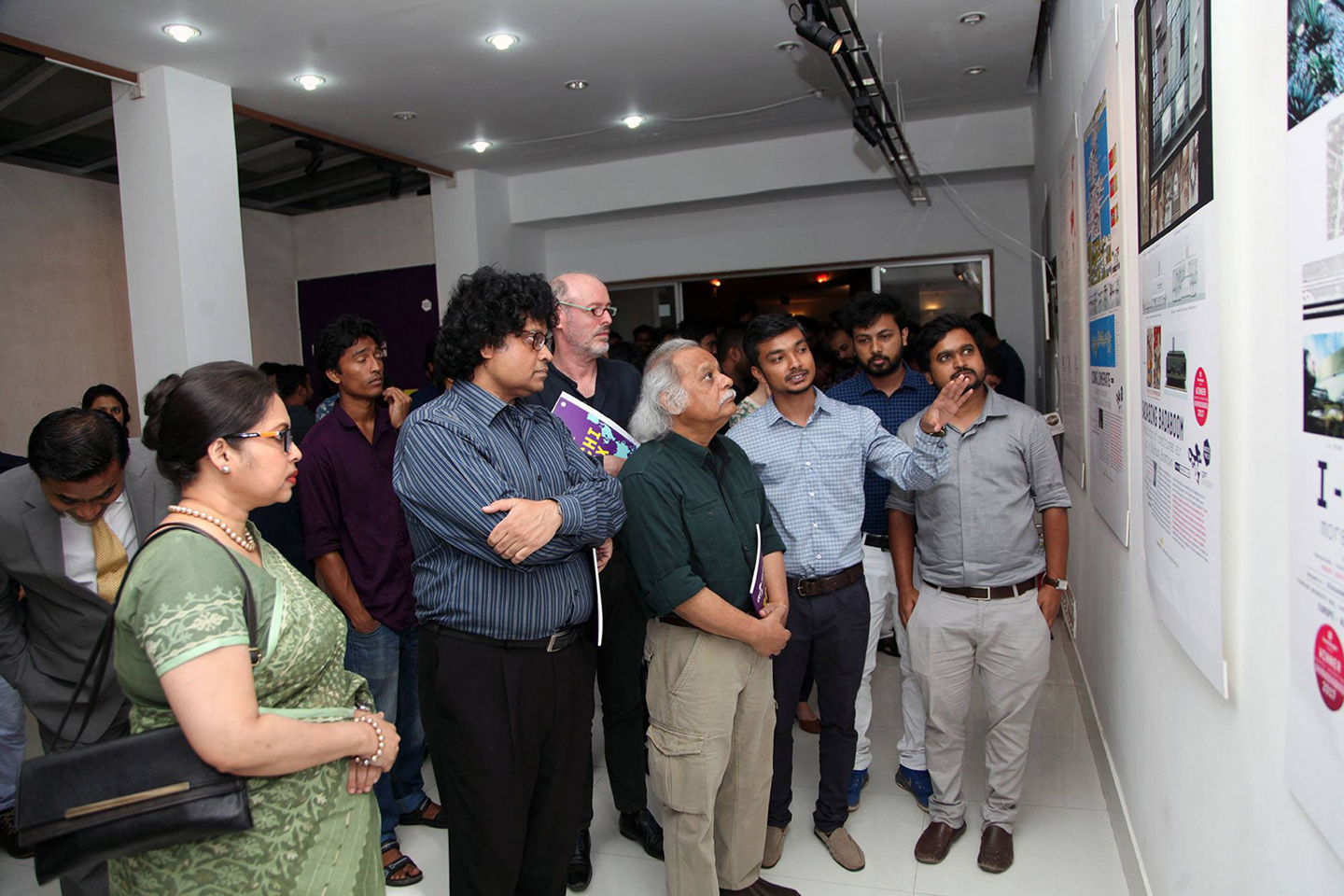
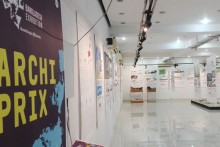
The 2018 Archiprix Bangladesh Exhibition has marked its eighth day with numerous visitors rewarding the excellent projects designed by Bangladeshi architecture students which were submitted to archiprix.org between 2009 and 2017. The inaugural ceremony of the exhibition was held on Friday, 25 May 2018, at La Galerie, Alliance Française de Dhaka. Eminent architect Professor Shamsul Wares and Professor Dr Khandaker Shabbir Ahmed, Head, Department of Architecture, BUET, launched the opening ceremony. Professor Dr Farida Nilufar, Dean, DoA, BUET,  Professor  Dr Nasreen Hossain, Professor Dr. S. M. Nazmul ImamDr. Md. Ashikur Rahman Joarder, Ar Saif Haque, other professionals,  students and faculty members from different universities also attended the exhibition.  

Courtesy: Archiprix Bangladesh Exhibition 2018

.

It has provided the audience an opportunity to experience the creation and production of architecture students of Bangladesh at a global stage since a selection of submissions from all over the world is also presented under the same light. The exhibition has been able to portray that perfect mix of creativity, enthusiasm and skill our students possess which, with careful grooming, could make a difference in our lifescape.

While the presence of prominent architects and academics graced the event, the success of this exhibition probably lies on its capacity to encourage our student community and building confidence among them. The praiseworthy curation also proved that once an effective enterprise is taken by the young community, it immediately receives aid and inspiration from community, business and most importantly institutional leaderships; a cooperation which is of invaluable importance. Bangladesh University of Engineering and Technology and Archiprix International deserve a wholehearted appreciation for the initiative. We expect the think of this initiative to stick on their objective and create more opportunity of various formats for our students and young architects.

.

Courtesy: Archiprix Bangladesh Exhibition 2018


ARCHIPRIX SUBMISSIONS FROM BANGLADESH SINCE 2009

.

2017  |  AHMEDABAD  |  INDIA UNIVERSITY, CEPT

_ “BREATHING HYDROLOGICAL INFRASTRUCTURE, Infrastructure that serves at a global scale” [ Nominated for the Archiprix Hunter Douglas Awards 2017 ]  See full project

Amit Imtiaz

Chittagong University of Engineering & Technology

_ “DIALOGUE BETWEEN LAND AND RIVER, a cultural Dais for Nomads of Water”  See full project

Nazmul Hoque Nayeem

Bangladesh University of Engineering & Technology

_ “TRANSCENDING BORDERS: CONNECTING ECHOES, an interpretative platform for commemorating 1971″ 

S.M. Mushfeq -us-Saleheen Chowdhury

Ahsanullah University of Science & Technology

_ “STREET CHILDREN REHABILITATION CENTER”   See Full Project

Md Shahbuddin

Bangladesh University

_ “SANGSHAPTAK ASRAYON O PUNARBASHON KENDRA , Centre for Rehabilitation of Female Victims of Domestic Violence and Public Awareness”

Bidoura Mosharraf

Brac University

_ “CENTRE FOR BLIND CHILDREN, Architecture for the other senses”  See Full Project

Md. Sharfuddin Siddique

North South University


2015   |   MADRID    |   SPAIN UNIVERSITY: ETSAM   |   UPM

_ “ADAPTABLE-PORTABLE DWELLING SYSTEM FOR URBAN POOR IN BANGLADESH PARTICIPANTS FAVOURITE”   Participants Favorite ]

Nusrat Jahan Mim

Bangladesh University of Engineering & Technology

_ 21ST CENTURY ‘CYRUS CYLINDER’ PARTICIPANTS FAVOURITE”   Participants Favorite ]

Rafid Reasat Hai

Brac University

_ TEA WORKERS HABITAT

Fatima Kaniz

North South University

_ PLATFORM FOR POLITICAL INTEREST, a notion of neutrality”

Md.Tauhidul Islam

American International University Bangladesh

_ RETHINKING VIBRANT PAST OF FARASHGONJ, Redevelopment of Farashgonj at Dhaka”

Mehedi Hasan

Bangladesh University


2013   |   MOSCOW   |   RUSSIA UNIVERSITIES: MARKHI    |   STRELKA

_ ALLOYSCAPE: WET-LAND-SCAPE COLONIES, Balancing Natural Processes and Urban Development in Lowland Areas around Dhaka City, Case Study: Wetlands in Keraniganj”

Labib Hossain

Bangladesh University of Engineering & Technology

_ “MANGROVE INTERPRETATION AND VISITORS CENTRE, a program of the forest department”

Jumana Chowdury

North South University

_METRO STATION AN ANCILLARY FACILITIES, Metro station: a pause to accelerate the urban transportation system”

Kh. M. Abdullah

University of Asia Pacific


2011   |   CAMBRIDGE    |   USA    |   UNIVERSITY: MIT

_ REGENERATING THE LIFE OF PANAM NAGAR, The future of our past “

Monon bin Yunus

Bangladesh University of Engineering & Technology

_ “GLOBAL WARMING, SEA LEVEL RISE & FUTURE CITY, 2100+

Shakil Ahmad Shimul

Brac University

LALON SHAH MEMORIAL COMPLEX, BANGLADESH

Mehbuba Tune Uzra

North South University


2009   |   MONTEVIDEO   |   URUGUAY    |   UNIVERSITY: FARQ

_ INTERPRETIVE GENOCIDE MUSEUM, Commemorating the Genocide on April 17,1971 at Badargonj”

Dilruba Ferdous Shuvra

Bangladesh University of Engineering & Technology


Exhibition Gallery : La Galerie, Alliance Française de Dhaka

  • Archiprix Bangladesh Exhibition 2018 _ 20
  • Archiprix Bangladesh Exhibition 2018 _ 19
  • Archiprix Bangladesh Exhibition 2018 _ 23
  • Archiprix Bangladesh Exhibition 2018 _ 21
  • Archiprix Bangladesh Exhibition 2018 _ 28
  • Archiprix Bangladesh Exhibition 2018 _ 16
  • Archiprix Bangladesh Exhibition 2018 _ 25
  • Archiprix Bangladesh Exhibition 2018 _ 17
  • Archiprix Bangladesh Exhibition 2018 _ 03
  • Archiprix Bangladesh Exhibition 2018 _ 01
  • Archiprix Bangladesh Exhibition 2018 _ 02
  • Archiprix Bangladesh Exhibition 2018 _ 15
  • Archiprix Bangladesh Exhibition 2018 _ 05
  • Archiprix Bangladesh Exhibition 2018 _ 08
  • Archiprix Bangladesh Exhibition 2018 _ 07
  • Archiprix Bangladesh Exhibition 2018 _ 09
  • Archiprix Bangladesh Exhibition 2018 _ 11
  • Archiprix Bangladesh Exhibition 2018 _ 12
  • Archiprix Bangladesh Exhibition 2018 _ 14
  • Archiprix Bangladesh Exhibition 2018 _ 06
  • Archiprix Bangladesh Exhibition 2018 _ 26
  • Archiprix Bangladesh Exhibition 2018 _ 24
  • Archiprix Bangladesh Exhibition 2018 _ 27
  • Archiprix Bangladesh Exhibition 2018 _ 22

Renovation and Remodelling of Sher-e-Bangla National Cricket Stadium

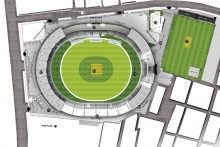
Sher-e-Bangla National Cricket Stadium is simultaneously a renovation and redevelopment project (alternation & addition). In 1978, this stadium was originally designed and built as an athletics and football stadium at Mirpur. Later in 2004 the venue was handed over to BCB, initiating a project ‘HOME OF CRICKET’ with ‘Center of Excellence’ for better development of cricket. It was then converted into an International Cricket Ground following ICC (International Cricket Council) standard. Since then the venue  is successfully hosting  international cricket matches including world cup.

Aerial view from south corner © Bashat Architects Engineers Ltd
© Bashat Architects Engineers Ltd


The scope of the work included renovation of the existing stadium facilities and design of a training academy and practice facilities both indoor and outdoor. To manage the crowd, two elevated plazas were added with commercial facilities underneath. This plaza guides the spectators’ to their respective destination while giving a grand feeling  of entry to the stadium.

Preliminary sketches © Bashat Architects Engineers Ltd
© Bashat Architects Engineers Ltd
North south long section with details © Bashat Architects Engineers Ltd
Corporate shade detail © Bashat Architects Engineers Ltd


The project involved set of challenges including design of necessary upgraded facilities while keeping the existing concrete structure as it is and reconfiguration  of  the circulation path and spatial zoning for the general spectators , media, VIP, VVIP and the players without altering the original  shape of the stadium.

Grand stand © Bashat Architects Engineers Ltd
Media Center © Bashat Architects Engineers Ltd
ICC Box © Bashat Architects Engineers Ltd
Presidential Box © Bashat Architects Engineers Ltd
Corporate Box © Bashat Architects Engineers Ltd
Corporate Lounge © Bashat Architects Engineers Ltd


The program for re-development included redesign  of the central playground and practice field ; improvement of  the spectator gallery  with inclusion of grand stand, corporate stand and media center; design of  cricket academy (Center of Excellence), elevated plaza; relocation of existing shops; provision of modern flood light system, video screen, score board, CCTV & public address system and overall face lifting .  Among many other technical refurbishments, an improved drainage system in the main field has been introduced for quick runoff of the rain water. At different access points, digital controlling system (turnstile ticket control system) has been installed for the first time in the country.

Main official and players entry © Bashat Architects Engineers Ltd
Grand stand entry © Bashat Architects Engineers Ltd


Cricket is a very exciting game and it is overwhelmingly expanding internationally. For a growing nation like Bangladesh, the development of cricket in this country and the refurbishment of its cricket venues as international standard premises will certainly express the nations pride all over.

Design Team:

Team Leader And Principal Architect : Ar. Masud R. Khan

Ar. Tanvir Mahmud,Ar. Arif Anowar, Ar. Shubra Das, Ar.Tahnia Fahin Hossain

Engineers:         

Civil : En. A.H.M Mahbubur Rahman and En. Utpal Kumar Dey

Electrical : En. Iqbal Hossain

Sanitary & Plambing: En. Ashrar Afridi Khan

Contractors: 

NDE Ltd. , Rupatoli Builders, United & Decon, Desh Builders Ltd., GBB Ltd., Rahman Traders, MAC Consortium


Requiring Authority: Bangladesh Cricket Board

Executing Authority: National Sports Council

Total Construction Cost:  112 Crore (Approx)


| Image Gallery |

  • SBNCS_22
  • SBNCS_44
  • SBNCS_39
  • SBNCS_34
  • SBNCS_40
  • SBNCS_38
  • SBNCS_32
  • SBNCS_08
  • SBNCS_21
  • SBNCS_07
  • SBNCS_19
  • SBNCS_18

Porcelanosa Furniture Design Competition| Winning Entry in Living Room Category

| From the designer |

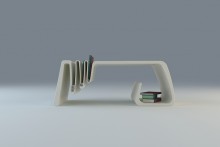
My search was to find an elegant formal expression to symphonize with the elegant seamless surface KRION offers to us. Keeping up the minimalism of the surface quality, the furniture would not only harmonizes with the surrounding elements but also would enhances their quality.

The solution was a continuous line. The line becomes a simple single surface and serves as a table. Like an artistic stroke of a paintbrush; flowing spontaneously, it also creates spaces offering vast flexibility of use to its user constantly and becomes mysterious, different to each user. To break monotony it varies in thickness reaching the edge of freedom KRION has to offer in product design, achieving a unique visual satisfaction.

© Architect Bin Sayeed Bakhti | Studio Gumteeghor

Production process:

The design perceived as using 9mm KRION surface thermoforming to make the top layer. Additional support for strengthening the joints and aesthetical enhancement bottom part would be joined by chemical welding and feathered by sanding. Minimum 13mm radius for curving maintained. Matte surface provided for ease of maintenance.

© Architect Bin Sayeed Bakhti | Studio Gumteeghor

Benapole Land Port of Entry | AUST

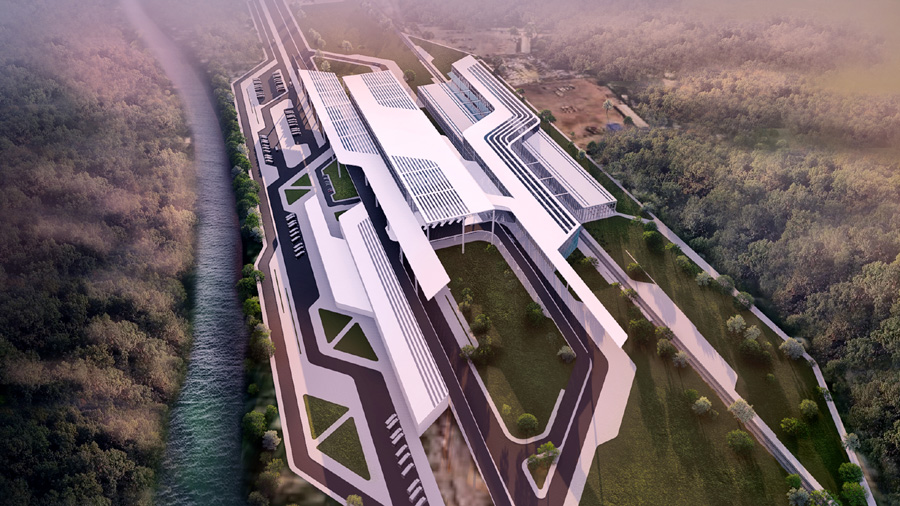
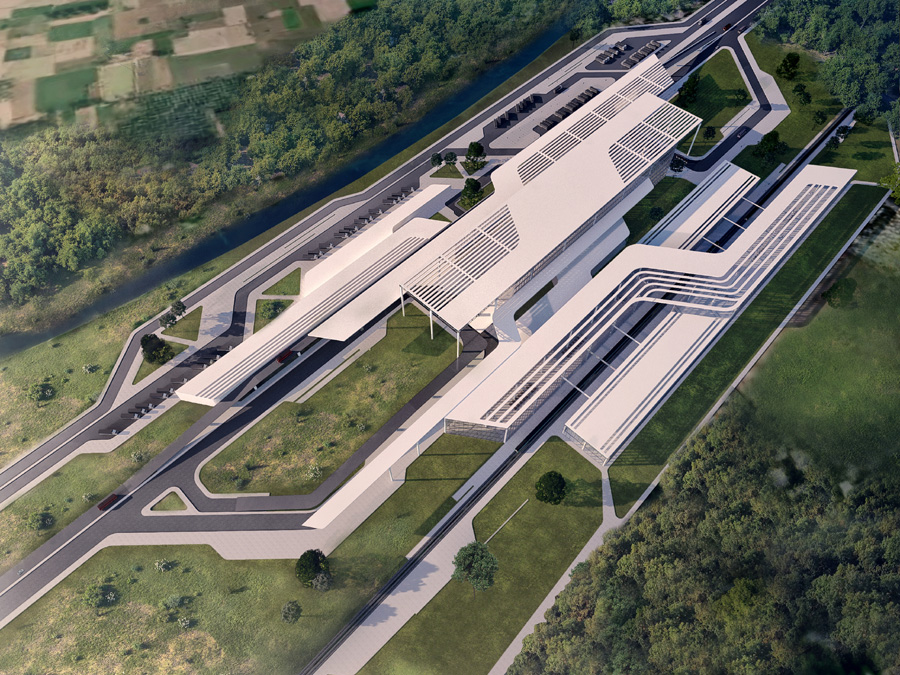
Benapole Port, the largest land port of entry in Bangladesh, located on Bangladesh- India border in Jessore. It handles more than 80% of cross border trade with India owing to its proximity to West Bengal. About 90% of the imported Indian goods enter Bangladesh through this port.

Average 2000 passengers and 600-700 trucks of goods are passed through this point everyday but it was never organized in orderly and systematic way. Moreover Calcutta is connected with Dhaka by road through Benapole. So maximum tourists use this port as their entry and exit point for India.

Benapole _ Petrapol border 4

© Nibras Noor
© Nibras Noor
© Nibras Noor
© Nibras Noor


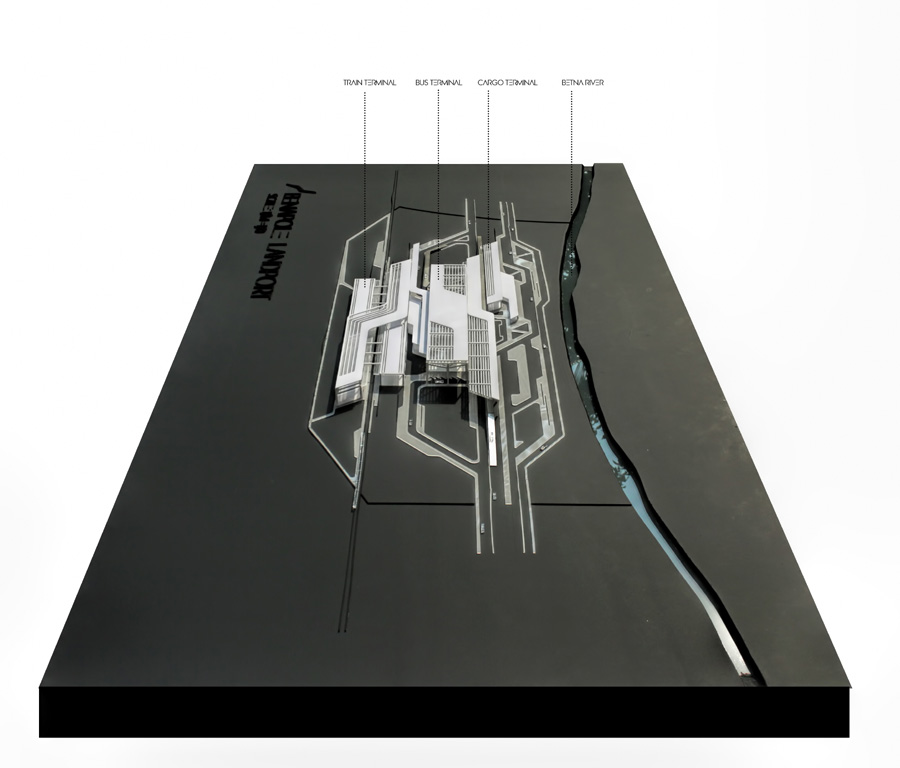
There is an old railway line in the south of the site. After the Indo-Pak war in 1965, the railway connection between India and Bangladesh through Benapole was permanently shut down. Very recently, Bangladesh and India are set to reopen this defunct transborder rail route. If the old rail connectivity can be restored and reopened, including this sealed rail link, it will boost subregional trade and tourism between these two neighbouring countries. Considering this, there is a need to upgrade the existing land port with multimodal ( rail and bus) passenger and cargo terminal facilities.

© Nibras Noor
© Nibras Noor
© Nibras Noor
© Nibras Noor
© Nibras Noor
© Nibras Noor


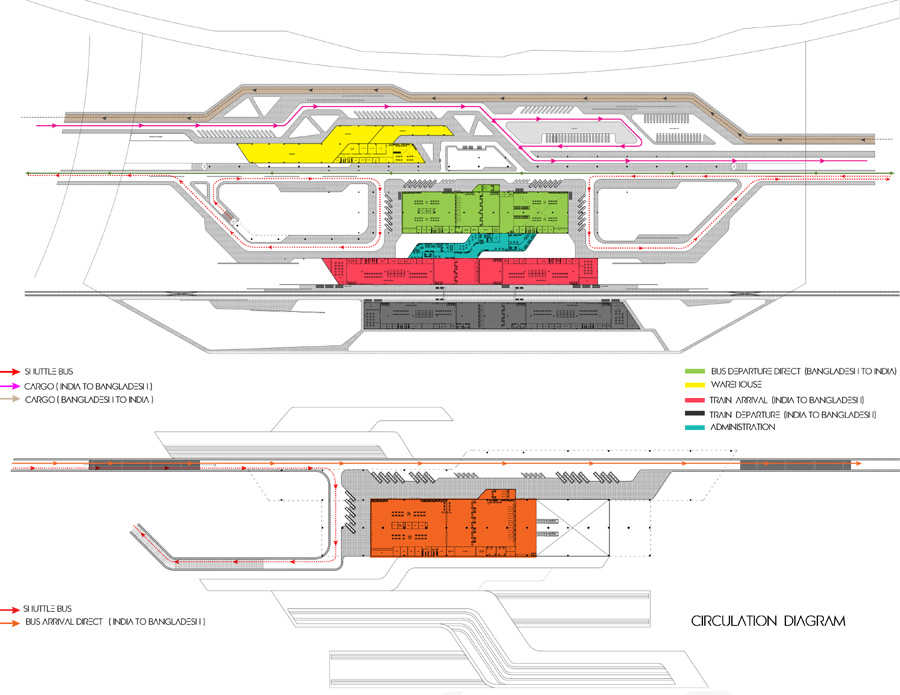
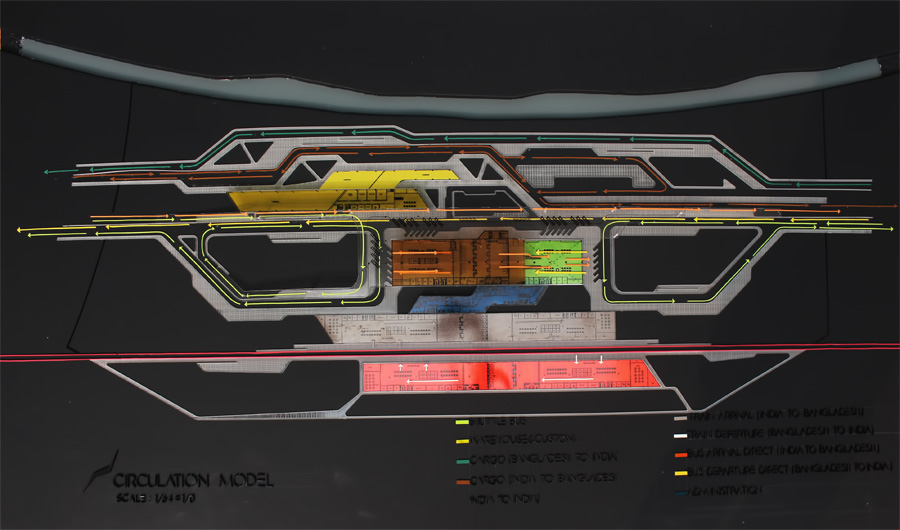
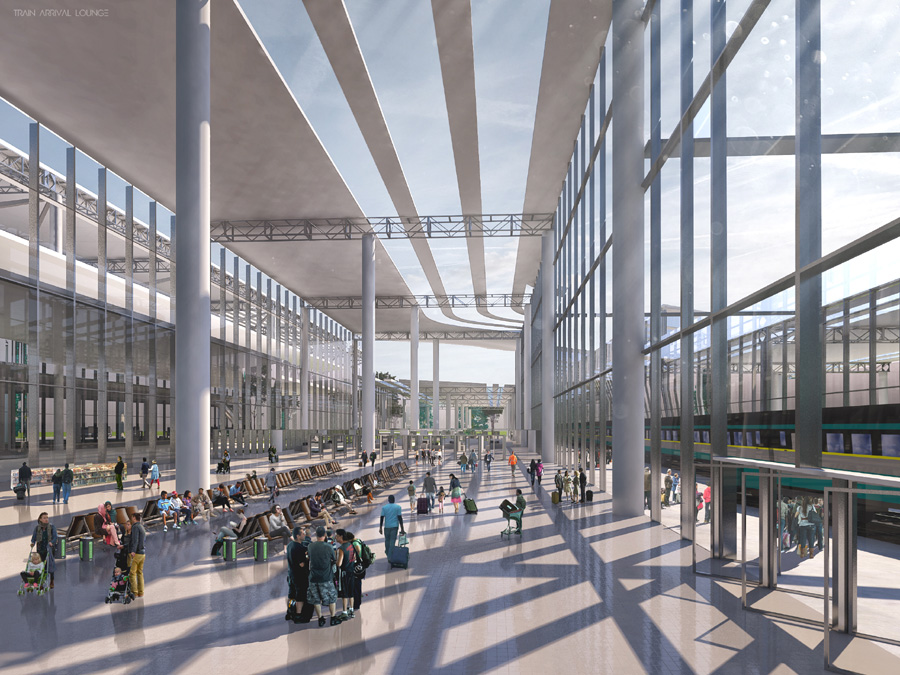
For designing a land port, one of the key challenges is to resolve the circulation efficiently to maneuver the cross-border traffic and cargo. Hence, the main consideration was to design the circulation with separate lanes and loops for smooth operation of the traffic. In the design proposal, train , bus and cargo are handled separately via individual terminals and entry/exist points.

Bus terminal © Nibras Noor
Train terminal © Nibras Noor
Cargo terminal © Nibras Noor


It is also fundamental to incorporate the passive and active security features necessary to prevent all types of illegal entries through the port. However, instead of creating a “fortress,” the proposal rather impart confidence and respect by welcoming travelers entering Bangladesh without compromising necessary inspections and security issues. The lofty space and open layout of the terminal building makes it easy for visual surveillance and crowd management.

© Nibras Noor
© Nibras Noor
Structural system © Nibras Noor

Hence, the project has the potential to become a landmark establishment by promoting bilateral trade between Bangladesh and India. Nevertheless, up-scaling of the Benapole Land Port will  improve border protection by minimizing security breaches and illegal entries through this international border. Thus either as a goods or tourists exchange point, Benapole port has  paramount importance.

| Image gallery | 

  • Benapole Landport_07
  • Benapole Landport_06
  • Benapole Landport_16
  • Benapole Landport_04
  • Benapole Landport_02
  • Benapole Landport_08
  • Benapole Landport_18
  • Benapole Landport_01
  • Benapole Landport_10
  • Benapole Landport_14
  • Benapole Landport_09
  • Benapole Landport_05
  • Benapole Landport_17
  • Benapole Landport_03
  • Benapole Landport_12
  • Benapole Landport_13

Idea Competition: Wellington Oriental Bay Pavilion|ADEDU

COMPETITION BRIEF 

This is a single stage ideas competition with the aim of identifying the best proposal for a Creative Exhibition Center in Wellington, the capital of New Zealand.

This competition is open to all students and young professionals (under 40) of areas related to architecture. Multidisciplinary teams are encouraged. The winning design will demonstrate a high degree of expression and creativity in fulfilling the program requirements, in accordance with the specific design guidelines presented here.

THE SITE

The site for the pavilion | source: ADEDU

The site of this competition is the Band Rotunda which is located at the heart of Oriental Parade, one of the most beautiful and popular streets in Wellington. The area of the site is about 530 m2 with a semi-circular shape projecting into Wellington Harbour.

A bathing pavilion was built on the site in the nineteenth century. A second floor was subsequently added to the original art-deco structure in the late twentieth century which until recently accommodated a restaurant. After an earthquake in 2016, a crack in the foundation of the building indicated that the added floor was too heavy for the original design. City councilors and planners question whether we should bring the building back to its original design, or if we would be better off to create a new structure that expresses the spirit of our time. Creative and innovative proposals both the design of the new structure and for the use of the site are encouraged in this competition.

EVALUATION CRITERIA

This is an ideas competition, therefore all submitted projects should be for a concept design. All proposals will be reviewed by an international jury. Winners will be decided according to the conceptual merit of the works submitted to the competition.

ELIGIBILITY

The competition is open to students and young professionals (under 40) in areas related to architecture. No professional qualification is required. Design proposals can be developed individually or by teams (4 team members maximum). The registration of architecture teaching institutions is encouraged as this competition provides a realistic, compelling and challenging task for students.

JURY

Andy Thomson | President of Oriental Bay Residents Association

Diane Brand | Professor at University of Auckland

Harris Maragkos | Associate Director of AECOM

Marc Aurel Schnabel | Professor at Victoria University of Wellington

Pamela Bell | CEO of Prefab New Zealand

AWARDS

First Prize: 1,500 NZD

Second Prize : 1,000 NZD

Third Prize : 500 NZD

5 Honorable mentions: Certificate

SCHEDULE

15 April 2018 | Competition announcement

30 Oct 2018 |  Design proposal submission

15 Nov 2018 | Winner announcement

SUBMISSION

All submission documents need to be sent to submit@adedu.co.nz by 5 pm 30 October 2018. Submission without a registration ID number will not be accepted.

REGISTRATION

EARLY BIRDS (before 30.08.2018):   $20 /Team

STANDARD:   $30 /Team

ENTRIES FROM DEVELOPING COUNTRIES:   $10 /Team

TEACHING INSTITUTION REGISTRATION:  $500

To get a registration ID number, click HERE 

INQUIRIES

info@adedu.co.nz

COMPETITION WEBSITE

http://adedu.co.nz/architecture-competition/


CONTEXT contributor : Shuva Chowdhury , Architect & PhD researcher, Victoria University,  New Zealand

PROBHABOK-A Practice to Improve Creative Potential Initiated by AIUB Architecture Students

Organizing competitions for the architecture students are one of the ways to offer a platform for those creative minds. Through competition, enthusiastic students get the opportunity to express their creative potential. In 2007, AIUB Architecture dept. organized an inter-university design competition for the first time in Bangladesh. In 2015, another Open Student Design Competition in association with IAB was organized from this Department on the occasion of its 10 years celebrations. But this time, it is the students who organized an intra-department design competition to promote and contribute to Departmental co-curricular activities.

On 5 April 2018, students of Architecture department organized the intra-department design competition “Probhabok.” 22 teams registered for the competition under category A (2nd & 3rd-year students) and category B (4th & 5th-year students). Each team was comprised of three members totaling 66 participants in the competition. Among the three members of each team, one was from first-year students in both categories. Because the main goal of the competition was not only to appreciate creative minds but also to improve communication and connection among different level students of Architecture department and thus share their ideas on a common platform.

Courtesy: Dept of Architecture , American International University Bangladesh


The topic introduced was ‘Silence.’ Participants had to interpret ‘silence’ through their design, sketches, and models in three hours’ time limit. In spite of the time constraint, interesting ideas have emerged from the competition. The jurors of the competition were M Arefeen Ibrahim, Associate Professor and Head, Dept. of Architecture, Ashik  Vaskor Mannan, Associate Professor, Ajmeri Nusrat Shoma, Assistant Professor, Dilruba Ferdous Shuvra, Assistant Professor, Dept. of Architecture, AIUB.

In category A, the winning team is ‘Third Line.’ The winners are Md. Reazul Islam, Sharaban Tohura Shopnil, Mozammel Anower Mojumder. Team ‘Tryo’ (Ashik, Tawfika Islam Prity, Farhan Tawsif Fahim) and team ‘HtwoSO4’ (Salehin Khan, Abdullah Al Zaid, Md Al Jubayer) got honorable mentions. In category B, the winning team is ‘Britto.’ The winners are Ankur Roy, Dipta Jit Nath, and M Ferdous Tushar. Team ‘Winner Team’ (Israt Jahan Ishita, Ragib Intasar Uddin Rabbe, Abrar Hami) and team ‘Door’ (Md Fahim Hasan Rezve, Fatima Nilia Wasilla, SaifIfti Rahman) got honorable mentions.

Courtesy: Dept of Architecture , American International University Bangladesh


In the prize giving ceremony of student design competition ‘PROBHABOK’, Honorable Vice Chancellor of AIUB, Dr. Carmen Z Lamagna was present to inspire the students and distributed the prizes among the winners in the presence of Department Head, M Arefeen Ibrahim and faculty members of Architecture Department. The initiative taken by the students of Architecture Department of American International University-Bangladesh was highly appreciated. The spontaneous hard work of the students and respective faculty members along with the support provided by AIUB administration made the competition a successful one.

Source: Dept of Architecture , American International University Bangladesh

WINNING ENTRIES

  • provabok 07
  • provabok 08
  • provabok 12
  • provabok 11
  • provabok 10
  • provabok 09
  • provabok 05
  • provabok 06

Vertical Neighbourhood: Design for Social Mix | CUET

Due to population influx, the trend of high-rise housing in urban areas of Bangladesh is on the rise more than ever. The resurgence of vertical housing development is being observed in the major cities like Dhaka and Chittagong.

The high rise, high density residential environments resulting from the ongoing urban consolidation policy have created a sense of social detachment, where public and private interaction spaces often do not exist. It is through these varieties of spaces that social interaction is encouraged; and without these social activities taking place, this vertical community becomes almost a meaningless entity within the urban realm. In a developing country like ours, the ever increasing housing demand and shortage of land has forced us to live vertically in multi-storied or high-rise apartments. But in such housing development it is prevalent that only the basic shelter, an apartment unit, is provided without any community facility, which results in dense urban vertical slum and concrete jungle.

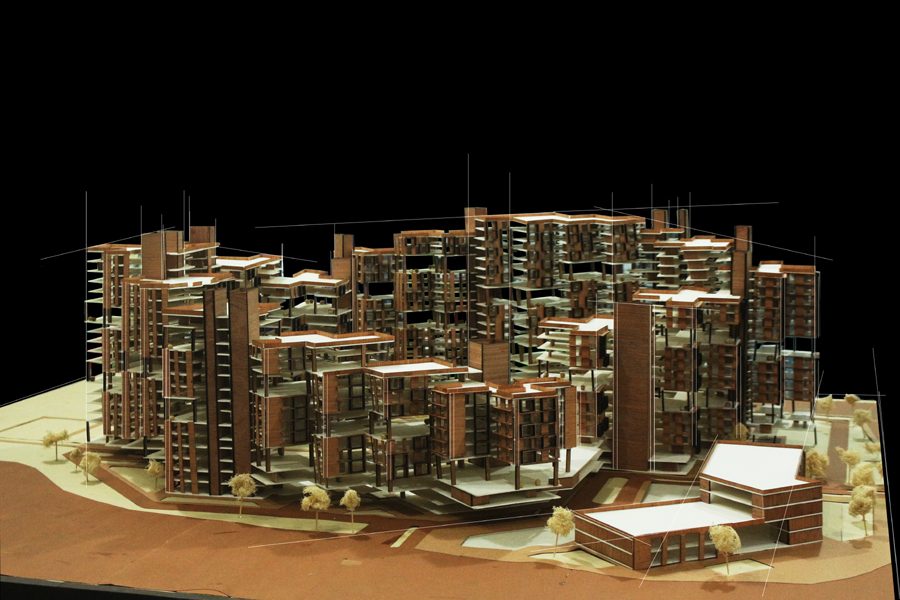
Site model © Abu Sayeed Mohammed Ziad
Analysis of site and context © Abu Sayeed Mohammed Ziad


Whereas traditionally we are accustomed to living in a society where communal cohesiveness is the primary concern. Our vernacular architecture  has evolved in adaptation of such social needs and shaped by the local climatic and geography. A house is more than just a ‘shelter’ in that sense. It has multiple dimensions including functional, social, cultural and symbolic. However, the urbanization process has significantly altered our lifestyle so as our house form. Single family dwellings has transformed to multifamily apartment buildings, particularly in urban areas. In this process of transformation we often compromise the community spaces integral to social cohesion within housing environment. If we look back to our past housing systems, the common courtyard is an excellent example of this, which provides the opportunity for safety, connectivity and social interaction.

Form generation © Abu Sayeed Mohammed Ziad
© Abu Sayeed Mohammed Ziad


This thesis aims to bring the essence of communal cohesiveness through social connectivity in the newly emerged vertical housing typology in our country. To achieve this, ‘Co-housing’ is taken as the concept, where the built environment harness the relation between community and houses to promote social and group life experience.

A site of 11.93 acres is selected; situated in GEC node, a major CBD area in Chittagong city. Total number of 3500 people(780 families) are taken into consideration to place in this housing project, taking a density of 300pers/acre. 35% of the site is taken as buildable area and the massing is derived into a staggered formation with a central court space, to ensure maximum south ventilation.

Ground level plan of the housing complex © Abu Sayeed Mohammed Ziad
© Abu Sayeed Mohammed Ziad


Three types of units are provided by analyzing the housing need of Chittagong city. The units are treated as individual cells and their groupings are made to establish a courtyard setting which respects the traditional values of our vernacular housing. In the plan level, the inspiration for the design is taken directly from traditional setting in our village homes. Vertically, two courtyards are placed on a level difference to ensure visual connection between floors where communal functions are provided.

The hierarchy of communal spaces are established in such way that, a semi private courtyard is connected to public urban spaces through semipublic neighborhood open spaces. These neighborhood communal spaces houses various amenities for the inhabitants of the housing. An open walk area and vertical urban park in the fourth level of the housing complex are designed to counter balance the negative impact of flyover which is stationed beside the site. This vertical urban walk area also houses amenities like club houses, indoor play area, saloons and libraries, where mass gathering can occur. As the site is situated in a major CBD, the commercial need of the surrounding area is taken into consideration and a separate massing is designed to house the commercial functions, like shopping malls & food courts.

Water court and main entry © Abu Sayeed Mohammed Ziad


In the master plan, entry is provided from south and east side of the site which connect the housing area with two major district distributor roads and reduces the ensuing traffic loads generated from the housing. Centrally a water court with three water bodies and surrounding green parks is designed to provide the inhabitants with contemplation and urban gathering area. Different amenities like nursery school with child play area, community centre, super shops and convenience stores, medical centre and general play area are also provided on ground level.

Multilevel community space © Abu Sayeed Mohammed Ziad
© Abu Sayeed Mohammed Ziad
Spatial and visual connections to promote social contacts © Abu Sayeed Mohammed Ziad
Corridor as street © Abu Sayeed Mohammed Ziad


The resulting design transforms into a connected condominium housing where communal cohesiveness is achieved through interaction spaces. Community supervision for the children, walking and relaxation spaces for general and elderly people, vertical amenities, park areas are provided. The roofs of this design are envisioned as intensive green roofing system and act as Vertical Park. Through this green roofing system and green spaces in vertical level, consumed green from the site area is given back to the inhabitants. The corridors, connecting the vertical circulation with the internal spaces, act as an urban street which provides the opportunity of chance encounter. Ultimately, realization of the traditional communal spaces in the vertical level has been done through the design process.

| Image gallery |

  • 17.A view from south
  • 22.Staggered green roof
  • 21.Corridors as street
  • 20.Spatial connection
  • 18. Neighborhood community space
  • 14.Water court and main entry
  • 19.Community supervision
  • vetical neighbourhood 01
  • vetical neighbourhood 06
  • vetical neighbourhood 03
  • vetical neighbourhood model 1
  • vetical neighbourhood _model 2
  • vetical neighbourhood Site model
  • vetical neighbourhood 05
  • vetical neighbourhood 04