Echoes of the Estuary: A Tourism Center at Hatiya Dwip

World Environment Day 2026

Urban [Re]Stitch

Head Office of National Housing Authority | Competition Entry


Building formation © aakor architecture workshop


| From the architect |

Head Office of National Housing Authority by aakor architecture workshop:

The site, surrounded by many government offices, is situated in a central location of Dhaka just opposite the High Court. The area hosts many large trees, a context which is considered a blessing for this surrounding. In front of the site and on the southern side, there are few age old trees. Considering the site and surrounding, placing a high-rise building in this context was tricky. Also, this is a government building which requires certain unique provisions.

© aakor architecture workshop


People 

People are always one of the key considerations for designing these type of buildings. It is expected that many people will come here from different parts of Bangladesh, some from the rural ares while others from the urban and suburban locations. Few VIP’s will also visit the place regularly for different governmental purposes. We have considered to provide equal access for all sorts of people taking this building as an example of designing in a democratic way.

.

Ground Floor Plan © aakor architecture workshop
Floor Plans _ 1st + 6th © aakor architecture workshop


Environmental Consideration

Climate is a major factor in any building design for any context. In the hot summer season we long for a soothing breeze. Office buildings covered with full glass is not suitable for our climate as it consume heat from outside and we have to run air conditioning system round the clock. Also, it creates glare issues. Considering these factors we created controlled openings at the outer shell of the building while providing full openings at the inner side.

We pushed the building towards the north side to welcome wind from south-east. This is proved to be an efficient option for all time wind inlet. Open terrace gardens were designed on every two levels which would help to reduce heat gain. These design decisions will create a microclimate in the site keeping the environment more soothing. The articulation of the building form will mutually shade each other from the south-west sun. Concrete and brick were chosen as the building materials. An outer thick wall will be made of locally produced brick, which is easily available here. This will reduce the energy consumption significantly. Further, the use of solar panels on the rooftop will make it energy efficient as well.

.

© aakor architecture workshop


Building Form and Identity

It is a nationally important building. Because housing is everyone’s right, the government has many policies to provide housing for everybody. People come here for versatile  services from different parts of the country. We wanted the building to be transparent to the people while they enter to the site and they should get a clear idea about the locations of different departments. Another important part was to apply a phased approach to the design considering the existing building.

To serve the purpose, we have tried to come up with a unique idea. We took a modular two-storied block to formulate the shape of the building. Instead of making a single vertical box, we progressively placed the blocks up to eighteenth storey in an angular progression. This idea creates many terraces so that the building is connected well horizontally and vertically. Also with this approach, people in the higher stories are likely to feel more connected with the ground level as they get terraces in front of their offices. This will also enhance mood and productivity. With this unique form this building will definitely create a landmark identity and will tell the the story of our design.

.

© aakor architecture workshop


Pedestrian Plaza

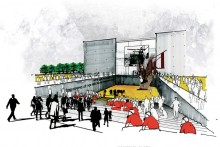
At the entry point, a big pedestrian plaza is visible which should act as a large social space for everyone. Partially shaded and partially open, it can serve the purpose in all seasons. From the entry point of the site, the whole compound is clearly visible. There are also planter boxes with seating facilities, street lights and other street furniture provided in the plaza for public comfort. We expect this space to be a memorable place for everybody who will come in this building for whatever purpose.

Master planning

An efficient master plan was an essential aspect for this project. Phasing system was one of the key components of master planning. We prioritized pedestrian movement to the site, keeping the south-east side open; which creates opportunity for wind flow as well as it will kept the old trees in place.

The site is facing south-west side. So, we had to provide controlled the opening on that side. At the rear of the plot, the part of the building contains mostly supporting functions like café, prayer space, library, common room etc. Though the building is joined parts of it can be identified according to respective functions. Almost all the spaces are utilized properly in this compound.

.

© aakor architecture workshop


<< Information >>

Architects:           aakor architecture workshop

Location:              82 Segunbagicha, Dhaka. Bangladesh

Client:                   National Housing Authority under the Ministry of Housing and Public Works,                

                              Government of the People’s Republic of Bangladesh

Type:                      Commercial (Government Office building)

Site area:              1.62 acre

Buildable area:  ~26,250 sqm

Year:                      2018

Status:                   Competition Entry


<< Image Gallery >>

  • Render NHA-01
  • 02.Building formation NHA
  • 03.Phasing plan NHA
  • 04.Social connection NHA
  • GF Plan NHA
  • 1st Floor plan NHA
  • South elevation NHA
  • 08.Section aa NHA
  • Render NHA -03
  • Render NHA -04
  • Render NHA -02
  • Render NHA -05

The Carnation | STHAPOTIK

The ongoing modernization evident in the urban appearance of Dhaka is significantly transforming the quality and quantity of social space. Lack of social interaction space has become an alarming issue for the urban Dhaka. The target of this project was to deepen the social interaction of the community through interconnected common spaces & circulation in different levels. The characteristics of traditional urban dwellings were analyzed from the old historical part of the city that is rare in today’s apartment complex . The internal open courtyard of this project demonstrates the concept of traditional outdoor spaces in a culturally, economically and environmentally responsive way, thus ensuring sustainability of the apartment housing while improving the quality of life of the inhabitants.

The Carnation |Top view of the court © STHAPOTIK
Conceptual section © STHAPOTIK
View of the courtyard © STHAPOTIK
The community space overlooking the courtyard © STHAPOTIK


The target of this project ‘THE CARNATION’ is, therefore,  to add a solution in this vast urban crisis of social interaction. Social interactions considered as an important aspect of designing this multiple family residential complex which is positively influenced by the physical design. Ideally, the closer people are brought to each other, the greater the chance of social interaction. Hence the design process is shaped by three major considerations. Firstly, to create the opportunity of direct contact among the residents; secondly, to create the opportunity of passive interaction between the residents and surrounding community; and thirdly, to ensure the availability of appropriate space for  interaction.

Street frontage © STHAPOTIK
Street frontage (night view) © STHAPOTIK
Front water cascade © STHAPOTIK

The first way of making contact in a community is through passive interactions with neighbors which is considered as utmost priority in this project. The old part of Dhaka city contains a special quality of space called ‘extended veranda’ placed in front of every residence. This space basically works as a social interaction space between residents and passersby to heighten the social bondage for the community. Designing an urban pocket space before entering the building reflects the ‘extended veranda’ concept from the old historic core of  Dhaka. This urban pocket provides a breathing space for the community and a visual refreshment for the passersby. Long narrow busy vehicular street (7.62 meter) which starts from Bir Uttam Samsul Alam road (Kakrail) and ends at the captain Munsur Ali Avenue (Baily Road) has a very tiresome street view. This space is conceived as a visual relief from the long monotonous street view. The landscape in front of the building serves the community as a break out space. Separate entries for pedestrian and vehicular are designed, so that the residents don’t have to cross the motorway.

Floor plans © STHAPOTIK


To enhance the active contacts among the residents, this multifamily apartment comprises an internal open courtyard. The internal open courtyard enhancing the social, cultural and environmental factors, creates a healthy environment for the community people. This courtyard, as an open space within a cluster or urban fabric, fulfills various functions -i.e. social, leisure and microclimate. Surrounded by landscape paving, with water bodies, various plants, shade and light, played an important role in social and working life of the community. This space works as healing element within the building footprint, along with opening at the end of façade to allow natural light to filter through to the public and private areas. Shade, water, trees and wind, pavement can induce positive effects towards the five senses of the human body, providing the possible highest level of thermal comfort. This space helps to gain a good sense of control and privacy from the public zone towards the semi-public zone and playing as a microclimate modifier to the environment. Increasing airflow rate into the apartment is suitable for the warm humid climates. The microclimate condition has been improved through naturally ventilated high volume residential complex with internal courtyards.

Water lobby at ground floor © STHAPOTIK
Water lobby with connecting bridge © STHAPOTIK


Privacy solution for each space has been solved technically in the project. Sliding louver installed in the front façade working as solar shading panel and the privacy concern at a time. It offers a versatile and practical solution to managing solar radiation and aiding. There is privacy screen used in front of the living room playing two role ensuring aesthetic value & visual privacy from the semi-public circulation (lift-lobby space).

A very lively circulation which invites visitors with a flow of different scale of spaces and stories sequentially. Circulation of this project flows in different parts. It’s thought of not just a circulation but as a picturesque bioscope within ‘space between the spaces’ concept which having a connective function. Horizontal circulation flows into two parts. The formal circulation kept as minimum as possible to ensure the quick journey to the passersby. The informal one elaborating the journey a little more with the features of internal open court yard. The design idea of the vertical circulation is to become a compulsive space for the user group to give a pause of their regular journey. Vertical circulation placed at the adjacent part of the court which created the visual connection between the court and the floor levels.

Section © STHAPOTIK
Section © STHAPOTIK
Entry stair connecting the courtyard © STHAPOTIK


In tropical climate, water is considered as a celebrating element as well as a healing element. Designed water body in front of the project serving a soothing visual expression to the passersby. Interior water court provided in the ground floor working as a thermal insulator. Another water body is placed in the central courtyard adding more value to the microclimate. Natural ventilation and natural lighting of vertical circulation & flanking lobby space further improve the energy efficiency of the project.

© STHAPOTIK
© STHAPOTIK
© STHAPOTIK
© STHAPOTIK

Regarding building material, the external façade of the building is made of exposed handmade brickwork and as-cast concrete without any plaster. Cotta-stone & tiles are used as floor finish material and plaster-painted. In some places (reception) gypsum board are used as ceiling. Glass and aluminum panel are used in Interior and exterior partition. Glass, I –Joist, MS rail, wood are used in railing of this project.

DESIGN TEAM:

Principle Architect:

Ar.Sharif Uddin Ahammed

Associates:

Ar. Chayan Rifat, Ar.Swagota Rownak, Ar.Sadeka Badiozzaman, Ar.Samanta  Rahman

Resident architect of client:

Ar.Faisal Ahmed , Ar.WasikAnsar

Structure:

Eng. Salahuddin Ahmed  , Eng. NurulKabir (EHL)

Electrical:

Shabbir Hossain

Plumbing:

A.B.M Bashar

Contractor –

Eastern Housing ltd. (EHL)

Write up preparation:

Anjuman Afsari Nisa

Facebook page: Sthapotik

Contact: sarif.arch@gmail.com


| More images |

  • Carnation_03
  • Carnation_04
  • Carnation_06
  • Carnation_12

The Multi-comfort House Student Contest

As the world is becoming increasingly urban and cities are becoming larger and more densely populated; the energy consumption is increased as well as the CO2 emission, specific actions to reduce the negative effects are required. Overall, the building sector is responsible for 40% of the total energy consumption and CO2 emissions in the world demanding a new way of designing each new project and each new renovation. Sustainability development of the cities is today a key question all over the world. With a population that increased over 100 times in the last 70 years while its urban fabric expanded 400 times in the same time, Dubai is today one of the pioneer cities when it comes to sustainability.

Dubai at a glance © Shayeeka Binte Alam, Rutuja More

The task for 14th International Edition of Multi-Comfort House Students Contest developed by ISOVER in close collaboration with Dubai Municipality and Dubai Properties Group is the development of a vision for a trans-cultural vibrant community development located in the perimeter of Cultural Village of Dubai. The participants had to create a sustainable architecture integrated into the urban space while responding to Saint-Gobain Multi-Comfort Criteria and considering the climatic conditions and regional context of the site and Dubai.

Climate analysis © Shayeeka Binte Alam, Rutuja More
Site analysis © Shayeeka Binte Alam, Rutuja More

The design should have been sustainable, innovative (original and creative) and should drive the city further. Beside construction, the social and economic aspects must be considered, and the proposed solution should give a new impulse to the site area. The architecture must fit in the surrounding of the site. Urban space solutions for the immediate surroundings of the site will be proposed. The overall scope of the task was to propose a solution for future constructive approach to a sustainable community in Dubai. The project would be developed in a plot of 26,936 m2, part of a larger complex of  400,000 m2. The project would have a maximum built surface of 60% of the plot, based on housing, commerce and spaces for multiple artistic performance, in harmony with the other areas of the master plan and taking most advantage of the territorial and climatic characteristic of the Dubai region.

Concept diagram © Shayeeka Binte Alam, Rutuja More
Connectivity of the site © Shayeeka Binte Alam, Rutuja More
Zoning © Shayeeka Binte Alam, Rutuja More

A network of pedestrian circulation accommodated the needs for both residents and visitors. A semi-private park spanning the residential parcels allowed for a seamless park experience for the residents with the convenience of service retail shops and cafés. Direct circulation links and bridges stitched the project together delivering residents and visitors to the waterfront within Parcels C and E. Connections to Culture Village 1 occurred along the waterfront promenade and a pedestrian bridge from Parcel A; the water front promenade connects to Culture Village 3 as well.

Sectional axonometric view from the creek side © Shayeeka Binte Alam, Rutuja More
Benchmarks © Shayeeka Binte Alam, Rutuja More
Seasonal-strategy © Shayeeka Binte Alam, Rutuja More

This project resolution has involved different scales and approaches: urban, environmental, cultural, constructive & technical, making it a great opportunity for implementing a multidisciplinary design studio, operating in a consultancy environment. The design addressed six benchmarks to be achieved: reduced cooling load, zero energy, user centred design, integration of world culture, multicultural approach for the residents from all over the world and lastly, vernacular strategies to obtain comfort.

Building module © Shayeeka Binte Alam, Rutuja More
Building module details © Shayeeka Binte Alam, Rutuja More

The fundamental concept while designing was to achieve comfort using the minimal energy. Thermal comfort, acoustic comfort, indoor air quality, fire safety and using natural daylight were the prime concerns. Maximum levels were achieved by using vernacular strategies.

Environmental performance © Shayeeka Binte Alam, Rutuja More


A vision for a trans-cultural vibrant community was developed in the perimeter of Cultural Village 2 of Dubai. The design proposed a viable combination of residential and public spaces (cultural, commercial, others) while respecting the plot characteristic and its history. Special focus was being given on developing the sustainability dimensions as well as the comfort features.


Shayeeka Binte Alam is a post graduate student at University of Nottingham, UK

Remodeling Krishi Market: Forming Community Square At Mohammadpur | AIUB

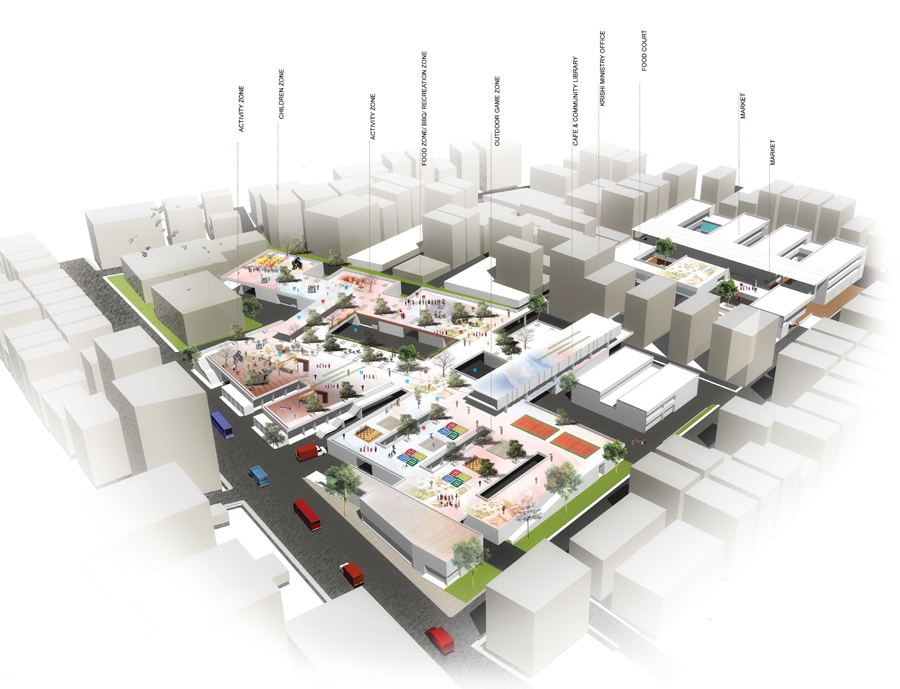
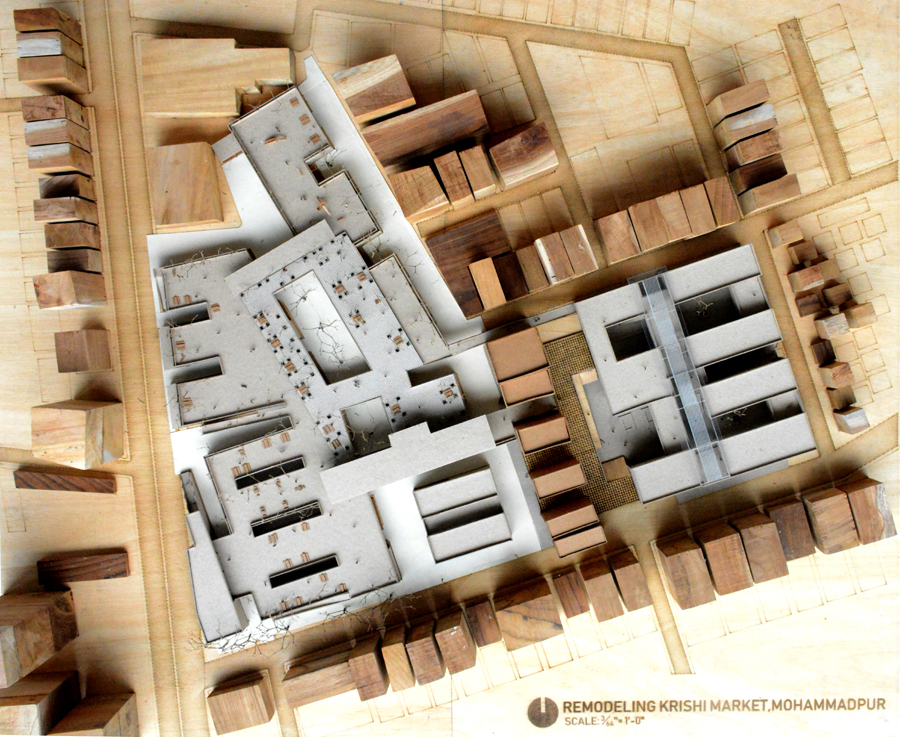
The following vision for Mohammadpur Krishi Market is inspired by the traditional market place with an aim to become a new heart and soul for surrounding community. A live, work, play, destination for the city, the project will comprise a combination of low-rise, ecologically sensitive levels of retail, a new public square with generous underground parking. As the city corporation has a redevelopment plan for Krishi Market, it offers a great opportunity to generate it as a community square where people from Mohammadpur and Shaymoli area will get a vibrant place for social gathering and informal activities.

 Krishi Market, Mohammadpur
Krishi Market, Mohammadpur
© Syeda Milky
© Syeda Milky
Chaos map © Syeda Milky | AIUB


Mohammadpur was planned in 1950’s as a residential area. Before construction of Beribadh [embankment], this area had waterway access from the West. This residential area kept growing with new housing areas like PC Culture Housing, Adabor, Nobodoy Housing, Japan Garden City and many more. Krishi Market is one of the key vigorous spaces within Mohammadpur, which was established under the ownership of the Directorate of Agriculture Ministry for Agricultural Marketing of Bangladesh. This Market serves like the storage hub of Rice and Lentils for entire Mohammadpur and Adabor thana.

© Syeda Milky | AIUB

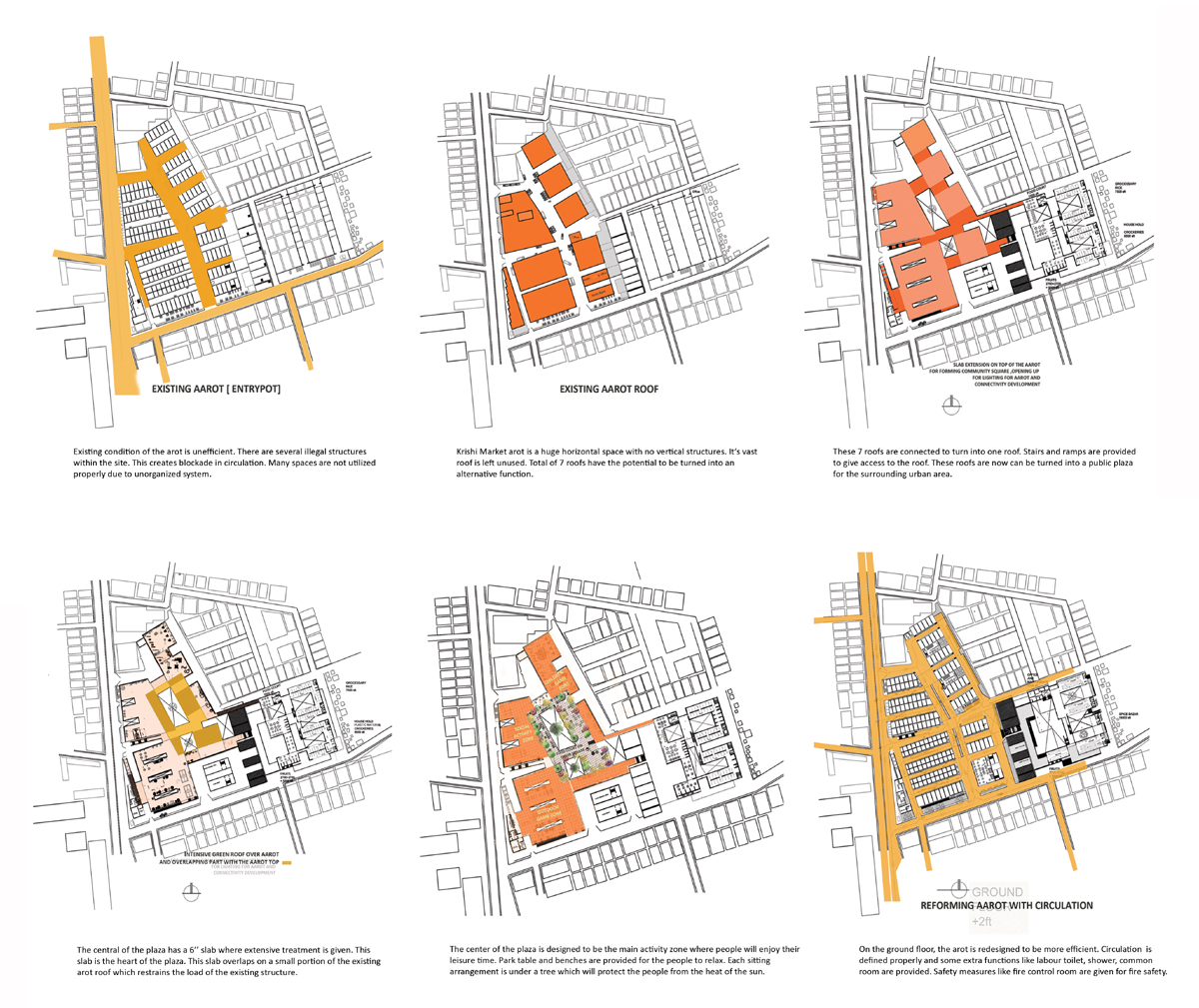
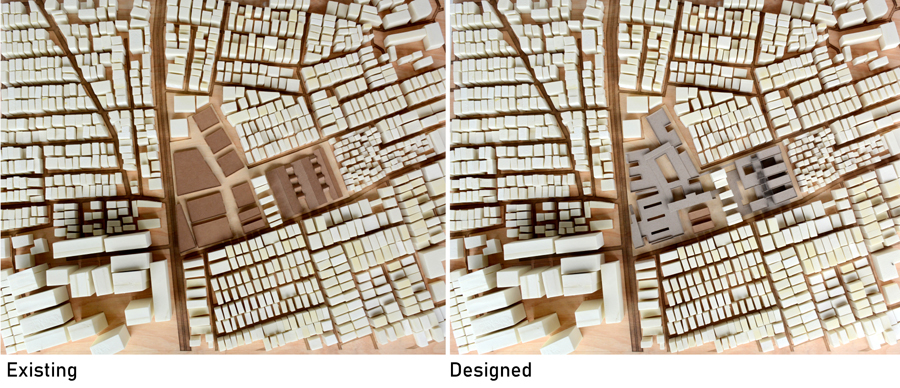
At present the market is operated by Dhaka North City Corporation.  The whole area has two major parts. One big Aarot  [Entry top ] in one side and a big Kacha Bazar and grocery shop on the other, in between few residential plots. Front part is the Aarot ,covering a huge area [over 5 acres],with over 150 shops. The storage provides employment to more than 1400 workers and daily labourers. Krishi Market Kacha Bazar was established in 1982 [with almost 2 acres of land] by government, They started with 400 shops in the market where garments, groceries, jewelry, plastic items and household products,stationery, vegetables and fish, meat are sold at reasonable prices. [1]

Proposed redevelopment plan for Krishi Market © Syeda Milky | AIUB
© Syeda Milky | AIUB


This project has been developed through multiple phases-

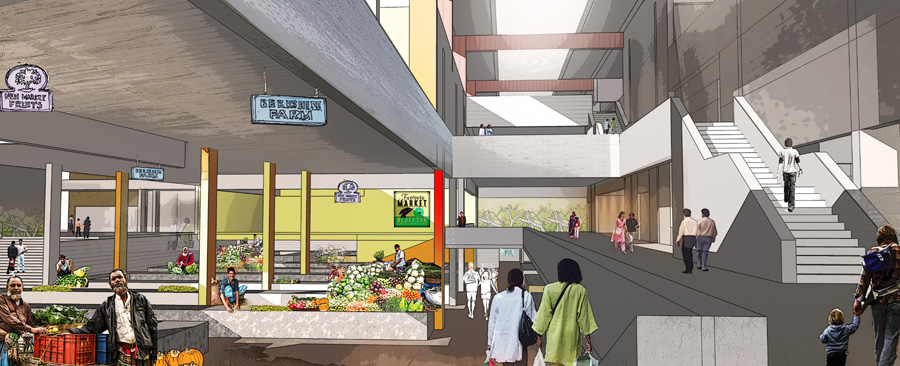
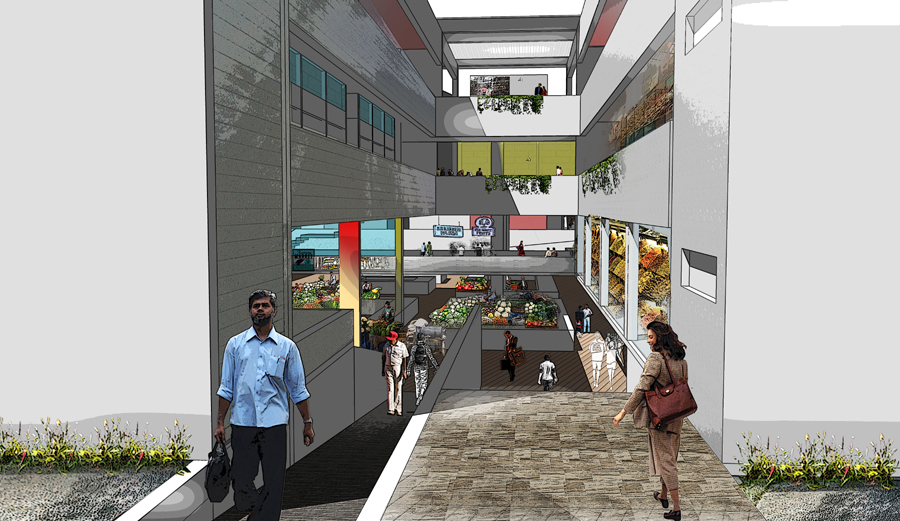
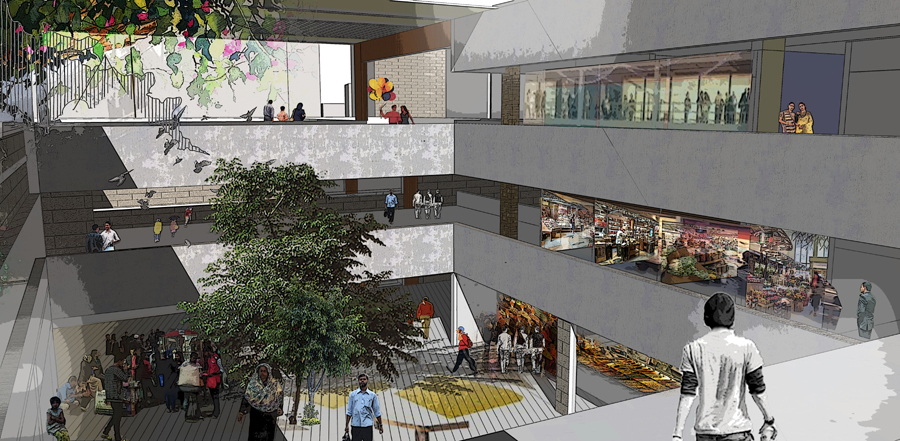
First, considering City Corporation’s demand and local need, Krishi Market needed to be doubled in terms of number of shops and the area. The Bazar has been positioned at the semi basement level with separate ramps for the customer and  the van for loading-unloading. The lofty 23’ height Bazar with separate zone for the vegetables, fruits, fish, meat, poultry and slaughter-space has been designed considering ample natural light and ventilation with waste and water disposal possibilities. Multiple entry/exit paths, wide circulation spaces and enough display and storage space for the vendors will enhance the worth of the Bazar. Almost 150 extremely colorful spice shops at ground floor with courtyards will create a unique ambiance for the market. It could be a great fascinating element for the city also. First floor and the second floor with wide corridors in both side of each block are designed in this non air-conditioning market to attend the huge buyer and their flows. The market design has tried to create the perfect harmony between tradition and modern innovation while catering to the city’s booming business, retail and residential demands. The new design market will be a city in microcosm. It will unite high end retail and grocery goods shops with individual courtyards and alleys, together with food markets and craft-based trades specific to the region. Avoiding the generic feel of the universal shopping mall, the scheme will fuse the local vernacular with global aspirations. Total number of vendor/shops in this newly designed market is over 500 [including bazar] which doubling the existing market area.

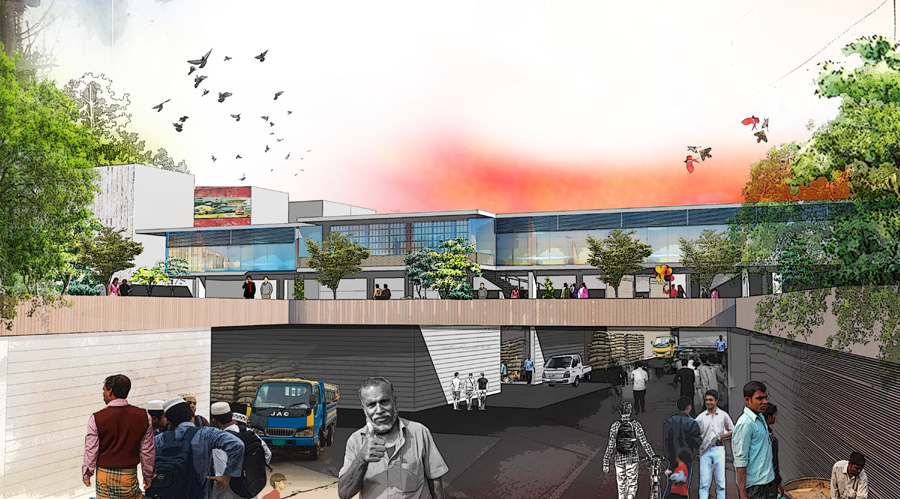
Aarot (Enrty Pot) and Plaza Activity © Syeda Milky | AIUB
Central Circulation and Bazaar © Syeda Milky | AIUB
Bazaar aproach from plaza © Syeda Milky | AIUB
© Syeda Milky | AIUB
Entry to spice market © Syeda Milky | AIUB


Second phase was to deal with the Aarot. Existing Aarot has easy communication with the main road. Hundreds of trucks, pickups and rickshaw vans carry goods to the market every day. The market sells goods to wholesale retail shops of different locations of the Dhaka city. But most of the internal road is blocked with goods discarded all over the place, though they have enough space in their shops. Unauthorized tong, tea stall, restaurant and haphazard truck and van stand for loading and unloading has created a chaos situation inside the Aarot. In this phase first priority was to ensure clear circulation and easy loading-unloading chance for the vehicles. Internal road network has been developed and the most necessary services for the labors, like, control office for each block-so that they can control and count the delivered goods, common rooms for their leisure time, proper bath, wash and toilets, clean restaurant, one medical center with first aid and other facilities, fire unit stand for emergency, cooperative office, seed selling center, proper rickshaw van stand has been provided. With this reform the Aarot may accelerate its existing condition.

Activities in roof top plaza © Syeda Milky | AIUB
Roof top plaza © Syeda Milky | AIUB
© Syeda Milky | AIUB


Third and the last phase was the roof top of this vast Aarot blocks. There are certain differences between Aarot and general storage/ warehouse. Supplies from different area come to Aarot for a shorter period of time for storage [maximum 48 hours] and distributed these commodities into different local bazar within this short time. But in warehouse goods generally stored for several days or months. So Aarot supplies should be kept within reach of hand to quick loading unloading and rapid delivery. Consequently vertical storing is not efficient for this type of storage. So Aarot expand horizontally not vertically. Krishi market Aarot has enough storage for next 10 years. So it has a great opportunity to custom this unused Aarot’s roof top.  First of all the blocks has been connected and multiple ramps and stairs have been placed[without obstructing Aarot circulation] so that people can come on top of it from different directions, from Mohammadpur ,Shaymoli and Adabor area. These area has a serious shortage of open and green space according to the standard of DMDP and DAP [2010]. Mohammadpur area needs aprox. 40 acres and has 10 acres while Adabor thana has 5 acres and needed 20 acres open space as well. So if we count this Aarot top as a community open space/gathering space/square we can add at least 6 acres of land for the community of Mohammadpur. This vast open space can be used for various activities. One part is dedicated for the children-which is called child zone where different kind of outdoor play elements will be added for the kids. Other part can be used for outdoor games facilities where people of different ages will get badminton courts, big chess board, Ludu board, Sholo[16] Ghuti board in life size,table tennis table and other traditional games, etc. In another part portable movie theater, outdoor class rooms is provided to promote awareness for the socially deprived people. This part is called social activity corner. At the middle, a platform is provided with plantation and sitting so that people can come in this square and spend time. This part will act like a heart- extensive and intensive green roof detail has been used on top of this part so that a number of plantation can be done here-which will cool down the surface, shade the surface and will create a pleasant environment. A big restaurant and a library is also designed on the roof top. Local food like chotpoti, chaap, parata can be served here. As a whole this roof top will act as a gathering community square for the Mohammadpur area.

| Image gallery | 

  • Krishi Market_19
  • Model
  • Krishi Market_22
  • Krishi Market_12
  • Krishi Market_16
  • Model
  • Model
  • Krishi Market_17
  • Krishi Market_03
  • Krishi Market_05
  • Krishi Market_04
  • Krishi Market_06
  • Krishi Market_02
  • Krishi Market_08
  • Krishi Market_09
  • Krishi Market_08
  • Model
  • Krishi Market_01
  • Krishi Market_14
  • Krishi Market_m1
  • Krishi Market_m6
  • Krishi Market_m3
  • Krishi Market_m8
  • Krishi Market_m5

Cultural Sanctuary for A-chik Mande Ethnic Community | BRACU

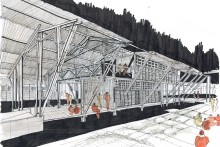
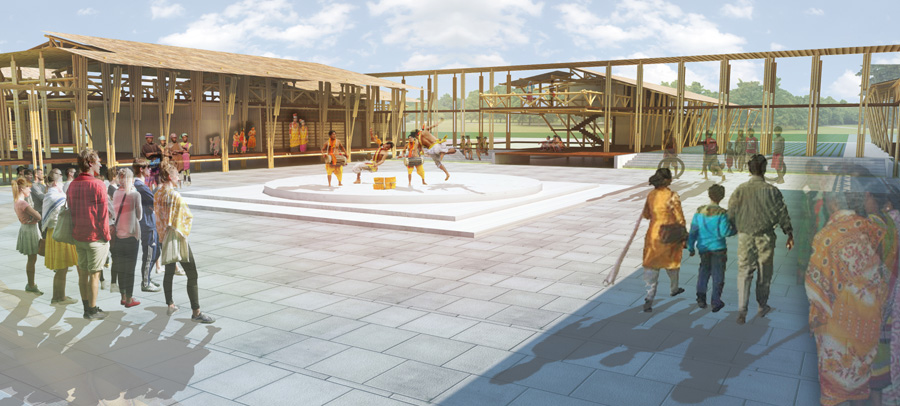
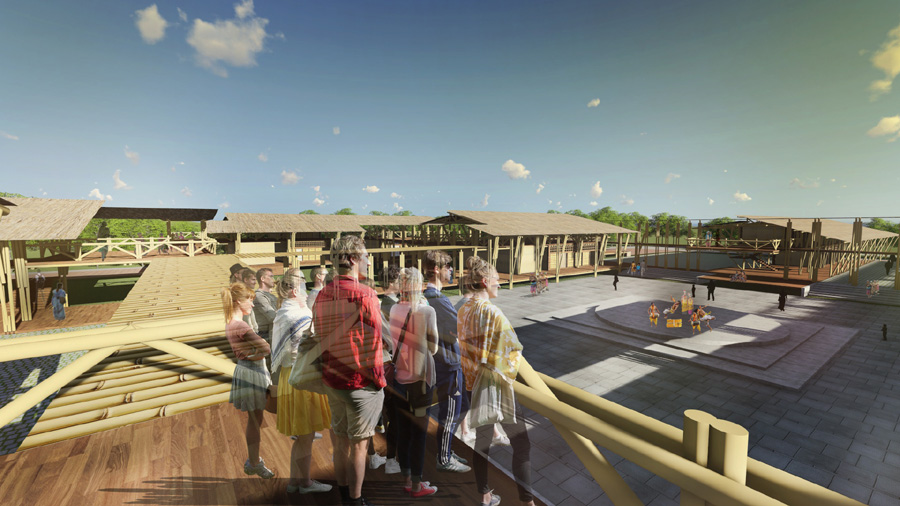
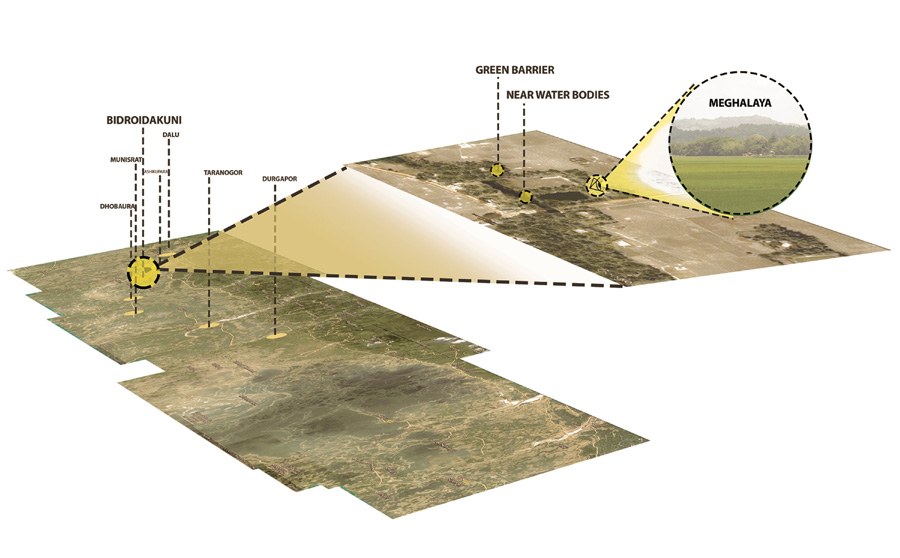
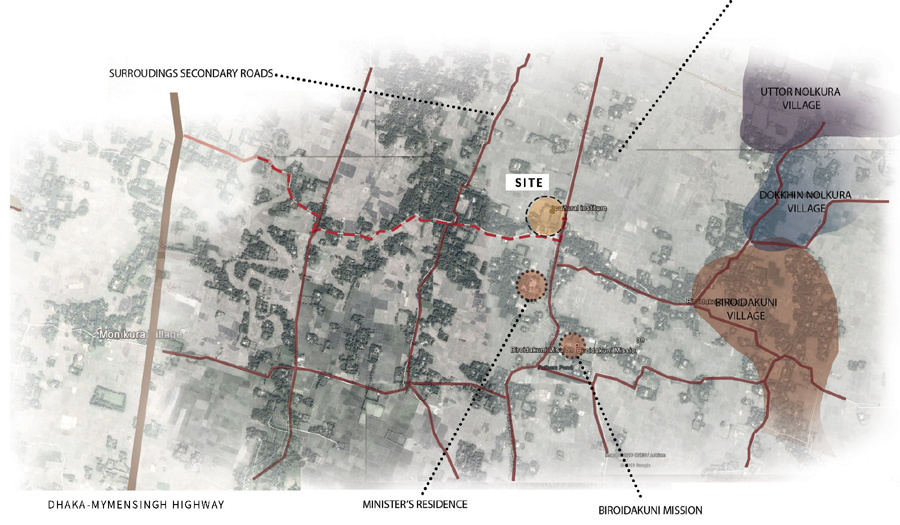
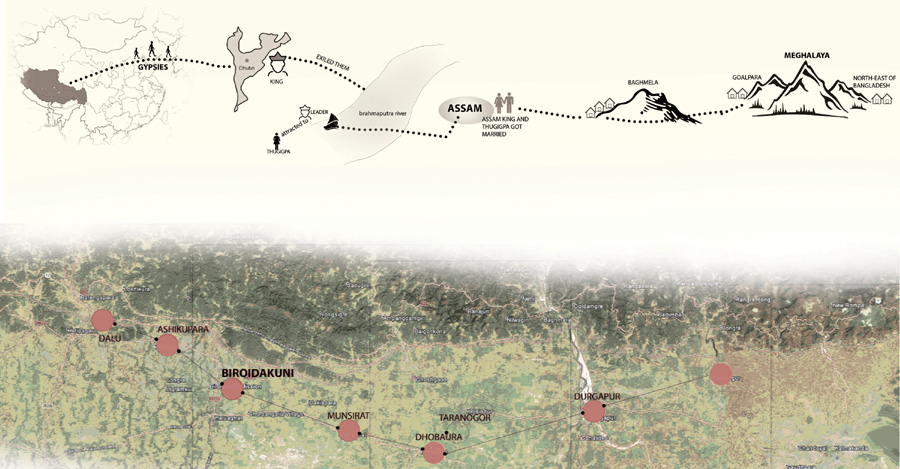
A-chik Mande, also referred as Garo people, are the first immigrants from Tibet, who settled down in Garo hills finding both providence and security in this enchanted territory. The present population of Garo tribe in Bangladesh is around twenty five thousands who  lives in the northeast part of Bangladesh which covers Mymensingh, Haluaghat, Dhobaura, Netrokona, Dinajpur, Jamalpur, Nalitabari, Shanamganj, Modhupur. The culture and lifestyle of this tribe is very unique and interesting, though they are now highly influenced by the mainstream society. This project aims to reflect their way of life and aspirations through architecture which can help in building their sense of community and improving their socio-economic condition.

© Rifat Ara Mostofa | BRACU

Achik mande 16

© Rifat Ara Mostofa | BRACU
Site study and possibilities © Rifat Ara Mostofa | BRACU

Among all the different groups, A-chik Mande is one of the major tribes of Bangladesh. They are also considered as forest dwellers in East region of Bangladesh. They have exceptional dependency on forest for their daily needs. It is also believed that they are segmented into two large divisions, which are: people who live in the hills and those who are scattered in the plains.

The project intends to safeguard the indigenous identity of A-chik Mande community while promoting their culture, language through community counseling. They would be also groomed to reflect their own self. A-chik Mande manifestation also aims to conservation of natural resources and celebration of their historical cultural diversity. The project therefore took into consideration the following four key points. The four points consists generating activities; re-generating settlement patterns, creating community meeting point and establishing a resource center.

© Rifat Ara Mostofa | BRACU

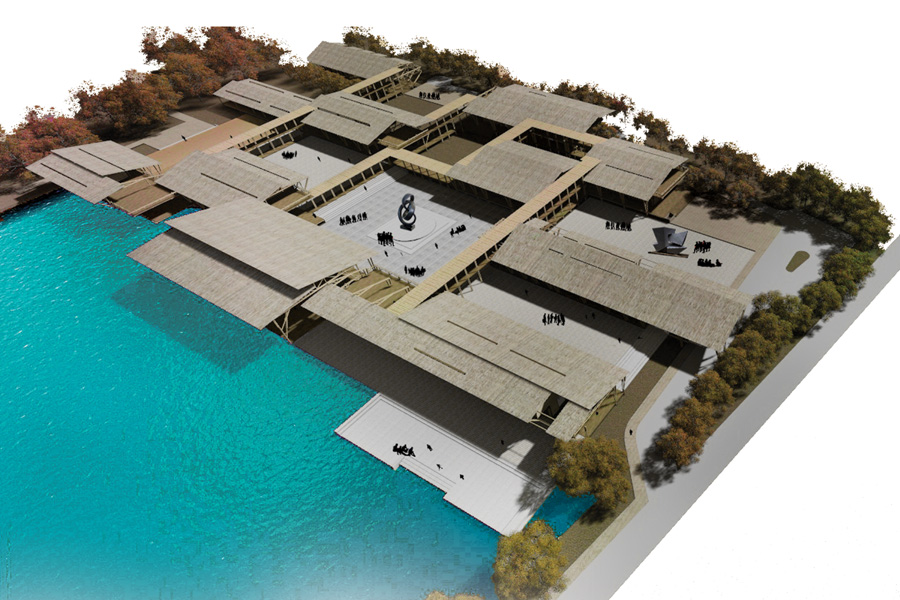
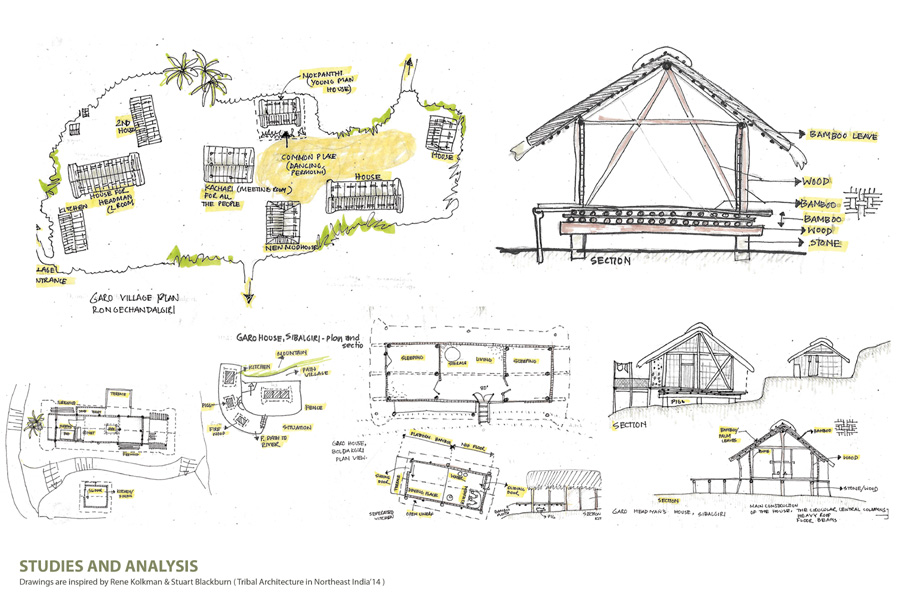
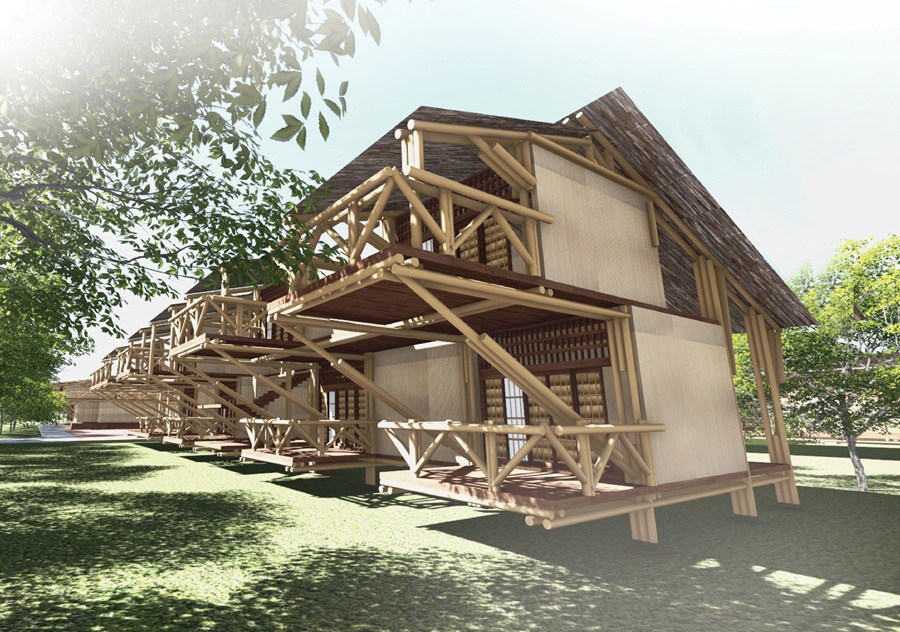
The zoning of the proposed institute was placed respecting the Garo settlement and homestead layout. The homestead of Garo community near Meghalaya reflects not only their cultural identity but also their lifestyle as well. One of the interesting homesteads was their Nokma’s house. Nokma is the headman or chief of the community. The homestead of Nokma was a great inspiration to derive the spaces and zoning of the institute. According to the study, the Nokma’s homestead was very organized in terms of spaces and also shows why it can be called as a typical home of a A-chik Mande  or Garo people.

Proposed Cultural Sanctuary fo A-chik Mande Ethnic Community © Rifat Ara Mostofa | BRACU

Achik mande sec 01.1

© Rifat Ara Mostofa | BRACU

The project idea can be replicated on other parts of north east Bangladesh where Garo people  are living in a very scattered way. By replicating the core idea of the project to other districts, the rich cultural identity of indigenous ethnic community can be preserved. This is an effort towards attaining self value and improvising life using very distinctive natural way.

Achik mande 13

Achik mande 12

Achik mande 11

© Rifat Ara Mostofa | BRACU

The design interference has been kept very little; it will all come impulsively from the people. The process of this project was more important than the end result, because the project outcome was a reflection of a process which defines their identity. The project was established to promote local tourism, training and education and also reducing their superstitious beliefs and inspiring them to preserve their individuality.

As a common Garo man had said “Whether I follow sangsarek or Christianity, at the end of the day I am a Bangladeshi” . So let them be the unique part of our nation but most importantly a part of our nation.

| Image gallery | 

  • Achik mande_masterplan
  • Achik mande 09
  • Achik mande 17
  • Achik mande 08
  • Achik mande 14
  • Achik mande 05
  • Achik mande 04
  • Achik mande 10.1
  • Achik mande 13
  • Achik mande 12
  • Achik mande 11
  • Achik mande 03
  • Achik mande 15
  • Achik mande 01.1
  • Achik mande feature


CONTEXT Contributor: Farasha Zaman | Architect and faculty member at BRAC University

Surreal Collage by Graphic Art Studio, CUET

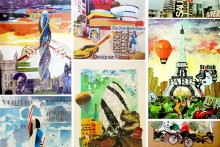
The student have created their own surrealistic visions of some world famous architecture  through collages. They have come up with numerous concepts. As what if one day Norman foster wake up in fear that a dinosaur attacked 30 St. Mary & London is under attack. Troops are engaging in battle. People are leaving London. And foster wake up and calls for London. What if Godzilla is back. How it would look what if some human hands are weaving an organic highrise building. What if a nuclear highrise is attack by soviet force. With these ideas students have made collages from magazine books.

This Graphic art studio was mentored by Ar. Sarah Binte Haque (Lecturer, CUET) and  Ar. Amit Imtiaz (Lecturer, CUET).

Collage by Tasfia Tasnim, CUET
Collage by Mahbuba Tabassum Mou, CUET
Collage by Sharmin Afrooz, CUET
Collage by Asif Rahman, CUET
Collage by Nusrat Jahan, CUET
Collage by Mair Aritro, CUET

Exploring Incremental Modularity of Town Hall Refugee Camp | AIUB

In 1947 during the partition of Indian sub-continent, a large number of Urdu speaking Muslims migrated to East Pakistan or Bangladesh mostly from the state of Bihar and from other states like- Uttar Pradesh, Odisha & West Bengal. Almost 1.3 million Urdu speaking Muslims came to this region.

In 1971 during the liberation war, a section of the Urdu-speaking community played an anti-liberation role by siding with the West Pakistan army.Consequently, at the end of the war, they lost their homes, businesses, properties and employment. They were scattered and in 1974 the International Committee of the Red Cross along with United Nations High Commissioner for Refugees (UNHCR) built settlements mostly on public land and buildings to provide shelter, food and medical support to the displaced people.

© Alvi Muhtasim | AIUB


At least 116 (One hundred and sixteen) settlements were established throughout the country providing shelter more than 4 Lacs refugees.These Urdu-speaking displaced people had no documents to support recognition as citizens in any country thus they became refugees. [ Source: Minority Rights ]

The Town Hall Refugee camp is located at Mohammadpur,Dhaka. The site was a land of a very old community hall and a primary public school field. It has Town Hall bazaar at the North, a school at the East and residential areas occupy on the West and South.

Settlement evolution © Alvi Muhtasim | AIUB
© Alvi Muhtasim | AIUB
Town Hall Refugee Camp: Current condition © Alvi Muhtasim | AIUB


Firstly 8’X 8’ or 64 sqft. plots were allocated for two refugees where they started living in tents. Later they made more durable structures and soon started increasing their living spaces by making multistoried buildings on the same 8’X8’ footprint because of population growth within the camp. In each of these modules a family consisting of 5 to 8 members live. There are no amenity spaces like kitchen or living rooms. All activities from preparing food to eating and sleeping takes place in the same 8’X8’ room. These rooms sometimes increased up to 10’ on the upper floors because of extending over the circulation spaces beneath. [ Source: UNHCR ]

All the camps are overcrowded as they have no chance of living outside of the camps because of their statelessness. This particular camp is so over populated that it is 27 times more than average population density of Dhaka City. On this project, three particular issues have been targeted- (1) Eliminate social barrier (2) Improve economic condition (3) Improve environmental condition

Physarealm: Grasshopper Simulation © Alvi Muhtasim | AIUB
© Alvi Muhtasim | AIUB


Eliminating social barrier: it is seen that outsiders of the camp don’t have much interaction with the camp dwellers. The camp is totally isolated from the surrounding urban environment. Outsiders aren’t willing to pass through the camp. In the design, I’ve tried to make a new circulation where others can go through the camp and eliminate their invisible barrier between making interactions with the refugees on daily basis. This idea came from an example of Geneva camp in Mohammadpur where there is a road through the camp and other people use it daily. There is already ways through the camp but to make it more inviting for the passers-by, several measures had to be taken. I used a simulation of Physarealm of Grasshopper to determine which of the camp approach will be more active and in which pattern the passing circulation should be as an optimized route. From the simulation I decided which path should be prioritized and needs to be widened to make visually more inviting through the camp.

Improving economic condition:As most refugees fail to get a job or start a businesses they are in a very poor economic condition. These leads to crimes and other illegal activities. To make them self-employed they do various kind of small works like making paper packaging, weaving sarees, do embroidery works etc. They also open small shops to make their earnings. So in the design I allocated shops and economical spaces on the ground floor along the newly developed circulation so that they can startup businesses. These spaces will not run successfully if the customers are just from the camp dwellers. Since the new circulation will bring in outsiders, they will be able to give services to them and make a steady living from the shops. There are also two classrooms for vocational training. One is for mechanical training and the other one is for embroidery/weaving training for both men and women to take part and increase their professional skills.

Critical Modules © Alvi Muhtasim | AIUB
© Alvi Muhtasim | AIUB


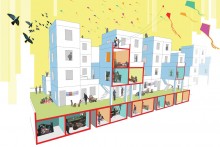
Improve environmental condition: Living condition inside the camp is extremely critical since the population is very high. There are even rooms which have no windows at all. To ensure minimum natural light flow and air ventilation I’ve identified the modules which have every side blocked and have no chance to create a window. These modules are identified as critical modules. After identifying the critical modules, the other adjacent modules are strategically moved and then relocated on different places where it was possible for the structures to carry the added loads. This created the critical modules to have at least one side to be open and have windows. The modules are moved in a way that there will be no more critical modules and also create connected terraces which will act as micro social spaces where internal social interactions will take place.

© Alvi Muhtasim | AIUB


The condition which they are currently living in is never acceptable. Since their statelessness crisis is yet to be solved and no one knows when they will get the rights as a usual citizen, this design idea is for an immediate solution to increase their current living condition within the camp.

| Image gallery | 

  • T H Refugee Camp_16
  • THRC_Model 06
  • THRC_Model 05
  • THRC_Model 02
  • THRC_Model 01
  • Model
  • Model
  • Model
  • T H Refugee Camp_12
  • T H Refugee Camp_11
  • T H Refugee Camp_08
  • T H Refugee Camp_09
  • T H Refugee Camp_07.1
  • T H Refugee Camp_06
  • T H Refugee Camp_10
  • T H Refugee Camp_05
  • T H Refugee Camp_feature
  • T H Refugee Camp_03.1

National Parliament Museum | Bangladesh University

Our democracy, our sovereignty is our pride. Bangladesh is a democratic country and we follow representative democracy here. To maintain and practice a  proper democratic system it is necessary for the common people to participate in politics and their opinions should be duly counted.  The evolution of Bangladesh is rather a juxtapose of blurry images of pain, agony, sufferings and yet, of endless hope and potential. Nevertheless it took a long way to build this nation.  But deep in our mind there is still a  disputable blank space about the whole evolving story – have we achieved true democracy yet?

© Razia Azad
© Razia Azad


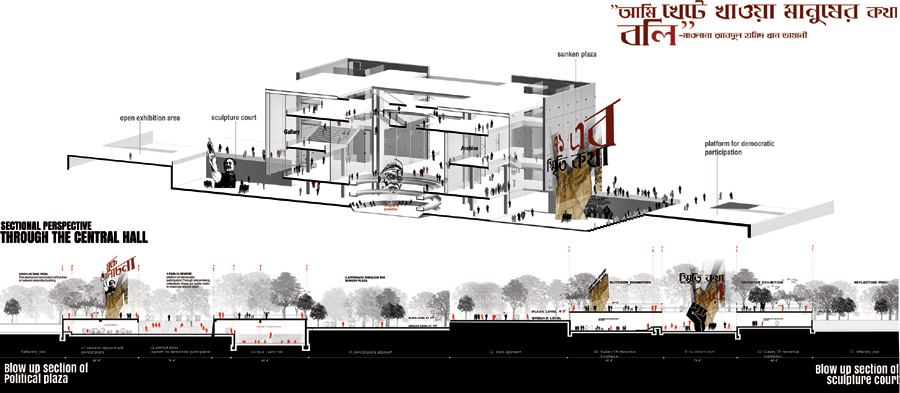
As always, the memory washes over the map with the conscious act of forgetting and moving on with the hope of prosperity. Though, contribution of this forgetfulness is not something that we should cherish. Rather as a responsible citizen it’s our duty to recall the bitter memories and learn, so that it can be used as a resource for the future betterment of the nation. Therefore a media platform is needed to express the voice of truth and views of every citizen. Abstractly it can work as a book of truth, peace and patriotism as well as  a platform for democratic participation, thoughts & support to our democratic process. To become aware of our rights as a citizen of this country and be more involved in its political development, we need a  space that will encourage and inspire us to learn about our own country and its potential.

Master plan of Sher-e Bangla Nagar (1973, Final Version) | Louis I Kahn
© Razia Azad
© Razia Azad


There are three key features in the design. They are: • Symbol and representation • Constituting space in place • Creating public sphere.

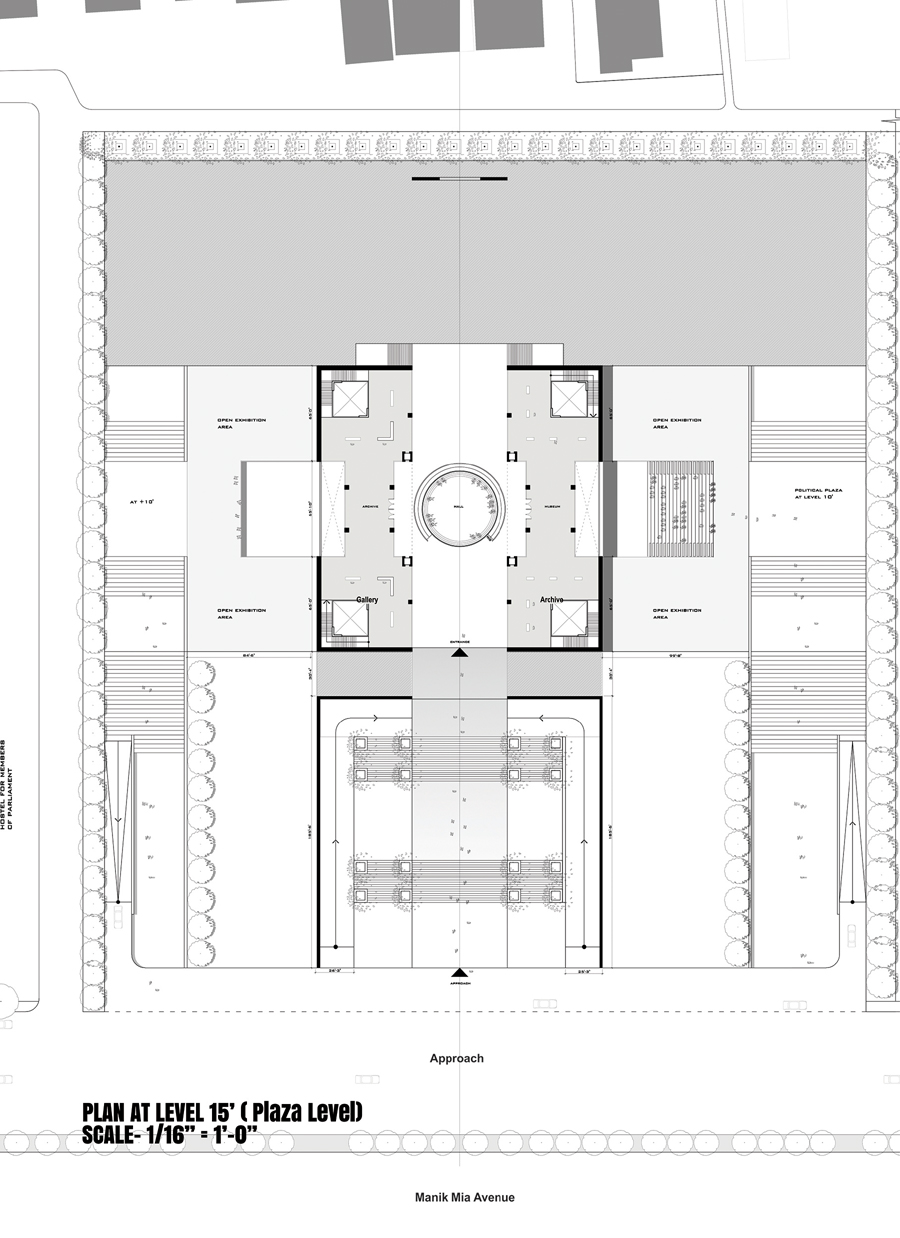
Lack of neutral access in public spaces and squares insisted me to create a space which is dedicated for people of all classes. There are two main galleries- ‘Gallery of Politics and  Democracy’ and ‘Gallery of Parliamentary’; there are also some open exhibition spaces.

© Razia Azad
© Razia Azad
Design diagrams © Razia Azad
© Razia Azad
© Razia Azad


Since the site is located in front the National Assembly building, it was a challenge. Respect to the masterpiece could never be compensated.  From the beginning, the research has passed through 3 steps.

_A new concept for gallery theme

_Understanding the design morphology of Louis I Kahn’s architecture

_Conceptualizing the articulation in respect of the national assembly building at master plan level.

Parliament Museum_ Ground floor plan

© Razia Azad
© Razia Azad
© Razia Azad
© Razia Azad


THE CENTRAL IDEA

Kahn’s assembly building is very seminal for number reasons -scale, monumentality and of course for its unpretentious, deep, profound relationship with  the context and its impact on our social landscape. So we had to find a  solution which had sincere respect for the masterpiece.  It’s a story of, Accessibility, Urbanity  & Openness ,so that,  the two buildings  actually work in a kind of complementary way. On one hand the Assembly building is more introvert as it is our capital legislative, the highest secured place of our nation; on the other hand the museum is more extroverted, open, visible & transparent. This is the real essence of our intention.

Parliament Museum_Central hall 1

Central Hall , Parliament Museum © Razia Azad
© Razia Azad
© Razia Azad


People come & start their journey from the plaza, then walk up & there is a central hall which guides them to other spaces of the museum. The continuation of vertical axis from national assembly building makes an AXIS CORRIDOR & creates a SENSE OF CONNECTION  between the public & the Capital legislative. The termination of this Axis is at a vertical wall, the abstraction of our National flag.

The “Idea of Order” comes from the geometry of the National Assembly Building. For generating the figurative geometry of the museum, I tried to follow the precedence  of geometry  of National Assembly Building. The whole volume is based on an abstract essence.

National assembly building, Dhaka | Louis I Kahn
National Parliament Museum as conceived by Razia Azad , Bangladesh University


There is no repetition of geometrical punches at the facades of the museum as it was an approach to respect the masterpiece, not imitating or competing with it. In the museum, the voids are the giver of lights, there are strong voids at the four corners of the form, and thus the light comes abstractly from there.

Concrete has been used as the giver of the strength, the main material of the museum. Since the museum is a part of the National Assembly Building, concrete promotes a semblance in the three dimensional expression.

| Image gallery | 

  • Parliament Museum_museum content
  • Parliament Museum_1973 master plan
  • Parliament Museum- Design process 01
  • Parliament Museum_model image-3
  • Parliament Museum_model image-5
  • Parliament Museum_Central hall 1
  • Parliament Museum_ galllery of politics n democracy
  • Parliament Museum_ central hall 2
  • Parliament Museum_ Perspectives
  • Parliament Museum_sectional perspective
  • Parliament Museum_central Idea
  • Parliament Museum_Design Diagrams
  • Parliament Museum_ Ground floor plan
  • Parliament Museum_All Plans

Revitalizing Historic Urban Quarter of Borobazar, Khulna | ArchKU

Borobazar, Khulna is standing on the heart of Khulna City, the major economic hub of the region. In the 19th century, it was just a local village market. After establishing railway connection with Kolkata in 1885, this area started to enhance its economic impotency regionally. Due to lack of insightful planning policy & uncontrolled development Borobazar expanded exponentially. Though the location is environmentally vital to the city to connect with the river, but reality is totally different;  people living and working beside it rarely feel the riverine environment. The objective of this project is to create a responsive urban design to enhance environment & economy in front of Bhairab river to connect the city without impeding the tangible & intangible heritage of Borobazar.


Urban growth map: Borobazar and surrounding area © Nafiz Rahat
Heritage Map: Borobazar and surrounding urban area © Nafiz Rahat
Section through Mohon Das Lane © Nafiz Rahat
Section through Momin Ghat and Kali Bari Road © Nafiz Rahat


Borobazar, in reality, is a clumsy area. According to the community people traffic congestion is one of the major problems of this area. The project rethinks the streets of Borobazar to maximize accessibility without hampering its street culture, upgrading design of footpath & make it multi-usable. To free up the walking space, a dedicated space for hawkers is proposed to run their business within 9 a.m. to 9 p.m. In addition, rickshaws will not be allowed to stand here and there; except in designated areas. Loading & unloading products from trucks to warehouse & shops will also follow the guideline from 9 p.m. to 9 a.m. Trucks are not allowed to enter the area except this time.

Bairab river front

Proposed cross section of Bhairab riverfront © Nafiz Rahat


The project proposes a recreational landscape which includes public places, walkways along side the river and water based transportation. Moreover, a continuous green belt on this area will provide a quality environment to the city. Street vendors, little shops will make this more vibrant & enjoyable. Following development phases, existing shops will be relocated.

Thanar Morh ( Police station node) © Nafiz Rahat
© Nafiz Rahat
© Nafiz Rahat


Tangible & intangible heritage is one of the major identity of borobazar reflect the vintage time of Khulna. But, historical preservation planning is totally absent. While, the old building like Narayan mondir, Mohon Das Zamindar house, Ullashini cinema hall lost its appeal. Therefore, historical preservation planning can be implemented to reuse by proposing adaptive reuse to Mohon Das house & restoring function to the Ullashini cinema hall.

| Image gallery | 

  • Bairab river front_11
  • Bairab river front_10
  • Bairab river front_03
  • Bairab river front_01
  • Bairab river front_02
  • Bairab river front_05
  • Bairab river front_07
  • Bairab river front_08
  • Bairab river front_09
  • Bairab river front
  • Bairab river front_12
  • Bairab river front_06
  • Bairab river front_feature 2
  • Bairab river front_14