Echoes of the Estuary: A Tourism Center at Hatiya Dwip

World Environment Day 2026

Urban [Re]Stitch

INSPIRATION HOSTEL 2016 COMPETITION _ design a space for artists retreat, creativity and insight

INSPIRATION HOSTEL 2016 COMPETITION © Opengap Network


OPENGAP organizes the fourth edition of this open ideas competition seeking for innovative, cutting-edge, contemporary, proposals regarding a new concept for artistic inspiration spaces.

Participants are invited to design a place focused on the rental of spaces that motivate creativity and concentration, allowing users to focus, inspire and develop their artistic ideas. Each participant or team will define the location of their project, however, the proposal must justify the choice of the location.

The competition is open to all architects, designers, architecture students and to people around the world interested in the topic. Competitors can subscribe individually or as a team of maximum of 5 people. The proposal submission will consist of two digital images in .jpg format, not bigger than 5MB each.

JURY

To be determined


AWARDS

_ First Prize : 2,000
_ Second Prize : 1,000
_ Third Prize : 500
_ Mentions : Mentions will not have an economic prize


SCHEDULE

_  Beginning of the competition   |    22 August 2016

_  Registration 1st period    |    22 August  20 September, 2016

_  Registration 2nd period:  |     21 September – 18 October, 2016

_  Registration 3rd period    |    19 October – 15 November,  2016

_  Registration 4th period    |     16 November – 6 December, 2016

_  Competition registration deadline   |     6 December 2016

_  Proposal Submission Deadline     |      14 December 2016

_  Winners Announcement     |     During January 2017

_  Awarding of Prizes      |        During January 2017


FEES

_ Registration fee : 60.00 € + VAT (21%)

_ 2nd period    |    [ from 21/SEP/2016  18/OCT/2016 ]    : 60

_ 3rd period    |     [ from 19/OCT/2016  15/NOV/2016 ]  : 90

_ 4th period    |      [ from 16/NOV/2016  6/DIC/2016 ]     : 110 


COMPETITION LANGUAGE

English and Spanish


DOWNLOADS

Competition Program


INQUIRIES

Send your questions to
competitions@opengap.net


Detail [+]

Essential Reads for Architects | Vol. 01

Despite genuine interest , Architects, overloaded with projects, often don’t make time to read. Hence in most cases the wish list is getting much longer than the list of books they have read . There is also an issue of figuring out what book genre fits them best.   Perhaps there are many resourceful sites that provide detail insights and review on the seminal literature on architecture and related discourses. Our intention is rather humble – to make a list of good reads for the architects and students of architecture in general that offers more than anything one can find in textbooks or handbooks.  Perhaps today’s generation have grown up communicating visually and lacks the reading habit. This is also an attempt to get them back on track.


 Essential Reads : Suggested by Architect N.R.Khan

[Best_Wordpress_Gallery id=”4″ gal_title=”Essential reads by NR KHAN”]

 click on the image to view details

Theorizing a new agenda for Architecture_Kate ed. Nesbitt

Theories and manifestos of 29th century Architecture_Charles Jencks , Karl Kropf (Editor)

Towards a New Architecture_Le Corbusier

Architecture in Transition_Constantinos A. Doxiadis

Architecture and Disjunction_Bernard Tschumi

 Architecture of the jumping universe_Charles Jencks

The Seven Lamps of Architecture_John Ruskin

 Rethinking Architecture: A reader in cultural theory_Neil Leach

 Intentions in Architecture_Christian Norberg-Schulz

The Anaesthetics of Architecture_Neil Leach

(Additional Readings)

Louis I Kahn : Essential Texts _ Louis I Kahn ;

[Re] Reading  Perspecta : The First 50 years of the Yale Architectural Journal_Robert A. M. Stern, Peggy Deamer and Alan Plattus(editors)


Essential Reads : Suggested by Mahmudul Anwar Riyaad

[Best_Wordpress_Gallery id=”5″ gal_title=”Essential reads by M A Riyaad”]

click on the image to view details

Towards a New Architecture_Le Corbusier

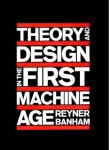
Theory and Design in the first machine Age_Reyner Bnham

Modern Architecture_Jr. Scully Vincent

 Complexity and Contradiction in Architecture_Robert Venturi

The Eyes of the Skin: Architecture and the Senses_Juhani Pallas

The Death and Life of Great American Cities_Jane Jacobs

Studies in Tectonic Culture: The poetics in construction in Nineteen and Twentieth Century Architecture_Kennth Frampton & John Cava

Genius Loci: Towards a Phenomenology in Architecture_Christian Norberg – Schulz

Silence and Light_Louis I Kahn and John Lobell

A place in the shade: the new landscape & other essays_Charles Correa


Essential Reads : Suggested by Sujaul Islam Khan

[Best_Wordpress_Gallery id=”6″ gal_title=”Essential reads by sujaul khan”]

click on the image to view details


Between Silence and Light: Spirit in the Architecture of Louis I. Kahn_Louis I Kahn and John Lobell

Le Corbusier: Ideas and Forms_William J.R. Curtis

Architecture and Disjunction_Bernard Tschumi

Design with Nature_Ian Mcharg

Modern Architecture Since 1900_William J.R. Curtis

Modern Architecture a Critical History_Kenneth Frampton

Renzo Piano Logbook

Louis I Kahn Complete works 1935-1974_Bonner, Zhaveri

Alvar Aalto_Karl Flieg

Tadao Ando_Francesco Dal Co


Essential Reads : Suggested by Ashik Vaskor

[Best_Wordpress_Gallery id=”7″ gal_title=”Essential reads by Ashik Vaskor”]

click on the image to view details

A pattern language: Town Building construction_Christopher W. Alexander

Towards a New Architecture_Le Corbusier

Architecture : Form , Space and Order_Francis D. K. Ching

Between Silence and Light_Louis I Kahn and John Lobell

Beginning: Louis I. Kahn’s Philosophy of Architecture_Alexandra Tyng

Delirious New York_Rem Koolhass

Modern Architecture Since 1900_William J.R. Curtis

Modern Architecture: A Critical History_Kenneth Frampton

The New Landscape_Charles Correa

Rethinking Architecture, A Reader in Cultural Theory_Neil Leach

Save

Save

Save

Save

Save

Save

Save

Save

Save

Save

Save

Save

Save

Save

Save

Save

Save

Save

Save

Save

Save

Save
Save
Save
Save
Save
Save
Save
Save
Save
Save

Save

Save

Save

Save

Save

Save

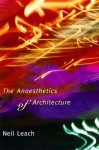
The Anaesthetics of Architecture

In this short, intentionally polemical book, Neil Leach draws on the ideas of philosophers and cultural theorists such as Walter Benjamin and Jean Baudrillard to develop a novel and highly incisive critique of the consequences of the growing preoccupation with images and image-making in contemporary architectural culture. The problem with this preoccupation, Leach argues, is that it can induce a sort of numbness, as the saturation of images floods the senses and obscures deeper concerns. This problem is particularly acute for a discipline such as architecture, which relies heavily on visual representation. As a result, architects can become anaesthetized from the social and political realities of everyday life. In the intoxicating world of the image, the aesthetics of architecture threaten to become the anaesthetics of architecture. In this culture of aesthetic consumption, this “culture of the cocktail,” meaningful discourse gives way to strategies of seduction, and architectural design is reduced to the superficial play of empty, seductive forms.

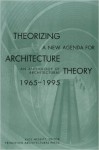
Theorizing a New Agenda for Architecture

Theorizing a New Agenda for Architecture: An Anthology of Architectural Theory collects in a single volume the most significant essays on architectural theory of the last thirty years. A dynamic period of reexamination of the discipline, the postmodern era produced widely divergent and radical viewpoints on issues of making, meaning, history, and the city. Among the paradigms presented are architectural postmodernism, phenomenology, semiotics, post-structuralism, deconstruction, and feminism.

By gathering these influential articles from a vast array of books and journals into a comprehensive anthology, Kate Nesbitt has created a resource of great value. Indispensable to professors and students of architecture and architectural theory, Theorizing a New Agenda also serves practitioners and the general public, as Nesbitt provides an overview, a thematic structure, and a critical introduction to each essay.

The list of authors in Theorizing a New Agenda reads like a “Who’s Who” of contemporary architectural thought: Tadao Ando, Giulio Carlo Argan, Alan Colquhoun, Jacques Derrida, Peter Eisenman, Marco Frascari, Kenneth Frampton, Diane Ghirardo, Vittorio Gregotti, Karsten Harries, Rem Koolhaas, Christian Norberg-Schulz, Aldo Rossi, Colin Rowe, Thomas Schumacher, Ignasi de Sol-Morales Rubi, Bernard Tschumi, Robert Venturi and Denise Scott Brown, and Anthony Vidler. A bibliography and notes on all the contributors are also included.

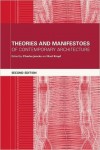
Theories and Manifestos of 29th Century Architecture

This book presents over 120 of the key arguments of today’s major architectural philosophers and gurus. These show that the Modern architecture of the early part of this century has mutated into three main traditions: a critical and ecological Post-Modernism; a High-Tech and sculptural Late Modernism, and deconstructive, subversive New Modernism. Here are the seminal texts of James Stirling, Robert Venturi, Colin Rowe, Christopher Alexander, Frank Gehry, Reyner Banham, Bernard Tschumi, Rem Koolhaas and many others who have changed the discourse of architecture. Here also are the anti-Modern texts of the traditionalists – Leon Krier, Demetri Porphyrios, Quinlan Terry, Prince Charles and others. Many of these texts are concise, edited versions of influential books. Highly informative and richly illustrated with over forty drawings and photographs.

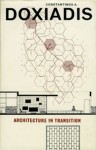
Architecture in Transition

Architecture in Transition is a book with which many may disagree. It is not a textbook but the statement of a creed, not a collection of statistics but one man’s personal point of view. Any value it may have lies simply in this: that it is the product of years of travel, years of first-hand observation, years of thinking and talking. As such, it is written ‘out of my life’, and as such it is dedicated to all those architects, the young in heart, who are today asking themselves difficult questions about their role and about their road into the future. Constantinos A. Doxiadis (from the Preface)

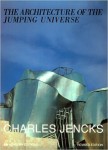
Architecture of the Jumping Universe

This text discusses the basic ideas of complexity and chaos theories and presents many examples of architecture based on these ideas in the work of leading architects – Peter Eisenman, Frank Gehry, Renzo Piano, Charles Correa and Itsuko Hasegawa – along with ecological and organic designs. Charles Jenck’s own recent work is used to illustrate concepts in physics and an architecture based on waves and twists. This work both advocates and criticizes as it seeks to define a new direction for the contemporary arts.

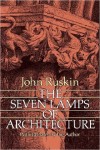
The Seven Lamps of Architecture

In August of 1848, John Ruskin and his new bride visited northern France, for the gifted young critic wished to write a work that would examine the essence of Gothic architecture. By the following April, the book was finished. Titled The Seven Lamps of Architecture, it was far more than a treatise on the Gothic style; instead, it elaborated Ruskin’s deepest convictions of the nature and role of architecture and its aesthetics. The book was published to immediate acclaim and has since become an acknowledged classic.

The “seven lamps” are Sacrifice, Truth, Power, Beauty, Life, Memory, and Obedience. In delineating the relationship of these terms to architecture, Ruskin distinguishes between architecture and mere building. Architecture is an exalting discipline that must dignify and ennoble public life. It must preserve the purity of the materials it uses; and it must serve as a source of power and renewal for the society that produces it. The author expounds these and many other ideas with exceptional passion and knowledge, expressed in a masterly prose style.

Today, Ruskin’s timeless observations are as relevant as they were in Victorian times, making The Seven Lamps of Architecture required reading for architects, students, and other lovers of architecture, who will find in these pages a thoughtful and inspiring approach to one of man’s noblest endeavors.

This authoritative edition includes excellent reproductions of the 14 original plates of Ruskin’s superb drawings of architectural details from such structures as the Doge’s Palace in Venice, Giotto’s Campanile in Florence, and the Cathedral of Rouen.

Intentions in Architecture

Norberg-Schulz is a practicing architect ;his buildings stand in several countries ;and he elucidates the nature of architectural reality with a practiced eye and from a practical viewpoint. Although the methods and theory that his book develops are uncompromisingly rigorous and tightly formed, they are everywhere related to actual building, through specific examples and through the use of over 100 photographs.The structure that Norberg-Schulz has fashioned is surely one of the most impressive intellectual edifices that any architect has ever produced. The materials that are organically worked into it include Gestalt psychology, the mechanics of perception, information theory, modern analytic philosophy, and in particular, linguistic analysis, and the general theory of signs and symbols. The result, however, is not an eclectic hodge-podge ;all these materials have their place and purpose ;none is applied extraneously for “show” or purely decorative effect. And all this divergent material had to be joined according to plan within formal bounds in order to produce a theory with equally divergent applications: one that can treat not only of the aesthetics of architecture but equally well of its social, psychological, and cultural effects.The chief focus of the book is on the symbolic and linguistic. The purpose is to develop an integrated theory of architectural description and architectural intention (and this includes the intention of the user as well as that of the designer), insofar as architecture is an art.

Theory and Design in the First Machine Age

First published in 1960, Theory and Design in the First Machine Age has become required reading in numerous courses on the history of modern architecture and is widely regarded as one of the definitive books on the modern movement. It has influenced a generation of students and critics interested in the formation of attitudes, themes, and forms which were characteristic of artists and architects working primarily in Europe between 1900 and 1930 under the compulsion of new technological developments in the first machine age.