
Institute of Architects Bangladesh (IAB) has announced the IAB DESIGN AWARD 2016. Architects are hereby requested to send their architectural works to IAB before Nov 12, 2016. For further queries, please contact IAB office or the Award Director.
World Environment Day 2026
Urban [Re]Stitch
Architecture for All | Conversation with Professor Fuad Hassan
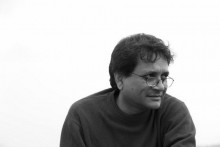
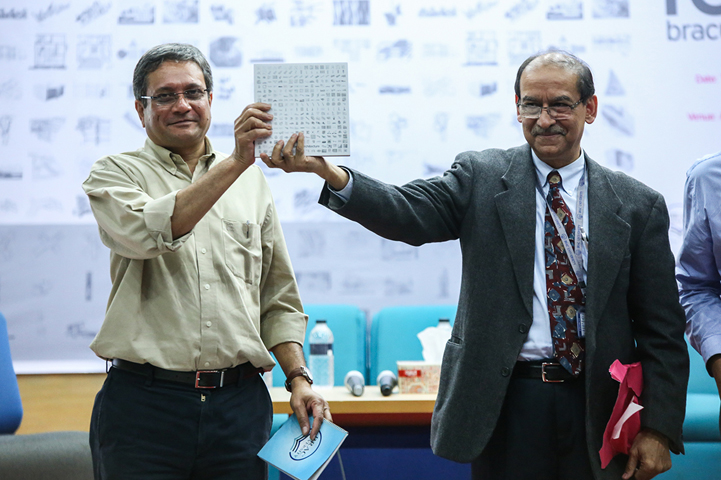
Dr. Fuad Hassan Mallick is the Pro Vice Chancellor of BRAC University. His contribution in architecture education and research is well appreciated in the community. He is the founder of the Department of Architecture of BRAC University and also the founder director of the university’s Post Graduate Programs in Disaster Management, the first of its kind in the region. He has been a technical reviewer for the Aga Khan Award for Architecture and a member of the Aga Khan Education Program’s thinking group for conceptualizing a School of Architecture and Human Settlements for the Aga Khan University. He also served as the Vice President of the Asian Universities Network for Environment and Disaster Management (AUEDM). The illustrious professor is on leave now residing overseas for a while. CONTEXT team met him last month during his short visit to Dhaka and had a productive discussion depicting his vision on sharing resources between universities, new campus of BRACU, his expectations from new graduates and few other topics.
To begin with please let us know briefly of your career. You started to teach in BUET, left BUET, started BRAC Architecture, became the Pro-vice chancellor and at the moment teaching in a foreign university. We want to know about this journey.
Actually, when I was a student of architecture, even after I graduated, I didn’t think about teaching. I was more inclined to practice. 2 years after graduation I got a scholarship to do a Masters and took the opportunity. I came back with an intention to practice. But there is a knack for teaching in my family. My father was a teacher, all my sisters and their husbands are also teachers. There was no pressure from my family though, but you know, I had an inclination. So, when there was a circulation from BUET, I somehow went for it and eventually got appointed. But I continued practice side by side.
What sealed my fate as a teacher was actually an offer for PhD from UK. Once you’ve done a PhD, it means that you’re going to teach; I mean, with a PhD you are most suited for teaching.
After PhD I came back to BUET and focused on full time teaching. Things were going pretty well until there was a change in the regulation of admission test in BUET. Instead of separate admission examination for architecture, the authority initiated an integrated system where students would have to sit for the same test for both engineering and architecture. That way, a student not really interested in Architecture could actually end up in our department through the system. So we opposed this, but unfortunately didn’t succeed. As a result of that I and quite a few others left BUET. I was not comfortable with the admission system. I didn’t think it was right.
Quitting BUET, I immediately got a job at Northern Cyprus where I went and taught for 2 years. Once, I returned on an extended vacation to see what I could do in Bangladesh. At that time, BRAC University had started and I was asked to think whether I would start a Department of Architecture there. I readily accepted the offer and quit my foreign job. As you know from 2001 till 2016, I was at BRAC University, of which till 2013 I headed the Department. And then I was made Pro-Vice Chancellor, a job that did not suit me well but somehow I managed. The position is mainly administrative. I was tired and overworked, so I decided to take a break. On a leave from BRAC University I am now teaching in another foreign university. I have been there for about a year and I’ll be there for nine months more at least. In the meanwhile I will have to decide what to do next.
I, however, do have a vision. Actually I would like to take up a new challenge when I get back again, something beyond architecture. When I initiated the architecture department in BRACU, at the back of my mind there was a plan to have a School of Design. Architecture, landscape, interior, photography, fashion and related studies would be integrated, it would be very comprehensive. One of the things that I realize now is that architecture, primarily is an art, less technical than what we think or how we studied in BUET. I think the beauty of teaching architecture gets vivid when we can capture it’s resembles to art and craft.

You have been the pioneer to establish Postgraduate program in disaster management in BRAC University, governed by Department of Architecture. Let us know the thought behind this forward thinking initiative.
One of the interesting things of me joining BRACU was that BRAC is an organization which is all over Bangladesh. They are involved in health, education, microfinance, rural development, agriculture and other related sectors. But they were not involved in settlements or housing. So, we took this opportunity to use BRAC as a laboratory for us, where we could work. With the help of my colleagues in the department and BRAC, we did some research on housing for the poor. We published extensively as well. At the same time, you are possibly aware of that, in 2005, I was asked by the then Vice Chancellor Professor Jamilur Reza Chowdhury to start a program on disaster management. The program is the first of its kind in the region, which we started very successfully. The plan was that, I would start the program, get it going and then take a back step and leave. Unfortunately or fortunately, that didn’t happen. I ran it and I’m still running it. Because I am an architect by background in the Disaster Management program, issues related to architecture, structures, settlements etc. got included and even got emphasis. We have done things like disaster resilient habitat, housing for less advantaged, post disaster reconstruction etc. We got an opportunity to blend architecture and built environment with disaster management and I think we are doing it to the fullest.
Our general concept is Architecture as a discipline is less prioritized in private universities and usually run with a low volume. How it is to be an Architect pro-vice chancellor? Do you think it is possible to make a difference if architects get into higher posts in (private) universities?
Look, when you get into the position of Pro Vice Chancellor, you are responsible for the entire university. You cannot focus on a single department. But I must agree there is an inclination. By being the pro vice chancellor I could facilitate many things for the architecture department. However, I don’t think higher administrative positions would help much to develop a particular department.
From the very beginning we provided quality education, made a name for ourselves. And BRAC University could not, since I was there from the beginning and involved in many other ways, really ignore us. We were prominent and we did our stuff well. We went up to a position where our existence mattered. We are running very well at the moment.
But, yes!! Financially it is not profitable. But for some reason, our chairperson, Sir FazleHasan Abed didn’t worry much. He has been very supportive at this from the beginning.

You are a veteran academic founded and directed a prominent architecture school in the country. At the moment we have 25/29 universities that teach architecture mostly following similar curriculum. How can we achieve variety and quality at the same time?
I was talking about School of Design that might include a number of disciplines. But different universities could have different focus areas like construction, settlement, landscape, conservation etc. That way we will have graduates specialised in different sectors. But obviously till 3rd year all students should be taught to design good functional buildings, which are climatically sensitive and aesthetically pleasant. From 4th year they could divert to specialisation depending upon available resources and interest.
But, I would insist on another issue. There is definitely a lack of qualified teachers to serve 29 universities. We need to share resources. I think senior and qualified teachers should teach in different universities, may be in different semesters. That way students can reach them and get benefited regardless in which university they are studying.
Do you think organising joint studios between different schools might play a role in the above scenario?
Well, it has to be properly pre-planned. Joint studios won’t just work suddenly. We could, say for example, exchange full time teachers for one semester. Both the teachers would then know the potential/capacity of the students and available facilities in both universities. Then these teachers might introduce a joint project. The process has to be thought out neatly.
What is your expectation from the large amount of graduates coming out from these universities?
I have some observation from my experience. In our country architects are produced mainly for upper elite class. But we should realise, our country is still developing. There must be a way where architects can reach out to ordinary people. Here architects should be problem solvers; they should be creative thinkers to produce a work with limited resources. In BRAC Architecture we always tried that, We go out and reach to the community and see how students’ creativity and talent; originality and problem solving aptitude can be of help to the common people. We need a shift in profession. I can say very happily that such a process has started already. There is a group of architects who work with the community.
We heard there had been an understanding between BRAC Architecture and Bengal Institute of Settlement and Landscape. What is that, a joint masters program?
Not necessarily. At the moment it’s just sharing of resources. They have renowned tutors coming from abroad. We want our students to get in touch with them. Say, they might come to our university for lectures etc. For a master’s program, we will have to wait.
What, in your opinion is the sector of opportunity for new and upcoming graduates? Many established practices are complaining about the condition of profession.
They should become what is called ‘community architects’. Organisations like World Bank. UNDP, UNHCR advertise for community architect vacancies. They want architects to reach disadvantaged people and provide solutions for them. One would tend to think that there may not be money in this, but there is quite a lot of funds available for such projects, .
Graduates should focus on environmentally responsible architecture as well. With burning issues like climate change and lack of resources, architects will surely play a key role in near future. If you can acquire the right skill, it will work for you.
Let us shift the topic a bit. Why did you get back from abroad? You had all the opportunity to prosper there.
When I completed masters, jobs were pretty much available in UK. I really don’t know what came to my mind. I just felt like going home. Later after doing PhD, once for just fun, I calculated how much money was spent on me from my undergraduate to PhD level studies. In 1992 it was 56 lacks taka. It is quite a lot given that it was 1992. Not a single penny was spent by me or my parents. I got the opportunity because I am a Bangladeshi citizen. I thought I had to return something. I returned and worked here. Probably the issue of gratitude is over, but somehow I am stuck in Bangladesh.
Please tell us about the new campus of BRAC University. There has been much talk about it.
It is going to be a unique building. As a matter of fact the issue of employing a foreign architect was scrutinized in the governing body meeting with both negative and positive points of view. Few members questioned the credibility of the decision as we already have an architecture department and of course many qualified architects in the country. I brought the example of national assembly building. Why architect Muzharul Islam invited Kahn? So that Bangladesh gets a new, unique project. I would say, BRACU building will be a learning for our young generation of architects, they will capture a lot. We did not take it just as a university campus but as an example of excellent architecture.
Narrator: Azizul Mohith and Farhat Afzal
Towards Child-friendly Community: Banani [Re]Envisioned | AIUB
![Towards Child-friendly Community: Banani [Re]Envisioned | AIUB](https://contextbd.com/wp-content/uploads/2016/10/feature_Banani_aiub-220x147.jpg)
Once a scenic and peaceful residential neighborhood, Banani Residential Area is transforming today due to excessive commercialization. Private universities, colleges, schools, IT training centers, clinics, coaching centers, medical labs, hospitals, shopping centers, commercial banks and other government and semi government institutions have reduced one of the planned green residential areas in Dhaka to shambles. From child friendly perspective, Banani neighborhood significantly lacks the quality of community spaces and amenities. The existing few open spaces are mostly inaccessible, don’t work properly and the ambience doesn’t give any pleasure / comforting view for children. Apart from the open spaces for children, access to the amenities is so limited and access roads are frequently interrupted by busy vehicular crossing and therefore don’t work for the children at all. One can barely see children walking in the street or playing in the field inside the neighborhood.
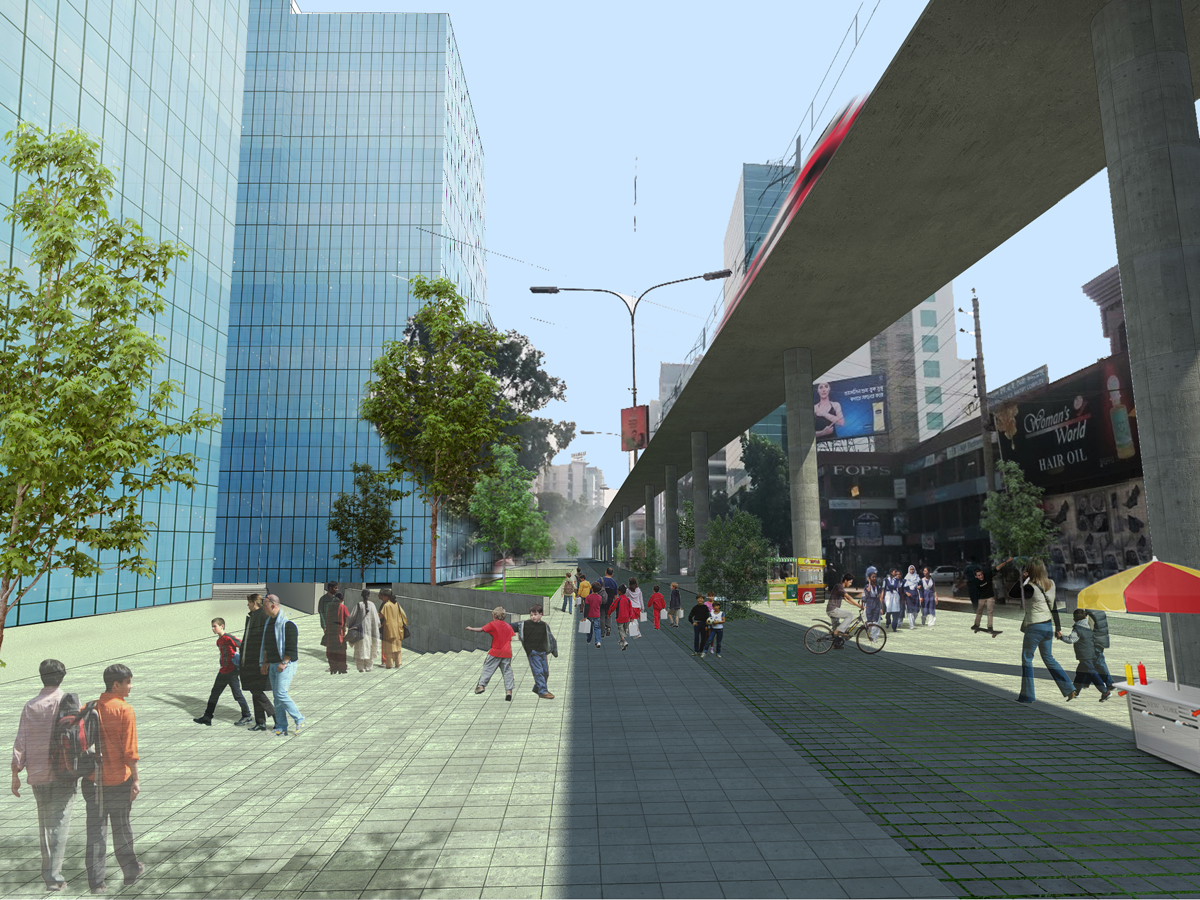
The following studio project aims to develop an urban vision to re-qualify Banani residential area as Child friendly neighborhood while ensuring children’s Safe Mobility, Safe and Convenient Access to Schools and Amenities and Access to Nature.

Safe Mobility
After examining the existing mobility system and key issues related to traffic situation we start up with redesigning the streets and roads especially for safe, uninterrupted and comfortable pedestrian connectivity. The Kemal Ataturk Avenue is upgraded to pedestrian plaza while proposing an underpass for the bypassing vehicular traffic. The plaza is meant to create a public space connecting the proposed MRT terminal with existing commercial band. This vehicular free pedestrian plaza can be improvised as a community gathering space and holiday market place. Selected residential streets (streets with dead ends or low traffic) are transformed into a shared space incorporating setback greens and lawn areas of the adjacent plots. Thus these shared spaces, act as an extension of private lawn, can be used as an active place for children to play while remaining within the visual surveillance of the parents.


Access to Schools and Amenities
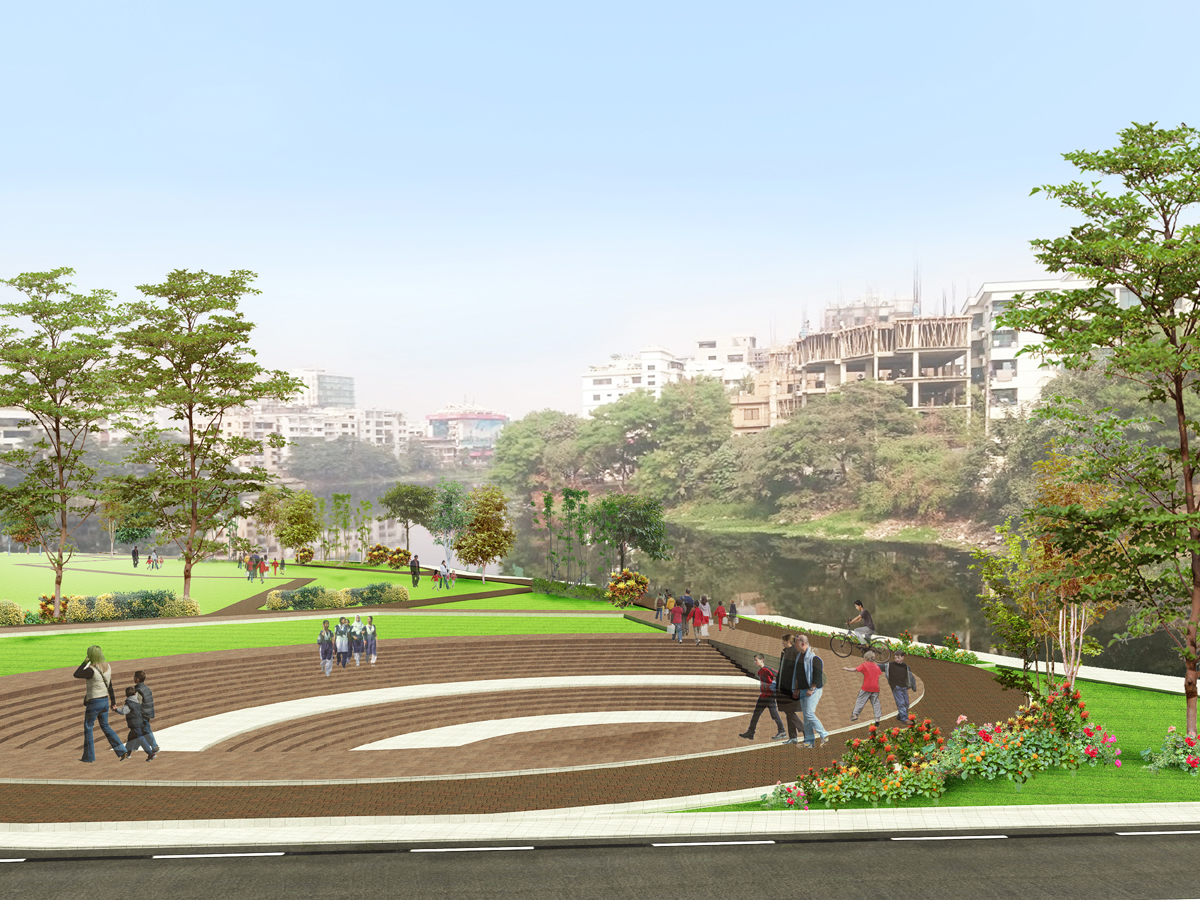
Pathways towards schools are restructured. Provision of dedicated pedestrian and street can enhance the walkability toward the schools. Public plaza on Kemal Ataturk Avenue is the main central plaza for the area while a secondary plaza on Road 11 is also envisioned as a shopping street. Lake sides are re-utilized by adding more soakable green space, amphitheater, bicycle lane and ecological park. All amenities are connected with the shared and green streets and easy to walk by. Shared and dedicated pedestrian and streets are also easy to use for bicycle rides. A continuous bicycle track are designed along the lake side connecting Banani R/A with the Korail and Mohakhali area.


Access to Nature
Increasing the percentage of greenery in area is one of the primary concerns. After designing the shared streets, green streets, soakable green spaces & park, it is possible to achieve at least 20% of green which is now only 4%. More over existing piped drainage system are proposed to replace with a softer and ecologically sensitive system of rain garden for filtration of storm water which is at present disposing directly to the lake. Introduction of rain garden system along the street will definitely improve the overall street environment.


<< Image gallery>>


Freshman Days | Tirtho


WORKSHOP ON TEACHING SUSTAINABILITY
Green Architecture Cell (GrACe), Dept. of Architecture, BUET is going to organise a ‘TWO-DAY WORKSHOP ON TEACHING SUSTAINABILITY’, 27-28 October 2016, BUET, Dhaka. Visit GrACe event page for booking.
Sunset 03 | Shajjad Hossain

SUNBATHE 01 | Saimum Kabir

SUNBATHE 02 | Saimum Kabir

SP Setia Headquarter by SHATOTTO and ARCHICENTRE

[ From the architect ]
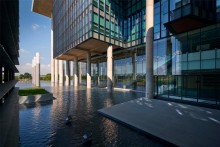
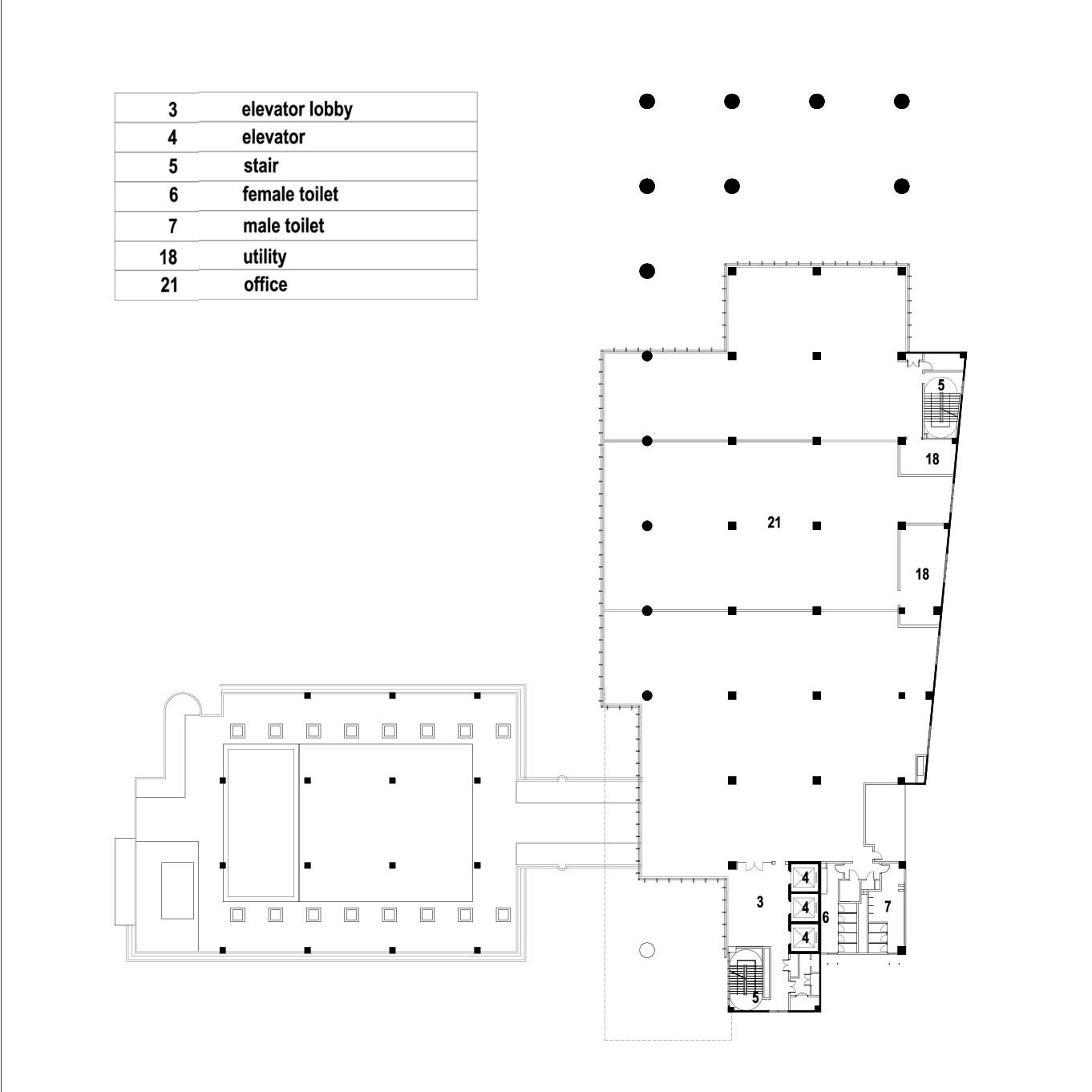
SP Setia, considered as one of the largest developers in Malaysia. their new large venture “Setia Alam” is located in the “Shah Alam” area, south west of kuala lumpur. in this approximately five thousand acres of new city, SP Setia decided to build their own headquarters on a four-acre of land. This developed the idea for a very formal design approach to emphasize on the social commitment of SP Setia to contribute in the national development of Malaysia through their edifice in this new city. Further to that, the Setia headquarters have been designed as a green building and achieved first ever private commercial building in Malaysia green buildings “Platinum” certification.
.

In the first instant, this developed the idea for a very formal design emphasizes the valor of SP Setia in terms of their ability to control the environment and atmosphere of the new city in a positive manner from their citadel. The reason building has been designed as a green building during the conceptual phase, the highway to the south, ‘Setia Persiaran’ and the large rainwater reservoir on the east, played an important role in determining the design decisions. To enhance the maximum public connectivity from distance this southeast corner has developed with special care.
.


The nine columns 36.58 meter high each are together lifting the parasol onto the sky. These columns also represent the monumentality of greek architectural language in Malaysian climatology. The use of a large, shallow water body at the ground level makes the building appear light, while also to celebrating the rain of that area. The avoidance of any typical boundary demarcations on the east, connecting the rainwater catchment pond and the surrounding landscape to make the building appear humble, while also holding on to its own identity.
.


<< Image Gallery >>




SHATOTTO in “Venice Architecture Biennale 2016”
Dhaka based architectural firm, SHATOTTO- architecture for green living once again is proud to showcase its innovative & coveted projects at the 2016 Venice Architecture Biennale in Italy. As a part of 15th International Architecture Exhibition of “la Biennale di Venezia”, this collateral event “Time Space Existence” presents architects from 6 continents.This is organized by the GAA-Foundation and it is hosted by the European Cultural Centre in Palazzo Bembo, Palazzo Mora and Palazzo Rossini, in collaboration with La Biennale di Venezia; is the biggest architectural exhibition in the globe with big stalwarts in the field of architecture coming together to showcase their works.
Md. Rafiq Azam, principal architect of SHATOTTO& the force behind numbers of award winning projects in Bangladesh & abroad was selected to display his thoughts and built projects at the exhibition at Palazzo Morra, in Venice. Md. Rafiq Azam has been invited for the second time this year after 2014 when he was the first Bangladeshi architect to be invited in the exhibition. Md. Rafiq Azam has been awarded with some of the most influential architecture awards in the past few years. He has won AAA2015 Award, “Pertubuhan Akitek Malaysia” (PAM) Award (2014), “Emirates Glass Leading European Architects Forum (LEAF) Award 2012”,The South Asian “Architect of the year” Award 2012,Cityscape Architecture Awards 2009, AR Emerging Architecture Award 2007, Finalist of The Aga Khan Award for architecture 2004 & 2007, IAB Design Award 1996 and so on.

The exhibition running from May 28 to November 27 is being curated this year by prestigious Pritzker award winning architect Alejandro Aravena of Chile. With the theme “Reporting from the front”, this year’s exhibition talks about real challenges & their solutions that are affecting the built environment around the globe, calls for architects to be activists to utilize their creativity, imagination & talent for making life comfortable & meaningful in cities and beyond.
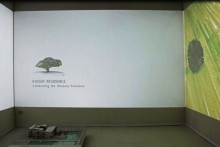
The exhibition theme of SHATOTTO is to capture initial context of Dhaka which is one of the most densely populated city in the world, where SHATOTTO is trying to achieve the peacefulness in the space in the hustle bustle context of this city. The exhibition talks about the real problems of here, scarcity of space, dream of comfortable living, longing for nature and providing solution that provides meaning to architecture. SHATOTTO’s architecture focuses on contemporary architecture by being rooted to the Bengali culture & tradition and trying to achieve the tranquility within the mayhem through a short documentary of 6 minute.
The main sponsors for SHATOTTO at the exhibition are Bravat, Mirpur & Khadim ceramic, Green Marble & Granite, Green Designing solutions. The co-sponsors are Shah cement, Porcelanosa & Berger.