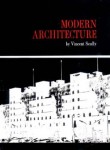
In Modern Architecture, prominent historian Vincent Scully, traces the major developments in 20th Century architecture. With sharp insight, Scully examines architecture’s evolution, historical context, and its meaning in modern life.
From Louis Sullivan’s first successful attempts to give steel construction its own form and expression, to city planning, contemporary megastructures, public housing, and the Mobile Home, Vincent Scully examines the significant aspects of modern architecture. Applying his considerable talents as a passionate and engaging writer and thinker, Scully explores the most important figures and developments in architecture during this period: Art Nouveau in Europe, Gropius and the Bauhaus, and Russian Constructivism, as well as the contributions of Frank Lloyd Wright, Mies van der Rohe, Alvar Aalto, Le Corbusier, Louis I. Khan, and Robert Venturi. 190 b/w illustrations.
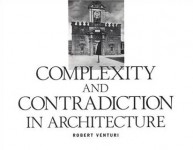
First published in 1966, and since translated into 16 languages, this remarkable book has become an essential document of architectural literature. A “gentle manifesto for a nonstraightforward architecture,” Venturi’s Complexity and Contradiction in Architecture expresses in the most compelling and original terms the postmodern rebellion against the purism of modernism. Three hundred and fifty architectural photographs serve as historical comparisons and illuminate the author’s ideas on creating and experiencing architecture. Complexity and Contradiction in Architecture was the winner of the Classic Book Award at the AIA’s Seventh Annual International Architecture Book Awards.
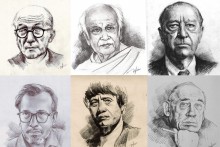
“I have been drawing faces for as long as I can remember. My practice wasn’t always applauded. In fact, I was made to believe that I should keep my drawings to myself, and I did, for a period of 6-7 years. By the time I was finishing high school, I finally got the courage to show them to my peers. Their reactions were somewhat unexpected. After all those years, it seemed that people liked what I did.”
“A human face is, in my experience, the single most challenging subject for drawing. There are so many things that can go wrong. My objective, as an artist, has always been to capture the aura of a person as opposed to creating just a photographic image. As a kid I used to watch my father making sketches of people and what amazed me was the fact that you could actually sense the presence of the people he was drawing. I think this is what sets a work of art apart from a photograph, the ability to capture and preserve more than what meets the eye.”
In his brief career as a portrait artist Yafiz has made around 500 portraits using a variety of medias, among which his favorites are graphite, charcoal and ink.
“What fascinates me about making a portrait is this connection you feel with your subject. “, says Yafiz. “To draw a hyper realistic portrait, one has to observe the subject closely first. You’ll be surprised how much you get to know about a person throughout the process.”
Yafiz cherishes his encounters with people from different backgrounds. According to him, every person he has met has taught him something precious.
“My creative journey has taught me one very important lesson_ there is no such thing as a boring person. Even the most ordinary looking person can surprise you with their story.”
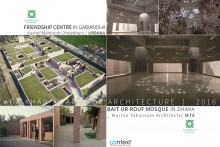
The Bait Ur Rouf Mosque in Dhaka by Marina Tabassum Architects / MTA and the Friendship Centre in Gaibandha by Kashef Mahboob Chowdhury / URBANA have won Aga Khan Award for Architecture. The winners were announced by the Award Committee yesterday on 2nd of October . These two are among the six projects that have won the award this year.
The projects from Bangladesh, which were selected by the Master Jury from amongst 348 projects nominated for the 13th Award cycle, were shortlisted with other 19 projects in May this year. (Click HERE for detail about the shortlisted projects)
Jury comments_
The Bait Ur Rouf Mosque: “In a transitional area caught between urban hyper-density and rural proximity, the terracotta mosque is an exquisitely proportioned building that is both elegant and eternal. Funded primarily by community donors, the mosque design challenges the status quo and understands that a space for prayer should elevate the spirit. The mosque does so through the creation of an interior space that is rich with light and shadow, but at the same time possesses a robust simplicity that allows for deep reflection and contemplation in prayer.” (Source: Aga Khan Award for Architecture and archdaily)
Friendship Centre in Gaibandha: “The integrative design approach is registered in every aspect of the project, and at every scale. The imbrication of outdoor and indoor spaces, together with the treatment of the roofscape, make this an unusual and innovative building. With its spaces sunk into the ground and the vegetation growing on its roofs, the compound blends beautifully into the natural surroundings. Its relationship to the landscape and to history and archaeology is remarkable in every way.” (Source: Aga Khan Award for Architecture and archdaily)
The Aga Khan Award for Architecture (AKAA) is presented every three year to architectural projects that set new standards of excellence and successfully address the needs and aspirations of Islamic societies. Since the Award was launched, 5 projects (including recent 2 awardees) have been awarded. Other 3 projects from Bangladesh that previously received the Award were Grameen Bank Housing program (1987-89), National Assembly Building (1987-89), School in Rudrapur (2005-07).
.
/// Other projects that have won the award this year (2016) are –
Hutong Children’s Library and Art Centre, Beijing, China / ZAO/standardarchitecture, Zhang Ke
Architect Bashirul Haq, being one of the most critically acclaimed architects of South Asia is an unbound source of inspiration for our young architects. His works have been widely discussed and praised both nationally and internationally. On few occasions his fellows and architects got the opportunity to learn about his life and philosophy, but only to end up being more curious and want to know further. CONTEXT, therefore, takes the opportunity to publish this video interview where he talks about all aspects of ‘him’ – an architect, a thinker, a critic and more.
The following interview was conducted by Ar. Shafique Rahman for CONTEXT. After completing his graduation from Khulna University and Masters from University of Sydney, at the moment Ar. Shafique is teaching at Ahsanullah University of Science and Technology.
Since the book’s first publication, interest in the role of the body and the senses has been emerging in both architectural philosophy and teaching. This new, revised and extended edition of this seminal work will not only inspire architects and students to design more holistic architecture, but will enrich the general reader’s perception of the world around them.
The Eyes of the Skin has become a classic of architectural theory and consists of two extended essays. The first surveys the historical development of the ocular-centric paradigm in western culture since the Greeks, and its impact on the experience of the world and the nature of architecture. The second examines the role of the other senses in authentic architectural experiences, and points the way towards a multi-sensory architecture which facilitates a sense of belonging and integration.
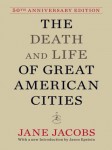
A direct and fundamentally optimistic indictment of the short-sightedness and intellectual arrogance that has characterized much of urban planning in this century, The Death and Life of Great American Cities has, since its first publication in 1961, become the standard against which all endeavors in that field are measured. In prose of outstanding immediacy, Jane Jacobs writes about what makes streets safe or unsafe; about what constitutes a neighborhood, and what function it serves within the larger organism of the city; about why some neighborhoods remain impoverished while others regenerate themselves. She writes about the salutary role of funeral parlors and tenement windows, the dangers of too much development money and too little diversity. Compassionate, bracingly indignant, and always keenly detailed, Jane Jacobs’s monumental work provides an essential framework for assessing the vitality of all cities.
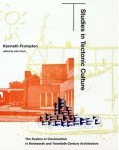
Kenneth Frampton’s long-awaited follow-up to his classic A Critical History of Modern Architecture is certain to influence any future debate on the evolution of modern architecture. Studies in Tectonic Culture is nothing less than a rethinking of the entire modern architectural tradition. The notion of tectonics as employed by Frampton—the focus on architecture as a constructional craft—constitutes a direct challenge to current mainstream thinking on the artistic limits of postmodernism, and suggests a convincing alternative. Indeed, Frampton argues, modern architecture is invariably as much about structure and construction as it is about space and abstract form.
Composed of ten essays and an epilogue that trace the history of contemporary form as an evolving poetic of structure and construction, the book’s analytical framework rests on Frampton’s close readings of key French and German, and English sources from the eighteenth century to the present. He clarifies the various turns that structural engineering and tectonic imagination have taken in the work of such architects as Perret, Wright, Kahn, Scarpa, and Mies, and shows how both constructional form and material character were integral to an evolving architectural expression of their work. Frampton also demonstrates that the way in which these elements are articulated from one work to the next provides a basis upon which to evaluate the works as a whole. This is especially evident in his consideration of the work of Perret, Mies, and Kahn and the continuities in their thought and attitudes that linked them to the past.
Frampton considers the conscious cultivation of the tectonic tradition in architecture as an essential element in the future development of architectural form, casting a critical new light on the entire issue of modernity and on the place of much work that has passed as “avant-garde.”
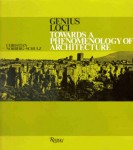
The present book forms a sequel to…Intentions in Architecture and Existence, Space and Architecture. It also relates to…Meaning in Western Architecture. Common to all of them is the view that architecture represents a means to give man an “existential foothold”…The philosophy of Heidegger has been the catalyst which has made the present book possible and determined its approach. The wish for understanding architecture as a concrete phenomenon…could be satisfied in the present book…thanks to Heidegger’s essays on language and aesthetics.
Man dwells when he can orient himself within and identify himself with an environment, or, in short, when he experiences the environment as meaningful. Dwelling therefore implies something more than “shelter”. It implies that the spaces where life occurs are places, in the true sense of the word. A place is a space which has a distinct character. Since ancient times the genius loci, or “spirit of place”, has been recognized as the concrete reality man has to face and come to terms with in his daily life. Architecture means to visualize the genius loci, and the task of the architect is to create meaningful places, whereby he helps man to dwell.
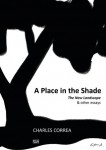
Charles Correa’s A Place in the Shade explores architectural and urban issues in India, from the house as a machine for dealing with the country’s often hostile climate to the metaphysical role of architecture as a “model of the cosmos.” This provocative and eminently readable collection of essays argues that the country’s habitat must respond to the overriding parameters of climate, culture and financial resources, and that our physical environment should accommodate both diversity and synergy. Over the last few decades, urban real estate has become the primary source of financing for political parties and the politicians who run them, and as Correa acknowledges, “you cannot look at cities without wandering into architecture on the one hand and politics on the other.” A Place in the Shade identifies the defining issues of the urbanization trends that are so rapidly transforming India.