
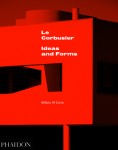
Originally published in 1996 to critical fanfair, scholar William J.R. Curtis has re-issued his classic text with extensive new scholarship and contemporary research that continues the high standard of the original. Presented chronologically with a clear narrative, Curtis has worked tirelessly not only to document Le Corbusier’s key projects in detail but to contextualize them within the architect’s overarching philosophy of urbanism and art and the pervading culture of Le Corbusier’s time. With full access to the renowned Le Corbusier archive, Curtis’ text is lavishly illustrated with new photographs, plans and original sketches and a fresh new design.
World Environment Day 2026
Urban [Re]Stitch
Architecture and Disjunction
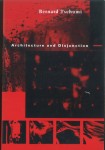
Avant-garde theorist and architect Bernard Tschumi is equally well known for his writing and his practice. Architecture and Disjunction, which brings together Tschumi’s essays from 1975 to 1990, is a lucid and provocative analysis of many of the key issues that have engaged architectural discourse over the past two decades — from deconstructive theory to recent concerns with the notions of event and program. The essays develop different themes in contemporary theory as they relate to the actual making of architecture, attempting to realign the discipline with a new world culture characterized by both discontinuity and heterogeneity. Included are a number of seminal essays that incited broad attention when they first appeared in magazines and journals, as well as more recent and topical texts.
Tschumi’s discourse has always been considered radical and disturbing. He opposes modernist ideology and postmodern nostalgia since both impose restrictive criteria on what may be deemed “legitimate” cultural conditions. He argues for focusing on our immediate cultural situation, which is distinguished by a new postindustrial “unhomeliness” reflected in the ad hoc erection of buildings with multipurpose programs. The condition of New York and the chaos of Tokyo are thus perceived as legitimate urban forms.
Design with Nature
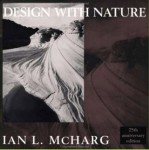
“This century’s most influential landscape architecture book.” –Landscape Architecture
.” . . an enduring contribution to the technical literature of landscape planning and to that unfortunately small collection of writings which speak with emotional eloquence of the importance of ecological principles in regional planning.” –Landscape and Urban Planning.
In the twenty-five years since it first took the academic world by storm; Design with Nature has done much to redefine the fields of landscape architecture, urban and regional planning, and ecological design. It has also left a permanent mark on the ongoing discussion of mankind’s place in nature and nature’s place in mankind within the physical sciences and humanities. Described by one enthusiastic reviewer as a “user’s manual for our world,” Design with Nature offers a practical blueprint for a new, healthier relationship between the built environment and nature. In so doing, it provides nothing less than the scientific, technical, and philosophical foundations for a mature civilization that will, as Lewis Mumford ecstatically put it in his Introduction to the 1969 edition, “replace the polluted, bulldozed, machine-dominated, dehumanized, explosion-threatened world that is even now disintegrating and disappearing before our eyes.
Renzo Piano Logbook
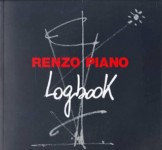
Renzo Piano (Genoa, 1937) studied architecture at the Polytechnic in Milan. Since winning the competition to design the Centre Pompidou in Paris (1971) along with Richard Rogers, Piano has become a prominent figure on the international architectural scene, with more works constructed outside Italy than in his own country. Piano brings a similar approach to both the small and the large scale. He has directed projects of very varying sizes: small buildings like the travelling IBN Pavilion and the Brancusi Museum; and great megastructures like Kansai’s International Airport Terminal built on a man-made island in the Bay of Tokyo, and the remodeling of Berlin’s Potsdamer Platz where work is scheduled to be completed in 2002.
Louis I Kahn: Complete works 1935-1974
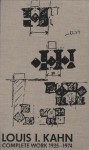
This book owes its concept to the transparency of the work process of Louis I. Kahn, whose ideas are preserved in the wealth of sketches he did whenever developing new concepts or working out details for new building projects. Sketches and plans of different developmental stages of his projects are laid out in a basically chronological order and these are complemented by relevant extracts from his writings and speeches and by his commentary while this documentation was being prepared in 1973 – the year before his death. As in the first edition, the authors aim has not been to interpret or evaluate. Rather, they wish to provide the scholar with a solid base for further research, allowing him to follow the traces of a remarkably creative mind that revered architecture as a manifestation of man as spirit.
Alvar Aalto
Tadao Ando: Complete Works
Tadao Ando is Japan’s leading architect and a designer, with a dazzling international reputation. This complete catalogue of Ando’s work examines in close detail more than 100 buildings and projects, all illustrated by drawings, sketches, plans and other material from the architect’s own studio. Francesco Dal Co introduces this exhaustive survey, which ranges from the smallest of Ando’s private houses from the 1970s to major commissions like the Church on the Water in Hokkaido (1988), the Japanese Pavilion for Expo 92 in Seville and the Naoshima Contemporary Art Museum (1992).
A revealing interview with Ando, conducted by Hiroshi Maruyama, accompanies a series of essays on Ando’s architecture by a range of respected international critics including Peter Eisenman, Kenneth Frampton, Tom Heneghan and François Chaslin, together with selected writings by Ando himself.
Archi-cature # 04 | Tirtho

A pattern language: Town Building Construction
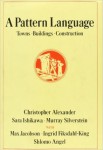
At the core of A Pattern Language is the philosophy that in designing their environments people always rely on certain ‘languages,’ which, like the languages we speak, allow them to articulate and communicate an infinite variety of designs within a formal system which gives them coherence.
This book provides a language of this kind. It will enable making a design for almost any kind of building, or any part of the built environment. ‘Patterns,’ the units of this language, are answers to design problems: how high should a window sill be?; how many stories should a building have?; how much space in a neighborhood should be devoted to grass and trees? More than 250 of the patterns in this language are outlined, each consisting of a problem statement, a discussion of the problem with an illustration, and a solution. As the authors say in their introduction, many of the patterns are archetypal, so deeply rooted in the nature of things that it seems likely that they will be a part of human nature and human action as much in five hundred years as they are today.
Towards a New Architecture
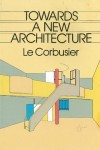
Le Corbusier brought great passion and intelligence to these essays, which present his ideas in a concise, pithy style, studded with epigrammatic, often provocative, observations: “American engineers overwhelm with their calculations our expiring architecture.” “Architecture is stifled by custom. It is the only profession in which progress is not considered necessary.” “A cathedral is not very beautiful . . .” and “Rome is the damnation of the half-educated. To send architectural students to Rome is to cripple them for life.”
Profusely illustrated with over 200 line drawings and photographs of his own works and other structures he considered important, Towards a New Architecture is indispensable reading for architects, city planners, and cultural historians―but will intrigue anyone fascinated by the wide-ranging ideas, unvarnished opinions, and innovative theories of one of this century’s master builders.