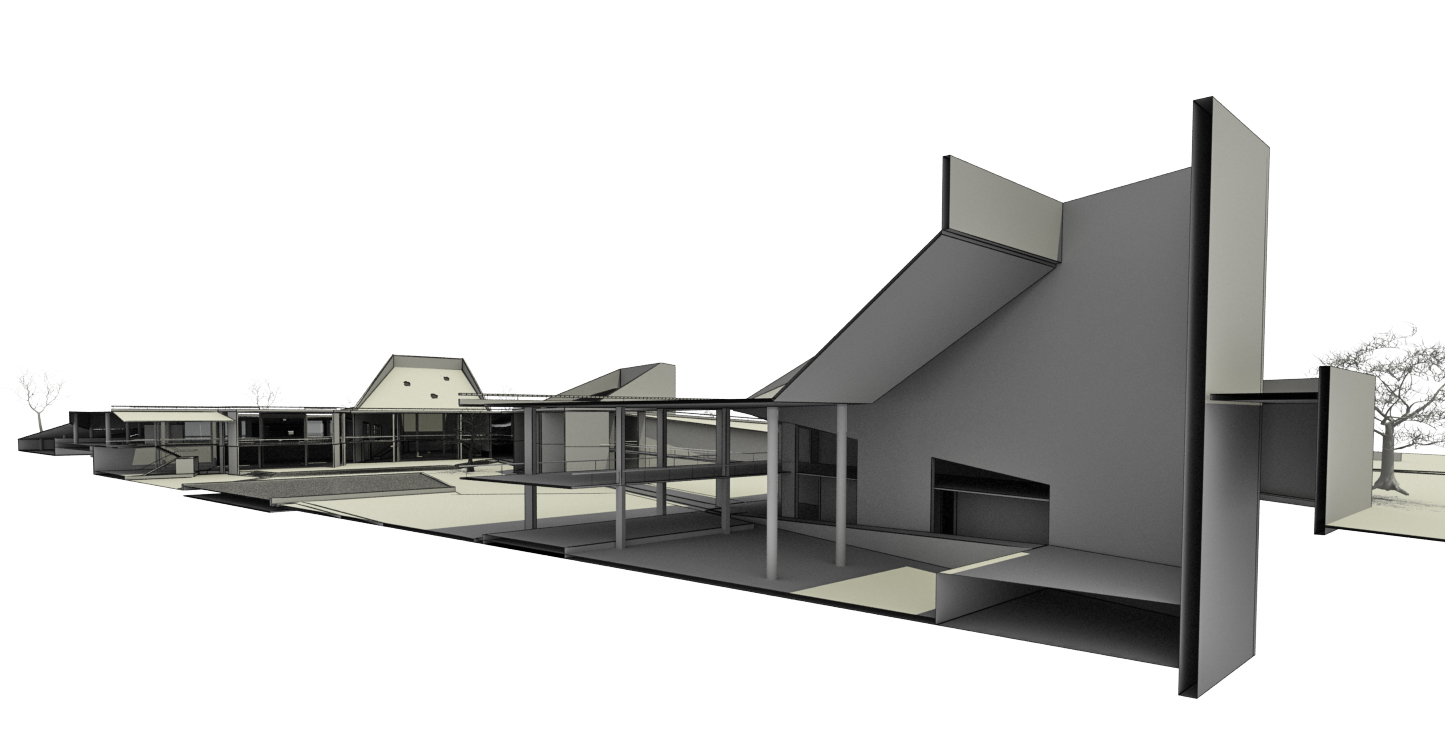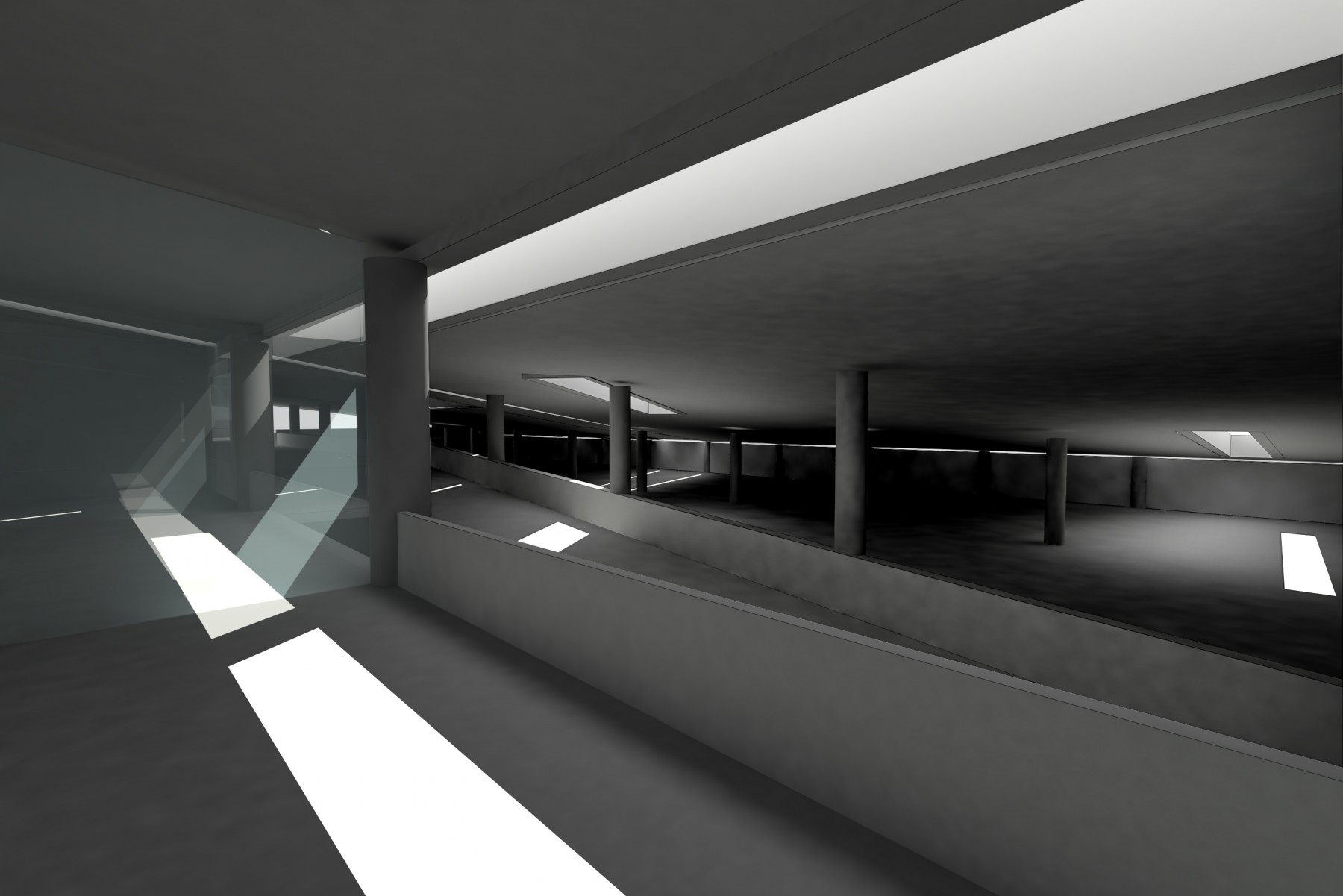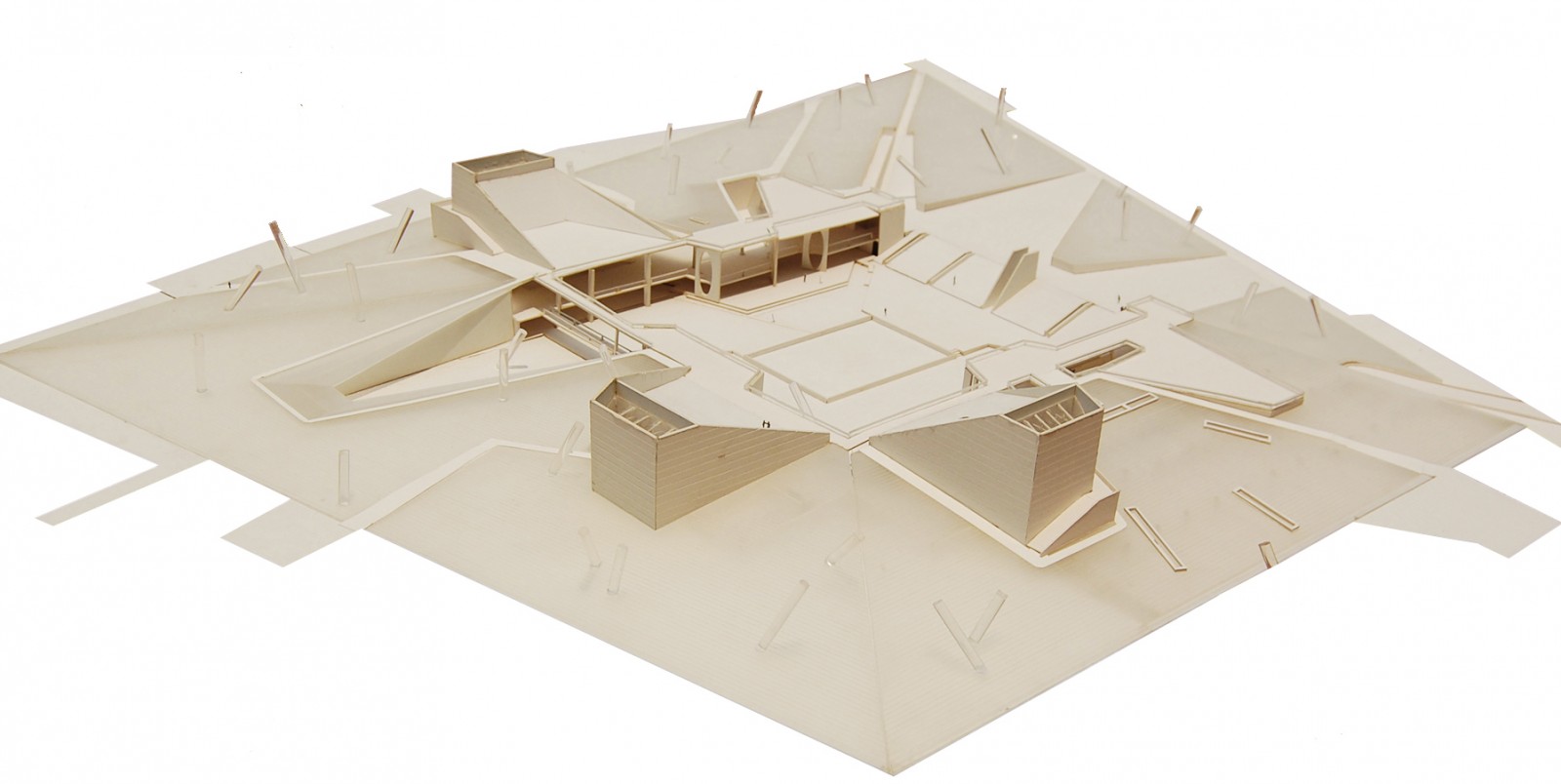
Echoes of the Estuary: A Tourism Center at Hatiya Dwip

World Environment Day 2026

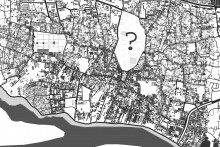
Urban [Re]Stitch

Old Jail Area and Challenge of Urban Space in Dhaka

The issue with the use of central jail area exposes our short memory. Sir Patrick Geddes— the father of modern town planning, advocated creating a park on the freed land in 1917. In fact 1959, 1981 and 1997 plans for the city of Dhaka did suggest the same. As the much-hyped DAP (Detail Area Plan) based on the last Dhaka Structure Plan is there, it is only justified and legal to see that regarding the use of this valuable land. There was a public presentation of draft DAP in 2007 September at RAJUK. Keen to voice a citizen’s conscience, I was dismayed to see that the consultant had proposed commercial uses on the said land, even asserting that it has no historic value. It was instantly opposed in favor of keeping it as a much-needed open area for the Dhakaites, which should have later been adopted in the revised final version.

The Central Jail, originally a fort encircled by mud walls, was erected by Sher Shah on the outskirt of then city.  In 1602 Man Singh set up his garrison there; his entourage settled in between the fort and the Dhakeswari Temple, in an area that was hence named as ‘Urdibazaar’. When Islam Khan stopped at Shahjadpur due to rain and flood on way to Dhaka, he sent an advance party to repair the fort in order to make it suitable for his court and residence. It is suffice to say that the central jail area is historically very important. Architecture of the Mughal secretariat including of a 40-pillar Dewani Aam, later buildings, and other important uses and historic events during the nation’s thrust towards Independence, have been elaborated in my book ‘City of an Architect’.

Development of an axis connecting Old and New Dhaka and bearing the evolutionary history of the city
Development of an axis connecting Old and New Dhaka and bearing the evolutionary history of the city | Courtesy: Tawfique Rahman


The most befitting reuse for the central jail area has been a popular architectural exercise in different architecture schools of the country. One of my friends in 1983 took this as his thesis and proposed a low-rise mixed use in an intimate scale that we usually associate with old Dhaka. Five years later, another architecture student took up the same exercise as his final project. Another attempt was made by a student under my supervision in 1992-93 at BUET. His daring and exciting proposal with symbolic contents was surrealistically simple. It had two bold premises and the postulations thereof, connecting old Dhaka with the new with an axis through the land. The axis originated at Swaari Ghat, connecting the Chawk (originally an open plaza surrounded by important structures like the fort and mosque) through the Bara Katra. On the other end of it via the Kendriyo Shaheed Minar was a point in Sohrawardi Udyan where the Swadhinota Stamva now proudly stands.

The axis represented the city—starting from when it became a capital for the first time and till 1971. Islam Khan in 1610 landed near the Ghat (Pakurtuli at Babubazaar area), paraded by the outer periphery of the city, and reached the old Afghani Fort. This will seperate 85% of the land on the west, which he proposed to keep green, from the more historical east part with Purba Darwaza as a formal entry. This part had a mix of small-scale civic-cultural uses. The statement the proposal made was bold and definite, and unseen for years in a project at this level in any architecture school in Bangladesh. The highly appreciated project was exhibited at the Shilpa Kala Academy. But all such proposals, many of which are valuable and posses a high level of practicality in directing towards enhancing the amenities and livability of the city, are never taken up to be implemented.

Public spaces, important assets to our cities, provide people opportunities to come together and engage with the community. Successful public spaces are inclusive of the diverse groups cities have, creating a social space for everyone in the society to participate in. Many human geography scholars have explored the interactions people have in the public space like city squares, the social networks, and the connection they form with the space. Having social events like music concerts or projecting sporting events on large screen are also a great way to get people to engage with one another— forming a sense of ‘togetherness’ in the space. This is a powerful way to create more positive environments for people to assimilate and come together as a society.

There are enough data to support the need for public spaces that improve the lives of city dwellers in many ways, like improving health, bringing people together, and offering places to break the stresses of urban life. Local economy also improves if public spaces are designed right as more people gathering means increased trades at nearby retail establishments, restaurants and coffee shops. But cities like Dhaka, one of the worst livable in the world, have instead ignored the urbanites’ need of better public spaces. For Dhakaites, access to public spaces isn’t just an incentive, it’s a right too. These spaces need to be safe, and offer a connection to nature. In fact, spaces offering this connection are often the most successful, bringing out higher numbers of visitors. Most livable cities like Vancouver and Calgary have done great at having public spaces to let users seek out the best of nature without leaving the city. Above all, our health and that of our cities depend on it.

As contexts change over time, use of this core city land need to be carefully re-examined and a proposal be made and executed, considering the history of the land, morphology of the surrounding area and its impact on that, and need of the Dhakaites. More importantly the site provides an opportunity of life time to do something for the city that its citizens can be proud of. We have wasted such other opportunities with part of the old airport or the Shangshad Vaban area. Here I could write several paragraphs or cite statistics in favor of having more public open spaces in Dhaka. But reading of Morshed in Daily Star on 27 August would suffice. Below is an excerpt from his thought provoking write up— “Can city design prevent terrorist attacks?”

“The city’s young needs playfields to exhaust their energy. How serious are urban administrators in Bangladesh about preserving neighborhood playgrounds as a way to keep the youth engaged with city life and away from the dark underworld of nefarious indoctrination? About 52 out of Dhaka’s 90 wards (60% of metropolitan area) have no access to parks or playgrounds; only 36 have some open space ranging between 0.01-0.21 acre per 1000 population. Have we thought about how neighborhood playfields would help create more Shakib al-Hasans and less Nibrases?

Where are our plazas, piazzas, malls, and maidans? Public places are where democracy finds a voice and a physical presence. Cities in Bangladesh have been experiencing unprecedented population surge. The demand for urban land is skyrocketing, leading to misguided policies of gentrification and a mastani culture of land-grabbing. Experts recommend that a livable city should have a minimum of 25% of its area as open space. Dhaka’s open space of only about 14.5% is rapidly shrinking. Research has shown that without adequate public plazas—essential for a city’s democratic practices, recreation, and community-building—the antisocial instincts of city dwellers balloon.”

most popular destinations in old Dhaka with potential to become successful urban space— i. Labagh Fort, ii. Ahsan Manzil (image: collected )
Most popular destinations in old Dhaka with potential to become successful urban space— i. Labagh Fort, ii. Ahsan Manzil (image: collected )
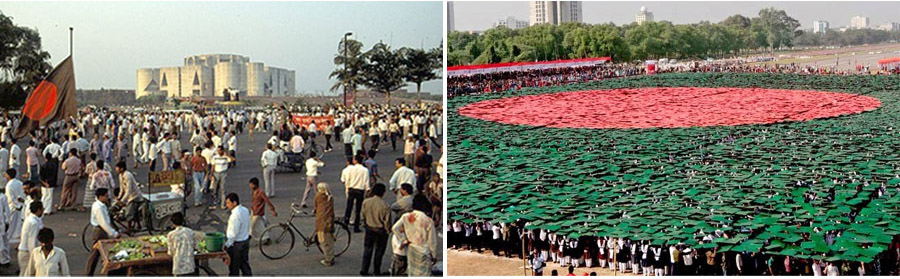
Two potential urban spaces in new Dhaka that have not been realised— i. Jatiyo Sangsad Chattor, ii. Jatiyo Parade Ground ( image: collected)


Now we have 25 schools of architecture with several thousand students and about 3,000 professional architects practicing in Bangladesh. Lets organize a two or three phase open urban design idea competition for both students (can be from architecture, planning, history or any background from the nearly 100 universities) and professionals (similarly could include architects, planners, engineers) or groups thereof. The first phase can be a 1-day on-site design charrette; a brief can be developed from ideas of this phase. But such brief must include a symbolic representation, iconic structures, an open area, and mixture of small scale cultural uses.

Such participatory design approach will in deed contribute to the sustainability of whatever use that would be proposed and built in the area as a result, protected by the community, and will remain as a milestone in the city’s history.

About the Author: 

Dr. Mahbubur Rahman is a Professor & Dean of Engineering & Design, Kingdom University, Bahrain
Save

Save

Save

Save

Save

Save

Save

‘Folio 1’ : Student Projects Publication by Dept. of Architecture, BRACU

| ArFarasha Zaman, BRACU |

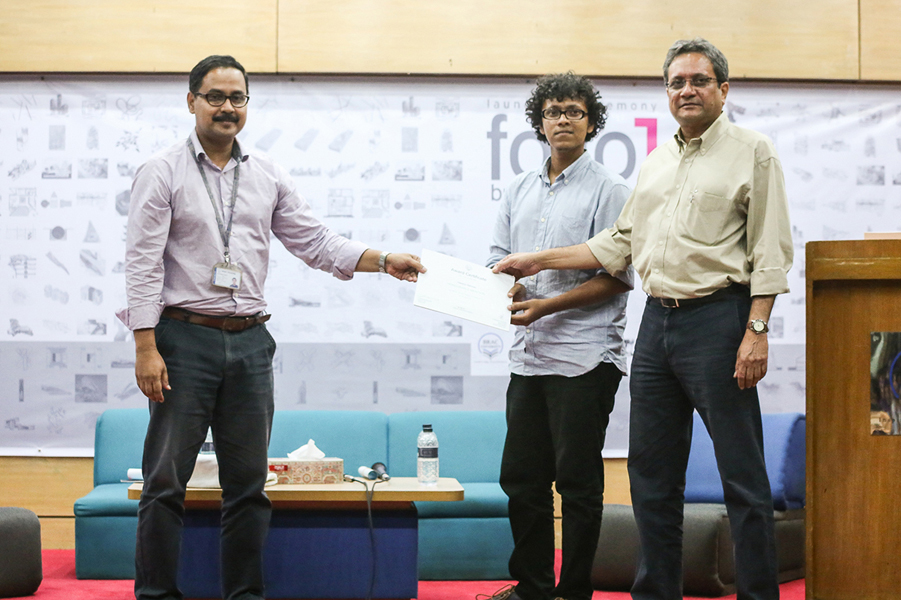
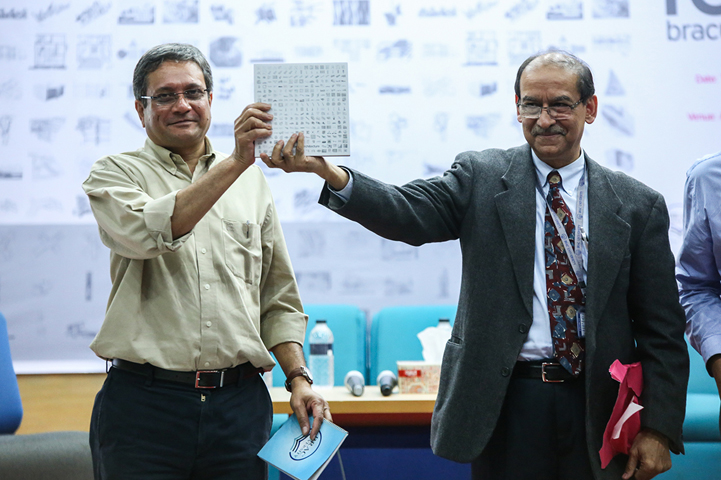
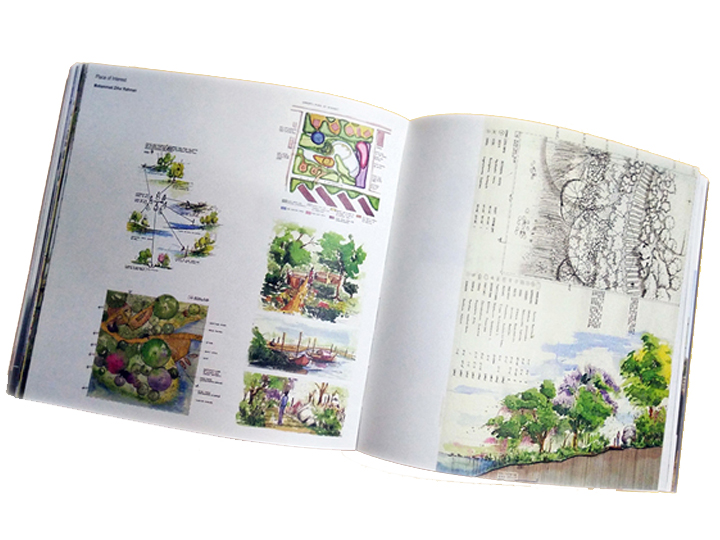
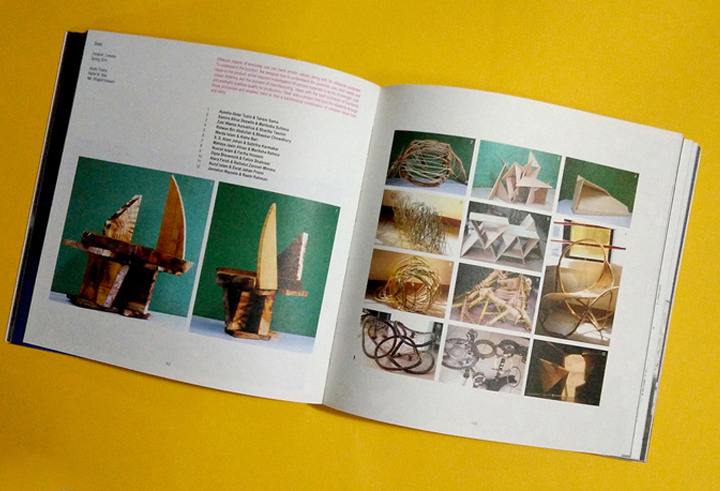
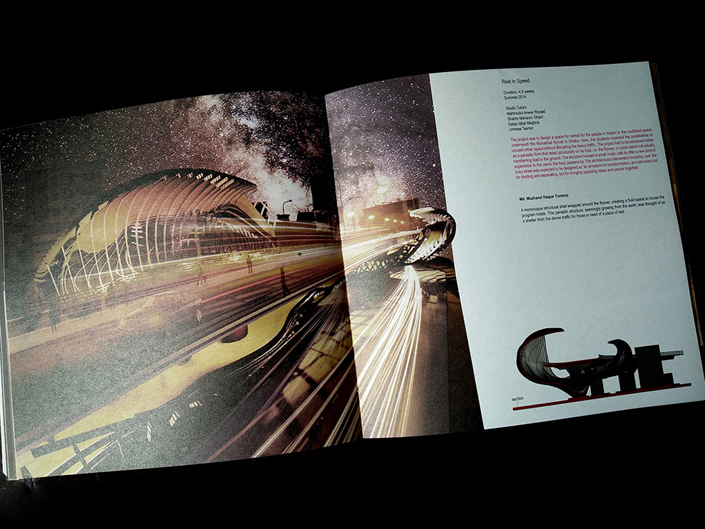
The Department of Architecture, BRAC University launched a compilation of student projects and departmental activities, ‘Folio 1, on September 6, 2016. First of its kind, this album assembles student academic projects from the year 2012 to 2014, and notable departmental activities from and before 2014. An assemblage of some 280 student projects, Folio 1 tries to represent the phases of the five-year education a student from the Department of Architecture, BRAC University goes through.


Book handover, Folio1 | Photo Credit: Nymus Reshad
Book handover, Folio1    |    Photo Credit: Nymus Reshad


A variety of work ranging from basic two-dimensional projects, of the first year to graduate level design or thesis projects are what makes the comprehensive content of this book. The book also anthologizes other additional studio based student works such as those of landscape, interior design, 3d visualization, sculpture, painting and photography courses. A section is dedicated to community led architecture, recurrently practiced in the Department of Architecture, mostly under the supervision of Architect Khondaker Hasibul Kabir. Folio 1, also focuses on the department’s keen interest in investigating contexts of public health, cultural identity, environmental risk reduction, adaptation to climate change and similar other significant issues relevant to the built environment of Bangladesh.

The launching ceremony of Folio 1 hosted at the Auditorium within BRAC University premises, was inaugurated by the founder of this design school, Professor Fuad H. Mallick, followed by an inspirational speech by the honorable Vice Chancellor, Professor Syed Saad Andaleeb, PhD.

.

folio 1 © bracu.architecture | Photo Credit: Tanzina Binte Harun
folio 1 © bracu.architecture    |    Photo Credit: Tanzina Binte Harun

[ From left, Professor Fuad H. Mallick, Chief Editor, Folio 1, Professor Syed Saad Andaleeb, PhD, Honourable Vice Chancellor, BRAC University, Ar. Shams Mansoor Ghani, Ar. Saiqa Iqbal Meghna, Ar. Farasha Zaman, Ar. Kazi Najeeb Hassan, editorial panel, Folio 1. ]

.

folio 1 © bracu.architecture
Speech by Professor Fuad H. Mallick, Photo Credit: Nymus Reshad
Speech by Professor Fuad H. Mallick    |    Photo Credit: Nymus Reshad
Speech by Professor Syed Saad Andaleeb, PhD Photo Credit: Nymus Reshad
Speech by Professor Syed Saad Andaleeb, PhD    |    Photo Credit: Nymus Reshad
Speech by Ar. Farasha Zaman and Kazi Najeeb Hassan, vote of thanks on behalf of the editorial panel, Folio 1 | Photo Credit: Nymus Reshad
Speech by Ar. Farasha Zaman and Kazi Najeeb Hassan, vote of thanks on behalf of the editorial panel, Folio 1    |    Photo Credit: Nymus Reshad


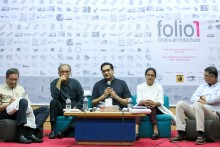
The ceremony extended to a panel discussion, under the banner of ‘Angan Lecture Series’ on the topic: ‘Architectural Education for Tomorrow.’ Eminent Bangladeshi architects, Ar. Kazi Khaleed Ashraf, Ar. Mohammad Foyez Ullah, Ar. Marina Tabassum, Ar. Mahmudul Anwar Riyaad were a part of this discourse moderated by Professor Fuad H. Mallick.

.

Panel Discussion on ‘Architectural Education for Tomorrow’ © bracu.architecture , | Photo Credit: Tanzina Binte Harun
Panel Discussion on ‘Architectural Education for Tomorrow’ © bracu.architecture    |   Photo Credit: Tanzina Binte Harun


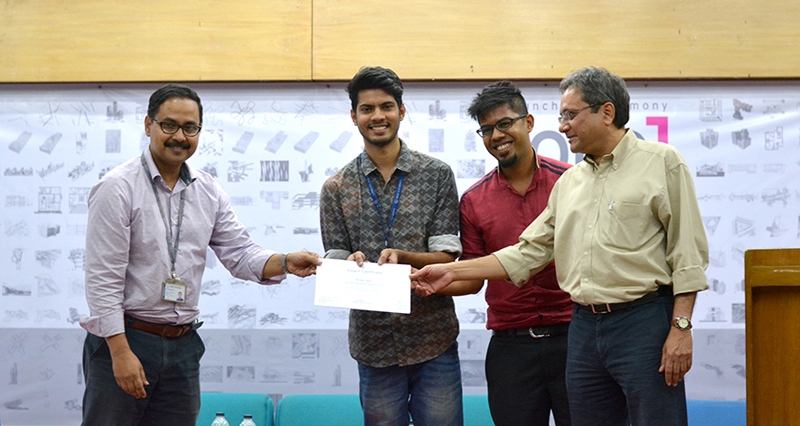
The program ended with the announcement of the results for the Vertical Studio Design Charrette – an intra-departmental one-day design competition. The charrette, hosted by the Event and Exhibition Committee, Department of Architecture, BRACU, was designed as a competition between 42 groups of students. These groups were formed between students from every batch currently enrolled in the department, such as one student from the batch of 502 – fall 2016, one from the batch of 501 – fall 2016, one from the batch of 402 – fall 2016 and so on. A few invited alumni of the Department of Architecture, BRACU, mentored these groups throughout their process of conceptualizing around the given topic We and Water.’ An extensive jury, by distinguished architects Ar. Mohammad Foyez Ullah and Ar. Mahmudul Anwar Riyaad led to the following decisions of winners the Charrette:


First prize winner | Photo Credit: Nymus Reshad
First prize winner    |    Photo Credit: Nymus Reshad

First Prize, group facilitated by Ar. Dhrubo Antor:

[1]  Khandokar Upama Kabir

[2]  Monisha Momtaz

[3]  Sadat Ajfar Rahman

[4]  Mohammad Shakiful Islam

[5]  Nuha Annoor Pabony

[6]  Ashaduzzaman

Image 11: Second prize winner | Photo Credit: Tanzina Binte Harun
Second prize winner    |    Photo Credit: Tanzina Binte Harun

Second Prize, group facilitated by Ar. Zannatul Ferdous Aohona:

[1]  Faequa Uniza Rahman

[2]  Mohammed Abdullah Al Mahmud

[3]  Atera Farah

[4]  Zuhayer Sadat Dipto

[5]  Rehnuma Raida

Image 12: Third prize winner | Photo Credit: Nymus Reshad
Third prize winner    |    Photo Credit: Nymus Reshad

Third Prize, group facilitated by Ar. Fahim Mostafa:

[1]  Nishat Rumana Tasnim

[2]  Itminan Tasneea

[3]  Ehsan Alam

[4]  Sananda Sutradhar

[5]  Nahid E Zabeen Tanuja

Image 13: Honorable mention for ‘creative idea generation’ | Photo Credit: Tanzina Binte Harun
Honorable mention for ‘creative idea generation’   |   Photo Credit: Tanzina Binte Harun

The jurors commended three other groups for their excellence in architectural skills. Honorable mention for creative idea generation was awarded to the following group, facilitated by Ar. Fahim Mostafa:

[1]  Hasanur Rahman

[2]  Raihan Sadib Ahmed

[3]  Masudah Begum

[4]  Tamzida Abdullah

[5]  Sudipto Roy

[6]  Md Asef E Alam

Honorable mention for ‘commendable presentation method’ | Photo Credit: Tanzina Binte Harun
Honorable mention for ‘commendable presentation method’    |    Photo Credit: Tanzina Binte Harun

Honorable mention for commendable presentation methods was awarded to the following group, facilitated by Ar. Dhrubo Antor:

[1]   Sumaita Tahseen

[2]   Abrarul Arefin

[3]   Sadia Tarannum

[4]   Raiyan Nasir

Honorable mention for ‘commendable presentation method’ | Photo Credit: Nymus Reshad

Honorable mention for commendable presentation methods was also awarded to the following group, facilitated by Ar. Samiul Haque:

[1]  Muntasir Hakim

[2]  Aniqa Nawar

[3]  Sindis Hassan

[4]  Joyanta Saha

[5]  J M Rakayet

[6]  Mazharul Haque

The event was attended by eminent architects, Ar. Jalal Ahmed, Ar. N.R. Khan, students, faculties and alumni from various architectural schools of Bangladesh and Bengal institute.

Attendees | Photo Credit: Nymus Reshad
Attendees    |    Photo Credit: Nymus Reshad


NOTE FROM THE EDITORIAL PANEL , Folio 1:

Folio 1 publication has been sponsored by a renowned architectural firm Volume Zero Ltd. The prize money for the charrette and refreshments for the event has been sponsored by SML XL Open Lounge. Our heartfelt thanks to all the present and ex-faculty members, student volunteers and administration staff who have made this compilation and event possible.

<< More images of the Event >>

  • CONTEXT _ BRACU _ folio 1
  • CONTEXT _ BRACU _ folio 2
  • CONTEXT _ BRACU _ folio 3
  • CONTEXT _ BRACU _ folio 4
  • CONTEXT _ Folio 1
  • CONTEXT _ Folio 15
  • CONTEXT _ Folio 12
  • CONTEXT _ Folio 13
  • CONTEXT _ Folio 14
  • CONTEXT _ Folio 10
  • CONTEXT _ Folio 9
  • CONTEXT _ Folio 8
  • CONTEXT _ Folio 5
  • CONTEXT _ Folio 6
  • CONTEXT _ Folio 4
  • CONTEXT _ Folio 3
  • CONTEXT _ Folio 7
  • CONTEXT _ Folio 2
  • CONTEXT _ Cover _ folio
  • CONTEXT _ BRACU _ folio 8
  • CONTEXT _ BRACU _ folio 6+
  • CONTEXT _ BRACU _ folio 10
  • CONTEXT _ BRACU _ folio 11
  • CONTEXT _ BRACU _ folio 12
  • CONTEXT _ BRACU _ folio 13
  • CONTEXT _ BRACU _ folio 15
  • CONTEXT _ BRACU _ folio 14
  • CONTEXT _ BRACU _ folio 18
  • CONTEXT _ BRACU _ folio 16
  • CONTEXT _ BRACU _ folio 17
  • CONTEXT _ BRACU _ folio 19
  • CONTEXT _ BRACU _ folio 20

Save

Save

Save

THESIS PROJECTS ’09 _ Part one | BUET

[1] _ CENTER FOR HUMAN INQUIRY LISTENING TO RUMI

[ Zahid Hasan ]

Center for Human Inquiry Listening to Rumi | Image Courtesy: Epologue 09
Center for Human Inquiry Listening to Rumi | Image Courtesy: Epilogue 09


[2] _ CENTRAL CULTURAL & HERITAGE PRECINCT AT THE CULMINATION OF HERITAGE CORRIDORS, CHITTAGONG

[ RummanMashrur ]

Central Cultural & Heritage Precinct at the culmination of heritage corridors Chittagong | Image Courtesy: Epologue 09
Central Cultural & Heritage Precinct at the culmination of heritage corridors Chittagong | Image Courtesy: Epilogue 09


[3] _ FROM AUTOCRACY TO AUTONOMY : A PARAMETRIC APPROACH OF SLUM UP-GRADATION OF THE INCREMENTAL,DHAKA

[ Saad Yousuf Andalib ]

From Autocracy to Autonomy A Parametric Approach of Slum Up-gradation of the Incremental,Dhaka | Image Courtesy: Epologue 09
From Autocracy to Autonomy A Parametric Approach of Slum Up-gradation of the Incremental,Dhaka | Image Courtesy: Epilogue 09


[4] _ DESIGNING AN ECOLOGICALLY RESPONSIVE HABITAT TO BE SELF-RESILIENT IN MUNDAPARA

[ Simita Roy Sinthee ]

Ecologically responsive habitat to be self-resilient in Mundapara | Image Courtesy: Epologue 09
Ecologically responsive habitat to be self-resilient in Mundapara | Image Courtesy: Epilogue 09


[5] _ INTERFACE BETWEEN MAN AND MANGROVE_ECOLOGICAL HUB FOR PROMOTING RESPONSIBLE TOURISM, MONGLA

[ Nishat Sultana ]

Interface between Man and Mangrove_Ecological hub for promoting responsible tourism, Mongla | Image Courtesy: Epologue 09
Interface between Man and Mangrove_Ecological hub for promoting responsible tourism, Mongla | Image Courtesy: Epilogue 09


[6] _ URBAN INTERCHANGE FACILITIES AMINBAZAR MULTI-MODAL TERMINAL

[ Ahmed Abdullah Al Tawheed ]

Urban Interchange Facilities Aminbazar Multi-Modal Terminal | Image Courtesy: Epologue 09
Urban Interchange Facilities Aminbazar Multi-Modal Terminal | Image Courtesy: Epilogue 09


[7] _ TRADING+PUBLIC REALM RE-THINKING A WHOLESALE FISH BAZAAR AT MOHANGANJ, NETROKONA

[ Prottay Roy Chowdhury ]

Trading+Public Realm Re-thinking a wholesale fish bazaar at Mohanganj, Netrokona | Image Courtesy: Epologue 09
Trading+Public Realm Re-thinking a wholesale fish bazaar at Mohanganj, Netrokona | Image Courtesy: Epilogue 09


[8] _ REDEFINING RETAIL EXPERIENCE IN THE NILKHET BOOK MARKET AREA

[ Tanzila ]

Redefining Retail Experience in The Nilkhet Book Market Area | Image Courtesy: Epologue 09
Redefining Retail Experience in The Nilkhet Book Market Area | Image Courtesy: Epilogue 09


[9] _ MIRPUR BENARASI PALLI_SUSTAINABLE REVITALIZATION OF A COMMUNITY

[ Anika Tasnim Anna ]

Mirpur Benarasi Palli_Sustainable revitalization of a community | Image Courtesy: Epologue 09
Mirpur Benarasi Palli_Sustainable revitalization of a community | Image Courtesy: Epilogue 09


[10] _ LIVING WITH A GRAVEYARD RETHINKING AN INDUSTRIAL LANDSCAPE FOR SHIP RECYCLING, BHATARI, CHITTAGONG

[ Shuvra Das ]

Living with a Graveyard Rethinking an Industrial Landscape for Ship Recycling, Bhatari, Chittagong | Image Courtesy: Epologue 09
Living with a Graveyard Rethinking an Industrial Landscape for Ship Recycling, Bhatari, Chittagong | Image Courtesy: Epilogue 09


<< IMAGE GALLERY >>

  • CONTEXT _ Central Cultural & Heritage Precinct at the culmination of heritage corridors Chittagong
  • CONTEXT _ Redefining Retail Experience in The Nilkhet Book Market Area
  • CONTEXT _ From Autocracy to Autonomy  A Parametric Approach of Slum Up-gradation of the Incremental,Dhaka
  • CONTEXT _ Ecologically responsive habitat to be self-resilient in Mundapara
  • CONTEXT _ Living with a Graveyard Rethinking an Industrial Landscape for Ship Recycling, Bhatari, Chittagong
  • CONTEXT _ Interface between Man and Mangrove_Ecological hub for promoting responsible tourism, Mongla
  • CONTEXT _ Mirpur Benarasi Palli_Sustainable revitalization of a community
  • Urban Interchange Facilities Aminbazar Multi-Modal Terminal
  • wholesale fish bazaar
  • CONTEXT _ Center for Human Inquiry Listening to Rumi

EPILOGUE 09 | The Last Chapter| Day 01

Epilogue 09 has come out with a platform to bring out their ideas from studio projects to the public realm. Yesterday was the first day of their public exposure. A large group of students of Architecture Department of BUET have worked hard to bring this event in front of all. Ar. Meer Mobashsher Ali, Ar Mubasshar Hussain, Ar. Abu Sayeed M. Ahmed, Ar. Jalal Ahmad, Ar. Kazi Nasir and honorable teachers from the jury panel Prof. Dr. Zebun Ahmed, Prof. Dr. Khandaker Shabbir Ahmed and Ar. Maherul Kader Prince inaugurated the ceremony, explored each and every project with patience and inspired the architects with valuable appreciation and comments.

The exhibition is open for all, so anyone can come and see what these young thinkers are pursuing. As one of the main purpose of “EPILOGUE”- is to bridge the gap between community and the academics, people from any background can be the part of this event to witness what actually are missing out, from society to national level.

The first day was pretty successful. People were questioning and getting the ideas from the designers on the spot. The architects are not only exhibiting their projects, but also are being interactive with audiovisuals and on the spot presentations.

Epilogue 09 is also trying to involve the professional bodies so that they can also comment and suggest on the possibilities of these project. These studio projects are not only studio projects; they talk about our cities, our villages and our country as a whole. Identification of problems and finding their possible solutions are not easy, still these young thinkers are experimenting and looking forward to bring betterment.

|Glimpses of the first day are presented here. Please click on any image for larger gallery view|

  • CONTEXT _  Exhibition _ BUET © Epilogue '09 _ 39
  • CONTEXT _  Exhibition _ BUET © Epilogue '09 _ 38
  • CONTEXT _  Exhibition _ BUET © Epilogue '09 _ 35
  • CONTEXT _  Exhibition _ BUET © Epilogue '09 _ 34
  • CONTEXT _  Exhibition _ BUET © Epilogue '09 _ 07
  • CONTEXT _  Exhibition _ BUET © Epilogue '09 _ 36
  • CONTEXT _ Development of a riverfront rural market (2) - Copy
  • CONTEXT _  Exhibition _ BUET © Epilogue '09 _ 37
  • CONTEXT _  Exhibition _ BUET © Epilogue '09 _ 33
  • CONTEXT _  Exhibition _ BUET © Epilogue '09 _ 32
  • CONTEXT _  Exhibition _ BUET © Epilogue '09 _ 31
  • CONTEXT _  Exhibition _ BUET © Epilogue '09 _ 29
  • CONTEXT _  Exhibition _ BUET © Epilogue '09 _ 28
  • CONTEXT _  Exhibition _ BUET © Epilogue '09 _ 30
  • CONTEXT _  Exhibition _ BUET © Epilogue '09 _ 27
  • CONTEXT _  Exhibition _ BUET © Epilogue '09 _ 28
  • CONTEXT _  Exhibition _ BUET © Epilogue '09 _ 06
  • CONTEXT _  Exhibition _ BUET © Epilogue '09 _ 24
  • CONTEXT _  Exhibition _ BUET © Epilogue '09 _ 25
  • CONTEXT _ Walk-Bike Urbanism
  • CONTEXT _  Exhibition _ BUET © Epilogue '09 _ 12
  • CONTEXT _  Exhibition _ BUET © Epilogue '09 _ 26
  • CONTEXT _  Exhibition _ BUET © Epilogue '09 _ 14
  • CONTEXT _  Exhibition _ BUET © Epilogue '09 _ 27
  • CONTEXT _  Exhibition _ BUET © Epilogue '09 _ 13
  • CONTEXT _  Exhibition _ BUET © Epilogue '09 _ 23
  • CONTEXT _  Exhibition _ BUET © Epilogue '09 _ 22
  • CONTEXT _  Exhibition _ BUET © Epilogue '09 _ 21
  • CONTEXT _  Exhibition _ BUET © Epilogue '09 _ 18
  • CONTEXT _  Exhibition _ BUET © Epilogue '09 _ 19
  • CONTEXT _  Exhibition _ BUET © Epilogue '09 _ 20
  • CONTEXT _  Exhibition _ BUET © Epilogue '09 _ 17
  • CONTEXT _  Exhibition _ BUET © Epilogue '09 _ 16
  • CONTEXT _  Exhibition _ BUET © Epilogue '09 _ 15
  • CONTEXT _ Retreat_an adaptive approach
  • CONTEXT _  Exhibition _ BUET © Epilogue '09 _ 11
  • CONTEXT _  Exhibition _ BUET © Epilogue '09 _ 10
  • CONTEXT _  Exhibition _ BUET © Epilogue '09 _ 09
  • CONTEXT _  Exhibition _ BUET © Epilogue '09 _ 07
  • CONTEXT _ Culture+heritege+people

Hatirpool Bazar : A community Responsive Building | BUET

| Write up from the project submission |

Hatirpool Bazar @ Level 4 Term 2 [2016] _Group 6 _ BUET
 .

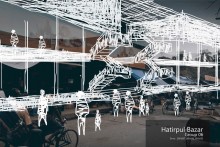
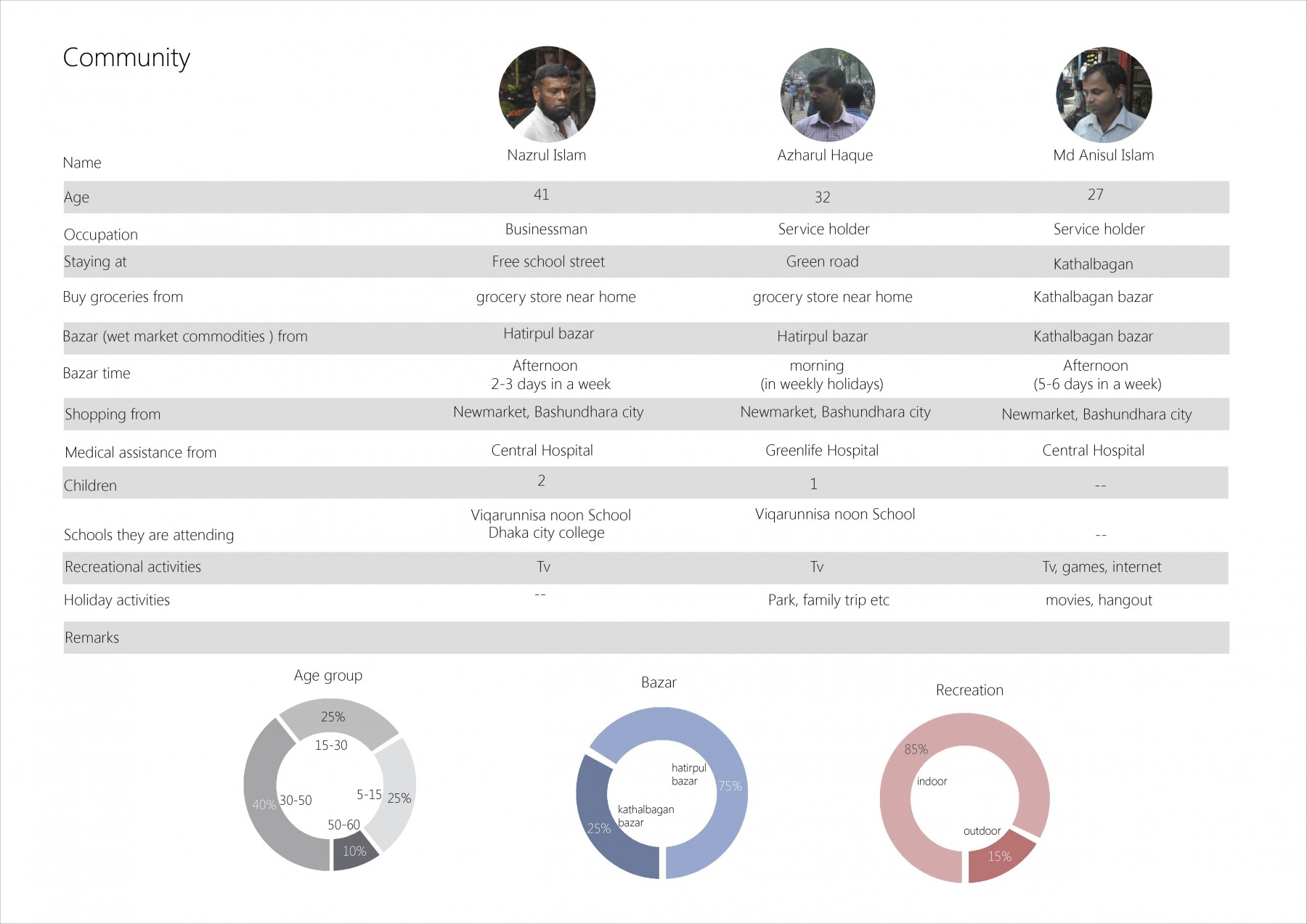
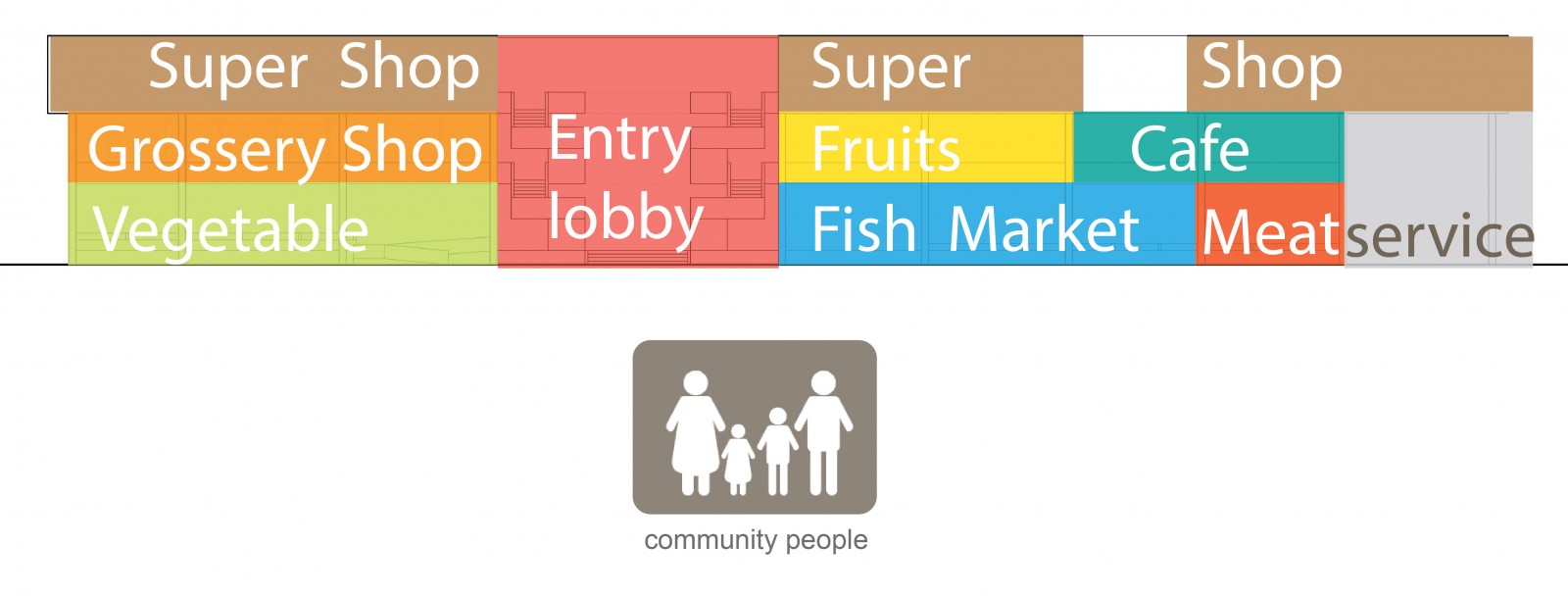
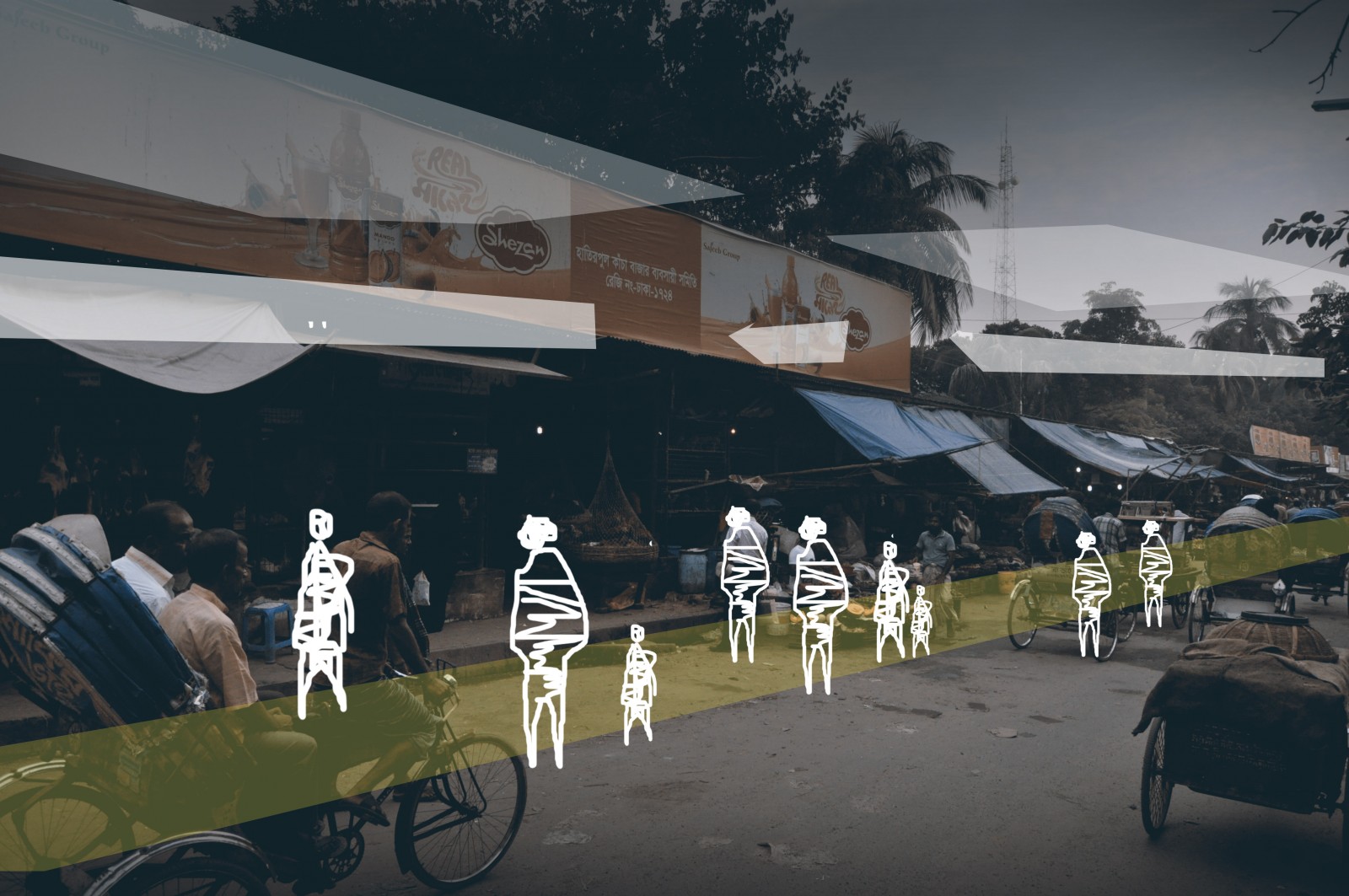
The aim of the project was to understand the need of a specific  urban community. In the 1st phase ,we studied the community of Hatirpool  area and identified  their community needs. From the study, we were assigned to redesign Hatirpool Bazar as a community space.

Hatirpool Bazar © Level 4 Term 2 [2016] _Group 6 _ BUET

.

Hatirpool Bazar @ Level 4 Term 2 [2016] _Group 6 _ BUET
 .

There are a few major and minor problems and obstacles considering the design objectives and urban architectural and the environmental matrix of the area which are taken as the main consideration during the design phase .

.

Hatirpool Bazar © Level 4 Term 2 [2016] _Group 6 _ BUET
Hatirpool Bazar @ Level 4 Term 2 [2016] _Group 6 _ BUET
 

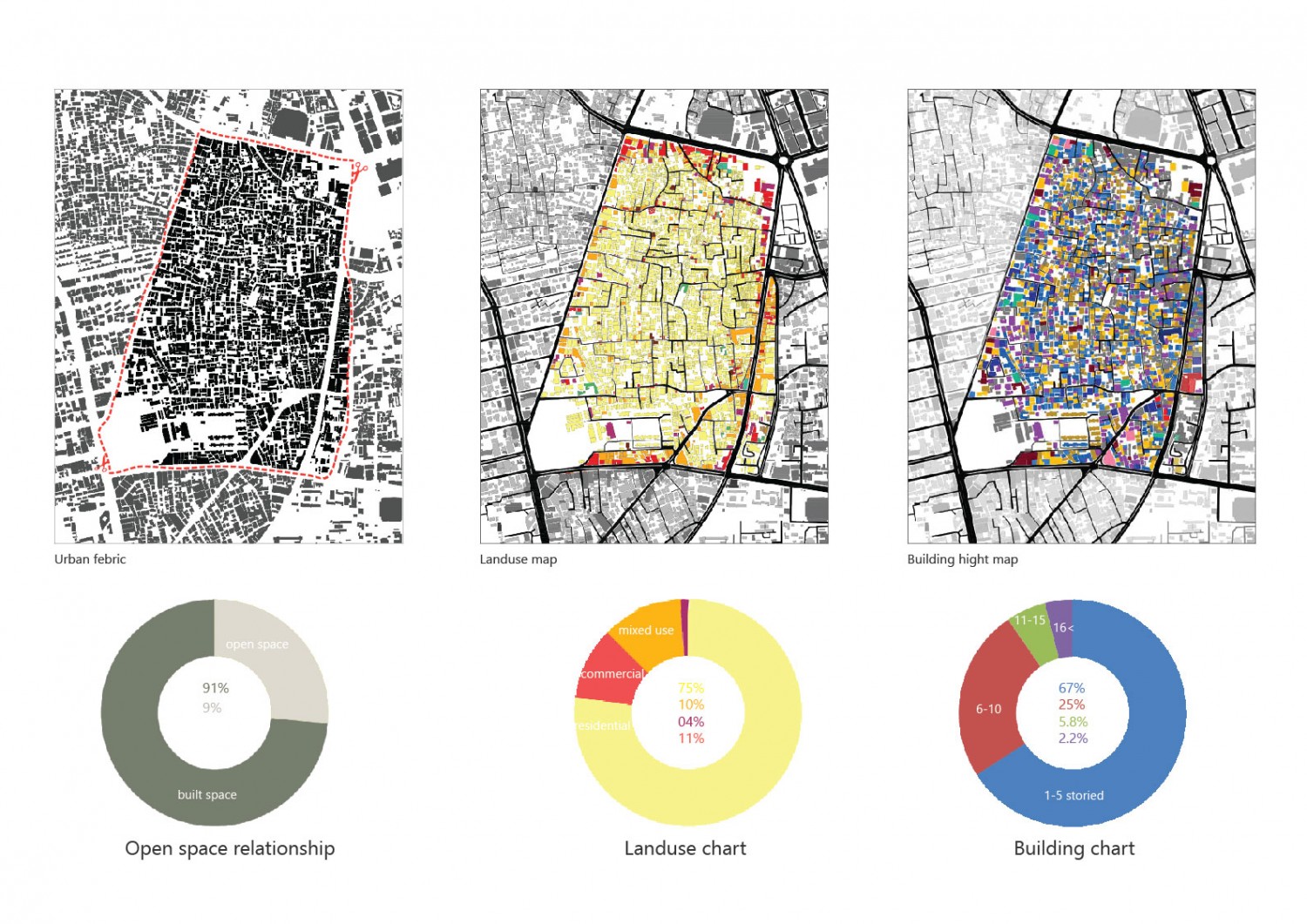
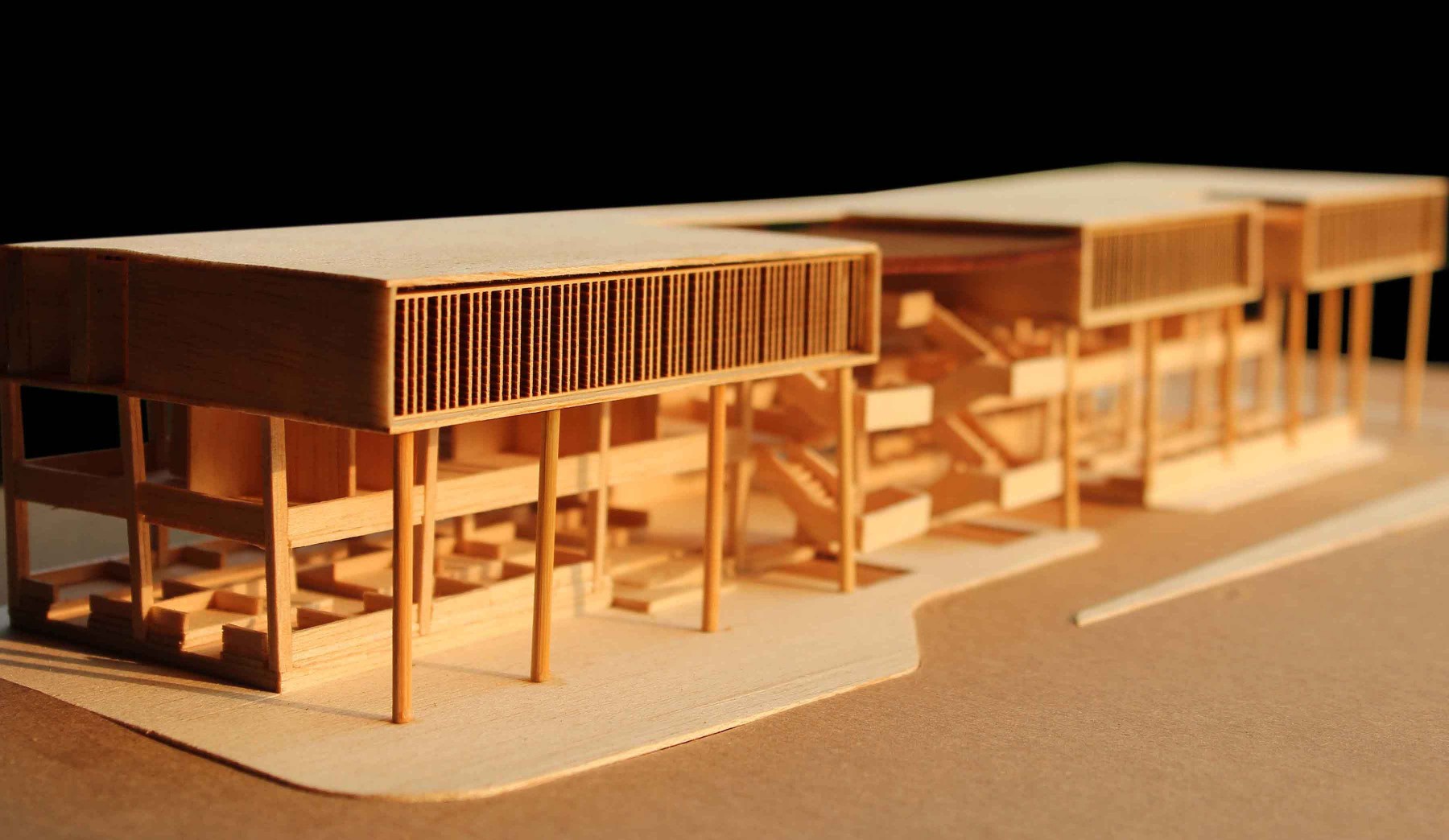
To meet up with the existing problems of the bazaar, detail research and survey of the area was undertaken to reach some key points of design decisions . Finally, a redesigned structure and  grammar  were introduced for the bazaar to make it more community responsive.

.

Hatirpool Bazar © Level 4 Term 2 [2016] _Group 6 _ BUET
 

Hatirpool Bazar © Level 4 Term 2 [2016] _Group 6 _ BUET
Hatirpool Bazar @ Level 4 Term 2 [2016] _Group 6 _ BUET
 

<< Image Gallery >>

 
  • CONTEXT _ Level 4 Term 2_ BUET _ Hatirpool Bazar 5
  • CONTEXT _ Level 4 Term 2_ BUET _ Hatirpool Bazar 20
  • CONTEXT _ Level 4 Term 2_ BUET _ Hatirpool Bazar 22
  • CONTEXT _ Level 4 Term 2_ BUET _ Hatirpool Bazar 23
  • CONTEXT _ Level 4 Term 2_ BUET _ Hatirpool Bazar 8
  • CONTEXT _ Level 4 Term 2_ BUET _ Hatirpool Bazar 26
  • CONTEXT _ Level 4 Term 2_ BUET _ Hatirpool Bazar 25
  • CONTEXT _ Level 4 Term 2_ BUET _ Hatirpool Bazar _ Cover Image
  • CONTEXT _ Level 4 Term 2_ BUET _ Hatirpool Bazar 7
  • CONTEXT _ Level 4 Term 2_ BUET _ Hatirpool Bazar 18
  • CONTEXT _ Level 4 Term 2_ BUET _ Hatirpool Bazar 4
  • CONTEXT _ Level 4 Term 2_ BUET _ Hatirpool Bazar 2
  • CONTEXT _ Level 4 Term 2_ BUET _ Hatirpool Bazar 19
  • CONTEXT _ Level 4 Term 2_ BUET _ Hatirpool Bazar 3
  • CONTEXT _ Level 4 Term 2_ BUET _ Hatirpool Bazar 6
  • CONTEXT _ Level 4 Term 2_ BUET _ Hatirpool Bazar 16
  • CONTEXT _ Level 4 Term 2_ BUET _ Hatirpool Bazar 17
  • CONTEXT _ Level 4 Term 2_ BUET _ Hatirpool Bazar 15
  • CONTEXT _ Level 4 Term 2_ BUET _ Hatirpool Bazar 27
  • CONTEXT _ Level 4 Term 2_ BUET _ Hatirpool Bazar 21

Save

CENTER FOR ARCHITECTURE _ A Center to promote Society, Architecture & Culture | BUET

Center for Architecture © Shuva Chowdhury | BUET


‘Center for Architecture’ is a center to promote society, architecture, and culture. It is a center where people will come, share and learn from each other activities. It’s a center for the people and by the people. How can a center change the society? How can a platform generate spontaneous public activity? How can an environment become a social hub? These are the questions; this center answers. Architecture can change society. This is the belief – I still hold in me. So designing a center for the public can have such spatial quality which not only generates activities but also promote social engagements.

Center for Architecture © Shuva Chowdhury | BUET


Center for Architecture © Shuva Chowdhury | BUET, Photo Courtesy : Fahim Alam


The site is near to the Luis I Kahn’s Assembly Hall. The design attempt is to invite people from every stratum, and the intention is to avoid the physical appearance of monumentality and dominance. Therefore, the underneath design concept is to create a slight elevation from the ground level. People have allowed from all sides of the plot.

.

Center for Architecture © Shuva Chowdhury | BUET


The central courtyard with a central water body holds a solemn consolation with its surrounded large alcoves. Annexation of large hall shape alcoves generates different activities like exhibition, concert and group gathering or event like protesting procession. One archive, three seminar rooms and one café have provided with control guidance.

.

Center for Architecture © Shuva Chowdhury | BUET


It’s a society dedicated platform. Every single space has such hegemonic character to promote spontaneous public participation. Trees have taken as symbolic parts of society. Three trees have been put in distinct location to hold its unique identity in society. Contemplating spaces have high capability to convince human psychology. So to promote such qualitative space, I have tried to play with light and shadow in different zones. Light separates the function, and also light generates the activity. That is the underline philosophy to produce such meditative space.

.

Center for Architecture © Shuva Chowdhury | BUET


People will come and participate and will feel the drama of the space. And they will promote a better society to its inhabitants. Grandness and overwhelming inviting entry can be felt at the beginning but not any horrified way rather than with solemn and general invitation. The materiality has been considered as so close to human. Massive concrete has been used to sustain and to promote the feeling of closeness. Because flashy material stands like showy and that is not for poor and general people.

.

Center for Architecture © Shuva Chowdhury | BUET
Center for Architecture © Shuva Chowdhury | BUET _ Photo Courtesy : Fahim Alam
Center for Architecture © Shuva Chowdhury | BUET
Center for Architecture © Shuva Chowdhury | BUET _ Photo Courtesy : Fahim Alam
Center for Architecture © Shuva Chowdhury | BUET
Center for Architecture © Shuva Chowdhury | BUET _ Photo Courtesy : Fahim Alam


This is a hypothetical project. The idea is to design a center which can add some value to human quality. Participating, sharing, learning, listening and contemplating all are necessary to build a healthy society, to enrich human values and to promote culture.

.

Center for Architecture © Shuva Chowdhury | BUET


<< Image Gallery >>


  • CONTEXT _ Thesis _ Shuva Chowdhury
  • CONTEXT _ Thesis _ Shuva 23
  • CONTEXT _ Thesis _ Shuva 01
  • CONTEXT _ Thesis _ Shuva 21
  • CONTEXT _ Thesis _ Shuva 27
  • CONTEXT _ Thesis _ Shuva 26
  • CONTEXT _ Thesis _ Shuva 06
  • CONTEXT _ Thesis _ Shuva 25
  • CONTEXT _ Thesis _ Shuva 05
  • CONTEXT _ Thesis _ Shuva 07
  • CONTEXT _ Thesis _ Shuva 03
  • CONTEXT _ Thesis _ Shuva 20
  • CONTEXT _ Thesis _ Shuva 02
  • CONTEXT _ Thesis _ Shuva 04
  • CONTEXT _ Thesis _ Shuva 24
  • CONTEXT _ Thesis _ Shuva 22
  • CONTEXT _ Thesis _ Shuva 23
  • CONTEXT _ Thesis _ Shuva 17
  • CONTEXT _ Thesis _ Shuva 13
  • CONTEXT _ Thesis _ Shuva 12
  • CONTEXT _ Thesis _ Shuva 11
  • CONTEXT _ Thesis _ Shuva 10
  • CONTEXT _ Thesis _ Shuva 08
  • CONTEXT _ Thesis _ Shuva 16
  • CONTEXT _ Thesis _ Shuva 14
  • CONTEXT _ Thesis _ Shuva 09