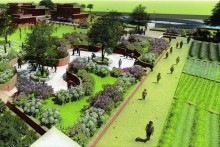
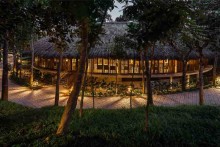
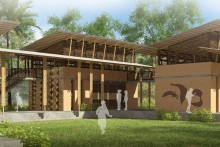
Echoes of the Estuary: A Tourism Center at Hatiya Dwip

World Environment Day 2026

Urban [Re]Stitch

Archi-World ® Academy Awards III

Print
Student Competition © Archi world Academy Award-III


COMPETITION NAME

Archi-World® Academy Awards

Global contest for students in architecture, to win 12 prestigious trainee opportunities in world class architects practices.

THEME

Responsible Future Architecture

Responsible architecture will take into consideration parameters such as :

– Respect of the natural environment
– Integration of the new construction in the built environment taking into consideration cultural and social contexts
– Priority given to the use of local materials and know-how
– Eco-efficiency parameters for the reduction of energy consumption and ideal thermal performance.
– Vision and programming about re-use, renovation and recycling

BRIEF

The international competition for students in architecture, Archi-World® Academy III 2015-2017, is back on track. The topic this year is “Responsible Future Architecture”, and again students can win a traineeship in one of the 12 prestigious offices managed by our jury members.

Be part of this extraordinary opportunity: register to Archi-World® Academy and send us your best student projects and write with Archi-World® Academy the first pages of your professional life !

The deadline for presenting projects is 30 September 2016.

Winners will be invited to attend the awarding ceremony taking place on 18 January 2017 in Munich during the International exhibition BAU in the presence of the jury members.

The proposals can be presented in any language but a short description (max 1000 words) in English is mandatory.

AWARD

[1] TRAINEESHIP

_ 12 traineeships will be offered by the Archi-World® Academy Awards. Each member of the jury will independently select its favorite project. The student related to that project will be invited to join the architect’s team for a traineeship period of 4 to max 6 months. The traineeship period will be agreed between the architecture practice and the student. The student will receive the same fee as the one usually granted by the local architecture practice.

[2] REMARKS

_ Student winners will have 2 months from announcement to notify that they are accepting the traineeship. Should the student decline this opportunity, ArchiWorld reserves the right to transfer the traineeship to the second rated student. No alternative traineeship or any type compensation will be granted.

_ Should the practice where the student won the traineeship be unable for any reason to grant the traineeship in due time, ArchiWorld will immediately put another equivalent traineeship at the student’s disposal.

[3] VISIBILITY

_ All the winners will benefit from a huge visibility and will have their winning project presented on Awacademy website and will have a full presentation published in Archi-Europe’s monthly digital newsletter Archi-News, sent to over 125.000 architects who will have the opportunity to discover your project and your skills!

_ The concepts/projects will also be published in our Archi-News magazine.

_ All the winners will be invited to Munich, during the BAU construction fair, on 18th of January 2017 for the awarding ceremony in order to: collect the diploma and present the winning project.

JURY

The jury is composed of 12 worldwide renowned architects:

_ Rudy Ricciotti

_ JKMM Architects

_ Coop Himmelb(l)au

_ Poponcini & Lootens

_ Labics

_ Guz Architects

_ SBA Architects

_ Grafton Architects

_ CHIASMUS

_ Ercan Çoban Architects

_ Emilio Ambasz and Associates

_ Sergey Romanov

ANNOUNCEMENT OF THE WINNERS

Winners will be personally contacted by mail or by telephone.

SUBMISSION OF PROPOSALS

It is allowed to upload your panels and edit them from Monday 14 September 2015 until Friday 30 September 2016 midnight on the competition website. First, you need to register. After registration, you will then receive your registration number by email. This registration number must be mentioned in your project board and project description.

AWARDING CEREMONY

The awarding ceremony will take place on 18th of January 2017 at BAU 2017 Exhibition (Munich, January 2017) in the presence of the members of the jury. Each participant will receive a free entry ticket for the Archi-World® Awarding Ceremony.

COMPLAINTS

All enquiries or complaint must be sent to the following address: awa@awacademy.org

Jury’s decisions are unquestionable.

COMPETITION HIGHLIGHTS

Entry Fees   |   Free

Eligibility    |   Student

Registration   |   Here

Project Submission    |   Project Upload [Online]

Submission Deadline   |  30 September 2016  

Awarding Ceremony   |    18 January 2017

Detail [+]


Mobile Museum for the Disabled | International Idea Competition for Young Architects


Mobile Museum for Disable © Chamber of Architects of Turkey


THEME

“Mobile Museum for the Disabled”

ORGANIZING COMMITTEE 

Chamber of Architects of Turkey and the Antalya Branch
 .
ELIGIBILITY

The competition is open to architects born after 1976 who are registered with the professional organization of their respective countries.

BRIEF

The Antalya branch of the Chamber of Architects of Turkey has launched the eleventh edition of the international ideas competition open to young architects throughout the world.

This initiative, organized each year since 2010 in coordination with the Forum of Young Architects, has received the support of the UIA.

The theme chosen this year is “Mobile Museum for the Disabled.”  The participants are invited to develop designs for “a mobile museum for the disabled” which would help these members of the society to participate fully in social, cultural and everyday life. Participants are asked to reflect deeply on the implications of “speed,” a fundamental consequence of globalization, and on the way we perceive space and time.

The working language of the competition is English.

AWARD

The jury will award three prizes.

_ First Prize :  2500 €

_ Second Prize : 1500 €

_ Third : 1000 €

A special prize of 1500 € will be awarded to the participants.

JURY

_ Vlad A. Gaivoronschi (ROMANIA), Alternate UIA Council Member for Region II

Florentinos Panayides (CYPRUS), Vice President of the Chamber of Architects of Southern Cyprus

_ Patrick Colombier (FRANCE), Member of the UIA International Competitions Commission

_ Fulya Özsel Akipek (TURKEY), Lecturer, Istanbul Bilgi University

_ Nilüfer Kozikoğlu (TURKEY), Lecturer of Istanbul Technical University and founder of Nilüfer Kozikoğlu Architecture

COMPETITION HIGHLIGHTS

Entry Fees   |   Free

Eligibility    |   Young Architect [born after 1976]

Project Submission    |   Project Upload [Online]

Deadline for Submission  |  05 September, 2016  

Results Announcement   |   29 October, 2016

Detail [+]


Save

Save

Save

Save

URBAN95 CHALLENGE : Designing Cities that Support Healthy Child Development


Urban95 Challenge | Photo courtesy: Juliana Rosa

.

The Bernard van leer Foundation will invest in promising small and medium-sized projects that improve children’s lives in the city. We will accept proposals for first review until September 16, 2016.

1 _ Advance the wellbeing of young children in cities

As part of its new strategy, the Bernard van Leer Foundation has launched an initiative called Urban95. Urban95 asks a simple question: if you could see the city from an elevation of 95 centimetres – the average height of a healthy 3-year-old child – what would you do differently? How would you organise neighbourhoods, public space, green areas, housing, and transportation? What else would you change or improve in the city?

2 _ About the Bernard van Leer Foundation

The Bernard van Leer Foundation’s mission is to improve opportunities for young children growing up in circumstances of social and economic disadvantage.

3 _ Who is eligible to participate?

The Urban95 Challenge is open to creative ideas and projects which promote the well-being of young children in cities from the prenatal period up to the age of five.

We are looking for projects in three areas:

  • Influence: projects that find innovative ways to get city officials and community leaders to think more deeply and creatively about the needs of children under five and their parents;
  • Design innovations: projects that make changes in a city’s built environment and, as a result, have a positive impact on children under five and their parents;
  • Performance monitoring: projects that collect data or use existing data to monitor how the city is performing from a young child’s point of view.

4 _ What kind of projects could be funded?

We are looking to fund projects that take a practical approach and show concrete results. With that in mind, please note the following guidance:

_ Projects need to benefit pregnant women and/or children under five and their parents;

_ Quick-impact, short-term projects are preferred – we accept proposals for a maximum of one year;

_We strongly encourage applications for amounts ranging between USD 5,000 and 10,000. A proposal’s budget should not exceed USD 30,000;

_ We strongly encourage proposals for projects implemented by local residents of cities;

_ We strongly encourage the participation of parents and children in the design of projects.

5 _ Application process

We will consider applications from anyone – government, businesses, local organisations, groups, and individuals – from any country. If you are interested in applying to the Urban95 Challenge, please download the Application Form, fill it in, and send it to Urban95Challenge@bvleerf.nl by 16 September, 2016.

6 _ Next steps in the Urban95 Challenge

The selection process involves two stages. First, promising concepts will be selected and applicants will be informed on an ongoing basis. Candidates whose proposals are selected will receive feedback and will be invited to submit a full application. In the application process we will assess:

_ The vision and scope of the proposal;

_ Ability and capacity to realize the vision;

_ Alignment of the project with the Urban95 strategy;

_ The initiative’s environment and institutional support;

_ The project’s ability to address multiple areas of child development (e.g. health, nutrition, safety, learning) simultaneously;

_ The potential of the idea – if successful – to be implemented at scale.

_ The Bernard van Leer Foundation may publish promising concepts or projects as we receive them as an example for potential candidates.

7 _ Examples of potential projects

The following examples are mentioned only in order to give applicants a better idea of the Urban95 Challenge. We would very much welcome other projects (not mentioned here) and strongly encourage creative ideas.

[ i] Influence

_ Projects that use creative communications techniques and (re)framing to show how children under five and their parents experience life in the city;

_ Projects that bring the needs of young children and parents to the attention of urban planners and other decision-makers;

_ Projects that increase child, parent and community participation in the planning of their cities and neighborhoods.

[ii] Design innovations

_ Projects that (re)design public space for play and child-parent interaction;

_ Projects that (re)design pre-school and childcare to improve learning;

_ Projects that change the interior design of homes to improve child development;

_ Projects that improve street safety for young children;

_ Projects that make transportation easier to use for parents with young children;

_ Projects that improve access to green areas and gardens for young children;

_ Projects that make waiting rooms more engaging for parents with young children.

[iii]  Performance monitoring

_ Projects that use technology to collect real-time data from parents of young children that can be used to help improve infrastructure and service delivery in the city;

_ Projects that use data visualisations to show how the conditions of young children and their parents vary across different parts of a city;

_ Projects that demonstrate innovative, simple ways of measuring how livable a city is from the point of view of young children and their parents.

COMPETITION HIGHLIGHTS

Entry Fees   |   Free

Eligibility    |   Anyone

Send Proposal   |   Urban95Challenge@bvleerf.nl 

Deadline for 1st stage Submission  |  16 September, 2016  

Detail [+]

Architecture Department of CUET celebrates its 6th Anniversary

| Tahsin Nurun |

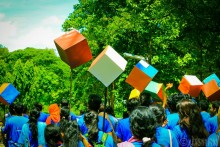
To mark the 6th anniversary of department of Architecture, Chittagong University of Engineering and Technology wore a festive look with bright color on 4th August, 2016. The most awaited two daylong celebration was inaugurated by the Vice Chancellor Rafiqul Alam followed by a colorful procession participated by all the teachers and students of the Architecture department.

To put on display the studio works two day long exhibition was arranged for the public at the outer area of the central auditorium where the projects from pencil sketching to large scale urban design were displayed. And the exhibition space itself became the splendid space to see and move on. The live caricatcher drawing by the students was the most attention-grabbing part of the exhibition.

The focus part of the day was the publication ceremony of the department’s first ever publication “OKKHO” by the 11 batch which was dedicated to the meritorious student Muhiminul Islam Siyam, a 5th year active member of the Architecture family whom the department lost due to a road accident early in March, 2016.

Chittagong University of Engineering and Technology
Celebration Rally at CUET | Photo courtesy: Ongshuman Roy


The evening was hyped by a attention-grabbing seminar conducted by Architect Zarina Hossain, Architect Mustiafiz Al Mamun, Artist Shaila Sharmin, Architect Kuheli Chowdhury, Architect Archishman Dash, Architect Mahmuda Chowdhury, Architect Sayed Sultan Ahmed, Architect Aritra De Arka titled “public realm” where the audience had a glimpse of how an architect and artist together can make a ordinary space into a recreational comforting functional space. The day was closed with traditional musical night “Baul shandha” by folk artist from Kustia that made the night more magical one as CUET is surrounded by natural beauty.

Photo courtesy: Sirat Serena Shohiny


The second day of the festival marked with color fest, surprising flash mob  and the most awaiting moment of the program the cultural night which started with memorizing the pioneer Architects  and the closest member of Architecture  department whom they had to say good bye with a heavy heart. The variations in the performances, the use of graphical representation made the viewers speechless. The function was followed by concert staged by the band “The Stone” and thanks giving ceremony to the hard working people of the department whose effort and sweat make the program come to pass.

Tahsin Nurun is an undergraduate student of Dept. of Architecture CUET.

<< More images of the Event>>

  • CONTEXT_6th Anniversary _CUET 02
  • CONTEXT_6th Anniversary _CUET03

Save

Save

Save

Street Children Rehabilitation Center | Bangladesh University

Street Children in Bangladesh are the most neglected group of children where a very few number of initiatives were ever taken to reduce this issue. A child is a face of a family, a future unit for the country. Unfortunately these children living on the streets live a very poor quality life. They suffer from the very basic needs to any facilities. The potentials of these children thus get spoiled every day and for their poverty, every day they get involved into dangerous professions.

Terraced built form, Street Children Rehabilitation Center © Md. Shahbuddin | BU


This proposal for the Street Children Rehabilitation Center stems out of a better future of those children. In our present condition a major part of population living under the poverty level. Street children are a part of our society and this part of children are always deprived. In reality the only hope lies in the hands of our children, whose immense potentials are probably the most precious resource our country possesses. So it is of vital importance to setup a Street Children Rehabilitation Center to mature their potential and to direct their potential in the right way, the way to become a responsible citizen with fully aware of the tasks the nation expects from them.

Street Children Rehabilitation Center © Md. Shahbuddin | BU


The proposal of rehabilitation center arises for the goal to embody the pride and hope, the nation’s places on its future generation, recognition that street children with the enormous potential are considered as a great part of our national wealth. And the objectives are (a) to fulfill a long felt of need for an organization to guide, advice, co-ordinate and encourage the activities of the various children organizations, both governmental and non-governmental; (b) to rehabilitate and provide philosophical, educational and vocational training to the street children as they become self-dependant individuals as much as possible.

Sections of Street Children Rehabilitation Center © Md. Shahbuddin | BU


The proposed center is hosting all activities regarding for child development such as physical, emotional, cognitive and socio-cultural that is obviously needed for their future development. The aim is to flourish all creative efforts of children that inspire others to explore themselves at its best. A street children re-habitation center would therefore work as an institution where they will be flourished with their full capacity. Giving them the chance to maintain & return to a quality life the project thus has a great value & potential from national perspective as well.

Model_Street Children Rehabilitation Center © Md. Shahbuddin | BU


In masterplan effort has given to transcreate the environment of street with careful consideration of safety and comfort, scale of street, openness of space, permeability of function, relation with the nature, participation of children by shearing and gathering  etc.

Street Children Rehabilitation Center © Md. Shahbuddin | BU


For children’s psychological and mantel growth recreational space are created like indoor and outdoor play area, open air amphitheater, multi-purpose hall etc. to entertain the children. For their physical growth and fitness gymnasium and health center are provided. For the financial support of the family member of the street children, the project provide sells center, where the product made by children like handy craft product pottery dolls etc. are sold.

Street Children Rehabilitation Center © Md. Shahbuddin | BU


Children learn & think in their own way, the adults just can facilitate that creating favorable environment for their effective learning. The architects have the great responsibility of designing such learning spaces which would be helpful in the whole development of a child. According to CRC articles the full development of a child means (his or her physical, socio-emotional and cognitive development) the development of the child’s personality, talents and mental and physical abilities to their fullest potentials – that is a child’s physical, cognitive and socio-emotional development.

Street Children Rehabilitation Center © Md. Shahbuddin | BU


During the thesis close interaction with the children, discussion with them and observation of their reaction to spaces threw some light in the formulation of design guidelines. “Children  are often denied the right to speak for themselves either because they are held as incompetent in making judgments or because they are thought of as unreliable witnesses about their own lives.”

<< Image gallery >>

  • 04
  • model 01
  • Sections_of  Street Children Rehabilitation Center
  • terraced-built-form-_new
  • Street Children Rehabilitation Center 03_BU
  • Street Children Rehabilitation Center 05
  • CONTEXT_SCRC_BU
  • Street Children Rehabilitation Center_02

Save

Save

Dusai Resort & Spa – Sylhet | VITTI Sthapati Brindo Ltd.

| From the architect |

Dusai Resort & Spa is a destination resort equipped to serve more than 180 guests at a time with guest living facilities of 80 rooms, 3 restaurants, children’s playground facilities, swimming pool, spa, convention hall etc . Guestrooms are nested on top of the hillocks while the services and walkways are placed in the valleys.

.

Dusai Resort & Spa | VITTI Sthapati Brindo Ltd.

.

PROGRAM:

  • Reception Hall Wing, equipped with car drop, open lounge facilities and back office. The open pavilion like structure floats in the water surrounding the reception area.
  • Convention Centre and Motel Wing, equipped to accommodate 60 guests with 20 rooms and a convention hall for 70 persons for meetings and events with dining facility.
  • Main hotel, located at the central area consisting 30 rooms for 60 guests. It also accommodates back of house facilities and main kitchen and laundry facilities in the semi-basement area.
  • 4 Suite Villas, accommodates 40 guests in Duplex and Triplex with 2 no. of bedroom suites in each villa.
  • 5 Deluxe Villas, accommodating 48 guests in 24 rooms, each villa consisting independent 4 guest rooms
  • 2 Presidential Villas, of independent cottages with separate guest rooms
  • Spa with 6 treatment rooms with the view of the hills
  • 3 Thematic Restaurants with dining and all equipped kitchen facilities
  • Boat Station, docking 10 boats.
  • Gym, for 6 users with locker room and changing facility for male and female and steam bath.
  • Parking with 55 car parking facilities with 4 minivans along with drivers waiting shed.
  • Drivers Dormitory for 10 person in 3 rooms.
  • Children’s Play Area in the valley for the enjoyment of different age group of children
  • Swimming pool in 3 tiers. First tier consisting Jacuzzi pool, in second relaxing pool and at the end lap pool with heating facilities. It has large deck area and a sunken café.
  • Guest Maid Dormitory for 12 persons
  • Mosque for 100 persons
  • GM & Executive Quarters for 16 Executives
  • Staff Accommodation Bldg with 16 rooms accommodating 70 staffs
  • Existing Owners Bungalow
  • Golf Lounge And Bar
  • Utility Bldg for electro mechanical facilities

.

Concept diagram _ Dusai Resort & Spa | VITTI Sthapati Brindo Ltd.
Concept Diagram _ Dusai Resort & Spa   |   VITTI Sthapati Brindo Ltd.
Master Plan _ Dusai Resort & Spa | VITTI Sthapati Brindo Ltd.
Master Plan _ Dusai Resort & Spa   |   VITTI Sthapati Brindo Ltd.


PROJECT HISTORY

The site used to be a garden and Mr. Naser Rahman’s (the client) ancestors’ vacation house. All the trees were planted and nurtured by his father, the ex finance minister of the country. He fostered this serene landscape to be enjoyed by his 5 children and their grand children. Several years after his parents’ demise Mr. Rahman decided to expand this vacation house to be used by their extended family member. Later on in 2010 considering the public demand for tourism, he decided to transform their vacation house into a resort and share the serene environment with the people. The resort is named after his parents using their initials, Du+Sai=Dusai. The design work started in 2009 and later in 2010, January the construction commenced. It began with the villas followed by Staff accommodation Buildings and main building in places. The Resort inaugurated in mid 2012 with soft opening. The resort is 4 hours drive from capital Dhaka. So it became a popular destination for people seeking retreat on weekends. The resort hosts regular cultural shows and programs on different national holidays. The landscape also has flourished over these two years of occupancy.


Longitudinal Sections _ Dusai Resort & Spa | VITTI Sthapati Brindo Ltd.
Longitudinal Sections _ Dusai Resort & Spa   |   VITTI Sthapati Brindo Ltd.
Plan of Deluxe Villa & Spa | VITTI Sthapati Brindo Ltd.
Section of Deluxe Villa | VITTI Sthapati Brindo Ltd.
Section _ Deluxe Villa   |   VITTI Sthapati Brindo Ltd.


ARCHITECTURAL REPORT

Harbored in the serene green hillocks of tea plantations in northeast Bangladesh, “Dusai Resort & Spa” is the first destination resort of its kind in Bangladesh. The complex exudes the essence of a tribal village with its formation along the sloping hills. It includes residential, dining, swimming pool, spa, conference, and indoor and outdoor sports facilities. The site consists of three shallow hills and valleys. The public area with reception and convention hall is placed on the first hill and all the guest rooms are places on the slope of the hills for ease of movement. Other facilities are placed towards the valley. The vehicular circulation ends in public area and the journey towards guest area is starts by foot or electric car. The internal roads and walkways are placed in a round trip encompassing the complex allowing one to travel the whole area in circular motion. The guest facility features a main hotel block and stand-alone bungalows.  There are two types of bungalows: cottages for families in a semi-private setting and deluxe cottages for couples in a more private setting, on the slopes of the south-facing hill. Service amenities blend semi private and private zones.

.

Plan of Main Hotel _ Dusai Resort & Spa | VITTI Sthapati Brindo Ltd.
Plan _ Main Hotel _ Dusai Resort & Spa | VITTI Sthapati Brindo Ltd.
Plan of Tea Valley Restaurant _ Dusai Resort & Spa | VITTI Sthapati Brindo Ltd.
Plan _ Tea Valley Restaurant _ Dusai Resort & Spa | VITTI Sthapati Brindo Ltd.
Valley Restaurant: This one is built as a curve respecting natural contour. Roof has a composite wood and metal frame structure with thatch. | Photo Courtesy : Digita Interactive Limited


Sylhet is home to the “Khasiya” tribes. The project layout is inspired by their indigenous housing style to blend with the nature and hilly region. The local climate causes high rain with flash floods during the rainy seasons, therefore pitch roofs are incorporated. The structures sit on concrete frames anchored to ground allowing the villas hanging on the edge of slope without disturbing the natural contour. Existing trees shape out the setting of the villas, so that the wilderness is unharmed. The resort is designed by cautiously considering the natural setting and contour site. This resort allows the guests relish the essence of living within nature.

.

PROJECT TECHNOLOGY

The resort showcases a hybrid construction system of indigenous tea estate bungalows and standardized concrete frame structure. Local indigenous wood joinery techniques were combined with contemporary metal joinery systems. The results were sleek, lightweight wooden trusses that also have metal plates, nuts and bolts. Slender, concrete framing anchored to the ground raises the structure above soil. A roof truss forms the shape of the structure, which is then cladded with locally available lightweight thatch and mud tiles. These raised structures are then approached by an independent open riser stairs. Local technology and materials with local workmanship have been extensively used here.

.

Reception hall : Open pavilion style structure with sloped, mud tiled roof and wooden truss framing. Set in a lush green and non air conditioned. | Photo Courtesy : Hasan Saifuddin Chandan
Reception Hall : Open pavilion style structure with sloped, mud tiled roof and wooden truss framing. Set in a lush green and non air conditioned. | Photo Courtesy : Hasan Saifuddin Chandan


MATERIALS

The project construction materials comprise of locally available materials combined with indigenous construction techniques. Concrete structure infills are comprised of brick walls. Outdoor facade rendered with fair face cement plaster and indoor facades comprises of regular cement mortar plaster rendered and painted. All floors are finished with homogenous matt finished tiles & Villas have wooden floors. General ceilings are cement plastered and finished with paint and some parts are dry gypsum plaster finished.

All the upper floors of the villas and the valley restaurant have exposed roof structure with bamboo & thatch roof ceiling. In some public spaces comprise exposed roof structure with wood and wood veneered finished ceiling. The hand rails grab bars and doors are made with locally acquired aged walnut colored solid wood.  All out door surfaces are natural finish so that it blends well with the surrounding green nature. Pitch roofs are a mix of handmade mud tiles and thatch roof with high pitch varying 24-40 degree slope to withhold the heavy rain during monsoon.

.

Detail of Valley Rasturant _ Dusai Resort & Spa | VITTI Sthapati Brindo Ltd.
Detail _ Valley Rasturant _ Dusai Resort & Spa   |   VITTI Sthapati Brindo Ltd.
Valley Restaurant Interior: Thatch roof, wood and metal composite truss, wooden frame work all are visible here. Interior decor has been kept to a minimum to emphasize the structure itself. | Photo Courtesy : Ahsanul Haque Rubel


PROJECT SERVICES

The entire project is powered from national grid. The project has an onsite 750 MW power substation. As secondary back up power 3 Diesel powered generators are used in a synchronized system. Garden lights and part of outdoor lights are powered off grid by solar power. The HVAC system is designed as dispersed system with Variable Refrigerant Flow (VRF) cooling system. This is an advanced energy efficient system. The water supply and sewage distribution system is also independent and off grid. The whole resort area is served by wifi net work, access control system and firefighting and detection system. It also has a heated swimming pool. The natural water reservoir and lakes work as water storage for firefighting. The resort complex contains its own independent automatic laundry facility. Its kitchens are fitted with advanced kitchen equipment.

.

Permeable path leading to Bungalows. Bungalow roofs are thatched, facade is of concrete tiles. | Courtesy : Ahsanul Haque Rubel


CONSTRAINTS AND SOLUTIONS ACHIEVED

Contour Site: 

The contour site posed as a constraint as well as adding diversity to the project. The hilly site on the natural setting urged for the wilderness to be untouched whereas building on such setting with usual techniques could offset its natural setting. Following the indigenous construction style and technique; the longer structures were broken into smaller ones matching contour as opposed to following regular construction techniques that would have called for the contour site to be flattened to build a sizable structure.

Landslide:

The structures are built on slopes that posed the threat of landslide which was resolved by installing slender concrete columns deep into the earth and mimicking the floating structures of local indigenous “Khasiya” houses.

Woods:

The land was deep into the woods and populated with tall trunk trees. It was difficult to find any buildable space. The villas had to be placed in between trees. These trees actually governed to shape out the final layout of this resort.

.

Swimming Pool: It is set in a natural dip, surrounded by dense vegetation providing required privacy | Photo Courtesy : Md. Ishtiaque Zahir Titas

Details: [a] Tiled path leading to spa on the right and Bungalows to left. [b] Swimming pool. [c] Bungalows, characterized by deep overhangs. | Photo Courtesy : [a] & [c] Ahsanul Haque Rubel [b] Hasan Saifuddin Chandan
 .

SPECIAL FEATURES

  1. Prioritizing nature

The aesthetics of the resort always prioritized nature over built structures. Intrusion was kept to a minimum during placing structures on the contour site and surrounding green. Structures are built at the base of hillocks at a low height to highlight green in the background. Existing wilderness to the west was left untouched, only seven trees were taken down, and 300 new plants have been planted. Thus natural grass and shrubs were retained as ground coverage. Water bodies were re-excavated. In the buildings large openings with folding windows invite nature to come inside and let guests enjoy the spectacular and uninterrupted view of the surrounding landscape from their dwellings. Nature is not lost in its extravagance but nurtured.

  1. Re-imagining the dream of living in a tea plantation area

The ingenuity of this complex lies in constructing a luxurious resort with latest facilities without losing its ethnic identity. In a tea plantation area, built structures give way to the existing landscape and blend with nature. Larger buildings were avoided in order to respect the site. The humbleness of the design blends the complex with tree gardens in surrounding.

  1. Linear progression

The linear site imparts an impression of a journey. After arriving at the resort, guests start their journey by walking along the curved path through hills to reach their destination. Programs are distributed into public, semi-private and private zones in a consecutive manner. Reception is at the beginning of the public zone and leads to the semi-private zone with cottages for families, along with recreational amenities, such as a sports arena and swimming pool, followed by dining with a golf pudding range view, and ending at the spa facilities. Villas are placed around a courtyard, and the path loops around it that leads to the end of the complex and into a more private zone. The private zone at the end of the complex consists of exclusive residential cottages.

  1. Contribution to local economy

During construction a portion of construction brick, cement, and wood were supplied by a local contractor, and local laborers were involved in construction. Eighty percent of staff employed in the resort are locals. Ninety percent of fresh food is also locally produced and supplied.

.

Permeable path leading to spa on the left and bungalows on the right. Path in general follow the contour of the site. | Photo Courtesy : Digita Interactive Limited


DETAILS OF SUPPORTING STRUCTURES

The complex includes guest accommodation facilities with Spa, steam room and restaurant. Other services include parking, convention hall, swimming pool, poolside bar, Jacuzzi, gym, business center, laundry facilities, boat station etc.

  • Parking with 55 car parking facilities is situated at the East side of reception, in a semi paved soft green landscape. The cars drop off guests at the reception allowing them to appreciate the natural tranquility by walking through hillocks to reach their destination.
  • Convention Centre and Motel Wing is set behind the reception building as a separate entity, so that the larger gathering of convention guests do not disturb the serene harmony of the resort area. It has an all equipped convention hall for 70 people and residential facilities for 25 guests in 10 rooms..
  • Spa overlooks the green golf range stimulating a calming effect on guests. It contains 6 treatment rooms along with 5 person foot spa.
  • 3 Restaurants accommodates the guests with dining and high end kitchen facilities with one air conditioned and the other one naturally ventilated.
  • Boat Station is an open pavilion type structure at one end of the serpentine lake facing all the villas. It accommodates 10 boats.
  • Gym is located at the end of swimming pool at the base of a hill. It is fully furnished to accommodate 6 users.
  • Guest Maid Dormitory is incorporated in this resort in response to our social need, in order to accommodate young couple families with baby’s nanny to take care of their child.
  • Drivers Dormitory is situated near the entrance gate in order to assist car owners with drivers
  • Mosque is located near the entrance gate in order to serve the local community as per the clients requirement, since the owner comes from a pious family
  • Swimming pool with deck & sitting with heating system assisting all age group of guests
  • Childrens Play area is located in the valley on the other side of spa. It is a cave like concrete structure open towards field for the enjoyment of the guests’ children.
  • Golf Lounge And Bar
  • Utility Building accommodating substation, generator, boiler etc.

.

Details: [a] Spa Lobby: Semi-open, shaded and naturally ventilated. [b] Reception wooden truss details. [c] Main Hotel Lobby: Semi-open, shaded and naturally ventilated. | Photo Courtesy : [a] Digita Interactive Limited [b] Mustapha Khalid Palash [c] Hasan Saifuddin Chandan
Deluxe Villa Interior: Sloped thatch roof construction can be seem from inside. Folding partition opens completely to connect exterior with interior. | Photo Courtesy : Digita Interactive Limited


DETAILS OF LANDSCAPING

The existing natural water bodies were incorporated into the design of the complex. Natural herbal trees were unharmed and ground coverage shrubs were retained. Only 7 trees were removed during the construction and the wood was also used into structures. The landscaping technique caused least interruption in the natural setting and helped merging the structures with its surrounding.

SIGNIFICANCE OF PROJECT

This is the first of its kind spread out resort in the remote hilly region of Bangladesh. The project is a symbiotic and It employed local expertise and builders with appropriate local technology. It also embraces local culture and community. It contributed in local economy by acquiring the construction materials from local suppliers as well as daily fresh supply of grocery and vegetables from local community. In the resort regular cultural shows are arranged to foster  the Sylhety and Khasiya culture.

PROJECT ABSTRACT 

_ Name of the Project: Dusai Resort & Spa
_ Location: Moulovi Bazar, Sylhet
_ Name of the Client: Nasser Rahman
_ Site Area: 55567.90 sq. m.
_ Total built up area of the Project: 11103.42 sq. m.
_Year of Commencement: 2010
_Year of Completion: 2013


PROJECT TEAM

_ Architect: Md. Ishtiaque Zahir
Md. Iqbal Habib
_ Associated Architects: Nabila Aftab
Nabila Ali
Consultants
_ Architecture: VITTI Sthapati Brindo Ltd.
_ Structure: Tofazzel Hossain
Achintya Kumar Saha
_ Construction: Nasser Rahman (Client)


<< Image gallery >>

  • CONTEXT _ Dusai Resort & Spa, by Vitti _ location
  • CONTEXT _ Dusai Resort & Spa, by Vitti _ Concept new
  • CONTEXT _ Dusai Resort & Spa by Vitti _ Master plan
  • CONTEXT _ Dusai Resort & Spa by Vitti _ Long section
  • v
  • CONTEXT _ Dusai Resort & Spa by Vitti _ Spa and Deluxe villa
  • CONTEXT _ Dusai Resort & Spa by Vitti _ Tea valley restaurant
  • CONTEXT _ Dusai Resort & Spa by Vitti _ Deluxe Villa Section
  • CONTEXT _ Dusai Resort & Spa by Vitti _ Restaurant Detail
  • CONTEXT _ Dusai Resort & Spa, by Vitti _ 2
  • CONTEXT _ Dusai Resort & Spa, by Vitti _ 3
  • CONTEXT _ Dusai Resort & Spa, by Vitti _ 11
  • CONTEXT _ Dusai Resort & Spa, by Vitti _ 10
  • CONTEXT _ Dusai Resort & Spa, by Vitti _ 9
  • CONTEXT _ Dusai Resort & Spa, by Vitti _ 7
  • CONTEXT _ Dusai Resort & Spa, by Vitti _ 8
  • CONTEXT _ Dusai Resort & Spa, by Vitti _ 6
  • CONTEXT _ Dusai Resort & Spa, by Vitti _ 4
  • CONTEXT _ Dusai Resort & Spa, by Vitti _ 5

Save

Save

4th Earth Architecture Competition _ 3rd prize winner, Classroom by Archisan

| From the architect |

Project Background

A US-based organization Nka Foundation announced this competition to design a ‘Community Secondary School’ at Abetenim, Ashanti Region, Kumasi, Ghana. The challenge is to design a sustainable, cost-efficient and environment-friendly architecture with earth and local materials. The school will be consist of classrooms, administrative offices, library, laboratories, and dorms for boarding students, cafeteria hall, teacher’s quarter and sports ground for a population of 600 students(12 to 18 years old). Our participation was for the ‘Classroom Block’.

.

Designing a School for Ghana [ Classroom ] by ARCHISAN
 .

Concept

Abetenim, the flat land of palm trees, luscious greenery and driving rain compliments the tropical warm humid climate of Ghana. The essence of traditional mud houses of Ghana, climatic considerations, earth and local material’s characteristics and child psychology was the key factors for the design of the master plan and the classroom units.


MASTER PLAN _ Designing a School for Ghana [ Classroom ] by ARCHISAN
BACK ELEVATION _ Designing a School for Ghana [ Classroom ] by ARCHISAN
FRONT ELEVATION _ Designing a School for Ghana [ Classroom ] by ARCHISAN
 

Design Details

A celebration of culture & heritage is the essence of the rural vernacular architecture of Ghana that is responsive of socio-cultural, climatic & geological aspects. Our main concern is to design a place for child education with special attention to the psychology & activity pattern of the age group (12-18 years) for space arrangements and cultural heritage. This age group likes to interact in groups, as well as they need self-exploration. This was the basis for our space design such as classrooms, open classrooms (group interaction) and self-exploration space. This was also kept in mind while designing the master plan.

.

.

Designing a School for Ghana [ Classroom ] by ARCHISAN
 .

The classroom clusters are set within the site in a way that it creates a connection between courtyards of each cluster to serve as the assembly and group play area. The pocket spaces created within the clusters become the small group gathering and activity corner. Each cluster has indoor classrooms, outdoor learning areas and space for self-exploration at the upper levels. The solid walls are kept for personalization by the users, featured by graffiti and ethnic patterns of traditional painted huts of Ghana.

.

Designing a School for Ghana [ Classroom ] by ARCHISAN
 

Material Description

Concrete trench foundation has been introduced here, which is filled with earth up to the plinth level. The plinth level is plastered with neat cement finish. Rammed earth load bearing walls are 18 inches thick with the standard size brick column filled with RCC at the four corners of the room for strengthening. The locally available corrugated sheet has been used for roofing along with bamboo structure. Well-seasoned bamboo with reinforcement is used as a main structural system for roofing. Concrete lintel above the openings is designed for strength and lateral load.  All the openings and shutters are designed with locally available wood.

SECTION _ Designing a School for Ghana [ Classroom ] by ARCHISAN
Designing a School for Ghana [ Classroom ] by ARCHISAN
 

DESIGN TEAM: ARCHISAN

Mehnaz Chowdhury

Contribution: Research work, Design and Details, Structural Design, Selection of Materials, 3D, and Management

Sumaiya Mehjabeen

Contribution: Design Discussion, Write Up, Post Production, Presentation, and Collaboration.

3D Visualizationstudio MORPH, H M Romanur Rahman + Team


<< Image gallery >>

  • CONTEXT _ Designing a School for Ghana [ Classroom ] by ARCHISAN _ 03
  • CONTEXT _ Designing a School for Ghana [ Classroom ] by ARCHISAN _ 11
  • CONTEXT _ Designing a School for Ghana [ Classroom ] by ARCHISAN _ 12
  • CONTEXT _ Designing a School for Ghana [ Classroom ] by ARCHISAN _ 05
  • CONTEXT _ Designing a School for Ghana [ Classroom ] by ARCHISAN _ 10
  • CONTEXT _ Designing a School for Ghana [ Classroom ] by ARCHISAN _ 09
  • CONTEXT _ Designing a School for Ghana [ Classroom ] by ARCHISAN _ 08
  • CONTEXT _ Designing a School for Ghana [ Classroom ] by ARCHISAN _ 04
  • CONTEXT _ Designing a School for Ghana [ Classroom ] by ARCHISAN _ 02
  • CONTEXT _ Designing a School for Ghana [ Classroom ] by ARCHISAN _ 07
  • CONTEXT _ Designing a School for Ghana [ Classroom ] by ARCHISAN _ 06
  • CONTEXT _ Designing a School for Ghana [ Classroom ] by ARCHISAN _ 02

Little Wonder School , Uttara | STHAPOTIK

| From the architect |

We have just completed a kindergarten school for children  with Autism Spectrum Disorder located at Uttara residential area of Dhaka, Bangladesh. Our goal was to provide enough space for children (ASD) with classroom and playground around the nature and also for all of their parents and nursing staff to feel safe considering limited budget and time.

kindergarten school design, Dhaka, Local material
ARCHITECT’S SKETCH © Sharif Uddin Ahammed


The design is mainly developed bringing all the aspects of the site like existing structures, trees into consideration. Noted that the next plot is a 9 storied apartment just beside the north part of the site, which has been considered as a backdrop of the site and thus the roof is designed pitched rather than flat so that the diffused sunlight which is reflecting form the adjacent building can easily enter the classrooms. The main idea of keeping the existing structure is to reduce the cost and shorten the construction period. Point to be noted that the construction period of this building is only two months.

kindergarten school design, Dhaka, Local material, Bamboo architecture , Contemporary Vernacular Architecture
TEACHER STUDENT OUTSIDE ACTIVITY _Little Wonder School ©Sharif Uddin Ahammed


Now a days the schools of Dhaka city  is literary ‘classrooms only’ with no field. So the zoning of this school building was very important and has undergone many thought process of which is the best fit at the beginning of the design process. Things that have been considered in the zoning process –

  1. Climate
  2. Surrounding structure and trees
  3. Existing structures and trees
  4. To create an impression of a school with an open field.
kindergarten school design, Dhaka, Local material, Bamboo architecture , Contemporary Vernacular Architecture
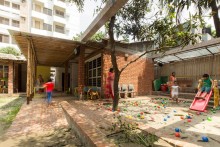
Front porch ©sharif uddin Ahammed


The project has been considered like a pavilion, which will be the unseparated part of the pavilion. And for that the classrooms have been arranged in such a way so that the students can utilize the interior space as an open field. Instead of walls on both sides of the room the Architect has designed a removable door in such way which is easily operable and connects with outer space. As well as the classrooms become self-sufficient in terms of light and air flow.

kindergarten school design, Dhaka, Local material, Bamboo architecture , Contemporary Vernacular Architecture
Plan_Little Wonder School ©Sharif Uddin Ahammed
kindergarten school design, Dhaka, Local material, Bamboo architecture , Contemporary Vernacular Architecture
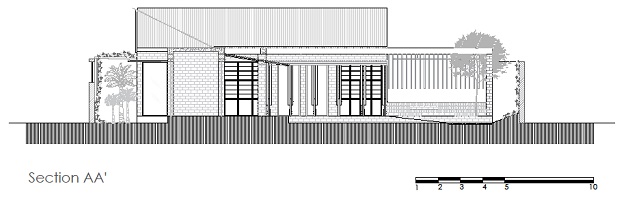
Section_Little Wonder School ©Sharif Uddin Ahammed


Total school is a ‘L’ Shaped building that holds a playground which is the most important design aspect of this project. The classroom required ample light so the roof has designed to bring the natural diffused light into the classroom. No bare wall is constructed to interfere the wind flow channel. Folding door has been designed through which the air passes naturally. In addition to that the openness gives the impression of a bigger classroom. The most important thing that has been considered is that we have tried to incorporate the sustainable aspect of Reuse, Reduce and Recycle in various terms.

kindergarten school design, Dhaka, Local material, Bamboo architecture , Contemporary Vernacular Architecture
Class room activity_Little Wonder School ©Sharif Uddin Ahammed


The south west quarter of the site is used for entrance walkway, and the rest of the part is for classroom and playground. Placing rooms for class, teacher’s common room, library, therapy room, services and security in north-west and east corner and playground space achieves both simplicity and security according to contextual demand.

kindergarten school design, Dhaka, Local material, Bamboo architecture , Contemporary Vernacular Architecture
Extension of class room_Little Wonder School ©Sharif Uddin Ahammed


We have considered the existing structure for economic sustainability. Planting creepers along the outer edge of boundary wall which gives a sense of privacy and fencing, and keeping existing trees, and north and east corridor along the circle between them. Covered with the semi outdoor circulation and slop roof outside, its overall structure achieves to protect children’s pleasure with its strength.

kindergarten school design, Dhaka, Local material, Bamboo architecture , Contemporary Vernacular Architecture
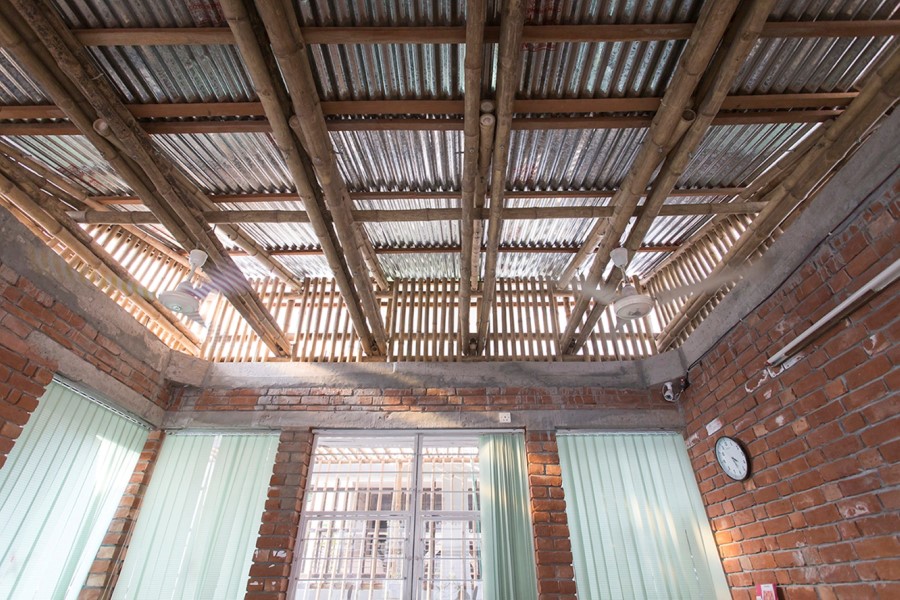
Class room ceiling_ Little Wonder School ©Sharif Uddin Ahammed


Wall is designed with exposed brick keeping its original texture, doors have been made of wood, circulation floor has done with exposed brick and the classroom with colored NCF. Ceiling is totally made of bamboo with G.I sheet coverings. Window is also done with glass and metal. Point to be noted that each and every material’s embodied energy is low and locally found, so transportation cost is also helped into the overall cost cutting. The whole project is developed to create an environment friendly for the special children.

kindergarten school design, Dhaka, Local material, Bamboo architecture , Contemporary Vernacular Architecture
Bamboo ceiling detail_Little Wonder School ©Sharif Uddin Ahammed


The ambition is to create a sense of belonging among residents and to inspire a process of continuing work in its environment. The project, due to its contextual and local specificities, has been developed through a participatory process with the community. Different teaching system and workshops with ASD students, teachers, and volunteers have been instrumental to bring this culturally different community to an exchange of ideas.

kindergarten school design, Dhaka, Local material, Bamboo architecture , Contemporary Vernacular Architecture
View from entry_Little Wonder School ©Sharif Uddin Ahammed


The school wall and openings is built with combination of metal, wood and bricks to achieve thermal balance inside its five classrooms. For thorough energy saving, we have allowed defuse sunlight, the spot garden to improve ventilation, the rooftop acts as vegetable garden for heat insulating of rooftop. From the perspective of ASD children education ,they find difficulties generally related to communication, social skills and sensory sensitivity, feeling everything around here, and nourish their sensibility and ability to think. The materials have been selected according to two main criteria: proximity and those following bioclimatic building principles and recovery / upgrade of traditional techniques. 100% of the materials of the project are local, they can all be found in the city, not imported.

MORE INFORMATION ABOUT THE PROJECT

 Site Area: 5872 sft

Year of Commencement:  25th October 2015

Year of completion: 30th December 2015

Project Duration: 2 months.

Project Cost in BD Taka: 16 lac.

PROJECT TEAM

Firm: Sthapotik

Architect: Sharif Uddin Ahammed

Structure Designer: Taposh Kumar Banik

Interior Designer: Sharif Uddin Ahammed

Landscape Consultant: Sharif Uddin Ahammed

Associate Architect: Raisa Sadia

Civil Contractor: Shiraj Mia

Bamboo Contractor: Badsha Mia

Metal Contractor: Ataur

Gardener: Anny

<< Image gallery >>

  • CONTEXT_Little Wonder School_Sharif Uddin AhammedCONTEXT_Little Wonder School_Sharif Uddin Ahammed_08
  • Context_Little wonder school_ STHAPOTIK_02
  • Context_Little wonder school_ STHAPOTIK_03
  • 09.ENTRY-PLATFORM-Large-Custom
  • CONTEXT_Little Wonder School_Sharif Uddin AhammedCONTEXT_Little Wonder School_Sharif Uddin Ahammed_06
  • CONTEXT_Little Wonder School_Sharif Uddin AhammedCONTEXT_Little Wonder School_Sharif Uddin Ahammed_07
  • CONTEXT_Little Wonder School_Sharif Uddin Ahammed
  • 21.BACK-YARD-BANANA-TREE-COURT-Large-Custom
  • CONTEXT_Little Wonder School_Sharif Uddin Ahammed
  • CONTEXT_Little Wonder School_Sharif Uddin AhammedCONTEXT_Little Wonder School_Sharif Uddin Ahammed_04
  • CONTEXT_Little Wonder School_Sharif Uddin AhammedCONTEXT_Little Wonder School_Sharif Uddin Ahammed_05
  • CONTEXT_Little Wonder School_Sharif Uddin AhammedCONTEXT_Little Wonder School_Sharif Uddin Ahammed_08
  • CONTEXT_Little Wonder School_Sharif Uddin AhammedCONTEXT_Little Wonder School_Sharif Uddin Ahammed_09

Save

Save