
World Environment Day 2026
Urban [Re]Stitch
A Meet up with Nadia Khalid Tithi, the Humanitarian Architect
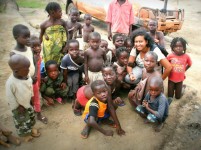
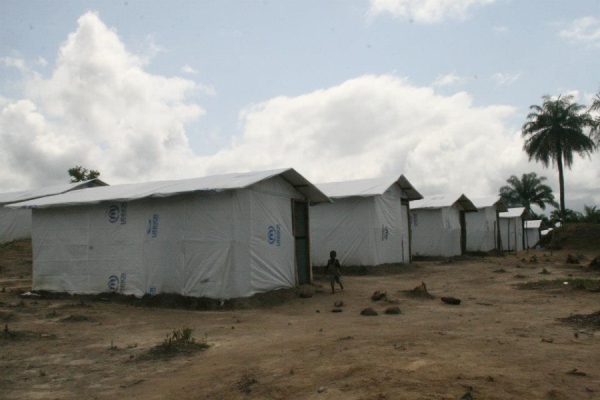
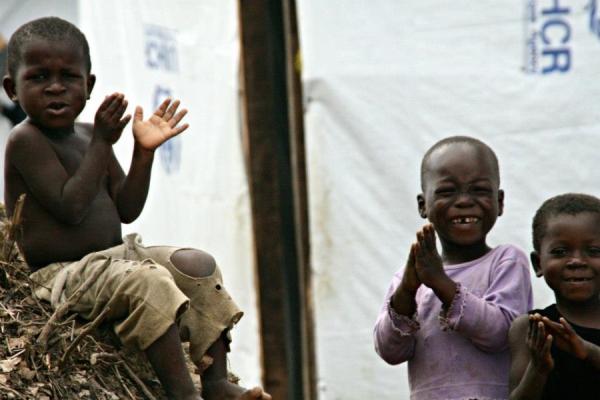
At the moment Nadia Khalid Tithi is working with International Federation of Red Cross and Red Crescent Societies-Bangladesh as the Manager of ‘Response and Preparedness for Response’ stationed at Dhaka. Completing her Masters in Disaster and Emergency Practice from Oxford Brookes University, Nadia, an architecture graduate from BUET joined Save the Children UK in their head office at London. Since then she continues with her effort to work with people affected by disasters and conflict in different areas across the world. She was involved in design and implementation of school projects and youth friendly infrastructures in Liberia for Ivorian refugees with Save the Children. In South Sudan, she worked with the French organization ACTED as a Livelihood Manager setting up refugee camps and conducting different livelihood projects as well as various shelter projects. Before joining IFRC, Bangladesh she was in Iraq as the Shelter Manager for Save the Children dealing with Syrian refugees.
Contextbd team met up with her in Dhaka last month to discuss and discover events of her venturesome career covering personal experience to organizational mechanism.
It is not very common for an architecture graduate from Bangladesh to get involved in development sector. There are few we must agree but definitely not many. How did you get involved?
I got interested in studying architecture with an intension to do something creative yet not solely confined to architecture. Strangely enough, while doing internship in a practice I did not see much scope for creativity. The total professional set up in our community is business driven and aimed at maximizing commercial profit. Most of the projects are typical, may be in some cases slightly altered. I was not satisfied with this phenomenon. I was looking for something with purpose, something humane, something for which I can be passionate about rather than just serving the elite. With this vision I started to look for a proper course which could actually help me to translate my architectural skills to something humanitarian. That’s when I found out about this course, Development and Emergency Practice in Oxford Brookes with a focus on Shelter after Disaster. I straightaway decided to join the program and started in the following fall.
It was very difficult though getting any proper guidance from the architecture community here in Bangladesh, had to search for a while and choose myself. However at the end it proved to be a life turning decision.
Do you consider your work in development sector a career change as you are trained as a qualified architect?
Not really, I consider this a continuation or some kind of specialization, but definitely not career change. Architects have specific role to play in this sector. I mostly work on shelter design and management for which my knowledge in architecture is not only beneficial but certainly essential. Whenever the organizations search for people in the shelter sector, they prefer architects with some experience in the humanitarian sector. Training or diploma in development sector would be an added advantage. You need people who know technical issues, functional solutions, shelter guidelines and have knowledge of necessary software like CAD, GIS etc.
Therefore, let me ask a relevant question. How do the organizations maintain the technical and functional standard in the shelters designed?
Depending upon which type of shelter you are designing specific functional and technical requirements differ. In development sector there are different types of shelters- emergency, transitional and permanent depending upon disaster situation, life span and function. Primarily you must look to have the architectural standards achieved. There is a Global Shelter Cluster-a public platform with 35 global partners who participate on a regular basis led by IFRC and UNHCR. The Global Shelter Cluster has guidelines for all kinds of shelter conditions, including those in a camp situation or even for host-communities. Apart from these, there are ‘Sphere Standards’ which are followed by organizations while implementing shelter projects. ‘Sphere standards’ are one of the most widely known and internationally recognized sets of common principles and universal minimum standards for the delivery of quality humanitarian response. In case of Bangladesh, there is the Humanitarian Coordination Task Team which consists of Shelter Cluster among others. Shelter Cluster in Bangladesh is jointly led by IFRC and UNDP. Within the structure it has Shelter Technical Working group which deals with the technical issues, standardization and best practices. If you have any issue regarding shelter projects and standard you can raise it in the cluster. The Shelter Cluster in Bangladesh was established after Cyclone Sidr when with the presence of so many local and international agencies delivering shelter projects,everyone experienced the need for such a platform to deliver organized and effective response achieving optimum standard.

What are the scope for an architect to apply his creativity in this sector ?
Frankly, not so much.Specially in emergency situations when you are dealing with basic life saving challenges it is very difficult to even think of ‘creativity’. For example, all of a sudden you need to deal with 10,000 refugees fleeing from violence, you will need to just circulate tents or tarpaulins to provide emergency shelter, you don’t have the option to apply any creative skill in that very moment. But for a longer term project like designing a refugee camp you could be creative and exercise some design knowledge. Projects like community space and school design in disaster prone areas depends on budget as well. No one is holding you back from coming up with interesting solutions. But you can’t just go wild with your imagination. It has to be functional first. Then there is the question of cultural appropriateness, local availability of materials, etc.
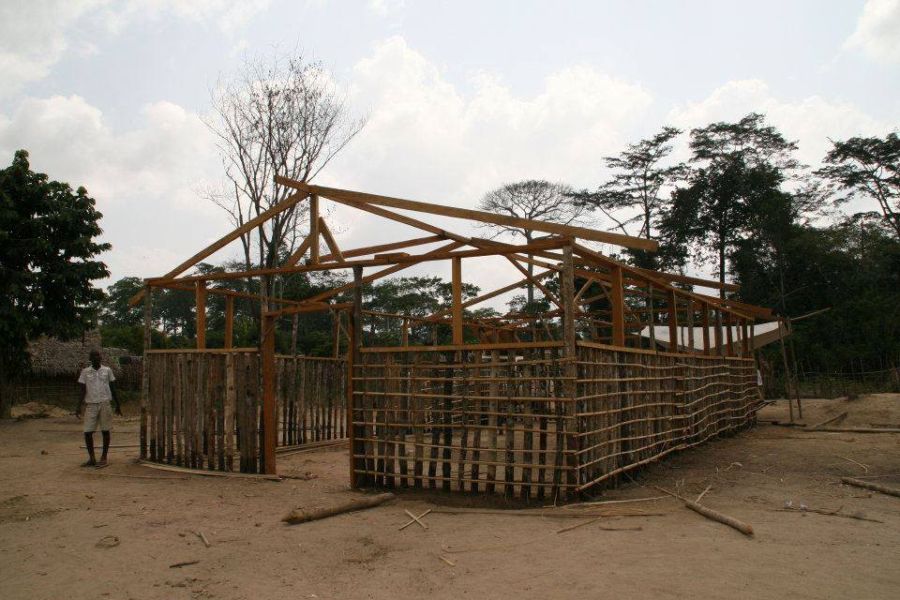
But as an architect you should keep looking for scopes. Let me give a very simple example- in Liberia there was a school project for refugee children near the Ivorian border. It was a linear rectangular plan with no veranda or court yard and it was not at all appealing to the children. I was told it is usually done such way because there is not enough budget for going beyond that. However, we managed to tweak things a little and came up with better solutions within the same budget by designing a simple ‘L’ shaped building that includes a courtyard which was much more attractive to the kids.

Do architects have a say at management level?
It depends. If you are a shelter analyst or say a site engineer, you are taken as a technical person in field where your authority might be confined to technical issues only, while people with no expertise in a particular area might have a better say because they are in an advantageous position. But if you are a shelter manager or a shelter coordinator, you can influence the decision making process. It also depends on the geographical area one is covering, it can be on a county level or even on national, regional or global platform.
Give us an idea about the actual in-field scenario.
You have to work in remote areas; that’s obvious in most of the cases. There might be communication problem like no phone or internet network. You have to depend on either VHF radios or wireless network. But those are actually meant for official use, not for personal communication. There can be satellite phones but that’s usually quite unreliable.
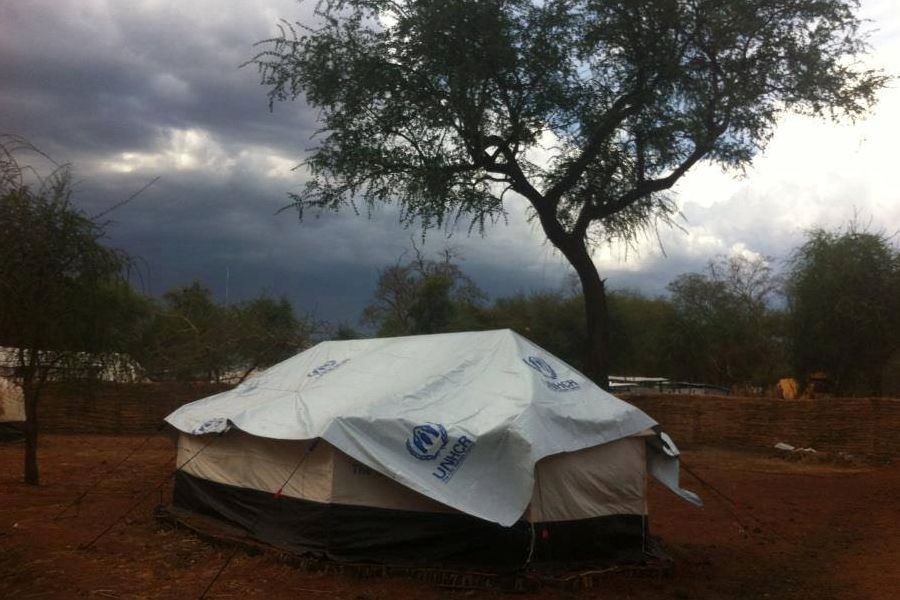
You might be living in tents for long time with temporary latrines etc, sometimes in mud houses with poor sanitation. Food supply can be poor with not much variety. There are locations where there is no market, so there can be scarcity of even regular food items like eggs and vegetables. Sometimes canned food such as tuna or corn beef come from the capital but you won’t have much choice as it might be a large supply of a single item. I had a situation where I was entirely dependent on over boiled pasta with lentils (and nothing else) for months with no fresh vegetables or fruits or even chicken. In a nut shell you have to be prepared for the worst.

Please specify some safety issues.
Well, in conflict zones there is always life risk. In case of rebel attacks you might need to evacuate, hide in bunkers and rely on emergency food stock. Usually you are not allowed to move by your own and you must carry your work permit all the time to pass through checkpoints. In the locations I worked there were curfews after dusk. In most of the locations there are rebel groups fighting each other. Also when there are thousands of refugees coming everyday, the scarcity of food, accommodation and other commodities creates tension with host communities and people can get engaged in fights which might turn violent. Soldiers of different groups can get drunk especially at night and with arms, they are dangerous. In some border areas there are aerial bombing and risk of land mines as well. One also has to keep in mind the hostile insects and reptiles like snakes, poisonous spiders, scorpios,etc. It is required to take extra care of health and take medicine when necessary. I had to suffer badly from Malaria in Liberia because of not taking Malarones (anti-malarials) regularly. There was an outbreak of Hepatitis E during my stay in South Sudan and during such times it is very important to be vigilant.
Give us an idea of the projects you worked on.
Well, after graduation first six months I worked in headquarter of Save the Children UK. They were about to initiate a shelter division and therefore needed research and documentation about the shelter projects in different parts of the world. There I got basic life saving trainings as well.
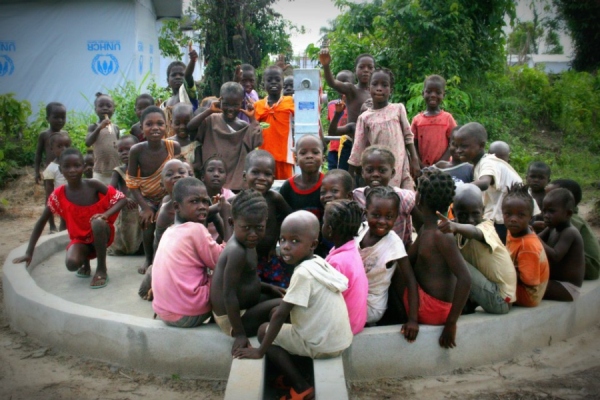
Liberia was my first official mission. In Liberia I was shelter manager for two counties working with Ivorian refugees. I was assigned to build schools, child friendly spaces and early childhood development centres for young adults in the camps. Along the border of Liberia and Ivory Coast we worked on developing some permanent schools as well as rehabilitating existing schools.
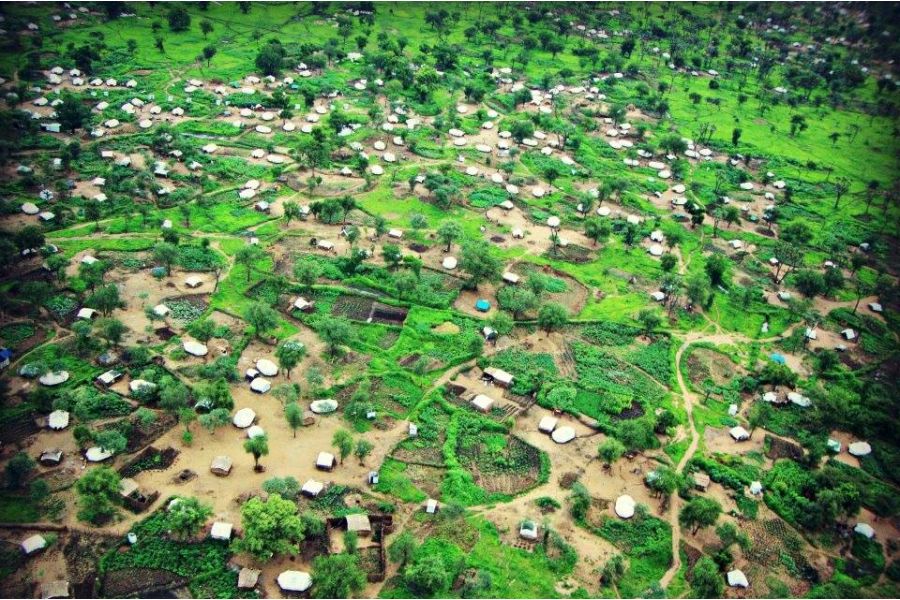
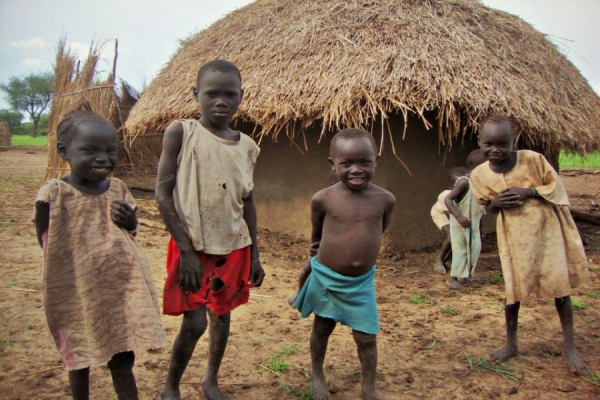
Then I went to South Sudan with a French organization where I worked as a livelihood manager and also a shelter manager. I had to work on various things not related to architecture at all like agricultural projects, tree plantation, income generating activities, cooperatives, waste management systems, destocking projects for animal, grazing land mapping etc. I was lucky to have got the opportunity to be involved in planning and designing of two camps with UN and Shelter Cluster. My job was to design and set up the infrastructure, therefore, had to coordinate with different organizations working on water sanitation, food security etc which was a worthy managerial experience for me. Another interesting experience I had there was designing slaughter houses that had to have an Environmental Impact Assessment and conform to the global livestock standards.But the most enjoyable one was setting up mass production of 7000 family shelters for a new camp with a group of carpenters who does not understand English.

After six months break in Bangladesh I went to Iraq with a new assignment. In Iraq it was a whole different scenario. Extension of existing Iraqi schools to accommodate Syrian refugee children was first in my project list. They are used to prefabricated architecture and more interested in temporary containers available as a package. We had to look for larger scale contractors. We developed two types of projects based on container set up and site condition. One involved containers imported as total package set on a concrete support. Then utility supplies were installed for the containers. Another one is done by container makers on site starting from installing frames and other components to ensure additional logistics.

I was also building child friendly spaces in refugee camps. What was challenging for me was designing playgrounds as they have to maintain specific standards and material specifications established and regulated by the local regulatory bodies. Football grounds had to be proper professional football pitch. You need specific technical background to meet those standards. Therefore I had to make extra efforts to ensure I was up to the mark.
Another interesting assignment was the cash based project in the urban households for the majority of the Syrians who rent homes in the urban areas scattered in different parts rather than staying at camps or take shelter in abandoned public structures or garages. Some landlords take the advantage of this practice by renting out the spaces really with bad living conditions at a high rent. The scheme was to give the refugees cash to upgrade their existing shelter. However this scheme requires legal consent from the owner of the property as well as an MOU to make sure refugees are allowed to live there after the renovation for at least a year.
Right now with IFRC, among other projects, I am running a cash transfer program for shelter repairing in the northern part of Bangladesh along with the provision of shelter tool kits for those affected by the flood last year. I am also involved with Shelter Cluster coordination.

Any advice for architects/students planning to move to development sector?
Architects have the basic technical knowledge. So anyone interested can start as technical consultant to gain experience and choose thereafter. Or one can combine this with relevant studies which would definitely be an added advantage. One can start anywhere, but I think it is definitely advantageous if you start abroad in an international organization to build up your portfolio and take it from there.
Narrator: Azizul Mohith








Mosque Architecture in Bangladesh
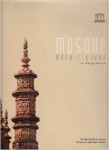
Mosque Architecture in Bangladesh by architect Dr Abu Sayeed M Ahmed features a thorough research and insight on the development of designs of mosques in Bangladesh through the ages. The first chapter of the book offers a comprehensive thought on the revolution and influence of mosque architecture in Bangladesh. The following chapter titled “Catalogue” is an attempt to compile the representations of these mosques, classified in three phases — Early Islamic, Mughal and Colonial. The physical form of thirty selected mosques is analysed and illustrated with plans, elevations and photographs. Images used in the book are by Syed Zakir Hossain. The book can be of great help to architecture and history enthusiasts.
DIA am Bauhaus ‘School of Thoughts’
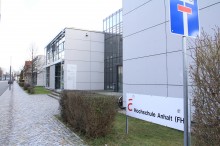
What is the perfect time to go for pursuing a master’s degree in architecture after one completes BArch? Some say right after Bachelor, some say after few years of professional experience, for example within or just after two years of acquiring BArch degree. But it gets difficult if it crosses three or more years in professional field and the main reason for that is the inherent character of the subject “Architecture” as an applied profession. After few years of turmoil to make a mark in the field as a potential professional architect, sacrificing money over the eagerness of learning as an apprentice in firms with fairly shameful remuneration, acting indifferent to the silent expectation of family members to become a contributing bread earner after 5 years of study (in many cases more than that due to session jam), finding a glimmer of hope in few possible clients who may turn steady enough for the future of a newborn office, even the dilemma of the practical use of a higher degree in pragmatic professional field unless one decides to go for an academic career,- there are lots to consider if one thinks to travel abroad for a Master’s degree. That was the exact case when we (four classmates in BUET) were thinking of pursuing one- it was a question of affordability of all sorts. So the lure for masters was more than a foreign degree, rather a stubborn adventure and frankly a bit emotional. Dessau Institute of Architecture (DIA) had more to offer than a mere degree when we set our foot in Germany.

First of all, it was not a solitary decision to go to Germany for studying as four of our friends from BUET decided to stick [ in 2004] with each other wherever we go for studying; it was like encouraging each other to ignore whatever hindrances we faced individually. And also it is not undeniable that moving together will have added advantage of sharing expenses or trauma of an unfamiliar territory and is more fun. On top of that, education cost in Germany is very low comparing to other European countries. Secondly and most significantly, there was a huge temptation of the famous Bauhaus with whom DIA shares infrastructure, studios and faculties. Though Bauhaus didn’t have any Masters equivalent degree courses, the next best thing was the then newly formed Dessau Institute of Architecture just on the next building under the supervision of Hochschule Anhalt, the state university of applied science in Saxony-Anhalt region. Nonetheless it was still a long shot to decide as none we know had the information about the school of thought or academic strength of DIA.

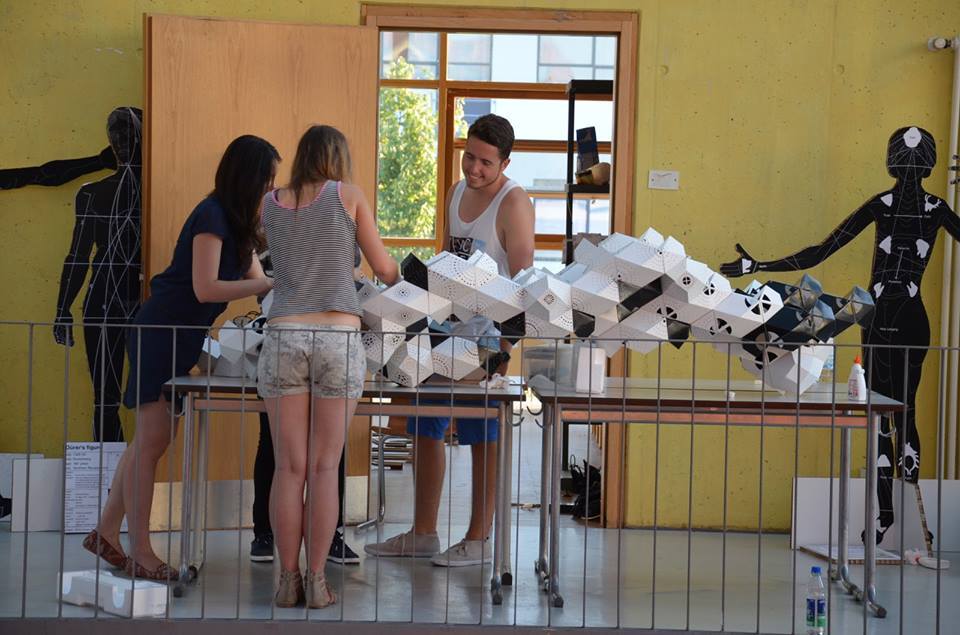
We learned about some names among the faculty like Alfred Jacoby as Head (who happened to be a key figure of DAAD scholarship) or Neil Leach as poster boy celebrity academician, but the name made no impact in that time as BArch education in BUET put almost zero focus on architectural theory and criticism. Everything changed after reaching Dessau. DIA proved to be sovereign from Bauhaus that gave it the vitality to push further away from the ghost of Modernism which Bauhaus once pioneered and still struggling to put the nametag behind from their current academic exercises. The occasional collaboration between the two institutes became moments of joy as flurry of rich ideas flew, celebrities from architectural fields shone, energetic young students exchanged ideas. Standing on the literal shadows of the Gropius Building, DIA was on the mission of creating their own myth even though the Master’s program was rather new when we started our education there. In our two years study in Dessau we could sense the energy DIA was putting in questioning the current process of architectural design that placed them among the pioneers of a new paradigm of contemporary digital architecture and we are inherently proud to be a part of it. The strength of DIA lies in two main sectors: one, extensive focus on theoretical basis of architectural criticism- using the cultural and critical theories as tools for analyzing architecture; and two, using the complexity theories in practical application through the process of optimization, parametricism and bio-mimicry. Prof. Neil Leach played a vital role in both and also acted as the main catalyst to make DIA a welcoming platform for many experimental and rebellious minds to come and share with students their expertly cooked or half cooked ideas. And that was surely electric if one is up for it.
Author:
Ashik Vaskor Mannan, DIA graduate, 2006 | Assistant Professor, Department of Architecture, American International University-Bangladesh (AIUB) | Architect Partner, Studio XI Architects
Masrur Mamun Mithun, DIA graduate, 2006 | Assistant Professor, Department of Architecture, University of Asia Pacific (UAP)
DIA: AT A GLANCE
Name of the school: Dessau International Architecture (DIA), Anhalt university of Applied Science.
Location and country: Dessau, Germany
Degree offered: MA in Architecture
Program duration: 4 semesters (2 semesters / year, Summer and Winter) ; 4 studios (3rd+4th semester studio- thesis)
Studio offered: Architecture, Urban, Computational Design ;
Duration: 2 semesters/years (1 semester Research and 1 semester Design)
Special: compulsory German Language Course (non Credit)
Scholarship: DAAD
Student job opportunity: Teaching assistant, Driving, print shop
Official Website DIA |Groups or community in social media |Admission requirement


Kusumba Mosque at Naogaon
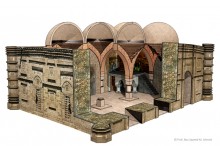
Kusumba mosque, termed as the Black Gem of Bengal, is situated at the village Kusumba in Naogaon. According to an inscription it was erected by a patron Sulayman in 966/1558-59 during the reign of Ghiyath Al-Din Bahadur Shah. Stone, though scarce, was used in most of the finest monuments of Bengal. Only six stone mosques exist in greater Bengal that were built during the early Islamic or Sultanate period. Kusumba mosque is one of them. Stones of this mosque are dark black-basalt which was shipped from Rajmahal hill of Bihar.


The mosque conforms to the typical oblong enclosed mosques in Bengal built during the early Islamic period. The interior of the prayer hall is divided into two bays and three aisles surrounded by 2.26 m thick wall. The mosque has access only from the eastern side by three pointed archways and the north and south sides have two arched openings. The Qibla wall contains three highly ornated mihrab niches. The walls are built of brick core with stone facing up to the bottom of the arches from within and the whole outside surface. Two freestanding stone pillars and eight partly concealed pilasters support the six domed roof. The mosque has only four octagonal turrets, one at each corner of the building. These turrets invariably form a part of the buildings, and are built either to reinforce the corners or merely as ornamental appendages.


The Muslim rulers were introduced to the Bengali architecture and Islamic features like the dome and the pointed arch and certain local tendencies that belonged to Bengal as well as to Islam. The foremost of these was the curved cornices, which was reproduced by the Muslims in their work from the traditional rural bamboo hut. It ensured quick drainage of rainwater. This typical curved cornice is also observed in four facades of the Kusumba mosque.


At the north-west corner, there is a well-designed raised gallery on four stone pillars. The raised gallery is accessed by a single flight of stairs from the ground level of the prayer room. This is the only surviving example of an unscreened internally connecting staircase. It can be a Badshah Ka Takht or King’s gallery, a place for the sultans or rulers or builders and their immediate entourage, though this segregation of worshippers is contrary to the spirit of Islam. The stone carving of the mosque shows no novelty but betrays its pre-Muslim workmanship.
Author: Prof. Abu Sayeed M. Ahmed, Ph.D and Wahida Iffat
Photography: syedzakirhossain@gmail.com
Drawing: Mosque Architecture in Bangladesh, UNESCO, 2007, Dhaka
Refreshing Green Experience
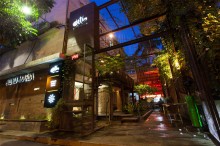
The project renovates an existing old building which previously was a small medical center for several years. When the medical center shifted their address leaving the space for ATTIN and MUMU MARIA, the architects took the challenge to transform the whole complex in a very new one with all its reforming limitations.
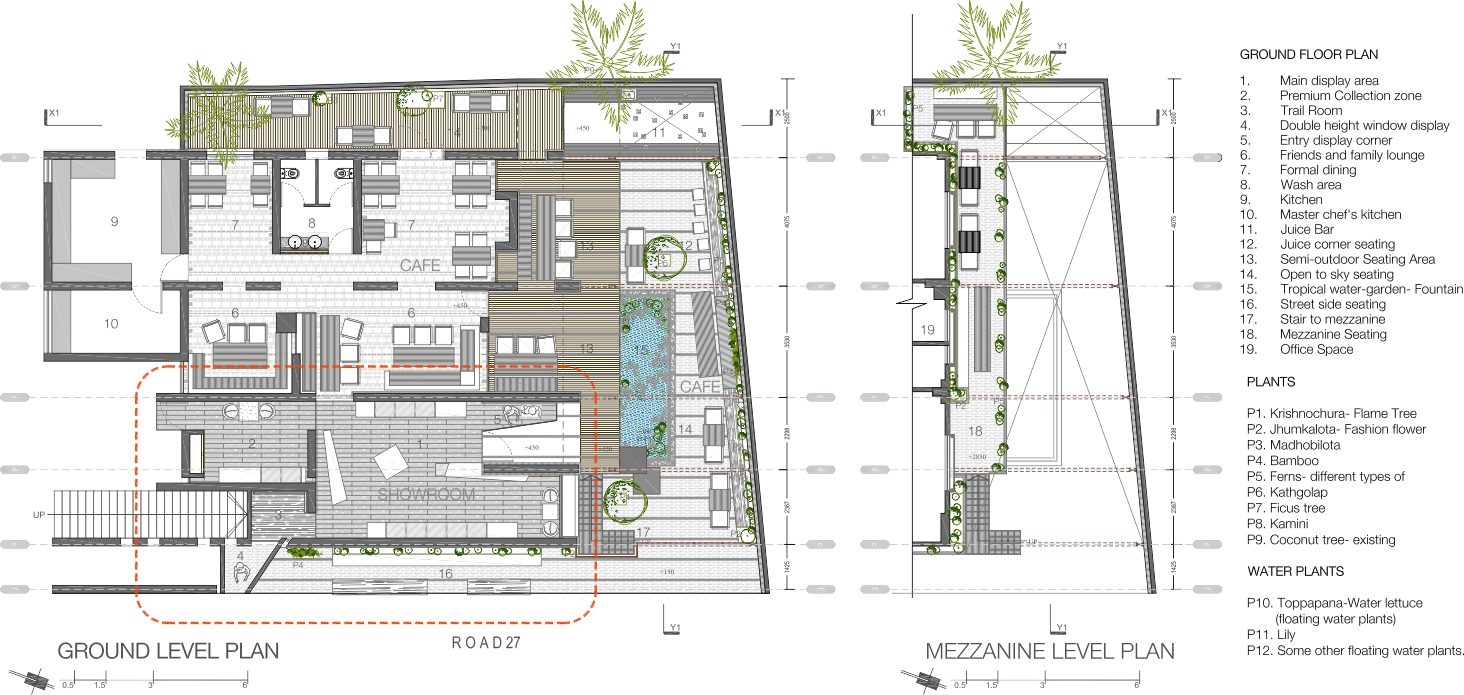

The project stands at the corner of road 22 and road 27. The road 22 is destined to end here at the café creating an alley that hits the occult RED wall of the juice bar giving the alley a definition of a garden yard. At night the red fireflies (hanging lights) of the double height juice bar tempts the distant passers-by more to welcome here. The presence of the showroom is signaled by a projected double height rough concrete volume encasing a window display and a dramatically perforated wood shuttered concrete wall. The charismatic colors and warm tones of lights can be felt even form outside. The street seating in front of this wall allows the moving passers-by to rest and spend time gossiping. Even when the compound is closed, the green outdoor space permits visual linkage with surrounding context.
This garden yard which previously was a garbage store for the medical centre, becomes the heart of the compound contained within a double height transparent wire-mesh volume defined by climbing green plants and creepers.Both the café and the showroom share the yard with a perfect juxtapositionsupporting each other. The BRICK WALLS envisage the evidence of old Dhaka- a 400 year old city.


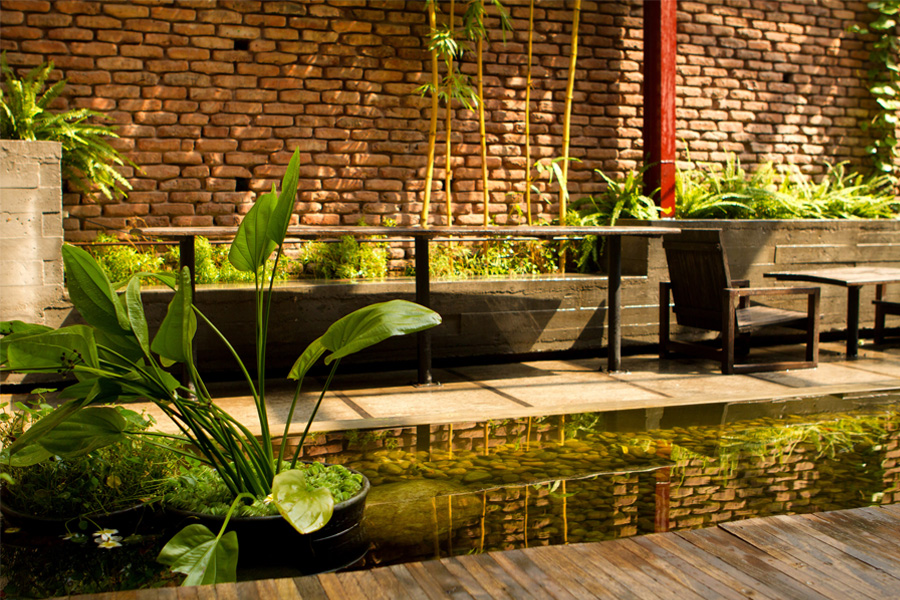
The project is almost an outdoor development utilizing every possible corner of the existing building. Unavoidable onsite decisions on remodeling were of utmost challenge and importance.The materials used here were mostly re-used and re-cycled and lights used were all energy saver LEDs. The metal frames of the transparent wire-mesh volume and the frames of the steps of the open staircase came from the previously existing storage shade and the backdrop of the reception counter of MUMU MARIA and the signage panel of ATTIN again is made by welded wastage ms sheets. The hanging system and the door handles of the showroom are customized and featured with coil of copper wire taken from rejected electrical cable. The feature wall in the exclusive zone of the showroom was made of leftover pieces of mirror and wooden block dice (commonly used for clothing). The glass screen in front of the red wall of juice bar is designed with the combination of different re- used and found pieces of clear, colored and textured glass from the previous medical center. The marbles of floor and the grey granite of the fresh room walls were from wastage stone pieces collected from different suppliers. Colored bottle glasses used in the counter of juice bar were collected from recycled material store (bhungari store).The shuttering panels for concrete were made with pine wood taken from used packaging boxes. Different types of wood were used in the project specially TAAL- a very common local palm and a trade mark tree of the country-side land with a very special characteristics of withstanding harsh tropical rain and sun.The texture of TAAL and GARJAN wood blends swimmingly with the ancient brick texture complementing each other.The intension was tocreate a new meaning of local craftsmanship. Theenriched skill and knowledge of local craftsmen, masons and in some casesgardeners’suggestions were incorporated in some design decisions and installation phase and thus in the whole process.
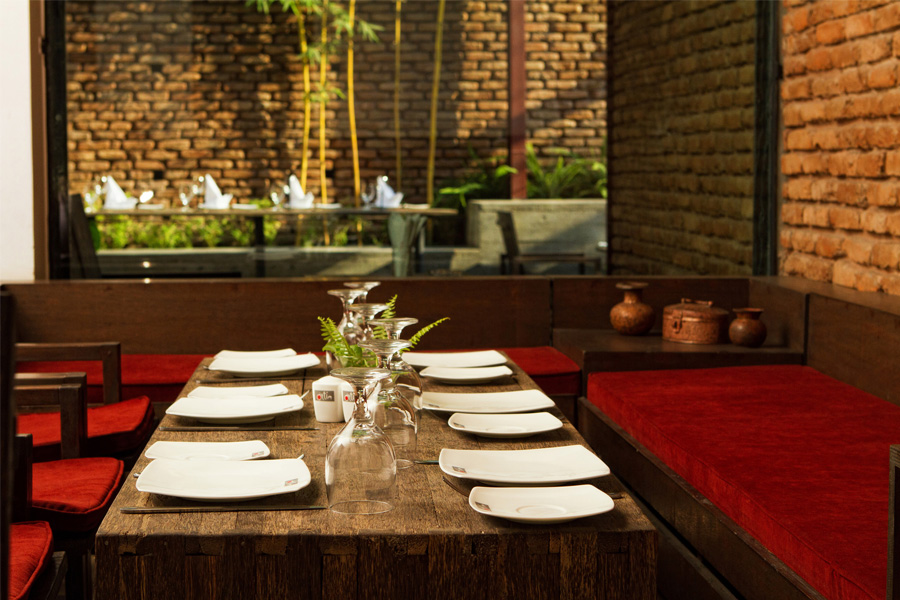

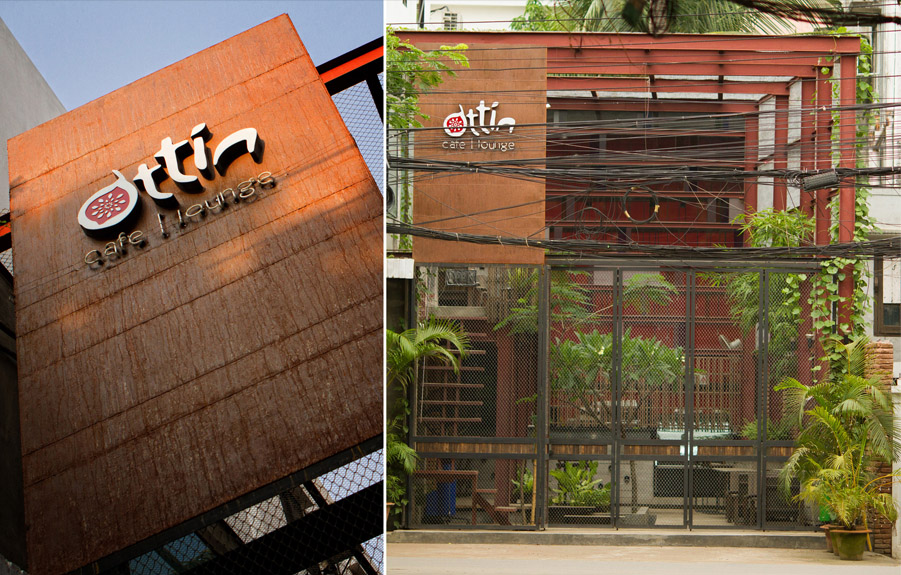
The grey, the brown and the red all the colors of the construction complements the color of greenery and the color of seasons. The complex is totally responsive towards the season of Bangladesh. As the season changes the tropical garden changes the mood and its color and shines within it. The space holds a refreshing nostalgic mood that leaves an imprint in one’s memory once and for all.
Narrator : Ar.Didarul Islam Bhuiyan & Ar. Dilruba Ferdous Shuvra


Museum of Political Dreams
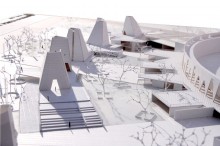
Museum of political dreams is an open platform which renews the perception and understanding of political history, societal system and cultural studies. It is a negotiating platform where people of diverse characteristics, different social levels can gather, share, argue and discuss on various topics to make themselves more responsive to their political and living environment. Here people can agree and disagree reverentially with one another and express themselves on points of difference of heart’s content. It is such a societal platform where people can realize self- actualization, their existence through different complex symbolic interaction. The platform is an open discussion arena of art, science and religion where by questioning and learning, people will aware of their identity.


The museum complex upholds the political dreams of different time periods through various continuous exhibition spaces. Dreams between freedom of anarchy, justice or injustice, stratification or equality, power or resistance, peace or violence, creation or destruction, liberalism or conservatism, ruler or ruled, science or religion, religion or religion, stability or dynamism etc will be displayed here of lost past of the world, highlighting subcontinent.
This complex will question “Conflicts of Wants” and will bring “Harmony of Opposites”.


The project is a hypothetical one, so the site is proposed according to the functional convenience. The proposed site is located beside M. A. Aziz stadium, just opposite to Chittagong Circuit house. Naval Museum is situated at the other opposite end of the site. Future civic center will be built near the site. Considering all, it seems that the site holds a high political value. Currently the site is used occasionally for the purpose of fair named “Bijoy Mela”. In the proposed design, the current use of the site is also promoted to preserve the cultural value of the site as well.


With this exercise, en effort is given to draw the attention of Ministry of Cultural Affairs, Govt Republic of Bangladesh for our continuous degrading political and societal system. And thus, a platform is proposed where all those different level of activities can perform.


Composite Drawing: Techniques for Architectural Design Presentation
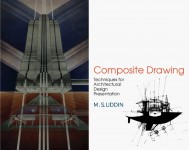
This studio companion, filled with techniques and useful tips, offers step-by-step methods for preparing plan, elevation, section and axiometric drawings using pencil, pen and ink, colour media and air brush techniques. It gives easy to follow instructions to reveal how to achieve a total composition of individual drawing elements, also including a colour portfolio of composite drawings by internationally known architects.
Ref: Amazon
Axonometric and Oblique Drawing: A 3-D Construction, Rendering, and Design Guide
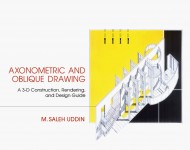
This first-time guide to the technique of axonometric drawing focuses exclusively on how to construct such drawings and put them to work. Chapters progress from basic paraline drawing through rendering, presentation, composition, layout, text, reprographic techniques, and fully integrated presentations. There are explanations of how to integrate axonometrics into other drawings for greater emphasis and dramatization; and in addition, a large portfolio of finisghed design and presentation drawings is included, with an explanatory text of how each was created. A chapter on freehand drawing helps users render with technical or fine-point felt-tipped pens.
Ref : Amazon
Hybrid Drawing Techniques by Contemporary Architects and Designers
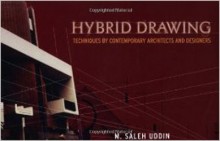
The complete hybrid drawing source book Hybrid drawings offer limitless possibilities for the fusion and superimposition of ideas, media, and techniques-powerful creative tools for effective and innovative architectural graphic presentation. This unique guide offers a dynamic introduction to these drawings and how they are created, with a stunning color portfolio of presentation-quality examples that give full visual expression to the power and potential of hybrid drawing techniques. Featuring the work of dozens of internationally recognized architects and firms, including Takefumi Aida, Helmut Jahn of Murphy/Jahn Architects, Morphosis, Eric Owen Moss, NBBJ Sports & Entertainment, Smith-Miller & Hawkinson, and Bernard Tschumi Architects, the book’s visual examples are accompanied by descriptive and analytical commentary that gives valuable practical insight into the background of each project, along with essential information on the design concept and the drawing process. Combining all of the best features of an idea resource and a how-to guide, Hybrid Drawing Techniques by Contemporary Architects and Designers is an important creative tool for students and professionals in architecture, design, illustration, and related areas.
Ref: Amazon