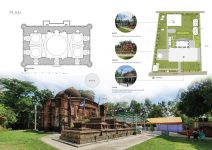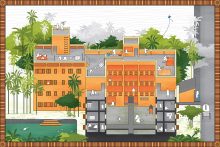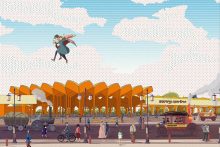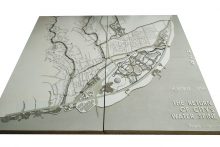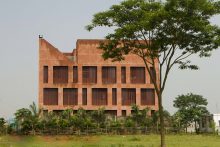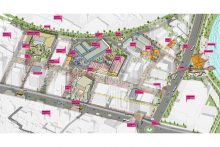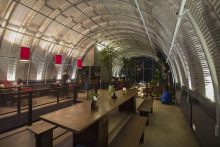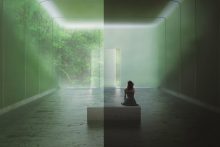
Echoes of the Estuary: A Tourism Center at Hatiya Dwip

World Environment Day 2026

Urban [Re]Stitch

Hybrid Atmosphere | Transforming an Abandoned Subway through Architectural and Digital Media

This project takes on the ongoing argument about separation with physical surroundings in the era of visual-centric digital media. To create an engaging/rich experiential architectural atmosphere today, a balance between digital and physical architectural components is mandatory. This project embraces the novel technology offered in digital media and architecture to bolster the place’s timeless natural qualities. Consequently, the digital and physical, natural, and artificial, static, and kinetic components intertwined to create a hybrid whole atmosphere of rich sensory experience.

The hypothesis of the site-specific hybrid atmosphere was tested out on an abandoned subway in Cincinnati downtown. Using Steven hall’s idea of intertwining and anchoring, as well as Robert Irwin’s site determinant approach, the design uses both architectural and technological media components to focus on existing yet neglected urban experiences.

Determining the site’s various qualities (e.g., analogical, natural, experiential) and events/activities and using architectural and digital components to focus, enhance, or transform those characters – are central to the design approach presented in the following sections.

The site ©Bin Sayeed Bakhti

Site Selection- The Underground abandoned site rationally needed artificial intervention to be habitable and connected to the city. A hybrid atmosphere was natural for this particular site. The historically rich site has been transformed from the central transportation canal to an underground abandonment. Yet well maintained as the structure of the central parkway above. Further well connected to different parts of the city makes it an opportunity to experience the city.

Intervention © Bin Sayeed Bakhti

Program generation-Unique events like a film festival, performing art festival, music festival, and Blink light festival happens around the site. These events are taken into account along with the study of other socio-cultural factors to generate a further program for the site. 

Design Framework © Bin Sayeed Bakhti

Design Framework- From Liberty Street Station to Race Street Station, the project acts as a covered walkway with an experiential journey that connects with the city’s atmospheric and analogic layers. Further flexible cultural activity spaces for film shows, performance space, soundscape, etc. connect with the city’s activities and events.  In Cincinnati Subway, the design idea is implemented through minimal careful surgical intervention in the city’s existing open areas to stitch the project into existing urban grain. The subway is connected to and accessible from different points of the city. It is further connected to everyday urban activity and events with its programmatic arrangements. While doing this, the original spatial and structural features of the tunnel are retained. Yet, a careful change in the long section made it suitable for the human experience. Analogic(historical, cultural) references are embedded into the spatial, formal experience, and materiality. A continuous water feature connects the whole project reminiscing the Erie canal while transforms into various forms of visible water flow to sound, vibration, fog, light refraction, etc. along the journey. The foliage on the median above the tunnel supports the olfactory senses with their scent channeled into the tunnel with mechanical airflow. Various media facades, smart glass, sensors are placed to create an enhanced site-specific experience.

Liberty Station © Bin Sayeed Bakhti

For Liberty Street Station, intervention is limited to existing open areas; existing entries are transformed into ramps makes the project s a continuous extension of the city pedestrian experience. Site-specific media enhancement activates specific locations and also connects the site with the city above. The station, being a flexible public activity space adjacent to Warner Brothers office, also relates to city public events, e.g., Cinci film festival.

Race Street Station © Bin Sayeed Bakhti

Race St Station is converted to another social space. The tracks are converted to a interactive everchanging water channel that changes the mood through sound vibration and light reflectivity.

The tunnel © Bin Sayeed Bakhti

The tunnel between the stations: A journey- The tunnel connects at different points of the city and acts as a long demanded covered walkway. It opens up at the various locations of the city. The site-specific hybrid intervention in combination with natural and artificial light creates a holistic mood. The city’s landmarks and activities also influence the space of the tunnel. The sectional change also transforms the claustrophobic narrowness to a humane, intimate scale, while retaining the original form.

Body in the city © Bin Sayeed Bakhti

Performative space: Body in the city- Along with sensory qualities, with kinetic shading, hanging bridge connection and flexible transforming stage, architecture in this location connects with the body and movements at both city and underground level like a living body itself.

Listening to the city © Bin Sayeed Bakhti

Soundscape near Cincinnati Music Hall: Listening to the city- In front of the landmark music hall on the road level, the screens pixelate the urban view. The motion sensor transforms the screen into a soundscape with the movement of traffic and air.

Performance of nature © Bin Sayeed Bakhti

Nature as a media show- Hybrid performance Towards the center of the project from either station, the tunnel will be more isolated from the city before reaching a glass room. The smart glass would change transparency with time, season, or even movement or gesture, turning the outside natural view into an everchanging virtual show. The visual would be accompanied by the natural sound of rain or thunder and the scent of the trees above.

Garden and the invisible city © Bin Sayeed Bakhti

The Garden and the invisible city- Eventually, the journey would bring to an open garden, unexpected in the city. The city above will be virtually invisible except the urban sounds. That sounds merges with the sounds of trees, water flows, and birds under the shared sky.
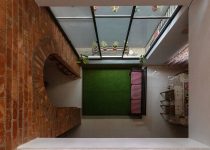
Nayantara Residence: A Home with a Heart

| Notes from the Architect |

With the rise of urbanism, we are being often forced to trade our cultural norms and beliefs in exchange for functionality and productivity. In Bangladesh, this is a harsh reality in the metropolitan areas. In an overpopulated country like this, a middle-class family can hardly afford the space or the living standard for a joint family residence. Often, they have to negotiate with their cultural practice for a better living standard’ more suitable for urban life.

© Jishnu Kumar Das | Nirmanik Architects

© Jishnu Kumar Das | Nirmanik Architects

© Jishnu Kumar Das | Nirmanik Architects

Dr. Shyamjoy Das & Mrs. Suprobha Sarker however wanted to give their next generation a little touch of the traditional living style; where a family lives together, bonds through the social & religious rituals, and learns about life from the older generation; while also have their own privacy and personal space necessary for their individual works.

© Jishnu Kumar Das | Nirmanik Architects

© Jishnu Kumar Das | Nirmanik Architects

We took inspiration from their house at their village where a central courtyard holds and connects the residential units. In the north side of the courtyard there is a family temple by which there is a Tulsi plant. As in Hindu culture, Tulsi plant is considered as a sacred plant and it’s a common practice to light a lamp near it every evening; the plant and the temple guides the functions of the courtyard. The courtyard is used for not only household/ agricultural work, but also it’s a place for social and religious gathering. In the urban areas, however, due to the lack of spaces, this culture is slowly going out of practice. In this project, we intended to bring back some of the characters of this courtyard and with that some of the activities the court holds.

© Jishnu Kumar Das | Nirmanik Architects

© Jishnu Kumar Das | Nirmanik Architects

To encourage the family communicative learning, the central space resembling the rural courtyard is designed to connect all the common functions and the circulation spaces both horizontally & vertically. On ground floor, the central space is surrounded by the prayer space/ temple on the north, a little gardening space on the east, the dining zone on the south and finally the entrance and stair on the west. On 1st floor, the void space is surrounded by the family living on the south and the circulation space on the west, connecting the whole duplex unit. There are Tulsi plants in the gardening zone with scope for some other plants.

© Jishnu Kumar Das | Nirmanik Architects

© Jishnu Kumar Das | Nirmanik Architects

For family programs or any religious or cultural events (for example, Kirton, wedding rituals or music evenings) the central space can be extended with the dining zone and 1st floor family living can act as the audience zone.

© Jishnu Kumar Das | Nirmanik Architects

© Jishnu Kumar Das | Nirmanik Architects

© Jishnu Kumar Das | Nirmanik Architects

To keep the construction cost at a minimum level, the building is done with brick masonry with reinforced concrete as structural materials. To reduce the energy usage, we tried to maximize the usage of the natural lighting and ventilation system.  There is also a low-cost roof gardening system that can be easily monitored and taken care of.

We hope this project will help the users to build better communications with both society and nature throughout the generations.

Architectural Documentation of Kutub Shah Mosque, Kishoreganj

| From the submission|

Kutub Shah Mosque is situated in Austagram of Kishoreganj district.  There is no inscription found on the walls of this mosque so it’s difficult to assume the exact construction date of this Mosque. However, if we observed the construction materials and ornaments of this mosque, it is clearly assumed that this mosque was built in the Sultan period approximately the later part of 16th century. It was said that this mosque was built by a saint named Kutub Shah and the name of the mosque is taken after him. His grave is located exactly beside the mosque along with other of his companions (locals’ assumption). It is also assumed to be the earliest example of Muslim architecture which still exists in the greater Mymensingh district.

Kutub Shah Mosque ©  Department of Archaeology, Ministry of Cultural Affairs, Bangladesh.

Kutub Shah Mosque ©  Department of Archaeology, Ministry of Cultural Affairs, Bangladesh.

The mosque is elongated along north and south and has four minarets at its four corners. There are ring-like features on its octagonal minarets. It is a medium sized mosque with five domes and curved cornices. Central dome of the Kutub Shah Mosque is slightly semi spherical shaped and the other four domes are the shape of oval (half of the oval). Each of the domes are having upside down like flowering ornate at the top.

Kutub Shah Mosque ©  Department of Archaeology, Ministry of Cultural Affairs, Bangladesh.

The mosque has three entries on the east while one on the north and another on the south. Along the west wall there are three mihrabs. There is a beautiful paneling work on its exterior walls, which is similar to that Kherua mosque  at Sherpur , Bogra. Terracotta  tiles with floral decoration have also been used in the ornamentation of the external walls.

Kutub Shah Mosque ©  Department of Archaeology, Ministry of Cultural Affairs, Bangladesh.

Documentation Team:

Architect : Khandokar Mahfuz Alam, Department of Archaeology, Ministry of Cultural Affairs, Bangladesh.

Draftsman: Md Juvbayer Rahman, Department of Archaeology, Ministry of Cultural Affairs, Bangladesh.

Illustration: Addeb Ahnaf  ( Forth year Architecture Student of  BUET)

বসতবাড়ি | চিঠি ৮ | মফস্বলের ভাড়াবাড়ি

মূল চিঠি:

আদরের নিমো,

আজ তোকে একটা গল্প বলব, আমাদের পুরোনো বাসার গল্প। আমরা যে বাসাটাতে থাকতাম সেটা ছিল ভাড়াবাড়ী। এলাকায় জবা খাঁ’র বাড়ি নামেই পরিচিত ছিল। আব্বু, অর্থাৎ তোর নানা ভাই ব্যাচেলর হিসেবে ওই বাসায় ভাড়া থাকতো। তো, বাড়িওয়ালা (আমরা দাদু বলতাম) একদিন ভাড়াটিয়াদের নাকি এসে বলল, সে আর ব্যাচেলর ভাড়া দেবে না। যদি থাকতে হয় তবে নাকি বউ নিয়েই থাকতে হবে। কি বিপদ, বলতো?! আর এর পরপরই একদম তড়িঘড়ি করেই আব্বু আর আম্মার বিয়ে হয়ে গেল। কারও বিয়ে করার পেছনের মূল কারণ শুধুমাত্র ভাড়া বাসা, ভাবতে পারিস? আর ওই বিয়েতে আমাদের অন্যান্য আত্মীয়-স্বজনের সাথে বরযাত্রীতে গিয়েছিল এই বাসারই বাড়িওয়ালাসহ অন্যান্য ভাড়াটিয়ারা। যাই হোক, তো এরপর এই বাসাতেই শুরু হল আমার আম্মার নতুন সংসার।

আমাদের এই বাসাটা তৈরি হয়েছিল মুক্তিযুদ্ধের পরপরই, সোনাডাঙ্গাতে তখন ওই একটাই চারতলা বিল্ডিং। শুনেছি প্রথমে এটা হোটেল হিসেবে বানানো হয়েছিল, পরে স্থায়ীভাবে থাকার জন্য ভাড়া দেওয়া হয়। স্থাপনাটা অনেকটা এরকম- মাঝে একটা বড় উঠান, তার চারপাশ দিয়ে করিডোর, আর সেই করিডোর ঘিরে রুম। উত্তর আর দক্ষিণ দিকে দুটি সিঁড়িঘর। বাড়ীর উত্তর অংশ তিন তলা আর দক্ষিণ অংশ চার তলা পর্যন্ত। বাড়ীর পেছনে মস্ত বড় এক পুকুর। মাঝের উঠানটাও আবার একটা যোগ চিহ্নের মতো হাঁটা পথ দিয়ে চার ভাগে ভাগ করা। ওই পথটাই সিঁড়িঘর সহ বাড়িতে ঢোকার প্রবেশ পথ আর বাড়ির পেছনের পুকুরে যাওয়ার পথটাকে যুক্ত করেছে। পুকুরের পাড় ঘেঁষে সারি বেঁধে নারকেল গাছ। এই বাসার সব মহিলা আর বাচ্চারা পুকুর ব্যবহার করতে পারত।

এতক্ষণ যে বর্ণনা দিলাম আমরা কিন্তু বাড়ির এই অংশে থাকতাম না। ১৯৮০ সালের কিছু আগে বাড়ির পেছনে আরও একটা অংশও বাড়ানো হয়। তুই যেমন ইংরেজি P লিখতে একটা বৃত্ত এঁকে, বৃত্তের এক কোনা ধরে নিচের দিকে টান দিয়ে লেজ আঁকিস, ঠিক ওরকম। আমরা থাকতাম P-এর লেজের অংশে। চার তলার এই অংশ সামনের অংশের থেকে উচ্চতায় প্রায় তিন ফিট উঁচু, যার কারণে ছাদের ঠিক যে জায়গাটাতে এই দুই অংশ মিলেছে সেখানে ছোট্ট করে তিনটা সিঁড়ির ধাপ ছিল। আমরা ওই ধাপ বেয়ে ওঠানামা করে এ ছাঁদ, ও ছাঁদ করতাম। আমি ছিলাম ছাঁদ অন্তপ্রাণ। দুপুরের খাবারের পর, ভাত ঘুম না দিয়ে আমি চলে যেতাম ছাদে। একা একা বসে কখনো খেলতাম, কখনো আঁকতাম, এঁকে এঁকে ছাঁদ ভরে ফেলতাম। সন্ধ্যার পর যখন ইলেক্ট্রিসিটি চলে যেত, তখন আমরা সবাই মাদুর নিয়ে ছাঁদে যেতাম। চাঁদের আলোয় বসে আমরা সমবয়সী বাচ্চারা আব্বুর কাছে ভূতের গল্প নয়তো মুক্তিযুদ্ধের গল্প শুনতাম। এই ছাঁদে কত যে স্মৃতি! ছাঁদের সিঁড়িঘরের উপরের পানির ট্যাংকির উপরে উঠার জন্য দেয়ালের গায়ে রডের সিঁড়ি বসানো ছিল। সেই রডের সিঁড়ি নিয়ে এই বাড়ীর প্রতিটা ছেলেমেয়ের সুখস্মৃতি আছে। বড় আপুর কাছে শুনেছি, এই পানির ট্যাংকির উপর উঠে নাকি সবাই সোনাডাঙ্গা আবাসিকের ২য় ফেজের ঘোড়ার দৌড় দেখত। আমাদের এই ছাঁদে একটা গোছলের জায়গা ছিল,বাড়ীর ছোট যারা তাদেরকে সরিষার তেল মাখিয়ে শীতের সকালে এখানে গোছল করানো হতো, সেই সময়গুলো না ভারী মজার! বাড়ীতে কারও বিয়ে?- ছাঁদ, মিলাদ?- ছাঁদ, সবাই মিলে পিকনিক?- ছাঁদ। কি হতো না এখানে? আমাদের বাসায় যেই বেড়াতে আসতো আমি তাকে নিয়ে গিয়ে আমাদের মস্ত বড় ছাঁদটা দেখাতাম। দেখার মত একটা জিনিস ছিল বটে!

আমরা চার তলার যে ইউনিটে থাকতাম, সেটা ছিল মূলত দুই পরিবারের জন্য। ইউনিটের মূল দরজা দিয়ে ঢুকে করিডোর, সেই করিডোরের মাথায় একটা বাথরুম। করিডোরের দুই পাশে দুটো দুটো করে চারটা রুম আর সাথে রান্নাঘর। দুই পরিবারের রান্নাঘর ছিল পাশাপাশি, মাঝে ইটের জালি দেওয়া। আমরা ওই ইটের জালির ভেতর দিয়ে খাবার আদান-প্রদান করতাম। প্রথম দিকে আমরা দুই রুমে থাকলেও, পরে অবশ্য পুরো ইউনিট নিয়ে থাকা শুরু করি। এজন্য ঐ ইটের জালি ভেঙে ফেলা হয় আর আমরা দুইটা রান্নাঘরের সমান বড় একটা রান্নাঘর পেয়ে যাই। আমাদের যারা প্রতিবেশী ছিলেন, শুধু একই ইউনিটের বা পাশের ইউনিটের না, পুরো বিল্ডিংয়ের সবার সাথে সবার অনেক সুসম্পর্ক ছিল। শীতকালে কমপক্ষে ৫ থেকে ৭ টা পরিবারে একইসাথে কুমড়ো বড়ি দেওয়া হতো। মা-চাচীদের দেখতাম,একই সাথে ভাগে কুমড়ো আর ডাল কিনতে। এরপর যেদিন ছাঁদে বড়ি দেওয়া হতো সেদিন যেন এক উৎসবের আয়োজন চলতো। আম্মার কাছে শোনা ১৯৮৮-র বন্যাতে যখন বাসার নিচতলা পানিতে ডুবে গিয়েছিল, তখন এলাকার আরো অনেকের সাথে একতলায় থাকা পরিবার গুলো উপরের তলায় থাকা পরিবারগুলোর সাথে এসে থেকেছিল। আর কি জানিস?এত বছর পরও এই পরিবার গুলোর অনেকের সাথে এখনো যোগাযোগ আছে।

আমাদের বাসার পেছনের এই অংশে ছাঁদের প্যারাপেট আর  সিঁড়িঘরে টেরাকোটা জালি বসানো ছিল। তাতে অদ্ভুত আলো-ছায়া খেলা করতো। শীতের দুপুরগুলোতে সিড়িতে বসে আমি অবাক হয়ে এই আলো-ছায়া দেখতাম। এই বাসাতে আমার একার অনেক স্মৃতি। আমি আপন মনে এই বাড়ীর আনাচে কানাচে ঘুরে বেড়িয়েছি। এই বাড়ীর প্রতিটা দেয়াল, দেয়ালের ভাঁজ আমার চেনা। কিন্তু একদিন এই চির চেনা বাড়ীটাও আমাদের ফেলে আসতে হয়েছে। বাড়িটা তো অনেক পুরনো আর এতো পুরনো বাড়ি থাকার জন্য বেশ ঝুঁকিপূর্ণ হওয়ায় আমরা ২০১৮ সালে বাসাটা ছেড়ে দেই। বাসা বদলের দিন, আমি আর আম্মা কাউকে শেষ বিদায় না জানিয়েই চলে আসি। কি জানি? হয়তো সেদিন আমরা নিজেদের কাছ থেকেই পালাতে চেয়েছিলাম। আম্মার ৩৫ বছরের সংসার আর আমার গোটা শৈশবটাকে ফেলে আসা, এত সহজ ছিল না যে!

ইতি,

মা।

প্রেরক: ইশরাত লায়লা নওরীন

পেশা: স্থপতি

ঠিকানা: সোনাডাঙ্গা, খুলনা।

Redrawn by Sheikh Rishad Ahmmad Aurnob (Based on the original drawing provided by the sender) © CONTEXT

Visualization by Sheikh Rishad Ahmmad Aurnob © CONTEXT

English Version | Translated by: Labiba Nazeen

Dearest Nemo,

Today I will tell you a story, the story of our old home. The house we lived in was rented. It was known as Jaba Kha’s residence in that area. My father, meaning, your grandfather stayed in that house as a bachelor. One day, the landlord (we used to call him grandfather) let the tenants know that he would not rent to bachelors anymore. If one had to stay, he had to stay with his family. Such a jeopardy, would you say?! Hence, soon after that, my father and mother hastily got married. Can you imagine the main reason behind someone getting married is just a rented house? And in that marriage, the other tenants, including the landlord of this house, went from the bridegroom’s side, along with our other relatives. Anyway, then, my mother’s new life and household in that house began.

Our house was built right after the liberation war, the only four-storied building in Sonadanga. As heard, the house was first built as a hotel, then rented out for permanent stay. The structure was a lot like this – with a central big yard, surrounded by a corridor and rooms placed alongside the corridor. There were two staircases, one on the north and the other on the south. The northern part of the house had three floors and the southern part had four floors, segregated into four parts. A big pond was located at the back of the house. The middle yard was also divided into four parts by a walking trail, just like a plus sign. That path connected the entrance to the house with the staircases and also to the pond at the back of the house. Coconut trees lined the banks of the pond. All the women and children could use the pond.

We did not live in this part of the house, the one that I described. Before 1980, another part was added to the back of the house. It was just like you draw a circle to write the English letter, P, and add a tail by pulling down one corner of the circle. We lived in the tail part of P. This four-storied section was about three feet higher than the front, so, at the exact spot where the two parts met, there were three small steps. We used to climb that step and go from roof to roof. I was the heart of the rooftop. After lunch, instead of taking a nap, I would go there. Sometimes I would sit alone and play, sometimes I would draw, and sometimes I filled the roof with drawings. When the electricity went off in the evening, we would all go to the rooftop with a mat. In the moonlight, we, children of the same age, would hear ghost stories or stories of the liberation war from our father. It held so many memories! In order to climb to the water tank above, rod stairs were mounted on the walls of the stair room. Every child in this house has fond memories of that rod staircase. I heard from my elder sister that everyone would get on top of the water tank to watch the second phase horse race of Sonadanga residential area. We had a bathing place on the rooftop, the younger ones of the house used to be covered in mustard oil during winter mornings, and then bathed- those fun times! If there was a wedding at home? – A religious gathering? – Or picnic? – For everything there was the rooftop. What would not happen here? Whenever guests came over, I would take them and show them our big roof. It was indeed something to see!

The unit we lived in, on the fourth floor, was basically for two families. Upon entering the unit, there was a corridor, which led to a bathroom at the end. There were four rooms, two rooms on either side of the corridor and kitchens. The kitchens of the two families were side by side, with brick jali (intricate ornamental openwork) in between. We used to exchange food through that brick jali. Even though we stayed in two rooms at first, later, we started living in the whole unit. As a result, the brick jail was broken and we got to use a kitchen as big as two kitchens. Those of us who were neighbors, not just from the same unit or the unit next door, but everyone who lived in the building, had good relations with one another. In winter, at least 5 to 6 families made pumpkin pills together. I used to see my mother and aunts buy pumpkins and pulses. And on the day, the pills were made, a festival was organized. As heard from my mother, when ground floors of the houses in the area were submerged in the 1988 flood, the families on the ground floor stayed with families on the upper floors. What else do you know? Even after so many years, many of these families are still in contact.

At the back portion of our house, terracotta jali was placed on the parapet and staircase. Astonishing light and shadow played on it. During the winter afternoons, as I sat on the stairs, this light and shadow amazed me. I, alone, have many memories in this house. I have wandered around the knit and cranny of this house on my own. Every wall, the folds of the walls of the house are familiar to me. However, one day we had to leave this closely acquainted house. The house was very old and it became risky to live in such an old house, hence, we left the house in 2018. On the day of our moving, my mother and I left without saying goodbye to anyone. Who knows? Maybe that day we wanted to run away from ourselves. Leaving my mother’s 35-year-old household and my entire childhood behind was not so easy!

Yours,

Mom

From: Ishrat Laila Nowrin

Profession: Architect

Address: Sonadanga, Khulna


হারিয়ে যাচ্ছে আমাদের গ্রাম। হারিয়ে যাচ্ছে মাটি ও মানুষের আত্মিক সম্পর্ক। জীবন ও জীবিকার সংগ্রামে আমরা ভুলতে বসেছি আমাদের শেকড়। গ্রামের বাড়ি আজ যেন এক নস্টালজিয়া। শুধু বেঁচে আছে আমাদের স্মৃতিতে। কি রেখে যাচ্ছি আমরা ভবিষ্যত প্রজন্মের উদ্দেশ্যে? সেই শিকড়ের খোঁজে আমরা খোলা চিঠির আহ্বান জানিয়েছিলাম।

আপনি যদি অংশগ্রহণের কথা বিবেচনা করে থাকেন তবে যত তাড়াতাড়ি সম্ভব চিঠিটি প্রেরণ করুন।

বিস্তারিতঃ http://localhost/context/events/event/basatbari/

ইমেইল: boshotbari.context@gmail.com; context.editor4@gmail.com


Disclaimer:

CONTEXT (www.contextbd.com) and their collaborators jointly hold the copyrights of all contents including, but not limited to, all text, information, illustrations, images. You may not duplicate or reproduce any of the content on this website, including files downloadable from this website.

Dear Dhaka… | Asad Hossen

The accelerated pace of urban development is erasing the homegrown aesthetics; eradicating age-old heritages, placing the urban image in the dangerous path of commodification. Almost every big city is striving to build iconic buildings to make them look dazzling in postcards. Our beloved, Dhaka; a booming metropolis is also a victim of such trends. In this given context a question arises: if architecture is to provide part of these differentiators, why not turn to the city itself and one of its most specific features, its heritage, to provide the starting point?

Tara Masjid (Star Mosque) © Asad Hossen

Armenian Church © Asad Hossen

Saat Gambuj Masjid (Seven Dome Mosque) © Asad Hossen

Dhaka, a city build upon centuries of cultures and traditions; is a confluence of many architectural styles. From the Sena temples built by Ballal Sen, to the Mughal architecture of the Mughals, to the Indo-Saracenic style of the colonial era, to 20th-century steel and chrome of skyscrapers. Dhaka has a colonial core in the river port area, surrounded by progressively newer areas as one travels away from the Buriganga, punctuated with old temples, churches, and mosques.

Ruplal House at Old Dhaka © Asad Hossen

Northbrook Hall, Old Dhaka © Asad Hossen

Beauty Boarding, Old Dhaka © Asad Hossen

Hussaini Dalan, Old Dhaka © Asad Hossen

The precious architectural gems of this city are in constant decay. The most alarming thing is that we are not even worried about the ongoing massacre of our architecture heritages. ‘Ruplal House’, a fine example of neoclassical architecture and craftsmanship of the 19th century are rotting silently in the years gone by. Today, the Ruplal House is occupied by local spice and vegetable merchants and a colony of unauthorized squatters. Ruplal house being one of the prime examples of negligence, we can easily understand what is happening with the lesser-known heritages spreading all over the Old Dhaka. Much has been penned down about the architectural heritage of Old Dhaka; much more is still left to be explored in depth. Time is eating away at the historic structures in Dhaka. Due to a lack of preservation efforts the buildings are slowly being worn down. Though initiatives to protect them have been announced, little has been done. Indeed, Old Dhaka’s architectural legacy, especially in the context of residences and small buildings, is not about one or a few individual structures. Rather, a street or even a group of streets, together, hold what we say is the charm of Puran Dhaka. Action is urgently needed to preserve these artistic architectural structures from further decay.

Teacher-Student Centre (TSC ), University of Dhaka © Asad Hossen

Kamalapur Railway Station © Asad Hossen

National Assembly Building of Bangladesh © Asad Hossen

Dhaka Fine Art Institute © Asad Hossen

This practice is all but not limited to the old heritages of Dhaka. The modern architectural masterpieces are also facing impending doom. Recently the news of the potential demolition of TSC and Kamalapur Railway Station send shockwaves in the architecture community of Bangladesh. Two of the finest examples of tropical modernism of Southeast Asia will soon be a foregone conclusion if we don’t act now. For the sake of modernization and urban development; A false narrative has been created that historically substantial architectural pieces as such hinder our national progress. These architectural heritages are not mere buildings but are places of memory; these are what give Dhaka an identity and a sense of place. These are powerful drivers of citizenships. Kamalapur and TSC should be well-looked-after in sync with the new development plan. Architectural heritages are imperative to national narrative. These buildings tell stories of Dhaka. Now more than ever we need these stories to be told.

National Martyrs Memorial, Savar © Asad Hossen

Swadhinata Stambha © Asad Hossen

About the artist:

Asad Hossen is an architect, urbanist and graphic designer, currently working as an urban designer in a Shenzhen-based firm in China. He passed his B.Arch from BRAC University, Bangladesh, and completed his masters in Urban Design from the University of Hong Kong. From the beginning of his study in architecture, he has always been fascinated by architectural drawings and illustrations; constantly looking for inspirations from other artists. He tries to communicate as much as possible with his drawings. Drawings and illustrations are always therapeutic to him.

Follow Asad on Instagram: https://www.instagram.com/ide.o.gram/

বসতবাড়ি | চিঠি ৭| বিল অঞ্চলের ঘর বাড়ি

প্রিয় দাদাভাই,

একটা গল্প বলি তোমাকে। একটা গ্রামের গল্প, একটা বাড়ির গল্প আর আমাদের বুবুর গল্প।

প্রতিবছর ঈদ আসলে আমরা সবাই মিলে যেতাম আমাদের দাদা বাড়ী; চাচা চাচি ফুপা ফুপি সব কাজিনরা মিলে। গ্রামের নাম খলিসাদহ , পাবনার বনওয়ারী নগর এর একটি ছোট্ট গ্রাম। বাস থামতো বাজারে, সেখান থেকে ভেঙে যেতে হতো। যাওয়ার পথে রাস্তার ধারে বড় বড় পুকুর। বাঁধটা  পার হলে একটি সরু মাটির রাস্তা যার ডানপাশে কচুরিপানায় ভরা একটি ঝিল ছিল।  একটু সামনে হাতের বামে আমাদের বাড়ির পুকুর। তারপরেই একটা দ্বীপের মতো জায়গায়  ছিল বুবুর বাড়ি।

বাড়িতে ঢোকার রাস্তাটি ছিল খুব মজার। এলোপাথাড়ি অনেকগুলো গাছ, সেগুলোর ফাঁক গলে ঢুকতে হতো বাড়ির সামনের উঠানে। এই উঠানের পাশেই ছিল বিস্তৃর্ণ “বড় বিল”। পাঠকাঠির বেড়ার পাশ দিয়ে মূল বাড়িতে ঢুকলে বামে পাকা ঘরটার বারান্দায়, হাতল চেয়ারে বসে থাকতেন আমার বুবু।

সবার আগে আমাদের কাজ ছিল বুকে জড়িয়ে ধরবার। অতি স্নেহে  আদর করে দিতেন বুবু। ডান পাশে ছিল দাদুর ঘর।  দাদু চলে গেছেন কিন্তু দাদুর ঘরটা রয়ে গেছে।  কাঠের ঘরে ছনের ছাদ।  মাঝখানে ছিল ভেতরের উঠান। উঠানের দাদুর ঘরের সামনের ডালিম গাছটা কিছুটা নুইয়ে থাকতো ঘরের বারান্দায়।

সকালে ঘুম থেকে উঠে নাস্তা হত রান্নাঘরে। রান্নাঘরটা ছিল বাড়ির উত্তরে। টালি  দেয়া ছাদ কালো হয়ে গিয়েছিল মাটির চুলার ধোঁয়াতে। সকালের নাস্তা শেষে শুরু হয়ে যেত আমাদের দুরন্তপনা। গ্রাম, ক্ষেত, বিল সব চষে বেড়াতাম।  বড় কাজিনরা হয়তো একসাথে বসে কার্ড খেলত।  মাঝে মাঝে এসে বুবুর কোলে  মাথা রাখলে বুবু  মাথার উকুন বেছে দিতেন, মাথায় উকুন থাকুক আর না থাকুক।

দুপুরে স্নান এর ব্যবস্থা হল বাইরের উঠানের তারাপাম্প। সেখানে গণগোসল। খাবার ঘরটা ছিল বাড়ির সবচেয়ে জমজমাট জায়গা। আড্ডা, খেলা, খাওয়া সব হতো এখানে। এই ঘরটার দক্ষিনে ছিল বারান্দা, বিলের পানি বারান্দা পর্যন্ত চলে আসতো।

সামনের বিলটার ছিল অদ্ভুত মজা।  বর্ষাকালে বাড়ির সামনে পর্যন্ত পানি, আবার শীতকালে দেখা যেত সরিষা। যতদূর চোখ যায় বিস্তীর্ণ সরিষার ক্ষেত। বিকালে সব বাচ্চা-কাচ্চা জড়ো হতাম বাড়ির পেছনের খোলা জায়গায়। কখনো ক্রিকেট আবার কখনো ফুটবল খেলা হতো। আমরা যারা বেশি ছোট ছিলাম, সুযোগ পেতাম না। আমরা বসে থাকতাম পাশের কুলবড়ই  গাছটিতে। কুল বড়ই গাছটি  বাঁকা হয়ে একদিকে নুইয়ে পরেছিল, তাই ওটাকে গ্যালারি হিসেবে ব্যবহার করা যেত।  বল করবার জন্য বলার কে পশ্চিমের দেবদারু বাগানের ভেতর থেকে দৌড়ে আসতে হতো।  সূর্য একটু হেলে গেলে, বুবু রাখালকে বলতেন গরুগুলোকে খামারে ঢুকাতে। আমরাও ঢুকে যেতাম ঘরে।

সন্ধ্যাবেলা রতনচুর মোটরসাইকেলে বসে বাজারে যেতাম। রাতের বেলায় আমাদের মধ্যে টানাটানি লাগতো কে শোবে বুবুর পাশে। বুবুর পাশে ঘুমানোর এক অদ্ভুত আনন্দ ছিল।  বুবুর শাড়ীর গন্ধ এখনো খুব করে মনে আছে।  মাঝে মাঝে উঠানে বসে বাড়ির সবাই আড্ডা দিত, সন্ধ্যার পর।  গান হত, অনেক পদের গল্প হতো। কখনো রাজনীতি নিয়ে গরম হয়ে যেত পরিবেশ। আবার কেউ গান গেয়ে উঠলেই গ্রামের  নিস্তব্ধতার সাথে সুর মিলিয়ে সবাই মুগ্ধ হয়ে শুনতো; কখনো ভূপেন, কখনো সন্ধ্যা আবার কখনো জগজিৎ সিং এর গজল।

অনেক কিছু বদলেছে  সময়ের সাথে। সেই মাটির রাস্তাটা এখন আর নেই।  নেই দাদুর সেই কাঠের ঘরটিও।  ডালিম গাছে এখন আর ডালিম ধরে কিনা জানিনা কুলবড়ই গাছটিও  হয়তো নুইয়ে পরেছিল অনেক, চলে গেছে সেও। অনেক পরিচিত মুখ হারিয়ে গেছে, কিন্তু এখনও গেলে সেই সময়গুলো শব্দ পাওয়া যায়, সেই স্নিগদ্ধতা অনুভব করা যায়। আর মাঝে মাঝে বুবুর শাড়ির গন্ধটা ভেসে আসে বাতাসে।

 ইতি

তোমার দাদা

(প্রেরক:  উৎস জামান )


অন্যান্য তথ্য:

বাড়ির ঠিকানা :মুন্সিবাড়ি, গ্রাম: খলিসাদহ; পোস্ট অফিস: বনওয়ারীনগর; উপজেলা: ফরিদপুর; জেলা:  পাবনা

দাদা ছিলেন পুলিশ অফিসার। ১৯৭১ সালের পাবনা সদরে থাকা বাড়িটা রাজাকাররা পুড়িয়ে দিলে দাদা তার বাবার ভিতায় বাড়ি করেন। পূর্ব দিকে একটা কাঠের ঘর দাদার আগেই বানানো ছিল। ১৯৪০ এদিকে বানানো হয়েছিল ঘরটি।  বাকি ঘরগুলো ছিল শুরুতে টিনের তৈরি। দক্ষিণের আধাপাকা ঘর যেটা এখনো আছে সেটা বানানো হয় ১৯৭৬ সালের দিকে। কাঠের ঘরটি ভেঙে ফেলা হয় ২০০০ সনের পরে। বাড়ি দক্ষিণে আছে বিল যেটাকে এলাকার মানুষ বড়  বিল নামেই চেনে। বিলে সারাবছর চাষ হয় বর্ষাকালে পানিতে ভরে যায়। পূর্বদিকের পুকুরে মাছ চাষ হয়, ওটা গৃহস্থালী কাজের জন্য ব্যবহার হয় না। পুকুরের পূর্বদিকে  বড় ভাইয়ের বাড়ি।  আগে এই এলাকায় অনেক দূর পর্যন্ত কোন বাড়িঘর ছিল না এখন পশ্চিম দিকে বসতি বৃদ্ধি পেয়েছে। উত্তর দিকে একটি ফলের বাগান ছিল, যেটা এখন আর নেই। উত্তরে জলা আছে একটা যেটা পাশের গ্রাম থেকে বাড়িটা আলাদা করেছে। শুরু থেকেই বাড়িতে কোন সীমানা বেড়া ছিল না এখনও নেই। গরু ছাগল ছিল, তার জন্য একটা গোয়ালঘর ছিল। পশ্চিম দিকে একটা দেবদারু গাছের বাগান ছিল, যেটা পাশে থেকে বাড়িটা আলাদা করেছে।


Visualization by B.M Tahammul Kabir © CONTEXT
Drawn by: Utsha Zaman & B.M Tahammul Kabir © CONTEXT
Visualization by B.M Tahammul Kabir © CONTEXT

Dearest Dada Bhai,

Today, let me tell you a heartfelt story of a beautiful village, a home and our “Bubu.”

Every year when Eid holidays approached, everyone, including my parents, uncles-aunts and cousins, would travel together by bus to this beautiful destination, our village Kholishadoho. The village is located in the Banwari Nagar of Pabna. The bus stoppage was at the village market, from there, the rest of the pathway had to be decided by vans. When the van approached the dam, one would find large ponds bordering both sides of the roadway. After crossing the dam, a narrow unpaved path, with a water-filled green canal at the right side, leads us to our very own pond at the left side. Beyond this pond, stands the homestead island of my Bubu.

This pathway beside our pond, leading towards the outer courtyard, is an exotic experience in itself. Random trees right in the middle created a meandering pathway leading right to the outer courtyard. There is a wide, endless “Boro Bil” just beside this courtyard. Crossing the fence at its’ edge, one would enter the inner courtyard premises and used to find my Bubu sitting in her favorite wooden armchair, at the verandah of her semi pucca house. At the very first sight, we used to run towards Bubu and wrap our arms around her. She used to embrace us affectionately.

On the right side, stands our Grandfather’s home. Though he passed away many years back, his home stood there just as before. Wooden walls with a thatched roof and the inner courtyard, at its’ centre. In front of his home, there used to be a pomegranate tree, with its branches sagging towards the verandah.

Every morning, we used to have breakfast in the kitchen, located at the north of the courtyard. The clay-tiled roof above has blackened by the smoke from the clay stove. After breakfast, we used to run around wildly, at every nook and corner of the village area, while the elder cousins used to gather and play cards. Sometimes, when we used to rest our heads in Bubu’s lap, she would run her fingers through our hair as if looking for lice, despite we had it or not.

Every afternoon, we used to bathe together using the tube well, at the outer courtyard corner. On the other hand, the dining room was everyone’s all-time favourite gathering space. We used to laugh, share stories while having meals together and watching the verandah, at the south of the dining space, getting drenched with the water from the nearby ‘Boro Bil.’ ‘Boro Bil” has a story of its own; a marshy land that brims with water in the rainy season and again is filled with an endless horizon of the yellow mustard blanket, in every winter.

Every late afternoon, the kids used to gather in the backyard for playing football and cricket. For proper throwing, the bowler used to run a long-distance through the Debdaru garden, at the west. Some of us, who were very young, were just a spectator to the game amongst the elders. We used to enjoy the game sitting at the branch of the drooping plum tree rooted nearby. When the sun would almost set, Bubu would ask the shepherd to take the cows back inside their sheds and we would head back inside home.

Every evening, we would visit the village market, riding in Roton Uncle’s motorbike. The journey itself was exhilarating. And every night we used to fight over who would sleep next to Bubu. While sleeping peacefully beside her, I can still recall the beautiful scent of her saree. At times, the elders would gather around the courtyard in the evening. They used to sing, share stories amicably and even discuss politics, heating the atmosphere with arguments at times momentarily. Again, at the end, someone’s musical voice would turn the ambiance magical, with Bhupen’s, Shondha’s, and Jagjit Singh’s ghazals.

Now, everything has changed over period of time. That unpaved pathway, grandfather’s wooden home no longer exists. Maybe the pomegranate tree no longer bears fruits, the drooping plum tree has disappeared altogether. Many known faces have faded and disappeared with time. But even today, when I visit, I can hear the laughter, songs in the silence… I can feel Bubu’s saree’s scent in the wind.

With Love,

Your Loving Grandpa

(sender: Utsha Zaman)


হারিয়ে যাচ্ছে আমাদের গ্রাম। হারিয়ে যাচ্ছে মাটি ও মানুষের আত্মিক সম্পর্ক। জীবন ও জীবিকার সংগ্রামে আমরা ভুলতে বসেছি আমাদের শেকড়। গ্রামের বাড়ি আজ যেন এক নস্টালজিয়া। শুধু বেঁচে আছে আমাদের স্মৃতিতে। কি রেখে যাচ্ছি আমরা ভবিষ্যত প্রজন্মের উদ্দেশ্যে? সেই শিকড়ের খোঁজে আমরা খোলা চিঠির আহ্বান জানিয়েছিলাম।

আপনি যদি অংশগ্রহণের কথা বিবেচনা করে থাকেন তবে যত তাড়াতাড়ি সম্ভব চিঠিটি প্রেরণ করুন।

বিস্তারিতঃ http://localhost/context/events/event/basatbari/

ইমেইল: boshotbari.context@gmail.com; context.editor4@gmail.com


Disclaimer:

CONTEXT (www.contextbd.com) and their collaborators jointly hold the copyrights of all contents including, but not limited to, all text, information, illustrations, images. You may not duplicate or reproduce any of the content on this website, including files downloadable from this website.

The Return of the City’s Water Spine: Chaktai Canal Regeneration

This project from Premier University claimed the 1st prize from Urban Design category in the global student contest – INSPIRELI AWARDS, where around 150 countries had participated with 1400 entries fighting for the title. The project proposed restoring urban water spines to solve water-logging and was praised by jurors from worldwide, notably – Santiago Calatrava and Mario Botta.


Chittagong is the beautiful port city of Bangladesh. However, impact of global warming and lack of effective planning strategies has facilitated a lot of urban crises. Water logging in the city is one of such alarming problems. The rising sea level along with improper management brings about this crisis. Realizing the extent of negative impact this issue has on the living quality of inhabitants, a team of students (Brittanto) took it as an academic project to find a solution to remove the threat of water-logging from the city. The main idea of the project is returning the city’s water spine back into life in terms of protecting the quality of urban life.  

Existing Chaktai Canal © Team Brittanto

Chaktai canal is one of those prominent water spines, starting from Bohaddar hat and converging into the river Karnaphuli. That canal had once been a major transportation route, allowing people and supply of goods to reach the haat on boat. With time, the tradition was lost due to lack of reservation, maintenance and awareness. Growing embankments has destroyed the usability of the canal. During high tide, the canal becomes a curse, flooding the surrounding low altitude land. Field survey of that area had been done to sort out the strength, weakness, opportunity and threat.

Channel and Canal © Team Brittanto

A study of the Chittagong Metropolitan master plan 1995 helped develop design decisions and policies and form zoning.

Proposed Master Plan © Team Brittanto, Premier University

The proposed Master Plan focuses on separating the drainage system from the canal. The proposed drainage and stormwater lines would then be collected by water treatment plants at the end of the canal. From the topographical study, Chaktai and Bakalia, have been identified as suitable to locate the water treatment plants. A tropical, hilly region like Chittagong also manifests a large amount of rainwater. So, a large water reservoir is proposed in the middle of the two plants to store the treated water and rainwater that can provide supply for approximately 15 days to the city dwellers. It is required when there is freshwater scarcity in the hot season.

Proposed water reservoir (wetland) at the downstream

The wetland park

Re-introducing the tradition of water transport in the Chaktai canal has been emphasized to reduce the traffic pressure from the road. Some important points are identified for boat stations and canal port. These are designed with respect to the tide system. The canal ports facilitate loading-unloading of local business and thus enliven the riverside area as a business hub.

Proposed layout for Canal Port © Brittanto

Canal Port Section


The canal is treated as the front of the adjacent buildings by proposing a 20ft wide setback space. This is designed considering a walkway, sitting facilities and a bicycle road. The wide road can also be used in need of fire defense and the dredging team. Pedestrian bridges are designed to connect both sides of the canal.

Proposed canal section

Overall master plan also includes recreational spaces for the citizens. A Mariner’s Park is designed to revive the net making culture of the fisherman community and to enjoy the view of the Karnaphuli River. The park also has amphitheater, water museum, kite zone etc. Another facility is a civic center for children and general people proposed in Bakalia area to serve as a recreational and educative space for the common people. Social bonding and cultural reflection in this particular area can bring back the heart-throbbing city atmosphere.

Proposed water treatment plant

Plan of Mariner’s Park © Brittanto


CONTEXT contributing editor: Louise Bani Sarcar, B.Arch ( BUET)

Administrative Building for DIU | Archeground Ltd.

| Notes from the Architect |

The project, “RED” building, is configured as a space of interaction and source of inspiration for both teachers and students. The main focus was to design the building in such a way that ensures maximum compactness of the program and the minimum occupancy of the plot. This 3-storied building has provision for classrooms, administration rooms, multipurpose hall and library spaces. In addition, the roof of this building, designed to accommodate student’s outdoor activities, represents an important feature. Wide operable glass windows are introduced to ensure plenty of daylight and air circulation which minimize energy consumption. To cut down the startup cost, pre-owned furniture was arranged in this building space.

Conceptual Sketches © Archeground Ltd.

Master Plan © Archeground Ltd.

© Archeground Ltd.

The background story of the project is quite interesting. The prerequisite of the project was to construct a low maintenance building. Because of the client’s budget crisis, it was decided that, initially there will be a single building consisting of all facilities to run the curriculum. If it works out well, then further development will be continued. Client mentioned at the very first meeting that he imagined this building as a ”RED” one. It is important to note that “RED” symbolizes strength in our culture for centuries and the Administrative Buildings were known as “LAL DALAN” (Red Building) in our subcontinent. This “LAL DALAN” historically left an image of power in our mind. So, it was quite a challenge to achieve this unique demand of the client while designing a modern academic building. Besides that, site conditions made this work very challenging. It was an earthquake prone, barren land with excessive wind thrust and located at the outskirts of Dhaka city. A corner plot of the site was allotted for the building as the client had the plan of future expansion. That’s how it started. This building solely performed for two years (2016-2018). After that a new academic building was established to run the academic curriculum on a larger scale. But this “RED” one remains as an iconic and inspirational one for all.

Floor Plans © Archeground Ltd.
© Archeground Ltd.
© Archeground Ltd.
© Archeground Ltd.

This building exhibits “delicate form of craftsmanship” in brick masonry. The building is basically designed of steel structure with bracing as the site is very vulnerable to earthquakes. Besides, this approach to structural design reduces construction time. The fundamental materialization of this building is handmade brick chips surface prepared with pebble wash technique. Red textured brick chips mosaic is used as floor finish. This red textured floor finish complements the handmade brick chips wall surfaces. Adoption of a single exterior solution with this textured material gives uniformity and adds a sense of monolithic volume. This material is not only sustainable and maintenance free but also has a certain permanent status. In addition, excessive wind thrust made it nearly impossible to use a wide glass surface on this site. This climatic condition was overcome by introducing a layer of L-shaped metal louvers in front of the glass surface. These metal louvers work as a windbreaker and minimize the wind thrust.

Red textured brick chips mosaic is used as floor finish © Archeground Ltd.
© Archeground Ltd.
© Archeground Ltd.

The achievement of this project is the unique construction process of its envelope. This method made the building not only culturally significant but also climatically excellent. As Bangladesh has a subtropical monsoon climate, weather protection of the exterior façade is very crucial which was achieved by this innovative exterior solution. In the early period, brick walls had a very thin layer of shell lime plaster coat in our country which worked as weather protection and retained the ornamentation of the exterior facade. This crafted ornamentation was an inseparable part of our history and culture which was adopted in this project to construct this “RED” building. 

© Archeground Ltd.

© Archeground Ltd.

 L-shaped metal louvers work as a windbreaker and minimize the wind thrust © Archeground Ltd.


Availability of easier and faster machine-based construction technology replaced this traditional construction method. This is an endeavor to adopt this ancient technique in a modern way. Though Portland cement and fine brick chips were used instead of shell lime plaster, the essence of craftsmanship was the same. To achieve this material quality, this whole building (exterior and interior) was manually washed off by expert masons. Availability of fine brick chips on-site made it more economically sustainable and the maintenance-free and less energy consumption features made this building environmentally friendly and unique.

© Archeground Ltd.
Portland cement and fine brick chips were used to capture the essence of traditional shell lime plaster © Archeground Ltd.

Office’s Team Design Credits

Lead Architect: Nabi Newaz Khan Shomin

Associate Architect: Lutfullahil Majid

Associate Architect: Md Jubair Hasan

Assistant Architect: Saurav Dutta

Assistant Architect: Mehnaz Chowdhury

Collaborating Companies Credits

Structural Engineer: Adnan Tanveer Nawaz

Contractor: DIU Construction Team


Explore more projects by Archeground  HERE

Urban Regeneration of Kawran Bazaar

A network of successful public spaces can potentially create a strong perceptual structure for the city that inevitably increase the imageability of that city. Taking  Kawran Bazaar as a case-study, this graduate project explores the notion of high-quality public spaces in regenerating the imageability of Dhaka.


Public spaces are the key to understand the quality of life in a city. The capital Dhaka is a high-density metropolitan city that is facing issues of deteriorating public spaces both in quantities and qualities. Unpleasant public space affects the sensory experience of its users which eventually disrupts the perception of the place. Thus, the poor quality of public spaces can lead to the low imageability of a city. The project aims to improve the imageability of Dhaka by transforming a major urban node, Kawran Bazaar market, into a successful public space. The study scrutinizes two broad objectives: i) to identify the tangible and intangible elements of imageability and successful public spaces; ii) to integrate the attributes of successful public spaces into the existing market area to regenerate the place through design.

Analysis of the conflict of interest between users of Kawran Bazaar © Sumaya Hasan

A marketplace is a public space that not only provides space for trading but also ascribes socio-cultural character and creates a strong association with the community. Kawran  Bazaar is active both day and night but limited to office and wholesale activities at large. There is a lack of optional and social activities because of the poor quality of the physical environment.

 The concept is to regenerate Kawran Bazaar as a traditional market district where local food and other products are traded in a long-established traditional manner featuring a market hall, retail market, street market, and street vendors. A place that offers a flexible spatial setting and high-quality public spaces for spontaneous social interaction among the community and creates a strong association with the place.

Proposed Master Plan © Sumaya Hasan
Controlled vehicular circulation to ease pedestrian movement © Sumaya Hasan

The design proposal of the market district introduces the following spaces-

-An open market square which provides flexibility for traditional market activities and becomes the focal point of the marketplace. It accommodates major trading activities of small businesses, stalls, and vendors. The surrounding market buildings and shades provide enclosure to the square to facilitate a comfortable setting for users and visitors.

-Parks and plazas to enhance social activities, and interaction among users.

-An axis of market street connecting the spaces. The street facilitates pedestrian-friendly shared space and inspires traditional trading activities on the street.

To showcase the significance of the historic Ambar Shah Jame Masjid, a heritage plaza is proposed, that provides an open plaza with an uninterrupted view of the masjid from surrounding roads and spaces. Adaptive reuse for the old building is proposed as an Islamic library, that offers public access to the structure.

Proposed market street, market square, heritage plaza and parks © Sumaya Hasan

The regeneration of Kawran Bazaar intends to provide a high-quality setting for maintaining economic activities as well as initiating social interaction and communication among users and visitors. By creating a network of public spaces in the city, a strong perceptual structure can be generated which will inspire increased imageability for the city, thus creating a memorable place.

Proposed market-street: before and after scenario © Sumaya Hasan
Proposed market-square: before and after scenario © Sumaya Hasan
Proposed heritage plaza: before and after scenario © Sumaya Hasan

Ajo Idea Space | Dehsar Works

| Notes from the Architect |

AJO, in Bangla, is often used to describe something old, left out or irrelevant to its time. The word was used by the restaurant’s founder and ideator Khaled Mahmud, as the idea was to convert a leftover space and turn it into a unique cafe near an art gallery. It was a very popular hangout space among people including artists, thinkers and designers. It acted as a platform where anyone could meet and talk with artists and intellects. But as the project was shut down in early 2015 due to property lease expiration, it was difficult to find a similar setting. With a beautiful park connected at its back, they finally found an empty plot of 234sq.m beside a small residential street at Uttara, the northern end of Dhaka. Apart from being a Cafe and restaurant, Ajo’s owner wanted to create an Eastern place, where people could feel connected and instantly find an attachment to space subconsciously. ‘WABI SABI’, the Japanese term for art of appreciating imperfection was constantly discussed to generate the essence of the new Ajo. The challenge was to find out what constituted the memory of the previous restaurant and how it could be recreated in a completely different context. The final structure has been designed as a pavilion, which resembles the traditional character of this region; to have a roof over your head casting shadow while the landscape and wind flow through. With necessary amenities, the only controlled volume was the kitchen. The dining areas have been placed on top of it and on both sides at ground level. This whole arrangement has been covered with a prefabricated metal vault which allowed free movement of air and light. A void was cut open in the vault to place a large tree inside the dining area. A perforated metal screen has been devised that allows light and air but breaks the heavy rain. From the park‘s end, a frame with the fixed glass panel has been placed three feet deep keeping a gap with the vault’s profile. This allows air leakage and easy ventilation but protects the loft from driving rain. The details in the interior were done in a very loose manner with modest furniture, to make people feel relaxed around the new space. The top floor has been kept open largely to encourage weekly gatherings of community adults/ children for discussion on contemporary topics and cultural ethics. The restaurant works as a creative gathering space where people come to dine, relax and talk about their ideas. Inspired by the events, this new premise has been named as ‘Ajo Idea space’.

Site plan and location © Dehsar Works
Conceptual development drawing © Dehsar Works

Ground floor plan © Dehsar Works

First floor plan © Dehsar Works

Ajo Idea Space © Dehsar Works
Section, Ajo Idea Space © Dehsar Works
© Dehsar Works
© Dehsar Works
© Dehsar Works
© Dehsar Works


Other consultants:

Landscape Architect: In house 

Structural design consultant:  Engr. Shamsul Alam, Engr. Asaduzzaman, Engr. Mamunur Rashid 

Electrical consultant: Engr. Afzal Ahmed, 

Mechanical consultant: Engr. Kamruzzaman 

Construction Firm:  ALM Steel Building Technology limited and Supported by Mir Akter Real Estate