
World Environment Day 2026
Urban [Re]Stitch
Building with Bamboo: A Talk with Architect Vo Trong Nghia

Vietnamese architect Vo Trong Nghia is one of the frontiersmen of unconventional ideas and materials in contemporary architecture. Having made his name with award-winning projects made out of bamboo, as part of a larger movement to re-define a locally appropriate architecture that is distinctly Asian, affordable, durable and environmentally friendly, Vo Trong has established the sense of ‘leading by example’. His practice Vo Trong Nghia Architects is the recipient of several awards which include the World Architecture Festival (2014), ARCASIA Building of the Year (2012) and few others. Vo Trong came to Bangladesh to attend a symposium by Bengal Institute few months ago where architect Amer Habib met him and took the opportunity to have a talk. The interview is published here with courtesy from architect Amer Habib.
What do you think about Dhaka?
Really high density like in Vietnam, and a lot of people in the city. Also it has the same problems, like lack of greenery and overpopulation. With the development of the economy, you will be facing urbanism problems, architecture problems, and also societal problems like mentality illness or inactive children.

What was it like growing up in Vietnam? What are the influences of Vietnam in your architecture?
I was in a small village in the centre of Vietnam with a lot of nature around. I like that life, surrounded by nature, with a lot of greenery, farms, cows, and forests. Then you feel happy. Even though we didn’t have electricity back then, it was more relaxed. In more developed places, people have to work hard, and deal with a lot of stressful things.
How did you decide to become an architect?
I thought, if I become an architect, I will be rich. But I was wrong. To be an architect, you have to love architecture, then work unlimited hours, but the payment is not very big.
Was there anything more than the wanting to become rich?
Now, I find that architecture and an architect can make human beings more connected to nature, like when I was a child.
You have called bamboo the green steel for the 21st century. Could you elaborate on that?
Yes, I think it is. For example, in Bangladesh you have a lot of bamboo. A bamboo structure is light, so it is really good for the soft foundation you have in Bangladesh. You can make restaurants, cafés, and schools with bamboo, I think it’s the best material for Bangladesh, especially for rural areas.

We do have a lot of bamboo, but in Bangladesh, people don’t consider it a long term material.
It depends on the treatment. If you give it good treatment, it can have a long life. For example, if you submerge it into the river three to four months then smoke it to black, then it can be used like timber. It lasts 30 to 50 years, like timber.
How do you smoke the bamboo black?
With the outer cover of the rice, the husk. We burn that, and then use that smoke for the process.
If we want to change people’s minds about bamboo, how can we convince them that it can be cost-effective or beautiful?
You don’t have to convince them too much. You just start to build some small things, and they start to like that very quickly. For example, you have a lot of clients for restaurants or cafes, you just build it with bamboo and later they will like that.
Since you’ve worked with bamboo in Vietnam for a long time, has the price changed because it’s becoming more popular?
No, not like that, but one time they cut down all bamboo forests for rubber plantations, which led to a fall in the number of available bamboo. But now the rubber plantations have been taken down and they have started to plant bamboo again.

I read that your thesis at the University of Tokyo was on passive ventilation. How important is that in your design approach?
That’s the most important thing to deal with in tropical climates. Because we use the shadow system of the trees, and play with the sunlight and air ventilation for cooling, we can create really perfect natural air-conditioning.
In Bangladesh, many clients want mechanical ventilation and air-conditioning. How do you convince your clients in Vietnam to accept passive cooling?
They can turn on the air-conditioning, and can also open the windows for natural ventilation. Once they get used to the natural ventilation, they become more comfortable with it and then never turn on the air-conditioning.
Of the many buildings you have seen around the world, which is your favourite?
I like the Prada building in Tokyo by Herzog De Meuron, and also the library building by Louis Kahn in the US.
Are there are any similarities between his library project and our national parliament?
Yes. That’s what brought me here to Dhaka, to see the Louis Kahn building.
Of all your projects, which is your favourite?
My team and I spend a lot of energy on each project, so it’s hard to say which one is the best of us. Every one of them is very close to me.

Who funds your low-cost housing project, S1, which cost approximately $4000?
We do it by ourselves. I think this really fits with Bangladesh because of your soft foundation. The S1 house will be really good for low-income people. It’s a really high standard quality and design, but it is also low cost. I think architects usually focus on rich people and tend to forget like 60% of the population. That’s why we wish to offer them good things, good products, but at a low cost. I think the market in Bangladesh is big for that. People can buy the frame for around $1500, and can have the base structure for an entire house without any maintenance for 50 years.
In Aljazeera’s series ‘Rebel Architecture’ ,they showed your work, and in it there was a scene where you present a design for a green housing project. It looked like you were having a very stressful meeting to convince the client.
Luckily its successful now. They sold all 2,550 of the houses within 6 months.

What would you like to see in Bangladesh in terms of architecture?
I think this place is facing the same problem as Vietnam, with a big population in a small area. We need to do the same thing to bring back greenery to the city. I work with the government in Vietnam, but it’s very hard to convince them to change the law. But here, if you work with the government and convince them about ensuring that every house or building has a green roof, then the situation can change for the better in just 3 to 5 years.
Since governments are hard to convince, is this something you think should come from the private sector?
To change the law is very difficult. We aim our projects with the intention of increasing the greenery of the city, but what’s more important is that the government release the regulation to push everybody to do it.
There is a concern about globalisation, and designs are now often starting to look all the same. The same building from Dubai is being put up in Tokyo and there is no connection to the context or the culture. What should young architects do to protect themselves from that, or how can they change it?
They need to clean up their minds. For example, Dhaka has the context of high density, the weather, and the materials here. If they know that very well, they will know how to deal with it.
Do you think globalisation is a problem?
No. That is the trend. We either follow it or we don’t. It depends on you. With globalisation you can learn things very fast. We can look up anything on the internet, but we also need to learn to be at the place, to know the weather, to know the culture, to know relevant details, and then you translate it all in the work you do.
What advice would you give to a young architect like me?
[Laughs] I think you should work with your heart, body and soul
This interview originally appeared in the Dhaka Tribune
About the Author:
Amer Habib is the Principal Architect of CREO. For more see creo.com.bd
Two Projects from Bangladesh shortlisted for 2016 Aga Khan Award for Architecture
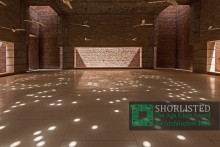
The Bait Ur Rouf Mosque in Dhaka by Marina Tabassum Architects/ MTA and the Friendship Centre in Gaibandha by Kashef Mahboob Chowdhury/URBANA have been shortlisted for the Aga Khan Award for Architecture. (Source: press release, Aga Khan Award for Architecture )
The projects, which were selected by the Master Jury from amongst 348 projects nominated for the 13th Award cycle, will be competing for US$ 1 million in prize money. They are among 19 shortlisted projects for the 2016 Award, which was announced on May 09.
Located in an increasingly dense neighborhood (Faidabad, Uttara ) of Dhaka, the Bait Ur Rouf Mosque is an attempt to create a language of architecture that takes essence from the glorious legacy of mosque architecture in Bengal during the Sultanate period, while maintaining a contemporary expression. “The quality of space and architecture in this project proves that with the use of local materials and dedicated craftsmen, and an attempt towards spirituality through light can span the distance between here and infinity, between today and eternity.”
Another project Friendship Centre is located in an agricultural area of rural Gaibandha. The area is susceptible to flooding and earthquakes. Conceived as dyke the project was constructed and finished primarily of one material – local hand-made bricks – the spaces are woven out of pavilions, courtyards, pools and greens, corridors and shadows. “As in construction, so in conception, the complex of the centre rises and exists as echo of ruins, alive with the memory of the remains of Mahasthangahr.”

Other shortlisted projects include project from AZERBAIJAN, CHINA, DENMARK, IRAN, JORDAN, KOSOVO, LEBANON, MOROCCO, NIGERIA, SAUDI ARABIA, SENEGAL, QATAR and SPAIN. The shortlisted projects are now undergoing rigorous investigations by on-site reviewers –architects, conservation specialists or structural engineers themselves – who visit and evaluate each project first-hand. Their reports are the basis for the Master Jury’s selection of the eventual winners. Details of the shortlisted project can be viewed HERE.
The Aga Khan Award for Architecture (AKAA) is presented every three year to architectural projects that set new standards of excellence and successfully address the needs and aspirations of Islamic societies. Since the Award was launched, 3 projects from Bangladesh Grameen Bank Housing program (1987-89), National Assembly Building (1987-89), School in Rudrapur (2005-07) have received the award.
University of Porto| Portugal
Barcelona School of Architecture (ETSAB) | Spain
Dwell in the House and Forest | Kishwar Jahan Residence by Ar. Rafiq Azam
|From the architect|
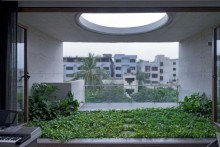
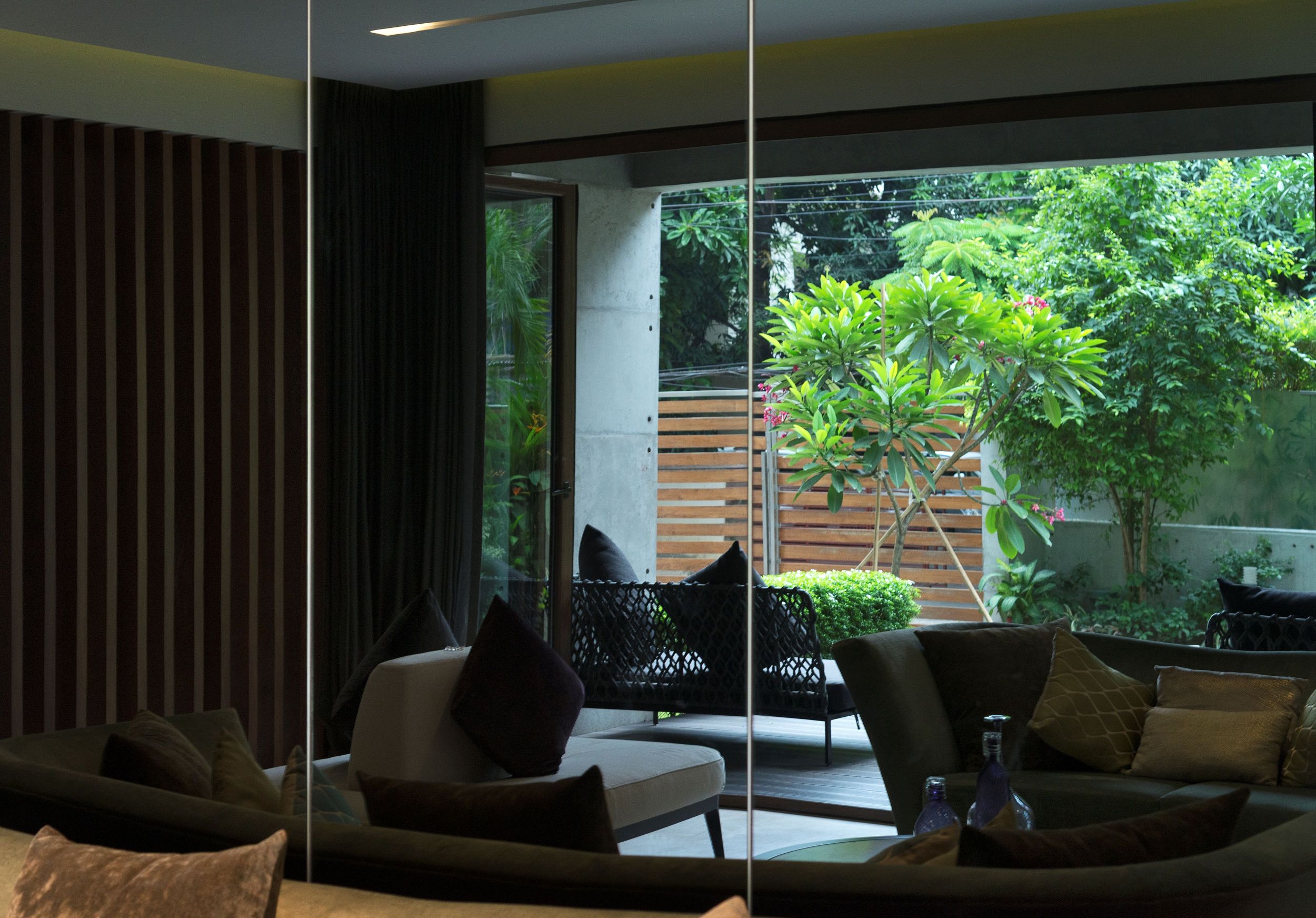
Old DOHS (Defense Officers Housing Society) is probably one of the most secured and tranquil residential area in Dhaka. Having a 12,939 sft. south facing plot with numbers of trees within and without the site is a fortune in the context of Dhaka.
Dhaka, one of the most densely populated cities in the world has become a city of urban mayhem. Having less than five percent green area for a city of more than 500 square miles with a growing population of disparity and persistent, Dhaka is fast losing its ambiance.
The concept of the project is resultant of context, climate and desire. Most importantly having the road on south, two storied residence on the east and north is a plus point but having a six storied apartment building with 43 windows on the west is a challenge in terms of privacy for this four storey single unit residence.
.


The idea is to push back the house as much as possible on the north to create a south lawn as big as possible, a first step of the design. This was done keeping in mind the sub-tropical climate of Dhaka with its winter inclined sun on the south and summer wind flow from the south-east. This south-east lawn also helps to retain the trees on the south edge of the side which is combined with the roadside trees making a green patch very substantial.
.


The next step of design is to create a 35 feet long steel bridge plunging out from the house at level three (family space) entering into the south edge tree foliage within and without the boundary wall of the lot. The intention is to “dwell in the house and forest.”
.


Project at a glance
| Project | Kishwar Jahan Residence |
| Location | House 67, Road – 5, DOHS, Banani, Dhaka, Bangladesh |
| Site Area | 6,122 sft. |
| Floor Area | 13,600 sft |
| Client | Mr. Reazuddin Al Mamoon & Mrs. Kishwar Jahan |
| Firm | SHATOTTO architecture for green living |
| Principal Architect | Md. Rafiq Azam |
| Associate Architects | Ar. Sihaam Shaheed & Ar. Sabrin Zinat Rahman |
| Assistant Project Architect | Mehanaz Sultana |
| Structural Engineer | Misbahuddin Khan |
| Mechanical Engineer | Md. Mofizur Rahman Khan |
| Electrical Engineer | Md. Khairul Bashar & Md. Mannan Khan |
| Photographs | Daniele Domenicali |
| Construction Date | April 2009 – June 2013 |
| Construction Cost | 1,046,153 $ |
.
Image Gallery


Centre for Puppetry | BRACU
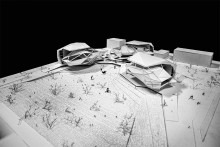
The project, ‘Centre For Puppetry’, aims to create a better world for the children that will ensure them to grow up in a joyful environment, to learn the basics of life, to see the difference between light and darkness, to choose the right path. Today we live in a polluted city and we cannot avoid human pollution from our life, form our society. People are becoming desensitized, so as our children. They practice slavery for moving forward and young mind grabs whatever it finds. Schools are not enough for children’s better up growing. They need a space of their own, where they will learn to know about themselves, and about the world that surrounds them. They will find all the colours of life and will be able to create their own philosophy of it. They will grow up so as they can make a difference. This project will perform as a home ground for our children. The project has two wings: one is the animation theater based on puppetry and other is the children centre. Puppet as an art form communicates best with the children. Puppet, to a child, is like his/her play-mate. The theater aims to produce puppet animated films on various stories that will help them learn values of life. It will also provide workshops on puppetry and live puppet shows where the children can participate. The children centre will help children to explore the colors of their imagination. This aims to provide a healthy environment and a ground to play. Since this art form includes almost all other types of art, this will help enhance each child’s ability to choose their own best.


Children possess a power to such an extent that they can travel even beyond imagination. Rabindranath Tagore, in writing, said ‘in our country childhood education system contains no delight for children’. Modern theories of learning has emphasized on ‘entertaining’ children first in order to educate them, believing that burden becomes light when cheerfully borne. All children have creative instinct and they want to express themselves in their own way through games, music, painting, drama and so on. A child has a magic eye to see various things in his own magical way. So, the creativity and originality of the child must be nurtured and enriched.

Puppetry is such a performing art that almost all forms of arts and crafts have been combined into it. It includes drawing, painting, modeling, sculpture as well as acting, singing, costume designing and every other form of dramaturgy. The more the children get exposed to the creative world, the more their own talents begin to get expressed. Puppetry is perhaps the oldest surviving art form of the world. The earliest mention of puppetry occurs in an ancient Indian epic ‘Mahabharata’ written in the ninth century B.C almost four thousand years ago. Puppet theatre in an old traditional art form of Bangladesh and once it was the spine of our village entertainment but now it is possibly the least developed in our country. It is a way of joy and learning for the children and adults also, but with advancement of technology, the practice of puppetry is very rare. And as well, the numbers of puppeteers are decreasing day by day.


Since in our country there are not much institutions working on spreading the art form of puppetry, there is a need of such a complex which will help revive and promote the culture once again. Puppet theatre has tremendous merits which can develop and direct a child’s thought process. By designing a centre for puppetry, we can build a platform where Bangladesh puppet culture can flourish with lasting hope and effects.
It will give out innovative puppetry expressing and influencing the essence of patriotism, culture, traditions, ethics, environment and consciousness of social factors. In a city, like ours, where most schools have no playground, where children are hostage to just amusement parks and cartoons on televisions, we desperately need to provide a place for them. A place such that it can help them enhance their creativity and see a form of performance that will teach them about our culture, educating them in many ways.

The children centre which is an integral part of this project along with the theatre will contribute greatly to this objective. This project will not only contribute to save and culture an important art but will utilize the potentiality of this unique media, in making children’s programs, social issue programs and public awareness programs. This project will also have a training section to ensure the continuity and development of the unique art.

The basic idea was to create a form that gives a feeling of the puppet. Form that communicates with the people about puppetry. I started studying the features of the puppet that makes it recognizable to the audiences. The characteristic that makes the puppets recognizable to people of all ages is the mechanism on how it works. The most popular form of puppetry is marionette. The marionette is a puppet on strings, suspended from a control held by the puppeteer. Marionette presentations generally need to be raised, either by setting up on a platform, stage or rostra blocks, or by the use of a built-in feature of the puppet staging. Totally open-stage per forming, in which the puppeteer appears fully visible on stage with the marionettes, is used most frequently for cabaret and variety acts. It provides greater scope for movement and action than the more traditional forms of presentation.
The life | Nahian Zobaid

Premier University- Chittagong Celebrates its 4th year of Architecture Education
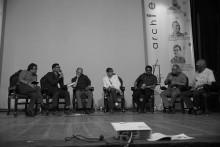
|Obidul Haque Titu & Kazi Sumaiya Saifee, PU |
With a month-long preparation and hard work Department of Architecture, Premier University organized the first public event celebrating its 4th year of journey at the premise of Shilpakala Academy, Chittagong.
The 3 day long event was inaugurated on 27th February by Honorable Vice Chancellor of Premier University, Dr. Anupam Sen. In his inaugural speech, he encouraged the students with his valuable speech and asked them to preserve the history of nation, especially Chittagong through their works. The Chairman of the Department Architect Sohail M. Shakoor expressed the same viewpoint also mentioning how Premier University has played a vital role as a pioneer of Architectural Education which was previously missing in the second most important city of the country. The founder of Premier University and ex-Mayor A B M Mohiuddin Chowdhury was also present in the occasion and appreciated students for their good works.
The event was divided into three segments- exhibition of student’s works, lecture series and cultural program. Student’s works were exhibited all three days; whereas lecture series by renowned Architects and cultural program were held in second and third day respectively.
There were fifty projects of different levels in the exhibition. A fourth year project which focuses on a very critical urban issue of water logging caused by high and low tide of river Karnafully in Agrabad area proposes a thoughtful housing design, “Rethinking living with water” which helps allowing the natural flow of water. This project drew everyone’s attention. Adding to that, there were urban projects addressing different important nodes of city proposing traffic congestion lessening solutions. Not only Architects but also general people were interested to know about the problems and proposed strategic design proposal by students as they were wonderfully presented and explained with informative drawings and models. The visitors were mesmerized by the skyscrapers designed by the students.

The Lecture series was one of its first kind in Chittagong, where renowned architects like Prof. Shamsul Wares (UAP), Prof. Dr. Abu Sayeed M. Ahmed(President of IAB), Prof. Dr. Azizul Mowla(BUET), Nurur Rahman Khan(TKNRK), Md. Fuad Abdul Quaium(Ghorami.jon) presented their insightful lecture on various topics which were very encouraging for the students and local architects.
All of them praised how this Department is growing and increasing expectations with their good work. Prof. Wares mostly focused on the relationship between various form of art and Architecture, and how Architecture is no isolated thing and is a very important art form which affects human life, society and culture. He compared Architecture with writing a poem, where two poems can never be similar but can be equally pleasant to human mind. Prof. Dr. Sayeed emphasized on how we should practice Architecture when it comes to preserving our heritage which represents our history and culture, and he showed some excellent examples in different cities where they are working on different technology for heritage conservation which includes students and professionals of various disciplines. His speech encouraged students, faculties, architects to rethink about valuable heritage and their conservation. Ar. N R Khan also talked about how Architects should think, follow and how to conceptualize a certain work from inspiration, He showed some excellent relationships of inspiration and real work which included not only architecture but different art forms and daily usable things. Prof. Dr. Mowla discussed about curriculum and students involvement on heritage conservation. A different attraction was the presence of Ghorami.Jon, a team of architects and activists who works with vernacular material and ecology. With reference to their projects Ar. Quaium explained how their Architecture helps not breaking but maintaining link between living beings and environment.

The Seminar ended with an interesting discussion panel of guest architects moderated by Ar. Sujaul Islam Khan (AUST), and Ar. Ashiqur Rahman (PU). The panel answered questions from audiences and also discussed how our students can be made aware from school level to respect culture and history. The whole session was very lively and audience from different fraternity equally participated enthusiastically with honorable guests. A token of appreciation was given to each guest by Chairperson Ar. Sohail M Shakoor on behalf of the Department of architecture, Premier University.
The event came to an end with cultural night organized by students where they could be seen performing with spontaneity and energetic mood. A full packed Shilpokola appreciating and encouraging them made the event more successful. Puppet show by a local group synchronized with student’s conversation was a lovely peace of presentation.

The festivity of the event was something worth remembering. As the port city has always been center of attraction for its natural beauty, rich culture and heritage but always lacked in giving proper importance to Architectural education. Premier University has given that platform to many of those dreamers to make their dream a reality.
The event certainly set a benchmark for students and boosted up their energy when they were appreciated by renowned Architects, faculties, students from different institutions and we can always hope that they will keep up the good work and brighten up the name of their University to shape up the city and the nation in future.


METAMORPHOSIS through ART | Entry from SUST at ARCASIA 2015
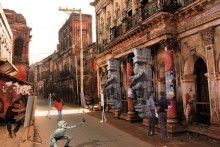
Competition background:
ARCASIA 2015 hosted a competition among its member countries inviting students to rethink about historical sites so that they can have active role in societies instead of being only a function less empty shell or a tourist attraction. The theme was METAMORPHOSIS -implying that the design should make the chosen historical site to evolve and change with time with active functions while retaining and demonstrating its former glory of the past. The following idea project is an entry from SUST, Bangladesh where the participant tried to incorporate functional Metamorphosis through Art within the ancient fabric of Panam (Painam) Nagar.

The Project:
A building moves not. Then how to make it ‘change’ with time? How to make it go through METAMORPHOSIS? My idea is based on the ancient capital of Panam in Bengal.
Sonargaon was the capital of the ancient kingdom ruled by Isa Khan of Bengal.
Today, old Sonargaon is home to some of the oldest buildings in Bangladesh. Sonargaon was known for “The City of Panam” and was a focal part of the renowned Deva Dynasty until the thirteenth century. The still remaining ruins of the buildings were the residence of Hindu businessmen.
In those days, no city at the east Bengal was near as wealthy as Panam.

All the buildings in the city were built facing a single road, which is 5 meter wide and about 600 meter long. In the city, there still remain 52 buildings. The whole city is surrounded with artificial canals. The site seemed to pose a great variety of ancient drama but somehow it was at a pause. With no inhabitants, the buildings reminded of great glories of past but also despaired at its present condition. So I intended to bring some life into the city by means of art.
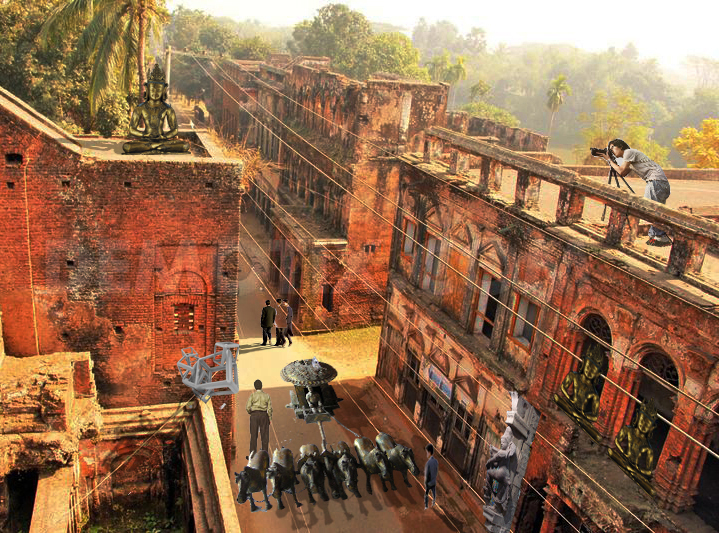
The idea is to engage the buildings in a program. The ancient buildings will be the host for artists, sculptors, archeologists, architects, photographers, painters & students of the respective subjects. Each year, the students from each place will stay for certain periods of time and ‘create’ from their specialization based on the ruins of the ancient buildings. The sculptors will create sculptures depicting the ancient period and use the buildings themselves as stage or platform or represent the ideas abstractly on the same theme. The painters will paint from their own observation of the buildings which can represent time- ‘past or future’. The photographers will keep on clicking. Open exhibitions will commence for each terms- submission and people will find the same ancient place with a new look every time. In this way, the building will not remain as an empty packet for eternity, rather it will serve as the vessel of new art. In this process, the history of the buildings can also be spread as well as awareness to respect its importance will be appreciated.

The buildings shall act as vessels & platforms for new art. Every year, the whole place shall be depicted and conceptualized by artists & students differently changing the environment of the building regularly. The building thus responds to change and is not lost in time. The delicate structures of the buildings are not harmed and also can be repaired where necessary. The buildings now serve as 3d canvas while proudly upholding its own ancient identity.