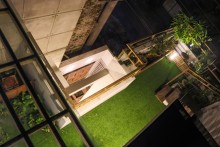
My client spent a long time since his birth in the site of “Lamisa-Nimo’r Dada Bari”. It was his father’s own old house and there was a single tin shed building only. Now my client lives in Dhaka. He owns 2 apartments in Dhaka and one in Malaysia. There he may get so many modern facilities but something is missing there; and that is the attachment with root. So he assigned me to build a new structure at same site removing the old one. Because he wants to give his children a new Dada-Bari(grandfather house) where they can spent their vacation. My client has two children Lamisa(daughter) and Nimo(son). So from there I gave the name of my project-“Lamisa-Nimo’r Dada Bari”. It is a vacation house.
From the beginning of conversation with my client we have decided that the house will be facilitated with full of natural elements. So that his children can get the feelings of a grandfather house from which they are apart in Dhaka.
Such as :
attachment with greeneries
feeling the rain drop
swimming and playing with water
chattering of birds
fish under water
feeling the sun light, and so on
And all these aspects have an strong influence on my design process.
The site is situated at housing state area of Khalishpur, Khulna. The area is connected with the main city and the river Voirob by a 30′ wide road. After the liberation war of 1971, Bangladesh govt. allotted the area for the Pakistani refuge and constructed a refuge colony well known as ‘Bihari Colony or Khema’. At that time govt. has plotted this area where plot size varies between 2.5 katha to 2.75 katha. Since then all the plots are following zero(0) setback rule for left-right side.
So due attention is given to the conservative culture of Bihari community and the archetype of their housing unit. The architecture of this area developed an introvert nature where outer space is less important than inside. Opening on the exterior wall is less evident, light-ventilation is solved through either courtyard in low rise building and light well in case of multistoried building. Also in order to accommodate many people in small plot local people have developed a multi-layer solution within small height condition.
The main design of ‘Lamisa-Nimo’r Dada Bari’ can be explained from two angles. One is it’s contextual perspective and other is it’s functional demand. Previously I described about the site location and it’s potentiality and limitations. So I have drawn a similar section from the house pattern of this ‘Khema’ area with an aim to give the project an introvert nature where outer opening and views are less important rather internal space. Moreover there is a five storied under construction building located at the right side of my plot and two storied buildings is on the left and back which are in a very close proximate. But the height of my project is maximum 30′. And it seems to me that the outer fabric is less important rather my internal views. So it gets the shape of an introvert house.
One can enter the house over a water body with wooden deck steps. There is a parking place for a car beside the deck and I designed this space with the juxtaposition of water and greeneries with an overhead open air space. A shaded wooden ramp is also provided which is very much suitable for children and older person. The natural light, exposed brick wall and water beneath altogether create a dramatic environment.
When a person approaches through the main door he or she finds an atrium where the natural sun light comes directly from top through the glass roof. Diagonal wooden frames are installed for casting shadow on fare face side wall and thus enhancing the dramatic quality of indoor light. This entry directly terminated a birds garden where landscape is designed to simulate a rainforest like environment.
The formal living is 3 steps down from the foyer level. The living space is flanked with water body in two sides which act as a natural water garden for color fish . A wooden deck is provided over this water body where a person can sit and can touch water with his feet; that actually resembles the concept of pond. Here also I have used long folding window which can open 100%. This view is blocked again with a exposed brick wall where the wall is detailed with pigeon holes and extrude brick stretchers in a scattered manner. The water body is at the middle of the formal living and dining and visual connection is provided through a punch.
A 3 flight triplex stair leads to second atrium. Here once again the roof is detailed with clear glass for ensuring natural sunlight filtered through diagonal wooden frame. The top natural light, diagonal shadow from wooden frame and the brick wall makes a unique environment which changes it’s appearance time to time during day and night hours.
The stair then leads to the rain court where the floor is landscaped with artificial carpet grass and is surrounded with exposed brick well where the head of the well is open such that raindrop can directly fall here. Beside this rain court family living is provided with clear glass partition. From the family living a verandah with green planter is situated at the front side which is terminated the main gate and this planter is also enhance the space quality of entry side. Master bedroom is situated at the road side and a verandah is provided between the bed room and the road where there is detailing with irregular wooden louvered work protecting the bed room from direct light from the west sun. From the wooden louver a outer large tree is seen where the louver and the tree also make soothing visual aesthetics. At the end of the stair there is party space which is linked with the green roof terrace from where the wooden steeped stair is start for going to the mini child swimming pool and the aesthetic beauty of the pool is enhanced with adding a water fall. Overall I have treated this building not as a mere cluster of rooms rather as a place full of multidimensional natural spaces; where individual spaces create different type of aesthetics with the help of the natural element.
Also here another beauty is it’s material. Here I am using the true expression of the material where the brick is act as a exposed in nature, concrete is standing with it’s rough gray color texture and these two thing is juxtaposed with natural wood.
At a glance the building is very simple in respect with the formal expression. But inside this simple structure it is filled up with nature and playful dramatic story.
Ar. Sk. Moshiur Rahman completed his Bachelor of Architecture degree from Khulna University (KU) in 2012 . He worked for “Sthapottya Architects” BD from 2012-2014. Also involved as an interior designer for “Living System Consultant” BD from 2014-2015 and corresponding start his own practice, after then found his own design studio.
Disclaimer : The Project titled ‘Lamisa-Nimo’r Dada Bari’ was published in DOT, a journal on Art & Architecture, 2nd issue , Vol 1 .
Gender disparity in the architecture profession has been an ongoing debate since a long time. In the year 1991, when the Pritzker Prize was awarded to Robert Venturi of Venturi, Scott Brown and Associates, the Pritzker committee chose to ignore the contribution of the other half of the firm’s namesake – his wife and partner, Denise Scott Brown.
In her essay titled ‘Room at the top?’ Denise Scott Brown shared her frustrations of being overlooked because of her gender, despite being as brilliant as her husband. Many architectural reviews often omitted her name from descriptions of projects where both she and her husband worked together diligently. When others told her to brush these things off, she asked if such little recognition would be enough for her male colleagues. “What would Peter Eisenman do if his latest article were attributed to his co-editor, Kenneth Frampton?” she challenged.
Statistics tell us the scenario is worse than we imagined. Only two female architects have won the Pritzker Prize, in its 34 years history. According to a 2012 survey by American Institute of Architects (AIA), only 16% of the licensed architects in the US are women, whereas 43% of architecture students are female. According to The Architect’ Journal’s annual Women in Architecture survey, in the UK, only 21% of the architects are women.
Work-life balance was identified as the main reason women are so underrepresented in this profession. Architecture education takes about five to seven years to reach completion. Another few years of work experience are needed before one can apply for the licensing exam. This is a time consuming process and it coincides with a woman’s childbearing years. Therefore many women have to make a choice between being a mother and being an architect. It is a tough decision to make and very few women can find the balance between work and family and are able to continue their profession. According to a diversity report published by AIA, published in January 2016, 70% of women partaking in the survey said they would leave the field if the long hours make it difficult to start a family.
One unique thing about working as an architect is that it is not a nine-to-five job. If it were, it would have been a lot easier for women to pack up work after five and go home to look after their family. Practicing architecture is a 24-hours-long process, a never ending cycle of brainstorming and coming up with new ideas. So it is hard to think about ergonomics and building materials when you have got a screaming toddler to take care of.
After going through the lengthy schooling and licensing process, many women face sexism and discrimination in the work place. In some cases, it starts even before a woman is hired for the job. As I persue through advertisements for job vacancies for architects, I become disappointed because 7 out of 10 jobs ask for male applicants only. During one of my interviews at a firm, one of the preliminary questions I was asked was regarding my marital status. When I asked how that is relevant, the interviewer apologized and sheepishly replied that many female employees move abroad after getting married. So, training and hiring them is often, I quote, “a waste of time for the firm.”
Architecture education in Bangladesh began in the year 1962, with the opening of the Department of Architecture of the Faculty of Architecture and Planning at Ahsanullah Engineering College, which is known as BUET, in present day. In the first ever batch, out of the 22 students, only 3 of them were women. In a way, architecture education paved the way for co-education in engineering schools of Bangladesh. Yet, today’s statistics paint a very disappointing picture. According to the directory of Institute of Architects Bangladesh (IAB), the percentage of female architects who are full licensed members is a meagre 23.5%, compared to the staggering 76.5% of full members who are male architects.
USAID photo | Source: Rafique Islam, The First Faculty of Architecture in Dhaka, 2010
Marina Tabassum, renowned architect and founder of Marina Tabassum Architects (MTA), said at an interview given during the 2014 National Architecture Conference in Perth, that “…women are absolutely fantastic to have in the office. They are responsible and very systematic about everything, but they don’t come to practice permanently. Either they drop out or do a balancing act between supporting their family at the same time as doing a nine-to-five job.”
There are several things that can be done to rectify the situation. Women with families and children can be given flexible working hours. More widespread organizations can be opened up where female architects support each other and refer each other for projects, which will create a strong networking between them. We need to stop thinking of the architecture profession as an exclusive boys club. Brilliant architects like Denise Scott Brown must be given proper recognition because of the great designer they are, and not just as ‘the architect’s wife’. Women create a social impact in workplaces because of their compassion and their abilities to connect to people at all levels. Architects are creative individuals and truly unique professionals. We should not let something as inconsequential and trivial as the matter of gender hold us back. Once we let go of such narrow-mindedness, the profession will be home to more people with innovative and distinctive ideas.
Works Cited :
[1] Denise Scott Brown, Room at the top? Sexism and the Star System in Architecture, 1989.
[2] Diversity in the Profession of Architecture, Executive Summary, 2016, by the American Institute of Architects.
[3] The Architect’s Journal’s Women in Architecture annual survey, 2016
[4] Directory of Institute of Architects Bangladesh, (IAB), 2014
[5] Rafique Islam, The First Faculty of Architecture in Dhaka, 2010
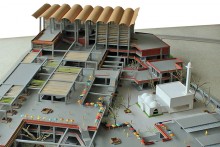
‘Rethinking Nilkhet Book Market: A Conservation Led Sustainable Re-Generation’ was a hypothetical proposal for the final year thesis project of Khulna University Architecture Discipline .The aim of this project was to rethink the existing proposal and suggest alternative solutions considering the present condition and the future impact on surroundings and its target group.
The major considerations for this project was conservation of the existing cultural and historical values of Nilkhet book market ; giving solutions for the uplifting traffic congestion of surroundings ; and upgrading the built environment through regeneration.
While designing, the first and foremost consideration was to accommodate the book market within two storey to maintain the existing horizontal approach of the book market. Considering the adjacent Dhaka New Market as a major force of the site, zoning restrictions were strictly suggested for the book market to prevent the encroachment of new market and other commercial places around the site. A central court is designed around the old mosque for the better experience of this heritage.
Two new roads are proposed in front of Balaka Cinema Hall and the Gausul Azam Hawkers Market for an alternative vehicular entry and exit to the proposed basement to minimize the traffic rush of the adjacent node and the lacking of parking facilities of the adjacent new market area. To ensure the secure Pedestrian movement within the site and adjacent of the site no vehicular roads was proposed inside the market rather than the direct basement entry and exit.Hawkers were accommodate within the site by providing Green buffer and level variation to discourage the illegal encroachment of the adjacent roads.
A public plaza is proposed on the second floor surrounded by traditional food facilities and other public facilities in front of the proposed Nilkhet public library. The library is proposed to emphasize the specialty of Nilkhet area as a book market. In addition this will attract more students and readers to the site, who are the main target group and thus increase the business of the book market.
Organized by ARCASIA and sponsored by NS Bluescope (Thailand)
ELIGIBILITY
Young Architects of ARCASIA (40 years and under) and member of the institute of their country
BRIEF
This year the organizer calls for research proposals on general topic of humanitarian architecture. The research shall be originated from the indigenous context and environment of the Young Architect’s country/city of origin, or country/city of current residence. Emphasis shall be placed on adaptation and implementation of research-derived knowledge and techniques to a practical or hypothetical humanitarian architecture project in the Young Architect’s country/city, or respective country zone. It is highly preferable that the project yield tangible outcomes, e.g., in the form of prototype, large-scale model, partial construction.
Top three proposals will be awarded scholarship to travel Thailand to conduct proposed research, and to Hong Kong to present research findings during the 17th Asian Congress of Architects (ACA17), scheduled for the end of September 2016. Proposed length of stay in Thailand during the month of June 2016 is at the discretion of the Young Architect, but should neither be shorter than 7 days, nor longer than 29 days.
During their stay in Thailand, the three Awardees shall conduct proposed research under the guidance of, and/or in collaboration with, three distinguished Thai experts in the field of humanitarian architecture: Patama Roonrakwit [CASE], Chutayaves Sinthuphan [Site-Specific] and Vipavee Kunavichayanont [Design for Disasters]. The three selected projects will also be published in hard copy and e-journal.
SUBMISSION
Each proposal submission shall comprise the following:
– Description of research goals & objectives
– What will be achieved during the research trip to Thailand
– Detailed travel itinerary in Thailand
– Research precedents (if applicable) and project background
SUBMISSION FORMAT
Two A3 graphic sheets, in format of High Quality Jpeg (Landscape Format 420×594 mm)
Resolution: 150dpi (3,508×2,480 pixels)
Text file containing the project statement (1000 words max)
Text file containing the Young Architect’s personal information, including name, age, contact address, email, and architectural institute affiliation
All materials must be submitted electronically to: travelprize@arcasia.org
The total file size must not exceed 15 MB
AWARD
There will be three (3) prizes awarded, one for each of three ARCASIA zones: Zone A, Zone B, and Zone C. Please refer to ARCASIA website for more information on the country zones.
The monetary amount for the award shall be
Zone A: 4,500 USD
Zone B: 4,500 USD
Zone C: 4,500 USD
COMPETITION TIMELINE
April 8, 2016
Deadline for Submissions.
April 29, 2016
Announcement of Winners
June 1-30, 2016
Travel period to Thailand
September 26-30, 2016
Presentation and Attendance at ACA17
The Jury reserves the right to revise dates as deemed appropriate during the award process.
JURY
The panel of judges comprising the three experts and representatives of current ARCASIA Office Bearers will select the winners based on their submissions.
Patama Roonrakwit [CASE]: Patama Roonrakwit is founder of CASE – Community Architects for Shelter and Environment. The award-winning studio works with a humanitarian and anthropological approach in creating appropriate housing for people.
Chutayaves Sinthuphan [Site-Specific]: Chutayaves Sinthuphan is founder of Site-Specific, a research-based design and architecture studio. His projects have been extensively published and acknowledged for their sustainable and innovative approaches.
Vipavee Kunavichayanont [Design for Disasters]: Vipavee Kunavichayanont is co-founder for Design for Disasters (D4D), a nonprofit research and design initiative network focused on finding creative long-term solutions to prepare for and recover from natural disasters.
Sathirut Nui Tandanand: Sathirut Nui Tandanand is the current President of ARCASIA and managing director of Dhevanand, a multidisciplinary architectural practice based in Bangkok, Thailand.
Luke Yeung: Luke Yeung is the current Honorary Secretary of ARCASIA and principal of Architectkidd, an award-winning architectural studio.
Bea Vithayathawornwong: Bea Vithayathawornwong is the current Honorary Treasurer of ARCASIA and design director of Beautbureau, a Bangkok-based design and research studio.
|Text from the architect. English version at the end of Bengali text|
স্থাপত্য সৃষ্টির নেপথ্য ভাবনা-
“সব ক’টা জানালা খুলে দাও না”
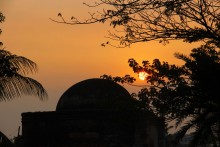
মহিষখোলা নদীর পূর্বপাড় ঘেঁষে একখানা প্রায় নিশ্চিহ্ন টিনের ঘর – যার অস্তিত্ব সরেজমিন প্রত্যক্ষ করেও কল্পনায় তার পূর্ণরূপ দেখা কল্পনাবিলাসীদের জন্যও হয়তো দূরূহ হবে এবং তার আশপাশখানা ৪২ বছর ধরে মনুষ্যস্পর্শহীন হওয়ায় প্রকৃতির লীলাক্ষেত্র অর্থাৎ জঙ্গলাক্রীর্ণ। সেই ঘরে ১৯৭১ সালে মুক্তিযোদ্ধারা যুদ্ধের ফাঁকে ফাঁকে বিশ্রাম নিতেন। পাক হানাদারদের মাঝেসাঝে ধরে নিয়ে বন্দী করেও রাখতেন। মুক্তিযুদ্ধেও সময় এ অঞ্চলটি ছিল ১১ নং সেক্টরের ১ নম্বর সাব-সেক্টর। পশ্চিমে গা ঘেঁষে মহিষখোলা নদী, উত্তরে ২০০ গজের মধ্যেই ভারত সীমান্তে মেঘালয়ের পর্বতমালা, পূর্বে সংখ্যাতীত খাল-বিল আর সুবিশাল টাঙ্গুয়ার হাওড়। এ হাওড়ের সঙ্গে রাগে-অনুরাগে জড়িয়ে আছে আরেকটি স্নিন্ধ নদী যাদুকাটা। শ্রীচৈতন্যের জেষ্ঠ্য পার্ষদ অদ্বৈতাচার্য এই নদীপাড়েরই সন্তান ছিলেন। যুদ্ধের মাঝামাঝি সময়ে পাক বাহিনীর সাথে মুক্তিযোদ্ধাদের এক ভয়াল সংঘর্ষ হয়। অনেক যোদ্ধা মারা যান। মহিষখোলা নদীর পাড়ঘেঁষা বাড়িটি ধ্বংস হয়ে যায় তখনই, শহীদ যোদ্ধাদের গণকবর রচিত হয় তারই এদিক-ওদিক। তারপর ৪২ বছর লতা-গুল্ম-বৃক্ষের চাদরে ঢাকা ছিল এই ইতিহাস।
সুনামগঞ্জ জেলার উত্তর-পশ্চিম প্রান্তে ভারত-সীমান্ত লাগোয়া ধর্মপাশা উপজেলায় মহিষখোলার এই প্রকল্পটি সেই আচ্ছাদিত সত্য উন্মোচনেরই ফলাফল। কাজ শুরুর পূর্বে প্রকল্প-স্থান প্রস্তুত করতে গিয়ে নির্মাণকারী প্রতিষ্ঠানকে শ্বাপদ তাড়ানোরও ঝুঁকি নিতে হয়। আর আমাকে সুবিশালকৃতি টাঙ্গুয়া ডিঙ্গোতে হয় বিশ বার।
স্থাপত্য সৃষ্টির প্রারম্ভে স্থপতি হিসেবে আমার মনে তাই ‘ঘর’ বিষয়টি ক্রিয়াশীল হয়। নদীর পশ্চিম পাড়ে এই ‘বধ্যভূমি’তে বধ-হওয়া শহীদরা ঘুমিয়ে আছেন। ঘুমন্ত এই প্রাণেদের জাগ্রত্য চেতনার ‘আশ্রয়স্থল’ নির্মানই তাই উদ্দিষ্ট হয়ে ওঠে। নদী রূপ নেয় রূপক-এ। সে স্বাধীনতার কথা বলা শুরু করে।
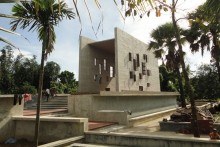
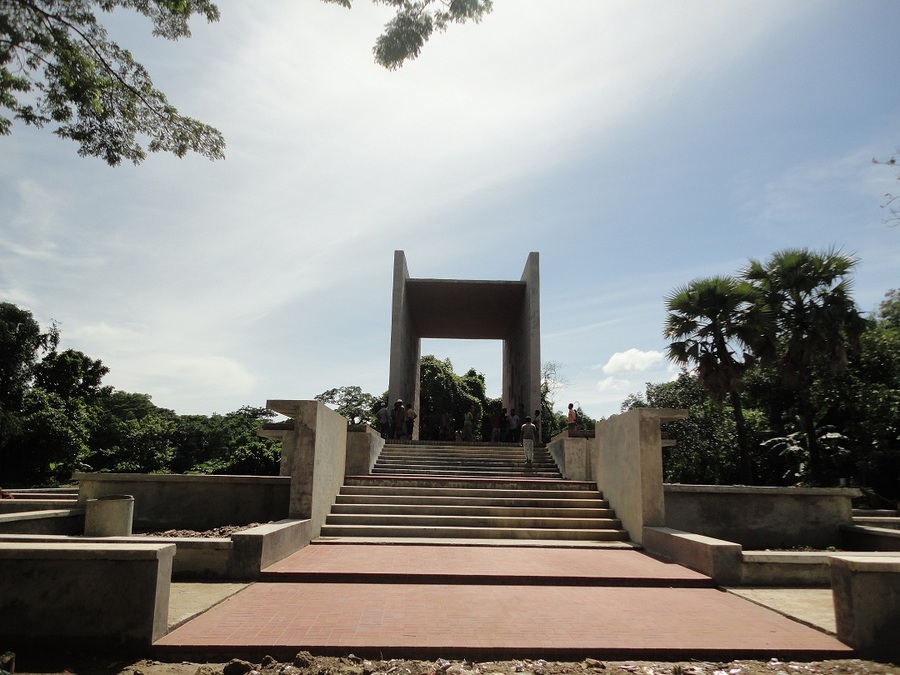
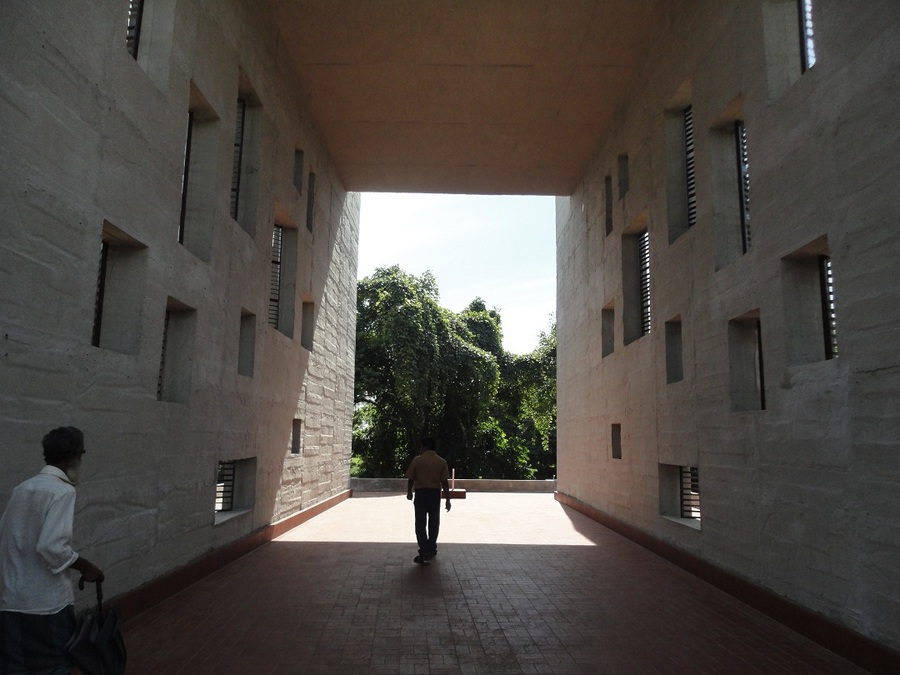
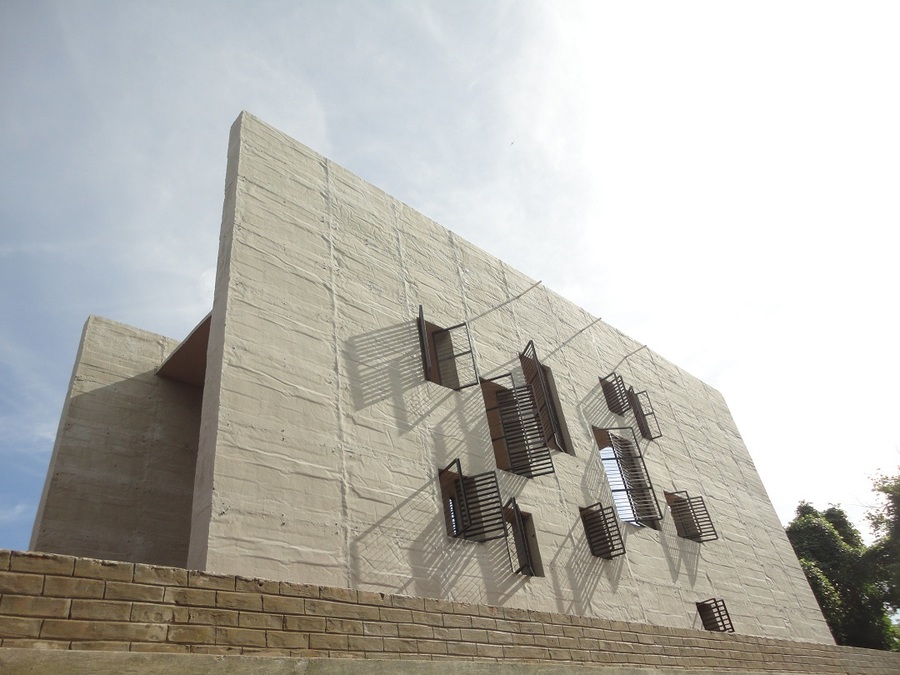
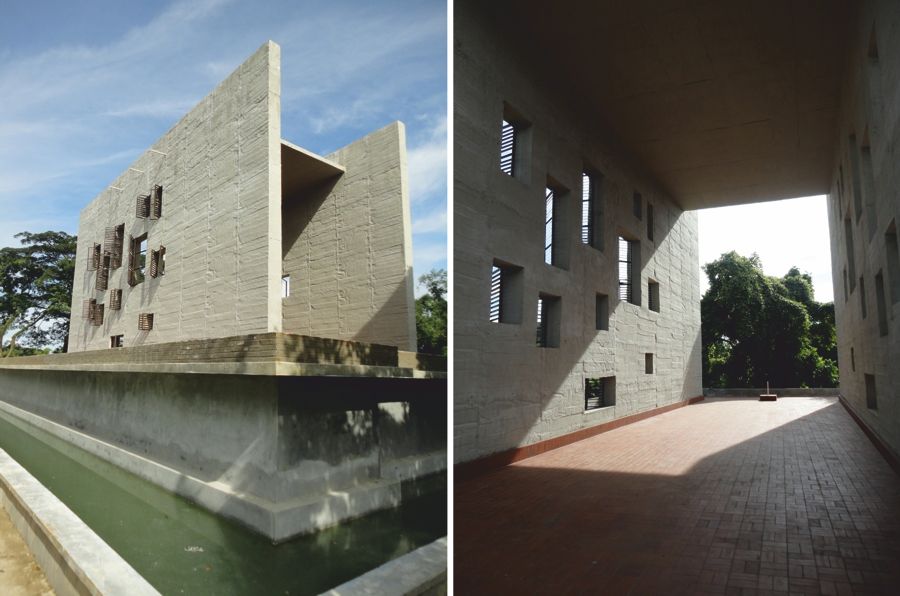
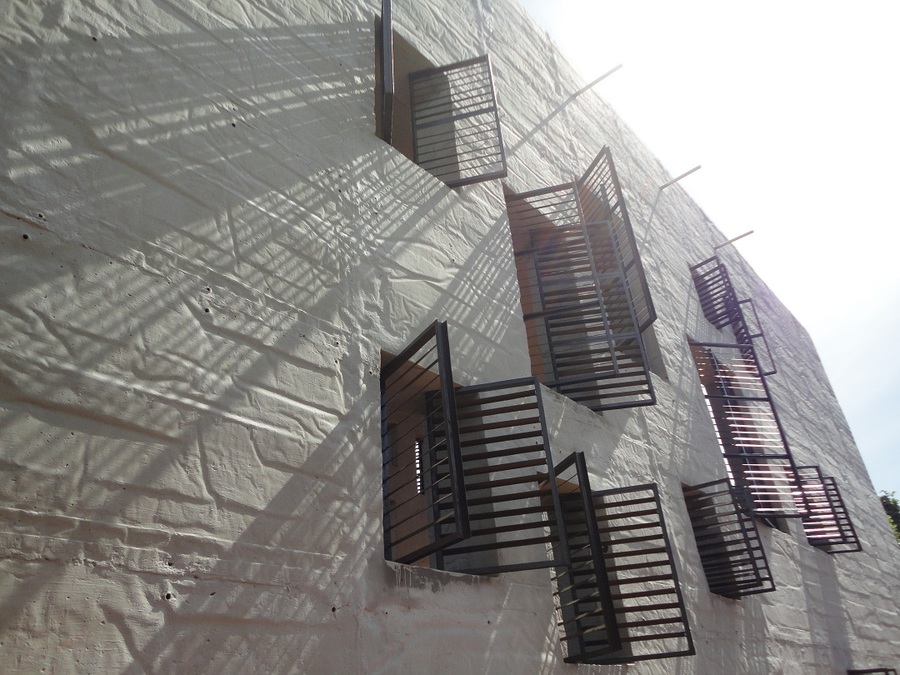
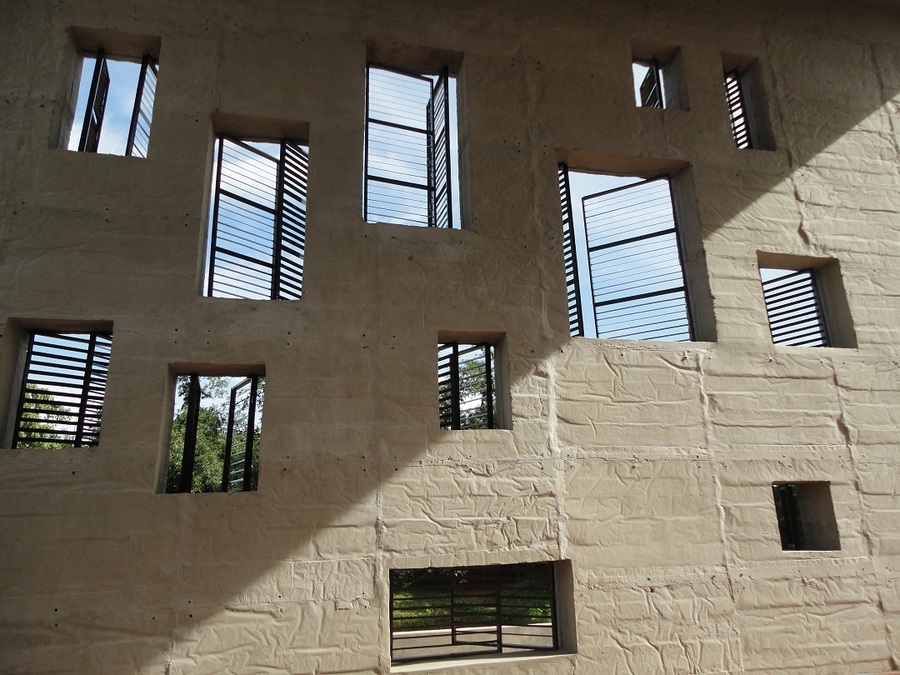
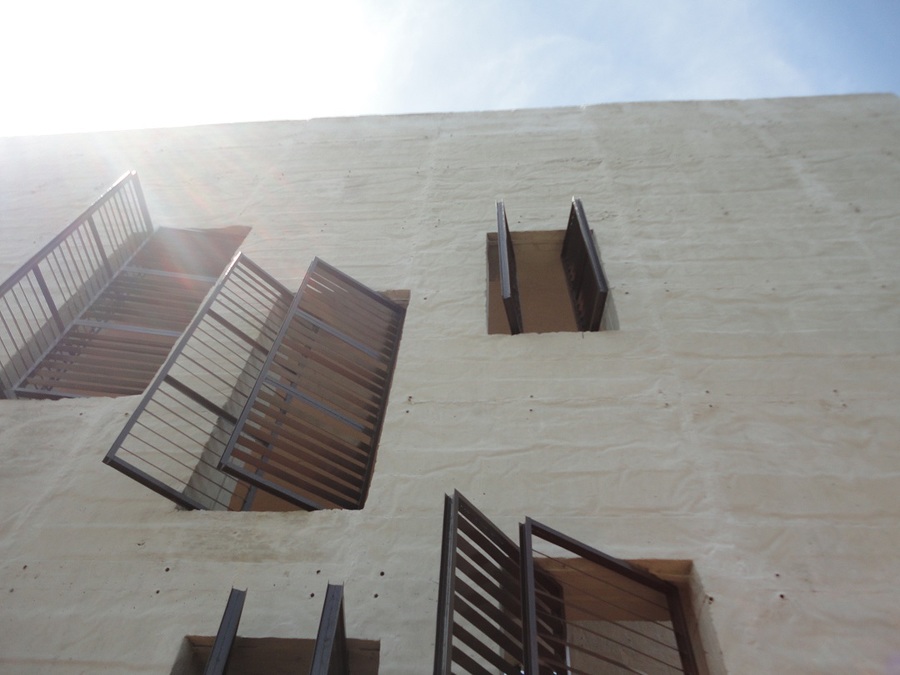
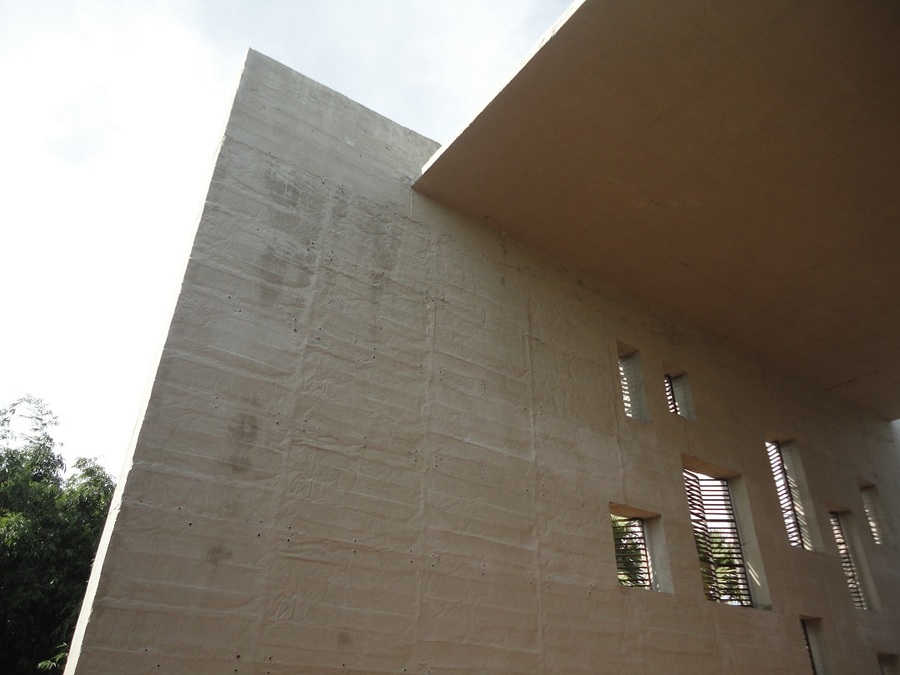
পূর্ব-পশ্চিম অক্ষ বরাবর সমান্তরাল দুটি সুউচ্চ দেয়াল ‘ন’ ফুট বেদীর উপর এসে দাঁড়ায়, তার উপর ছায়া হয়ে ছাদ এসে বসে। সিড়ি ভেঙ্গে পূর্বদিকের প্রবেশ বিন্দুতে চোখ রাখলে পশ্চিমের নদী আর তার গায়ে-এসে-পড়া আকাশ দেখা যায়। পূর্ব-পশ্চিম উন্মক্ত হওয়ায় দুই দেয়ালের ঘর রচিত হয়ে যায়। উত্তর-দক্ষিণের ২৭ ফুট উচু দেয়ালে (দেড় ফুট পুরু) ব্যাকরণ ভেঙ্গে অনেকগুলো ছোট-বড় জানালা আড়াল খুলে আলোর উৎস হয়ে উঠে। ঠিক চোখ-মেলে-তাকানোর মতো। ‘যারা এই দেশটাকে ভালবেসে দিয়ে গেছে প্রাণ’ , তারা তো বদ্ধ ঘরে থাকে না, যে ঘরে দোর-জানালায় অর্গল টানা, যে ঘরে আলোর ঝলক নেই, দোলা নেই, সে ঘরে স্বাধীনতা প্রবেশ করে না। সেই ঘর অন্ধকারের অধীন। তাই ‘সব কয়টা জানালা’ই খুলে আছে।
‘জানালা’ একটি গুরুত্বপূর্ণ স্থাপত্তাংশ, যার ব্যবহারিক ও মনোস্তাত্ত্বিক মূল্য অতুলনীয়। এটি আমাদের দর্শনেন্দ্রীয়ের মতো। চোখ দিয়ে যেমন আমাদের দেহ-ঘরে আলো প্রবেশ করে, আমাদের প্রথম অভিজ্ঞতা চোখ দিয়ে হয় (‘জ্ঞান চক্ষু’), তেমনই দেওয়ালকে মুক্তি দেয় জানালা। তবেই দেয়ালের চোখ ফুটে আলো-বাতাস প্রবেশ করে গৃহে প্রাণের সঞ্চার হয়। এজন্যই ‘খোলা জানালা’ আর ‘স্বাধীনতার চেতনা’ সমার্থক হয়ে উঠেছে।
বেদীর তিন দিক ঘিরে রয়েছে পানির আধার যা পশ্চিমে নদীর সঙ্গে সংযুক্ত। প্রতি বর্ষাতেই মেঘালয়ের পাহাড়ী ঢল নামলে নদী উপচে বেদীর তলায় কিছুক্ষণের জন্য হাঁটু জল জমে যায়। এটা হাওড় অঞ্চেলের চেনা দৃশ্য।
এভাবেই হাঁটু জলে দাঁড়িয়ে ‘সব ক’টা জানালা’ খুলে আমাদের ডাকছে ওরা,
‘যারা এই দেশটাকে ভালবেসে দিয়ে গেছে প্রাণ’।
|English|
Concept behind Architecture:
Let all the windows open
A ruined tin shed house, situated at the Eastern bank of MohishKhola River gives a discrepancy between reality and imagination as it is very tough for even a highly imaginative person to make the real portrayal of the actual form of the house in reality. The surroundings of the house have been a playground of nature for 42 years as it did not get the touch of human activities. It has become a jungle land composed by nature at her playful wish.
The room was used as a resting place for the Freedom Fighters during the time of 1971. The Freedom Fighters used to captivate the Pakistani soldiers here sometimes. This area was in the number one subsector of 11th Sector during the liberation war of 1971. Mohishkhola River is at the Western part of it and the mountains of Meghaloya are situated within 200 yards of the site; and there are countless numbers of canals, marshes and vast Haor Tangua at the Eastern part of the place. The beautiful river Jadukata is closely related with touchy association with this Haor. Adwaitacharya, a senior courtier of Sri Choitanya was born in this place. A bloody fight was fought between Freedom Fighters and the Pak Army during the middle period of the Struggle of Independence at this place. So many Freedom Fighters died at that time, the house situated by the river was destroyed; and the place became the mass burial place of the Freedom Fighters. After that, this history was covered with the curtain of nature for 42 years before 2013.
This project is the result of the approach to discover the hidden truth related to the place at Dharmapasha Upozila in North-Western part of Sunamganj. The implementing authority was Jila Parishad of Sunamganj. Before starting the construction of the project, the Construction Company even had to take the risk of stamping out the wild predators from the land; and I had to go across the vast Tangua Haor at least for twenty times.
Before the beginning of design, the concept of ‘house’ came to my architectural mind as a working force. Slaughtering Place (Boddho Bhumi) of the Western bank of the river is a mass burial area of Freedom fighters where the Martyrs are resting in peace. So, the allegorical objective of the project is to create a dwelling place of ever ‘awakening apprehension’ of these ‘sleepy martyr souls.’ The river is serving as the scope of metaphor here.
Along the East-West axis there are two tall (27 ft) and thick (18 in) walls standing parallel to each other on a nine feet high plinth which is casted by a roof of shadow. After climbing the staircase, at Eastern point entrance, the view of sky can be seen on the Western river bosom. As the East-west part is open, it has become a house of two walls. At the North and South wall, there are so many windows of different size through the 27 feet high wall by breaking the fundamental rules of traditional patterns. These windows have become the source of light by breaking the boundary. It is similar to awaken from asleep.
The Martyrs who have sacrificed their life for the love of this country can’t live in the darkness of dungeon. The house whose doors and windows are blocked; and there is no scope of playful air and light of independence can’t be the dwelling place of Martyr souls. For this reason ‘all the windows’ are wide open.
‘Window’ is an important architectural component which is used as a great functional and psychosocial value. It is similar to our visual organ. Our body also gets light through eyes. That is why these are called ‘eyes of knowledge’ which are similar to the windows of a house that make the walls free from darkness. The room becomes lively with light and air by opening its window-eyes. The entrance of light and air through the windows has become the symbol of Conscience of Independence.
Three sides of the plinth are surrounded by water which is connected to the river at the Western part. At every monsoon, the water flow comes down from the hills of Meghalaya; and the lower part of the plinth goes under knee level of waster for time beings which is a familiar scene of Hoar area.
Thus this structure personifies the Martyrs who have sacrificed their lives for the loves of this country are beckoning us by opening all the windows, standing on knee-water.
Constrains and solutions:
The main problem was communication system. The only way of communication was boat through the Tangua haor. That’s why materials were carried to the site during the rainy season as it was impossible to transport the building materials by road in winter.
There is no electricity in that region. So artificial lighting system was not needed and that’s why the erected structure has been designed by keeping in mind that- no electricity, only sun and moon are the source of light
Project facts:
Project: Liberation War Monuments at Subsector 01 of 11th Sector
Dr. Mahbubur Rahman, a Commonwealth Scholar and McNamara Fellow who has taught architecture at various universities in 6 different countries since 1985, runs an educational consultancy in Canada. He has published over 100 papers in international journals and conferences, and either authored or edited five books, including Dhaka: an Urban reader (The University Press Ltd, 2016), Society, Architects & Emerging Issues (CAA, 2006), Old but New :: New but Old (UNESCO, 2009) and City of an Architect (DelVista, 2011). He was also involved with the preparations of National Building Code (1993), Dhaka Structure Plan (1995), National Housing Policy (2004), Imarat Nirman Bidhimala (2006 & 2007), Urban Poverty Reduction Program (1996), etc. Dr. Rahman was elected General Secretary of the Institute of Architects Bangladesh (2005-06). He is at the moment serving as the Dean of Engineering & Design at the Kingdom University of Bahrain. CONTEXT met him on January 30 during his last visit to Dhaka, and had an informative and fruitful discussion regarding a range of issues.
CONTEXT: You have been active in teaching in different parts of the world for several years and worked, as we know, in seven universities at home and abroad. Should we assume that you like to take new challenges, or it’s just a restless approach? Please let us know how it started.
MMR: When we graduated 33 years ago, though our batch had few outstanding graduates, the then head of only architecture school in Bangladesh was not happy because we didn’t submit the thesis before the final exam. We had to wait 18 months during when I learned many things that we didn’t learn during 5 years at BUET. I never had an intention to come to teaching, and I almost missed the advertisement when BUET was hiring. Three of my friends called me and convinced me to apply and there were 17 other candidates. But when I got the job, I decided to remain committed.
When I was finishing my PhD, I had a job offer from University of York, but decided to return. I never thought of leaving BUET. I used to make jokes that Azimpore [graveyard] was near, and one day I shall go straight there after done with BUET. But God thought otherwise. Things happened in 1998 on the issue of admission test and life for me was ‘made’ unbearable. I quit BUET, even withdrew all gratuity. Went to King Faisal University, but couldn’t like it much. Thus began the so called ‘challenge’.
In fact I had this same question asked whenever I was facing a job interview, and my answer would be the same— love new challenges. I went to Oman with the challenge of preparing and setting their first ever architecture program. Mission accomplished, I returned to Dhaka after 4 years to help State University of Bangladesh, followed by the North South University, to establish architecture schools.
During then, convinced by friends on last day of nomination submission, I ran for the post of Secretary of IAB in one of the most volatile period of its existence, and after being absent from Bangladesh for 5 years; and we accomplished quite a lot. For example, Imarot Nirman Bidhimala. There were two other important achievements that many people even among my colleagues are not much aware of. I thwarted an attempt by the government to recognise diploma architects as architects after 3 years of job, for which I had to with my President or often alone meet several key government policy makers and convince them that the decision would be counter-productive. Another one was taking away the system of enlistment (of architects) by Rajuk since 1997, and establishing that only IAB should ensure the honesty and quality of (architectural) practice in the country that has strengthen IAB hugely. I was almost alone in this fight for nearly 2 years.
When I went to Malaysia that was also to prepare a graduate program and revise and prepare their undergrad program for RIBA part I accreditation. Now in Bahrain, I again have some specific responsibilities— prepare Self Evaluation Reports for its architecture and interior design programs, face the site visit by the Quality Assurance Authority, and prepare and obtain Institutional Accreditation.
On hindsight I find that certain fighting attitude has played behind these shifts, not restlessness or aimlessness. But the flipside is I have gained enormous experience and certain expertise that probably no other from Bangladesh has. I wanted to give back some of these and that is the reason I am here and may be we will have a chance to talk about that.
CONTEXT: A part of this what you called the ‘flipside’ has been that you have been involved in preparing and reviewing about 20 architecture curricula and preparing some programs for accreditation. What are your observations comparing curricula we follow in Bangladesh with the same at foreign universities?
MMR: Before understanding the difference I think knowing how the first program evolved will help putting it into the right context. BUET program was prepared by academics from the Texas A&M University based on the American concept of broad-based education. If you compare this with two other contemporary programs at Beirut and Baghdad that too were prepared under the same scheme supported by the Ford Foundation, you will find many similarities. However, by the 1970s we were having indigenous instructors specialising on various areas and introducing new courses upon their return. Thus when in 1992 we started to covert the existing program at BUET, it became a 192 credit program, which was huge.
The other first generation programs had to take approval of University Grants Commission (UGC) which would send the proposed curriculum invariably to the Head of BUET School for review. Thus to avoid unnecessary delay all programs in the 1990s would keep the ‘BUET-model’ intact and add few contemporary courses only. Thus you will see that those indeed had 200-205 credit programs. Only few programs in the 2000s had tried to break away the stereotype. I can cite examples of both.
Moreover no existing or proposed program ever did any benchmarking or followed any accreditation criteria; we followed that in revising the program at NSU which originally was an exact copy of the program offered at Virginia Polytechnic State University. The issue of accreditation was discussed at least twice in early 1990s and mid-1990s at BUET; but the senior academics were against any [foreign] accreditation. We didn’t have our own accreditation system until 2011, and UGC was complacent with the status quo.
All these times, curricula preparation has been course oriented, that is a number of courses jumbled together which the one who was preparing the curricula singlehandedly thought necessary. Many of these were cut and paste at best from several sources though some wanted to give certain orientation. However course curricula preparation has moved to be more learner-oriented now, where we question what the students are learning rather than what we are teaching. In that sense in a way our curricula have been more paternalistic, never being challenged. In this new millennium, we must challenge and ask ourselves “what a graduate can do with the things [s]he learns”. I think none of the curricula until recently has thought of it in this way really, and I think I shall have a chance to explain this more when we talk about why I am in Dhaka.
Dr Rahman speaking in his workshop titled “Graduate Attributes and Developing Learning Outcomes” . Photo Courtesy: Mahbubur Rahman
CONTEXT: Yes you can do it now if you like. We know that you just conducted a workshop last week on “Graduate Attributes and Developing Learning Outcomes” for teachers of architecture in Bangladesh. In light of the workshop would you explain the importance of these topics for preparing a curriculum?
MMR: In line with what I was saying— in addition to asking what the learners are learning, yes I am consciously avoiding the word ‘student’ which encourages content-based curricula and emphasises on memorizing more than understanding, how are you sure they are learning what you want them to learn? So they must demonstrate whatever they are learning. This is the proof of outcome: that is the learner should be able to do something with what he learnt that he was unable to do before. And you have to measure how much he or she has learnt, meaning you have to think about and/or design the right assessment tool. In a nutshell learning should be oriented to intended outcome which is demonstrable and measurable. This is the concept of ‘learning outcome’.
Now think for a moment what you gain by going to university. It is ‘graduateness’ that ensures that you will be equipped with certain knowledge, understanding, skill and attributes that make you either employable or enterprising. Recall who were the people sponsoring the first generation of universities like Oxbridge, St. Andrews, Durham, Sorbonne, Coimbra, Bologna, Lund, etc. It was the guilds and clergy, and the subjects taught were the demand of the time— theology, law, surgery and crafts. And the target was imparting specific knowledge and skills. Then came the age of renaissance when people could argue using logic, where a ‘renaissance man’ was an all-rounder with ability to appreciate what is good and artistic. So the target was producing graduates full of virtues in addition to knowledge. This is the concept of ‘graduate attribute’.
In fact there are ways to determine what should be the contents for a diploma program and what should be in a degree program, and even what we should we teach in first year level and for that matter in every other level. There are also ways to link the courses and integrate theory with studio.
Its expression is seen in the way job interviews are now conducted where less than a quarter is focussed on technical contents as by scrutinising applications the employers make sure you have the right degree (required for the job); they are only interested to find out your attitude and capability of handling certain situation, and the way you are likely to behave in a situation. For example, you see your boss is doing something unethical; what will you do in such a circumstance; can you cite any real-life incident? Or give an example when you were pressed with tight deadlines, and how did you cope?
Moreover, there are many attributes we expect a graduate to have grown which are transferable in other situations or areas too— for example, presentation, critical thinking, problem solving, collaboration, teamwork, etc. So how to ensure that a learner at the end of a program or courses or even a single lecture has attained the ability to demonstrate the intended outcome relevant to the program, course or the lecture as the case may be.
Thus curricula don’t come with a bunch of courses but a set of intended learning outcomes aligned with graduate attributes and also with vision, mission and objectives of the program and institute. And these outcomes are not to be achieved only through courses, but should also consider informal and independent learning. For example, how do you teach teamwork to the students? Thus curricula are no more a bundle of courses, but a total experience of teaching-learning-assessment and co-curricular and extra-curricular activities, and there are some easy ways of preparing curricula from this point of view.
Dr Mahbubur Rahman at the launching ceremony of his fourth book ‘City of An Architect’. Photo Courtesy: Mahbubur Rahman
CONTEXT: So it looks like education is not only teaching, though conducted by teachers. Do you think there is a need for training the teachers in Bangladesh? And if so, where do we begin?
MMR: You are right. As mentioned above it has to be a whole experience consisting of teaching, learning and assessment. We also have to assess the assessment. Also advise the students, not only on academic matters, but also on personal issues often which may have been hampering his learning abilities, and create inquisitiveness into him or her for seeking new knowledge and skills. We have to prepare learning resources, assessment tools and matrices, and continuously upgrade our knowledge, awareness of contemporary issues, and accordingly revise learning resources and techniques tie to time, and so on. One way of doing that is to seek original knowledge through research and publication and disseminate that. There has been a serious lax in that. It is also important what you are contributing to the society, or how you are engaging the community.
So somebody doesn’t just become capable of teaching right after graduation. Teachers are not made in a day. It also requires lots of hard work and dedication. Feedback (from students) is important. We made attempts at BUET in the 1990s to introduce students and peer evaluation. It was not possible due to reluctance by seniors and faculty members in other departments. Few private universities have this, but I doubt how many takes it seriously and constructively. Also there should be a system of taking and integrating stakeholders’ feedbacks.
IAB has a great role to play. After my return for the second time to Bangladesh in 2003, I was asked by IAB if I could develop an accreditation system of architecture programs in Bangladesh, which I gladly complied with. The current system is to an extent based on that effort, but I feel has less stringent criteria. It looks like it was set in a way to let some pass. I was very critical of certain things in it, but unfortunately had left the country when it was actually instituted.
There is a good demand for qualified teachers in architecture, and graduates can now consider teaching as a career. In 2004, Dr. Sayeed prepared a report for IAB which showed a need of more than 100 qualified teachers; I am sure the number is higher now. One candidate we rejected t NSU for the position of Lecturer, became a Professor at another university within two weeks. I cannot think how this could happen!
The CPD program could be a media to impart relevant trainings though I am not sure if we have the right trainers. But I think reputed teachers can sit together and produce some training materials.
A mentorship program and teaching assistantship could also bear fruit. NSU has one of the richest libraries in Bangladesh. I forwarded an idea that several such private universities if join resources can really develop a world class library. In fact on Kemal Ataturk Avenue, we had 9 universities at that time! However, you need to open up [your thought process] in order to accept such ideas. In fact I also tried to introduce joint urban design-housing studios between NSU and BRAC universities at fourth year level to work on real-life problems of the city. But people high-up thought it was not possible.
The workshop I offered was my own initiative and free, hosted by NSU. One day from Qatar I called Dr. Sayeed (IAB President), who is my friend, and proposed that I want to impart such a training, and he readily agreed. But I am not sure how much the IAB-team was committed as the way it was facilitated left a lot to desire. UGC could also be involved as such training has a generic mode, that is these are beneficial to teachers of any subject, not only from architecture discipline.
I have received myself trainings [on curricula preparation and classroom teaching] in Malaysia and Canada, In addition to practical experience in several countries. In fact after migrating to Canada, I have set up a company in Calgary that provides such consultancy. I shall be happy to offer more such training, free, and I have already proposed to (Dr.) Sayeed to see if a follow-up session could be held in 3 months time. This time we could focus on setting course level outcomes and assessment tools, and thi was also a demand from those who attended the first workshop. And I am just 5 hours away! In fact this time, I was almost coming to the workshop venue directly from the airport and IAB was late by more than an hour!!
Dhaka: An Urban Reader; latest book edited by Dr Mahbubur Rahman. Photo Courtesy: Mahbubur Rahman
CONTEXT: Now let’s move from education to something else. We know that a second reason for you to be in Dhaka this time was attending a discussion program on your latest book. Tell us about it.
MMR: Well it was 7 years in making. This was a book that I edited and I am the author or co-author of half of 10 chapters it has. More importantly I initiated the project [when I was in Malaysia], encouraged and helped others to contribute, have it reviewed several times, find a publisher, and for that matter the best one from Bangladesh, and so on. You should see this in the context of architects not interested in writing, lack of data and research, and almost no publisher available who will not give preference to profit making. In 2009, IAB requested for manuscript that it may scrutinise for publication. I think Dhaka Urban Reader was one of two it received. I don’t know what happened to the other one, mine was accepted but I couldn’t accept certain attitude of some people at IAB. Then NSU agreed to publish the book and sent for third cycle of review. But that also failed to progress as I left NSU and Bangladesh. But fortunately before leaving the country in June 2011 I left a copy with UPL, and things progressed from that point on though it took a long me. But they have done a good job. And I am grateful for that.
Contributors to the book are urban experts from home and abroad, who focussed on contemporary issues, some novel, including the historical evolution of the built environment, cultural spaces, adaptation, urbanism, liveability, and urban design and planning. It also provides several examples of little-known, marginalized areas that will be of interest to more than just the architectural field. The book emphasises that planning and development decisions must be taken in the context of cultural dynamics of the builtscape, with an understanding of the spread and interaction of local values and greater participation of residents. However, architects have seldom sought to aesthetically, symbolically, and ideologically interpret these relationships into socially relevant landscapes. It is satisfying to see that they have opened up their eyes now. There is competition with so many architects in the market, and I see some really world class architecture.
Wish a wide patronage for this book which was my fifth.
CONTEXT: Of course, all the best with your book and we hope all our followers will be interested in it. Going back to the topics of this or other books of yours. You specialise in housing and urban development. In case of Dhaka, we seem to be failing. We know a larger discussion would be befitting to the problems we have, but where is the flaw?
The flaw is in our thinking process. Everybody seems to be knowing where the solution is from their own perspective, but people in charge are not interested in a comprehensive one. The Dhaka North Mayor was in the discussion program on the book. And I shall briefly mention here what I told him, or rather in the discussion.
I come from a city that has consistently been among the top 5 most liveable cities in the world for a decade now and the cleanest city too. We have a former professor as the Mayor who has presented a vision and certain pledges that he has lived up to. The day he was elected first time in 2011, I saw peoples hope and expectations. Mayor is the city father. My father had a vision, thats why he managed to send me to the best school, college and university the country had, even if it was beyond his affordability. For that matter most parents have the same vision for their children.
Same way we have to have a vision. Where we want to see our city in 5 years time, 20 years time or 50 years time, and a plan for how to reach there, and mechanisms of implementing that plan. It could be a water-based city, it could be a green city, it could be a non-motorised city, whatever. But we have to set that vision which will be based on the strength and resources that we have, and aspire towards that. Resources do not need to be all materialistic; it could be intangibles like people’s resilience or community bonding.
You will often see TV-wallahs (Talk Show participants), who can talk without knowing much, repent that we have no plan. But the fact is we have many plans and no implementation. For example, many TV-wallahs take pride by suggesting that cantonment should be taken out of the city! Do you know that this idea is just 100 years old. Starting with Patrick Geddes in 1917, every Plan the city had, have suggested this. But nobody implemented this. Just if you didn’t know, Geddes is the father of modern town planning. We were so fortunate to have him, like having Louis Kahn for designing the Capitol! Let me become critical about the planners. They should be taking the front seat in environmental activism! Where are they?
I had the misfortune of attending the first public workshop in September 2007 where the contents of DAP (Detail Area Plan) were unveiled for public discussion. Though IAB sent me there representing architects, but I was there as a citizen and therefore a stakeholder too. I expected to see a vision; all I witnessed were mundane issues, such as a proposal to convert Dhanmondi Road 3, incidentally where I used to live, to commercial use as such uses have already encroached into there. Rajuk had absolutely no idea of who the stakeholders are and what participation means.
That brings the issue of governance. Rajuk, instead of remaining as an enforcer, has become a developer itself, which is a conflict of interest, and absolutely unacceptable. It should go back to its previous form of a public trust from currently being a government department and concentrate on planning management. That brings the City Corporation into discussion. DCC, being run by elected representatives, should have the mandate and jurisdiction over some of the major agencies running the affairs of this city. In both the two great cities that I have lived in last 8 years— Kuala Lumpur and Calgary, the City Hall has a larger jurisdiction, including control over police, transport and planning. Our municipality is only entrusted with garbage removal and street lighting!!
And everybody has to be accountable, including the peoples reps. Look what happened with DAP. The public was made convinced that DAP is the ‘only panacea’ for all illness Dhaka has, which of course is not true. Anyway it should have been in place by 1997. I am not elaborating the whole history here. But eventually DAP was approved by the parliament about 12 years late; but the very next day a review committee was formed with MPs from the constituencies it covered. Many of these MPs were land grabbers which was opposed in the DAP that was available for public hearing for a long time. What a farce, what a farce!!
You are right, it needs bigger discussions beyond the scope of this interview; perhaps we can dwell upon that at some other time.
Dr Rahman at the launching program of his most recent book- Dhaka: An Urban Reader with distinguished guests. Photo Courtesy:Samara Hamid
CONTEXT: Usually we ask this last question to experts living abroad; and you may not answer if you wish. We want you back to Bangladesh; will you consider that?
MMR: This is a cliché— to ask people like us, why don’t you come back. If Bangladesh needed us, it wouldn’t force us out.
Consider this— Bangladesh has enough experts in different fields. Only utilise them. Of course they will provide alternate technical solutions. It is up to the people’s representatives to make the political decision. We only need honest and dedicated politicians who care more about people then themselves.
OK, talking about myself. I am often asked what your next plan is. This is similar to your first question. And my answer is always the same— I never plan. My only desire was to finish at BUET. But everything that happened since after that didn’t happen by following any plan. So take it as it comes, and make best of it. I have come back again and again. I have remained in touch. I love my country. I am ready to go extra miles to serve it.
CONTEXT: Thank you, and we will look forward to that.
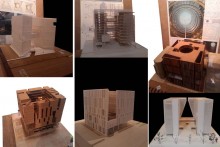
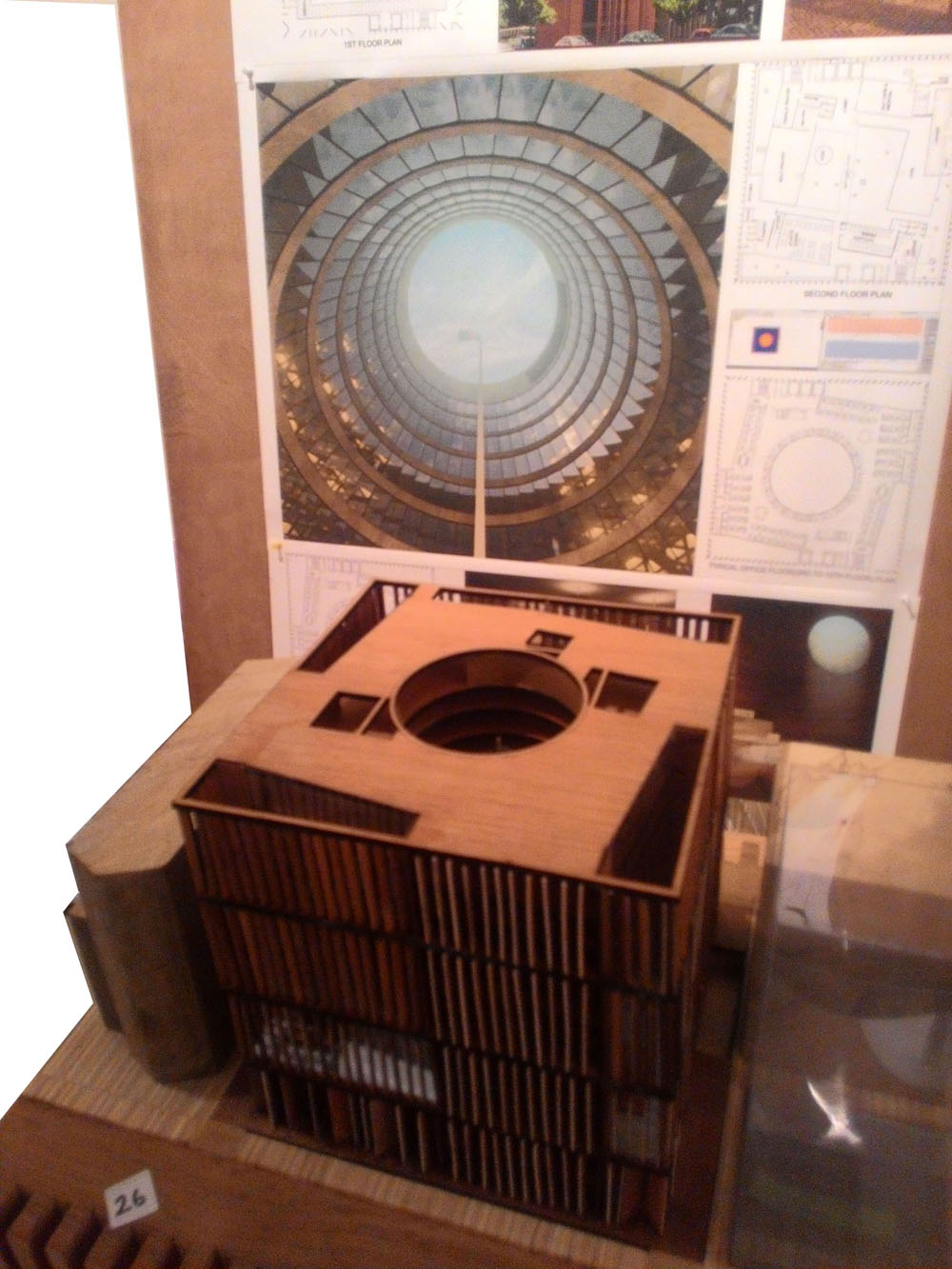
Institute of Architects-Bangladesh (IAB) in association with Dhaka Electric Supply Company Ltd (DESCO) today [March 14, 2016] announced the six finalist teams nominated for second stage of the DESCO Head Office Building Design Competition. Earlier on December 14, 2015, DESCO , a public utility company, called the 2 stage open architectural design competition inviting architects to submit their proposal for the Head Office Building on 2 Bigha (28,980 sqft) land located at Nikunja (north), Khilkhet, Dhaka.
The finalist teams are (in alphabetical order):
Faisal Ahmed ( A-153) and Team
Mahmudul Alam ( A-161) and Team
Mahmudul Islam ( I -056) and Team
Munirul Haque ( H-011) and Team
Rafiq Azam (A-005) and Team
Selim Altaf Biplob (B-025) and Team
More than 70 participants entered the competition .Submitted entries are now exhibiting at Gallery 5 of Shilpakala Academy, Dhaka.
Finalist teams will receive an honorarium of 2,50,00 ( two lac fifty thousands) each and have until May 7 to produce their final designs. Congratulations to finalist teams and best wishes for the proceeding stage.
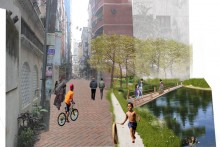
This city is spontaneous and organic; in other word the city is not conventionally planned. This liberty results in “chaos” and “promise” simultaneously. Likewise the hard tissues of Dhaka desire to have the promise of soft-infill. Aspiration for water, the ‘urban blue’ in built up hard areas could be explored with context of this deltaic landscape.
The first, week long project in the Urbanism studio (ARC 401) in Spring 2016 in BRAC University, was to conceive an URBAN BLUE (water) in a hard urban tissue of Dhaka. The initial exercise was appreciation of BLUES from memory. Scale, Senses, Composition and Celebration of waterscapes, from Madhabpur lake in Sreemangal to Kahn’s National Assembly Building were compelling examples to study. How these waterscapes serve the society and how people appropriate them were the most important features to discuss.
Throughout the week, the designers(students) asked questions to themselves about mediating between aesthetics(?) and usability, bringing behavioural change through design, siting a waterbody, dealing with the beneficiaries and role playing authority like city corporation etc. Eventually an URBAN BLUE appeared in different parts of the capital city, in paper though, with various shapes and configurations. Picking up the designed shapes may make a beautiful matrix and alphabet of a language. It appeared that water bodies sharing an edge with road and footpath as well as buildings have more to offer the society; and contribute more to make the city humane rather than the ones just exhibited in a field or boundary in a lonely residential area. Last but not the least to mention some beautiful names of different deliveries are- করেণূ সরোবর, By The Blue, কলতান, জল বেলা, সুধাতট .
About the Author(s)
Shajjad Hossain, Senior Lecturer and AKM Sirajuddin, Assistant Professor, has been teaching in the Department of Architecture, BRAC University for several years.