7th Berger Award for excellence in Architecture announced.
Deadline for nomination submission for Berger Award extended to Tuesday, 25 August,2015.
 DESIGN. ARCHITECTURE. CULTURE
7th Berger Award for excellence in Architecture announced.
Deadline for nomination submission for Berger Award extended to Tuesday, 25 August,2015.
From the Architect :
Anyone living in the city of Dhaka for the past ten years would somewhat agree to the fact that our cosmopolitan lifestyle has shrunken to a level where there is this overarching dominance of very few activities that happens to regulate our performative behavior regarding how we function in the city. In retrospect, the phenomenon of urban recreation offered by our city in the recent years has been so much restricted that we barely can think of alternatives when it comes to get out of the house and spend an afternoon with friends or loved ones. In so doing, we end up “eating out” and probably posing some “selfies” which of course makes its way to facebook immediately as a gesture of our prosaic engagement with our surrounding environment and subjugating our conscience to the exploitative pragmatism of the cosmopolitan life. Little are we aware of the fact that such behavior is a result of the repetitive character of where we go and what we see in our city to replenish our insatiable inner selves.

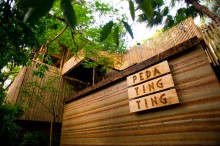
The name itself quirks inquisitive brows of anyone first time knowing it, which is a challenge for the designer in the sense that it demands an environment that translates the vernacular character of indigenous formalistic styles in a typical urban block of Dhaka city.
The original restaurant sitting on one of the hundreds of individual small islands at Kaptai lake, Rangamati is famous for it’s surrounding environment where it is situated. The vast untamed wilderness, lake, colorful indigenous groups ( Chakma, Marma etc ), indigenous museum and most importantly it’s rich cultural vibrancy adds an unique inclusive dimension to its character. Peda Ting Ting primarily serves delicious Chakma cuisine which is cooked inside bamboo and banana leaf in traditional Chakma style.


Peda Ting Ting gallery cafe Dhaka deems to recreate this humble confluence of natural and man-made features in a way that it retains the analogical similarity of physical formalistic and ideological character of the original place within its unavoidable urban context. This restaurant intends to deliver variety of traditional experiences not only through food but also through art and culture. For which the programmatic alteration of a typical restaurant has been engineered to house art gallery, handcrafted display of the traditional materials of various purposes of the indigenous groups and a boutique corner of Chakma fashion.


The conscious use of selective materials complement the immaterial abstract conception of the simplicity of tribal lifestyle where daily activities in all its forms are indivisible with nature. To show a glimpse of this practice to the city dwellers, the café aims to re-fashion an existing residential two storied building and retrofit the programs using the visual and tactile quality of nature and natural elements as a restitution of the traditional style therein .Notwithstanding all the limitations of the site, the existing trees shield the visual disturbance caused by the immediate active pedestrian and vehicular movement adjacent to the site and acts as a biotic matter in the process of the dissolution of required level of privacy and the cacophony of the urban streets. Starting from the entrance to the façade of the structure, it was the designer’s conscious attempt to protect the micro ecosystem through the construction process as well as accentuating it as much as possible with the intelligent use of plants and locally available materials.


The intrinsic character of the rammed earth wall brings out a blatant display of the subsoil of the very site, carefully dug out of its place and brought to our attention as an emblematic exhibit to pose the question of how we fail to appreciate the splendor of things which are commonplace of everyday life. The idea behind the wall is to imitate one of the most important traditional architectural practice of Bangladesh, “Adobe architecture”. Still now there are lots of mud houses spreading around almost every corner of the rural areas of this country and is losing it’s appeal day by day because of the use of concrete. This environment friendly material and the construction technique is a lost art now. To revive this technology in a more provocatively contemporary manner, this 18″ thick wall was created measuring 20′ long and 12′ high.The materials used here were mostly re -used and re-cycled. The bamboos that were used to hedge the first floor exterior walls were all collected from Rangamati because of the specialty of the bamboos of that region. The handmade floor tiles on the open areas were all collected from Shatkhira which are produced in a traditional way that is very energy efficient and on the other hand which also promotes local traders. Almost 90% of the total woods used here are re-used woods from packaging and export import industries. Many of the circular dining tables were constructed with the abandoned electrical cable holders. Most of the light fixtures are re-cycled materials like the scrap materials , perforated metal cages, those are used to create a dramatic ambience. The brick walls on the interior part envisage the evidence of old Dhaka -a 400 hundred year old city. The bricks used on some specific interior walls were divided on the linear section to replicate the traditional bricks which were a lot thinner than the present ones. All other bricks which were used for construction purpose were re-used . Those were collected from the old brick market where bricks are collected from the houses which were demolished.


Albeit the usage of materials and all the technical details of the project essentially reflects a pragmatic approach of construction techniques, the landscape of the project rather is conducive to pique interests of artists. You can easily find a lot of trees often mentioned in Bengali poetry like Krishnochura, Bokul, Hasnahena, Gondhorajetc which certainly feeds your visceral needs while you watch the rain sitting in a semi outdoor space and indulge in such romantic picturesque sight and yet engage yourself in thoughtful discourse if necessary. The idea of blurring the definitive enclosure of a space through intelligent use of materials flowing inside and outside of the structure, the orchestrated sequencing of indoor and outdoor spaces forms an oscillating character of designed spaces where it’s rather difficult to tell whether you are inside or outside the built form.

The overall spatial character of the built and the un-built, the arts and crafts exhibited of different ethnic character, the authentic culinary styles etc as a whole creates the stature of the project which aims to expand its field of concentration to engage people more and more through innovative designed activities.
Narrator _ Sanjana Ahmed
Nazmul Nayeem , an architect graduated from BRAC University, has founded studio MRITTIKA at 2012.The major project it has completed till now is cafe SOI3, Peda Ting TIng gallery cafe and some other interior projects such as corporate head quarter, music recording studio, personal gymnasium and a vacation house in Netrokona. The core value of this studio is the poetic development of spaces through simplistic expression using vernacular approach in a contemporary fashion to celebrate the joy of blending tradition and modernity.
From the time immemorial the Chittagong Hill Tracts has been the home of indigenous ethnic groups. They collectively identify themselves as the Jumma people, the first peoples of the CHT. The Jumma people are distinct and different from the majority Bengali population of Bangladesh in respect of Race, Language, Culture, Religion and Ethnicity. The demand for autonomy towards maintaining cultural and linguistic identity by the Jumma pepole raised an armed conflict between the Government and the indigenous community. As a consequence several massacres occurred which caused the deaths of hundreds of people. On December 2, an agreement was signed with the BD Government which has been known as the ‘CHT Treaty’. The treaty was hailed by leaders around the world as a breakthrough in the quarter of a century conflict in the CHT.

The main purpose of this Memorial is to highlight the unforgettable moment of “PEACE TREATY” that occurred in 1997-a revolutionary step taken by our government for the well being of both Jumma people & Bangladeshi settlers.
CHT Treaty didn’t full fill major demands of the Jumma people, because main problem in CHT is the land & its management between Bengali people & 13 ethnic groups. Language & cultural diversity sometimes create distance between Bengali settlers and ethnic groups. However the attempt to connect these two races despite their differences is the main purpose of this Memorial Complex.


CONCEPT: “P A X – C U LT U R E”
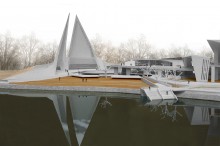
The idea is ‘peace through culture’. Building an invisible bridge in order to connect “PEOPLE”, connect “TIME”. The aim is to provide a physical point of reference with visual significance that keeps alive the memory of the CHT treaty; to provide accommodation to house and display relevant memorabilia/interpretive material for public access and information; a visitors centre for exploring nature & information zone, which would be useful for the tourists who visit the memorial & Khagrachari. The memorial is designed as a single artifact that acts as both memorial & museum. It is a free standing memorial set adjacent to a building accommodating material relevant to the memorable event.

As said earlier, the main design element is an invisible bridge, which is connecting time….
The plaza resemblances conflicts, the lines are very distinct. The journey starts with the sense of conflicts between the two groups. This sense starts to fade as we enter the first floor and the huge scale takes us to immense feeling of sublime and purity. The view instantly shifts towards the monument, as a symbol of peace and honour.
As we come closer towards the monument, the vista amazes us with the different levels of spaces and the surrounding nature.


The visitors feel the nature to the fullest standing in front of the monument and also oversees the water tunnel underneath the waterbody. After coming down at the ground floor, the visitors can enter the museum lying underneath the monument. As they cross the water tunnel they feel the fierce situation of the war. The hidden sculptures under the waterbody acts as the reminder of the cruel times and their consequences.


The relics and the memories shown in the museum are the reminders of the war. The museum is situated under ground because the concept was to hide the sorrowful events of the past under the ground.
The whole area of the monument both makes us feel respect and honour towards the martyrs as well as sadden us about the war. Thus it makes us realize about the importance of peace that –
THERE IS NO PATH TO PEACE..
PEACE IS THE PATH .


Illustration: Mahmudul Islam Forhad | Architect and Academic
Narrator: Ashik Vaskor | Architect and Academic
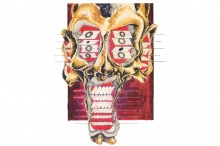
‘Congregating wisdom’ inspires human being for the adventure of conquest all. This gathered wisdom is the supremacy- it has the mystic magnetic aura to be invincible. But ultimately this conqueror is alone with his shiny sharp sword of knowledge. He has to metamorthosys to get liberation from his sacking thoughts. Architect Mahmudul Islam [Forhad] dissected this intelligent self identity of his human existence [it’s like a city scan or other pathological report]. Perhaps by stretching human body parts in his drawings, he tried to express how individual person fighting with his own shadow into the maze which have been created by himself. And at length from this dark silhouette he found his challenger emerged. His mind tried to cross all the hurdles in the vast field of living world which is full of emptiness but pregnant with meaning. And for crossing this journey he conceivably searched for a mathematical solution. But he couldn’t decipher the equation in its two parts. He is endlessly trying but can’t reach to his ultimate nirvana. He [this isolated conquer being] found his portrait in the perplexed foggy colorless mirror of hesitation that, it has been demolished by a complex geometric expression. Did Forhad tried to open up his ‘being’ and ‘self inside’ like the scholarly who knows the past, present and future or like the Greek hero ‘Teiresias’?
![Plate-01: During being a student in the academy | © Mahmudul Islam [Forhad]](http://contextbd.com/wp-content/uploads/2015/08/disconnected-after-all-copy-535x643.jpg)
![Plate -02 : Just passed the academy | © Mahmudul Islam [Forhad]](http://contextbd.com/wp-content/uploads/2015/08/FINAL_COPY-2-e1439124097319-517x643.jpg)
![Plate-03 : waiting for – unknown |© Mahmudul Islam [Forhad]](http://contextbd.com/wp-content/uploads/2015/08/lower_limit_disfigured_02-505x643.jpg)
![Plate : 04 – discreet unification of self | © Mahmudul Islam [Forhad]](http://contextbd.com/wp-content/uploads/2015/08/Untitled-49-912x643.jpg)
Illustration by :
Mahmudul Islam Forhad | Architect .
Collected works – during the student year ranging 1999 to 2003 .
Mostly done on sketch book by using regular ink pen, gel pen, water color and poster color.
Exhibited in:
Group exhibition of five young architects ‘EXQUISITE CORPSE’– academic and recent works
Drik Gallery, Dhaka, 28th Feb to 6th March.2003
|Contextbd Correspondent|
Bengal Institute of Architecture, Landscape and Settlement started its operation with a series of academic and public events on Saturday, August 1. The fall sequence begun in Khilkhet , Dhaka campus designed by Salauddin Ahmed and Atelier Robin.
Landscape architecture is the focus of August Session. Distinguished faculty members Carey Clouse, Kazi Khaleed Ashraf, Dwijen Sharma, Anuradha Mathur, Dilip Da Cunha, Salauddin Ahmed, Wakilur Rahman and Hasibul Kabir will conduct this session.
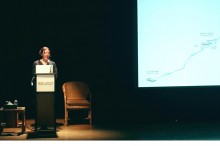
The public event was inaugurated on Tuesday, August 4 with the lecture presented by veteran academic Dr. Suha Ozkan titled ‘Validation in Architecture’. The lecture was aimed to surface a review on awards given in architecture and related fields. Agreeing the fact that it is not easy to establish criteria and values validating architecture, Dr. Suha demonstrated Pritzker Prize, UIA gold medal awards as well as Aga Khan Award for Architecture. Showcasing a number of wining projects, he appreciated ‘Aga Khan Award for Architecture’ more as it is given to a particular project promoting values arisen from analytical prospective while other two are given to architects with no engagement of critical discourse (as per his view).
In the following day, Carey Clouse, Professor of Architecture and Landscape Architecture at the University of Massachusetts ,USA presented lecture on strategies for landscape architecture. Referring to her recent book “Farming Cuba: Urban Agriculture from the Ground Up” professor Clouse addressed Cuba’s experiments in urban farming. She also shared her Ladakh and post Katrina Orleans experience highlighting landscape as a tool for building climate resilience and community development.
With successive activities organized by Bengal Institute the first week of August turned into an eventful occasion where both public lectures were packed with curious crowd. Congratulations to Bengal Institute for its exultant start and we wish a successful journey ahead.

UIA-HYP CUP INTERNATIONAL STUDENT COMPETITION IN ARCHITECTURAL DESIGN 2015
MISSION STATEMENT
Architecture in Transformation should make responses to current situation and era. What concerns us is the relationship between architecture and city, and between architecture and natural environment. The competition aims at searching and constructing human space with a sense of place in the increasingly fragmented cities and unordered villages, exploring environment-friendly and sustainable ideas in the information age, and integrating creative design concepts with solid basic skills effectively in architectural education. The competition requires the participants to make detailed examinations and reflections on architectural history, exploring complicated requirements to architecture and environment by current users, pay attention to events in specific sites, and configure viable urban and architectural spaces.
TOPIC OF COMPETITION
THEME | Architecture in Transformation
TOPIC | Transformation: Place, Tradition and Modernism in Conceptual Unity and Diversity
AWARDS
_ 1st Prize (1 team) _ 100,000 RMB (approx. 16,000 USD) (before tax) + Certificate
_ 2nd Prize (3 teams) _ 30,000 RMB (approx. 5,000 USD) (before tax) + Certificate
_ 3rd Prize (8 teams) _ 10,000 RMB (approx. 1,600 USD) (before tax) + Certificate
_ Honorable Mentions (20 teams) _ 6 month free subscription of UED magazine + Certificate
_ Advisers of prize-winning projects will also be awarded with certificates;
Prize winners will have an opportunity to intern at prestigious architectural firms through the “Learning Design with Master Architects” program.
DATES
Registration Begins _ 16 January, 2015
Registration Deadline _ 20 August (updated!), 2015
Submission Deadline _ 31 August, 2015
Jury Convenes _ September 2015
Results Announced _ September 2015
Award Ceremony _ March, 2016
Registration Fee : Free
Eligibility : Full-time on-campus architecture students from accredited institutions.

DESIGNING FOR THE ARTS
Nka Foundation is issuing a challenge to recent graduates and students of architecture, design, engineering and others from around the world to use their creativity to come up with innovative designs for modest, affordable housing for the arts that can be built with earth and other local materials in Ghana.
WHAT IS THE CHALLENGE?
The challenge is to design a house type of about 2400 sq feet to be built on a plot size of 80 x 100 feet. Total costs of constructing the design entry must not exceed $7,000 for materials and labor; land value is excluded from this price point. The building should be designed for either musicians, theatre artists, potters, sculptors, painters, textile artists, designers, writers, or media arts practitioners.
WHERE IS THE CONSTRUCTION SITE?
The construction site will be Abetenim Arts Village, near Kumasi in the Ashanti Region of Ghana.
SUBMISSION FORMAT:
1 _ Text file (Word format) containing the design statement (600 words max) for publication purposes.
2 _ Three A1 presentation boards as JPG files of high-quality resolution to be printed in landscape format
Submission online : mudhousedesign@mail.com
JUDGING CRITERIA INVOLVE:
1 _ Functionality: space patterns and usage as a house type for the arts, climatic performance, and sustainability over time;
2 _ Aesthetics: visual/aesthetic appeal; and
3 _ Technical: adaptive/ creative use of abundant local materials and labor to the degree they enhance the design, resource efficient construction process, and attention to scalability and construction budget. Decisions of the jury will be final and binding.
AWARDS
_ First prize- $ 1,500 [or] Construction of design in Ghana plus a trip to Ghana for a workshop to build the winning design + Certificate
_ Second prize- $ 1,000 [or] Construction + Certificate
_ Third prize- $ 500 + Certificate
_ Honorable mentions + Certificate
DATES
Registration open _ 01 August, 2015
Registration Closed_ 30 October, 2015
Registration Fee
_ Individual – $60 per Entry
_ Team – $80 per Entry
Closing day for submission _ 30 October, 2015
From the Architects:
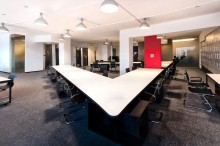
An industry- a symbolic union of collective efforts for growth, steel-an entity taken to mass usage as skeleton for urban shelter of various forms. A corporation that brings into being the spirit of a steel industry for more than two decades. This was the brief given when a floor space stretching 635 square meters on the 5th floor of Landview Tower at Gulshan-2 was provided to be transformed into the breathing hub of the KSRM’s Brand and Marketing department.

The formative basis of functional arrangement had to be infused with the progressive nature of a reputed company that had loyally served its clients. Within the constraints of a peculiar outline that formed the perimeter of the designed area, it was a task of arranging a suitable spatial layout which would speak to each other, and be each other’s guide as if the dead spaces could talk even when no one was listening.

Constraints are what make exploration interesting, and when the mindset of the client suggests the possibility of breaking boundaries in terms of re-defining corporate office culture, the exploration floats into the Peruvian skies of innovation and self-education.
The plan for the project was simple: it’s sole objective of bringing out the true nature of simplicity demolishing the manners of ‘cubicle identity’ branching out to the tiniest of details that magnifies and humanizes modes of interaction between life and space.

Starting from scratch in sub-distributing zones of activities keeping in mind the sensitivity in blurring barriers, a careful set of walls, some solid and many transparent were outlined and erected. The ceiling was kept bare for the main working hub: a subtle reminder of the pragmatism in thought and a visual essence of decay that is the only constant in the lifetime of material world. A massive triangular table was the main piece of furniture designed at the work-station zone, with the purpose of unifying the busy marketing and brand executives within an open and visually interactive work-space yet ensuring comfort of privacy. The work-zone was surrounded on three sides by a cluster of individual desks for hierarchical significance and also in accordance to diversified functions.

The trinity of walls, painted blood-red, the brand color of KSRM served the purpose of holding the switches to light up the main work area. For each of the individual desks were ‘power poles’ wrapped in stainless steel and red supplying the necessary power requirements of the users at their desks.


The office for KSRM needed storage space, and that too in huge amounts. This gave an opportunity to turn a massive storage space of lockers into a wall of complex-looking composition of vertical and horizontal lines demarked by numbers and acting as a feature wall to separate the work zone and the server room.


The two spot-meeting cubicles that almost fronted the entrance were given a solid backdrop, their floors being floated to create visual separation from the corridor that stretches the entrance lobby to the work-station.
A simple idea of unification was ideal in the visual imprints created within the spaces of the office. The power of triangulation-the basic yet most intriguing form of mathematical aesthetics was chosen as the feature symbol in furniture design, in the massive graphic work on the stretch of the bay of glassed windows, even in the vision panels of wooden doors where required-not just for the sake of design but to remind the users about the importance of triangulating and branching out towards the vast horizon of ‘near perfection’ that one seeks from within but is too distracted to apply.


About STUDIO EXTENSION:
Incepted in 2010 and formally established in 2011, studio extension is a creative design platform that comprises of core members and comrades, each exploring various fields of celebrating creativity mostly from architecture & graphic backgrounds.The core values of the studio is based on the means of true and honest exchange of knowledge in different moulds, and through that, achieve a sacred feat of responsive feedback and altering scopes.
More information can be found HERE
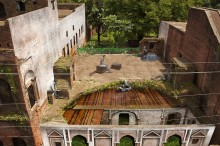
Painam Nagar ( Panam Nagar) is a set of forty-nine abandoned street-front houses once owned by rich Hindu merchant families. It is situated in Sonargaon, the ancient capital of Bengal during the Sultanate Period, at present day 17 miles east of Dhaka. Painam Nagar flourished in the late 19th and early 20th Century as it grew as a by-product of the trading and commercial activities of the British rulers. Most of the surviving houses were built during this period, but many hold evidence to have been built during the Mughal rule. However, today this strip of street is abandoned and deserted, much like a ghost town, yet somehow still flamboyantly expressing its grandeur and ambience of what it must have been in its hey-day. Painam Nagar, at present, is under the protection of the Department of Archaeology in Bangladesh, but in a state of abandonment, hence resulting in the buildings being engulfed by vegetation and crumpling away with time.

Today Painam Nagar stands as an idle asset. . Painam Nagar is an ideal candidate for conservation, preservation or adaptive re-use. This site is important by all accounts; historically, culturally and architecturally. But it cannot be denied that the socio-cultural scene of Bangladesh today is as much a part of Painam Nagar, as is its history. Its present state of disuse does it little or no good, posing threats of vandalism, illegal occupation and destruction.


“Adaptive re-use” refers to the process of re-using an old site or building for a purpose other than which it was designed of built for. It can be regarded as a compromise between historic preservation and demolition. Adaptive re-use ensures that even though a structure may outgrow its original purpose it may very well, like a living being, adapt to what it needs to be at any present moment, but at the same time preserving its historic integrity and respect.
The key intention of this project is, first, to propose suitable uses for the buildings at Painam Nagar based on careful analysis and study of what factors influence the site today, and second, propose the adaptation of functions and if required, extensions to support the functions that would possibly result in bringing this site to life.

Painam Nagar, today stands amidst what appears to be mostly residential and agricultural sites. But its location is also rather fortunate, being surrounded by other historical and cultural sites, the most significant one of them being the Sonargaon Folk Art and Crafts Museum. Further mapping of the area reveals that the minor historical sites such as the Goaldi Mosque, Choto Sardar Bari etc draws visitors who also tend to visit Painam Nagar as a stop-by rather than as the chief attraction.
However, based on the accounts of the locals and the respective authorities in charge (as of September 2014) it was found out that prior to Painam Nagar being under Government custody, the site had been naturally adapted by the locals and the local authorities to adapt certain functions, though insensitively. Such functions included a children’s art school, a boarding house, museum etc. This provided clues to what functions might suit Painam Nagar best today.
In conclusion, the functions proposed were based on the considerations that Painam Nagar’s adaptive re-use would serve the local community as it once did, and also the visitors, that it now does.

The detailed mapping of the area and the study of the more recent history guided the suggested functions, which can be broadly classified into two major categories: the functions that serve the local community, such as a library, a children’s school etc and the functions that serve the visitors, such as a small research center, museum, craft shops, restaurants etc. It is worth mentioning that the functions, though classified into two groups, complement each other.

The functional adaptation for the residences were based on the study of the existing layout and spaces of the buildings to determine which house would suit its suggested re-use most aptly.
An attempt was made to design something that itself was “adaptive”. The choice of material (wood, steel and glass) and structure is proposed to be pre-fabricated such that it may be taken off, extended or re-shaped with time’s needs, and also provides contradiction to Painam Nagar’s brick structures.

The forms for the extensions were derived from the existing proportions of the buildings, drawing attention to the much ignored “backyard spaces” of the buildings. An attempt is made to create a series of spaces that allows visitors to navigate through the ruins, with the culmination points being courtyard spaces created by the old and new structures, giving visitors “points of retrospective” where they may pause for a moment to observe the dialogues between the old and the new. Ruined walls and structures were featured as displays, creating views.