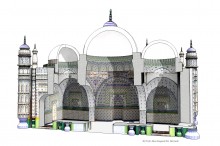
Perhaps the most graceful mosque complex in Bangladesh is the Bajra Shahi mosque, popularly known by the local people as the Tajmahal of Bengal. It is named after the village of Bajra under the Begumganj upazilla of Noakhali district, located on the west bank of a big derelict tank now used as a paddy field. The inscription tablet dating the building to 1741 AD is fixed over its eastern central entrance.
Bazra Mosque | Photo Credit : Syed Zakir Hossain
The mosque proper stands on the western side of a raised platform, which is enclosed by a low boundary wall with a majestic gate in the east. This impressive gateway structure is approached by a splendid staircase from the ground level. During the facade uplift in 1920 two slender minars were built in both corners of the frontal boundary wall.
Photo Credit : Syed Zakir Hossain
The prayer hall has the typical Mughal oblong shaped plan measuring 15.77 m by 7.54 m externally with a 1.28 m thick surrounding brick wall. The prayer hall is entered from the eastern side by three alcove archways and the other two side walls have one pointed-arch openings each. All the opening archways are framed by recessed panels in the wall and bordered by octagonal turrets with a pinnacle on the top. The four corners are buttressed by four corner turrets extended high above the roof level and ended in a blind kiosk covered by small cupola having a finial. The whole length of the rectangular hall is divided into three unequal bays by means of two 1.06 m wide arches springing from the east and west walls. The side bays are rectangular in shape and smaller in width, but the central one is bigger and square. All the three domes have an octagonal shoulder embellished with merlons and are crowned with elongated amla-kalasa typed finials on lotus base.
During the British rule wealthy Muslim zamindars and merchants renovated a large numbers of Mughal mosques. Instead of developing a style, surface treatment was the main focus of the builders. Chini-tikri or the broken ceramics, from China, were used for surface cladding despite a rich tradition of early Islamic terracotta or Mughal plaster works. Bajra mosque is the best known examples of chini-tikri decoration from the period. Chini-tikri is a unique craft and was very popular technique of surface decoration in the region in the 19th and 20th century.
[The aim of the competition was to highlight the diversity of challenges, opportunities and responses faced by cities throughout the world, from large nation states to small island communities. The specific challenges were how will our city respond to issues like the pressures of population growth, the impact of climate change and developments in technology? What will the social, economic and environmental consequences be? What will it look like in 2065? ]
Resuscitating Dhaka
Being oblivious to the consequences of squandering away the country’s resources for urbanization, Dhaka is heading towards a saturation point. However, time and again Bengalis have been capable of coming around from the verge of cynicism and desperation and survive. Therefore, it is only after this point has been reached that people, endowed with true awareness, will come together bringing about an influx of positive change. Dhaka, 50 years from now, shall be in the epicenter of such regeneration and armed with her own uniqueness will pull through stronger than ever before.
The city will, ultimately, witness a harmony between legalized slums and contemporary architecture; loops of flyovers, roads and restored water channels; globalization and age-old cultural norms. The aftermath will be an exhilarating oriental triumph breathing new life into a nearly depleted city. Through such inevitable growth Bengalis will, eventually, emerge with a truly developed South Asian tropical city.
More details about the competition can be found here.
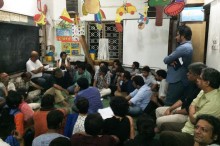
The evening of 9th June in Dhanmondi at Auronee Bidyalaya witnessed a lively conversation between young and senior architects at the program # 364 of the forum for architecture, MONGOLBARER SHABHA. A panel of distinguished architects: Saif Ul haque (SHS), Nahas Ahmed Khalil (ARC consultants), Jalal Ahmed(JA Architects), Ehsan Khan (EK Architects), Tughlaq Azad (Somunnay), Salauddin Ahmed (Atelier Robin Architects), Marina Tabassum (MTA) were engaged in a discussion with young promising architects from Ar. Emran & Associates, FORM.3 Architects, CUBEINSIDE, GHORAMI.JON , Stha. Ni.K. Architectural Consultants, Deshar Works and Ar. Imrul Kayes along with many young audiences.
Architect Nabi Newaz Khan Shomin started the session by inviting every participant to share their thoughts freely in the session. Whole event went through lively discussion on architecture practice through different times; how it was in past and how it is transforming today. Hence, the issues like design process and its challenges, visions and practicalities were raised and discussed by the participants. In reply to an inquiry led by Emran Hossain, Architect Nahas Ahmed Khalil shared his experience on facing the stumbling block at different phases he passed through his carrier and his continuous effort to adapt with the changing time and context. Marina Tabassum affirmed “Not only architecture, I think any creative media is about search. You are always at the cross road and there will be search. The matter for search varies as per need of that specific time. But there are matters that are constant: to be true, to be passionate about the work you did, to keep on questioning , to keep on assessing what we are doing , to standby and say this is my building”. She referred the terms “Hunter phase” for the young architects denoting their struggling period and “Farmer phase” noting the period when they continue to expand their knowledge and experience. In follow up discussions, Nahas Khalil , Ehsan Khan and Saif Ul Haque drew reference of architecture of diverse expression by Louis I Kahn , Le Corbusier and specially Mazharul Islam to explain how ‘style’ is guided by design philosophy which perhaps evolves with time and space. Ehsan Khan opined “A senior Architect is more focused as they often take decision on the basis of their experience and knowledge, whereas an Architect, relatively young in profession, who is not tested much yet, might try with diverse options. In that sense young architects are more diversified.” In a different note, Saif Ul Haque mentioned “I strongly believe Architecture can make a difference; It can not only change the environment but also the society and people it is meant to.”
The young architects shared their views and expressed their understanding about architecture and profession. Ar. Didarul Islam Bhuiyan, Ar. Imrul Kayes, Ar. Khandaker Ashifuzzaman Rajon, Ar. Saiqa Iqbal Meghna, Ar. Fuad Abdul Quaium and Ar. Rashed Chowdhury drew questions on diverse issues like social responsibility of architect, need for exploration, architect –client relationship, practicalities or challenges of execution etc. In reply, Saif Ul Haque, Salauddin Ahmed, Marina Tabbassum shared their thoughts. They opined that discussion on architecture should be done more on public media and social platform rather than confined within our studio or academic precinct.
The program got its conclusion by Saif Ul Haque and Nabi Newaz Khan Shomin’s remarks that it is a beginning of this kind of interactive sessions and they proposed more of this theme. The organizer was looking forward to continue the session in a more elaborate manner as the evening stirred up a potent vibe among the young participants which perhaps gave a better direction further to achieve the aim they are intended to pursue.
Add-on: Mongolbarer Shabha arranged the 2nd sequel on June 16 and two more sessions will be followed by.
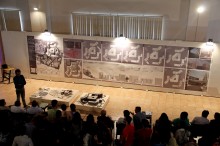
The Thesis Jury of Spring 2015 was held recently at the Department of Architecture at North South University. A total of twenty seven students presented their final projects in front of an eminent panel of jurors. The students displayed a multifaceted range of interests in selecting their thesis projects. Backed by a dissertation that they submitted last semester, many of the projects displayed an in depth analysis of the specific design problems as well as unique and aspiring solutions to urban and architectural programs. Many of the students this year chose projects that were not only atypical but pertaining to issues that they personally felt needed to be addressed by architects. Projects such as the Kirtankhola Riverfront Revitalization at Barisal, the Redevelopment of Gulistan Sports Complex at Gulistan, the Rethinking of Dhaka New Market and the Re-developing of Hajaribag posed questions for very contemporary urban issues. Many projects also provided solutions for issues regarding protection of the habitat and wildlife such as the Bird Sanctuary and Research center at Chittagong and the Redesign of Mirpur Zoo at Dhaka. The projects that were done this year can be found here.
The two day long jury that was held on the 13th and 14th of June was adorned by the presence of renowned Architect Bashirul Huq, prominent architect and part-time Faculty N. R. Khan, Professor Roxana Hafiz of BUET, Architect Masum and other full-time and part time faculty members of the department. Many of the alumni and present students were also there to embrace the joyous moment. The jury ended with a note of thanks by the studio tutors Professor Haroon Ur Rashid and Architect Muzaffar Chowdhury.
Ahsanullah University of Science and Technology (AUST) organized a two day long Thesis Jury of Final year students of Fall semester 2014 at AUST Campus at Tejgaon from June 6 to June 7, 2015.
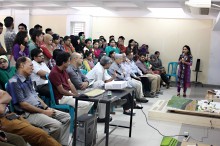
A total of thirty four students presented their projects in two consecutive jury days. Presentation included a range of diversified projects of different scales and functions such as Museum, Hospital, Television Center, Airport, Resort, Terminal & Land port, Memorial, University and Park etc. Every project was explained from its inception to visualization in reference to background study, program analysis and architectural form generation process. Prof. Dr. M.A. Muktadir, Head and Dean, Faculty of Architecture presided over the jury sessions.
The first day of the Jury session started with a praiseworthy project titled ‘International Youth Center, Chittagong’. Architect Mubashshar Hussein (Former President of IAB), Architect Mustasim Mahmood Khan (Design Vision Ltd.), Architect N.R.Khan (Partner Architect of Tanya Karim N.R.Khan Associates and Visiting Faculty of North South University), Architect Iqbal Habib (Managing Director, VITTI Sthapati Brindo Ltd.), Architect M. Arefeen Ibrahim (Head, Dept. of Architecture, AIUB) were present as external jurors along with the other faculty members of AUST. The first day ended successfully with the project titled Eco-tourism Complex, Sundarban.
The second day resumed on 9th June at 9.30 a.m. This day was enlivened with many renowned luminaries of the architecture field including Architect Rafiq Azam (Owner of Shatotto), Prof. Md. Ali Naqi (Chairman, Dept. of Architecture, Stamford University), Dr. Zakiul Islam (Associate Professor, BUET), , Architect Falguni Mallick (Associate Professor and Advisor, Dept. of Architecture, Primeasia University), Architect Ashik Vaskor ( Assistant Professor, AIUB), Architect Md Shahjahan (faculty, AIUB) were present at the jury among others and enlightened the students with their observations and constructive comments .The highlights of the day was the ‘Wildlife Conservation Center & Mangrove Interpretation Center, Sundarban’, KhudraNrigosthi Cultural Center at Mymensingh’ and the ‘Akhaura Landport, Comilla’ projects that were highly appreciated and applauded by the jurors.
Dr. Zakiul Islam has been teaching at the Department of Architecture in Bangladesh University of Engineering and Technology for more than fifteen years. He started his career at Vastukalabid under the supervision of Late Architect Muzharul Islam. He is the recipient of the Berger Best Young Architect Award in 2005 and Landscape Architecture Research Award 2008 at NCSU, USA. His research experience includes working at the Natural Learning Initiatives, USA.
An active researcher and academic, Dr. Zaki has presented at international conferences and published in international journals with his focus on ‘Built Environment and Children’. He also served as the secretary -Education in the Institute of Architects Bangladesh.
Contextbd team visited him in his place last week to discuss his observation on present scenario of Architecture education in Bangladesh. Progress, competence, debate, adaptable curriculum and his thought for future prospect were surfaced among the topics with focus on probable indication for resolution.
1. ‘Architecture’ has been taught in formal university system for nearly 60 years now in our country, how would you assess our progress as a whole ( I mean in terms of building industry, social responsibility, contribution to knowledge and so on)
I must say, in terms of practice, the profession of architecture has advanced a lot. In 1962 when the first architecture department was established in Dhaka headed by Professor Vrooman, we probably had a small number of architects practicing in the capital. Just look at the sheer number of architects we have now! Even look at the rate at which the skylines of Dhaka or Chittagong are changing! Our architects are playing a major role in this change behind the scene.
Having saying that, I must also admit that the contributions of architects are actually limited within the boundaries of the big cities in Bangladesh. Therefore, in terms of social responsibility, I think we are lagging significantly. There are architects who are working on it and contributing really well but the number is scarce. We want to see more architects such as Santiago Cirugeda of Spain, who is portrayed as the “Guerrilla architect” or Nigerian Architect Kunle Adeyemi who is tackling the flood issue. We lack architect whose main concern for practice would be social responsibility.
In terms of contribution to knowledge in the field of architecture, I would say that we are also lagging behind. To me, the small number of completed post-graduate thesis (less than 70) in more than 50 years is an indication of our limited research activities and therefore, lack in contribution to knowledge in this field. There has been only one PhD completed so far. This is disappointing and shows our failure to promote research and development activities.
However, I am optimistic. It took us more than 50 years to start and complete one Doctoral thesis, but I am sure the next one will follow sooner. I am glad to see that three universities other than BUET have started postgraduate degrees- BRAC University, Khulna University, and Ahsanullah University of Science and Technology. This is progress and an indication that we are catching up.
2. We have a number of accredited architecture schools operating in the country with some other in accreditation process. The number, however, has increased in recent past quite rapidly. How do you define this fast expansion phenomenon?
To my knowledge, currently, there are 5 accredited schools (BUET, NSU, BRAC, AIUB, AUST) operating right now and two (Stamford University and University of Asia Pacific) are in the process. But we have almost 25 architecture schools operating. On an average around 17/18 people are graduating from each school every semester. If you multiply 18 with the number of schools that we have then you get an idea of how many fresh graduates we are getting almost in every 6 months. Personally, I think the number is too much for the current scenario of Bangladesh.
As far as I know, the fresh graduates are receiving a monthly salary of between 15 to 25 thousand Taka. The amount of salary shows that the employers have the upper hand. My personal intake in this, is that if the demand of architects were so much then the salary would be higher, at least around 50 to 60 thousand Taka. The demand is less than the number of graduates in Bangladesh.
A person closely associated with the practice is more likely to comment correctly on the quality of graduates. To me graduates from few established schools are doing well and I think their standards are quite up to the mark. I know five to seven schools who are continuously trying to improve. Yet there are schools which have been established just few months back, it’s very difficult to predict there conditions.
IAB has been trying to establish a minimum benchmark to uphold the standard of quality of education. This work has been going on for nearly 10- 15 years and we have to wait to see the ultimate outcome.
3. What about the curriculum ? Don’t you think we have stuck in an ‘old school curriculum’ for too long, with even new schools following the same of BUET typicality?
This is related with having varieties in curriculum of different schools and I think it will happen over time. The increase in number of schools has happened only in last 10 years. We need to wait a while for such diversity.
But I would like to add a point here. According to the existing system of IAB’s standard each school has 100 % flexibility in setting ¼ of the curriculum. Out of 170-190 credit 40 % is in the hand of every school to choose what they want to offer. I think 40 credit hours to set your own approach is more than enough. So the mechanism is already there, but we have to make better use of it.
To add more, previously we had teachers mostly graduating from BUET. Now we have teachers graduating from different schools. Many of our teachers are going abroad for post graduation in different countries. They are studying at the post-graduate level but I’m sure they’re watching over what is happening in the undergraduate level as well. With them coming back to Bangladesh, change at the academic arena is bound to happen.
4. Say for example we have versatility in curriculum and varieties in approach through different schools, how would you think a syncing process might take place?
I was actually getting into it. IAB and UGC have a major role to play. They have to make sure that the benchmark standard is achieved. They should confirm whoever is practicing architecture must have that certain knowledge and technical know-how.
5. Unlike western schools we don’t have a system where students can get specialized knowledge on a particular topic, for example Sustainability, Digital Architecture, Architectural Theories and Techniques etc. What is your opinion?
I was exposed to some of the B.Arch programs abroad. Frankly, in the bachelor programs abroad, ‘specialization’ is not up to that level. A bachelor program prepares a graduate with the basic of being an architect in the field. But at the Masters level, they do get specialized.
A lot depends on which school you are going to. Say for example, if you are going to a school where faculties have expertise in parametric architecture then students are bound to get that exposure; similarly a school more inclined to sustainable issues will focus on particular learning outcome akin to their interest. But, in true sense, specialization happens in post graduation. Therefore, I don’t think we are lagging behind in that sense.
However, our faculties are not offering varied types of courses at the undergraduate level. We don’t have that many optional courses. Even the optional courses that we have in the curriculum are not always offered. That’s a matter of concern.
Photo Credit: Department of Architecture BUET
6. How can we offer courses with versatile interest points?
It is a very important issue. I think this issue is related to do with the system of appointing teachers. If you look at the good or reputed architecture schools around the world, you will find at least 3-4 teachers out of 15, who do not hold a bachelor degree in Architecture. You should have teachers with diversified background like computer programs, philosophy or geography. We don’t have it here. You see? There is a contradiction! We say architecture is a multidisciplinary field but while appointing teachers we want all teachers to be architecture graduates. We should come up with a solution.
7. What do you think should be given priority in respect of style and rationality in architecture studies in Bangladesh?
Look, I don’t really buy the idea of a ‘style’. You have to think rationally and design rationally. If eventually a style evolves, that’s fine. Otherwise it will be just a superficial aspect. If you proceed rationally and stick on that in practice and education, we are bound to have a characteristic of our own. If it resembles with architecture of similar context, I don’t really mind. If people share common culture and value, architecture may have similarities as well. Each country does not have to have a particular style.
8. Now the inclination in practice is for sustainable architecture, systems like LEED and BREAM are getting momentum. But whether these western systems fit in with our context is questionable, yet we can’t deny the need of environment friendly structures. How should we proceed then?
We have to do the technical work for it. Following an imported system blindly will not do. Customization according to our need could be a solution.
I would like to go back to rationality again. Look at the buildings designed by western architects in our country in 1960s; these are tremendously well fit in our context and still serving as examples for our architects. Therefore, it’s not about a rating system or benchmark point, it’s about thinking rationally and contextually.
But again, we need to excel in research activities. We do not have a research platform to establish our own way to achieve a norm for environmental friendly architecture. The sooner we establish this research platform the better.
Dr. Zakiul Islam at the Workshop entitled ‘The role of School building and outdoor environment on children’s learning’ in March 2015. Image Courtesy: Matluba Khan
9. Don’t you think a surge in number of architecture schools is consuming our front-line graduates as teachers and we are getting less contribution in practice?
That is very true. I am seeing top rank of our BUET graduates going for teaching in different universities. I am sure this is also true for other universities. Obviously, this phenomenon is creating a vacuum in good practice. As a result of this, you will see under-qualified people even with unrecognized diplomas securing jobs way out of the range of their knowledge. This is something of utmost concern.
10. To your view what could be a probable reason for this trend?
I think it’s the lack of security in practice. Most of our students when they get enrolled in B.Arch. dream of becoming a successful practicing architect. Because we have not been able to establish a seamless clean practice environment, they are losing interest. We have to ensure an environment where you get job as per your capability, grow through a healthy competition and get credit (paid) for your excellence. Many of our young faculties are facing the ‘indecision’ of where to concentrate: practice or teaching, and this dualism is actually hindering both sectors.
11. Do you propose a model for faculties who would like to practice actively?
Teaching and practicing at the same time is difficult. It is a “doing two jobs at the same time” situation. But I still believe a studio teacher should be related with practice in some format as it will benefit students with up to date professional knowledge.
In some foreign schools, academics are given priority in socially or economically important projects. We don’t see that in Bangladesh. If an academic starts to practice like any other practicing architect, then I don’t really appreciate that. If you are an expert and say, for example, a government organization involves you for a critical project, I do encourage that. But that will only happen if we can develop expertise in particular fields through research. Research, which is industry related, outcome oriented.
In some countries like China, university professors are involved in multimillion dollar projects, they have their expertise and they are not competing with other architectural firms. Many Professors in North-America are also involved in practice when they are not teaching, for example, in summer.
Sir, with that we are to end our discussion. Some of the topics have not been discussed due to lack of time. Looking forward to meet you again in near future. Thanks for your time today.
| Ar. Tabassum Zarin & Dept. of Architecture , SUB |
Department of Architecture in State University of Bangladesh rejoices a successful completion of the three day Arch fest program with great manifestation. The three day event from 6th to 8th June was composed with number of magnificent occasions including seminar, project presentation, exhibition, film show and cultural program. The graceful presence of the eminent architects and academicians Prof. Shamsul Wares, Rabiul Hussain, Mustafa Khalid Palash, Prof. Dr. Abu Sayeed (President, IAB), Prof. Dr. Qazi Azizul Mowla (Advisor, Dept of Arch, SUB), Kazi Golam Nasir (Chief Architect, GoB) and Sazzadur Rasheed (Head, Dept of Arch, SUB) made the whole occasion momentous.
Day one had started with the welcome speech of the Honorary Advisor Prof. Dr. Qazi Azizul Mowla, followed by the appreciative speech of the President of Board of Trustees Dr. A M Shamim. Prof. Dr. Mowla spoke for more active engagement between the young faculties and practicing architects. Later on Prof. Dr. Abu Sayeed and Ar.Kazi Golam Nasir had an encouraging dialog for improving the education system by undertaking this type of program regularly. The day one program ended with a delightful cultural program.
In day two, Prof. Mowla inaugurated the seminar with his presentation on “Architectural response to earthquake” which shed light on the earthquake resilience architecture and responsibility of architects and planners. The event got further momentum with the spectacular dialogue by the eminent architect Mustapha Khalid Palash. He shared some of his works including Grameen phone Headquarter, Bengal tower in Tejgaon, Bengal house apartment block in Gulshan, the Light house in Chittagong to the young audience while giving emphasis on sustainable thoughts and environmental considerations with high tech features in buildings in contemporary time. His thoughtful process of dealing with context and climate in architecture by adopting contemporary technology left the audience in an astonishing mood. The presentation concluded with an appreciative endnote by Prof. Shamsul Wares.
The Honorable Vice President of BOT Dr. Mahbubur Rahman presented crests to the noble guests on behalf of State University of Bangladesh. The day ended with student award giving ceremony. Nasiruddin Dipu, Delwar Ahmed Showrobh, MD Shah Alam and S.M Shahiduzzaman won the award in “Best Exhibition Panel” category.
The three day event finally brought its curtain down with the movie “Shurjo Dighol Bari” and the documentary film “Tini” followed by the short fiction “Surface”. The hard works and efforts by the faculties and students were paid off and made the event a success.
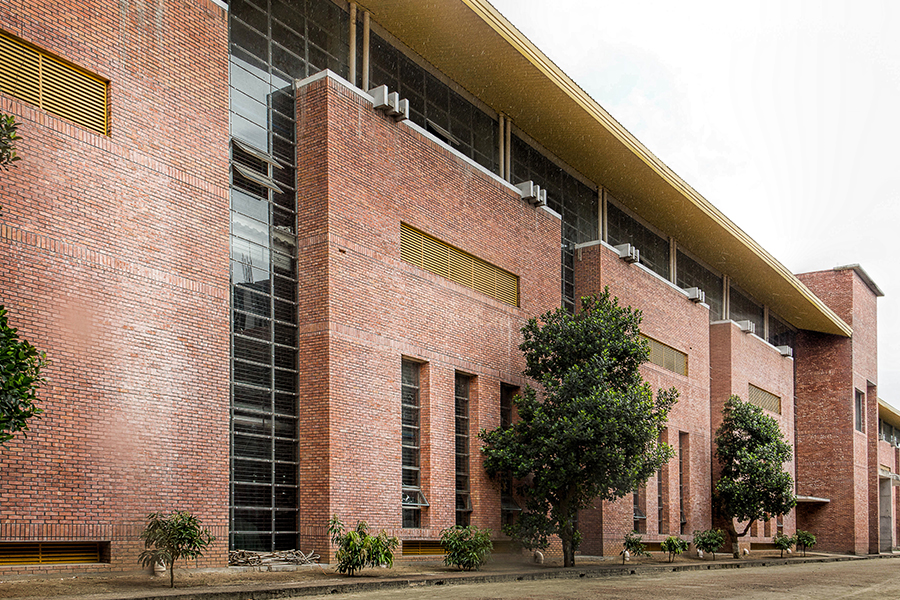
Giant Textile Ltd. is a factory complex comprised of a Production Facility building, Utility building, Bonded Warehouse and ETP. The industry is for knitting, dyeing and finishing. Total site area is 5.6 acre while actual building footprint is 553,012 sft approx.
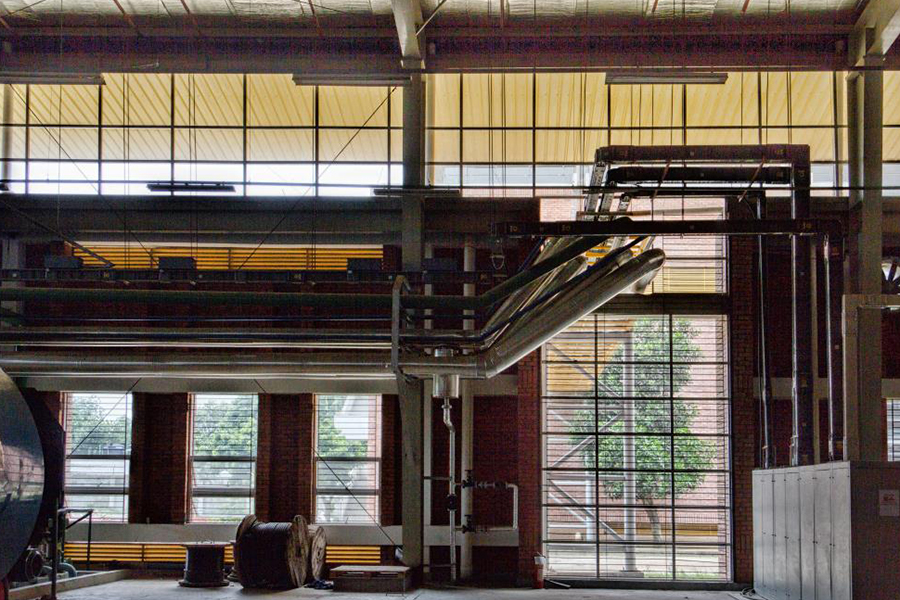
The large and simple brick building dominates the whole campus. Pre-engineered building system helped to complete the ‘Production Building’ within nine months. The shape of the roof aids air flow over the structure instead of obstructing. Interplay of transparency and solidity has eliminated the monotony of the continuing façade of the factory building. The whole complex is naturally ventilated, thus the height of the building posed a huge advantage in creating a very spacious and comfortable environment for the workers.