
Healing Patch: An Approach Towards Carbon Negativity
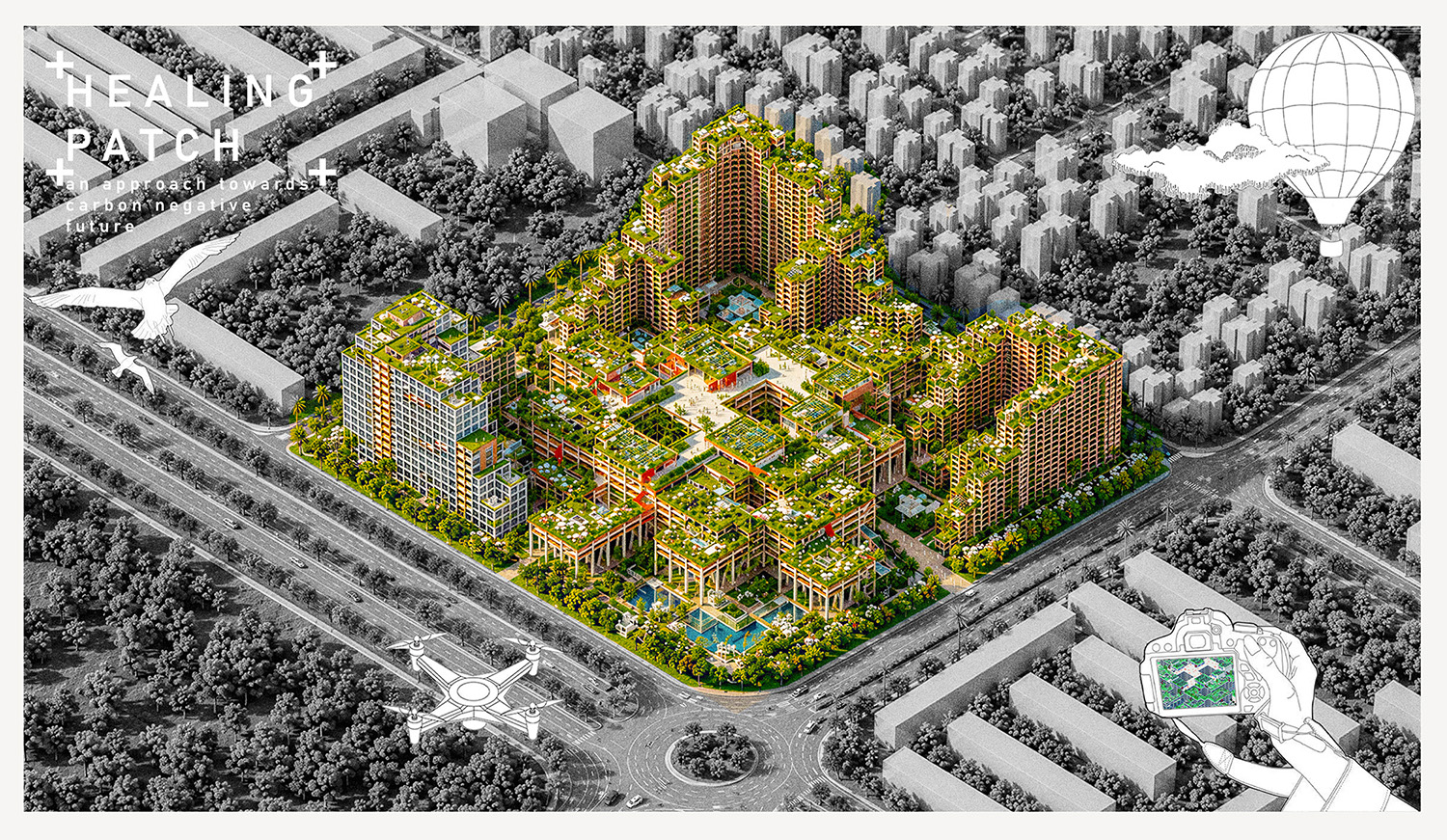
Cities are expanding at an unprecedented rate, yet most contemporary developments continue to consume resources, generate emissions, and degrade ecological systems. The built environment accounts for nearly 38% of global energy-related carbon emissions, making architecture one of the most significant contributors to climate change. In Bangladesh, rapid urbanization, increasing population density, and resource-intensive construction practices have intensified these challenges. As Dhaka expands toward planned developments such as Purbachal New Town, there is a critical opportunity to redefine how future urban environments are conceived and constructed.
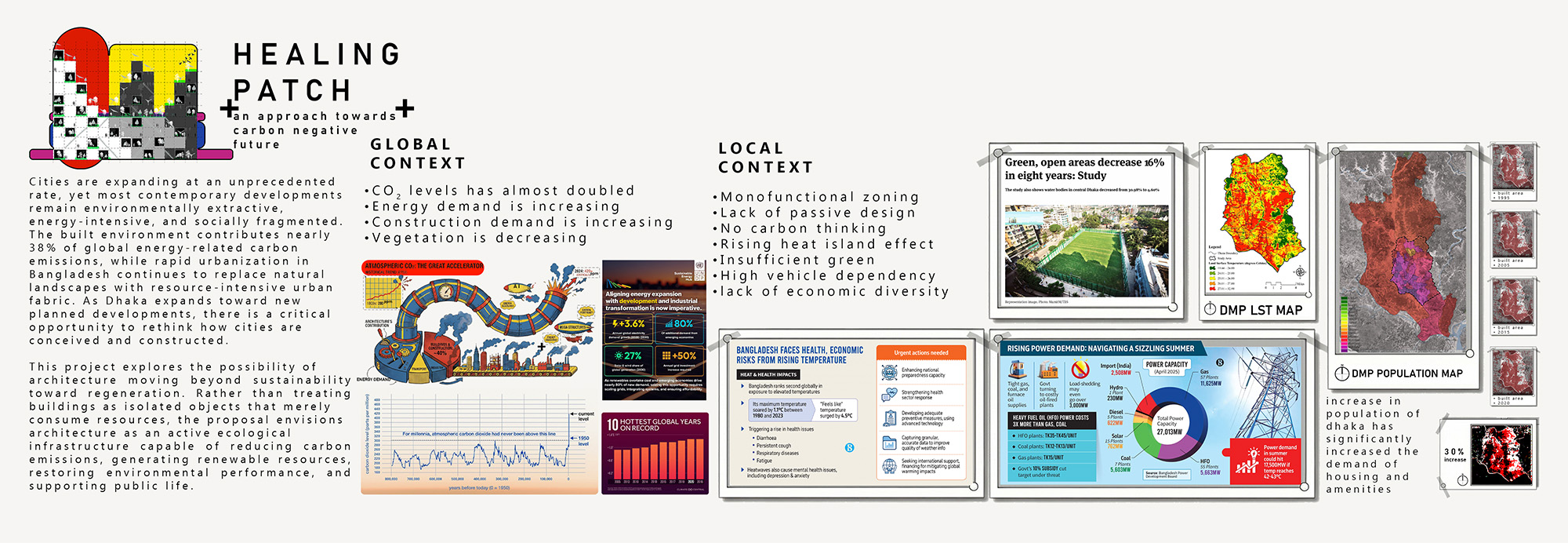
Healing Patch investigates how architecture can move beyond sustainability toward regeneration. Rather than treating buildings as isolated objects that merely minimize environmental harm, the project proposes architecture as an active ecological infrastructure capable of generating resources, reducing carbon emissions, restoring environmental performance, and supporting public life.
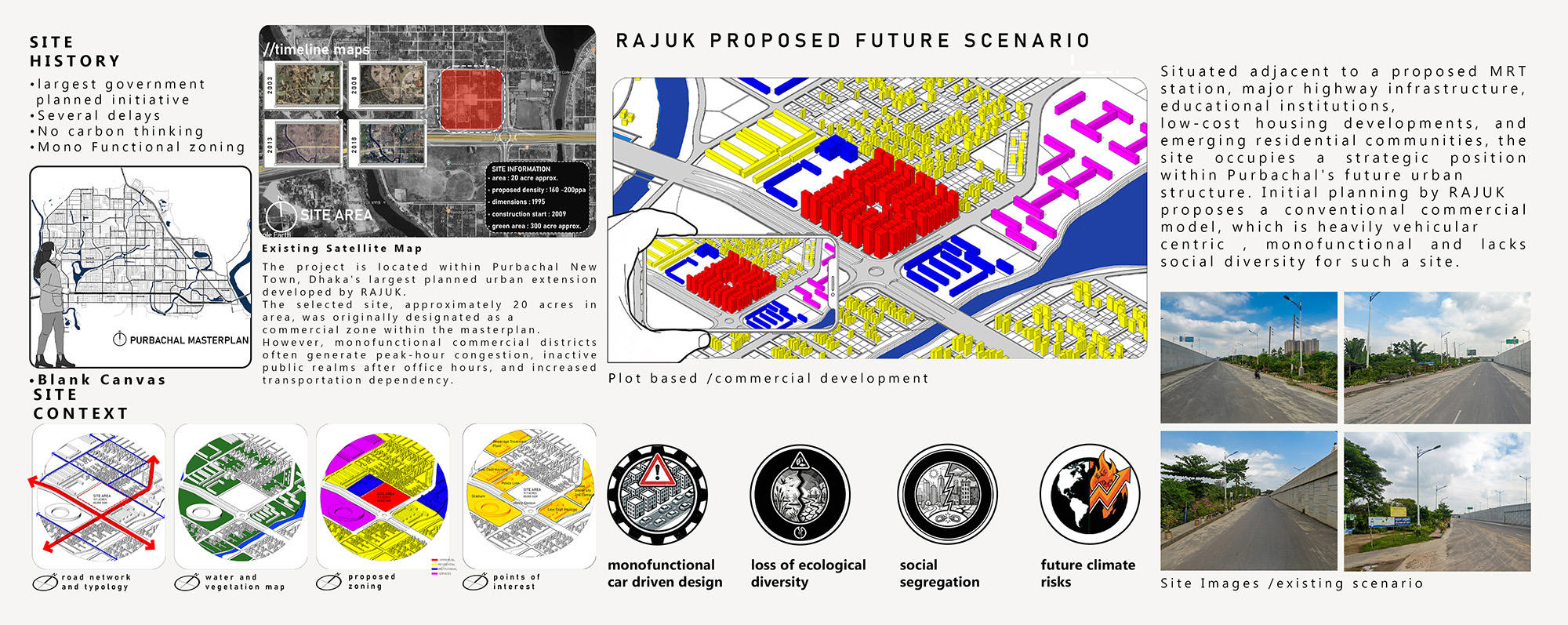
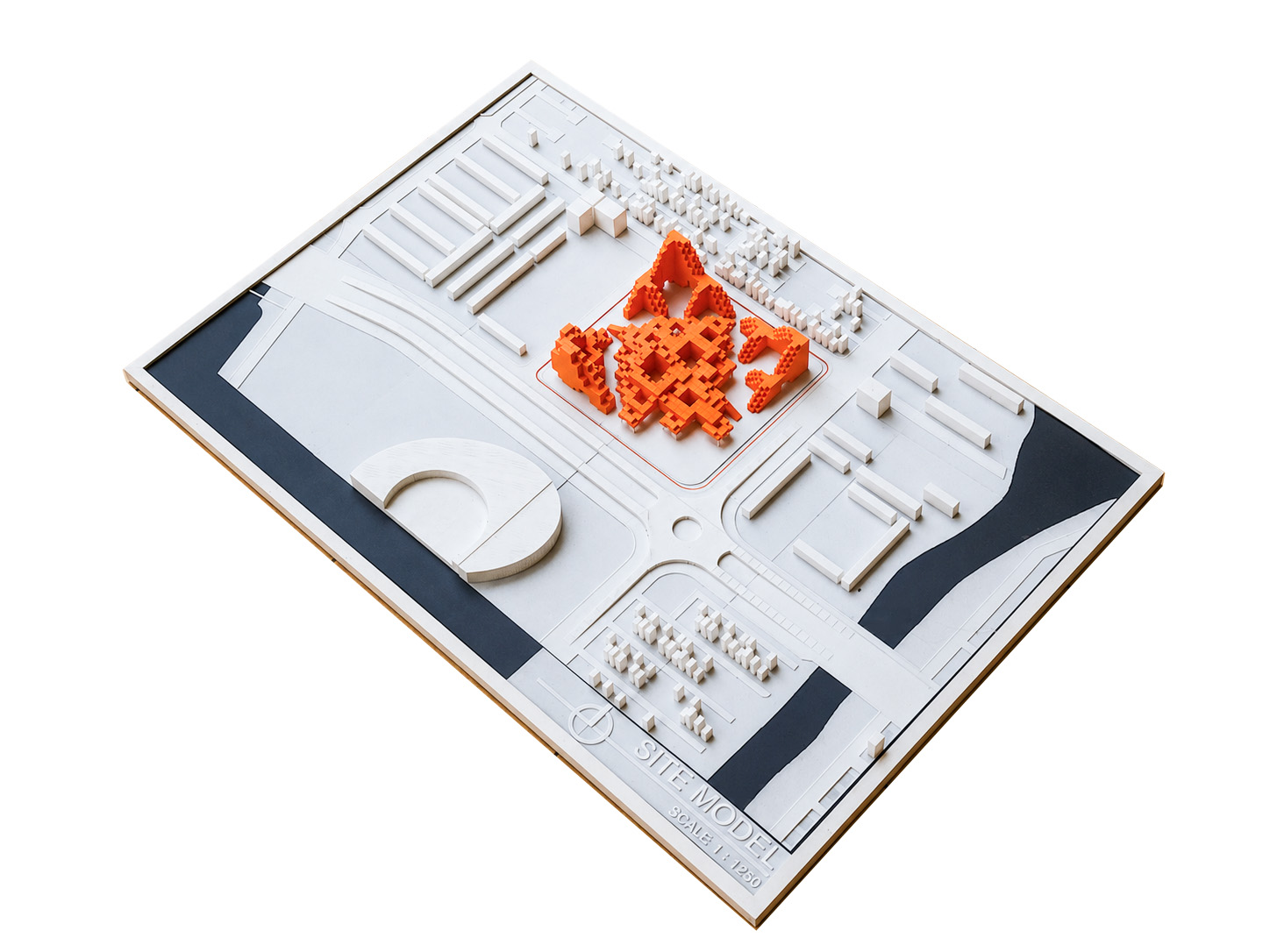
Located within Purbachal New Town, Dhaka’s largest planned urban extension, the project occupies a 20-acre site originally designated as a commercial zone. Instead of following the conventional monofunctional development model, the proposal transforms the site into a mixed-use regenerative superblock integrating residential, office, retail, and public functions within a unified urban framework.
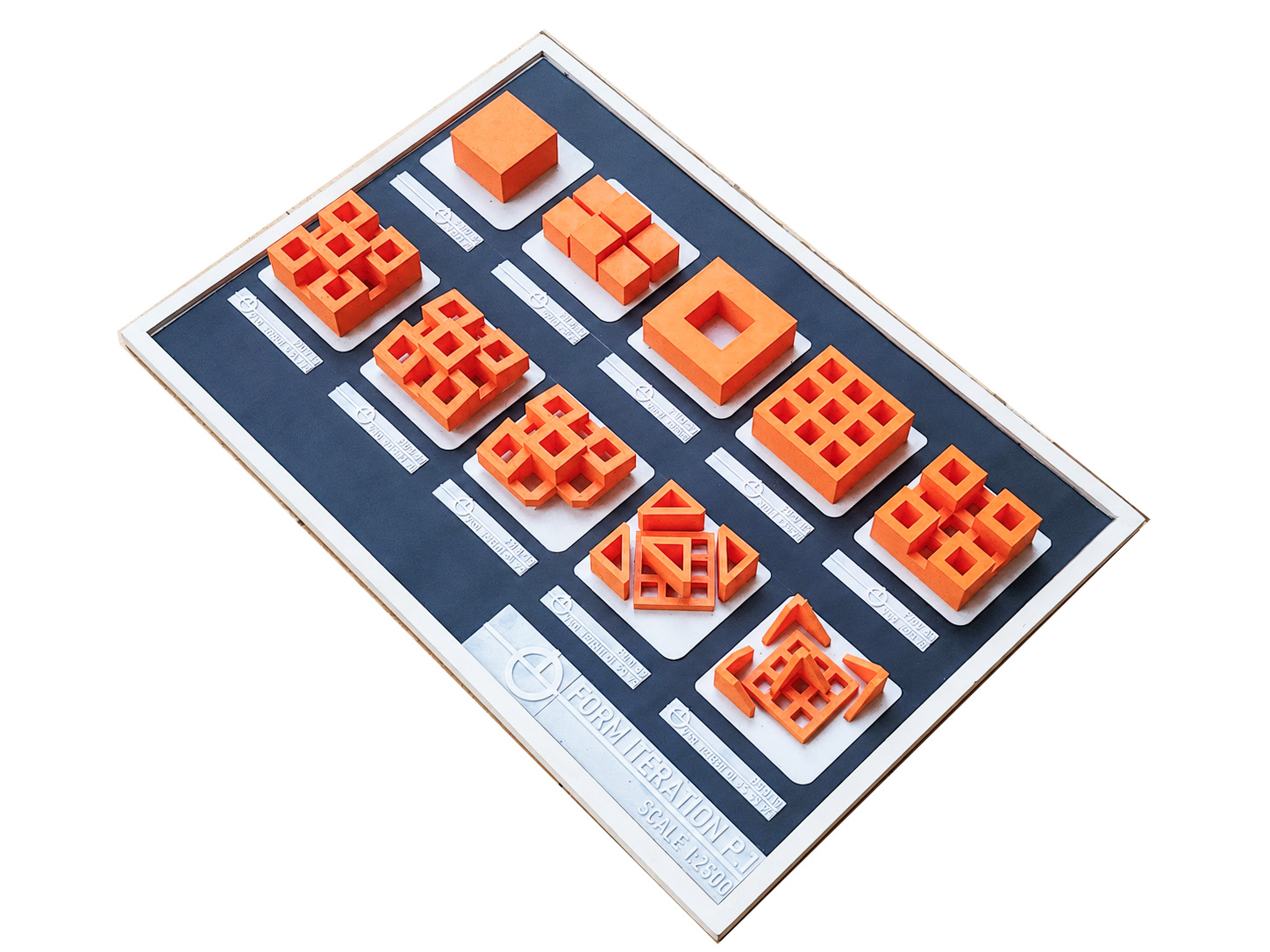
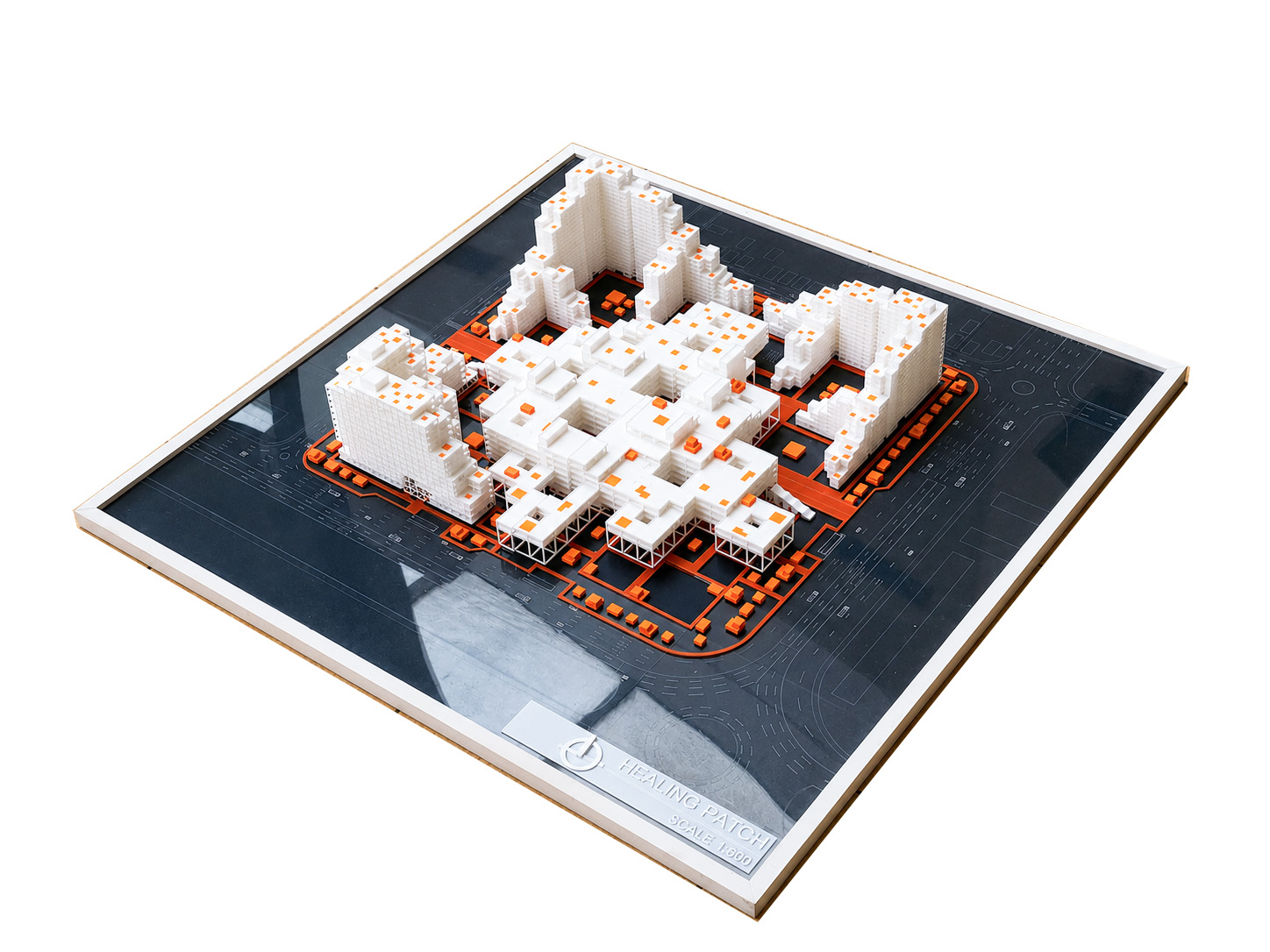
The project is guided by five interconnected strategies: Unify, Regeneration, Edge Matrix, Extended Urban Realm, and Form Matrix. Fragmented plots are consolidated into a single superblock, reclaiming land typically lost to underutilized setbacks and transforming it into productive ecological and social infrastructure. The Edge Matrix reinterprets setbacks as active environmental buffers, public spaces, and micro-economic zones, while the Extended Urban Realm distributes public life vertically through terraces, elevated landscapes, and accessible rooftops.
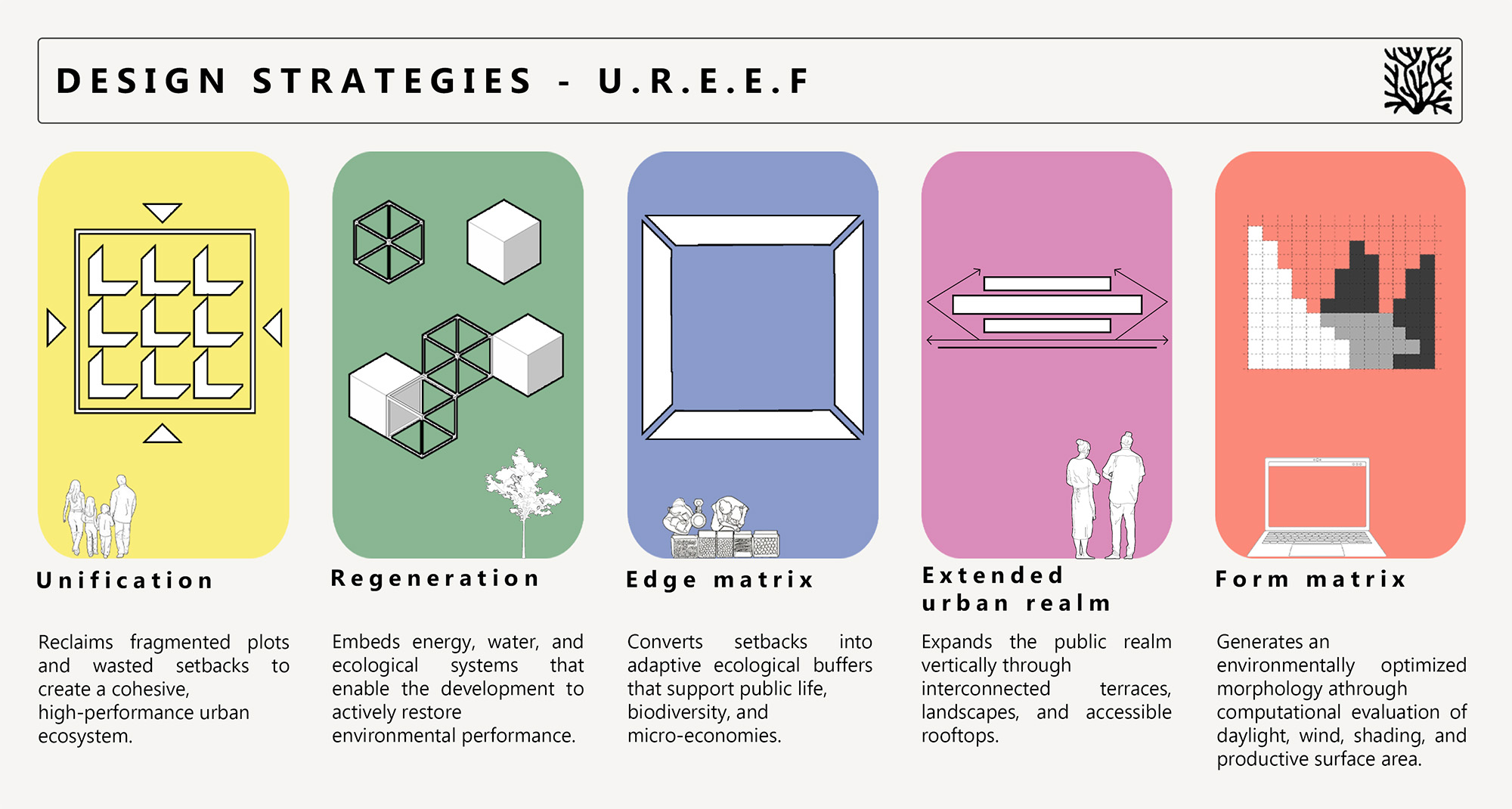
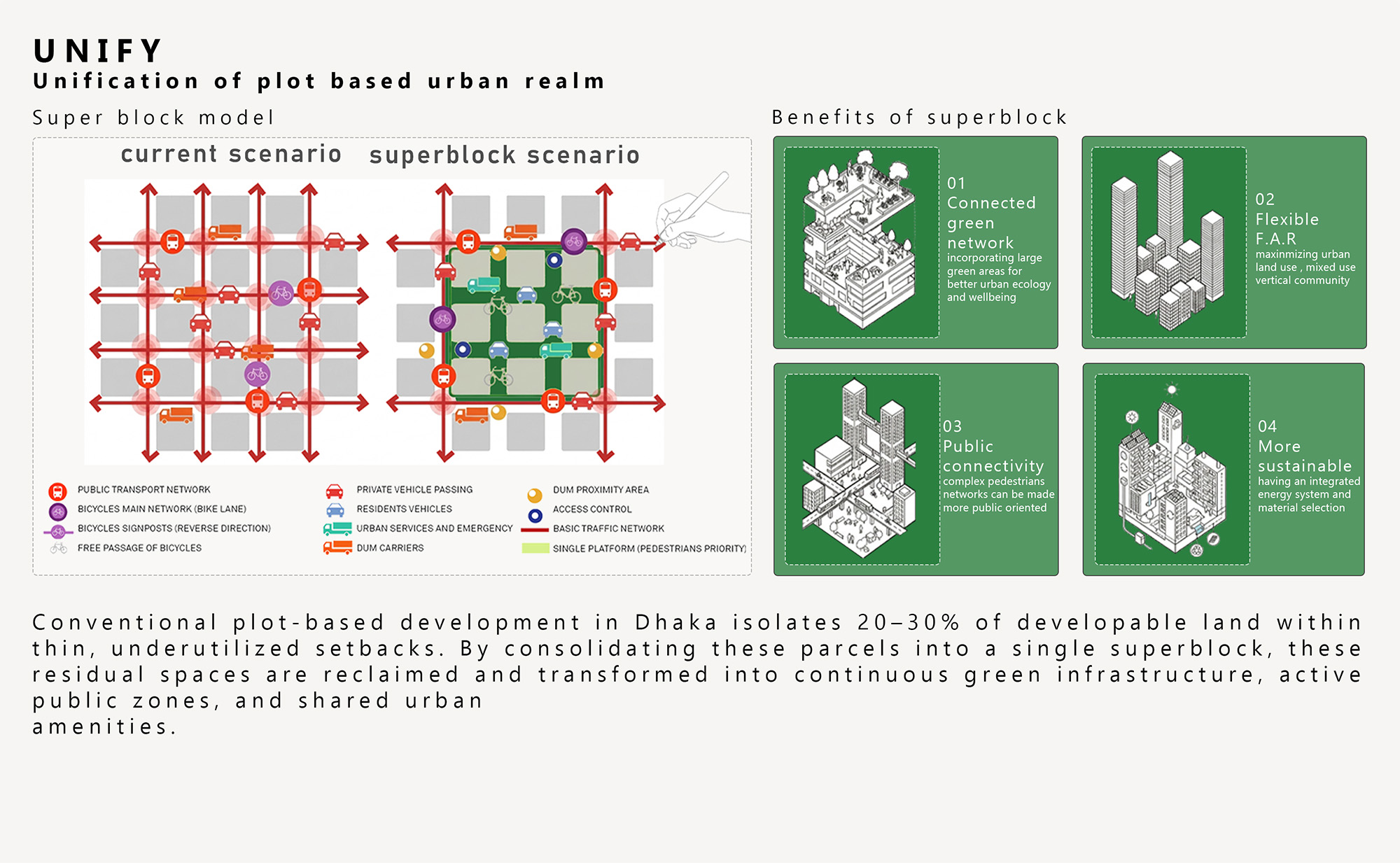
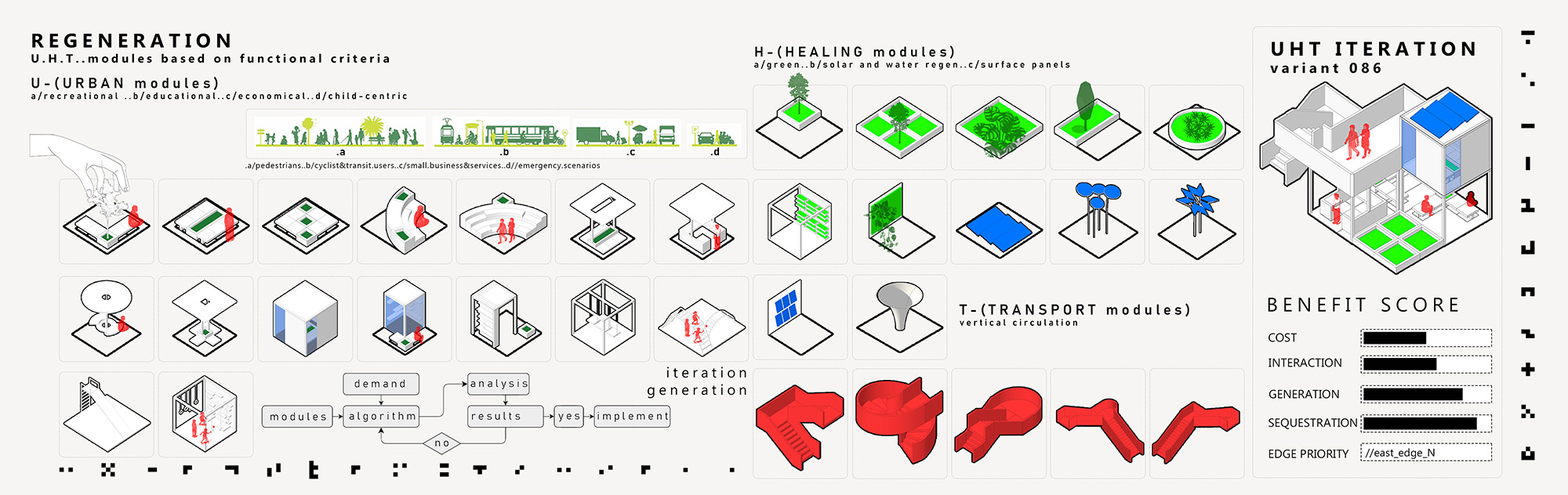
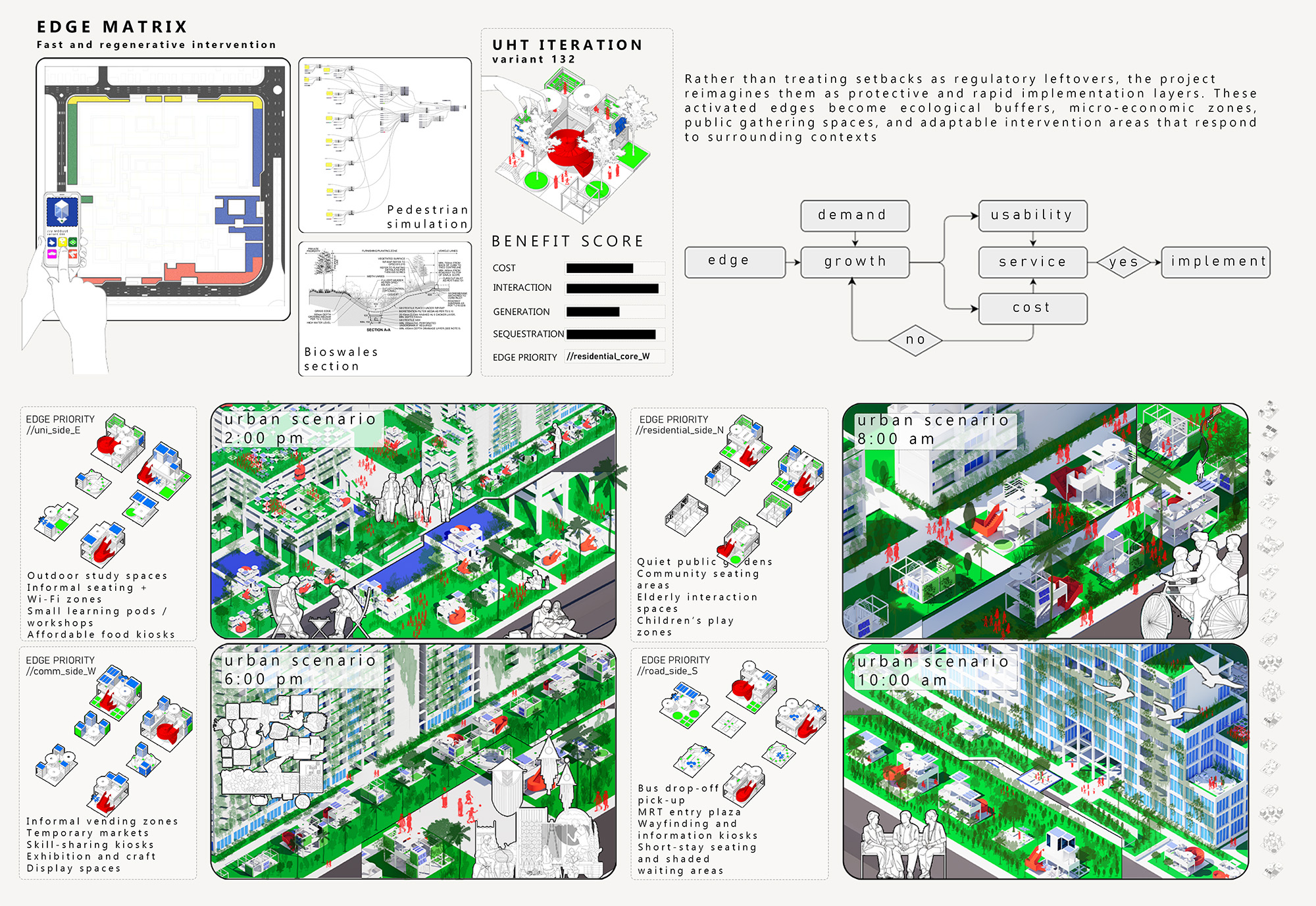
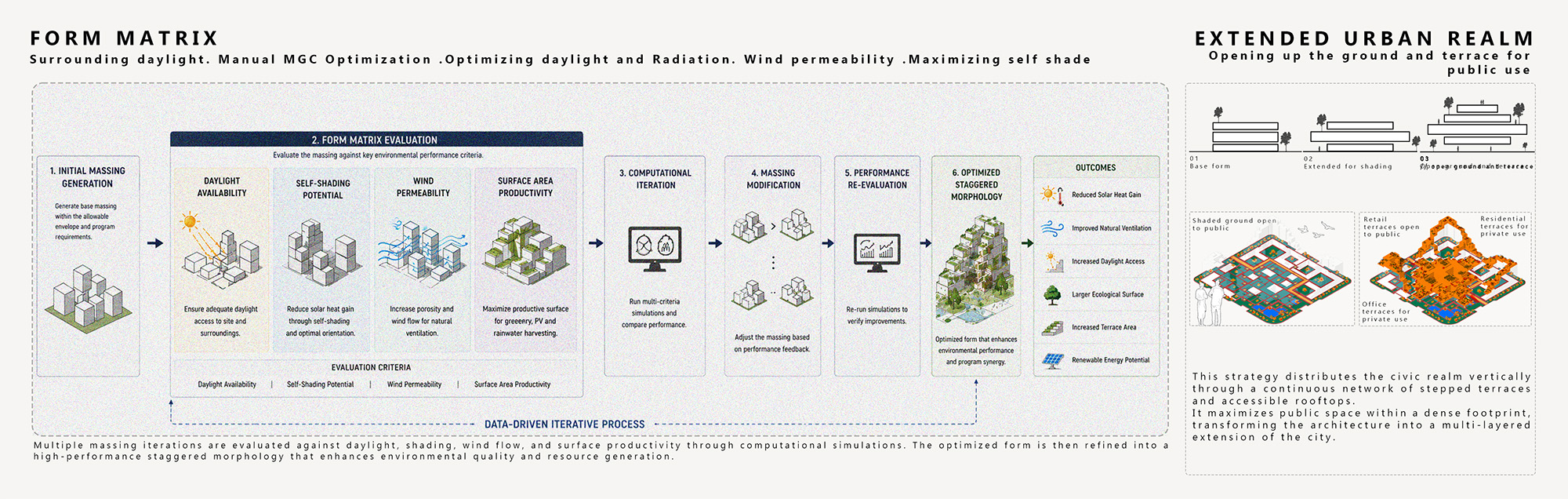
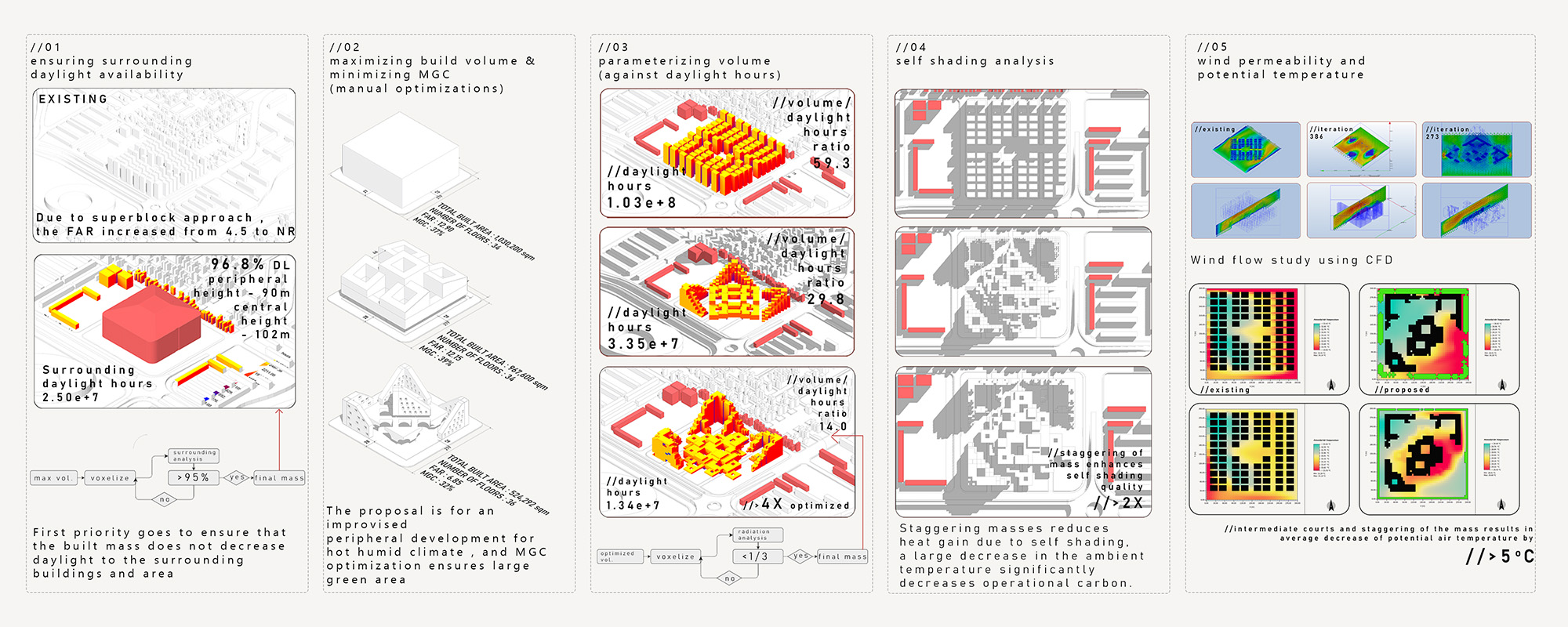
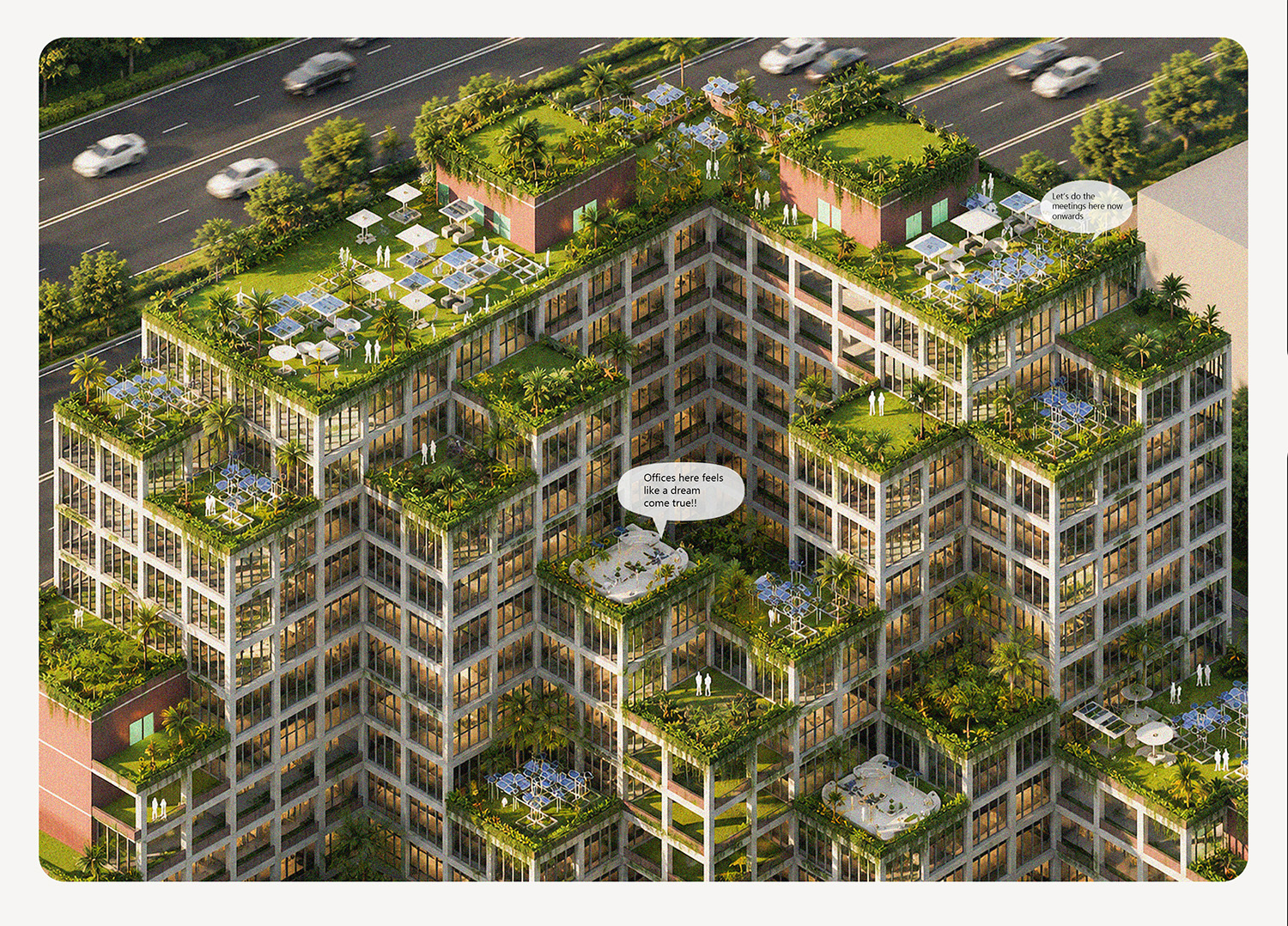
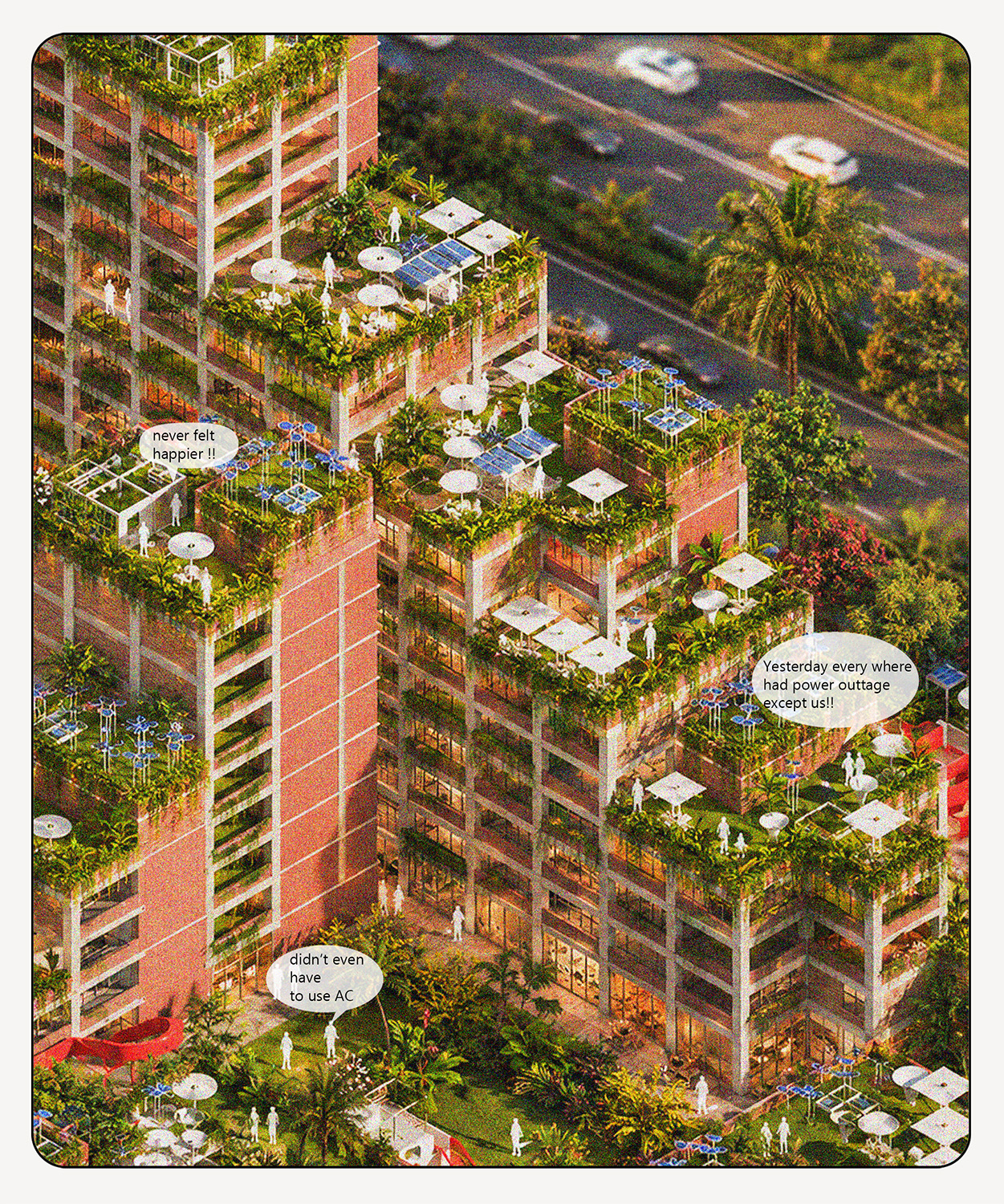
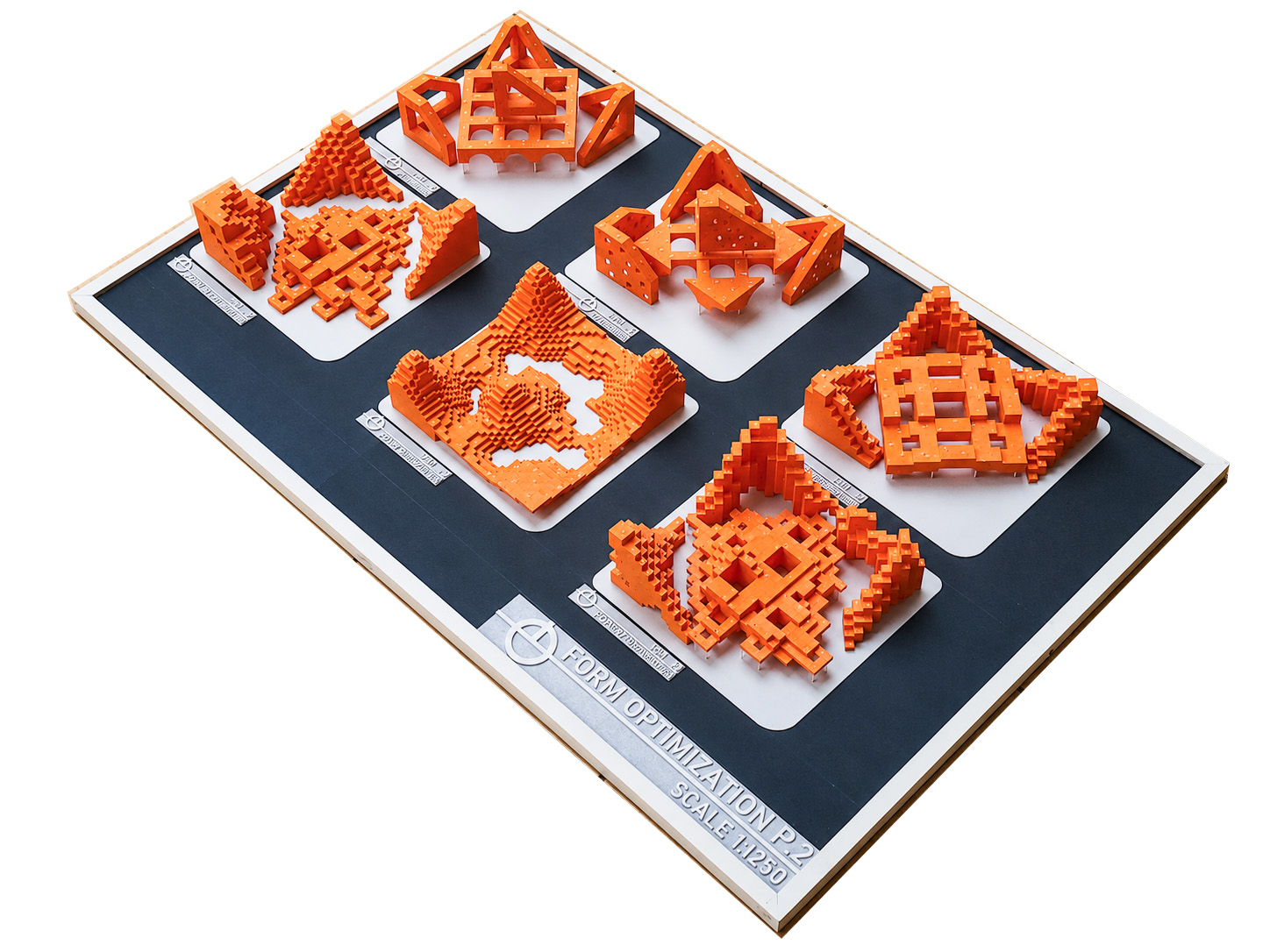
Environmental performance is enhanced through computationally optimized massing that evaluates daylight availability, self-shading, wind permeability, and productive surface area. The resulting staggered morphology minimizes ground coverage and significantly increases ecological surface area throughout the development. Green infrastructure is integrated across the ground plane, terraces, verandas, and rooftops, creating a continuous landscape system that supports biodiversity, carbon sequestration, and thermal regulation.
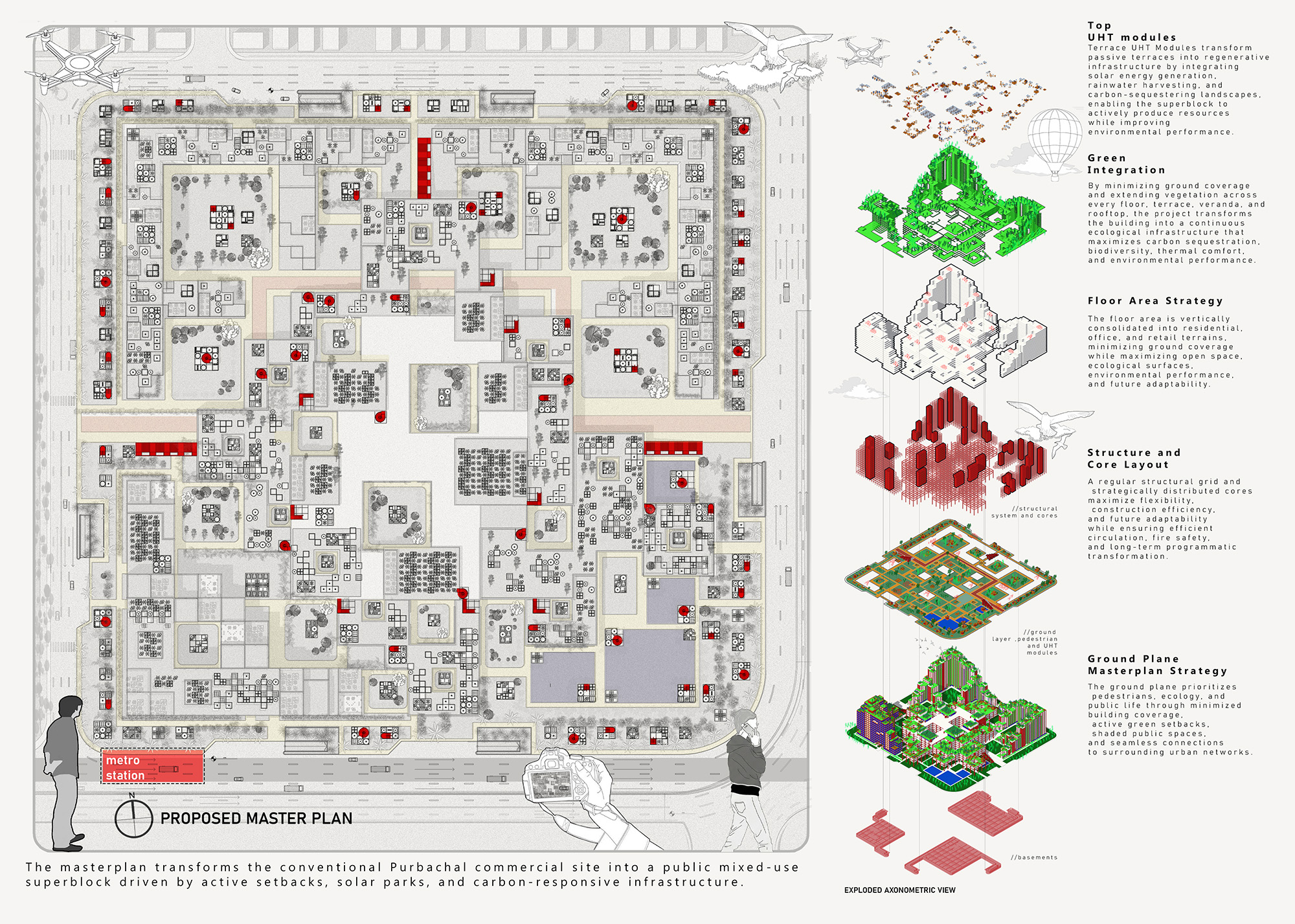
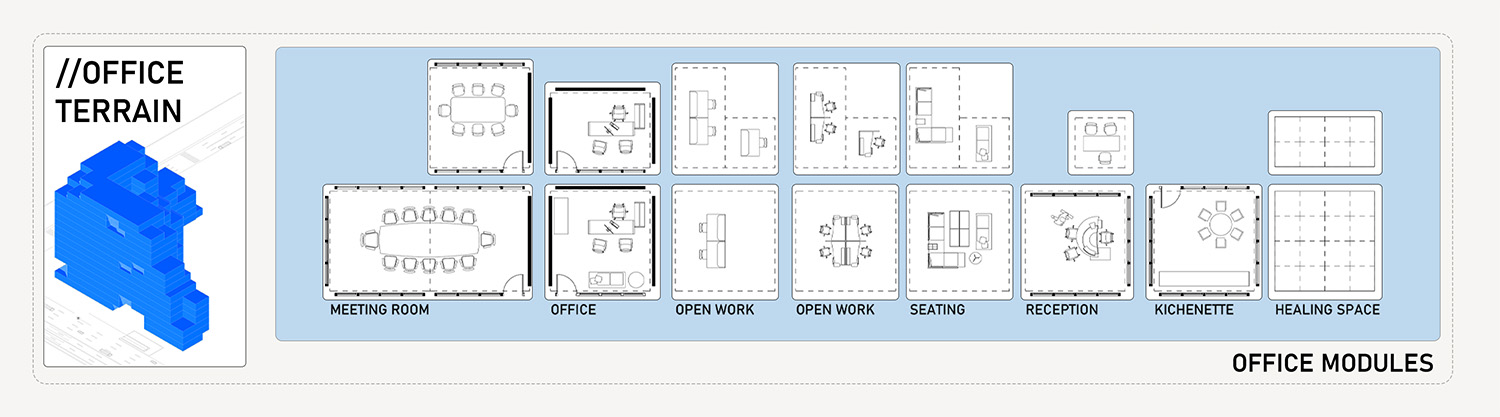
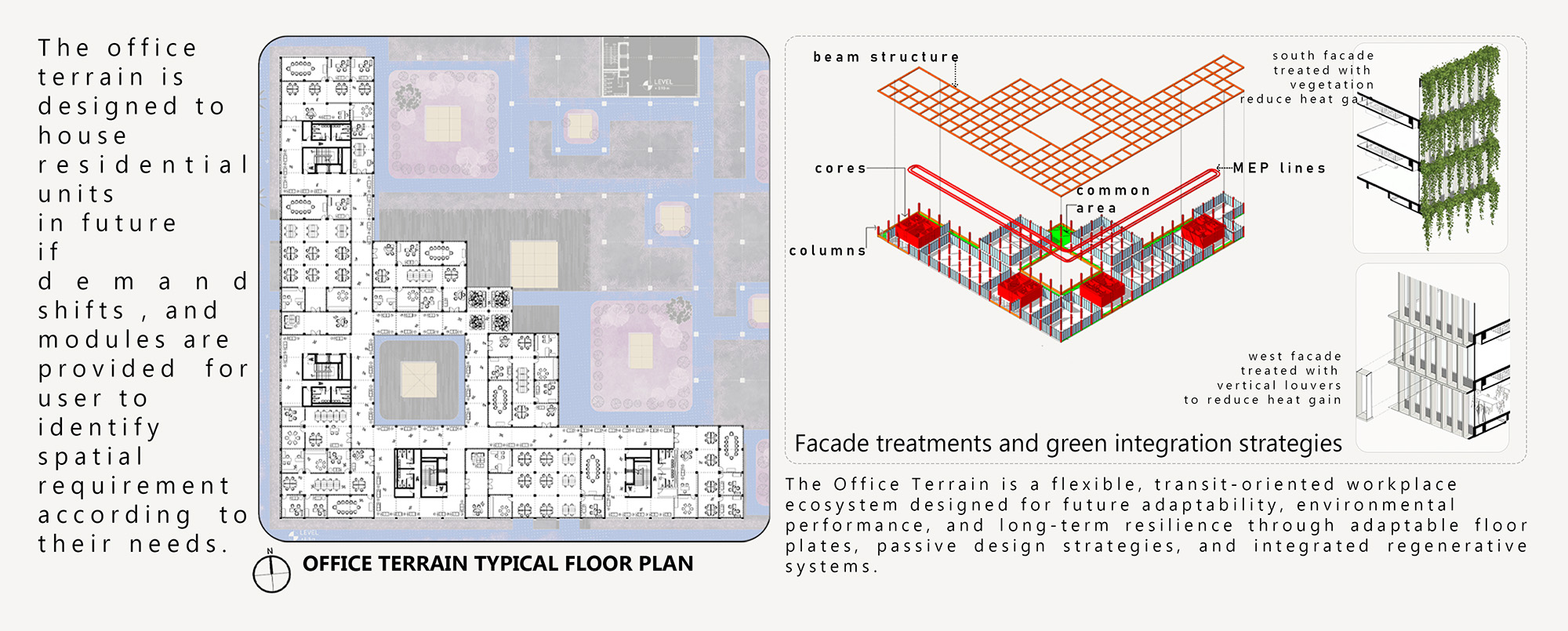
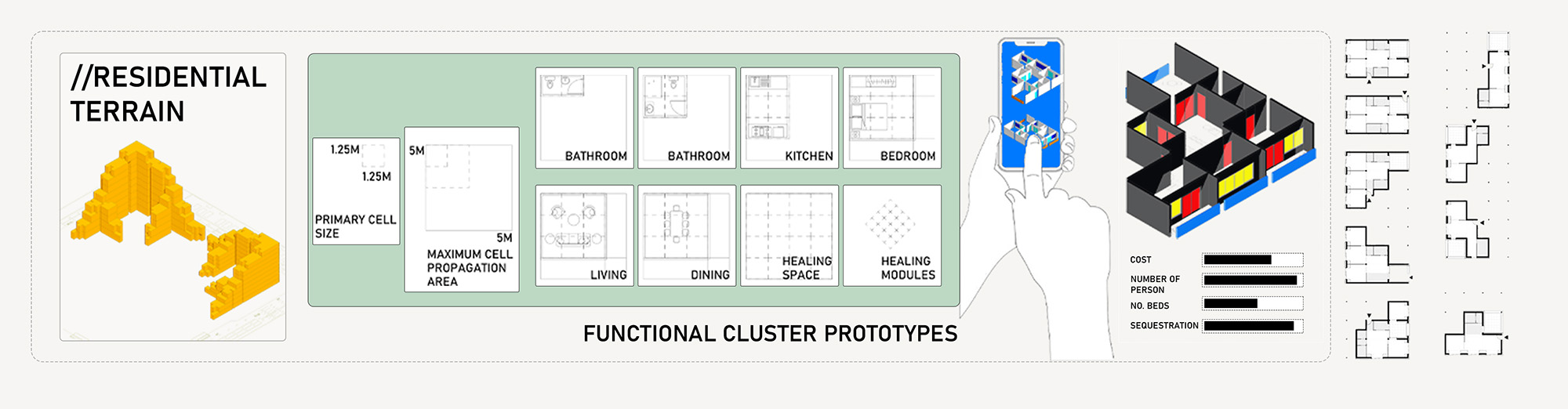
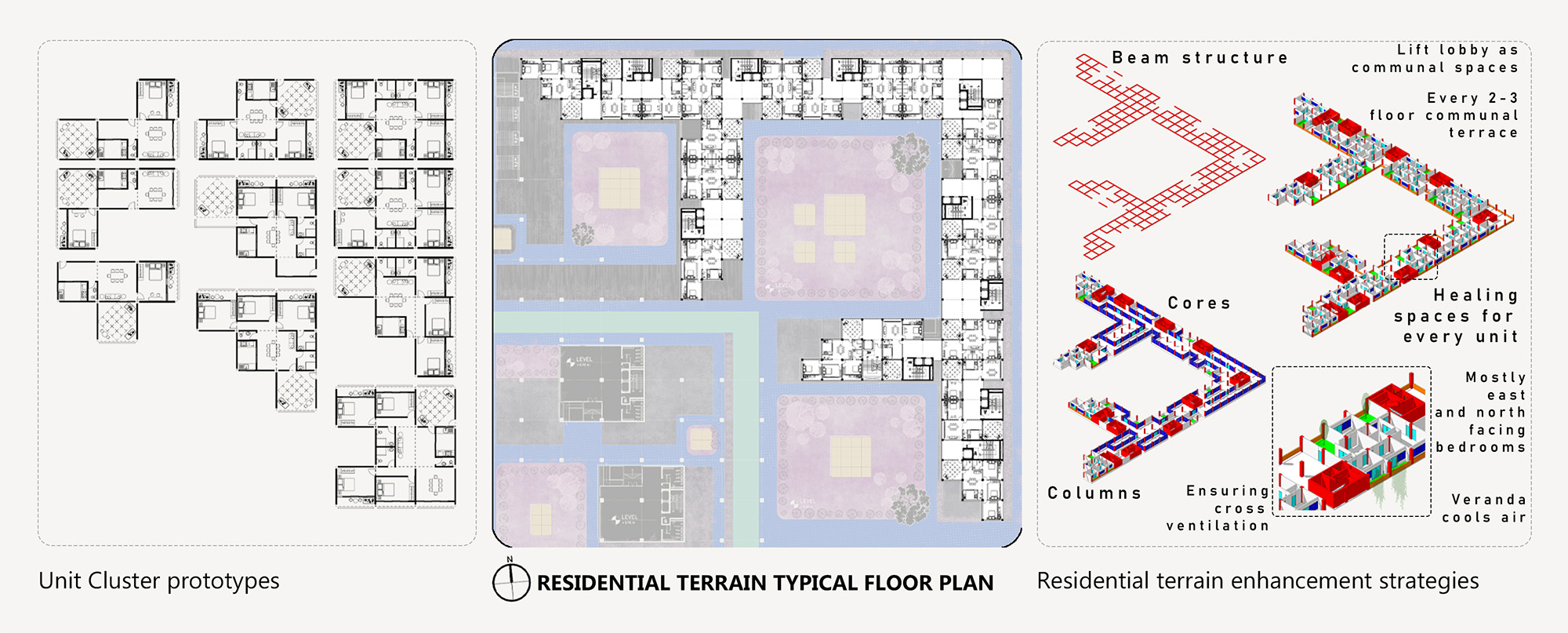
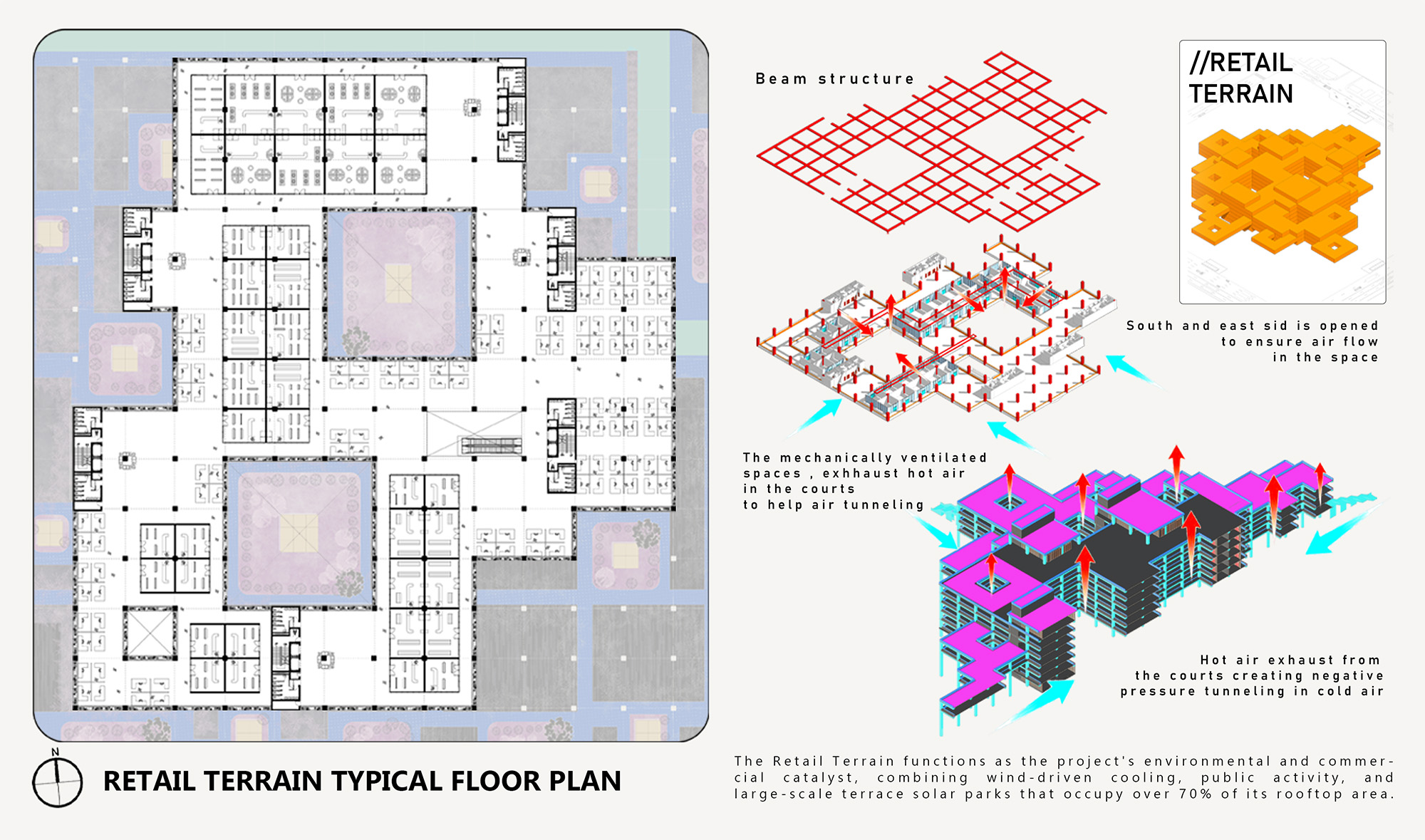
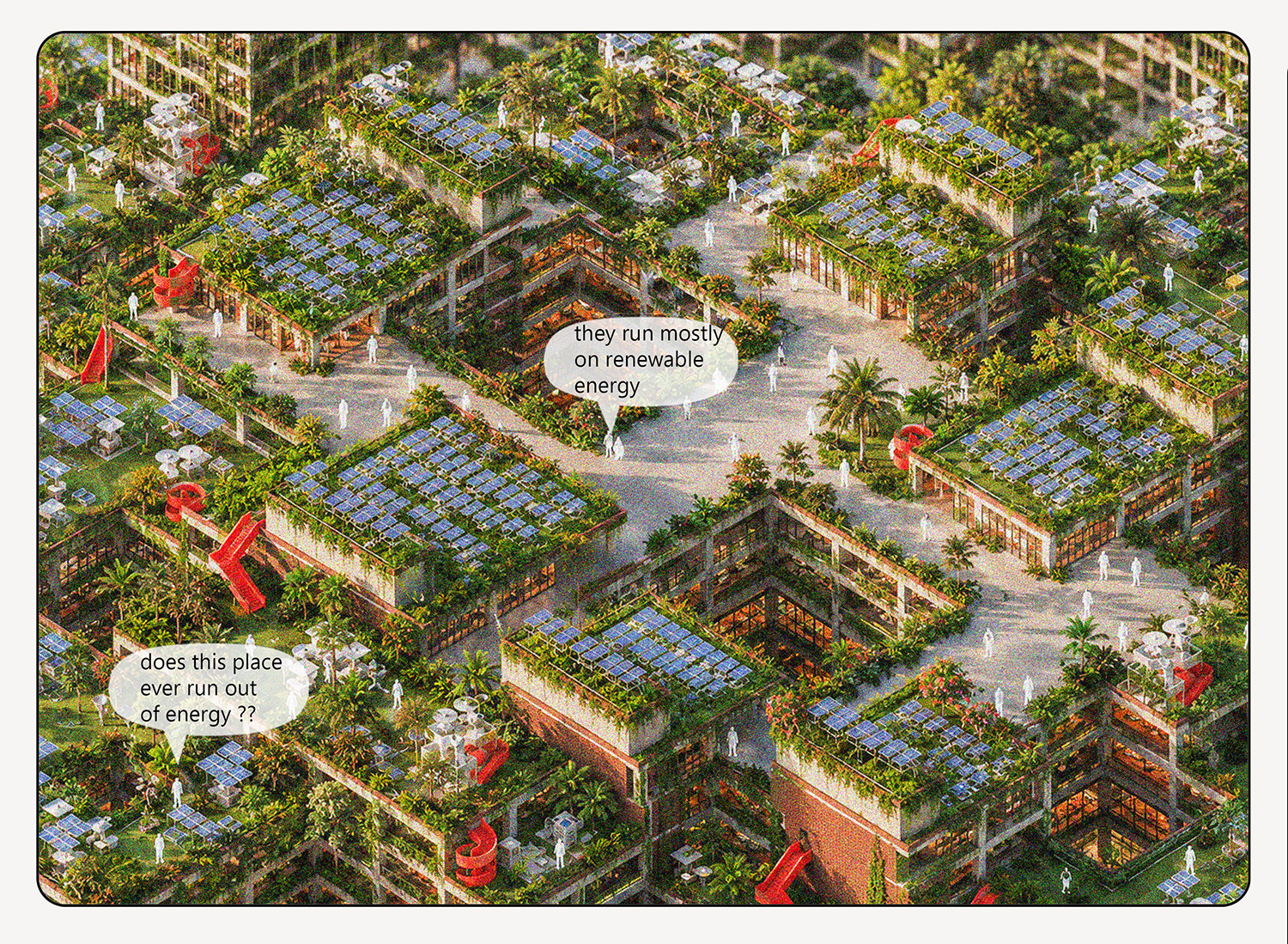
The program is organized into three interconnected terrains: Residential, Office, and Retail. The Residential Terrain promotes user autonomy through adaptable units and regenerative veranda modules. The Office Terrain is designed for future flexibility, allowing conversion between workplace and residential functions as demands evolve. The Retail Terrain serves as both the economic and environmental engine of the project, functioning as a wind-capturing device while dedicating over 70% of its rooftop area to solar farming and renewable energy generation.
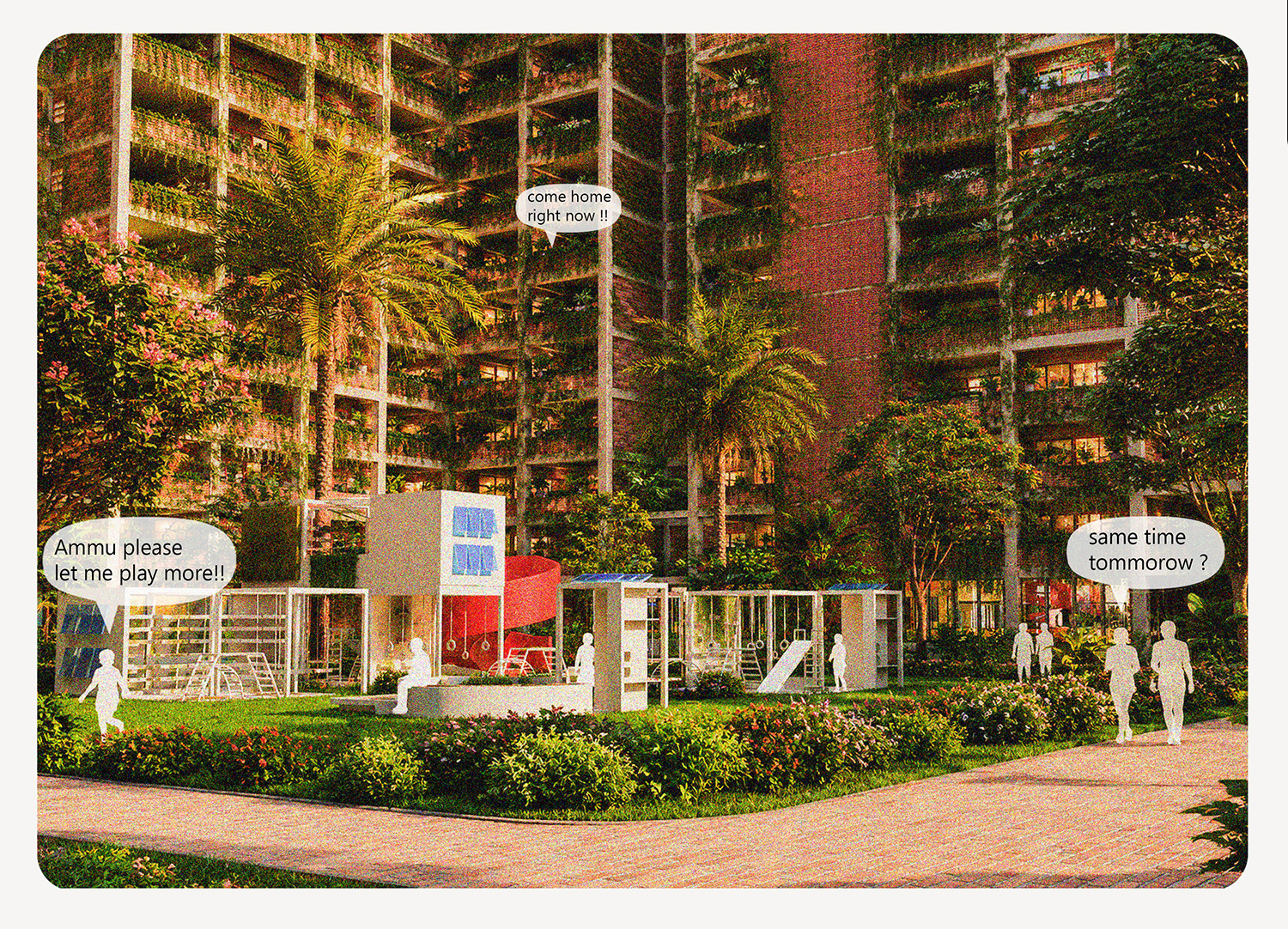
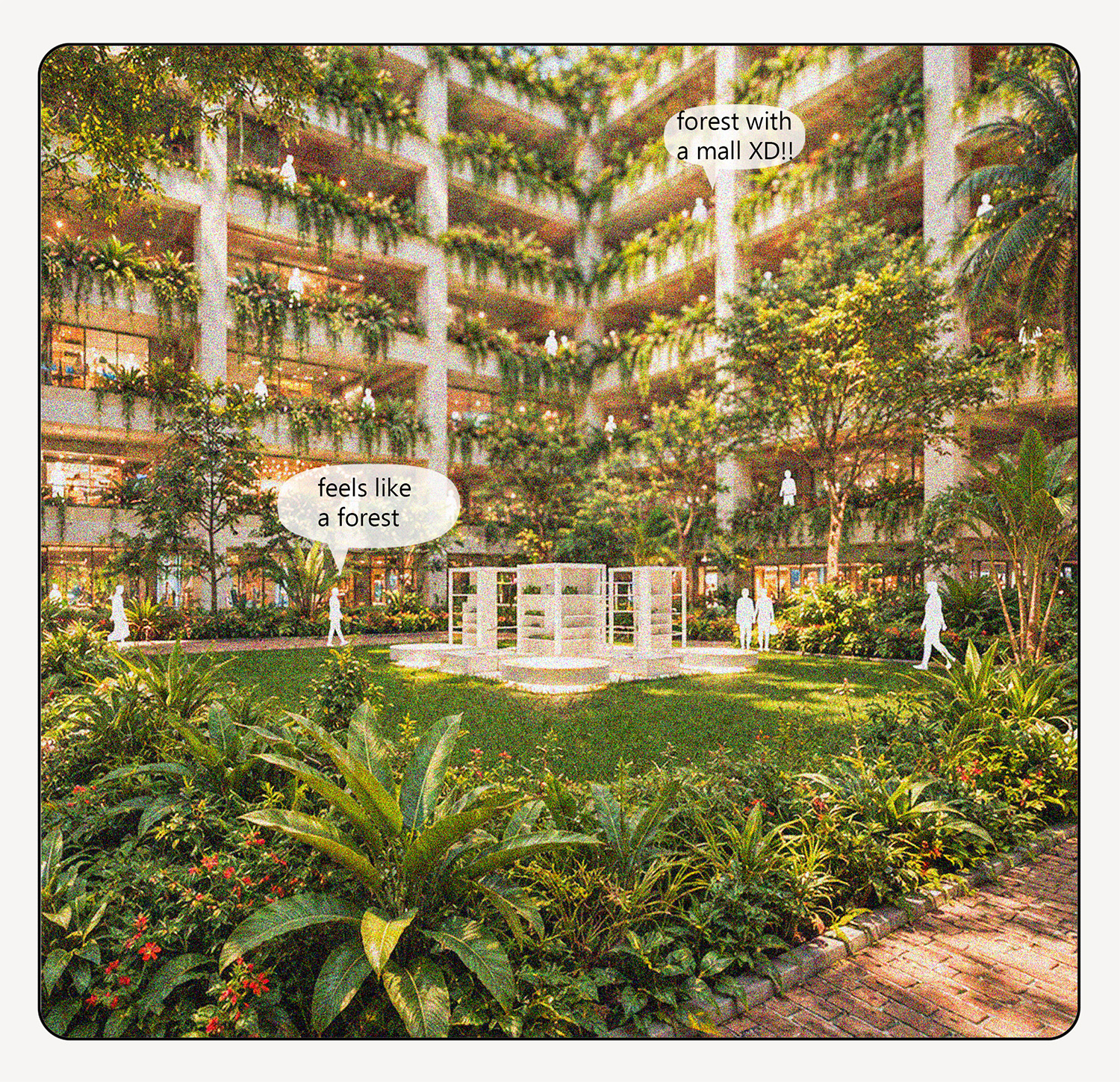
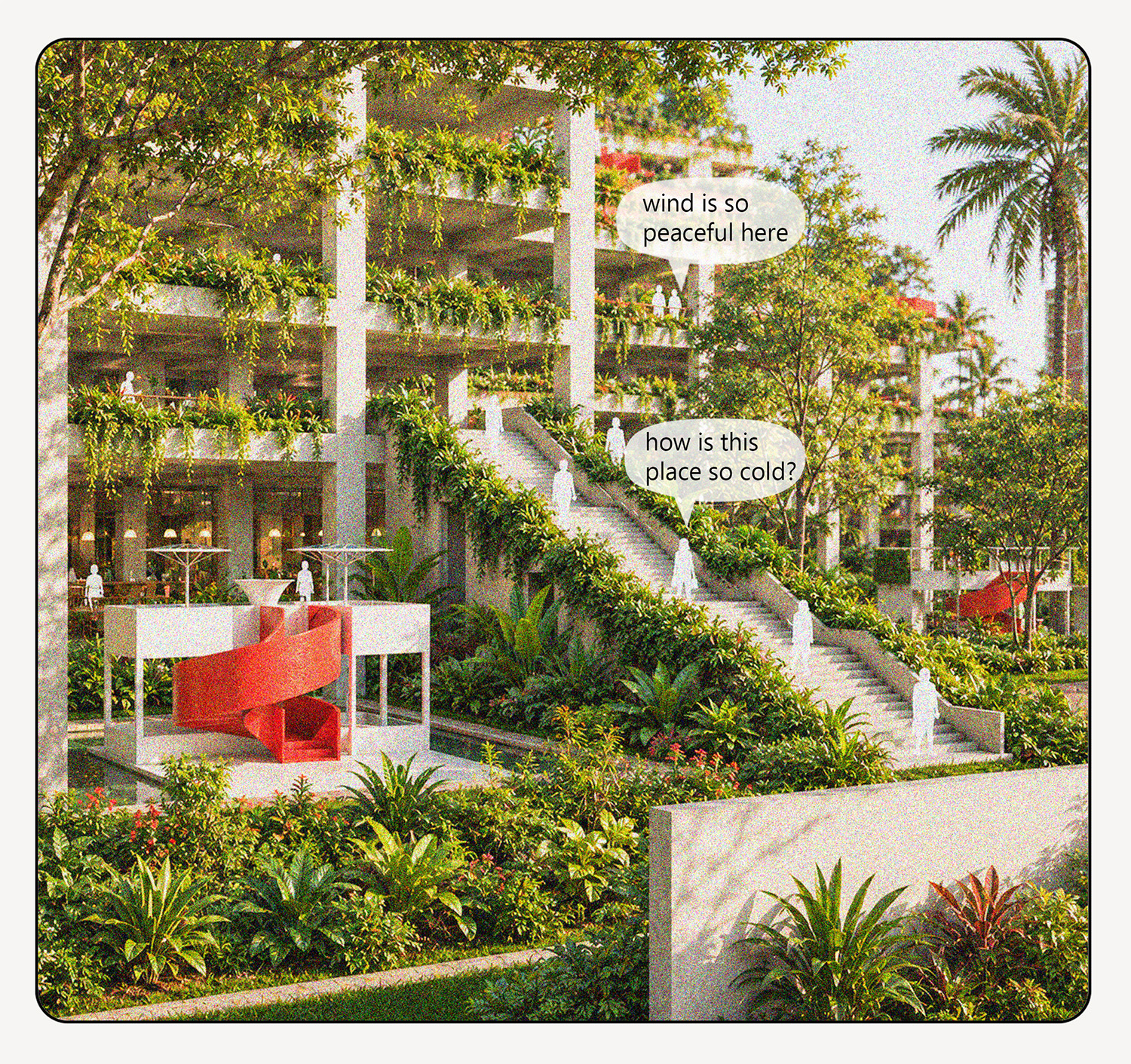
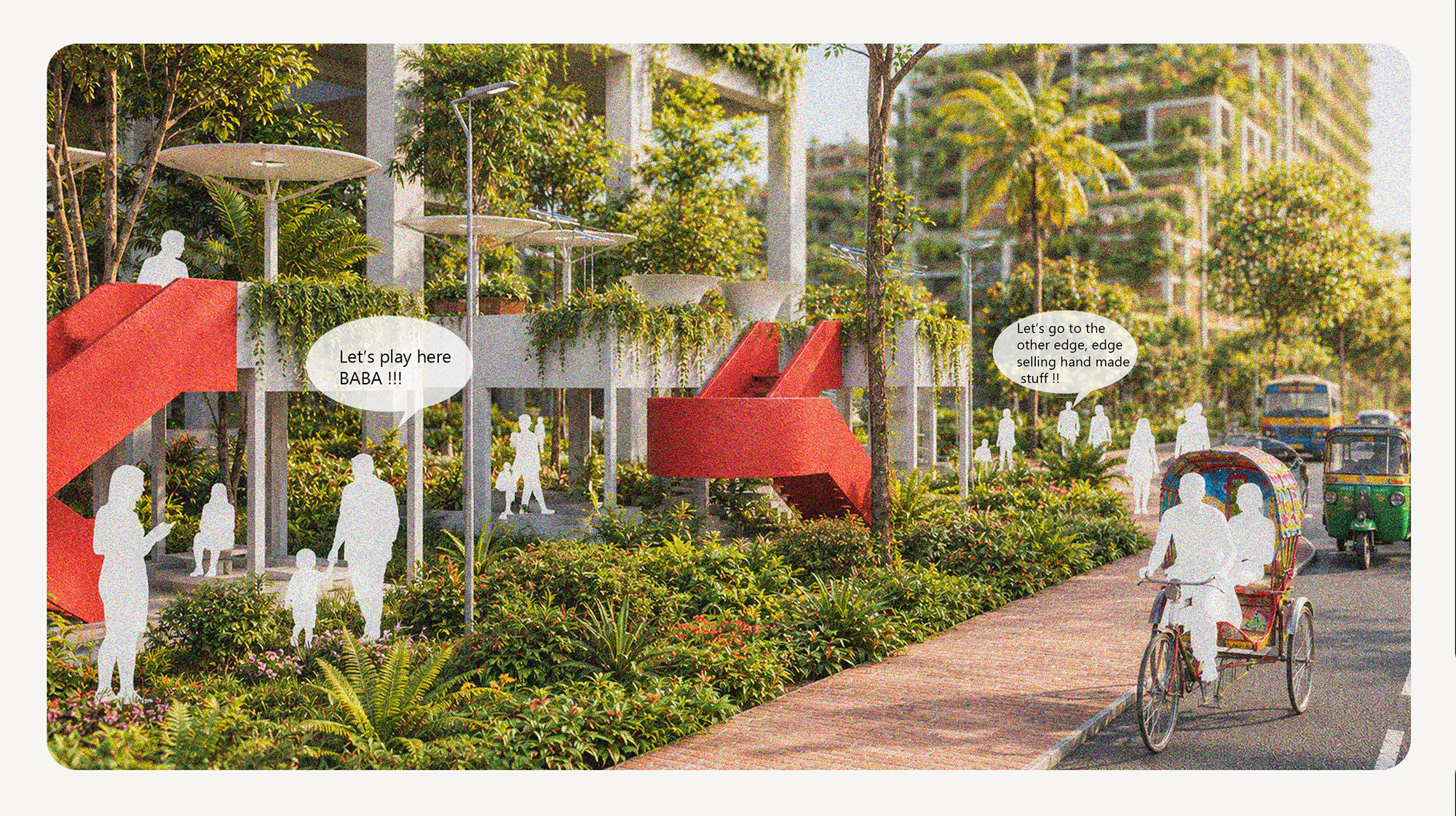
Through the integration of low-carbon materials, passive environmental strategies, renewable energy systems, water harvesting infrastructure, and ecological restoration, Healing Patch demonstrates how high-density urban development can evolve from a resource-consuming model into a regenerative urban ecosystem. The project proposes a scalable framework for future urban growth in Bangladesh—one that accommodates density while actively contributing to environmental repair, social vitality, and long-term urban resilience.
PEOPLE ALSO VIEW
Printed Publications

NEXT 50: Collective Futures

ASPIRATIONS AND IDEAS: Designing with Context