Often considered a discipline of ‘the society of spectacle’[1], architecture education and practice have been encountering massive disruption due to the ongoing pandemic. Some argue that the crisis has paved the way to revisit the proprieties of the ‘previous normal’ and determine how ready we are to respond, recover, and work towards ‘a new normal’ that will enable the architectural community to sustain and thrive during this critical situation.
‘A new normal’ is perhaps the most uttered term during this COVID 19 outbreak. It advocates the idea of fundamental change being an adaptation mechanism against this global crisis. The terminology is not new in the discourse of sociology, political economy and disaster science and often refers to the ‘new consciousness’ seeking answers for what was wrong in the system previously considered to be ‘normal’. An immediate response to this new normal is evident in the forms of widespread measures of ensuring social distancing, washing hands, covering the faces and so on. These health measures have significantly altered the way we used to live, work and communicate regardless of what professional niche we belong to. For every professional, it is important to acknowledge that the (re)assessment of their form of duties is necessary not only for finding ways for temporary adjustments but also for the long term stability of the niche itself. For the architect community, this ‘new normal’ can be characterized as the push for a paradigm shift – a movement to reshape the discipline (both education and practice) to fit in the context of Bangladesh. Perhaps, with numerous webinars and online discussions, such transition appears to have gathered momentum during this pandemic.
In architecture education, the transition can be observed in ways of conducting the design studios which is an inseparable aspect of it. Teachers and students are quickly adapting to an online learning environment. Technologies to facilitate students to continue their work are being discovered, mastered and accepted in no time. Though in a rudimentary stage, its success is not undisputed and there is growing dissatisfaction among students (and parents) about the quality of this online education. The growing criticism may open doors for revisiting the teaching methods and techniques to explore how the online learning experience can be improved to accommodate the intricate ways of course delivery. And isn’t it true that practices like conducting the design reviews and thesis jury by video conferencing would seem like a complete travesty in the time before this pandemic? But this crisis has made it happen and proved the chance of rethinking different aspects of our traditional pedagogical system to address the upcoming challenges.
While impromptu online learning methods are trying to find its way, it cannot be denied that this is merely the utilization of tools and adaptation of technology. But in the long term, this adaptation denotes the possibility of initiating a process to go in deep to find the opportunities to rectify what was wrong in the previously normal scheme of our pedagogical culture. As architecture students learn to design how people interact in a built environment, there might be the need to design how not to interact in a pandemic situation like this, who can tell? Aspects of public health, epidemiology and virology might need to be integrated into the curriculum. Creating a more efficient and horizontal exchange of knowledge with other disciplines with acceptance of new ideas might be the key to confront the challenges. In order to produce efficient and specialized professionals for a situation of crisis, self-motivated learning needs to be nurtured sensitively so that young professionals can assist the larger community instead of taking the capitalistic route of serving rich clients only.
Furthermore, as a professional community, the architects have responded to this situation by adopting measures like ‘working from home’ for quite some time. Again, if we look at the ‘previous normal’ of the office culture of architectural firms, ideas like this would not be accepted easily. However, this global health crisis has put us in a situation to find ways to get along with it. This justifies that we should look for solutions towards a ‘new normal’ which may seem unorthodox at first but will ensure the resiliency of the professional practice of this community in the long run. The professional body, Institute of Architects Bangladesh (IAB), has taken some rapid and significant initiatives as an emergency response. For extending emergency medical and financial services to its members, they have collaborated with hospitals under which the members, their families and staff will receive certain medical services with special discounts. The institute has also announced services like Emergency Finance Scheme (EFS) enabling its members to take interest-free loans. Within its limited organizational and financial capacities, the institute is constantly working for the betterment of its members. But will it be enough in the long run if the effect of this global pandemic continues for an uncertain length of time? Will these relief-oriented, retrofitting activities be enough to instigate necessary transformation in the profession to sustain and grow in the pandemic world?
It can be assumed that amidst this global threat of the COVID 19, the built environment professionals are in an existential crisis as the top priority is not given to this sector as an essential professional service at the policy level of the government. Here comes the question that have we failed to establish our ‘value’ to the societal and political process? An evident large discontent among the fresh graduates and students about the significantly long process of architecture education and then not being able to efficiently contribute to the professional field can further question the existing ‘architecture education model’ which is tied to the need of the 19th century ‘industrial revolution’. So, isn’t it necessary to mass democratize the schooling model so that education can be brought down to our context allowing people to actively engage at the grass-roots level? Do pedagogy and profession need to be rethought according to the changing realities which can strengthen the built environment professionals to caste a strong impact on the society and valuate their position more effectively?
Finally, it’s undeniable that industry and institutions are closely contingent upon one another asking for a sustainable adaptation method which will mold and prepare the field itself to deal with crisis situations in the long run. Changes in one sector can effectively influence another. We have to ask ourselves, are we realizing that experimenting with new ideologies can result in something good or at least can open the door for further discussions? Isn’t it necessary to ameliorate the radical typologies in pedagogical and professional practices to address the challenges of a new normal? As the built environment does not involve architects only, isn’t it necessary to establish a transdisciplinary dialogue with other disciplines like sociology, anthropology and epidemiology? A horizontal exchange of knowledge can effectively impact the scenario as a whole, but does our current practice allow it enough? Is ‘lack of acceptance’ being the major hindrance to explore the possibilities?
In light of these questions, maybe the key to an effective long-term response lies within the realization whether we are expecting to go back to the previous normal or we are aware of the fact that ‘a global paradigm shift’ is imminent where we have to identify and rethink our outdated pedagogical system and professional practices which are due for some revolutionary changes for a pretty long time.
[1]Guy Debord, (1960) “La Société du Spectacle”/ “The Society of Spectacle”.
About the Author:
Anupam Bose, graduate, Discipline of Architecture, Khulna University
The article is primarily based on the discussion held as a part of the online symposium titled Towards a New Normal: Rethinking Architecture and Urbanism in the Pandemic World. Dr. Muntazar Monsur (keynote speaker), Dr. Fuad H. Mallick, Ar. Jalal Ahmad, Dr. Farhan S. Karim, Tanzil Shafique were the discussants among others.
The project attempts to provide an on-site renewal scheme for low-cost housing scenario. In the larger urban context in Bangladesh, such design explorations are crucial. In terms of the design intent and resolution, the design successfully negotiates the site conditions and has been able to use the site potentials to good effect. In particular, the concept of a multi-scalar hierarchy of public spaces nested throughout the design is an astute decision, since it captures the nuances of the uses of public space traditionally and goes against the public-private binary. However, there are certain aspects of the design that requires further elaboration and/or can use refinement. Firstly, the design follows the modernist paradigm of the designer as form-giver. What would be useful is to also conceptually explore housing as a verb (Turner 1976, Tonkiss 2015). In other words, how can the user groups participate in the design process—even explored hypothetically—is crucial in housing design. Participation needs to be explored more that sweat equity (using the citizen labour in building the form) and more in the decision-making of the design. Secondly, while the project takes a tabula rasa approach, it is unclear why the existing urban morphology had little impact on the new design. In addition, the immediate urban context impacts little on the design as well. Existing morphologies are the embodiment of certain community practices and if selectively used, can provide a sense of continuity for the community living there, instead of inhabiting a new morphology altogether. Thirdly, it is important to shed light on how such large scale projects are to be implemented since it is unlikely to be built at once. How to incorporate an incremental logic of construction is a question that remains unexplored. -Editor
| Notes from the submission |
In this project, the design intent was to convert an overcrowded community into a breathable habitat that alleviates the existing inhumane living conditions. By taking stock of the existing low-income population in Duaripara, Dhaka, the question at stake was how to improve a high-density condition yet maintain standards. The present site consists of problems like squalor, lack of open spaces, and inadequate facilities for an ideal community living. The design aimed to utilize locational features such as the lake and canal to create a better habitat.
The current residents in Duaripara live in below-standard dwellings. Subpar living conditions within individual units are accompanied by a lack of community spaces and facilities. Detailed urban analysis reveals that the entire site has three types of residents making a diversified user group: firstly, bachelors living in mess houses (semi-pucca row houses made of brick with tin roofs); secondly, Tenants living in structures consisting of 8-10 rooms, each of which are occupied by single-families (4-5 people) (semi-pucca row houses made of brick with tin roofs), and thirdly, landowners who have their own houses, some of which are two-storied.
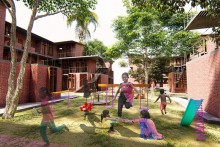
Through design, the existing land area was re-striated, where the current densely-packed row houses were replaced with 2 to 3 storied built form. A key strategy in this re-planning was the creation of a hierarchy of open spaces to counteract the total lack of open spaces before. The result was an improved family and community environment with more openness and an enhanced lifestyle within a low-cost budget framework. A portion of the site is dedicated to a local market in which both the community members and residents from surrounding neighbourhoods partake.
The main setbacks identified during the study were: lack of breathing spaces resulting in the structures being cramped together, playing areas for children, community gathering spaces and facilities like parks and clinics. In addition, the overall atmosphere was unhealthy living environment.
The primary design intent was to improve the living conditions of this low-income community by creating a hierarchy of open spaces. This was done by raising the newly-designed dwellings to 2 to 3 storied units, which in turn freed up a large amount of open space at the ground floor level. The masterplan was zoned according to the existing user groups. The higher-valued lakeside land was allotted to the landowners as an incentive for the restructuring. Then a separate zone was created for bachelors living spaces from the family living spaces to ensure privacy. A central open space was dedicated to the community for accommodating important neighbourhood facilities like parks, clinics, NGO offices, mosque etc. The existing marketplace was kept in its previous position since that is where the existing demand is generated. The area dedicated to residences was divided into 9 blocks, separated by the access network.
The open spaces are created at five different scales that cater to specific functions:
Large central open spaces. These are created at the ends and the intersection of the horizontal and vertical spines of the road network. There are 4 of these spaces—entry, mosque grounds, bachelor area gathering, lakeside gathering—and they provide necessary community services, amenities and dispersion space for emergency evacuation. This is also the place with a dedicated ‘bot-tola’ to maintain a traditional sense of community gathering spaces.
Blockwise openings. These spaces are located at the centre of each of the blocks and are used as playing grounds as well as central gardens for the dwellers within that block.
Corner crevices. These are the remnant spaces formed due to the arrangement of the cluster. They’re utilized as corner shops, pocket parks or vegetable gardens instead of negative spaces.
Cluster courtyards. They’re the open courtyard space within the cluster, created by the placement of units. These spaces, also known as “উঠান”, is used by residents of each of the clusters for their daily activities and domestic socialization.
Balconies. Balconies are created at each of the levels instead of providing them for each room. This not only reduces cost but also enforces the socialization required for peaceful living within this type of communities.
The primary access gradually opens up to a large open central community space. This periphery of this space has amenities and services like clinics, NGO offices, training centres and such. This central community space is at the meeting point of the axial spines of the primary road network.
The spine along the East-West axis terminates at the mosque premises, which also provides scope for community gathering and has direct visual access of the central community space. Two other community spaces are provided, one beside the lake (where a primary school was also provided) and another within the bachelor quarters. The primary road along the N-S axis splits into secondary roads that form pinwheel organization stemming from communal spaces.
Services were placed surrounding the open spaces, and a local corner shop (মুদি দোকান) was placed within every block. The positioning of schools, mosque and clinics along each of the edges forms a triangular network that allows for an efficient dispersal area in case of emergencies.
The main road network provided access from the community spaces to the blocks and the arterial road network provided access within each block. Wherever a road terminates, an open gathering space is provided. All the roads within the housing site are shared—mostly dedicated for pedestrian use but have provisions for vehicular access during emergency events such as for fire-fighting trucks.
Demand for the use of the lakeside space as a place of relaxation and entertainment was met by creating walkways along the edge of the lake as well as a parallel walkway above. The two levels allow the use of this area for taking a casual stroll and using it as a temporary escape as well. A large ‘ghat’ was introduced at the centre of the edge of the lake. The aim was that the ‘ghat’ would not only work as a station for boat (নৌকা) rides but also function as a serene seating and relaxation area. The waterbody ecology was also restored by connecting the lake to the stream.
By studying different housings and standards, the basic unit was determined to be of 120 sqft.
For tenants, a specific ‘L’ shaped basic module was created, consisting of 7 (12′ by 10′) ‘units’, one for each single-family, a kitchen, two toilets, and a shower room. Permutations and combinations of this basic module led to the formation of 4 types of clusters. For landowners, a specific module was created consisting of 5 rooms, a kitchen, and two bathrooms. For bachelors, row houses were created and positioned in two different orientations.
These clusters and modules were arranged to create the arrangement of open spaces with a central open space in the middle of each block. The arrangement was simulated using space syntax in multiple iterations and corrective measures were taken to fix any detected flaws. Such changes included moving units a little further from the road at specific intervals, ensuring alleys are visible at every point from either adjacent or opposite units, preventing the creation of any ‘backsides’ of the dwelling units. The ultimate objective was to ensure maximum visibility of public spaces, roads, and alleys to prevent crimes, following Jacob’s (1961) idea of “eyes on the street”, while at the same time providing privacy inside the residences.
Locally available materials are to be used to reduce cost and energy footprint. Bamboo “chatai” (local bamboo mats) were used under the roofing for passive cooling, reducing electrical costs. External metal stairs are to be used to reduce construction costs. Community members are encouraged to take part in the construction work to help build their locality as an additional source of income.
A body represented by all stakeholders—a local council—will be responsible for decisions, festivals, and arbitrations. The council decisions are to be followed by landowners, shop owners, tenants, NGO representatives and elders. Collection of utility bills will be done by respective service holders. The community council will ensure steps against illegal dumping, illegal construction and maintenance of central green spaces. Most of the community facilities like green/open spaces, streets, paths and banks of water will be homeowners/shop owners’ responsibility who live in their proximity.
A skill development facility will function in the school area from the evening. Volunteers organized by NGOs can teach skills/elderly education. Open-air learning spaces for the elderly in central open spaces and sports training and competition for youth are to be held by the community. Crafting/cottage industry production is organized in the cluster open spaces, with sale of handicrafts in the block display/shops. Small kitchen gardens are made to support low-income families. Creation of urban farm in designated areas will account for yield crops with immediate returns.
Contributing Editor: Tanzil Shafique, PhD researcher, University of Melbourne
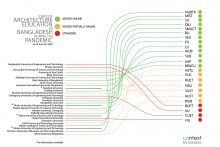
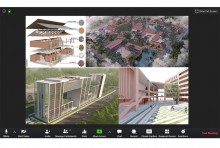
Final year students of Architecture, AIUB have taken the thesis jury online, as the university moved to new ways of remote learning for undergraduate programs during the Coronavirus shutdown. A part of the jury event was streamed live from the Department’s official social media page and was able to grab the attention of a wider audience. The architect community has welcomed AIUB’s pioneering initiative as a way forward.
The final year assessment in Architecture is unique in nature from other disciplines. For Architecture students, it is customary to defend their final studio projects in front of a distinguished jury panel comprising in-house faculty members and industry leaders as externals. Due to Coronavirus outbreak, the Architecture department, AIUB took the initiative to host the jury event for Spring 19-20 students online on 16th and 18th July 2020 where a total of nineteen students presented their final year design projects. The presented projects covered a wide range of topics on contemporary urban, architectural and environmental issues. The department took this opportunity to invite a large number of guests in a Zoom meeting as external jurors. The jury panel was graced by the President and other executive members of the Institute of Architect-Bangladesh (IAB), Dean and faculty members from other architecture schools, renowned architects, alumni and expats. Thesis studio guides assistant professor Ajmeri Nusrat Shoma and Md Sariful Islam along with the department Head Arefeen Ibrahim facilitated the virtual sessions. The viewers also participated through encouraging comments and commended this initiative.
The initiative to organize this kind of virtual thesis jury by the Architecture Department of AIUB exhibits the education provider’s willingness and sincere effort to cope with the ongoing pandemic situation. For future graduates, presenting their projects publicly in front of such a large audience was something new but worthwhile experience. The audience took this event as a great design conversation more than the thesis jury. However, it appears that students were exempted from the criteria to show physical models this time and in several cases, the audience struggled to read drawings on the computer screen. Apart from those minor areas for improvement, the design discussion took the critical depth on every thesis topic. This praiseworthy initiative has also set out a new direction for making jury events more engaging by involving a wide range of audiences and critics which was not possible in a ‘business as usual’ case.
The rural community of Bangladesh is agro-pastoral. Rural people depend on each other for their agricultural and household works. We perceived it as the core of rural strength. In building community capacity through housing, nothing seems to be the best example of the strongest social bondage than our rural culture. We looked into the indigenous architectural tradition of rural Bangladesh and the socio-spatial logic of a rural homestead. Site surrounding also has a rural essence with the touch of slow urbanization. A courtyard is the heart of a rural homestead which formed by the arrangement of dwelling units and ancillary structures around an open space. These yards serve as the platform for multi-level social interactions. This is the place for rice threshing, drying, preparing as well as a meeting place for the households and neighbours. This network of social connections plays a vital role in their lives while building a stronger sense of community.
We take this horizontal interconnecting courtyard and implement this concept into the vertical section. The proposed scheme for the housing has a community space on each floor and all the common spaces are interconnected both visually and physically. This vertical courtyard can be used as multipurpose functional and social interaction spaces both formally and informally. We’ve prioritized social justice and community building over space optimization and cost reduction. Although the housing is meant for the lower middle income group, the quality of living has not been compromised in the proposed housing scheme. Further, research shows that informal connectivity makes the process of community capacity building more effective. There are spaces for everyone, for all age groups and genders. The elderly member of this community can involve in exchanging knowledge, providing hands-on training, thus helping in skill transfer. Women can find themselves in a space where they can sit, talk; take some tea with each other. Children can play with next-door kids, thus ensuring their much needed mental and physical development. This place can also host evening session, elderly education, preschool session, etc.
From an environmental perspective, the housing block is designed to optimize solar orientation and maximize the flow of natural daylight into interior spaces. The inner and outer walls have controlled ventilators near the roof and floor. This is also helpful for reducing fire risk as a maximum loss of fire hazard is occurred by the trapped non-inhalable fume. The solar panels on the roof also add electricity to the grid.
Ar. Shumsuddin Ahmed Bhuiyan (B-041)
Ar. Shahnawaz Bappy (S-154)
Ar. Al Numan Mohammad Younus (Y-008)
Ar. Dhruba Jyoti Das (D-014)
Ar. Md. Hasan Al Emtiaz Zafree (AZ-011)
Ar. Asif M Noeem (AN-118)
Nubras Samayeen is an architect, who has excelled both in teaching and professional practice. She has worked at internationally acclaimed US based architecture firms like Eisenman Architects and HOK, and has also received numerous accolades including the United States Green Building’s Natural Talent Award (USGBC) for three consecutive years. As an academic, she served as an assistant professor at the School of Design in Howard University in Washington DC, and at the University of Asia Pacific in Dhaka. She is currently doing her PhD research in the joint program of Landscape Architecture and Architecture with a minor in Heritage at the University of Illinois, Urbana-Champaign. Through her doctoral research, she is exploring the relationship between architecture and landscape, and investigates the construction of national identity through various cultural products. She holds a bachelor’s degree from Bangladesh University of Engineering and Technology, and dual degrees in M.Arch and M.U.D from the University of Michigan, Ann Arbor.
Context BD reached out to Nubras Samayeen to discuss her journey of moving to the US for her studies, her struggles and experience of being an international student and the kind of opportunities which can be found by Bangladeshi architects hoping to study or work in the US.
You mentioned that going abroad had been a long term goal of yours. You even got admission for a bachelor’s program in the US but couldn’t attend due to family reasons. What made you decide to pursue higher studies in the US from such a young age?
I was a bit of a rebel. I always wanted to have an independent life, and that made me want to go abroad and stay away from family. However, immigration was never an option in my mind, and my wish was to study abroad and then return to Bangladesh.
I personally think you cannot come up with new ideas if you don’t have knowledge in multidisciplinary fields and contain a sense of curiosity. My intention was that I will work on sustainable edifices or architecture. So I wished to study multidisciplinary fields like environmental science or architectural engineering along with architecture, which BUET did not offer.
I used to visit the construction sites with my father, who was a prominent civil engineer, and had his own construction company. But some of the projects built by him seemed too traditional for me. Even though I was inspired by him, I wanted to combine engineering and architecture and come up with innovative structures that could become architectural aesthetics. Notable designers like today’s Frank Gehry or our very own Fazlur Rahman Khan have done so. All these reasons helped build my interest to study architectural engineering, and design buildings that are innovative in structure.
I wanted to explore new world venues by myself and also wanted to immerse myself into the cultural exposure America offered. America was a mythical land for me, where you can exercise your freedom, drive on the empty highways and experience a new culture. Being from the Michael Jackson era meant the American pop culture helped build that image for me.
Thus, for my undergraduate degree, I applied and got admission at UT Austin in dual programs on architectural engineering and architecture. However, I wasn’t permitted by my family to pursue higher studies abroad at that point. So I ended up studying in BUET.
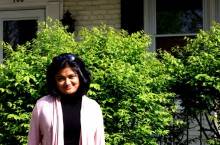
Nubrus Samayeen is delivering lecture on History and Theory at Howard University in Washington DC.
What kind of opportunities can Bangladeshi graduates seek in the US, in terms of higher studies and professional practice? How does a student decide which program to choose?
First, it is important to understand that one should not feel compelled to pursue studying architecture only. However, it is also true that there aren’t many creative academic fields in Bangladesh, which is why a lot of creative people often end up studying architecture. But I’ll say that when it comes to graduate studies, the opportunities are endless. Graduates with architecture degrees can shift to literature, history or allied fields like landscape architecture, urban design, urban planning or even art history.
Secondly, it’s necessary to follow one’s passion. By the time a person is in their mid twenties, they generally have a good idea about where their passion lies. That’s why I think it would be a smart move to look into degree programs beforehand that can match with one’s interests and goals. Those who are interested in getting into teaching can consider non-studio based degrees such as the Master of Science (MSc) in Architecture degree, or the Master of Science in Architecture Studies (SMArchS) degree offered at MIT specifically.
It is necessary to have a multidisciplinary approach to graduate studies. Architecture graduates from Bangladesh can choose to pursue studies in fine arts, urban planning or even business programs, based on how an individual wants to progress with their career. From my experience, I’ve seen most people going for the Master of Architecture (M.Arch) I or II program, the professional and post-professional degrees, respectively. Those who want to pursue professional work in the US can pursue M.Arch I or M. Arch II. There is also M. Des, MLA, MUP, MFA and a myriad of other degrees in allied fields.
How does the H1B visa procedure work for a Bangladeshi applicant who wishes to continue staying/working in the US after post-graduation?
H1B visas often guide what one wants to study, so it’s important to choose a program based on that. Earlier, visa applications were sponsored by an employer for non-American applicants. Now, that process has become lottery based, so it is a hit or miss situation for applicants. After studentship, the graduate can stay and work for a year during the Optional Practical Training (OPT) period. Once that period ends, the H1B process can begin on a lottery basis.
Another challenging issue is that during an economic depression, companies often do not want to sponsor the H1B process, as it becomes cumbersome with extra regulations from the government. I faced the same situation in 2009, when many of my international friends had to go back home.
Unfortunately, a few days ago the US government stopped the H1B visa process. Hopefully, once the pandemic is over it will be reopened since it’s not feasible for the economy.
How different is the professional environment of an architectural firm in the US from one in Dhaka?
Although my professional experience in Dhaka is very limited, I did find some similarities by working in both Dhaka and the US. Firstly, it’s a relatively low paid field for employees in both countries. Random working hours and having to stay late in the office during a project submission are common scenarios in both places.
Since Dhaka has a small community of architects, I believe it’s less challenging there to make connections and find a job. In the US, it’s possible to get a job with less skills but landing the first job may be challenging for Bangladeshis, as they may not have proper channels or reference. It was a struggle for me to get my first job in New York, a city where I neither lived nor knew anyone, yet I always wanted to be in. So getting an interview and even the process of hiring is very formal and different.
My professional experience in the US started with being an intern at Eisenman Architects. It was a stimulating environment with a diverse group of people who were passionate about architecture. One thing that stood out for me was there were plenty of model-making activities. I worked on a project called City of Culture of Galicia, where I ended up making 25 models alongside three others who worked on it. The office was working on Holocaust Memorial in Berlin at that time, which also required a lot of physical models. That was a stark difference for me since I have not seen this model making culture much in Dhaka.
I worked at 3 large firms – HOK, BBB and ZGF, where they maintain corporate culture. They allocate a lot of budget for the professional enhancements of employees. All professional exams, continuing education programs and LEED registrations are paid for. In fact, large firms also organise in-house lecture series on various architectural issues and provide research opportunities, the latter of which is very rare in Bangladesh.
Across the US, a lot of focus is put on the smallest details, which we may not consider as a design approach. The construction drawings are very accurate, up to the door knob details.
On the downside, they lay off employees very easily and without prior warning. It happened to me between 2008-09. I worked at Shalom Baranes Associates in collaboration with Norman Fosters & Partners in DC and working on a project called Civic Center DC. As soon as the project ended, the office let go of the whole team of 31 people. This might be a part of the culture in the US.
Can you explain about the AIA and LEED certification process and how it helps in the professional career?
Regarding AIA certification, I have seen professionals who resist such institutionalisation and they do just fine, because they have enough skills. However, registration really helps to get promoted at workplaces, and also to ensure independence in setting up one’s own architecture practice.
Also, AIA is very active and involved with movements like #MeToo and Black Lives Matter. They have local chapters, they give out awards for unbuilt projects and organise annual large scale conferences that help younger people get exposed to other firms’ works, which helps in networking. AIA also provides classes for continuing education programs such as fire hazard management, material study etc. This is how they ensure that architects always stay updated on multiple issues.
LEED is also similar to some extent. I got the LEED certification because I thought it would benefit me professionally, plus I was also interested in learning about sustainable architecture from a young age. However, after studying for it, I’d say this certification should not be applied to buildings in Bangladesh. I don’t think it performs as an effective medium in our culture.
Building in conflict: (De) +(Re) Thinking Islam in Switzerland | Honor Award | 2011 Unbuilt, the Washington chapter, The American Institute of Architects
You worked in the professional field for quite some time, in various parts of the US. What made you decide to leave it and pursue a PhD degree?
I always had a plan to pursue a PhD degree, even before I moved to the US. My teachers at BUET and even the director of my masters program at Michigan advised me that I should pursue a PhD degree.
But I was overwhelmed with the cultural shocks and financial pressure. My life as a single woman in the US was not easy. I worked hard to live my life, on a foreign visa. I was also adamant about not taking help from my family. So after completing double masters degrees, I felt like I needed a break.
During that period, I got into teaching at Howard University. Teaching was kind of a portal for me to take a break, following which I started my family life. Then I could think clearly about getting a PhD, and use my teaching experience to plan my journey towards the degree.
When I came from Bangladesh, I had no idea what to expect from the environment I’d be studying in. So this time, since I was already in the US, I decided to visit the schools I was interested in applying to and spoke to the teachers. By then, I also had a 9-month-old daughter at home. So picking the right location that was suitable for me to live with her was also a concern. Getting the funding for my studies was also an issue. So I took some time to choose a program that was right for me in every possible way, since a PhD is something that needs serious commitment.
Your PhD research focuses on Louis Kahn, as well as the construction of national identity through built-forms. Can you discuss your research journey up until selecting this topic for your degree and how you ended up choosing it?
Initially, I had two topics in mind. When I went to pursue my masters degree, I was inspired by this book called The City of Bits, written by the director of MIT Media Lab, Professor William J. Mitchell. That book gave me an idea of how wireless technology can influence a city’s plan. From there, it occurred to me how can this be applied in the Bangladeshi context? Additionally, one of my teachers, Professor Rahul Mehrotra worked on urban informality. So combining the two, I came up with my topic ‘Cellular Technology and Dhaka’s Urban Form’. Every time I visited Dhaka, I worked on my research by paying out of my own pocket. I visited the Korail slums and even got involved with projects with the slum committee. Luckily, on Carlo Ratti’s invite, I got a scope for an informal lecture at MIT’s Senseable City Lab. That lecture was well received and I was offered an admission for a masters at MIT with an RA-ship at the lab which I did not pursue.
The other topic I came up with concerns the National Assembly Building in Dhaka. My interest in it first started when I attended a lecture by Professor Michael Benedikt at the University of Michigan, who described the National Assembly as one of Louis Kahn’s post-modern buildings. I listened to the lecture attentively and came to realise that this building contains esoteric aesthetics, and is not meant to be understood by the mass people. After that, I participated and received the first prize at a competition Designing Conflicts in Switzerland in 2010. While working on that, I thoroughly read about Kahn’s theory of phenomenology, which was the second step to Kahn’s introduction for me.
Parallelly, I taught a survey course called South Asian Art and Architecture at Howard University. That course had five divisions, starting from Indus Valley Civilisation to South Asian Modernity. There, I questioned why architects from the West came to South Asia and dictated their idea in the construction of identity. I wanted to dig in further, and thus I came up with my second topic for doctoral studies on why and how Kahn’s National Assembly Building became a part of our national identity.
I was already reading the books written by my current advisor Dr. Fairchild Ruggles, in order to understand the symbolic connections in Islamic landscape, if there were any. Fortunately, after an exhaustive interview, she asked me to apply to study under her supervision. Here, I must say that my advisor was very generous of my situation. It was also brave of me to go forward with it following my first pregnancy, and I ended up applying a week after my first child was born. I got the opportunity to pursue a PhD on both topics in 2014, one at MIT and the other at the University of Illinois at Urbana-Champaign. I chose the latter, because it had full funding for 5 years. I also found the history-theory track and its research process more intellectually stimulating for myself than the other, which was seemingly more policy oriented.
Do you think the influence of American architects on built forms and architecture education in Bangladesh had a lasting impact on how we perceive our national identity? How would you say this influence affected our architecture education and practice in Bangladesh?
Absolutely! However I would take some time to answer the question more elaborately after the conclusion of my research work. It is very evident in our cultural architectural spirit, that we bring Kahn into all kinds of discourse, almost like a living example. We cannot deny the influences of American architects like him who worked here and lectured young architects at BUET. In fact, the architecture faculty at BUET was also developed with the help of USAID and faculty members of Texas A&M University. That influence provided a guided route to the course of Bangladeshi architecture. I think now we have about 27 architecture schools and all of them follow the same course curriculum. Even in contemporary times, we consider these structures by American architects as the beacon for modern architecture. I find a lot of similarity between Marina Tabassum and Kahn’s works in terms of the use of light and superimposition of forms. I’d say our architecture landscape following independence has been shaped by the works of these American architects. It was not only in Bangladesh, but South Asia as a whole experienced the same wave. I feel like I’ve seen a rupture; in a way it changed our cultural and professional path.
What advice would you give to young graduates or future architects who are interested in pursuing a career related to the architecture field in the US?
Life never goes according to one’s plans and there’s also no one-size-fits-all model. I had a number of failures and yet bounced back to reach what I wanted. Having said that, I’d say one should follow their passion. Creativity doesn’t end with architecture, there are multiple fields beyond bricks and concrete; hence it doesn’t have to be an architectural design degree path.
One has to keep in mind that in the US, getting a visa is always a challenge. So one must decide if they want to come for immigration, or to experience the culture and return to their homeland.
When applying for masters programs, one should make a list of ten schools based on their passion, the school’s location, financial aid opportunities etc. So that they can have a variety of options to choose from. School choice based on location makes a big difference since the landscape and culture differs throughout America.
In case of PhD, I’d say make a list of at least five schools, since it’s a more focused field. I’d also suggest that prospective students should get in touch with faculty before applying. One can often understand the scope for possibilities based on their communication with a faculty member. While there is no hard and fast format for masters application but a degree of information such as why one wants to study, what one wants to study and why one aspires to study in that particular school is important. As for PhD application, it is essential to mention the research topic, what led to this topic, whom one would like to study with and the reasons for the school selection.
I am hoping that the challenging situation for the students caused by the pandemic will end soon. Coming to the US should not be a destination, I would rather encourage students to see it as a path to develop and challenge themselves. It can also be a good way to actively experience the resources available here and learning methods that might be very different from what we traditionally see.
CONTEXT Contributor: Farhat Afzal is an Academic Associate in Bengal Institute of Architecture, Landscape and Settlement, Dhaka, Bangladesh.
ARCHVISTA, an emerging architectural firm, has already left its mark on designing residential, commercial and retail projects. In a very short span of their practice period, they have accomplished some big scale projects, such as headquarter of Bombay Sweets, ACI office, a number of Aarong outlets etc. Md. Mamun Ar Rashid is the principal architect of ARCHVISTA, who accomplished this project along with Mehdi Zaman, Zakiya Sultana. The team was assigned for this project in September 2018 and it was handed over in February 2019.
It was ARCHVISTA’s initial design idea to create an experience zone in the office that was never seen nor experienced in the country before. As a tech distributor, ADA’s decision to launch and showcase their products in this zone was a further enhancement to the design decisions. The design of the office space was similar to that of every other office spaces, putting emphasis on team spirit, healthy work environment, choice, inspiration, authenticity. The workstations in the office space are aligned around a circulation loop, increasing the visibility and better communication between the employees. Moreover, the meeting room and managerial rooms are engulfed by glazed partitions rather than the solid ones, with an optimum amount of daylight.
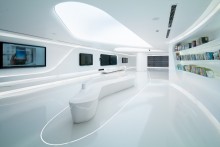
But the visual hierarchy lies in the Experience Centre. Since the office deals with technology and gadgets heavily, ARCHVISTA proceeded with the design concept of having a different experience at every step within this zone. A seamless space with an abundance of experiences was formed. The purity of the white coloured horizontal and vertical surfaces continues to flow from the workstation zone to the experience zone very subtly.
Once entered, a pure white space is visible with reflective white epoxy floors. This space also comprises a library, adjacent to a curved white wall with a curved seating space, complimenting the curviness of the wall. Opposite to that wall, an Intelligent Interactive Panel was installed with a number of LED flat-screen TVs, acting as ornamentation to the white surfaces.
Next to the library comes the meeting zone with a whiteboard and an LED screen. Contents written on the whiteboard appears on the screen, yet these components seem like a part of the wall rather than the superimposed entities. Perpendicular to the curved wall is a gadget display wall, where cell phones and other gadgets are displayed and illuminated by modern circular display lights, resembles the sci-fi ambient. This zone is also called the robot zone since robots are being displayed in here every now and then.
All the interactive panels were quite challenging to be installed on the curvilinear surfaces as these components are rectangular and linear in shape. The curvature of the vertical surfaces was adjusted with respect to these entities, making them look like a part of each other. Another challenge for the team was to deal with the sound system of the entire experience space as different zones are associated with sound waves of different wavelengths. But this predicament was also taken care of as acoustic panels were installed on all the vertical surfaces, preventing the interference of the sound waves from different zones. The color scheme was neutral in order to focus on the products. White has created an extra dimension to the interior by creating a pure and divine space.
When one turns around and looks at the whole space, it would be noticed that a single space has been fragmented in a number of zones but yet they coexist harmoniously and are complementing each other. The ADA office indeed starts with an experience and ends with one. In short, it is a space with experience in every step.
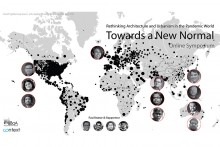
It will surely be nice easing back into our old routines, only now with extra care. However, we chalk our coronavirus stories out – eternal losses, Zoom meetings, perpetuating petty thoughts and implausible insecurities, or barely trying to keep ourselves sane, chances are that psychologists, scholars and thinkers from around the world have heavily reflected on them already. Early on as we embrace ourselves to remote working and pandemic life, juggling in between anxieties and hope, we, CONTEXT, along with BaA (Bangladeshi Architects in Australia) decided to reflect on the experiences of likeminded Architects, Planners and Urban Designers residing across the globe on 27 June, Saturday through an online Zoom Symposium. 12 discussants have contributed to our theme “Towards a new normal: Rethinking Architecture and Urbanism in the Pandemic World”. The issue includes some of our connoisseurs overarching renditions dotted throughout various topics such as Living Environment during the Pandemic, The Politics of the Pandemic, Pedagogy, Profession and Future Direction.
Session 1: Living Environment during the Pandemic
The Covid-19 pandemic has recalibrated everything from life, to work and play. As most of the previous practices have either moved into digital platforms or in the confinement of our homes, cities have become a space for cultivating new ideologies. We ought to utilize these pandemic restrictions to reflect on changing practices in various fields such as mental health, pedagogy, social housing, emphasis on hygiene, transforming poverty to power, etc. We can further reflect on aspects that can be adopted and translated into digital platforms. With no cure of the virus in sight, everyone from scientists to politicians to media to friends and family has perpetuated this rhetoric as they imagine settling under compromises that brings along with the term “new normal”. This is where Dr. Fuad H. Mallick, Dean of BRAC University’s School of Design and Architecture said “the previous normal was not an acceptable situation. The inclusion of the word ‘new’ in the normal gives us the opportunity to rectify the old normal”. In order to forge a new paradigm, we should use our discomforts, in all aspects including politics and pedagogy. Covid-19 will advance the backlash against globalization amid the steepest reduction in the international flow of trade, investment and manpower. Manufacturing will come closer to us, accentuating the trend towards regionalization and re-localization. As Rumana Kabir, a disaster risk management and strategic planning specialist,suggested that now is the chance that the Bangladeshi professionals grasp the opportunity to excel and influence the government and the policymakers.
Session 2: The Politics of the Pandemic
We accept life under the omnipresent threat of disease as ordinary and continue to thrive in it by familiarizing ourselves with the norms of digital learning in no time. Although online learning is a technical solution that does not fully compensate classroom learning and teaching; we do not have a choice but to accept reality. On the brighter side, online education has the potential to engage students and educators across the globe. Discussants stressed the necessity to address the challenges of online education which lies in its accessibility, transparency, interactions to ensure an equitable online learning experience for all the students. However, if we talk specifically about architectural design education, the discontent is greater. The changes in architecture education for much of the past are not aligned with today’s fast-changing world, especially in the context of architectural practice. It’s high time to revisit the curriculum- as recommended by the speakers. Besides pedagogy, the opportunities of women leadership in the field were also explored.
Session3: Pedagogy
The impact of the pandemic on our profession demands scanning for risks and drawings insights for a wide range of domains. The phenomenon of working from home is having an adverse impact on the level of productivity and efficiency. Construction industries have been among the hardest hit by the COVID19 economic downturn. The architecture profession is getting pummeled by the uncertainty impacting individual practitioners, firms, and the community at large. In absence of any support from the government, Architect Jalal Ahmad, President of Institute of Architects Bangladesh informed us about IABs initiative of mobilizing the ‘Emergency Finance Scheme’ by collecting donations from the affluent architects and channeling them to the affected practitioners of the fraternity.
Session 4: Profession
Surely the current situational crisis is something that presents obstacles, trauma, or threats but it also offers opportunities to bounce back better. As the pandemic rages on, it has opened up windows of colossal magnitude to reimagine the world by tracing back the history, not forgetting it. We should try and reveal ourselves in the discomfort of the current calamities in order to generate a ‘new paradigm’, rather than return to old normal.
Session 5: Future Direction
Distinguished speakers and discussants were Dr. Fuad H. Mallick, professor and dean, BRAC University; Jalal Ahmad, president, Institute of Architects Bangladesh (IAB), Farhad Reza, president, Build Bangladesh; Iftekhar Abdullah, president, Bangladeshi Architects in Australia; Rumana Kabir, disaster risk management and strategic planning specialist, UK; Taufiqur Rahman Khan, secretary, seminar & convention, IAB; Dr. Farhan S. Karim, associate professor, University of Kansas, USA; Dr. Muntazar Monsur, assistant professor, Texas Tech University, USA; Kazi Hussain Emon, principal consultant at Cundall, Australia and Nubras Samayeen, doctoral scholar, University of Illinois at Urbana-Champaign and Tanzil Shafique, doctoral scholar, University of Melbourne. The symposium was facilitated by Samik Waiz, communication and seminar, Bangladeshi Architects in Australia, Shamsul Huda, director, 4thD Planning and Design, Australia.
CONTEXT contributor: Sadequl Arefin Saif, student of Architecture, BRAC University.
The mixed-use notion has gained ground against the traditional single-use zoning practice of city planning. There is a growing understanding that we need vital amenities close to our living and working places for a vibrant urban life. Furthermore, many cities today have advocated compact development patterns to address the need to accommodate a burgeoning urban population and embraced the concept of vertical mixed-use to great effects. The vertical mixed-use development also encourages social interactions, the efficient use of land and energy, etc.
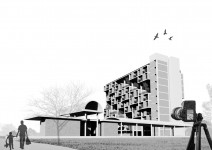
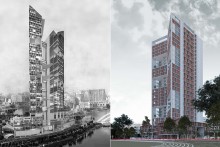
Two featured projects have a common objective that is to develop the archetype for mixed-use vertical development where the podium hosts public functions and becomes an interface to the city street while the tower houses more private functions such as living. Both projects explore the challenges that come with the juxtaposition of two different uses and associated programmatic and site requirements.
This project focuses on the current situation of Dhaka – one characterized by high densities and overcrowding, environmental degradation, severe traffic congestion and haphazard planning to solve the basic determinants of livability regarding the current population growth and the rapid demand of a place that will serve with recommended neighborhood facilities by creating relationships between different spatial layers to satisfy the identified factors that need improvement in a mixed-use high rise building.
The challenge was to provide and test ideas for a vertically organized architectural system that are geometrically associated to suit a variety of potential programmatic requirements and site conditions. Through the sets of cores and cellular façade, the tower becomes highly flexible and capable to house a multilayered program with the possibilities to open-plan arrangements.
The form is developed respecting the site aspects and many characteristics are included to improve the initial idea of the project from a concept to its final design. Nature-based solutions like green terrace, ground coverage, rainwater harvesting, natural heating and cooling, etc. are prioritized to make the mixed-use tower more energy efficient and responsive to nature.
The vocational training centre provides job-specific technical training with practical instructions. The centre is proposed in a site located in a dense urban district of Dhaka. The project explores the challenges arising from the mixing of two functions: vocational training facilities and dormitories.
In a vocational training centre, students learn from training, practicing and watching from each other. The design process begins with connecting these learning activity stages and translating them into programmatic functions articulated vertically. By designing spaces such as – courtyard, field, corridor, terraces and canteens, students are provided the opportunity to connect and share their works with each other. Promoting peer learning through active and passive (visual) connections is the key concept of the project.
The tower portion is trimmed down diagonally to cut off the west sun and terraces are designed to provide gathering space with wide-angle view. The treatment also offers a noise barrier coming from the busy traffics of the adjacent road.