Hindupara in Kutupalong Rohingya Refugee Camp has a slightly different story than the rest of the Camp in Ukhiya and Teknaf area. As Rohingya Muslims were forcefully displaced by the security forces of Myanmar, minority groups in Rakhine state were attacked by Arakan Rohingya Salvation Army (ARSA), an extremist group that left them with no choice but to cross the border and save their lives (Source: India Today).
Since then, the relationship between minority and majority groups has not been in good terms. Neither could they build trust with hosting nationals and others. Fear, insecurity and unwanted incidents have been making them skeptical just more and more.
Different organizations have been trying to overcome this situation of vulnerability, like BRAC & UNHCR collaborated to create psychosocial and communal support. The aim was to work on building relationships and trust between Hindu-para community members and host communities to strengthen the means of communication. Thus, an “Integrated Community Centre” came as a proposal for building a sharing platform aiming to create aspiration for the surroundings, and be a catalyst for better communication.
Hindu-para community members and members from the adjacent local hosting community have come together to build the centre from which they can be benefitted in terms of psychosocial support, training, case management, and knowledge sharing. They designed the pattern and painted their centre (together out of surprise), which created the opportunity to open up or to become a bit more tolerable to each other. Perhaps, a layer of love during and after construction (random pattern design on-site, painting and engaging) pulls everyone together to put a little more effort towards creating and conserving in their own way.
Kamal bhai and his team (masons and craftsmen) were the ones behind the beautiful floor patters and civil works whereas Rubel bhai’s team did a tremendous job making the steel skeleton neat and deployable (and salvageable as much as possible when necessary) within the framed schedule. School going teenagers came forward to make the paintings in collaboration with displaced group. And now almost every day they visit the centre as Nahid apa and her team (Turna Apa, Joba Apa and others) are doing an amazing job by keeping the centre full of collaborative activities.
Sharing stories and landscaping together immediately worked for ice-breaking on the first day of gathering after construction. Rajpoti Shil apa (a member of Hindu-para community) and her team selected all the necessary trees and plants that can be planted within the complex as well as can be used in different ceremonies and needs. They were divided into two groups and each group listed and justified the list separately and finally came to a common agreement to make a final one. Gada, Joba, Golap, Kathal Chapa, Barota, Morichha, etc. were selected to use the flowers in Puja and other ceremonies. For other purposes like leaf, medicinal benefit and fruits they selected Bel, Kola, Tulshi, Aam, etc.
The largest refugee camp has been formed in a very short time with an immense amount of work and intensive use of local resources. Rapid use of non-treated bamboo, tarpaulin and straw have made the camp grow like an organic entity in the emergency period.
“The total national supply of bamboo is diminishing over time, whilst demand is growing” – Humanitarian Bamboo Technical Report.
Structural bamboo (i.e Borak bamboo) requires three years on an average to re-grow whereas bamboo used for partitioning (i.e Muli/Nali/Ora/Khag/Dolu etc.) require one year. Unless proper planning is established for harvesting and safely treating Borak bamboo in nearby areas (for lower cost and easy availability in intervals) alternative schemes can play vital roles in the development phase of the camp.
Hence steel comes as an immediate alternative solution which is easily available as the steel industry in Bangladesh is based in the port city Chittagong which is nearby Cox’s Bazar.
A deployable scheme with steel members as primary structure and flat-pack modules (made of minimum mild streel section and Muli bamboo infill) can offer less wastage of resources, transportability, reusability and clean construction/ease of construction.
The scheme consists of some basic components such as- minimum footing, brick flat soling and segmented CC casting as floor (for ease of repairing & dismantling), low height wall, steel structure, modular partitioning/window/door system, and roof. Several other layers offered everyone better acceptability and integration, such as- pattern for portions of floor (waste materials i.e broken tiles, glasses), colorful mattresses for secondary layer in roofing (reduces heat in interior and creates a vibrant space and festive environment), landscaping with the users (sharing of local knowledge and ownership building), colorful patterns in walls (engage users to establish a mean of communication).
In this transitional period, structures in camp require to be better in terms of dignity and usability within temporary schemes. For that, deployable/reusable systems that are contextual and adaptable can set examples as well as prevent wastage & damage collectively. It also ensures better use of foreign aids for better living quality.
Foreign aid can be either charity (can make a community weaker) or a thoughtful investment to make it powerful. To make it a thoughtful investment, it is always important to figure out ‘how’ rather than only ‘what’ when someone is dealing with projects based on foreign aid. In a dense refugee camp where the hosting group is very nearby and affected, it is very much essential to understand on-site scenario and context instead of fulfilling checklists. BRAC-UNHCR collaboration has been a blissful one in this regard, that is for sure.
-Rizvi Hassan
Architect,
BRAC Humanitarian Crisis Management Programme
Team:
Kamal bhai, Rubel bhai ,Rajpoti Shil apa, Md. Syedullah & others (Masons & Community members)
Rizvi Hassan (Architect)
Biplob Hossain (Engineer)
Hasan Tarek
Sagor Mondol
Abdul Latif
Shah Alam (Head, Technical Team, BRAC hcmp)
Shahidul Islam Khan
Saad Ben Mostafa
Tahrima Akhtar
Sheikh Jahidur Rahman
Mostafizur Rahman
Azmayeen Khan (Electrical Engineer)
Tanjilur Rahman
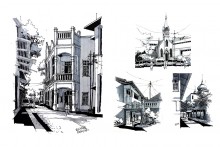
Sketching in a scene allows us to capture more than we could if we were writing in a journal or taking photographs. When we take photos, we pretty much just snap and go. There’s a much, deeper connection to the environment if we actually take the time to sketch it. While sketching, we have to decide which part of our view is important enough to capture in our artwork. Besides, the details of every single object are being revealed when we try to draw them in our sketchbook.
For me, an urban sketch is always fun! From the beginning of my architectural education, I have always tried to reflect my ideas through sketches, and it has helped me in my design development. I love traveling to different places and most of the time I observe the activities of people, the details of those places and the inherent memories. I believe that every place has its own unique essence and I always try to manifest that essence through my sketches. The layers of urban life, the relationship between indoor-outdoor spaces, the streets, and vehicles, the game of light and shadow always attract me to draw more. As an architect, I’ll say that the practice of sketching is an essential one for the architects because it helps to develop the skill to figure out the true essence of an environment.
ধারনা করা হচ্ছে আগামী চল্লিশ বছরে পৃথিবীর জনসংখ্যা দ্বিগুণে পরিনত হবে যা শহরকে সর্বোপরি এবং টেকসই রূপান্তরের দিকে যেতে বাধ্য করবে। স্থাপত্যের সবচেয়ে বড় চ্যালেঞ্জ হবে একটি জনবহুল মহানগরীর সক্ষমতা নিয়ে কাজ করা যার উচ্চ আবাসন সক্ষমতা থাকবে এবং অধিবাসীদের জন্য জীবনমানের উন্নত অবস্থার আমন্ত্রন জানাবে। পৃথিবীর মোট জনগোষ্ঠীর প্রায় অর্ধেক এখন শহরে বাস করে যেখানে স্থাপত্যের বড় ভূমিকা হচ্ছে তার ডিজাইন ভাবনাকে কিভাবে সমন্বয় করে শহরে সেবা, পরিবেশ এবং নাগরিক পরিসরের যোগ্যতা নিশ্চিত করা যায় । এ কারনেই কি শহরের রুপান্তর বর্তমানে এত বেশি মনোযোগ পাচ্ছে ? আই. ই. স্কুল অব আকির্টেকচারের ডিন এবং প্রিৎজকার পুরুস্কারের নির্বাহী পরিচালক মার্থা র্থনের স্বাক্ষাৎকার ভিত্তিক লেখাটির ইষৎ সংক্ষিপ্ত এবং সম্পাদিত ভাবান্তর করেছেন স্থাপতি খালিদ মাহমুদ ।
প্রধান ইস্যু যা ভবিষ্যতে নগরকে সমন্বয় করতে হবে।
রাজনীতি ও অর্থনীতির পাশাপাশি স্থাপত্য ও নগরায়নের প্রেক্ষিতেও শহর এখন গুরুতৃপূর্ন হয়ে উঠেছে। তাছাড়া, দ্রুত জনসংখ্যায় পরিবর্তন শহরের চরিত্রেও দ্রুততর এবং বৃহদাকার পরিবর্তন ঘটাচ্ছে। এর কারন হচ্ছে এই বাড়তি চাপ নগরের ফাংশনের উপর প্রভাব ফেলছে। নগরের সরকার ব্যবস্থা এবং জীবনমানকে প্রভাবিত করছে। এমতাবস্থায় আমাদেরকে নিশ্চিত করতে হবে যে এর মধ্যে দিয়েও উদ্ভাবন, সংস্কৃতি ও ভাল থাকার সুযোগ হারিয়ে যাবেনা।
স্থাপত্য এবং অর্থনীতি বিষয়কে গুরুত্ব দিতে হবে। তবে এর বাইরেও বড় পরিসরে বিভিন্ন চ্যালেঞ্জ বিবেচনায় নিতে হবে এবং নতুন নগর মডেলে সমন্বিতভাবে দেখতে হবে । অসমতা কমানো এবং টেকসই গুন অর্জনে চেস্টা করতে হবে তবে মনে রাখতে হবে চ্যালেঞ্জগুলো নির্ভর করে প্রতিটি শহরের নিজস্বতা এবং উন্নয়নের মাত্রার উপরে । একটি উন্নয়নশীল দেশের পরিস্থিতি যতটা নাটকীয় একটি ইউরোপীয়ান দেশে সে রকম নাও হতে পারে। ভিন্নতা থাকবে জনসংখ্যার বার্ধক্য, বাড়ন্ত উদ্বাস্তু, যুদ্ধ কিংবা প্রাকৃতিক দুর্যোগ এবং এমনকি বেকারত্বের ধরনে । ইউরোপের একটি দেশের মুল লক্ষ্য হয়তো বড় বড় শহরে টেকসই অর্থনৈতিক প্রবৃদ্ধি নিশ্চিত করা যেখানে জনগোষ্ঠীর বিশেষ করে তরুনরা কাজ খুঁজে পাবে । আবার উন্নয়নশীল দেশের জন্য লক্ষ্যটা নির্ধারিত হবে সকল সামাজিক অবস্থার মানুষের জন্য নিরাপদ আবাসন এবং অন্যান্য সামাজিক সুবিধা নিশ্চিত করা । এসব কিছু শুধু আবাসন পয়েন্ট থেকেই নয় সুশাসন এবং শহর কৌশলের জন্যও দরকারী ।
উদ্ধাবন, সংস্কৃতিএবংভালথাকারশহর।
আমরা যে চ্যলেঞ্জগুলোর সামনে পড়েছি তার সার কথা হচ্ছে একটি জনবহুল নগরে বাসযোগ্য পরিসরের অভাব । সাধারনভাবে বলা হয় বড় শহরগুলো অনেকবেশি সুসজ্জিত, এবং বিভিন্ন নাগরিক সুবিধা নিয়ে লোভনীয় কিংবা আকর্ষনীয়। নাগরিক সুবিধাদি যেমন সহজগম্যতা, শক্তি, শিক্ষা, স্বাস্থ্যসেবা ইত্যাদির সহজলভ্যতা শহরকে মোহমুগ্ধ করে রেখেছে । তবে বিপদ হচ্ছে এই সুবিধার লোভে জনসংখ্যার আধিক্যে যখন এমনকি শহরের ভারসাম্য নষ্ট হয়ে একসময় অচল হয়ে পরে।হাতের নাগালে থাকা সুবিধা, প্রোগাম এবং পরিসরের কারনে শহরে মানবিক দক্ষতা এবং উন্নত জীবন মানের নিশ্চয়তা তৈরী হয়। এবং লক্ষনীয় যে বিভিন্ন মানের আর্থিক এবং শিক্ষা অবস্থানের মানুষের মধ্যে মিথস্ক্রিয়ার মাধ্যমে উদ্বাবন এবং নতুন চিন্তার উম্মেষ ঘটে ।
সঠিক স্থাপত্য চর্চা এখানে সরাসরি ভূমিকা রাখতে পারে । শহরের মুল উদ্দেশ্য বাস্তবায়নের পথে এটি একটি কার্যকর কৌশল। এই ধারনার পরিবর্তন ঘটাতে হবে যে স্থাপত্য কেবলই সমৃদ্ধ সময়ে আমাদের ভোগের সহায়ক শক্তি। বরং এটা আমাদের সমাজ এবং মুল্যবোধের প্রতিফলন। একই সাথে স্থাপত্য-সংযোগ একটি শহরকে আরামদায়ক এবং সবার জন্য সহজলভ্য করতে পারে । আমরা স্থাপত্যের সাথে বা স্থাপত্যের মাঝে বাস করি, স্থাপত্য আমাদের সম্মিলিত উদ্যোগকে আকৃতি দান করে। স্থাপত্যকে বিচার করার জন্য অবশ্যই আমাদেরকে এর ফ্যাংশনকে বিচার করতে হবে, একটি নির্দিষ্ট পরিসর ও সময়ের পেক্ষাপটে এটি কতটুকু উপযোগী এবং টেকই ধারনা বাস্তবায়নকে কতটুকু এগিয়ে দিতে পারবে। যদি এর অর্থনৈতিক, সাংস্কৃতিক, ভৌগোলিক এবং টোপোগ্রাফিক বাস্তবতাকে আমলে নেয়া না হয় তাহলে সবার কাছে সমাদৃত প্রকৃত স্থাপত্য চর্চা সম্ভব নয়।
নাগরিকপরিসরেরধারনাটাকিভাবেতৈরীহয়।
এটা পরিবর্তিত হয়েছে এবং ধারনা করা যায় এটার রুপান্তর চলতেই থাকবে । বিংশ শতাব্দীতে এমন অনেক শহর তৈরী হয়েছে যেখানে শুধুমাত্র ভবনের কথাই চিন্তা করা হয়েছে। বর্তমান সময়ে ভবনের চারপাশের প্রকৃতি নিয়ে ভাবার সুযোগ এসেছে, সুযোগ এসেছে নাগরিক পরিসর নিয়ে ভাবার। আজকে আমরা যখন একটি ভবন তৈরী করি তখন ভবনকে শুধুমাত্র একটি স্কাল্পচার ভাবার সুডোগ নেই বরং এটাকে একটি বৃহৎ পরিবেশের সার্বিক পরিকল্পনার অংশ হিসেবে দেখতে হবে। যেখানে মানুষের চলাচল, বাহন, নিরাপত্তা ইত্যাদির মত ইস্মুগুলোকে বিবেচনায় নিতে হয়। একটি ঘনবহুল জনসাধারনের দেশে শহুরে অধিবাসীরা মুক্ত সবুজ বিনোদন পরিসরের খুব অভাব বোধ করে থাকে । বর্তমানে একটি নির্মানন কাজ শুরু করলেই এটাকে রাস্তা, অবকাঠামো, নাগরিক পরিসর এবং ক্রমবর্ধমান পরিবর্তনের সুবিধা সম্বলিত সমন্বিত পরিকল্পনার অংশ হিসেবে সাজিয়ে নিতে হয়। এসবকিছুর সুষ্ঠ ব্যবস্থাপনায় একটি শহর গড়ে ওঠে, পরিবর্তনকে সয়ে নেয়। এখানে আরো মনে রাখা যেতে পারে, বিশেষ ভবন এবং মনুমেন্টগুলো আমাদের মনে বিশেষ অনুভূতি বা ভাললাগার অনুভূতি তৈরী করতে পারে, তবে স্থাপত্য সব সময় বিশেষ শ্রেনীর জন্য কাজ করে যাবে এমনুত ভাবার সুযোগ নেই। স্থাপত্য একই সাথে সাধারন মানুষ এবং সুবিধা বঞ্চিত শ্রেনীর জন্য জীবন যাপনের উন্নয়ন, সামজিক অবস্থান এবং টেকসই পরিবেশের জন্য কাজ করবে । যখন আমরা বুঝতে পারবো যে শহরকে আমরা যা ভাবি শহর আসলে তার চেয়েও অনেক বড় কিছু, আরো অনেক গুরুত্বপূর্ন বিষয় আড়ালে রয়ে গেছে তখনই কেবল আমরা বৃহৎ পরিসরে শহরকে নিয়ে ভাবার সুযোগ তৈরি করতে পারব।
শহরেরপরিবর্তনেরচাপ ।
প্রতিটা দেশ এবং আরো বিশেষভাবে প্রতিটা শহরকে আলাদাভাবে বুঝতে হবে যদি আমরা জানতে চাই যে তাদেরকে কি ধরনের চাপ এবং প্রচলনকে মোকাবিলা করতে হচ্ছে। যেমন ল্যাটিন আমেরিকায় এটা হয়তো জনসংখা বৃদ্ধির হারজনিত কারনের মতো সহজ ব্যাপার। অপরদিকে অন্য অন্য অনেক শহরে এটা হবে প্রাকৃতিক দূর্যেগি বা যুদ্ধের মতো মনুষ্যসৃস্ট জনগনের স্থানান্তরের কারনে । নিরাপত্তার সন্ধানে মানুষ শহর থেকে আরেক শহরে মানুষ যাতায়াত প্রভাবিত করছে। চীন এর একটি উদাহরন, যেখানে অর্থনৈতিক উন্নয়নের হাতিয়ার হিসেবে সরকারের নীতি নগরায়নকে তরান্বিত করছে , নতুন নতুন শহরের জন্ম হচ্ছে।
শহরেরসাধারনচরিত্রেরশেয়ার ।
শহরকে একটি পদ্ধতি বা ইকো পদ্ধতি হিসেবে চিন্তা করা যায়। সব শহরেই শহরবাসীর সংখ্যা, কর্মউপযোগী মানুষের সংখ্যা এবং পরিবহনের পদ্ধতির পাশাপাশি সার্ভিস কোয়ালিটির এনালাইসিস করা সম্ভব৷ তবে সকল গবেষনার একটি সীমাবদ্ধতা আছে। কারন আমাদেরকে শহরের ইতিহাসকেও বিবেচনায় আনতে হয় যা কিনা ক্ষেত্রবিশেষে বিভিন্ন ধরনের হয় । আমাদের প্রশ্ন করতে হবে কেন শহরের জনসংখ্যা বাড়ছে, খুঁজে বের করতে হবে কেন গ্রাম থেকে এই শহরমুখী স্রোত এবং এই শহরমুখী স্থানান্তর কোথায় গিয়ে শেষ হবে। এই স্থানান্তরে কম বয়সী কিংবা বেশি বয়সী -কাদের অংশ গ্রহন সেই ডেমোগ্রাফী নিয়ে গবেষনা করতে হবে।
এখানে আরেকটি বিষয় আছে যেটা কম গুরুতৃপূর্ন নয়। আমরা অনেক সময়ই হিসেব করি যে শহরের জীবনমান গ্রামের চেয়ে উন্নত। কিন্তু খুব নিবিড় গবেষনায় দেখা গেছে দরিদ্র এবং সম্পদশালীর আর্থিক অবস্থার পার্থক্য বেড়েই চলছে। যদি উপাত্তের দিকে নজর দেয়া হয় তাহলে দেখা যাবে উন্নয়নের আশায় আসা লোকদের অবস্থা বরং দিনে দিনে আরো খারাপ হচ্ছে। এটা খুবই বিপদজনক । যদি আশা করা হয় যে প্রযুক্তি সব সমস্যার সমাধান নিয়ে আসবে এবং শহরকে সরকারী বা বেসরকারী উদ্যোক্তাদের হাতে ছেড়ে দিতে হবে তাহলে আমরা ভালো কিছু পাবোনা।
শহরেরজন্যঅনুকরনীয়উদাহরন ।
টেকসই এজেন্ডাকে মাথায় রেখে কিছু শহর শক্তি উৎপাদন করছে, এবং অন্যান্য শহর যেমন হামবুর্গ উৎপাদনের চেয়ে পুনরুৎপাদন বেশি করছে। অপরপক্ষে নিউইয়র্ক তার রেলওয়ে অবকাঠামোর একটা অংশকে পুনর্বাসন করছে পার্ক, নাগরিক পরিসর ইত্যাদিতে যা কিনা পরিত্যক্ত হয়েছিলো । এই কার্যক্রম পারিপার্শ্বিক অর্থনীতিকে পুনরিজ্জীবিত করেছে এবং দর্শনার্থীদের জন্য এবং একই সাথে সকল স্তরের মানুষের জন্য বিনোদনের সুযোগ তৈরী করেছে। কলাম্বিয়ার মেডেলিন এমনই আরেকটি চমৎকার উদাহরন। এখানে ইনফরমাল সেটেলমেন্ট এবং নগরের ভয়াবহ অপরাধপ্রবনতা নিরাময়ের জন্য জন-অংশগ্রহনমুলক মডেল কার্যকর করেছে। নতুন উন্নয়নের জন্য তারা গনযোগাযোগ এবং স্তানান্তরযোগ্যতা তৈরীতে বিশেষ গুরুত্ব দিয়েছে। কেবল কার এবং ট্রলি বাসের ব্যবস্থা করেছে। একই সাথে নতুন গ্রন্থাগারের ব্যবস্থা শুরু করেছে। এখানে গ্রন্থাগার মানে শুধু বইয়ের কেন্দ্র নয় বরং সামাজিক ও সাংস্কৃতিক কেন্দ্র যা সামাজিক পুনর্জাগরেনের জন্য ডেডিকেশন এবং এলাকার ভবিষ্যতকে প্রকাশ করবে।
এভাবে বিভিন্ন শহরের জন্য বিভিন্ন পথে ভালো ভালো চর্চা শুরু করা যেতে পারে। বিলবাও এর ক্ষেত্রে গগেনহাম মিউজিয়ামের কারনে মানুষের চলাচল বেড়েছে এটা বলা হবে খুবই হালকা ব্যাপার । আসলে নগরের রূপান্তর আরো জটিল জিনিষ । বর্তমান শিল্পবিপ্লবত্তর যুগে বিলাবাও হচ্ছে ভূমি পুনরুদ্ধার-এর একটা উদাহরন। একই সাথে এতি মোহনা সংরক্ষণ এবং ব্যস্ত বন্দরকে সাগরের দিকে প্রসারিত করবার উদাহরনও বটে। আমার মতে এই ফ্যাক্টরগুলো মিউজিয়াম তৈরীর চেয়ে বেশি প্রভাব ফেলেছে শহরকে নতুন চেহারা দেবার জন্য।
সাগরের সাথে অতীত সম্পর্ক এবং জমি পুনরুদ্ধারের প্রয়োজনীয়তা বিবেচনায় নেদারল্যান্ড পানি ব্যবস্থাপনার একটা কার্যকর উদাহরন হতে পারে ।লন্ডন শহর অনেক কারণেই সাধারণ হতে পারে তবে বিশেষভাবে একে লক্ষ করা যায় নতুন ভবনে পাকিং সংখ্যাকে সীমিত করার মধ্য দিয়ে। শুধুমাত্র প্রতিবন্ধীরাই কিছু পরিসরে পার্কিং এর সুযোগ রাখে । সুতরাং শহর তার ব্যক্তিগত গাড়ির সংখ্যাকে নিয়ন্ত্রন করতে পেরেছে। এটা হয়তো আরোপিত কিন্তু উদারনস্বরূপ।
নগরেররূপান্তরনিয়েআশাবাদ ।
কার্যকর হয়েছে এমন কিছু মডেল এবং উদ্যাগ নিয়ে যদি আমরা অধ্যয়ন করি তাহলে আমরা ভবিষ্যত নিয়ে আশাবাদি হয়ে উঠবো । যদি আশা করা হয় যে প্রযুক্তি সব সমস্যার সমাধান নিয়ে আসবে এবং শহরকে সরকারী বা বেসরকারী উদ্যোক্তাদের হাতে ছেড়ে দিতে হবে, অথবা শহরে শুধু তারাই থাকবে যাদের থাকার মতো সামর্থ আছে তাহলে আমরা ভালো কিছু পাবোনা। আমরা সবাই আসলে একই নৌকার আরোহী, যদি একই মতে কাজ করতে পারি তাহলেই সকল কাজের মধ্যে সমন্বয় করতে পারব।
In recent times, a bend towards promoting future minds, including students is striking. Currently, there are several awards for the architecture students in Bangladesh. KSRM Awards for Future Architects adds a new bead on this thread.
Organised in association with Institute of Architects Bangladesh (IAB), the award is aiming to “bring all the three sectors of Architecture – Academia, Industry and Profession together under one roof.” However, the award is exclusively offered to students of 10 architecture schools accredited by IAB out of 27 schools in the country.
In the first round, a total of 28 projects nominated by the respective institutions were submitted. Ten participated universities were AIUB, AUST, BRACU, BUET, KU, NSU, Stamford University, SEU, SUB and UAP.
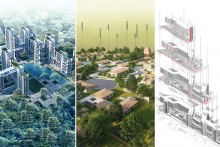
The first place was awarded to Md. Arman Alam from Stamford University Bangladesh for his thesis project “Housing- A Vertical Garden”. The project was supervised by Sheikh Itmam Soud and Muzaiana Naomi Khan. Jury cited,
“Urban housing problem is addressed here by designing a large scale housing project in a densely built-up city like Chittagong. The remarkable achievement of this project is ‘utilization of space’ both at site level and inside the buildings. Within the project site, a park-like breathing space is created by retaining the existing natural setting which connects the high-rise buildings with the adjacent neighborhoods. Intelligent handling of forms ensured environmental sustainability along with the creation of inter-connected interactional spaces at different levels. Adoption of rainwater harvesting and solar energy has revealed the consciousness for current day crisis of energy and resources. Over and above, the detail solution of housing units and their diversity shows a level of mastery in architectural design.”
Second and Third place were awarded to Bristy Sarker from Ahsanullah University of Science and Technology (AUST) and Rahman Golam Mahmudur from American International University-Bangladesh (AIUB) respectively. Projects from BUET and AIUB received commendation awards.
A panel of eminent jurors Ar. Mohammad Ali Naqi [Vice-chancellor of Stamford University Bangladesh], Dr. Fuad H Mallick [Professor and Dean, School of Design, BRAC University], Dr. Farida Nilufar [Professor of Dept. of Architecture, BUET], Ar. Saif Ul Haque [2019 Aga Khan award winner and Director Research and Design program, Bengal Institute for Architecture, Landscape and Settlement] and Ar. Mustafa Ameen [Principle and Proprietor of Domus Architects] evaluated these projects.
Recipients of the award with the studio teachers and organizers
All the entries were publicly displayed in a three-day long exhibition from December 25 to December 27, 2019 at IAB Centre. The award giving ceremony was held on Wednesday, January 8, 2020 at Hotel Intercontinental Dhaka. Mr. S M Rezaul Karim MP, Honorable minister, Ministry of Housing and Public Works and Mr. Mohibul Hasan Chowdhury MP, Honorable Deputy Minister, Ministry of Education of Govt. of the People’s Republic of Bangladesh, Shahriar Jahan, DMD, KSRM Steel Plant Ltd, Ar. Jalal Ahmed, President IAB were present on the occasion and awarded the crest, certificate and cheques to the winners. Along with the students, their thesis teachers and respective Architecture Departments too received recognition on their achievements.
First Position
Project Title: ‘Housing’- A Vertical Garden
Name of Student: Md. Arman Alam; Stamford University Bangladesh
STAMFORD05
STAMFORD 02
STAMFORD 06
STAMFORD 03
Swipe to navigate next images
Second Position
Project Title: Pottery Village – A Sustainable Settlement of Potter
Name of Student: Bristy Sarker, Ahsanullah University of Science and Technology (AUST)
Print
AUST 03
AUST 04
AUST 05
Swipe to navigate next images
Third Position
Project Title: Congruity of a Commercial Urban Block: Elephant road Shoe Market Dhaka
Name of Student: Rahman Golam Mahmudur, American International University-Bangladesh (AIUB)
AIUB 2
AIUB 1
AIUB 3
AIUB 4
Swipe to navigate next images
Commendations
Project Title: Building says ‘HI’
Name of Student: Md. Shariful Alam Anik, Bangladesh University of Engineering and Technology (BUET)
BUET 3
BUET 2
BUET 1
Swipe to navigate next images
Project Title: Revitalizing Jute Culture: A Museum for Golden Fiber
Name of Student: Rezve Md. Fahim Hasan, American International University-Bangladesh (AIUB)
AIUB 8
AIUB 6
AIUB 7
AIUB 9
Swipe to navigate next images
Courtesy: M. Arefeen Ibrahim, Secretary, Education, Institute of Architects Bangladesh (IAB).
Self-sufficiency in rice production has paramount impact on achieving food security. Over the past four decades, Bangladesh succeeded outpacing the population growth rate with its growth in rice output. The country celebrates considerable improvement in food security steered by the applied research led by Bangladesh Rice Research Institute (BRRI). However, the situation is not same across the country and the potential for further improvement through research remains high. For instance, the north-central district Sirajganj is a BPH (Brown Plant Hopper) prone area of Bangladesh where rice production is decreasing day by day. Flood, water logging and river erosion, salinity of soil and sandy soil pose substantial challenges to cultivate the rice in Sirajgonj. Problem oriented research and long-term research is needed in Sirajganj area. There is a strong need of a local research institute to do field research in an efficient work environment. Therefore, it is important to develop a modern rice research institute in Sirajgonj so that local farmers are greatly benefited through scientific knowledge and practice which eventually help the nation to move one step closer to achieving food security.
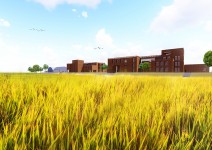
The aim of this project is to design a research institute at Konabari, Sirajganj near the Jamuna River, which will be a knowledge hub for local farmers and a place to celebrate rice related cultural events. Throughout the design process, due consideration was given to maintain the naturalness and rurality of the agricultural landscape. The proposed scheme took its inspiration from the landscape pattern of paddy field. Low-rise buildings are articulated as an extension of surrounding landscape. The patchwork of paddy field was imprinted to create a network of pathways connecting smaller functional blocks. A public square is proposed in the middle of the institute to celebrate various cultural events like Nobanno Uthshob, Pitha Uthshob etc. The training facilities of this institute will play a significant role in enhancing the skills, knowledge, and awareness rising of local people.
The Rice Research Institution, Sirajgonj is a project designed on the requirement of the farmers of this area who are depended on rice production. The project has catalytic potential to reduce local food insecurity by disseminating new scientific knowledge and skills to local farmers in order to better cope with changing environment while sustaining the food production and livelihood.
Kim Dovey is Professor of Architecture and Urban Design and Director of the Informal Urbanism Research Hub InfUr–. His research on social issues in architecture and urban design has included investigations of urban place identity, creative clusters, transit-oriented urban design and the morphology of informal settlements. He is a distinguished scholar in Urban Design and his books include ‘Framing Places: Mediating Power in Built Form’ (1999/2008), ‘Fluid City’ (2005), ‘Becoming Places’ (2010) and Urban Design Thinking (2016). He has a PhD from the University of California, Berkeley and has served as Associate Dean, Head of Urban Design and Head of Architecture at the University of Melbourne.
TS + SKThe premise of this conversation isn’t that we’re looking for a Western scholar who has visited Dhaka to impart “expert knowledge”. Rather, we would like to hear your reflections based on your experience. We understand the limitations of the short visit and perhaps it is best to start there. What led to the Dhaka visit? Do you think Dhaka is important globally as a place for urban studies?
KD I went to Dhaka because I direct a research hub called InfUr-, the Informal Urbanism Research Hub at the University of Melbourne, which is where we are trying to research a range of issues to do with the relationship between formality and informality in cities of both the global North and global South. Melbourne, despite being a long way south, is actually a kind of global north city in that global sense. It’s a highly formalized city, perhaps over formalized, in my view. We’re interested in studying highly informal cities such as Dhaka, perhaps, an over-informalized city. In order to do this, we are trying to build some collaborations and relationships, in this case with BRAC University and the Urban Development Program at BRAC.
TS + SKHow do you situate Dhaka in terms of its potential to study urban issues?
KD Dhaka, in my understanding, is a city that is particular of its own kind, but is also not atypical of a range of megacities. It’s a very big city that has grown very substantially and where much of that growth has been in an informal manner. But perhaps we should define what informal means. In one sense, it is urban development that occurs outside the formal control of a planning scheme. The state puts in place a planning scheme and says that this is a residential area or that it has a particular street morphology and then the informal processes take over and a different kind of functional mix and land use emerges. Indeed a different kind of morphology often emerges if there are height limits and setbacks – they are often violated. Therefore, you get a very informal process layered on top of a formal process.
TS + SKIt seems that you are interested in that relationship of the formal to the informal. However, many people in Bangladesh would actively argue that functional mix is quite negative. They might use examples of the recent fire in Puran Dhaka, which I am sure you are aware of. The incident is largely seen as the result of unregulated informal mix of functions and therefore, you can notice a quest to sanitize the city, to formalize, to strip out uses into different parts. How would you counter that?
KD The idea of functional mix is often seen as a problem in the over-informalized cities in the Global South, and yet is seen as something that there is not enough of in what I call the over-formalized cities of the Global North. The discipline of urban planning began in the early 20th century in order to solve problems of mix, such as noxious industries located right next to places where children are growing up or being educated. So there is such a thing as a dysfunctional juxtaposition of functions. You can’t have a steelworks and a housing project adjacent to each other. So that there are many legitimate reasons to separate functions. It’s just that urban design theory in the West since Jane Jacobs, the famous urbanist in the 60s, has moved decidedly towards the idea that a mix of functions is a necessary part of every city.
This doesn’t mean that all forms of functional mix are good. She wasn’t arguing that. She was basically saying that the modernist ideology in urban planning was the notion that there is a place for everything, which led to planning with zoning maps. This ensures that if you have a residential area, then there aren’t any shops or schools and that if you have an industrial area, then nobody is allowed to live there. While it is important to stop the potentially wrong kind of uses together, in the end, separating everything was paralyzing the city, causing dysfunction and interrupting the walkability of the city. It was entrenching car dependence. This enabled the suburban ideology, where people might want to live with a garden and a bit of space and a garage for their car and maybe two cars. This, at least in the rich cities of the West, has led to a situation where you end up living in one place, working in another and shopping and doing all the other stuff in a third place. Then, you need a car to get between them or at least becomes difficult for public transport to work in those cities. The separation of functions creates more traffic.
But it’s not only about the kind of functional mix. It is also about the density and about access networks just. It is about what I call the urban DMA, the assemblage of density, mix and access that all comes together and lies at the heart of how effective cities operate.
TS + SK You had a cross-sectional tour from Puran Dhaka to North Dhaka. And then you have visited particular segments like the Geneva camp, which is co-located with an ethnically different neighborhood with particular tensions. How would you characterize the fabric of Dhaka from your experience?
KD Dhaka is very diverse, so I don’t think there’s much you can say about Dhaka as a whole. It is a mix of lots of different neighborhoods of different character. We often think of urban mix in the city in a singular way, only in terms of the different uses (the functional mix). But in reality, the functional mix is linked to a mix of urban forms. A shop is a very different kind of a building than a residence, it has a different street interface than a residence. So you get a mix of forms in the city as you get a mix of functions as well. Then there is a social mix that is layered on top of that as well. All of these mixes are important and the mix of mixes becomes important.
The social mix is really a mix of different social classes and ethnicities because a good city will have multiple people from different backgrounds and people with different levels of resources all sharing the same space. Every neighborhood in the city needs people who are willing to take low-paying jobs as well as high-paying jobs and you want a mix of those. You do not want to see a city that is segregated into the rich and the poor, or into Muslims, Christians, Buddhists and so on. Otherwise, you exacerbate the tensions between them. One of the things that struck me about old Dhaka was the mixing of Hindu and Muslim cultures in old Dhaka, which was not true in many other parts of Dhaka.
TS + SKLet’s bring back the concept of urban planning and its clear stance of being very much in that formal side of how cities evolve. How can you come to a balanced mix between the formal and informal in such a formal planning and managing process of cities like Dhaka? How do you “plan for spontaneity” with the current tools of the planners, the zoning map, the endless codes and all of that. There seems to be a gap between that knowledge as a body of theory as opposed to how that Dhaka is working. Is that a fair assessment?
KD I think it is really important to acknowledge the real city – Dhaka is a highly informal city. So often as a planner, you treat the city as if it were formal and you put in place a formal plan and then you’re surprised that it doesn’t work. It doesn’t work because you have mis-recognized the city. If the city has a very large informal aspect, then you need to acknowledge that and not just seek to erase it because all cities have a mix of formal and informal.
I don’t know the research on Dhaka in particular, but it’s often the case that the state makes decisions about which kinds of informality will be tolerated and which kinds will be erased. The state draws a line and declares that some parts of the city will be an exception to the rules, for example the “middle-class informality” of a few extra unsanctioned floors in Gulshan might not be noticed but an informal settlement might be evicted.
The big question is how does and how should the state operate? There’s no easy answer to that. I don’t have a formula for the right mix of formal and informal. However, I do think that recognizing the way in which the city is actually working, not from a planner’s god-like view, but from an average citizen’s everyday life, is really the first step. Let’s just take street vending (hawkers) as an example. The state may come in and say that “we’ve got all this informal trading and it’s illegal. Only those people who own shops or rent shops are going to be able to trade. We will just get rid of the street vendors.” You can clear the streets for some time, but they will return, because again you have mis-recognized the problem.
You will push them around the city but not get rid of so-called illegal street vending because for those people this is their livelihood. It is also the livelihood of all of those people who trade with them. That is where they get their food and all things necessary at a more affordable price. So there’s a whole economy that relies upon the informal trade. That is precisely why you won’t wipe it out and you can only push it around and harass it. You will reduce its effectiveness and you will damage livelihoods. So the first thing you need to do is to know how it is working and then work out some kind of negotiated outcome that does not cause undue harm to the city.
Informal trading making Dhaka affordable and vibrant | Courtesy: Kim Dovey
When I say that the city is always a mix of formal and informal. I mean that for formal cities like Melbourne as well. I co-wrote a book called Urban Choreography (2018), which is about Melbourne and the success stories that central Melbourne has seen over the last five years. A lot of that success has to do with acknowledging that the important parts of the city are informal. In some cases there’s a turning of a blind eye. Melbourne has a thriving street art scene, which many people see as vandalism, yet many other people see as a vibrant art form. They see value in the fact that it engages the young people in the city and that adds something valuable to the city by covering all of its blank laneway walls with artwork. Street art has become one of Melbourne’s key tourist attractions that gives it a unique character. How to manage that is kind of difficult because there’s an element of turning a blind eye and my sense is that is true with most informal activity in the city. If you value the informal activity, then sometimes you have to value the idea that it is a bit spontaneous and unpredictable. It is better to try to look at reducing the harm that such informal activity causes rather than trying to eliminate it.
So if you looked at the harms that are sometimes caused by street trading, there may be harm to the formal sector of retail, there may be harm to the walkability or mobility of the street. Whose interest do you want to serve? I do not think you would automatically jump to the conclusion that you have to eliminate the street trading. You may argue that the street trading is more important than the car traffic because it actually has a higher value. There is always some risk of harming the livelihoods of the urban poor?
Therefore, you need to know a lot more about how street vending works and about what is likely to happen if you try to eliminate it. At the same time, if you do decide that the imperative is to keep the car traffic flowing or allow more cars, you perhaps need to rethink the relationship of cars to cities. Part of the story of Melbourne has been the story of slowly, incrementally trying to get people out of their cars, build public transport and encourage walking by expanding sidewalks. Walking is a primary, healthy, active way for people to get around the city.
TS + SKWe are glad you mention mobility and traffic. You have sat in some of those legendary traffic jams in Dhaka. One thing that you had mentioned is “Dhaka does not need any more roads”. Would you care to elaborate why? We ask because it goes against the normative narrative right now of expanding roads and building more flyovers.
KD Well, this is not based on any detailed studies of Dhaka, but it’s got to do with my experience in a lot of other cities. With more roads you get more parking, and then more people go and buy cars, and then you need more roads and more parking. It becomes a positive feedback cycle. In Melbourne, we largely stopped building public transport around a hundred years ago. We had a train and tram system, which is still in place but nearly all of the investment went into roads. The more investment we put into roads, the more people bought cars and the more people bought cars, the more roads we needed. You get to the point where you realize that building more roads is not going to produce an answer. It is only going to increase car usage.
You really need to build public transport and then, to some degree, let road congestion be the negative factor that gets people out of their cars. If you’re sitting in your car for hours on end, then just think about how much public transport you need to get all of the other cars off the road, because that’s the thing that can do it. Building more roads can’t break that nexus and building good public transport can. Dhaka does seem to me to have a lot of road space.
When people complain about the traffic they don’t realize they are the traffic. We’re all complaining about each other. The real task of planners is to get some of those people out of their cars and into public transport. People will get into public transport once public transport is competitive with the car. People often complain about public transport as if it’s a form of welfare thing, that somehow public transport is subsidized. But what about roads? The roads are not free, they are a subsidy to wealthier people with cars.
TS + SKWe know that you have an interest in how public space and its link with democracy. So how would you describe the public space quality that you see in Dhaka? I put this question with reference to the large gated communities in Dhaka such as the DOHS Residential areas or even Gulshan, Banani or Baridhara, which shuts their gates at night. All of these places effectively act as an enclave. How would you comment on that?
KD Whenever there’s an attempt to stop people flowing around the city, when gates are put up to stop some people from going through particular streets or gated conclaves, it seems to me to be antithetical to the way in which good cities work. I understand that there are security issues at times, but we have to be critical about who’s benefiting from those from territories being closed.
When we were driving through the Cantonment, it did seem to me that there was a bit of symbolic display going on there. The military was saying that here’s a piece of the city that we control and if only we were in charge, maybe the whole city would be a bit more like this. It is true that you could have a more regular, orderly kind of life but at what cost? Democracy is a bit messy. I’d be very wary and very critical of any effort towards that end. It is easy to get order in the streets and get rid of the chaos, with a more authoritarian government. You can rid the streets completely of any activity and ultimately have martial law. But that’s not the kind of city you want because that it’s not a livable city. It’s not a kind of city that where the rights of citizenship prevail. So I wasn’t impressed by the gated compounds. I have long written against the idea of gated communities which I think are damaging to the city. They interrupt walkability, creating enclaves that are usually socially homogeneous or reserved for certain classes of people. Sometimes they are ethnic enclaves.
A designed public space under lock and key | Courtesy: Kim Dovey
I think public space is a place where the rights of citizenship should be reflected. Now, I know that a lot of political debate happens on television and on other kinds of mass media and these days on the Internet and social media and so on but public space still has a role in relation to all of those more digital spaces. I haven’t looked at how that works in Dhaka, but I did find it curious that when I tried to get close to the beautiful National Parliament buildings, I couldn’t due to the fences and I was still several hundred meters away! And that’s as close as the public are allowed to get. Is this for security? I don’t think so. I think it’s largely a symbolic thing.
TS + SKYou’re talking about symbols. I think another line of your work always talks about image and desires. The image of the western life, the western city, the dream of modernity that still seen as the golden dream to chase for Dhaka. Would you care to comment on that?
KD There’s a lot going on in that comment. A lot of this hinges upon this rather difficult notion of what modernity means. What does it mean to say Dhaka wants to be modern? Modernity means many things, and to a lot of people, modernity is actually a kind of an image. It’s an image of a clean, green city, where the image is new, modern. But modernity has a much, much broader meaning as well, modernity is linked to the Enlightenment. It’s linked to reason and rationality, turning back the predominance of religion and ideology, cutting through that to a sense of democracy and a free press and so on. This is the longer project of modernity that is linked to progress, not simply achieving a particular image. Modern architecture captures that dream in certain ways and in certain moments. But now we’ve moved on to a very, very complex world where the idea of being global and of being world-class has a particular kind of currency.
Tall glass buildings -not the only mode of developing cities | Courtesy: Kim Dovey
Now there are league tables for the world’s ‘most livable’ city where Melbourne always figures fairly high. When I’m in other cities, I’m often asked about this – what does Melbourne do to get this kind of honor of the world’s most livable city? My sense is that this is a very narrow kind of a metric that is geared to not having traffic jams, being relatively safe and so on. It doesn’t have a lot to do with what I think actually makes cities work. Some of the world’s most difficult cities are highly intensive and interesting but they never figure on that table – London and New York are never there. They’re fabulous, vital, vibrant cities. Melbourne just ticks more boxes. Sure it’s a great city, but it’s great for reasons that are not part of that metric of what of what they call ‘livable’.
TS + SKLet’s pick the idea of livability and its relation to the image of progress. You are aware that, Karail, the largest informal settlement in Dhaka, is going to be evicted building a high-tech park that follows the image of the global city. There is currently a limbo due to a high court order of no eviction without resettlement, despite the UN-Habitiat recommending cities to get out of the mindset that slums are illegal. No one really knows how to deal with Karail. How would you deal with Karail, let’s say from a mayor’s perspective?
KD I’d say even though that’s the scenario that’s playing out right now, it is important to have a very hard look and do some detailed research on how Karail impacts Dhaka’s economy and on the ways in which Karail actually works. This must be done before you come up with some grand plan that you think will fix it.
Karail is a very large agglomeration of relatively impoverished people. I have been there and I think it’s livable. I mean, people live there and, they can live a healthy and happy life there. It has it’s problems – it certainly needs some kind of development, it needs upgrading. But I think that proposals to demolish Karail in its entirety and to redevelop it as a smart village [hi-tech park] is not very smart and probably won’t work in the way in which it’s intended. It seems to be one of those political plans that looks good at the front end. And then you wonder a few years later how could you have thought that it might work.
A flower in a slum window – slums are places of affordable housing and dreams for a better life | Courtesy: Kim Dovey
I think Karail serves a purpose, the first need is to understand the kind of role that it serves economically and socially. Informal settlements are a complex phenomenon that are driven in many ways by rural-to-urban migration, which is in turn driven by economic forces that are beyond anybody’s control. This is not something that a national government can change. Technology and new forms of employment, capital markets and so on are leading to urbanization. Cities are where the jobs are being produced and so urbanization has meant also an urbanization of poverty with informal settlements and slums.
Informal settlements are the way in which rural migrants find a foothold in the city. Some people call them ‘arrival cities’ but it’s not just about arriving. It’s about establishing a foothold in the city and get access to those jobs that the city is producing. Residents of Karail are filling those roles. They’re working in the formal city, building the buildings. They’re developing and servicing the formal city. They are the guards, the maids, the workers. Many of the people that richer people are in contact with everyday live in settlements such as Karail. And if Karail is not serving the function of affordable housing, who is going to do that? Even the replacement of affordable housing for such people generally leads to displacement – an apartment in a high rise, often far away from where the employment is. What kind of transport are they going to use? Can they get there with a rickshaw? Are they dependent on public transport? Can they afford it? They certainly don’t have cars. If they did, where would they park? So how’s the city going to function without these people? A threat to Karail is a threat to the fundamental way Dhaka works as a city.
Karail and Gulshan _ a synergy that needs to be recognized Courtesy: Kim Dovey
TS + SKPerhaps the problem of mis-recognizing the city or the inability to see Karail as a place that needs incremental upgrading and not wholesale erasure lies in the way we have been trained to look at cities, and in particular trained in architecture and planning. So, let’s get back from planning the city to how planners and architects are educated in Bangladesh. Most architecture schools focus on delivering undergraduate education and train students for practice. There is also little capacity building in urban research, which is reflected in the fact that, particularly in the case of Dhaka, most of our master plans are outsourced. Usually it involves some foreign experts in the planning process. It seems we have hardly managed to understand our own city. So what would be your comment or advice in such context? What do you see as the role of research in understanding our city and to make a better architectural and urban education?
KD I think the architecture profession has been overly focused on a particularly narrow conception of what architecture is. This stems from its history of patronage by the rich. Architecture has its roots in this notion of producing symbols of authority, stabilizing the identities of powerful people. This is what I call the production of symbolic capital – that in many ways is architecture’s market niche. I like good architecture as much as anybody and I support the early modernist conception that the role of the profession is to bring that quality of architecture to everybody, including the urban poor. But the fact is that hasn’t happened. The global image of architecture is often captured by architects who can produce images that will help to stabilize the nation state. That’s got a long history too – in your case hiring Louis Kahn to for the Assembly buildings and so on. There’s nothing necessarily wrong with that. It’s just that this consumes too much of the energy in architecture. I am more interested in the idea that architects are involved with all buildings. I do not make the distinction between architecture and mere buildings, as has often been made in the history and theory of architecture. This notion goes back to the Nicholas Pevsner, for whom a bike shed is a building and a cathedral is a work of architecture. They are both architecture, in my view.
I find a lot of architecture schools are still locked into an older model of thinking about architecture as a fine art – there’s this aspiration to become the “master architect”. I think that the architecture profession should move much more towards law and medicine, where it is not about being a star. It is about providing a service with the kind of skills that architects have, the capacity to get more out of the same amount of space. This is a fundamental skill for the urban poor and they are often really good at it and there is a lot that architects could learn from them. I’m not endorsing the overcrowding that is produced by severe poverty, but the multi-use of space is a fundamental skill in any city, because density is such an important part of how cities work. If you get more things happening, more and different kinds of people in walkable contact with each other, then you’ve got a better city with a lower ecological footprint.
This is the kind of spatial thinking that architects are so often engaged in everyday way that is really so valuable, and often not valued by urban planners. The history of these two professions is that they have bifurcated. Urban planning used to be a kind of an additional degree after architecture for people who already understood architecture. And you had some really brilliant people who then could span those two areas. Now increasingly urban planners have no idea how to produce a map or to even think spatially. The result is you get brilliant planners who are actually quite opposed or dismissive of spatial interventions or thinking – to them the city is just a range of social problems. This gap between architecture and planning has unfortunate manifestations.
Much of my work is not in architecture or in urban planning, but in that gap where you are thinking about form and you are thinking about social ideas at the same time, and understanding that to address them together is not to presume that there can be any spatial fix to social problems.
TS + SKThank you so much for the time. We started with the notion that we aren’t looking for “solutions” from a visiting academic. In the end it seems what is needed for Dhaka is more detailed research about the way it functions before importing ideas from the West and imagining that there are some quick fixes to urban issues. Cities have lasted longer than nations and they are what you call complex adaptive assemblages. In order to change such complex assemblages, one must first attempt to gain a more detailed understanding. The evidence from such urban research will reveal the immanent potentials of Dhaka and lead to finding responses that are often neglected in the desire to modernize using ideas developed elsewhere. A new Dhaka is possible, but not without understanding how Dhaka operates currently.
Tanzil Shafique and Saimum Kabir are PhD fellows at the University of Melbourne in the Faculty of Architecture, Building and Planning. Tanzil also leads Openstudio, an international architecture and urbanism think-tank.
Children living and brought up in orphanage institutions may suffer from severe sentimental, psychological behavior difficulties, such as trauma, hostile or anti-social behavior, less understanding of the world and grow up become adults with psychiatric impairments, which are becoming burning issues day by day. They learn great survival skills, but not great family skills and may have less sense of permanency.
The SOS children’s village, the largest non-governmental, non-profit, international children welfare organization, is operating in Bangladesh since 1974 and contributing alternative families to children, who are deprived from adequate parental care. Moreover, it runs a large range of programs and facilities to brace socially disadvantaged and economically weaken families by providing its sponsored kindergartens, primary and secondary schools, youth facilities, vocational training centers, medical and social centers and emergency response relief operations.
Further, initiative has been taken to revive the system of extended family, where a orphan child can get a possibility of sharing and togetherness of a real family life. Additionally, there is an opportunity to encounter few challenges such as, i) Grip children psychology; ii) Gratifying their needs; iii) Human factors of a Child; iv) Involvement with the community; v) Promoting productivity through different activity and encourage built environment by “Productive Architecture”; vi) Nurturing creativity and training opportunities; vii) Scope of creating a stimulating, productive and healthy environment; viii) To create an opportunity to enhance friendly relations internationally through sharing and promoting our platform of learning and culture; ix) To change the destinies of orphan children so that they get personal attention and command to move beyond their heartaches.
In brief, the eventual challenge is to generate an environment that can enlighten the orphan children where they will spend a long span of their life and grow by playing, learning, working even when they are just little kids and can serve the society by making themselves self dependant.
The aim of the project is to make orphan children self-reliant, economically self-supported and mentally healthy. Hence, they can cope with any sorts of situations and get the capability to handle practical life where they will not be threatened with any situations that make them feel defeated or lost.
The project site is located adjacent to the Kirtankhola River. The site is a green field with an area of approximately 6.7 acres. The design proposal adds blending with the surrounding neighborhood and landscape. Through the design connections, local neighborhoods are invited inside the children’s village, to encourage social mixing. The entire village is preferred to be pedestrianised. The central pathway offers welcoming experience while leading towards a public square or “ চত্বর ”. The strategically placed water body restricts physical access between the active zone and residential zone but provides visual permeability. The essence of mixing has been suscitated through house placement, e.g. family houses are placed nearby community house. As a whole the master plan and typical floor plans try to capture the essence of rural environment while tying up all intimate and interactive spaces. The openness is welcomed and facilitated with children activity spaces where the children can interact and grow up together as one big community.
In a short, the children village is designed as their home, as a village to live in where they can build up themselves with proper education, guidance, good memories, care and love.
Bangladeshi architects have bagged J K cement Architect of the Year awards this year in all the three categories of ‘Foreign Countries’ Architect of Year Award’ classification. Ar. Anup Kumar Basak & Ar. Md. Faysal Kabir have won the foreign architects of the year award for their project- Site Accommodation Facilities for Foreign Construction Staff. Ar. Asif Mohammed Ahsanul Haq won the commendation award for his project Rizia Porompura at Dhaka, while Ar. Rashed Hassan Chowdhury bagged the Foreign Countries’ Young Architect Award for AJO Idea Space, Dhaka.
The 28th edition of Architect of the Year Awards by JK Cement Ltd was hosted on 14th December to recognize outstanding talent in the field of architecture. This year the ‘The Architect of the Year award’ was secured by Ar. Abin Chaudhuri from Kolkata for the project IQ City Nursing College, Durgapur.
This edition of the prestigious award got an overwhelming response with 250 entries over all categories. Apart from India other countries eligible to participate this year were Bangladesh, Bhutan, Kenya, Maldives, Mauritius, Nepal, Seychelles, Sri Lanka, Tanzania & Uganda.
The recipients of the award are selected through critical evaluation and thorough review of the projects by an esteemed jury after intense discussions and scrutiny. The jury for 28th edition was chaired by experts from Sri Lanka, India and Uganda.
Recipients of AYA- J K Cement Ltd award 2019 with the members of Jury and organizer
However, Bangladeshi architects have been in the forefront of achieving AYA- J K Cement Ltd award over the years. A list of award won by Bangladeshi architects in previous cycles are listed here for information.
Foreign/Focus Countries’ Architect of Year Award
28 cycle |
Foreign Countries’ Architect of Year Award
Ar. Anup Kumar Basak & Ar. Md. Faysal Kabir
Project: Site Accommodation Facilities for Foreign Construction Staff, Dhaka
Foreign Countries’ Commendation Award
Ar. Asif Mohammed Ahsanul Haq
Project: Rizia Porompura, Dhaka
Foreign Countries’ Young Architect Award
Ar. Rashed Hassan Chowdhury
Project: AJO Idea Space, Dhaka
27 cycle |
Foreign Countries’ Commendation Award
Ar. Saif Ul Haque
Project: Arcadia Project, Dhaka
Foreign Countries’ Young Architect Award
Ar. A.K.M. Tanvir Hassan
Project: Mohorpara Mosque, Shibpur
26 cycle |
Foreign Countries’ Architect of Year Award
Ar. Jubair Hasan
Project: Loom Shade, Dhaka
Foreign Countries’ Young Architect Award
Ar. Lutfullahil Majid
Project: Mosque, Gazipur, (B’desh)
25 cycle |
Foreign Countries’ Commendation Award
VITTI Sthapati Brindo Ltd.
Project: Dusai Resort & SPA, Bangladesh
Foreign Countries’ Young Architect Award
Ar. Jubair Hasan
Project: Shuttle Loom Factory Shade, Bangladesh
23 cycle |
Focus Countries’ Architect of Year Award
Ar. Kashef Mahboob Chowdhury
Project: Friendship Centre, Bangladesh
22 cycle |
Focus Countries’ Architect of the Year Award
Ar. Patrick D’Rozario
Project: BRAC-Aarong Commercial Building, Bangladesh
21 cycle |
Focus Countries’ Architect of Year Award
Ar. Rafiq Azam
Project: SA Residence, Dhaka
Focus Countries’ Commendation Award
Ar. Shamsul Wares
Project: Vacation House, Dhaka
20 cycle |
Focus Countries’ Commendation Award (Given Jointly)
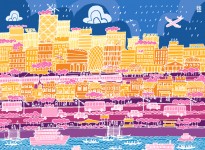
I remember the long walks I used to take on my way back home from work. The entire time, all I could think about was making artistic objects. I missed gazing into things the way I used to or finding myself surrounded by nature. That feeling helped me to reach a stage where I could almost hear the distinctive sounds of the woods. Then one day I found a term for it on the internet, called “psithurism”. It means the sound of wind in the trees and rustling of leaves. I realized I was just creating my own version of that.
I return to the drawing board only when I feel like escaping. The amount of time I invest on each of them never feel like a waste even though I have to step aside from all of the regular activities for a good amount of time. All of the objects and textures that I use in my art are mostly influenced by the nature that I noticed, found, experienced or even perceived in my mind. The limitations that I face during the process are actually essential in turning them into an artwork. I always try to emphasize on the textures and details that are found in nature which make them one of a kind, not to mention, also incorporates its depth and sense of mystery. The whole point was to convey my thoughts through a form without explanations while making it worth something.
But the truth is I have been injecting stories in them. Short stories, where they can be stand-alone by themselves, and at the same time also become a part of a big picture when combined. While each of my artworks tells a different story, somehow they always end up landing in some sanctuary like places.
My focus rarely lies on exploring new kinds of drawing techniques every other day. If I find myself caught up by ideas of any kind, I have to start working on that and get things on the board with what I have even if it is a piece of scrap paper made out of an inside out shopping bag. I enjoy the stress while I am in the process and it also feels good to reach there until something else takes over which of course makes me want to do more.
Graduated from American International University Bangladesh in 2016. His graduation thesis was on the Atghar Kuriana Floating Market, concerning the well-known floating guava market in Pirojpur, in southern region of Bangladesh.
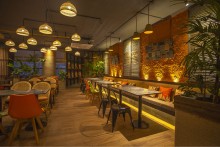
Our team took on this restaurant project because we saw a scope to promote local materials and craft through our design. Chef’s Kitchen is an Indian Cuisine restaurant located in Dhanmondi, Shatmasjid Road. One interesting feature of this site is that each floor has different kinds of restaurant that catered to young crowds. Previously, this 1000 square feet space was an office that had to be completely transformed into a restaurant by the project team.
When we talk about Indian food, we can associate spices, vibrant colours and local flavor with it. So, in terms of the concept, the colors of Indian spices inspired us. We decided to design a warm, vibrant and colorful dining space to attract young customers. The defining colors were warm tones of brown, orange, beige and green. Similarly, the lighting was kept warm. We added a lot of greenery to give the eyes a rest.
Budget constrain was one of the challenges of this project. To overcome this, we thought it would be a good idea to do some adaptive reuse. That is also the main goal of our company. We always want to promote designs with zero waste. So, we worked with all local materials as well as recycled materials. We used many recycle and up cycle elements such as cane chair, bamboo light shed, clay pottery light shed. For the wall decoration, we used reclaimed window shuttering from another project site. It created an interesting effect. We also used old printing blocks and batik stamp to create different motifs. Some wooden logs were used to make partitions.