The Rohingya refugee camp area is all dusty; and so dry and devoid of green that it hurts. People have destroyed all the beautiful hills and the trees to make spaces for the camps. The Rohingya refugees might be safe here, I mean their lives are safe; no one is going to shoot their babies or rape their little girls. But there is a great void of humane element here. I saw the blank eyes of kids with no hope. No beam of light that a nation can start walking towards.
Women and adolescent girls were subjected to the worst cases happened in the Rohingya Ethnic Cleansing. One witness told me the story of the first days of influx, he saw a very young woman getting down from the boat with one kid in her lap and another holding hand. Trembling and unable to speak because half an hour ago Burmese army cut open her husband’s throat in front of her. Not far away from that spot, a woman had just delivered her baby on the thick sticky muddy bank of Naaf river. My mother once closed my window as I was watching a cow giving birth. That day mother taught me that every living creature deserves dignity when giving birth. I don’t have the ability to imagine what that Rohingya women went through. Mothers and future mothers shape up a nation. The trauma is still there in their hearts. If the seeds of the violence do germinate in the Rohingya hearts, it is going to become havoc.
A well-built environment ‘can’ lift the spirit of the users up. From that point of view, the project Women Friendly Space (WFS) has a significant role to play. Rohingya women come here with kids and can be themselves. They can get legal aid, training, psychological concealing, etc. here. The protection office gives protection to the victims of gender-based violence.
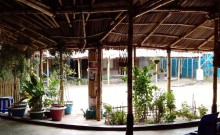
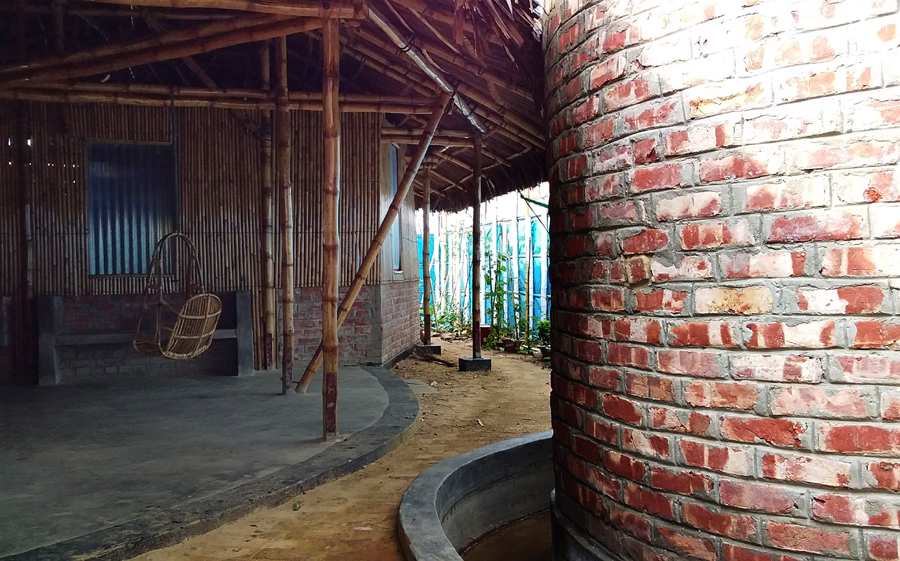
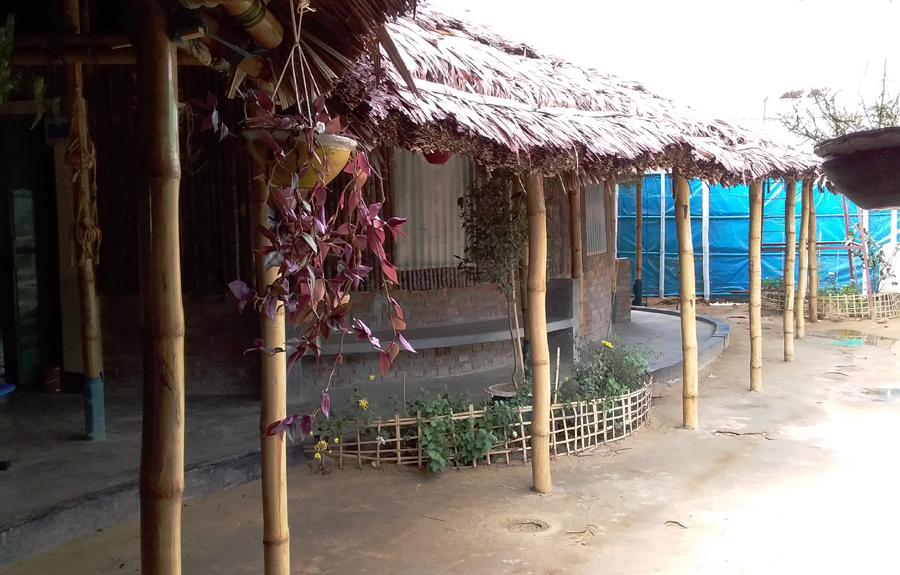
The project has been completed within 60 days including design. The facility comprises a 4000 sft(370 sqm) building within a 7200 sft (670 sqm) compound was built mostly by the Rohingya men. A big challenge was to emotionally engage all these men in the process. But before that, we had to emotionally engage the engineers and the GBV (GENDER-BASED VIOLENCE) program focal persons.
The first design had a typical layout having a series of regular shape rooms around a courtyard. Thanks to Rizvi (my co-architect in the Technical team) who inspired the team to think differently. We develop a U- shape permeable layout with varied room sizes and shapes. The next day, a very simple model was done. And surprisingly everyone got very excited. The project engineer Mr. Biplop was almost jumping with excitement. Ms. Tahrima and Mr. Zahid from the GBV focal were among the most excited ones. They even went showing around the model to everyone in HCMP. We were lucky to be surrounded by good people.
The complex roof structure was left to the engineers and the laymen’s wisdom and their empirical knowledge. They have done it amazingly. The assistant engineers –Rumon and Jamshed who did the painstaking job of project, material and labour management have also done a lot of detailing which even I don’t know. Shahin Shikder a middle-aged foreman played vital role in the construction. Another one was Monir- the Rohingya bamboo craftsman. These two people gave a lot of design input. Only 5 drawings were done in the whole process.
The building materials are unique. The roof is made of Nipa palm (Nypa fruticans) leaves- only organic material which does not decay when exposed to rain or sun. The tarpaulin roofs of the shelters of 1 million refugee people degrade in sunlight within 6 months or a year. Where a Nipa palm leaf roof lasts up to 10 years with negligible maintenance. It keeps the house significantly comfortable. It is also resistant to storms. We badly needed to demonstrate what Nipa palm can do.
The Rohingya are very much familiar with this material. They call it (Oom pata or warm leaf). But they use a technique which is a bit primitive than the technique used in Sundarbans. There are Nipa palm groves in the camp areas. And all the waterways/canals inside the camps are very much suitable for Nipa palm plantation. Leaves can be harvested every year when the tree becomes 5 years old. However, we brought leaf and laymen from Sundarbans who made the roof. And in the process, trained a set of Rohingya workers about the advanced technique.
In the structure, Bamboo posts are not straight. Some are irritatingly tilted/off-centered – clearly an error (in “trained” architect’s eye), but not an error to the Rohingya laymen. The doors are also wired- the hatch bolts are reversed, and the doors open in all directions.
Architects often do a lot of demolition, remaking and altering to achieve a perfect sharp photograph. We often demean our co-creators: the laymen and subordinates in order to feed our own ego. In this project, we could make room for everyone to be creative. In other places, workers wouldn’t show up in time. Here, they wouldn’t leave for lunch.
Every heart has a craving for beauty and truth. Here is a very profound note probably on how human is designed:
“Allah is the Light of the heavens and the earth. The example of His light is like a niche within which is a lamp, The lamp is within glass, the glass as if it were a pearly [white] star, Lit from [the oil of] a blessed olive tree, Neither of the east nor of the west, Whose oil would almost glow even if untouched by fire. Light upon light. Allah guides to His light whom He wills. And Allah presents examples for the people, and Allah is Knowing of all things.”
-The Verse of Light
Project Team
Only a fool wouldn’t want to harness this power of goodness in the human heart.
In the ending days of the project, neighbouring women would come to visit the W.F.S. with their kids or grandchildren. I have seen joy and sparkle in their eyes.
This project is bound to have a meaningful contribution. Because this structure is made with love. We (all of us who made this facility) mixed small pieces of our hearts, our pure prayer for goodness and all our good and sincere intentions with the bricks and plaster of this building. We are very much hopeful.
Bangladesh Infrastructure Finance Fund Limited (BIFFL) is a Government-owned Non-Banking Financial Institution, operating since 2011. It is established by a resolution of the Cabinet of the Government of Bangladesh and owned by the Ministry of Finance. It also wants to ensure a greener Bangladesh by investing in sustainable development projects with an emphasis on renewable energy, energy efficiency and eco-friendly projects. ARCHVISTA’s idea for this project was to meet the requirements of the clients by creating a healthy and authentic workplace. Bangladesh Infrastructure Finance Fund Limited (BIFFL), located in the heart of the densely populated Dhaka city, in the LEED Platinum certified corporate office. BIFFL has achieved this certificate by receiving the highest point in the commercial interior sector as it was committed to create a green office space of the international standard, setting up an example of fruitful investment in the green architecture of the country. And ARCHVISTA supported BIFFL to execute its vision.
Based on the ideologies of “learn-socialize-collaborate and respect” we started deriving our concept since a large number of the world population today spend one-third of their time in the office space as a requirement for the age of urbanization. Hence, it was of great importance to design an office space that is not only comfortable but functional as well. The five factors including Authenticity, Inspiration, Healthy workplace, Team Spirit and Choice, helped ARCHVISTA to ensure “working comfort “ and “visual coherence”. This resulted in an open and attractive workspace with the combination of maximum daylight and a supply of good quality of fresh air. Full height double glazed low-E glass engulfed all of the peripheral spaces allowing optimum daylight penetration with minimal solar heat gain and glare. Furthermore, LED lights with daylight sensors are installed throughout the whole floor. These lights will only turn on, when the LUX level of an area reaches 150 lux, contributing largely to the energy efficiency and daylight saving of the office, maintaining the energy level of 38.19% and utilizing daylight of 85%. Clear glass partitions lend the partitioned spaces to build a visual coherence in between and endowing the whole floor plan with natural light.
Here the utmost priority in the design process is the optimum usage of sustainable materials. Hence, low VOC paints, VOC free carpet & Rug were used. Even the tiles were chosen with low VOC content. For all the employees, this office is their second home, which was the biggest challenge to deal with. Thus, a healthy and collaborative work environment was a must. Open planning, with the help of designing the main circulation loop, shared by all the work stations, encourage the employees to interact more with each other to reach any solutions and supervise the team members which resulted in a total 70% open area and only 30% partition area.
Vertical green walls have been installed along the workstations to enhance the quality of air inside the office filling up with fresh air. These plants are planted on top of hydro falls that circulate the water to the plants for their growth.
All the installed water fixtures and fittings are efficient with WELPS labels enabling the office to cut water consumption by 44% compared to the conventional fittings. These fittings include dual flush water closets, water efficient urinals with manual flush, and self- closing delay action taps for washbasin, water efficient shower fittings, and water efficient sink tap. A particular area in the parking space is provided where the riders of the parked bikes could take a shower using this saved water. Even all the furniture in the office is eco-friendly and also ergonomically responsive. The concept of the principles of ‘The Pyramid’, namely, Avoid, Reuse, Reduce, Recycle and Dispose is followed very carefully. It helped BIFFL with their waste management by categorization of their wastes under the categories: Paper, Plastic, Cans and Other Wastes. Moreover, during the construction phase, BIFFL had reached another milestone with zero casualties at the site and 95% management of construction waste which is a pre-requisite for the LEED certification.
The site was very carefully chosen by the clients. They made sure the site was easily accessed by public transportation and should also be accessible to a number of social services. Hence, the occupants can access the maximum number of social amenities within ten minutes of the walking distance. It is because of this accessibility that made the construction phase a sustainable practice as the transportation of construction materials took lesser time and hassle. Lastly, the neat finishes of this office, encourage the employees to maintain a neat workspace which enhances the factor of Team Spirit in the workspace.
Project Details:
Client: Bangladesh Infrastructure Finance Fund Limited
Construction: Insignia Studio
Project Architect: Mamun Ar Rashid , Saima Aktar Liza | ARCHVISTA
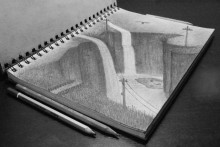
Anamorphic art refers to distorted projection or drawing that creates an optical illusion of a three-dimensional or a realistic tangible two-dimensional image when viewed from a particular angle or vantage point. It is also known as anamorphic illusion or anamorphosis. People often make confusion between optical illusion and 3D art. However, they are not the same. Firstly, optical illusion means, a misleading image presented to the vision. That means anamorphic art or anamorphic illusion also belongs to the same category as an optical illusion. As we can say that every illusion which is anamorphic will be considered as an optical illusion. But not every optical illusion is an anamorphic illusion. For example, Mirage is an optical illusion but it does not belong to the category of anamorphic illusion. Now, what is 3D art? Anamorphic art or illusion is also treated as 3D art because it looks like a 3D image. But 3D art or design is used mainly in industries like animation, gaming, architecture, 3D printing, and industrial design.
There are some illusion art or anamorphic art museums in the world. Camera Obscura & World of Illusion, 3D Art Langkawi are most notable. As a passionate artist, Ridwan’s inspiration came from the artworks done by many world famous anamorphic artist named Ramon Bruin, Fredo, Alessandro Diddi and many others. Anamorphic art is a very well known form of art in North America and Western European countries. It is usually done in streets and walls. Odeith is a prominent Portuguese anamorphic artist who usually draws anamorphic artworks in walls and streets. Legendary anamorphic artists named Alessandro Diddi, Fredo and Ramon Bruin have represented anamorphic artworks through paperwork and became famous all over the world. They are considered as vanguard anamorphic artists for drawing on paper.
Anamorphic art usually takes a long time to complete and it is quite calculative. Yet, it is very unique and popular all over the world. Ridwan’s artworks have been featured in many reputed local and international websites and social media platforms including Art & Photography, Graphicspedia, Arca Mexico, Design Contest, Amazing Architecture, Facts that will blow your mind, The Design Magazine, Camera Obscura & World of Illusions (Museum of optical illusion) and many more.
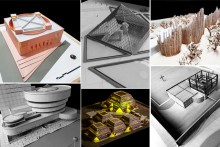
The department of architecture, HSTU has recently organised a model making workshop for the second time with participation of students from entry to senior levels. The main objective of this model making workshop was to make sure that two-dimensional drawings and sketches should be well-formed in the three-dimensional model. Additional objects were to insure the understanding of the graphics properly, to explore material as well as to develop better workmanship. To transfer the model making skills from the senior to junior levels, the students of studio I,II,IV,VI & VIII were divided into groups and led by 4th-year students. Nine models of five particular buildings were made including Renzo Piano’s Jean-Marie Tjibaou Cultural Centre, Raj Rewal’s Hall of Nations, Marina Tabassum’s Baitur Rauf Jame Mosque under the guidance of four faculty members namely S.M.Naeem Hossain Mithun, Dipa Saha, Kazi Asadullah Al Emran, Lamia Tasnim Ankon.
Baitur Rauf Jame Mosque Marina Tabassum | Courtesy: Dept. of Architecture, HSTUBaitur Rauf Jame Mosque Marina Tabassum | Courtesy: Dept. of Architecture, HSTUBaitur Rauf Jame Mosque Marina Tabassum | Courtesy: Dept. of Architecture, HSTUJean-Marie Tjibaou Cultural Center by Renzo Piano | Courtesy: Dept. of Architecture, HSTUJean-Marie Tjibaou Cultural Center by Renzo Piano | Courtesy: Dept. of Architecture, HSTUJean-Marie Tjibaou Cultural Center by Renzo Piano | Courtesy: Dept. of Architecture, HSTUHall of Nation by Raj Rewal| Courtesy: Dept. of Architecture, HSTUHall of Nation by Raj Rewal| Courtesy: Dept. of Architecture, HSTUHall of Nation by Raj Rewal| Courtesy: Dept. of Architecture, HSTU
The models contributed by Architecture-AIUB was made by the students of Studio-V, Fall 2018-19 as a part of their regular academic exercise. The selection includes Solomon R. Guggenheim Museum by Frank Lloyd Wright; Louvre pyramid by I.M. Pei; Church on the Water by Tadao Ando; Vitra Fire Station by Zaha Hadid and Bianchi House by Mario Botta. The studio was led by M. Arefeen Ibrahim (Associate Professor & Head) and Syeda Tuhin Ara Karim (Asst Professor).
Church on the Water by Tadao Ando |Courtesy: Dept of Architecture, AIUBSolomon R. Guggenheim Museum by Frank Lloyd Wright | Courtesy: Dept of Architecture, AIUBLouvre Pyramid by I.M. Pei | Courtesy: Dept of Architecture, AIUBBianchi House by Mario Botta | Courtesy: Dept of Architecture, AIUBVitra Fire Station by Zaha Hadid | Courtesy: Dept of Architecture, AIUB
The following article is the translated interview of Japanese architect Arata Isozaki -2019 Pritzker Prize laureate- originally hosted by the GAA Foundation and European Cultural Centre jointly as a part of Time-Space-Existence exhibition, which took place in Venice on May 2018. This interview presents Isozaki’s vision on the themes of space and time, and on their intertwining into the Japanese concept of ‘ma’ -the space and time that lies in-between things. The interview is translated in Bengali by architecture graduate Mahin Haque and the feature image is illustrated by Ziaur Rahman Ovi.
(আরাতা ইসোজাকি একজন জাপানী স্থপতি। বর্তমান সময়ে যেসব স্থপতি সারা বিশ্বে তাদের কাজের মাধ্যমে স্থাপত্য অঙ্গনে অবদান রেখে চলেছেন, জনাব ইসোজাকি তাদের মধ্যে অন্যতম। কোন একটি নির্দিষ্ট স্টাইলের মধ্যে আবদ্ধ না থেকে প্রত্যেকটি প্রজেক্টকে আলাদা কনটেক্সট অনুযায়ী বিবেচনা করে কাজ করার জন্যে তিনি সুপরিচিত। তার উল্লেখযোগ্য কাজের মধ্যে রয়েছে অইতা মেডিকেল হল (১৯৬০), ফুজিমি কান্ট্রি ক্লাব (১৯৭৩-৭৪), কিতাকিয়োশো সেন্ট্রাল লাইব্রেরি (১৯৭৩-৭৪), আর্ট টাওয়ার অব মিতো (১৯৮৬-৯০), দোমাস কাসা দেল হম্ব্রে (১৯৯১-৯৫) ইত্যাদি। জনাব ইসোজাকি তার কাজের স্বীকৃতিস্বরূপ ১৯৮৬ সালে RIBA গোল্ড মেডেল এবং ২০১৯ সালে Pritzker প্রাইজ লাভ করেন।)
শব্দহীন নীরবতা অনুভব করার চেষ্টা করেছেন কখনো? একদম সুনশান নিঃস্তব্ধতা? সত্যি বলতে কি, নীরবতার ভাষাই সবচেয়ে সুন্দর। এবং, নিরেট শূণ্যতার মধ্যেই আমি খুঁজে পাই পরিপূর্ণ ঐশ্বর্য; যা আমাকে অস্তিত্বের মাহাত্ম্য অনুভব করতে শেখায়।
স্থান, কাল ও অস্তিত্ব
ধরুন, আপনি একটি চলচ্চিত্র তৈরি করতে চাচ্ছেন। সেক্ষেত্রে আপনি কি করবেন? প্রথমত, আপনার চলচ্চিত্র নিয়ে আগ্রহ থাকতে হবে। ক্যামেরা নিয়ে পর্যাপ্ত জ্ঞান কিংবা কাজের অভিজ্ঞতা থাকতে হবে। এবং অতি অবশ্যই আপনার মাথায় একটি গল্প থাকতে হবে; যে গল্পটি আপনি বলতে চান।
কিন্তু, কাজ শুরু করে দেয়ার পর এক পর্যায়ে হয়ত দেখবেন যে, বিভিন্ন ধরনের নতুন নতুন আইডিয়া একের পর এক আপনার মাথায় আসা শুরু হয়েছে। এই পরিস্থিতিতে দুইটি ঘটনা ঘটতে পারে। হয়, আপনার মাথায় সবকিছু তালগোল পাকিয়ে যাবে। অথবা, আপনার গল্পটি ঈষৎ পরিমার্জিত হয়ে আগের চেয়ে বেশি গ্রহণযোগ্যতা পাবে। এক্ষেত্রে আপনাকে ঠান্ডা মাথায় সুস্থির চিত্তে সূক্ষ্ম কিছু সিদ্ধান্ত নিতে হবে, যার উপর আপনার চলচ্চিত্র নির্মাণের ভবিষ্যৎ সম্পূর্ণ নির্ভরশীল। আপনি যদি আইডিয়ার ভীড়ে হারিয়ে যান, তাহলে আপনার চলচ্চিত্র কখনো আলোর মুখ দেখবেনা।
এই যে তাৎক্ষণিক বিচক্ষণতা, যা আপনাকে অথৈ সাগরে ভাসিয়ে রাখতে সাহায্য করবে, অর্থাৎ, প্রতিকূল পরিস্থিতিতেও সঠিক সিদ্ধান্ত নিতে প্রভাবিত করবে- আমি মনে করি, একজন শিল্পী বা নির্মাতার জন্য এই বিষয়টি সবচেয়ে গুরুত্বপূর্ণ।
কালবিহীন স্থান
যেকোন সৃজনশীল কাজে ‘স্থান’ (Space) এবং ‘কাল’ (Time) এর প্রাসঙ্গিকতা এবং গুরুত্ব অপরিহার্য। কিন্তু, কেবল স্থান আর কালের সমীকরণই সবকিছুকে পূর্ণতা দিতে পারে না। আমাদের জাপানী দর্শনে “মা” (ma/閒) নামে একটি কনসেপ্ট আছে, যা দ্বারা পাশাপাশি দুটি বস্তুর মধ্যে অন্তর্নিহিত স্থানটিকে বুঝায়। ধরুন, দুইটি বস্তুকে পরস্পরের সংস্পর্শে পাশাপাশি রাখা হলো। আপাতদৃষ্টিতে মনে হবে যে এদের মধ্যে কোন ফাকা স্থান নেই। কিন্তু আসলেই কি তাই? না। আপনি যত কাছেই দুটো বস্তুকে রাখুন না কেনো, তারা কখনো এক হয়ে যাবেনা। তাদের মধ্যে অবশ্যই কিছুটা শূণ্যস্থান থাকবে। যেটা হয়তো আপনি খালি চোখে দেখতে পাবেন না। আপনাকে এই স্পেইসটা অনুভব করতে হবে। দুইটি বস্তু বা উপাদানের বাহ্যিক অস্তিত্বের মধ্যে বিরাজমান অদৃশ্য এই শূণ্যস্থানকেই জাপানী দর্শনে ‘মা’ হিসেবে অভিহিত করা হয়েছে।
সহজভাবে বুঝার জন্যে আরেকটি উদাহরণ দেয়া যেতে পারে। আমরা কথা বলার সময় দুইটি শব্দ বলার ফাকে অল্প কিছুক্ষণের জন্যে থামি; অর্থাৎ, বিরতি নেই। কারণ, স্বল্পস্থায়ী এই নিঃশব্দতা দুটি শব্দের আলাদা অস্তিত্বকে জোরদার করে। কেউ যখন থেমে থেমে প্রতিটি শব্দকে আলাদাভাবে উচ্চারণ করে কথা বলে তখন আমরা স্পষ্টভাবে তার বক্তব্য বুঝতে পারি। দুটো শব্দের অন্তর্বর্তী এই নিঃশব্দকালই ‘মা’।
আমাদের এটা মনে রাখতে হবে, আনুষঙ্গিক প্রেক্ষাপটে “স্থান” বা “স্পেইস” (space) এর সমীকরণ খুব গুরুত্বপূর্ণ; যেহেতু, স্পেইস তৈরি করাই আমাদের স্থপতিদের কাজের মুখ্য উদ্দেশ্য। কিন্তু, অন্তঃস্থ শূণ্যস্থান বা ‘মা’ তার চেয়েও বেশি গুরুত্বপূর্ণ। ‘মা’ এর দৃশ্যমান বাহ্যিক অস্তিত্ব না থাকলেও, বিশ্বব্রক্ষ্মাণ্ডের সবকিছুর মধ্যেই এর উপস্থিতি রয়েছে। আমরাও জেনে বা না জেনেই সর্বক্ষেত্রে এর ব্যবহার করে থাকি। কারণ,অন্তঃস্থ স্থান ছাড়া পারিপার্শ্বিক স্থান বা স্পেইসকে পুরোপুরি উপলব্ধি করা যায়না, এবং স্পেইসের অস্তিত্বই অসার ও মূল্যহীন হয়ে পরে।
স্টাইলেই সমাধান?
আমি সবসময় নতুন কিছু তৈরি করতে চাই। তাই পরপর দুটো কাজ এক রকম হোক, সেটা আমি চাই না। নতুন এবং অনন্য কিছু সৃষ্টির মধ্যেই আমার আনন্দ। যারা সবসময় কোন ব্যক্তির কাজের মধ্যে একটি নির্দিষ্ট ধারা বা বৈশিষ্ট্য খুজতে চান, তারা হয়ত আমার কাজে হতাশ হবেন। কারণ, ব্যক্তিকেন্দ্রিক স্টাইলের প্রচলিত এই রীতিতে আমি বিশ্বাসী নই। আমি মনে করি না যে আমাকে সবসময় কোন অভিন্ন রীতি অনুযায়ী কাজ করতে হবে। বরং আমার প্রত্যেকটি কাজ হবে স্বকীয়, অনন্য; যা আমার নিজস্ব ধারা হিসেবে বিবেচিত হবে।
আমি নির্দিষ্ট কোন স্টাইলের মধ্যে সীমাবদ্ধ থাকতে চাই না। আমি চাই সংশ্লিষ্ট পরিবেশ, পরিস্থিতি, এবং আনুষঙ্গিক অন্যান্য বিষয়াদির সঙ্গে প্রাসঙ্গিক কাজ করতে। এছাড়াও আমি মনে করি, পরিবেশ ও পরিস্থিতির ভিন্নতা অনুযায়ী উদ্ভত একগুচ্ছ সমস্যাকে স্থাপত্যের জ্ঞানের নিরীখে সমাধান করাই স্থপতিদের মূলমন্ত্র হওয়া উচিত। এবং বলাবাহুল্য, এ ধরনের কনটেক্সটনির্ভর এবং নির্দিষ্ট সমস্যার সমাধানভিত্তিক স্থাপত্য প্রত্যেকটি প্রজেক্টের জন্য অবশ্যই আলাদা হবে।
একটি দ্বীপমাত্র!
ভৌগোলিকভাবে জাপান একটি দ্বীপরাষ্ট্র। অর্থাৎ, সমগ্র পৃথিবীর প্রেক্ষাপটে, সূর্যোদয়ের দেশটি সাগরের মধ্যে ভাসমান একটি বিচ্ছিন্ন জনপদ মাত্র। তাই, আমি মাঝে মাঝেই আমাদের জাপানী সত্তার সীমারেখা খুঁজে বের করার চেষ্টা করি। কিন্তু, আদৌ কি এর কোন সীমানা আছে?একটি দ্বীপের কি তথাকথিত সীমানা থাকতে পারে? চারদিকে তো অথৈ জলরাশি! প্রকৃত কোন সীমানা বা দেয়ালের কোন অস্তিত্ব তো নেই।
তবে ইতিহাসের পাতা থেকে আমরা জানতে পারি যে, বিগত কয়েক হাজার বছরে বহুবার আমরা আমাদের অনন্য জাপানী স্টাইল তৈরি করতে পেরেছি, যা সারাবিশ্ব থেকে আলাদা; একান্তই আমাদের নিজস্ব। কিন্তু দ্বিতীয় বিশ্বযুদ্ধের পর, বিশেষ করে সত্তরের দশকের পর থেকে আমরা আমাদের নিজস্ব জগতের গণ্ডি থেকে অনেকটাই বেরিয়ে এসেছি। আমরা এখন বাহিরের অন্যান্য জাতি ও সংস্কৃতির সাথে পরিচিত হচ্ছি, তাদের সাথে আমাদের মিথস্ক্রিয়া ঘটছে। আমরা বহির্বিশ্ব সম্পর্কে জানতে পারছি, এবং বহির্বিশ্বও আমাদের সম্পর্কে আগের চেয়ে ভালোভাবে জানতে পারছে। এই যে পারস্পরিক সম্পর্কের আদান প্রদান, এটা এর আগে কখনো হয়নি।
তবে একথা অনস্বীকার্য যে, সবকিছুর পরেও আমাদের একটা নিজস্ব জাপানী ‘ধারা’ (style) রয়েছে; যা জাতি হিসেবে আমাদের সার্বজনীন চিন্তা- চেতনা এবং আদর্শের প্রতিফলন ঘটায়। কিন্তু, এটি আসলে সমষ্টিগত কিছু ধ্যান-ধারণা এবং সমন্বিত রুচিবোধের প্রতিচ্ছবি। এই ধারার আলাদা কোন বিশেষ অর্থ নেই, যদি না সংশ্লিষ্ট এই বিষয়গুলোকে গভীরভাবে অনুধাবন করা যায়। এক কথায় বলতে গেলে, একটি জাতির সামগ্রীক রুচিবোধ এবং এর সঙ্গে সামঞ্জস্যপূর্ণ আবহ সেই জাতির সবচেয়ে গুরুত্বপূর্ণ পরিচায়ক; এবং বর্তমান প্রেক্ষাপটে জাতিসত্তার অস্তিত্ব টিকিয়ে রাখতে হলে এর কোন বিকল্প নেই।
Hakaluki Haor, a wetland of Bangladesh, is a shallow depression of bowl shape. In monsoon, the haor becomes vast stretches of turbulent water that turns into a vast inland sea within which the villages seem as islands. Again they all but dry up in the post-monsoon period. During winter, these haors are vast stretches of green land. Occasional large waves in the haor cause considerable damages to homesteads. Though the livelihood of the diverse community people is interrupted by this natural phenomenon the existence is sustained by means of co-existence (the magnificent ecological landscape, beels, birds, animals etc.). These are the main drives towards design process. The objectives of the project are ensuring community-based resiliency enrichment and also community-based tourism where developments are undertaken according to the diverse needs of the local community. Infrastructure including road network were developed respecting the nature of landscape. Resiliency is tried to ensure by maintaining existing geographic pattern by growing swamp forests and local materials which is one of the most significant strengths. Finally, approach was taken to uphold community-based tourism through development of the community activity and thus ensured an ecological tourism.
The study of the growth pattern of the existing household shows the characteristic composition of the houses around “courtyards”, which acts as hubs of the communal life. Also a very arbitrary fabric in the development of the settlements stands for a customary practice of the communities. Toilets are mostly open and unhygienic, built far from the living units, insufficiently serving the clusters since almost 40 members use one toilet. The number of houses are increasing with the increase in population.
The basic approach of the design was to create a courtyard based settlement, each unit having a courtyard in front of it, also different courtyards being connected via shared courtyards. The basic forms of the housing units are kept as unaltered as possible, only changed according to the use of the inhabitants. For example, the size of the courtyards in the farmers’ community is fully different from that of the fishermen community. Local materials like mud, bamboo, wattle and daub, reeds etc. are used and building shapes are kept unaltered to maintain the morphology, so that the tourists can get the true essence of the communal life observing the characteristic features of the buildings and the site. The community ponds are protected which are the most important feature in the villages. Religious buildings and schools are designed using materials according to the context, without any change in location, to house flood affected people in case of severe flood. Marketplaces are located in the most suitable places to connect with the communities.
The primary goal of the design was to achieve resiliency against flood due to the increase in the water level of large water bodies (beels) in the rainy season, which also submerges the paddy fields. This huge water flow becomes somewhat hazardous as it flows over human settlements and erodes the slope of the highlands.
Local people have taken some measures to secure themselves from the flood like raising flood wall, and fencing which is not really enough to withstand the strong wave of water. To ensure social, economic and structural resiliency, some natural measures are required to maintain an uninterrupted water flow of a reduced force. With this view in mind, the banks of the beels and the aisles and slope of the community mounds are utilized with natural materials and process without hampering the flow of water and resisting the degradation of the atmosphere. Reeds are abundant here which is used to reduce strength of the water flow.
The road network is developed by Swarm analysis where the parameters are determined according to human behaviors. Different logic are provided in the diagram. The areas of the mounds are fixed for controlling the increment of the population. Otherwise the natural diversity and the production land will be decreased.
People all over Bangladesh visit haor mainly during the rainy season to enjoy the natural view of the waterscape. Heavy rain in the monsoon causes overflow of the huge waterbody and ultimately develop a magnificent natural beauty. More importantly, local inhabitants, having diversified occupations and respective lifestyle, intrigue visitors’ interest and curiosity.
The proposed roads in the internal communities can be used as trails for the tourists. Since all of the inhabitants might not be comfortable with the interruptions caused by the tourists, a visual barrier is created by trees around the house. Dense bushes are layers of large trees will create such a barrier that will affect the subconscious mind of the outsiders not to go beyond it. Also where the tree layer is thin, that will create a visual connection with the activities and people will feel invited to go and communicate with the locals. That might boost the possibilities of some economic development of the communities. Thus the green layer will govern the movement of the tourists.
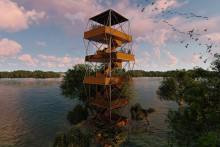
There is a special place of biodiversity locally called ‘Pakhighor‘ meaning ‘The nest of the Birds’. Seasonal birds gather here in the swamp areas. A trail to a limited distance is designed and provision for further development is kept. There is also a ‘Haor Visiting Centre’ for the tourists where people will be able to know about the haor. Near the beels, possibilities of oyster farming is also incorporated in the design.
Farhan Karim is an Associate Professor in the School of Architecture and Design at the University of Kansas. He worked as an architect, interior designer and furniture designer in Bangladesh and Australia. His first book, Of Greater Dignity than Riches: Austerity and Housing Design in India (2019) studies the discourse of low-cost industrial housing. His edited book Routledge Companion to Architecture and Social Engagement (2018) presents a critical perspective to the current practice of socially engaged architecture. He guest edited a special issue of the International Journal of Islamic Architecture entitled Flows, Boundaries and the Construction of Muslim Selves since 1900. He is currently preparing book manuscript on the partition of South Asia and the involvement of Euro-American architects in postcolonial Pakistan (1947-71). He is now guest editing a special issue of journal Protibesh, entitled Writing Architectural History in Bangladesh. He is also editing a book entitled Architectural Pedagogy in the Global South. His articles and reviews have appeared in Fabrication, Planning Perspectives, Architectural Theory Review, Journal of Cultural Studies of Asia, and International Journal of Islamic Architecture. His research has been supported by the Graham Foundation, Canadian Centre for Architecture (CCA), Aga Khan Center for Muslim Architecture at MIT, Mellon-Volkswagen fellowship, the Getty Research Institute, and Australian Leadership Award. He convened a research symposium (Fall 2016) Scholarship of Social Engagement at the University
Farhan Karim talked with CONTEXT few months back on his research interests, published and forthcoming books as well as about his pedagogical mission that historical study should contextualize students’ consciousness within the existing economic, cultural, and ecological situation.
1. Please tell us about your recent activities and interests.
Currently, I am working on a book manuscript on the involvement of Euro-American architects in the development of modern architecture in precession Pakistan (1947–71). The creation of Pakistan in 1947 is the most unique event of contemporary world history. The first decade following the creation of Pakistan, the authoritarian government of General Ayub Khan undertook a series of lofty projects that included the establishment of new cities, universities, parliament, national educational reformation, vocational institutes and many more. Through these projects, Ayub Khan’s government envisioned a new postcolonial society and a new definition of citizenship. Ayub Khan’s government sought technical assistance from the USAID, UN, Colombo Plan and the Ford Foundation. Through these partnerships, Pakistan received consultancy services from leading European and American architects such as Paul Rudolph, Constantinos Doxiadis, Louis Kahn Durell Stone and many more. This stellar group of architects produced a number of well-known buildings of its time. My research studies 21 major architectural projects done by western architects in Pakistan. These buildings are now located in Pakistan and in Bangladesh. Some of these buildings are well known such as Louis Kahn’s Parliament building in Dhaka, but some are less known outside Bangladesh such as Paul Rudolph’s work in Mymensingh, Bangladesh. However, the book that I am working on is not a documentation of the western architects work in Pakistan. It is important to expand our knowledge about what these very important architects did in a postcolonial situation. But for me, it is more important to understand the history of Pakistan in a comparative manner or from an international perspective. The book explores the postcolonial condition of Pakistan through the work of the western architects and investigates the Cold War cultural diplomacy and the global dissemination of International modernism by studying the Pakistan bureaucrat’s business with these architects and their response to western architectural language.
The other major aspect of the book is to try to find out how, after the end of the colonial era and within the intertwined institutional framework of different Cold War organizations, how the foreign architects represented the ‘culture of expertise’ in the South-Asian context. By the ‘culture of expertise,’ I mean to refer to the idea that the architects were believed to capacitated a certain mastery over essential ‘truth’ which they want the Third World natives to learn from them. The foreign experts did not only work as pragmatic architects but also played the role of the messengers of ‘truth’, which would help to inform and shape the new nations and its political and social institutions.
Hopefully, I will finish the manuscript by this December
Apart from this project I am also involved academically and in some other collaborative works.
2. How do you define the relationship between ‘Social Engagement’ and architecture? Many of us would question- is there a socially unengaged architecture exists?
I definitely agree that architecture is always produced within the society and by the society. There is no way that architecture can be produced without any response or association with society. But in my book ‘socially engaged architecture’ is identified as a research problem from a different perspective. Recently “social engagement” has emerged as a discourse that incorporates several distinct theoretical positions. Participants of this discourse present different parameters and theories to measure and evaluate the degree of architecture’s social engagement. This discourse has created a dichotomy in our understanding of architecture’s relationship to the society: one is the real-estate and market-driven architecture and second is the architecture for the destitute, the poor. We often tend to conceive of this dichotomy as mutually exclusive, however, in this book, I invited authors who can offer us a fresh and critical perspective to the historical development of the concept of social engagement, its roots in different communal and international politics and the recent development in theory and practice. There is no single definition of ‘socially engaged’ architecture. The practice is also known in different names such as participatory design or public interest design. In recent time, the term ‘socially engaged’ architecture was made popular by an exhibition in MoMA, NY in 2010-2011 entitled “Small Scale, Big Change: New Architectures of Social Engagement”. The exhibition was curated by Andres Lepic. In general, the exhibition presented ‘socially engaged architecture’ as a novel way to resist homogenizing globalization. The exhibition also tried to show that socially engaged architecture is being produced beyond the control of the speculative forces of the real estate market. Built on the arguments proposed by the MoMA exhibition one may tend to create a position between socially ‘engaged’ and ‘unengaged’ architecture which is predominantly shaped up by the real-estate market. But admittedly this discourse is not as simple as that. The essays in our book show that the so-called socially engaged architecture has been deeply stimulated by different market forces. When you are working for the destitute or the marginal population, you are also addressing certain aspects of the “market” which is very often is not considered as a market. In other words, so, it may be perilous to try to theorize social engagement in isolation or exclusively as opposed to macro forces of globalization. Social engagement is an ambivalent concept and also contextual.
3. Do you think it is an outcry of the architects against the neoliberal capitalism and try to prove themselves to be politically correct, or is it just another side of the same coin? I mean, in your book you agreed that ‘social engagement’ immediately refer to a power imbalance where “trained professional exchange their knowledge with an untrained population.” It is difficult to realize how public opinion or right can be reflected in this practice. Is not it a way of taking “poverty as a new possibility”?
Architect and Historian Manfredo Tafuri portrayed a very pessimistic idea about “modernization” under fully formed capitalism. In Tafuri’s explanation architects being integrated into the system and process of modernization have had a false image that they possess enough power to affect the system. Architects, according to Tafuri are rather having been increasingly made disempowered through the process of modernization for their actions are exclusively controlled by entities over which the profession of architecture has little if no influence. Tafuri’s contemporary, the French philosopher Michele Foucault also believed the similar idea that while “space” has a defining role in capitalist expansion and exploitation the professional body of architect’s role is limited largely in the realm of aesthetics with little control over the power structure or over the process of making. Now, a question could be asked whether “aesthetic” has any power to liberate society or not. The American and European Postmodernists of the 80’s such as Peter Eisenman and/or Aldo Rossi believed in the essentialism of ‘autonomous architecture’ in a way that architecture performs as a dialectic media to communicate ideas to users and spectators. It is known as the theory of autonomy. Per se painting, cinemas, sculptures or poems are subjects of intellectual discourse even though they might not practice the power to change the society but they could encourage people to think critically. Therefore, to western postmodernists and deconstructivists architecture acted as a media or a didactic tool to impart critical autonomy of society. However, while a majority of the Western postmodernists were moving away from the Humanist tradition, trying to decentre human/individuals from the western worldview and challenge the hegemony of narration of liberal humanism, the concurrent generation of postcolonial architects in the Third World refused to consider architecture merely as a media and believed that (architects) ought to claim power on the actual production process of built environment. In many cases, the postcolonial architects consider the post-independence state as the most important entity to achieve that power. However, as we know in most of the “developing” world today urban society revisits the promises of ‘nationalism’ and the state’s capacity to ensure balanced development. Especially in Bangladesh where we see the spectacular rise of the world’s two most successful and biggest NGO’s BRAC and Grameen Bank that has effectively decentralized and privatized “development.” For the fact that Bangladesh has such a low level of governance and such a high level of economic growth has prompted the economists to coin a new term “Bangladesh conundrum” in which it is argued that the NGO lead development project act as parallel governance and has caused the country’s meteoric economic rise. This privatization of development triggers a new discourse of socially engaged architecture in which architects don’t prefer to see their creation as autonomous art; rather they want to “engage” themselves with the actual production process. A good example is Kabir Bhai’s very well-regarded project AsharMoncho.
The approach of this social engagement approach is similar to projects that are known as design-build in the US or live projects in the UK. In this model, architects themselves become a part of production or making and therefore try to ensure total control of the ‘society’ or ‘community’ over the product. However, the concept might differ from region to region. Whether in this process effective political empowerment is being achieved or not is rather a localized question. To get an answer we need to analyze every project in its specific context, which can only be done if there exists a base theory on socially engaged architecture. Anna Heringer’s Meti school is theoretically an essential example. If we want to understand how poor people were socially and politically empowered by the project, you might not find huge success. In regard to the politics of using the term social engagement in this particular project, architectural historian Ijlal Muzaffar has asked, whether bamboo is actually a ‘low cost’ and easily available material as it is apprehended in this particular project. If it was such, Ijlal asks then why there were instances when bamboo was got stolen from a construction site? Can the poor really afford the cost of bamboo?
Architecture, theory, and criticism help us to know the past and help to theorize what is happening today, as an inevitable consequence and continuum of the past. We are trying to theorize all these phenomena case by case, nothing else. Theorists analyze present or a given ‘reality’ by speculating on history.
4. How do you define/explain it as an addition to contemporary architectural discourse? Over the last three decades popular discourse around architecture, to some extent, were circled around senses (refer to Pallasmaa) and production, reproduction and publicity (refer to Colomina) with other obvious discussions of post-modern phenomena. During the same time Architecture with a title ‘socially engaged’ emerged so silently, yet so obviously that scholars need to theorize it now (and that you have taken the initiative). How do you look at it?
It is true that socially engaged architecture has been practiced over the years, but critical literature on the topic is rare. As a historian, I tried to combine the idea of ‘socially engaged Architecture’ as a whole (in our book) combining diverse thoughts from a number of thinkers. In my understanding, the followers of the German Frankfurt school and American sociological theory of modernization believe in the “formal” or “elemental” architecture, an intellectual tradition which has been followed in the western academia even in the 80s. Both in academia and in practice the definition of the architecture was kept limited within the aesthetic and technical realm. There were very few attempts to intervene in the actual production process. There was a limited scope, both theoretically and in practice, of claiming authority over the economic and political condition of the production of architecture. Although there were self-help housing related works by United Nations and few other non-government organizations, the initiatives could not flourish in the architectural spectrum as the architects did not think that these projects were worth to consider as ‘architecture’. In the counterculture and postmodern movement, a strong point was made for architects and designers to gain power over the production process. However, these initiates were eventually ended as marginal or avant-garde experiments or were dissolved in the market forces. Here in this book, we tried to go to the root of social engagement and its relation to architecture, tried to decentre the core ideas and process depending on particular contexts. How we can also do act for society could be one of our concerns. We tried to see the profession of architecture from a theoretical vision beyond its traditional refuge in the aesthetic realm.
5. Who were the co-writers? How they all collaborated and contributed to the content of this book?
When I was thinking of writing something about socially engaged architecture, surprisingly I found some like-minded colleagues who were also very interested in this topic and thought about the urgency of written discussions. They felt that this topic needed discourse in a diverse scholarly platform. Eventually, with Farhana Ferdous (Howard University) and Joe Collistra (University of Kansas), I co-organized a symposium at the University of Kansas where we invited an about 30 scholars to share their ideas related to the concept that I was carrying over. The symposium was the foundation of this book.
6. What role can an architect play in the scope of socially engaged architectural practices?
I must confess, I am currently not active as a practicing architect. It is, therefore, tough for me to explain. But I believe and also tried to highlight in the book the points that an architect should be aware of while working in any project per se. The architect must be aware of what you are doing and for whom you are doing. In this regard, I can share one of the authors of this book Harriot Harris’s experience, who in 20xx designed a portable habitat unit which is actually a wearable tent for Syrian refugees. Even though the units were not actually realized and the idea itself made no deep rooting change in the lives of Syrian refugees, her attempt created a substantial positive effect through fostering discussion and debates around the condition of the refugees on the move. And I think this is exactly where the role of an architect lies in the practice of socially engaged architecture. For me, architects should think in both-ways and should be able to try to strike a balance between cultural and aesthetic aspects of architecture with practicality and functionalism.
7. Will you recommend including this topic in the academic curriculum as well to make students more aware and responsible towards participatory architectural practice?
Depending on the interest of the faculty members, the topics may be included as an optional course at the graduate level. However, since Bangladesh (as far as I know) has only one core architectural curriculum approved by the University Grant Commission (UGC), it might be quite challenging to include this topic as a mandatory course in the existing undergraduate curriculum. IAB or the current accreditation body can play a role to make the issue as part of mandatory student skill. In the USA every school has their full autonomy over the curriculum and thus schools are free to take a specific pedagogical approach. However, NAAB as an accreditation body has to accredit the curriculum on the basis of Students Performance Criteria (SPC) which is basically a scale to identify whether students have acquired certain skill sets, but the body has no control over the content of the courses. As an educator, I think diverse curriculums provide scopes and platforms where a student can make their own choices out of their interests. I believe a strong foundation in theory and critical thinking is very much needed and should be mandatory.
8. Does Bangladesh need humanities and critical discussion of architecture?
Of course, a critical discussion of current thoughts and practices need to be performed (in academia). For example, the current concern for the Rohingya refugee crisis is of national stake. The issue requires serious attention. However, we also need to underrate the political production of crisis and the ways in which society perceive, accept and remember a crisis. What is about the everyday ‘crisis’ when a poor child spends long nights abundantly in our city street? Every crisis circle within its situation and context, and after some time a ‘crisis’ becomes normalized, engulfed and appropriated by our everyday experience. Architects should be able to incorporate the critical perspective of humanities in their training and work.
9. To what extent you think ‘history’ should be incorporated in our architecture curriculum/studies?
Most educators and professional architects would say that we don’t need ‘history’ per se, we need to study ‘precedence.’ There is a profound difference between precedence and history. History is a speculation about the past, an interpretation of the causal relationship among different events in the past in which architectural aesthetic, style, and form is an integral part. When our students study precedence, which is mainly presented as a ‘technical’ example related to the specific work in their studio, it may help to trigger their creative impulses by teaching them about the stories of the great architects, the master architects, motiving stories of the successful, heroic or tragic genius. However, this approach is limited in opening up spaces for critical discussion about the cultural and political condition of architecture. ‘History’ is able to do that. In architectural school, it is generally expected that the aspirant young generation will seek creative inspiration from precedence study. For professional schools’ in general precedence is more relevant than history. This is not very unique for Bangladesh. Our colleagues all over the world are asking the same questions- how in a professional School can we study and teach both precedence and history in a productive way.
I agree that undergraduate professional education cannot take the task to create an architectural historian. In the USA until recently it was the duty of the Art history department. It is only in the graduate program of a professional school that can train future historians. However, architectural history survey course in the undergraduate program can play a defining role to ignite interest in the students’ mind about architectural history and theory.
10. What could be the ways to draw the interest of our students and young researchers to history and discourse of architecture?
Architectural history has its disciplinary autonomy but at the same time, it is intertwined with the professional education. Architectural historians are independent creative persons just like a professional architect. However, one could be both an architect and a historian, but it is important for us to be able to differentiate between these two entities. We need to understand how and where these two entities are separate and where they overlap. Bangladesh still does not have a good job market for architectural historians. In Bangladesh, a dedicated architectural historians’ career is limited to teaching in professional schools and conduct personal research of their interest. Affluent countries have some additional jobs in museums, libraries, and archives. If we want to see a new generation of creative and serious architectural historians in our country, we first need to develop a viable job market for them. When combined with heritage studies, architectural historians may also work in the industry, especially for the practice that works on adaptive reuse. The job market is small and slow, but there will always be a job for architectural historians, anyone who has professional integrity, curious and works hard with a clear goal will eventually succeed.
Thanks a lot Frahan Vai for your time and cooperation. It has been a wonderful experience talking to you. Looking forward to more discussion in the near future. Good luck with your next writing expedition in Berlin.
Narrator/Interviewer: Azizul Mohith and Fatema Tasmia
Fatema Tasmia is an architect and academic with interest in history, theory and modern architecture. She is a lecturer at the Department of Architecture, Bangladesh University of Engineering and Technology (BUET) and a graduate (Master of Architecture) student at the same.
The central stupa temple of Sompur Mahavihara is a gem of the entire architecture. Since the dawn Buddhist populace contributed a new architecture with the terracotta bricks to the common people of this land. Moreover making of this giant stupa temple at the off centre in the grand courtyard is an attempt of installing meaning of spiritual essence during the contemporaries. The four-sided sutpa temple is placed on successive three tiers of pradakshina or ambulatory circulation. Cruciform shaped plan allows having entry from four sides. Through the physical research and from historic literature reviews the temple was having a shakers engaging north Indian Rekha style and other roofing pattern of the temple was constructed with chala pattern. Wooden members were adjoining terracotta tails (built in the site) became the popular pitch roofing pattern or chala style. Split system in the roofing pattern helped to evolve clearstory for allowing light in a controlled environment. Light used to come in the vestibules and prayer hall through the clearstory by creating drama. The section of the temple explains the situation of the offering halls; on the other hand through the sectional research the marvel of the structure of central shrine is exposed. Considering climatic situation and topographical terrain this kind of staggering structure is authentic for this hinterland. Splendid construction process was carried out with brick mason. Composite phenomenon of structural combination used to adopt in building this huge shrine.
Darasbari Mosque (1479 CE)
Establishment: Shamsuddin Abul Muzaffar Yusuf Shah built the mosque in 1479 AD.
Location: near Sonamasjid Landport, Chapai nawabgonj.
The Darasbari mosque is the largest mosque in the Bangladesh part of Gaur-Lakhnauti, now in ruins. It is situated in the Darasbari quarter of the mediaeval city on the west side of the Chhota Sona-Kotwali Darwaza Road, at present a desolated area near the Indian border. The name Darasbari is derived from its being located within a darsbari (place of lesson or learning).
The Darasbari Mosque Plan consists of all kind of characteristics, stating from the fore room, extended turrets, central prayer hall with member, mezzanine floor for the Zenanah (women)., west wall elaborately decorated, the extensive terracotta craftsmanship, the roofing style both for the fore room and prayer hall, stone floor (extinct) and lastly the outer shaan (courtyard). These all components comply to form a complete planning organization, and Darasbari mosque is no exception from them. The planning organization of the mosque is containing the proper characteristics of the Sultanate mosque architecture including the fore-room, turrets, member, the central prayer hall or the nave and the other prayer hall along the two sides. The mosque’s planning organization has the mezzanine floor for the musullih, zenanah or for the Sultans, which is called the Badshahi-Ki-Taqth. Adina mosque, Borosona mosque, Chotosona mosque and Kushumba mosque are contented with this element. The mehrab wall of the mosque is luxuriantly ornate with composite and individual terracotta. Most of the Sultanate mosque in Gaur is patterned with this phenomenon. Meanwhile, Mehrab façade is rich crafted with different materials, the mehrab was elaborately decorated with composite terracotta panel. The Darasbari mosque qualifies the richest terracotta decoration in the country as well as brilliant terracotta craftsmanship in the Sultanate Bengal. The motif of the terracotta was combined with ‘palm and parasite’. Bells, floral decoration, diamond cut form and lastly the some famous fruits or agricultural seed. The floral and geometric patterns carved in relief on the terracotta of the mihrabs are very similar to those found in the Adina mosque. There is also a ‘palm and parasite’ motif which portrays a vine rooted into the bowl of a palm tree and spreads itself out to completely cover the mihrab space with its foliage. This motif finds a close parallel in the famous Sidi Sayyid mosque in Ahmadabad, which was built around the same period. Curve cornice is the signature element for all different unit mosques. Tunnel Vault system roof mosque shows the structural brilliance and it was repeated on few mosques like Gunmant mosque, and Adina mosque of Pandua. The use of stone in the Sultanate mosque found in the unique shape of installation. The monolithic were used for the column and the dressed stones were used for the lintels which mostly protected the compressive load of the thicker walls. Individually when the stones gives the pattern on the bricks details terracotta a relief. Process of the course of action and the core brick wall construction were the same for all Sultanate structure construction. Spatial environment and the proportion of the scale is scientific, sense of enclosure is present here. Dome construction was different and the mosque adapted the construction by the sultanate rulers with the help of the local people and craftsmanship.
The justifications of the mosques are well fit with the examples. There are some different values have been added in different mosque, though then Sultanate Bengal mosque of Darasbari is a solely and unique form of architecture that share the characteristics of the Gaur mosques.
There are a few temples in Bengal were combined with two distinguished temple style elements, one is Bengal style and the other one is sikhara. Brilliantly blended with dochala, chouchala and conical spire central roofing and lower part is added with curved cornice. The temple is combination with complex substances. Bengal brick temple style is unique for it’s certain parameters; such as planning organisation of the temple, form of art, ornamentation and obviously for the inherent quality of the roofing pattern. To focus on the planning organisation – Bengal’s brick temple was consisted with only a GARVAGRIHA. Very few of them were seen with small portico or porch, where basically devotees used to gather. Still today people of this region build only MANDAPA, which is a temporary pavilion before the main temple. Evidently seen from time immemorial and even since Gupta period temple of delta land was contained with a single chamber, house of God.
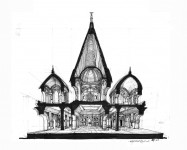
In the mid 19th century temple style had been amalgamated with European influences. One of the influences is KHELARAM DATAR BARI Temple. The planning organisation of the temple is uncommon. Ground floor is consisted of orthogonal thick brick walls, which appears as a pavilion environ at the ground strata. The ground floor is contained with a central compartment which is complementing the upper floor GARVAGRIHA and furthers the conical spire. Ground floor eventually is designed for separate offering chambers; however an axial direction is prominent in the plan. Two stairs are settled on the corners for vertical circulation.
Upper floor is arranged with small huts of Bengals, combination of dochala and charchar chala kiosks arranged on the edges where central conical spire temple is lofted. Precisely a proportionate base is containing a village along with a temple; an allegory would have been an authentic theme of this very temple. Rationally the ground floor acts as the mandap for the devotees and rest area for the travellers, upper floor is more in to with the religious emblems.
Course of action of the structure is associated with bricks and lime mortar paste. Where the flat roofing usually done by the small series vaulting system.
Remarks and end words
The sectional perspective depicts hierarchy in spatial relationship. The reed hut shape kiosks roofs are crafted with bended bricks and thick lime mortar plaster. On the other hand the giant conical spire is constructed intelligently with cobelling brick works and remains hollow inside corresponding a false dome from the GARVAGRIHA chamber. Marvellously accommodated chala kiosks seats around and narrow passages creates ambiance of compactness of temples on the roof deck.
Three examples from different eras reflect divers’ architectural meaning. besides three structures are containing themes by analyzing the sectional perspectives. The halls of central shrine at the Sompur Buddhist monastery used to remain retain with controlled natural light to generate spiritual quintessence. Buddhist builders are the pioneer of building; huge structure in this hinterland, the central shrine of the Shompur monastery is an abstract representation of ethos of Buddhists. Darasbari mosque purposefully built for the educational matter. This is the only mosque which is fully occupied with all sultanate mosque characteristics, having said that the mosque is ornate with unique embellishment; terracotta is highly precious and it is chiselled on the mehrab panels. Sectional perspective is contained with central prayer hall (nave), hit towards a grand curved and terracotta mehrab panel works. A missing pulpit or raised minber is still evident on the west wall. This is supposed to be the unique feature of all Sultanate mosques in Bangladesh. On the northern gallery an elaborated mezzanine floor used to be the Zehahah floor (ladies gallery). Four stumpy columns are visible at the compartment. The outer west facade (external mehrab facade) is decorated in a bottom up process. And lastly the Khelaram Datar Bari temple is a combination of Bengal-European style, stating a story of theme which enrols as the dramatic situation for the structure. Structural significance is highly advanced to secure a high-rise mass form during those days. Interior of the temple is accommodative for the congregation, which is uncommon in subject of other temple style in Bangladesh. Housing several compartments in one ground floor is the mesmerizing till dates.
So, in this hinterland Bengal experienced vivid architectural solutions, this research is anticipated to focus on the diversity in ancient architecture that has been a profound phenomenon from time immemorial, Notable in planning organisation, art of the form (building mass), construction process and lastly in celebrating the ritual conceptions; these three unique historical architectures proves and provide strong statements in the field of art and architectural combat.
Reference:
Ahmed, Nazimuddin. Discover the Monuments of Bangladesh. Dhaka: U Limited, 1984. Print.
Ahmed, Nazimuddin. Islamic Heritage of Bangladesh. Dacca: Dept. of Films and Publications, Ministry of Information & Broadcasting, Govt. of the People’s Republic of Bangladesh, 1980. Print.
Ahmed, Nazimuddin. MAHASTHAN, MAINAMATI, PAHARPUR (মহাস্থান, ময়নামতি, পাহাড়পুর). 3rd ed. Dhaka: Department of Archaeology Bangladesh, 1997. Print.
AHMED, NAZIMUDDIN. THE BUILDINGS OF KHAN JAHAN: In and Around Bagerhat. Dhaka: U Limited, 1989. Print.
Ahmed, Nizamuddin. Epic Stories in Terracotta: Depicted on Kantanagar Temple Bangladesh. Dhaka: U Limited, 1990. Print.
Alam, A.K.M.Shamsul. An Albam of Archaeological Relics in Bangladesh. Dhaka: Directorate of Archaeology and Museums, 1984. Print.
Alam, A.K.M.Shamsul. MAINAMATI (ময়নামতি). Dacca: Department of Archaeology and Museum, Bangladesh, 1976. Print.
Alam, Md Shafiqul., and Jean-François Salles. France-Bangladesh Joint Venture Excavations at Mahasthangarh: First Interim Report, 1993-1999. Dhaka: Dept. of Archaeology, Ministry of Cultural Affairs, Govt. of the People’s Republic of Bangladesh, 2001. Print.
Alam, Md. Shafiqul, Md. Abdul Hashem Miah, and Md. Abdul Khaleque. Excavations at BAHIRDHAP (বাহিরধাপ), Bogra (বগুড়া). Ed. Nizamuddin Ahmed, Mohammed ALI, and Md. Shafiqul Alam. Dhaka (ঢাকা): Department of Archaeology, Bangladesh, 2000. Print.
Ali, A K M Yaqub. “PUNDRANAGARA: AN EMPORIUM OF NORTH BENGAL.” The Bengal Muslim Research Institute UK (n.d.): n. pag. Web.
Asher, Catherine B. “Inventory of Key Monuments. Art and Archaeology Research Papers.” The Islamic Heritage of Bengal (1984): 71. P