
 DESIGN. ARCHITECTURE. CULTURE
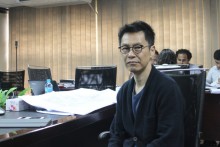
WOHA is one of the critically acclaimed contemporary architectural practices that earned reputation for it’s climate responsive sustainable architecture. Working over different continents and (therefore)in diversified climatic conditions WOHA received numerous awards for their skillful implementation of technological aspects while respecting the context. culture and humanity. Ar Wong Mun Summ, being one of the founders of WOHA, emphasizes on reading a culture with respect to its context and implement his knowledge to create a rational piece instead of, what he says ‘the Vanity part’ of Architecture. CONTEXT team met him few weeks ago to learn his views form a global architect’s perspective.
1. When you work in a new context, how do you start? What considerations do you make?
We travel quite a bit and work in many countries. I think the most important thing is to acknowledge the fact that each place, each location is set in a completely different context. We need to be sensitive and be able to observe the differences and think how we can apply our knowledge in diverse situations. One of the crucial things is climate which makes a lot of difference to architecture and the kind of building typologies that you can adopt in a particular context. At the same time, one must think of ways to innovate, keeping the differences in mind. For us, climate is the biggest generator and modifier for design followed next by culture. Different cultures have evolved over history to affect the way people live. That’s something we need to acknowledge. We need to talk to people and understand the way things are done in a particular location. There are several things that unify mankind – we all need a roof over our heads, but creating comfort is a simple thing. Subtleties apply to how people live their lives. We observe the differences in people’s livesand make changes in our designsaccordingly.
2. WOHA is commissioned to design BRAC University campus in Dhaka. Could you point out some issues that you appraised before starting the project?
As a part of the adjudication for Aga Khan Award for Architecture in 2006, Professor Zainab F. Ali of BRAC University came to study our building, No. 1 Moulmein Rise in Singapore. Once we met,she invited us to come to Dhaka to give a talk and to understand the city, so we delivered a lecture at BRAC University. Later we were asked to consider taking on the BRAC University campus project. In the process we visited Dhaka, and as part of the trip, we were shown the rich architectural heritage of Bangladesh. Dhaka is blessed, not only historically, but also with modern architecture heritage – from Louis Kahn’s Parliament House to recent projects. Since Dhaka has such a rich heritage, we were honoured to come and experience the city ourselves. Louis Kahn is one of my inspirations in architecture, and to be able to see someone who is from the temperate zone, adapting some of his ideas for Dhaka,i.e the tropics, was very awe-inspiring. That was something we have always been affected by- seeing how tropical architecture should be different from the temperate zone and the ways we could evolve the ideas of temperate zone in the tropical build. Seeing someone, who was one of the great modernist architects, to have considered that, was a true source of inspiration for us.

3. We want to know more about your perception of Dhaka as a city and its development potential.
For us, Dhaka may not necessarily be a well-developed city from a planning perspective, but nevertheless it has organic development, which we appreciate as well. What is equally interesting and empowering for us is to see how we can bring our thinking and strategies to Dhaka in a sensitive way and help the city and country develop a new set of directions for architecture. We have travelled and worked in many places around the world. We have seen developed and developing cities. We have been able to see how a developing city can improve and pick the right direction. An organic city needs a set of good principles to follow. One of the important objectives of the BRAC University project was to see how it could be a catalyst for sensitive development and proper direction, not just for architecture, but also for the city as a whole. We would like to place our project as an inspiration for a new generation of architects and developers to build better in Dhaka.
4. Sounds like you were keen to set the project as an example.
Correct, setting an example is always very important. We saw the site and the challenges, we felt it was necessary for us to demonstrate what can be an appropriate solution for this university and also a building for Dhaka, combining the richness of architecture that exists in Dhaka and to bring good examples, attitudes and strategies to set the right path.
5. We saw a lecture by a Singaporean environmentalist a few days ago, who showed some images of his city from 1967 and discussed how Singapore has got to the point where it is now. In 1967 Singapore and Dhaka were more or less in the same development condition. To our benefit we (Bangladesh) had agricultural and mining resources unlike Singapore which was more of a business district. Singapore has come a long way and positions itself as one of the strongest developed cities in Asia. What do you think went inappropriate for Dhaka?
That is a tricky question. Singapore is very blessed, we had a leader with a good sense of governance, Lee Kuan Yew. Two key ways of achieving growth were good vision and no corruption. The hallmark of good vision was how much he put emphasis on housing and education in order to develop the city. These two things were tackled robustly from the early stages of independence. People became well-educated and well-trained, and were given a shelter over their head very quickly. Home ownership percentage is almost 80-85% in Singapore, which is unheard of in other countries. That makes a lot of difference. When the basic needs are addressed, the city moves very quickly. Clearly, good governance is necessary for all cities in the world.

6. So, you mean to say it is important to focus on social development initially, before moving on to some other parameters?
In our modern context, communication is very different from the past. Nowadays we have the opportunity for a bottom-up kind of communication. Singapore has always followed a top-down approach of decision making. To think whether it is possible to have a bottom-up governance for new development would be very interesting. Increasingly, I’m noticing how social order can be created through a bottom-up approach in modern world. With social media in place, people can demand for good governance, they can do checks onthe decision making of authorities. We as citizens need to treat social media as a good platform to make positive changes, not hide behind a computer screen and make cowardly, hateful comments. Dhaka has the potential for that kind of change. Developing cities can use technology and leap into the future and join the ranks of developed cities, I believe that is very empowering. In today’s globalised world technology is not just restricted to wealthy countries, technology has now come to a point where it is very affordable. In Africa, homes can now have solar panels. One solar panel can provide enough energy in a home to support basic needs like clean water and lighting. Alternative energy use technology has brought change in the world today. A place like Dhaka can recognize this potential. It is very possible and is an interesting thing to follow in the next few decades. The transformation can be very effective and cities like Dhaka could make the quantum leap into the future.
However, it is also very important to adopt the right policies. People should not be only worrying about themselves, they should be looking at the bigger picture and a larger extent and see the potential of the city.
7. Bangladesh is a growing economy. What is your advice for young architects who are just starting off their career?
Architecture is an interesting discipline, but there is a tendency for architects to become inward looking and locked in the trend of serving only the rich and wealthy. People think architecture is all about beauty and proportion. But there is also a social aspect of architecture that young architects should understand and they must be empowered to work on strategies to improve the way the majority of people live, not just a small affluent percentage of the population. In Dhaka, that should be the fundamental drive in architecture. Dhaka being one of the less developed and less wealthy cities, should have people who feel the need to do more. The vanity part of architecture should be played down. We all want to do beautiful projects. But it is equally necessary for architects to do the right thing. It becomes good architecture when you can do both. I hope architects do not only see one side of what architecture is all about. That is always my message for young architects and students- learn to see the wider perspective.
Narrator: Azizul Mohith and Forhat Afzal
Editor: Azizul Mohith
CONTEXT Contributor: Forhat Afzal is an Academic Associate in Bengal Institute of Architecture, Landscape and Settlement, Dhaka, Bangladesh.
| From the Architect |
Lalon, a 19th century philosopher mystic minstrel says “If there is something not inside the body, then it is not outside of the body either.” He says, Body and mind or thoughts are two different things intermingles and intertwines creates human being. Dialogue between body and good thoughts creates good human being. The thoughts are like birds, comes inside the body and goes out of it. They are interdependent yet independent and they belong each other and belong to themselves. So, the meaning of death is going out of the thoughts from the body and never comes back.


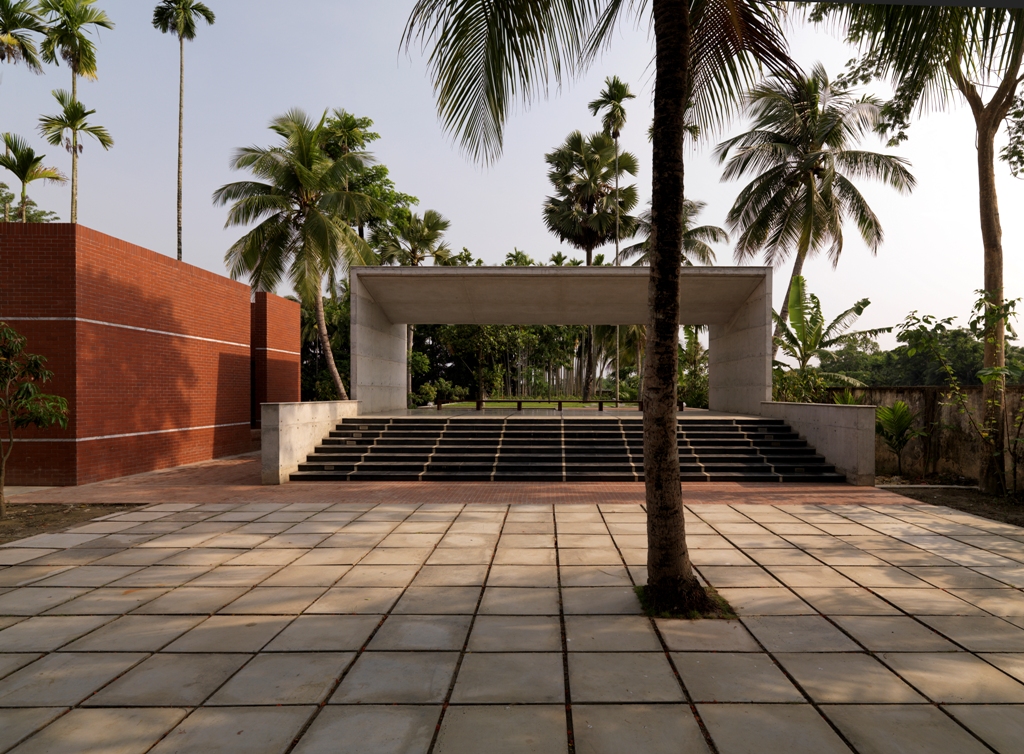
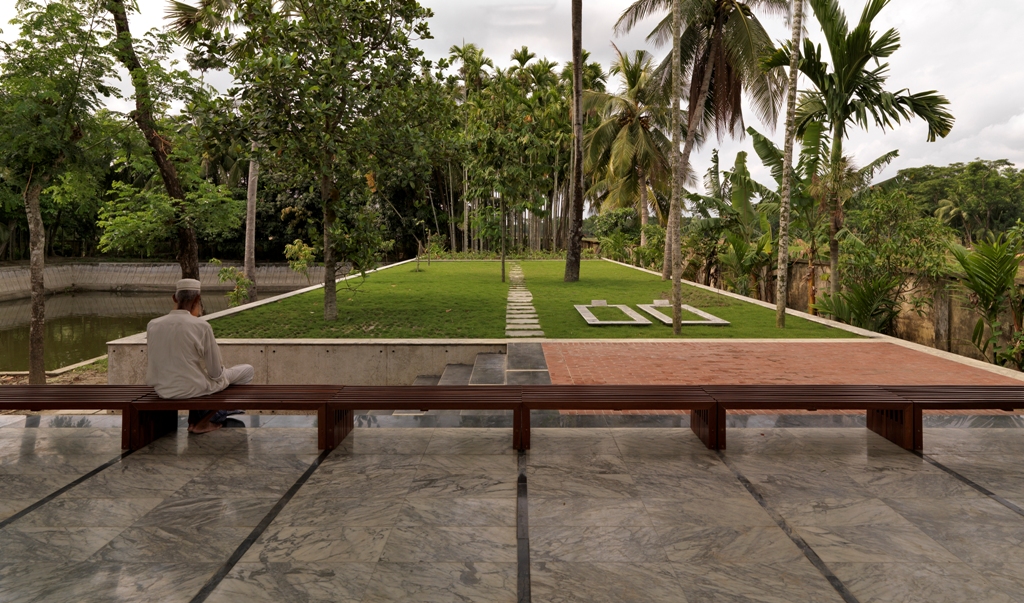
During the Graveyard project design as architect says, “I drew a line between life and death considering life as terrestrial or temporal one side and the other death as celestial. When I elevated the line ,It became a window which is actually dividing and connecting the life as terrestrial and death as celestial. Architecturally the window made of simple as cast concrete strongly positioned in the natural rural setup looking at the dense betel nut trees and green village around. The raised platform here, is the threshold space, a silent space of thoughts as the 12th century philosopher Jalaludding Rumi says, “Silence is the language of God. Rest all are the poor translations.”



| Image Gallery |




|Text from the student|
“art, freedom & creativity will change society faster than politics ” – Victor Pinchuk (philanthropist, art critic, art collector)
If we see today’s world, where politics is contaminated, so now it’s time to rejuvenate our society by CREATIVITY… now the question arise: “what is CREATIVITY ??? !!!”
Here, “Creativity is the act of turning new & Imaginative ideas into reality”
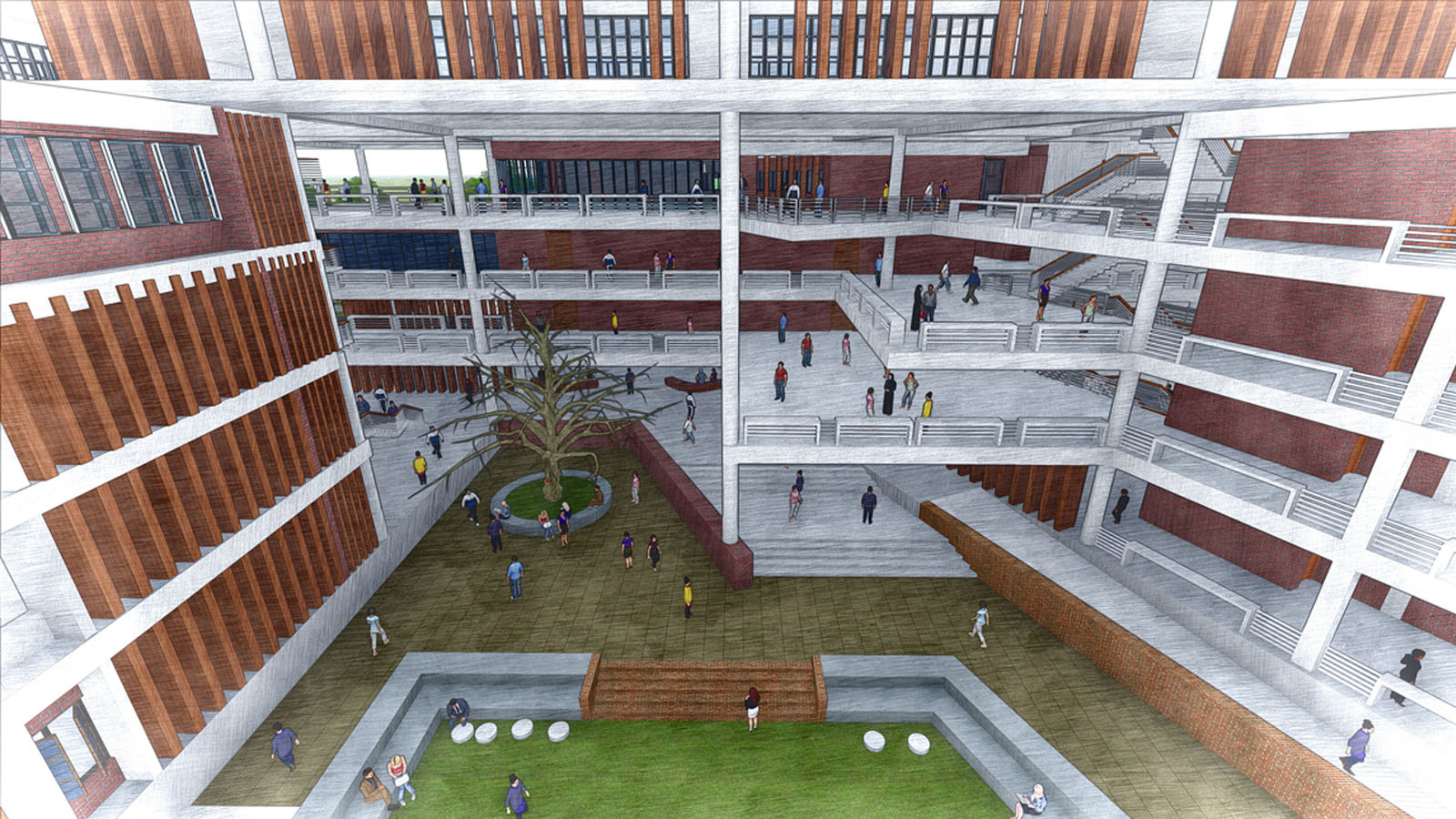
Every person has his/her own creativity that needs practice to be flourished. It needs a media which can help him/her to develop the power of his/her creativity. The aim of this project is to build a university (Campus for Shanto Mariam University of Creative Technology) which would provide all the facilities required for the students interested in the field of Design and Performing Arts.
The proposed University of Creative Technology is going to be constructed 40 kilometers away from Dhaka city on 15 acres of land. There are ample opportunities in terms of creating spaces and relating interior spaces with the exterior space & creating different types of creative space along departmental studios. Basically this university has total five department along two faulty, these are: Design Faulty( Fashion Department & Graphic Department) & Performing Art Faculty ( Dance, Drama & Music Department) along with TSC, hostel for Male & Female, Teachers Residence, Common Facilities (Multi-Purpose Hall, Playfield, amphitheater, exhibition Hall) & Administration. My main challenge was To make a bridge in between all department’s DIVERSITY by Creativity, because all departments are related by creative field along creativity.
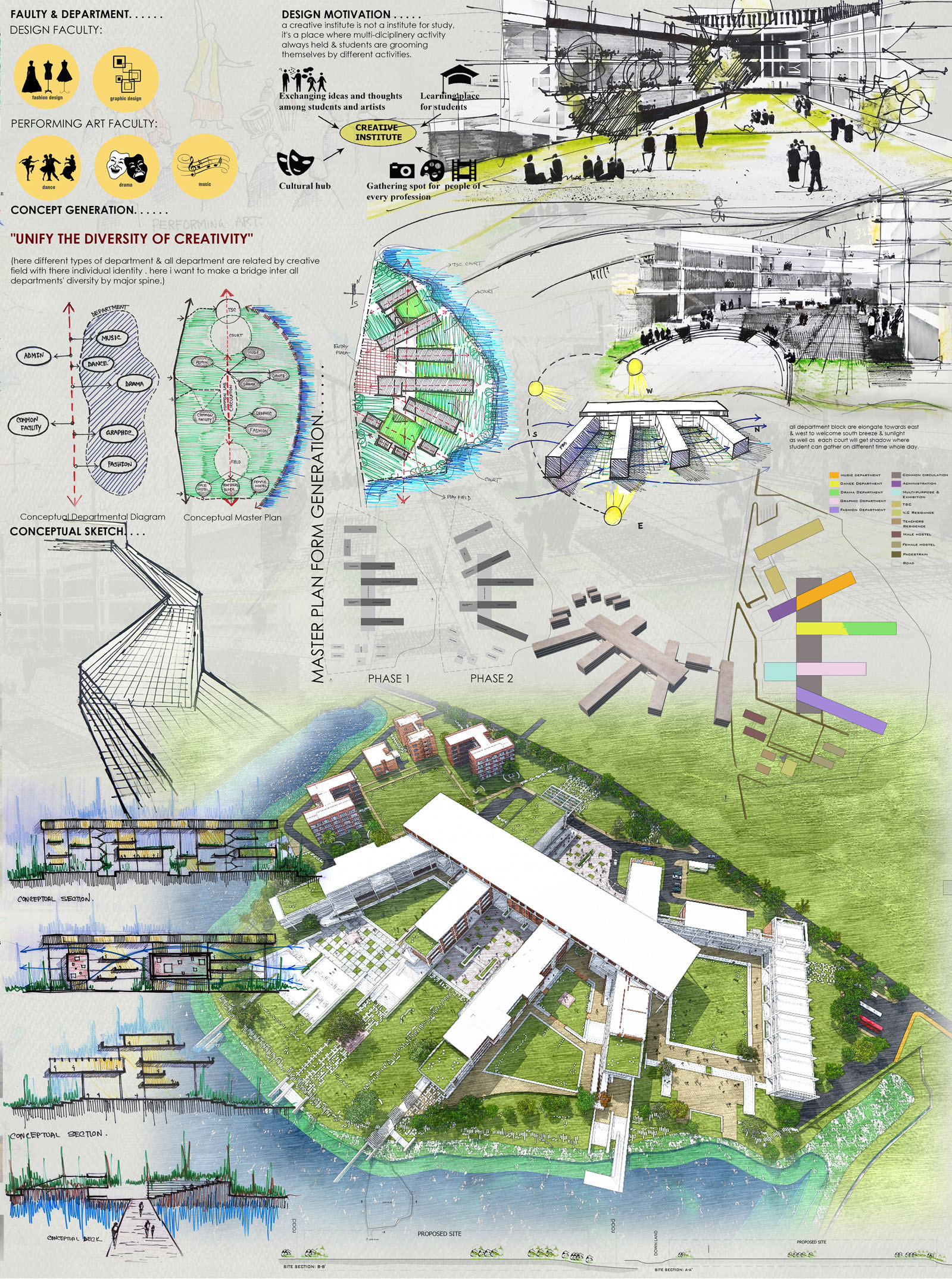
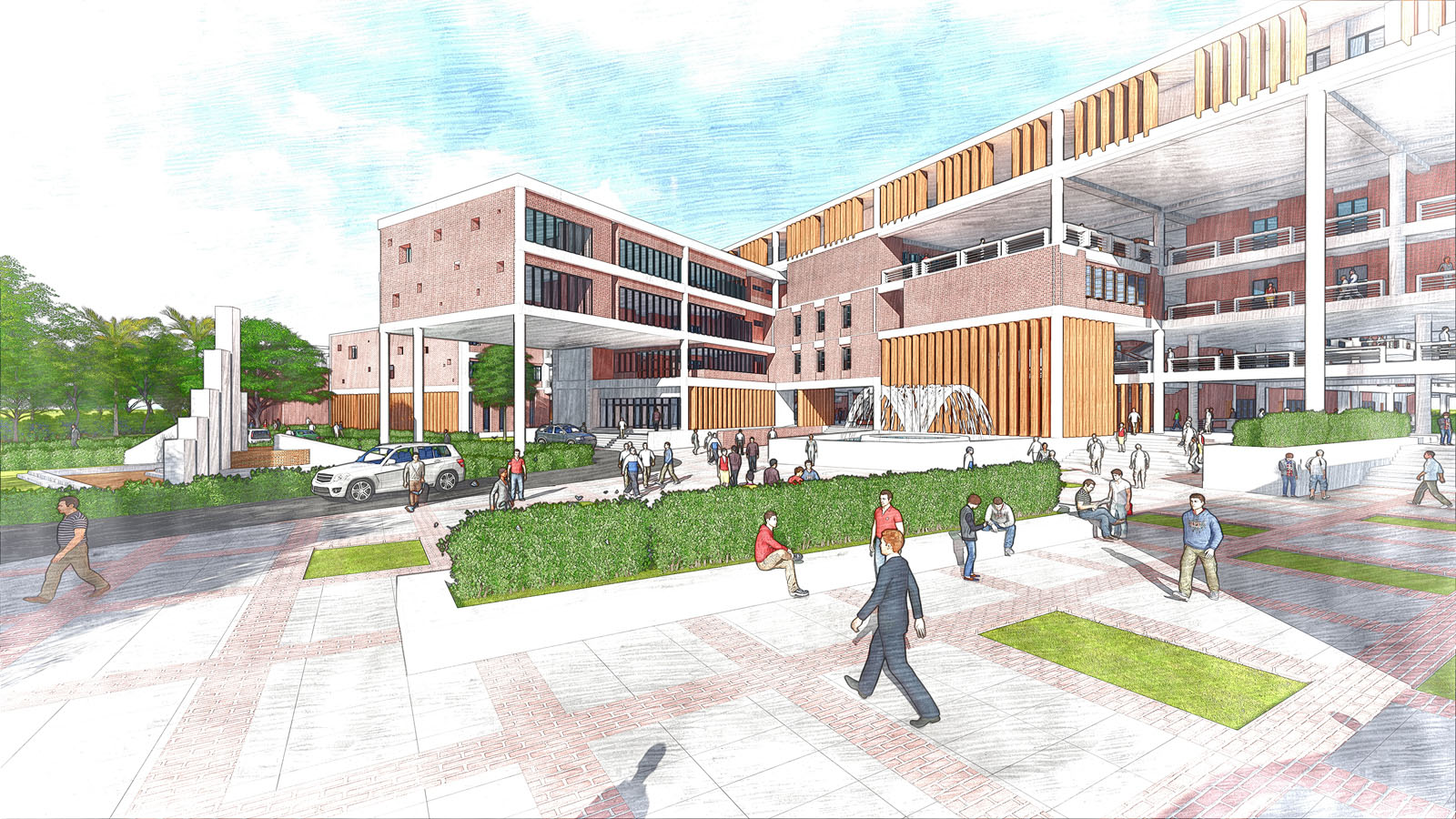
Campus Design for SMUCT © Mahir Rashed
Project Brief:
A creative institute is not a institute for study. Rather, it’s a place where multi-disciplinary activities are always held & students are grooming themselves by different types of social, cultural activity. here I have tried to make different type of activity spaces which will promote learning among students from different point of view.
-Exchanging ideas & thoughts among students & artists is very important on a creative campus
-To develop a learning place or space for students which is more rational for study.
-A Creative institute is a gathering spot for different types of professional people , there thy come, spent time, & share their knowledge with learners.

Campus Design for SMUCT © Mahir Rashed

Campus Design for SMUCT © Mahir Rashed
The idea was to develop a master plan with the simplicity where students can move along a simple pathway connecting all departments under a datum to create a bonding between all. Different types of outdoor, semi-outdoor & indoor spaces are connected under this datum by double height, triple height spaces.
All Practical class rooms are located in the upper floors because those are functionally similar for all departments. All massing are elongated on east-west axis to promote the south wind-flow & sun-light where all corridors are facing to south.

Campus Design for SMUCT © Mahir Rashed
Efforts are made to integrate the TSC zone & Residential zone by symmetrical composition to hold the entire master plan and for making one body of total volume. All masses are elongated on the down land of east side which are flooded on monsoon season, only because of the views and openness of site surrounding . Different types of courtyards are proposed on the site such as: Dance, Drama & Music Court; Design Court; Tsc Court, Entry Court ,Central court. In a nut shell I tried to develop a master plan of a university along with all kind of facility & functional need while respecting the site context and indigenous value.
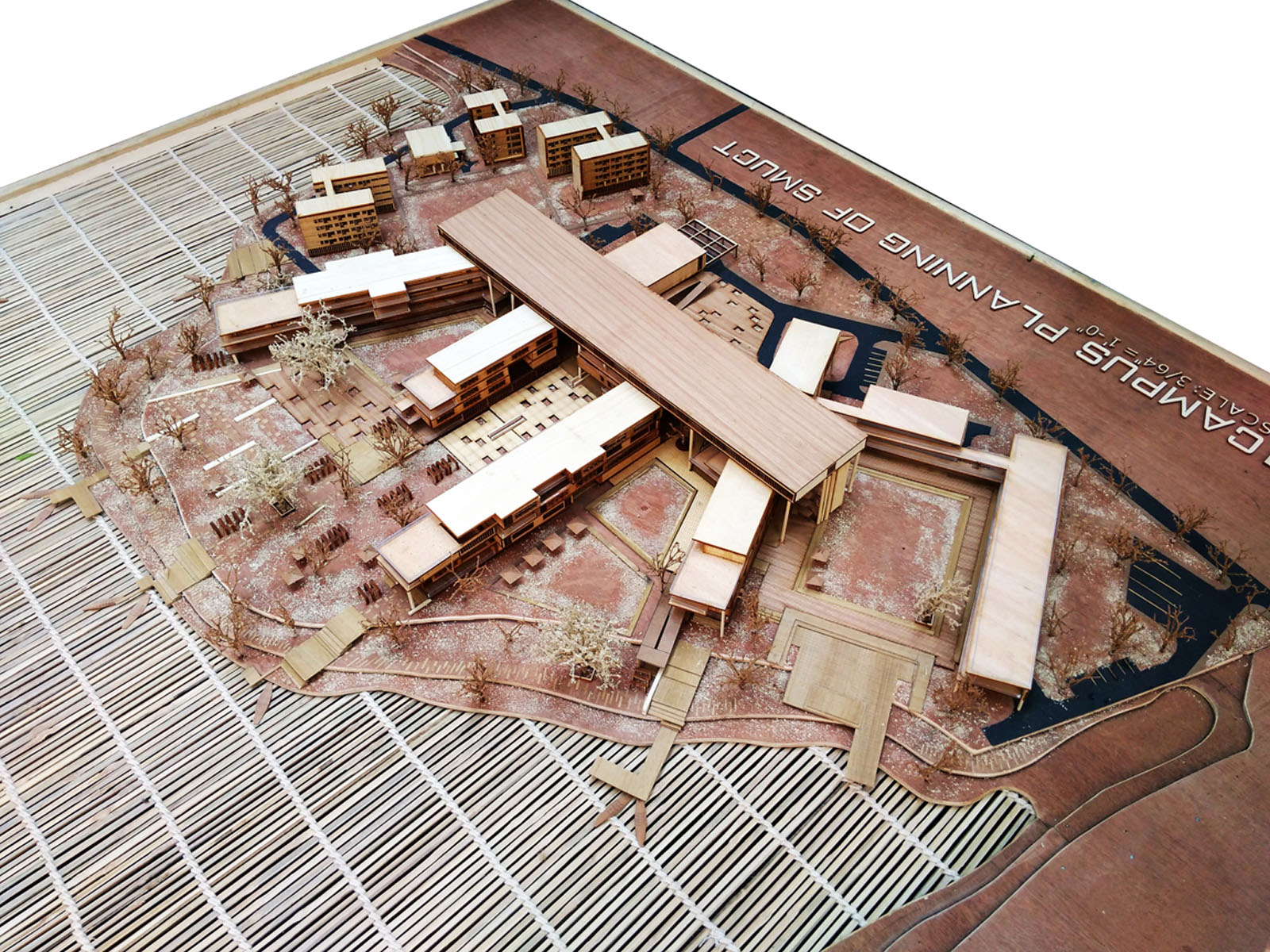
Campus Design for SMUCT © Mahir Rashed
|Image Gallery|


|from the Architect |
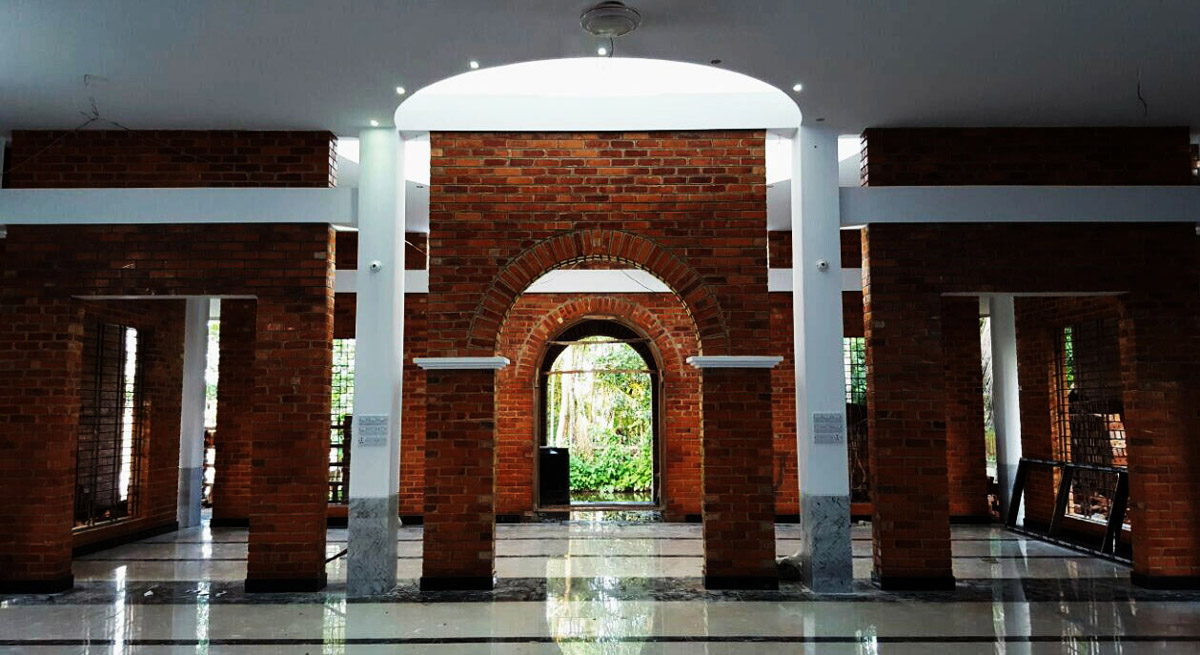
Many of my contemporaries may criticize that the modern Islamic architecture should be done to the exclusion of its symbolic feature (dome, arch). But I couldn’t exclude them when I saw too much emotions and feelings about those among the villagers. Such symbolic features are often associated with strong sense of identity and visual metaphors ; for instance when we see an arch, dome and minaret we create a mental image of a mosque. As an architect I’m always respectful to user’s faith, perception and priority, so I thought if I would use those symbolic features, but also making them special so it will become more acceptable to the villagers.


To me, it’s not fair to leave a box of carbon in such a beautiful natural setting. So I made an alliance between nature & building. By designing large openings and apertures, I did not restrict the natural air to flow through. The filtered light coming from the split-dome on top and screen walls on sides all together creates a spiritual ambiance which also works as the means to sense the Creator’s creation. I also kept in mind that, this is a very straightforward approach to comply with the utilitarian and spiritual aspects of Islamic architecture.
Last but not least, I used local materials (brick mainly) & local masons to build the structure to create sense of ownership among the community people.


| Image gallery |


The purpose of architecture is not only to provide people’s physical, social and economic needs, but also to stimulate and respond to their cultural and spiritual expectations. Our multifaceted cultural traditions are influenced by our diverse livelihoods, ethnicities, languages, localities and by religious and spiritual belief. So the challenge is how to address this cultural pluralism in architecture. The following student work seeks to respond to this challenge by offering a vision for cultural center for Santal (সাঁওতাল) ethnic community that fortifies cultural traditions and creates bridges between locals and visitors.- Editor
The northwestern belt of Bangladesh is the home of the Santali speaking native people- an indigenous ethnic community. Among the 27 ethnic tribes in Bangladesh (pop census, 2011), Santals are one of the oldest communities living a humble life in the pristine natural surroundings of the area for thousands of years. Santal society reserves vast & rich cultural heritage. Unfortunately their social solidarity, religion, and traditions as a distinct culture is at stake today.


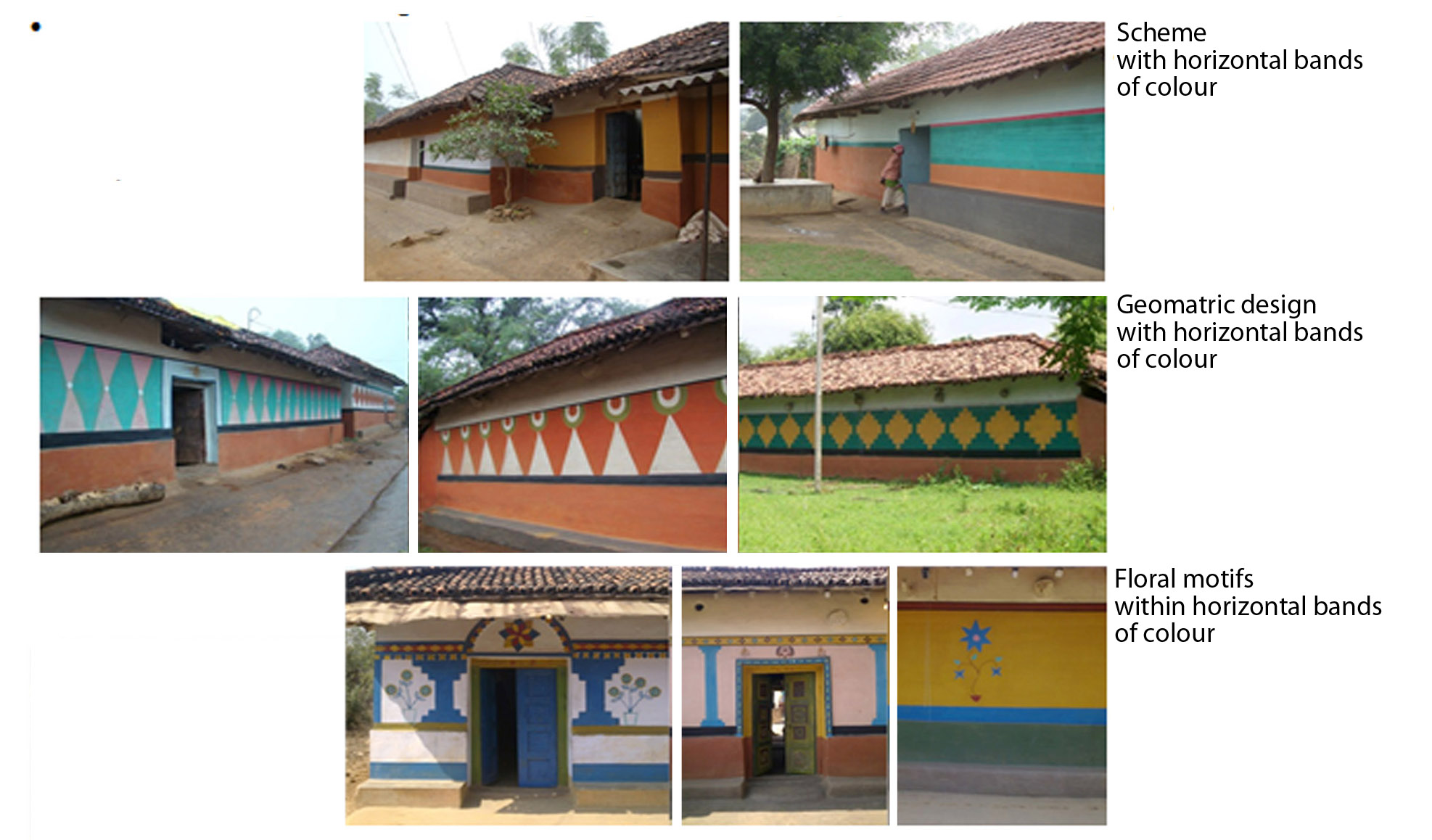
Despite many ups and downs, pains and pleasures, the life of Santal people have a different symphony of their own. Traditionally they depend on hunting, fishing and cultivation. They live with festivity. In their life and tradition dance and music are deeply embedded that leads them towards the joy of life and living.
Perhaps such cultural practices of Santali community work hand in hand with their settlement system where every elements of settlement carry specific cultural meaning. Kulhi – the village path – is the most important community space and sacred place in Santali life. Kulhi binds the Santal families into social relation with one another. It is not only a village path but also a yard to them. It is their collective responsibility to clean the Kulhi . Santal people celebrate their festivals by dancing and singing along the Kulhi. Jaher than – the central community space – is another sacred place where Santal people perform their rituals.
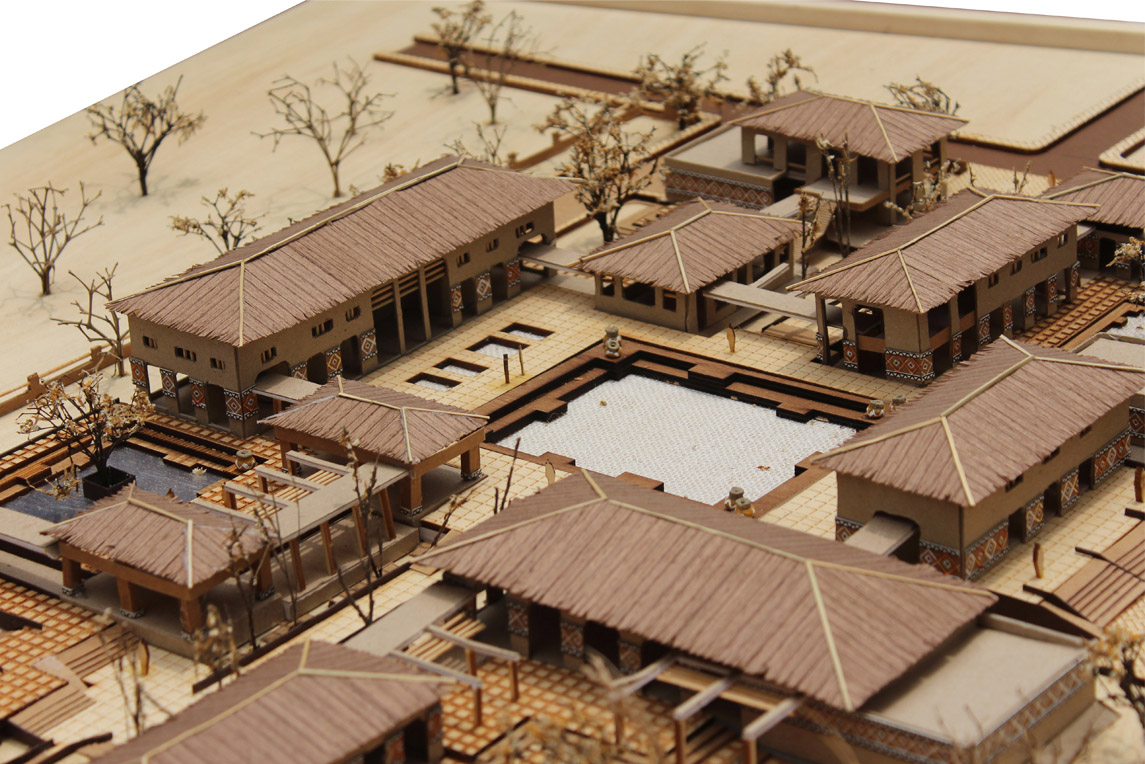

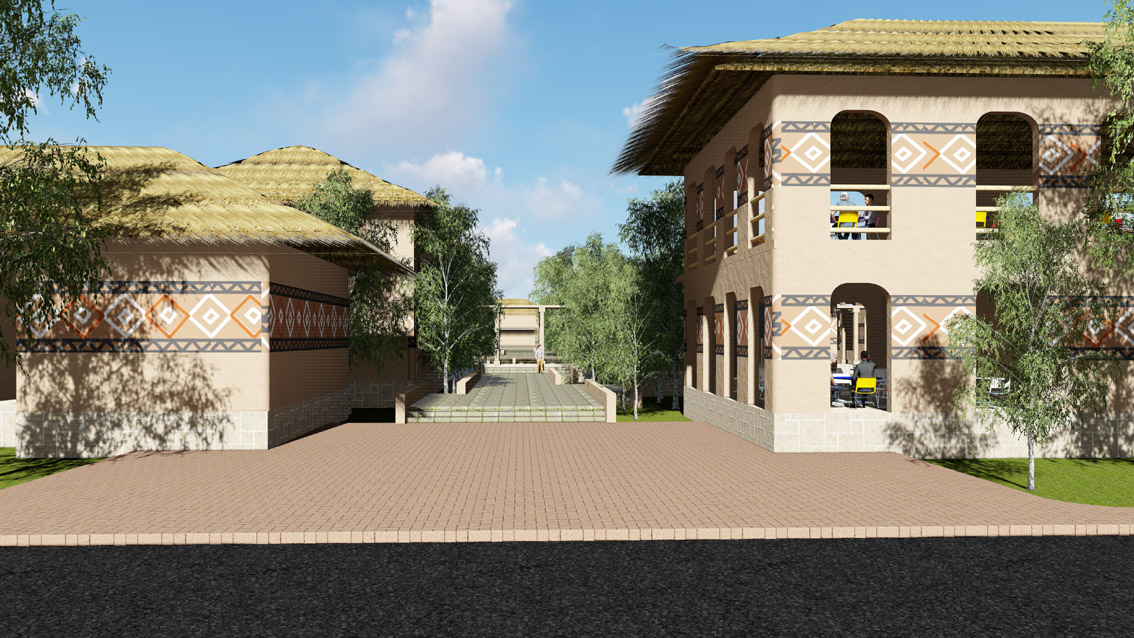
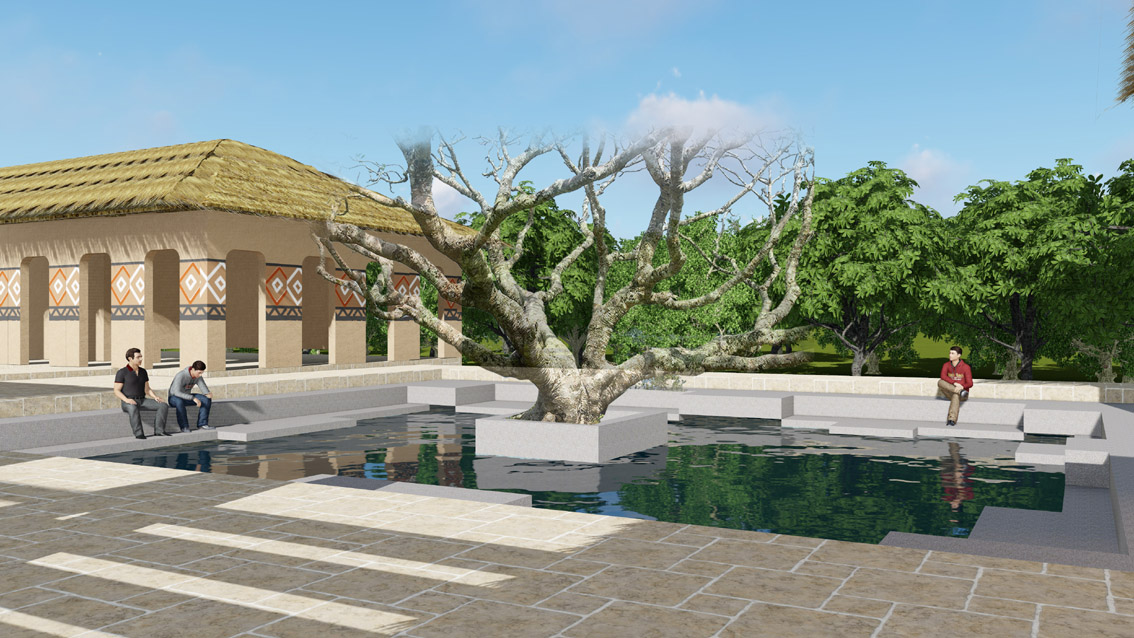
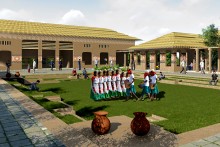
In Dinajpur, this is the project where they can find their hope and inspiration to represent and preserve their culture and values of their life. This cultural complex is envisioned to protect their tangible and intangible culture and tradition. The functional blocks are organized in a linear fashion along the axis following their village pattern where they organize their settlement linearly along the village path. A hybrid system of construction is proposed in order to achieve stability against earthquake and at the same time keep it in coherence with rural soundings. Structures are covered with thatch roof and jute stabilized mud is used as infill so that the Santal people can maintain it by their own.
| Image Gallery |


Call for Entries – ’27th JK Architect of the year awards’ for the year 2017. Application deadline 30th June 2017. Institute of Architects Bangladesh (IAB) encourages all architects to participate in the award program.
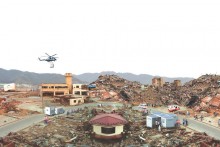
The idea project CRISIS CARE CUBE: An Emergency Healthcare Unit during Disaster by Sthapatto Angon has won the honorable mention award in UIA-PHG International Student & Young Architect Competition 2017. Jointly organized by International Union of Architects and Public Heath Group, the competition aimed at seeking conceptual design proposals for healthcare facility that can fulfill the needs of users and providers in the future.
The competition was launched with a mission to increase the awareness of undergoing transitions of healthcare services by inviting the students and young architects to participate in the design challenges. On June 14, 2017 winners in both categories were announced by the organizer. A team of young architects from Bangladesh – Afrina Haque (H157), Khairul Bashar, & Masum Ul Huq (H159) of Sthapatto Angon– won the honorable mention award in Young Architects category. The team proposed a transportable, modular, smart facility in response to the need of emergency health service for the disaster affected community.
From the submission: “Natural and manmade disasters are very frequent now a days, during and after disaster a good number of people become injured and died. Hospital’s emergency became overcrowded and most of the time they unable to care this sudden number of injured people at that time. Transportation system also collapsed and patients from disaster areas are left without treatments. In this crucial moment people need immediate healthcare support soonest possible time and in this proposal we would like to introduce some Smart Facility which is completely new approach in Healthcare Design.
We generate our idea proposal that ‘during the crisis period not to bring patients (accept the serious one) to the hospital, rather to bring emergency support to the sites of disasters.’ which we named Crisis Care Cube (CCC). We hope it will able to provide advance treatment on site and reduce the pressure on hospitals. It will save times, save lives and handle the crisis more conveniently.” – Sthapatto Angon
Congratulations to all the award recipients and specially to Sthapatto Angon for their achievements.
Click here to view the list of winners.
Visit official website and Facebookpage of Sthapatto Angon.
Chittagong, the economic capital of Bangladesh is also the second largest city of the country. Fairy Hill (Locally known as New market-Hawker market area) is kind of a nucleus to the city of Chittagong. It consists of three hillocks containing CTG Judges’ Court and DC office at the southern hillock and a WASA water tank and former Civil Surgeon residence at the two Northern hillocks’ top points. The aim of the project was to explore the possibilities according to the potential of the vicinity to transform it into a central gathering space. As the port city, the business capital lacks it.

To explain the design process, a small story has to be told. This is the story of a valley that projects people like a projectile from one side to another. Long before, there was no projectile only there was an arch. Many paintings and other documents from British Library, shows the evidence of the calm and soothing environment of the present Fairy Hill as it contained only a few Bungalows of the then officers from East India Company.


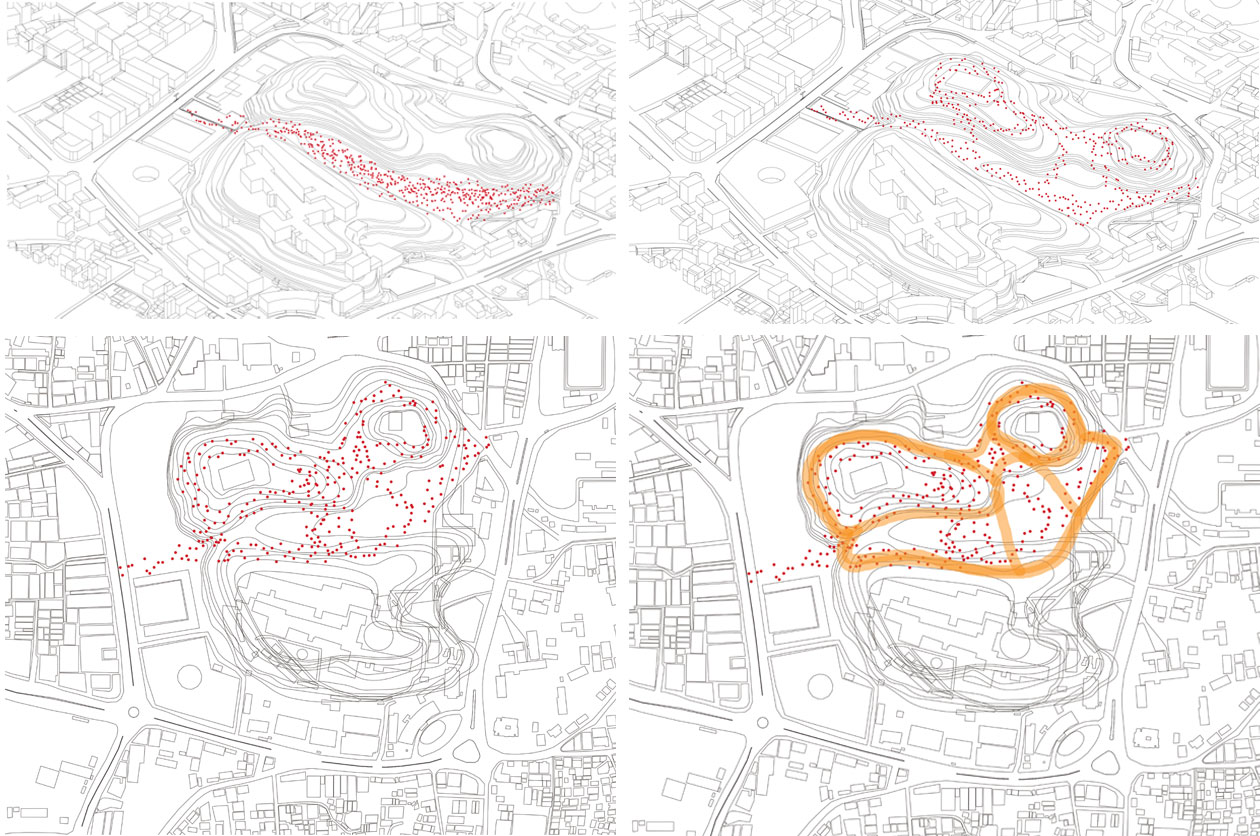
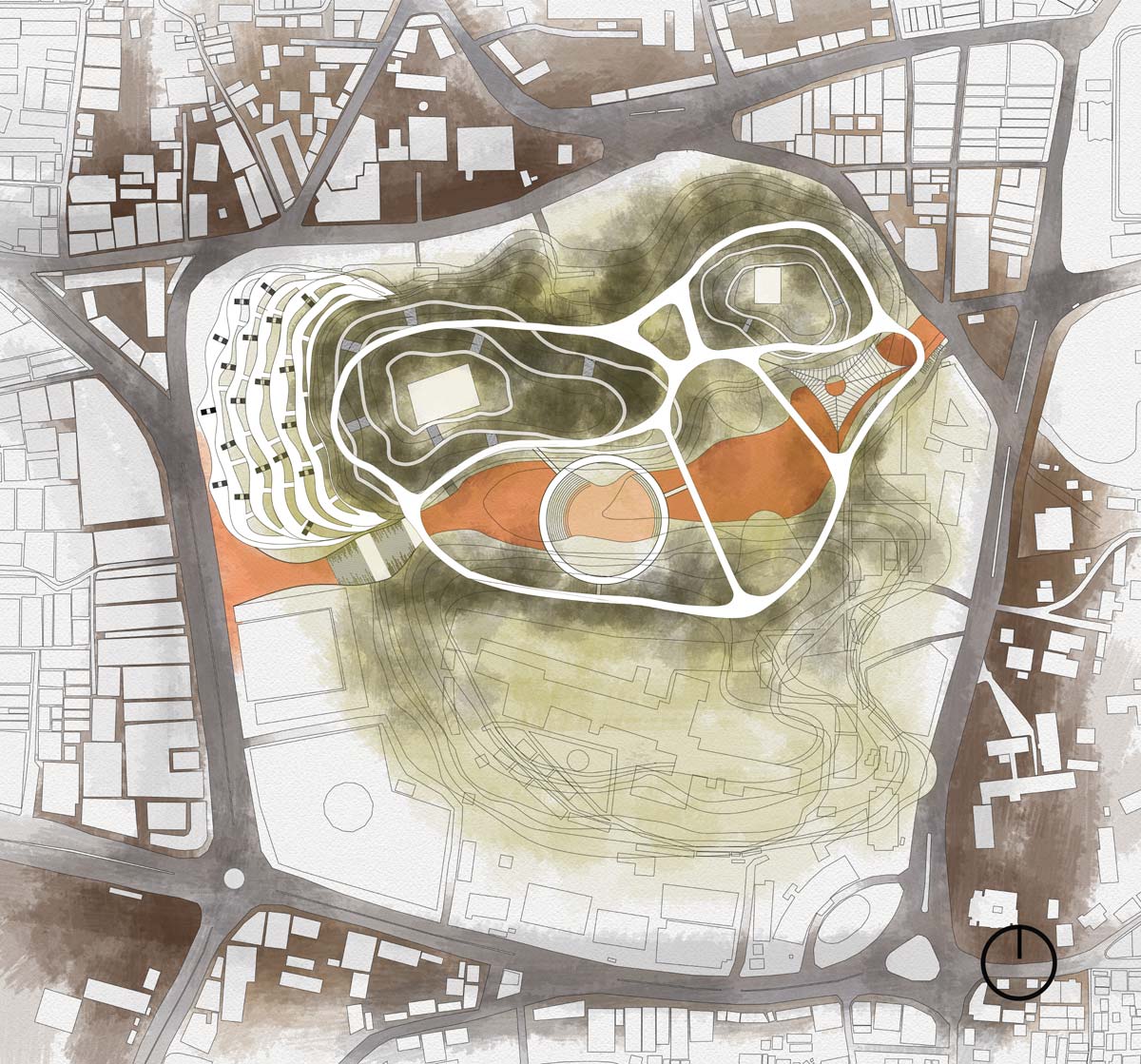
Since then, many changes came. The river Karnafully which previously flowed by the side of Fairy Hill, changed its direction; alternate transportation hubs developed, BRTC bus counter, CTG railway station, cinema palace bus counter etc. evolved; administrative zone built and developed, GPO, New market, CDA, CTG Judges’ Court, District Commissioner’s Office etc. came into being. People started coming to this place for different purposes which triggered vendor (hawkers) tendencies and they started to settle more and more, eventually it crossed the saturation limit and started to encroach as a larger settlement and grew as an organically evolving market. At last in 1972, Chittagong City Corporation named it as a market place named ‘Pouro Zahur Hawkers’ Market’. This is the end of the story of the projectile and at present (2017) this place is a very busy and crowded narrow market place with people being ignorant of the existence of the hillocks and its assets.
To explore an alternate ending of the story of the projectile, a collective of online (google form, facebook groups) and offline field surveys were conducted regarding various topics like age, occupation, income, different preferences, necessities etc. which helped to build the design goal containing café, tourist lodge, market, public plaza, natural retreat, cinema hall, whole sale shops etc. and the design inventory containing WASA tank, Civil Surgeon Residence, Present Hawkers’ market and the two Northern Hillocks.


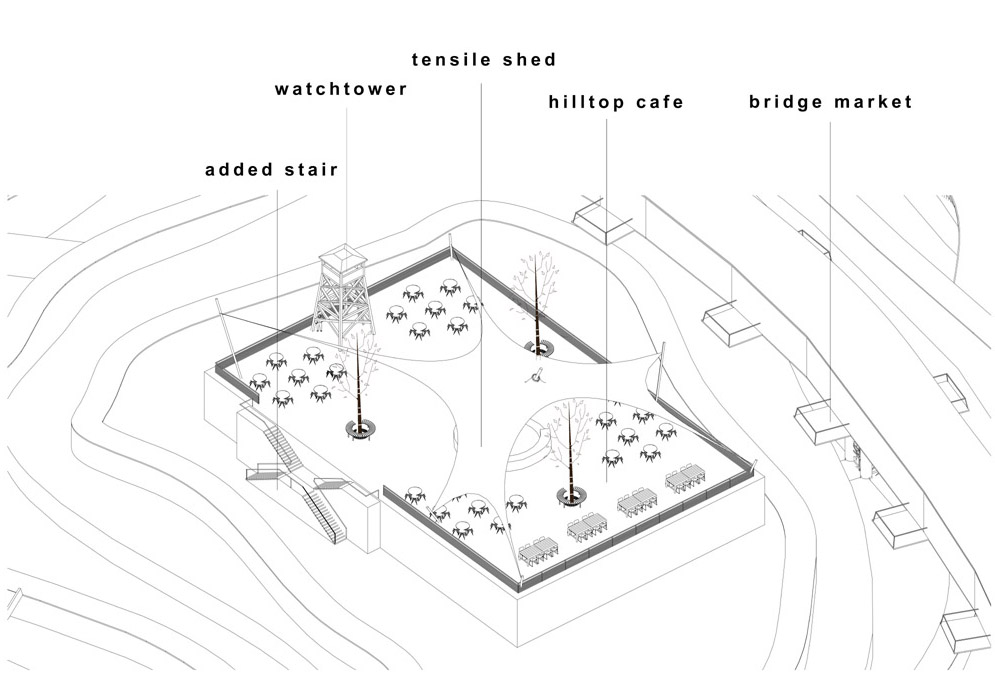

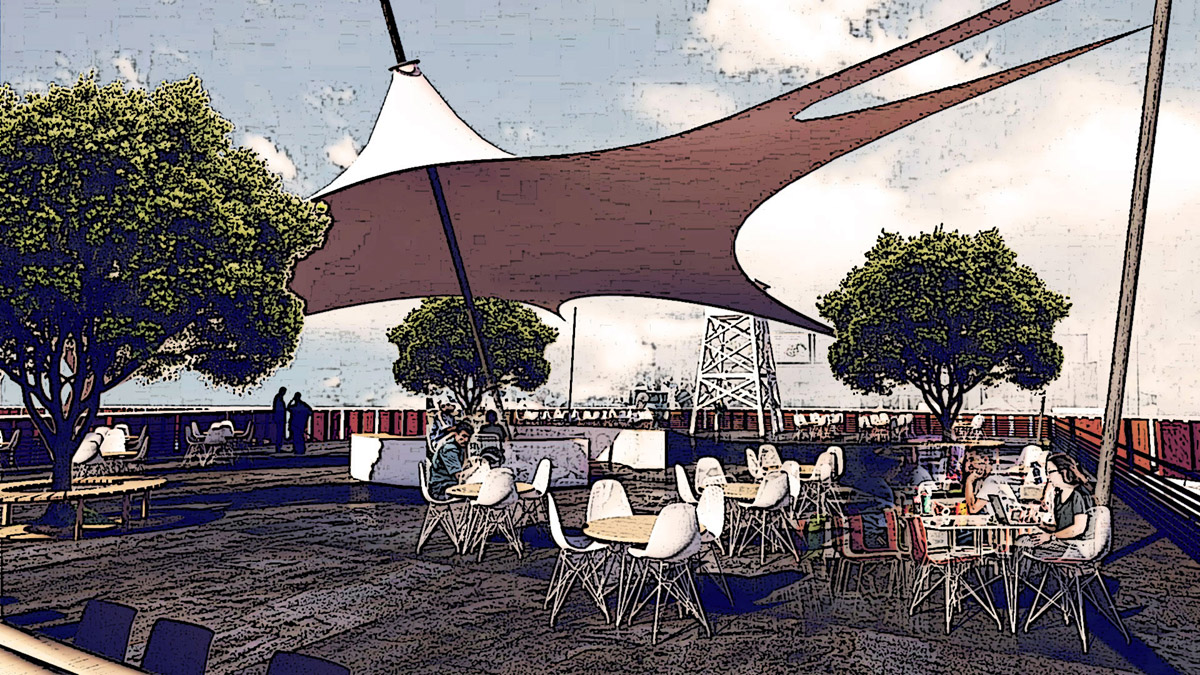


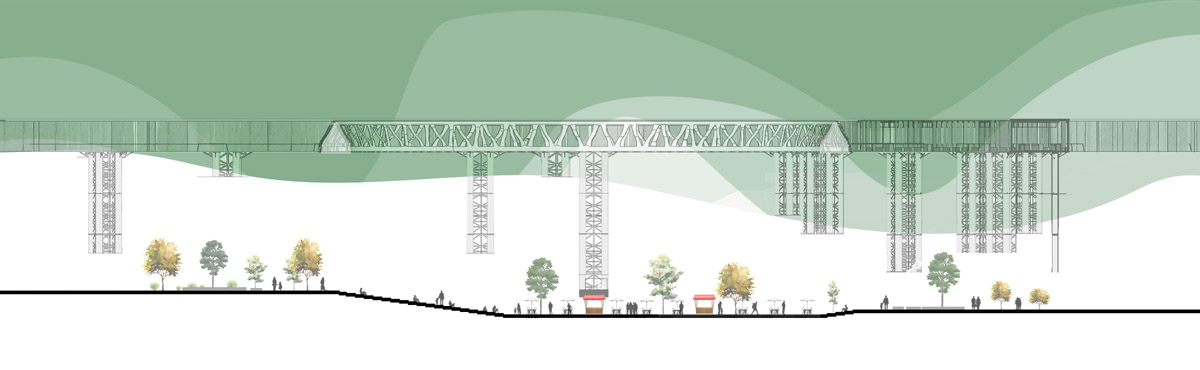
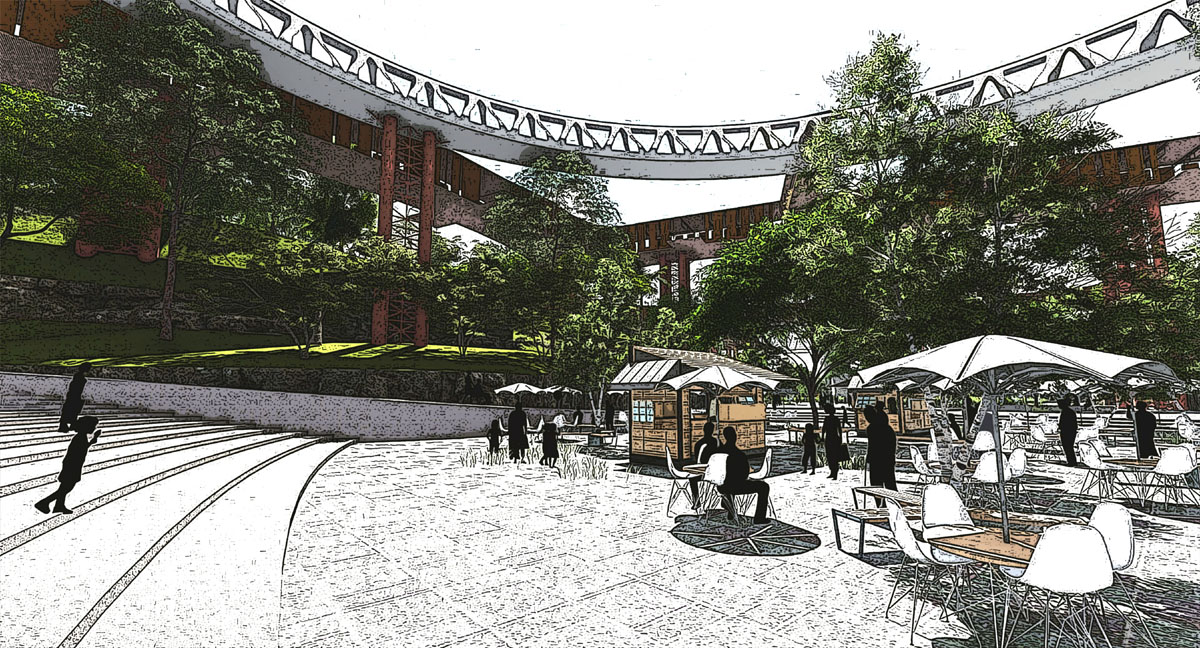

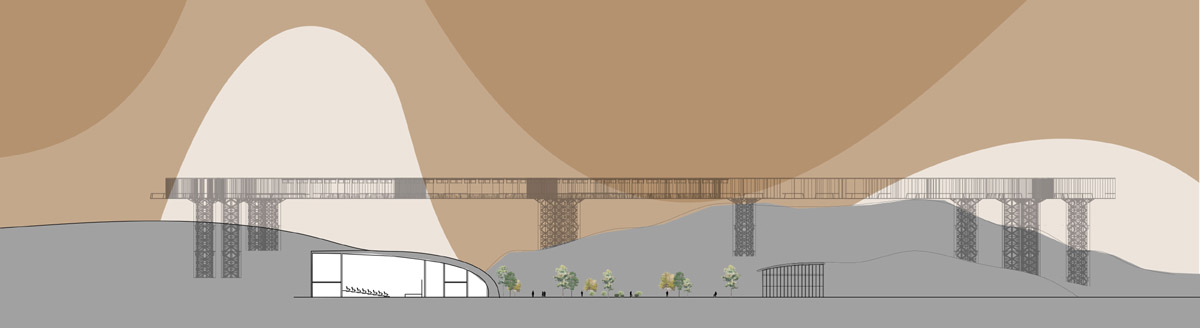

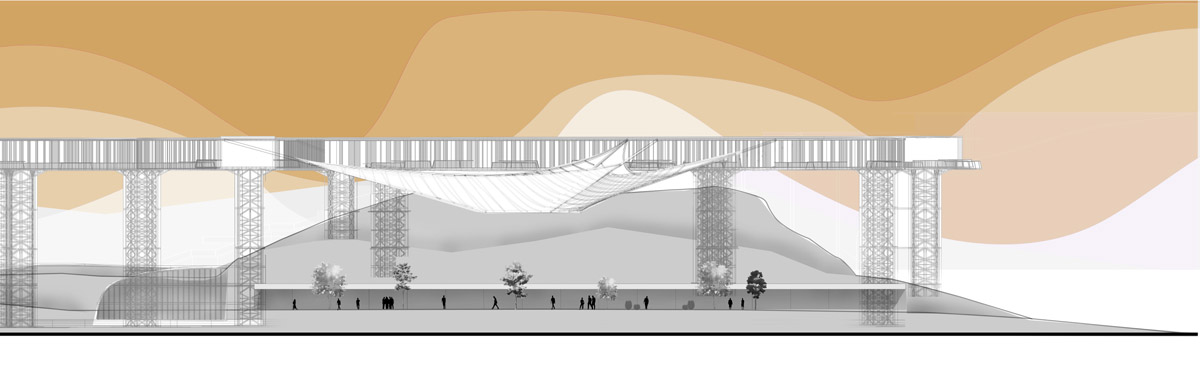
As the aim was to make the place more contextual and design a gathering place where people can actually feel the context and get more facilities at a time, a pedestrian walkway was designed at first connecting the whole area including the hillocks so that people can explore the entire surroundings while shopping. But the problem remains the same as it lays the risk of the growth of another Hawkers’ market alongside the walkway following the same old process. To restrict the growth and encroachment of the hawkers’ activity, the walkway has been elevated from ground and designed as an over bridge which contains e market facility with designed fixtures for the shopkeepers. The remaining space is thus divided into five major zones by the over bridge. The Watchtower: The top of the WASA water tank is transformed into an open roof café and a watchtower by retrofitting without disturbing the use of the tank as a reservoir. Tourist Lodge: The Civil Surgeon Residence is transformed into a tourist lodge by renovation. Open Food Court: An open food court integrated with public plaza and stair has been introduced in the valley portion. Movie Theatre: A pair of movie theatre halls has been accommodated as a multiplex. Tensile Shed: A tensile shed has been designed to give the retail, wholesale zone of the masterplan an identity. The existing electronics markets in the western part of the area known as Shah Amanat Market and Rifle Club Market and also the Co-Operative Book Society Market works as a blockage to the visual approach towards the hillocks, so they are merged together and designed as a staggered single entity to give a visual approach towards the hillocks. The aim was to explore the possibilities of a rigid commercial place and turn it into a more flexible and interactive area. These recreational, cultural, natural, urban, social facilities came out as a conclusion and they have also boosted the commercial values and scopes further.
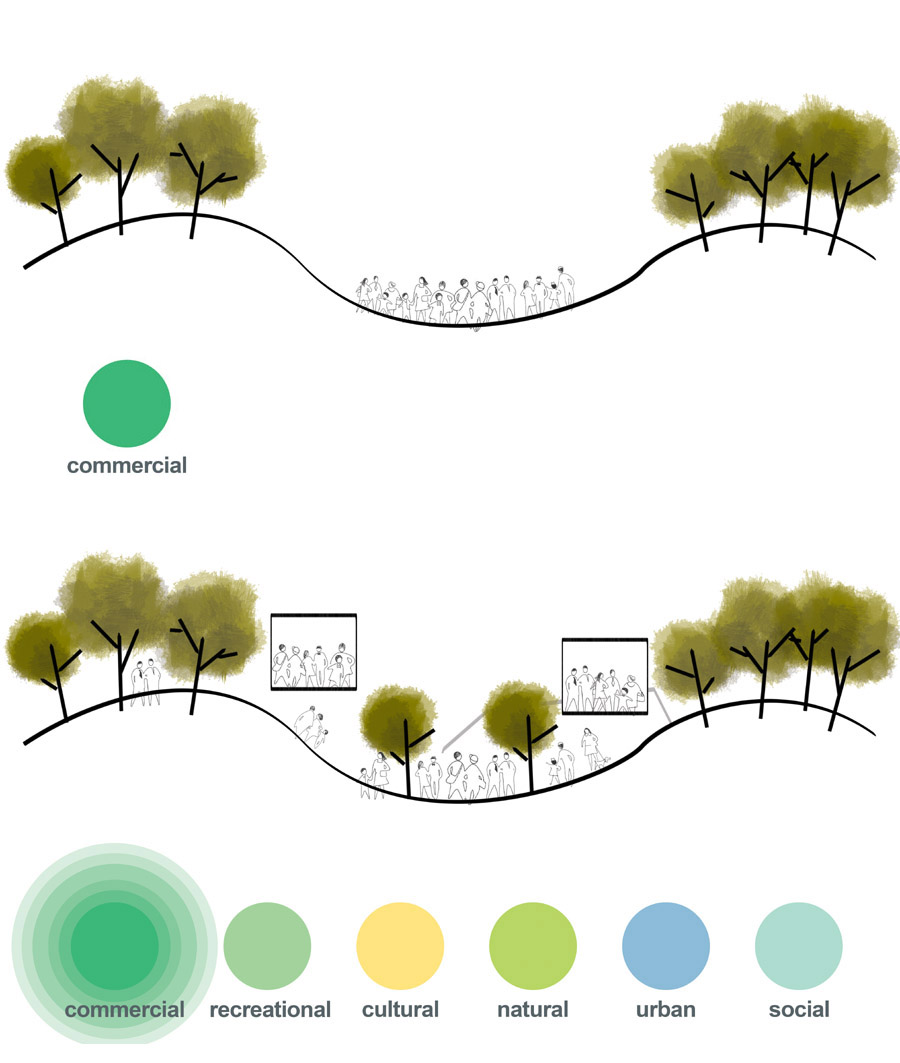


The Projectile is the valley itself, it kind of projects people from one side to another as people use this valley not only for shopping but also as a shortcut road. Besides, here a market and a circulation runs in parallel at the same time at the same place with same importance, whereas a shortcut road or circulation intersects a market place’s function. So, basically nothing is mere orthogonal nor parallel here. This is the story of the orthogonal parallel
CONTEXT contributor: Md Tarek Morad, Assistant Professor, Department of Architecture, AIUB
| Image gallery |