
 DESIGN. ARCHITECTURE. CULTURE
Open spaces are essential elements of the city having importance for different functional and leisure activities of the urban dwellers. Cities as well have hierarchy of spaces and always engaged in welcoming different events. In spite of growing densification there are some space left as urban gray which can turn into urban positive interactive space as large scale civic space is hardly to be found. Public open spaces are important to improve the social ties and social control for future generations and create a sense of satisfaction among the city dwellers.

Interaction is one of the essential psychological needs of human being for mental growth. Due to lack of public space and factors like security, privacy moreover changes in life style causing limitation of using these spaces and limiting the users.

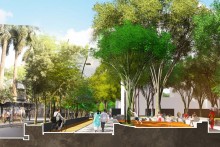
This thesis aims at illustrating the meaning and purpose of open urban gray space in the context of Dhaka focusing on the future CBD and its role towards the life of its users. How to improve the daily used routes for better entertainment purpose and scope of interaction as most of the city dwellers are too busy with works or have less time and space for recreation. This will also refer how unused urban negative spaces can be re-used and produce as a referential framework of some convincing approaches to integrate the sense of open space within the built form for both public and private. Finally results may come how to generate responsive spaces and bring life into them solving the public realm issue with a pedestrian corridor.


Approach towards Ideas: Gulshan area has primary connection from Kamal Atatuk to Notun Bazar and Mohakhali to Badda Link road with only secondary connection from Banani 11 and Badda Jhilpar. These secondary connections have weak pedestrian linkages where some improvisation can make a promising change in the lifestyle of the dwellers. With a visible and strong connection and easy access for the user can generate interest in people with some activity space where users can stop or take a pause. So with the target to connect the pedestrians using the government land and sharing policies a walk able environment can be ensured with some entertainment facilities for the users and residents.


Banani 11 no Bridge: Banani 11 no bridge is the secondary connection linking Gulshan and Banani itself. This is one of the most important nodes where the edges of both side of the bridge determine different types of characters. One side of the bridge is covered with trees on the government land and other side is residence and mixed use building ignoring the lake. The adjacent pathway beside the lake is not properly planned and remain un-used. A Ghat and a dedicated pedestrian bridge a little far from the chaotic vehicular bridge can add an experiential cum functional zone out of the requirement.


Gulshan Central Mosque: A pedestrian connection straight from Banani Lake Bridge to central mosque walkway can make an easy connection between two areas. Using the mosque land a shared sidewalk and cycle route can ensure easy movement for the users.
Rajuk Park, Gulshan: Rajuk park, previously wonderland and converted into a park which did not work functionally. Presently it is being used by local children and boys as a play filed at the evening and most of the time unused. This can be turned into a place for all age groups and introducing required functions and amenities. As the area lacks of proper exhibition cum multipurpose hall can be introduced here along with a amphitheater, underground parking, mostly open field as before, exercise zone and extension of Gulshan Youth club.


Badda Jhilpar: Badda jhilpar is most used secondary entrance for pedestrian user linking Badda and Gulshan. There are lots of vendor of the lake blocked illegal bridge. This bridge is mostly used during weekdays. Both side of the lake is very much different from each other compared to residence quality and livelihood but both depends on each-others. Ghat and proper vending zone is the basic requirement of the area.


City is a place where people get fascinated by its availability of resources and different opportunities of earning livelihood. For a congested city like Dhaka it is very much hard-hitting to control the over population and meet their demand. In the path of involuntary life, urban civic space adds a resting point to the people‘s life. Dhaka city with hundred complains from the dwellers contains actions of festivals, food, architecture, customs and rituals and most importantly its own people. But what it lacks is interventions of small or big civic spaces throughout the city, mostly in the newly emerged and growing side to give people an environment in the city context which can ensure better, happy and healthy living environment.

Walkthrough animation of the project
| Image Gallery |


|From the curator|
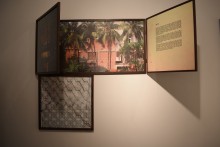
91/2- House, Time & Memory is an architectural exhibition on the poetics of a house designed in Dhaka in the 1990s by the architect Timmy Aziz for his mother who was moving back to her native city after living abroad for many years. It traces the narrative of how the designer’s memories of his childhood home in Nilkhet come together with his conscious effort to respond to cultural and material demands of Dhaka through his interactions with local architects, craftsmen and vendors.


The exhibition matches the personal narrative of building a house for one’s mother with the philosophical experience of situating a building in context. Photographs, drawings, models and written stories of each aspect of the house illustrate the translation of context through material, crafts, local technologies and agency. Through locating his own preferences, the architect locates the nuances of architecture in Dhaka, the city of his childhood.


The exhibition was curated by Ishraq Zahra Khan with Aida Hassan and Ahmed Uz Zaman. The exhibition was inaugurated on 16 March and will remain open until 15 April, 2017 at the Gyantaposh Abdur Razzak Bidyapeeth in Dhanmondi. It is jointly organized by Saiful Haque Sthapati; Bengal Institute of Architecture, Landscape and Settlements; Bengal Foundation Visual Arts Program and ADDA-a platform for architectural exchanges.

|Image Gallery|


|From Saiful Hasan Tariq|
It started in a fine evening at a kid’s shop, which we visited to get some stuff for our new born. A cute little car (3” in length), having all metal body and chassis, with an opening hood and moderately detailed engine bay (cast in metal), grabbed the attention and it was taken to home. The car was 1:64 scaled model of 1967 Chevy Camaro, produced by ‘Hotwheels’ (a renowned toy manufacturer under Mattel, USA). It was found after a little research that, Camaro had five generations and Hotwheels have made the metal casting for all five of them. Every car is unique to its styling of its own era, and the cars from different generations represent the design evolution of the automobile through technological development and styling evolution. That was the beginning of my collection of die-cast scale models, especially from Hotwheels. The concept behind the collection was to collect the models from all generations of the cars, manufactured by different automakers like Volkswagen, Porsche, Ferrari, Lamborghini, Nissan, Ford and models from different generation of their iconic lineup, like-Nissan Skyline GT-R, Ford Mustang, Corvette from General motors, Chevy Camaro etc.

The evolution of a particular line up, like Ford Mustang, is evident in the Hotwheels scale model of their production model from 1965 to 2015. During their 50 year long journey, Ford Mustang had gone through 6 different generations. Each generation had multiple different models with development from the previous one. Each model from different generations represents the design styling of its era. Often this evolution of a car is related to the technology, styling and even global economic condition.
However, Hotwheels does not look like the real car in photographs while taking shots for documentation. They are not much detailed and sophisticated, as they were made for durability and track racing. Hotwheels are not meant to display as the proper replica of a real car. From that perspective, 1:64 cars made by Tomica Limited Vintage and Kyosho has much more details and looks like the real ones. Although, these 1:64 scaled models from these two makers are 10-15 times more expensive than Hotwheels.


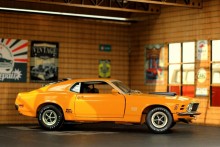
Photographic documentation of these tiny (only 2.5”-3” long) yet extremely detailed scaled models need surrounding scaled environment to do proper justice to their details and precision works. These miniature scaled environments are often called as ‘Diorama’, which are much like the studio setup, but suits the appropriate scale of the subject.


These dioramas are often not much larger than our cell phone. But bigger dioramas are also made to photograph bigger scaled cars like 1:18s. They need much more precision and details, as bigger cars come with tiny details, original paintjob and finishing like their 1:1 scaled one. Auto Art is a renowned maker of 1:18 scaled model replicas of the cars, that comes with detailed engine bay, interior and even precision details of center console and meter clusters.


Photography of the scaled models requires perfect lighting and a moderate DSLR having a good lens. Garage type diorama often requires skylights or light source from above to get the proper exposure. Garage diorama for bigger scaled cars need much details in the ceiling and wall elements like having truss system on ceiling and wall textures to replicate the material. Often retro posters and signage are used to give the flavor of a particular era.
Dioramas are not always a studio like set for die-cast scaled model photography; rather sometimes a glimpse of an event can be created by creating scaled surroundings, ground, gravels, terrain and background. These types of dioramas, which hold a static moment of a historic event, require both patience and skill to make and to photo shoot it.


All these collection and dioramas are the outcome of the combination having a passion for die-cast scale models, model making, photography skills and unoccupied holidays. Such hobbies keep us active and help us to be more creative with self development.
<< Image gallery >>


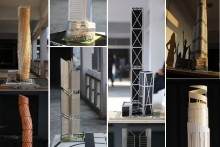
Globally there is an accelerated trend in construction of the most iconic and spectacular high-rise building often characterized by complex geometrical forms and cutting edge technology. Apart from this competition of rising high, the fundamental economic driver for the growth of tall buildings is the maximum utilization of land to achieve density. The following exercise involves designing a high-rise building for a multinational organization containing corporate office with other rental necessities to mark the environment commercially viable. The exercise aims for energy efficient & structural innovative solutions to create a new land mark on Gulshan-2, Dhaka-one of the most promising commercial site in the city.


High-rise building is clearly related to the city and often considered as a viable response to dense population concentration, scarcity of land and high land costs. The development of high rise building follows closely the growth of the city. Since the tall building contains necessary services and amenities, theoretically the people have never to leave it. The building itself form a city within a city. The design of such an intricate interaction system required systematic programming of social, ecological, ,economical and political implication exerted not just on the surrounding urban context but also on its own environment.


Now a days, The design of tall buildings warrant a multidisciplinary approach and requires the integration of architectural components, structure, vertical transportation, fire safety, energy conservation, and communication systems. This particular studio exercise has focused on the possibilities and challenges of using integrated system of sustainability concepts. The goals are to generate design proposals that represents a new generation of sustainable high-rise buildings while incorporating innovations in materials and smart building systems. These buildings are capable of producing a major portion of their own energy requirements through integrated passive design, day lighting, and intelligent control systems.
<< More projects from the studio >>


| From the Architect |
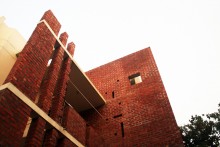
Keeping in mind the climatic condition of Bangladesh, the natural settings and accessibility to the site, Sikder residence was generated from a square plan and basic geometric references with compact service and maximum use of spaces. The western facade is re-profiled to create a sense of entry and at the same time to reduce the exposure of direct sun. Exposed brick with rough finish helps the two storied building to merge with the surrounding rural landscape.

The project is categorized as a single family residence situated 70 Kilometer away from Dhaka in a rural area called Chandpur, in Kaliakoir of Gazipur district. It’s a duplex residential building called “Sikder Residenece”. Total built area is 2395 sft including roof staircase whereas the total land area of owner’s family is 17889 sft. The site is surrounded by semi pakka and CI sheet houses by owner’s siblings.

The client stays there for a day in weekend or twice in a month to visit his property and meet with family members. For some political involvement with the village people there are need of gathering spaces. Therefore, the outdoor landscape, platform and internal spaces are designed to serve the purpose carefully.

The building is designed in such a way that it doesn’t show any dominance in the rural area with other existing buildings, thus the designed building is considered to blend with the surroundings and nature brilliantly.


The building plan derived from a square shape, as a result column- beam structure is guided from basic grid pattern, which comes out with a very strong structural solution reducing the option of vulnerability during earthquakes, a major requirement by the client. Exposed gas burn brick is merged with plastered brick and RCC structure.
In the rainy period some difficulties arose to reach the site with vehicle and material transportation was tough, as a result some materials were cast and installed at site following error free yet easiest technique.

All building materials and textures were blended with the nature with care. The scheme also merged with the rural environment with a contemporary idea which is soothing with nature and doesn’t show any elegance and dominance compared to other structures.


Special Features:
Team Members: Rifat Barkat Ullah(Diploma in Civil Engineering), Pijus Kanti Sarker (Diploma in Architecture)
Structural Engineer: Eng. R. K. M Shamsul Haque (Shams), MIEB- 35541
<< Image gallery >>


At the turn of the millennium, we are undergoing a significant change defined by multiplicity, acceleration, diversity and ambiguity. Architecture theory and practice have been affected by technological and philosophical shift, particularly in two main areas; program and form. The extremely flexible nature of uses is challenging architects to shift from typological fixation to programmatic multiplicity. This is a one week idea project to work on some specific public buildings of Dhaka city which are significant for their particular program, contextual location etc. Ever evolving contextual changes demand enhancement of these public spaces in the city and these buildings hold the potential to offer certain positive changes in the urban life. The task was to explore possibilities of enhancing the public realm filled with transitional sequences of every imaginable kind; these might be achieved through addition, subtraction or bridging architectural elements/spaces to the existing buildings.


For rejuvenating the national museum let along Shahbag area; at first a study has been done on the timeline of the Shahbag area. The two factors of the timeline history caught my attention: Shahbag of the Mughul era when it was considered as a beautiful Persian garden and the present day Shahbag which becomes a place for public protest against political oppression. Shahbag now is a place which holds many educational institutions and important govt. buildings; a place of youth, energy, culture and festivity.

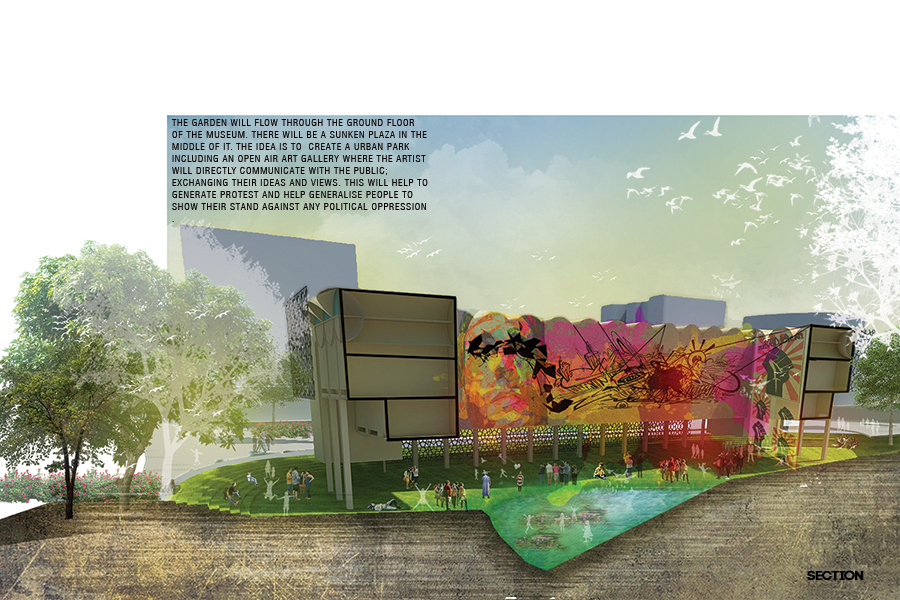
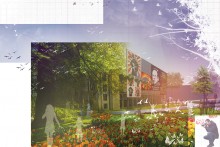
The concept is to build a bridge between the present and the past condition of Shahbag to rejuvenate the museum. The past is signified by garden and the present situation is represented through the fenestration of the facade of the museum. The facade will host posters, artwork which will work as fuel to protest against the oppression.
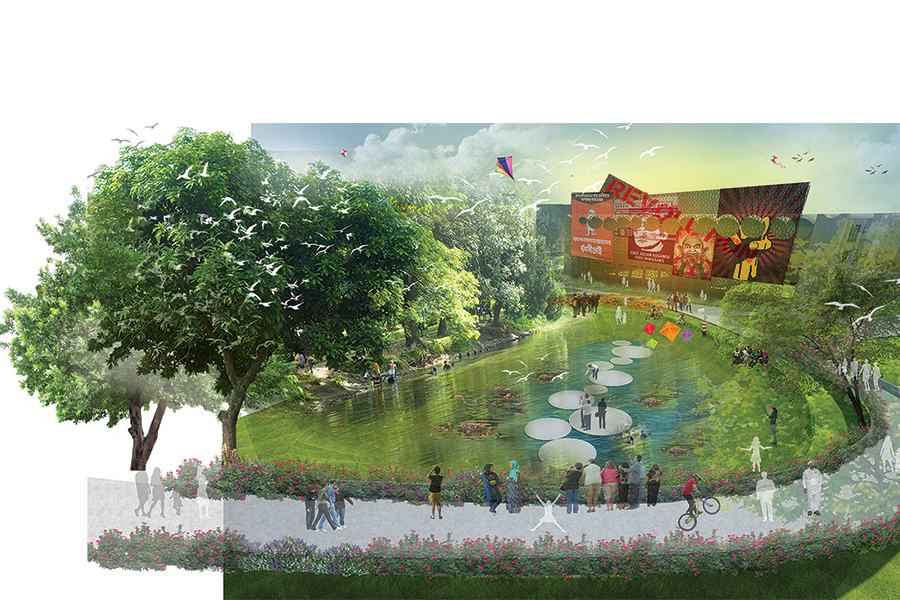

The garden will flow through the ground floor of the museum. There will be a sunken plaza in the middle of it. The idea is to create an urban park including an open air art gallery where the artist will directly communicate with the public; exchanging their ideas and views. This will help to generate protest and help generalize people to show their stand against any political oppression.
<< Image gallery >>


The provision of park and recreation opportunities in the city has become an important aspect of citizen’s physical and psychological health as well as environmental quality of the city. Despite the fact that urban Dhaka lacks quality recreational facility equally accessible by all social and age groups, the commitment to create such facilities for recreation, inadequate as it is, has remained in the hinterlands. The following project is a student vision of an urban recreation center located at a hypothetical site of Gulshan, Dhaka. The project caters for a vertical model of recreation and wellness center particularly designed for urban context where open space is a scarce resource.

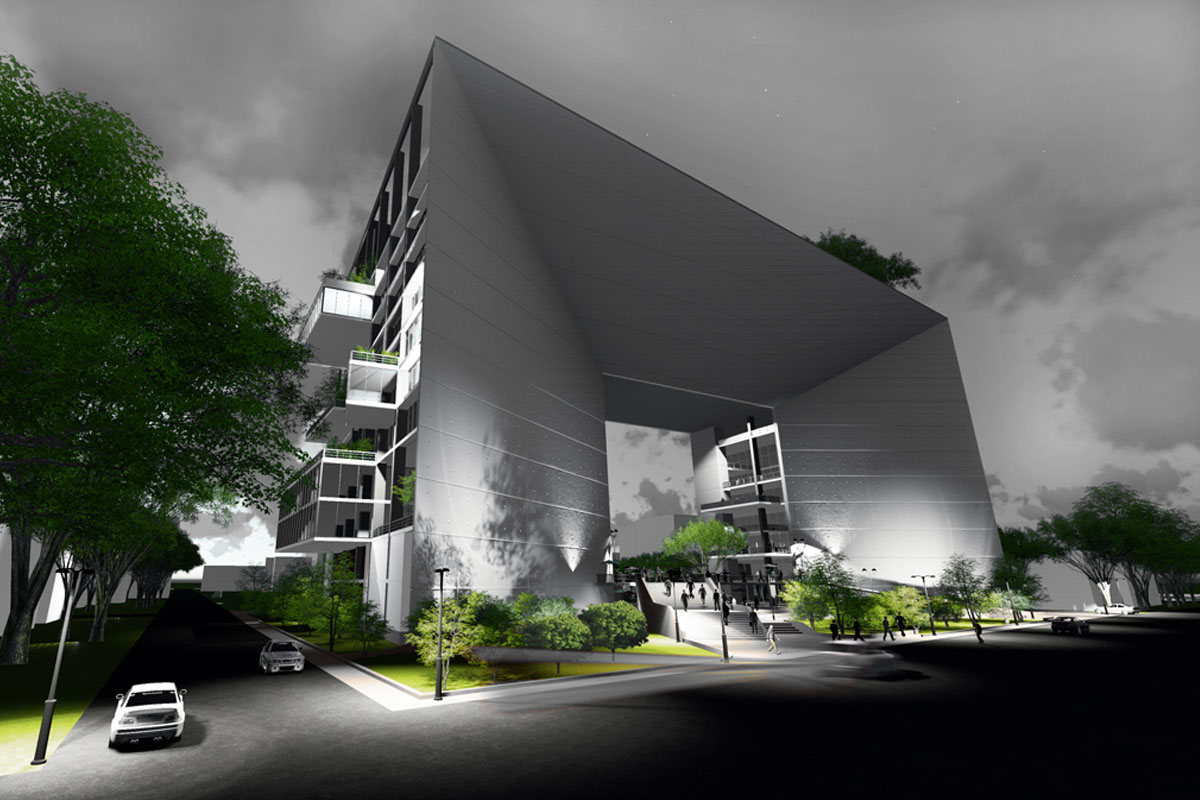
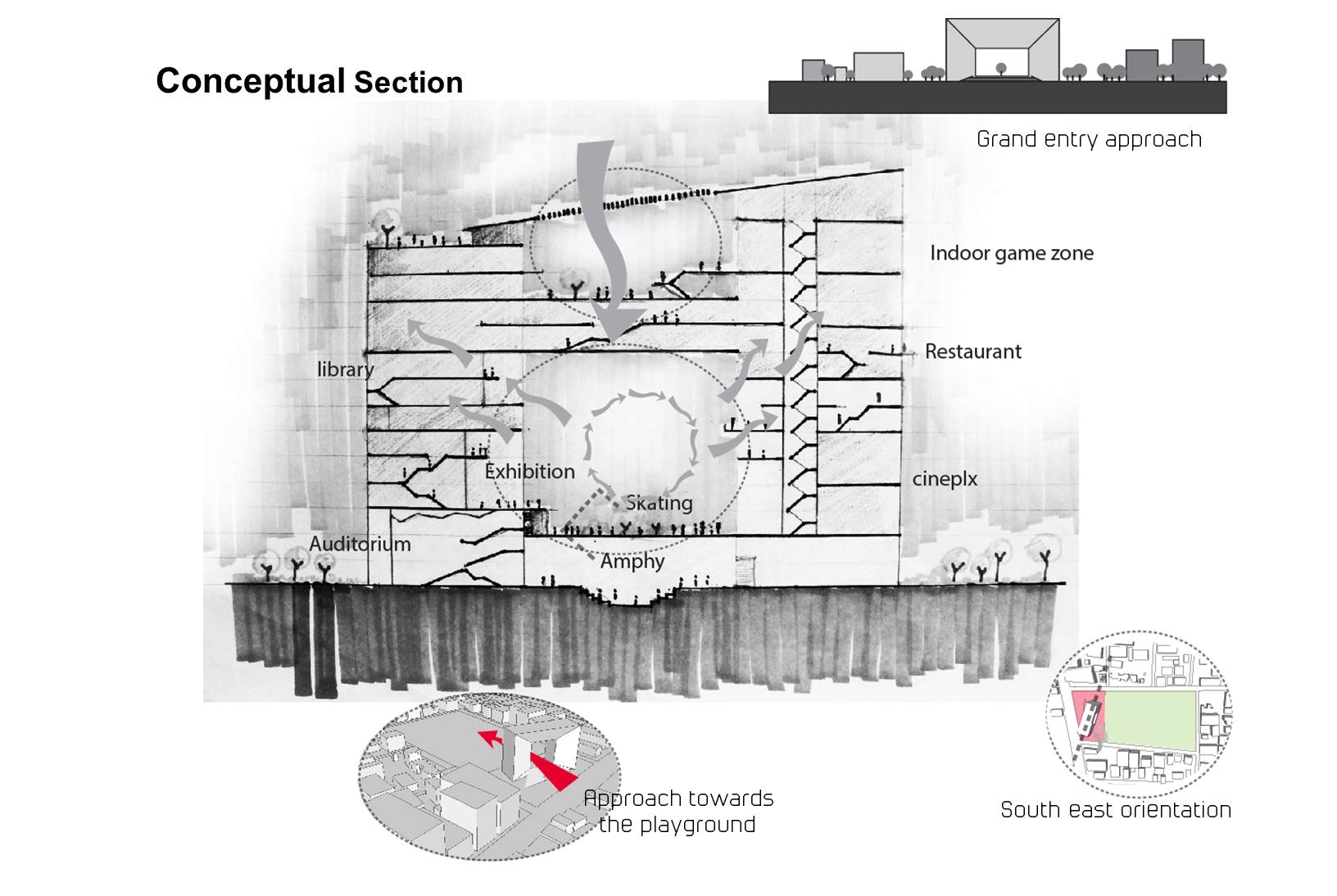
Recreational activities are outlets of or expression of excess energy, channeling it into socially acceptable activities that fulfill individual as well as societal needs. Citizen of Dhaka is devoid of many urban facilities including shortage of park, playground and other types of public and recreational places. Few supermalls and public places in the city are not enough to handle the pressure of 15 million . To get rid of their monotonous urban life, citizens are becoming heavily dependent on social networking site on the web. Such dependency on social media has widespread impact on social behavior as reported.


Planning and design for recreation center specially for a dense urban context like Dhaka presents an wide array of practical challenges. Availability of land is one of them. Even though the project is a hypothetical one, but it considers the practical issues and forces related to project site and context. Due to high demand of land, the project advocates for a multilayered vertical model of recreation center while leaving the ground free for outdoor activities and social gatherings. The vision is to create a multipurpose facility where city people can enjoy various types of recreational activities in a same place. The project rethinks the way of accommodating recreational facilities to balance the need within limited land area with an aim to enhancing social interaction and multipurpose use of area to increase the efficiency of the lands.
![Green building feature [Recreation and Wellness Center] © Kazi Asadullah Al Emran | KUAD](http://contextbd.com/wp-content/uploads/2017/03/Green-building-feature_recreation-and-wellness-center.jpg)
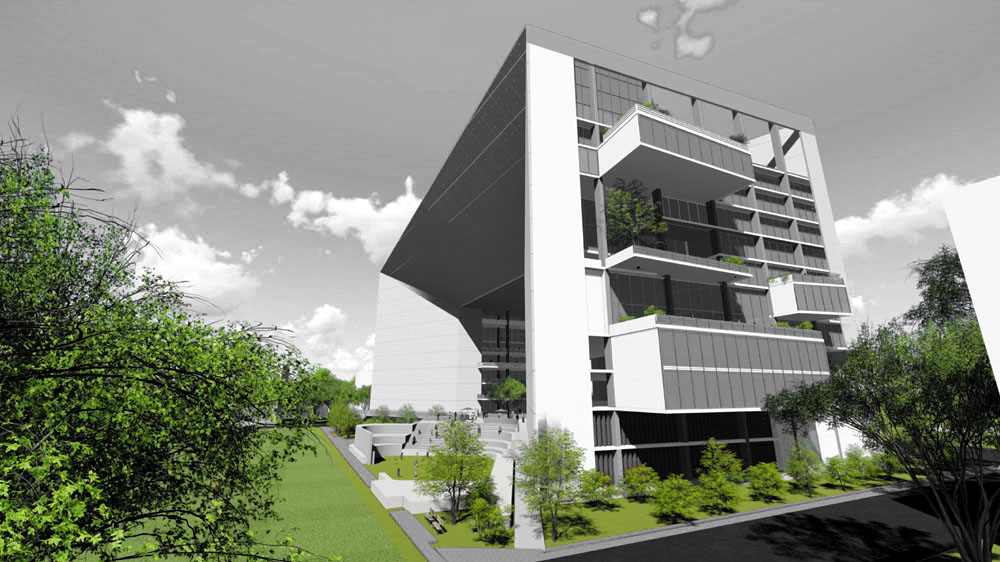


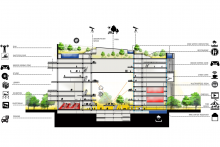
The proposed project features sports and recreational facilities for all age groups of population. Along with shared functions, there are specialized programs for every group i.e. children, youth, adult and elderly people. The center is designed as a gateway open towards the existing youth club field of Gulshan in order to create a strong connection with the outdoor . Indoor functions are stacked vertically at different levels. The design has also incorporated green building features like daylighting, passive ventilation, green roof and integrated rainwater harvesting system. Overall the design exercise seeks for a architectural solution responsive to social and environmental need of urban community following the contemporary model of global practice.
<< Image gallery >>


THE RURAL LANTERN
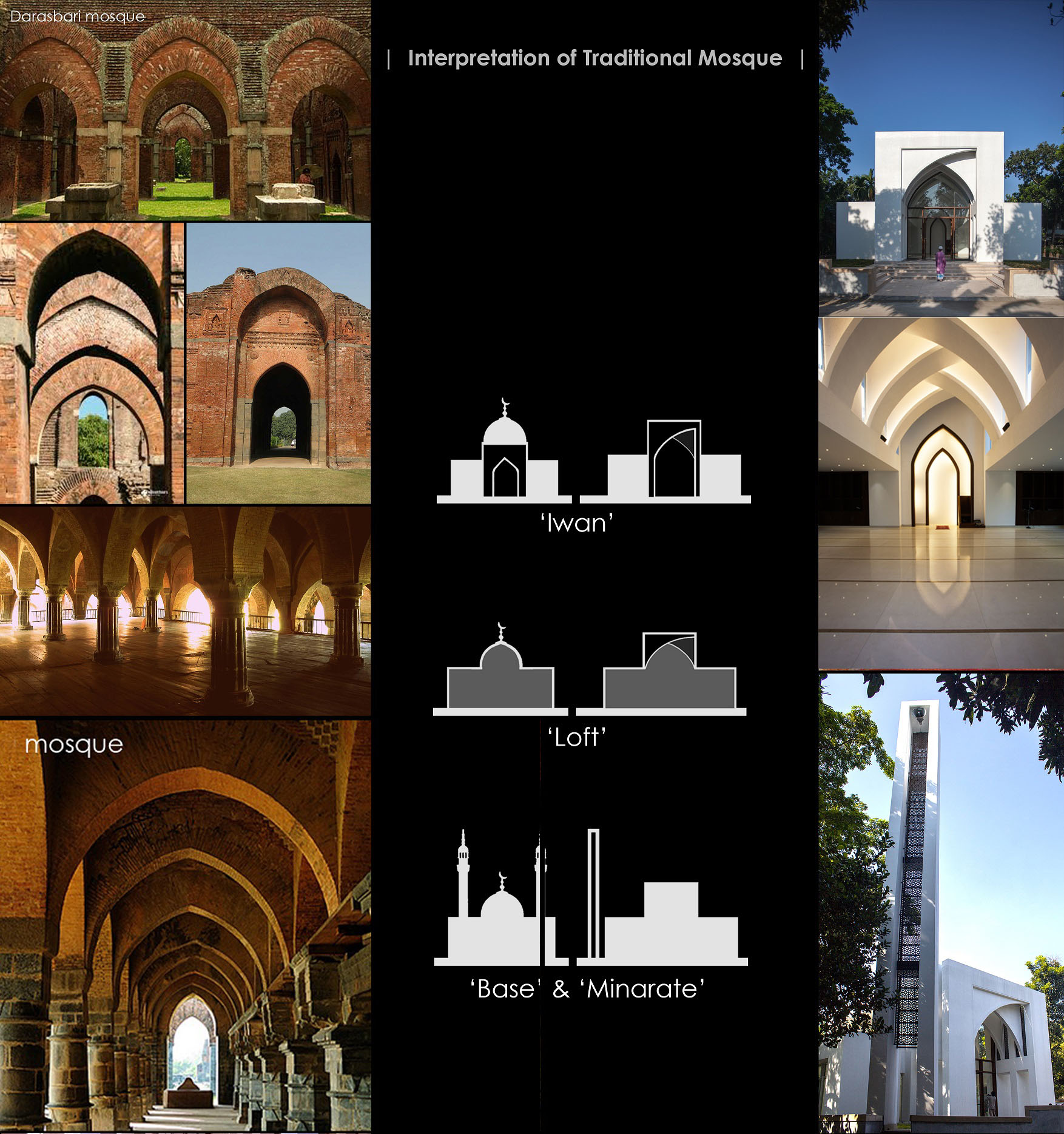
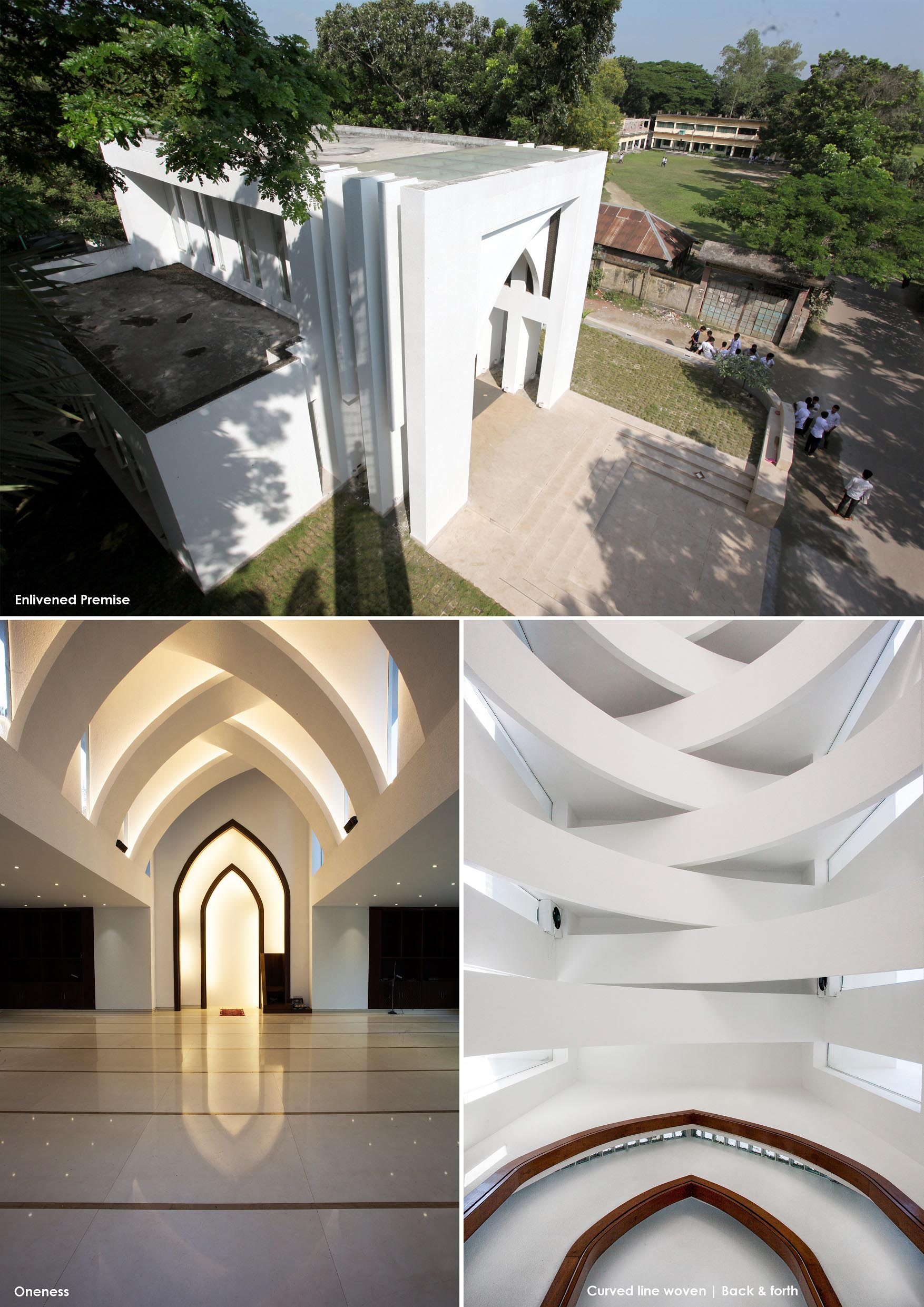
Bangladesh is a deltaic plane dotted with many Mosques from various Architectural Style Period, mostly Pre-Mughal and Mughal. The Mohorpara Mosque is a contemporary endeavor to commemorate those traditional design in local context.
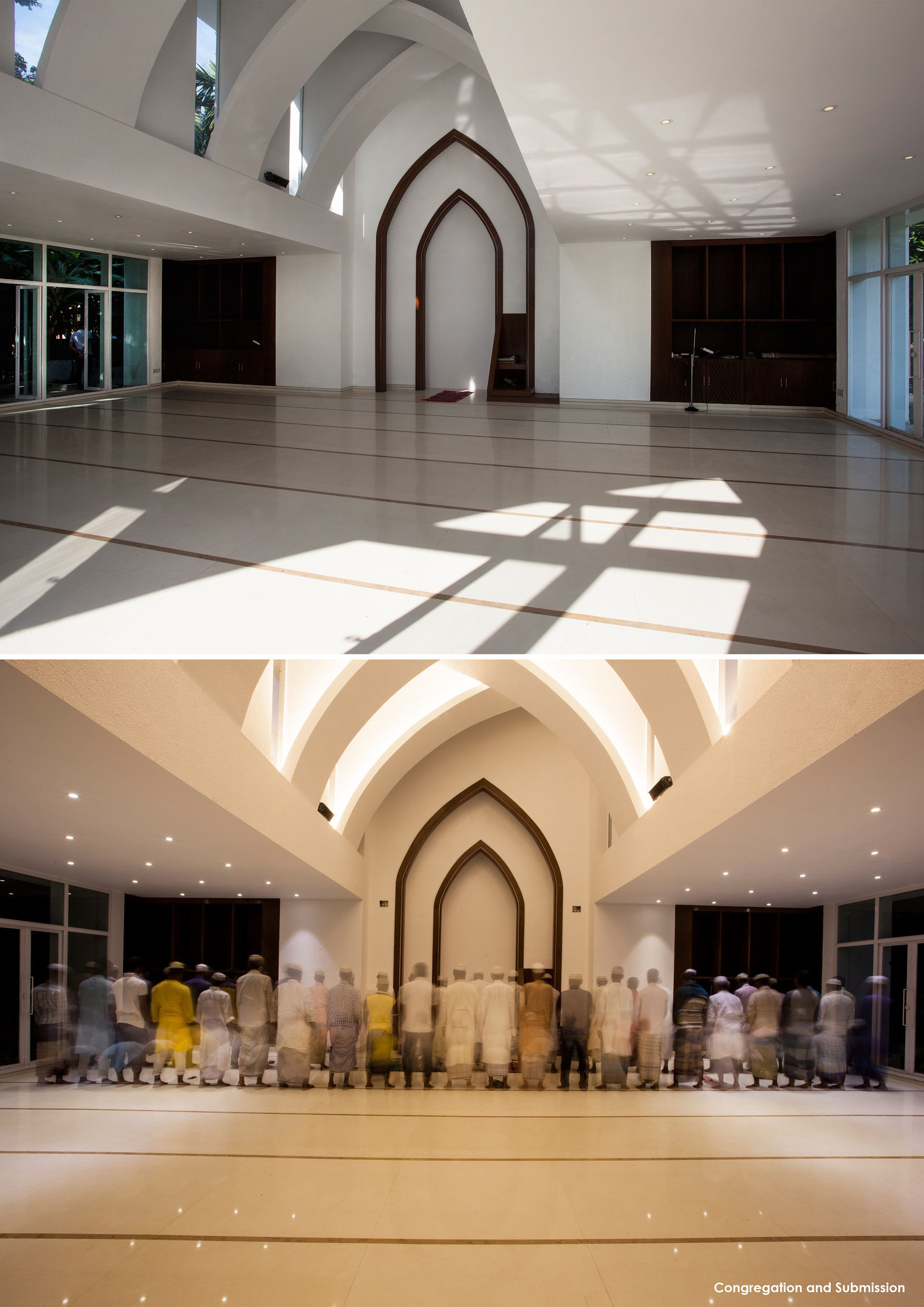
The Mosque is conceived as a ‘rural lantern’ amidst the exuberant greenery illuminating Mohor Para and beyond with its spiritual guidance and omnipresence. The white radiant façade bold yet sublime adjures the worshippers and passersby throughout the day. During Night the transparency of the mosque acts as a lantern against darkness and calls for submission to the Almighty. The white mosque became innate part of landscape as well as the landform, whereas the traditional mosques floating amidst lush green with the glimpse of red bricks or lime plaster.


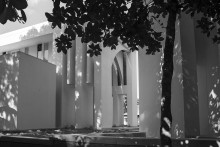
Pre-Mughal and Mughal Mosques were collectively small in scale yet monumental in essence. The Mohorpara Mosque translates the traditional lofty prayer halls and fore room (iwan) arched facades of the old mosques in Bengals by its contemporary rhetoric. The interweaving curves being detached from each other creates a progressive vista of oneness, resembling a pointed arch yet connected only in spatial-temporal-visual field. It represents the abstract connection between believers and the Creator; Their faith in the unseen and Omnipotent amidst the rural setting.
ARTICULATION
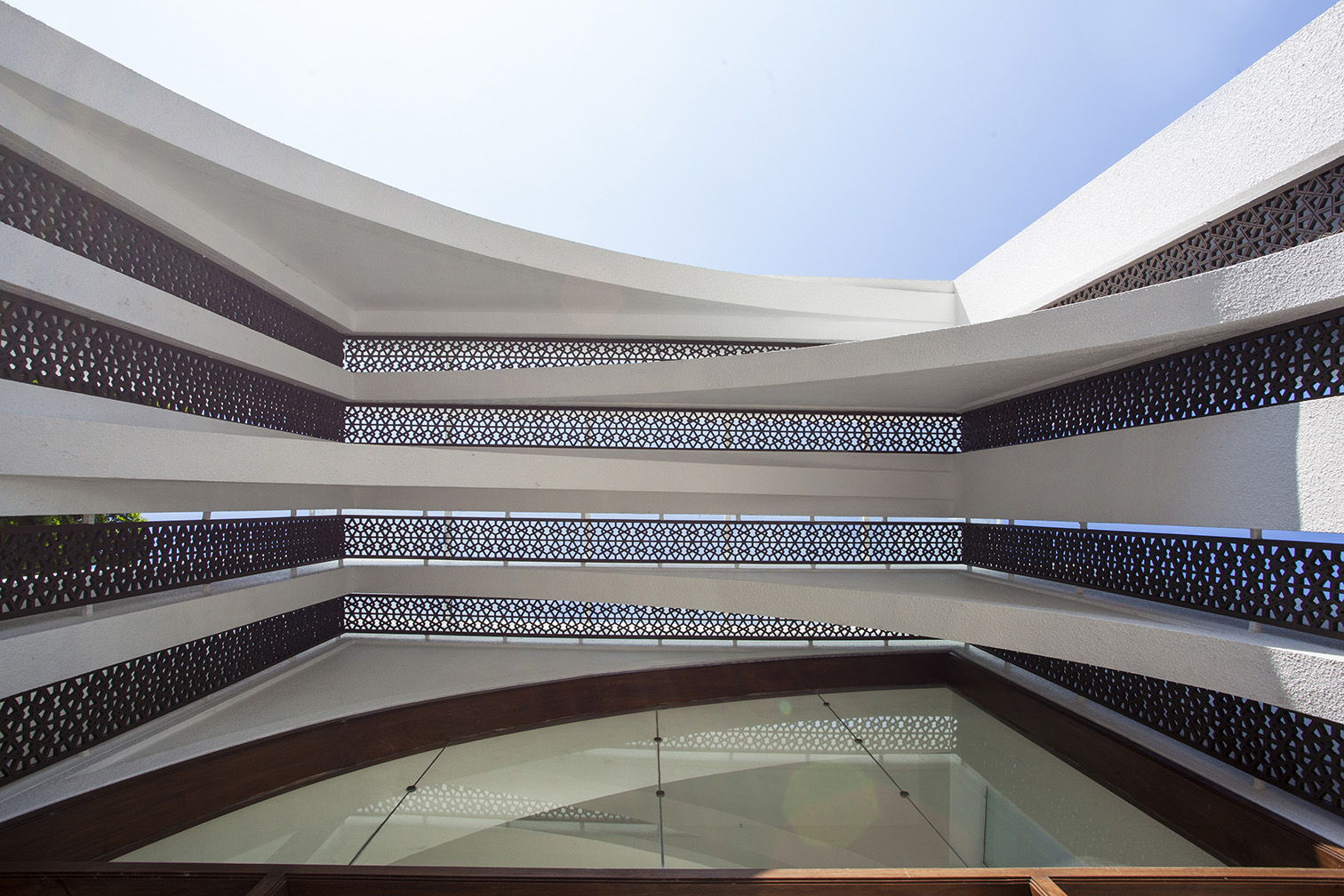
The pointed arch replaced by half curved lines creating an illusion of arches. These half arches diffuse the exterior light at day time and creates a pleasant ambience. On the contrary the half arches deflects light at night and acts as a lantern.
The premise is naturally ventilated. The wide open windows on North-South façade ensures prevailing wind circulation. The hot air rises to the ceiling and a mechanical exhaust fan keeps the air circulating. The Mihrab niche has been also transformed to reflect the light from the sides.


THE NEW VILLAGE ARENA | AMBIT
The Mohorpara Mosque has drawn certain attention within the Narshingdi Shibpur region by its communal service to people. During the regional Tablighi congregation period, Mohor Para mosque becomes a station point for the travelling Tablighs.
Weekly Friday prayer (Jummah ) has become a ceremonial activity in the area. An Imam comes from Dhaka to deliver Khutba (Islamic preaching) every Friday. People from close community joins the Friday prayer particularly to attend the Khutba by the humble Imam.The Mosque also provides potable water to the school children, the mosque users and the passersby.
According to the client the white Mohorpara Mosque has an impact on the local users. They have become more aware about the cleanliness and hygiene. They try to keep It auspicious and pure like the colour white.
It has become a village center to gather. The low height walls around the mosque encourages the users and locals to sit and chat animatedly. The future extension of Islamic center is anticipated by the village dwellers.The client covets the expansion of the mosque platform with the provision for a library, research center, gallery (on northern side within school) and Maktab for elders (on southern side) in future.
LANDSCAPE
Native trees like Chhatim (Alstonia scholaris) is planted for its seasonal white small flowers with aroma and beautiful leaves formation. In traditional Bengali villages territory is defined by planting Betel nuts trees (Areca catechu). Here this arboriculture has been followed and Betel nuts are planted along the northern side. It’s an extension of the surrounding plantations to enhance bio-diversity.
Hardscape consists of hollow permeable pavers, infiltrating rain water for greener environment.


PROJECT INFORMATION
Site area (sqm): 477 sqm
Entry plaza: 95 sqm
Main Prayer Hall: 177 sqm
Landscape area: 200 sqm
Temporary Ablution space: 5 sqm
<< Image gallery >>