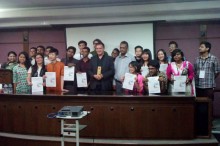
While the whole city of Dhaka was coming out of the slumber of Eid ul Azha vacation, a group of young man and woman were seen busy shuttling from one spot to the another drawing and sketching vehemently . They were with Ar. David Holm.
Australian architect and Churchill fellow Architect David Holm has conducted a 7 day workshop of drawing and recording the public spaces of Dhaka. the workshop is supported by University of Technology Sydney(UTS),Bangladeshi Architects in Australia (BAA),The Institute of Architects Bangladesh (IAB)and the Australian Institute of architects(AIA). The walking, drawing, and recording are all carried out according to the structure of public place definition set out in Holm’s Churchill scholarship. This program covered Holm’s exploration of public place making in dense urban environments throughout Asia.
David Holm: David Holm is Director of Cox Architecture responsible for Transport and Infrastructure projects working in Australia and internationally. Working on projects such as Sydney’s new Barangaroo Ferry Hub, Holm is primarily known for his contribution towards the transport and urban typologies, both locally and internationally. Architect David Holm is an adjunct professor at the UTS School of Architecture. Holm is also a director at one of the largest architectural practices in the Asia-Pacific, Cox Architecture. David’s design focus is in the provision of memorable and successful public built form driven by the interaction of design philosophies and practical constraints. His key projects include Singapore’s Changi Terminal 3 and Terminal 1, New Delhi International Airport India, Sydney Airport International “Forum” development, Hyderabad “Aerotropolis” Exhibition and Convention Centre and the new North West Rail Link in Sydney. David works regularly with several education institutions.
The Workshop: Under the able guidance of Ar. David Holm, a multidisciplinary team of 12 Australian and 10 Bangladeshi students collaborated in the 7 day Workshop that started on the Sep 28,2015. The main objective of the workshop is to investigate through drawing, how densely populated urban spaces work across Dhaka. For that purpose Dhaka has been divided into three areas . North, Central, Old town . Documentation process was carried out through drawing and fast sketches of street section and one /two point perspective of a spot from various angle. Emphasis was put on sketching very quickly, while on the move. The essence of the real spaces were attempted to be captured in black and white line drawing, colour pencil sketches and even with experiments such as single line scribble. Drawing and sketches of Dhaka University Campus, Sadarghat, Shankharibazar, Parliament Building and diplomatic area of Gulshan and Banani was covered. The experience of the students were really eye opening for them. As one of the students shared his experience that they have realised, drawing has the potential to reveal what is shrouded and give ingredient of a deeper understanding.
The Presentation: A presentation was arranged with IAB at the BETS Centre, in the end of the workshop on 3rd Oct. In the presentation Ar.David Holm said that it was an interaction and words of Dr. Younus the noble prize winner, is what ignited his interest on Bangladesh, to be more precise on Dhaka. At the start of the presentation the architect emphasised, why it is important for an architect to draw. The drawing and sketching according to Holm makes an architect to stop, slowdown and think about the city.
The point were emphasized with some black and white sketches by the presenter of different urban locations around the world. there were also example of works by David Holmes as a partner of the Cox Architects. It was quite fascinating to see how the schematic ideas of the initial stage were realized with every detail. Ideas of space from the ancient cities were reinterpreted in projects like Changi Intl. Airport, Singapore and other infrastructural project. In the later half of the presentation David Holm shared his experience of working in Dhaka and how he found them to be intriguing. The presentation concluded with some recommendation from the architect to make Dhaka city a better place. David Holm acknowledged that the streets of Dhaka has a unique character. He requested the policy makers not to take the metro rail above ground. His observations are all targeted towards making an egalitarian and vibrant city.
My client is settled in America for the last 25 years who started his business in Koya Bazar, Khulna Bangladesh 3 years ago. He comes in Bangladesh at every month for 7-10 days for business development and stays at the hotel in Khulna city which is quite distant from his industries. So he wanted to build a house for himself and for his guests where he can stay and spend some refreshing time as well as it can be used as a vacation house for his family and relatives.
From that point of view, He bought a land in Koya Bazar,15km far from Khulna Proper.The site itself is quite beautiful in its natural setting surrounded by water on three sides and full of greeneries including 2 ponds within the site. Besides, both side of the access road are full of mango and coconut trees giving an welcoming expression. The site was previously used as a poultry firm.
The North-end part of the site was chosen for the development which has the view of a river on north and the west side as well as a pond on the east and the south side, giving an expression of an island surrounded on all sides by water.
The main intension of the design was to create indoor-outdoor relationships with its surroundings providing different framing experience, keeping the existing natural beauty as it is.
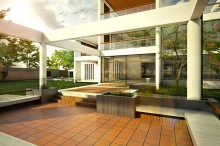
A welcoming approach to the porch is created by a beautiful garden lawn, which ties the formal living and pond at the east side. On the south side, a boundary wall is placed parallel to the south side which is visually connected with the pond on the other side of the wall to some extent.
A deck is introduced at the east side with stairs down to the pond where a boat will remain tied with a stick, giving an impression of a Khea Ghat as well as a place for public gathering. A krishnachura tree is placed beside tha Ghat, just in front of the dining area in order to enhance the beauty of the pond.
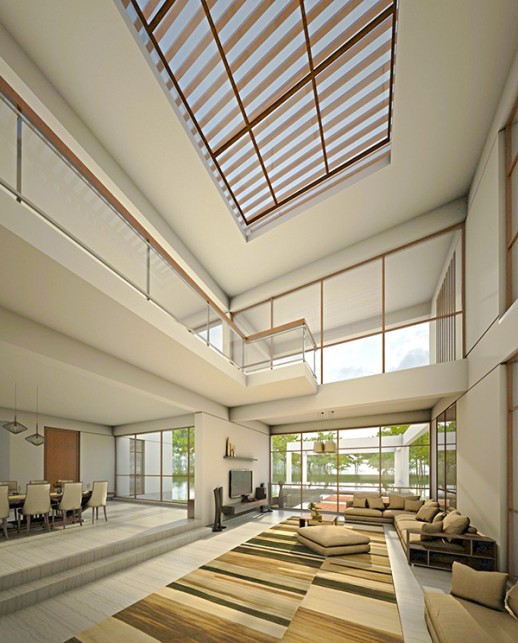
To keep Formal living area close to the lawn level, it is stepped down to 18 inch from the plinth level where a double height space introduced with skylight roof allowing the opportunity to experience the nature in different occasions (moon light, rain drops, cloudy sky etc) which is also enjoyable from upper level family living.
To invite the nature into indoor spaces, large openings are used very thoughtfully to create maximum visual connection with the natural environment. Vertical Louvers are introduced as sun breakers, keeping visual linkage and allowing gentle breeze to pass through. Pergolas are used as shading device ,creating dramatic environment of light-shadow as well as giving the experience of a semi open space at a time.
Wood will be used for window framing,stair railing,pargolas and railing.In roof, deck, paved area and boundary wall, Satkhira Clay tiles will be used which is only 45km away from the site.
My Client is very much fond of a Corn Storage, traditionally called ‘Gola’, which is quite rare/lost in our heritage. It is designed as a sculptural element and placed at the south-east corner of the court yard. It is visible from M.bed, Living, Dining, and from the deck.
Project Team:
Principal Architect: Ar.Tapon Kanti Sarker (S-125) (BUET)
Banjar Bakula is the strategic region of South Kalimantan, Indonesia composed of Banjarmasin, Banjarbaru, and parts of Banjar regency and Barito Kuala. Among these regions, Banjarmasin is known to be a “River City” because of its proximity to the Barito River and Martapura River. Banjarbaru is the new administrative center of the South Kalimantan Province. Water has a close relation with this region considering ecological, transportation, production, spatial and social aspects. Presence of Trishakti deep-water port and Syamsudin Noor Airport is an important catalyst for the economic development of this region in both local and global context. Like many other Asian cities, the post-colonial development in Banjar Bakula focuses on road based urbanization. Cities are growing rapidly with road based infrastructural development, where water ways are neglected. Though the contemporary urban development is far away from its water based origins, it serves the region and the inhabitants. From the fieldwork (February, 2015) it is merely visible that the territory had various Landscape reasoning as a basis, from which it has been evolved.
FRAMING AN ADHESIVE GREEN ARMATURE_ Coherence, density and porosity: preserving space for water while forming a collective space
Developed on the foothills, the city of Banjarbaru is located in highlands and good soil conditions, on a hilly island surrounded by wetlands. The city has the capacity and the potential to accommodate a doubling in population and is about to face a rapid shift in scale as the new urban block is the cluster, a homogeneous patch of new housing. The lack of structure of the dispersed development is resulting in lack of identity; a fragmented settlement is expanding, lacking in connectivity and without public space. The emerging patchwork is producing a fragmented and dispersed urbanity that shows no concern or respect for the ecological corridors. The developed drainage system is resulting in a dry city, where flooding forms an exception and is mostly accidental. However, the existing green flows inside the city of Banjarbaru are currently part of this fragmented dispersion, or being suppressed from the expanding urban tissue. The hidden potential of these flows is crucial for the existing and emerging city, as they can constitute the new adhesive public spaces of porosity in a dense structure. They form the ecological corridors and work together with the drainage system, while at the same time, connecting with the waterscape. The main guideline for these flows is the hilly topography of the area that creates a complex terrain of ridges and valleys which is imprinted in the contemporary city.
The urban growth of Banjarbaru is related to the high land and low land, as the new urbanization areas in the area are primarily occupying the high land as the suitable space for urban development. In the frame of a more dense and compact city, associated to public space and infrastructure, the (re)interpretation of the inner and outer edge between city and green areas is essential as a strategy to guide the spontaneous fragmented infill of the landscape, protecting the water and green structure and leading the future urbanization process in congruence with the ecological processes.
A concentration of amenities along Ahmad Yani road defines the current civic spine of Banjarbaru. While the upcoming regional road forms a bypass for the city, Trikora road constitutes a collector of new amenities that along with A.Yani form a double civic spine. In this regard the potential of the existing could be articulated with new attractors and new programs as supporting elements of the ecological dynamics of the city.
The public space is the structure for the emerging city, a network of public parks act as an inner urban-rural interface and as a part of an ecological system that contributes to the natural water purification process and low land reservoirs for water. Upgrading the existing tissue with new mixed typologies, integrating housing and agriculture, high density with open spaces and nature forms the strategy to connect the landscape through the city, address the issue of the fragmented dispersion while protecting the agricultural landscape.
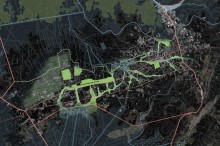
This ecological system of collective spaces in the city forms the adhesive green armature that strengthens three different urbanities, providing at the same time a grid that directs the growth in different ways; the AGRO_CITY, the AIRPORT_CITY and the ADMINISTRATIVE_CITY. The green armature is integrating urban agro-pockets with a series of green boulevards and a network of linear transversal parks. The green lines are interconnecting elements of multiple urban scales while stimulating high density around. The existing mosque is gaining high importance as it’s the catalyst of the emerging urbanization. The densification process through the adhesive green armature is a strategy to strengthen the sense of urbanity in the context of each identity. The public space that concentrates collective services is a device for directing the future urbanization process in Banjarbaru, as it structures a civic meaning for the void, addressing compactness and permeability
The number of visually impaired person in our country is increasing at an alarming rate. It is estimated that nearly 4% of all children in Bangladesh develop corneal damage before reaching 6 years. At least 50% of the children with vision impairment die within one year of becoming blind. The total number of blind person in Bangladesh is 3.3 million (UNICEF, 2005) of whom a huge number consists of children under the age of 15. Therefore, the development efforts for the differently able citizens are critically needed in order to rejuvenate the national economy. To make the visually impaired people self-sufficient the society needs to provide them with proper educational and training.
Moreover, the blind and visually handicapped have the right to be able to navigate effortlessly through the built environment. Navigation through and the action of experiencing a place depends on a person’s ability to collect information through his or her senses. However, Architects most often focus only on the visual aspects of a design rather than considering other sensory aspects.
This thesis aims to examine the different ways in which the blind and visually handicapped navigate through and experience the built environment. Understanding of these interactions is used to develop an architecture that enhances the specific characteristics, which help the blind and visually handicapped.
This institution located in Gazipur consists of educational, training and residential facilities, aims to provide a support network for the visually impaired person. The purpose is to empower them so that they can lead independent lives through the provision of education, training and employment services.
There are significant controversies over what type of environment is appropriate for the blind and partially sighted people. Some considers a ‘protective’ environment where the architect designs an artificial environment completely tailored to the sensory needs of the blind person. Others consider a ‘hostile’ environment which disregards the blind person altogether. Another set of designers proposes that the most suitable environment is perhaps one that is ‘progressive’ which serves to integrate the blind minority into the sighted majority. Therefore, the progressive method is applied to this thesis project. Such environments are ‘protective’ within the centre and ‘hostile’ towards the exterior when introducing the individual to the sighted environment.
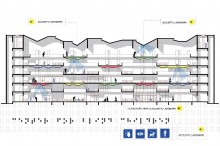
Architecture is a full-body experience and too often architects focus exclusively on visual aesthetics. Through the exploration of sensory architecture, it is evident that visually impaired users benefit positively from architecture that communicates with them through their remaining functional senses. Hence, Acoustic architecture along with Tactile and Olfactory architecture has been given prioritised in this design.
The concept of single spine design and cognitive map is used in this design. For a blind person, the development of spatial representations occurs through a cognitive map consisting of routes and landmarks. A blind person defines this destination point through a mental representation of route, which is physically defined by various acoustic, tactile and olfactory landmarks.
Other factors like climatic and environmental parameters, site forces such as existing vegetation and flora-fauna as well as the findings from site analysis are taken under consideration for this design. A unit of 1 meter and a module for dorm rooms has been developed according to the ergonomics of a blind children and used throughout the design process.
This institution for the blind children consists of three major programs that are, a. Dormitory for the blind children, b. A rentable Training centre, and c. Eye Clinic. The dormitory has the following functions: a. Rooms for 60 children, b. Study/class rooms, c. Dining & Kitchen, d. Life skill training programs such as Braille, Computer, Musical Instruments and Spoken English training as well as Orientation and Mobility Training (O&M), and e. Administration. The rentable training centre is designed on the basis on the participatory method, which has the following functions: a. Conference Hall, b. Meeting Room, c. Room for the participants, d. Dining and kitchen, e. Administration and f. Office for the NGO.
Development of this design went through a process of gradual development and screening from one phase to another. At every phase the problems identified at the previous phase has been eliminated. The development of the building layout was guided by the flora-fauna of the site. In the attempt to keep the flora-fauna intact only 8 trees had to be cut-down out of 63 large trees located on the site.
The establishment of the cognitive map for the blind children has provided variations of spaces and forms. Moreover, the single spine method provided an elongated mass, which also satisfies the climatic parameters as the elongated elevation faces south.The site has an area of 1.7 acre and the built floor space is 12000 sqm with a ground coverage of 2800 sqm at 40%.
[This entry is the only submission from Bangladesh and has been shortlisted primarily. For final winning selection this submission needs nomination/vote, which can be cast at the following link-
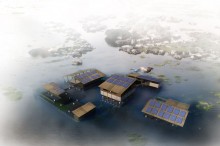
The crisis is not the problem, the attitude is. While analyzing and studying the livelihoods of the floating communities of Tonle Sap, there was this one question that bothered us throughout the process. Everywhere in studies and narrations, they have been described as the defaulters of ecosystem of landless helpless people. Our question is that, what if they are NOT actually landless, others are waterless?
This very question led us to the realization that the issue is not merely about solving the climatic or architectural issues, rather its about showing them what they actually are blessed with. Water is one of the basic sources of life on earth, and nature has faithfully bowed down at their footsteps, with her abundance of water! So the basic concept of our design here, is not to propose mere functional architectural solutions, but to create an attitude- towards themselves as well as the entire environment. This can only be possible when they have that sense of belonging instead on the sense of deprivation that they cherish.
Concept. Image Courtesy_ Pankaj Nath
The aim of the competition was to create a design for a floating structure(s)/system(s) to exist on the lake and cater for:
1. Medical Aid
2. Ecological Research
3. Environmental Education
With this intention as our prime focus, we offered some spaces as per functional needs, where this attitude can be born and be nurtured. We propose the education center as a source to this development. To start with, we considered the children as priority, as they are yet to develop new points of view. They should learn from their very playing age, that the water is an asset, not a threat. It strikes with a question again, WHY PLAYGROUND? … PLAY WATER!!
Network Map and Healthcare Design Phases. Image Courtesy_Pankaj Nath
An interactive program is suggested for the education module. Any two modules of two random villages will work together- generating interactive learning and sharing. This will be interchanged among the villages day to day.
Once the interest is developed, these children will eventually manipulate their parents to bring the same change in their household perimeters, leading to our next question, WHY COURTYARD? … COURTWATER!!
Section of The Education Centre. Image Courtesy_Pankaj Nath
The great water body, which was treated and tortured by its own inhabitants, will now be considered as a valuable property, which needs to be conserved. The same feeling that one has for land property. Eventually they will feel the urge to seek for better and sensible options to their livelihood- and this is where our research center emerges. It is itself a complete body, with a compilation of various sections, balancing each other. It stands as an ideal example of coexisting within the ecosystem. We prefer calling it a “research hub”- that welcomes people to come and learn through exploring, as well as inspires to undertake the same options in their own perimeter.
Research Lab. Image Courtesy_Pankaj Nath
To sum it up, we can conclude that the entire design is an approach towards rethinking the livelihood of Tonle Sap Lake. We are not proposing an ideal solution to all the current problems, rather generating some vital questions, which needs to be given a thought- and the answer lies within.
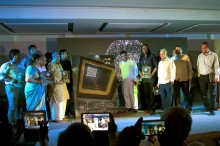
DELVISTAA FOUNDATION launched the long awaited architectural journal ‘DOT’ in the drizzling evening of Sunday, the 20 September. The well organised inaugural ceremony was illustrated by luminous persons from diversified fields. Other invitees were mostly from the art and architecture community ranging from veteran architects to students of Architecture from a number of schools.
To remind, DOT is a quarterly journal on Art & Architecture. The primary aim of the journal is to highlight the works of Bangladeshi Architects and documentation of the same. The inaugural issue is hosting 21 contents covering art, architecture, photography, article and interview. DOT is edited by the prominent architect, painter, musician and singer Mustapha Khalid Palash.
Honourable Mayor of the Dhaka North City Corporation Mr. Annisul Huq was the chief guest on the occasion. Prof. Emeritus Anisuzzaman, Prof. Nazrul Isalm of CUS, Prof Shamsul Wares, President of IAB Prof. Abu Sayeed M Ahmed, The chief Architect of Department of Architecture, GOB Ar. Kazi Golam Nasir and prominent artist Monirul Islam graced the program as guests of honour. It all started with the inaugural speech by Ar. Shahzia Islam Anton, publisher of DOT and Director of Delvistaa Foundation. Her graceful yet polite speech set the ambiance of the launching event on the right tune. The chief guest along with the Editor, publisher and guests of honour formally inaugurated the publication on the stage with enchanting sound composition. President of ARCASIA Ar. Sathirut Nui Tandanand, immediate past president Ar. Tan Pei Ing , eminent writer Ranjan Bandyopadhyay from India and artist Kalidas Karmakar sent video recorded greetings from abroad. The event was anchored by Architect Syeda Tuhin Ara Karim, prominent actress and dancer.
Honourable guests delivered their speech from versatile points of view with the experience of diversified background. They all undoubtedly praised the publication as it had been long missed by the community. It was evident in their speech that such a noble initiative would remarkably help to showcase the Art and Architecture of Bangladesh to local and international audience. Though raising the issue of continuity they expressed their reliance on Delvistaa Foundation led by the editor Mustapha Khalid Palash as the organisation had already published several books and other prints along their way of serving the community relentlessly for number of years. The speakers seemed to be feeling assured that the magazine is actually hosted by the right organisation with the right organogram and persons in place.
Chief Guest, the honourable Mayor, in his speech reminded his promise to build Dhaka as a well functioning environment friendly city while appreciating ‘DOT’ envisioning that it might play the crucial role of bridging professionals from art and architecture with the city dwellers. He expected that DOT could render a role in increasing social awareness for a better built environment.
Last but not the least; it was the speech by the editor Ar. Mustapha Khalid Palash that illuminated the audience with the aim and objective of DOT as well as the concept of initiation. Audience were delighted to know that it started 30 years back when Architect Palash had planned to edit a similar publication initially decided to be named as ‘Sthapati’. He was a student of third year then. However, he took the opportunity to explain why he had kept the community waiting for so long and gave assurance of regular publishing of DOT from now on. Meanwhile the invitees were given their copies of the magazine and the hall was full of scratching sound as people took no time to tear the covering pack in a hurry.
The program ended with dinner and cultural program. A small desk was set at a corner for subscription purpose. Considering the enormous response it created among the architecture community subscription information are also stated below-
Hotline: 01790449944
Contact:
Apt B1/D1, First floor,
Delvistaa Ruparup
SE(H6),Road_143
Gulshan Model Town
Dhaka_1212,Bangladesh
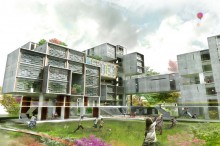
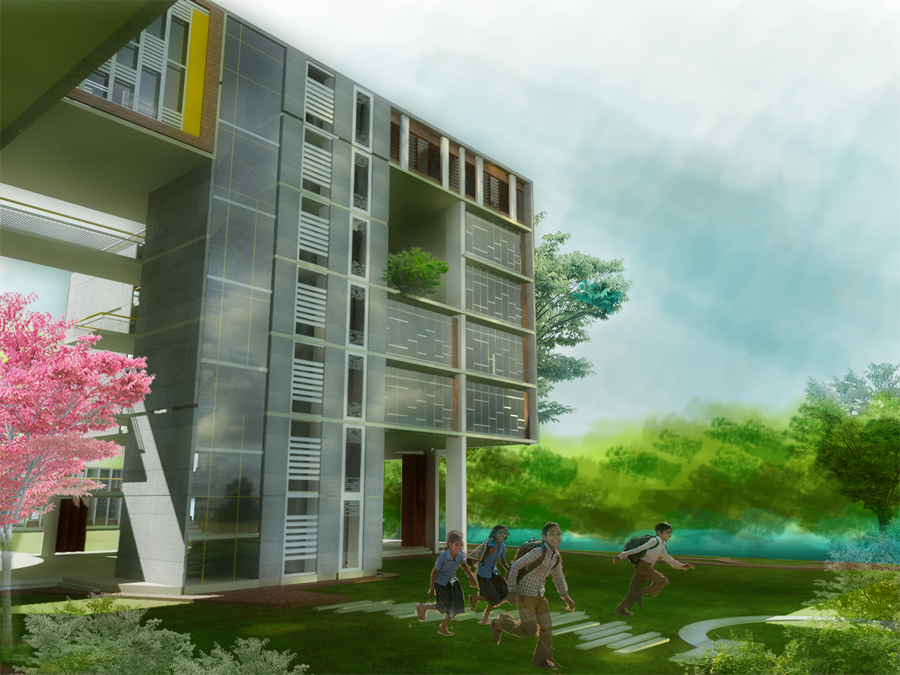
Learning environment is the fundamental right and an inevitable element for the child’s overall development and has direct impact on psychological, physical and social well being. Due to land scarcity and unplanned urban growth both government and private sectors are unable to provide sufficient area of land for school and college. So passive learning space of school such as play grounds, explore zone, experimental area, creative thinking, gathering and break out space are being lost day by day. To meet-up the demand of large number of students, classrooms are trapped into multi-storied buildings in a small site without consideration of passive learning and any other issues related to child development. As a result their overall development toward a successful citizen is greatly hampered. Turning this large population into a competitive human capital requires provision for proper learning spaces without any question.
Site and Existing Problem(s): An 1.5 acre of land for school site in Pallabi Dhaka, Total number of student is 1500 (Pre-class to class- XII). The population of Pallabi is almost 412217 with an area 25.28 sqkm and this number is increasing because of housing and new development of residential area where single or two storied buildings are transforming into six to ten storied buildings.
Choosing school as a thesis topic as being an architect, I wanted to contribute in nation building. To me designing new buildings is not something that will help my country to stand among other developing nations. I rather chose working with the roots, children who will fabricate the country and our future as well. At the point when in a poor ground breaking strategy, we attempt to manage our fundamental needs by removing some passive essential things considering it to be cost cutting, because of our lack of awareness we surely shut the huge entryways of advancement. The fundamental concern of this project was managing the essential advancement needs, with provided small amount of land and other facilities for a tremendous mass.
Few benches and a board do not turn a room into a classroom, and these rooms cannot make a school or a place where we are talking about nurturing tomorrow’s future. A lot of a youngster’s opportunity is spent sitting in a school classroom. This is the spot is where they will take in the different aptitudes esteemed fundamental and fitting for them to accomplish accomplishment in the worldwide society. The classroom is the place they will pick up a comprehension of their place on the planet and the endowments that they bring to the table it. It is the place the understudy creates what they need their future to resemble, and additionally learning of the abilities expected to achieve that objective. With the classroom being such a critical spot in the development of a tyke it is vital to comprehend the courses in which to influence this environment keeping in mind the end goal is to get the greatest adequacy in guideline. In the event that schools truly do assume an expansive part in showing the cutting edge the most effective method to be fruitful individuals from society then every precautionary measure ought be taken to verify that the learning environment is one that helps understudies flourish. These things matter as we are talking about EDUCATION not literacy.
A comprehension of kid improvement is vital in light of the fact that it permits us to completely value the cognitive, emotional, physical, social, and educational growth that kids experience from conception and into right on time adulthood. Every child is extraordinary, they are not quite the same as each other yet they all experience a typical period of subjective, socio-emotional and physical advancements stages where their operational intuition starts taking care of issues and naturalistic knowledge advances with inventive considering. In these stages they turn out to be physically skilled and bond themselves with the encompassing environment.
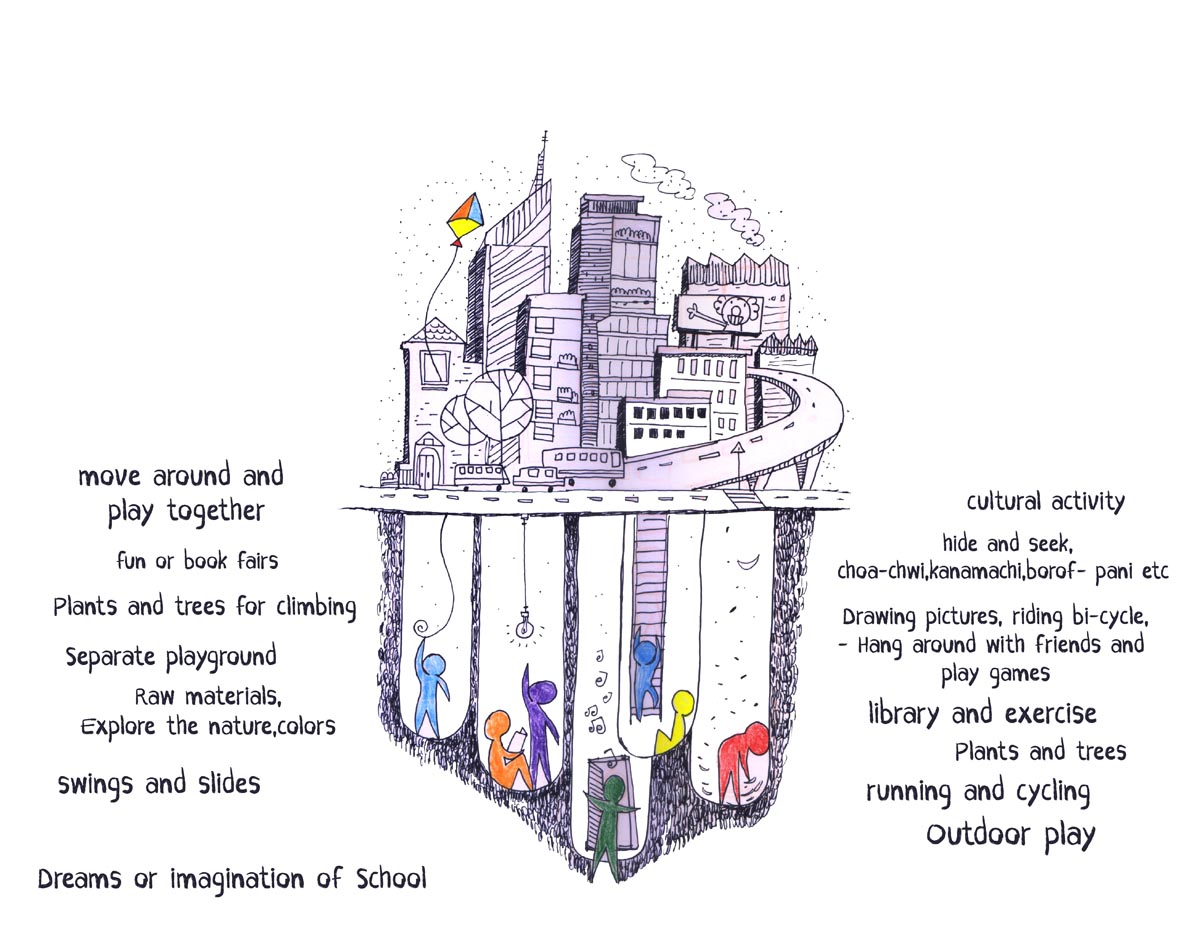
Studying psychological pattern of various age groups different types of crisis came up. As children of preschool to STD 2 takes initiative to explore the world by making toys, arts with raw materials. Immediate senior students than them from std 2 – 6 participate in exploration with a competence and students from std 7 – 12 works more with leadership, moral values, ethics and control. In the event if they are not given legitimate environment then they may experience some negative effects, for example, guilt, inferiority, confusion etc. This might cause the end of a blooming flower.
Different case studies of children from different income group deliberately explains their leisure activities, requirements and imaginations about their school’s outdoor spaces which influenced the design part too. Here we become more acquainted with primary level which needs their own particular spaces for exploration, secondary level is more hopeful about utilizing the materials around us, besides they go on experiments and higher secondary level goes isolated, as they request space of their own, for being more objective about exploration of morals.
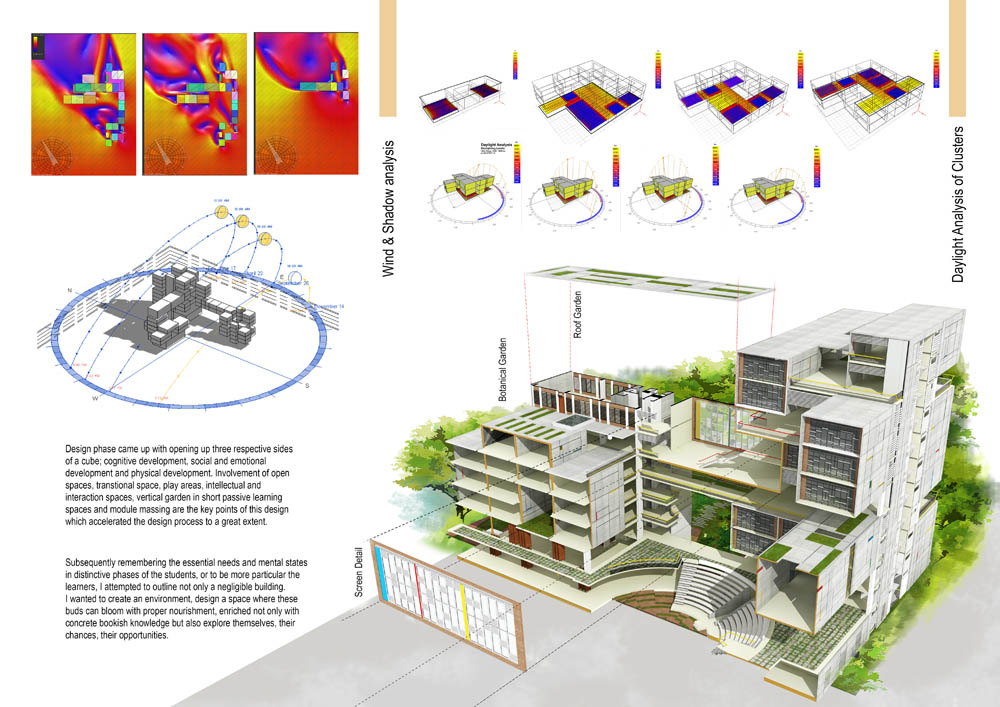
Subsequently remembering the essential needs and mental states in distinctive phases of the students, or to be more particular the learners, I attempted to outline not only a negligible building. I wanted to create an environment, design a space where these buds can bloom with proper nourishment, enriched not only with concrete bookish knowledge but also explore themselves, their chances, their opportunities.
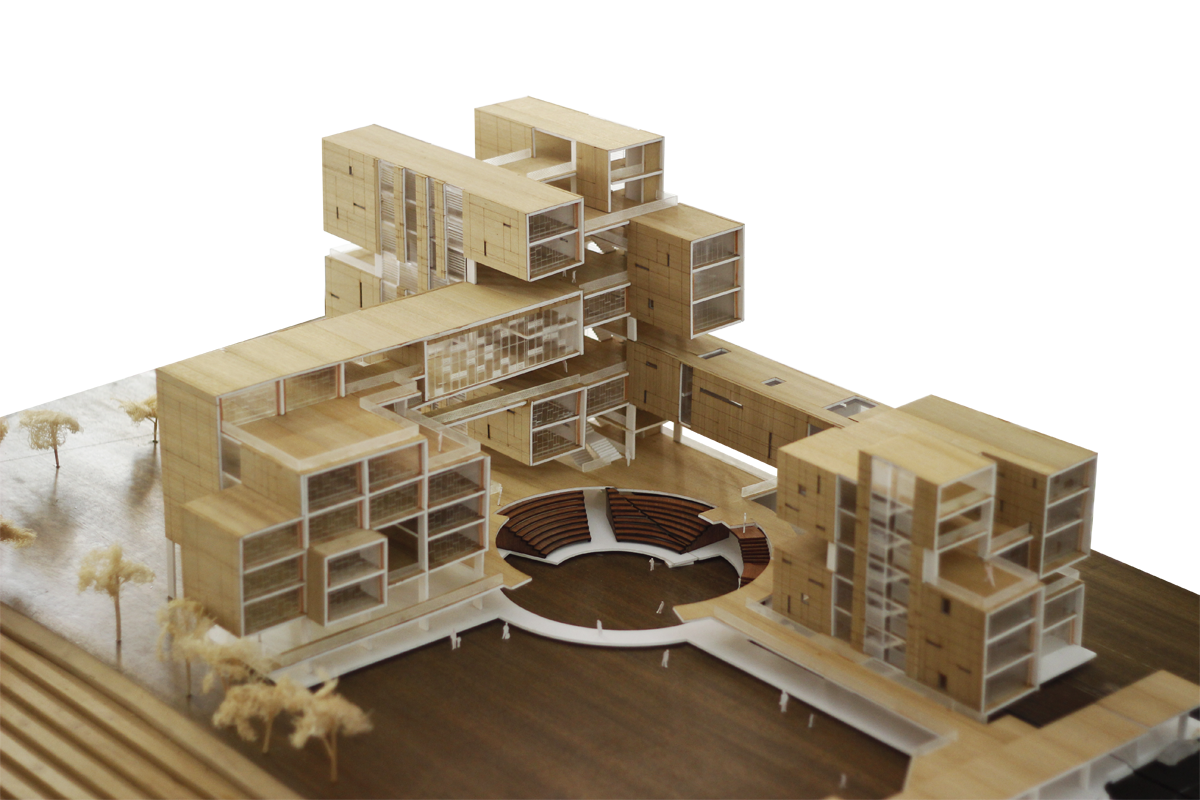
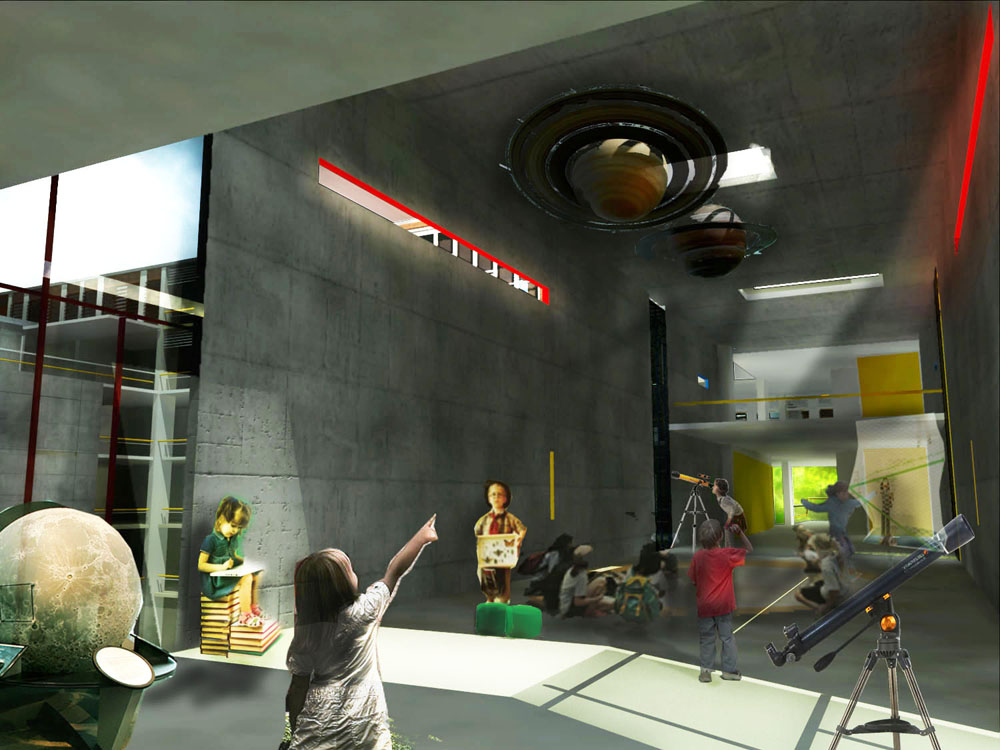
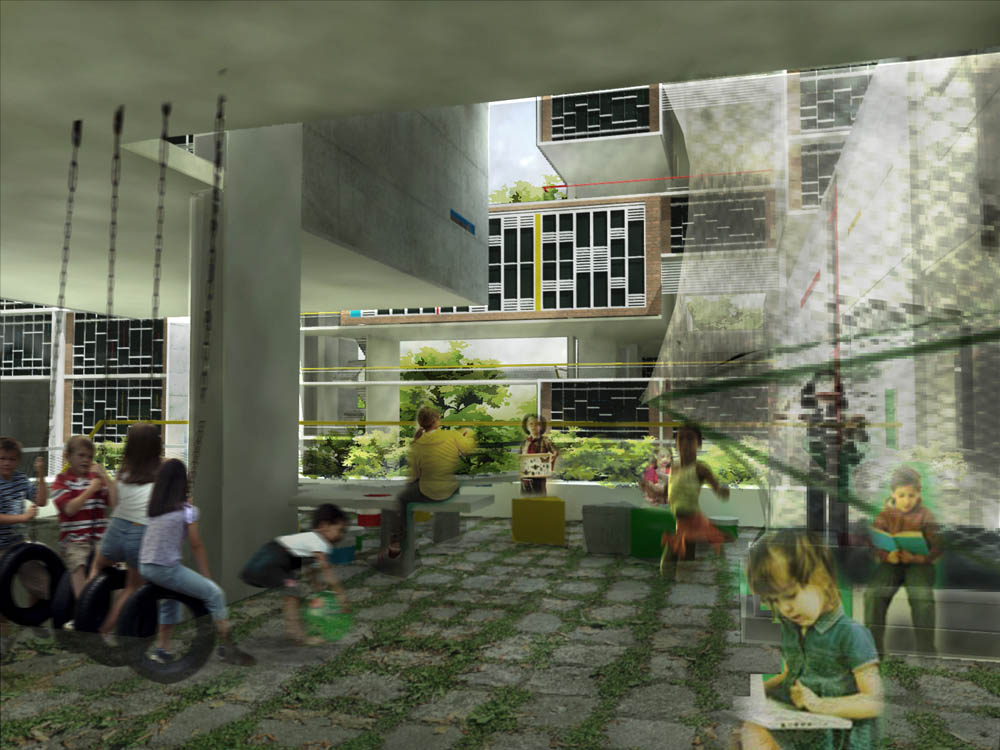
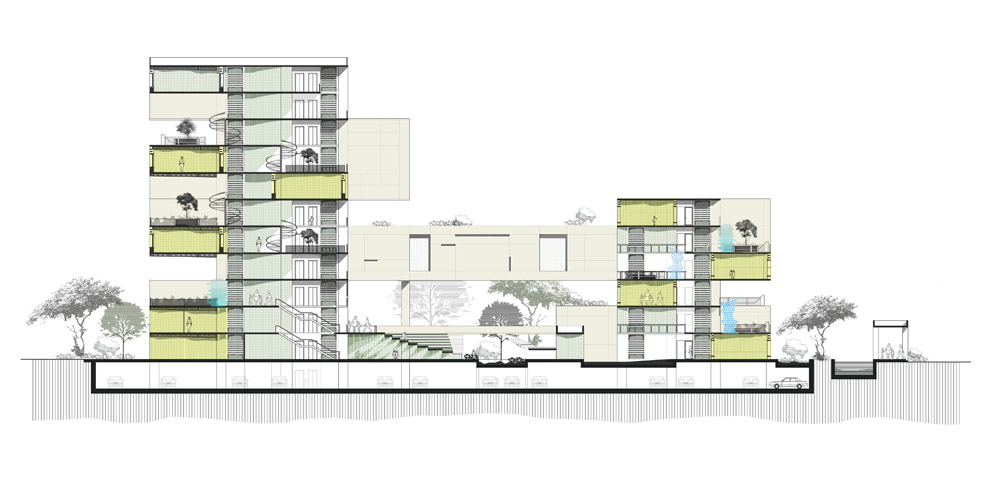
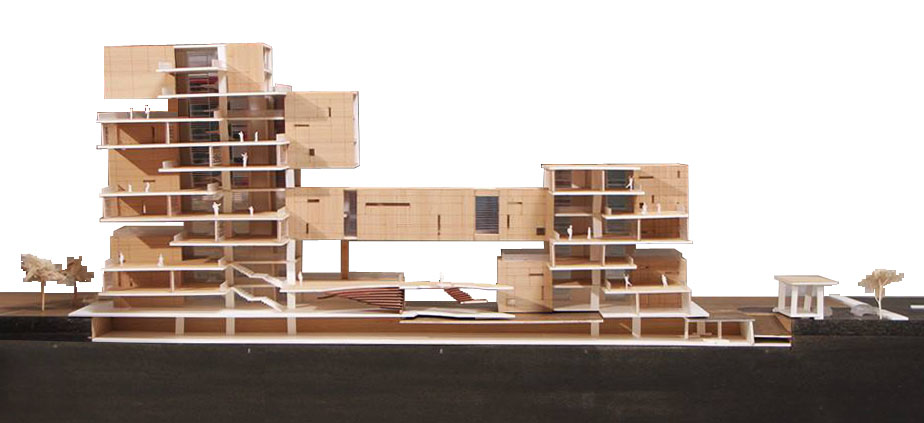
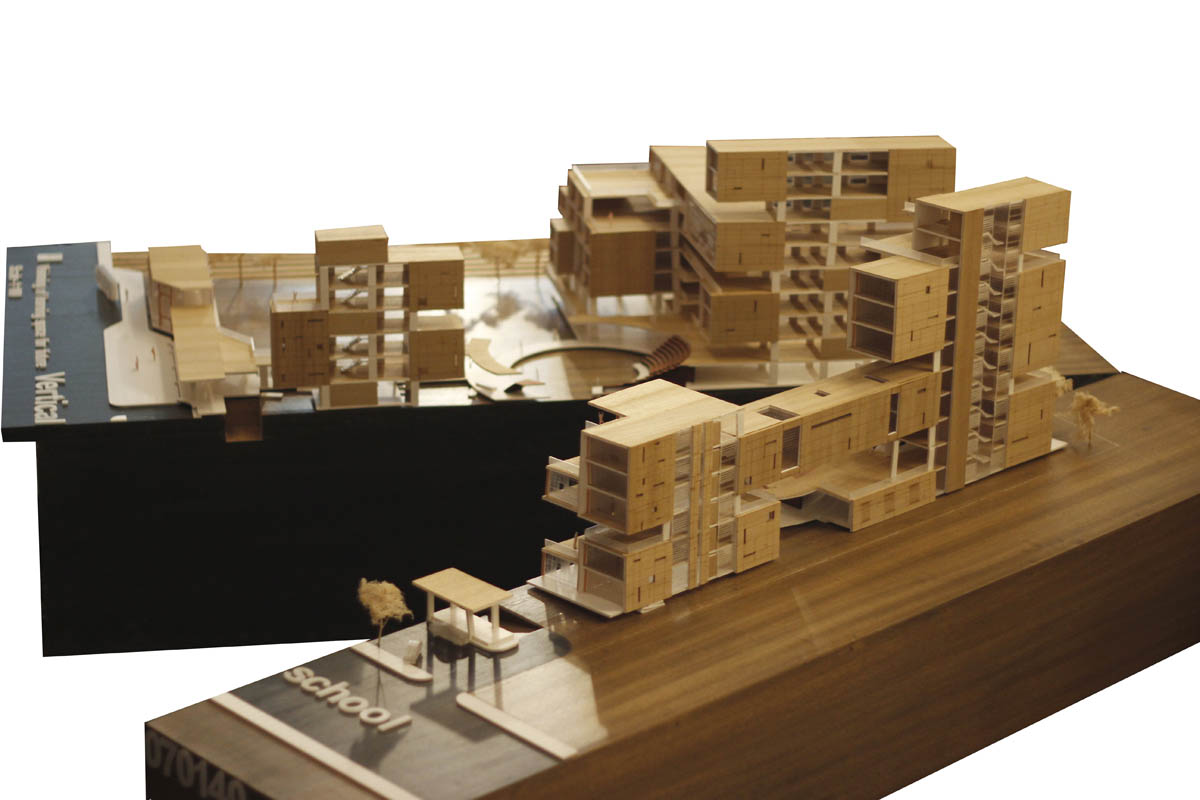
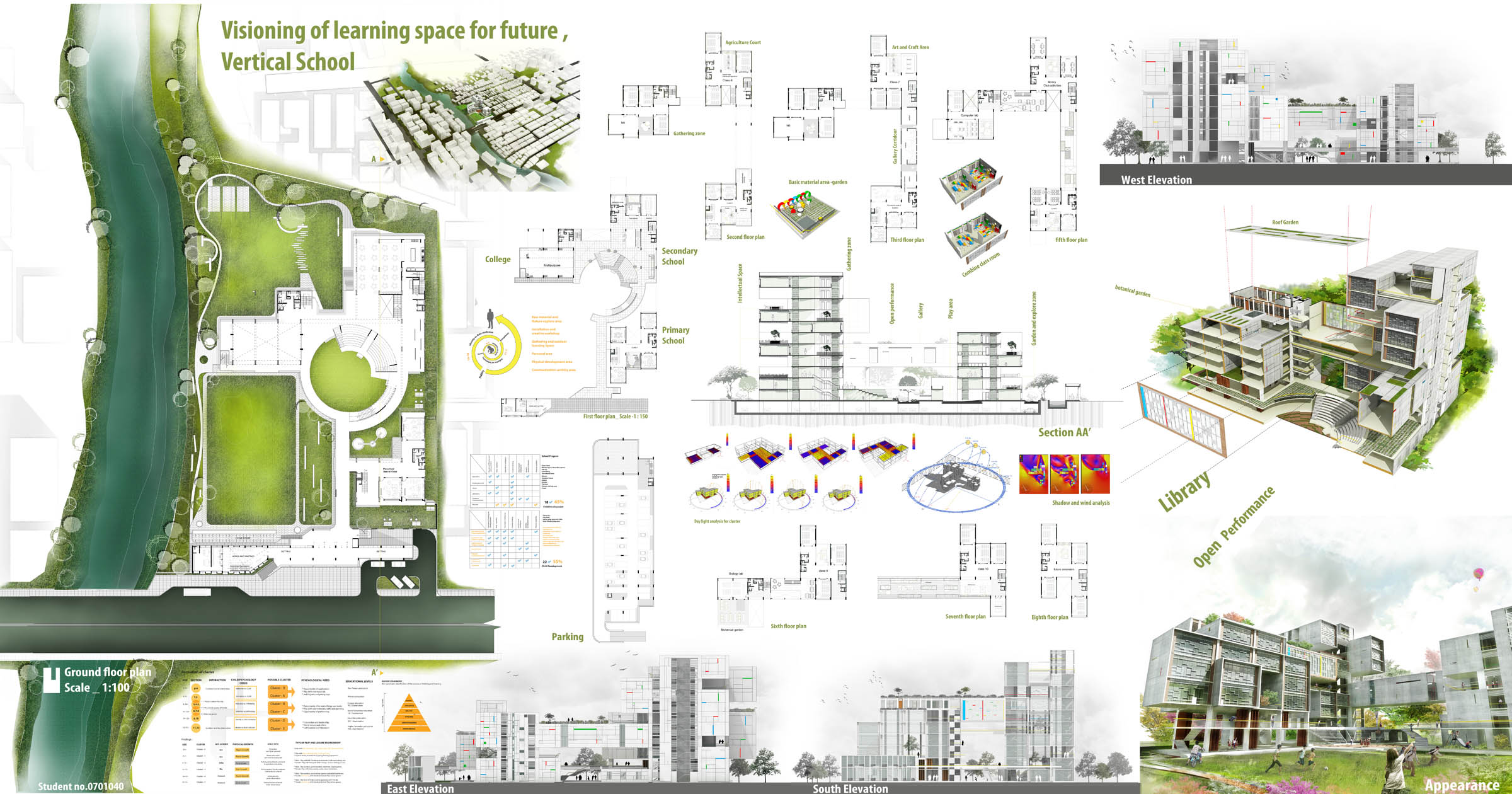
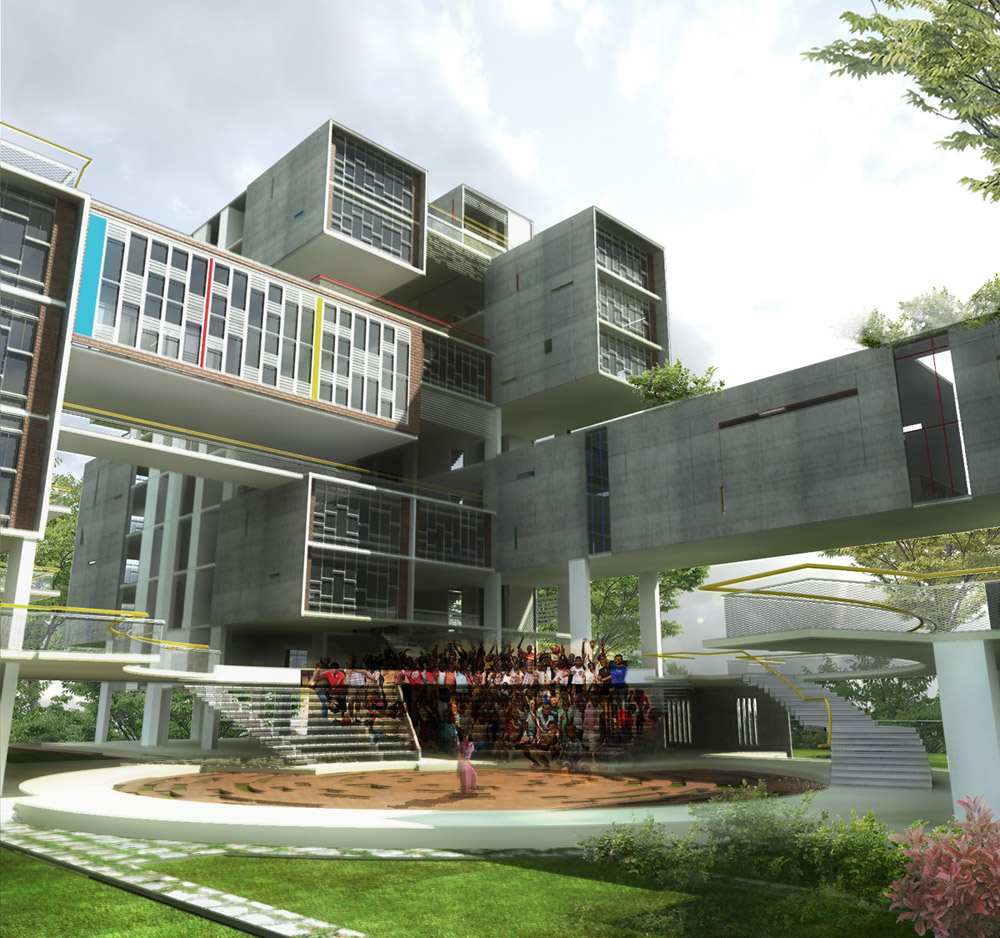
As civil argument over teaching change sizzles, and as designers valiantly keep attempting to accomplish more with less, study proposes that it may be worth occupying no less than a little consideration from what’s going ahead in classrooms to how those spaces are being planned. Depending on the different studies of requirements and demands of different ages, sections, interaction motives, psychological crisis and needs, education level clusters were made. These clusters also dealt with gender, physical growth, required space type and type of leisure environment. Studies say ensuring standard spaces along with passive learning spaces increase the possibilities and probabilities of a child’s development. If we cut down the passive spaces then the development will be reduced by 55%. Ensuring standard space is difficult in these highly dense areas. Moreover horizontal expansion is next to impossible to meet the demands in this 1.5 acre of land for school site in Dhaka where total number of student is 1500 (Pre-School to STD – XII). Considering all these factors design process was influenced for vertical expansion. Design phase came up with opening up three respective sides of a cube; cognitive development, social and emotional development and physical development. Involvement of open spaces, transitional space, play areas, intellectual and interaction spaces, vertical garden in short passive learning spaces and module massing are the key points of this design which accelerated the design process to a great extent.
The whole zoning is based on interaction between clusters and three separate zones for primary school, Secondary school and Higher-secondary school. First, the primary School. The interaction between cluster 1(Pre Class to class-2) with cluster 2(Class 3-5) is informative friendly, So they can interact with in the primary School block where intellectual spaces are merging each other,
A gallery mass is placed between primary school and secondary school block because the interaction between Cluster2(class 3-5) and Cluster 3(class 6-8) is curiosity and friendly, Cluster 3 is in the age of creating things by using tools and making art, So Cluster 2 have a high curiosity among towards cluster 3, A gallery where Cluster3 will Share and display their creativity and experiments and Cluster 2 will interact through gallery mass.
Library mass is placed between Higher secondary and secondary block, to share from senior-junior.
Individual cluster provides individual needs, Such as Cluster-1 provides Protective ground play area, Basic material Zone in upper level, Plantation and sharing area on upper level. Cluster-2 (Class 3-5) provides, Play- gathering area, explore area in middle level, Curiosity zone with connected with the gallery mass on upper level.
Cluster-3 (Class 6-8) provides agriculture zone, Creative and gathering zone, art and craft area with connecting gallery mass. Cluster-4 (Class 9-10) is connected with the library mass, and provides indoor games facilities.Cluster-5(Class 11-12) Is connected with both multipurpose and library mass. Community activities and experimental or Isolation areas are towards cluster-5.
A central amphitheater is placed for open performances. Maximum possible open area for outdoor games and experimental park are separated by the multipurpose with visual clearance.
Cluster can be plugged vertically for future extension without creating any problem of lighting and ventilation, So that the open land must be uninterrupted from future constructions.
The aim of the competition is to promote discussion and research through which to generate insights and visions, ideas and proposals that help us envisage what the city and the habitat of the 21st century will be like.
.
ELIGIBILITY
The competition is opened to students and professionals.
There is no age limit; the projects may be carried out be individually or in groups, with no restriction on the number of members of the team.
Architects, engineers, planners and designers who want to contribute to progress in making the world more habitable by developing a proposal capable of responding to emerging challenges in areas such as ecology, information technology, architecture, and productive cities.
.
THEME
The program challenges the participants to design any project directly related to productive cities: buildings, sensors, devices, urban planning, means of transportation, urban farming, energy systems, etc.
.
SUBMISSION FORMAT
_ Write a brief description (max 200 words) that outlines key concepts around proposals or changes for existing buildings and/or cities.
_ Graphic description: Site plans, floor plans, elevations, sections, perspective drawings, photographs of physical or digital models and axonometric drawings at any scale and descriptive texts explaining the project are allowed. The descriptive texts must be in English.
_ The proposals should be presented on three (3) DIN A-3 panels and comply with the following format:
_ Each panel will be presented in PDF format. The size of each file must not exceed 1MB
_ The same panels will also be presented in a JPG 1280px by 960px format. The size of each file will not have to exceed 500 KB.
.
AWARDS
The three teams leaders will receive cash prizes, and a one-year grant to take the Master in Advanced Architecture at IAAC and research in greater depth the manufacture of self-sufficient architecture. All of the projects selected will be featured in a special book produced in conjunction with the Actar-Birkhauser publishing house like in the four previous editions.