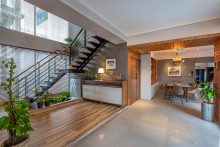
The 4000 sq. ft. duplex apartment comprises a formal living, dining, pantry, two guest bedrooms and laundry on the ground floor; and a family living, dry kitchen and three bedrooms with attached toilets on the 1st floor. The interior design focus was drawn immensely on the tactile aspect of materials and the user experience of the space. The client had a straightforward requirement. The client wanted a space where they feel relaxed, calm and comfortable. What sort of spaces or ambience do people find relaxing? – in exploring this question, the designer team consciously includes subtle hints and characteristics of natural elements in the interior that enable the users to reconnect with nature subconsciously.
A variety of indoor plants were introduced throughout the space. The design team has carefully picked plants that can be easily maintained and grown within a controlled environment. Several shelves and nooks are adorned with plants. Maximum openness was ensured with an open plan layout. To invite an abundance of natural daylight, full-height windows were installed.
The colour scheme and materials of the residence were carefully chosen to boost users’ tactile and sensory experience. Different shades of wood, white, and grey were used in abundance. The walls are primarily fair-faced with some exceptions in feature walls. The floor is of a matte mud colour which gives a sense of walking on the ground or outdoor. Nature wooden fibre tiles were used in the middle court. All these neutral colours subtly put users in relaxing mode. Exceptions can be observed with pops of vibrant colours- visible in the artworks, upholsteries, cushions, rugs and the feature walls, but even then, those colours are inspired by nature such as terracotta, rustic green, blue or yellow. The watercolour artworks were carefully handpicked from a renowned gallery.
The design team ensured using as many naturally sourced materials in the design as possible. Since all the furniture was custom-made, the team took the freedom to flexibly design the furniture and decorative elements according to the client’s requirements. The guiding principle of ‘wabi-sabi’— a Japanese concept that emphasizes finding beauty in imperfection—was followed. One can notice that the tabletops, different furniture and accents don’t have smooth finishing, there are many textures in the design- this concept helps to appreciate the simplicity and imperfections of life. Moreover, textures like these have a tactile quality to them.
Materials like wood, stone, and exposed bricks dominate this space. Natural fibres and textures make up the upholsteries to give an overall coherent look. In addition, the indoor staircase waterfall evokes a soothing effect in the mind.
আজকে একটি বিশেষ বিষয়ে লিখতে বসেছি তোমাকে; আমার দাদুবাড়ি সম্পর্কে লিখব আজ।
আমার দাদুবাড়ি চরাঞ্চলে, টিকারাকান্দি চর। জামালপুর সদরের ভিতরে হলেও এখানে অনেক দিন যাতায়াত ব্যবস্থা তেমন ভালো ছিল না। আমরা ছোট বেলায় জামালপুর থেকে প্রথমে টেম্পুতে তারপর ডিঙ্গি নৌকায় গাঙ পার হয়ে তারপর বেশ কয়েক মাইল হেঁটে বাড়িতে গিয়ে উঠতাম। দুর থেকেই বিস্তৃর্ণ ধান ক্ষেতের উপর দিয়ে দুরে বাড়ির বাইটেগ/ বাইড়েক এর বড় শিমুল গাছটা দেখার জন্য উৎসুক তাকিয়ে থাকতাম। টিকারাকান্দি বাজারের পাশেই পুরাতন ভোটঘরের পিছনে মসজিদের সামনেই দাদার কবর, তারপর একটু আমগাছের ছায়া ঘেরা জমি যেখানে মৌসুমী সবজির চাষ হত। এরপরেই বাড়ির বাইটেগ/ বাইড়েক – সেই শিমুল গাছ, একটা বিশাল বাঁকানো ভুতের মত কাঁঠাল গাছ আর ছিল গাছ ভর্তি ঢাসা কামরাঙ্গা । ভোর রাতে এই গাছ থেকে বাদুড় কামরাঙ্গা খেয়ে টিনের চালে ফেলত আর আমারা ভয়ে জেগে উঠতাম।
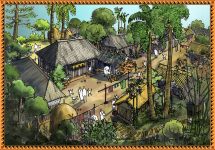
দাদুবড়িতে একটা উঠানের পশ্চিমে আর দক্ষিনে থাকার ঘর, পূবে রান্নাঘর আর উত্তরে গোয়াল। রান্নাঘরের পিছনে বাঁশ ঝাড়, আর কয়েকটা ইয়া লম্বা জিনের মত নারিকেল গাছের আড়ার নিচ দিয়ে টিনের টয়লেটে যেতে হত। রান্নাঘরের দক্ষিনে কলাগাছ তলায় টিউবওয়েল পাড়ের তিনদিকে শুকনা কলাপাতার বেড়া দেয়া।
পশ্চিমের চৌচালা ঘরটা বাড়ির মূল ঘর, লম্বাটে ঘরটায় মাঝখানে একটা উগার দিয়ে দুইটা কামরা বানানো হয়েছে। একদম ছোট ছিলাম আমরা তখন এই ঘরটাতে শোলার বেড়া ছিল, পরে অবশ্য টিনের বেড়া দেয়া হয়েছিল। দোচালা ছনের চালের রান্নাঘরের বেড়া কিন্তু শোলার (পাটখড়ি)ই ছিল অনেকদিন।
দক্ষিনের ঘরটা পরে তোলা এটাতেও টিনের চাল, টিনের বেড়া। এই ঘরের দক্ষিনে সীমানা বরাবর ছিল কাঁঠাল আর সাজনে গাছের সারি।
দাদুদের উঠানের সাথে গোয়াল ঘরের পাশ দিয়ে লাগানো আরও ছয় সাত ঘরের উঠান নিয়ে ছিল আমাদের শরিক। কোন বন্ধে যখন বাড়িতে একত্রিত হতাম আমরা সব চাচাতো ফুফাতো ভাই বোনেরা সারাদিন এই লম্বা উঠানে ছুটে বেড়াতাম।
বর্ষাকালে বাজারের পাশের খালটা আর সব ফসলের জমি গুলো পানিতে এক বিশাল সমুদ্রের মত হয়ে যেত। শুধু পাট গাছ গুলো মাথা উঁচু করে থাকতো। সারাদিন গামার গুটার খেলনা গাড়ি নিয়ে দৌড়ে, বন্যার পানিতে ঝাঁপিয়ে আর বাজারের বড় জাম গাছতলায় জাম কুড়িয়ে ক্লান্ত চোখে টিনের চালে বৃষ্টির শব্দ শুনতে শুনতে আর ভাবতে ভাবতে ঘুমিয়ে যেতাম যে কালকে ভোরে আবার কবুতর গুলোর বাক-বাকুম শুনে ঘুম থেকে উঠে আর কি কি দস্যিপনা করা যায়।
গ্রীষ্মের ছুটির দিন গুলো ছিল আরও অন্যরকম। গরমে ঘরে থাকা যেত না দেখে খালের পাড়ে বাঁশের মাচা করে সেখানে ছেলেদের আড্ডা বসতো। মেয়েরা বাইটেগে ধান শুকাতে দিয়ে ঘরের ছায়ায় পাটি পেতে বসে পাখি আর মুরগি তাড়াতো। আর আমরা ছোটরা ঘুরে ঘুরে খোঁজ করতাম কোন গাছে উঠে টক আম খাওয়া যায়, কোন আড়ার ফেনের ডাটা, টক তেঁতুল আর কার বাড়ির কাঁঠালের মুছি দিয়ে ভর্তা করে খাওয়া যায়। আর হঠাৎ কাল বৈশাখী ঝড় আসলে ছেলে বুড়ো সব দৌড়ে চলে আসত ধান ঘরে তুলতে। সে এক বিশাল উৎসব, ঝড় উৎসব।
দাদুভাই আমার, তোমাকে যদি একবার ঐ সময়টাতে নিয়ে যেতে পারতাম!
দাদার পরিচয়ঃ আমার দাদা ছিলেন পেশায় একজন কৃষক। আমার দাদার বিশাল পরিবার ছিল- দুই দাদী, সাত ছেল, ছয় মেয়ে নিয়ে।দাদী, দুই চাচা আর দুই ফুফু বাড়িতে থাকতেন। বাকিরা পেশাগত কারনে গ্রামে থাকতে পারেতন না। সাধারনত ঈদে প্রায় সবাই ছেলে-মেয়ে নিয়ে বাড়িতে একত্রিত হতো।
গাঙঃ ব্রাহ্মাপুত্র নদ।
বাইটেগ/ বাইড়েক : মূল ঘর থেকে রাস্তার দিকে ছাড়া জায়গা, উঠানের মত ধান সিদ্ধ করা, শুকনো বা এই জাতীয় কাজের জন্য এই জায়গা সমতল করে, পরিষ্কার করে রাখা হয়।
উগারঃ ঘরের ভিতরে বাঁশের তৈরি একধরনের মাচা এর পাশ দিয়েও কারুকার্য করা বাঁশের বেড়া দেয়া থাকে। মাটির মেঝের আর্দ্রতা থেকে ধান-চাল রক্ষার্থে মাটি থেকে প্রায় দুই ফুট উঁচুতে উগার এর উপর বাঁশের বা মাটির বড় পাত্রে বা গোলা তে সংরক্ষণ করা হয়।
আড়াঃ বাড়ির পিছের দিকে বাঁশ ঝার, কলা গাছ সহ আরো ঝোঁপ ঝাড় ঘেরা অনাবাদি জায়গা। যেদিকে সাধারনত বাড়ির গোসলখনা আর টয়লেট ও বানানো হয়। ]
I write today about something very special; it is about my ancestral home.
My ancestral home is located in Tikarakandi Char. Even though it is located inside Jamalpur town, the transportation system wasn’t really developed back then. When we were kids, we used to take a tempo from Jamalpur, then cross the Brahmaputra River on a dinghy (small boat) and finally walk a few miles to get home. From far, over the vast paddy field, I would curiously look for the large shimul tree in the front yard of the house. Next to Tikarakandi Bazaar is the old polling station, behind which is the mosque where my grandfather’s grave is. Nearby was a piece of land shaded by the mango tree where seasonal vegetables were grown. In the front yard of the house, there was the shimul tree, a huge swirling ghost-like jackfruit tree, and a star fruit tree full of juicy fruits. Near dawn, bats would eat star fruits from this tree and throw them on the tin roof, and we would jump off the bed.
The living quarters are on the west and south sides of the courtyard; there is a kitchen on the east and a barn on the north. Behind the kitchen, there was a bamboo grove with some giant coconut trees. One would pass under them to get to the tin-built toilet shed. To the south of the kitchen, under the banana tree, a fence made of dried banana leaves was built around three sides of the tube well.
The chauchala room on the west side is the main part of the house. The elongated room was made into two parts with a partition in the middle. When we were very young, the room had a jute sticks-made partition which was later upgraded to a tin-built fence.
The southern part too was later rebuilt with a tin roof and walls. Along the southern boundary of this house were jackfruit and sajna trees.
Next to the barn, beside the yard, there were six or seven more houses where the extended family members used to live. When we would gather during the holidays, all of us cousins would run around this long yard all day.
During the rainy season, a vast area including the canal next to the market and all the crop fields would become flooded. Only the jute trees kept their heads high. All day long, I would run around in a toy car. Jumping into the flood waters and picking up berries under the large berry trees in the market, I would eventually tire out. I would go to sleep listening to the sound of rain on the tin roof and wake up the next morning to the cooing sound of pigeons and wondering what else to do.
The summer holidays would be another kind of fun. As no one could stay at home in the heat, all the boys would hang out under the bamboo shed on the bank of the canal. The girls used to dry the paddy in the front yard, then sit under the shade, and chase away birds and chickens. And, we younglings would search for trees, with pickled mangoes, to climb. We would look around for houses with jackfruit to stuff with pickle tamarind. And suddenly, when nor’westers thunderstorm hit, all the boys and old men would come in hurry to collect the harvest. It used to be a great festival, a festival of the storm.
Dearest little one, if only I could take you to that time once!
Love,
Your grandfather,
Md Mazharul Islam (Shawon)
Disclaimer:
CONTEXT (www.contextbd.com) and their collaborators jointly hold the copyrights of all contents including, but not limited to, all text, information, illustrations, images. You may not duplicate or reproduce any of the content on this website, including files downloadable from this website
The city of Guadix in Spain is blessed by its prime geographical location, by a wealth of monuments and its historic centre, the Al-Cazaba de Guadix. The city continued to be a significant place of cultural fusion for the Roman, the Arab and the locals till its decline in the late nineteenth century. The Al-Cazaba and its neighbourhood were one of the most important intellectual cultural centres in the Nasrid kingdom of Granada during its hay day.
Presently, the cityscape of Guadix around the citadel is disconnected from its surroundings for a lack of interconnecting public spaces. “Reclaiming the Al-Cazaba Of Guadix” is a proposal for the Richard H. Driehaus Architecture Competition2019-2020, an international competition that helps preserve Spanish cultural heritage and revive the use of local architectural and urban traditions to promote more sustainable and socially integrating towns. The main aim of this proposal is to turn the Al-Cazaba and its neighbourhood into a centre for cultural and religious activities through a network of public plazas connected by pedestrian access further meeting the city’s regular walkable tour initiating from the Cathedral towards the Al- Cazaba through the town’s oldest Latin Quarters. This keeps the viability of an authentic tour of the original Guadix and retrieves the detached citadel by reconnecting it with the city.
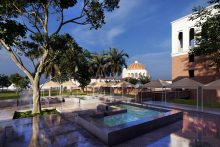
A new public plaza,Plaza de la Saavedra is introduced in the original core of the city. It is designed while keeping in mind that any additions to the historical site are augmented rather than overwhelming the existing structure. Named after the former Saavedra Palace, a gateway is also designed by transforming the north wing of the Seminary. It retains the original characteristics of the existing northern façade in terms of openings, materials, and architectural style. The boldly designed gate landmarks the entry to this plaza. Arriving into the plaza, one can witness the essence of the traditional courtyard-based functions with an entrance to the Penaflor Palace to the east, and the Augustin Church on the west.
The other entry to this plaza approaches through Calle Concepcion on the east of the degraded residential block (currently in ruins) which the competition demanded to be designed for accommodation. It is designed as a Funduque inspired tourist-hub rather than solely a residential block by including shopping opportunities and studio apartments as tourist accommodation. The additional function of shopping activates the plaza giving the tourists options to stroll, shop for souvenirs, and be entertained without sacrificing the needs of local people. This also creates an impact on the community by generating jobs for the locals. Automobile access is retained and facilitated by adding underground parking. The proposed functions for this mass are an ideal approach to revitalize the area in terms of tourism and economic opportunities and will act as a better guideline for similar future interventions.
Founded in 1595, the temple of San Agustin was a part of the military barracks for Napoleonic troops, later became the church of the minor seminary in 1880, and was affected by the same events suffered by the rest of the convent since its foundation. The present transformed form has a single rectangular main nave with a barrel vault over arch arches and lunettes that illuminate the entire space. Whereas, its original structure was an elliptical centralized plan with overlapping chapels, galleries and a choir. Through historical and archaeological studies, this reconstruction proposes a baroque-style remodeling of the church to regain its past significance in the present context.
Keeping Al-Cazaba in the south, two axes has been taken, meeting at a perpendicular in the north opposite the Al-Cazaba towers, a plaza called Meseta de la Al-Cazaba is designed following the Arabic scheme of landscape organization since the fortress bears witness to the city’s medieval Arabic past. It works as a leisure space and an open market.
Three smaller public plazas terminating from the Maseta are proposed to form a web of interconnecting spaces to functionalize the city centre. On the east, it steps down to the re-designed Plaza Pedro de Mendoza which is proposed to be extended taking the open space of the Santiago convent. When extended, the plaza can be accessible from the three adjoining streets on the east, south and west. On the west, it terminates through a view pavilion that descends to the Esplanade Oesta, a proposed pottery hub as it is adjacent to an existing pottery museum inside an original cave. This narrow plaza allows tourists a break to explore the traditional craftsmanship of artisans of Guadix. On the northwest, a former ramp which is primitive access to the Al-Cazaba complex is preserved as an access point and activated by a node is proposed as a preparation space that provides foliage as a buffer to the surrounding residential.
The proposal revives the public plazas and additionally creates more plazas and adjusts the current urban scene by facilitating them with road networks. The strategy aims to regenerate the entire neighbourhood of the citadel to regain the past glory of the city.
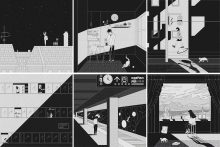
There is something about being alone that is pleasing beyond measure. There is peace to how you can quietly dream your shameful thoughts and how your clumsy self can throw itself into unsightly contortions. How you can laugh, cry or feel things that have not yet been named. Closed doors are underrated, underappreciated, underused, and misunderstood.
The intentional use of black and white with sometimes whimsical and strange elements questions the viewers into recognizing the strangeness of familiar surroundings. Mundane architectural space highlights the melancholy that consumes the isolated. The subjects often placed near the edge try to reflect the tension between physical proximity and the inability to emotionally connect in modern urban climates. There is blissful loneliness behind every closed door, unscathed by futile politeness and empty smiles.
Through this Multi-purpose Centre (MPC), different services like Mental Health and Psychosocial Support (MHPSS), Case Management for vulnerable children, Community Engagement like ‘Community Based Child Protection Committee’ (CBCPC) and life skills support through ‘Adolescent Club’ are provided. Besides, these activities, the project is considering disability inclusion, accountability to the affected people, and Menstrual Hygiene Management throughout its interventions.
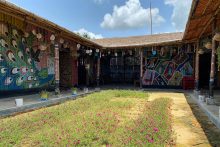
During the initiation of the design process, we communicated continuously with the key stakeholders who will use the facility. We tried to focus on the feedback of children, especially adolescent girls regarding their space and privacy requirements and tried to incorporate them into the design. Through the U-Shaped plan of the structure, we tried to create a semi-private inner garden/courtyard, where girls can get involved in gardening and playing activities. There is also an outdoor play area. The facility contains activity spaces, office spaces, a training room, an adolescent’s room, and a shaded display/play space. The inner garden creates ample opportunity for natural light and ventilation for the structures. The structure is constructed with locally available materials like bamboo as structural components and sun grass (Chon) as the roofing material. The muli–bamboo façade was designed and constructed in such a way that the perforations in the facade provide enough opportunities for natural light and ventilation. Also, artwork inspired by the cultural attire called “Thami” was applied to the façade with the involvement of the children and our technical team.
The MPC is now fully operational and has created a platform for the most vulnerable children, especially girls, to receive different services to ensure child protection. Moreover, it has created a space for them to learn, play & participate freely and enjoy their time. The community members can also use this facility for community meetings. This facility is operated with the active support and involvement of Camp in Charge (CiC) and UNHCR.
When talking about successful women, we often compartmentalize that definition of success. More often than not, we judge their success on the basis of their professional achievements or the challenges they overcame on the way to success. In this process, some fundamental aspects of their impact as individuals in society go missing. Beyond the workplace, they have an extended role in their own community and society in general. And when their success is measured in terms of professional achievements, their impact as mothers, caregivers and guardians often gets brushed aside, or taken for granted.
‘From mothers to mentor’- the stories that go unnoticed
To celebrate this year’s Women’s Day’s theme, ‘Break the Bias’, we wanted to highlight those whose achievements go unnoticed in our society. Context had organized a storytelling competition, to highlight the impact of women as mothers and mentors. The winning story by Rafia Safa, focused not on the triumphs of her mother, but her failure, and the lessons Rafia took from that failure. It was a heartfelt tribute written in honour of the mother who faced many prejudices from society and the ways she chose to cope with it and to raise her daughter with all her strengths to fight these prejudices.
The other stories focused on a wide variety of roles played by women at home and in society, both as mothers and mentors. Some stories focused on mothers, and other inspirational women like aunt and mother-in-law. Some of these stories recognize the silent role women continue to play as caregivers and providers for their families. One story even focused on a grandfather, playing a childcare role, in absence of a grandmother for the child, while the mother (his daughter) is encouraged to establish herself to pursue her dream to become an architect. We would like to congratulate all the authors for sharing their thought-provoking stories.
Meeting some mothers and mentors:
Context organized a webinar and invited the winner of the storytelling competition and her mother Rahima Begum, along with three guests – Homaira Zaman, Farhana Rashid and Laila Khondkar, to discuss how we can overcome the biases that prevail in our society, both at work and at home. The webinar was moderated by Rumana Kabir, and hosted by Farhat Afzal.
Homaira Zaman talked about her experience as a mother and a professional woman. After graduating as an architect, Homaira went into a partnership with her peer, to run both family and architectural practice. Homaira found it hard to balance both career and a young family. In her architectural practice, where she was a partner with her spouse, she was often not seen as the go-to person by the client, all the while she was taking on the majority responsibility of raising her children. She also shared how she mentored her children, who are now both adults. These days, Homaira enjoys learning from her grown-up children about many interesting topics, and encourages them to pursue their own passion. Homaira also taught architectural students at universities, and enjoys traveling in her spare time.
Her key message was, ‘Don’t be defined by the way society measures success- do what you love doing, that will lead to success and make you happy. ‘Amar success Amar Kachey..’
Farhana Rashid proudly introduced herself as the “Toilet Apa’’. As an architect and urban planner, her aim is to provide decent public toilets for both men and women all over the country. Farhana asserted that her upbringing helped her to be confident in pursuing her own dreams and achievements. When Farhana started her pilot work, she was able to change the views of her biased clients, who didn’t feel the need to provide any women’s toilets in a shopping centre, which was specifically catering towards the needs of women. Farhana indeed broke the bias about the fundamental role an architect can play to improve civic behaviour.
Laila Khondkar highlighted that although there are many barriers in our society and at the workplace, she thinks it is important to pick our own battles, a piece of advice she recalls receiving from a mentor, as one cannot fight all the biases single-handedly.Laila added that these days, there are five generations at our workplace and one has to understand the views of others. It is important to find ways how you get yourself heard. Especially if you are a woman at work, supervising colleagues who are older than you, you have to make sure that you establish your assertiveness with competence. Women have to maintain the highest standard of professionalism and quality in their work.
Laila pointed out the biases that women leaders experience. They are often seen as harsh, when they are being assertive, which men don’t need to deal with. Finally, she mentioned that we need to accept that all of us have our own unconscious biases. We need to be aware of that, before we make an ill remark or judge others using our own views.
So, how do we break the biases then?
Homaira Zaman says as a mother she can consider herself to be successful only when her son will give the same respect to everyone, irrespective of their gender. And ensuring that all children turn out this way is a responsibility that falls on both the father and the mother. But the problem doesn’t end here. From the legal perspective, women are not getting an equal share of the inheritance. When a woman goes to travel on her own, people start questioning the absence of a male figure. So until these issues are addressed, equality in our society cannot be achieved.
Farhana Rashid commented that inclusivity can be addressed even at micro levels in terms of design and implementation. This was reflected when the toilet she recently designed was built with a door that required more strength when operated by women. This issue arose only because the engineer in charge designed the door considering men as the default user. Farhana believes such prejudices must be dealt with at the policy level and even at home, in order to achieve inclusivity in society.
Laila Khondkar highlighted that for a truly inclusive society, we need legal reform and a change in our social attitudes. Laws related to inheritance, marriage, divorce, and custody of children do not treat women equally. This must change through legal reform.She added that to make an inclusive workspace, companies should provide parental leave for both parents and childcare facilities for young families. From the state level, certain policies can be implemented to enable this. When states offer leave for fathers also, then the society gets a strong signal that child care is a shared parental responsibility.
Finally, the patriarchal mindset that both men and women are conditioned in our society needs to be questioned. When anyone makes an offensive joke or remark targeting a certain group of people, it is our responsibility to protest and speak out. When we consciously deal with the unconscious bias within us, only then can we make a truly inclusive society.
Context would like to thank all the guests for this lively discussion and all the audience for following up with the stories. We on behalf of Context would like to welcome more new ideas and stories to break the biases in our society and also within ourselves in the coming days.
জানি হয়তো একদিন নিশ্চয়ই জানতে চাইবে আমাদের ছোটবেলার কথা। তাই তোমাকে এই চিঠিতে বলে রাখলাম। ভোরবেলা লাল সূর্যের কিরণ খেজুর গাছের পাতার ফাঁক দিয়ে এসে পড়তো আমার মাথার উপর। আর আমি ঘুম থেকে উঠতাম। শালিক, ঘুঘু, চড়ুই ঘুরে বেড়াতে। বাড়ির সামনে দুই বাগানে কত রং বেরঙের প্রজাপতি দিবালোকের সূচনা কে স্বাগত জানাতো। এর মাঝেই ছিল মেইন গেট থেকে বাড়িতে আসার রাস্তা। দুপাশে কৃষ্ণচূড়া ও রাধাচূড়া দুটি বড় গাছ ছিল, তাই রাস্তাটা লাল-হলুদ ফুলে রাঙিয়ে থাকতো। দুটি বাগানে সারিবদ্ধ সুপারি গাছ ছিল। টগর, গন্ধরাজ, রজনীগন্ধা, জবা, কাঠগোলাপ, দেবদারু, জবা, কাঞ্চনফুলও ছিল। বাড়ির পুবে ঘাসমাঠে মা মুরগিদের ছেড়ে দিত। ঘাসমাঠ ও বাড়ির মাঝে বেদানা গাছে বাবুই পাখির বাসা ছিল। সময়ের সাথে বেলা হলে জঙ্গল আর ঘরবাড়ির মাঝের মাটির রাস্তা ধরে স্কুলে যেতাম। আমার ঠাকুরদার স্কুল ছিল। তখন বন থেকে পাখিদের ডাক শুনতাম, গ্রীষ্মকালে ঝিঁঝিঁ পোকাদের আওয়াজে মেতে থাকত রাস্তাটা। সুন্দরবন হলেও বাঘ ছিল না, শিয়াল ছিল । তবে ছুটির দিনে দুপুরে বাড়ির পেছনে দুটি পুকুরের মাঝের পাড়ে গাছ তলায় বসে দেখতাম মাছেরা ভেসে উঠতো; কখনো সাপেদের দেখতাম এঁকেবেঁকে চলছে। মাঝেমধ্যে চারিদিকে নিস্তব্ধতা কাটাবার তরে জলে ঢিল মারতাম, আর তা সুন্দর আওয়াজ করে বৃত্ত তৈরি করত। দুই পুকুরের চারদিকে ঝাউ, খেজুর, নারিকেল, তাল, পেয়ারা, কলাগাছ, খিরিস, ইউক্যালিপটাস, আম, টক কুলের গাছও ছিল। নিম গাছের ডালে বসে মাছরাঙারা মাছ ধরতো। আমড়া গাছ থেকে আমড়া পারতাম। ঠাকুরমা টক-ঝাল-মিষ্টি সব রকমের আচার বানাতো, আমি সবই খেতাম। এইভাবে সময় গড়িয়ে বিকাল হলে আমরা ঘাসমাঠে খেলতে যেতাম। পাশে মুরগিরা ঘুরে বেড়াতো। মা কলস কাঁখে জল আনতো। বসন্তকালে রাধাচূড়া গাছে কোকিল বসে ডাকতো। খেজুর এর সময় খেজুর খেতাম। সন্ধ্যার আগমনে আমাদের মতো সবার ঘরে ঘরে হারিকেনের আলো জ্বলতো।
আমাদের খড়ের চাল, মাটির বাড়ি ছিল। একদিকে কাঠের ফ্রেম আর বাকি তিন দিকে মাটির দেয়াল ঘেরা বড় সদর ছিল। এর পেছনে দুই পাশে দুটো দুটো চারটে ঘর, মাঝের গলিটা সোজা পেছনে বড় ডাইনিং এর সঙ্গে যুক্ত ছিল। ডাইনিং থেকে রান্নাঘরে সরাসরি যাওয়া যেত। সব জানালাগুলোতে খড়খড়ি ঝোলানো থাকতো। বাড়ির পেছনে তেতুল ও মিষ্টি কুলের গাছ ছিল; এবং পাকা শৌচালয় আর বাঁশ বাগানও ছিল। পড়তে বসলে হারিকেনের আলো দেখে এক দুটো ঘাসফড়িং জানালা দিয়ে এসে পড়ার টেবিলে উপস্থিত হতো। পড়ার ফাঁকে রান্নাঘরে মা কি রান্না করছে দেখতে যেতাম। রান্না শেষে রান্না ঘরের সামনে ফাঁকা জায়গায় জ্যোৎস্নারাতে শীতল পাটিতে বসে সবাই গল্প করতাম। রেডিওতে নাটক শুনতাম। জোনাকির সাথে চাঁদ আর উড়ো মেঘদের দেখতাম। হাওয়ায় সারিবদ্ধ সুপারি গাছ গুলোর পাতা নড়তো, আওআজ হতো। একান্নবর্তী পরিবার সর্বদা রমরমিয়ে থাকতো। বড় হওয়ার সাথে সাথে স্কুল পরিবর্তন হলো। হোস্টেলে থেকে পড়তাম।তারপর স্নাতকোত্তরের স্থাপত্যবিদ্যা পড়তে আরো দূরে শহরে গেলাম। হঠাৎ পরপর দুই বছর অবিবাহিত দুই কাকু মারা গেলেন, তবে ঠাকুরমা বেঁচে আছেন। জানিনা মানুষটা কেমনে নিজেকে সামলে ছিলেন সেই সময়। বাবা কাজের সূত্রে শহরে থাকতেন, তাই ওখানকার জায়গা জমি বিক্রি করে শহরে চলে আসি।
দাদুভাই, সে ছিল স্বাধীনতাপূর্ণ, এক প্রকৃতি-বান্ধব জীবন। আজ সবই স্মৃতি হয়ে আছে। তুমিও নিশ্চয়ই চাইবে এমন জীবন কাটাতে। নিশ্চয়ই চাইবে।
ইতি
তোমার দাদুভাই
নাম: কৌশিক জানা
পেশা: ছাত্র (স্নাতকোত্তর স্থাপত্যবিদ্যা)
বয়স: ২২
এলাকার নাম: মৌশুনী/ মৌসুনি, দক্ষিণ ২৪ পরগণা, পশ্চিমবঙ্গ
I know maybe one day you will want to know about our childhood so I telling you in this letter. I would wake up in the morning when the morning sun would fall on my face through the space between the palm leaves. Used to hear storks, doves, crows and sparrows roaming around. Many colorful butterflies welcomed the morning light in both the garden in front of the house. In between the garden, there was our main entrance, a narrow road from the gate leading to the house. There were these two trees of Royal poinciana and Peacock Flower on either side of the road, during the flowering season it became vibrant with red and yellow flowers. There were betel trees lined up in the two gardens, there were crepe jasmine, cape jasmine, tuberose, china rose, white frangipani, Ashoka trees, white Jaba, Kanchan flowers. My mother used to leave the chickens in the green plain field to the east of the house. In between that green field and the house, there was this pomegranate tree nested with birds. As the sun goes up, I would go to school along the muddy road between the forest and the house, my grandfather used to run that school. I could hear birds chirping from the forest while going to school, Oh and in summer the road was buzzing with the sound of crickets. Although it was a part of Sundarban, there were no tigers but foxes. But on holidays, at noon, I would sit under a tree in the middle of two ponds at the back of the house and watch fish, sometimes I would see snakes slithering. Sometimes I would throw stones in the water to break the silence around me and make circles with beautiful sounds. The two ponds were surrounded by palm, date, coconut, palm, guava, banana, lebbek tree, eucalyptus, mango and tamarind trees. kingfishers used to catch fish from the branches of neem trees. We used to pick hog plum from trees. Grandma used to make all kinds of pickles, I used to eat them all. As time went on, in the afternoon, we used to play on the field, chickens would roam around us, mother used to fetch water with a pitcher, in the spring we were entertained by the cuckoos. In the evening, every house lit up a kerosene lantern-like us. Our house was made of mud and the roof was made of straw. The house had a wooden frame on one side and the earthen wall on the other three sides, with a large front. It had a total of four rooms, two on either side, with a large passage connected directly to the large dining room at the back. We could go straight to the kitchen from the dining room. Every window has this screening we called ” Khor-Khori”. There were tamarind and sweet plum trees behind the house and there were pucca toilets and bamboo gardens as well. When we used to sit down to study, one or two grasshoppers would come to the reading table through the window seeing the light of the kerosene lantern. I used to peek through the kitchen to see what my mother was cooking. When the cooking ended, everyone would sit on the “Sitalpati” (a kind of mat which feels cold by nature) in the empty space in front of the kitchen under the moonlight and used to chitchat and tell stories, listen to dramas on the radio, see the moon with fireflies and the flying clouds; the leaves of the lined up betel trees used to flutter in the wind offering the auditory appeal of musical psithurism (the rustling sound of tree leaves). Our extended family always used to be in a state of euphoria. with time, I grew up, the school changed, I moved away from home and started staying in a hostel for further studies. Then I went to a faraway city to study architecture at the undergraduate level. Suddenly one of my two unmarried paternal uncles died, the other died the following year. But grandmother was alive. I don’t know how she managed herself at that crucial point of her life! At that time my father used to live in the city because of his job, so we sold the village plot and moved to the city. Dear Dadubhai (grandson), what an independent life it was in nature. Today everything has become a memory. Certainly, you would want to live a life like this. Definitely, you would!
Sincerely
your Dadubhai (Grandfather)
Sender: Koushik Jana
হারিয়ে যাচ্ছে আমাদের গ্রাম। হারিয়ে যাচ্ছে মাটি ও মানুষের আত্মিক সম্পর্ক। জীবন ও জীবিকার সংগ্রামে আমরা ভুলতে বসেছি আমাদের শেকড়। গ্রামের বাড়ি আজ যেন এক নস্টালজিয়া। শুধু বেঁচে আছে আমাদের স্মৃতিতে। কি রেখে যাচ্ছি আমরা ভবিষ্যত প্রজন্মের উদ্দেশ্যে? সেই শিকড়ের খোঁজে আমরা খোলা চিঠির আহ্বান জানিয়েছিলাম।
আপনি যদি অংশগ্রহণের কথা বিবেচনা করে থাকেন তবে যত তাড়াতাড়ি সম্ভব চিঠিটি প্রেরণ করুন।
CONTEXT (www.contextbd.com) and their collaborators jointly hold the copyrights of all contents including, but not limited to, all text, information, illustrations, images. You may not duplicate or reproduce any of the content on this website, including files downloadable from this website
Sangu-A is the first offshore gas rig project in Bangladesh. This gas field was discovered in 1996 in the Bay of Bengal 35-40 km away from the land near Salimpur, Chattogram. In 1998 the offshore gas rig was built by Petrobangla with the help of two international companies Cairns Ltd. and Santos Ltd. Later in 2013, due to lack of gas production, the offshore gas rig was decommissioned and abandoned.
An offshore oil rig is a large infrastructure containing facilities for well drilling to explore, extract, store, and process petroleum and natural gas that lies in rock formations beneath the seabed. There are about 175 offshore rigs in the Gulf of Mexico and 184 in the northern sea. After these gas reservoirs run out of gas the rig structures are abandoned in the middle of the sea as the cost of removing a shallow-water rig is almost around 5-20 million USD varying in size.
An official of Petrobangla, seeking anonymity, said, “though the Sangu gas field has not been used since its shut down, BDT one crore is being spent for its maintenance every year.” So, the aim of this project is to show how architecture can revive such an aquatic infrastructure like Sangu-A through adaptive reuse, which will define a starting point for a long-term strategy of reusing designated abandoned aquatic infrastructures as an alternative to demolishing.
Being situated in the middle of the Bay of Bengal, Sangu-A has the potential to act as a satellite station for marine and oceanographic research. This abandoned rig can be repurposed to create a facility for investigating sea life. It further offers the potential to become a visitor center for tourists and a coast guard check post to enhance ocean security. Accordingly, the proposed facility comprises separate areas for researchers, visitors, and service goods in three different vertical layers. On the upper floors, under the existing platform, the administration and service zones of the facility are placed. Laboratories, restaurants, exhibition spaces, visitor accommodations, etc. are located on multiple floors above the platform. Four types of marine laboratories are proposed. These are: Marine Physics, Marine Chemistry, Marine Biology, and Marine Geology – all are designed with proper ancillary facilities. A total of 48 rooms are designed for accommodating visitors and researchers. Proper fire safety, helipad, etc. are also a part of the facility.
The proposal also integrates self-generating energy production systems within the structure. It utilizes solar energy and wave-current as renewable sources for electricity generation. The façades are designed to host vertical axis wind turbines (VAWT) and photovoltaic panels. It is anticipated that combinedly both systems can generate sufficient energy required to run the facility.
The proposed adaptive re-use of the gas rig can possibly provide a new life to an old structure rather than demolishing it. The studio project is also an attempt to create an example of how to transform a large abandoned infrastructure into an autonomous, self-sustaining facility that can produce its own energy as well as offer opportunities to host new activities.
Khelaram Data Temple 1984 . Source: Dept. of Archaeology, GoB
Khelaram Data Temple, popularly known as ‘Andharkotha’, situated at the Nawabganj Upazilla of Dhaka is often considered as one of the unique and enthralling temples built in the late Mughal and pre-Colonial era. Unlike other notable temples in Bengal, this temple is unique in its architectural and functional aspects. The edifice of this temple is material evidence of a living tradition that implies the disappearance and a mythical past.
Khelaram Data temple can be considered a divine physical entity that encompasses God’s entitlement where worship and ceremonies were orchestrated and have both tangible and intangible expression in terms of its form and rituals. Besides its spiritual significance, this temple also resembles the splendorous architectural magnitude of that era.
This building was situated beside a large waterbody that was used for worship. Studies from Hossain & Rahman signifies that the location of this temple at ‘Kolakopa-Bandura’ has a renowned place-identity besides known for trade and business activities for the past 200 years [1].
Khelaram Data Temple: Before restoration. Source: Dept. of Archaeology, GoB
Khelaram Data temple: After restoration. Source: Dept. of Archaeology, GoB
The architectural significance of Khelaram Data
The architectural features of this temple signify the adherence to the model derived from core religious ideology and consideration. Hindu philosophy had greatly influenced the temple architecture in its form, ornamental details, and Bengal. The meaning of religious materiality and its relation to human experiences have been expressed in elements, material, architectural style, aesthetic patterns, and symbols.
This two-storied temple embodies a formal schema of a cuboidal sanctum where most of the Bengal temples are constructed in three types of forms: square, rectangular, and cruciform planned layout. The square form at the plan level, being the smallest of all types also derived from the canonical texts and philosophy of the religion.
The ground floor is approximately square in shape and divided into fifteen chambers. Staircases on the two opposite mirror directions lead to the first floor where nine individual chambers, each having a square plan, are constructed under the open sky. The central chamber is slightly raised and crowned with a shikhara or a pinnacle roof. This floor had a unique functional use as a dormitory for the people who came to worship from distant places of the country, resembling the generosity of this religion.
The form of the plan can be understood through the principles written in the religious texts, which set rules on temple construction, site selection, the shape of the plan, the internal layout, articulation and formal typology, and ornamental details. ‘Vastupurashamandala’, a combination of the philosophies of the physical environment, energy and geometry, is the divine guideline of Hindu temples [2] [3][4]. Mitchell, in his study, refers that square- being the ideal form is a representation of Earth and the order, the completeness of endless life and the perfectness of life and death [5]. By closely analyzing this temple, it is evident that the ‘square’- the supreme geometrical form is reflected in the plan of the temples and the chambers inside, which also symbolizes the form of ‘Purusha’ or human.
The temple chambers are segmented into smaller squares in the form of a grid that marks the areas of the supreme authority of gods. The central portion of the mandala is the place for the Brahma, the creator- to seize the cosmic energy underneath the temple and the rest squares are the position of other Gods as per their relevance.
Here, in this temple the four directions lie outside the plan, representing the meeting of the earth and the universe and the movement of the sun from east to west and its rotation to the northern and southern hemispheres. Although there are several rooms on the ground floor which were covered with earth and were not accessible before the conservation work. On the second floor, there are eight rooms in the shape of a Bangla house at the four corners of the first floor.
Analysis by the authors
While analyzing the geometry of the temple, the reflection of the Vastupurushmandala is evident. The square- being the divine diagram has been fragmented where each of its segments seizes the cosmic energies towards the direction where the Garvagriha is located. The entry approach of the temple from the four sides also reinforces the notion of centrality. The axiality and the equilibrium position maintain the shape of its static identity. Each side of the temple applies the force towards the center and in return, the center also applies the force towards the sides. The temple is also significant in the geometric shape as it forms the opposite mirror image according to its axis. From the analyses of [6], [7] it can be traced that the ground floor plan significantly resembles the architectural principles of Navaratna temples in Bengal.
The stairs from the western and eastern part of the ground floor lead to the first floor of the temple is basically a private space as the dormitory of the religious priests on the flat roof open to the sky as a curt of nine structures. This flat roof can be resembled the significant architectural temples in the Gupta period during the fourth to fifth century [8].
The roof structure of the eight chambers surrounding the central chamber on the first floor reflects the ‘Chaala’ style- an identical Bengal structure derived from the thatched roof of a rural ‘hut’ settlement. Observation of this temple illustrates that the roof of each chamber is ‘Dochala’ and ‘Chouchala’. The roof structure of the central chamber where the garvagriha is located has a pinnacled roof or shikhara. This central chamber has an open to sky passage surrounding it. This composite type of roof structure is exclusive in the Bengal region (McCutch-ion, 1972), which bolsters the uniqueness of this temple.
The chambers at the interior space of ground and first floors have a unique feature unlike the other temples of Bengal which were designed to shelter the ‘sanyasi’s. The ‘daalan’ type of temple in Bengal is incorporated with household structure, but this temple has the unique feature of incorporating residential space within the religious structure.
The richly architectural ornate details of this temple are also significant in establishing its distinct identity. The thirty-inch thick wall of burn bricks signifies the pattern of late Mughal structures. Also, the ceiling design of the ground floor having a vaulted roof resembles Mughal structures. Multifoil arch in both ground floor and first floor and also used blinded arch in both floors. The doors and windows are also follows a Mughal pattern. The richly defined edifice comprised of floral and geometric patterns at the temple’s interior and exterior also marks its identity as an exceptional one within its region.
At the first floor of the temple, around the central chamber, a passageway in the form of ‘Pradakkhina’ path, a significant architectural feature of the temple structure of Bengal can be found. During the puja ritual, people circulated around the central chamber where a Shiva Lingam in the form of deity was placed. From the studies of [8], [5] it is evident that the orchestration of rituals and offering prayers on the first floor under the sky is also significantly exclusive in the Bengal context.
Local myths derived from oral history and community narratives confirm Khelaram’s identity as a ferocious robber in the region, and the consternation and trepidation in the community were imposed by his malicious activities. The wealthy people of the community were constantly in fear of his aggression. According to the oral history, Khelaram turned into a pious man when he felt guilt for his activities, and his attitude was changed towards the poor people of the community. His benevolence attitude and compassion for distributing wealth to the poor people entitled him as ‘data’. This temple he established at this phase of his life for the community’s greater religious purpose, later known as Khelaram Data’s temple. Another myth of having a tunnel beneath the temple connecting it with the Ichamati riverbank to transport and store Khelaram Data’s treasure is popular among the locals.
Another identity of Khelaram Data can be found in the literature of “Maimansingha Gitika”. In a ‘gitikobita’ or allegory named “Dosshu Kenaner Pala” written by the first woman poet in the medieval period named Chandarbati, the name of ‘Khelaram’ who the son of Dosshu Kenan can be traced. It may be unreasonable to correlate with Khelaram and Khelaram Data due to the different periods and regions.
Drawing on the intangible paradigm, we may conclude that the heritage buildings not only resemble the cultural significance of the past but also it clarifies the political, administrative and religious history being blended with architectural style features and patterns. Temple is also a symbol of prosperity within the community and has political and cultural notions in its formal expressions in the scale as being massive and well detailed at the exterior parts and challenging construction techniques. Apart from the royal patrons and benevolent citizens, it was evident that the local individuals actively participated in different religious and socio-cultural activities associated with this temple.
Old images from the archive used for the restoration. Source: Dept. of Archaeology, GoB
Restoration and Conservation of the temple
The temple was declared as a national heritage by the Department of Archaeology in 1989. In the 2014-2015 financial year, DoA finally undertook the restoration project. The process of restoration was preliminarily done by a conditional survey and physical mapping of the building’s dilapidated condition. A report was duly submitted with recommendations and restoration approaches. After carefully analyzing the report, the Ministry of Cultural Affairs decided for restoration and some parts of the wall or ornaments were decided to be reconstructed. The author with the draftsmen had documented and archived the building and the accouterments. After compiling the existing details and measurements, extensive reconstruction of the building and ornamental features had been done with the help of tracing from the old photograph. The building materials were also analyzed, and the conservational work was successfully completed in 2014.
Source: Dept. of Archaeology, GoB
Khelaram Data temple is not only unique in its forms and features but also the uniqueness is expressed in its oral history and social relations. This temple has a spiritual connection within the community of the believers who perceive an aura embedded within. This aura is not only constructed by the spiritual presence but also by the materiality and authenticity of the built forms. The restoration intervention by the Department of Archaeology of the Ministry of Cultural Affairs ensured physical stability and by doing so it augmented the spiritual experiences that eventually confirms the cultural continuity of a unique heritage site in the region.
References:
Australia ICOMOS Incorporated, 2013. The Burra Charter: The Australia ICOMOS Charter for Places of Cultural Significance. Burwood, New South Wales: Australia/ ICOMOS Peter Marquis-Kyle.
Halder, S. & Halder, M., 2011. Temple Arcgutecture of Bengal: Analysis of Stylistic Evolution from Fifth to Ninteenth Century. 1st ed. Urbee Prakashan: Calcutta.
Venugopal, J., 2012. Vastu Purusha Mandala-A human ecological framework for designing living environments. Bonfring, Proceedings of International Conference on Advances in Architecture and Civil Engineering (AARCV 2012).
Mitchell, G., 1988. The Hindu Temple: An Introduction to its Meaning and Forms. 1st ed. Chicago and London: The University of Chicago Press.
[5] Michell, G., 1983. Bricks Temples of Bengal: From the Archives of David McCutchion. 1st ed. Princeton, New Jersey: Princeton University Press
[6] Hossain, M. M. & Rahman, M. A., 2017. খেলারাম দাতার মন্দির: স্থাপত্য ও লোক-ঐতিহাসিক পর্যালোচনা. Pratnatattva, 23(June 2017), pp. 45-49.
[7] Binda, L., 2000. Survey and Investigation for the Diagnosis of Dam-aged Masonry Structures: the“Torrazzo of Cremona”. Madrid, 12th Int. Brick/Block Masonry Conference.
[8] McCutchion, D. J., 1972. Late Mediaeval Temples of Bengal; Origins and Classifications. Reprinted 1993 ed. Calcutta: The Asiatic Society.
The universe has a harmonious soul in the visual and spiritual spheres; both architecture and nature are elements of this soul. The geometrical rules can be considered as guidelines to design such rhymic elements. A building needs to be placed within the context of a location and culture. Today’s architecture needs to reflect on the task and possibilities which are inherently its own. Keeping this in mind, Two Fold Studio (2FS) attempted to create a space that “evokes an emotional response from those inhabiting the space.”
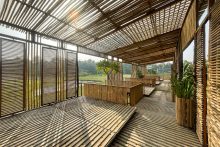
Initially, the owner of the restaurant approached 2FS to design an extension of his existing restaurant which is far away from the metropolitan chaos. His general idea was to isolate people from the daily monotonous life and offer a breathing space. After visiting the site and several brainstorming sessions, our prime decision was to keep the space naturally ventilated to preserve its true essence. To study the form and façade of the particular structure, we indulged in the scenic beauty of the site and thought deeply about the project. The panoramic scene and expanded greenery itself help us to forget the stress of regular life. The whole landscape is occupied with paddy fields but in the monsoon entire area hides underwater. Two seasons offer totally different perspectives of this land. In tropical climates such as ours what we need is porosity in form. We designed a lightweight structure that allows air to circulate and makes better use of natural light. At the same time, the conduction of heat is minimal due to the excessive influx of southern air.
To ensure a certain level of privacy, operable bamboo screening is introduced to shelter the users during summer. During the harvesting period, local farmers work all over the land, so there is a need for a certain degree of privacy between workers and users. Also, all the elevations are designed in a way so that in monsoons maximum portion of the façade remains open as there is no issue of privacy during this time.
The pavilion offers flexibility and choices to its users to make this place of their own. As a result, we deliberately avoid any furniture in this space. Minimal seating over the platform is encouraged to comply with the local tradition of having food. This allows users to avail the spaces in a more friendly and ecological way. “The space within is important. It becomes a living entity with a soul and it is not about external appearances as with a sculpture.”
Energy conservation and sustainability are two important aspects when it comes to construction. The design promotes an architecture with reduced environmental impact through the use of eco-friendly and locally available materials such as bamboo and wood. Our vision was to make an example of sustainable architecture that stands out in terms of aesthetic contentment, counteract the waste of forms and meanings, and speak its own language.